Elana’s Pantry cookbook giveaway!

It’s not Thursday, and there are no pictures, but there is a link.  A delicious, delicious, gluten-free link.

I’ve been following Elana’s Pantry for a few months now, partly because one of my close friends can’t eat gluten and sometimes I need inspiration, and partly because it’s just delicious looking food!  Unfortunately, said friend can’t eat nuts either, but I have great plans for Elana’s recipes and the unopened bag of rice flour in my pantry.

Here, Elana is featuring her Gluten-Free Almond Flour Cookbook, and has a marvelous sounding little giveaway going on.  If I am lucky, you may be seeing a lot more gluten-free food featured here.

Yum.

Christmas 2009: Gluttony

Medieval theology and philosophy usually cites Gluttony as the least series of the seven deadly sins.  In the division of types, it is one of the sins of the flesh (along with lust), and it is easily conquered through abstinence.  You know, the kind so many people embark on after the New Year.  Call it a resolution.

Medieval theologians and philosophers never saw these:

These individual bittersweet chocolate soufflés provided the dessert course to our hors d’oeuvre dinner.  Our dear family friend L. brought them, and baked them in our oven just prior to serving so we would have as fluffy and elevated a puff as possible.  She was wise to do so.  Just look at that gorgeous height!  The cracked tops provided a lot of textual diversity, which was lovely because the insides were so luscious and creamy and rich.

We served these miniature masterpieces with a generous dollop of whipped cream and a sprig of spearmint, which I happened to have in the kitchen leftover from spring roll production.

They were a really nice, sophisticated blend of flavors.  Because the chocolate was bitter- to semi-sweet, the richness of the soufflé wasn’t overwhelming.  In fact, the whipped cream leant a very pleasant sweetness to the dish itself.  L. added orange zest to the batter for that classic combination, which emerged only as a subtle undertone, very complementary to the relative bitterness of the chocolate.  It was like a grown-up throwback to those chocolate oranges that you smack on a table and then unwrap to reveal perfectly molded segments.  There were nine of us.  There were nine soufflés.  We only managed to eat about six of them because they were so decadent, so rich while curiously so airy, and so sinful feeling only moments after that last loving lick of the spoon.

I fell asleep dreaming about the leftovers.  The next morning after a triumphant gift-exchanging ceremony, the Husband and I jetted off to spend the big day with his family, while my sister and her boyfriend did the same.

N.’s family does a very traditional style Christmas dinner after the fashion of a traditional Thanksgiving dinner: an enormous turkey, dressing, mashed potatoes, the works.  It kept our dog’s nose, and desires, busy all day.

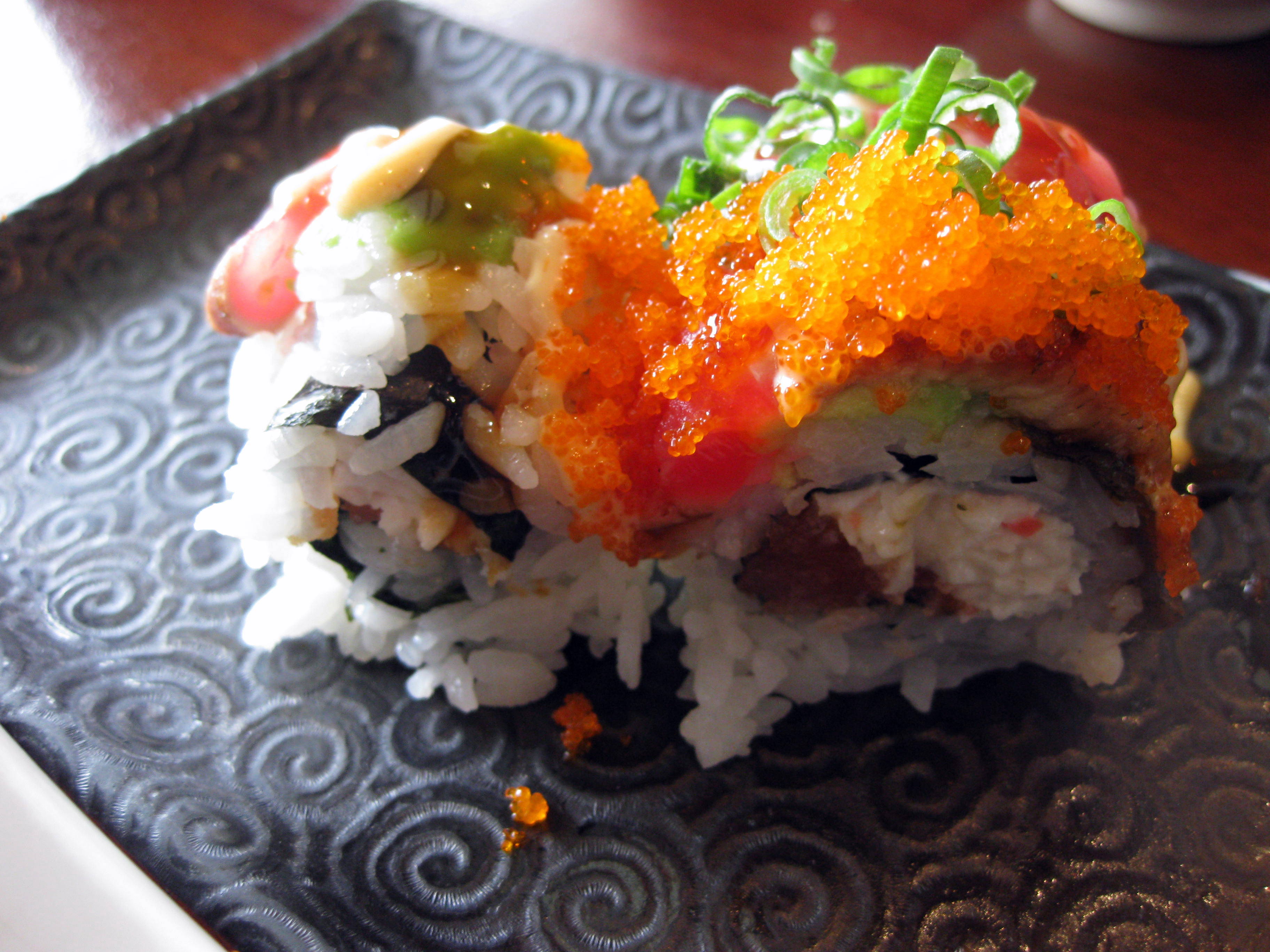
The next day, feeling repentant, we set off to share lunch with my sister and her boyfriend, whose parents live only a few miles from N.’s old homestead.  After a few days of richness, what could be more penitent and healthy than rice and fish?  Perhaps many things, if that rice and fish looks like this:

This jewel-encrusted carbuncle of sushi beauty is courtesy of Mikuni Japanese Restaurant and Sushi Bar , my favorite sushi establishment, and perhaps even my favorite restaurant in California.  The rice is chewy and nutty and sticky, the fish is extremely fresh and expertly handled, and as you can see, the combinations and toppings are imaginative and beautiful.  N. and I shared three rolls which, as you can see, I forgot to document until it was almost too late.  Such are the consequences of gluttony.

2009: A Multi-part Christmas

Christmas 2009 was a multi-part, multi-occasion, multi-meal event.  I suppose when your family expands, and the number of people you love and visit with expands, the great foodie benefit is that you get to cook more and eat more.  I cooked a lot.  I also ate a lot.  I want to share some of the delicious, tipsy triumphs with you, despite the sobering truth that the new term of school begins on Monday morning, bright and early, at 8am.  Really, for me, it will begin at more like 6:30am, but 8 o’clock is when I will greet my new class of freshmen.

But that’s just an excuse for the following excuse: forgive me if the updates do not arrive as thick and fast as the food did at our multi-part Christmas dinner(s).  I will try to keep a schedule of one update a week, but, like Mary Poppins, I try to avoid piecrust promises (easily made, easily broken).  I can only try.  So here goes.

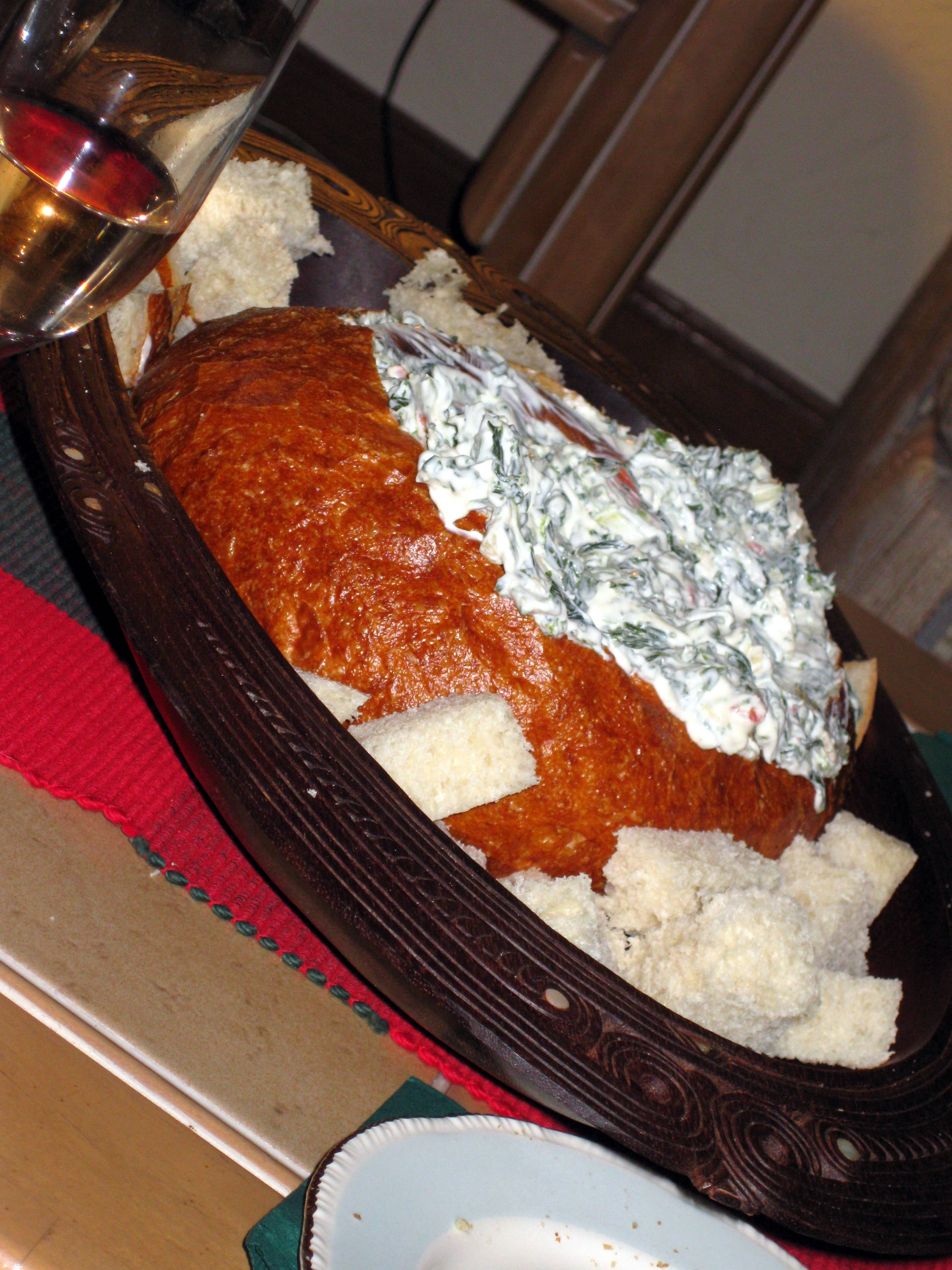
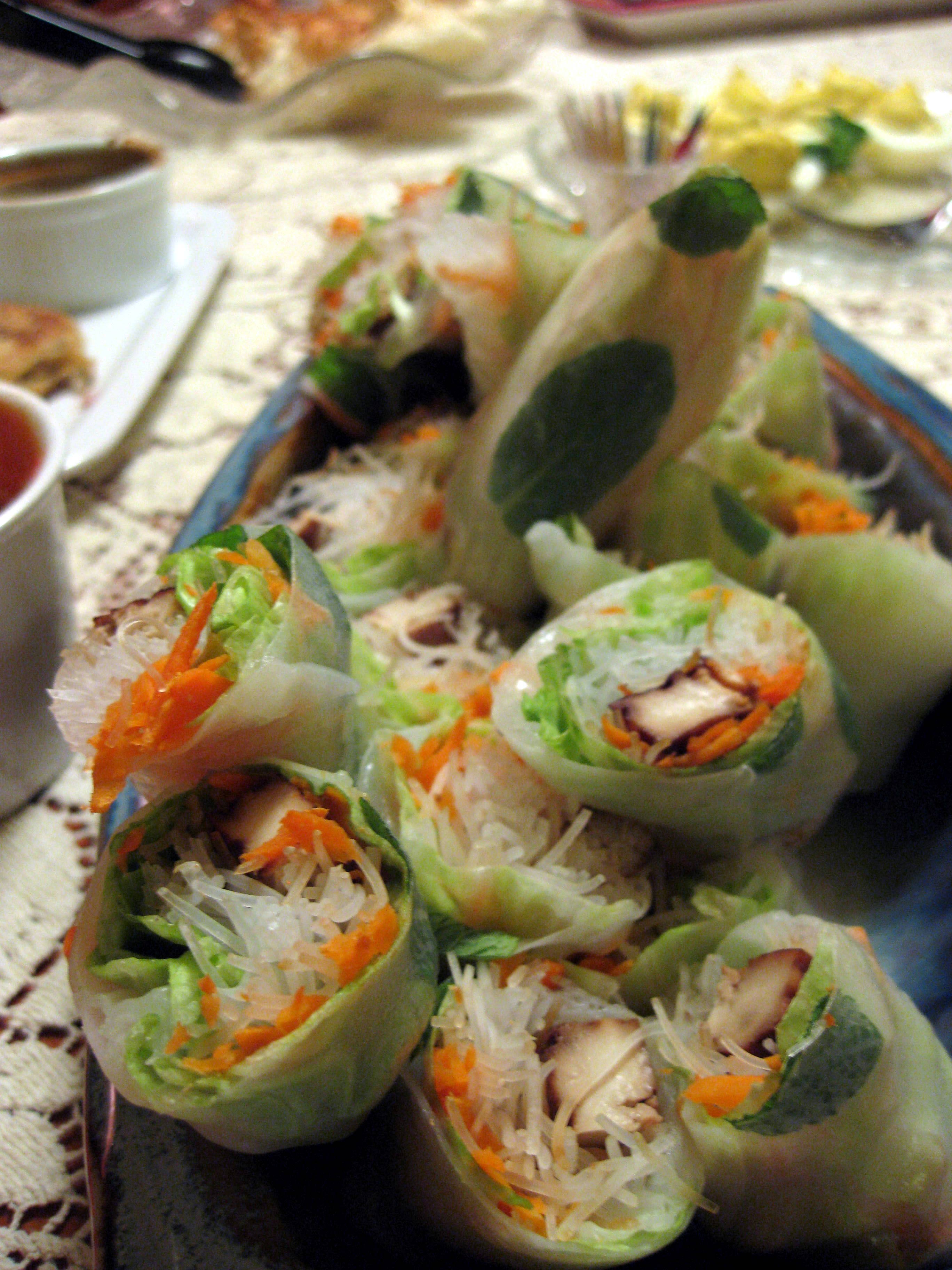
On December 23rd, we had our first Christmas dinner.  This took place at my parents’ house, and featured a series of appetizers.  Here are a few of the highlights:

Spinach dip in a bread bowl, a timeless classic.
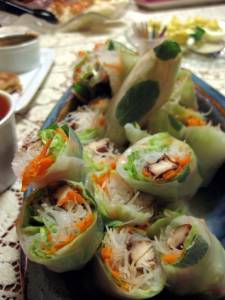
Vegetable spring rolls with tofu and mint.
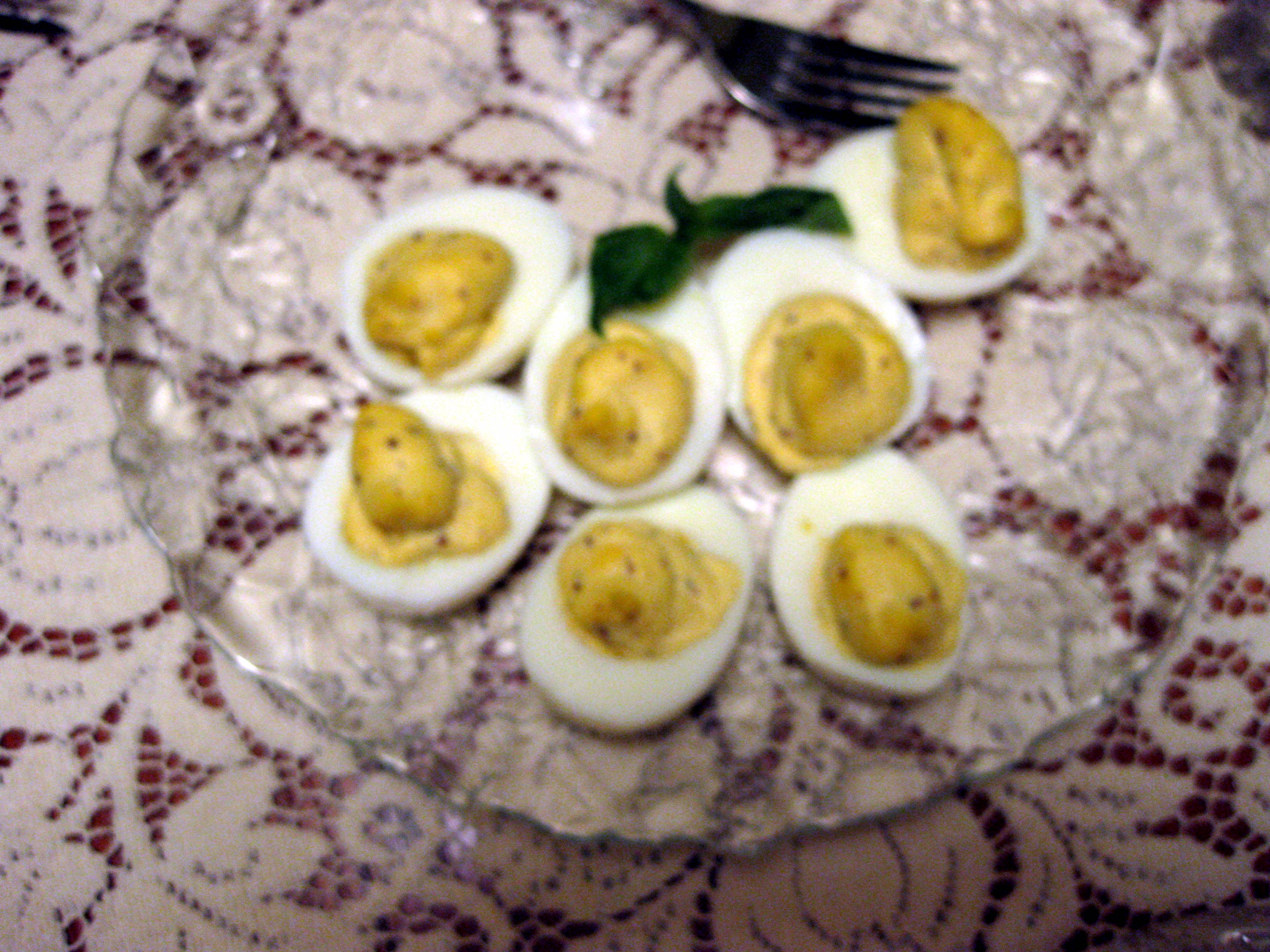
And the feature, which my sister specifically asked me to share: deviled eggs.
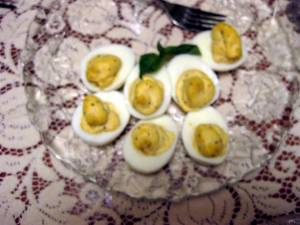
Forgive the blurred quality; I blame the mood lighting in our dining room.  Or perhaps my trembling hands, eager for a second round of hors d’oeuvre-age.

Deviled eggs are a party food with almost no exception.  No one seems to want to take the time to make them as a quick lunch, say, not even after Easter when most people have all the necessities available and partially prepped.  When the are made, they are often drenched in mayonnaise, over salted, given curious unneeded additions like pickle relish, hot sauce, strange herb combinations, and then to add insult to injury, so completely covered in paprika like a deserted house gets covered in dust a month after its inhabitants split that you can’t even see the beautiful contrast of yellow and white.  They are like little egg-shaped daisies.  This is why I am not a professed poet.

Anyway, the eggs.  I have finally found a perfect deviled eggs recipe.  It comes from the cookbook put out by Cooks Illustrated magazine, called the “The New Best Recipe,” which, like most of my culinary collection, I received as a wedding gift.  It is simple: just eggs, mayonnaise, whole grain mustard, and a splash each of vinegar and Worcestershire sauce, along with some salt and pepper.  The mayo makes it creamy, the vinegar adds a sharp tang to clear any heaviness you might feel from the combination of fats, and the seeds from the mustard pop in your mouth when you bite down on them, which I find to be a delightful and different sensation.  Texture in food is becoming increasingly important to me, and though the difference between the soft filling and the hard boiled albumen of the egg is there, it is subtle, like the distance between pudding and custard.  The mustard, then, offers new dimension.

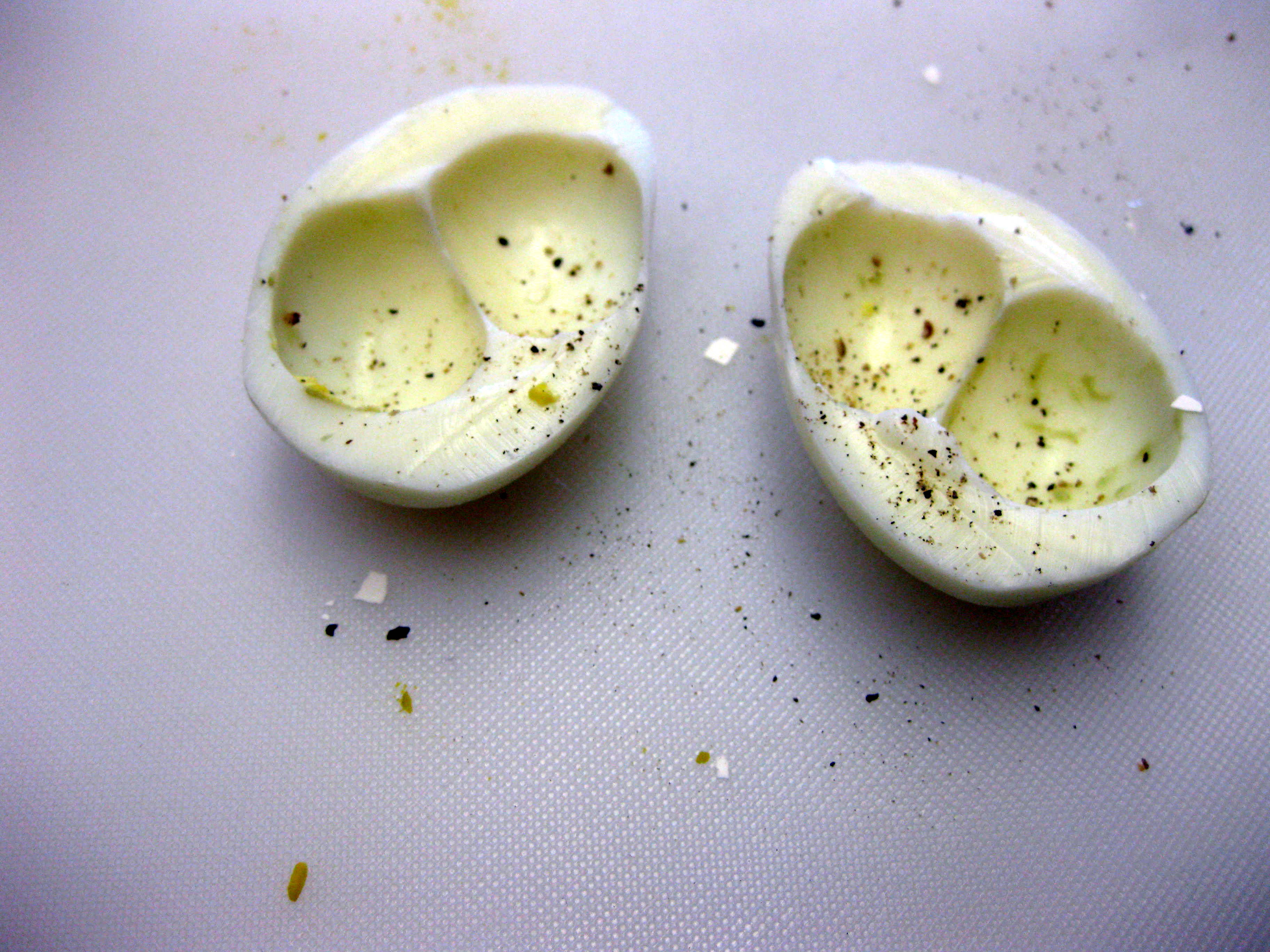
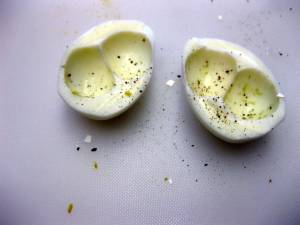
Aside from the ingredients, the other strike of genius of this recipe is its recommendation to overstuff the eggs.  Deviled eggs look so much more appetizing when they are mounded (or piped) high with tasty tangy filling, and the way to accomplish this seems clearly to use one extra yolk.  It’s so simple, but I never would have thought of it!

Fortunately for us, the eggs seemed to know my plan.  Observe: twins!
Ingredients:

  • 7 large eggs, hard boiled (tip: if you hard boil them the night before preparing this recipe, they will peel much more easily in the morning!)
  • 3/4 teaspoon whole-grain mustard
  • 3 tablespoons mayonnaise
  • 1 1/2 teaspoons white or red wine vinegar
  • 1/4 teaspoon Worcestershire sauce
  • Salt & Pepper

Directions:

1) Peel the eggs and cut each in half lengthwise. Remove the yolks and place in a small bowl. Discard two of the whites (I usually tear at least one set and am distressed by their loss of aesthetic value: these are the ones to just pop in your mouth right there) and arrange the remaining whites on your serving vessel.

2) Mash the yolks with a fork. Add the mustard, mayonnaise, vinegar, Worcestershire sauce, and salt & pepper to taste. Stir with a rubber spatula, mashing against the side of the bowl until smooth. This can take a while, and you really have to be dedicated about seeking out and breaking down all the clumps of yolk, or your filling won’t be as pleasing in consistency.  Taste and adjust seasoning to your liking.

3) If you have a piping bag, fill it up with the yolk mixture and pipe into the empty whites, making tall rosettes.  Don’t worry, you will have plenty of filling if you have one more yolk in your mixture than you have pairs of whites to fill.  If you don’t have a piping bag, scrape all the filling into an empty gallon Ziploc bag, keeping it away from one bottom corner.  Seal the bag, trying to eliminate as much air as possible, then snip off one of the bottom corners of the bag with scissors, maybe just big enough for the tip of your pinky finger to fit through.  Presto, instant piping bag!  Fill the whites immediately before serving, so the filling stays fully emulsified.  Exult and enjoy.
Turkey Pot Pie

I have discovered that, much as I enjoy baking, I am not and may never be a master of the finicky, temperamental beast that is homemade pie crust.  Fortunately, this did not hinder me when I embarked on my major repurposing-Thanksgiving-leftovers meal last week.  No, I shamelessly bought a package of pre-made pie crusts to lovingly enclose a turkey pot pie.

We had a big turkey this year, and after stripping off the meat and making stock from the bones, I decided both could be put to good use in a pie.  Since the weather has been so chilly, baking is a good way of warming up the house and therefore a good way of choosing dinners.  Never having attempted pot pie before, I surveyed a few likely looking sources for potential recipes before scrapping them all and making it up myself.  Here’s how it went down:

I chopped up three or four cloves of garlic, about ¼ cup of onion, and five or six cremini mushrooms, which I sweated down in olive oil until they were soft.  While this was happening, I chopped up a couple of carrots and a handful of fingerling potatoes into small pieces.  I tossed these into the pot with the aromatics along with some poultry seasoning and a splash of white wine, and then added about 2 cups of turkey stock and heavy cream stirred briefly together.  In a flash of genius, I realized this was an opportunity to use up the mushroom gravy my mom had made for the big Thanksgiving meal.  Everyone seems to stress about gravy – avoiding lumps, getting the right consistency, producing a good flavor without drowning the sauce in salt, and then it doesn’t get used up.  It coagulates into a strange, meaty jelly in the refrigerator and just doesn’t microwave right.  Most years we throw the leftovers away.  But mixed into my pot pie filling, it melted back into a slightly thickened liquid, bringing all its flavor with it.  I added some extra poultry seasoning and slapped the lid of my pot on to let the vegetables cook.

In the mean time, I assessed the crust situation.  Thanks to one of my cookbooks, I had decided to do a lattice top crust.  I’ve never made a lattice top crust before.  It looked daunting.  Helpfully, I found a diagram of how to do it, so while the potatoes and carrots slowly softened I cut my top crust into about twelve strips of semi-even thickness with the tip of one of my sharper knives.

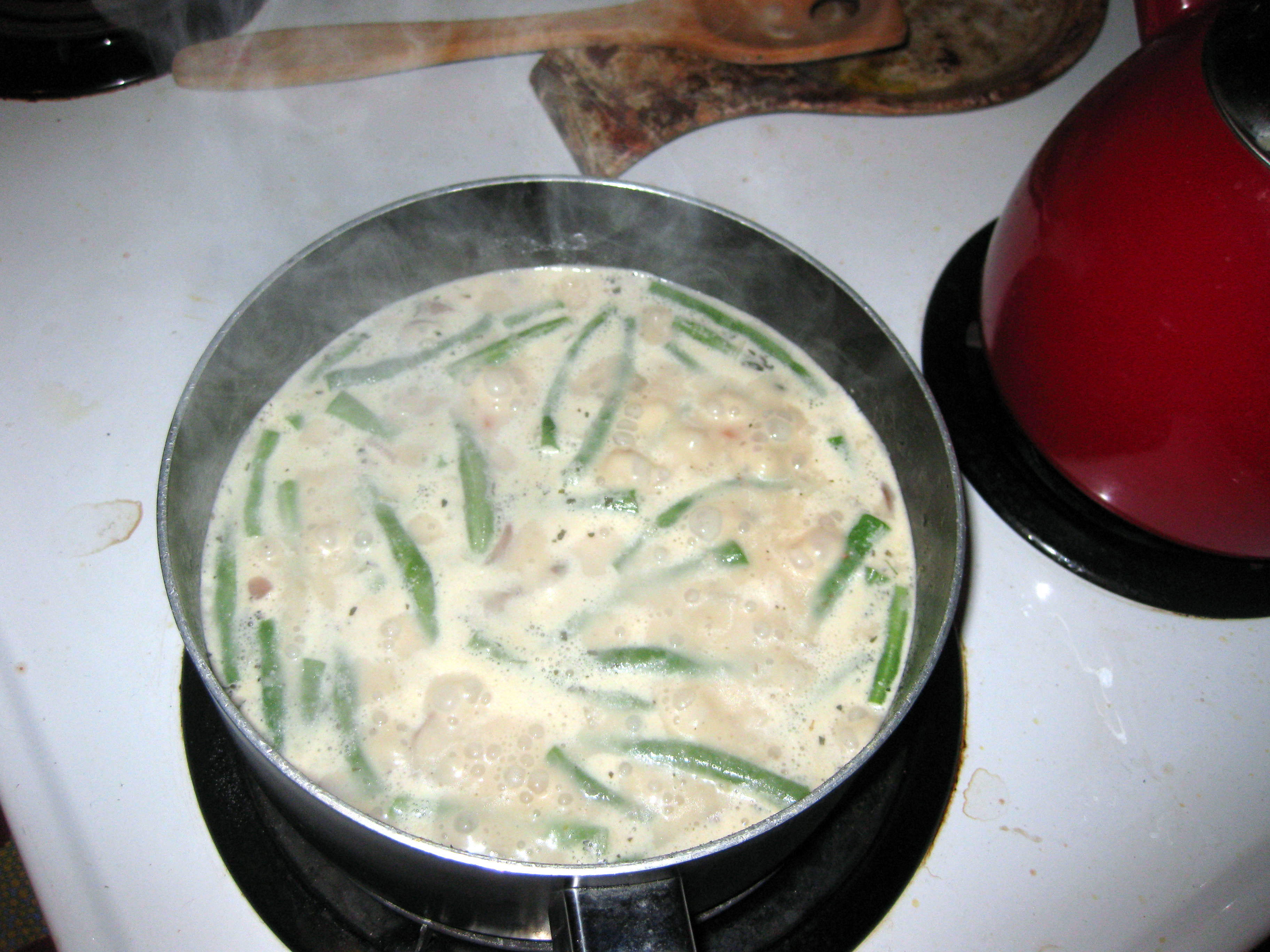
When the potatoes and carrots were almost done, I added a handful of green beans to the filling, probably around a cup of frozen peas, and about two tablespoons of cornstarch mixed with water.  That way the filling could thicken while the green beans cooked.  When things were thickened up nicely, I carefully slopped the steaming filling into the bottom pie crust, which I had carefully laid into my pie plate.

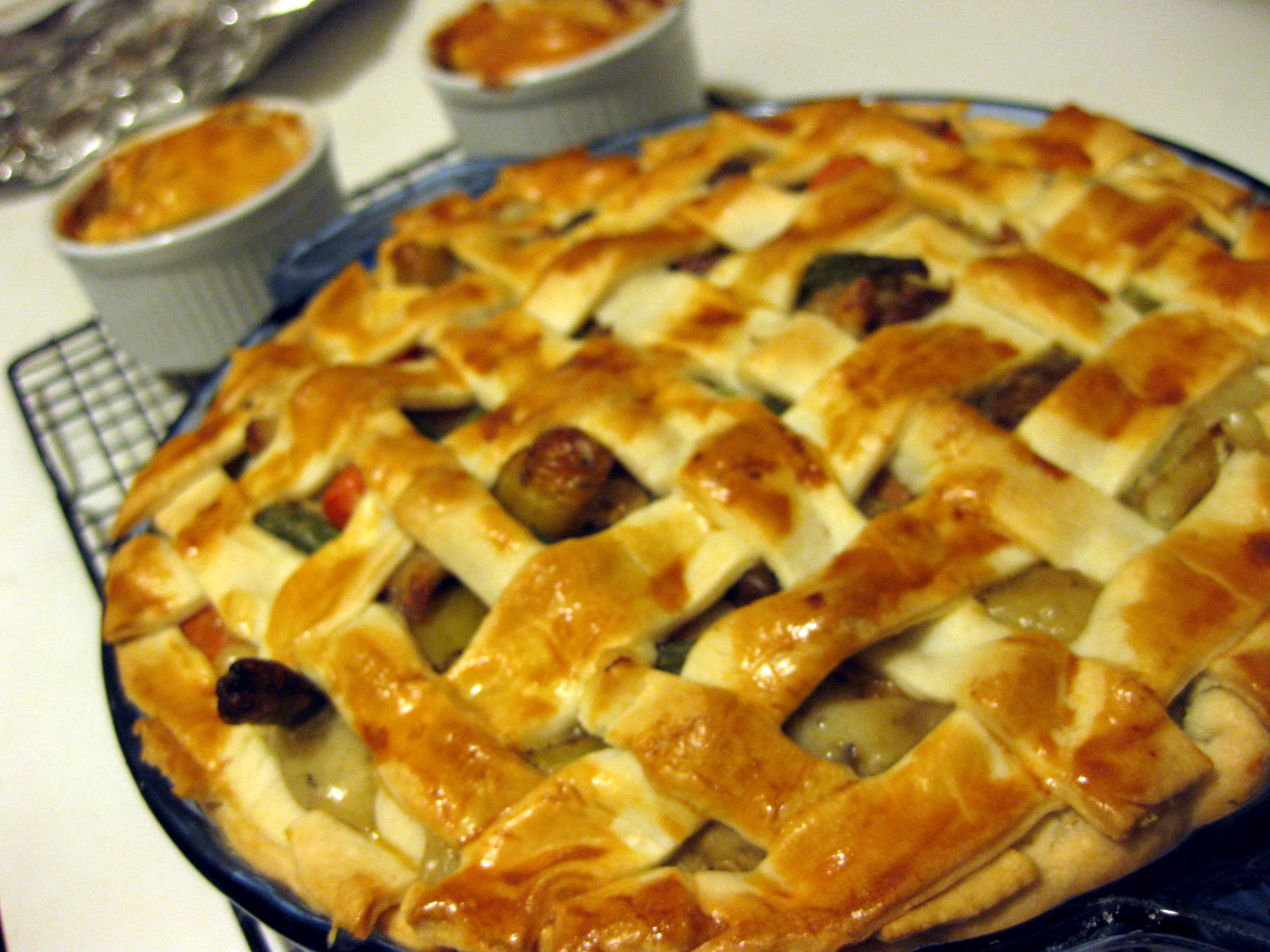
I carefully completed the lattice-work top (I don’t think I can explain without step-by-step pictures, which I unfortunately neglected to take, but it’s not quite as complicated as it looks) and then brushed it with an egg wash.  There was a little bit of filling and a few strips of crust left, so I made two mini-pot pies in tiny corningware dishes to use up the remainders before putting everything into the oven.

After 40 minutes or so at 425F, the pot pie was done.

The crust was golden and crunchy, the insides smelled delicious, and even though the whole first piece I cut fell completely apart, it was glorious.  Though N. enjoys my cooking, he is usually demure about his compliments, but not this time.  He proclaimed “I think I love this,” after only a bite or two, which I interpreted as ultimate triumph.  The veggies were tender but not mushy, the sauce had bubbled up on the sides and had a rich, meaty flavor, and the turkey itself was as delicious as it had been fresh off the bird.  I used only dark meat, which I think kept things moist and extra flavorful.  We glutted ourselves on turkey pot pie, and life was good.

Pillows of Delight

Following my new habit of “borrowing” recipes from restaurants by pillaging their menu descriptions, I want to report another recent triumph.  “Borrowing” and “pillaging” sound so naughty, as though I’ve done something vaguely wrong or shameful.  But most of the time I’ve never even tried the dish, I’m just taking suggestions about ingredient combinations.  Really it’s more sensible behavior.  Sensible and well grounded, and a little bit sly and spicy.  Like this dish, in fact.  How convenient!

Gnocchi with butternut squash, carmelized pears, and swiss chard in a nutmeg brown butter sauce

Ingredients:
2 boxes pre-made refrigerated gnocchi (ours were from Market of Choice)
2 pears, a little underripe
1 big bunch of swiss, red, or rainbow chard (the Saturday Market had enormous bunches of the most beautiful rainbow chard I have ever seen)
1 medium butternut squash (a back garden triumph!)
olive oil
1/2 cup (1 stick) butter
salt and pepper
freshly grated nutmeg
splash of white wine (optional)

Procedure:

* I preheated the oven to 350F while I peeled, halved, de-seeded, and diced the butternut squash into squares about the same size as the gnocchi.  Then I tossed the chunks in olive oil, salt and pepper on a baking sheet and baked them until the squash is tender, maybe about 45 minutes. When they were soft inside and gave slightly to the touch outside, I set them aside to cool.

* When the squash was close to done, I began melting the butter over medium to medium-high heat in a big pan. At the same time, I put some salted water on to boil for the gnocchi in a pot.

* With the butter melted and starting to darken in color a little, I added the two pears. Like the squash, these should be cubed in about the same size as the gnocchi.  If all the major players are about the same size, they play better on the fork and in your mouth.  I cranked up the heat to medium high so the pears could take on a little color, being careful not to break them up when I gently turned them so they could coat in the hot buttery bath.  After about ten minutes, when they were just getting golden, I added salt, pepper, and nutmeg to taste.  Then, for a little tang, a splash of white wine.

* While pears were cooking (oh mighty multi-tasker I), I prepped the chard, tearing the leaves off the stems and chopping the stems up into fairly small pieces.  For extra flavor and extra vegetation, I mixed the stems in with the pears and let them cook until they got tender, which probably took another five or ten minutes.  I sliced the remaining chard leaves into manageable, fork friendly slices.

* With the water boiling, I plopped in the little pillowy gnocchi to the pot and the chard to the vegetable pan at about the same time.  Though the chard almost overflowed my largest skillet, while I gently incorporated it into the pears and butter sauce it wilted down amazingly quickly.

* When the gnocchi floated to the surface (that’s not true, they boiled up and threatened to overflow my stovetop!) I drained them well before adding them and the reserved butternut squash squares to the pan for some gentle incorporation.  Bearing in mind the constant food show recommendation to season each layer of a dish, I added more salt, pepper, and more grated nutmeg to taste.  When the squash squares were heated through to my liking, I served up big bowlfuls.

IMG_1966

The combination was delicious.  The gnocchi were soft and chewy, and though the pears and butternut squash were also soft, I didn’t feel that there was an unpleasing lack of textural variety in the dish.  The pears almost melted when they touched my tongue, and the butternut squash had taken on some crunch on the outside from being in the oven.  The bitterness of the chard with the sweetness of the pears and the warmth of the nutmeg worked amazingly well together.  Best of all, the next day the flavors had really had time to mingle and meld, and the spice of the nutmeg deepened into a more pronounced seasoning throughout the dish.  A freshly brewed, well-spiced hot cider or rum punch might be a delightful and unusual accompaniment to this, but I just had a glass of some of the chardonnay that I added to the sauce.  And that was good too.  I told my Mom about this one, and she demanded it as a weekend-after-Thanksgiving-remedy-from-too-much-turkey.  Sounds like a win to me!

Homage to Stratigraphy: Lasagna #2

After both taking and making suggestions for improvement about the lasagna I made here, I decided to take advantage of the last few weeks of outdoor Farmers’ Markets and take a second stab.  I believe I have now created the ultimate: Wild Mushroom and Spinach Lasagna with Arugula Pesto and Sundried Tomato Cream Sauce.  Since I have had several requests, I am willing to share the recipe with y’all.  Here goes, and keep in mind that most of my measurements are approximations.

Preheat oven to 350F and make sure you have a 9×9 square glass baking dish.

Ingredients:
1/2 lb (?) mixed wild mushrooms (I used reconstituted dried shiitakes and golden chanterelles from the Saturday Market)
1-2 bags baby spinach leaves
2 bunches arugula
(your own mix for pesto, or my cheat: 3-4 TB premade pesto, to blend with arugula)
Olive oil
4 TB butter
3 cloves garlic, finely chopped
1/4 cup flour
2 cups milk or cream (or a mixture)
Splash of white wine (if desired)
salt and pepper
2-4 TB sundried tomatoes, finely chopped
1 16oz. container ricotta cheese
1/2 cup grated mozzarella cheese
1/4-1/2 cup grated Parmesan
no boil lasagna noodles

Procedure:
1. Roughly chop the mushrooms and fry them in a medium saucepan in olive oil or butter to your liking.  Don’t rush them.  Keep them on about medium heat and wait, patiently or impatiently, until they have sucked up all the butter, expelled their own liquids, and then regained those liquids to become browned but still tender.
2. Add the spinach and cook just until it has wilted but still retains its bright green color, then set the mushroom and spinach mixture aside.
3. Meanwhile, whir together arugula, premade pesto, and a little extra olive oil in a blender or food processor (or just make your own arugula pesto).
4. In a medium saucepan, melt butter. Add garlic and cook just until fragrant. Add flour and combine well to make a roux. When flour is well incorporated and has cooked for a minute or two, add milk or cream slowly, stirring or whisking well until clumps are incorporated. Season with salt, pepper and white wine to taste.  A little grating of fresh nutmeg might also not be amiss.  Add sundried tomatoes and stir gently until thickened to your liking.
5. Combine all three cheeses
6. Assembly: spread a layer of sauce in the bottom of your pan and add a layer of no-boil lasagna noodles. Then, add layers in your preferred order. I stacked cheese, arugula pesto, mushroom and spinach mixture, then sauce in that order before adding another layer of noodles and repeating the process. Repeat until you run out of filling ingredients (should be about half a box of noodles, if you are using Barilla and a square pan). After adding the final layer of pasta, top with any remaining sauce, cheese, and/or pesto, and then add a generous layer of grated Parmesan. (If you don’t have sauce to add to the top, the final layer of noodles will not soften as nicely as they should.  I discovered this as I made my first cut.)
7. Bake for 45 minutes or until the cheese on top is browned and looks a little crunchy, and the fillings are bubbling up on the sides. If possible, wait for five minutes before cutting in, because the slices will hold together better this way.

IMG_1962

Enjoy.  Gorge.  Disintegrate.  Burn your mouth on the cheese and decide you don’t care, eat chilled slices you cut out of hand straight from the fridge at midnight, or have your neighbors over and just decimate the whole thing in one sitting, for I declare this the ultimate spinach and mushroom lasagna.