I have mentioned before, on this very blog, that I am afraid of yeast. However, as it has surely become clear by now, I love baking. It was only a matter of time before these two truths collided and a new truth was constructed. As I told my students only a few days ago, it was not always a “truth” that our solar system was heliocentric. They grudgingly accepted this, but I now elatedly announce that I am no longer afraid of yeast! Perhaps a bit timid, a bit guarded still, but not afraid. What has changed, you ask?

This is a rosemary olive oil focaccia-style loaf from a cookbook put out by Food and Wine Magazine that I finally got up the guts to try out. I learned three things by making it: 1.) yeast is not as easy to screw up as I thought; 2.) following directions is smart; and 3.) the way to a man’s heart may really be through his stomach. At least if he shares a last name with my husband.
While this bread was not difficult to make, I think it would have been better if I had read the recipe more carefully. After assuming I had killed my yeast when it all sank in the warm water I sprinkled it over, I didn’t bother to knead the dough before setting it aside to rise. Then I baked it at the wrong temperature and despaired when it didn’t seem done before realizing my mistake. And after all that, it was still delicious.
 The bottom half inch or so was denser than the rest of the loaf, and I don’t know why that happened, unless it was related to my inability to read the directions the first time through. But it was really, very good. The olive oil made the texture pleasant – moist and chewy, and the rosemary contributed a nice, herby, woodsy flavor that contrasted well against the brisk brightness of the sea salt that also flavored the bread. It is amazing how something with so few ingredients (flour, yeast, oil, water, salt, rosemary, and cornmeal) can have so much flavor. And excitingly, as the recipe itself declares, this bread has endless flavor combination possibilities. Next time I think I will add chopped kalamata olives. N. agrees.
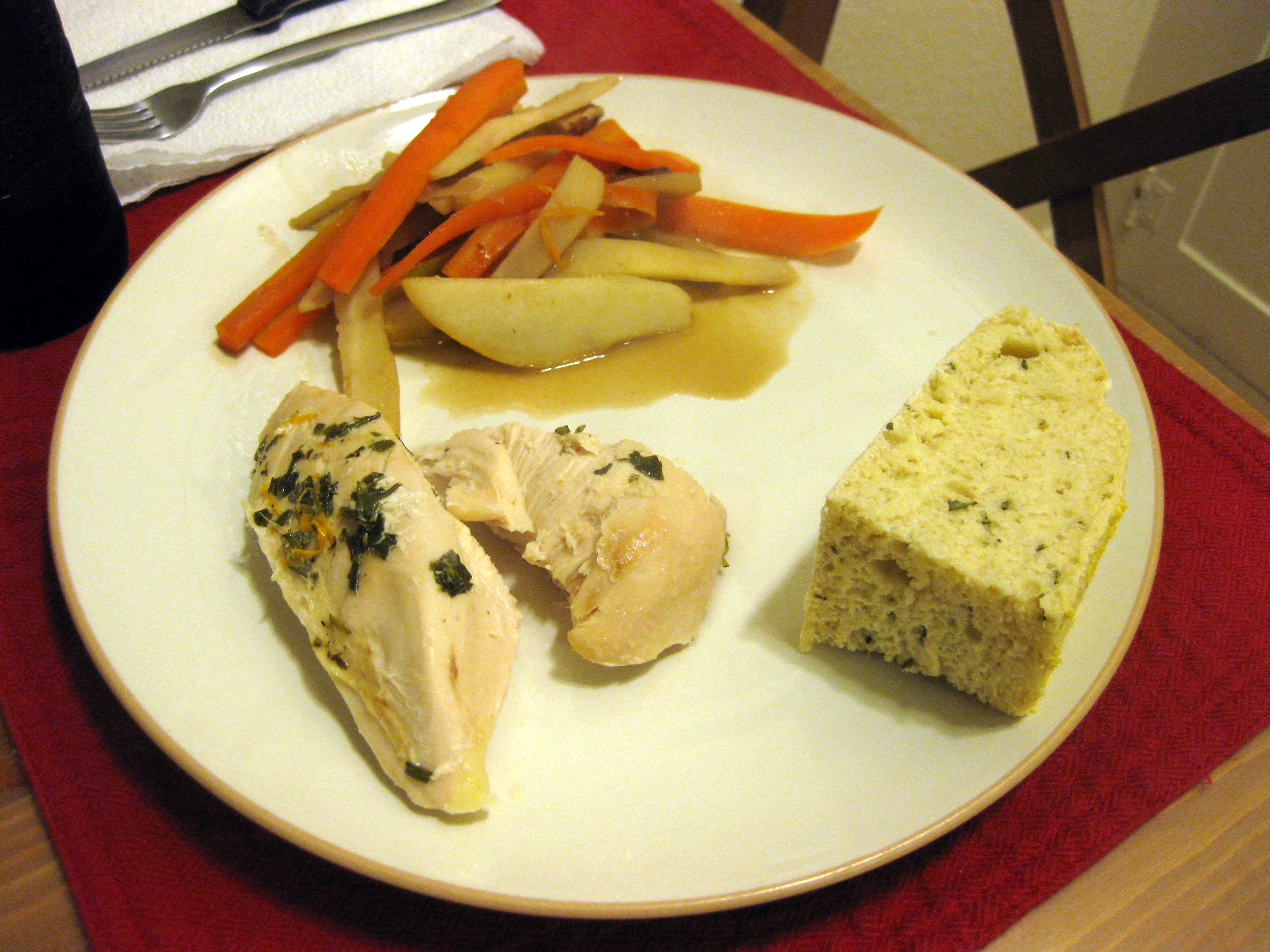
What was really glorious about this bread was how well I managed to combine and link flavors in the dinner that went with it. We had a roast chicken and a vegetable side to go along with my yeasty triumph, and in the choices of aromatics I was able to clearly connect each dish. The bread contained rosemary, and so when I made an herbed butter rub to massage under the chicken’s skin, I included plenty of fresh rosemary.
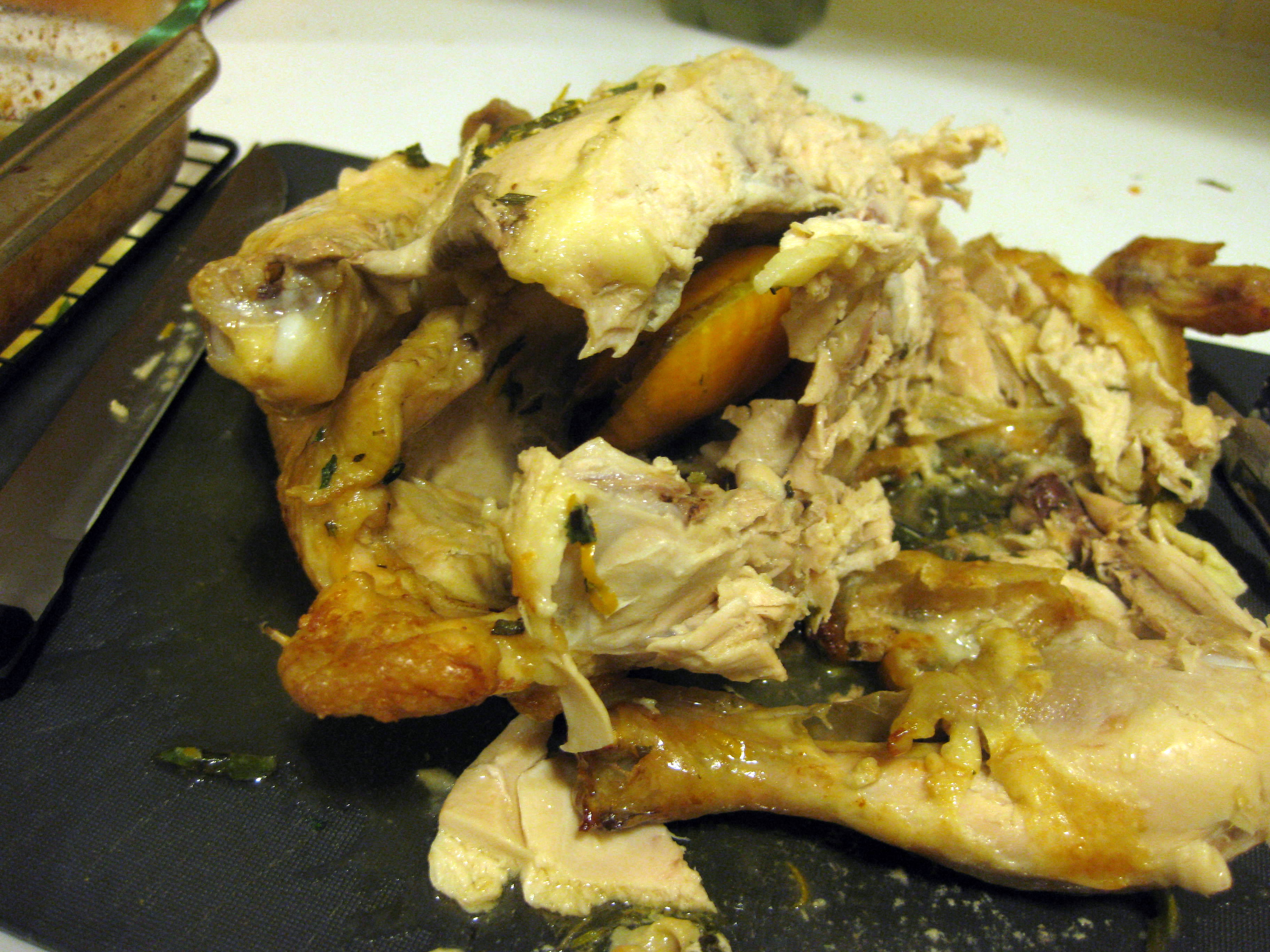
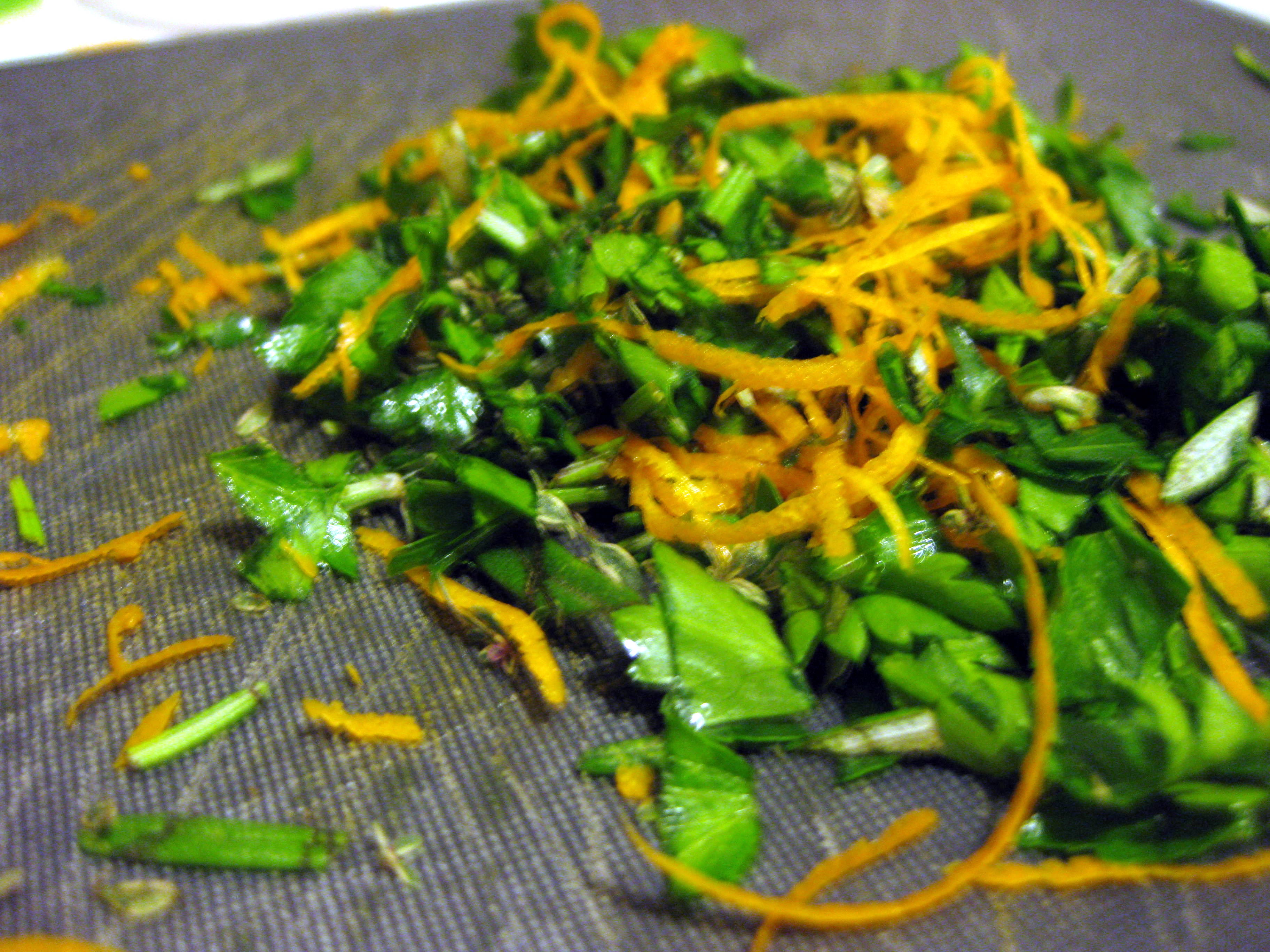
Our vegetable side consisted of glazed carrots, parsnips and pears with craisins and pecans. Since the glaze was mostly orange juice, I added orange zest to my chicken herb rub and stuck a few orange slices inside the cavity of the chicken before it went in to roast. If I had remembered in time, I would have added orange zest to the bread dough as well, to really link all three elements together.
The orange did, I think, add a delicate sweetness to the chicken, though I’m not sure it was recognizably citrus. I think lemon would be more identifiable. But the butter made even the white meat of the chicken tremendously succulent, and the herbs and garlic definitely added a punch and depth to the flavor.
The veggies were rich with autumnal flavors, and while I enjoyed them, I think they would match better with a pork or turkey main rather than chicken. In fact, they might be delicious as a vegetable dish for Thanksgiving; the craisins make that an easy link-up. Since carrots and pears are already sweet, the craisins and pecans were a natural pairing. I always think pecans have a kind of caramel or molasses-like smokiness to them, which seemed to work very well with the herby, spicy notes of the parsnips.

Given that somewhat wild flavor the parsnips impart, a strongly spiced root beer or sarsaparilla might make a fitting non-alcoholic beverage pairing to this meal, or maybe even a ginger ale like Blue Sky that prides itself on natural flavors.
So let’s take a moment here and reflect: Roast chicken, glazed vegetables, and homemade bread. Two of these three dishes required advanced planning and multiple stages, and then (as per usual, these days) I made broth from the chicken carcass after it was picked clean, with plans already in mind for the leftovers. Long cooking times, “complex” procedures, and making use of every part of the meal. If that doesn’t say Sally Homemaker to you, I don’t know what does. All I can say is: I promise that I did not wear pearls while I cooked this meal.
 "blackberry-eating in late September"