 In thinking about baking lately, I’ve been attracted to layers. This could have been inspired by an outrageously good bar style dessert I had at, of all places, a training workshop on my campus. We changed catering companies in the last year or so, and the new service is unexpectedly good. The last day of this workshop, they brought in not only lemon bars, but a three layer concoction that, if memory serves, involved a thick chocolate layer on the bottom, a cream cheese layer reminiscent of cheesecake in the middle, and then a thin topper that might have been red velvet cake on top. All this with cherries dotted through. Immediately upon getting home that day, I emailed the catering service asking for more info. I have yet to hear an answer…
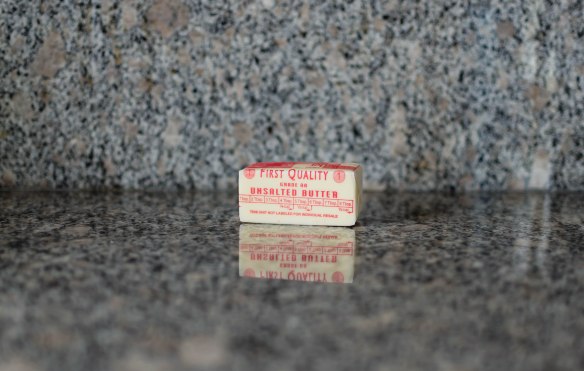
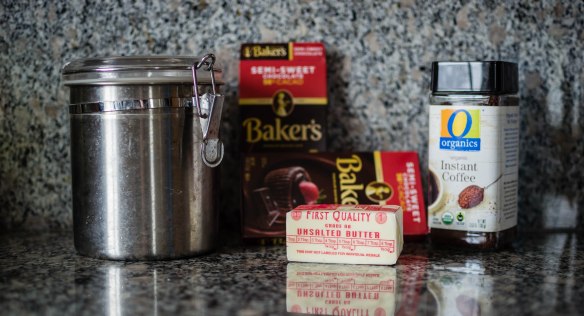 But anyway, layers: of course I instantly think of cake, but because I’m now back in school and am thinking about what treats I can leave in the mailroom, I need something smaller and more portable. Cake can be messy. As I was trawling my way around Pinterest I saw something that reminded me of that old classic the peanut butter blossom: Hershey’s kisses pressed into a soft cookie. Instead of the traditional peanut butter, I thought about shortbread: crisp, tender, crumbly, enhanced by browning the butter. The milk chocolate drop became a rich ganache layer spread over the top, not just chocolate but espresso too, for a mocha-like kick-in-the-pants to perk us up for a morning – or an afternoon, for that matter – in the classroom.
 For shortbread, I borrowed from both Ruhlman’s bare bones ratio in, well, Ratio, and from Martha Stewart’s version, formulated for brown butter. A little milk gets added in to compensate for the water lost from the butter during the melting and browning process. I wanted some salt and some vanilla too, and then had to stop myself from adding all kinds of other ingredients: roughly chopped almonds, orange zest, a spritz of garam masala – because I wanted to focus on the buttery shortbread and its rich, caffeine-infused topping. But do feel free to experiment if you want; any of these would, I suspect, be delicious. I’ve used weight here to measure my ingredients, following Ruhlman’s formula: shortbread requires 1 part sugar, 2 parts fat (butter, in this case), 3 parts flour. This is more precise and, in a lot of ways, easier: you can pour directly into your mixing bowl, which means no one has to wash a stack of measuring cups.
 A note on the ganache: this combination of semi-sweet chocolate and heavy cream can vary in thickness anywhere from a drizzling glaze to the dense squelch of a truffle. This one is fudge-like straight from the refrigerator, but it softens slightly as it warms and becomes more like a very thick frosting. It’s rich, but not overwhelmingly so because it is not overly sweet. The coffee flavor and the percentage of cocoa in the chocolate keep it away from toothache territory.

 It took a while before we got to taste this; between the need to re-solidify the butter after browning, a friend in town, cooling the shortbread after baking, and time for the ganache to harden, 48 hours passed before N. and I finally stood anxiously over these little squares as I sliced. Yours needn’t take that long, obviously, but do be aware of the cooling time it requires.
 Nevertheless, the wait was worth it. At first bite you taste sweetness, but it quickly develops into that deep, almost fruity taste coffee lends to chocolate. Then, as you crunch through the shortbread layer, you start to pick up on the buttery richness there. And then, while you are savoring all that goodness, you are somewhat surprised to see another piece already in your hand, ready for a repeat.
 I’m delivering a tray of these to the mailroom at work tomorrow. N. and I are taking bets about how long they will last. He says 10 minutes. I’m thinking, given how early I get to work, that they may last an hour or two, but I’m certain none will make it into the afternoon.

Mocha ganache shortbread
Makes one 9×9 inch tray
About 3 hours including cooling time
For the shortbread:
4 ounces sugar (1/2 cup + 1 TB)
8 ounces butter (2 sticks or 16 tablespoons)
12 ounces flour (2-2½ cups)
2 TB milk
1 teaspoon vanilla
½ – 1 teaspoon salt, depending on your preference
For the mocha ganache:
8 ounces semi-sweet chocolate, chopped into small pieces
5-6 ounces heavy cream
3 tablespoons instant espresso powder
1 teaspoon vanilla
- First, brown the butter: in a small pot, melt the butter swirling gently on occasion, over medium to medium-low heat. Once melted, the butter will foam up, then clear slightly, and then the magic: the solids will sink to the bottom of the pan and begin to brown slightly. At this point, turn off the heat. You want this beautiful browning, but you don’t want those solids to burn. There is only a small window between browning and burning, so watch carefully as the butter reaches this stage.
- Pour the melted butter and browned bits (which you may have to scrape off the bottom of the pan) into the bowl you will use to make the shortbread. I used my stand mixer bowl. Stow it in the freezer for 10-15 minutes, just until the butter solidifies – you don’t want it to be liquid anymore, but don’t let it harden or freeze.
- Preheat the oven to 350F and line a 9×9-inch baking dish with parchment paper, letting the paper extend over the edges of the dish to make a sling for easy removal later on.
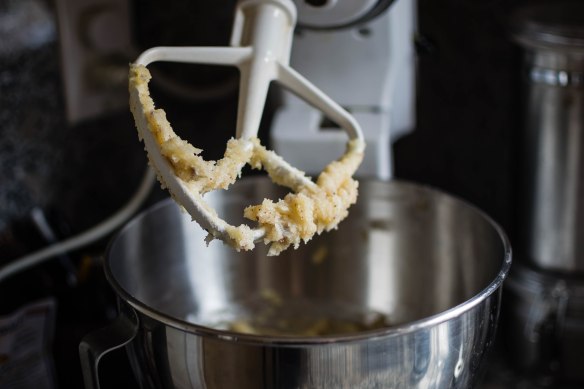
- Add the sugar, milk, and vanilla to the cooled brown butter and beat with an electric mixer or the paddle attachment of your stand mixer until well combined.
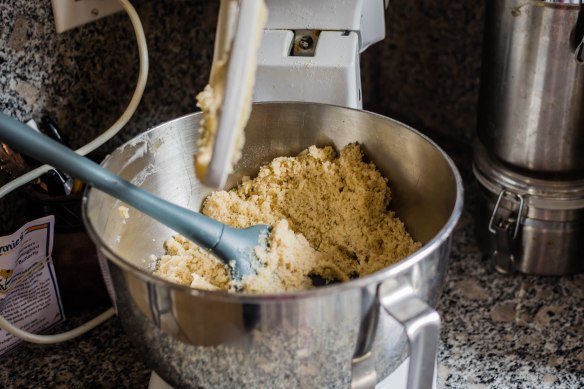
- Add in the flour and mix again to incorporate. First the dough will be very crumbly, but then as the flour begins to hydrate it will take on the texture of damp sand. At that point, stop mixing. Yes, it is a crumbly mess rather than a proper dough. That’s okay. The more you mix it, the more the gluten develops and the tougher the end result will be. For maximum tenderness, be brave: dump the crumbs into your lined baking dish and use your hands or a rubber spatula to firmly press it into the baking dish like you would do with a graham cracker crust.
- Bake at 350F for 30-40 minutes, until the top of the shortbread is golden and has only a very slight give when gently pressed. Allow it to cool completely.
- To make the ganache, you have two options: you can use a double boiler, or you can use the microwave.
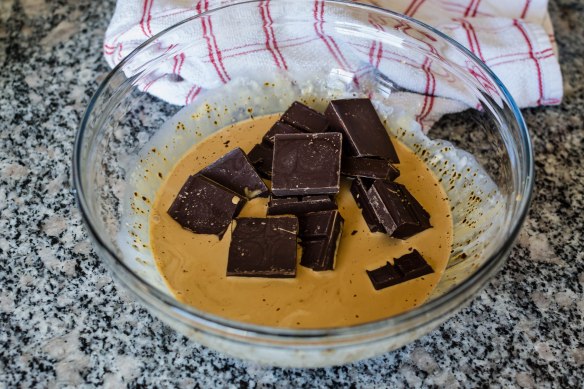
- For the double boiler, heat water in a small pot to a simmer. Place a glass bowl over the pot but don’t let it touch the water below. Add the chocolate, the instant espresso powder, and the cream to the bowl and stir gently until it melts together smoothly. When the chocolate has completely melted, add the vanilla and stir to combine.
- To use the microwave, pour the cream into a glass bowl and heat until it is barely simmering; depending on your microwave this may take 1-1½ minutes. When it is just forming tiny bubbles (you don’t want it to boil), stir in the instant espresso and let it dissolve, then add the chocolate and stir gently to combine. Be patient: the heat of the cream will melt the chocolate.
- If the cream cools down too much and the chocolate doesn’t seem to be melting at all, return the bowl to the microwave and heat for 15-20 seconds, then remove and continue stirring. Repeat if necessary. When the chocolate has completely melted, add the vanilla and stir to combine.
- Pour the ganache over the cooled shortbread, using a spatula to spread it evenly across the top. Let sit until cool, then refrigerate until the ganache hardens to the texture of cool butter: if pressed hard it will give, but it you gently touch it your fingertip won’t leave a mark.
- When the ganache has hardened, you can use the parchment paper sling to remove the whole confection from the baking dish, slice into squares of your desired size using a very sharp knife, and try to resist eating them all in one go.




 "blackberry-eating in late September"