 If you are working from home during this pandemic, you have probably thought more than once since March about the weirdness of time passing. On one hand, we’ve been doing this foreverrrrrrrrrrr. On the other hand… no, it’s been forever.

 But within that space of Marchunetember, or whenever we are, time passes oddly. Sometimes I can’t believe it’s already Thursday (I know, it’s Monday. But you know what I mean). Sometimes the afternoon just will. not. end. We are feeling the first hints of fall here in Southern California: two beautiful overcast mornings in which the gloom was not smoke, thank-you-very-much, cool enough that I wanted pants on my dog walk. Yet later this week we are supposed to rocket back into temperatures in the 90s. There’s a bit of everything at once.
 So this is a little dish that speaks to all of those things. It makes a nice lunch for one, but it would be an equally delightful afternoon snack for two. It could easily be doubled or tripled to feed your pod. It’s sweet and salty and sour and a little spicy – in fact, it would go so well with this kicky, smoky, spicy mix that you might as well plan to serve them up for a happy hour together, whether that means margaritas, palomas, or puckeringly good lemonade.

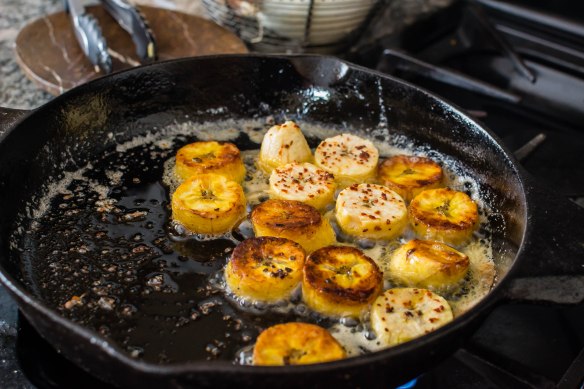
 I like a mostly-ripe plantain for this, yellow with streaks of brown on the peel, because I enjoy the mix of textures: crisp, fried exterior with cushiony softness inside. But you could also do them tostones-style, frying less-than-ripe plantain slices over medium-low heat first to soften, then smashing them flat and frying again over higher heat on both sides for even brownness.
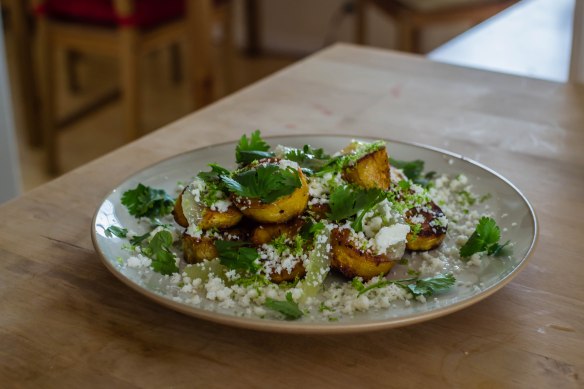
 I ate mine with a fork, as you can see from my not-quite-in-focus close-up, but if you want to go nachos style and use the plantain pieces as scoops, I say go for it.

Plantains with lime, cotija, and honey
Serves 1 as a light lunch or 2 as a snack
15-20 minutes
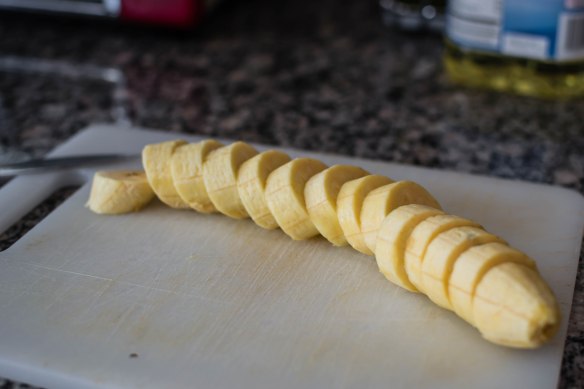
1 large, yellow plantain, peel removed, cut into about ½ inch slices (I like mostly ripe, but see above for another option)
1 tablespoon vegetable oil
2 tablespoons butter
salt and red pepper to taste – I like the fruity heat of aleppo pepper
1 lime, which you’ll use for zest, supremes, and juice
1-2 tablespoons crumbled cotija cheese
1-2 teaspoons honey
about 1 tablespoon chopped cilantro
- In a cast iron or other skillet, heat the vegetable oil and butter over medium-low heat until the butter is melted. Add the plantain slices, dust with salt and pepper, and continue to cook over medium-low for 4-6 minutes, or until they are nicely golden brown on the bottom. Don’t rush it. Don’t turn up the heat. They need to cook inside but not burn on the outside.
- As plantains brown, flip, dust the other side with salt and pepper, and cook on the second side until it is also nicely browned, around 4-5 minutes this time.
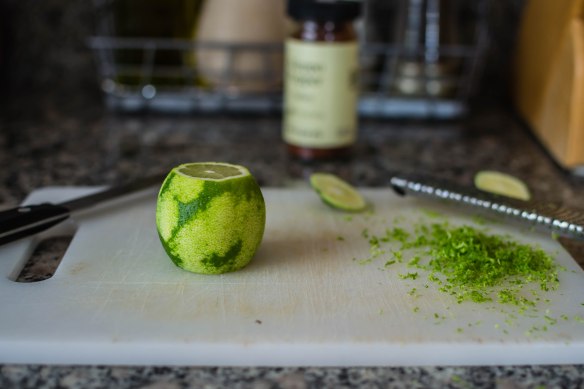
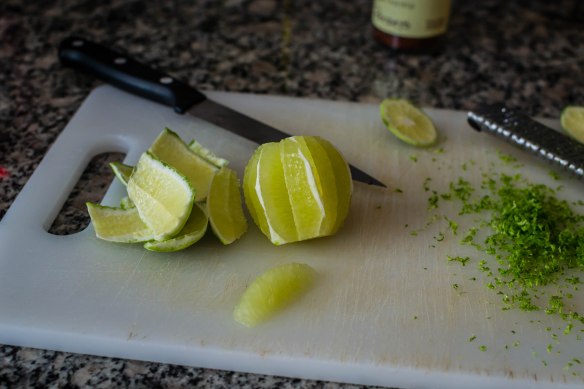
- While the plantains are cooking, zest the lime and reserve that zest for serving. Then use a sharp knife to cut a thin slice off the top and bottom. Remove the remaining skin and pith by cutting it off in strips from top to bottom, following the curve of the fruit. When you have removed the skin all the way around, cut supremes: slice between the fruit and the membrane that separates each segment. This is a useful step-by-step as well.
- To serve, pile the fried plantains on a plate or in a shallow bowl. Add the lime supremes and cotija crumbles. Squeeze on some juice from the remaining carcass of the lime. Drizzle on the honey, then scatter the cilantro and the reserved lime zest over the top.
 "blackberry-eating in late September"