 It will come as no surprise to you that I am late with this post. I mean, here it is Monday and it’s up and all that, but a quick check of the calendar belies my appearance of timeliness. See, it’s December. It’s December and this is a sauce recipe I owe you from last month. By my twisted, grasping-for-an-apology way of thinking, though, I ate it in November… so that totally counts, right?
 This time around, we’re back to butter. There are a lot of butter based sauces, friends. A lot. This one, a beurre blanc, is a sauce made by reducing white wine with aromatics and sometimes a bit of lemon juice or vinegar, then whisking in an unbelievable amount of butter until the sauce turns into this rich, fluffy, thick, pale yellow ambrosia that belongs draped over every kind of substance imaginable.

 Most of these sauces have dubious origin stories. Who wouldn’t want to be responsible for a well-loved buttery emulsion as appropriate to green beans as to seared fish? Cooking lore holds, however, that beurre blanc was created by accident – an unintentional simplification of béarnaise sauce that caught on and became beloved. Julia Child writes about it with the affection you might expect for a sauce that is, in her words, essentially “warm flavored butter.”
 This is not Julia Child’s recipe. For ease, and for clarity, I went with Alton Brown’s. Mine is a slight adaptation – I halved the recipe, and I didn’t have the traditional shallot so I simply omitted it. Alton’s sauce uses lemon juice instead of white wine vinegar, which suggests it was meant to go with fish or seafood, and this decided my pairings for me. Lemon and butter sauce? Pass the scallops.
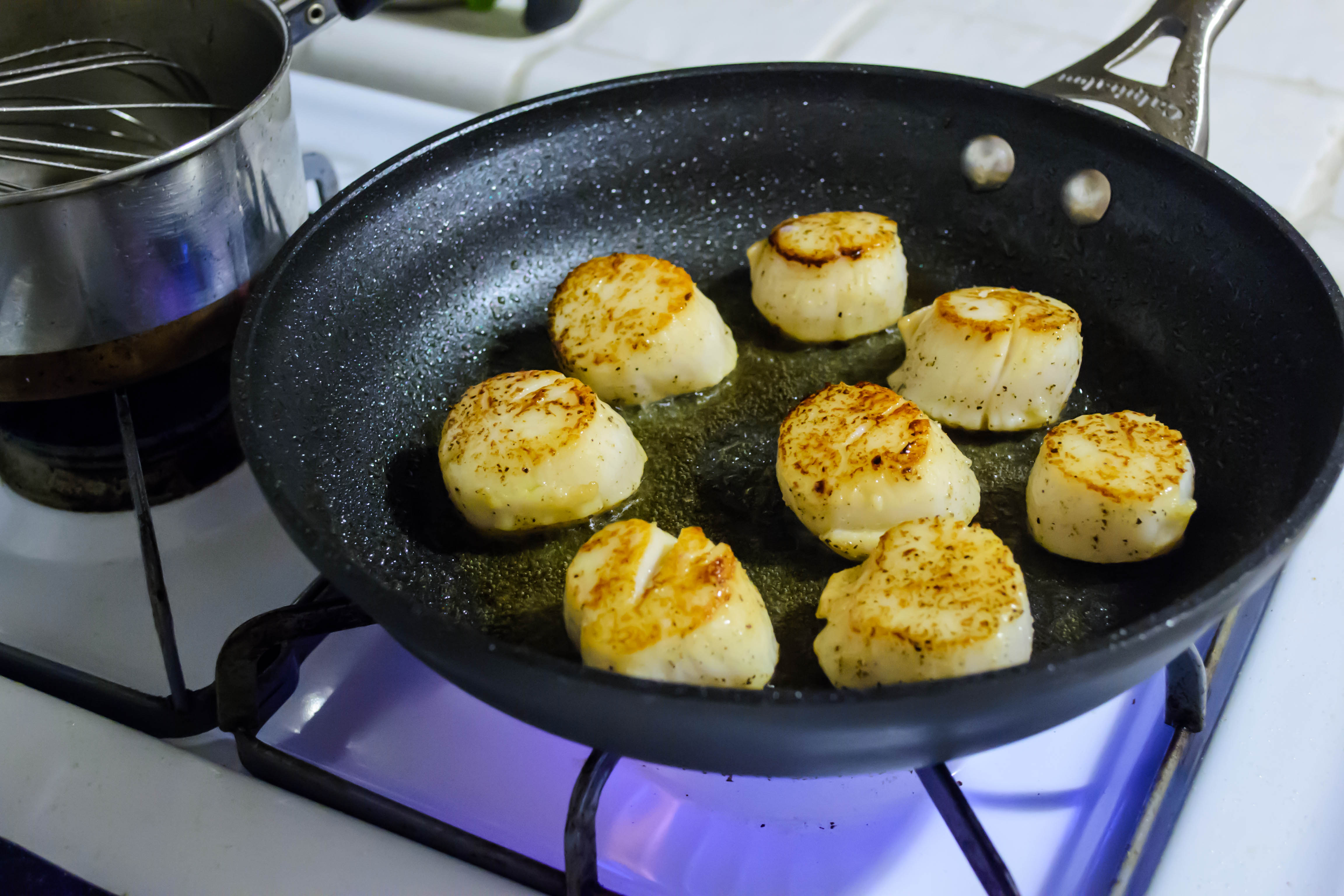
 The silkiness of this sauce is perfect with shellfish. I can imagine dipping lush hunks of lobster into it. I can imagine a drizzle over soft-shell crab. I would be more than satisfied with a pool underneath a piece of halibut or cod. But scallops won the day for me. These perfect little cylinders, meaty and mild and almost sweet, develop a perfect crust when you pat them dry, season them aggressively, and sear them golden-brown on top and bottom. When you douse them with sauce, or float them in a puddle of it, the buttery smoothness somehow elevates them even more.
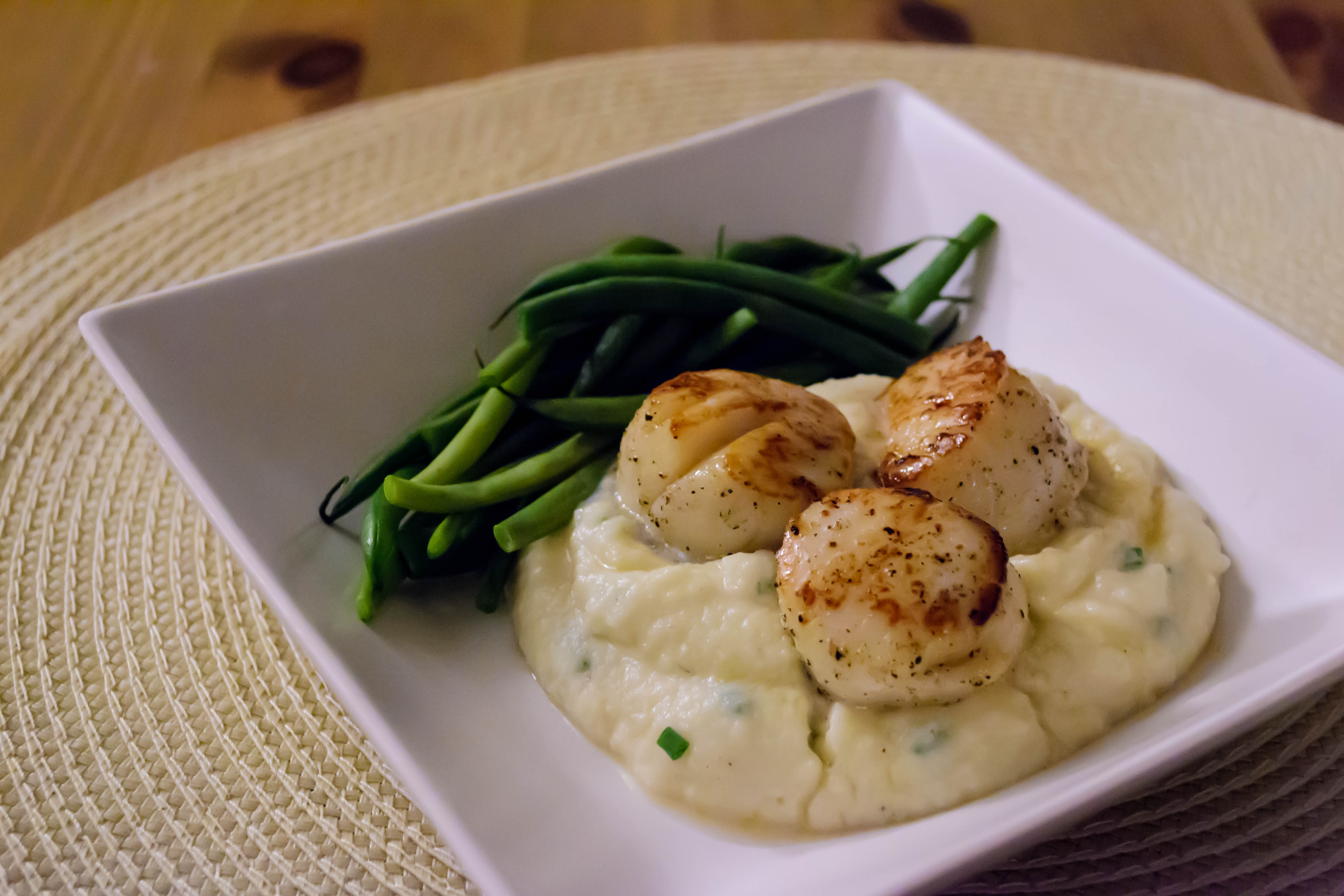 Because I was eating alone, I decided to play with plating a bit more than usual. As I see it, there are many ways to serve this dinner. I tried two options. First, and a bit more everyday, is a lovely heap of parsnip puree, a few scallops nestled atop it, and a small pile of steamed slender green beans alongside. A healthy drizzle of sauce, and you are ready to serve.

 To amp up the presentation though, I grabbed a long rectangular dish. A few small bundles of green beans at intervals along the plate, small mounds of puree between them, and a tender scallop balanced on each spoonful of puree. Sauce can be applied to the top of each scallop, or poured around the edges of the plate just before serving.
Seared Scallops with Beurre Blanc and Parsnip Puree
Serves 2
For the parsnip puree:
3-4 large parsnips, peeled and cut into 1-inch chunks
2-3 cloves garlic, smashed and peeled
1 cup milk
salt and pepper to taste
2 tablespoons butter
1 tablespoon chives, finely minced
For the beurre blanc:
4 ounces dry white wine
½ tablespoon lemon juice
½ tablespoon heavy cream
6 tablespoons cold, cubed butter
salt to taste
For the scallops:
2 tablespoons olive oil
salt and pepper to sprinkle
12 large sea scallops, at room temperature
- Place the milk, garlic cloves, and parsnip chunks into a medium pot over medium heat. The moment the milk begins to bubble, reduce the heat to low and simmer until the parsnips are tender, 10-12 minutes.
- Remove from heat and season to taste with salt and pepper. Stir in the butter until melted.
- Blend until very smooth using an immersion blender, a regular blender, or a food processor. Just before serving, fold in the chives.
- While the milk for the parsnips is heating up, make the beurre blanc.
- In a small pot, heat the wine and lemon juice to a boil over medium high heat. Reduce the liquid to a bare tablespoon.
- Turn the heat down to medium and add the half tablespoon of cream, which will help stabilize the mixture.
- As soon as the liquid begins to bubble again, turn the heat down as low as it will go and begin adding the butter, one cube at a time, whisking until completely integrated into the liquid before adding the next cube.
- Continue adding the butter, whisking constantly, until it is all integrated. Turn off the heat and continue whisking until the sauce is fully emulsified and has become a fluffy, pale yellow puddle slightly thicker than melted ice cream.
- Stow the finished sauce in a thermos to stay warm while you cook the scallops.
- Unwrap your scallops and pat them dry with a paper towel. If they are wet, they will not sear well. Sprinkle both sides of each scallop with salt and pepper.
- In a large skillet, heat the olive oil over medium high heat. When it is shimmering in the pan, carefully add the scallops in a single layer, taking care not to let them touch one another. This seems fussy, but it is essential for getting a good sear.
- Once you have placed each scallop, don’t touch them for 2 full minutes. Then, carefully lift one and check the bottom – it should have a deep bronzed crust. If this is the case, flip over each scallop and cook another 2 minutes. If it isn’t deeply bronzed yet, let it cook another 30 seconds before checking again.
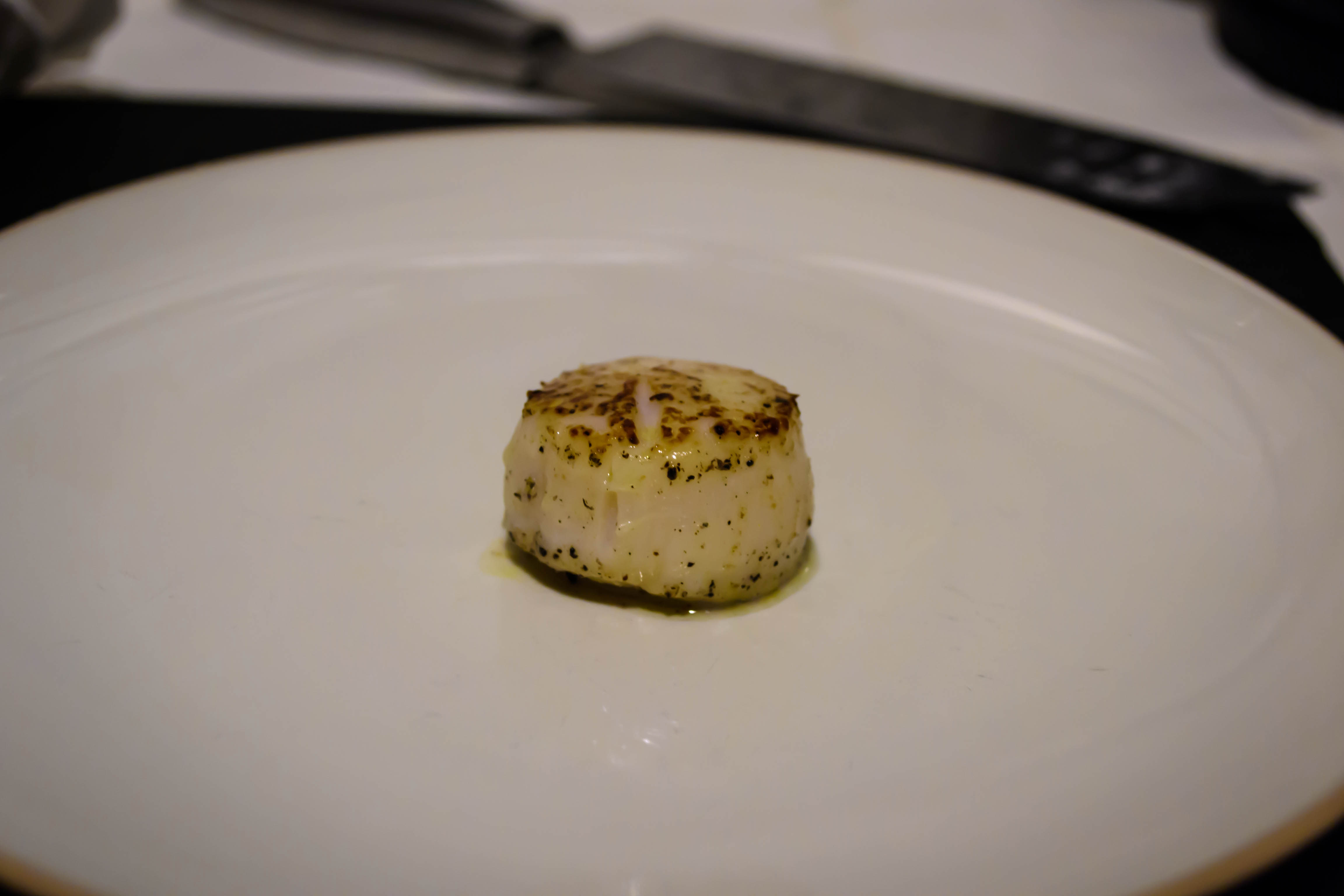
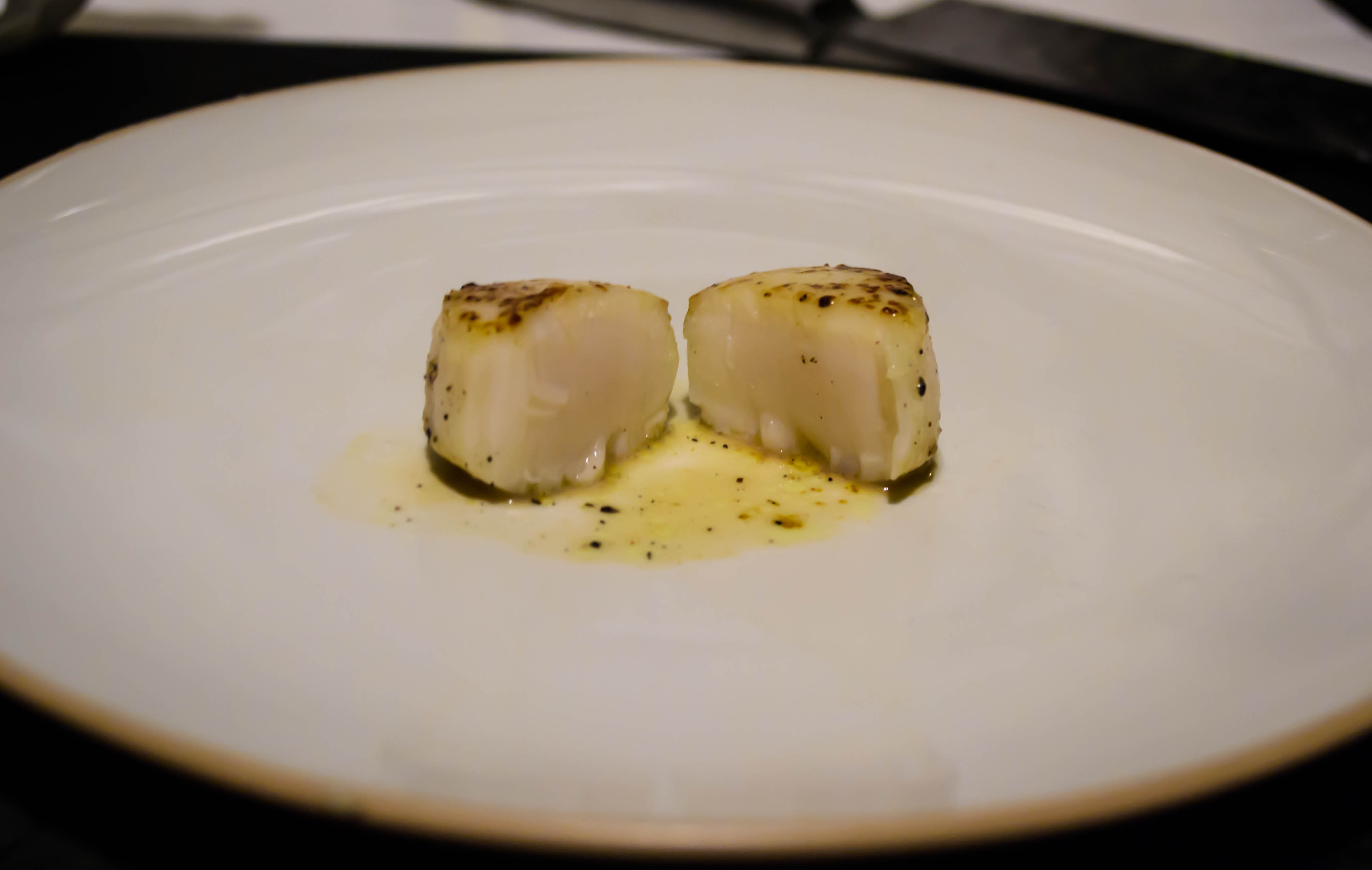
- When the scallops are cooked, they should feel slightly springy but resistant, like a firm mattress. Ideally, they should be the palest, palest pink in the center as in my photo above – they will continue to cook while you plate the rest of the meal.
- To serve, arrange as desired with scallops atop or beside the parsnip puree, and the beurre blanc sauce drizzle over the top or puddled on the side. Accompany the dish with steamed green beans or pencil asparagus, if desired.
 Everyone starts off in the kitchen somewhere, whether it’s spreading peanut butter thickly onto a piece of barely toasted bread, or stirring spaghetti tentatively with a long-handled wooden spoon and watching it relax into the water, or even scrambling eggs because the planned entrée for that night looks “weird.” In my case, I started with dessert. Cookies and cakes were the first things I “helped” make, which probably explains why I’ve developed such a sweet tooth over the years. Mom would let me stir batter, pour pre-measured cups of sugar, taste a beater. She was there while I jammed my thumbs into an egg trying to crack it, while I spilled powdery fluffs of flour onto the counter and sometimes the floor. She was there, though not watching, when I had my first lesson in ingredient deception: my first taste of cinnamon. A few brown grains on the counter, a small, damp index fingertip, and the sourest face dipping away from the countertop. Vanilla extract was the same way. Each time, I’m sure Mom turned and saw, and probably tried not to laugh, as I learned that in dessert as in so many things, a dose of sugar makes things better.
 Crème anglaise is essentially an all-purpose dessert sauce, and provides a base for so many lovely simple sweets. Egg yolks, cream, sugar, and some vanilla for flavor, cooked gently but whisked fervently, and you have a beautiful, rich sauce that lovingly coats the back of a spoon. Cooled, run through an ice cream machine, and shoved impatiently into a freezer, you’d have vanilla ice cream. A few more yolks and a long, slow bake in the oven, and you’d have crème brulee. Some cornstarch to thicken during the cooking process? Pastry cream. But left liquid and chilled, it makes a beautiful summer treat poured in decadent quantities over a bowl of glistening berries. And if you want to build the whole thing atop a slice of cake, well who am I to stop you? Since Mom and I are both grown-ups now, we added a whisper of bourbon to our creation, for a floral warmth and slightly more complex flavor.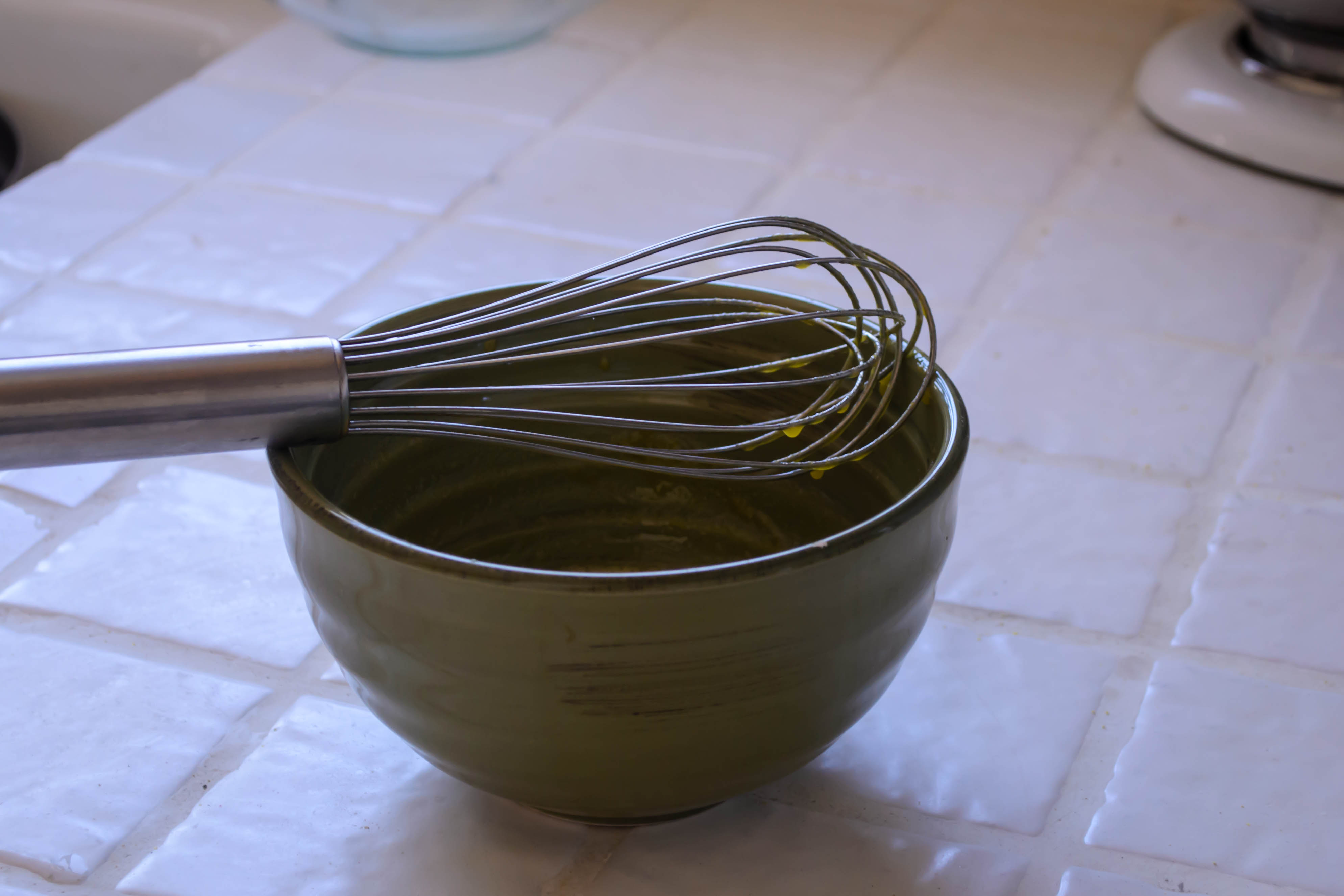
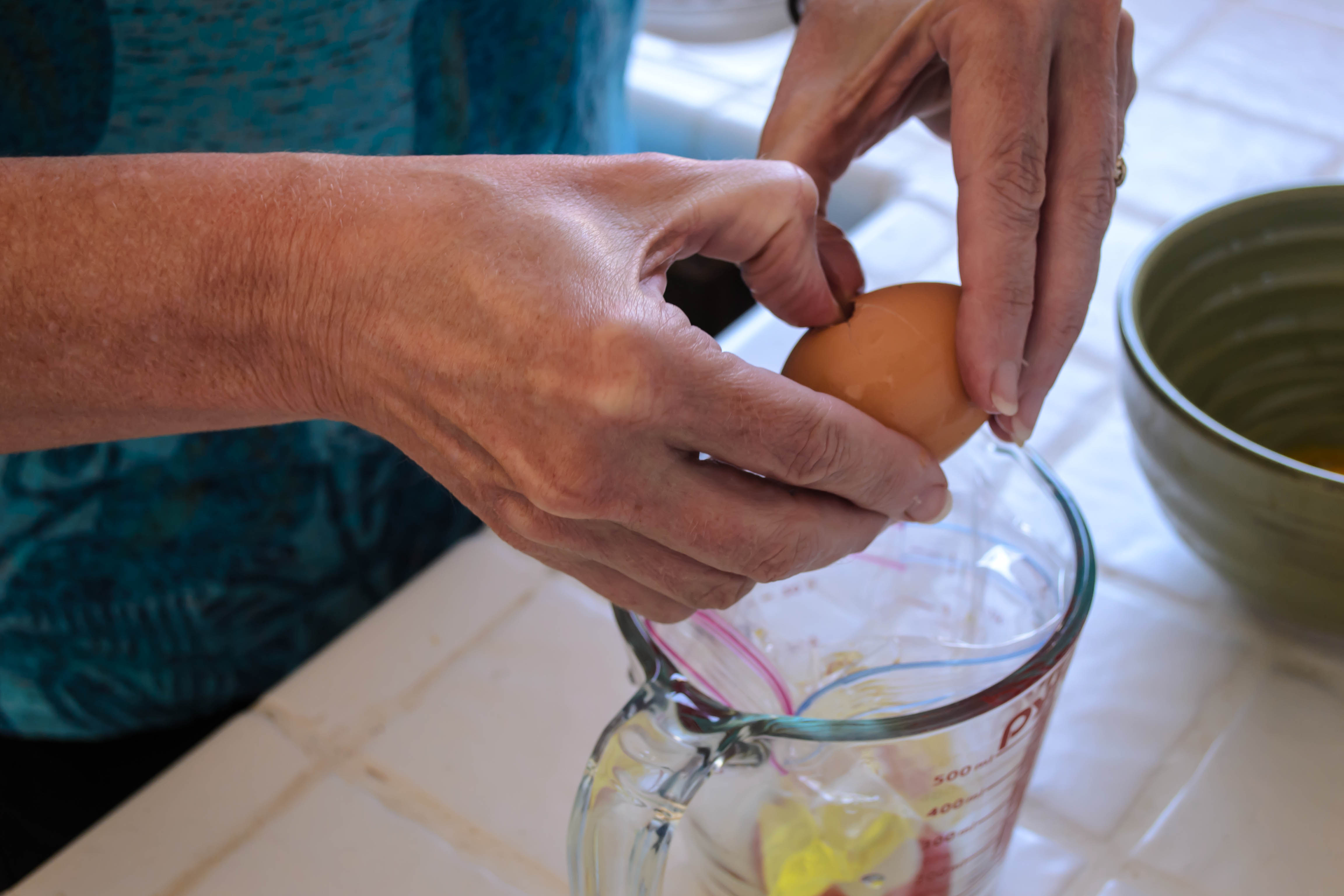


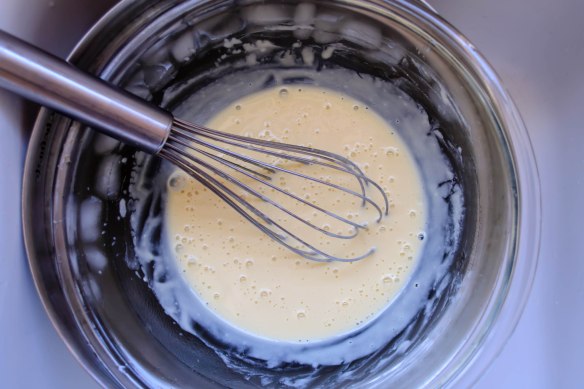
 Eggs managed, it’s a simple prospect of whisking in some sugar with the yolks, heating milk and cream together, adding the warm dairy to the thick, sweetened yolks, and cooking the whole thing to a thickness like, well, melted ice cream, since that’s basically what it is. Incorporate flavorings, strain the mixture to ensure a nicely textured final product, and chill until ready to use.


 My interests for some time have been food and bodies. Academically, as I’ve noted on my
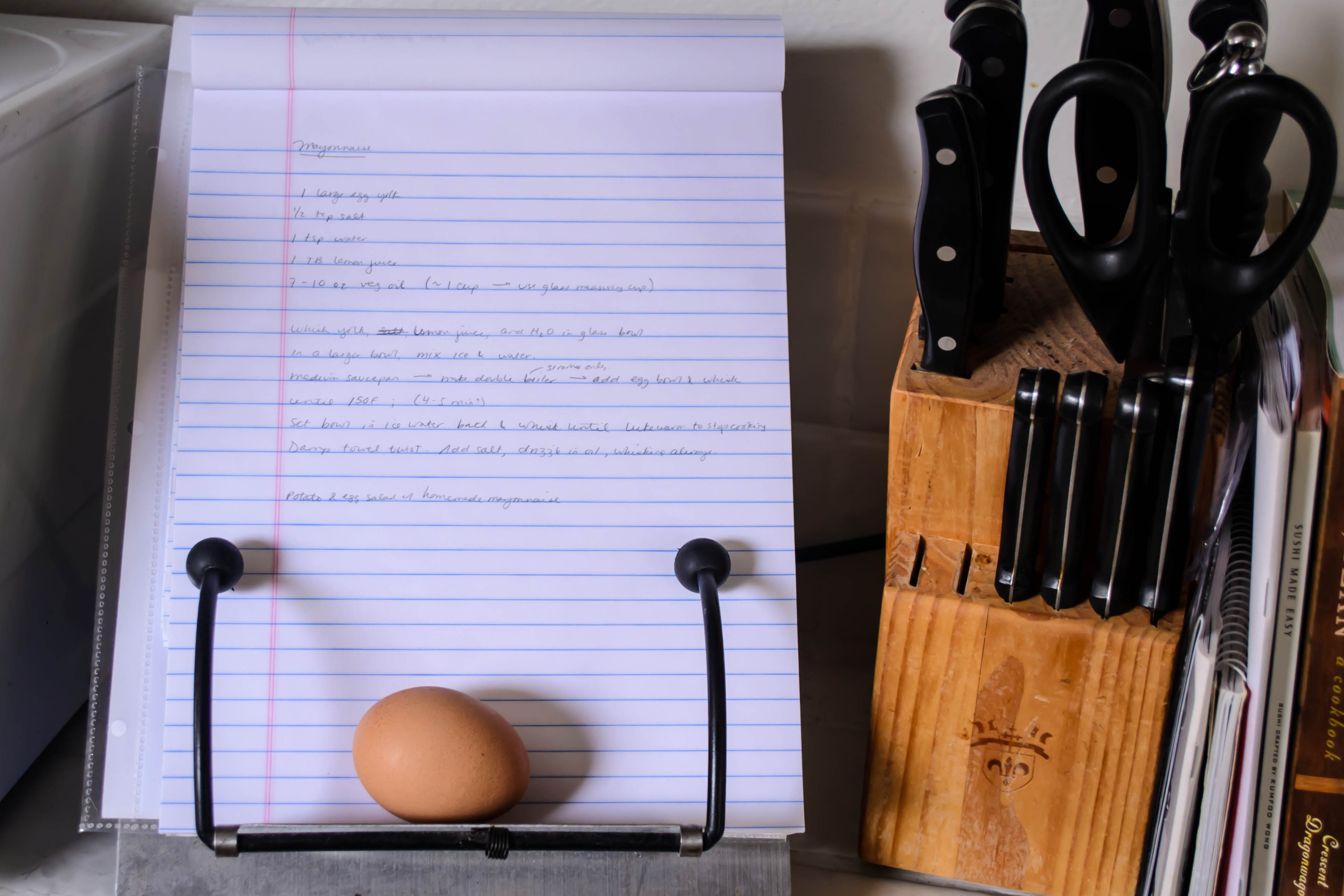
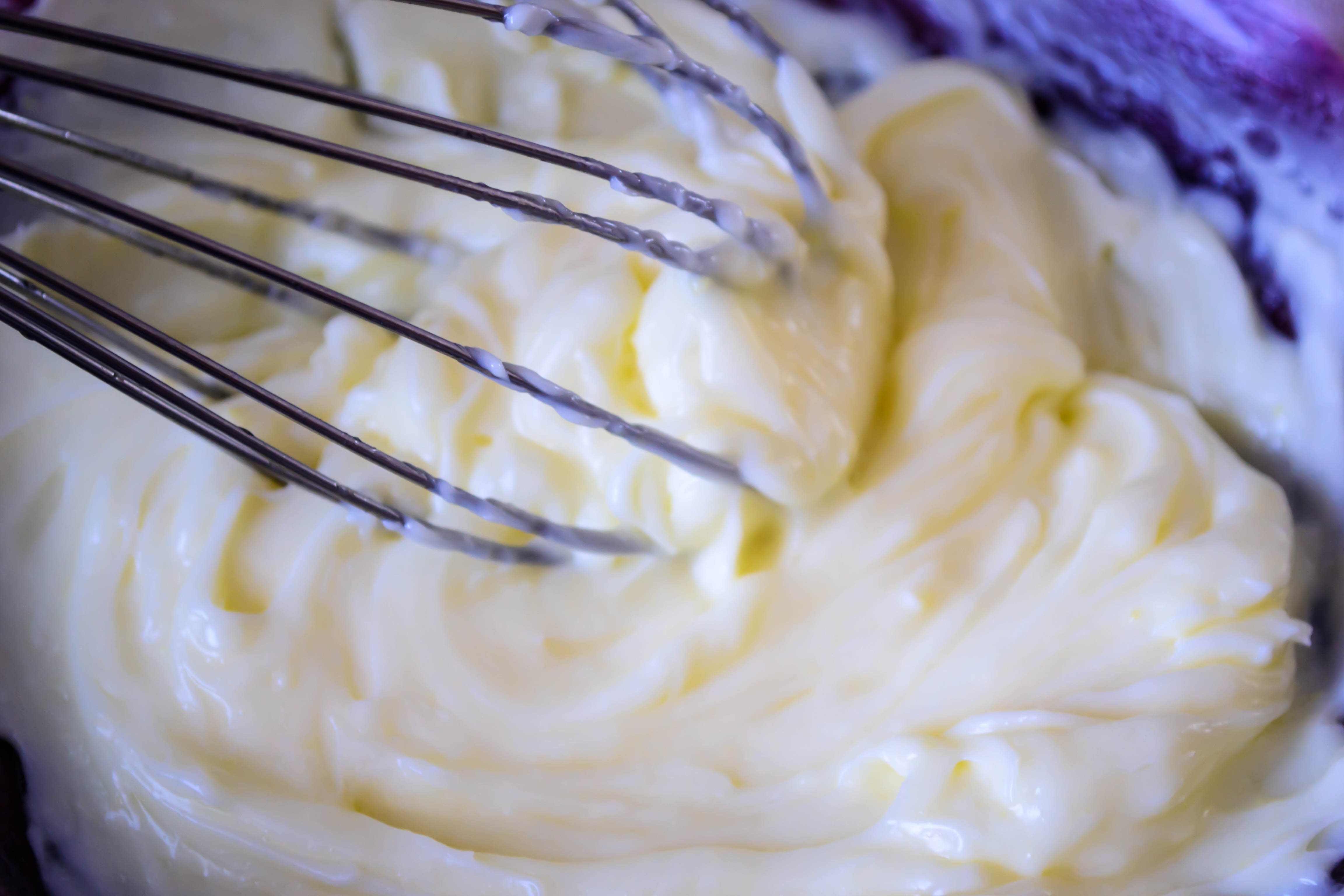
 I want to propose a new one, to break this concentration on the negative textures and attributes we give our bodies, and refocus attention instead on their strength and abilities: mayonnaise arms.




 I started this project with flour-thickened sauces almost by accident. Wanting familiarity, I didn’t realize my first three sauces, the
  I used an approximation of Ruhlman’s Ratio recipe for this. Almost more useful than the recipe, though, was his advice: “Do not be afraid of its breaking. Sauces can sense fear and will use it to their mischievous advantage. I have broken many sauces and am still a happy, productive member of society and an advocate of the emulsified butter sauces. If you make them, you can and will break them” (187-88).
 An emulsified sauce, of which hollandaise is just one example, means a sauce that is thickened – held together, if you will – by a tenuous relationship. Think salad dressing. Remember those bottles from childhood, packed in on the door of the fridge? Remember how, during the week in between salad courses, they would slowly blurp into separate layers – oil on vinegar on water? An emulsion is when those disparate layers, unfriendly, incompatible, are coaxed together into a homogenous mix. Vinaigrette is an emulsion – perhaps one of the simplest. Fat, acid, harmonious.


 Note: if you are making eggs benedict as your vehicle for this sauce, my recommendation is to poach the eggs first (
 "blackberry-eating in late September"