Changing tastes

I was not a picky eater when I was a child.  I liked almost everything, and I was willing to try probably 99% of what I was offered.  I liked vegetables, I liked fish, I liked salsa, I liked avocados… I liked food.
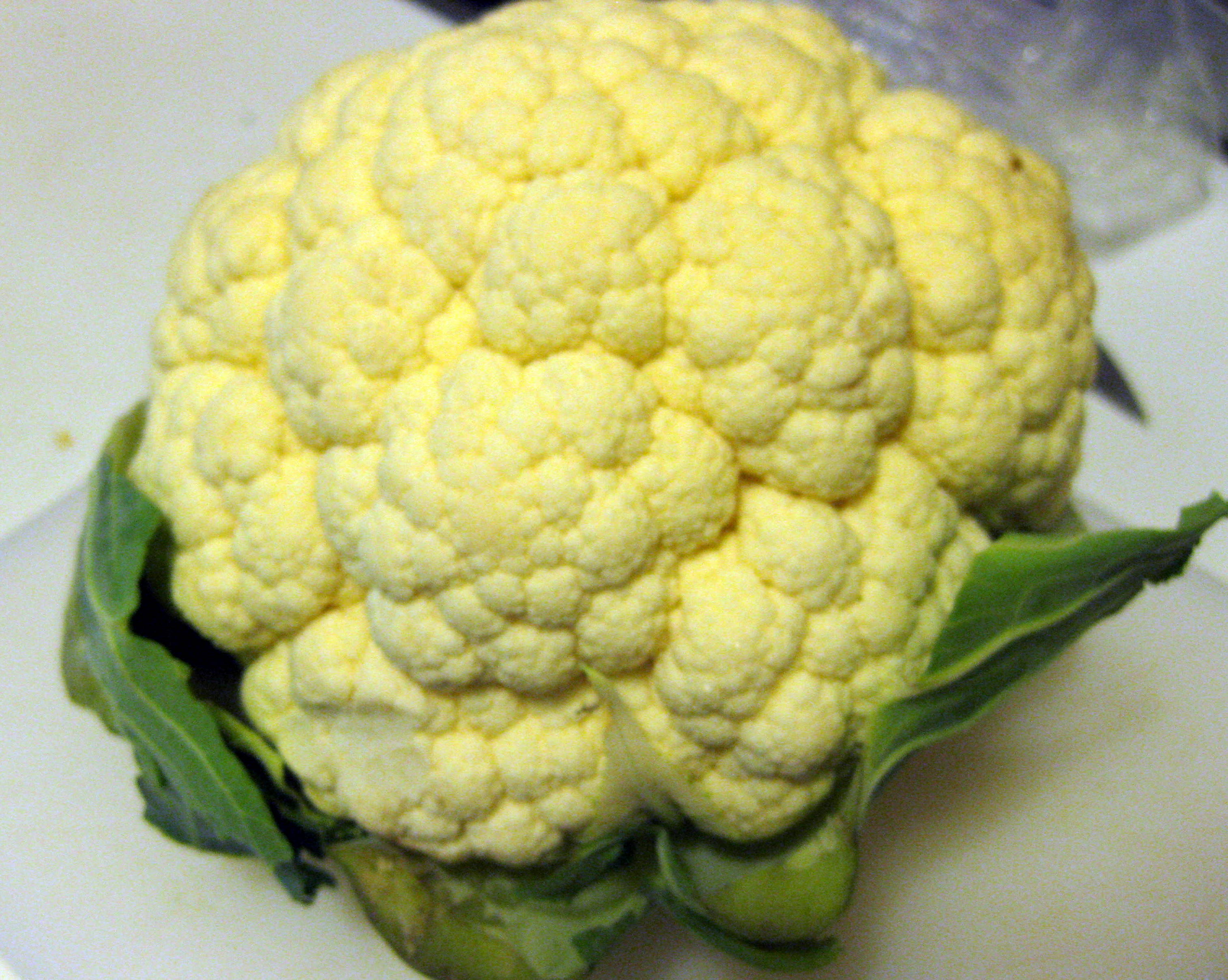
One of the few items that did not please my palate was cauliflower.  My mom always steamed it, and even smothered in a cheese sauce it had this musty, boiled cabbage flavor I couldn’t stand.  It felt mealy in my mouth and it looked pale and unappetizing: horrible vegetable brains I wasn’t supposed to gag over.

Recently, however, I’ve discovered roasted vegetables.  Well, I knew that if you cut root vegetables into chunks, doused them in olive oil, salt and rosemary and roasted them for almost an hour the result would be tender starchy delight, but I hadn’t done much with other victims.  Potatoes?  Yes.  Carrots and onions wedged in next to a leg of lamb?  Sure thing.  Asparagus with some lemon juice and delicate, bursting cherry tomatoes?  Definitely.  Cauliflower?  I was doubtful.  Until a few months ago.  I found a recipe for slow cooked “tandoori” chicken with a side of roasted cauliflower, and my husband’s pleading eyes convinced me to try it.  Liberally soused with olive oil, coriander and paprika, trapped in the oven at 450F for the better part of an hour, cauliflower became amazing.  Its cut surfaces deepened to mahogany and took on the appearance of that burnt sugar crust atop crème brulee.  Its florets got rough and crispy and, as I described to my slightly incredulous sister, became like cauliflower popcorn.  And I liked it.  With sea salt on top it was outrageously good.  N. and I plowed through a whole head of it by ourselves that night.

So I was okay with this week’s Bittman.  In fact, I was pretty excited.

“51. Steam cauliflower florets and toss with olive oil. Roast with peeled whole garlic cloves and chopped bacon at 400 degrees for 20 minutes.  Chopped parsley is a worthwhile addition.”

Not only was this – according to my new, cauliflower-appreciating minset – a delectable-sounding collection of ingredients, it was really easy.  I readied:

1 large head of cauliflower, cut into florets
¼ cup olive oil (approximate)

6-8 whole garlic cloves, peeled

5 slices bacon, chopped

Black pepper to taste

¼ cup chopped parsley

Ordinarily, I tell you what I did and then comment on it.  Here, I’d like to do the opposite.  I followed Bittman’s directions and, whether it was because I cut too large of pieces or because I overcrowded my baking tray, at the end of 20 minutes at 400F, my cauliflower was overcooked and my bacon was barely past raw.  I hiked up the heat and left it in for another 15 minutes, anxiously checking while we scarfed our side dish to hold back our hunger, which the smell of slowly-rendering bacon does nothing to assuage.

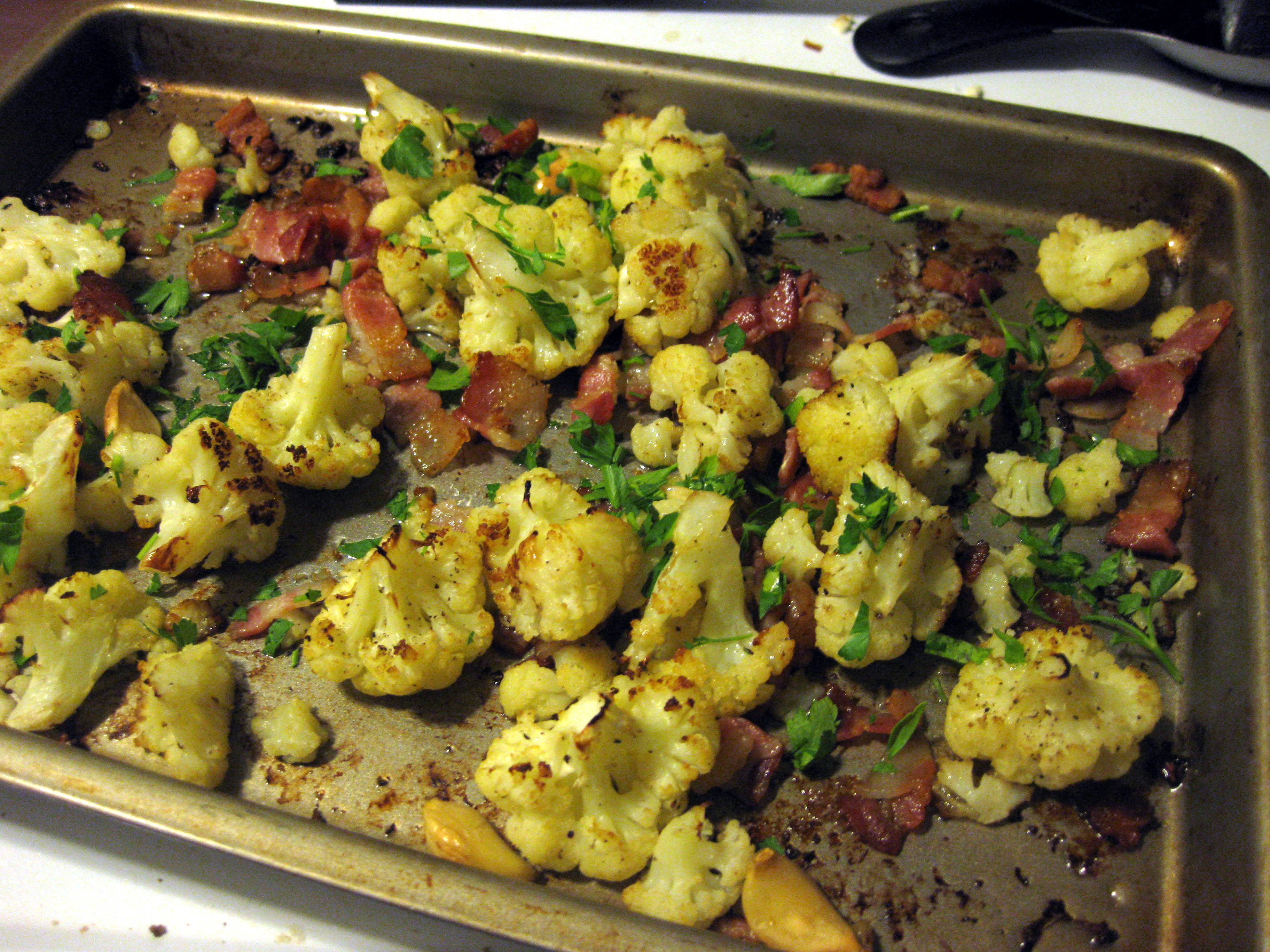
When it was finally done, with deep crinkly bits on the cauliflower and glistening bacon fat making the pan slick, I tossed on some parsley, scooped huge helpings onto our plates, and we collapsed into it.  It was good.  The blend of flavors was really wonderful.  The mild cauliflower, made almost sweet by its roasting treatment, was helped along by the smoky saltiness of the bacon, and when you got a garlic clove in there as well, it was magic against the taste buds.  The problem was in the texture and execution.  Because it had already been steamed, and because I had to add extra cooking time, the cauliflower was essentially the texture of mashed potatoes.  This might be acceptable in some cases – in fact, I’ve read recipes that call for pureed cauliflower as an addition or flat out replacement for mashed potatoes – but that wasn’t what this was supposed to be about.  I wanted some vegetal resistance against my teeth.  I wanted tenderness and give inside a golden shroud, but something still lingering to slice through.  This was all softness.  So here’s my procedure suggestion:

Preheat the oven to 450F.

Toss the raw cauliflower florets and the garlic cloves in olive oil and arrange in a single layer on a baking tray or cookie sheet.  Pepper them well.  Add the bacon, still trying to keep everything in a single layer and evenly distributed across the pan.

Roast for 20-30 minutes, checking frequently after 20 minutes, or until bacon is cooked through and cauliflower is dotted with crisp with golden-brown edges.  When desired doneness is achieved, sprinkle with fresh parsley and serve. 
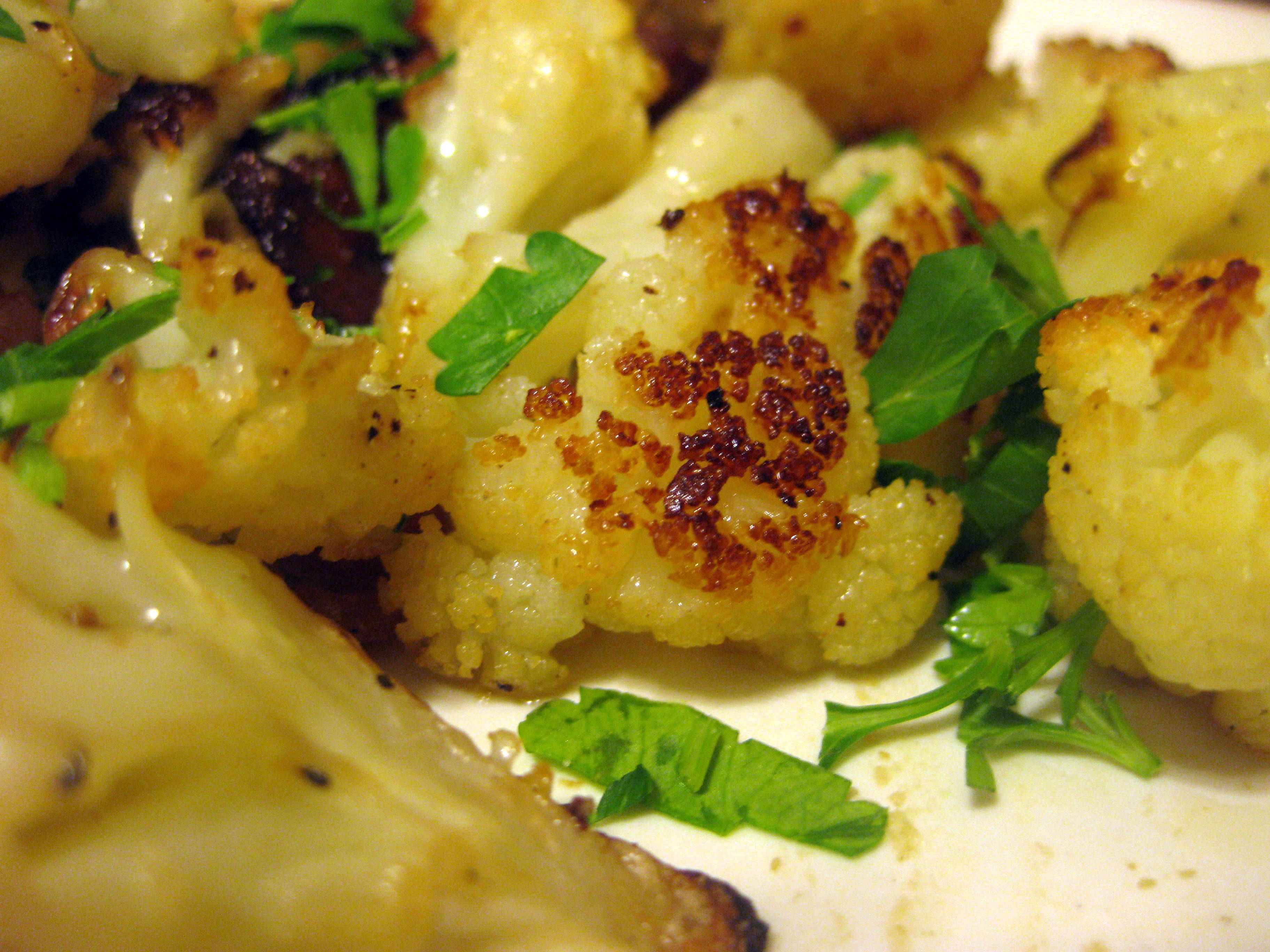
This might be a delicious side with some grilled salmon and a green salad, or as an alternative to french fries alongside a burger.  We had ours, I must admit with slight shame, paired with Stouffer’s boxed stuffing.  I did cook it with homemade chicken broth, but the packaged cubes of something-that-once-resembled-bread and dried, barely reconstituted onion bits remained the same.  Sometimes you need some shameful comfort, and these red boxed Thanksgiving classics are what does it for me.

With cauliflower in my “might be love” file, at least when it’s roasted till its whole constitution seems altered, my list of foods I don’t care for – short to begin with – is becoming almost nonexistent.  There are some processed foods I don’t like, but I’m not going to feel bad about that or try to develop a taste for them.  “I’ll eat anything” doesn’t need to include mushy canned green beans or frozen pasta with pellets of sauce.  When it comes to food – whole, natural food – I can now safely say, with very few exceptions, just to be safe, I like everything.

Humble Fare

Writing a dissertation is a humbling experience.  The quantities of research required, the demands on time and mental health, and finding out how much you don’t know about what is supposed to be your area of expertise are all staggering.  Most recently for me, comments from my adviser and a recollection of how comparatively little time I have to research, draft, write, and polish the thing have kept me all but scraping the earth with my forehead.

This week’s Bittman played into this humility topos:

“71. Add chopped scallions and chopped kalamata or other good black olives to cooked and drained white beans.  Dress with white wine vinegar, olive oil and fresh thyme, marjoram or oregano.” 

Not only did this sound refreshing, filling, and ridiculously easy, but it allowed me to work on another area of life in which I feel humbled: the garden.  With another reluctant spring almost over and me still questioning whether it ever arrived in the first place, I haven’t had as much time to devote to the brave little sprouts forcing their way through the cold chunks of clay and silently suffering slug attack as I would like.  One variety, however, needs no assistance from me.  Two years ago I planted some oregano in a square planter and set it next to the herb bed.  It thrived.  One year ago, we put in a sprinkler system and forgot to connect a dripper to the oregano’s box.  It died.  This year when I ventured out for the first time in March to see how things were looking, there was oregano everywhere except that box where it was originally planted.  This salad, then, seemed like the ideal way to start getting things back under control.  A few stalks uprooted is doubly productive: dinner for us, a more orderly space for the garden.  If only the dissertation were that easy!  I used:

1 16 oz. can white kidney beans, rinsed and drained

½ cup kalamata olives, roughly chopped

4 green onion stalks, chopped (I saved the white bulbs for another use)

2 TB chopped fresh oregano

2 TB white wine vinegar

2 TB olive oil

salt and pepper to taste

(¼ cup grated parmesan cheese)

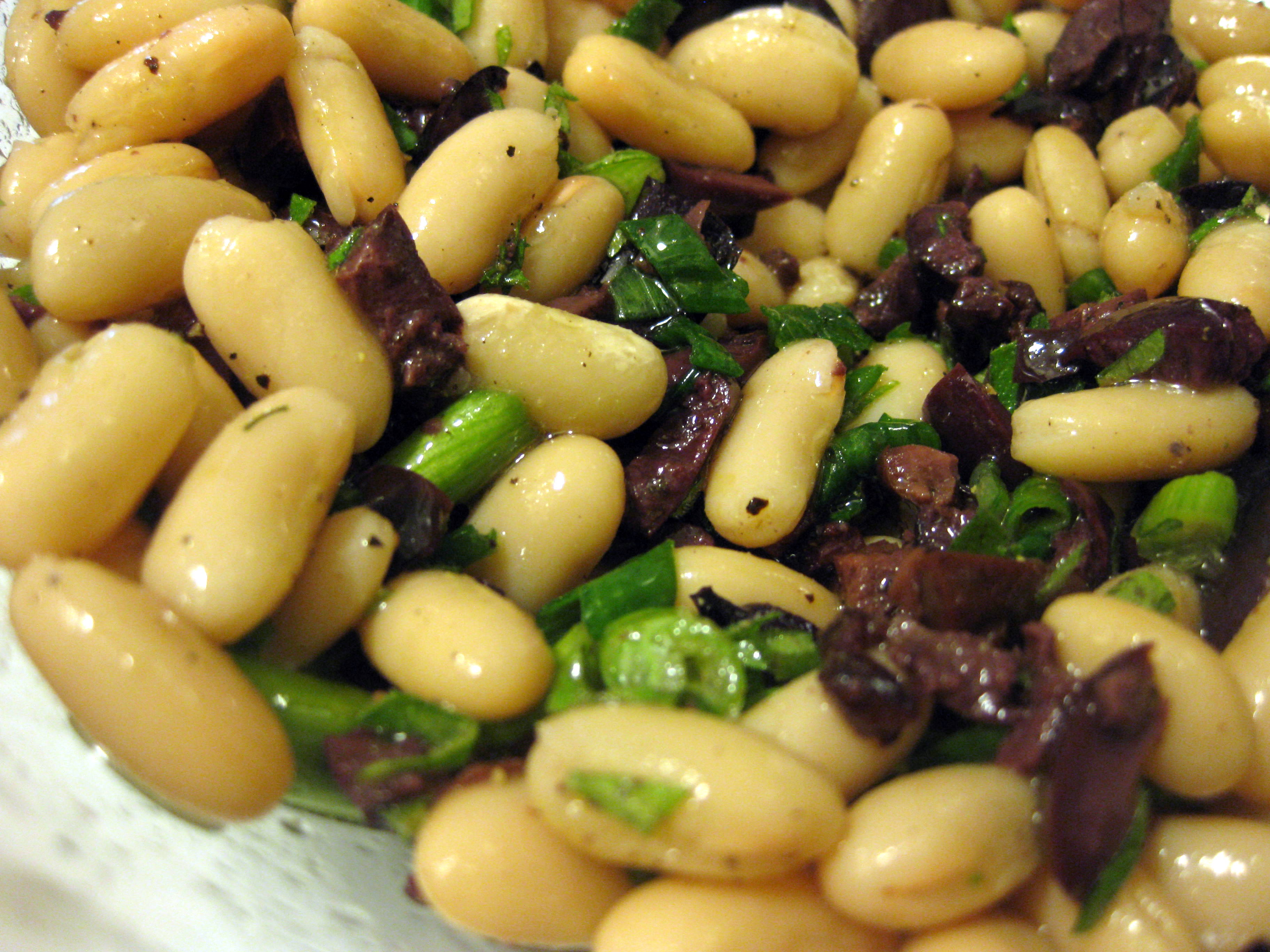
While our smoked chicken sausages sizzled in a pan, I literally dumped all the ingredients into a bowl, tossed it lightly, and gave it a taste.  When using only Bittman’s suggested collection it seemed to be missing something, so I added a shower of cheese.  Sun dried tomatoes, or capers, or fresh tomatoes, or torn arugula, or even crisp crumbles of bacon, would also make nice additions.

The finished salad was simple and satisfying, and had all the right tastes and textures.  The beans were creamy and soft beneath their slightly taut skins, the olives were a blast of brine, the onions had just the right astringency, and the oregano lent a spicy, earthy warmth.  The parmesan was just that final sprinkle of richness and somehow bound things together.  Pushing outside of the suggested ingredients and adding one of my own took this from a decent side dish to a salad I want to make over and over, adjusting the seasonings and the aromatics and the herbs every time, so it is fresh and exciting with each new taste.

It’s funny that even humble fare, when you give it due consideration, has flashes of zesty tangy brightness: a bite of olive, a splash of vinegar, a crumble of parmesan.  It makes me feel warmer about the dissertation experience.  If this simple salad – creamy and earthy and nourishing and salty – can have glimpses of piquancy, perhaps my project can as well.  I just have to keep experimenting with my ingredients.

Leafing through

Writing is slow.  And it’s difficult.  I learned this when I was first considering authorship (I wanted to write young adult novels, and then I wanted to write fantasy novels, and then I wanted to write The Great American Novel.  And then I decided to go to graduate school).  Yet I forget this with dependable, routine frequency, and then when I sit down to write something, I’m astounded and dismayed when it turns out to be challenging.

But cooking is often fast.  And it’s not all that difficult, if you’re paying attention.  So it’s funny that I seem compelled to combine the two.  Something that is over so quickly – created in half an hour, consumed in another – takes me a week to contemplate and fit words to.  And this surprises me, for some reason.  It’s synesthetic, really.  Taking the products of senses and forcing them into words is neither easy nor accurate.  And yet if we’re going to write about food, that’s what must be done…

“Poach broccoli rabe or stemmed greens like collard leaves, then drain and chop. Combine with chopped water chestnuts and diced mushrooms in a skillet with sesame or peanut oil, minced garlic and hot pepper flakes. Cook until vegetables soften and dry a bit.”

I permitted myself a few shortcuts this week, purchasing already-sliced water chestnuts and a big sack of greens from Trader Joe’s.

Approximations:

1 16 oz. bag mixed cooking greens

1 small can sliced water chestnuts

2 cups chopped mushrooms

¼ cup vegetable oil

2 TB sesame oil

4-6 cloves garlic, finely minced

½ tsp red pepper flakes, or to taste

2 TB soy sauce, or to taste

I heated up a pot full of salted water and dumped in the greens when the water came to a boil.  They only took a few minutes to cook, and when the thickest stems were just crisp tender, I declared them done and drained the pot, leaving the leaves in a colander so they could drip as dry as possible.

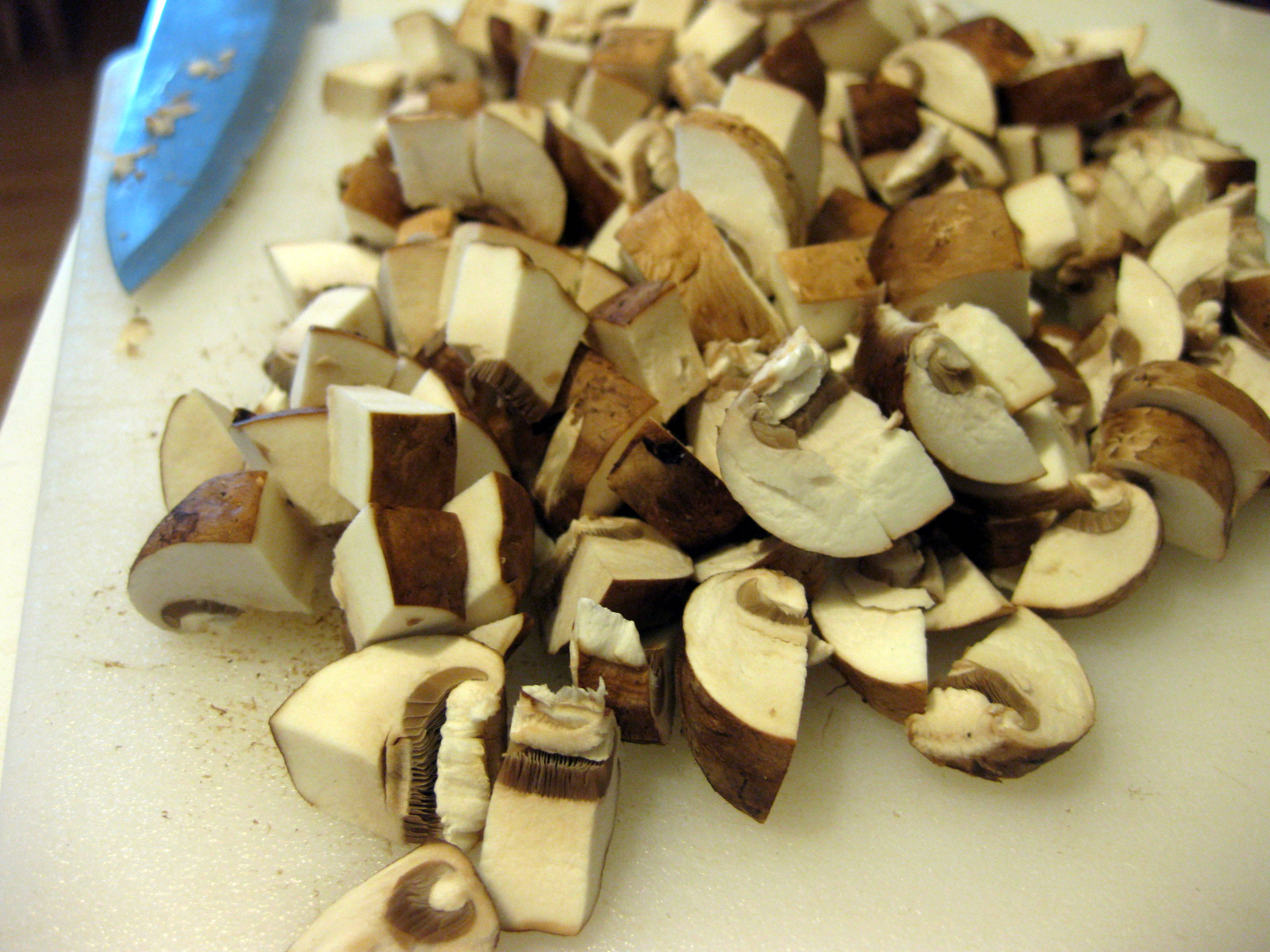
In a large skillet, I heated up the oil while I chopped mushrooms.  I think sesame oil has a very strong flavor and it sometimes burns, and since mushrooms tend to absorb quite a bit, I thought I’d give them a mixture to sizzle in.  When their color had darkened and they had given up their moisture, I tossed in the sliced water chestnuts and the garlic.

I’ve gotten into a bad habit of turning away from the stove lately, assuming things will take longer than they do (perhaps misapplying to the kitchen what I’ve learned so grudgingly about writing?) and returning to the smell of char, so I was careful to add my cooked, drained greens only moments after tossing the garlic around the pan.  Then I tossed on some red pepper flakes and gave the skillet a vigorous stir.

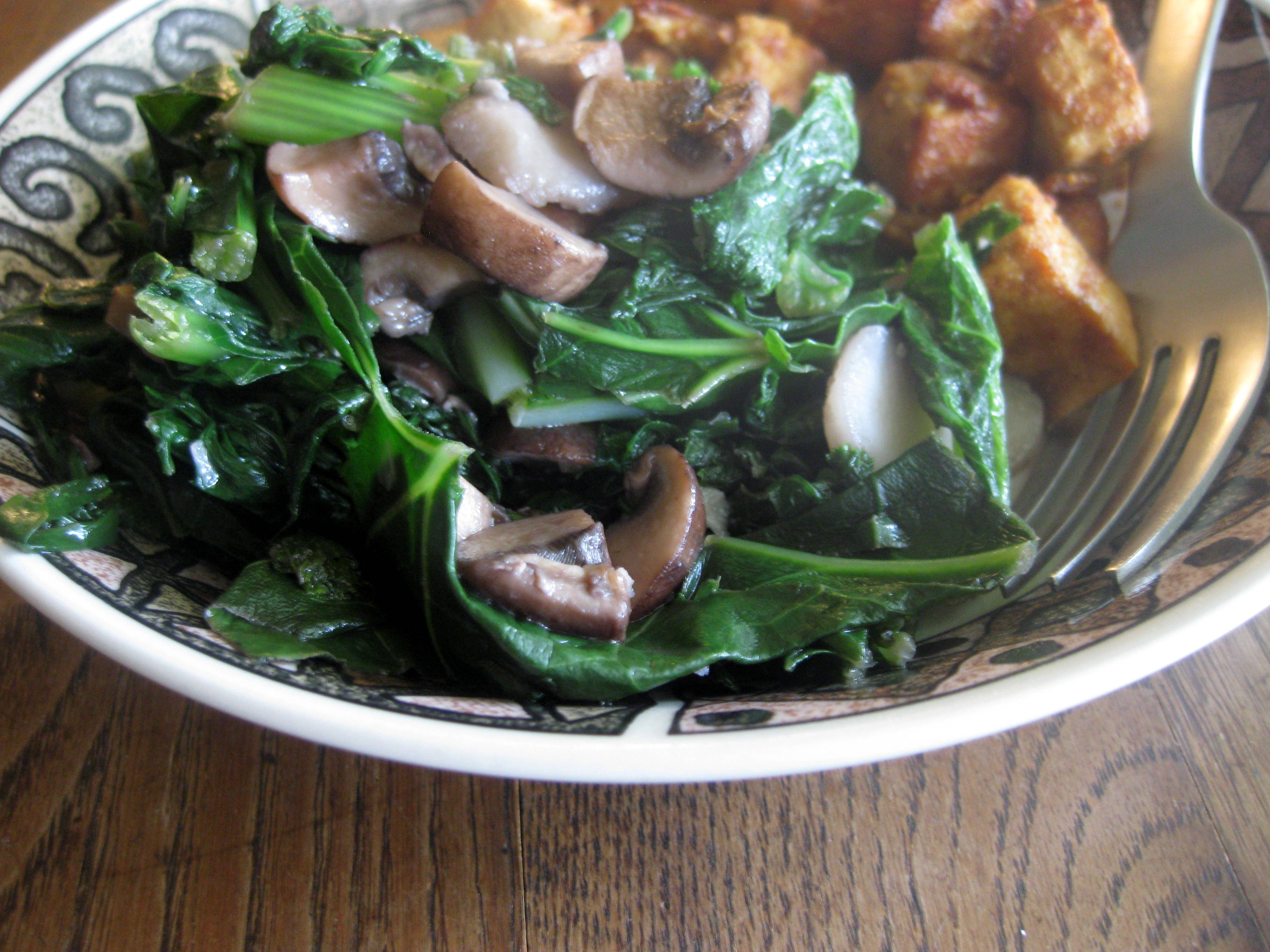
Because I served this with my favorite tofu recipe, I didn’t expect the greens to need any extra salt, but when N. and I tasted we realized it was missing something.  The simple addition of a few splashes of soy sauce rounded things out perfectly.  The greens had a tender crunch that is becoming one of my favorite textures; it’s the barest resistance against the teeth and then a soft chewiness that fills your mouth – I don’t know how to properly describe it.  The water chestnuts, on the other hand, scream with texture and crispness, though they don’t taste like much.  The mushrooms offer up such rich deep flavor that I almost didn’t need to textural contrast of the water chestnuts.  If I made this again I might leave them out.  The soft tender slipperiness of the cooked vegetables made this a dish with such comfort and familiarity that I could have eaten the whole pot on my own.   Easily.  Quickly.  Nothing like writing.

If writing is slow, for me, eating is like reading.  Both are acts of consumption: the words leap into your brain from the page and you must digest them to find their meaning.  The food slips into your mouth and lends flavor, nutrition, sustenance.

I’ve always done both more quickly than I should.  But when it tastes so good, what else can you do?

Iron Chef

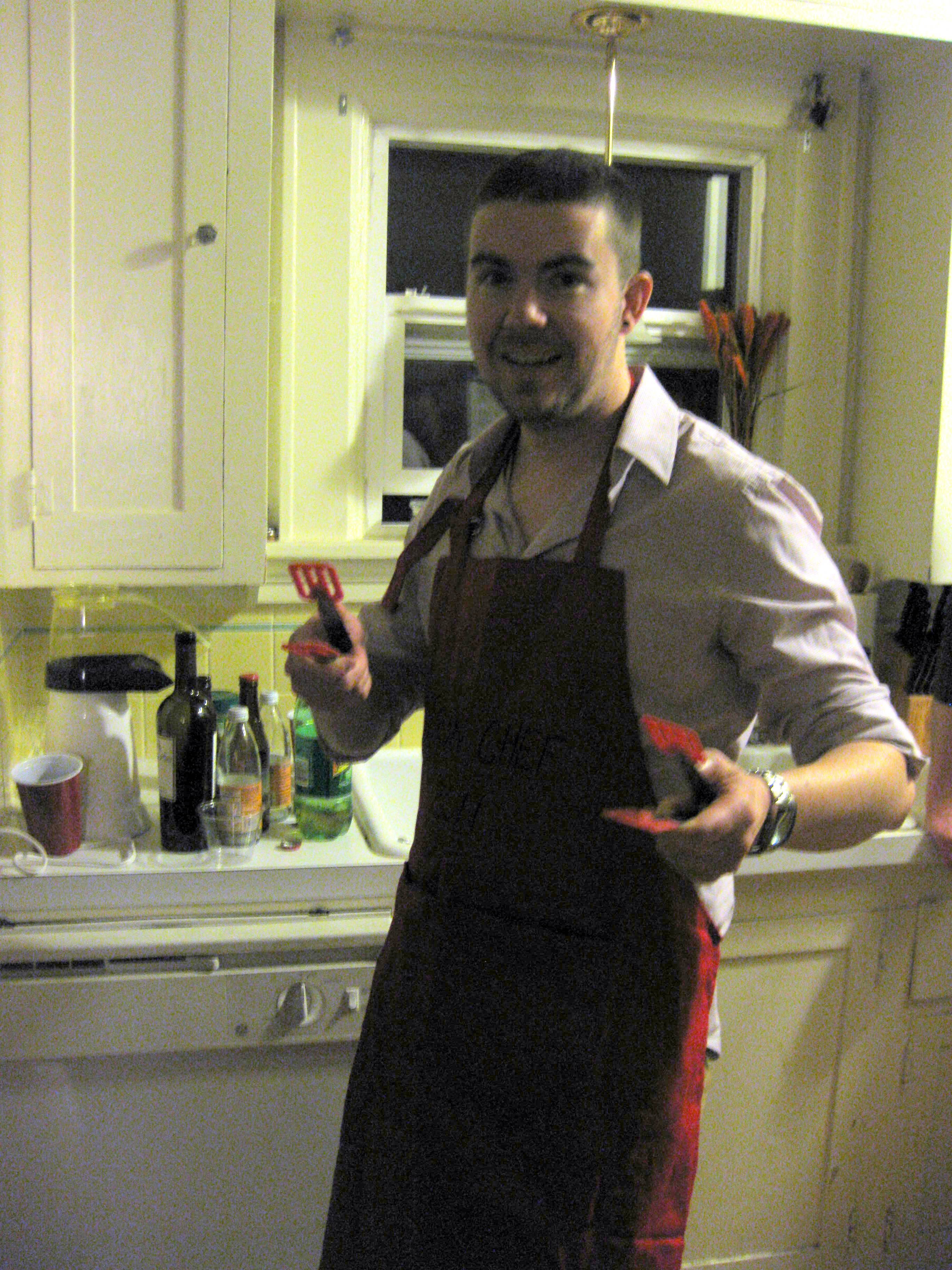
Some years ago, my friend A. suggested I host an Iron Chef party.  We were taking suggestions for themes, and among others she offered this one.  I was intrigued.  How would it work?  Who would choose the ingredients?  Who, most importantly, would win?  I must admit to harboring some jealous desire to be the victor, should such an event take place.  I like to cook, and I like to feed people, and I’m a bit of a hostess-who-wants-to-be-the-mostest, so it seemed like a competition in which I would not only excel, but feel extreme competition.

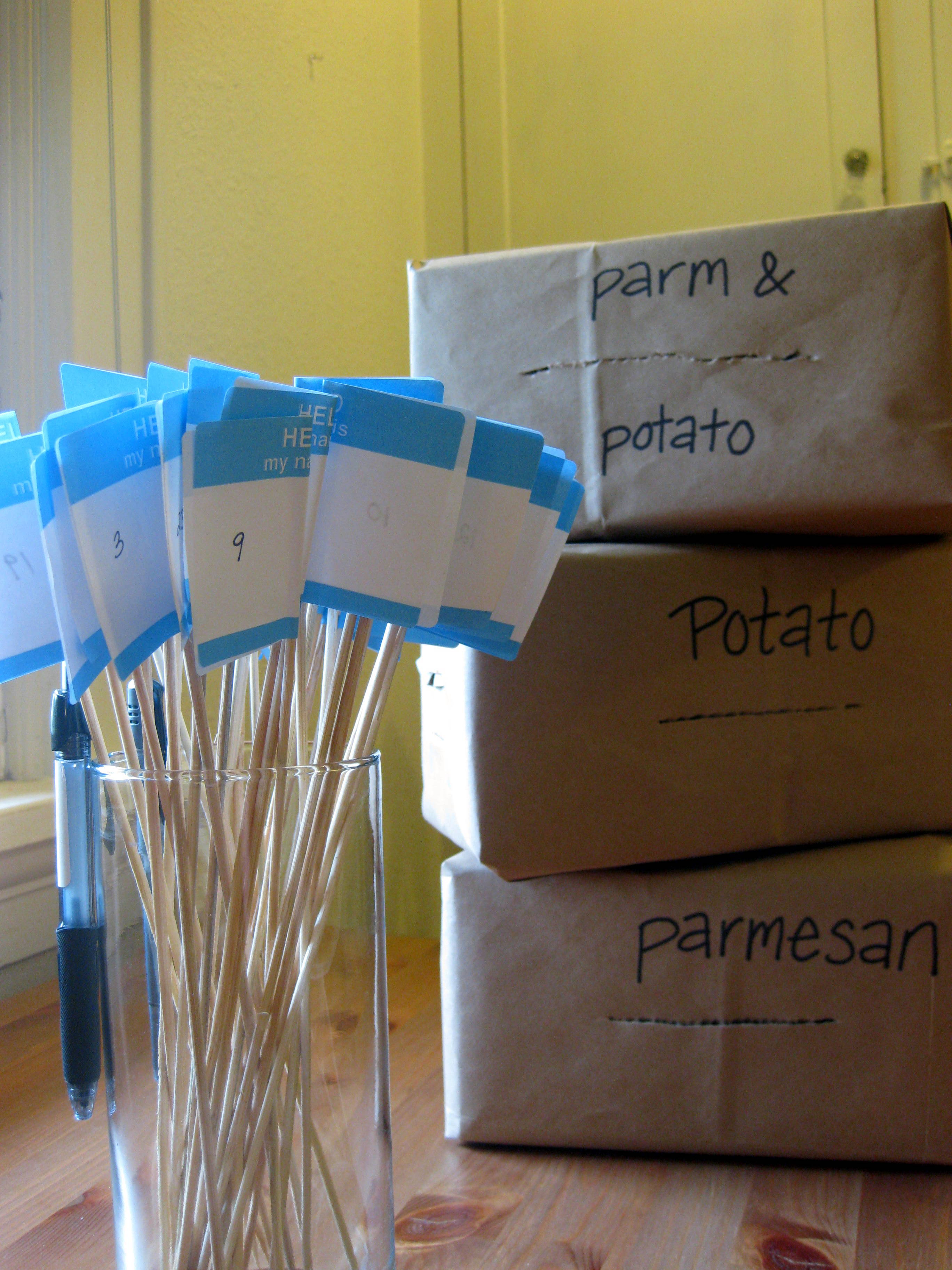
Then school happened and I put it aside for a while.  Long enough, in fact, that A. moved away and years passed.  It was not until last Saturday that this long awaited, long anticipated event actually took place.  Through a public poll, secret ingredients were chosen.  They were revealed in the invitations: the Iron Chef Potluck 2011 would feature potatoes and Parmesan cheese.

Fortunately for me, in need not only of potato and cheese inspiration but also multiple dishes (gotta make sure everyone’s fed and happy!), I had Bittman.  I chose two intriguing potato-based party dishes.

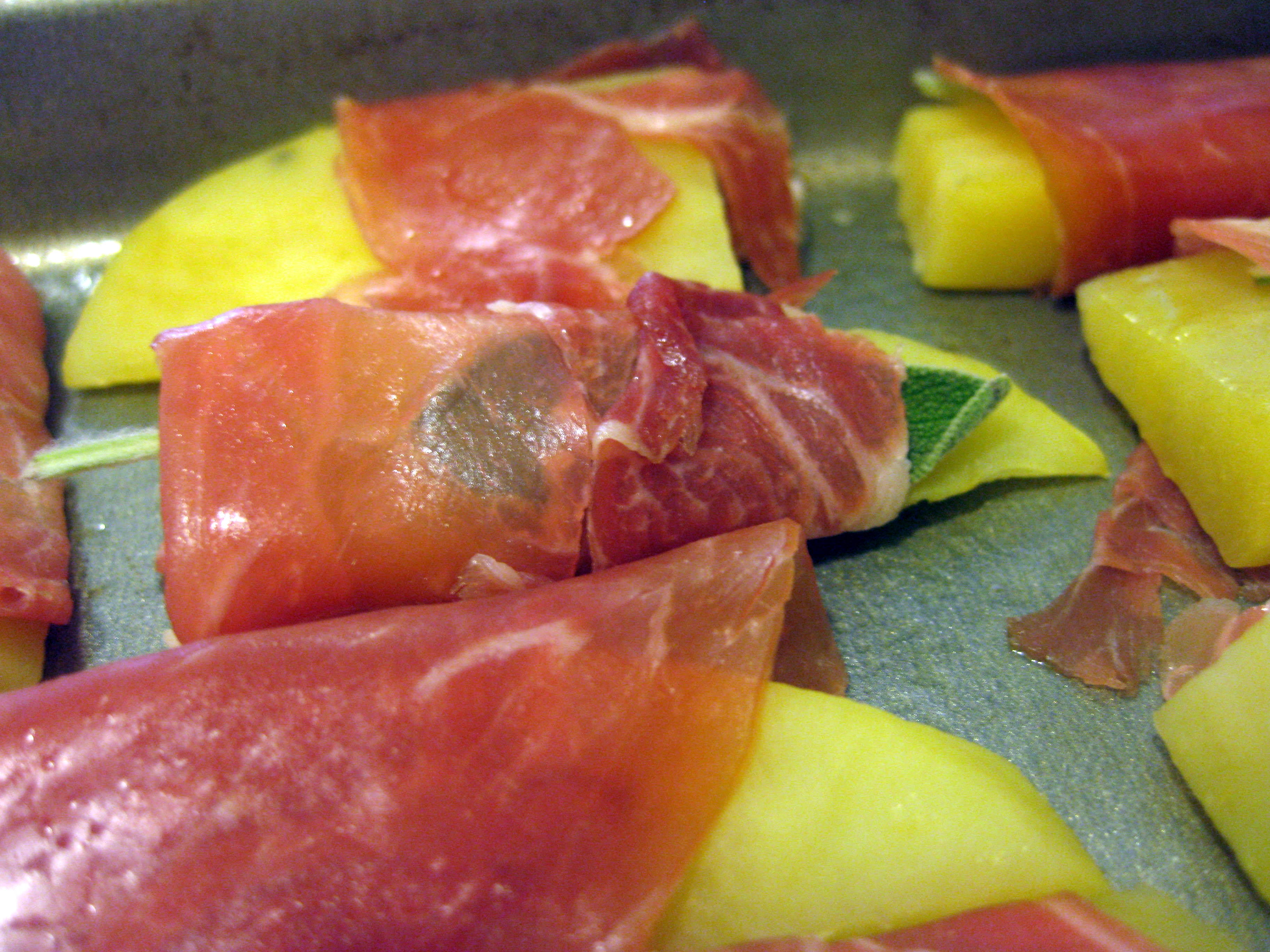
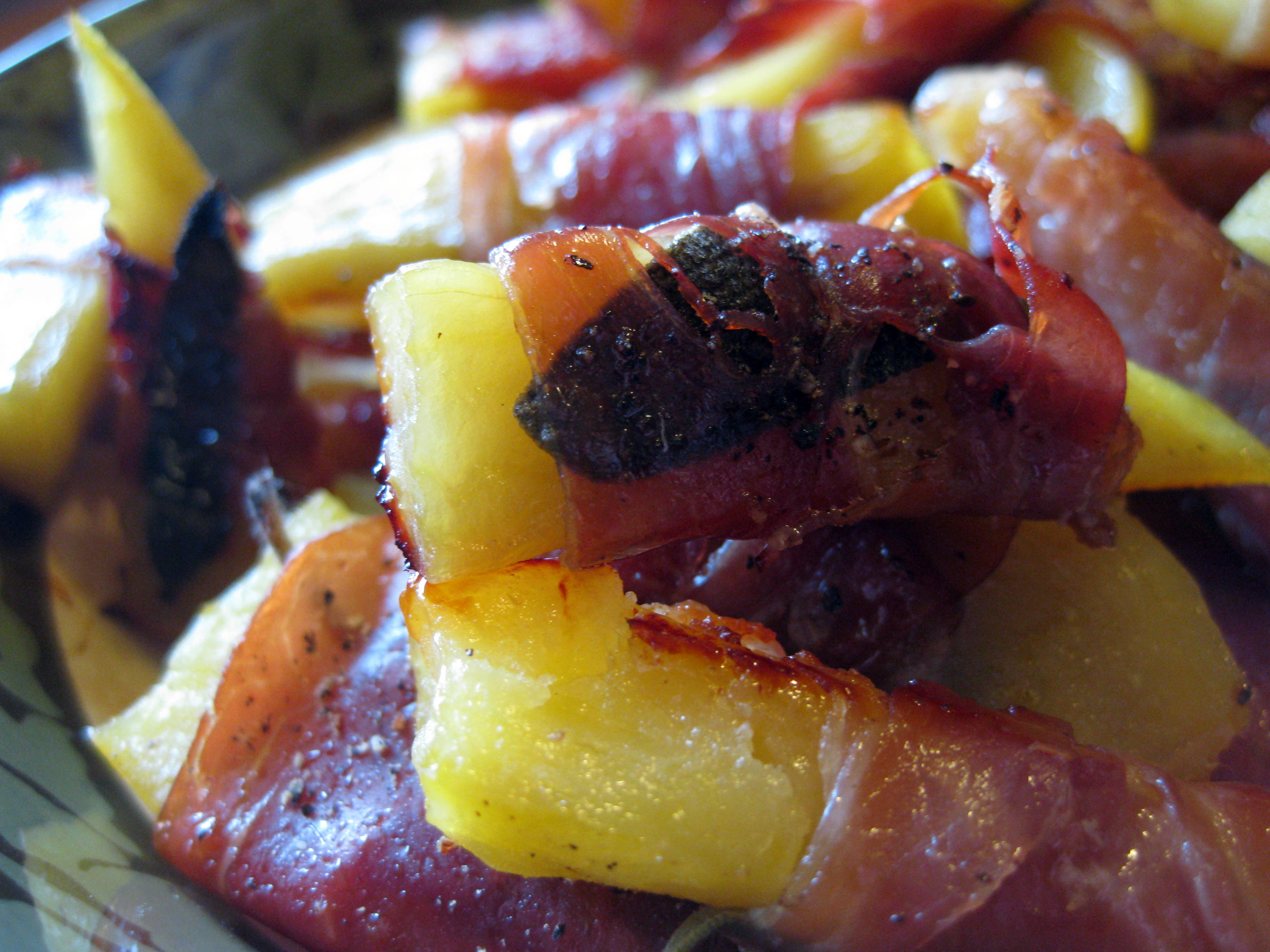
“48. Cut sweet potatoes into wedges; boil until tender.  Drain and toss with olive oil.  Wrap each with a prosciutto slice and a sage leaf, then roast until browned.”

This sounded outrageous.  Outrageous easy, outrageous good.  I used:

2 large sweet potatoes, halved lengthwise and sliced into wedges

2 packages of prosciutto (basically you just need a piece for each potato wedge, so it depends how many wedges you have)

1 package of sage leaves (same thing here)

Olive oil spray

Additional directions are not really needed here – Bittman’s original text tells you exactly what to do.  I boiled the sweet potatoes for 10 minutes or so until they were tender but not falling apart.  When they were completely cool I sprayed them and the baking pan with olive oil spray, pressed a sage leaf against the flesh of the sweet potato wedge, and wrapped it up with prosciutto.

I preheated the oven to 400F and roasted these little packets for almost half an hour.  At this point, the prosciutto was getting crispy and, truth be told, I needed the oven for other items.  The sweet potato spears never got browned, and I suspect the oven temperature was too low.  When you bake French fries the oven has to be up really high, so the next time I make these I will set the temperature at least to 450F.  I suspect only then will the kind of caramelization Bittman hints at take place on the sweet potato.

Regardless of browning, these were good.  The sage packs a punchy flavor, so if you’re not a fan of that sharp autumnal herbiness, skip it or use something less pungent.  The prosciutto-potato pairing was genius.  Salty and crispy paired with mild tender sweetness, all in a two-bite package.  Perfect party food.  I could have stood leaning over the counter with a bowl of these beside me for the whole afternoon.

But no.  The time of the party was approaching.  I had to move on with only a sampling.

“Autumn Rolls: Shred sweet potatoes or carrots and Brussels sprouts or cabbage.  Roll them up with fresh sage or mint and some sprouts in rice paper.  (Add sliced shrimp if you like.)  Make a dipping sauce of soy, garlic, grated or minced ginger and honey.”

I had never thought about serving sweet potatoes raw (though Bittman does suggest this in multiple dishes), but I was drawn to it because it seemed in keeping with the Iron Chef project: in a challenge like this, using the ingredient in every one of its forms seems logical.  If you can boil it, roast it, mash it, bake it, why not shred it up and use it still crunchy?

Regardless, I decided some extra preparation was necessary.  I used the following:

½ large sweet potato, shredded and soaked in cold water for ten minutes to remove starchiness.

½ small head of cabbage, very finely sliced

30-40 mint leaves

1 cup sprouts (I used clover)

Rice paper wrappers

½ cup soy sauce (I used gluten-free)

2 cloves garlic, finely minced

½ inch knob of fresh ginger, grated

2 TB honey or to taste

After soaking the sweet potato in a cold water bath and changing the water once to drain away as much starchiness as possible, I decided the shreds seemed pleasantly crisp without leaving a “raw potato” residue on my tongue.  I tossed them together with the cabbage and about a tablespoon of soy sauce.  I put this with the rest of the ingredients (through rice paper) in an assembly line and executed my rolls.

These are not difficult, once you get the hang of them, but they are time consuming.  It takes me at least half an hour to roll up a batch of these, and I’ve made them many, many times.

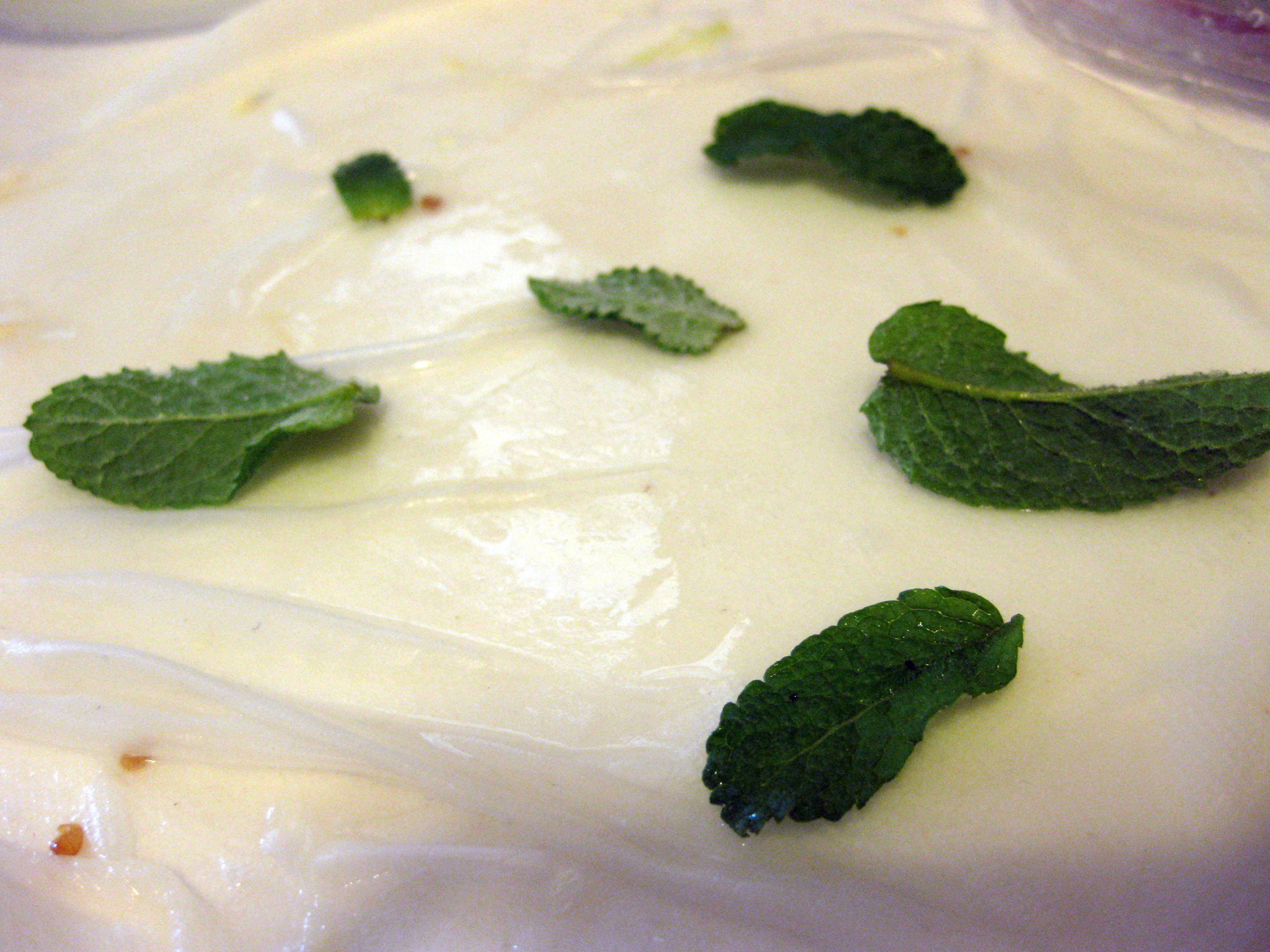
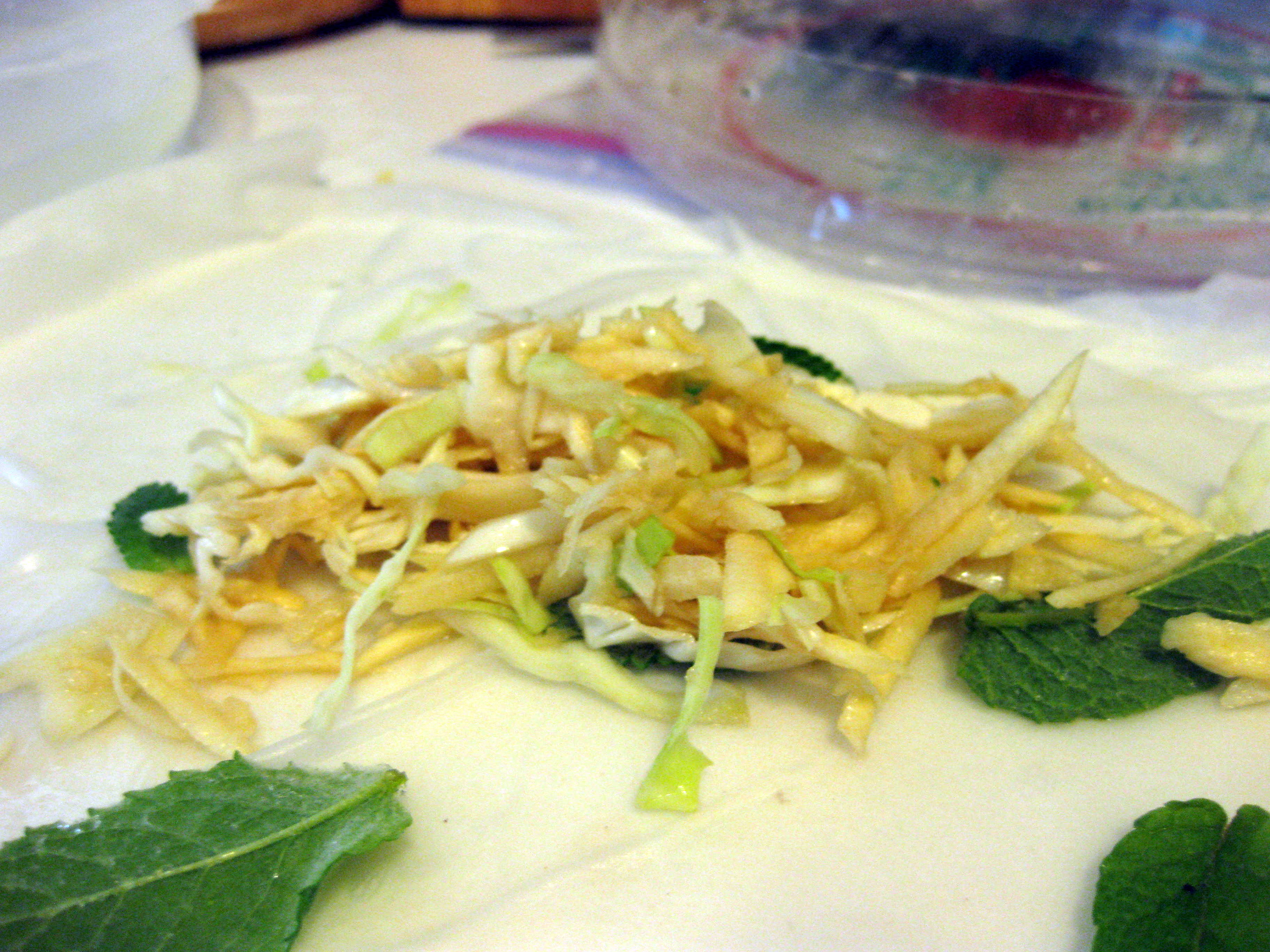
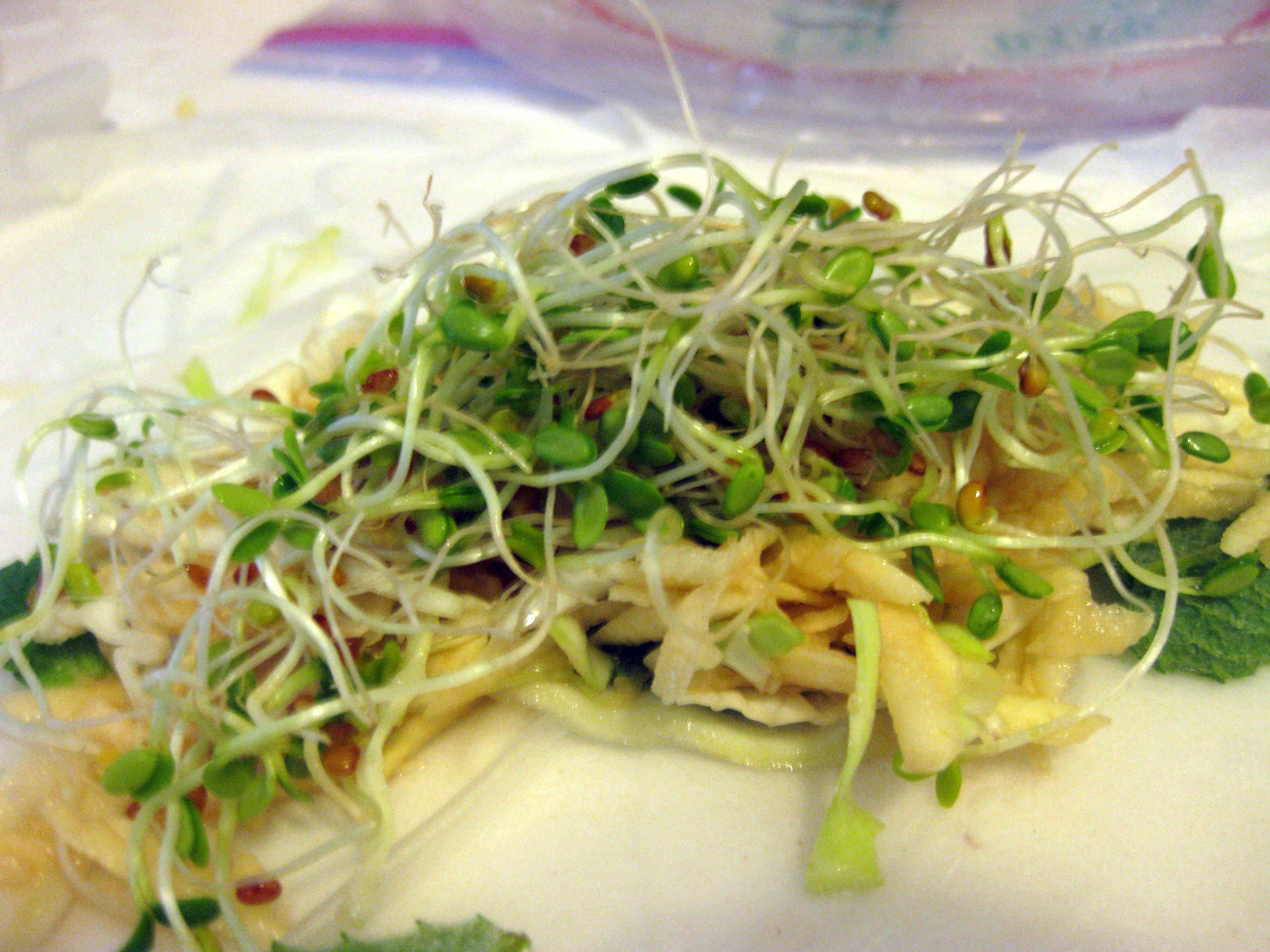
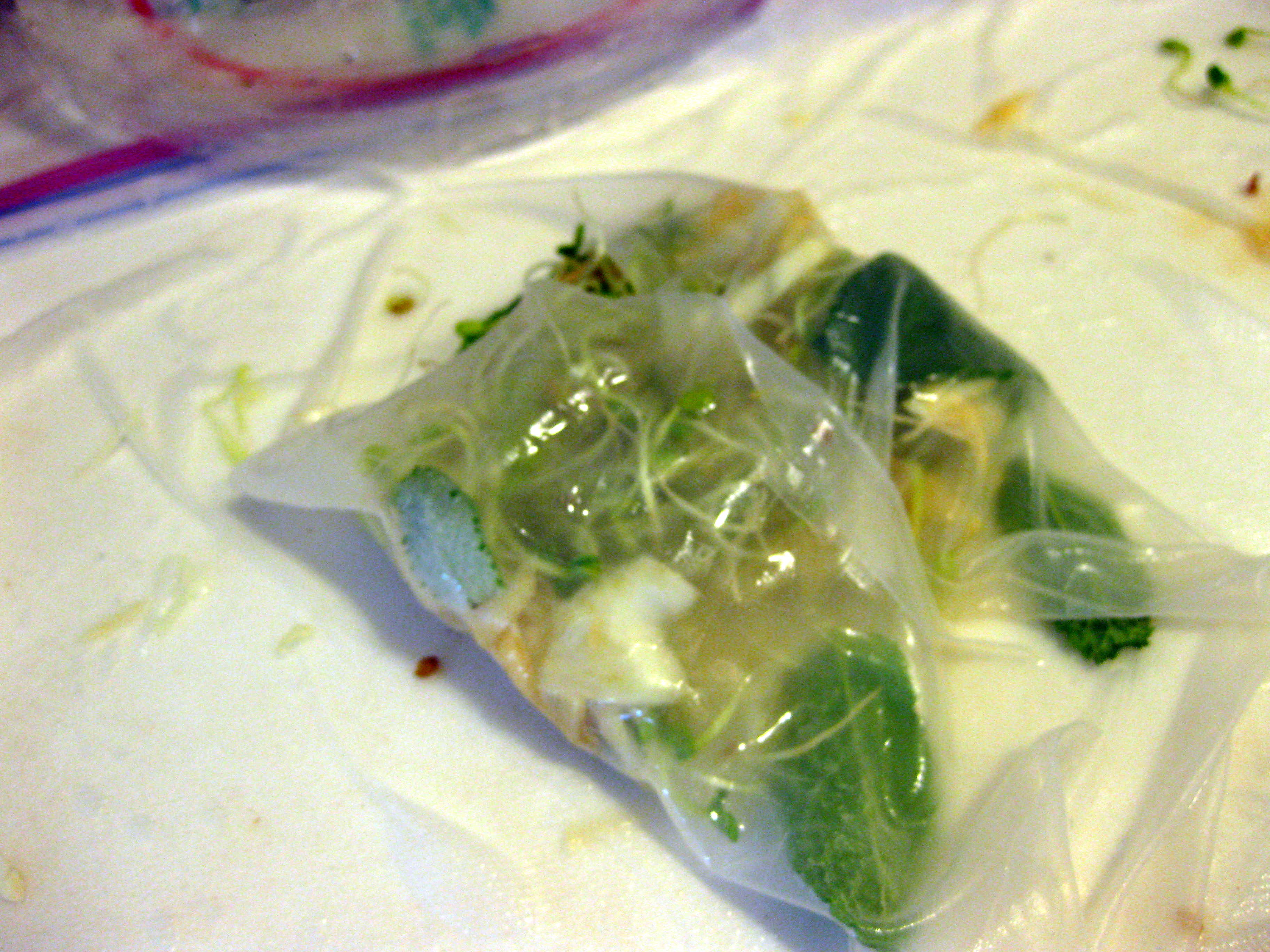
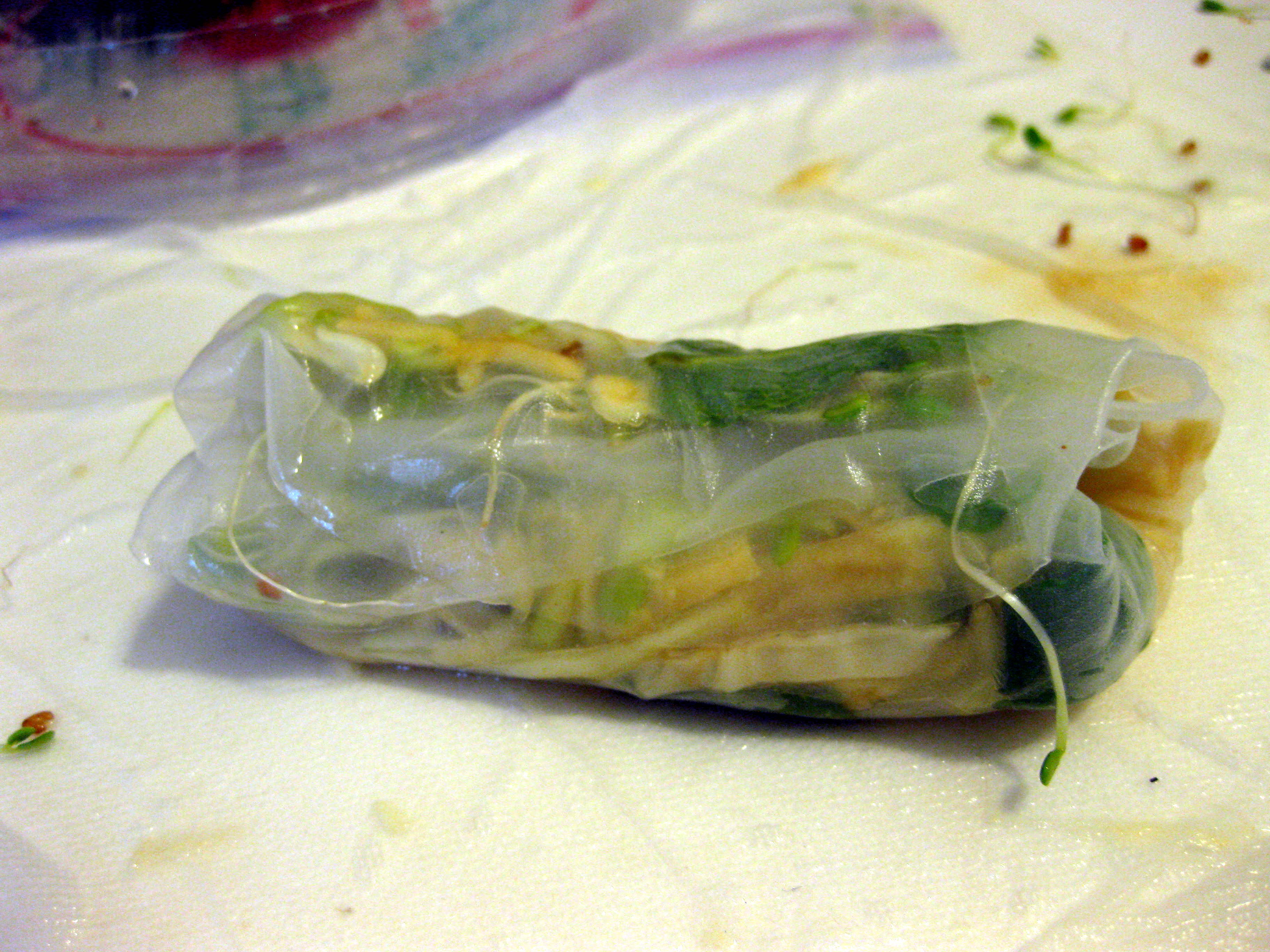
Soak a wrapper in warm water until it is very pliable.  This takes 45 seconds or so.  When it is the consistency of wet tissue, spread it on a paper towel or kitchen towel and then flip over and spread again.  This gets excess water off so you don’t have a soggy roll.  At this point I usually put the next one into the water so it’s ready by the time I’m done rolling.   Since I took pictures of almost every step, let’s do this Pioneer Woman style.

Place a few mint leaves all over the wrapper.

Add a tablespoon or two of the sweet potato and cabbage mixture.

Add the sprouts.

Fold in the sides until they overlap across the toppings.

Now fold over the side closest to you and then roll the whole thing into a tiny burrito.

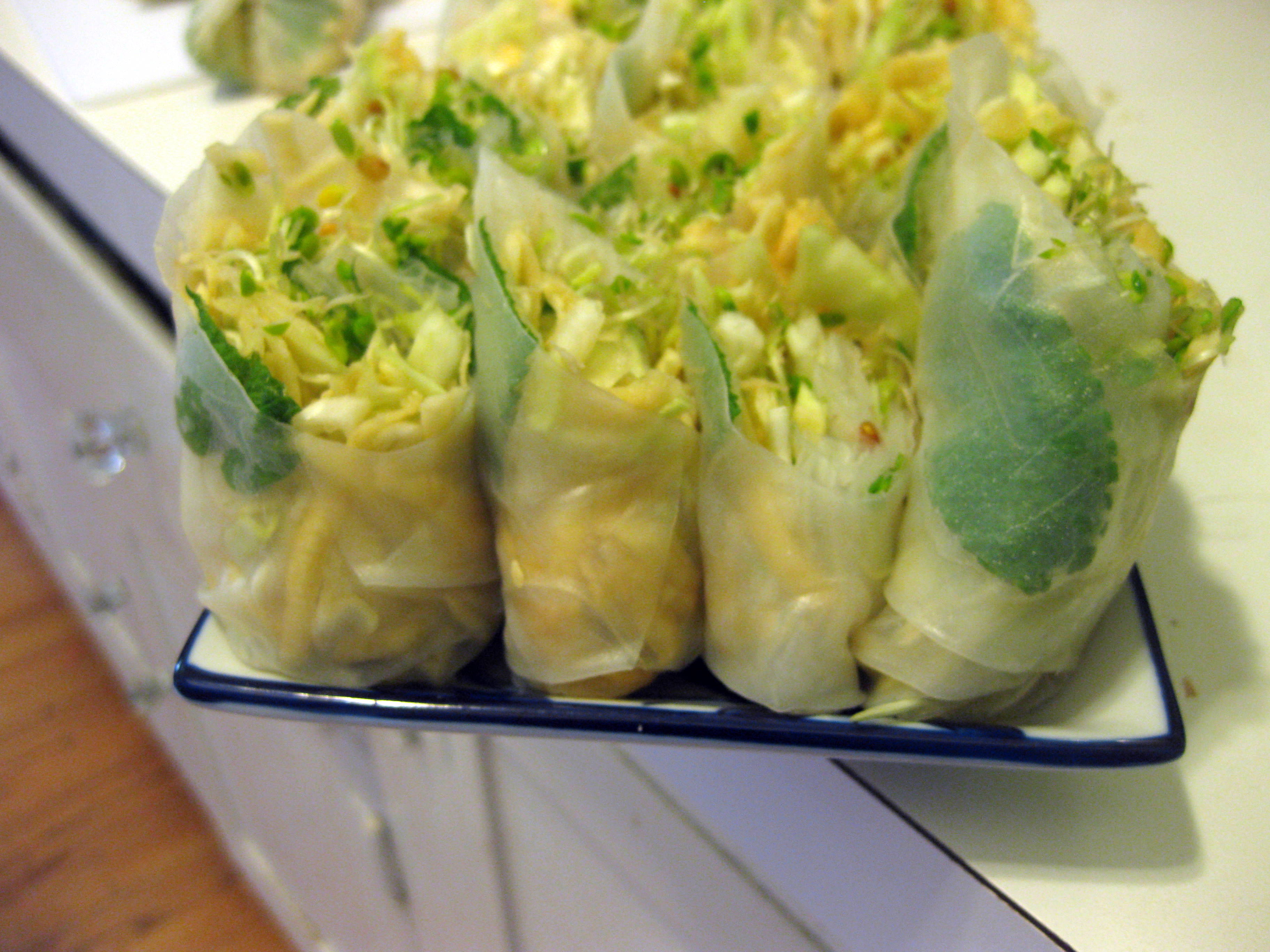
Line them all up like little soldiers and you’re ready to go!  I usually slice them in half on an angle.  I do this for two reasons: 1.) it looks really pretty, and 2.) they aren’t huge and overwhelming looking as finger food.  It’s also nice because it allows your guests to get a peek at what’s inside. 

While I was rolling, I put the sauce ingredients in a very small saucepan and turned the heat on low.  With minimal stirring to be sure the honey wasn’t burning on the bottom, I had a slightly thickened dipping sauce in 10 or 15 minutes.

These were delightfully fresh.  The cabbage and sweet potato gave nice crunch, the sprouts were an interesting, almost tickly feel against your tongue, and the sauce was ridiculously tasty.  Again, with the salty-sweet theme I unconsciously adopted, the honey and the soy sauce played excellently against each other, and it got just thick enough, and with just enough bite from the aromatics I added, that it complemented the fresh rawness of the rolls very well.

Both these offerings were delicious, and despite the competitive gnawing I sometimes feel inside, neither of them took the ultimate prize.  We allowed everyone up to three votes: one for best representative of potatoes, one for best representative of Parmesan cheese, and one for best incorporation of both.  The ultimate honor went to the cheese.

Take a gander:

This is a parmesan crisp topped with a slice of salami, a slice of quince paste, and a twist of caramelized onion.  Talk about salty-sweet!  When I asked the winner for permission to post his dish, he agreed and, delightfully, offered the following specifics:

Parmesan Crisps can be found at: http://projects.washingtonpost.com/recipes/2007/05/09/lacy-parmesan-wafers/
I used only 1 Tsp of cheese because I wanted a smaller diameter crisp. 
topped with smoked salami (1/8in thick slice)
slice of quince paste (1/8in thick)
sauteed onions (~1/2tsp) (one sweet onion, olive oil, pinch of sea salt, 1 tsp sugar, 2 tsp butter) .
serve at room temperature.

Congrats, Iron Chef 2011!

Kale and coconut

Kale is a recent love for me, at least relatively speaking.  I had seen the curly leaves used as edging – a kind of metaphorical hedge between dishes in fancy hotel breakfast buffets or salad bars; a hefty big brother to curls of parsley left quasi-artistically on the side of a plate – but I had never eaten it.  Sometimes it didn’t even look edible, but more like a plastic plant trapped somewhere in the realm of land kelp.

Last year I began experimenting with kale, mostly thanks to bloggers like Shauna at Gluten-Free Girl and Elana at Elana’s Pantry.  N. and I have chomped our way through kale in lasagna, pesto, braised with soy sauce and mushrooms, and of course coated in olive oil, sprinkled with salt and paprika and roasted into chips.  Its robust, almost waxen toughness seemed to require aggressive cooking techniques.  I never believed the recipes I read suggesting raw consumption could be tasty.  And yet Bittman advocated for this as well!

“74. Trim and chop kale; salt and squeeze and knead until wilted and reduced in volume, about 5 minutes.  Rinse, dry and toss with olive oil, lemon juice, chopped dried apples and toasted pine nuts.”

With my yen for freshness and greenery escalating, I decided it was worth a try.  The cast of characters consisted of:

1 large bunch Italian or lacinato kale

1 tsp. salt, plus more to taste, if desired

2 TB olive oil, or to coat

Juice of half a lemon

½ chopped dried apples

¼ cup toasted pine nuts

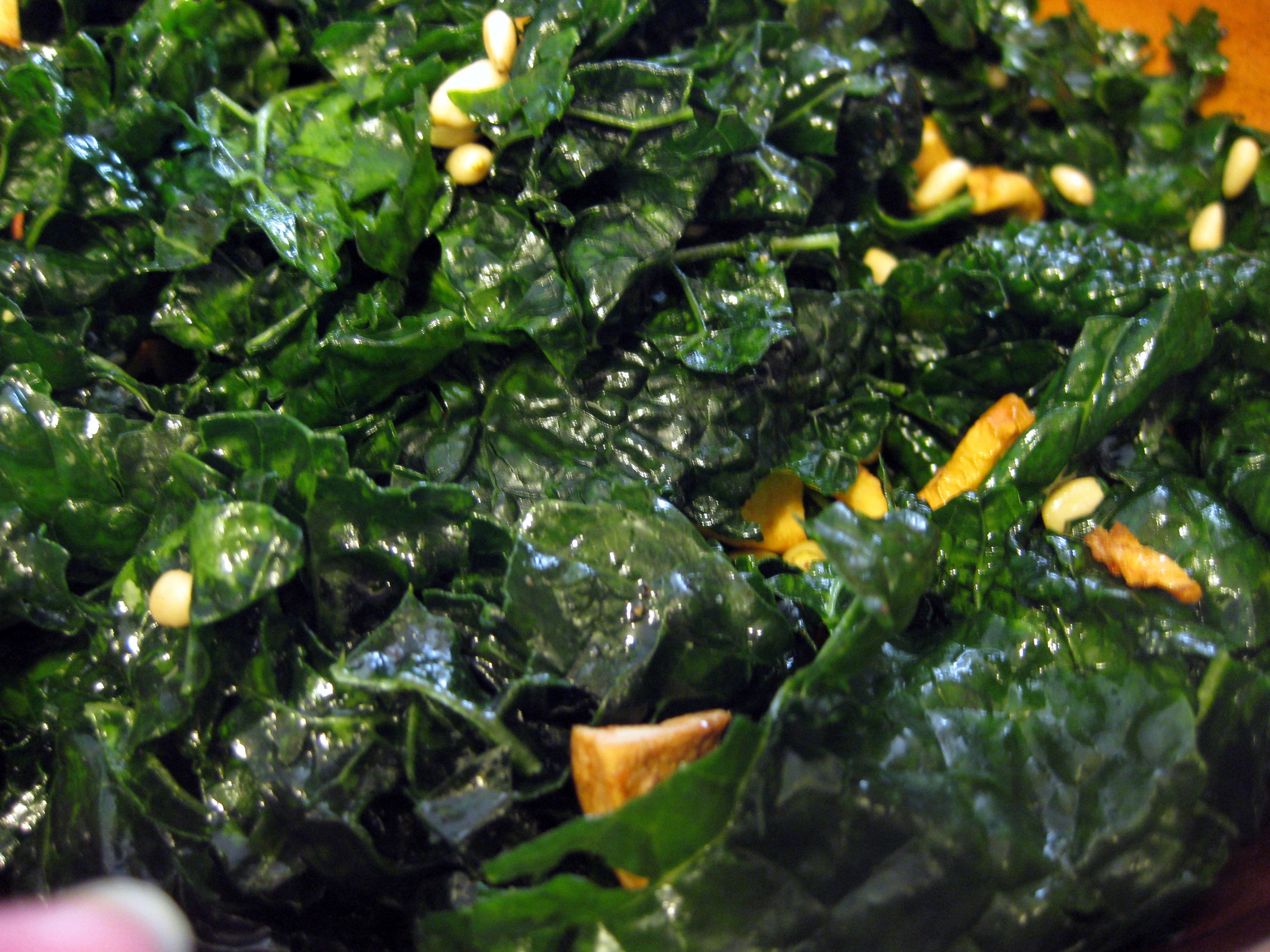
Doubtful, I tore the beautiful emerald lobed leaves from the tough central stalks, then roughly chopped the huge pile of leafy scraps into smaller pieces.  I sprinkled salt over my heap of salad and began to knead.  To my utter amazement, in under a minute the leaves had started to change in texture and consistency.  They became more like spinach, then more like cooked greens, and I decided to knead only for two or three minutes, fearing from the drastic reduction in volume already that I would end up with less than two servings.  When I stopped kneading, I flopped the wilted clumps into a salad spinner to rinse, de-salt, and spin dry.

I tossed the kale with olive oil and lemon juice in a large salad bowl, then added the pine nuts and apples.  A quick taste led me to add a miniscule sprinkle of salt, and then it was ready to serve!

We enjoyed the salad with chicken apple sausages – I wanted to capture the special flavor of the apples and highlight their sweetness against the tart lemon and bitter kale.  It was a very successful salad, and would be particularly good at the height of summer when you cannot bear to encounter the heat cooking requires.  Just pre-toast the pine nuts on a cooler occasion and this salad flies together.

The contrast of flavors is lovely.  It manages to hit all four of the major taste bud groups: the kale is bitter, the hint of salt gives it nice salinity, the apples are sweet, and the lemon is tartly sour.  Similarly, it satisfies a variety of textures: the kale is tender but still has some body for your tongue to play with, while the apples are chewy and the pine nuts provide a satisfying crunch.

Using kale as a salad base provides so many possibilities.  I already know I’d like to try toasting the apple rings to try and achieve a more chip-like texture and add extra crispness: apple croutons, if you will.  A more savory salad might entail replacing the apples with a good grating of sharp cheddar or Parmesan cheese.  Hard boiled eggs, walnuts, and maybe a scattering of bacon would make a more substantial salad.  The options are endless.

But the title of this post isn’t about endless kale.  It also mentions coconut, so I’d better move along.

With half a bag of sweetened, flaked coconut in my pantry and a small bevy of beauties descending on my house for a ladies’ TV night, I decided to over-achieve this week and make another Bittman selection to share with my friends.

“100. Spiced Macaroons: Mix 3 cups shredded unsweetened coconut, 1 cup sugar, ½ teaspoon ground cardamom and a pinch of salt in a bowl.  Stir in 3 lightly beaten egg whites and a teaspoon almond extract.  Drop in small spoonfuls on baking sheet and bake at 350 degrees for about 15 minutes, or until golden on the edges.”

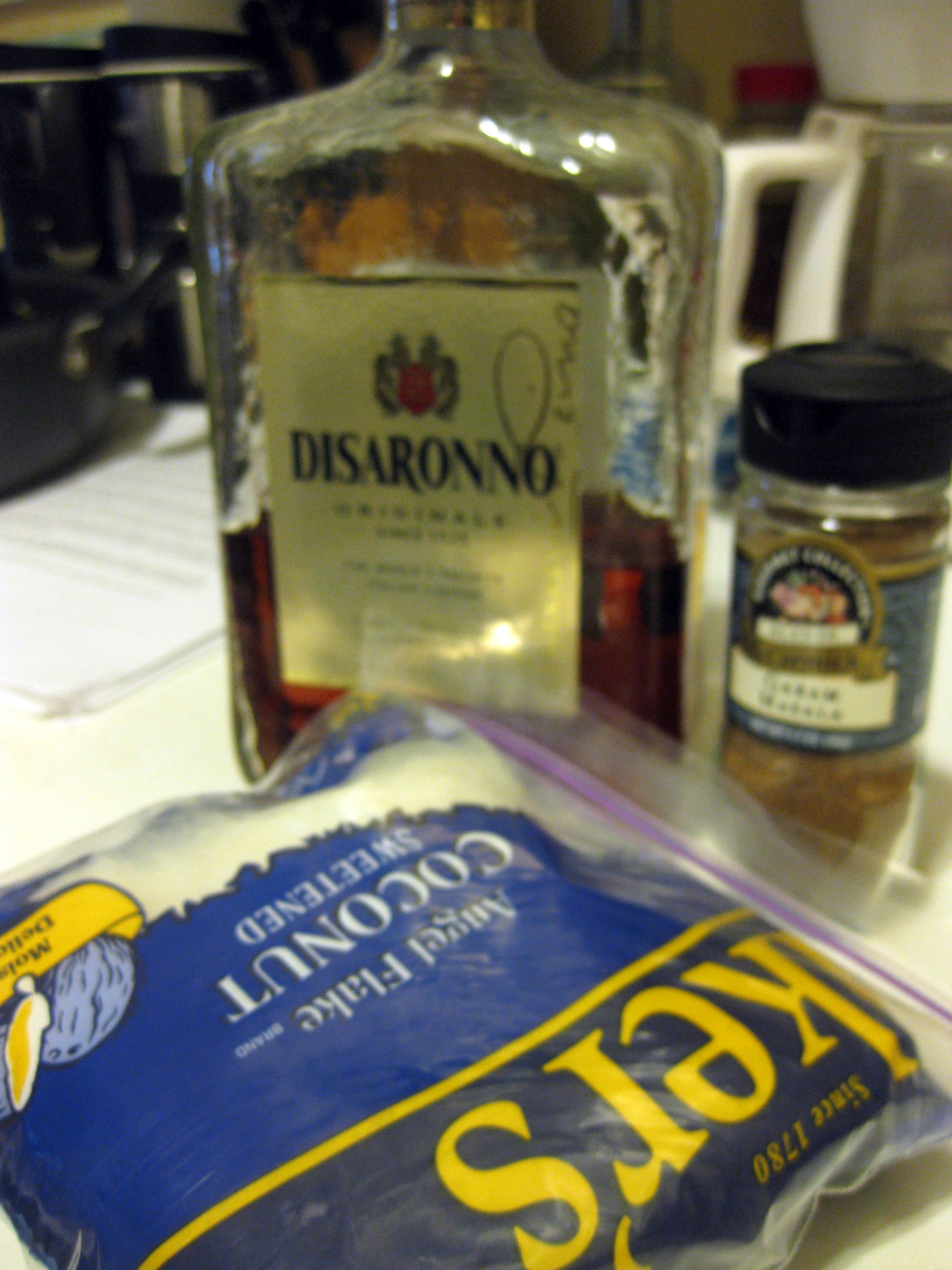
I must admit from the outset that my process was a considerable adaptation, spurred by a shortage or downright lack of both ingredients and time to obtain more.  I used the following:

2 cups sweetened shredded coconut

¼ tsp garam masala

Pinch of salt

2 lightly beaten egg whites

1 tsp amaretto liqueur

From there, I followed Bittman’s directions exactly.  At the point the house began to smell like a vacation, I pulled the cookies from the oven and, unable to resist, stuffed one that collapsed from its fragile form into my mouth.  Oh heaven.  It was incredible.  The coconut was still chewy, and I’m pretty good with words, but the mixture of spice and salt did something I can’t describe.  Cooks are always saying salt enhances the other flavors of the dish, and that’s what happened here.  The coconut and egg whites suggested lightness and airy tropical sweetness, while the garam masala was incense and thick dark spice, but just the barest touch: a perfumed, candle-lit temple down the road from an endless white sand beach.  Fanciful, you say?  What can I tell you… coconut is one of my favorite flavors, and when it is elevated to such heights a certain mystical religiosity is perfectly appropriate.

The cookies were quite tender, and some declined to hold together at all.  This made them easier to eat, in a way, because they were already breaking themselves for us – all but insisting upon their own sacrifice – but the next time I attempt them I want them to hold together better.  I may cook them a little longer, or perhaps beat the egg whites more vigorously.  You wouldn’t want stiff, or even soft, peaks, but perhaps an approach to peaks would help the coconut cling together.  Nevertheless, three girls in the space of an hour decimated a plate of macaroons, leaving behind only three stragglers who were so lonely that I found them a happier home the following afternoon as a reward to myself for accomplishing some much-needed reading.  I must say, the lift from an analysis of 14th century poetic aesthetics into all-but-mystical flavor vacation is about the best an afternoon snack can do. 

Fresh breath

Oregon’s springs are interesting and sometimes frustrating seasons that really make you think about all the definitions of the word “spring.”  Sure, this evokes images of shy but increasingly sure sunshine, flowers, warmth, but that’s not what a spring is.  When springs stretch out, inevitably they snap back.  With a frost advisory a few nights ago and the weather still stubbornly refusing to push up out of the 60s, we have experienced more of a springing back than a springing forward.

And yet my taste buds are ready, even if the weather is not.  I am finding I crave greenness, tartness, fresh peppery crunch, to combat the rich softness of winter comforters.  Bittman obliged:

“28. Toss cooked Israeli couscous with toasted pecans, orange zest and juice, chopped mint, cider vinegar and honey.  Bake in an oiled dish or use as stuffing.”

Remembering the pleasing tapioca-like chew of Israeli couscous from my last experiment with this pasta, I was enthusiastic about this combination.  I assembled:

1 box Israeli couscous

½ cup chopped toasted pecans

a drizzle of olive oil

2 TB cider vinegar

2 TB honey

zest and juice of ½ a large orange

2-3 TB chopped fresh mint

I cooked the couscous according to package directions, letting the tiny pearls sizzle in olive oil for a few minutes before adding water.  This quick toasting adds a deeper flavor, which I am in deep support of.  This dish could easily be made gluten-free, with the simple replacement of quinoa or brown rice for the couscous.  Either way, I’d still advocate toasting the grain before boiling it.

While the couscous cooked, I chopped, zested, and juiced, then put my pecans into a cold oven, which I promptly set for 400F.  I’ve discovered that generally in the time it takes the oven to preheat, the nuts have toasted, and you can take them out and add them to the dish in question, feeling pride that you’ve been able to use that oven energy for part of the meal.  The only problem with doing this is, you still have to check on the nuts occasionally, because depending on the temperature you are setting the oven to, it may take longer than you expect to preheat… and this equates to burnt nuts.

As I picked through the all-but-charred remnants and discarded the truly blackened pieces of what had been ½ cup of pecans, I found myself reflecting on the choice of citrus in this dish.  I love citrus.  I like the brightness, the tartness, and its ability to transcend the sweet/savory divide.  And yet, when I think citrus, I almost inevitably turn to lemon.  Salad dressings, fish, pasta, cheesecakes, all benefit from a grating of lemon zest or a hangnail-piercing squeeze of juice.  Why, I wondered, do I never think of oranges in the same way?  Lemons are like a deafening gasp of freshness.  Orange peel is somehow more synaesthetic: bright, yes, but punctuated by a perfumed headiness, like walking through a cloud of incense.  Yet here, when I blended the orange juice, vinegar, and honey together with the zest, it was the most perfect zingy-sweet-tart dressing imaginable.  Ideal for this dish, I imagined so many other applications: drizzled over prosciutto wrapped bundles of arugula, tossed with chunks of fruit for a summer fruit salad, maybe even spooned atop grilled fish or chicken.  I resisted the urge to sip spoonfuls of it. 

After fluffing the couscous with a fork and distributing some olive oil through it to prevent clumping, I mixed everything together in a baking dish and tossed it with the delectable sauce.  This was brightness at its apogee.  I stowed it in the oven for half an hour.

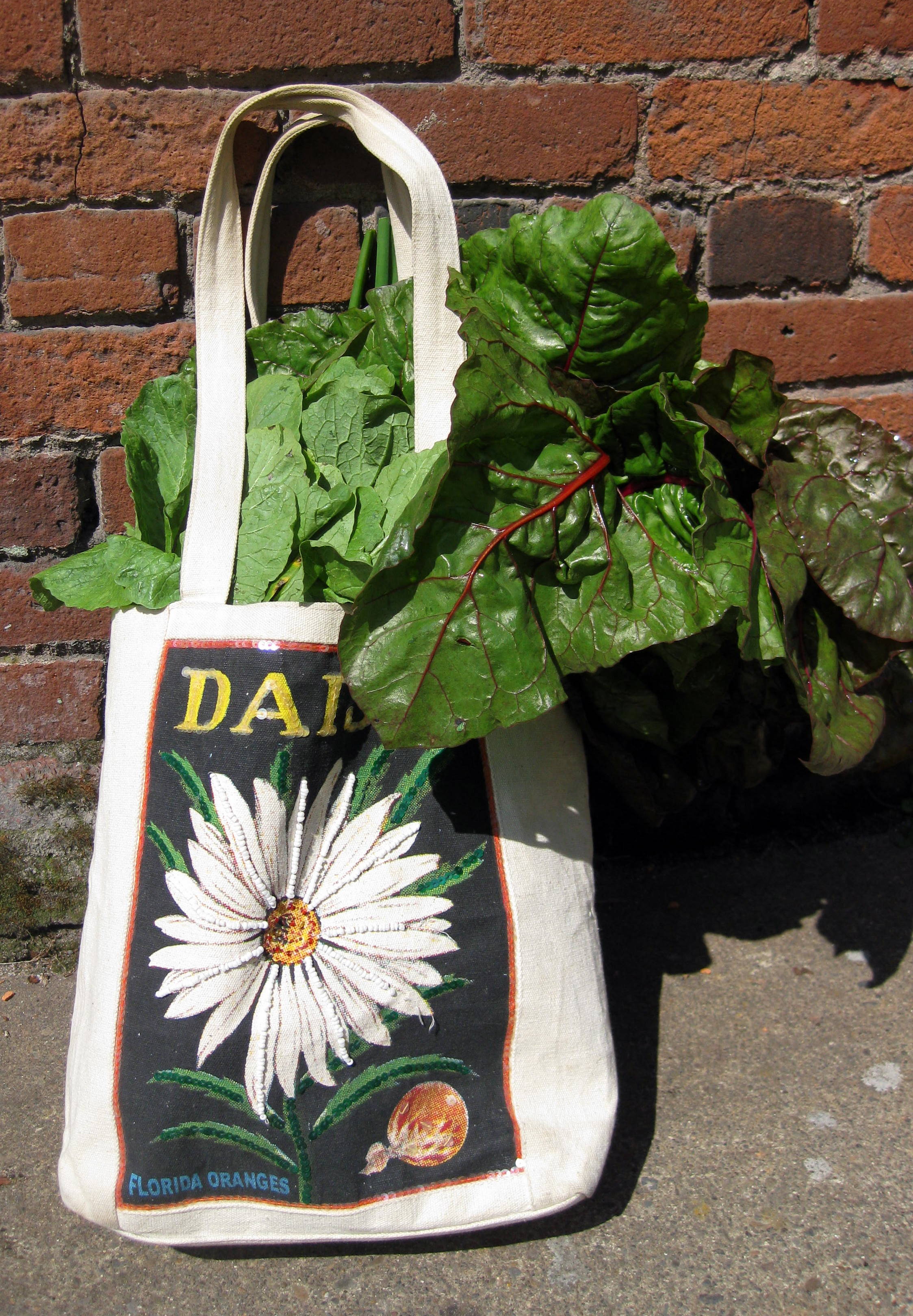
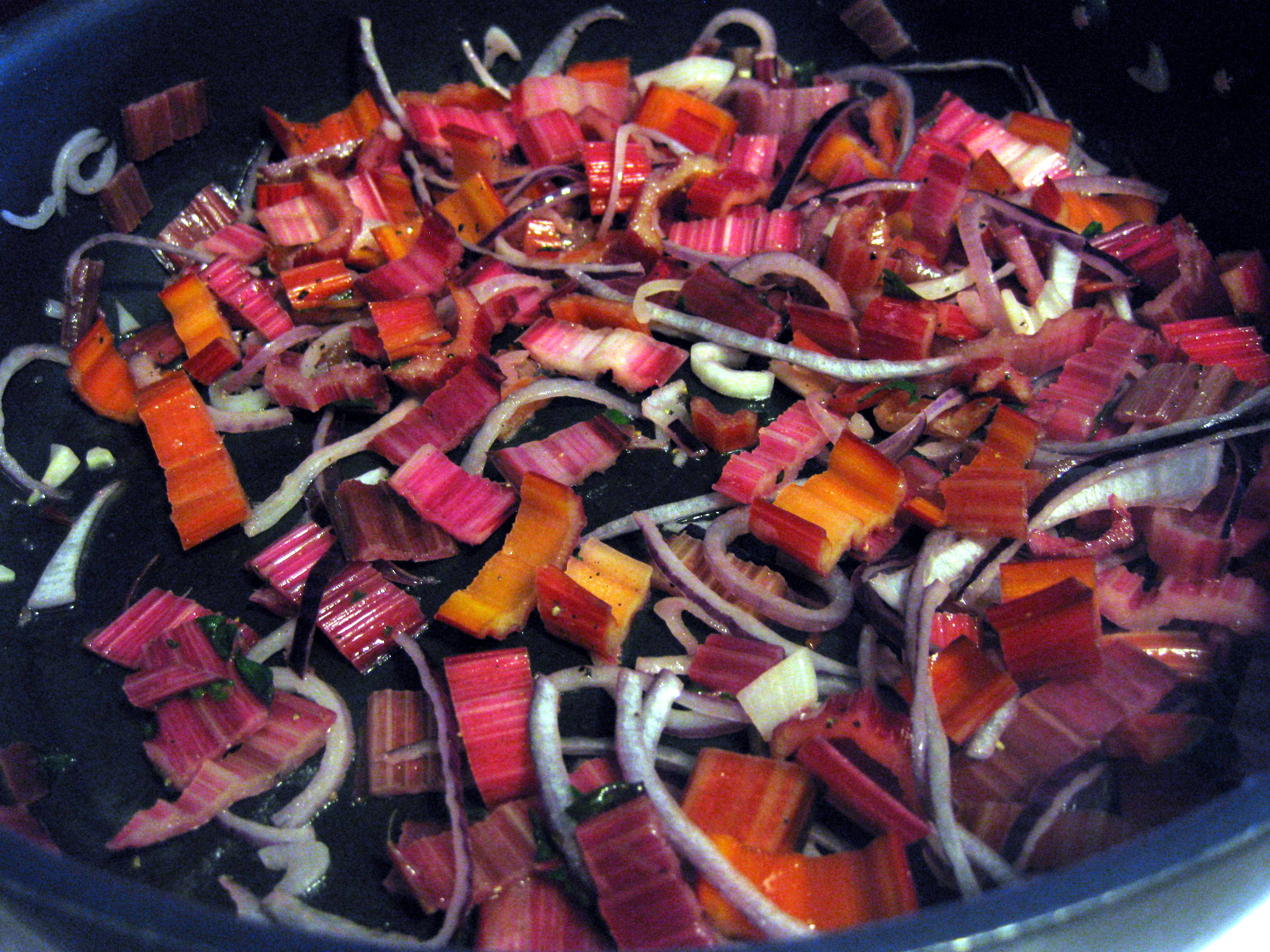
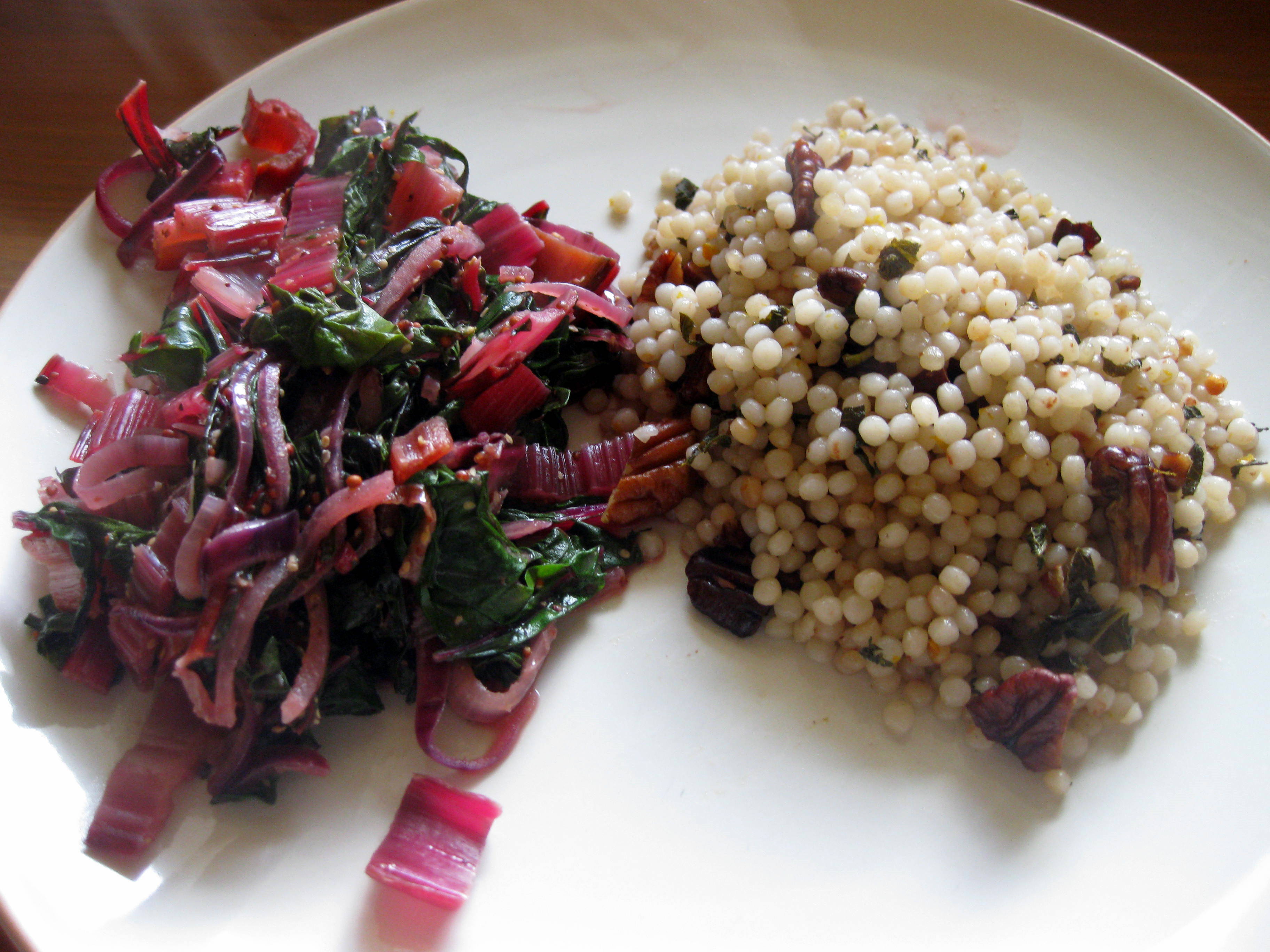
While the couscous baked, I prepped our vegetable side.  With the Farmers’ Market back up and running, the profusion of leafy vegetables is almost overwhelming.  Without intended anything of the kind, I had brought home an enormous bundle of rainbow chard – red, pink, orange, salmon colored stems – and decided to impart some vinegar-based freshness into it as well.  I sliced the leaves away from the thick stems and then chopped the stems like celery into half-inch-or-so thick pieces.  Then I dropped stems and wafer thin slices of ½ a red onion into a pan with a few tablespoons of butter.  While those cooked down, I chopped the chard leaves roughly and considered flavorings.  Though I often pair chard with nutmeg, craisins, or balsamic vinegar, this didn’t seem like the right companions for tonight.  Sometimes I add garlic, sesame oil, and soy sauce but this, too, seemed like it wouldn’t mesh well with our zesty-fresh couscous.  At last, genius!  I dribbled in not only a few teaspoons of cider vinegar to match the flavor in the couscous, but at least a tablespoon of whole grain mustard, which I scrambled quickly amidst the softening stems.  Then all that remained was to toss in the leaves, turn them over in the pan a few times until they wilted, and add some salt and pepper.  Bingo.  Amazing. 

The pairing was lovely.  The perfumed orange peel and the pecans in the couscous were a beautiful marriage, as the heady zip of the orange benefited from the caramel smokiness toasted pecans always seem to have.  The vinegar kept it from being too sweet, and the mint gave the suggestion of flavor, though I think it could be replaced by parsley with no ill effects.

The chard dish was spectacular.  The same bite of vinegar stood out in both, but the chard was definitively savory, and the mustard gave it some backbone.  The onions and chard stems had become meltingly tender, but the just wilted leaves left a freshness to the dish.

Crisp, very cold apple cider, or a Ruby ale from McMenamin’s, would have been splendid with this.  Light but substantial, rich without being heavy, with those wintery flavors of orange peel and pecan applied to the freshness of spring. 

The sun is out.  Does that mean, Oregon skies, we can put our hopes in Springtime at last?