Gourmet

On a warm, July day, when a person (and her husband) is unjustly required to spend the shining hours of the afternoon working, teaching, holding office hours, what better treat could there be than to come home and indulge in a little gourmet dinner?

As I’ve divulged previously, I like cannibalizing from restaurant menus.  Usually it’s not the dish I order, but another that was second or third on the list… or just barely missed the final, nervous, rushed decision as the server hovers above me… and I jot down the description on a slip of paper somewhere and try not to lose it in the subsequent weeks.

This time it was that Americanized, fancified Italian food-of-the-common-man: pizza.

Several weeks ago N. and I celebrated Friday by meeting some friends to drinks and dinner.  We’d already eaten, so we swore to each other we would only drink one pint (for him), and one glass of wine (for me).  Then we went to Agate Alley with our friends and ordered a huge, gluttonously greasy, spicy, salty, decadent basket of onion rings.  I ate so many…

While we patted our fingertips on napkins to try and assuage our greasy shame, our friend S. ordered a personal size pizza topped with prosciutto, gorgonzola cheese, brandied figs, and a bright salad of fresh raw arugula, piled high right in the middle.  I had never thought of putting figs on a pizza before, but it seemed so inspired.  Though S. ate hers without the porky delights of prosciutto (one of those vegetarian types, you know), the idea of wafer-thin slices of cured pork-belly lingered in my mind when I recalled the recipe.

So I, so often operating as Dr. Frankenstein in the kitchen, decided a recreation was required.  This pizza would be a hybrid – a loving, daring combination of Agate Alley’s delectable pie and the prosciutto and caramelized onion darling Ree of The Pioneer Woman has developed.  With a hunk of gorgonzola languishing in my cheese drawer, it was just the right thing to do.

Ingredients (mostly approximated):

1 lump pizza dough (I shamelessly bought mine, pre-made, from Trader Joe’s fridge section)

1 medium to large sweet onion

2 TB brown sugar

4-6 oz. prosciutto

5-8 dried figs, sliced

1-2 oz. gorgonzola cheese, crumbled

1 cup (at least!) shredded mozzarella cheese

Big handful of arugula or basil

While my pizza stone heated in the oven, I caramelized my onions per the Pioneer Woman’s directions.  Then, while I prepped all my other ingredients (grating cheese, slicing figs, playing with the dough), I forgot about the onions for a little bit too long and the brown sugar started to burn.  But I decided to just call that “extra-caramelized” and be happy with it.

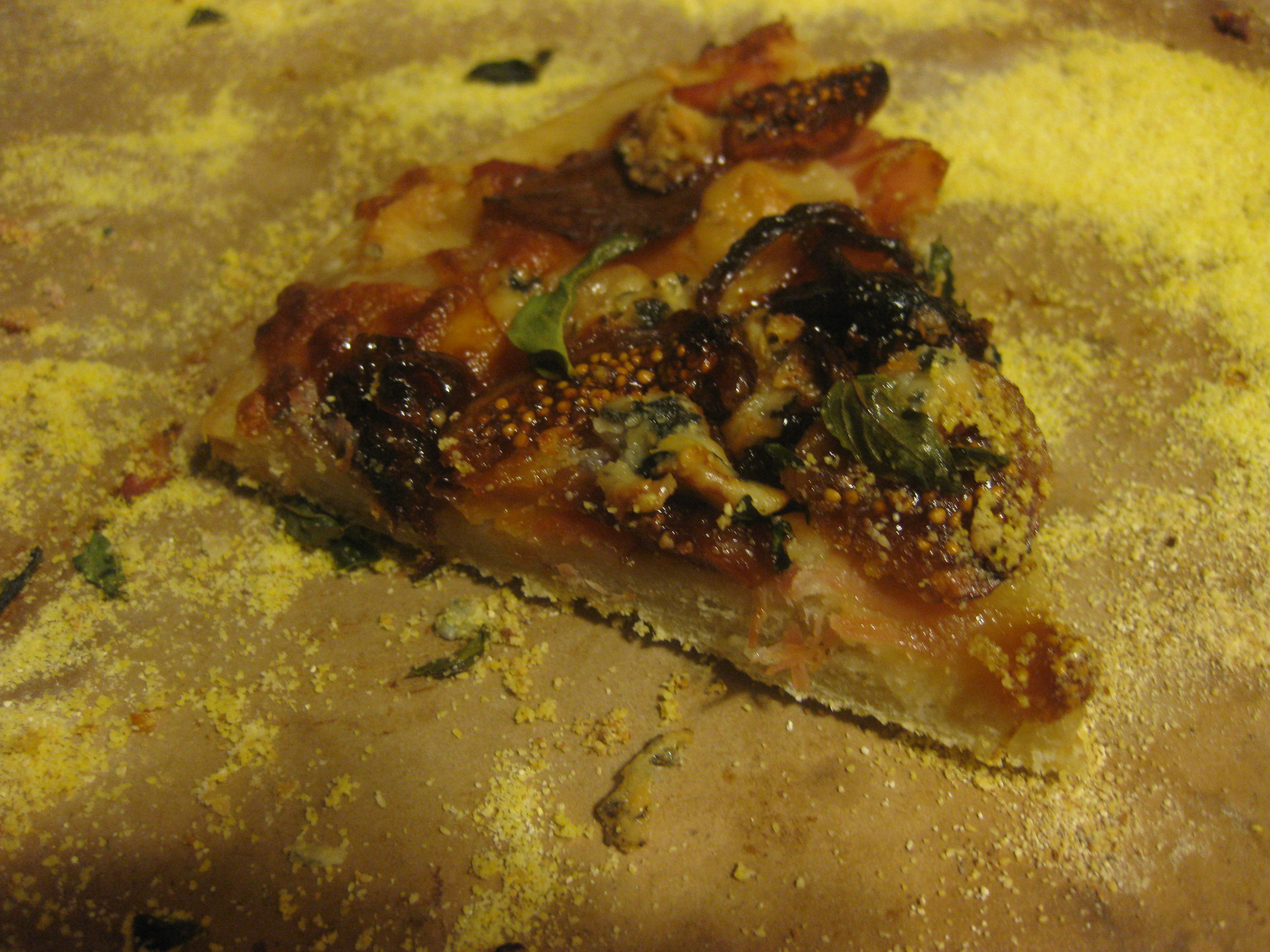
With the dough stretched, plunked onto the hot, cornmeal sprinkled stone and already starting to shrink back in on itself (it never wants to stay in a 12-inch circle; why not?), I quickly piled on the toppings: a drizzle of olive oil, evenly spread mounds of mozzarella, trailing slices of salty hammy goodness, cheese crumbles, figs, and dark, dark mahogany clumps of onion.

Into the oven at 450F it went, and about 12 minutes later, gasping, I edged it out and clunked it down on my stovetop.  Lacking arugula, I sprinkled baby leaves of basil atop the whole thing.

It looked glorious.  The crust was crunchy on the bottom, the cheese was golden and bubbling, the prosciutto had crinkled and crisped, and the figs were these dark, seeded pockets of mystery.

We ate.  We ate more.  The combination of salty and sweet has been hyped for years now, but that’s because it works.  The sweet onions and tangy, sugary figs balanced the rich creamy funk of the gorgonzola and the perfect saltiness of the prosciutto.  I would have preferred arugula to basil, because the licorice overtones of basil weren’t the perfect match, but the fresh greenness was definitely welcome.

I would never have thought of figs on pizza, but I would urge you to try them in this combination (or just figs and prosciutto, I won’t tell).  Sliced thin, they warmed in the oven and just started to create their own glassy brulée atop their honeyed interiors.  With chewy dough, creamy bubbling cheese, crisp-chewy ham, soft sweet onions, the crunch of the little seeds inside each slice of fig, popping between the teeth and tickling the taste buds, was the perfect final flavor of each bite.

This would be perfect enjoyed with a crisp, semi-dry white wine, though the beer we drank with it was just fine.  It is supposed to be simple fare, after all.
Re-envision Whirled Peas!

Last week I wrote about an appetizer I made with pureed peas.  I wasn’t thrilled with it, but thought it was a good base for… something else.  This week I present you with the modified version, and one of my mottos for green produce of all kinds: when all else fails, make pesto.

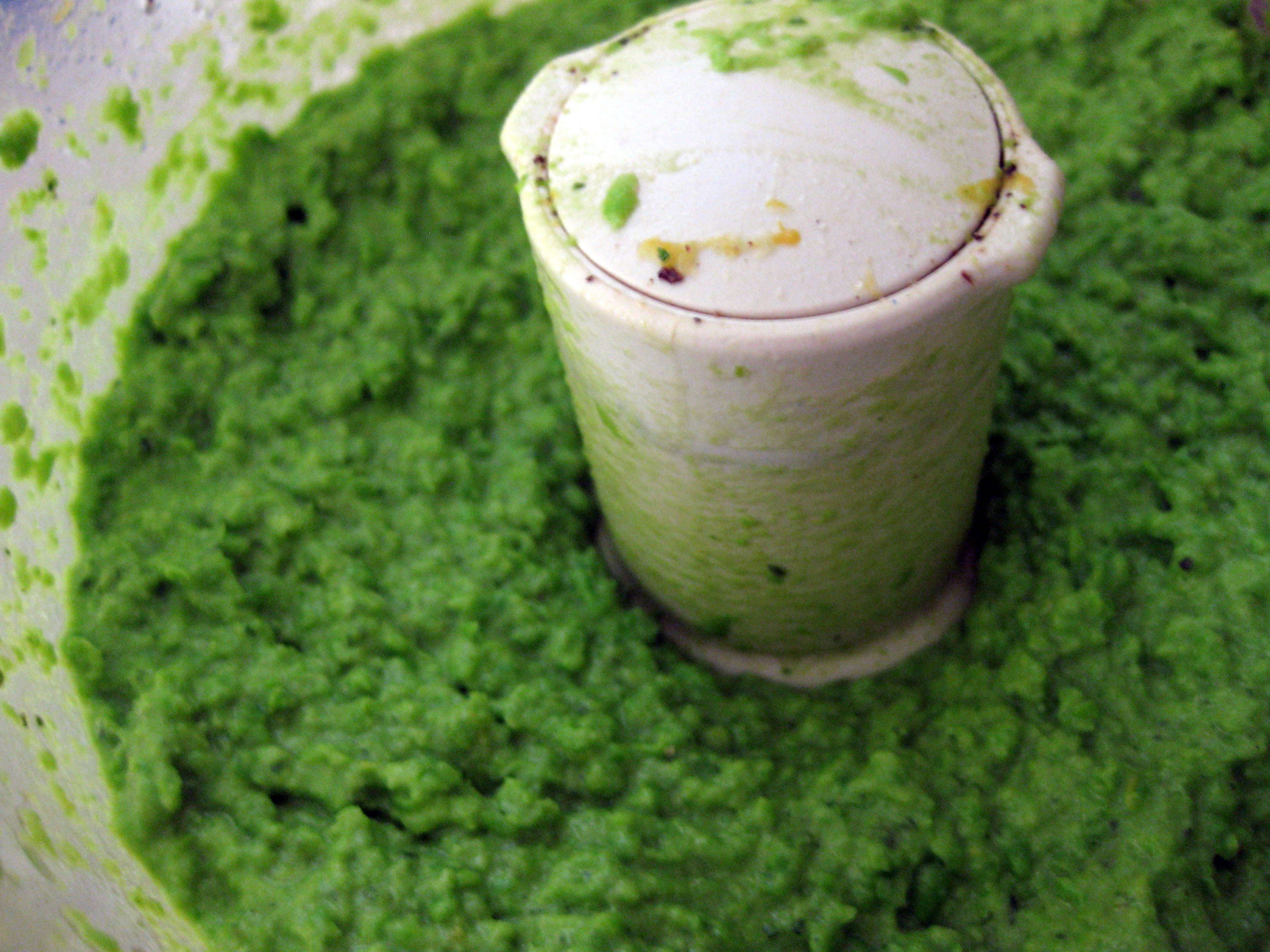
I smashed, peeled, and blitzed three cloves of garlic in my food processor along with a handful each of basil and parsley.  Straight from the fridge, I scraped the leftover pea puree, now a humble new beginning, back into the food processor.  In went a few tablespoons of lime juice, a few heaping tablespoons of Parmesan cheese, and a judicious helping of freshly ground black pepper.

Whirl.

Taste.

It was tangy and herby, but still had the sweetness of peas and the cutting, intriguing coolness of spearmint from the original concoction.  I liked it.  If I hadn’t been feeling lazy, I might have added some toasted walnuts or even almonds.  But I was, and so alas, laziness ruled the day.

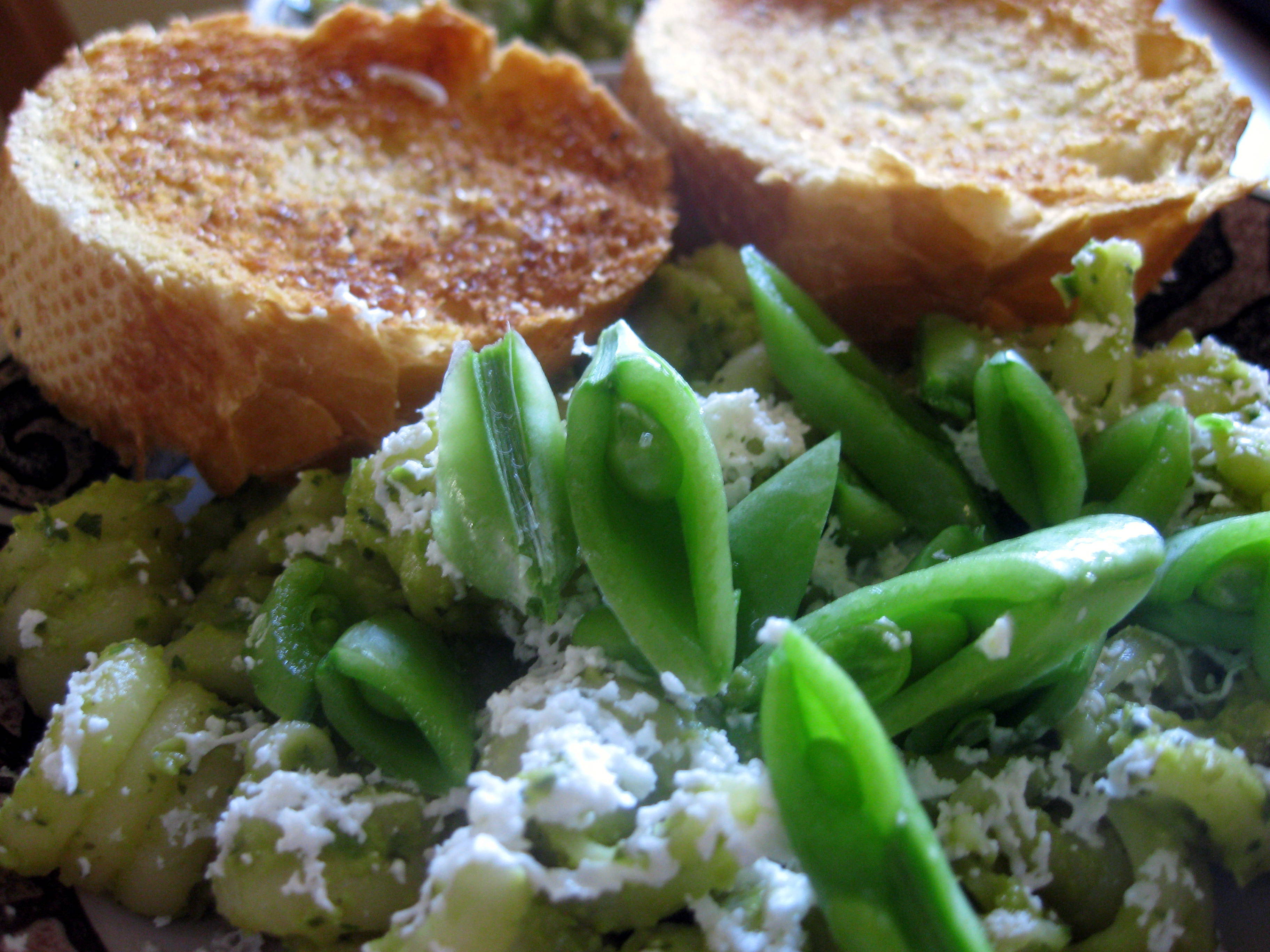
Fortunately, laziness did not keep me from slipping a log of goat cheese into the freezer, a box of curlicue pasta into a pot of violently boiling water, and a few slices of sourdough, nicely oiled, salted, and peppered, under the broiler.

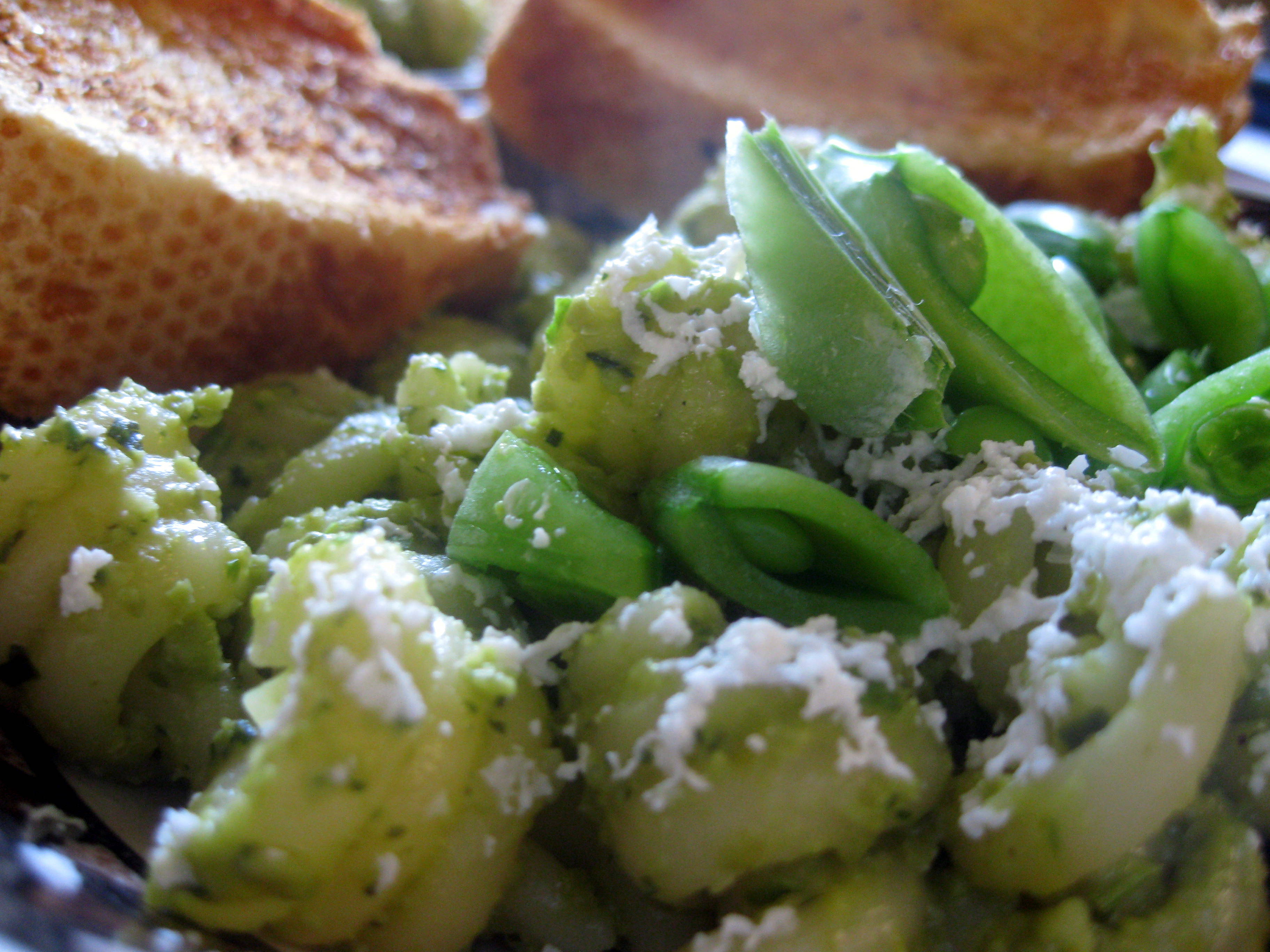
It’s summer here, but the smells of this Franken-pesto as it hit the steaming hot curls of chewy-soft pasta were the kind of April and May I wish we’d had.  Warm, fresh, sharp but sweet.

We grated the chilly goat cheese over the top – when it’s almost frozen, it becomes like any other hard cheese – and as a coup de grace, added chopped snap peas to the top.  Pinched from the plant, rinsed, sliced on a bias.  Almost carelessly thrown onto the mound of snowy cheese and grassy sauce.  Another garden.

Yum.  Welcome, summer.  I embrace your call for simplicity, for freshness, for inventive dishes.  I will try to do you justice.

Envision whirled peas. And weddings.

There are two stories to be told here.  One is the story of a wedding.  Well, a wedding reception.  Well, a backyard barbeque eight months after the wedding that was my way of providing the couple with a reception.  The other is the story of a van.  Both occur in mid-July.  Let’s start with the latter.

I had completed my first year as a bona fide college student and was, like any bona fide college student, enjoying the summer in between shifts at my first job.  I was changing into a tank top in the back of my friend’s car at the Santa Clara beach boardwalk before heading out to the beach when I saw a van parked a few spots down.  Okay, so it wasn’t a van, it was a vintage old style VW bus, complete with tie-dye paint job, beads in the window, and Grateful Dead stickers everywhere.  But there was, as I discovered after straightening myself out and exiting my friend’s car, only one bumper sticker.  It read “Envision Whirled Peas.”  Read out loud, of course, it emerged as the hippie/peacenik/ flower child ultimate mantra.  Peace + food + word play = my day was made.  Maybe my week.

But back to the wedding story.  Ah, weddings.
The love, the beauty, the glowing smiles…

On the eve of my own wedding anniversary, a hot, beautiful day three years ago, I bring you a tableau of another.  A reception, at least, where my role was slightly different:
The heat of the kitchen, the stress of catering, the need for perfection…
I’m being overdramatic.  I’ve never catered a wedding before, and I still haven’t.  I simply cooked for our dear friends K. and T. this weekend.  I made a whole collection of things (full list is here), but I want to tell you about the crostini.
Thanks to A. and her delectable food sense, I made a pea, lemon, and mint puree to spread on crostini.  She called it “whirled peas.”

I defrosted one 16 oz. bag of petite peas and jangled them into the food processor.
Joining them: the zest of about ¾ of a lemon (one spot didn’t look so nice),
the juice of half that lemon,
probably ¼ cup of mint leaves,
coarse salt,
freshly ground black pepper.
This fragrant mixture received an ample dose of olive oil (½ cup or so?  I didn’t measure) as I whirled it in the food processor for a good minute or two.  I wanted it as smooth as possible, but I still wanted it to be impossibly bright green.

As the time for the party approached (our first guest’s feet were practically climbing the front steps!), I sliced a slim sourdough baguette on an angle and, shielding each slice with a glug of olive oil, broiled them until they turned golden and crisp.  While the little toasts cooled, the lovely and accommodating K. helped me pick some nasturtiums from our front garden to top our creation.  Even a simple backyard barbeque needs a fancy-pants appetizer option!
I spread a generous helping of minty, citrus-y bright “whirled peas” onto each crostini before gently pressing the calyx of each flower gently into the emerald spread.  They looked like flower arrangements – miniature edible gardens that looked and smelled of springtime and fresh birth.

K. and T. loved them (and seemed to love everything about the evening – a hostess-and-wanna-be-caterer’s dream!), but I was a bit nonplussed.  The flavor was minty and fresh, but seemed to be missing something.  Perhaps tang.  Peas are naturally sweet, and mint paired with some sweetness reads as more sweetness.  I wanted something to tell my tastebuds this was a savory bite.  The pepperiness of the nasturtium was too mild to do the job.
Because I have plenty of leftovers, I am considering adding some lime juice, perhaps some basil and a zinging shaving of Parmesan, and turning this into something more like a pesto.  Whirled peas pesto.  Say it out loud with me… “world peace” pesto?

Envision it: One little crostini, two happy people, global cooperation and betterment.

Aren’t weddings fun?!

Stay tuned for results and additions!

Menu planning

I have a bad habit.  Well, let’s not lie, I have many.  But pertaining to food, I have one particular potentially disastrous practice: I like to make food for company that I’ve never made before.  I have experimented with risotto, fancy baked pastas, doughnuts, all for company for the first time.  I have tried to diagnose this habit, and I can’t be sure where it comes from.  Maybe I think that once I’ve made it before, it becomes simple and easy and not adequately fancy.  I like to be fancy.  Maybe I want to show off a little.  Maybe I just get excited about trying new recipes.  Who knows?

Oddly, I noticed that the menu I currently have planned for the “Belated Reception” party N. and I are throwing contains almost no unattempted recipes.  Despite permission, no, encouragement even, from K. (one of our guests of honor) to use this gathering as an opportunity to try out fancy new dishes, the ideas I immediately gravitated toward were tried and true. With guests bringing their own grillable mains, K. and I will be making a series of sides.

Here’s a preview of the intended menu:

Marinated tofu skewers, grilled.

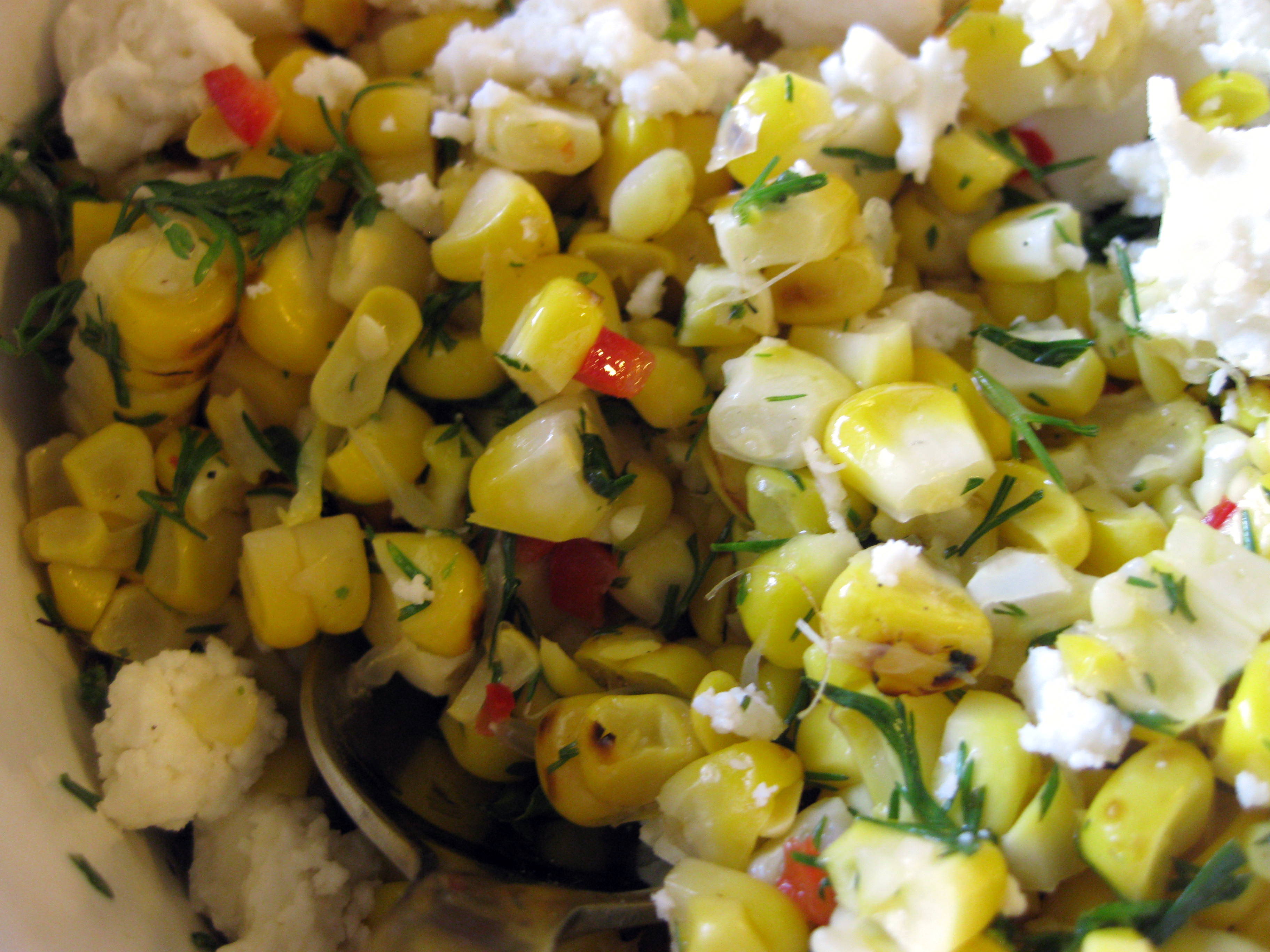
Grilled corn, cilantro, and lime salad

Grilled garlic bread (seeing a pattern here?)

Fresh tomato bruschetta

Pea and mint puree on crostini, topped with nasturtiums

German or red potato salad

Pasta salad with tomatoes, mozzarella, olives, and sundried tomato vinaigrette.

(Chips, salsa, guacamole, etc.)

For dessert, I’ll make two types of cake for folks to try, both drenched in alcohol (because that’s just the kind of hostess I am):

A reprisal of my terrifically successful Chocolate “tiramisu” cake (featured here).

Pink champagne cake (N. and I had champagne cake with strawberries at our wedding, and I’d like to return the favor).

In addition to wine, beer, and the usual party beverages, I will also make a Champagne-rum punch, a deadly recipe because it is fizzy and sweet and delicious, making you forget the two kinds of alcohol it contains as it fizzes right into your bloodstream.

Ah, summer living.

First fire

Don’t look back.  Don’t stop and talk to your loved ones.  Do not pass GO or collect $200.  Just grab your beer bottle, your children, your spouse, whoever, and run to your grill.  You must make and eat this, now: Honey-lime Chicken Fajitas with Grilled Fresh Corn and Avocado-Orange Salad.

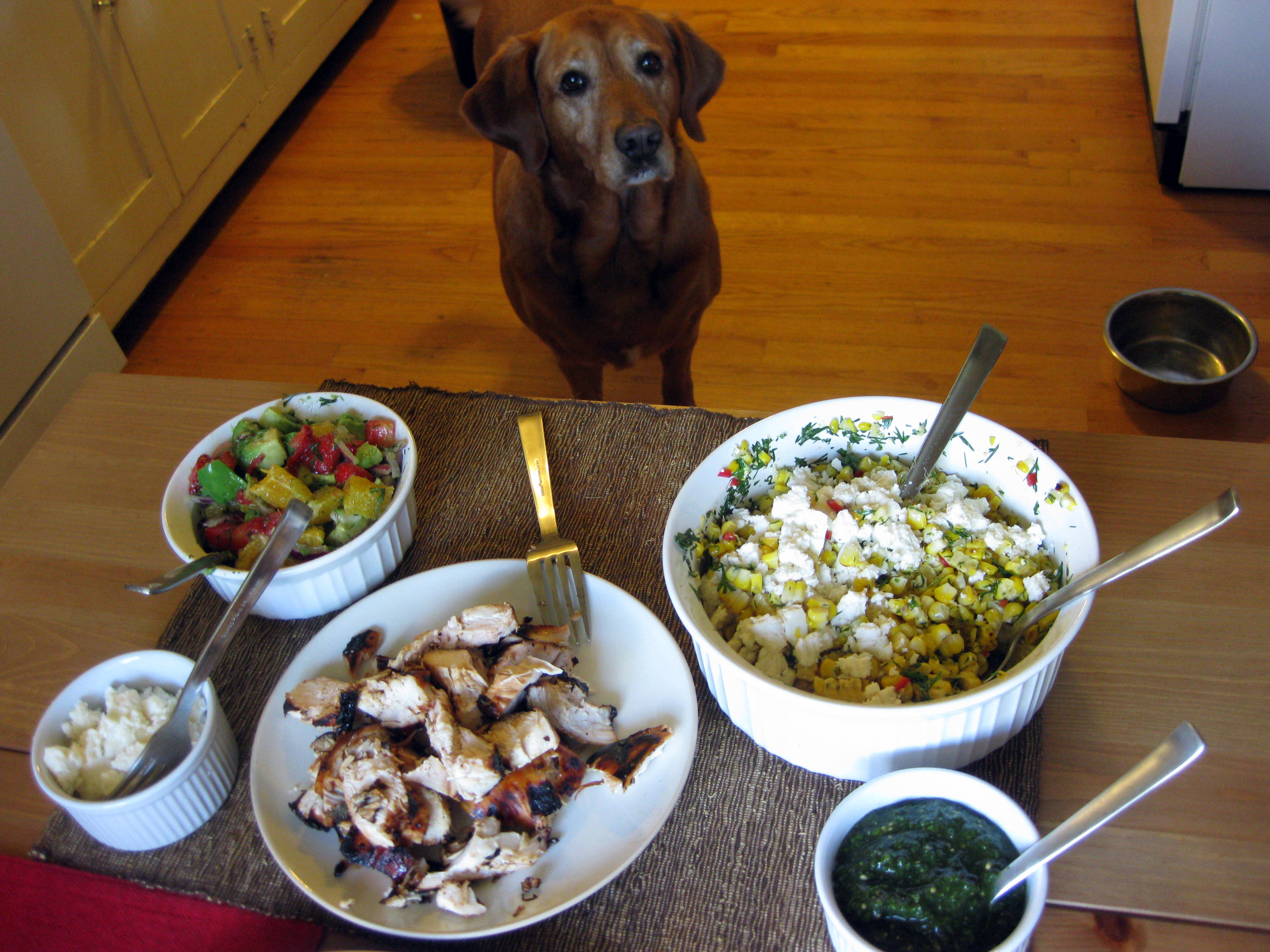
At my request, N. just lugged our baby gas grill out for its first showing of the season.  It just needed to be dusted off, scraped down, and switched on.  And then we cover it with unreasonably delectable things like these fajitas from the June 2008 issue of Cuisine at Home (the recipe for the chicken can be found here).  With my numerous food magazine subscriptions expired, and me on a graduate student budget, I’ve started going back through old issues by month and, rather than cooking whatever I want willy-nilly, only permitting myself to use recipes from the month we’re in.  Thus this month I have four issues of various titles from June to choose from.  I didn’t need to look further than June 2008, though.

N. did an excellent job grilling the chicken breasts, which got crunchy caramelized exteriors from the honey in the marinade.  While he was busy, I was able to compose our two sides.

Love it or hate it, the cilantro in this grilled corn mixture added bright, grassy freshness and went with the sweetness of the corn extremely well.  Surprisingly, the queso fresco I crumbled over the top went along well too, probably because the salad was all freshness and crisp juiciness, and benefited from some creamy curds of cheese.

Because we had a sudden profusion (read: six) of tart garnet strawberries weighing down their respective stems in the backyard, I made a fruity addition to the Avocado-Orange salad Cuisine at Home offered.  Eliminating the garlic from the recipe and using the orange’s dripping liqueur instead of lime juice (one of my limes was most reluctant to give up anything), I mixed the roughly chopped strawberries in with an avocado, an orange, a few pinches of cilantro, and some salt and pepper.  Then I tried not to eat everything in the bowls while I waited for N. to bring the chicken in.

Fingers burning, we sliced it, then loaded up warm flour tortillas with thick moist slices of chicken, crumbles of queso fresco, sweet juicy pops of corn, and some green salsa (not homemade, but what can you do?).  I substituted a spoonful of Avocado-Orange salad for the salsa on my second fajita, and was equally overwhelmed.  So fresh.  So fragrant.  Such a pleasing, intriguing combination of flavors.

So quickly gone.

Will go barefoot for onions

Over the past year or so, Ina Garten and I have become good friends. She doesn’t know this; she doesn’t know I exist. Her Food Network show at first struck me as pretentious, with its demands for homemade chicken stock, Dutch process cocoa, and all the highest quality and therefore highest priced ingredients. The reminders of the Hamptons and the floral arranger and food photographer guests were a bit heavy to me. For a graduate student, Ina’s lifestyle and, I thought, her food, were beyond my budget.
In continuing to watch, however, Ina grew on me. Maybe it was by comparison to the other increasingly noisy newcomers to the network, or maybe it was my building confidence in my skills as a cook, but she is now among my favorite of the TV chefs. She cooks like me. Or, perhaps more accurately, she cooks the way I would cook if I had the means. She speaks plainly, but you can tell she is well educated in her field. She is messy. She doesn’t mind the occasional drip of batter onto a white counter-top or puff of flour onto a silk shirt. She looks like she enjoys food, and feeding people, and eating with them. Without really realizing it, I also found that more often than not when I turned to the Food Network website to find recipe suggestions, the recipe I ended up choosing was hers. I have made her Italian Wedding Soup, I have made her lemon bars, I have made several of her vegetable side dishes, and as of last week, I have also made her French Onion Soup.
This soup has, for almost a decade, been one of my restaurant go-to items. I love it. I love how it looks when it arrives at the table, with crusty bubbled Swiss cheese enameled onto the side of the soup crock. I love how it smells, with the fragrant sweetness of long-cooked onions steaming out once you break that crunchy-chewy protective cheese blanket. And really, an aromatic soup of sweet onion tendrils in rich meaty broth with the accompaniment of bread and cheese? I hardly even need to extol the flavor.
As seems to be a recurring theme here, however, I was always intimidated by the thought of making this soup. I don’t know why. I had every intention of doing so for a number of years, even registering for (and receiving) a pair of red French Onion Soup bowls as wedding gifts. It has been almost three years since I added these bowls to my kitchen collection, and yet it took until last week to put them to their intended use. With gigantic onions in my pantry, Swiss cheese in my fridge, and two-day-old baguette slowly getting crunchy on my counter, I went trolling for recipes and, to no great surprise, ended up with Ina’s. In addition to the dozens upon dozens of good reviews, it looked easy, and it looked really good.
In addition to halving the recipe, I made only minor changes. As several of the reviews note, it took longer than the 20 minutes allotted for the onions to get really brown and caramelized. I didn’t have the bourbon or sherry that Ina calls for, so I used a mixture of red and white wine, which I found to add depth and rich flavor. I didn’t have, nor would I want to use, veal stock, so I mixed beef broth with homemade chicken stock as a substitute. Since I am getting reacquainted with my garden as the weather slowly, grudgingly warms, I also added two big sprigs of thyme from my thriving little soldier.
When the onions had browned down in my soup pot and were delicate, pliable, and dark gold, I added red wine and let them simmer together. I brought a little piece of onion in to N., who was sitting on the couch and sniffing appreciatively, and he said only “ooohhhhh” after slurping down the offering. It was unlike the onion it had once been in almost every way. Soft, melting against the tongue, sweet but dizzingly rich with the addition of the red wine flavor. No bitter harshness, only mellow tenacity. Then I added beef broth, and white wine, and left the whole thing to simmer. As Ina says, “how bad could that be?”
It was far, far from bad. When the pot had simmered sufficiently (translation: when the smell was too enticing for us to resist any longer), I wedged a piece of toasted sourdough baguette into the bottoms of the aforementioned bowls, ladled steaming soup on top, and then mashed on as much grated Swiss and Parmesan cheese as would fit across the top. I broiled these little offerings until the cheese began to brown and crisp, and then we ate.
It was amazing, and I am again astounded by how inexpensive the ingredients are that make up this luxurious soup. As I have already mentioned, the onions softened but still held their shape, and became like oddly shaped little sponges for the flavors of the wine and broth. The cheese was melted in stringy gooey strands on the bottom, against the broth, but hardened into a crunchy crisp on the top, making two different flavors simply thanks to its textural change: toasty and salty on top, creamy and reminiscent of fondue on the bottom.
I am already devastated that I only made a half recipe, because we wolfed down our servings, we scarfed up the leftovers, and now sitting here typing, with a Spring headcold making my sinuses pound, I am overwhelmed by desire for a big steaming bowl of this rich, comforting composition. Thanks, Ina.