Ginger Blackberry Scones

2016 Food Blog March-0656It’s going to sound a bit cliché to do this – a literature major starting a post with quotes about April – but it has again proved itself to be the cruelest month. Really, as a medievalist I should be referencing Chaucer, and I do prefer his April – with its sweet showers and sleepy birds and waking pilgrims – to T.S. Eliot’s earthy disturbance of memory and desire, but this year Eliot is unfortunately more apropos. April is a thief. It stole things from me, and from others I love. It sapped me on a personal and a professional plane, and on levels both trivial and profound.

2016 Food Blog March-06192016 Food Blog March-06242016 Food Blog March-0625In the wake of April’s larceny, which began on the very first day of the month, something had to give, and that something was this something. The ease with which I slipped in a substitute post was insidious, and to manage my own needs, I had to allow that ease to linger.

2016 Food Blog March-0627Now that April has blustered its way out of our lives, now that I’m picking my way delicately up the slope that everything I dropped created, I think we need something warm and comforting, but bright. Something to wake up those sleepy birds and push us forward on our pilgrimages. There are several search terms for the 2016 project that involve blackberries, which is no surprise. However, I just couldn’t see my way ‘round “blackberry sauerkraut party meatballs” (any ideas?), so I settled on “ginger blackberry scones” instead, borrowing a bit from a Bon Appetit base recipe for cream scones.

2016 Food Blog March-06382016 Food Blog March-0641There is much, and also not a great deal, to say about scones. Richer than a biscuit, drier than a cake, they are a crumbly compact package I would eat at any time of day. Studded with chopped crystallized ginger, bright with citrus zest and weeping with the purple stain of lurking blackberries, they are capable of offering comfort even in the final days of the “stony rubbish” that is that cruelest of months (Eliot 20).

2016 Food Blog March-0647Ginger Blackberry Scones
Makes 8 large, 16 medium, or 24 small
Adapted from Bon Appetit
¼ cup granulated sugar
zest of one lemon or one lime
2 teaspoons baking powder
½ teaspoon baking soda
½ teaspoon kosher salt
3 cups all-purpose flour, plus more for dusting your board
½ cup (8 tablespoons or one stick) cold unsalted butter, cut into cubes
1¼ cups (about 12 ounces) fresh blackberries
¼ cup finely chopped crystallized ginger
1 large egg, beaten
1¼ cups heavy cream, plus more for brushing
raw sugar, optional, for sprinkling


  • Preheat the oven to 375F. In a medium bowl, rub the sugar and citrus zest together until the zest is evenly integrated and the sugar and your hands smell of its brightness. Whisk the zested sugar with the baking powder, baking soda, salt, and three cups of flour.
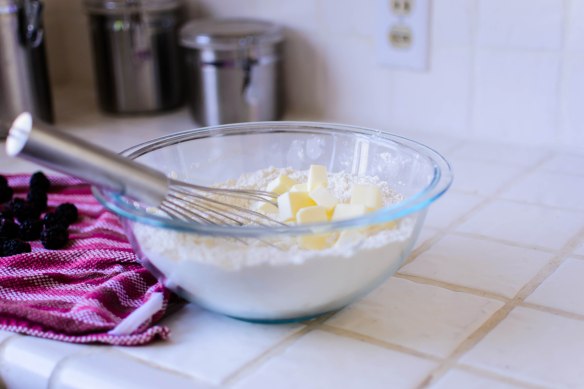
  • Add the butter chunks and, using a pastry blender or your fingers, work the butter into the flour until only small pieces remain – some will be the size of oats; some will be more like peas.
  • Add the blackberries and chopped ginger and toss gently to incorporate.
  • Make a well in the center of the mixture and add the egg and the 1¼ cups cream. Use a fork to mix, incorporating the wet and dry ingredients gently, until a shaggy dough forms. Lightly knead in the bowl just until it comes together – a few dry patches are fine. Some of the blackberries will lose integrity, bleeding through the dough. That’s okay too.
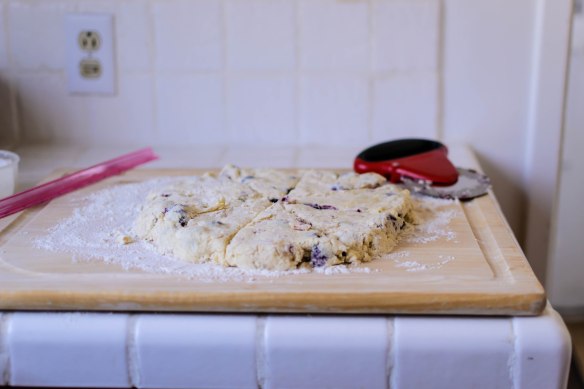
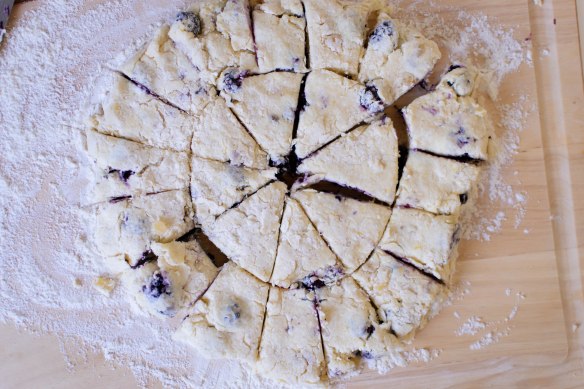
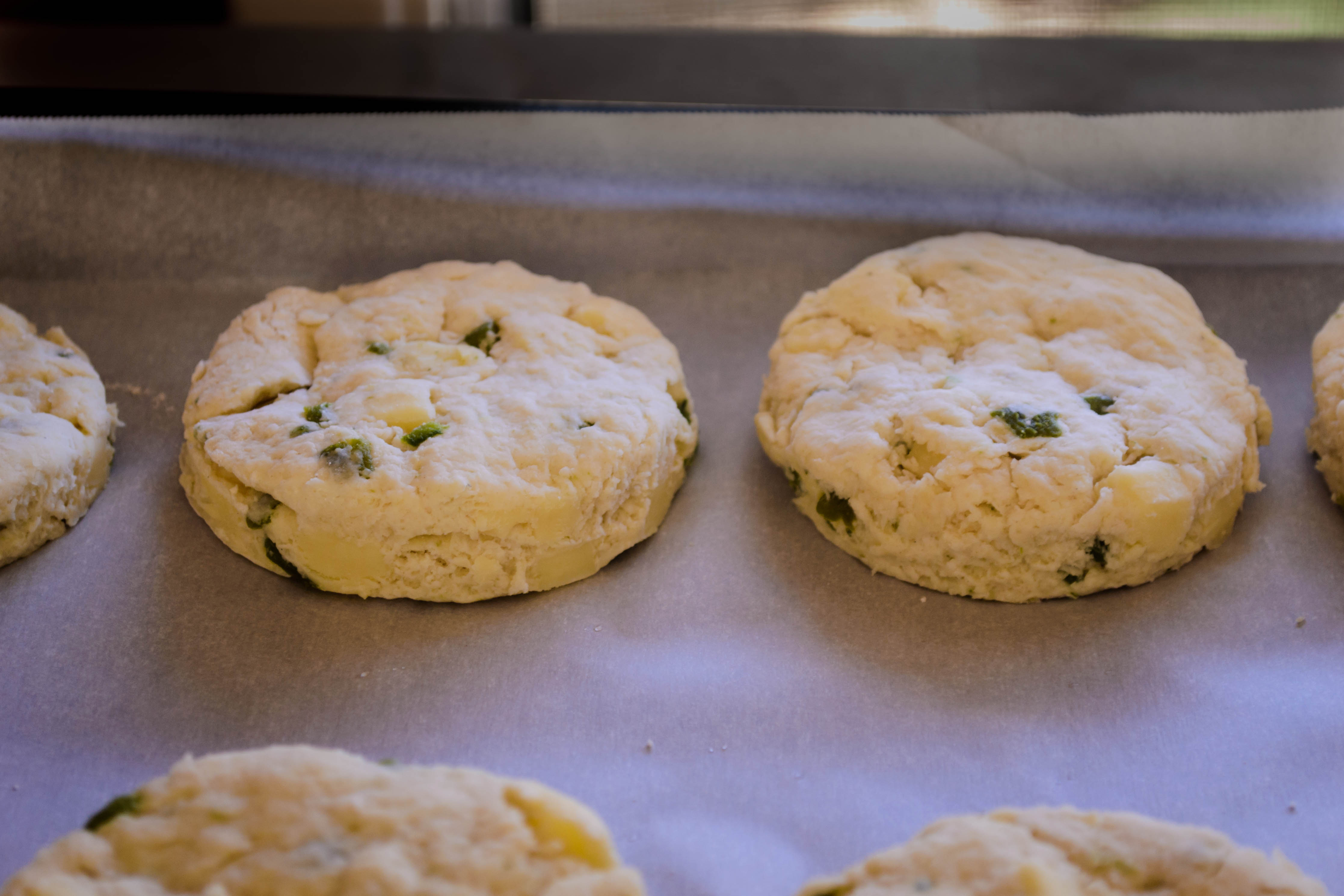
  • Turn the sticky, shaggy dough out onto a floured board and pat it into a round (more traditional) or a rectangle about 1 inch thick. Cut into wedges/triangles (a pizza cutter works well for this), or punch out rounds with a cutter, and transfer to a parchment lined baking sheet.
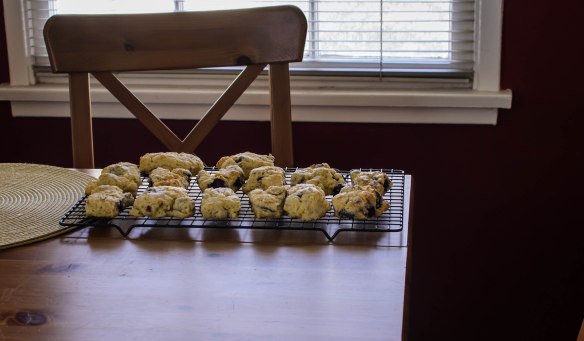
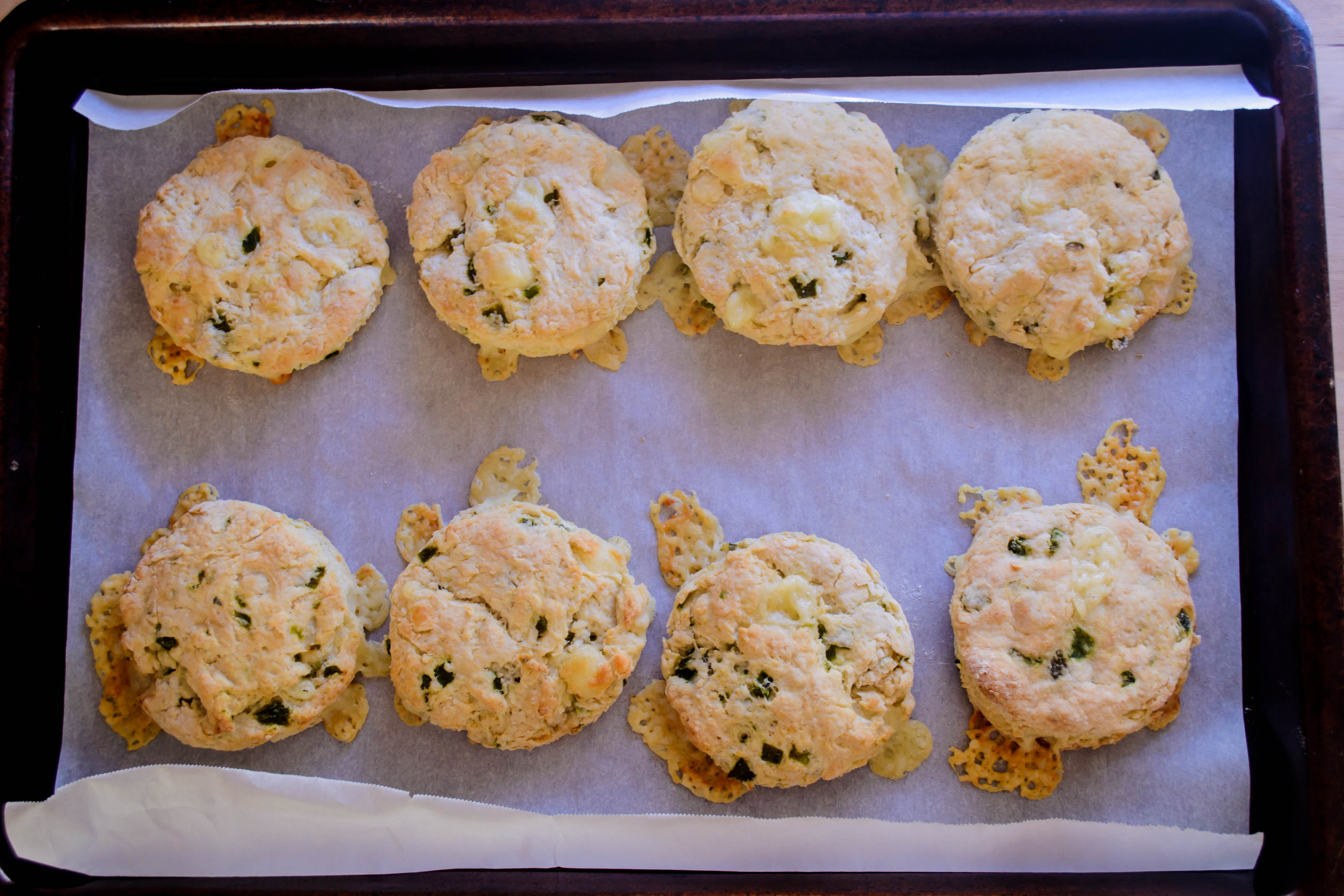
  • Brush tops of scones with a bit of cream, then sprinkle with raw sugar if desired. Bake at 375F: 25-30 minutes for large scones, 20-25 minutes for medium or small. They will blush pale gold when they are done, and the bottoms will bronze a bit darker.
  • Remove gently to a wire rack and let cool a few minutes before eating. If desired, you can leave off the brush of cream and sugar, and instead, when the scones are cool, drizzle them with a well-whisked mixture of 1 cup powdered sugar, ¼ cup lemon juice, and 2 teaspoons vanilla.

Barmbrack with Plums

2016 Food Blog March-0543I’m not sure whether it’s a blessing or a curse that, as the semester picks up, this recipe happens to fill both of my current projects for the month of March: the Twelve Loaves assignment, and my own search term theme. It’s a blessing, in that it’s only one loaf that needs to be baked, which is certainly all I can handle in one weekend. It’s a curse, in that it means I have to come up with something else to make this month, since combining these two leaves an extra week out in the open.

2016 Food Blog March-0511Still, though, it’s fortuitous in an utterly delicious way that these work together. The Twelve Loaves theme for the month is “Irish Breads,” and last year someone found my little site searching for “Irish bread with plums.” Aside from soda bread, the standard go-to Irish loaf, I knew nothing about Irish breads at all. Well, I suppose I knew about scones, but those are really British Isles in general to me, and not as specific to Ireland as I wanted to get.

2016 Food Blog March-0509After a little research, I hit upon barmbrack, or barm braec. In Gaelic, “braec” means speckled, and so this lovely rich bread is threaded through with dried fruit. Usually the speckles are raisins and sultanas (or golden raisins, as we somewhat unimaginatively call them in the U.S.). This seemed, though, like a perfect place to add the requisite plums from the search. They would need to be dried, both because it’s not stone fruit season yet and because the moisture levels of fresh plums would make the bread too wet. Still, though, chopped prunes along with the traditional raisin component seemed promising. I love prunes, with their rich, concentrated flavor and their dense, almost meaty texture, but they don’t often find their way into baked goods, which I think is a shame.*
2016 Food Blog March-0510Barmbrack can be made both as a yeasted loaf and as a simple round raised with baking soda. I decided on yeast, since sometimes I find soda breads a bit too dense for my taste. Since this was already going to be weighed down by the fruit, I wanted to give it a good bit of lift. In either case, it’s usually a holiday bread celebrating the harvest season, and there are sometimes small treasures like rings or coins baked into it as part of a fortune-telling game (I must admit I skipped this part).

2016 Food Blog March-0515I surveyed a number of recipes, and finally combined two with features I liked. Interestingly, this bread is often made with tea: the dried fruits, and sometimes candied or fresh citrus zest, are soaked in strong black tea for a few hours, or even overnight, before being kneaded into the spiced, slightly enriched dough. I didn’t have any Irish Breakfast Tea, so I gritted my teeth and chose between Earl Grey and English Breakfast. In the end, I went with the Earl Grey. I realize the reference to British politics and aristocracy might ruffle some feathers, but at least it didn’t outright have the word “English” in the name. In any case, do forgive me, and use proper Irish tea for your loaf.

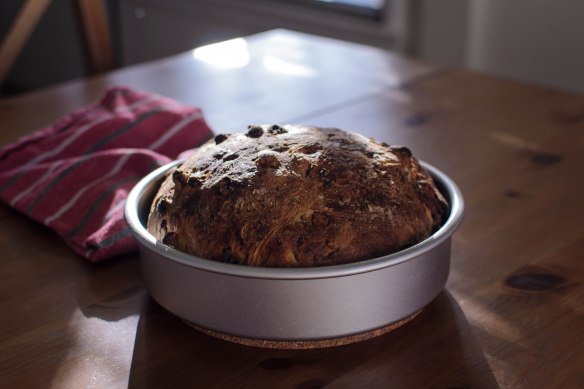
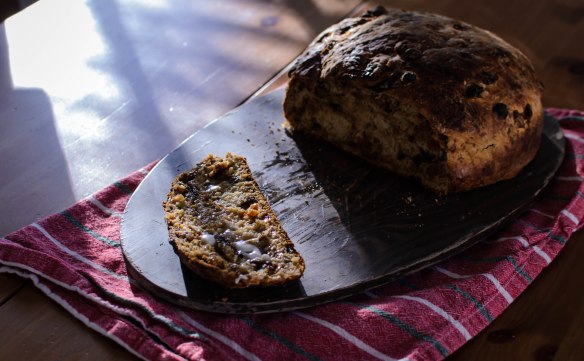
2016 Food Blog March-0527Because there is a lot of moisture from the fruit in this loaf, you can expect a quite sticky dough. Don’t be afraid of it, though; just add some more flour to your board and knead away. You’ll be rewarded, after two rises and the better part of an hour in a hot oven, with a deeply browned loaf studded with a rubble of raisins and prune pieces, moist and richly chewy, but with a firm and almost crackly crust. Because it is baked in a round cake pan, it rises with a glorious even dome, and just around the edge where the loaf leaves the pan, there’s a curiously lovely pale golden stretch mark encircling the bread.
2016 Food Blog March-0535The Saveur recipe I borrowed from suggests, as the end of the baking time nears, brushing the top of the loaf with warm honey and then baking for an additional two minutes. I did not do this, in both an effort avoid too much sweetness and to maintain its lovely crusty exterior. If you should want to, though, they recommend ⅓ cup.
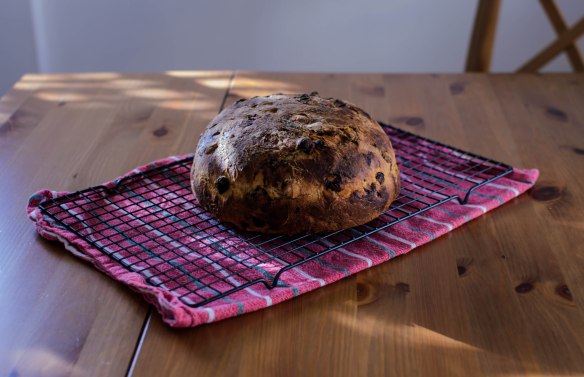
2016 Food Blog March-0542Despite wolfing down a thick slice the day I baked it, N. has since forgotten about this homely little loaf, and I haven’t bothered to remind him, because that means more for me. Even after a few days wrapped in aluminum foil, the interior remains moist and rich but not too dense, and the outside stays perfectly crusty – a rugged, deeply browned layer that I’ve tried all week to think of ways to describe. “Imagine if a brown paper bag were a crust,” I said to N. at one point, but we agreed that didn’t sound particularly delicious. “Perfectly crusty” remains the best thing I can come up with, and you’ll have to believe me that it’s part of what makes the loaf worth hoarding. Perfect still warm from the oven, great at room temperature, and glorious toasted, this is good plain but revelatory with a thick pat of salted butter and, obviously, a cup of tea.
2016 Food Blog March-0551* if you aren’t a prune fan, you can stick with the traditional raisins and sultanas, or test out other dried fruit options: currants would be great here, and dried cranberries or dried cherries might also be good. Dried apricots also sound promising to me along with the sultanas, provided they were quite finely chopped. Perhaps a dollop of clotted cream or even mascarpone cheese over the top of the slice wouldn’t go amiss.

Prune and Sultana Barm Brack
Adapted from Saveur and RTÉ Lifestyle
Makes one 8-inch round loaf
About 5½ hours, including steeping and rising time, or overnight
2 cups strong black tea (I used 2 tea bags)
¾ cups chopped prunes (dried plums)
¾ cups sultanas (golden raisins)
2 tablespoons each orange and lemon zest, plain or candied
¼ cup whole milk, warm or at room temperature
2 teaspoons active dry yeast
2-2½ cups bread flour
1 teaspoon salt
¼ cup light brown sugar
½ teaspoon ground cinnamon
¼ teaspoon ground nutmeg
¼ teaspoon ground cloves
8 tablespoons softened unsalted butter, divided
1 egg
(optional: ⅓ cup honey, warmed, to brush over the loaf)


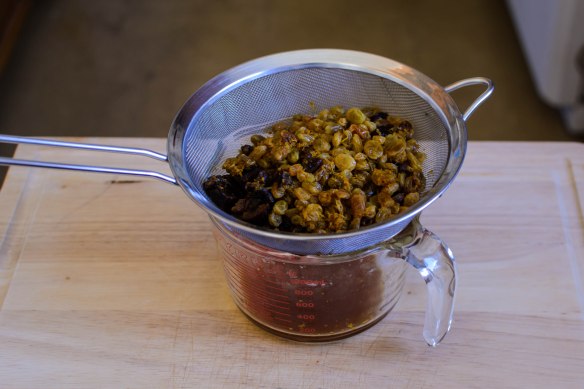
  • In a medium glass bowl (I used my 4-cup measuring cup), pour 2 cups of boiling water over 2 teabags and let steep for 4-5 minutes. Add the chopped prunes, the raisins, and the mixed zest, and let soak for at least 2 hours, or as long as overnight. When you are ready to make the dough, drain the fruit and zest in a strainer, but reserve the soaking liquid.
  • Meanwhile, sprinkle the 2 teaspoons active dry yeast and a pinch of sugar over the warmed milk and let sit for 5-10 minutes until the yeast fizzes and foams up. Mine raised quite a dome.
  • While you wait for the yeast, combine 2 cups of flour, the salt, the brown sugar, the cinnamon, the nutmeg, and the cloves in the bowl of a stand mixer, or another large bowl.
  • When the yeast is foamy, add the egg and mix briefly, then pour into the dry ingredients, add 6 tablespoons of the softened butter, and mix with the paddle attachment to bring together. Mine was a bit crumbly at this point.
  • Switch to the dough hook and knead at medium speed for 5-7 minutes until you have a smooth but slightly sticky dough. If the dough seems too dry and is just not coming together, add a tablespoon or two of the reserved tea. If it gets too wet, add flour a tablespoon or two at a time until it is a workable consistency.
  • When your dough is smooth and elastic but still a bit sticky, turn it out onto a well-floured board (I’m not kidding). In three or four additions, knead the drained fruit into the dough. I tried this in the mixer bowl with the dough hook, but it made a huge mess. By hand with flour and a dough scraper nearby is the best strategy.
  • With the fruit incorporated, form the dough into a loose ball and deposit it into a large bowl you’ve buttered with 1 tablespoon of the remaining softened butter. I used the stand mixer bowl; you don’t even have to rinse it out in between. Cover the bowl tightly with plastic wrap and set aside to rise for 1-1½ hours, until nearly doubled.
  • Punch down the risen dough by depressing your fist gently into the center; the dough will spring back only slightly. Turn it out onto a floured board and knead lightly 2 or 3 times, then shape it into a tight ball and position it in an 8-inch cake pan, which you’ve buttered with the last remaining 1 tablespoon of softened butter. Drape lightly with plastic wrap and let rise another 30-60 minutes. Mine was ready to go in 45 minutes.
  • About 30 minutes before you are ready to bake, preheat your oven to 400F with a rack in the middle position. When the loaf fills the pan and is nicely domed, remove the plastic wrap and carefully place in the oven to bake for 35-45 minutes, until the bottom sounds hollow when thumped, or an instant-read thermometer measures 180-200F.
  • If you wish, now is the time to remove from the oven, brush on the ⅓ cup warm honey, and return to the oven to bake an additional 2 minutes. I skipped this because I wanted the crust to stay, well, crusty.
  • Let cool in the cake pan at least 10 minutes, then turn out onto a wire rack to cool an additional 20 minutes before cutting into unapologetically thick slices, slicking thickly with butter, and eating alongside a strong cup of tea.


#TwelveLoaves is a monthly bread baking party created by Lora from Cake Duchess and runs smoothly with the help of Heather of All Roads Lead to the Kitchen, and the rest of our fabulous bakers.

This month we are baking Irish Breads. For more bread recipes, visit the #TwelveLoaves Pinterest board, or check out last month’s inspiring selection of #TwelveLoaves RED Breads!

If you’d like to bake along with us this month, share your Irish Breads using hashtag #TwelveLoaves!
Chai Spiced Sweet Rolls

2015 Food Blog December-0645Last week the Twelve Loaves bakers turned out an impressive collection of holiday breads. I had my plan in place, but as I noted on last week’s cheat entry, holiday weekends ironically don’t always allow for baking projects. Now that I’ve had an extra week to get myself in order, I can show you what I intended to contribute: tiny sweet rolls, one to two bites for easier consumption, threaded through not with the classic pairing of cinnamon and brown sugar, but a more complex combination of spices drawn from the wonderful, warming blend that is masala chai, or chai tea. It’s not a traditional holiday bread, but the layering of slightly spicy flavors in chai has always reminded me of gingerbread. By the power of association, then, here we are.

2015 Food Blog December-0619Like many spice mixtures, chai does not have a set blend – many warm notes are added to the black tea leaves to produce the complex, slightly spicy flavor. Cardamom plays a dominant role, and cinnamon, ginger, and black peppercorns are usually present as well. Star anise contributes a subtle licorice note, and cloves and fennel also sometimes make an appearance.

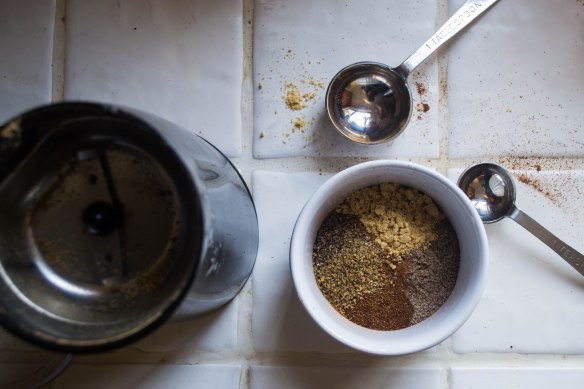
2015 Food Blog December-06262015 Food Blog December-0633For mine, since I used standard aniseed instead of the more traditional star anise (sometimes the grocery store is out and you’re too lazy busy to walk down to the Indian market), I omitted the fennel – a breath of licorice flavor is more than enough for me. Balancing these strong spices can be a tricky task – I wanted my blend to lead with the sweeter cardamom and cinnamon, and be backed up by the depth of the cloves and aniseed. The black pepper and ginger should be subtle – a warming heat rather than aggressive spiciness.

2015 Food Blog December-06272015 Food Blog December-0630I used my Nana’s sweet dough recipe for the base here, amping up the butter a bit and adding an extra egg, but I substituted honey for the sugar the original recipe calls for, since my favorite chai blend incorporates it. The floral notes of the honey make for a slightly more flavorful dough. A splash of vanilla, too, plays well with the spices and the honey.

2015 Food Blog December-0635Many cinnamon rolls are dripping with melted brown sugar and pack a sugar-overload punch that can get you through an entire crowded mall and its parking lot at Christmastime before you come down from your high. These tiptoe a bit more subtly into the holiday air. They are sweet, yes, but tempered. The spices come through, but you can still taste the honey and vanilla in the dough.

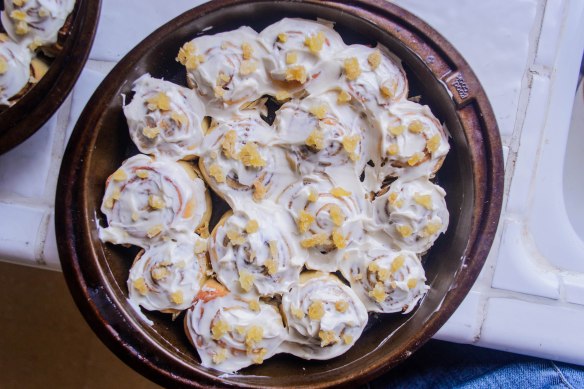
2015 Food Blog December-0637These would be perfectly fine on their own – in fact, N. and I bull-dozed through three of them quite unadorned when we did our quality control test, but I can’t help feeling, since they are inspired by a call for holiday breads, that a little excess is needed. A cream cheese frosting, then, lightly sweetened with honey and vanilla, seemed appropriate to smear over the top. And lest it begin to feel too heavy, a scattering of finely chopped crystallized ginger or orange zest brightens them up so you can almost – almost – get away with calling them breakfast.

2015 Food Blog December-0643

Chai Spiced Sweet Rolls
Makes 32-36 mini rolls
Approximately 3 ½ hours start to finish (unless you refrigerate overnight for the second rise)
For dough:
½ cup warm milk
pinch granulated sugar
2 teaspoons active dry yeast
¼ cup honey
1 teaspoon vanilla
2 eggs
¼ cup room temperature or just melted unsalted butter
2-3 cups all-purpose flour (you may not use all of it)
½ teaspoon salt
For filling:
¼ – ½ cup unsalted butter, melted
½ cup brown sugar
1 tablespoon cardamom
1 tablespoon cinnamon
1 teaspoon ground ginger
¾ teaspoon ground star anise or ½ teaspoon ground aniseed (be sparing; it’s strong stuff)
½ teaspoon ground black pepper
½ teaspoon ground cloves
For frosting:
8 ounces full fat cream cheese, at room temperature
¼ cup honey
1 ½ teaspoons vanilla
1 tablespoon milk (optional – to thin)
1-2 tablespoons finely chopped crystallized ginger or orange zest, optional
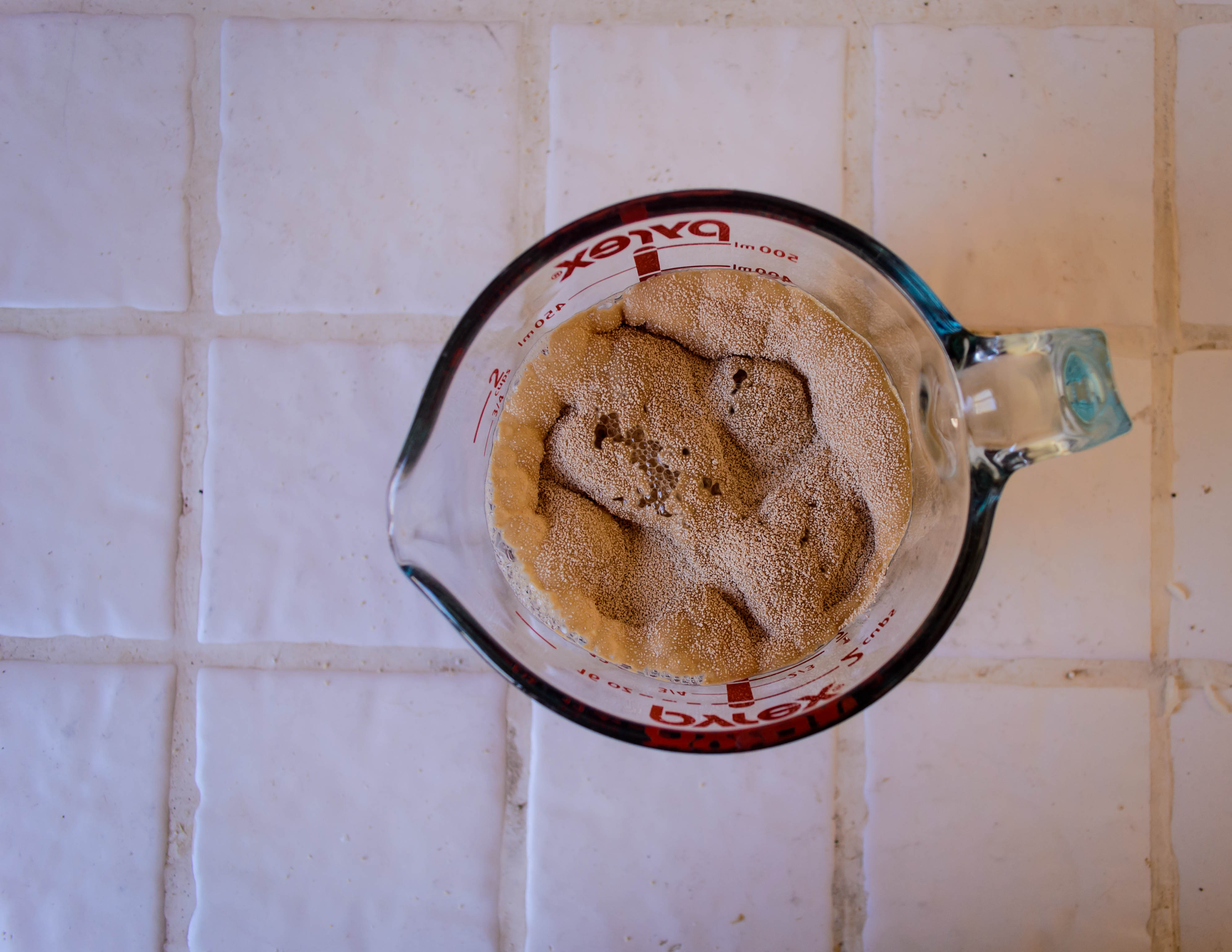
  • In a 2-cup glass measuring cup, warm the milk to just about body temperature (when you dip your finger in, it should feel neutral or barely warm). Sprinkle in the pinch of granulated sugar and the active dry yeast, stir briefly, and set aside to bubble for about 10 minutes.
  • In the bowl of a stand mixer, use the paddle attachment to combine the honey, vanilla, eggs, and softened butter. Once the yeast and milk mixture is bubbly and smells like bread, add it to the other wet ingredients and combine.
  • Now add 2 cups of the flour and the salt, and mix with the paddle attachment until evenly moistened. Switch to the dough hook and knead on medium speed for about 5 minutes, adding more flour ¼ cup at a time if the dough seems too wet. I used just over 2 ½ cups of flour. When adequately kneaded, it will be the consistency of slightly sticky play-dough.
  • Spray or oil the inside of your bowl with non-stick spray, turn the dough ball over to coat it, and then cover the bowl with plastic wrap and set it aside, preferably in a warm place, to rise until doubled: 1 ½ – 2 hours.
  • While the dough rises, prepare the filling ingredients. Melt the butter, measure out the brown sugar, and combine the cardamom, cinnamon, ginger, star anise, black pepper, and cloves in a small dish. This is also a good time to butter or grease two round 9-inch cake pans.
  • After the dough has doubled in size, punch it down by depressing your fist into the center to release the air, then let it rest for 5-10 minutes. This will make rolling much easier. Turn it out onto a floured board and cut in half with a dough scraper or a sharp knife. Return one half to the mixing bowl and, with a floured rolling pin, roll out the other as thin as possible without tearing, or at least to a 12×16 inch rectangle. If it seems sticky, use a dough scraper to release it from the board, sprinkle a little flour underneath, and rotate the dough 180 degrees before rolling again.
  • Smear your 12×16 inch (or bigger) rectangle with melted butter, then crumble on half of the brown sugar in an even layer. Sprinkle on a heaping tablespoon of the chai spice mixture, then use your fingers to spread the spices and sugar evenly over the surface, leaving a ½ inch border on one long edge of the dough. This will be the end of the roll.
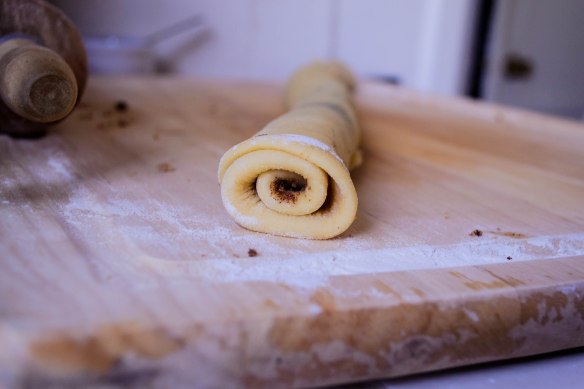
  • Starting in the middle, begin rolling up the long edge of the dough (opposite the side on which you left the border), moving outward to the edges and trying to keep the roll even. You want to roll this tightly – the tighter the roll, the better it will stay together when sliced. As you get to the end of the roll, start to stretch the edge on which you left the border up over the existing roll, pinching it lightly into the roll to adhere. When finished, you should have a long, skinny log only an inch or two in diameter.
  • To slice, use a serrated knife and saw back and forth applying as little pressure as possible. Slice the long log into 1-inch segments, and position each cut side up in one of your prepared 9-inch cake pans, spacing them slightly to give them room to puff.
  • Repeat with the other half of the dough.
  • Cover the filled cake pans with plastic wrap and let rise for 45-60 minutes until doubled again, or, if you are short on time, stow them in the refrigerator overnight (bring to room temperature before baking).
  • 30-40 minutes before baking, preheat the oven to 375F. When the little sweet rolls are puffed and ready, remove the plastic wrap and bake until pale gold on top and just barely set in the middle: 10-12 minutes.
  • While the rolls cool, make the frosting. Use a handheld electric mixer, or a stand mixer with the whisk attachment, to blend together the cream cheese, honey, and vanilla until fluffy. This will take 1-2 minutes, and at first the cream cheese will get clumpy and look separated – don’t worry! Just keep mixing and it will come back together. If it seems too thick, dribble in 1 tablespoon of milk and mix again to desired consistency.
  • When the rolls have cooled, spread on the cream cheese frosting using a small rubber or offset icing spatula. If desired, top each with a spare sprinkle of finely chopped crystallized ginger or grated orange zest.
  • Best served warm or at room temperature.

Apple Cheddar Waffles

2015 Blog September-0463Although I object to the idea of swapping all of your usual décor with pumpkins and corncobs the moment calendars proclaim it’s the first day of fall, by the time mid-October rolls around I’m both cool with the harvest theme and starting to crave richer, belly-warming food. I have such ideas about bread, and stews, and short-ribs, and roasted everything…

2015 Blog September-04502015 Blog September-04522015 Blog September-0455Los Angeles is making this hard lately. With temperatures in the 90s during two of the past three weekends, it’s difficult to convince myself to cook anything, much less wax poetic about its warming spices and satisfying heartiness. My bedroom feels like the inside of a dryer. I might have fleeting dreams about fluffy, toasty, steaming biscuits mounded with chili, but all I can truly imagine consuming is a series of popsicles and frozen grapes.

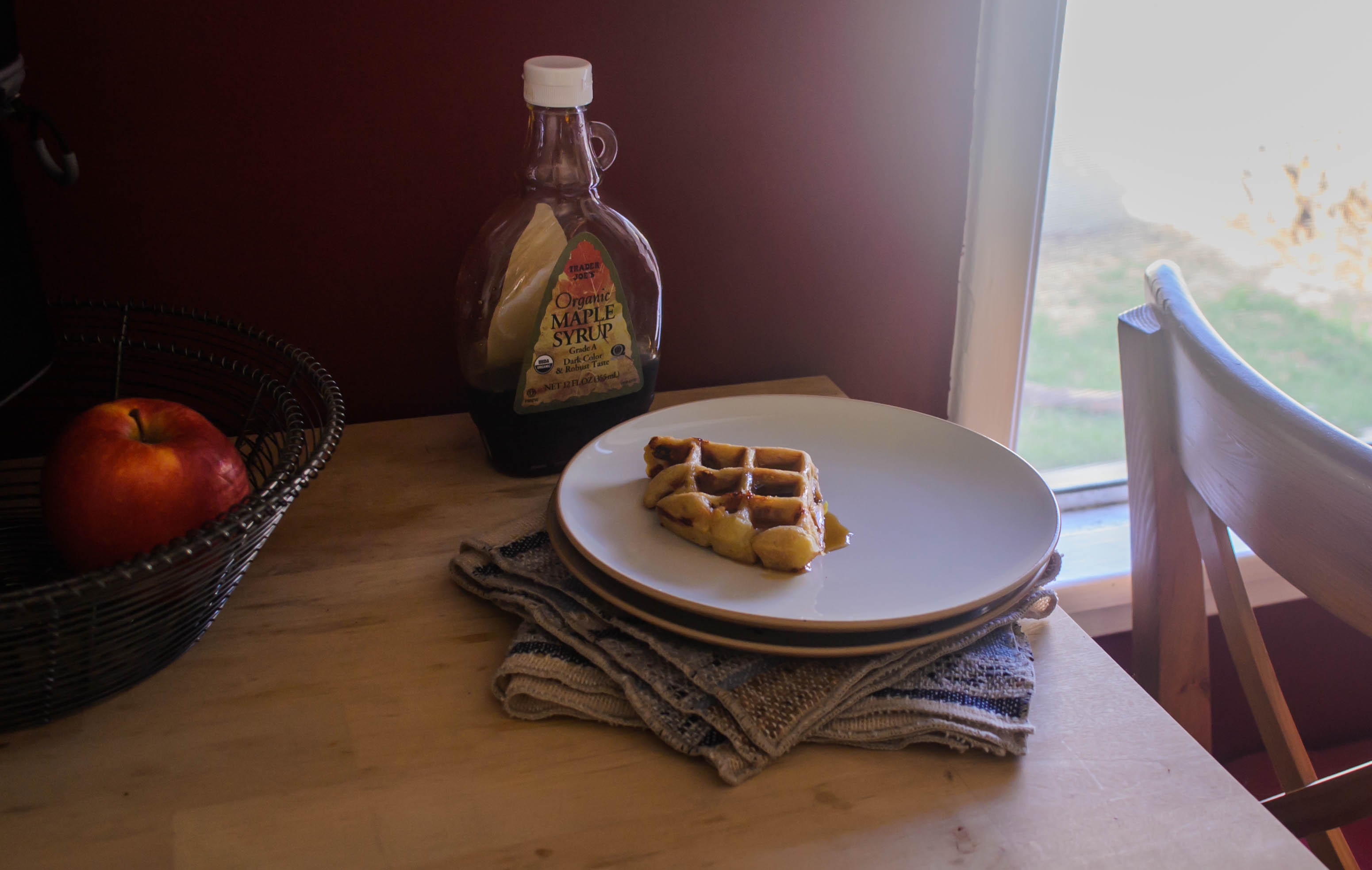
2015 Blog September-04562015 Blog September-0457But I will say, if it’s cool enough where you are that the thought of using heating implements in your kitchen doesn’t throw you into depression, you should make these waffles immediately. I first made them a month or so ago when it didn’t feel like Dante might mistake our kitchen for one of the circles of Hell. They were so good – fluffy and light from their yeasted batter, crisp and burnished with crackling edges of melted cheese – that it was only a week or two before we had to make them again. Like the grilled cheese sandwiches I pushed on you last year, they pull from the classic combination of cheddar cheese and apple pie. A wedge of salivation-inducing cheese against the sweet tartness of apple desserts is a worthy experiment in many cases, and here, soft, tender apple bits and pockets of melted cheese folded into a crisp waffle drowning in maple syrup is a combination you’re going to want to make all season, if the seasons would ever straighten themselves out. And if you simply aren’t enthused by a recipe that advertises itself with a pile of apples and sharp-as-you-can-get cheddar cheese, I’m not sure we can stay friends.

2015 Blog September-0467These start from my basic yeasted beer batter waffles recipe, which is adapted from King Arthur Flour. You can use milk instead of beer if you must, but between the yeast and the heat most of the alcohol is processed out, and the slightly bitter flavor of dark beer is such a welcome addition, balancing the rich cheese and tart apples. The first time I made these I was concerned about the apple pieces cooking all the way through in the short time they are enfolded in the waffle iron, but I needn’t have worried. They are in small enough pieces that they will cook. I like to leave the skins on for extra tartness, but you can peel them first if you prefer. Apples and cheese play well in both sweet and savory directions, so while I think a glug of maple syrup – we like to warm it up with a pinch of red pepper flakes for a little kick – makes these a complete meal, I could also see them providing a perfect raft for a moist thigh of roasted or fried chicken, or even piled with a fresh kale salad studded with walnuts and dried cherries. 2015 Blog September-0464

Apple Cheddar Waffles
Loosely adapted from King Arthur Flour
Makes about six 7-inch waffles
2-2½ hours (45 minutes active time)
1½ cups (12 ounces) lukewarm dark beer, such as a stout or a porter
1½ teaspoons active dry yeast
3 tablespoons maple syrup
6 tablespoons (3 ounces) melted butter, cooled
1 teaspoon salt
2 large eggs
2 cups all-purpose flour
1 green apple, diced into ¼ inch-½ inch chunks (1⅓ – 1½ cups, approximately)
1 generous cup grated sharp or extra sharp cheddar cheese


  • In a 2-cup glass measuring cup, or a small microwave safe bowl, heat the beer until just warm to the touch. Add yeast and let them mingle for 5-10 minutes. The yeast will foam up considerably, thanks to the extra sugars and yeast already in the beer.
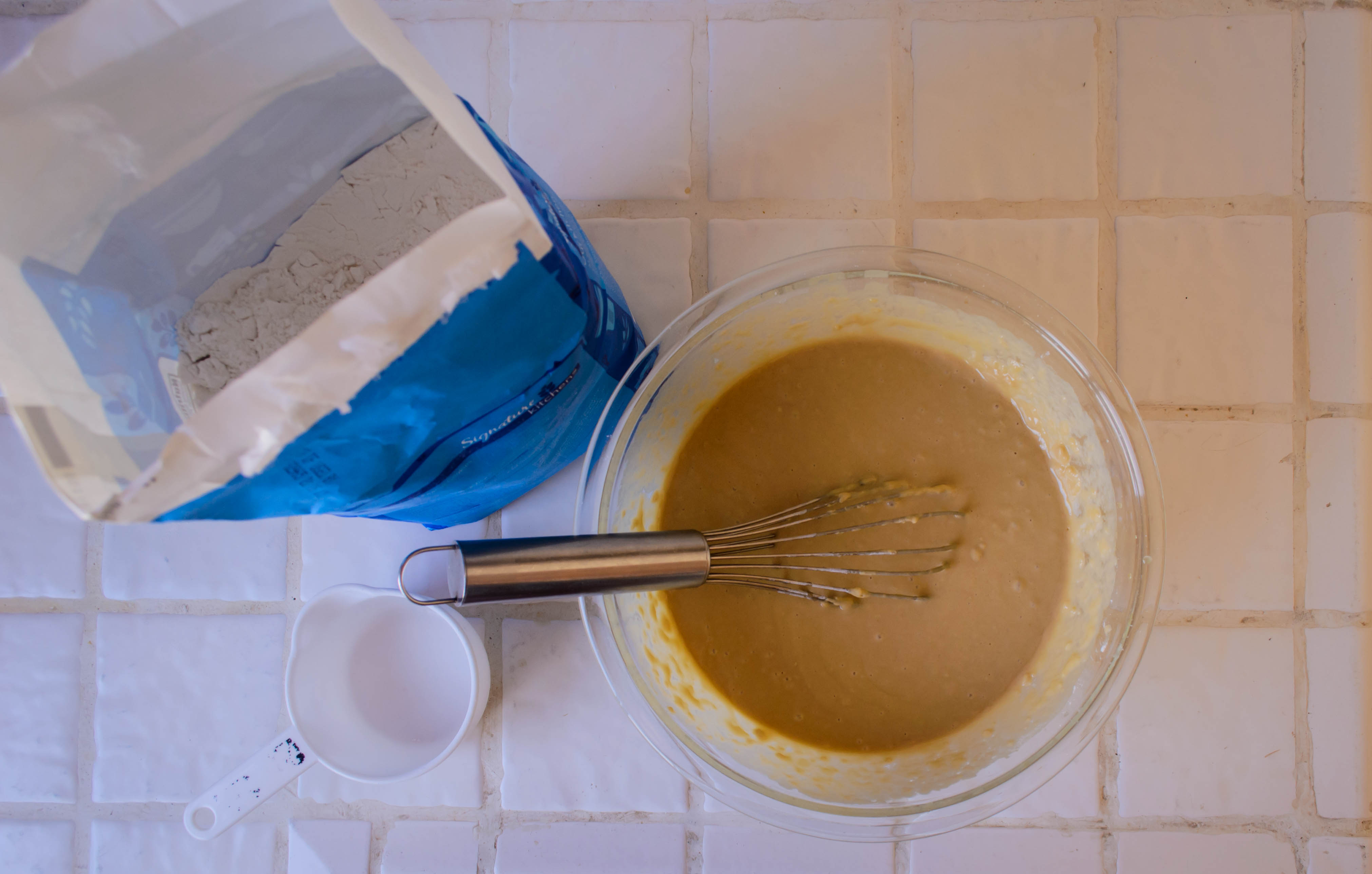
  • While the yeast proofs, whisk together the cooled melted butter, the maple syrup, the salt, and the eggs in a large bowl. Be sure there’s room for the batter to expand.
  • Add the beer and yeast mixture and whisk to combine, then add the flour 1 cup at a time, whisking to combine thoroughly. Switch to a rubber spatula and fold in the apple chunks and the cheese. Stir well, as the cheese may want to stick together; we want it evenly incorporated.
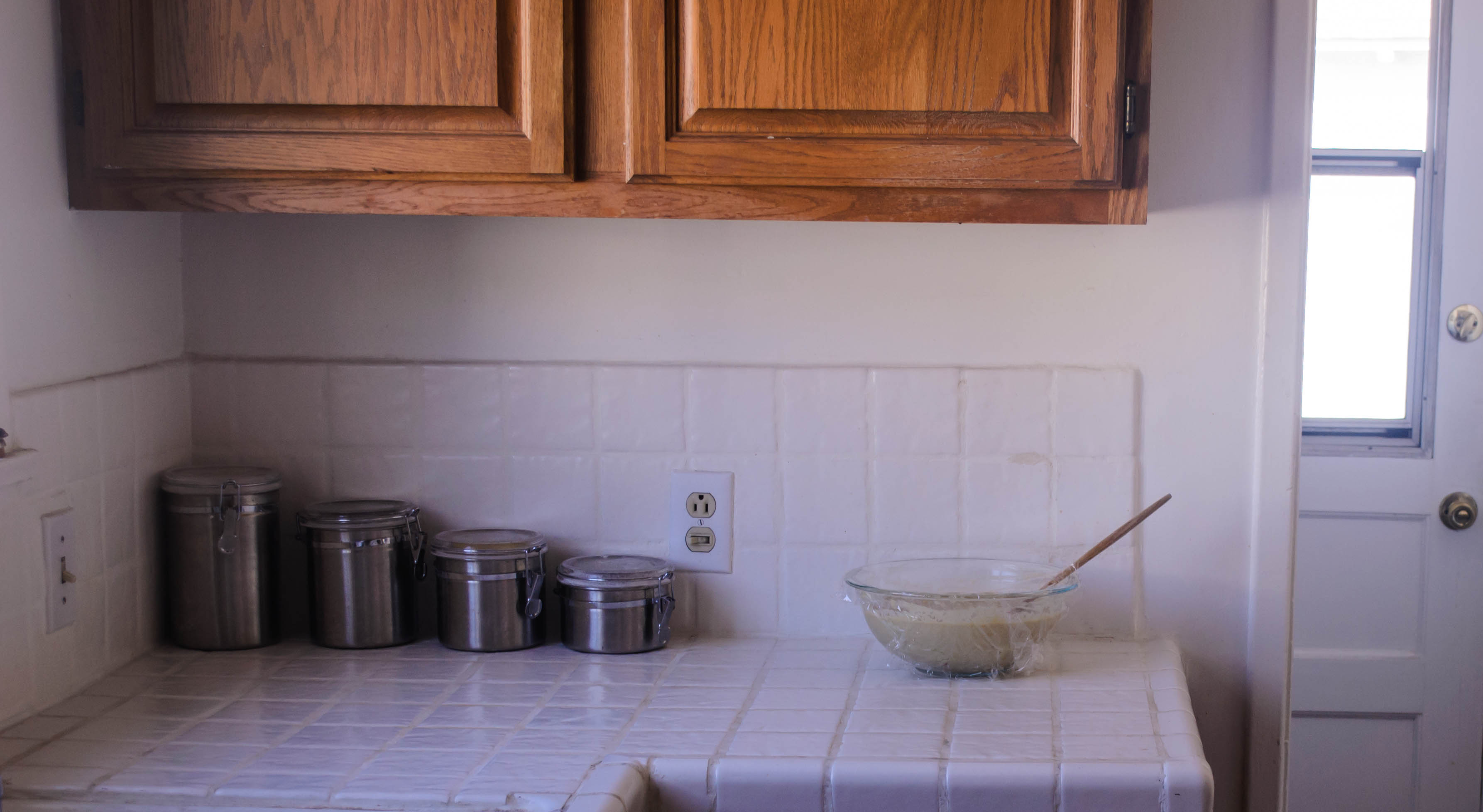
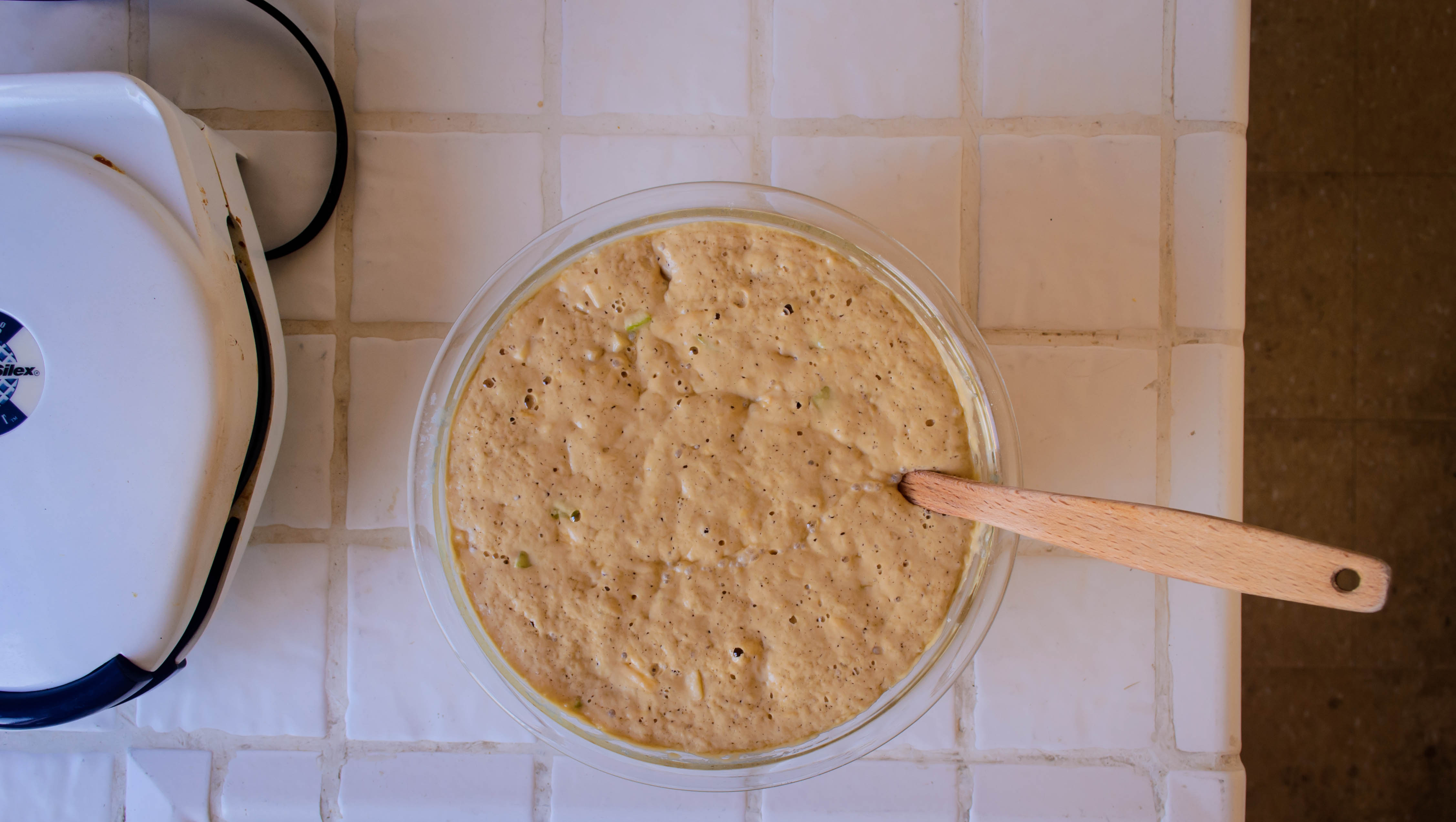
  • Cover the bowl with plastic wrap and set it on the counter for 1½-2 hours (how fast it rises and bubbles will depend on how warm your kitchen is, but longer rise = deeper flavor).  The mixture will develop lethargic and then more energetic bubbles, and begin to smell quite bready.
  • Once it has had a chance to rise and is covered with a near-consistent layer of bubbles, either stow in the refrigerator overnight, or preheat your waffle iron!
  • Drop the batter in generous ⅔ cup batches onto a preheated, greased waffle iron (or whatever capacity your iron can handle). Close the lid and cook for the recommended amount of time, or until the waffle is crisp on the outside and deeply golden, with dark crisp cheese lace protruding. Ours took about 7 minutes per waffle. (If you refrigerated your batter for a few hours or overnight, be sure to bring it back up to room temperature before cooking)
  • Serve hot with your choice of sweet pourable topping. We like maple syrup warmed with a pinch of red chili flakes in it, for a little kick. If you need to keep the waffles warm, stow them on a wire rack over a baking sheet in a 250F oven until you are ready to eat.


Los Feliz Biscuits and Gravy: poblano and white cheddar biscuits with chorizo gravy

Food blog July 2015-1117According to adage, breakfast is “the most important meal of the day,” and while the heavy, sweet or savory, sometimes grease-laden offerings that make up a truly excellent breakfast are some of my favorite meal options out there, if I eat them first thing in the morning I’m going to feel ill. Give me a bowl of bran flakes or a slice or two of toast in the morning, then move to the eggs, the bacon, the biscuits, the sausage, the waffles, as the day eases on. That’s why I get so excited, and wax eloquent so often here, about breakfast-for-dinner.

Food blog July 2015-1100But for a 30-something living in an urban area like Los Angeles, breakfast food of this ilk means something else: brunch. Food that is fatty and greasy in the best possible way washed down with a mimosa or three to compensate for the previous night’s revelry – this is the true calling of a large plate of breakfast meats, scrambles, and toasted, syrup-bearing stacks. And here, at least, walking into a restaurant for brunch entails working your way through a crowd of plaid and maxi skirts, tilted fedoras, gladiator sandals, and the occasional waxed mustache. So, you know, hipsters.

Food blog July 2015-1104A few months ago, N. and I wandered through a little enclave called Los Feliz just south of Griffith Park after a failed attempt to visit Griffith Observatory (on a temperate weekend, with clear skies, there’s zero chance of finding parking there more than half an hour after it opens. What fools, we). On our way to a local bookshop, we ran into one of his coworkers and her wife having brunch, and it suddenly seemed like exactly the right thing to do. We unofficially added “eat brunch at every restaurant in Los Feliz” to our LA-to-do list.

Food blog July 2015-1109Brunch in Los Feliz – like many places east of Hollywood as highway 101 cuts south toward downtown – means hipster paradise with a heavy dose of East LA flavor: huevos rancheros, chilaquiles, chorizo folded into a thick, fluffy omelet. The Mexican and Latin influence on that side of the city makes for a glorious contribution to any brunch (or, as my sister put it, a meal that is perfect for “a Sunday at 11AM or any night at 8PM or later”).

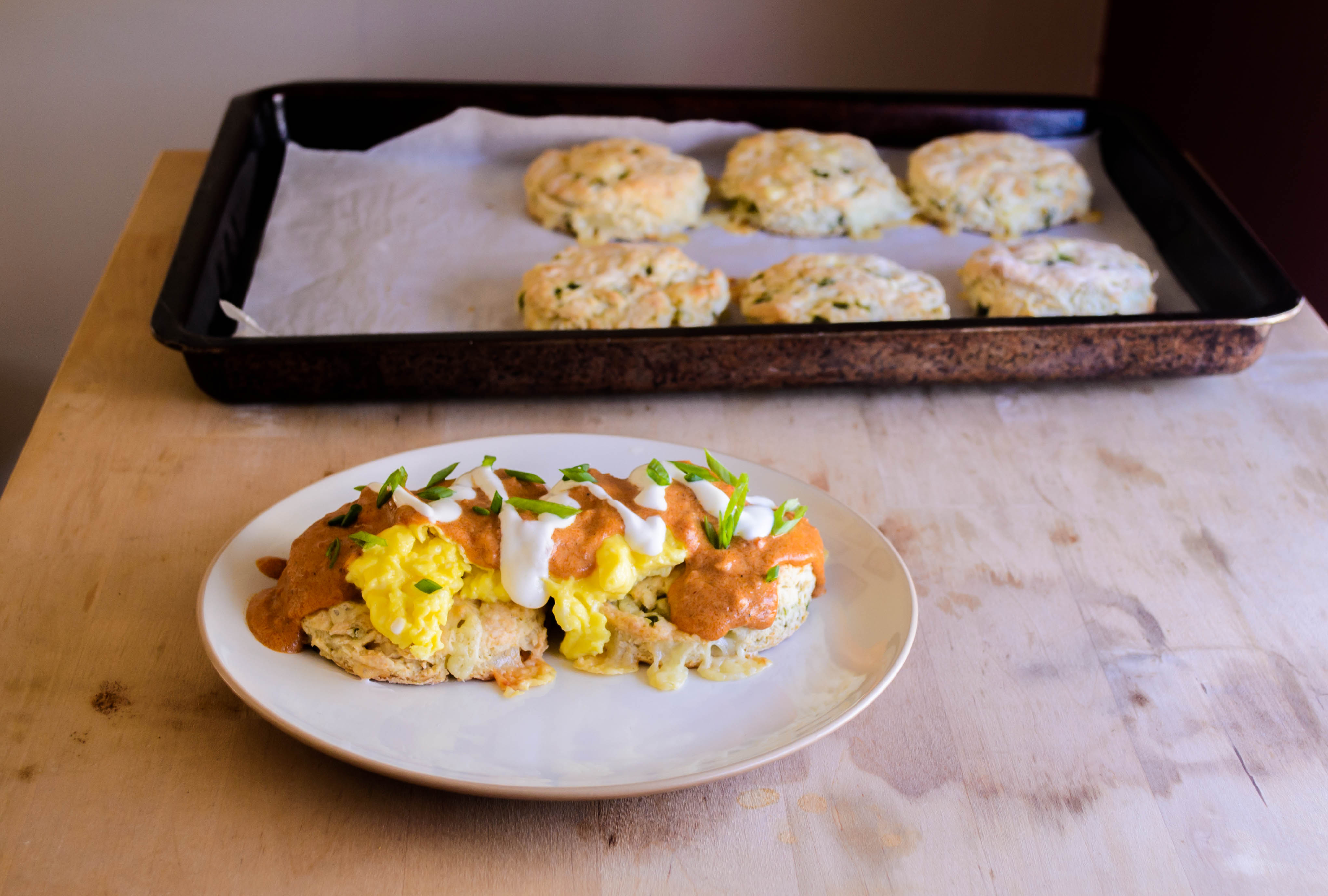
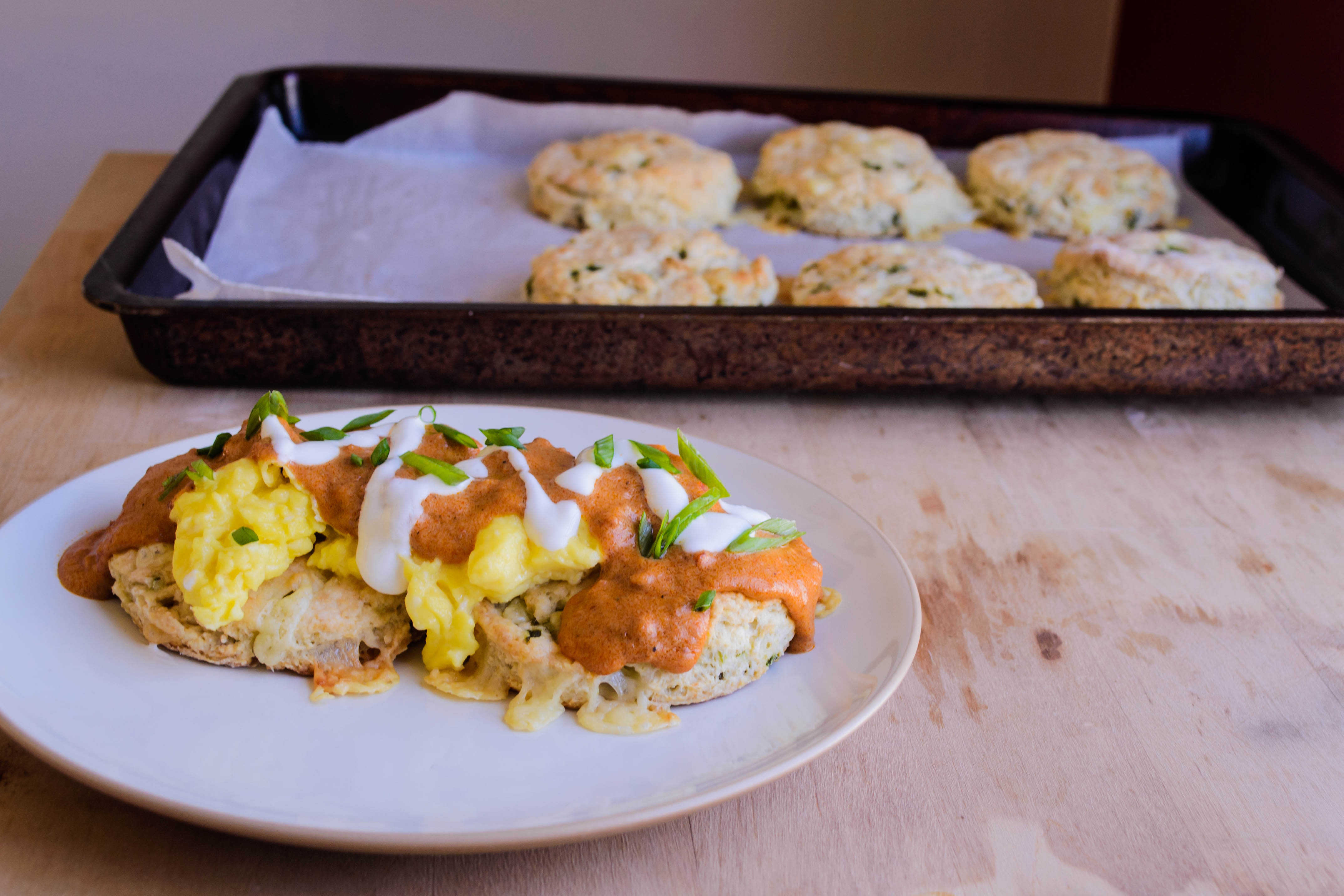
Food blog July 2015-1106Our first entrée (haha) into the Los Feliz brunch scene was late on a Sunday morning, seated outside, as you always should be, so you can watch the show walk past: rompers and sundresses, stilettos surely too high and too spiky for church, bowties and converse all-stars worn un-ironically on the same person. Some passersby are accompanied by their pit bulls and chihuahuas, who often sport their own wardrobes, and pause to jangle their collars against the metal water bowls left outside for them by many of the businesses along the main drag. But once our food came, I don’t think we noticed another single pedestrian. N. had huevos rancheros, and we agreed they were a good representation – the black beans were meaty and savory and well-seasoned, and the fresh salsa was good – but my dish was the real star: poblano and white cheddar biscuits with scrambled eggs and a chorizo gravy. Flaky, cheesy mounds draped in a bright orange, lightly spicy sauce that, even though we’d promised to share, made me reluctant to relinquish my plate. Think classic biscuits and sausage gravy, but with neighborhood flavor.

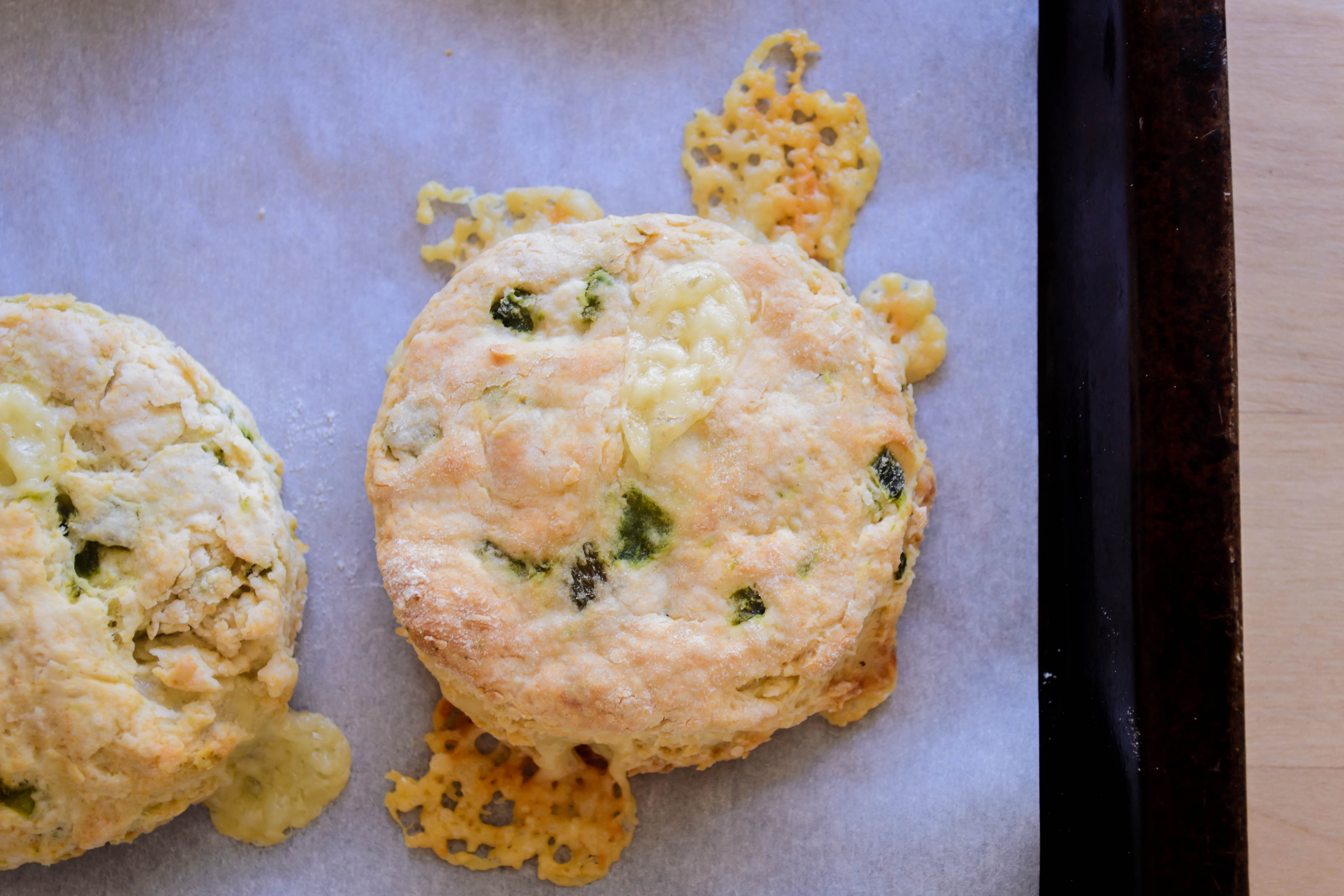
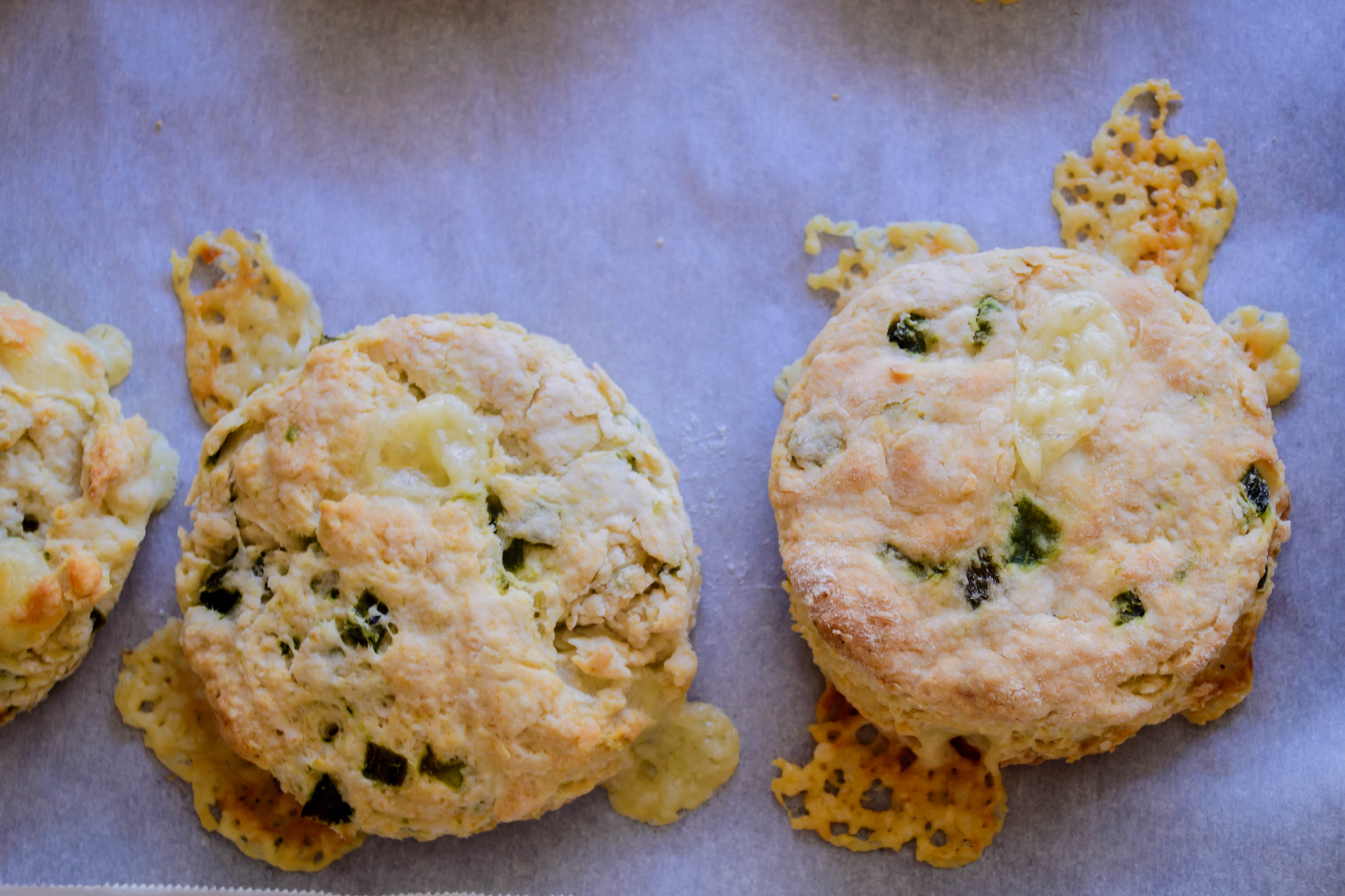
Food blog July 2015-1107A dish like that only means one thing: restaurant recreation. Even as we asked for the check, I was already considering how I would make this at home. I wanted cheesier biscuits, more roasted poblano, and a stronger chorizo presence in the gravy. This resulted, in my version, in a gravy stronger in flavor but a bit less rich, and biscuits to rejoice over – flaky, crisp and golden on top, aggressively cheese-laden with obvious hits of smoky poblano inside. Plus, once punched out the biscuits freeze perfectly, so it makes sense to bake just what you need and save the rest for another lazy morning. It’s a brunch (or lunch, or dinner) option that will remain permanently on our rotation.

Food blog July 2015-1112Brunch in Los Feliz was, then, a successful voyage in many ways, and clearly our real challenge will not be exploring the area for its brunch options, but convincing ourselves to order something different every time, because once you’ve found an option as fulfilling as this, trying something new is a gamble I’m sometimes unwilling to take.

Food blog July 2015-1113Serving suggestions: because the restaurant’s offering was pretty perfect as it was, I copied their addition of scrambled eggs between the biscuit and the gravy, but the eggs are really just an extra luxury. You could also easily pair this with a pile of crispy hash browns or homefried potatoes, which would be an excellent match for the gravy. Though I don’t have much experience with soy-based sausages, a good soyrizo or chipotle field roast sausage would likely make an excellent vegetarian sub for the chorizo, if you want to go meatless. You might have to add a little extra fat to the pan, though, when you cook them.

Food blog July 2015-1114This dish is best, of course, the first day. The biscuits are never as crunchy and warm after that, and the gravy does tend to do that thing gravy does where it gets thicker but also separates overnight in the fridge. But I think, with four diners round the table and ten biscuits to share between you, the last drippings of gravy won’t be long for this world.

Food blog July 2015-1124

Los Feliz biscuits and gravy
Serves 4
For biscuits:
1 poblano pepper (¼ – ⅓ cup, when chopped)
2 cups all-purpose flour
2 teaspoons sugar
1 teaspoon salt
2 tablespoons baking powder
6 tablespoons cold butter, cut into chunks
6 ounces buttermilk (about ¾ cup)
1 cup extra sharp white cheddar cheese, grated or in small cubes
For chorizo gravy:
9 ounces chorizo
2 tablespoons flour
2 cups whole milk, warm or at room temperature
salt and pepper to taste (depends on your chorizo – mine didn’t need any)
To serve:
softly scrambled eggs: 2 per person
2 tablespoons sour cream
1-2 teaspoons milk or cream
1-2 tablespoons thinly sliced chives or green onions, dark green part only


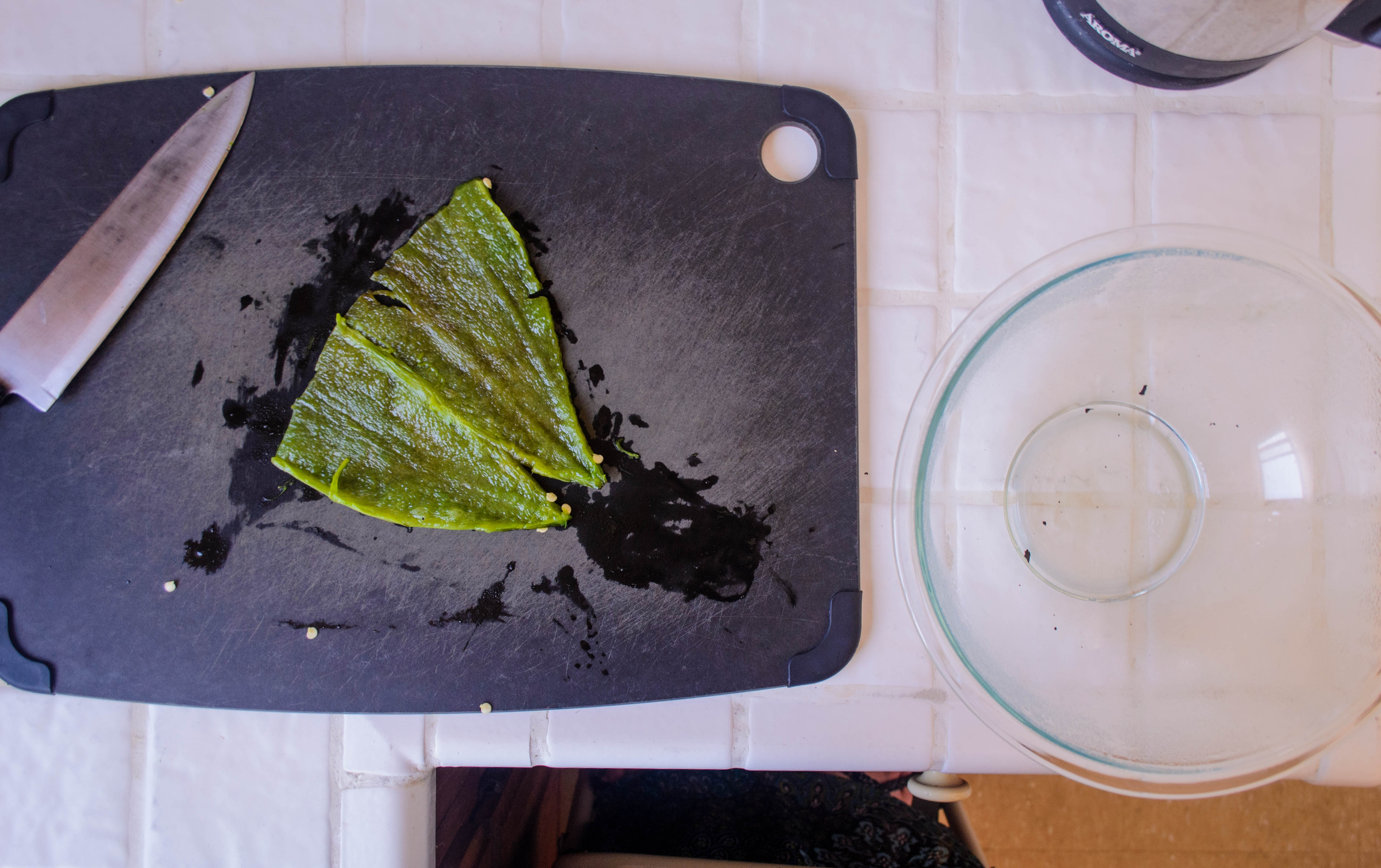
  • Roast poblano pepper over a grill or gas flame – about 10 minutes, turning when needed – until the skin is almost entirely blistered and black. Place in a glass bowl, cover tightly with plastic wrap, and let it steam for 20 minutes to loosen the skin and soften the flesh. After 20 minutes, remove the pepper from the bowl and use a paper towel, knife blade, or your hands to scrape off the skin (some illustrative photos here, if you need them). Remove stem and seeds as well, then dice finely for ¼ – ⅓ cup of roasted pepper bits. The pepper pieces should be room temperature when added to biscuit dough – plan accordingly.
  • Preheat the oven to 400F and line a baking sheet with parchment paper. To make the biscuits, whisk together the flour, salt, sugar, and baking powder in a medium bowl. Blend in the cubes of cold butter using a pastry cutter or your fingertips. Butter bits should be the size of small peas. Add the cooled diced poblano and the cheese and use a fork to integrate, then pour in the buttermilk and, using a fork or your fingers, bring together into a ball of soft dough.
  • Turn the dough out onto a well-floured board and use a floured rolling pin or the palms of your hands to roll or press the dough into a rectangle about ½ an inch thick. Fold the dough into thirds, then roll out again. Repeat, again folding the dough into thirds and then rolling it out; this creates more flaky layers. If the dough sticks to your board, use the flat blade of a butter knife or a pastry scraper to help you lift it free.
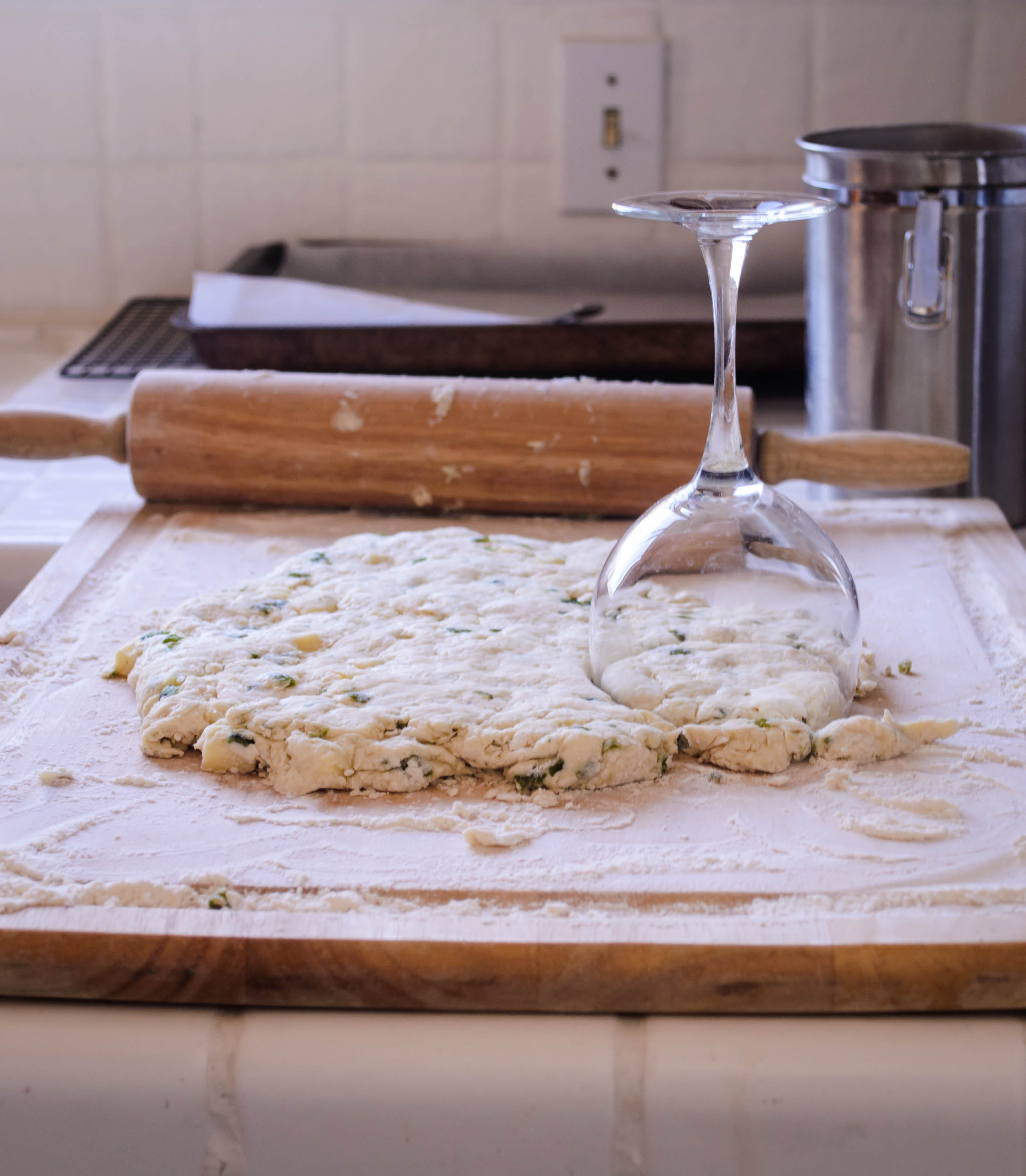
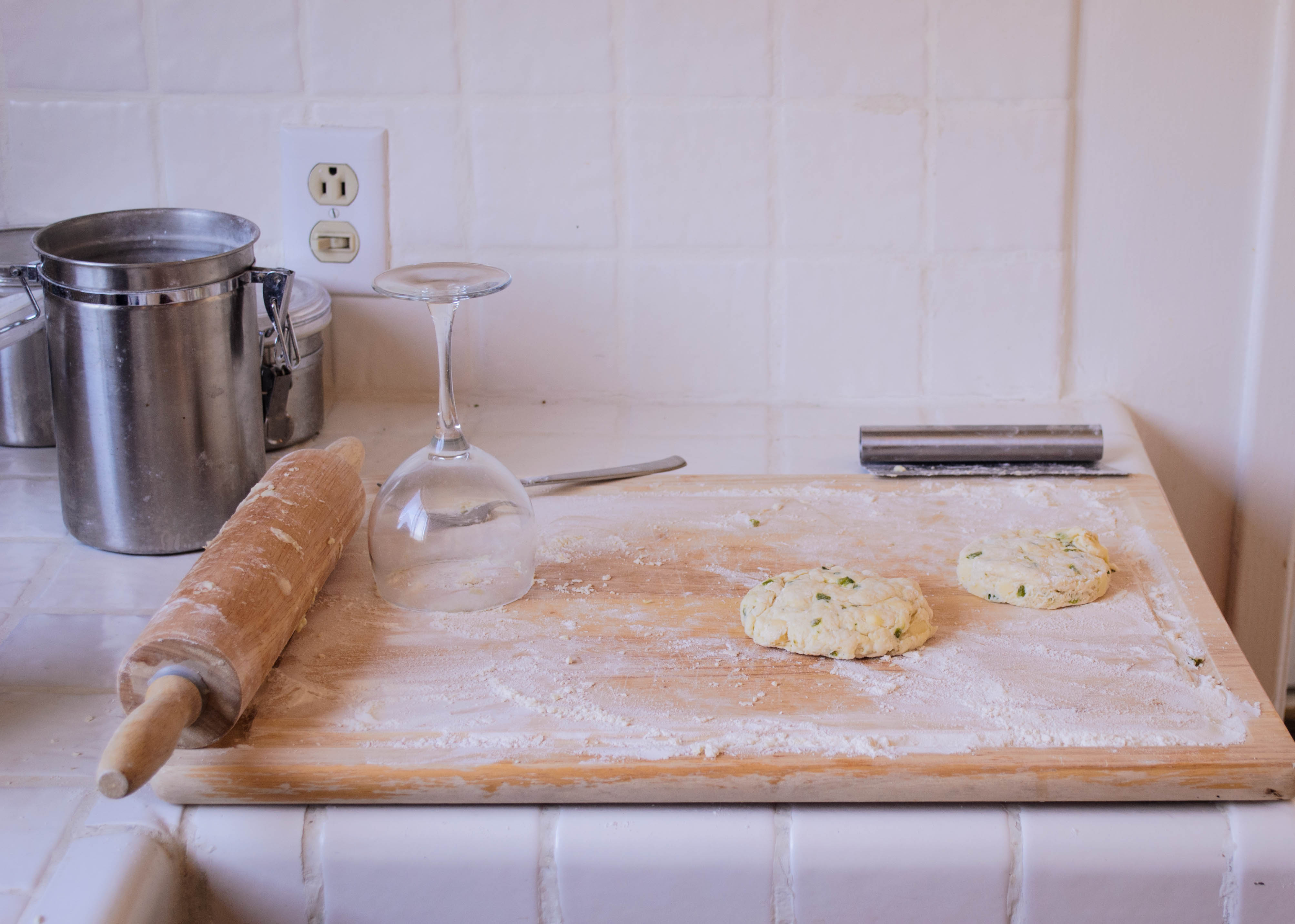
  • After you’ve rolled and folded, rolled and folded, and rolled once more (so you’ll have done a total of six folds), use a round cutter (or the lip of a glass) to punch out biscuits. Push the cutter straight down through the dough; don’t twist until you are all the way through the dough, or you’ll crush the flaky layers! Repeat, placing the biscuit rounds on your parchment lined baking sheet, until you can’t punch out any more rounds. Re-roll the dough scraps and repeat – with ½ inch thick dough, using a 3-inch cutter, you should be able to make about 10 biscuits.
  • Bake biscuits at 400F for 20 minutes, until their tops are golden and some cheese has oozed out to make lacey crisps around their edges.
  • While the biscuits bake, make the chorizo gravy: in a medium skillet, cook the chorizo over medium heat, stirring occasionally, until it is cooked through and nicely browned. This is difficult to see on some chorizos, because they are quite wet and reddish orange in color; look for a textural difference to determine that it is cooked.
  • When the chorizo is cooked through with brown bits and lightly crusty, chewy bits, sprinkle the flour over it and stir through to combine. Cook the flour with the chorizo for 1-2 minutes, then slowly begin adding the milk, whisking constantly as you do so. I like to pour in about ¼ cup at a time, whisk until the mixture is homogenous again, then add the next installment of milk.
  • With all the milk added, continue to whisk slowly until the mixture comes to a simmer. You will notice it thicken as it warms, but it won’t reach its final viscosity until it comes to a boil. At that point, lower the heat to a simmer, taste for seasoning, and add additional salt and pepper if your taste buds require it.
  • To serve, combine 2 tablespoons sour cream and 1-2 teaspoons milk or cream in a small dish or in a squeeze bottle. Place two biscuits on each plate, top with scrambled eggs, ladle on some gravy, and squirt or drizzle the sour cream sauce on top. Sprinkle with chopped chives or green onion, and serve immediately.

Carrot Cake Breakfast Bars

Food blog June 2015-1023The cake world is populated by two camps, it seems to me: those which are definitively dessert, and those which are trying to be breakfast (I’m looking at you, coffeecake). Some of the “trying to be breakfast” denizens bridge the gap by taking the appellation “bread” rather than cake – banana and zucchini bread are the chief players in this particular masquerade. But they are, at heart, essentially still cake: sweet, plenty of fat from oil or butter, and sometimes interspersed with shards of chocolate for good measure. Carrot cake, the other popular vegetal option, doesn’t even pretend. It just comes right out there and, whether it’s for alliterative reasons or not, boldly declares itself a cake and leaves it at that.

Food blog June 2015-1002The idea of putting these long orange taproots into a sweet application came originally from the Middle Ages, when sugar was barely on the horizon and other sweeteners were hard to come by. Carrots as a cake ingredient have since had two spikes in popularity: once during the second world war, when sugar and honey were, again, in short supply, and once starting in the 1970s or so when it was touted not as a sugar-rationing option, but as a “healthy cake.” Really though, if we’re honest today’s carrot cake is far from healthy. It may have a discernible threading of carrots, and it’s frequently studded with nuts, raisins, sometimes even coconut or pineapple, but it is also loaded with oil for moisture and draped with that miracle that is cream cheese frosting.

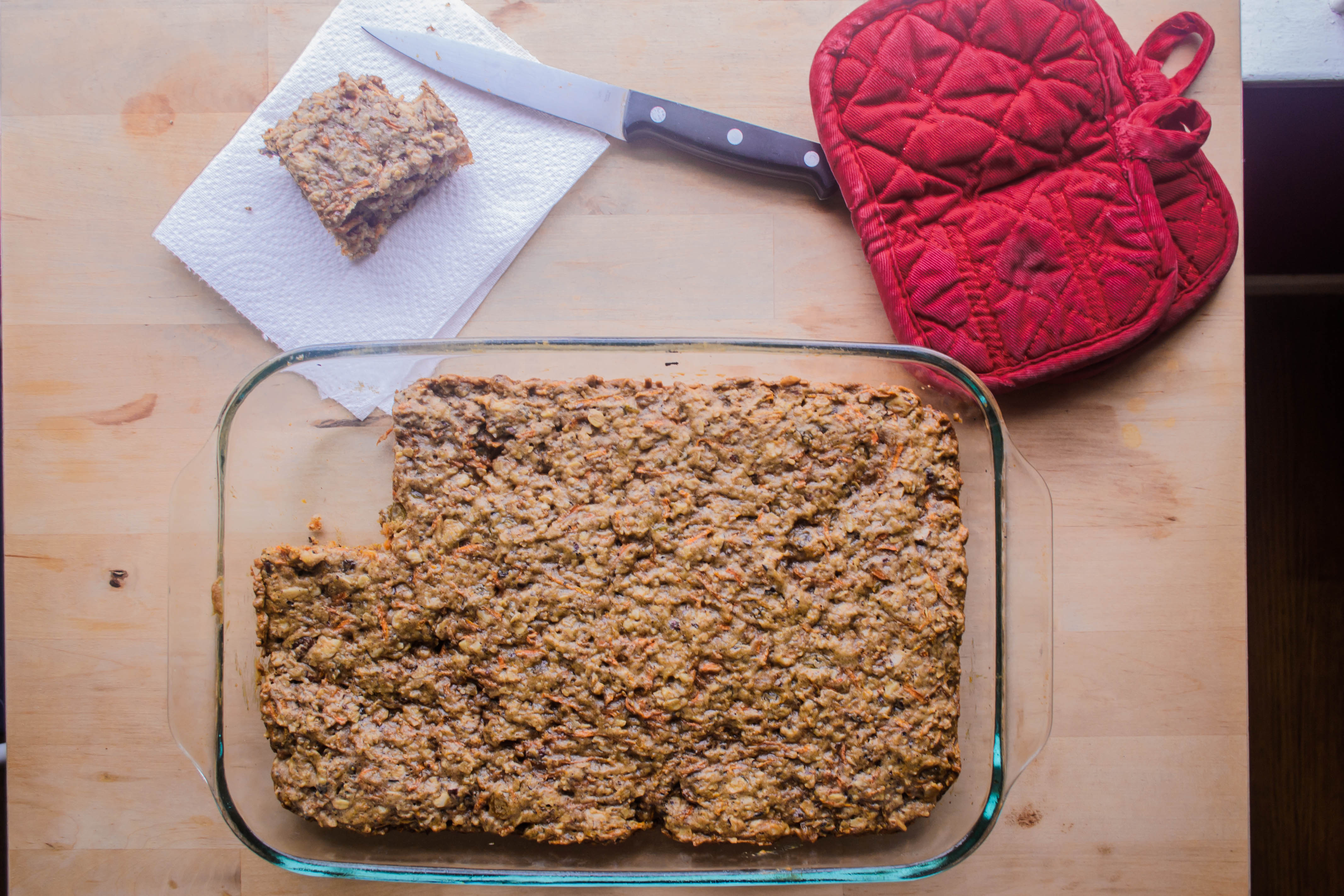
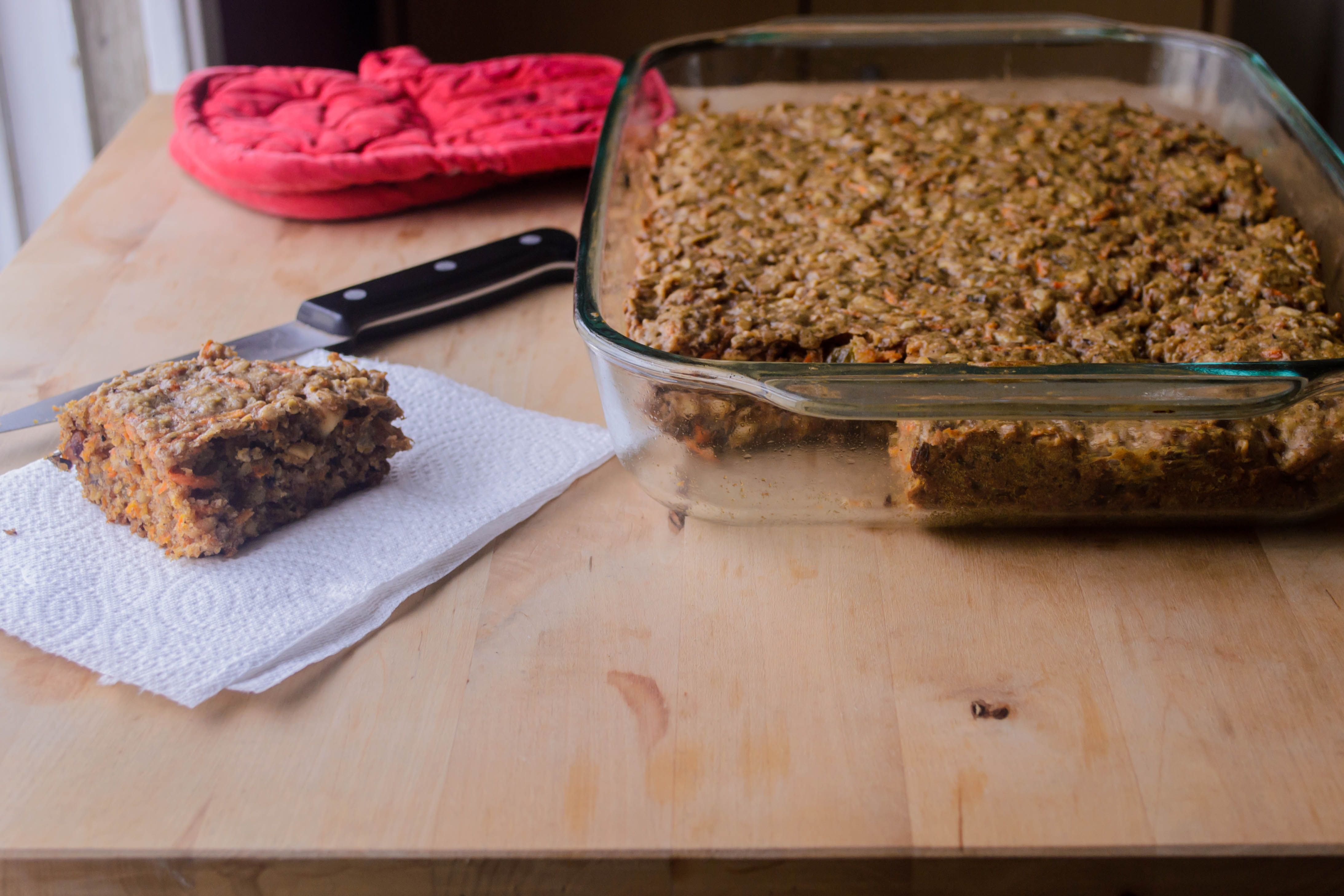
Food blog June 2015-1000During a text conversation with my sister about golden raisins (probably 70% of our texts are about food), I developed a craving for carrot cake. This is an irritating paradox that happens quite often to me during the summer: now that I have plenty of time on my hands, I frequently get the urge to embark on elaborate baking projects. However, because it’s summer and school is not in session, I don’t have a whole department of people to foist my creations off on. I only have N. and me, and we would both like to retain our svelte (haha) figures. My sister suggested turning carrot cake into a muffin so it could be consumed for breakfast, and I thought even easier might be a tray of breakfast bars – moist and flat and portable and loaded with carrots and golden raisins. Thus I’ve taken carrot cake – the cake that isn’t even pretending to be anything but a dessert – into the breakfast cakes camp.

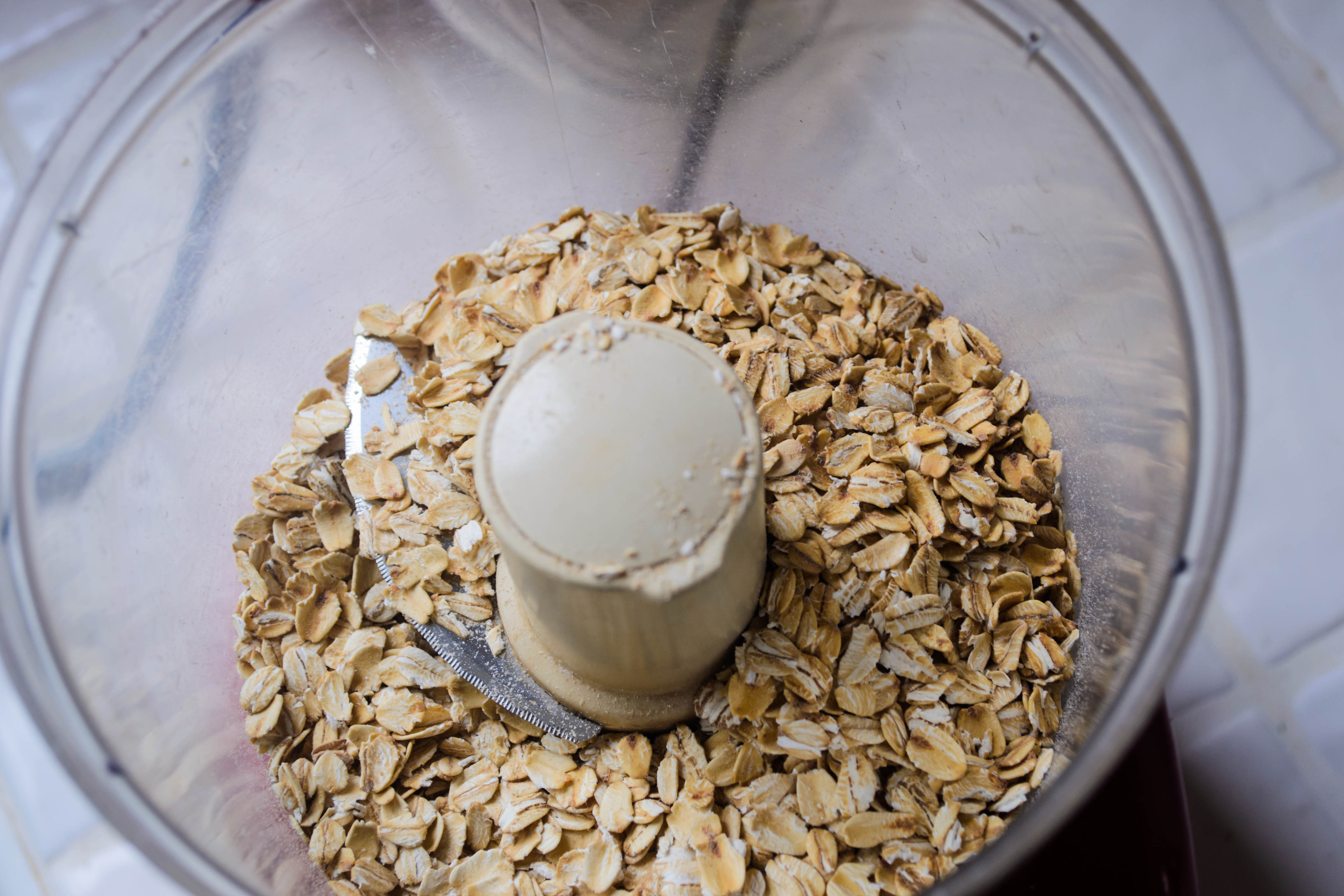
Food blog June 2015-1003What resulted is not your traditional super moist, super tender carrot cake drowning in sweetened cream cheese (not that there’s anything wrong with that, mind you). After deciding on a breakfast version, I wanted something that was not, in fact, cake. Even if we didn’t want it for breakfast, we should be able to turn to it as a mid morning snack without suffering an instant sugar high. It might be a good option for N. to slice into after running. It should be more filling – more substantial – than your typical carrot cake, and very lightly sweet. It should definitely include both nuts and raisins, the nuts should always be toasted, and the spices should be more assertive than in your typical cake. I added oats in place of some of the flour, taking a hint from one of my favorite granola/energy bar recipes and toasting them first. I cut down on the quantities of oil and sugar that most recipes call for, and ended up with something very lightly sweet – the carrots and raisins contribute most of the bursts of sweetness, not the mere ½ cup of brown sugar. If you’re looking for something sweeter, bump up the sugar by ¼ cup, as I note in the recipe below.

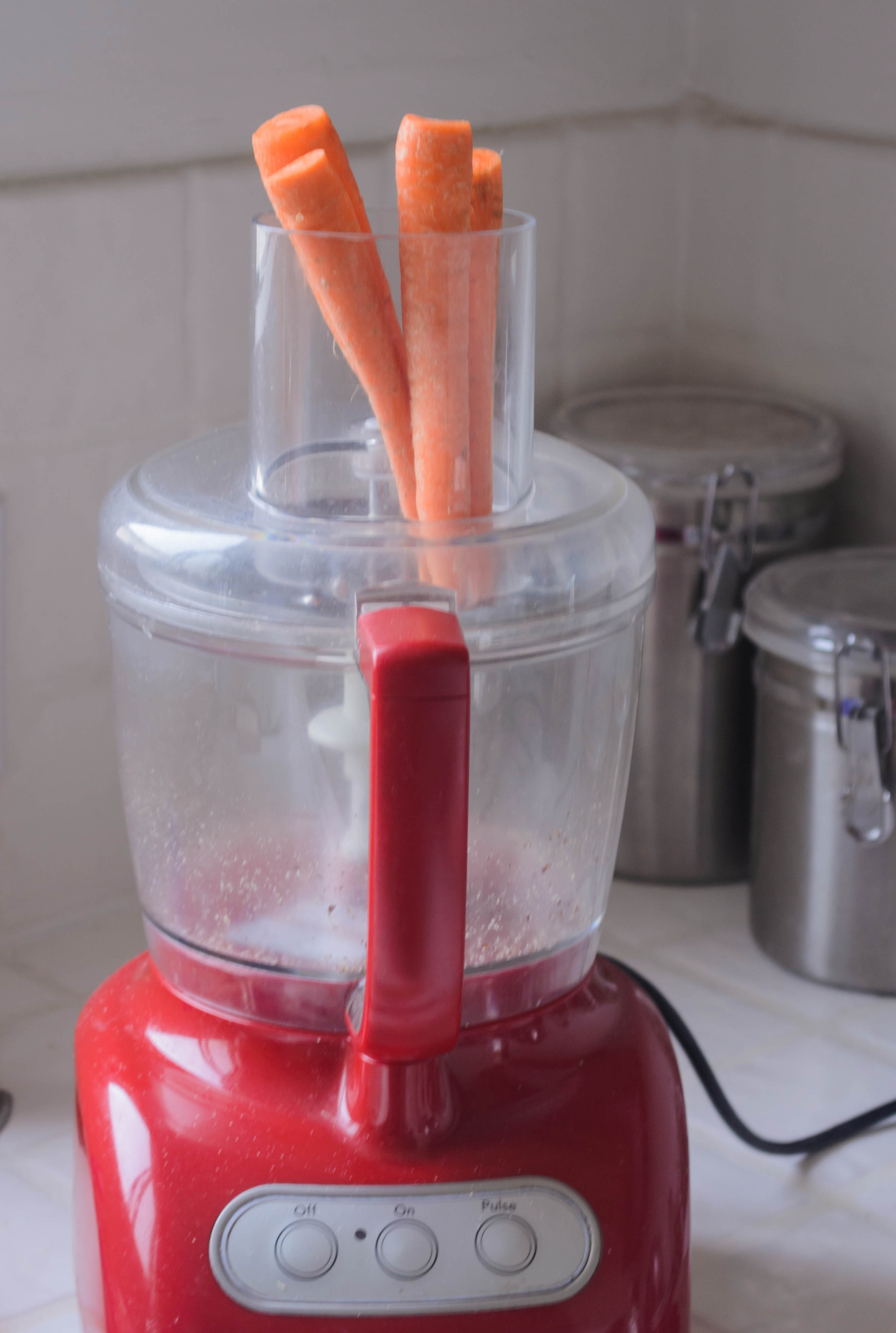
Food blog June 2015-1005The worst thing about making a carrot cake is grating the carrots. Working from the always brilliant suggestions in The New Best Recipe, I eliminated the frustration of grated knuckles and bright orange fingernails and used the food processor. This ends up being a considerable time-and-dishes-saver, because you can also use it to chop the nuts, pulse the oats, and, as the recipe testers in TNBR devise, emulsify the oil with the eggs and sugar to make a frothy, perfectly combined syrup of wet ingredients that integrate smoothly and quickly. Toasting the nuts and the oats in the same 9×13 inch pan you’ll later bake the bars in means you’re only using, aside from various measuring and mixing utensils, a food processor, a single mixing bowl, and one baking dish.

Food blog June 2015-1019At first I considered making a simple cream cheese icing – just a breath of powdered sugar, and maybe some lemon juice to brighten it up – but found I didn’t want it after all. They were perfect, just as they were, and even better with a glass of iced chai. If you find you miss the frosting component, I’d suggest whisking a little honey or maple syrup into some room temperature cream cheese, maybe with a little lemon or lime zest if you’re feeling fancy, and adding a dab to the top of your bar.

Food blog June 2015-1020As well-spiced, fruit-laden desserts often do, these improve after a night of resting in the refrigerator, and are still just as good on the third or fourth day. This is perfect, really, because it means you can bake them the night before and have something all ready for an early breakfast before heading off on some summer adventure.

Food blog June 2015-1024Carrot Cake Breakfast Bars
Makes one 9x13x2 inch pan; 15-18 squares or bars, depending on how enthusiastically you slice them
1 cup old fashioned rolled oats
1 ½ cups pecans, walnuts, or a mixture
1 ½ cups all-purpose flour
1 teaspoon salt
2 teaspoons baking soda
2 teaspoons cinnamon
¾ teaspoon nutmeg
½ teaspoon cardamom
½ teaspoon ginger
¾ cup golden raisins
½ pound carrots, stem ends removed (approximately – for 2 cups finely shredded)
½ cup brown sugar for barely sweet, ¾ cup brown sugar for slightly sweeter
2 large eggs
1 teaspoon vanilla
1 cup vegetable oil


  • Preheat the oven to 350F. In a 9x13x2 inch pan, scatter the oats in as close to a single layer as possible. Toast in the oven at 350F for 15 minutes, until lightly golden and smelling strongly of oatmeal. Remove and pour into the belly of a food processor fitted with the metal blade.
  • In the same pan, scatter the pecans and/or walnuts and toast in the oven at 350F. Depending on the size of the nuts, pecans will take 5-7 minutes and walnuts will take 5-10 minutes. They are ready just as you begin to smell them, even if they don’t look it – they will darken as they cool, and burned nuts are unsalvageable. When ready, remove from oven and set aside to cool slightly.
  • While oats and nuts cool, whisk together remaining dry ingredients in a large mixing bowl: the flour, the salt, the baking soda, and the four spices.
  • Using the metal blade attachment, pulse the oats in the food processor 3 or 4 times, until some are fine and powdery but some are almost fully intact. Add to dry ingredient mixture and whisk to combine.
  • Add the toasted, cooled nuts to the food processor. Pulse 4 or 5 times until roughly chopped, then add to the dry ingredient mixture and again, whisk to combine.
  • Now replace the metal blade attachment in the food processor with the shredding disc. Feed the carrots through as close to vertical as possible for fine, thin shreds. You can peel the carrots before doing this if you want; I just scrubbed them off a bit. Transfer the finely shredded carrots to the bowl of dry ingredients. Add the golden raisins and fold them in with a rubber spatula.
  • Switch the food processor back to the metal blade attachment. Process the brown sugar with the eggs and vanilla until the mixture is frothy – about 20 seconds. With the machine still running, add the vegetable oil in a steady stream and continue processing until it is emulsified – another 20 seconds or so. The mixture will be surprisingly thick, almost like a butterscotch sauce in texture and in color.
  • Pour and scrape the emulsified oil mixture into the bowl of dry ingredients and carrots, and use a rubber spatula to fold them together until no hidden dry pockets remain. The resulting mixture will be thick, more like cookie dough than a standard cake batter.
  • Lower the oven temperature to 325F and spray the same 9x13x2 inch pan you used for toasting with a non-stick spray. Scrape the batter into the pan and use your rubber spatula to flatten it into an even layer. Bake at 325F until a toothpick inserted in the center comes out with just a few moist crumbs; 25-30 minutes.
  • Let cool in the pan for at least 15 minutes before slicing into bars or squares.