Braised Lamb on Kale and Avocado Toast

2016-food-blog-november-0420Are you tired of turkey yet? Good, me neither. But just in case you want an indulgent break, may I suggest lamb instead? The inspiration for this recipe comes from three places: a restaurant near our house that does a braised lamb dip with kale and a garlic jus, the intense obsession of the last few years that is avocado toast, and Ina Garten. Ina doesn’t offer me any dish in particular, but does often take luxury ingredients and serve them in a very simple, homey way, and that’s exactly what happens here.

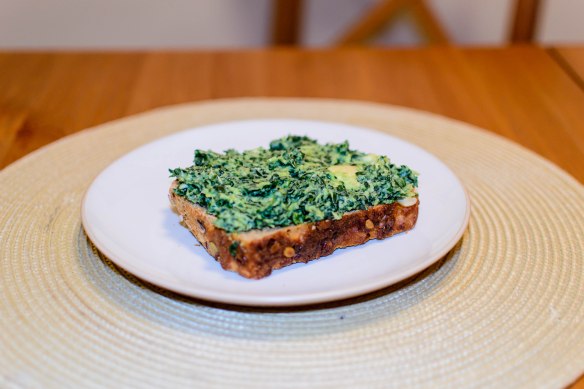
2016-food-blog-november-0395The first few times I watched a Barefoot Contessa episode that did this, I was annoyed. Like Ina’s penchant for advocating “best quality” base ingredients (read: expensive), I found the idea somehow pretentious. If I’m going to spend the money on fancy ingredients, then I want a fancy dinner! But contemplating this dish, it somehow seemed right. Let’s slow braise some lamb with aromatic vegetables and a good splash of wine until it collapses and shreds eagerly, bake a loaf of nicely seeded bread and cut it into thick slices, and spread that bread with a smash of avocado and kale, dosed with a good squeeze of lemon to keep it bright before draping on a healthy pile of the lamb. Fill the belly and keep the darkness away.

2016-food-blog-november-0391In determining how to go about this, I turned to yet another inspiration: the marvelous food mind that is Michael Pollan. In his book Cooked, which I’ve written about before, he spends a chapter discussing braising as a cooking method, and offers a mentor chef’s procedure in seven steps. Though I’ll give you the full recipe below, here’s what he recommends in my own order:

  1. salt the meat, then brown it
  2. finely dice some onions
  3. sauté onions and other aromatic vegetables
  4. place all the ingredients in a covered pot
  5. pour the braising liquid over the ingredients
  6. simmer, below the boil, for a long time
  7. remove pot from oven. If necessary, skim fat and reduce liquid. Bring to the table and serve.

As you can see, this is a procedure rather than a recipe – it’s the kind of steps a grandmother well acquainted with her own methods would give, and answer questions like “how many onions” with “enough,” or the precise temperature at which to braise with “oh, pretty low.”

2016-food-blog-november-0401Within the chapter itself, though, Pollan does give a bit more. Since the section of the book is the look at “Water,” he discusses the merits of using water rather than some other liquid to braise. Though we are always tempted to use broth or stock or wine, he notes that water retains a purer flavor – the meat is not in competition with the flavors of the liquid you’ve chosen. I bore this in mind, but wanted some red wine richness and tang anyway, so I settled for half and half water and wine. Only part way through the miracle, I suppose you could say.

This is a long project. The braise itself takes 2-3 hours all on its own, and that’s after you’ve let the onions cook down slowly for 30 minutes, then allowed the other vegetables to mingle another 15. Plus, as if all that wasn’t enough, you give the lovely, heady broth another good half hour to boil to create your final jus. And if you’re baking the bread yourself (in for a penny, in for a pound, right?), you’re looking at another multi-hour ingredient. You could, it seems, spend the entire day in the kitchen, lazily cooking your way toward dinner. Add some Edward Sharpe and the Magnetic Zeros, and that sounds like the day of my dreams.

2016-food-blog-november-0408When you’re finished, even though the resulting product looks humble, the reward is anything but. The lamb falls apart, and you stand there over the bowl you’re shredding it into trying not to stuff too many pieces straight into your mouth. It is meaty and savory and slightly gamey, and you taste lamb, but also wine and dark, piney, peppery herbs, and a subtle sweetness that comes from the vegetables. And then you pile it onto freshly toasted bread that you’ve smeared with the grassy, fatty spread you’ve made of kale and avocado, and you dribble over some of the juice left behind in the pan, and you eat it. And that was your day: making food, eating food, letting the aroma of the long braise fill your nostrils and your house, and you sleep happy.
2016-food-blog-november-0412Not that you need telling what to do with leftovers as luxurious as braised lamb, but if you aren’t sure, I think they would make amazing filling for tacos, perhaps with some shredded cabbage and feta cheese, and maybe a dollop of sour cream or yogurt, thinned with a squirt of lime and sprinkled with wafer thin slices of jalapeno and radish.

2016-food-blog-november-0420

Braised Lamb on Kale and Avocado Toast
Approximately 5 hours
Serves 4 + leftover lamb
2 tablespoons salt
2 pounds lamb leg or shoulder, in one piece (i.e. not in chunks)
¼ cup olive oil
2 white or yellow onions, finely diced
3 large or 4 medium carrots, finely diced
3 ribs of celery, finely diced
8 garlic cloves, smashed, skins removed
2 bay leaves
1 tablespoon whole peppercorns, optional
2 inch sprig rosemary, optional
2 cups dry red wine
2 cups cold water
2-3 ounces kale, leaves only – tough stems removed – finely chopped
1 ripe avocado
2 tablespoons lemon juice
1 tablespoon chives or green onion tops, very thinly sliced
salt and pepper to taste
thick slice of seeded toast for each diner
optional: finely sliced pickled radish or onion, to garnish


  • Sprinkle the salt evenly over both sides of the lamb. It will seem like a lot. Don’t worry. This is seasoning the entire 2 pounds of meat AND the broth. Let it sit for at least ten minutes, or up to a few hours.
  • When you are ready to cook, heat the olive oil in a dutch oven or other large, steep-sided pot with a lid over medium-high heat until it is shimmering. Carefully add the lamb (the oil may spit) and let it sear until well browned, then flip and repeat until all sides are nicely browned: about 2-4 minutes per side. Remove to a plate.
  • Turn the heat down to medium low or low and add the onions. We are looking to sweat them, not brown them. They will pick up some color from the lamb, but don’t actually let them sizzle too much after adding them. Cook, stirring frequently, until they are very tender and translucent, about 30 minutes.
  • Add the carrots, celery, and garlic cloves, stir to combine, and cook another 15 minutes.
  • Add the bay leaves, the rosemary and peppercorns, if using, and settle the lamb on top of the vegetables. Pour the wine and water in around the lamb as well as any meat juices that collected on the plate while the lamb rested, add the lid, and turn the heat up to medium high. Bring to a simmer, then turn back down to medium low or low – we want to keep the liquid below a simmer – only the barest bubble every so often.
  • Cook, keeping just below a simmer, until the lamb is very, very tender: 2-3 hours.
  • When the lamb falls apart at the slightest fork provocation, hoist it out to a bowl and turn up the heat on the pot to high. Boil the cooking liquid about 30 minutes to reduce it, then strain out the vegetables and, if you wish, pour the remaining jus into a gravy boat to serve.
  • While you wait, make the kale and avocado spread: scoop the avocado out of its skin and smash it up with a fork or spoon. Squeeze in the lemon juice, add the kale and chives and mix well, then taste and add salt and pepper to your liking.
  • Toast the bread and smear on thick, equal portions of the kale and avocado spread.
  • Just before serving, shred the lamb using two forks or, if it has cooled enough, your fingers. Pile a good helping onto the toast, then scoop or pour on a few tablespoons of the jus. Eat immediately.
Tempura Fish Tacos with Wasabi Seaweed Slaw

2016-food-blog-october-0287Wedding week has come and gone, and yes, it was as magical and as maniacal and just as much hard work and hard play and hard dancing as you might expect. I fully intended to keep an instagram record of food we made and food we ate, but as often happens when I return to the family fold, I clean forgot about the internet for – gasp – full days at a time, and thus no record was made. You’ll have to trust me when I say it was delicious.

2016-food-blog-october-0264But I’m back now, and treading water to catch up at work, while I allow myself to sink deeply back into my kitchen. For a few weeks before we left, I was drowning in recipe-writer’s-block, but on the plane on the way home I made my “meals for the week” list in about three minutes flat, and had already constructed the one for next week by the time we got home from the grocery store. It helps that Los Angeles has declared at least one week of autumnal weather, so all that roasting and winter veg I’ve been itching for is making its way into my fridge.

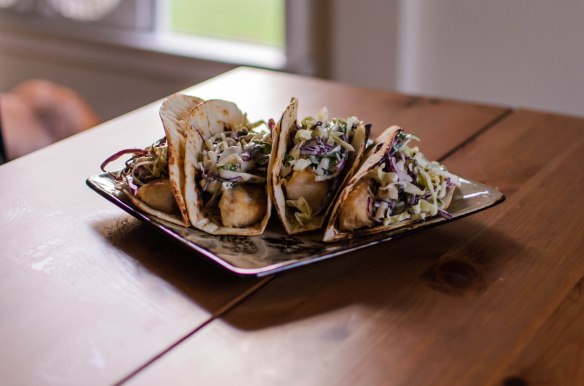
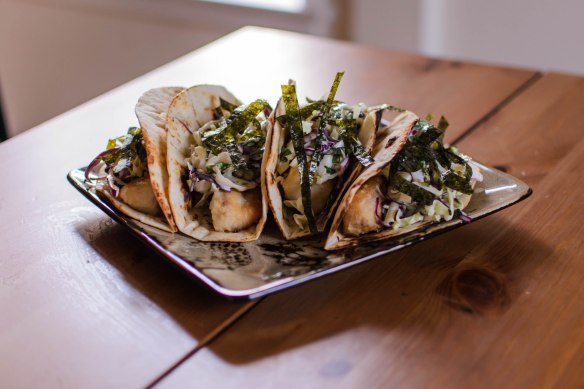
2016-food-blog-october-0261Although these tacos aren’t really all that autumnal, they were a product of my plunge back into post-wedding cooking. I had originally planned to sauté the fish very simply, but a bag of rice flour in my pantry whispered at me, and suddenly I was whisking flour with seltzer water and a touch of baking powder, and watching my simple tempura batter puff, crisp and light, around the frying filets.

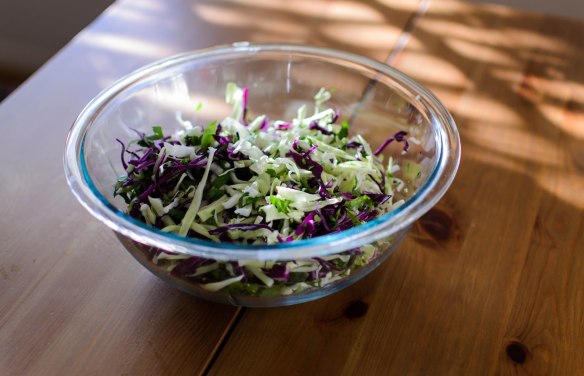
2016-food-blog-october-0256I always make a cabbage slaw when we have fish tacos; usually it’s just a toss of green cabbage, cilantro, lime juice, and a bit of salt. But given the Asian direction of my frying method, I decided to play a bit with the flavorings. Instead of lime juice, I’m using rice vinegar here, and for a creamy, brightly spicy slaw, whisking in mayonnaise and wasabi sauce. For extra intrigue and a texture that shifts in a moment from crisp to chewy, strips of nori get tossed in at the last minute.

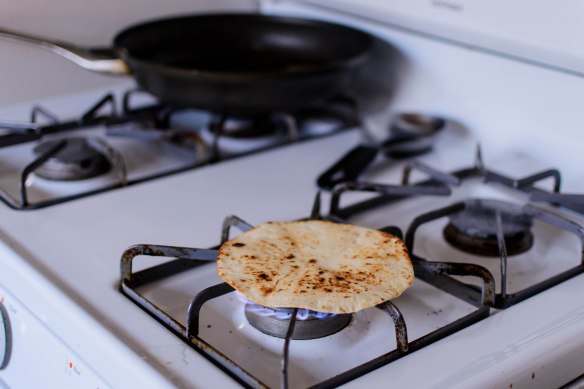
2016-food-blog-october-0260Other additions: I thought about nestling thin slices of radish in alongside the fish for a fresh crunch, and though at the last minute I forgot, I still think they would be a nice addition. If you really wanted to fancy things up from a texture perspective, topping each taco with a tangle of sliced, fried won ton wrappers would be fantastic. I like a slightly puffy flour tortilla for these, toasted (or slightly charred) over a gas flame, but corn tortillas, hard or soft, would be lovely as well.

2016-food-blog-october-0266Note: the downside of tempura is that time is an enemy. It doesn’t stay crisp for all that long, especially if what is lovingly encased inside is moist, and it doesn’t keep at all well. Plan to make only as much as you intend to eat at one sitting.

2016-food-blog-october-0280

Tempura Fish Tacos with Seaweed Wasabi Slaw
45-60 minutes
Serves 3
For the slaw:
¼ cup mayonnaise
2-3 tablespoons wasabi sauce
2 tablespoons rice vinegar
1 teaspoon sugar or mirin (rice wine)
3 cups shredded or very finely sliced cabbage – I used a mixture of green and red
½ cup roughly chopped cilantro leaves
1 ounce sheet of nori (sushi seaweed), cut into thin strips, to add at the last minute
For the tacos:
1 pound firm, meaty white fish like mahi mahi or halibut, cut into long, slim fingers as in the photo above.
1½ cups vegetable oil, for frying
1 cup rice flour or all-purpose flour
2 teaspoons salt
2 teaspoons baking powder
8 ounces seltzer water
6 tortillas


  • 45-60 minutes before dinner, start the slaw: whisk the mayo, the wasabi sauce, the rice vinegar, and the sugar in a small bowl. Combine the shredded cabbage with the cilantro in a large bowl, then drizzle over ⅔ – ¾ of the sauce and toss – you are looking for a light coating of sauce. Save the remainder to drizzle over the tacos last minute. Once the cabbage is dredged in sauce, set it aside until you are ready to serve – at least 30 minutes.
  • Heat the vegetable oil in a 12-inch skillet over medium-high heat until it is around 350F.
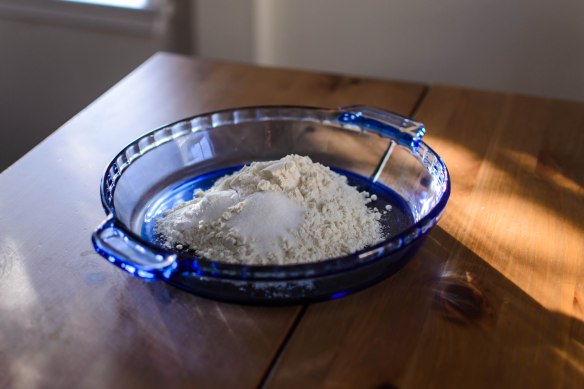
  • While the oil warms, make the tempura batter: whisk the flour with the baking powder and salt in a medium bowl or right in a pie plate. Add the seltzer water a little at a time, whisking to combine, until you have a smooth batter. The seltzer will fizz considerably as you add it, making things hard to see, so be assiduous and make sure you have incorporated all of the dry pockets of flour.
  • When the oil is suitably hot, add the fish strips to the tempura batter and turn them over a few times to coat evenly. Lift each piece, let it drain briefly, then lay it into the skillet gently, letting it go away from you in case of a splash. The oil will bubble up rapidly with each addition.
  • Add as many of the fish pieces as you can in a single layer without touching each other, then let cook until puffed and brown, turning once, about 3-4 minutes per side.
  • If you absolutely must hold the fish for a bit while other components are finalized, place the cooked pieces on a wire rack positioned over a baking sheet and stow it in a 250F oven. Try to minimize how long it sits in the oven, though, as it will quickly overcook and lose its crispness.
  • During the last two minutes of cooking, toast the tortillas over a gas flame and add the nori strips to the slaw, tossing briefly. Alternatively, you could reserve the nori strips and just layer on a few atop the slaw to serve.
  • To make the tacos, stuff the tortillas with a piece of fish, a drizzle of the extra sauce if you wish, and a nice scoop of slaw. Serve immediately.

Save

Save

Carrot and Sweet Potato Salad with Lime Vinaigrette

2016-food-blog-september-0821I mention my sister pretty frequently in this little space. Although she lives across the country from me, across disciplines, across life experiences, across personalities, she is my kitchen sounding board. When I think of a recipe concept and I can’t decide whether it sounds amazing or insane, I text R. When I have a triumph or a disaster, I text R. When I find a recipe online that I know MUST be tried… you get the idea.

2016-food-blog-september-0798In three little weeks, R. is getting married. I feel incredibly privileged that she has asked me to stand beside her in her wedding party as the woman of honor. We’ve spent the past year or so discussing little details and working through planning frustrations and pinning, pinning, pinning to her wedding pinterest board. And yet, because so many miles separate us geographically, I can’t do the things that my role in the wedding party traditionally requires of me. I can’t plan a bridal shower or a bachelorette party, because I’m only hopping on a plane to get to the wedding a few days before it happens. I can’t coordinate all the bridesmaids, because, well, because R. is such a good planner that I haven’t had a chance. Sure, I can do her makeup and hold her bouquet and give a toast on the big day, but it doesn’t feel like enough for my own sister.

2016-food-blog-september-0808Since so much of my love is filtered through food, it was, of course, a menu that finally made me feel like I was contributing sufficiently. R. and her fiancé aren’t having a rehearsal dinner, mostly because they aren’t having a rehearsal – their venue is an hour away from their home, and it seemed like a lot of trouble to truck out there the morning before just to spent twenty minutes deciding who will stand where and in what order when we could just get there a little early the day of and do the same thing. But we will have a lot of family arriving to town the day before the wedding, so having a casual little dinner the night before did seem like a nice thing to do, and this “welcome dinner,” as we’re calling it, became my responsibility. I’ve plotted out a menu, created and sent invitations, and this weekend, did a run-through of one of the new dishes we’ll be making for the occasion.

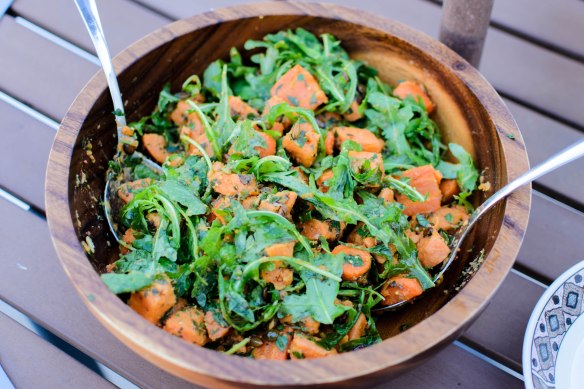
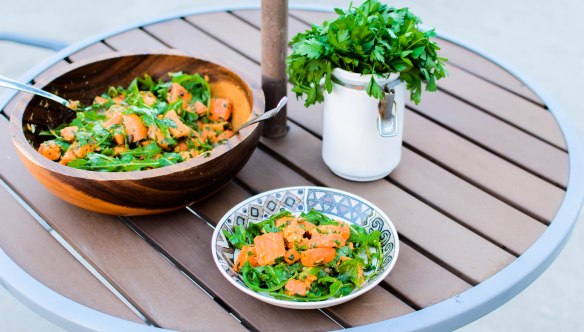
2016-food-blog-september-0809The dinner is in a park at a picnic shelter, so we are leaning largely on casual fare, but because it’s such a special occasion, we wanted a cut above your standard hamburger patties and potato salad. Since it will be mid-October, and it has been R’s dream to have a fall wedding for a very long time, we are working with an autumnal theme – there will be spiked and non-spiked apple cider, a slaw of brussels sprouts with toasted walnuts and dried cranberries, a substantial pasta salad with robust dressing and bitter radicchio threaded through, and this: a salad as good warm as it is cold or room temperature, of tender carrot and sweet potato chunks wrapped in a lime vinaigrette busy with herbs. To keep it light as well as autumnal, at the last minute the vegetable chunks get tossed with a scattering of well-toasted pumpkin seeds and a few big handfuls of delicate baby arugula.

2016-food-blog-september-0815The seed for this salad idea came from a Bittman project recipe, and I’ve tweaked and fiddled with it a few times now, until this iteration seemed exactly right. Virginia in October, which is where and when we’re headed, is a funny transitional point on the space/time continuum. It can be downright chilly, but it can also spike back up into summer temperatures, or it can gift you with a sudden downpour. It’s hard to know which you’re going to get, and sometimes it might offer up some of each in the same day! This salad dances well with them all. The orange root vegetable base and the pumpkin seeds point straight at Halloween and Thanksgiving, but juxtaposing them with a bright lime vinaigrette and soft, summery herbs makes the finished dish feel light. I ended up adding a spoonful of whole grain mustard for another kind of tartness, and this along with the peppery arugula prevents the starchy vegetables from reading too sweet.

2016-food-blog-september-0818Though I like the salad just how it is here, it is admittedly ripe for adjustments of all kinds. Replacing the pumpkin seeds with roasted pistachios might take things in a springy direction, and you could certainly bulk it up a bit with crumbled feta or goat cheese or even golden raisins, though these might tip the sweetness scales a bit overly much. You could use orange or lemon juice instead of lime in the vinaigrette, you could replace the arugula with baby spinach or kale and serve it warm; you could of course change out the herb combination to your preference. Add some nicely grilled bratwurst, or stir in a few ladles of buttery couscous or farro or quinoa, and you have a complete meal.

2016-food-blog-september-0824As I kept thinking about this salad, I realized it was ideal in so many ways. Since it can be served warm or cold, it works with whatever version of fall your home might be throwing at you – whether it’s the decidedly fall evenings in the northeast, or the Santa Ana wind-riddled mid-90s madness in Southern California. This is a transitional salad for a transitional season. And forgive me as I wax poetic on you, but it is also a nice metaphor for the occasion: a salad that moves easily between meteorological seasons seems perfect for a couple about to transition between seasons of life.

2016-food-blog-september-0836

Carrot and Sweet Potato Salad with Lime Vinaigrette
Serves 6 as a side
45-60 minutes including cooling time
1 pound carrots (about 4 large)
2 pounds orange-fleshed sweet potatoes (about 4 medium)
2 tablespoons salt
¼ cup pumpkin seeds (2 ounces)
1 tablespoon whole grain mustard
1 tablespoon honey
6 tablespoons lime juice (2-3 limes)
¼ cup olive oil
¼ cup chopped fresh parsley
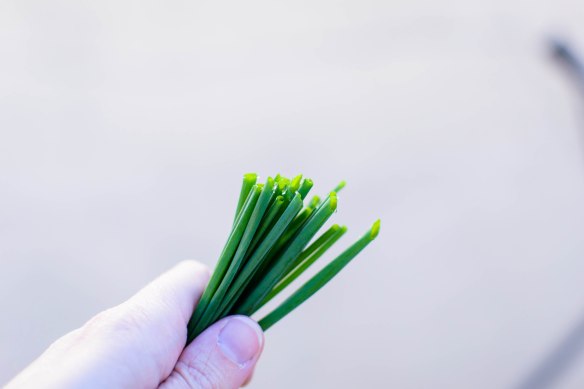
2 tablespoons chopped chives
2 tablespoons chopped mint leaves
¼ teaspoon black pepper, or to taste
1-2 cups baby arugula


  • Fill a large pot about ¾ of the way full of water, add the 2 tablespoons salt, and bring to a boil.
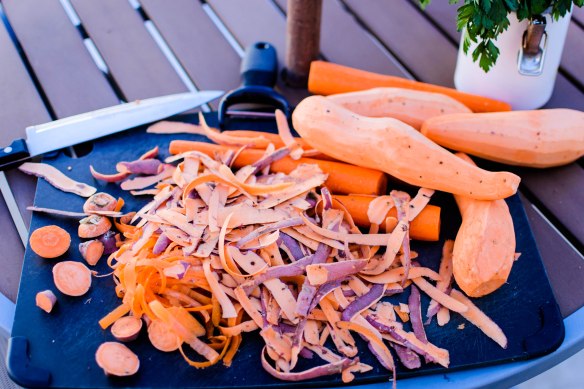
  • While you wait for the water to heat, peel the carrots and sweet potatoes and cut them into 1-2 inch chunks, a bit bigger than bite-sized.
  • When the water reaches a rolling boil, add the carrot chunks and cook for 5 minutes with the lid off – the carrots will take a bit longer than the sweet potatoes.
  • After the first five minutes of cooking, add he sweet potato chunks and continue to cook until the vegetables are tender but not mushy or falling apart – about 8-10 minutes depending on the size of your chunks. Immediately drain and set aside to cool for 10-15 minutes, then transfer to a large bowl.
  • While the vegetables are cooking, toast the pumpkin seeds in a 350F oven until they are browned and popping – about 5-10 minutes. A toaster oven works really well for this if you don’t want to heat up your house too much. When they are ready, set them aside to cool.
  • In a 2-cup glass measuring cup, whisk together the honey, the mustard, and the lime juice. Slowly drizzle in the olive oil, whisking constantly, to form a nicely emulsified dressing. Stir in the herbs and add black pepper to taste.
  • After the cooked vegetable chunks have cooled for 10-15 minutes and been relocated to a large bowl, pour the dressing over them and toss gently to coat everything evenly.
  • If you want the dish to be warm, add the arugula and pumpkin seeds, toss gently to combine, and serve immediately. The greens will wilt considerably as they hit the warm vegetables.
  • If you prefer the dish at cold or at room temperature, wait to add the arugula and pumpkin seeds until just before serving.
  • This will keep in the refrigerator for a day or two, though any greens you’ve incorporated will look considerably less sprightly after the first day.


Blackberry Spring Rolls

2016 Food Blog August-0725Obvious confession: I haven’t been very good at keeping up with my 2016 blog challenge this summer. I mean, I haven’t been stellar at keeping up with blogging in general, but the challenge fell by the wayside pretty significantly. Let’s climb back onto that horse.

2016 Food Blog August-06912016 Food Blog August-0698It’s fun to try to guess why various search term combinations might have led to my site in particular. Some I can’t even begin to imagine, but some – like this one – are fairly obvious. A site eponymously dedicated to the summery multi-faceted gems that are blackberries should really have more berry-centric recipes, despite the fact that the name has nothing to do with my food predilections and everything to do with my inescapable fondness for literature. (Also, if you like spring rolls and haven’t made these, get thee to the kitchen!) Two birds with one recipe, then.

2016 Food Blog August-0700In trying to imagine what a blackberry spring roll would consist of, I veered sweet almost immediately. Blackberries can be tart, but they also have a deep lushness that begs to be bolstered with sugar in some form. Since I can’t see fit to make a spring roll without mint (seriously, it is key), I had to find some kind of filler that paired well with the fresh coolness of mint and the dark tart-sweet of blackberries, and landed on coconut rice. Some shredded coconut in there as well for extra flavor and texture, and a sprinkling of finely chopped crystallized ginger, and these funny little rolls were sounding promising.
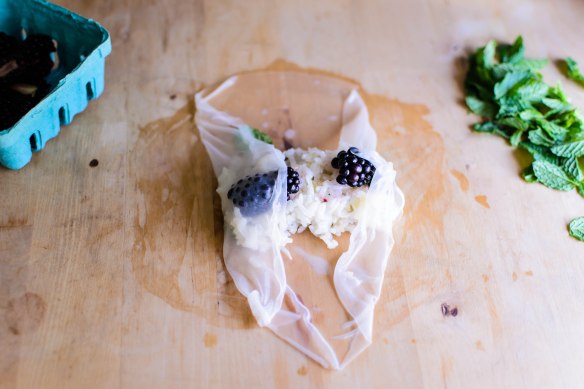
2016 Food Blog August--5Filled, pressed, rolled, and sliced, they were indeed promising – delicious, in fact – if a bit odd. When I sampled the first one, I found I wasn’t sure whether I liked it. Then I found myself eating the third, and decided I must. Blackberries and coconut are not a pairing I think of immediately, but henceforth I will, as should you. The tart berry is perfect to cut through the luxurious fattiness of the sweet coconut, like a dish of berries and whipped cream with an extra, tropical flavor. The mint and ginger, since they are good with both, complement equally, adding a breath of freshness and a warm, sweet spice to keep things interesting.

2016 Food Blog August-0703Further, it was an interesting exercise to decide what sort of snack this was. Inescapably sweet, yes, but not quite a dessert. Upon discussion my sister and I decided they would work well as a palate cleanser on an eclectic brunch table, or perhaps an offering at something delicate and fancy, like a certain sort of baby or bridal shower. I used sweetened shredded coconut, but you could certainly use unsweetened and end up with a slightly more savory product.

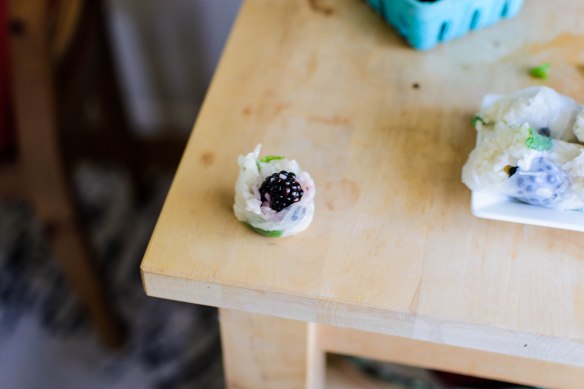
2016 Food Blog August-0713As with any spring roll, these are a project. You do have to compress the rice filling pretty assertively to get a nice, tight roll, and the blackberries and mint leaves need to be arranged just so to make them pleasingly visible in the finished product. Typically spring rolls are sliced in half on a bias to expose the lovely filling; doing so does bring these closer to bite-size, but it also gives the rice opportunity to spill out, and since the blackberries are only present in a few key spots, it doesn’t have the same aesthetic advantage. The presentation of these rolls is about the exterior – they have a stained glass window effect, as the veins of the mint leaves and the individual little drupelets of the berries press invitingly against the translucent wrapper.

2016 Food Blog August-0723After a few more left the platter, I thought about what else could be done with these. Rice, a blackberry or two, and a few mint leaves are a lovely combination, but perhaps almost too stark. Mango chunks, then, could be added if you want to up the fruit quotient, and in addition to, or perhaps instead of, the crystallized ginger, you could add some lime zest to the rice. Thai basil could replace or supplement the mint for another herbaceous note. I even considered wafer-thin slices of jalapeno, either raw or candied, for a different kind of heat.

2016 Food Blog August--2-32016 Food Blog August-07052016 Food Blog August-07062016 Food Blog August-07072016 Food Blog August-0708

Blackberry spring rolls
10-12 spring rolls (20-24 halves), depending on size and quantity of blackberries
45-60 minutes
1 cup cal rose or other short or medium grain rice
14 ounce can of coconut milk + 2 ounces water
1 cup shredded coconut, sweetened or unsweetened
3 tablespoons finely minced crystallized ginger
30-40 spearmint leaves
1 pint blackberries, rinsed, gently dried, and halved
Rice paper wrappers (I like the brand with the rose on the packaging)
Warm water


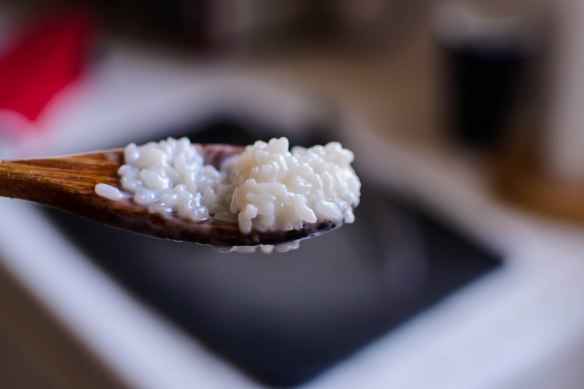
  • Combine the rice, the coconut milk, and the 2 ounces of water in a medium pot, cover, and bring to a boil. Stir quickly, replace the lid, and lower the heat to a simmer. Cook 15-20 minutes, until the liquid is absorbed and the rice cooked through. It will be very creamy, which will help it stick together in the roll.
  • Stir the shredded coconut and the minced ginger into the hot rice, then set aside to cool until just warm or at room temperature.
  • While the rice cools, pluck the mint leaves and prepare the blackberries.
  • To roll, set up an assembly line – mint, then blackberries, then rice mixture. Be sure to have a plate or other vessel on which to place your finished rolls at the end of the line-up. Add warm water to a wide, shallow dish or bowl that the rice paper will fit into. You will address this step first.
  • Submerge one rice paper wrapper in the warm water and let it sit until it becomes completely pliable. I find this tends to take somewhere between 30 and 45 seconds.
  • When the rice paper is ready, remove and place on a flat surface. If you wish, you can briefly spread it on a paper towel to soak up some of the drips, but this isn’t strictly necessary.
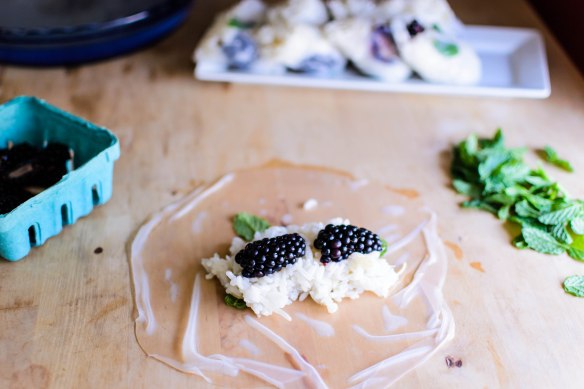
  • Place 3-4 mint leaves around the rice paper wrapper, bottom surface facing up. This ensures the top, more attractive side of the leaf will be visible through the wrapper on the finished roll.
  • Now, place two blackberry halves, cut side up, about a half inch apart in the center of the wrapper. Top the cut berries with 2 tablespoons of the rice mixture. With damp hands, press the rice mixture gently together in a log shape down the middle of the wrapper; the idea is to get it to stick together so you end up with a tighter roll. Top the rice mixture with two more blackberry halves, this time cut side down.
  • Now we roll! As the wrapper faces you, fold in the left and right “edges” over the ends of the rice log, so what you have looks like a long oval with two squared-off sides. Next, take the side of the wrapper closest to you and fold it completely over your fillings, then pull tight toward you. Roll up the wrapper, tucking each revolution tightly so the fillings are well contained. The tighter rolled, the better they will stay together.
  • Repeat until you run out of blackberries! You will get a nice rhythm established. I find I can complete a roll in the time it takes a new rice paper wrapper to soften. Then you are all set to start the next.
  • Just before serving, halve each roll on the bias (with a diagonal cut). If you have extra mint, you can press a leaf or a small sprig into the cut end of some of the rolls, for an attractive presentation.
  • These will keep, packaged in an air-tight container in the refrigerator, for 1-3 days. Let them come to room temperature before serving, or if you are in a rush, pop them in the microwave for 20-30 seconds, as the rice paper is tough and unpleasantly dry when cold.

Save

Save

Save

Fried zucchini and eggplant sandwiches

2016 Food Blog August-0626What is it about summer and fried food? It doesn’t make sense. Why would we want, on the hottest of afternoons, foods at nuclear temperatures encased inside hot, thick, sometimes greasy breading that, should we make them ourselves, require rivulets of sweat and a pot of shimmering, toe-endangering oil? Is it the hazy memory of a thousand state and county fairs of collective childhood, studded with corn dogs and funnel cake and battered oreos? Is it the only kind of seafood we would eat for lunch as kids, and thus required for a beach day? Is it just that green tomatoes are only really worth eating when they are lovingly smothered by a cornmeal crust?

2016 Food Blog August-05902016 Food Blog August-0606I’ve done this height-of-summer-frying thing before, and here I am again, dunking breaded vegetables in hot oil to create a sandwich inspired by Disneyland and babaganoush (there’s an unexpected pairing, eh?), that ticks all the flavor marks including that deep, primal urge for crisp coated, meltingly soft centered fried food, on a sun-streaming, fan-screaming kind of week.

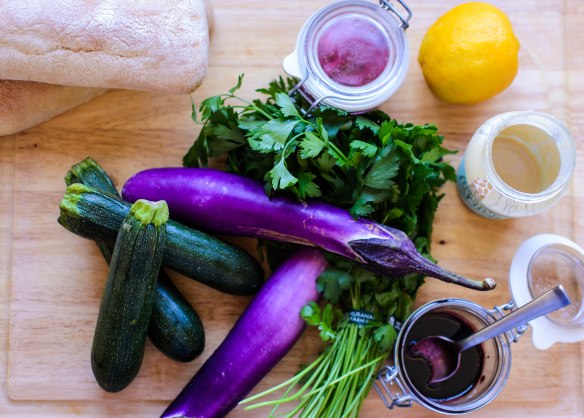
2016 Food Blog August--22016 Food Blog August-0613I said Disneyland and babaganoush, and that truly is how the sandwich was imagined. A few months ago on a trip to that happiest of places, I ordered a fried green tomato sandwich. It was good – the tomatoes were tangy and sharp, and the sandwich format made creamy, fatty remoulade a requirement – but I thought it could be more. Instead of just the green tomatoes, there could be zucchini. There could be eggplant. There could be, rather than a mayonnaise based sauce, something with yogurt, with herbs, with lemon. There could be tahini.

2016 Food Blog August-With the addition of that idea of sesame, I was suddenly in babaganoush territory, that lovely roasted eggplant dip, soft and pulpy and aromatic.* From there, all links to green tomatoes were cleanly severed, and I was daydreaming Mediterranean and Middle Eastern flavor combinations.

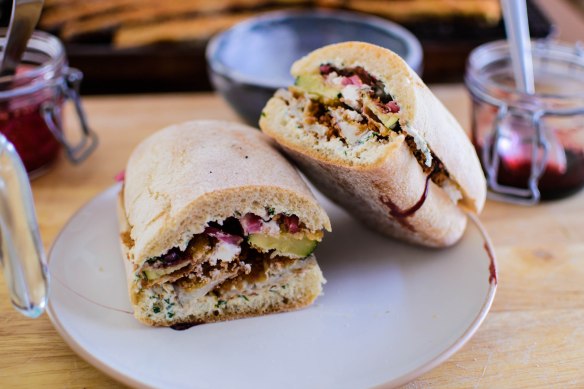
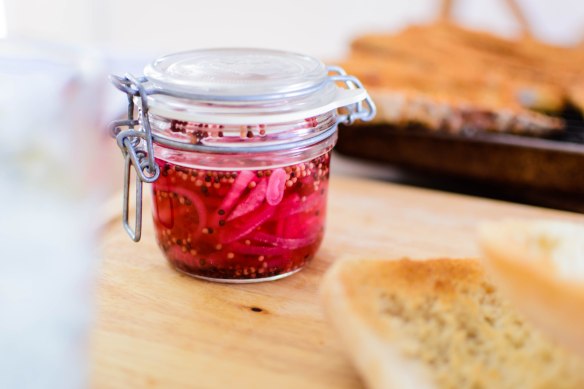
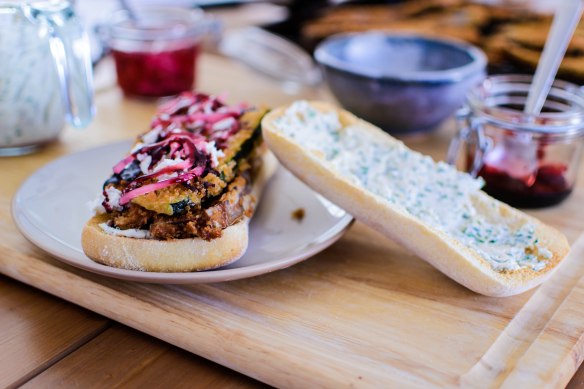
2016 Food Blog August-0616The sandwich we ended up with – the one that ticks every box (or perhaps every taste bud) – has the crunch-into-barely-resistant-softness of panko-coated fried vegetables, a tangy, rich spread of yogurt and tahini lightened with lemon and a mixture of herbs, and a shower of tangy crumbled goat cheese. It has pickled onions for a sour astringency, and the sticky sweet coup de grace of a drizzle of pomegranate molasses. You don’t want too much of it, but this wouldn’t be the same sandwich if you left it off. The bread is lightly toasted, and the breading for the vegetables carries a light dusting of cayenne pepper for a suggestion of heat. What’s more, you can eat the leftovers – if there are any – without the sandwich: stacked up kindling style and sprinkled and drizzled with the extras, the vegetables shine even more brightly. I had them for lunch this way the day after our sandwiches, and I’m kicking myself for not taking a photo or two before I plunged in.

2016 Food Blog August-0617A few notes: the pomegranate molasses can certainly be purchased if you don’t want to make it yourself – look for a Middle Eastern grocery store – but it’s pretty easy (and much cheaper) to make if you don’t mind taking the time. You will probably wind up with extra, which could be drizzled over everything from salad to grilled poultry to ice cream. Because it takes a while, to speed up the dinner prep you could make the molasses the day before, and store it in a glass jar in the fridge, where it will thicken considerably overnight. A minute or two before you are ready to assemble the sandwiches, immerse your jar of pomegranate molasses in a bowl of very hot water. It will warm and liquefy enough to be pourable again. As for the bread, we ended up with ciabatta rolls, but I think something seeded might also be nice for these sandwiches – perhaps these shaped like hot dog buns instead of full loaves. In any case if you use a roll or a bun instead of sliced bread, you’ll want to dig out the soft center so there’s room in the middle to stack up plenty of the vegetable slices.

2016 Food Blog August-06202016 Food Blog August-0622* I realize not all babaganoush contains tahini, but the ones I’ve liked do, along with lemon, and some herbs, and a shower of pomegranate seeds.

2016 Food Blog August-0628

Fried Zucchini and Eggplant Sandwiches
Quantities listed are for two sandwiches, but are easily doubled
About 45 minutes
Pomegranate molasses:
1 cup pomegranate juice (I like the POM brand)
Tahini yogurt spread:
2 tablespoons tahini paste
4 tablespoons (¼ cup) greek yogurt
1-2 teaspoons lemon zest (about 1 lemon)
1 tablespoon lemon juice
1 tablespoon finely chopped fresh chives
2 tablespoons finely chopped fresh parsley
1 tablespoon finely chopped fresh mint
¼ – ½ teaspoon salt, to taste
Sandwich:
1 cup vegetable oil
2 zucchini, cut into long planks
1 Chinese or Japanese eggplant, cut into long planks
¾ cups all-purpose flour
1 teaspoon salt + more for post-frying sprinkling
½ teaspoon cayenne pepper
2 eggs, beaten
2 cups panko breadcrumbs
¼ cup crumbled goat cheese
2 tablespoons pickled onions or to taste
2 sandwich rolls of your choice about 6-8 inches in length; we used ciabatta


  • Begin with the pomegranate molasses, as this takes the longest: pour the pomegranate juice into a small pot and boil over medium heat until you have only about 2 tablespoons left; 20-25 minutes. The juice will have a slightly thicker viscosity, and you’ll know it’s seconds from being done when the whole thing seems to be a frantic stack of bubbles. Set it aside to cool – it will thicken into a syrup. (You can also refrigerate overnight – see note above.)
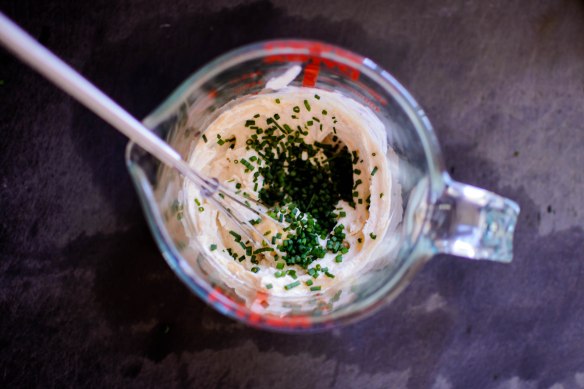
  • While the pomegranate juice reduces, make the tahini yogurt spread. In a small bowl, whisk together the tahini and yogurt with the lemon zest and juice. Add the herbs and the salt, whisk again to thoroughly combine, and taste for seasoning. Adjust quantities of salt and lemon juice as desired. Set aside.
  • For the sandwich filling, set up a three-part breading station: you will need three plates or shallow bowls. Pie plates work very well. On the first plate/bowl, combine the flour with the salt and cayenne, mixing well with a fork or a small whisk. Spread out the flour mixture in an even layer across the plate. In the second plate/bowl, crack the eggs and beat well to combine. In the third plate/bowl, dump 2 cups of the panko and spread out in an even layer.
  • In a large, deep skillet with straight sides, heat the oil to about 350F. While it warms up, bread the vegetables. First coat each slice of eggplant and zucchini in a light layer of flour. Then transfer to the egg and coat again, being sure all dry flour is covered. Finally, press lightly into the panko on both sides. Set each slice on a separate plate or a wire cooling rack until the oil is ready. Set another wire rack over a baking tray and place in an oven set for 300F. This is to keep the finished slices warm and crisp while the rest are frying.
  • When the oil hits 350F, begin adding the vegetable slices. Carefully place them into the oil individually, only adding four or five at a time to avoid crowding the skillet – the more you put in there, the lower the oil temperature gets, which can lead to a greasy end product. Fry over medium to medium-high heat until the panko coating is nicely browned and crisp, about 3 minutes per side. As the slices are finished frying, sprinkle them lightly with salt and add them to the wire rack set-up in the warm oven until you are ready to assemble and serve. Repeat until all slices are fried.
  • Split the sandwich rolls lengthwise and dig out most of the interior, leaving a thin layer of crust on all sides (you can keep the hunks you dug out for bread crumbs). Lightly toast the remaining crust in the oven with your fried vegetables or in a toaster oven, just until it is warm and slightly crisp on the outside.
  • To assemble, smear a tablespoon or two of tahini yogurt spread on each side of the sandwich rolls. Stack a few slices of vegetables onto the bottom of the roll, being sure you have both zucchini and eggplant on your sandwich. Strew on a few slices of pickled onion, about 2 tablespoons of crumbled goat cheese, and drizzle over about a tablespoon of pomegranate molasses. Clamp on the top of the roll, cut the sandwich in half with a serrated knife for easier eating, and serve immediately.


Beer Braised Cauliflower Tacos with Chimichurri

2016 Food Blog June-0973 The first heat wave of the summer has hit Southern California (actually, if I’m honest, it has hit most of the country. Stop cackling, Seattle), and as a result, the things I most want to consume are tacos, grilled anything, bright, herbaceous sauces with plenty of acid, and beer. Fortunately for everyone concerned, today’s recipe combines three of the four. Entirely decent odds.

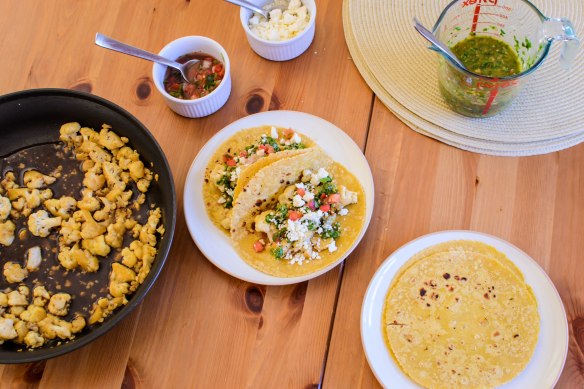
2016 Food Blog June-0946I had these tacos at a brewery restaurant in Venice, just on the other side of Highway 1. We’ve done cauliflower in tacos before, but that was a wintry dish. This one, with bright, sharp chimichurri sauce and briny crumbles of feta, is all summer.

2016 Food Blog June-0964As many breweries do, this one tries to use their beers in their food as well as in pint glasses, which makes a lot of sense. A glug or two of dark beer into a cheese sauce is perfect, and braising everything from beef to cauliflower in a simmer of ale rather than red wine just fits the venue.

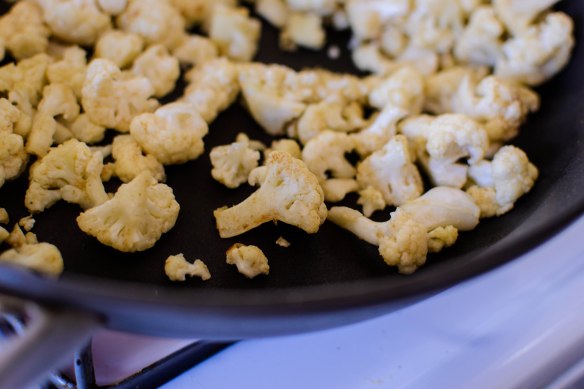
2016 Food Blog June-0972I suppose in this instance, braising isn’t quite accurate – a braise is a long, slow cook in liquid, and here the beer deglazes the pan and then simmers just until the cauliflower florets are tender – but the name sounds nice, doesn’t it? Anyway, the normally mild, sometimes musty vegetable picks up some color and char from a very hot skillet, then sucks in some of the nutty bitterness of whatever beer you pour, sputtering and steaming, into the pan with it. It’s not quite the same depth and richness as roasted cauliflower, but a lighter incarnation that is a bit less sweet.

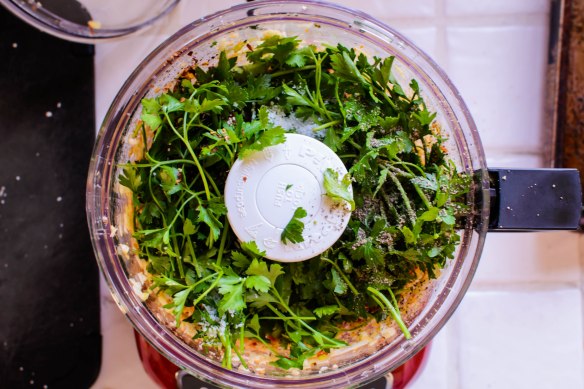
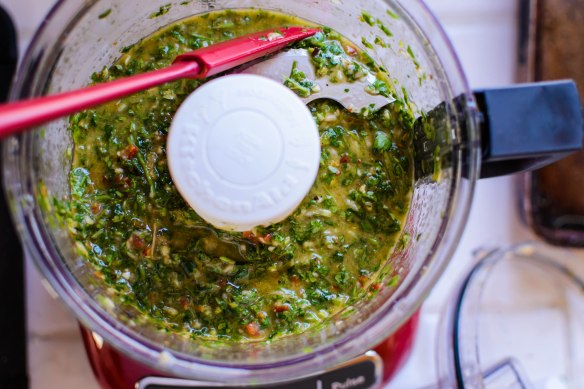
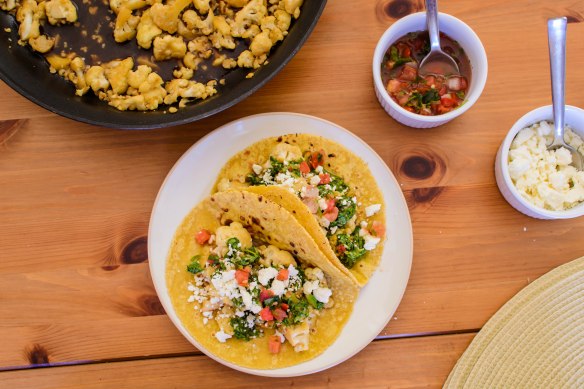
2016 Food Blog June-0958Once you pile the florets up into a nicely toasted tortilla, you spoon on some chimichurri sauce, a bright, Argentinian answer to pesto, possibly of Basque origin, that is traditionally used to both marinate and top grilled meat. It’s usually dominated by parsley, though sometimes cilantro and oregano make appearances, and gets its sharpness from raw garlic and a healthy dose of vinegar. Mine starts out traditional and then tempers the tang with red wine vinegar, rather than straight white, and sneaks in a bit of sundried tomato and green onion (though you could also use shallot) for a sauce that would make an equally good salad dressing, if you have some substantial greens laying around that need a kick. My version also uses much less oil than some, so feel free to glug in a bit more if you want a looser sauce.

2016 Food Blog June-0963A few crumbles of feta on top of the veg, and you’re ready to serve. And if you’re really feeling the beer-y flavor, perhaps a side of these black beans. Hit it, summer.

2016 Food Blog June-0976

Beer Braised Cauliflower Tacos with Chimichurri
Makes 1 cup chimichurri, and enough cauliflower for 4-6 tacos
About 30 minutes
For chimichurri sauce:
3-5 garlic cloves, peeled
2 tablespoons shallot or the whites of green onions
1 tablespoon oil-packed sundried tomato, drained
¾ cup packed parsley, stems and all
2 tablespoons cilantro, stems and all
½ teaspoon salt
½ teaspoon black pepper
½ teaspoon red pepper flakes
5 tablespoons (¼ cup + 1 tablespoon) red wine vinegar
⅓ cup vegetable or olive oil
For cauliflower tacos:
1 large head cauliflower, cut into bite-size florets
1 teaspoon salt
1 teaspoon ground cumin
2-3 tablespoons olive oil
12 ounces dark beer
soft corn tortillas, lightly grilled or toasted over an open flame
crumbled feta cheese, to serve
pico de gallo, to serve (optional)
additional cilantro, to serve (optional)


  • To make the chimichurri, blitz the garlic, onion or shallot, and sundried tomato in a food processor until the ingredients are well broken up. This ensures no large chunks of garlic in the final product. Then, pack in the parsley, cilantro, salt, black and red pepper, and vinegar, and pulse the food processor 2 or 3 times at 1-second intervals. Finally, drizzle in the oil and pulse again, 2 or 3 times at 1-second intervals, until everything is well chopped, but not so long that a fully emulsified paste is created. We are looking for the mixture to retain some texture. Set aside until ready to serve.
  • In a large bowl, toss the cauliflower with the 1 teaspoon salt, the cumin, and the 2-3 tablespoons olive oil. Preheat a large skillet or a grill pan over medium-high to high heat and, when it is quite hot, tumble in the oiled, seasoned cauliflower. It will sizzle tremendously.
  • Char the cauliflower on all sides – you are looking for dark bronzed marks on the outside, but not to cook it through – this should take 3-4 minutes.
  • Deglaze with the beer by adding it all at once and stirring gently. Turn the heat down to medium-low and cook until the florets are tender but still have some texture; about 5 minutes.
  • To serve, use a slotted spoon to pile up about ¼ cup of florets in each tortilla. Spoon over a few teaspoons of chimichurri, then a few teaspoons of crumbled feta. Add pico de gallo and a few extra cilantro leaves if desired, and serve immediately.