Mistakes can still be delicious

Though many of Bittman’s 101 Make Ahead Sides seem clearly autumnal, and some downright Thanksgiving-y, some are a bit further afield.  This week we went with one of the latter.

“40. Peel and trim pearl onions and toss them with a mixture of minced ginger, garlic, chilis and peanut oil. (A little sesame oil is good, too.) Roast until nicely caramelized, then drizzle with soy sauce.”

This clearly called for an Asian theme, so I bought tofu and bok choy for an accompanying stir-fry.  As for the sideshow-in-the-spotlight, I went the easy route and assembled:

1 bag frozen whole peeled pearl onions, defrosted
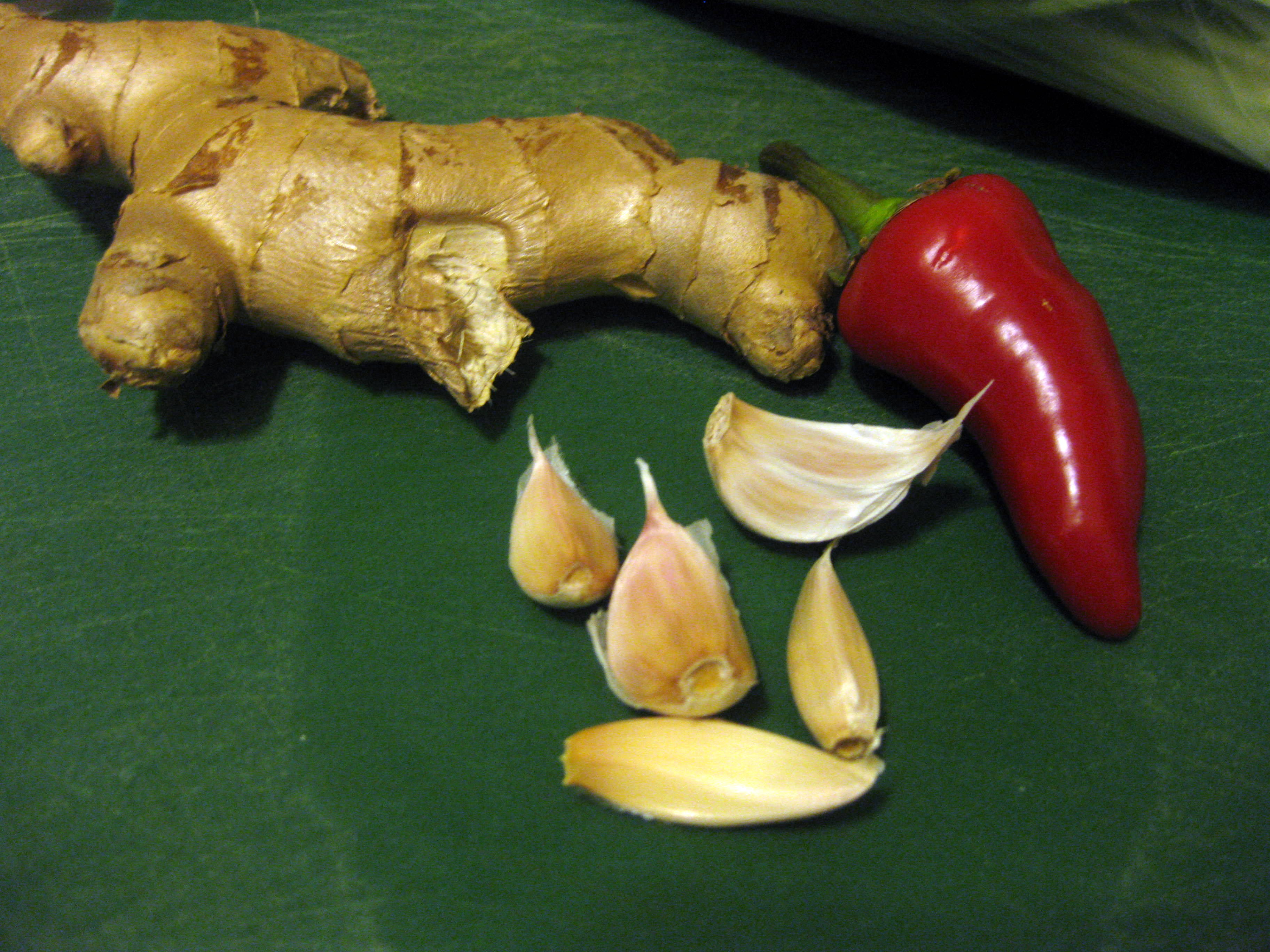
5 cloves garlic, finely minced

2-inch knob of fresh ginger, peeled and finely minced

1 red jalapeno, seeded and diced fine

2 TB olive oil (I didn’t have peanut oil and the olive oil was right there on the counter…)

1 TB sesame oil

2 TB soy sauce

I did as Bittman instructed, with the exception that, skimming the recipe too quickly, I mixed the soy sauce in with the onions and everything rather than waiting until they were done.  This, like hastily dumping the onions into a pie plate while they were still slightly frozen, was a mistake.  This dish needs dryness to work.  Or, rather, it needs its primary moisture to come from fat, like anything you roast, and not from a water-based liquid.  It also, I suspect, needed a cookie sheet rather than a glass pie dish to roast in.  Something about the conductivity of metal plus the extra space a cookie sheet would have afforded would, I suspect, have produced better results.

Not that my results were bad!  I preheated the oven to 400F and slid the onions in for 20 minutes while I made the stirfry of tofu and greens.  I used my favorite tofu recipe, adding the bok choy in when the tofu was about halfway done.  Then I added a few tablespoons each of white wine and soy sauce to give the bok choy something to soften into, and to add a little flavorful sauciness to the dish.
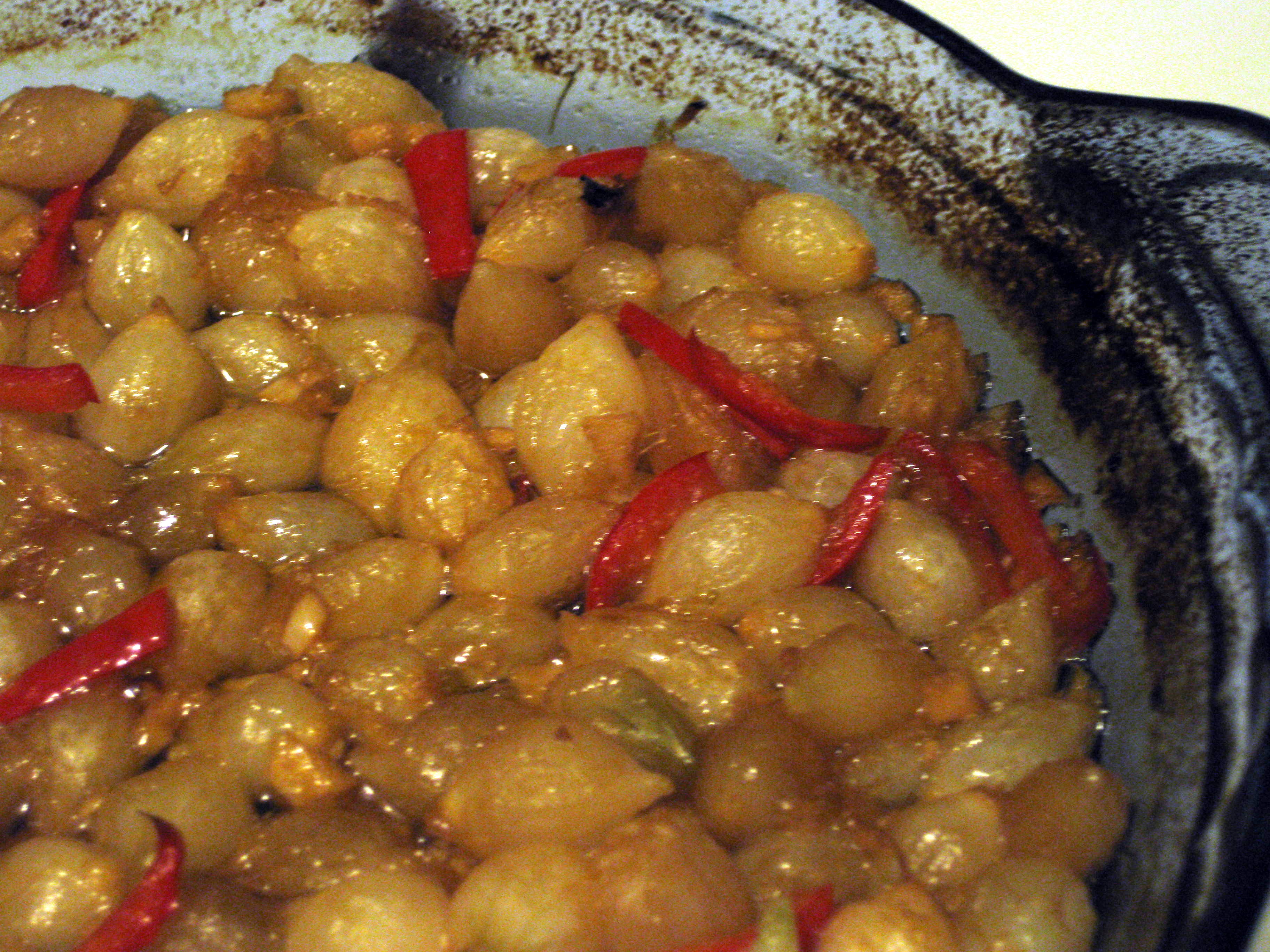
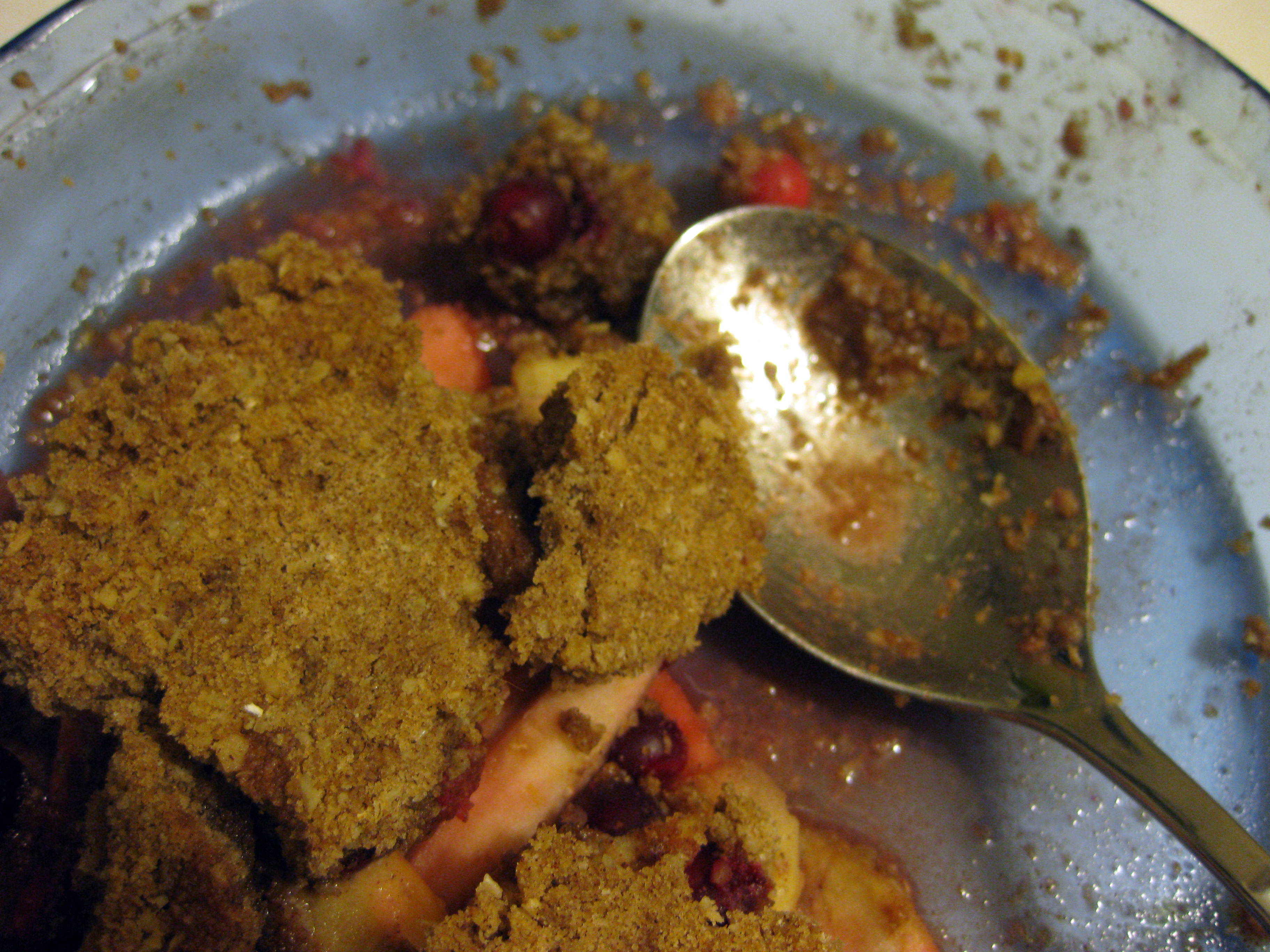
When the 20 minutes I’d allotted the onions were up, I slid them out to find basically zero caramelization.  All the color you can see in this photo is from the soy sauce.  I attribute this to three things: the onions were too wet from a combination of the soy sauce and the not-quite-completed defrosting process, the pan was too crowded, and I wasn’t patient enough to leave them in longer (N. had gone on an epic 12-mile run earlier in the day and could not wait much longer for dinner).  So there was no beautiful toasty browning, but we ate them anyway.

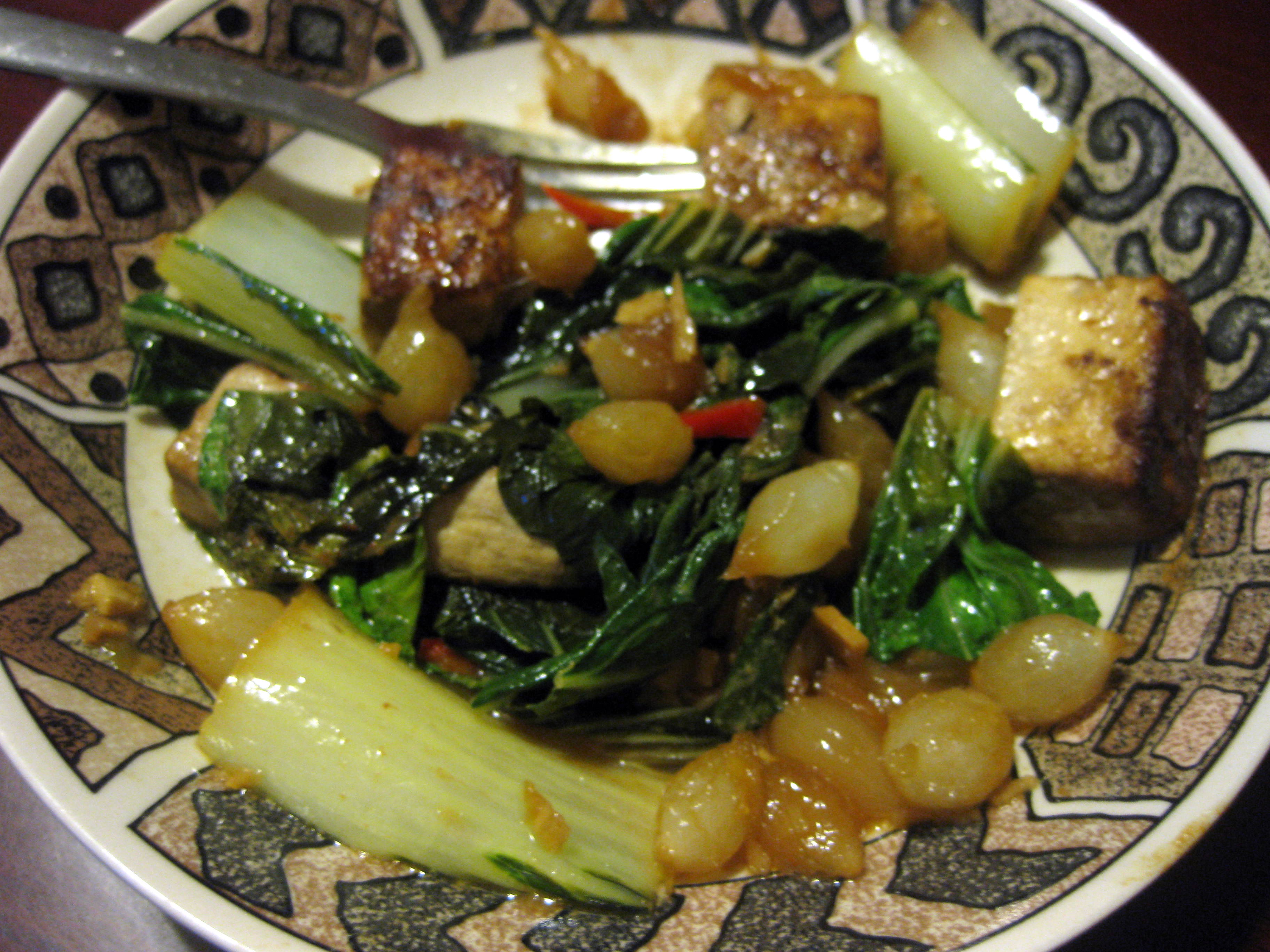
They were mild and sweet with sharp kicks from the aromatics: a faint burn from the garlic, a forward warmth from the ginger, and the barest suggestion of spiciness from the pepper (leave the seeds in for more heat).  They were tasty, but I suspect they needed that caramelization to be really special.  I ended up tossing them in with my tofu and bok choy and eating the whole thing as a single stir-fry, as if they were supposed to be commingled.  They forgave my mistakes, coexisted, and rather than a side-act-acting as a main and a main with side features, they just became dinner. 
Juxtaposition

Some food words just don’t go together.  Crunchy and soggy.  Tart and cloying.  Gooey and crisp.  Warm and salad.  And yet, warm and salad are exactly the words to describe this week’s Bittman dish.

“50.  Cook chopped onions in olive oil until soft.  Add chopped spinach and a handful of raisins – maybe a little port, too – and cook until wilted and almost dry.  Roasted pine nuts are good on top.”

I didn’t have any idea what this dish would be like when I set out to make it.  N. wasn’t sure either, and particularly when he saw that I was combining spinach, raisins, and onions he was pretty suspicious.

We had no port in the house; I don’t drink it, and we don’t eat roasts all that often, which eliminates our need for a glazing agent, I didn’t have any in the house.  So I poked around online for a while looking for substitution suggestions and then, unsatisfied with everything I found, made up my own out of balsamic vinegar, red wine, and a little sugar.  Here’s what I used:

¼ cup balsamic vinegar

¼ cup red wine

2 TB sugar

½ cup raisins

1-2 TB olive oil

½ cup red onion, diced

1 lb. baby spinach

¼ cup pine nuts, dry toasted

Salt and pepper to taste

I combined the balsamic vinegar, wine, and sugar in a small saucepan and, after swirling it gently to distribute the sugar, let it come to a simmer on medium and left it alone to reduce for ten minutes or so while I prepped my vegetables.

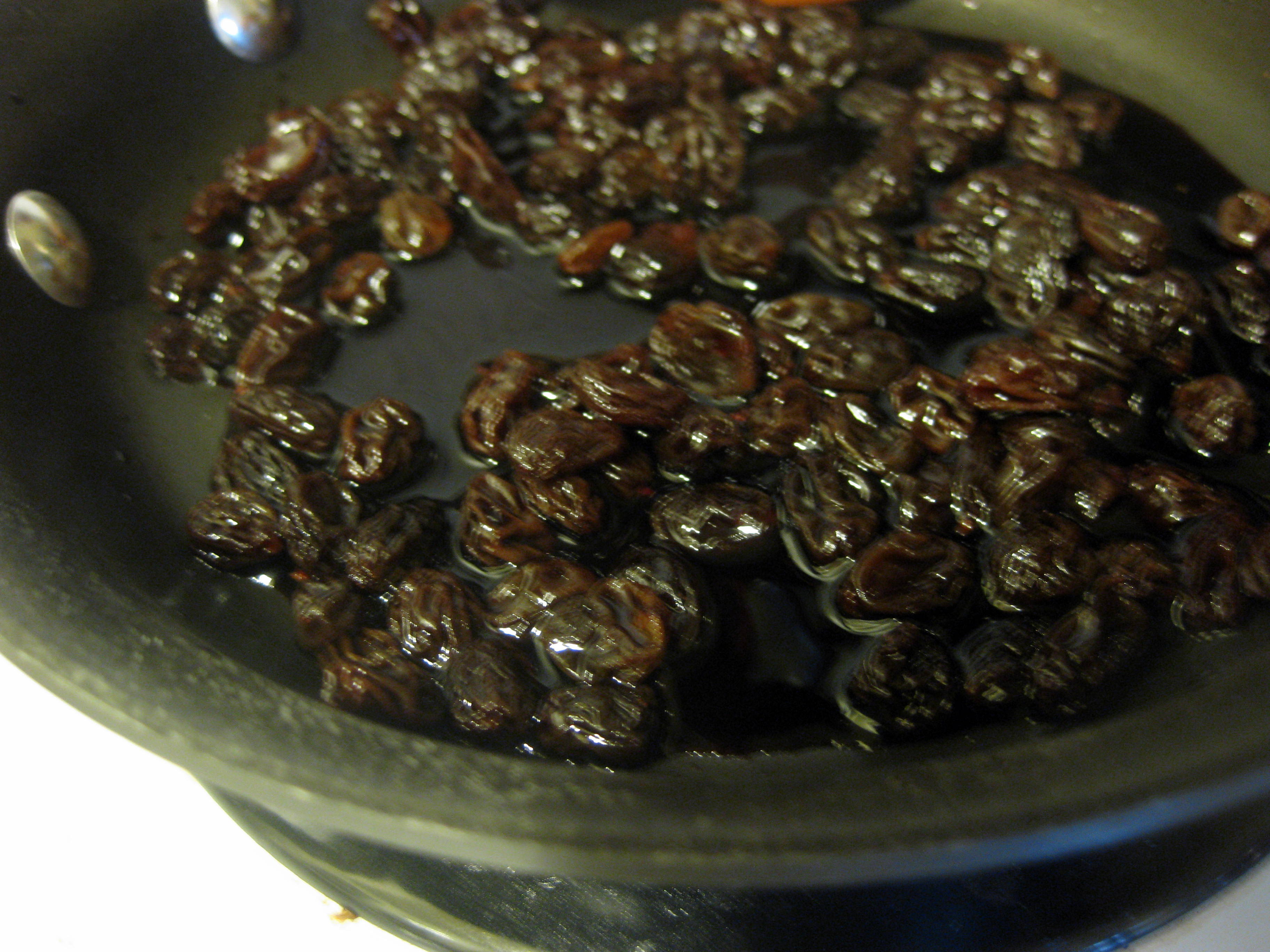
As I prepared to sweat the onions in my biggest saucepan, I was struck with genius.  Why not add the raisins to the “port” sauce?  I dumped them in and continued to let the liquid just barely simmer, while the raisins plumped up and took on new, more exciting flavors from the vinegar and wine.  Once genius had been attended to, and my other skillet was shimmering with its shallow pool of olive oil, I added the onions and cooked them gently for five or ten minutes until they were soft but not browned.

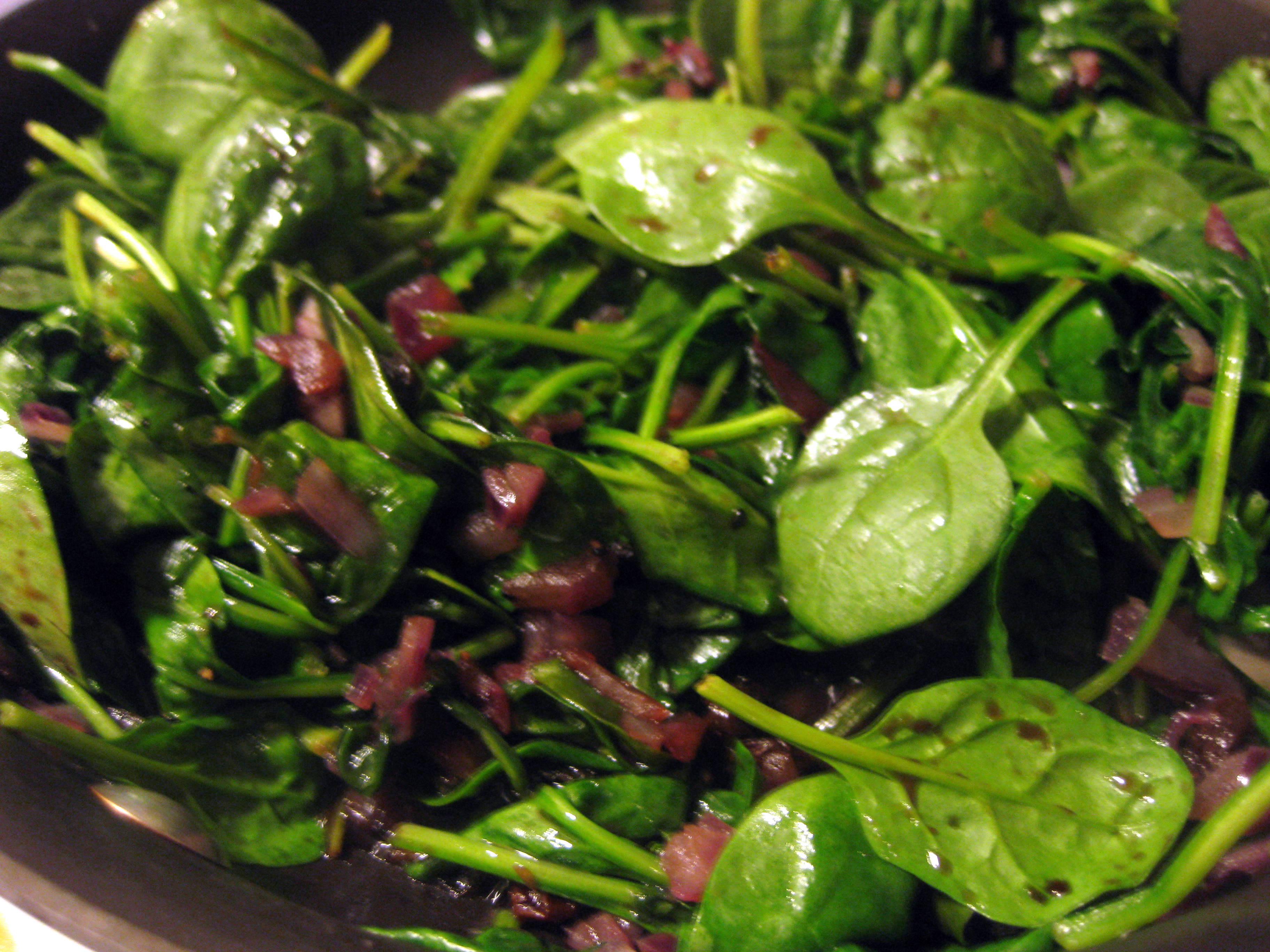
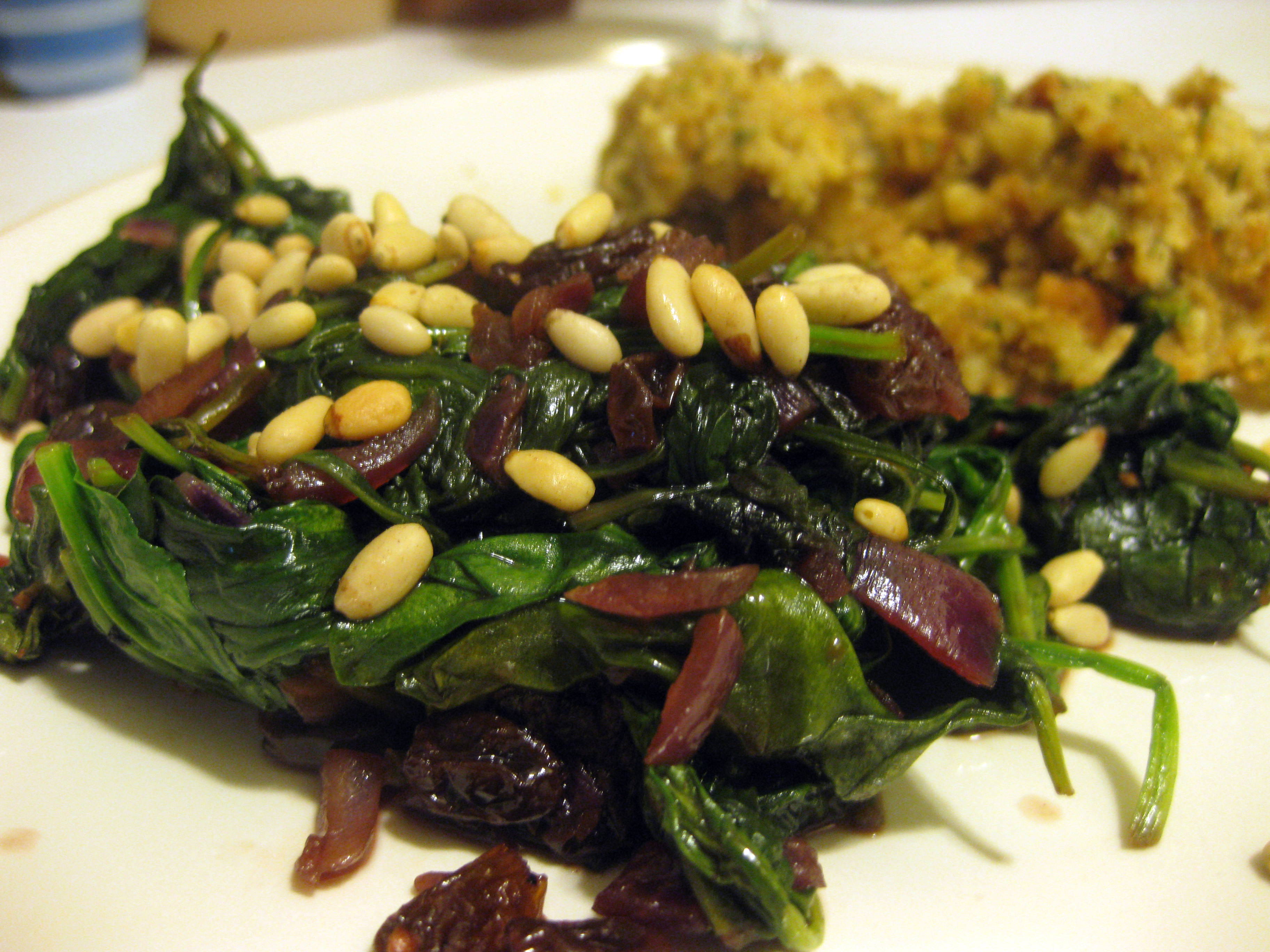
To my meltingly soft onions, I crammed as much spinach as the pan would hold, then tried to turn it over without dumping too much all over the stove.  In less than a minute, it had wilted enough for me to add the rest of the spinach, the raisins, and their thick, syrupy sauce, now well simmered and nicely reduced.  I tossed the whole thing together with tongs, and we scraped huge helpings onto our plates next to a big mound of (Stouffer’s, but I’m not ashamed) stuffing.

The ingredient list, the tongs, and the sweetness of the sauce made me think of salad.  The raisins and spinach were good, but the “port” sauce was ridiculously delicious.  It was sweet and tangy, with the wine and balsamic vinegar bouncing acidity off the caramel-sweet dissolved sugar.  It had warmth and depth and would have been just as good poured over ice cream as it was over this strange salad.  The pine nuts were a perfect crunch on top and the raisins added some intriguing chewiness.  Finely diced and well fried bacon would also work well here, and make it even more like a warm spinach salad.

In poetry, juxtaposition is intended to draw the audience’s attention to a specific comparison created by placing dissonant words next to each other – an invasion of unfamiliarity that surprises, invites thought, and expands meaning.  Here, it made for a gorgeous early Spring dish that clung to our lips, warmed our bellies, and left us sweetly satisfied.

Capacity

It’s getting a little busy around here.  Being a PhD student is a strange “profession,” if you can call it that, because the workload hefts itself around in such varied ways.  In the past week I have been a researcher, a teacher, a session organizer (for a conference that doesn’t take place until July 2012!), a not-nearly-ready-even-though-my-flight-leaves-Thursday conference attendee, as well as a housewife, a hostess, an unprofessional baker, a very unprofessional blogger, and a dogmom.  And the craziest thing is, with only two or three exceptions that’s what I am every week.  It tends to produce feelings of insufficiency.

So this past week we picked a stuffing.  It seemed only appropriate, since I have such a full plate in the figurative sense, to match this in the literal world.

“24. Combine a little cooked wild rice with much more cooked quinoa; sauté crumbled sweet Italian sausage with onion and fresh rosemary.  Toss together.  Bake in an oiled dish or use as stuffing.”

Since I never stuff poultry, and the pork chops I would consider stuffing are on N.’s “I don’t eat that” list, I guess what we ate this week was a “dressing,” which is a term I’ve never understood.  Nevertheless, I collected ingredients, once again feeling delight at Trader Joe’s as I found a bag of pure, pre-cooked wild rice, and assembled the following:

1 cup raw quinoa, cooked according to package directions

½ cup wild rice

8 oz. Italian pork sausage

¼ cup red onion, diced

1 TB fresh rosemary, minced

Salt and pepper to taste

While the quinoa cooked, I added the sausage to a skillet with a tiny slick of oil and broke it up with a spatula so it would brown into crumbles.  When the sausage was more than halfway done, I added the onions and then the rosemary so their flavors would mingle and they would benefit from the sausage fat as a caramelizing agent.

When quinoa and sausage (and friends) were done, I stirred the meat mixture and the wild rice into the quinoa, then put it in an ovenproof casserole dish and stowed it in a 350F oven for half an hour.

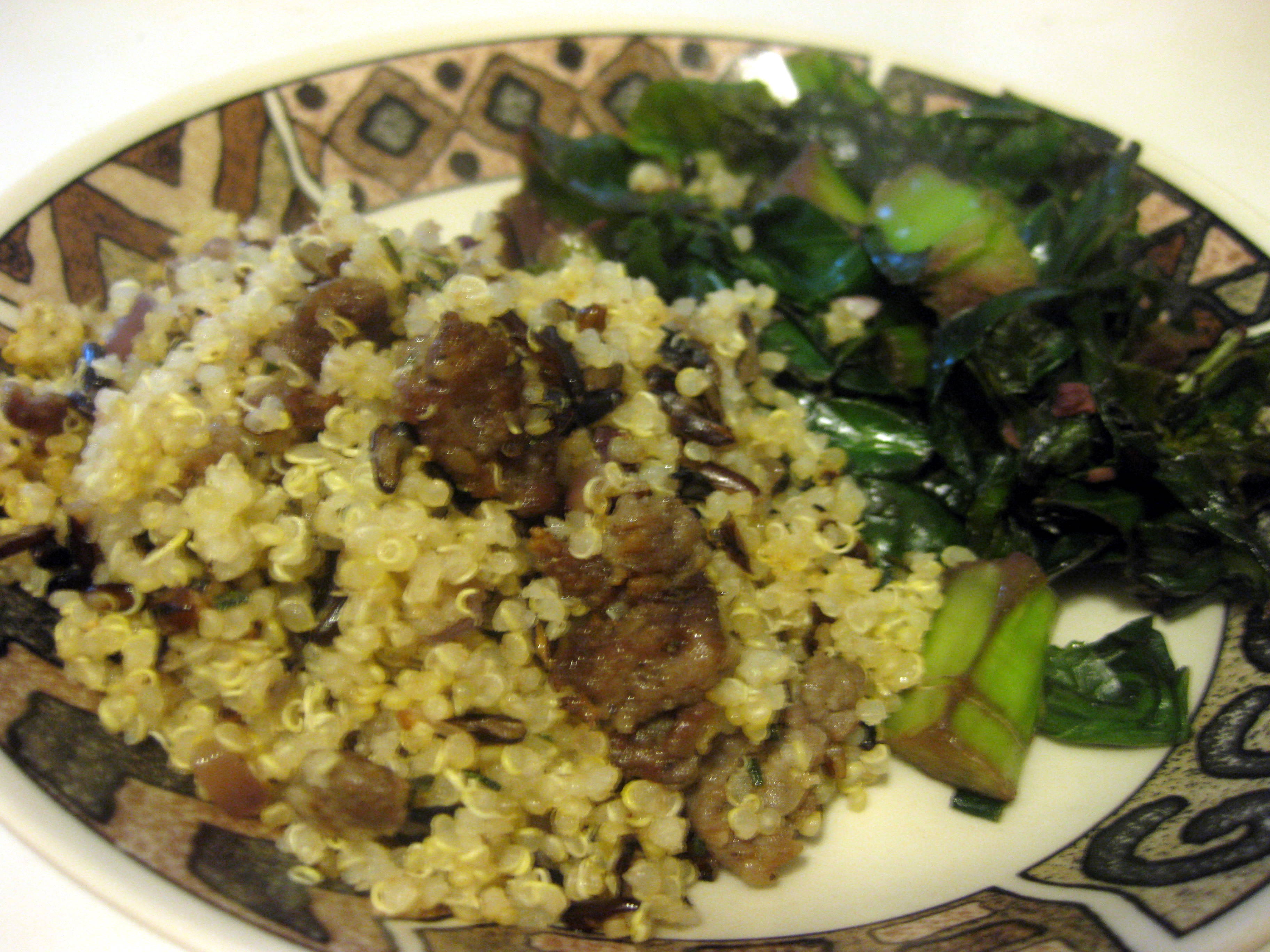
In the last few minutes of baking time, I prepared our side dish: in the same pan as I had cooked the sausage, I tossed about half a bag of mixed southern greens and a few minced cloves of garlic.  As they began to cook down, I added a generous splash of red wine and a tablespoon or so of soy sauce.  This tenderized the tougher stems and flavored the leaves with tangy, salty assertiveness.

The greens were, as I already knew they would be, delicious.  We are entering the time of year when I start to crave excessive quantities of vegetables (last night I kept returning to the kitchen to snag lukewarm pieces of kale from a saucepan, and tonight’s leftover roasted broccoli didn’t even make it to the refrigerator), so the pile of slightly bitter, slightly saline roughage on my plate was the highlight for me.  The quinoa “stuffing” was also very tasty.  I don’t usually add meat to my stuffings, but here the fattiness of the sausage was a welcome foil to the nutty, healthy-feeling quinoa.  The wild rice and rosemary lent woodsy, piney flavors, making this an ideal stuffing for a wintry dinner.  I do think pork chops would receive this filling well, as would portabella mushrooms.  For us, as the wine sauce from the greens slowly bled its way across the plate into the quinoa, it was a lovely, protein packed dinner. 

But as so frequently seems to happen with these Bittman experiments, the leftovers took me by pleasant surprise.  The next day, I dressed a plate of arugula with lemon juice, olive oil, salt and pepper, then topped it with a few scoops of the quinoa mixture and popped it in the microwave for a minute.  The resulting warm salad was stupendous.  The lemon juice added just the right kick of acid, which I hadn’t realized the dish had been lacking.  Salty, crunchy, comforting and peppery all at once, it was a lunch that needed no accompaniment.  And when you are nearing your capacity from trying to be everything at once, realizing you are going to make it and you need no accompaniment is an empowering thing.

Contrast and Comfort

This week I asked N. to contribute to our menu by choosing which Bittman dish he would like to most immediately consume.  I figured this was a safe proposition because, really, everything on the list sounds tasty, and there was almost nothing I was unwilling to make.  Driven perhaps by the distinctly discomforting knowledge that Spring Break is only one week long and we were already in it, he picked the ultimate comfort: spuds.

“63. Slice potatoes thin and layer them in a nonstick skillet. Dot with butter and add enough half-and-half or milk to come three-quarters of the way to the top of the potatoes. Bring to a boil and simmer until liquid reduces a bit, about 10 minutes. Transfer to a 400-degree oven for 10 minutes until just brown, reduce to 300 degrees and cook until tender, 10 to 20 minutes more.”

Potatoes and butter and milk?  How much more comforting does it get?

I made a few additions, and collected the following:

3 russet potatoes, peeled and thinly sliced

2-4 cups milk? (depends on the size of your skillet and how you layer your potatoes)

2 TB butter, cut into small chunks

6 cloves garlic, skins intact

½ tsp each salt and pepper

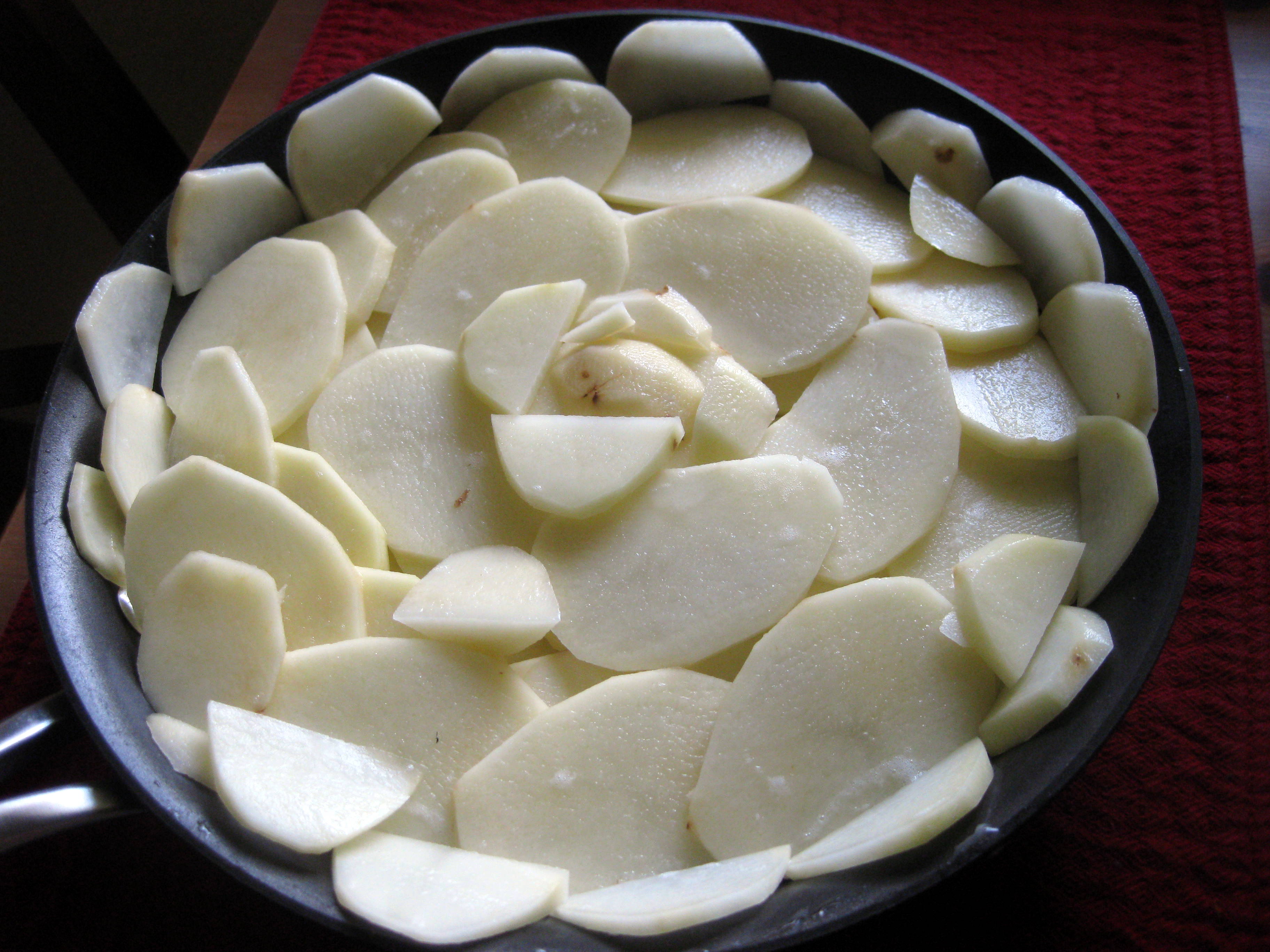
Once the potatoes were sliced, I arranged them in my skillet in a circular, overlapping pattern, hoping to create even layers and therefore even cooking. I added salt and pepper to the top layer and then, struck by the idea of roasted garlic flavor permeating the milk, nestled the whole, unpeeled garlic cloves around the skillet.  I dotted the top with butter, poured on the milk slowly until it emerged around the edges of my top layer, and set my humble skillet on the stove.

Though it took a while to heat up, as the milk was refrigerator-cold, once the boiling began it was frantic and violent.  I turned things down and let it simmer for a while before sliding the bubbling cargo carefully into the oven.  I’m not sure how much reducing went on, but some splashing into the stove’s drip trays definitely did.  Boiling milk is a fearsome hazard to a clean stove.  I know this now.

With the gently softening potatoes safe and warm, I turned my attention to our vegetable dish.  Slightly amended from a recipe in Cooking Light magazine, I made Panko-crusted broccoli to pair with the potatoes. While steaming some broccoli in the microwave, I browned about a cup of Panko bread crumbs in a few tablespoons of olive oil over medium-high heat.  They are needy little things, apt to burn if they feel slighted for attention.  Once they were a pleasant golden, however, I removed them from the pan and heated another few tablespoons of olive oil.  I tossed in three cloves of garlic, all the broccoli, which was just barely tender, and a teaspoon or so of my favorite Black and Red pepper blend from Penzey’s.  Then all that remained were a few quick tosses to combine, and some gentle ignoring to allow the broccoli to sear and brown a little in the pan.

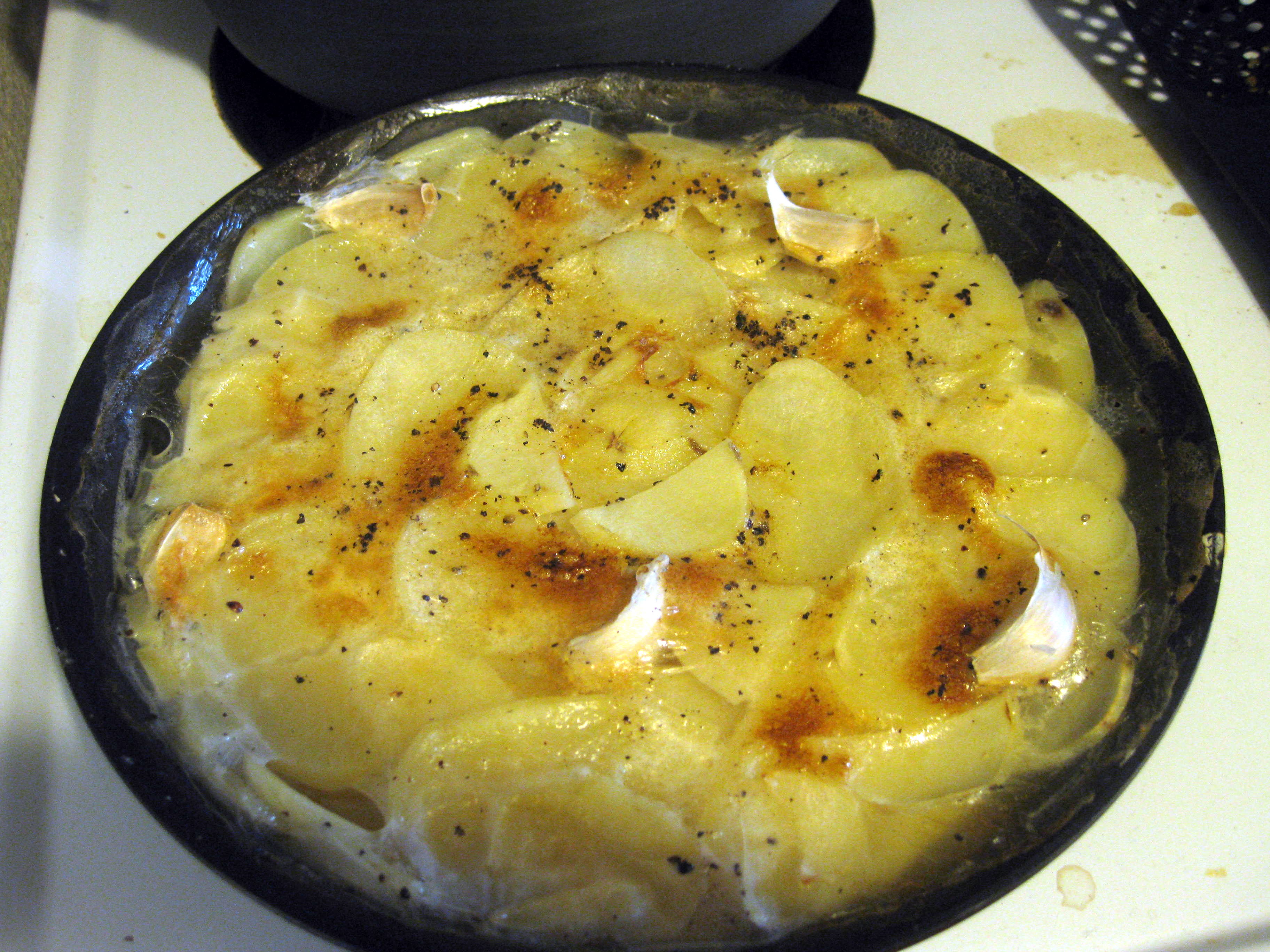
During this sautéing process, I managed to remember to turn the oven temperature down, and soon my potatoes were not only blanketed by a skim of brownness, but were achingly tender all the way down to the bottom layer. Liberation from the oven was the only logical next step.

Piled up next to my sizzling, seared broccoli, the potatoes were a snowy pile of perfect contrast.  The broccoli was crisp and fresh and a little spicy, while the potatoes were so delicate they almost mashed themselves as I spooned them out of the skillet.  The garlic had not permeated the milk (though that didn’t stop us from pressing it out of its skin and mixing it in), so the flavor of the dish was very gentle.  It was almost bland, which made me glad I’d added salt, but I think next time I would remove the garlic from its skins and nestle it amidst the potato layers rather than just on the top, and I might add sprinklings of Parmesan cheese between layers too, for a salty kick and additional flavor.  The star of the whole meal, however, was the Panko.  Crisp and complementary on the broccoli, it was also good as a topper for the potatoes.  It soaked up the silky remnants of the milk without getting soggy, and provided the kind of textural element the foodie-folks are always talking about.

With leftovers stowed in the fridge and the first day back to school reluctantly attended but assuredly conquered, I see the near future of these Tupperware-swaddled babies: smashed down with a fork, some butter and cheese folded in, and maybe a few leaves of baby spinach to add some attempt at health.  If I’m lucky, they might approximate the potato and kale soup I tasted at Humble Beagle the other night, which was less a soup than a bowl of thick, flavorful, wonderfully creamy blended potatoes.

It’s comforting to know such deliciousness is only a microwave away.

Shame

Twice a year (approximately), a truly embarrasing-to-admit-you-are-obsessed-with-what-with-being-an-intelligent-and-well-educated-woman reality television show starts a new season.  And I MUST watch it.  And I don’t watch it alone (most of the time).  Several female friends are also implicated in this shamefulness, and because the show involves large quantities of too-skinny women, we like to pair our guilty viewing sessions with dessert.

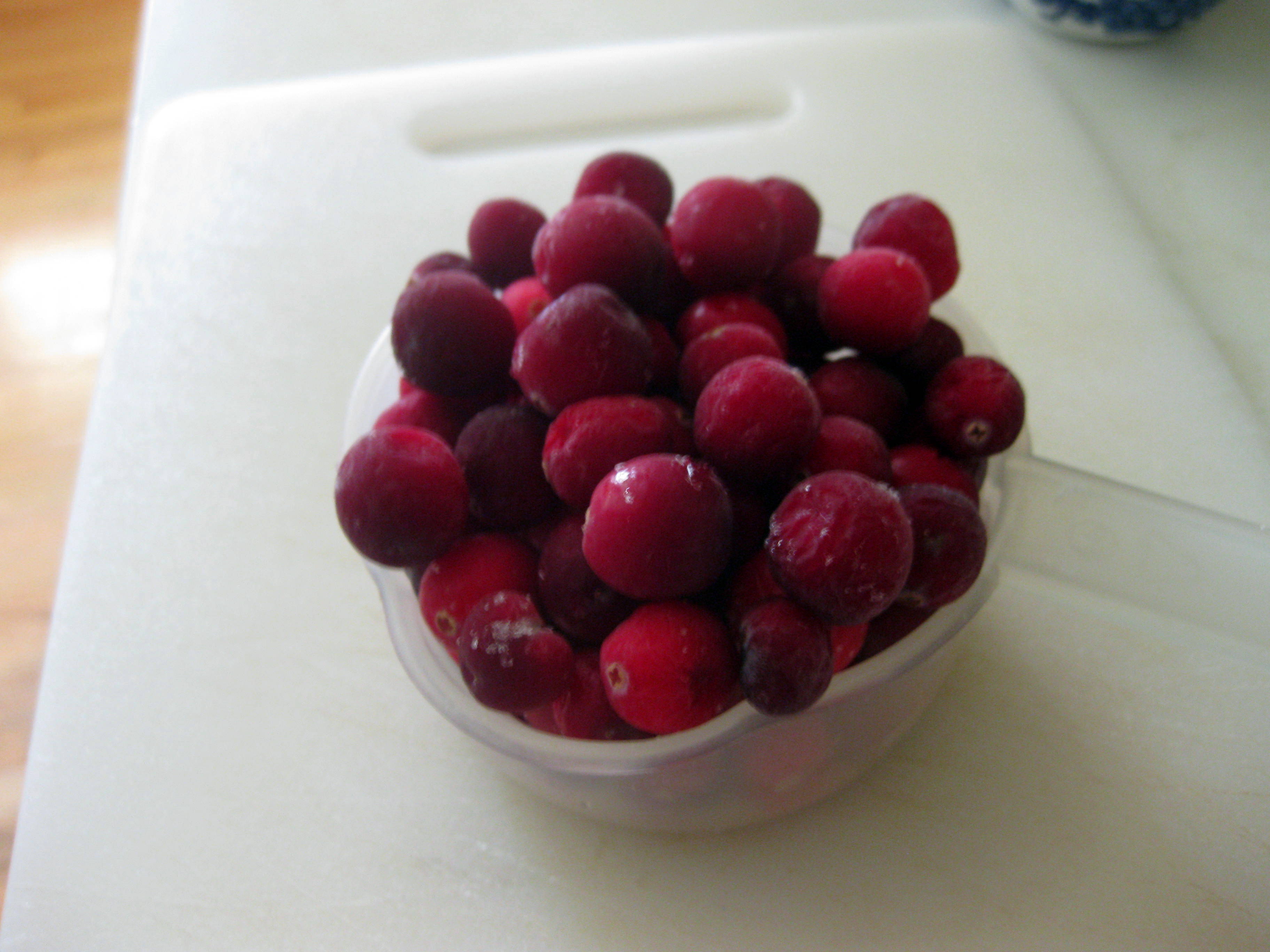
As a new season of this show recently started, I thought this would be a great opportunity to breach the dessert section of my Bittman project.  With Pink Lady apples on sale during my weekly pilgrimage and foggy (but accurate!) memory of a bag of cranberries, frozen in November, jammed in the back of my freezer, everything came together.

“99. Apple-Cranberry Crumble: Peel and slice 4 large tart apples.  Toss with a cup of cranberries, the juice and zest of a lemon and ¼ cup brandy, apple cider or water and put into a buttered baking dish.  Pulse ½ cup cold butter, ½ cup oats, ½ cup walnuts or pecans, ½ cup flour, ¾ cup brown sugar, 1 tablespoon cinnamon and ½ teaspoon ginger in a food processor until crumbly – not fine.  Top the fruit with this and bake until bubbly, about 45 minutes.”

Because I did almost exactly this, and because the quantities are listed here, I’m not going to type out an ingredient list – it would be very repetitive.  But I will tell you the changes I made, due to ingredient lack and personal preference, and which worked out well.

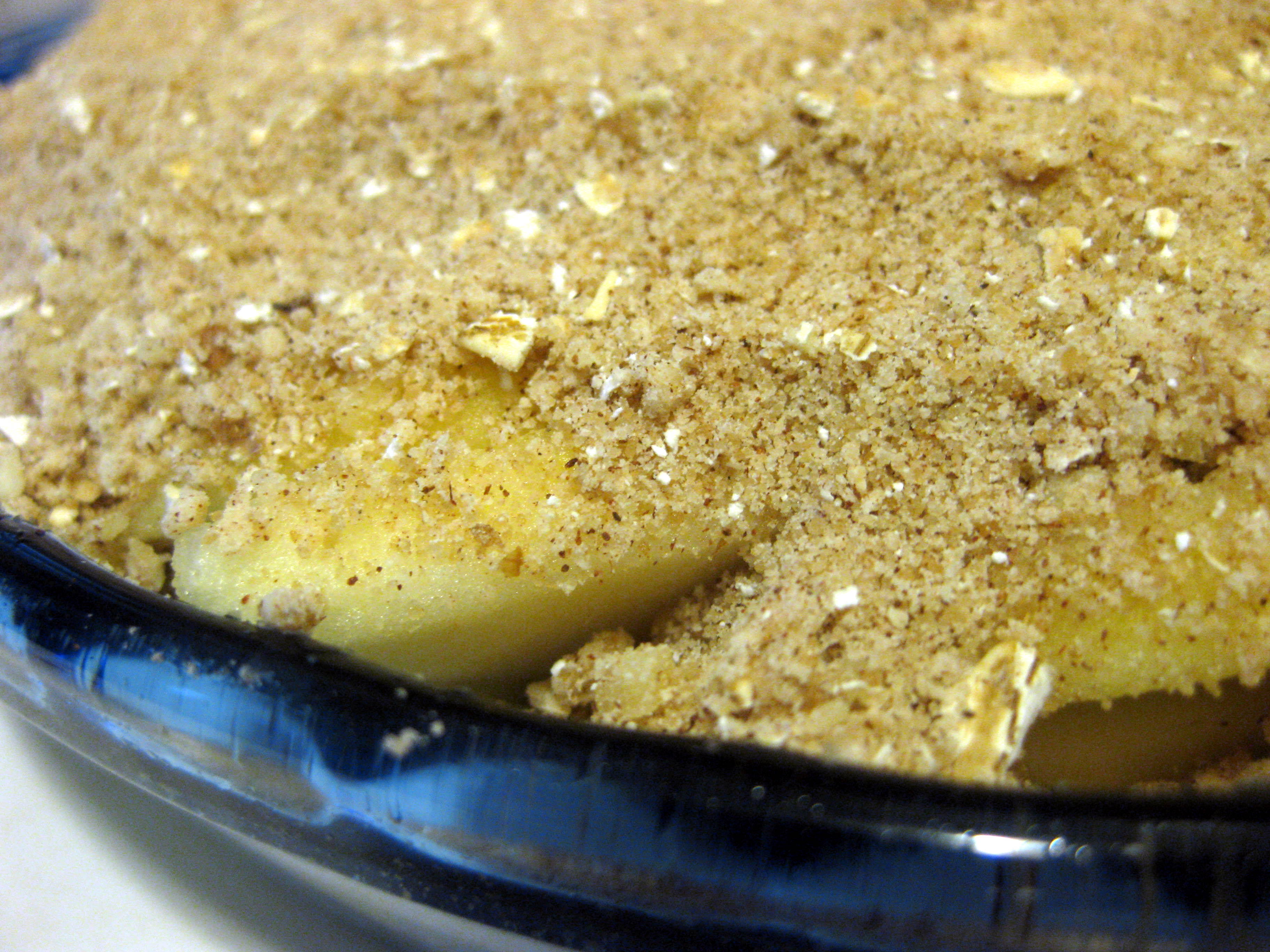
I didn’t have brandy, so I used spiced rum instead.  Because the apples were mouth-wateringly tart and the cranberries relentlessly so, I decided to divide the sugar and put about ¼ cup in with the filling, leaving only ½ cup in the topping.  This still rendered a very sweet topping, especially on the leftovers ice cold from the fridge.  I think I pulsed the topping too much, because what resulted was almost like graham cracker crumbs.  I exacerbated the cookie-like texture because, using a pie pan clearly too small for all this goodness, I patted the topping on fairly firmly to keep everything together.  I think a 9×9 square baking dish would be the right size for this dessert.

I preheated the oven to 350F for this, because it’s a fairly standard temperature for desserts and Bittman doesn’t specify.

Perhaps because the topping was packed on so tightly, or because the Pink Lady apples I used were less juicy than Granny Smiths, which is my usual pie apple, 45 minutes later there wasn’t much bubbling.  The topping had, however, turned golden and crispy, and the smell of apples and cinnamon mixed with a tantalizing tartness had permeated the house.  I’ve discovered in the past year that all those Food Network chefs who tell you doneness can be determined by smell do have a point.  It smelled ready, I decided it was done, and my nose and I were right.

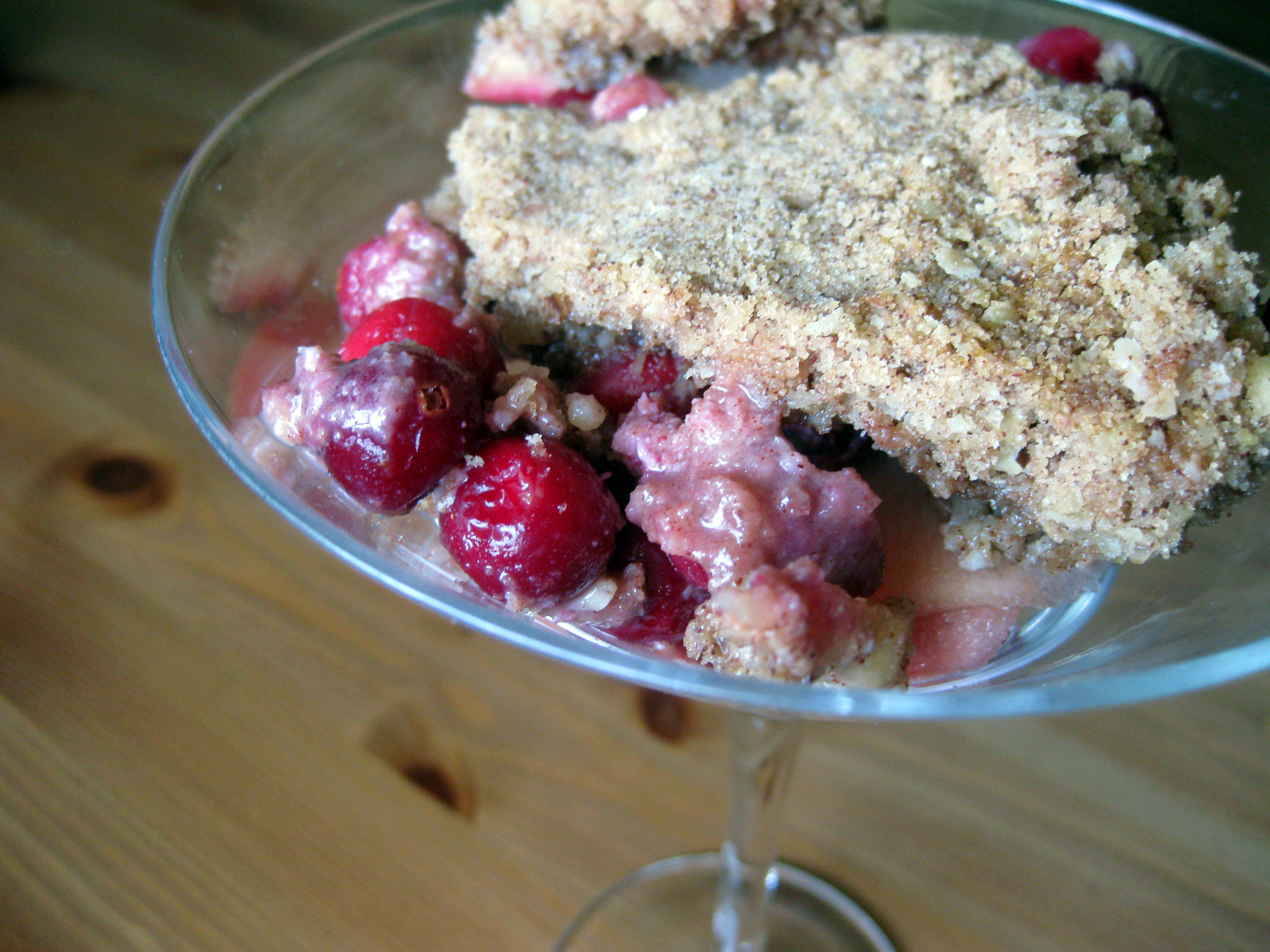
When I served this, spooning tender apple slices stained with juice from the popped cranberries and blanketed with a crunchy, cookie-like layer of awesome, one serving proved not enough.  In fact, between me, the two ladies I was sharing with, and N. when he sneaked through to pick up dessert near the end of the show, we devoured about ¾ of this simple, homey treat in one evening.  And we didn’t even have ice cream on the side.

Clearly, my assessment on this pick is that it was fantastic.  Easy ingredients, easy to make, and so difficult to mess up that it can be served to company the first time you attempt it.  Pleasantly, the apples maintained a bit of texture even after almost an hour in the oven.  The rum was soaked up and cooked off, leaving only the barest tingling spice that went well with both the apples and the cranberries.  Even with the addition of brown sugar in the filling and the richness of the crumble, the cranberries and lemon kept the whole dish feeling very bright.  It made me think that with more cranberries, smaller pieces of apples, and no topping, this could be a delightful take on cranberry sauce.

As these things so often go, and as good as our first decimating exploration was, this dish’s debut was not its best showing.  Rather, two days later when I needed a pick-me-up and saw the aluminum foil covered pie plate balancing unsteadily atop several stacked Tupperwares, I discovered its chilly waiting period had brought it to perfection.  The apples were incredibly flavorful, the cranberries were still tart but had mellowed into something resembling sweetness, and the crumble on top was like a cinnamon-scented crust on the best New York cheesecake you’ve ever had.  So delicious.  And really, as good as the apple and cranberry pairing was, I see no reason this topping couldn’t be patted over other types of fruit.  Pears and raisins, if you added a little nutmeg to the topping, would be stellar.  Plums, peaches, maybe even cherries, could happily burble away under such a glorious blanket.  And though next time I might pulse the topping less and sprinkle over the fruit rather than pressing, this is a dessert I will not forget to make again.  Maybe every time a new shameful viewing season begins.

Potato Love

With St. Patrick’s day approaching, it seems appropriate to venerate potatoes. I am of the considered opinion that there are not many foods better than potatoes. Maybe it’s the Irish in me, but these homely little tubers fill me with joy in most of their applications. Shredded and fried? Particularly fine.

Thus I was delighted by the prospect of this week’s Bittman, which was basically advocating potato-zucchini latkes:

57. Zucchini and Potato Pancakes: Grate zucchini and potatoes; squeeze to drain. Combine with grated Parmesan, one beaten egg for every two cups of the vegetables, a little oregano and flour or fine bread crumbs until the mixture is sturdy. Shape into patties and shallow-fry until browned on both sides.”

I temporarily lost my mind and forgot to record the delicious process in photos, but managed to assemble my ingredients accordingly:

2 medium zucchini, shredded

2 medium russet potatoes, shredded (I used my box cheese grater for both veggies)

2 eggs

¼ – ½ cup flour

½ cup grated parmesan cheese (I used my microplane)

1 tsp dried oregano

salt and pepper to taste

¼ cup or so vegetable oil

Because I know they are so waterlogged, I plunked my shreds of zucchini and potato into a paper towel lined strainer and set them all aside for a few minutes to drip themselves a little drier. I set a griddle over two burners on my stove and started the oil heating over medium. In a flash of Alton-Brown-triggered inspiration, I also set my oven to 200F and put a baking pan with a cooling rack balanced in it inside so I could keep the little latkes warm as they came out of the oil.

I beat up the eggs with the cheese and oregano in a medium bowl, thinking this would help the herbs and salty tang of the parmesan incorporate more evenly. Then I added the vegetable tatters after pressing them firmly against the wire strainer to evict as much moisture as possible. I mixed them in with the eggs and started adding flour a tablespoon at a time until the mixture seemed to hold together well, almost like a pancake or waffle batter jammed with vegetables.

You could make these latkes any size you wanted, but I probably dropped about 1/3 cup onto my griddle at a time, pressing the batter down with the back of a serving spoon so the cakes were flat and as much of the batter as possible was in glorious, fry-tastic contact with the oil.

When the first side was golden and the outer perimeters were crisp, I flipped over the cakes. They probably took 4-5 minutes on each side. After this long oil sizzle, I slid each finished latke onto my oven rack rig to keep in warm while frying the rest of the batch.

I served these with sour cream for N. and applesauce for me. The applesauce, which I found at Trader Joe’s, was really more like cinnamon-spiced cooked apple chunks – they weren’t broken down enough to rightly be called a sauce, which in my opinion made them even nicer. While my peanut butter must be smooth, my applesauce must be chunky. In fact, the chunkier the better.

As latkes go, these were fairly stellar. The irregular shape they made as I pressed them against the hot oil ensured super crispy edges sticking out on all sides. They were just greasy enough to leave your fingertips shiny, though we pretended not to notice by using forks. The zucchini added a suggestion of green juiciness, and I had to remind myself again that these are not hash browns. Because they contain flour and eggs, they are moister, fluffier and denser all at once – real little cakes rather than just fried potato bits, which made them substantial enough to have as a main dish, especially when accompanied by a nice Caesar salad.

This one was definitely a win. I usually add grated onion to my latkes, but I didn’t miss it in this incarnation. Maybe having two vegetable flavors eradicated the need for onion. In fact, given how tasty the sauteed shreds of butternut squash were a few weeks ago, I think this combination should remind us to expand our minds to the possibilities of the sorts of vegetables that can be latke-ized. It seems to me any winter squash (or summer squash, for that matter!) and any tuber could be combined to produce delicious results. Potatoes do seem like a necessary base, since they provide sufficient starchiness to hold things together, but zucchini, butternut or acorn squash, carrots, sweet potatoes, even parsnips would make for lovely combinations and interesting flavors. Outside the traditional applesauce and sour cream, you could drizzle them with maple syrup, or tzatziki, or even a soy-based reduction. You might think of them like inside-out vegetable tempura. And then rejoice, because what you are consuming is just plain delicious.