Spicy Carrot and Radish Herb Salad

Food blog June 2015-1064It’s dangerously easy to throw some greens into a bowl and crunch through them, but I think this is the kind of preparation that makes people think about salads as boring to make and to eat. With summer in gear and a series of weddings and reunions to attend within the next month or two, I find myself brainstorming salads creative and intriguing enough to hold my interest, so I can more easily convince myself to make choices that keep me responsible healthy fitting into my summer wardrobe. The easiest way of making a salad more exciting, it seems to me (besides just loading it up with cheese and some crisped pork product), is to take ingredients not usually used in a salad and jamming them in there anyway, lettuce be damned. For me, this generally takes the form of whatever dish I’ve been craving, transformed into something you can add an acidic vinaigrette and maybe a few crumbles of cheese to, toasting up a hunk of bread, and calling it dinner.
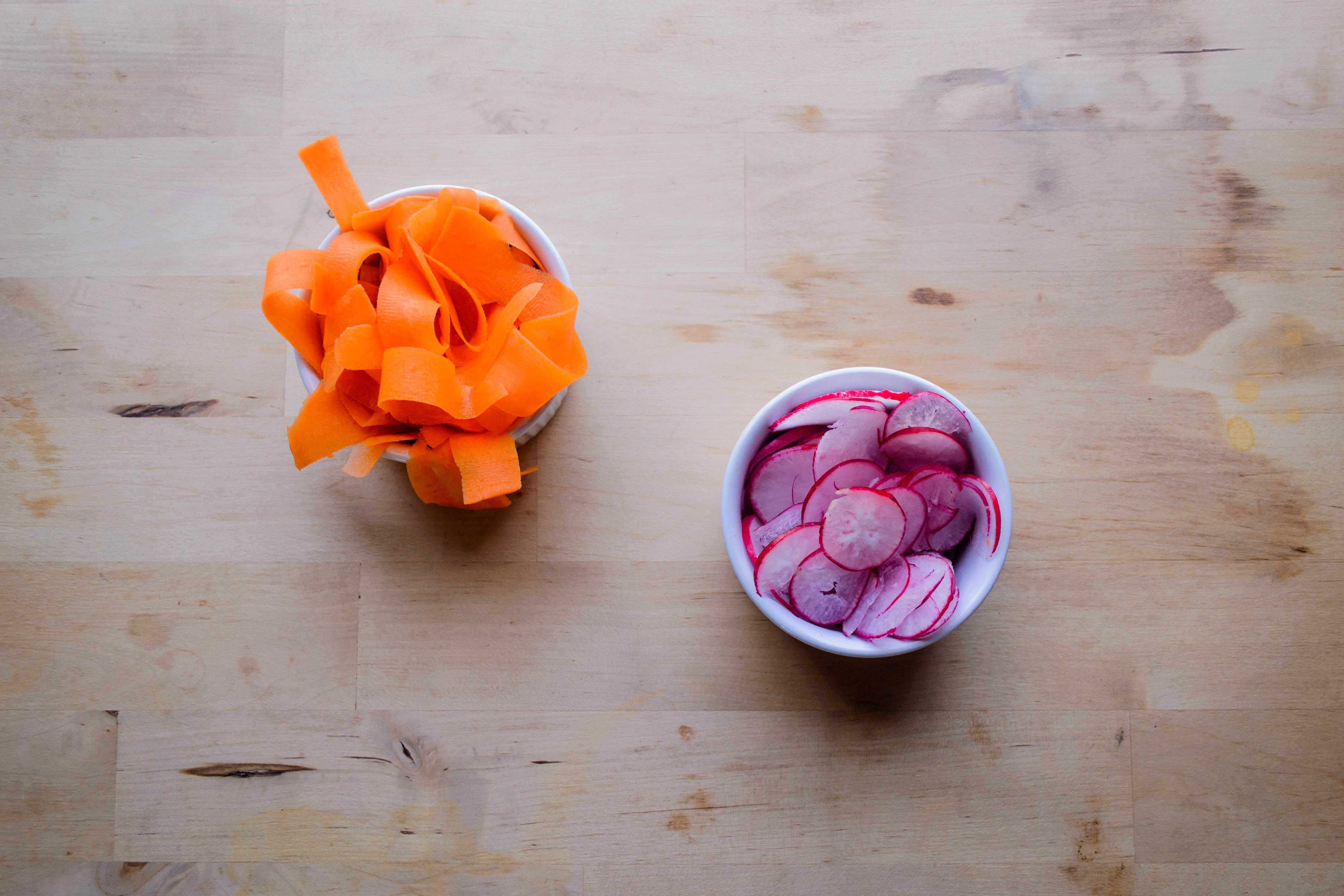
Food blog June 2015-1028This particular salad has two geneses. Lately I’ve been craving banh mi, with all its freshness and brightness, but I haven’t wanted to go through the whole production of making all the ingredients myself (which I’d insist upon, because I’m such a responsible foodie stubborn). Rather, I convinced myself, I wanted a salad inspired by a banh mi sandwich. What this meant was a collection of fresh and pickled vegetables, with some brightness from soft green herbs and some heat from jalapeño slices. I dithered over the pickled part, reluctant to devote multiple days to preparing for a simple salad, until I remembered a grain salad my friend S. exalted about a few years ago featuring lightly pickled carrot slices, along with some jalapeño and mint. Wheels turned.

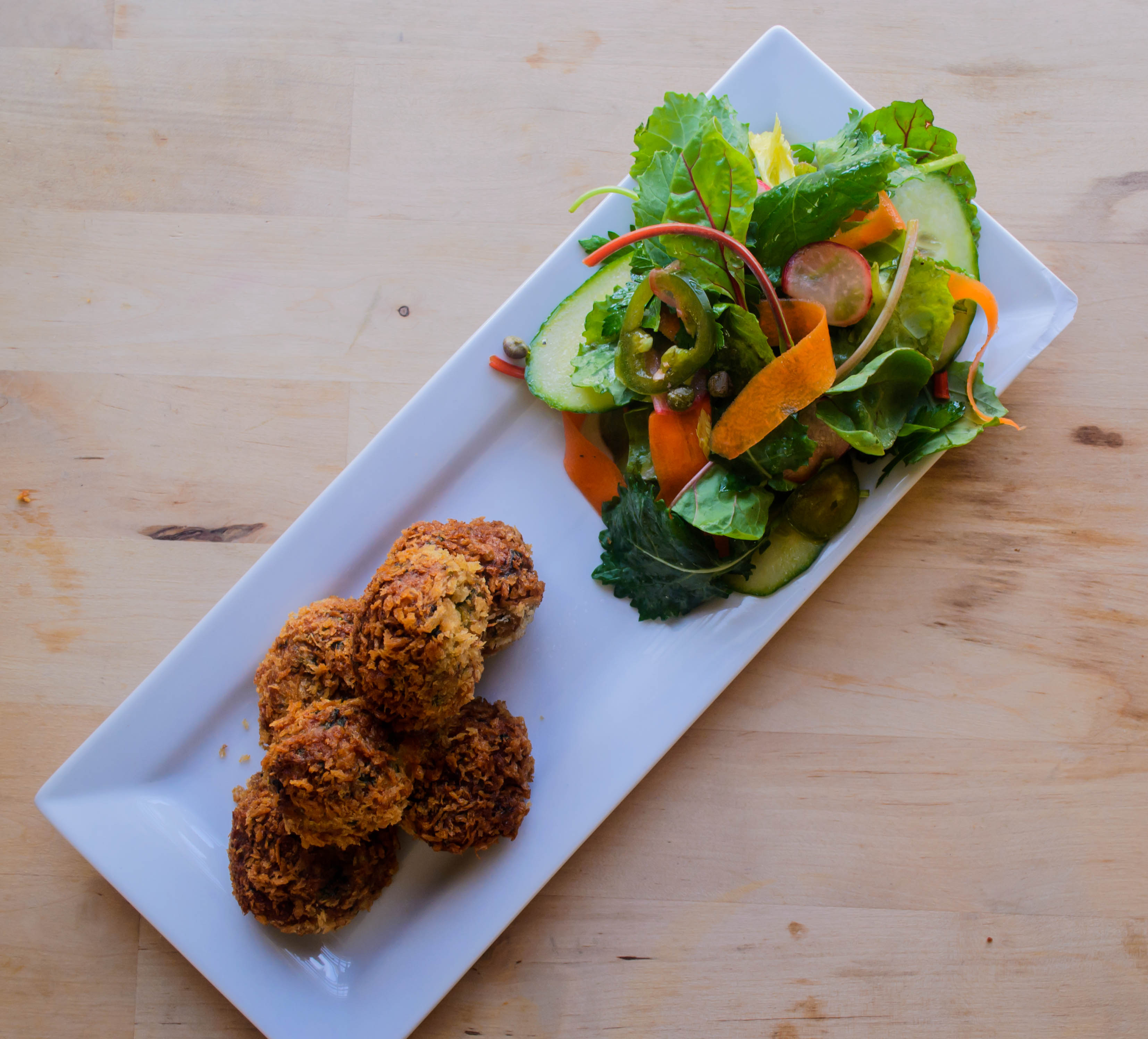
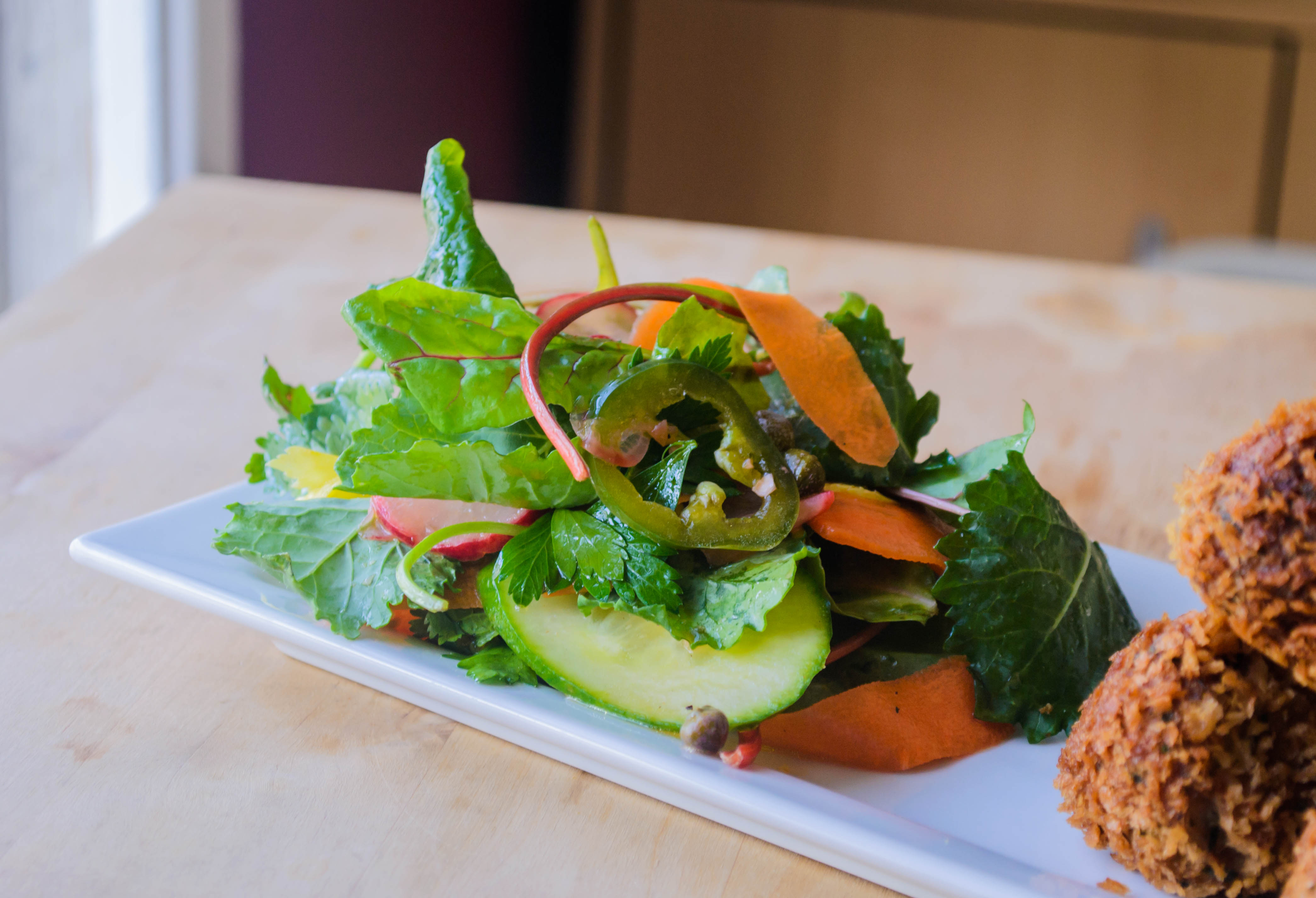
Food blog June 2015-1033What we have here, then, is a salad that announces its summery freshness through bright, grassy herbs and crunchy cucumber, but still clings to the mild crispness of spring with ribbons of carrots and impossibly thin discs of radish. I find herb salads can get almost medicinal on the tongue, so a handful or two of baby greens tempers the sharpness of the herbs and the pucker of the vegetables after a 2 hour lemon juice bath, and brings this closer to what we usually think of as a salad. You could use any combination of greenery, but lately I’ve been obsessing over the “power to the greens” package from Trader Joe’s – baby chard, kale, and spinach, all tender enough that no stem removal is necessary. Add jalapeños, which I’ve put through the pickling process but you can certainly leave fresh, and you have a salad that pairs happily with almost anything.

Food blog June 2015-1048Serving suggestions: I can see this making a perfect base for grilled steak or salmon, with or without the addition of some tangy crumbles of goat cheese. I risked all to have it as a side for last week’s crab and shrimp balls, and though there’s a certain digestive peril to the fried + spicy pairing, hey, that’s what alka-seltzer is for. You could even force this back to its banh mi inspiration roots and stuff it inside a baguette or maybe a pita, with or without a protein accompaniment. In all cases, I’d recommend something sparkling to drink alongside – maybe a crisp prosecco or a hefeweizen with a thick wedge of citrus, or, if you prefer to go alcohol-free, a frosted glass of ginger beer with lime, for an intriguing contrasting spice.
Food blog June 2015-1062

Spicy Carrot and Radish Herb Salad
Serves 2-3 as a side salad
1 cup carrot ribbons (from 3-4 small carrots)
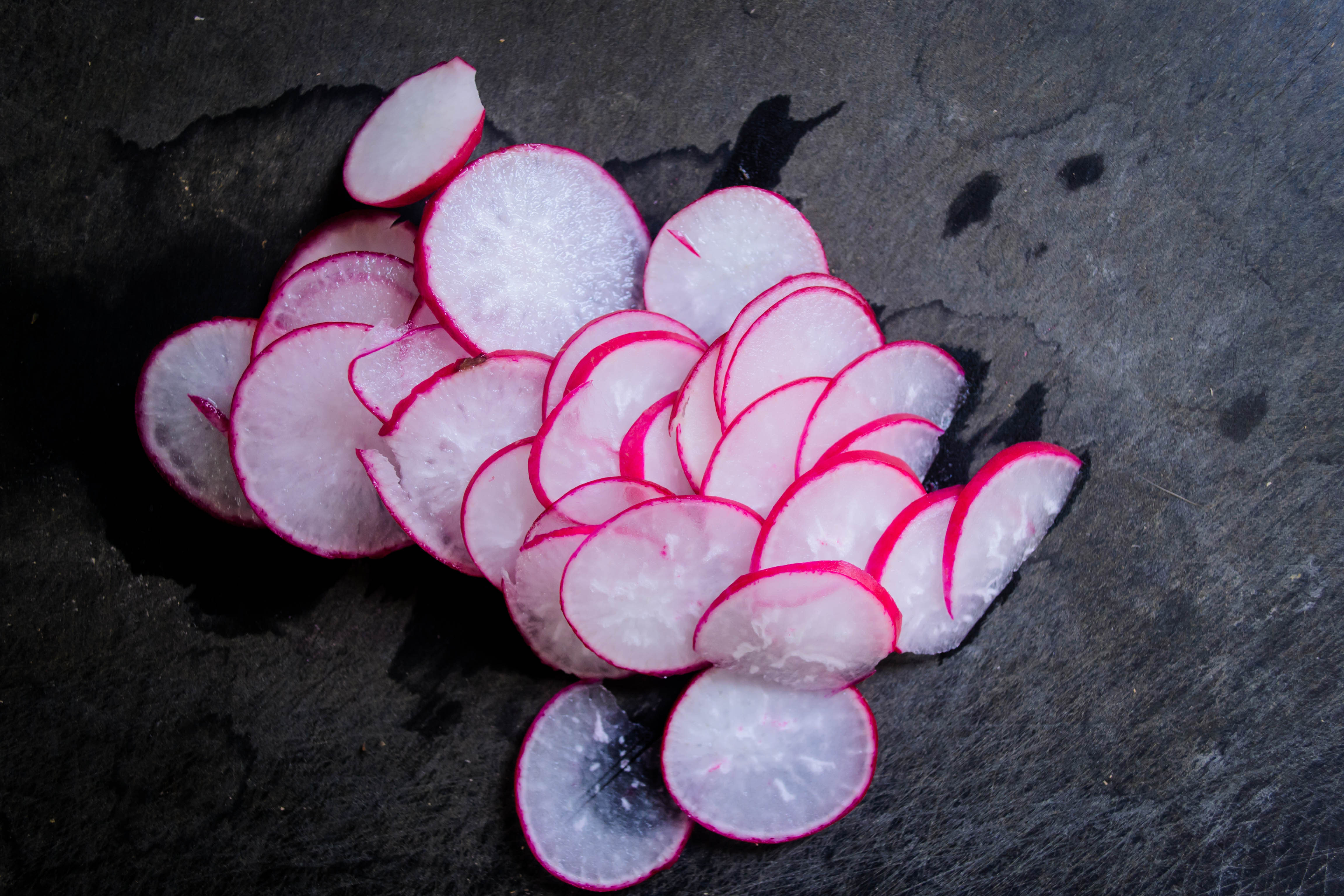
1 cup thinly sliced radish discs (from 5-6 radishes)
8-10 thin slices of jalapeño cut on the bias
3-6 tablespoons lemon juice (see options below)
2-4 tablespoons olive oil (see options below)
salt and pepper to taste
1 tablespoon capers
⅓ – ½ cup thin slices of seedless cucumber, cut on the bias
¼ cup cilantro leaves plucked from their stems
¼ cup mint leaves, torn if large, plucked from their stems
¼ cup parsley leaves plucked from their stems
2 tablespoons tender, pale green celery leaves, plucked from their stems, optional
1 cup mixed baby greens


  • Prepare carrots, radishes, and jalapeño. To make the carrot ribbons, peel carrots, then continue shaving off long pieces with your peeler from one side only. When the carrot gets concave and it’s difficult to make complete ribbons, flip it over and begin the shaving process again. Slice the radishes and jalapeños as thinly as you can or, if you are fancy, use a mandolin slicer (watch your fingers!).
  • For a quite spicy salad: In a large bowl, whisk together 3 tablespoons of lemon juice with 2 tablespoons of olive oil. Add salt and pepper to taste. Add the carrots, radishes, and jalapeños, toss gently to distribute, and allow them to marinate for about 2 hours. They will soften, pickle slightly, and the vegetables and dressing will take on the spice of the jalapeños.
  • After 2 hours and just before serving, add the capers, cucumbers, herb leaves, celery leaves (if using), and mixed baby greens to the bowl and toss lightly to combine. Lift out with clean fingers or tongs, let excess dressing drip off a bit, and position on serving plates.
  • For a moderately spicy salad: In a large bowl, whisk together 3 tablespoons of lemon juice with 2 tablespoons of olive oil. Add salt and pepper to taste. Add the carrots, radishes, and jalapeños and allow them to marinate for about 2 hours. They will soften, pickle slightly, and the vegetables and dressing will take on the spice of the jalapeños.
  • After 2 hours and just before serving, lift the lightly pickled carrots, radishes, and jalapeños out of the bowl and set them aside for a moment on a paper towel. Discard the remaining liquid in the bowl and wipe clean.
  • In the clean bowl, whisk together the remaining 3 tablespoons lemon juice and 2 tablespoons olive oil. Season to taste with salt and pepper. Add the vegetables back in, then gently toss with the capers, cucumbers, herb leaves, celery leaves (if using), and mixed baby greens. Lift out with clean fingers or tongs, let excess dressing drip off a bit, and position on serving plates.
  • For a mildly spicy salad: In a large bowl, whisk together 3 tablespoons of lemon juice with 2 tablespoon of olive oil. Add salt and pepper to taste. Add the carrots and radishes and toss gently to distribute. In another, smaller bowl, combine the jalapeño slices with 1 tablespoon lemon juice and a bit of salt and pepper. Allow all vegetables to marinate for about 2 hours. They will soften and pickle slightly, but the spice will not infiltrate the carrots and radishes as in the above preparations.
  • After 2 hours and just before serving, add the capers, cucumbers, herb leaves, celery leaves (if using), and mixed baby greens to the bowl with the carrots and radishes and toss lightly to combine. Drain the lightly pickled jalapeños from their lemon juice bath and add them to the salad as well, tossing gently again to combine. Lift out with clean fingers or tongs, let excess dressing drip off a bit, and position on serving plates.
  • Serve immediately – salad left in its dressing wilts quickly and loses its crisp appeal.


Green bean and roasted red potato salad with blue cheese

Food blog May 2015-0733As buried in pages as I am, it’s difficult to believe that I’m only one week away from “summer.” Well, four days of class and about 120 mixed papers and exams. This is difficult to bear – something about this semester has been more burdensome than usual. It’s hard to know how to feel when there is so little time but so much work between me and those glorious two and a half months of no work but also no paycheck.

Food blog May 2015-0705As if matching my own cloudy-with-a-chance-of-vacation feeling, our weather lately has taken turns back and forth between what looks like summer and what, for here, passes as wintry. Typically June mornings in Southern California are overcast such that they even have their own nickname: June gloom. We’ve hit this a trifle early, it would seem, with the last week sporting what my officemate helpfully titled “May gray,” and temperatures barely grazing 70F. This is, it would seem, an uncertain entree to summer.

Food blog May 2015-0707Speaking of entrees, let’s talk food. Specifically, let’s talk potato salad. It’s not summer just yet, so it’s a little soon to dive into a platter of mayonnaise-robed spuds shot through with crisp cubes of onion and pickle. But because I surely am not the only one longing for everything a good potato salad represents, this adaptation from The Bon Appétit Cookbook is a perfect compromise. Here, roasted potatoes provide warmth and comfort, all caramelized edges and creamy softness, but a sharp, tangy mustard vinaigrette and crisp-tender green beans push the dish salad-ward.

Food blog May 2015-0711To fill my yen for green vegetables, I’ve doubled the amount of green beans and reduced the quantity of oil from the original. I’ve also eliminated walnuts and changed up the herbs to suit my fancy, and gone with whole grain rather than dijon mustard, because I like the tart pop of the little seeds. This can be eaten at room temperature as well as slightly warm, but because a generous scattering of blue cheese adds a creaminess and funk to the party, you don’t want things too heated, lest melting commence.

Food blog May 2015-0717This is the kind of dish that contents me as an entree. I suspect it would happily welcome a handful of crisp crumbled prosciutto or diced hard salami, if you want a little meaty component. If you’re treating it as a side dish, I highly recommend sausages of any variety to round out the plate, or a nicely roasted or grilled pork tenderloin.

Food blog May 2015-0725As most things are, this was just as good on day two heated up just enough to take the chill off, and topped with a fried egg still runny enough in the yolk to offer a velvet golden cascade that turned the salad into something more like a hash, my own ideal of comfort food. It’s the very thing you need, when you know summer is coming but you can’t quite see the light yet.

Food blog May 2015-0738

Green Bean and Roasted Red Potato Salad with Blue Cheese
Adapted from The Bon Appétit Cookbook
Serves 6 as a side dish
For dressing:
¼ cup whole grain mustard
3 tablespoons white wine vinegar
½ cup olive oil
3 tablespoons finely minced chives
2 teaspoons finely minced sage
For salad:
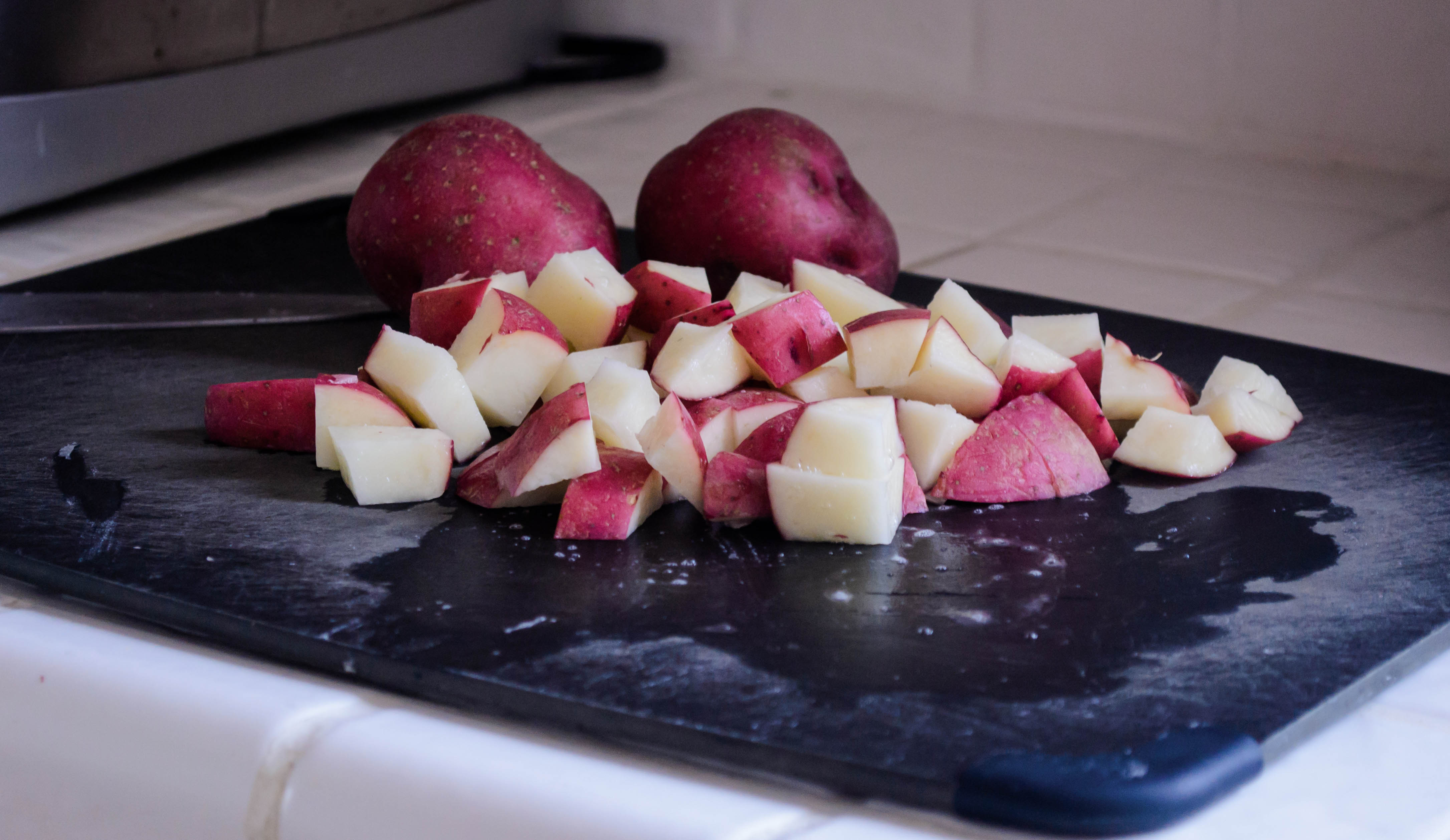
2 pounds red skinned potatoes, cut into 1-inch chunks
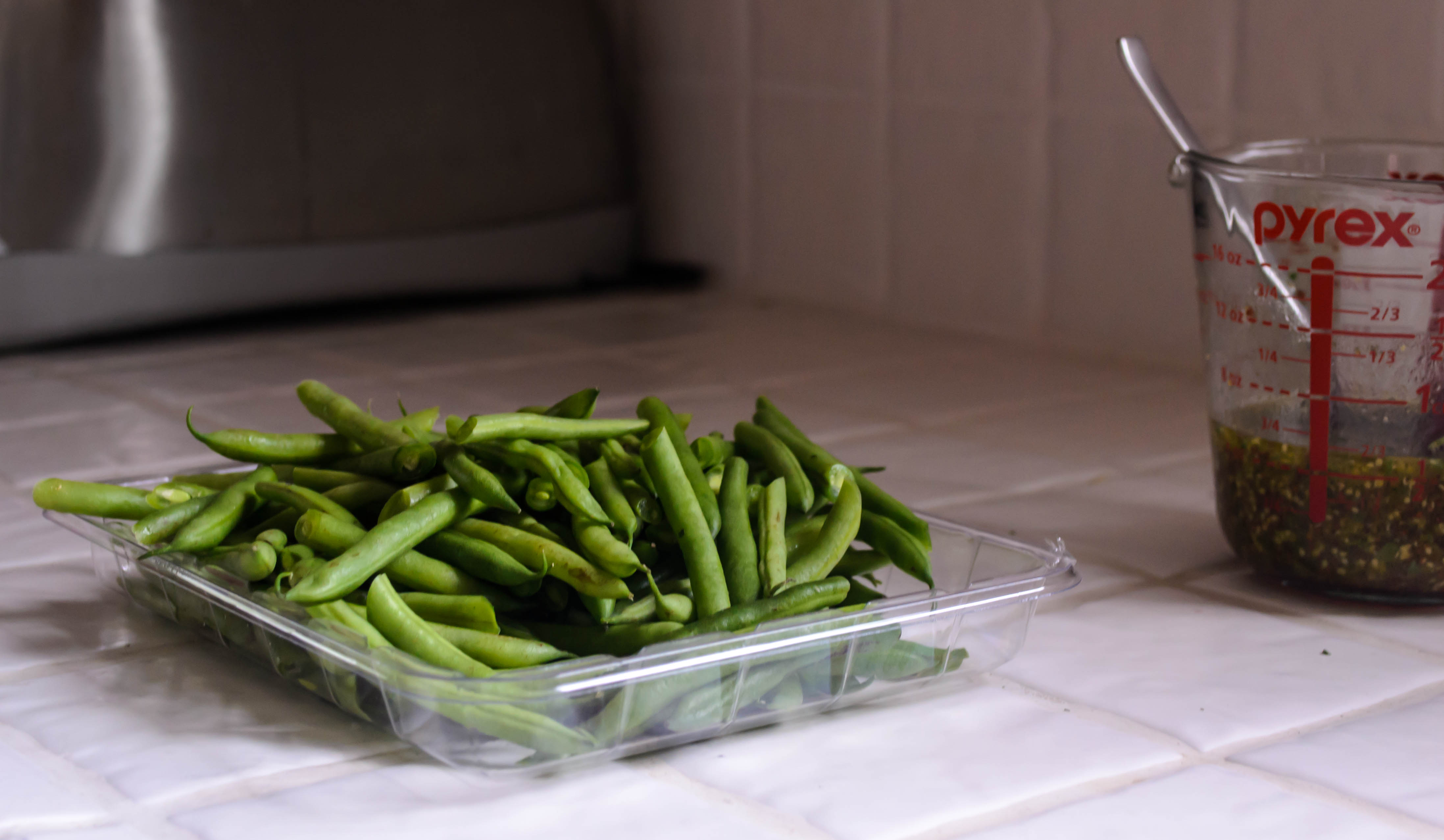
16 ounces green beans, trimmed of stem ends and halved on an angle
⅔ cup crumbled blue cheese


  • For the dressing, combine the mustard and vinegar in a 2-cup measuring cup or a small bowl. Gradually whisk in the oil until well emulsified. Add the herbs and season to taste with salt and pepper, keeping in mind the flavor will be much sharper alone than when it’s coating the salad.
  • Preheat oven to 450F. Toss the potato chunks with ¼ cup of the dressing in a 9×13 inch baking dish. Roast for 20 minutes at 450F.
  • After 20 minutes, reduce the oven temperature to 375F. Shuffle the potatoes around for even browning, then roast 30-45 minutes more, until tender. Stir and shake once or twice during the cooking process to minimize sticking and ensure even cooking. When potatoes are tender, remove from oven and set aside to cool slightly.
  • While potatoes cook, bring a large skillet of salted water to a boil and drop in the green beans. Cook until crisp-tender, 2 to 3 minutes, then drain and cool.
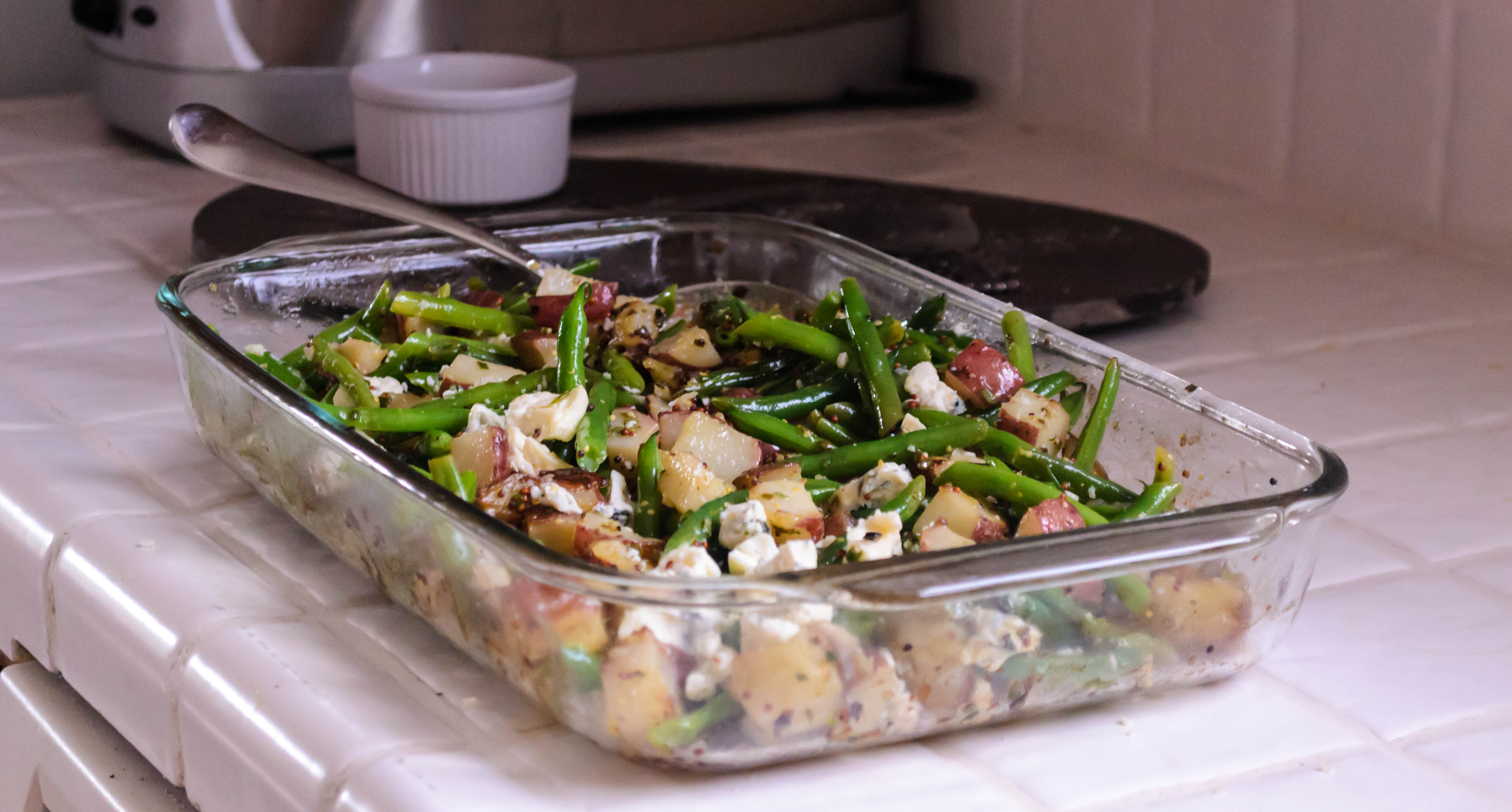
  • When the beans and potatoes are still warm but not piping hot, combine in a large bowl (or just keep them in the original baking dish, as I did), add cheese and ¼ cup of the dressing (you may need to re-whisk the dressing first, as it will separate as it sits), and toss gently. Taste for dressing and seasoning, and adjust to your preferences (I added about 2 tablespoons additional dressing and a bit of black pepper).
  • Serve warm or at room temperature.

Vegetable pickles, three kinds

Food Blog April 2015-0565Not long ago, I finished Cooked, Michael Pollan’s latest, in which he seeks to elucidate the magic of our kitchens. He looks at the transformative power of each of the four elements when applied to ingredients, and works to understand the connections we draw from and through what we eat as it ceases to be raw materials and becomes food. I couldn’t put it down. I tore through it like a fluffy bedtime novel, as my friend S. probably knew I would when she sent me a copy.

Food Blog April 2015-0548In a number of ways, Pollan’s investigation reminded me of my own scholarly work a few years ago when I was a graduate student. Though I was focused on medieval literature, I was intensely interested in what we could learn about human – and not-so-human – beings by examining the literary depictions of how and what they ate. Dietary habits, I thought, along with sexual practices, might be what determines humanness within this field of literature. Too much, too little, or too weird, and your food habits moved you outside what we think of as human, and into something else.

Food Blog April 2015-0546Unsurprisingly, as anyone who has researched food and its cultural impacts deeply knows, this led me to anthropologist Claude Levi-Strauss and The Raw and the Cooked, the first volume of his elaborate, complex exploration of human myth and culture. Without getting too academic, I’ll just say that Levi-Strauss thinks a great deal of the development of culture happens as – and as a result of – foodstuffs transforming from raw to cooked. His analogy equates the wild to the raw, and the civilized to the cooked.

Food Blog April 2015-0549Pollan pulls on and plays with this idea, considering that if indeed cooked food represents culture or civilization, then there must be something about the cooking process itself that is civilizing and bridging. The four elements he examines are aligned with four types of cooking methods: fire explores the tradition of barbecue; water looks at stews and braising; air relates his adventures in the magic/science of bread baking; and earth digs into fermentation, the weird, marginally repulsive transformation of fresh food into pickles, or beer, or cheese – food that is prized and yet impacted by earth and death and rot.

Food Blog April 2015-0552This, too, reminded me of my own work (and don’t worry, we’re getting to the recipe part here soon), particularly an article I ran across as I was working on the Chaucer chapter of my dissertation. Subtitled “The Raw, the Cooked, and the Rotten,” the article took on Levi-Strauss’s nature/culture formulation and added a step to accommodate one of the characters in Chaucer’s The Canterbury Tales. If raw food is wild and cooked food is civilized, what happens when that cooked food goes bad? This seemed to equate to my idea of people who had exceeded the limits of humanness through their eating habits, turning food into waste.

Food Blog April 2015-0557But I was looking at food habits from a perspective of too little as well as too much. What about superhuman beings who survived without eating, or whose bodies remained impenetrable, and un-penetrated, by the eventual corruption of food? I hypothesized making this triangle a square: adding preservation as a fourth corner. Suspended in limbo by sealing oneself against the external corruption consumption and digestion can bring, you remain preserved. This is not humanly possible, but it is not considered with disgust in medieval literature. Rather, such individuals hang closer to the divine than to the monstrous or subhuman.

Food Blog April 2015-0551Though this is not quite the four-some Pollan presents, I think fermentation and preservation have some similarities. In being preserved by their “cooking” process, fermented foods and preserved foods are mysterious blends of human and natural magic. Jams and jellies, preserved by being cooked with sugar, are the sweet side of this equation. Pollan opts to explore sauerkraut and cheese and beer. Today, I’m taking on pickles: simple raw, sliced vegetables transformed, “cooked,” and held in briny limbo by vinegar, sometimes sugar, and salt.

Food Blog April 2015-0559When N. and I got serious, we started using pickles as a metaphor for our relationship. In most refrigerators, there is a jar of pickles shoved way in the back, often on the top shelf, getting in the way of the orange juice and the milk and the mayonnaise. When you finally pull that jar out and peer inside, it’s almost never full. There are one or two pickles in there, floating around in the dill-and-peppercorn-laced brine, warty and sour and beautiful. The ubiquity of that pickle jar became our metaphor. As long as there were pickles in our fridge, we would be okay.

Food Blog April 2015-0560As with most Americans, I would wager, the pickles I was accustomed to when I was younger were always cucumber based, and usually dill (though I am a fiend for bread and butter pickles). I had no real sense that other sorts of vegetables could be pickled (aside from beets, thanks to my Nana) until I started frequenting the McMenamins pubs, an Oregon and Southern Washington chain of sorts featuring decent beer, good burgers, and remarkably slow service. Our little graduate crew went often – there were three different locations in the city of Eugene alone. Their hummus platter, ever present on the appetizer menu, came with a variety of vegetables along with triangles of pita, and often the spears of green bean and carrot, and the occasional nub of cauliflower, were pickled. Of course I had little thought of doing this myself until, chasing after an elusive potato salad that included pickled green beans, I started noticing how expensive these various vegetable pickles were in the grocery store. Recreating that potato salad required pickled green beans, dammit, and as a poor graduate student I was both unable and morally opposed to spending $7.99 on a slender little jar.

Food Blog April 2015-0561Fortunately, vegetable pickles are easy and fall within even a humanities graduate student’s budget. Vinegar, sugar, and a healthy shower of salt, heated to a simmer to dissolve the crystals. Jam as many vegetables as you can into a jar, shove in some flavoring agents: bay leaf, mustard seeds, dill, fennel, and pour on the vinegar. Cap, relocate to the fridge, and remember them a few days later when they’ve had a chance to sour up.

Food Blog April 2015-0562Vegetable pickles seem entirely suitable for the season. Fresh, young vegetables are great for pickling, especially while they are still small in size, so the vinegar can penetrate faster. Slender carrots, or plump radishes, or the tiny lanterns of young peppers, are a sign of spring that is often gone too fast. Pickles, though, hold that spring forever, jarred and capped and safe on the top shelf lurking behind the orange juice. Though they are not unaltered – the raw crispness is indeed transformed – in that way too they are like a spring gone by, or perhaps the memories of that spring that remain. It’s not that perfect, warm day anymore, but you remember its brightness – you need only uncap the jar and fish out a crisp briny souvenir.

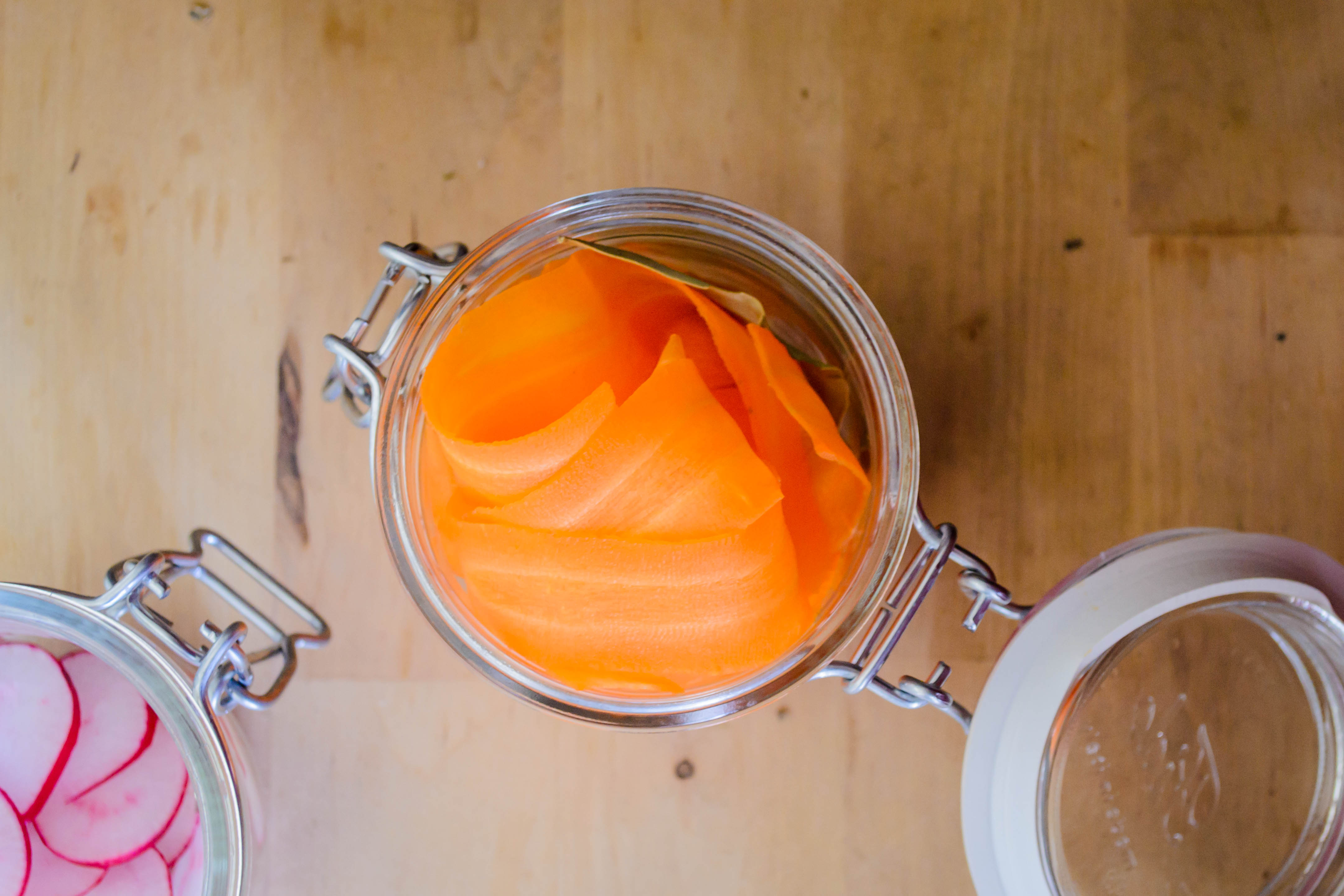
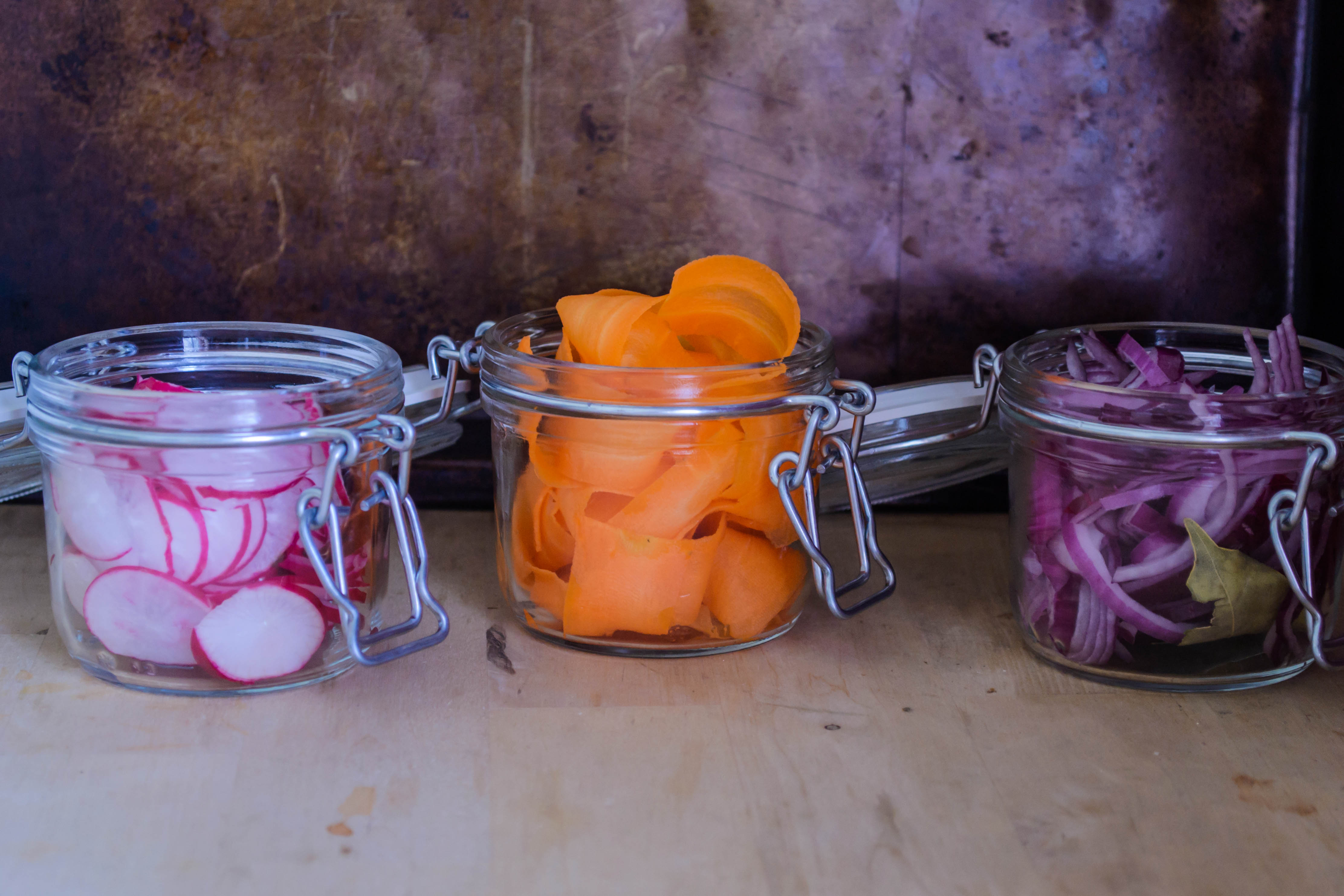
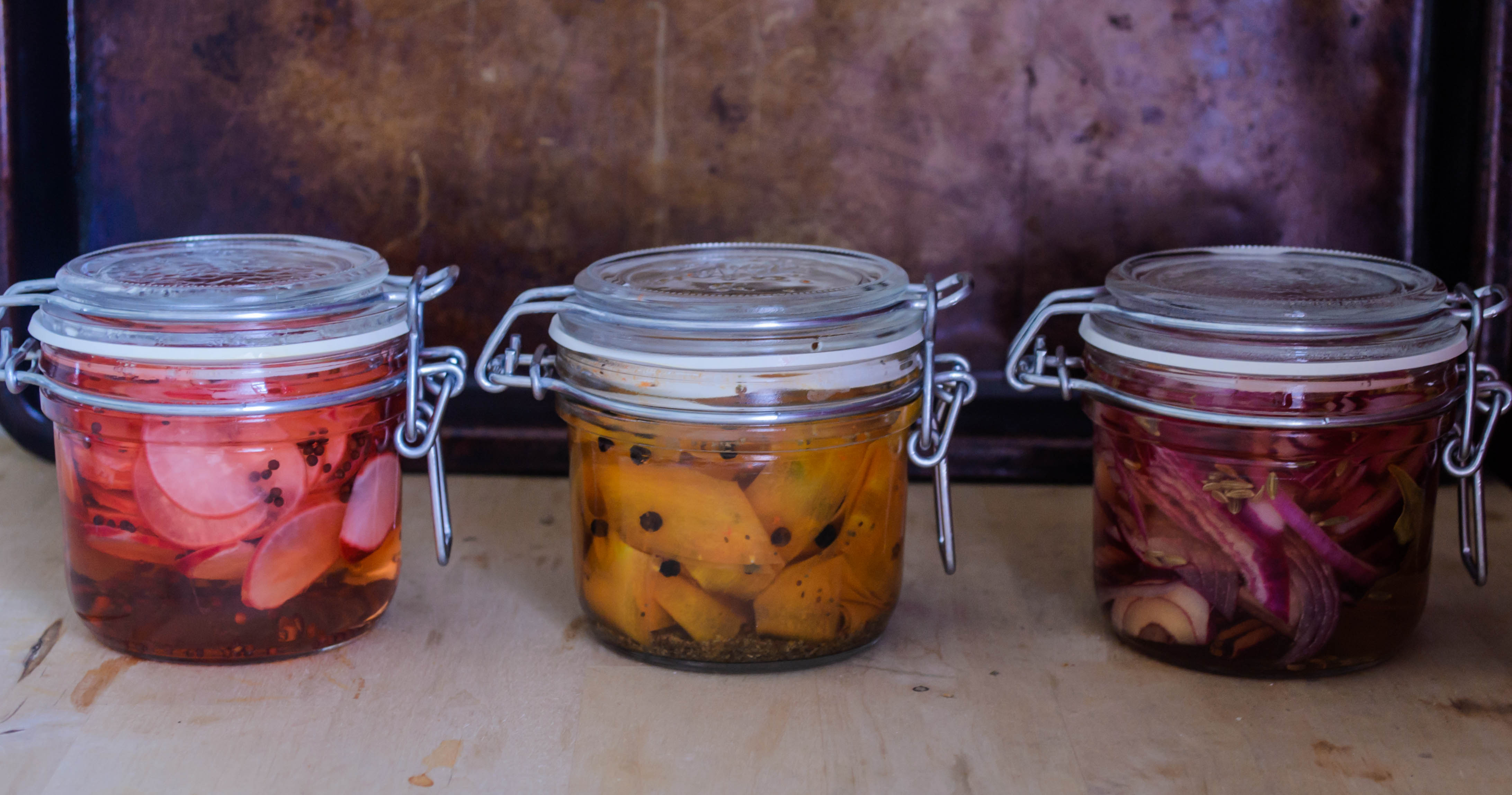
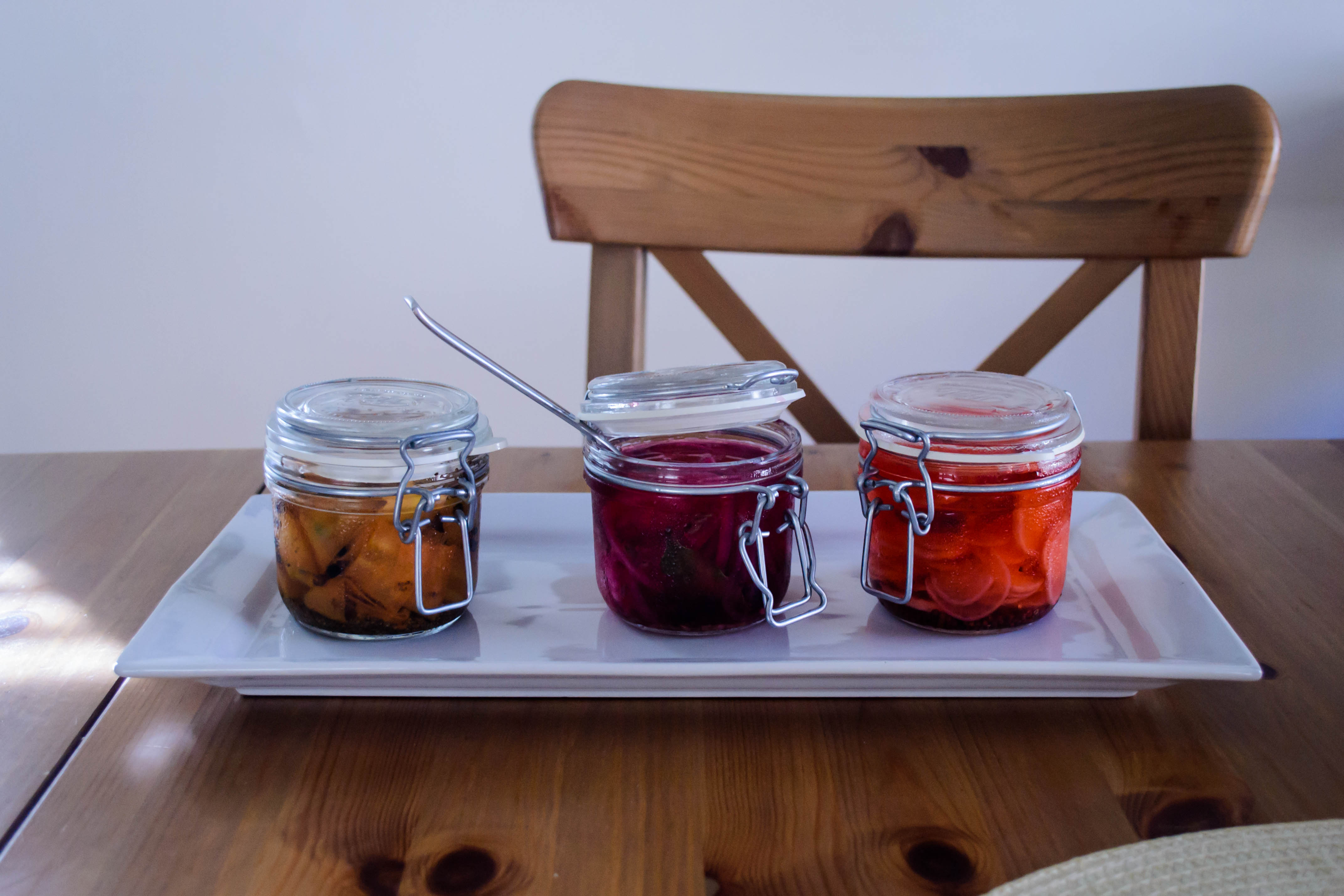
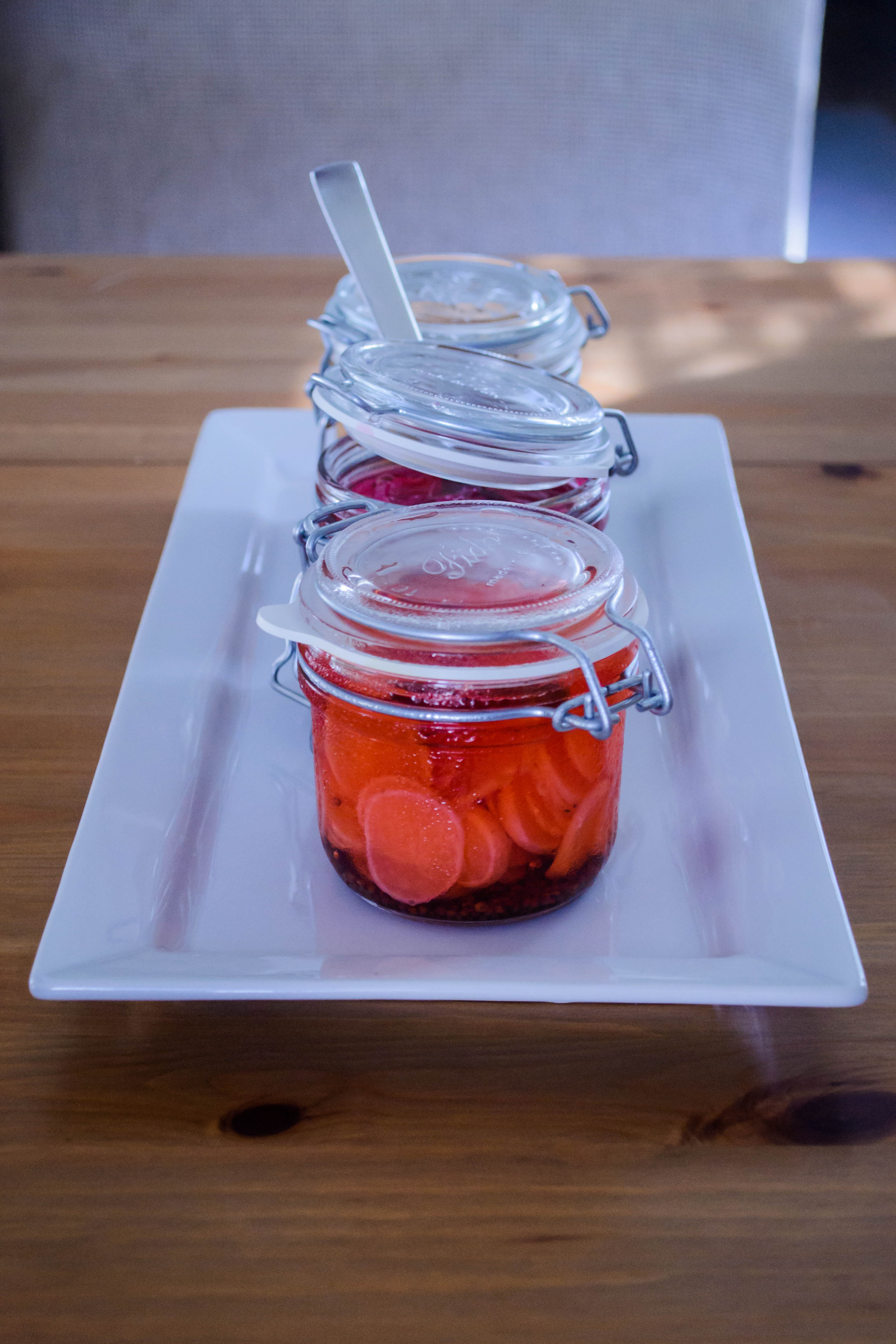
Food blog April 2015-0616I’ve done three types of pickle here: onion, carrot, and radish. Each is seasoned with a different combination of spices, and because I like to be fancy, I’ve used a different variety of vinegar. The radishes, I must admit, are my favorite. To play on their peppery flavor, I’ve added mustard seeds and a dried chili, but teased them as well with a heaping helping of sugar for the sweet-hot kick.

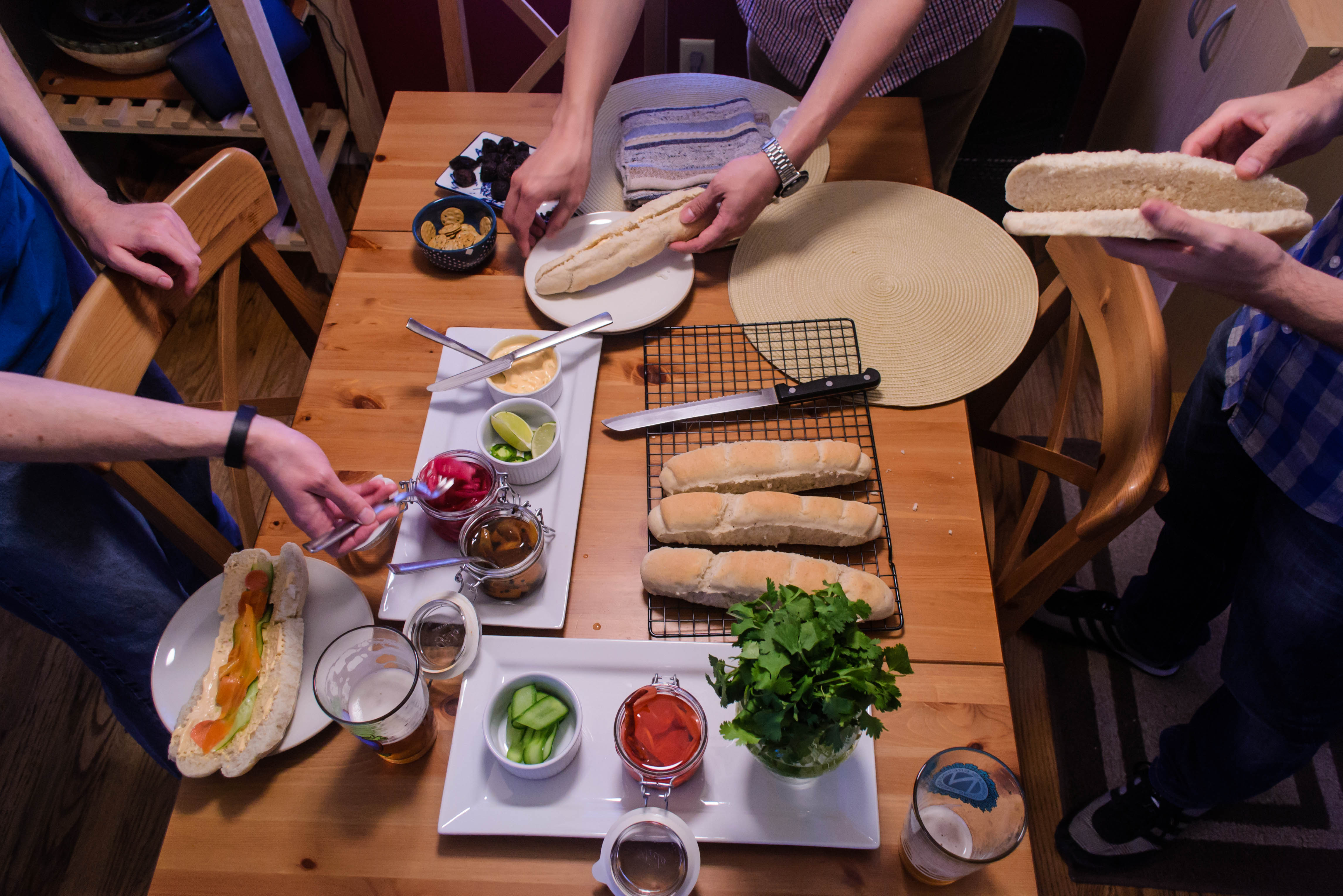
Food blog April 2015-0634While these are lovely in salads, as part of a cheese or hummus plate, or just bright and sour on a fork, they are dynamite on a sandwich. And as the above photo suggests, it is on a sandwich that they found their sprightly home for us. Specifically, on a banh mi sandwich, that fresh, crisp Vietnamese invention. Even more specifically, on the idea that spawned my whole 2015 project: a banh mi-tball. There are essentially three components to this sandwich. These pickles are the first. Next week we’ll look at the bread (the true banh mi), and in the third and final installment, pork meatballs awash in aromatics, simmered in a miso-spiked broth I wanted to drink all on its own.

But for the moment, let’s just revel in the transformative magic of pickles. You’ll need the week for them to get good and sour before you can properly enjoy the sandwich anyway.
Food blog April 2015-0619

Refrigerator Vegetable Pickles
My jars held 6 ounces (¾ cup), so these measurements are keyed to that.
Carrots:
carrot ribbons from 1 carrot to fill jar (use a vegetable peeler to create long strips)
⅔ cup white wine vinegar
2 teaspoons celery seed
2 teaspoons kosher salt
2 teaspoons sugar
1 teaspoon whole black peppercorns
Sweet/hot Radishes:
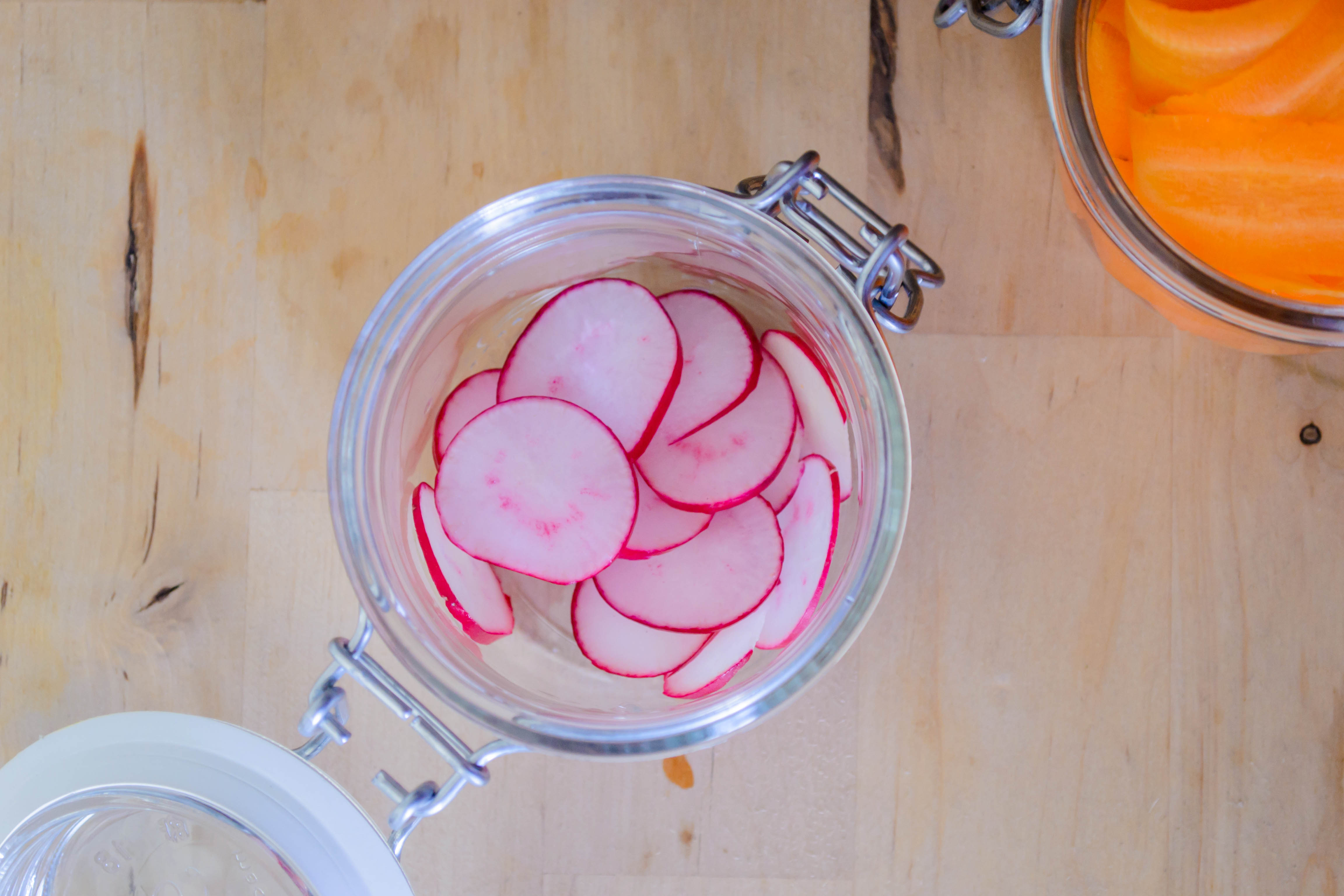
thinly sliced radishes to fill jar
1 small dried chili pepper
scant ⅔ cup rice wine vinegar (unseasoned)
2 teaspoons salt
4 tablespoons sugar (¼ cup)
2 teaspoons black mustard seeds
Onions:
thinly sliced red onion to fill jar
1 bay leaf
⅔ cup cider vinegar
2 teaspoons salt
2 teaspoons sugar
1 teaspoon fennel seed
  • For each: fill a heat-safe, lidded jar with vegetable slices (add chili or bay leaf, in the radish or onion case, respectively).
  • In a small pot, combine vinegar, salt, sugar, and other spices. Heat over medium-high, stirring occasionally, until liquid reaches a rolling boil and salt and sugar have completely dissolved.
  • Carefully, pour vinegar mixture over vegetables in jar until full. Gently push vegetables into liquid if needed – they will want to float.
  • Close jars tightly and refrigerate until vegetables are pickled to your liking – at least 2-3 days.

Mushroom Kale Quesadillas

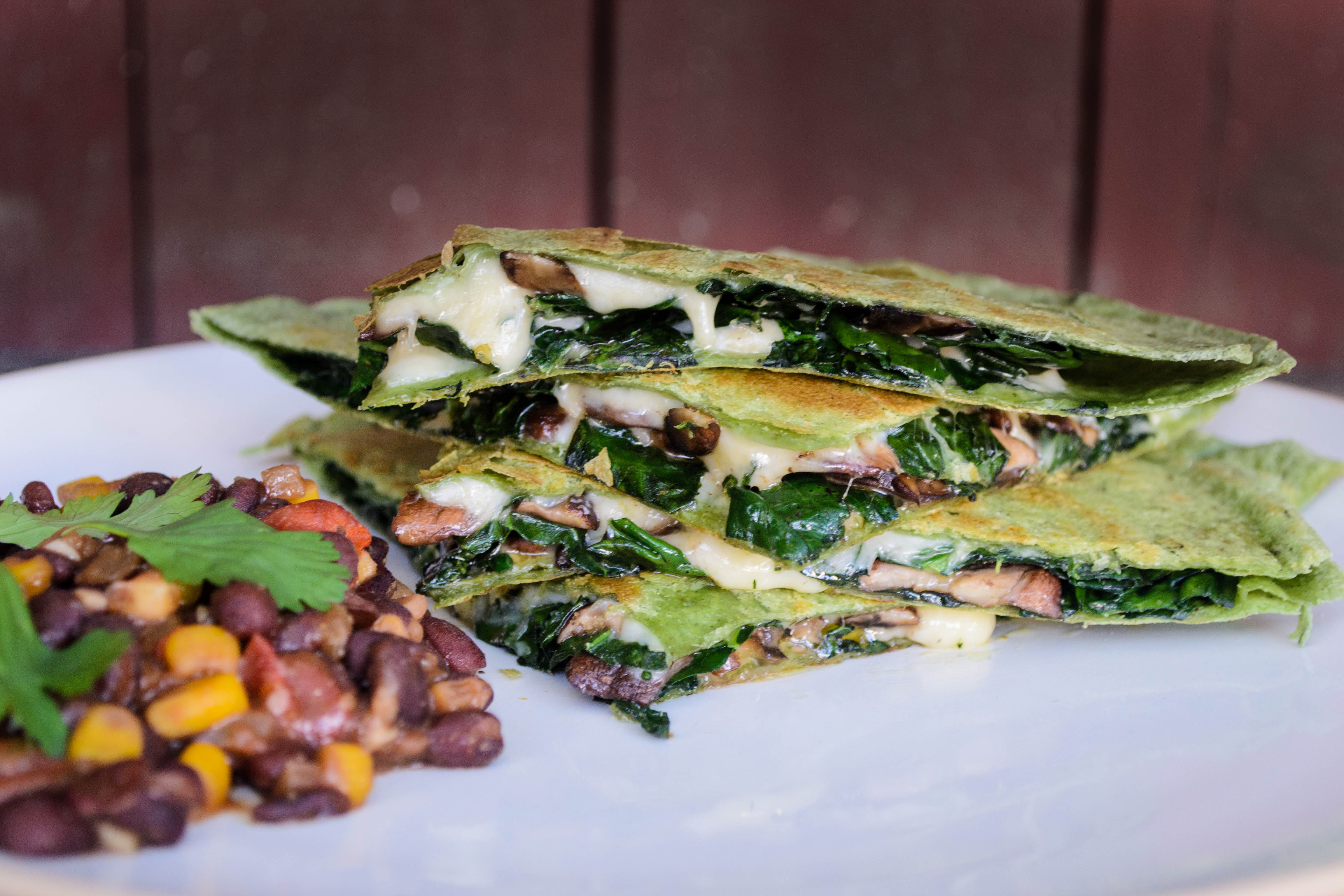
Food Blog March 2015-0538Because I have the habit of wanting to impress you, the simple, day-to-day dinners I make often don’t end up here because they don’t strike me as “blog-worthy,” as I’m fond of saying. But much as I want to blow you away all the time, this is a silly habit. The point is not over-the-top impressive, outrageously original, faultlessly styled plates. At least it shouldn’t be. The point is good food. And yet because I get sucked in by things like Pinterest and Tastegawking and Foodspotter and vice versa, we had these mushroom kale quesadillas three or four times in a month because they were so damn delicious I couldn’t stop thinking about them before I realized they might be something I should share with you. Even though they are simple. Even though they are just quesadillas.

Food Blog March 2015-0533Because, seriously? Mushrooms. Kale. Cheese. Toasted tortillas. What a combination! Quesadillas are, weirdly enough, a kind of touchstone for me. If I wrote one of those memoir/cookbook mash-ups, a quesadilla would have to find its way in there somewhere, because when I stop and think about it for three seconds, my life contains a number of memory-charged quesadilla incidents. Example: when my family moved from Southern to Northern California shortly after I graduated from high school, some of the first ingredients in our new fridge were tortillas, cheddar, and salsa. As my mom unpacked the kitchen and the movers unloaded box after box after box from the massive truck into our new garage, we realized the morning had wasted thin and we were starving. Cue Chelsea at the stove with a skillet and spatula rinsed free of box dust seconds ago, flipping quesadillas. They weren’t magnificent, because they were just cheddar folded inside a flour tortilla, but when the cheese melted and sizzled out the sides, and the fat hidden in that deceptively dry flour tortilla browned in huge freckles all over the surface, no one wanted anything else for lunch, including the movers. We used up the whole package of tortillas and most of the cheese, but it was nice to watch everyone unfolding the fried half-moons and pouring liberal doses of salsa over the molten orange goo inside.

Food Blog March 2015-0527Quesadillas are best when you don’t think about them too much. What I mean is, they are best when they contain a quantity of cheese you’d rather not cop to. During our second year of living together, my college roommate K. wondered briefly why she liked my quesadillas so much more than hers. Part of it was undeniably the fact that food tastes so much better when someone makes it for you. But part of it, we determined, was that I used more cheese than she did. Great blocks of monterey jack sacrificed themselves to feed our quesadilla longing, and K. placed me permanently in charge of quesadilla production, as long as I never told her how much cheese I was folding inside. In those days, we upgraded from spooning a scoop up jarred salsa inside to smashing a velvet green half of avocado over the top, and maybe a luscious scoop of sour cream. These lunches were probably, now that I think about it, the base of much of my weight gain that year (the post-break-up pints of Godiva ice cream were likely the other culprits). But in retrospect, my “sophomore sixteen” is so much less important than how good those quesadillas were with their different kinds of softness and the crisp, almost oily tortilla in between.

Food Blog March 2015-0523Food Blog March 2015-0525Though I’m still on board with a simple monterey jack quesadilla with avocado, guacamole, or salsa of any kind smeared over the top, I gradually realized quesadillas could also be employed to funnel vegetables into us. I don’t skimp on the cheese – no sense forgetting what I’ve learned – but now I jam in layers of corn or spinach or, in this version, thinly sliced mushrooms pan roasted until golden and almost crisp, folded together with torn leaves of kale barely wilted with some olive oil and salt. In quantity, cheese is non-negotiable, but the variety you mound on is a personal choice. I’m partial these days to pepperjack for that lovely extra kick, but regular, dependable old monterey jack, or a combination of jack and fontina or gouda would also be glorious. Here I’m using spinach tortillas in a combination vain attempt to make these seem healthier, and because I just dig the flavor, but you could use plain flour tortillas, or even corn, though they will obviously require less filling.

Food Blog March 2015-0528I’m not going to make the claim that these quesadillas will turn a mushroom and kale hater into a mushroom and kale lover, because we’re really not hiding the vegetables; we’re celebrating the way they complement the cheese and toasty tortilla. But they might turn a mushroom tolerator into an almost-fan, and someone who is tired of kale might find in them a gasp of fresh breath. And they will without question provide you with a quick, delicious dinner item that is absolutely perfect with a side of these beer braised beans.

Food Blog March 2015-0540

Mushroom Kale Quesadillas
Serves 2 as a main dish, 4-6 as an appetizer
2 tablespoons olive oil
16 ounces crimini mushrooms (1 pound)
5-6 ounces kale, tough stems removed
2 cups monterey jack or pepperjack cheese, or a mixture of soft white cheeses
4 burrito size tortillas (I like the spinach ones)
  • Heat the 2 tablespoons olive oil over medium heat until glistening. Add the sliced mushrooms and sauté over medium for 8-10 minutes, until they are nicely golden and some are barely crisp.
  • Add the kale to the cooked mushrooms and sauté for another 3-4 minutes until barely wilted but still bright green; season with salt and pepper if desired. Remove from heat and set aside to cool slightly.
  • To build the quesadillas, lay out the bottom tortilla and scatter ⅔ cup of the cheese evenly across it. Add half the mushroom and kale mixture, then scatter ⅓ cup of cheese on top of the vegetables. Top with the second tortilla. This construction – cheese, vegetables, cheese – holds in the vegetables because the cheese melts on both sides of them, binding them inside. This makes for easier, cleaner flipping.
  • Cook the quesadilla in a dry pan (I use the same one I cooked the mushrooms and kale in, just wiped clean with a paper towel) over medium to medium-high heat until the bottom tortilla is nicely browned (or slightly charred, if you like that), and the bottom layer of cheese is well melted; 3-4 minutes. Flip and repeat.
  • While the first quesadilla cooks, build the second one as described above.
  • When both sides of the quesadilla are nicely browned and crisp, remove from heat. Wait 1-2 minutes before slicing to avoid losing too much cheese. Repeat with second and all subsequent quesadillas.
  • Repeat with second and all subsequent quesadillas.
  • To serve, cut in quarters (or smaller wedges) and offer with guacamole, sour cream, salsa, or just bare and crisp and oozing and perfect.