 After a few scrapped drafts of this post, both on the computer and in the kitchen, I’ve decided it’s basically a food representation of “To a Mouse” by Scottish poet Robert Burns. Though the title may not ring familiar, it contains perhaps the most famous – or at least well-known – line of his whole oeuvre: “the best laid plans of mice and men gang aft agley” or, if you’re not adept in 18th century Scottish diction, “often go awry.”
 Things go awry. They just do. In this case, the inspiration, the trial run, the ingredient acquisition, and even the writing itself (there are two previous drafts of this post in my trash can that I never want to see again), all caused enough problems that this post almost didn’t happen.
 But I’m getting ahead of myself. Let’s back up to bourbon. Through a conversation with a friend and former colleague on Facebook, I assigned myself a project: she said she’s been experimenting with bourbon dessert sauces, and wanted tips. In particular, she’s interested in a bourbon vanilla sauce that would be good served over ice cream and peaches. There had been texture and thickness and sweetness imbalances along the way, and I was immediately hooked on the challenge.
 For the next month I took this sauce through a ridiculous number of mental transformations – at first it was going to be a riff on this nutmeg sauce, then it was going to be more like a caramel, and then it was going to be akin to a crème anglaise, thickened with egg and carefully tempered. Never mind that pouring what is essentially unfrozen, unchurned ice cream over a bowl of ice cream seems excessive.
 The crème anglaise plan, though, went awry, as you might have suspected. I crawled out of the kitchen leaving behind a bowl of curdled weirdness that had used up the last few tablespoons of bourbon in the house and refused to think about it for a few days. It wasn’t an eggs scrambling problem. It was a two-fold issue, I think, of poorly managed temperature differences, and the fat in the sauce not getting along with the quantity of alcohol I added.
 When I tried again, the sauce had, again, transformed. Now, in a house with limited air movement, during a patch of quite warm weather, as the sun slowly dripped across our roof, sauce seemed too fast-moving. As if echoing my own sluggishness in my appetites, I wanted something thick and smooth to dollop atop a piece of fruit. And I wanted it to be ice cold.
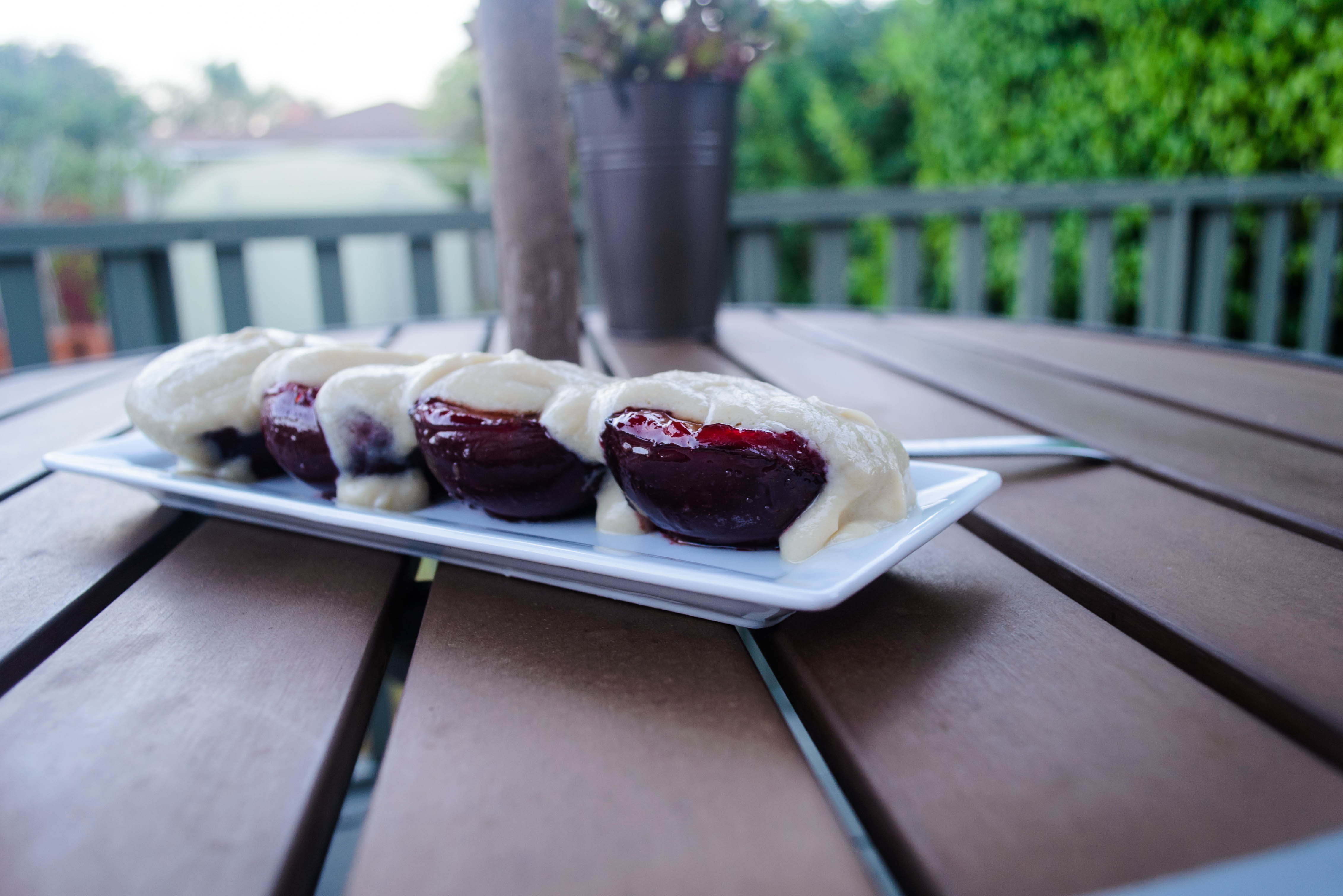
 So I ended up with a pastry cream. This is not a sauce, B., even though that’s what you were after. It’s not particularly easy or quick, and it’s almost not even pourable. What it is, though, is rich, and cold, and thick, and strongly bourbon-y (so make sure you choose one you like!), and magnificent draped thickly over whatever stone fruit you happen to have. It’s also a good option for entertaining, because once it has been cooked it needs to chill for a few hours, which makes it very easy to casually slide it out of the fridge, spoon it thickly over a row of grilled or pan-roasted plums, or peaches, or apricots, and sit back down again before your guests really registered you were “making” dessert.
 This, then, seems an apropos message for the week before the semester starts up again: things go wrong. They are going to go wrong. And then you have to decide what you’re going to do about it and work it out. So if you’re expecting hiccups, and imperfections, and requisite second takes, you’ll likely be calmer and cooler in the long run. Not a bad state of being in a heat wave or a first week of school. And if we’re being absolutely honest, having a new bottle of bourbon in the house during that week is not a bad state of being either. Just in case.

Bourbon Vanilla Pastry Cream over Pan-Roasted Stone Fruit
Makes 2 – 2½ cups of cream
For the pastry cream:
2 cups half and half or 1 cup cream and 1 cup milk
¼ cup + 2 tablespoons bourbon, divided
Pinch of salt
½ cup sugar, divided
4 egg yolks
3 tablespoons cornstarch
1 tablespoon vanilla
2 tablespoons cold butter
For the roasted stone fruit:
1 whole plum OR ½ a peach OR 2-3 apricots per diner
1 tablespoon raw sugar per diner
Pinch ground black pepper, optional (best on plums, I think)
2 tablespoons butter
- To make the pastry cream, heat the half and half (or milk and cream mixture), ¼ cup of the bourbon, 6 tablespoons of the sugar, and the pinch of salt in a small saucepan over medium heat. Bring it to a bare simmer. We don’t want it to reach a full boil.
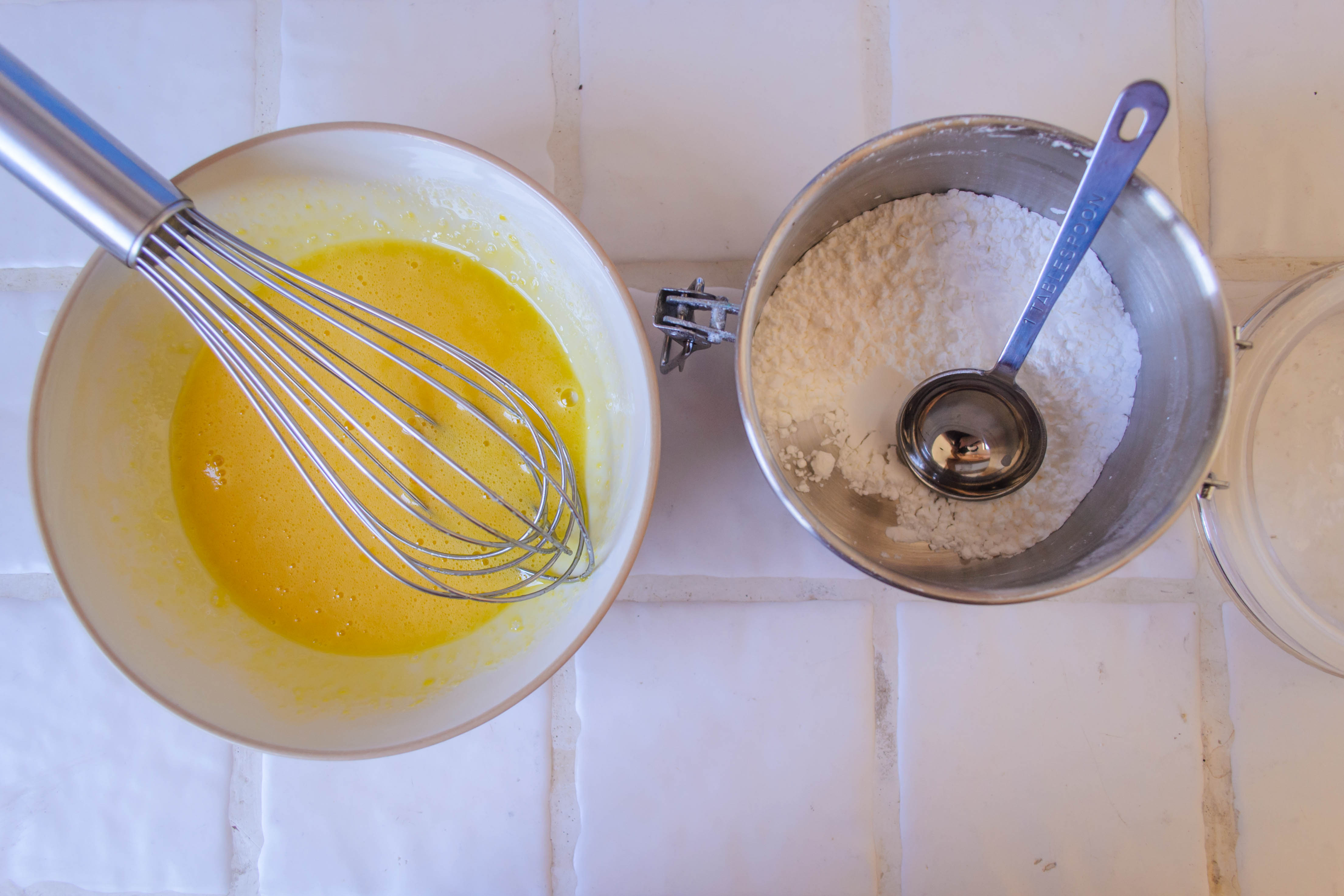
- While the liquid mixture warms, whisk the egg yolks together with the remaining 2 tablespoons of sugar in a small bowl. Beat well until you can no longer feel any graininess from the sugar.
- Whisk the cornstarch into the yolk and sugar mixture until all powder is gone and the mixture becomes thick and pale. It will take on a texture like melted ice cream.
- When the milk mixture has come to a simmer, remove it from the heat and dribble about 2 tablespoons of it into the yolks, whisking furiously and continuously. This tempers the egg yolks – that is, heats them up just enough so that when they are added to the pot, they will be less likely to scramble.
- Now, take a breath and a firm hold on your whisk, and pour the yolk mixture into the pot of milk, whisking continuously. Place the pot back over medium heat and continue to whisk until the mixture returns to a simmer. It will quickly become very thick – a bit like slightly diluted mayonnaise in texture – and take on a glossy sheen. The occasional big, sluggish bubble might emerge.
- Once the mixture simmers, remove it from the heat and add in the vanilla, the remaining 2 tablespoons of bourbon, and the cold butter. Whisk continuously until the butter has melted in and everything is combined.
- Pour the hot pastry cream through a fine sieve or mesh strainer into a bowl. Stir and push through with a spatula to catch any solid bits of egg or other unwelcome textural imperfections.
- Place a piece of plastic wrap directly against the surface of the hot pastry cream (this prevents it from developing a “skin” across the top) and deposit it in the refrigerator until well chilled. The finished product will be approximately the thickness of mayonnaise.
- When dessert looms near, prepare the fruit. Cut each fruit in half and twist or cut out the pit. Set halves cut-side up and sprinkle the exposed flesh with the raw sugar, using about 1 tablespoon per serving (so if you’re serving peaches, you might want less fruit per person than if you’re serving apricots. Either way, evenly distribute 1 tablespoon of sugar per serving over the halves of fruit). Sprinkle on the pinch of black pepper, if using.
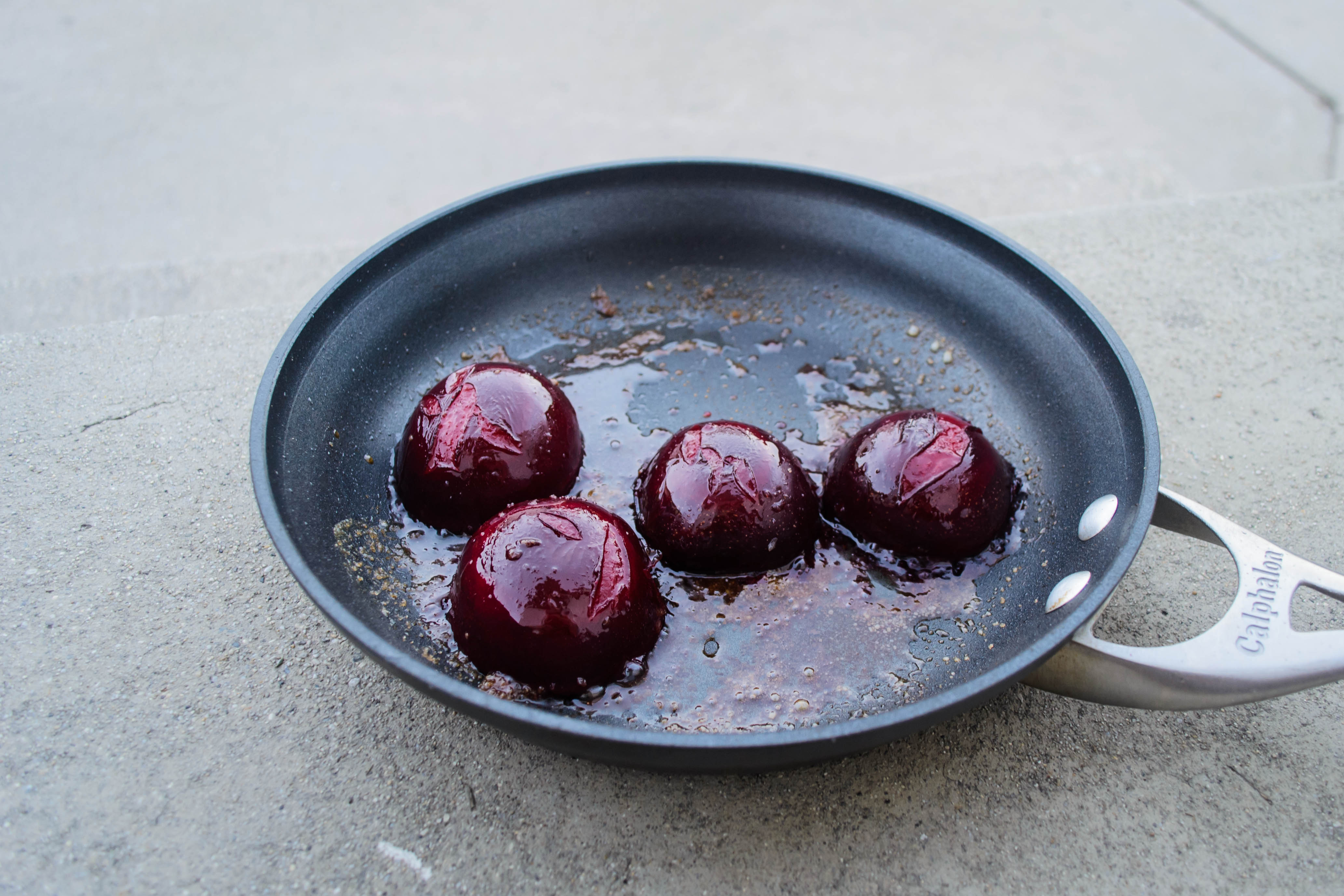
- Heat the butter over medium-high heat in a skillet large enough to accommodate all of the fruit halves. When it sizzles, add the fruit, cut-side down, and let it cook undisturbed for 2-3 minutes, until the sugar is well melted and has caramelized into the fruit.
- Flip the fruit over so it is cut-side up and cook another 2 minutes, until the skin wrinkles and tears a bit. This will result in fruit that is warmed through, but still firm to the bite. If you like your fruit softer, cook a few minutes longer or cut into smaller pieces.
- To serve, position the fruit cut-side up on a plate, and dollop on a few spoonfuls of the pastry cream. If you go back for seconds, consider letting a friend drive you home.





 "blackberry-eating in late September"