Roast Chicken, part III

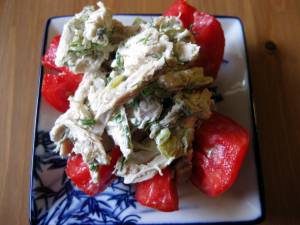
With one delicious dinner out of the way and several quarts of stock safely frozen, I used the remaining chicken (the bits I could save; N. kept snacking on succulent pieces straight from the refrigerator!) to make one of my all time favorite summer dinners.  With two more big heirlooms ready on the vine, I made a simple chicken salad from the roasted leftovers.  I shredded up the chicken into bite-sized chunks with my fingers, then added just the necessities.  Well, mostly just the necessities.  A creamy spoonful of mayonnaise.  Finely chopped dill.  Julienned yellow pole beans from our garden that I’d lightly steamed.  A handful of mixed chives and green onions, diced up.  Salt and pepper to taste.

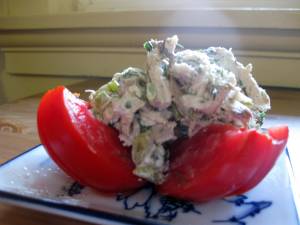
Cut the tomatoes ¾ of the way through so that eight thick, juicy slices hang together by half an inch or so at the bottom, but begin to pull apart, leaving a perfectly ripe, red vessel for the chicken salad.
IMG_1790

Pile it up good and high.

Sometimes for presentation’s sake, I place the tomato atop a ruffled piece of butter lettuce.  Sometimes I don’t.

Then I eat it.
IMG_1786

Roast Chicken, part II

With the falling temperatures and rising rains of autumn comes another unfortunate event.  Well, it’s unfortunate in the sense that it interrupts me from my otherwise regularly schedule internet time.  So that means it’s unfortunate for the regular updating of this blog, because I stop posting.

School.

We’re in the middle of the third week now, and this is the first time I’ve really had the chance to sit down and get back to the story.  It’s all being sitting on the back burner up until now.  Which is oddly appropriate, given our current topic.

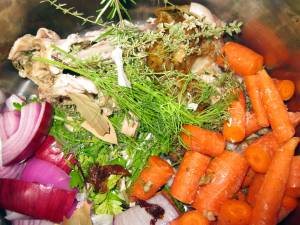
You’ll remember that when last we met, my first roast chicken had been liberated of meat.  The carcass itself I lowered into my gigantic gleaming aluminum pasta pot.  I added roughly chopped red onion chunks and quartered carrots.  Then I tossed in a liberal mix of herbs: thyme, sage, parsley, rosemary, dill, two or three bay leaves, and a small cupped handful of black peppercorns.  I finished by cracking a head of garlic and strewing several cloves, paper wrapped still, around the carcass.  I added probably twelve cups of water, and lidded the whole pot up to simmer for two and a half hours.

IMG_1770

When I strained out the bones and wasted vegetables, I was able to pour ten cups of rich, buttery-colored stock into my largest Tupperware.  At Ina Garten’s helpful suggestion courtesy of the Food Network website, I stowed the container in the fridge overnight, and was rewarded the next morning by a thick layer of fat across the top of the broth, which I scooped off before portioning out the golden liquid into smaller amounts in freezable containers.  Though I will not use it for everyday applications that only call for a cup or half a cup of broth, now I will have homemade chicken broth for clear soups and risottos.  You can bet that if this roast chicken obsession continues, I will need to start saving every lidded container that goes through my kitchen.  Scrubbed and labeled, yogurt and cottage cheese containers alike will be homes to ice-crystalled, rock hard pints of lovingly simmered stock.  C’mon, winter cold, I dare you to take on my broth base.