Chicken’n’chutney

We’ve become huge fans of roast chicken this year. I rub a mix of herbs, salt, pepper, garlic, lemon zest and olive oil under its skin, and stuff it full of the same herbs, a few cloves of garlic, and half a lemon. The lemon is, I think, the secret weapon. It gives the finished meat a really nice light suggestion of citrus. I’ve also started creating my own rack in the cheap metal rectangular baking pan that subs in for a roasting pan in my kitchen: on Kelsey Nixon’s suggestion, I make a triangle in the bottom of the pan out of a few carrots, a few sticks of celery, and a halved onion. This gives the chicken a nice platform to sit on so it doesn’t steam in the juices it exudes. Plus, I like to think the extra vegetables impart a nice, delicate flavor into the meat as well. (Plus plus, the vegetables roast down and caramelize in the chicken fat and juices, and you can extract them from the pan and gobble them as an extra veggie with your dinner, as you can see I’ve done with the carrots below. Their skins maintain the tiniest resistance to the teeth, and they taste like all the goodness of chicken skin, but really you’re just eating a roasted carrot!) I roast breast side down, always, to keep the white meat as juicy as possible. I’ve done this vegetable trick with our Thanksgiving turkey the last two years as well and I’m ridiculously pleased with the results.

But this isn’t about Bittman, is it? To go with this chicken, I decided to go with one of his chutney ingredient combinations:

“5. Apple Chutney: Cook big chunks of peeled, cored apple with a little apple cider, Dijon or whole-grain mustard and chopped sage until the chutney thickens. Don’t cook it until it becomes apple sauce unless you want to.”

Between that day and this moment, I lost the small square of paper onto which I scribble quantities. Alas. So what follows are approximations from memory, but I think this is really a “how you like it” sort of dish, so you’d be using my values only as approximations anyway.

3 crisp, tart apples, peeled, cored, and cut into large chunks (I had Fujis, but Granny Smith or similar would also be delicious)

¼- ½ cup Gravenstein apple juice

1 generous TB whole grain mustard

1 TB finely minced sage

I tumbled these together in a small saucepan and cooked it over medium heat for fifteen minutes or so, stirring infrequently and gently, until the apples became soft but still resistant, and the juice had somehow thickened into what was not quite chunky applesauce, but was securely on its way.

We ate this draped over juicy, moist hunks of chicken, and while not the same perfect pairing as I think it would be with a well breaded and deeply fried pork chop, it was pretty delicious. I liked the combination of apples and mustard: they added a tart sweetness that balanced well with the sharp spice and the deep earthy flavor of the sage.

With this, in what must be one of the more monochromatic plates ever made, we had parsnip “puree.” I place this descriptor in quotations because my results were less than smooth. I didn’t core the parsnips or roast them long enough to make them sufficiently tender for my immersion blender. Alas. They were delicious, however, and they are a commodity I plan to revisit. Once I get the specs correct, I will certainly share the recipe here. It involved butter, and heavy cream, and roasted garlic, all in embarrassingly large quantities. But once you swirl them together you can’t see how much there ever was, which means it doesn’t count, right?


Marshmallow Topping for Adults

To me, there is no better title for this entry than Bittman’s designation.  Sometimes things don’t need to be complicated or alliterated or made cleverer.  Sometimes all they need is a little story to get them started.

For the past five years or so, my family has been driving up to Oregon to spend Thanksgiving at our house.  Since we discovered a recipe for Chipotle Mashed Sweet Potatoes, which melds the flavors of autumn with the heat of adobo sauce, we haven’t needed any additional fixings for our tubers.  This was not always true.  When we used to share Thanksgiving with a very dear set of family friends, L. inevitably made sweet potato casserole.  You know the one.  The sweet potato casserole.  Boiled sweet potatoes, mashed or beaten smooth.  Sweetened – as she was always proud to proclaim – only with orange juice.  Smoothed into a square glass baking dish and then topped until no hint of orange could be seen with a careful and meticulous layer of miniature marshmallows.  Thieving hands were scowled at.  Broil to perfect, swollen, golden-brown puff.

I liked this.  Well, I liked the idea of it.  Mashed sweet potatoes are delicious, and toasted marshmallows are my favorite part about a campfire.  But together, especially next to turkey and dressing and tart wonderful cranberries, it was never my favorite.  Bittman offers a grown-up alternative:

“60. Marshmallow topping for adults: Roast or boil chunks of sweet potato, put them in an oiled baking dish, top with dots of cream cheese, and sprinkle with a mixture of brown sugar, chopped pecans and chopped fresh sage. Broil until lightly browned.”

In my imaginary food dictionary, this would appear under “decadence.”  It just sounds so rich and so perfect, without the chalky powdered sugar edge of marshmallows.  Here’s how it happened:

1 ½ huge sweet potatoes cut into 1 inch chunks (I think I used the kind marked as “garnet yams”)

2/3 cup chopped pecans

Scant ½ cup brown sugar, or perhaps less.  It was a bit sweet.

1 TB finely chopped sage

4 oz. cream cheese

About an hour before you intend to broil this, stow an 8 oz. block of cream cheese in the freezer. This is just enough time to allow it to firm up enough to cut into chunks without mushing all over your hands.

Preheat the oven to 400F.

Toss the sweet potato chunks in olive oil, salt, and pepper, then roast them on a baking sheet for 35 minutes or until soft and slightly caramelized.  While they roast, combine the pecans, brown sugar, and sage in a small bowl and toss together well.

When the sweet potatoes are tender, transfer them to a lightly oiled 9×9 inch glass baking dish.  Remove the cream cheese from the freezer and cut it into small chunks.  Scatter the chunks of cheese evenly across the surface of the sweet potatoes, then crumble the pecan mixture evenly over the beautiful field of orange and white you’ve created.

Broil the whole delectable mess until the sugar caramelizes and begins to melt, and the cream cheese goes a little weak in the knees.  Don’t let it go too long or the sugar will burn.

Eat.

We did just that.  There was very little left over for repeat meals, so I had no excuse to repurpose the leftovers.  But in this case I wouldn’t have needed to, because it was stellar.  A bit on the overly sweet side, perhaps, but that’s what made it such an accurate modernization of the marshmallow madness it mimics.  The cream cheese, broiled to the edge of melting, was a tangier, softer version of the marshmallows from the original, and its form in small chunks just losing their shape made it look similar too.  Pecans and sweet potatoes are great friends, and with the addition of the brown sugar they became the equivalent of that couple on Valentine’s Day.  You know the one I mean.  Except you get to eat this, so it’s much better than intruding within a 20 foot radius of that couple.  The sage was an earthy, herby warmth that I wouldn’t suggest omitting.

My only suggestion about this, aside from perhaps cutting back a bit on the quantity of brown sugar, would be to add a little salt into the topping mix.  It would be a nice extra bite to bring out the pecan flavor, and salt with brown sugar is just so darn tasty.

This was delicious with Brussels sprouts seared in a cast iron pan, but it would be equally good with stuffed pork chops, or roast chicken, or the big Thanksgiving bird itself.  Or just in a big bowl, with a big spoon, and a private table.  And no one looking.  Fanciest take on sweet potato casserole I’ve seen in a while.

If that’s not fancy enough for you, I thought of a way of making it even fancier.  For appetizers, cut the sweet potatoes into rounds instead of chunks.  Roast and mix topping as directed.

Instead of freezing the cream cheese, let it come to room temperature and put it in a piping bag with a star tip.  When the sweet potatoes are roasted and have cooled a bit, pipe the cream cheese in a pretty little whirl atop the sweet potato round, then sprinkle with the topping and broil as before.  Presto!  Brilliance in two little bites.  No marshmallows required.

The Buttercream Problem 2: What Problem?

Thanks for the support and thoughts on my previous buttercream post.  I appreciate knowing you are out there, lurkers and likers!

The title of this post might be a bit of a lie, because can you really call something “Problem, part 2” if it isn’t too much of a problem anymore?  Maybe “The Buttercream Project” would be more accurate.

Anyway, I owe this amelioration of gloop, sludge, and anxiety in part to my own intuition, but in larger part to Leah at “So, How’s it Taste?” and her recipe for Cinn-Chili Chocolate Cupcakes with Cinnamon Buttercream.  With a chapter draft submitted and a guiltlessly girly shopping trip/reward for my efforts over, I wanted to bake a little something for my officemates AND do a buttercream practice.

Here’s what I learned:

It’s important to sift the powdered sugar.  Otherwise you end up with little clumpy bits that don’t incorporate completely (which happened at New Year’s on the blue poo cake).

It’s important that the butter be fully softened, and that you whip it up well before adding any of the sugar, lest it not incorporate fully (which happened at New Year’s on the blue poo cake).

A couple of tablespoons of whole milk help smooth things out.

I probably should use champagne extract or flavoring, not champagne itself, because so little liquid is needed to keep this pipe-able and smooth (but not turning into blue poo.  I’m just saying…).

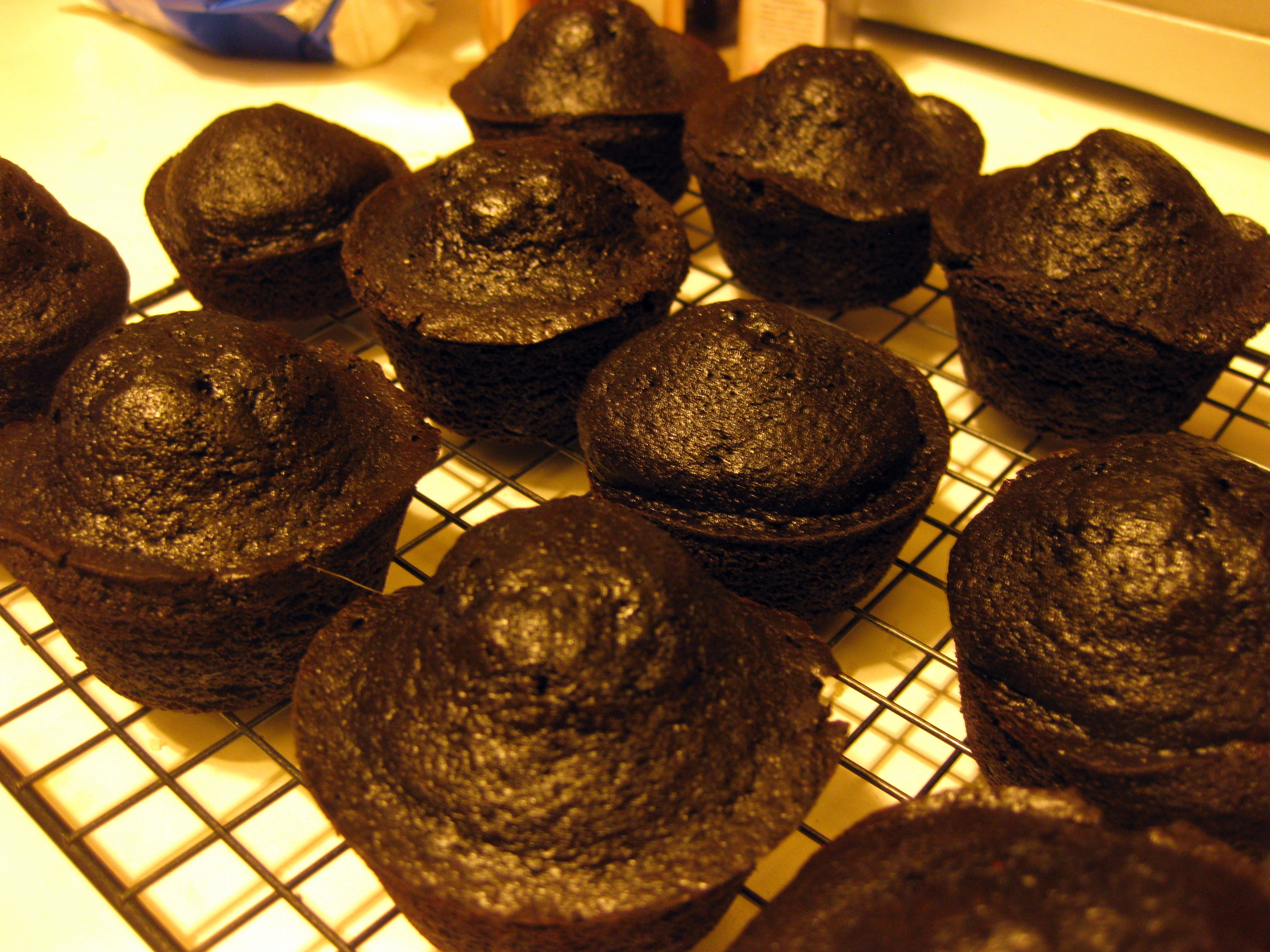
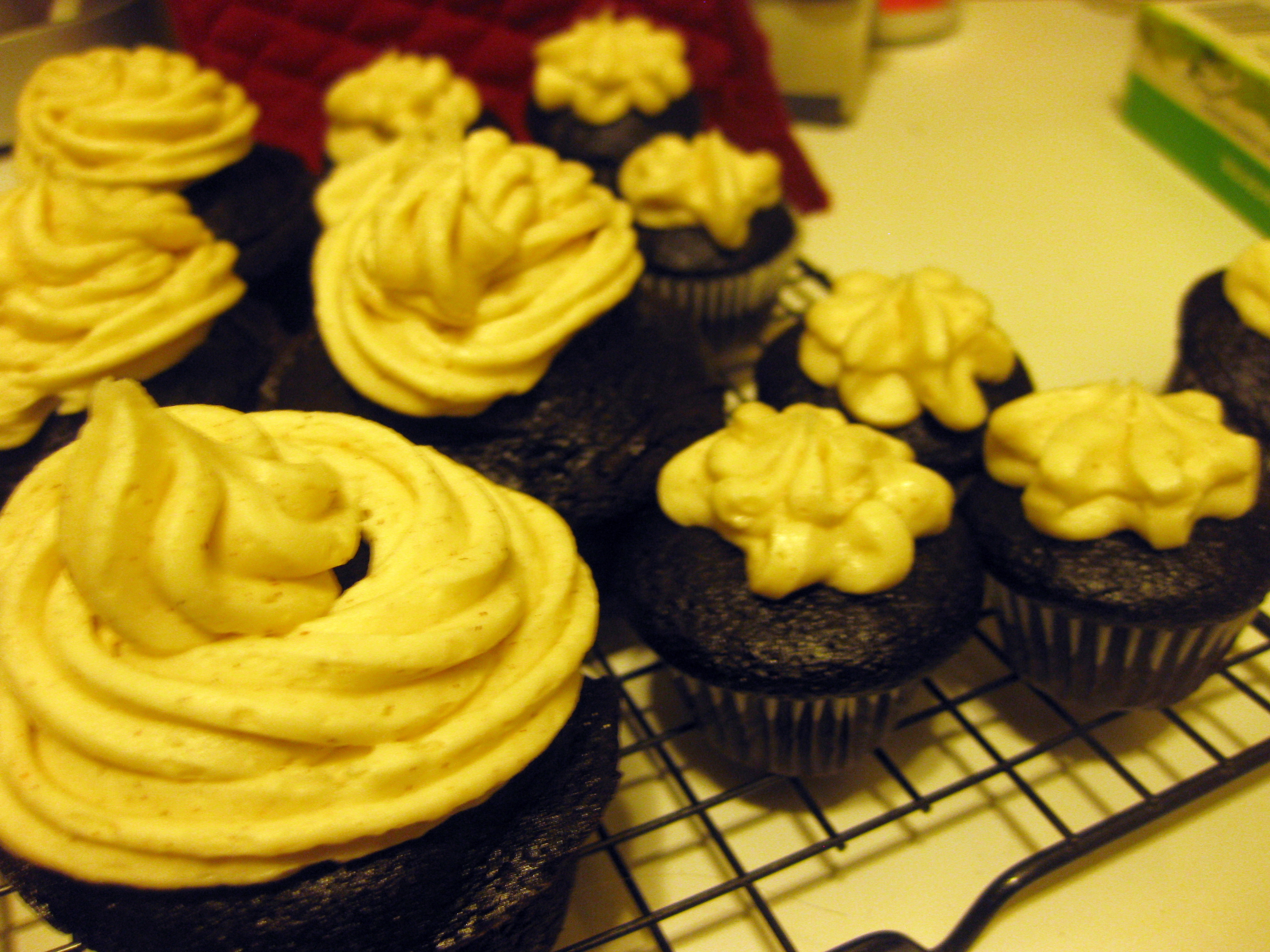
So the frosting whipped up really nicely – smooth and buttery and even – but the cupcakes were no slouch either. The combo of chocolate, cinnamon, and cayenne is, I’ve decided, one that should be present in everything from cupcakes to hot cocoa to coffee to a spread for sourdough toast. It was warm and toasty and dark and rich and left just a little lingering heat in the back of your throat after the last swallow of cupcake. The cakes were really, really dark – almost black – because I used Hershey’s “Special Dark” cocoa powder instead of just the regular stuff. They had a nice moist crumb and weren’t overwhelmingly sweet.

The buttercream was delicious too. It was pretty sweet, though that’s difficult to combat, I think, but the heat of the cayenne and the warmth of the cinnamon in the frosting cut the sugar. Also, after a night in the fridge the frosting seemed less aggressively sweet – giving the butter and sugar time to hang out together might have done something the mellow the cloying flavor buttercream can have. I used less cayenne in the frosting than Leah’s recipe specifies, though I did add the barest sprinkle over the top when the cupcakes were all frosted.

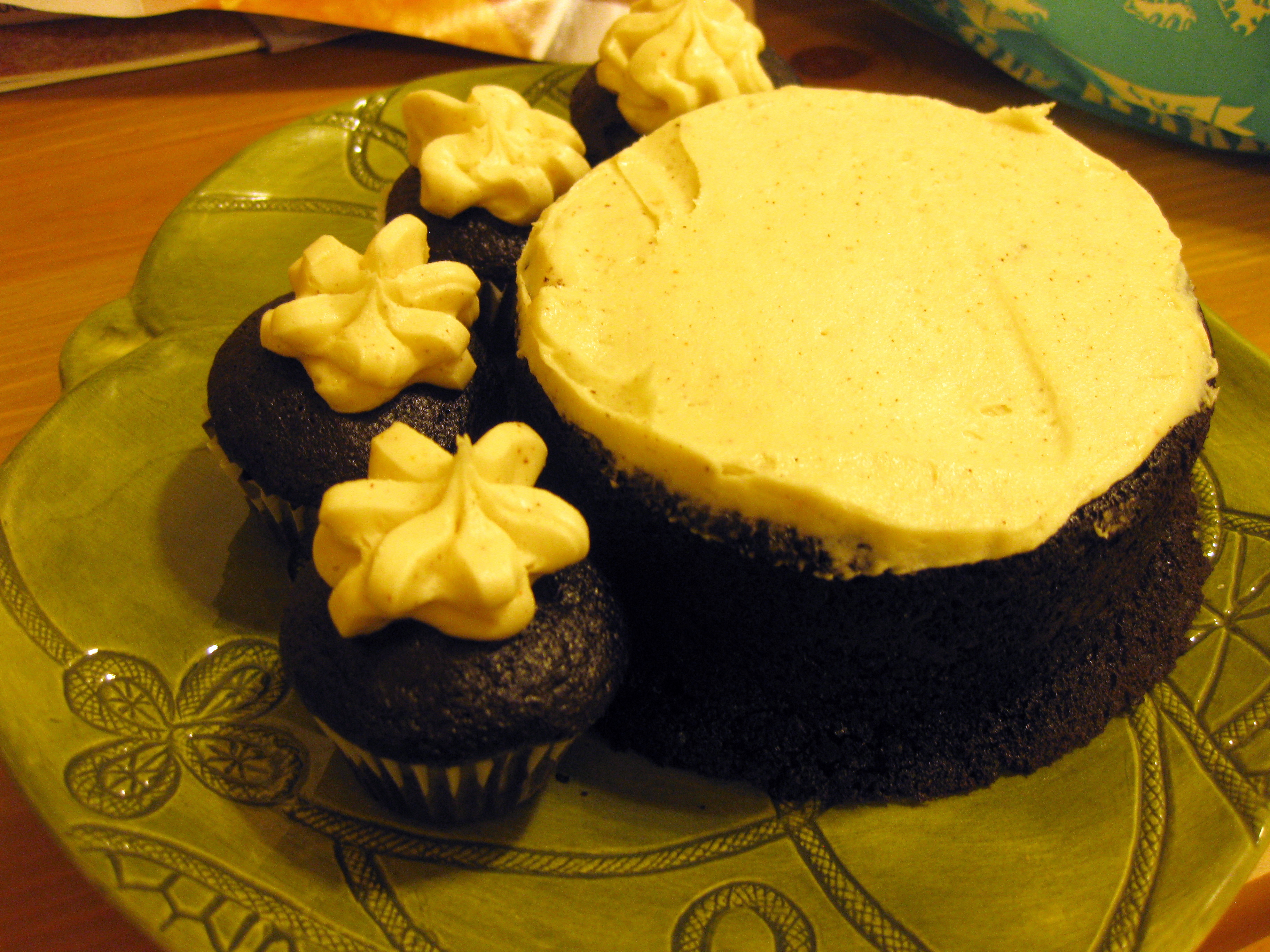
Here’s what I learned about the process of frosting: cupcakes are easy, and a properly made buttercream spreads with surprising smoothness over a flat surface (I made one tiny “cake” for the bride and groom as a taster and smoothed icing across the top). With an offset spatula or a metal scraper at my disposal, I bet I can get the thing even and gorgeous.

Here’s what I learned from the bride: she LOVES the idea of doing cupcakes and mini cupcakes as additions to the cake, and we’ve decided to use an asymmetrical cake stand  for the actual cakes. This means I don’t have to stack anything, just make three separate, differently sized cakes, and a Subaru-load of cupcakes.

So here’s the plan: the cakes will get frosted with buttercream and decorated in some as-yet-to-be-determined way. The cupcakes will get frosted with a star tip much like I’ve done here, and possibly drizzled with blue crystal sprinkles. As for the mini cupcakes, I found a tutorial for making pansy-like flowers out of buttercream on minis, and the next time I do a trial run I’m going to give this a try to see if it’s something me and my meager piping skills can pull off.

Next month: I’ll make the champagne batter the cake will actually be made of and bake it in cupcake form so I can start to get times down. It wouldn’t do to have dry cupcakes. Then I’ll try out this flower pattern on the minis and see how it turns out. With luck, it will go as well as this month’s new buttercream recipe did!

Stay tuned… I added a “wedding” tag, and all the buttercream and cake-related posts will end up in that category for easier access.

Spic(k)ed apple cider

No photos tonight, just a quick question:

What do you get when you combine

16 oz. Trader Joe’s Gravenstein apple juice

2 shots Kraken black rum

2 cinnamon sticks, broken in half

4 whole cloves

1 liberal squeeze of honey

and simmer slowly for about 15 minutes?

The perfect winter warmer for two on a cozy little evening at home.

Yes, that.

Quick, quick!

So I’m behind again.  I have been cooking, I just haven’t been posting.  It’s funny, the cooking part feels necessary and timely because hey, it’s dinner!  But the posting part – if I’m typing something these days, it had better be either my dissertation or a PowerPoint slideshow for the class I’m teaching.  If it’s something else, Puritan guilt sets in.

But I have so much to share that I had to start working through the backlog.

“32. Cook couscous in stock or water. With a fork, stir in cinnamon, chopped mint, lightly sauteed pine nuts and melted butter.  Bake in an oiled dish or use as stuffing.”

The players:

1 box plain couscous

2 cups water

pinch salt

¼ cup pine nuts

¼ cup butter

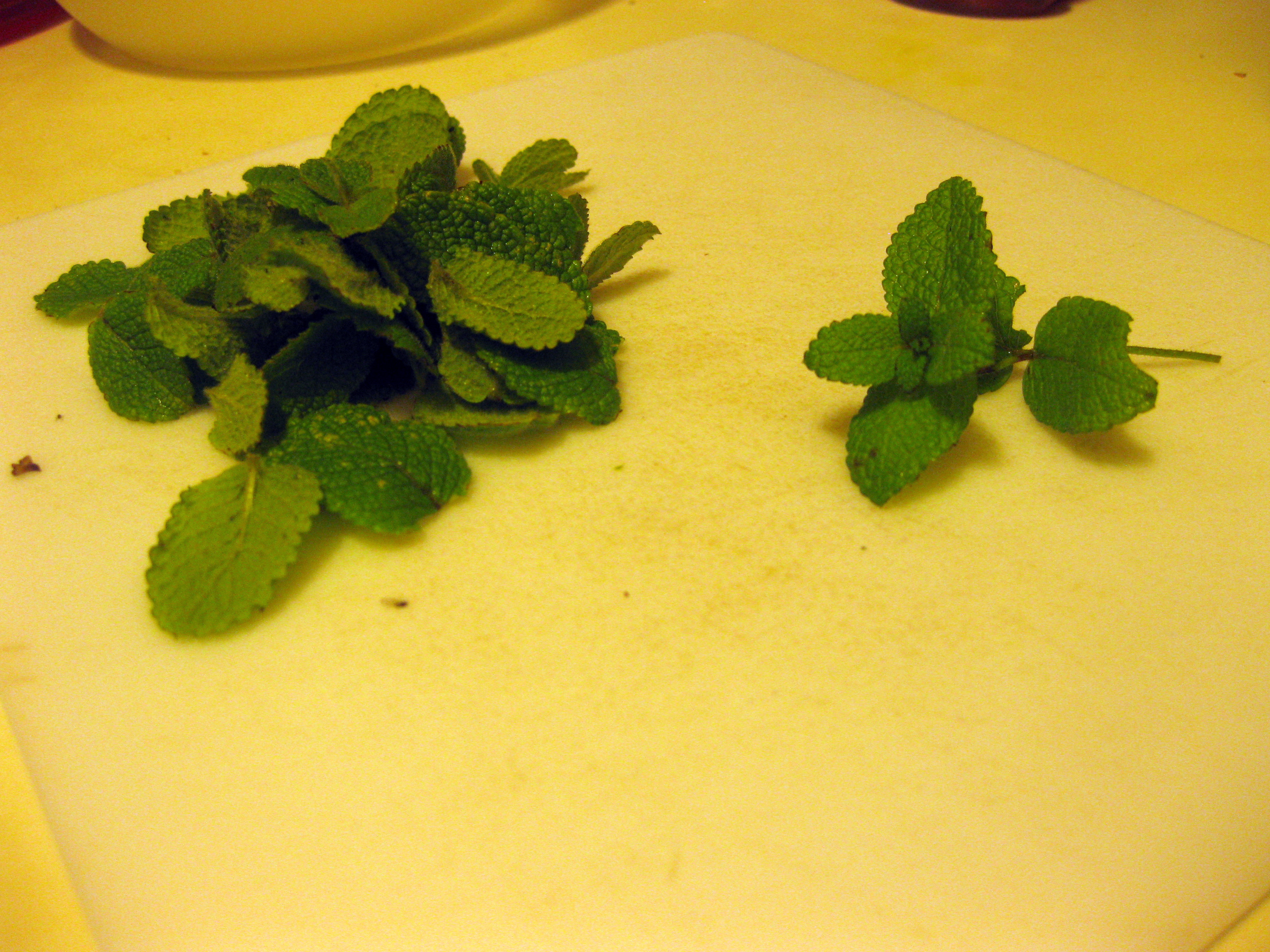
¼ cup chopped mint

2 tsp cinnamon

salt and pepper to taste

The process:

Preheat the oven to 375F

Cook couscous in water with a pinch of salt according to package directions.  If you have vegetable broth or chicken broth, use that.   

While the couscous cooks, chop the mint, melt the butter in a small skillet and add the pine nuts.  Sizzle over medium-low until the pine nuts are barely browned.

When the couscous is done, fluff it with a fork, toss in remaining ingredients, and stir together.  Transfer to your oiled baking dish and bake for 25-30 minutes, or until the top is just crunchy and golden.

We had this with smoked apple and chardonnay chicken sausages and some steamed broccolini and it was tasty, but not stellar.  The pine nuts were roasty and delicious, and the cinnamon added a nice flavor twist, but it seemed to be missing something.

My theories are as follows:

1.)    This would be better as a stuffing than as a side; I’m thinking stuffed pork chops or turkey.

2.)    It would be an awesome base for a tagine of chicken or lamb.

3.)    Dried fruit mixed into the couscous blend would add a sweetness for the cinnamon to play with.

I did only one of these things to the leftovers, and it made a definite improvement.  Diced dried apricots rounded out the flavors nicely and made it seem almost like a pilaf.  Chopped dried figs, dates, or currants would also be delightful.


I have so much more to tell you.  Cross your fingers I can make it through enough of my academic work to check in again next week!