 I mention my sister pretty frequently in this little space. Although she lives across the country from me, across disciplines, across life experiences, across personalities, she is my kitchen sounding board. When I think of a recipe concept and I can’t decide whether it sounds amazing or insane, I text R. When I have a triumph or a disaster, I text R. When I find a recipe online that I know MUST be tried… you get the idea.
 In three little weeks, R. is getting married. I feel incredibly privileged that she has asked me to stand beside her in her wedding party as the woman of honor. We’ve spent the past year or so discussing little details and working through planning frustrations and pinning, pinning, pinning to her wedding pinterest board. And yet, because so many miles separate us geographically, I can’t do the things that my role in the wedding party traditionally requires of me. I can’t plan a bridal shower or a bachelorette party, because I’m only hopping on a plane to get to the wedding a few days before it happens. I can’t coordinate all the bridesmaids, because, well, because R. is such a good planner that I haven’t had a chance. Sure, I can do her makeup and hold her bouquet and give a toast on the big day, but it doesn’t feel like enough for my own sister.
 Since so much of my love is filtered through food, it was, of course, a menu that finally made me feel like I was contributing sufficiently. R. and her fiancé aren’t having a rehearsal dinner, mostly because they aren’t having a rehearsal – their venue is an hour away from their home, and it seemed like a lot of trouble to truck out there the morning before just to spent twenty minutes deciding who will stand where and in what order when we could just get there a little early the day of and do the same thing. But we will have a lot of family arriving to town the day before the wedding, so having a casual little dinner the night before did seem like a nice thing to do, and this “welcome dinner,” as we’re calling it, became my responsibility. I’ve plotted out a menu, created and sent invitations, and this weekend, did a run-through of one of the new dishes we’ll be making for the occasion.
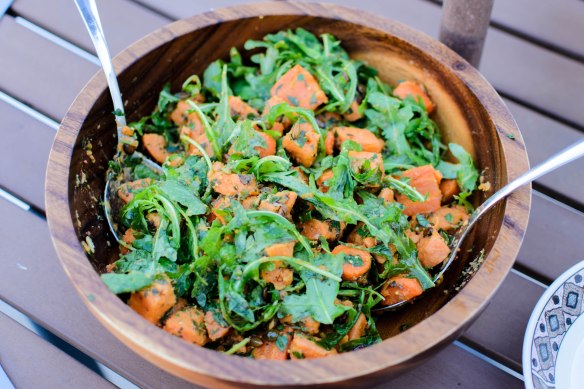
 The dinner is in a park at a picnic shelter, so we are leaning largely on casual fare, but because it’s such a special occasion, we wanted a cut above your standard hamburger patties and potato salad. Since it will be mid-October, and it has been R’s dream to have a fall wedding for a very long time, we are working with an autumnal theme – there will be spiked and non-spiked apple cider, a slaw of brussels sprouts with toasted walnuts and dried cranberries, a substantial pasta salad with robust dressing and bitter radicchio threaded through, and this: a salad as good warm as it is cold or room temperature, of tender carrot and sweet potato chunks wrapped in a lime vinaigrette busy with herbs. To keep it light as well as autumnal, at the last minute the vegetable chunks get tossed with a scattering of well-toasted pumpkin seeds and a few big handfuls of delicate baby arugula.
 The seed for this salad idea came from a Bittman project recipe, and I’ve tweaked and fiddled with it a few times now, until this iteration seemed exactly right. Virginia in October, which is where and when we’re headed, is a funny transitional point on the space/time continuum. It can be downright chilly, but it can also spike back up into summer temperatures, or it can gift you with a sudden downpour. It’s hard to know which you’re going to get, and sometimes it might offer up some of each in the same day! This salad dances well with them all. The orange root vegetable base and the pumpkin seeds point straight at Halloween and Thanksgiving, but juxtaposing them with a bright lime vinaigrette and soft, summery herbs makes the finished dish feel light. I ended up adding a spoonful of whole grain mustard for another kind of tartness, and this along with the peppery arugula prevents the starchy vegetables from reading too sweet.
 Though I like the salad just how it is here, it is admittedly ripe for adjustments of all kinds. Replacing the pumpkin seeds with roasted pistachios might take things in a springy direction, and you could certainly bulk it up a bit with crumbled feta or goat cheese or even golden raisins, though these might tip the sweetness scales a bit overly much. You could use orange or lemon juice instead of lime in the vinaigrette, you could replace the arugula with baby spinach or kale and serve it warm; you could of course change out the herb combination to your preference. Add some nicely grilled bratwurst, or stir in a few ladles of buttery couscous or farro or quinoa, and you have a complete meal.
 As I kept thinking about this salad, I realized it was ideal in so many ways. Since it can be served warm or cold, it works with whatever version of fall your home might be throwing at you – whether it’s the decidedly fall evenings in the northeast, or the Santa Ana wind-riddled mid-90s madness in Southern California. This is a transitional salad for a transitional season. And forgive me as I wax poetic on you, but it is also a nice metaphor for the occasion: a salad that moves easily between meteorological seasons seems perfect for a couple about to transition between seasons of life.
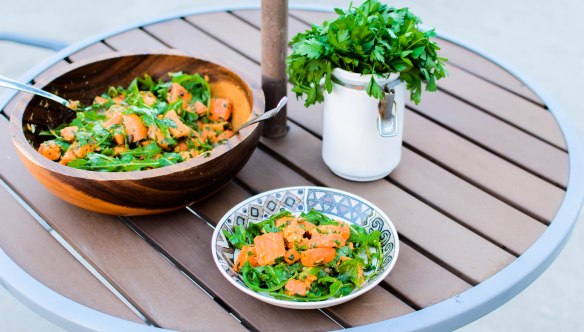
Carrot and Sweet Potato Salad with Lime Vinaigrette
Serves 6 as a side
45-60 minutes including cooling time
1 pound carrots (about 4 large)
2 pounds orange-fleshed sweet potatoes (about 4 medium)
2 tablespoons salt
¼ cup pumpkin seeds (2 ounces)
1 tablespoon whole grain mustard
1 tablespoon honey
6 tablespoons lime juice (2-3 limes)
¼ cup olive oil
¼ cup chopped fresh parsley
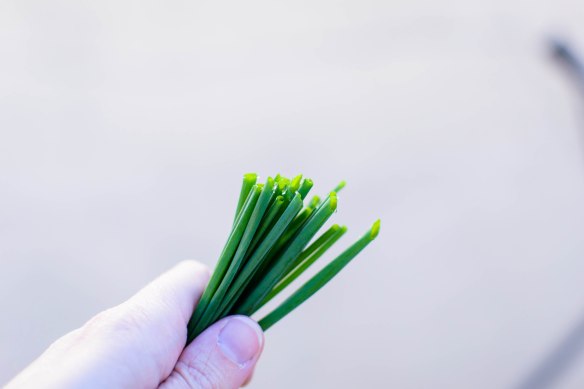
2 tablespoons chopped chives
2 tablespoons chopped mint leaves
¼ teaspoon black pepper, or to taste
1-2 cups baby arugula
- Fill a large pot about ¾ of the way full of water, add the 2 tablespoons salt, and bring to a boil.
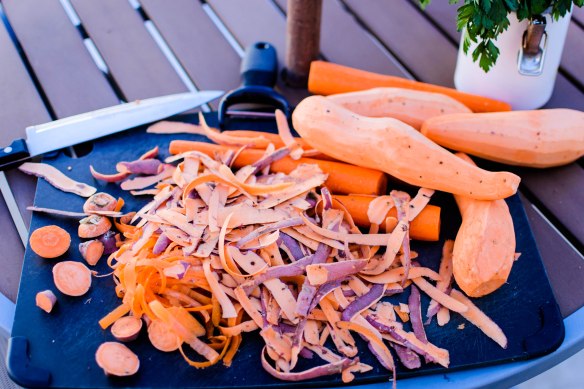
- While you wait for the water to heat, peel the carrots and sweet potatoes and cut them into 1-2 inch chunks, a bit bigger than bite-sized.
- When the water reaches a rolling boil, add the carrot chunks and cook for 5 minutes with the lid off – the carrots will take a bit longer than the sweet potatoes.
- After the first five minutes of cooking, add he sweet potato chunks and continue to cook until the vegetables are tender but not mushy or falling apart – about 8-10 minutes depending on the size of your chunks. Immediately drain and set aside to cool for 10-15 minutes, then transfer to a large bowl.
- While the vegetables are cooking, toast the pumpkin seeds in a 350F oven until they are browned and popping – about 5-10 minutes. A toaster oven works really well for this if you don’t want to heat up your house too much. When they are ready, set them aside to cool.
- In a 2-cup glass measuring cup, whisk together the honey, the mustard, and the lime juice. Slowly drizzle in the olive oil, whisking constantly, to form a nicely emulsified dressing. Stir in the herbs and add black pepper to taste.
- After the cooked vegetable chunks have cooled for 10-15 minutes and been relocated to a large bowl, pour the dressing over them and toss gently to coat everything evenly.
- If you want the dish to be warm, add the arugula and pumpkin seeds, toss gently to combine, and serve immediately. The greens will wilt considerably as they hit the warm vegetables.
- If you prefer the dish at cold or at room temperature, wait to add the arugula and pumpkin seeds until just before serving.
- This will keep in the refrigerator for a day or two, though any greens you’ve incorporated will look considerably less sprightly after the first day.








 "blackberry-eating in late September"