Chopped Challenge #4: Green Gazpacho “Shooters” with Mayonnaise Toasts

Course: appetizer

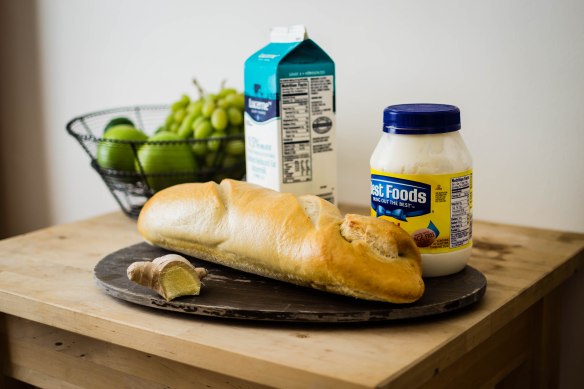
Ingredients: sourdough bread, buttermilk, mayonnaise, ginger

Unlike other Chopped Challenges N. has issued me, this one emerged Athena-like: fully formed and near immediately (though admittedly without the headache). Though the most commonly recognized form of gazpacho is tomato-based, as I offered to you last fall, a green version, usually blended with bread for viscosity and sometimes with some kind of acidic dairy product (more typically yogurt), is also reasonably well known. Thus two of my requisite ingredients were already attended to.
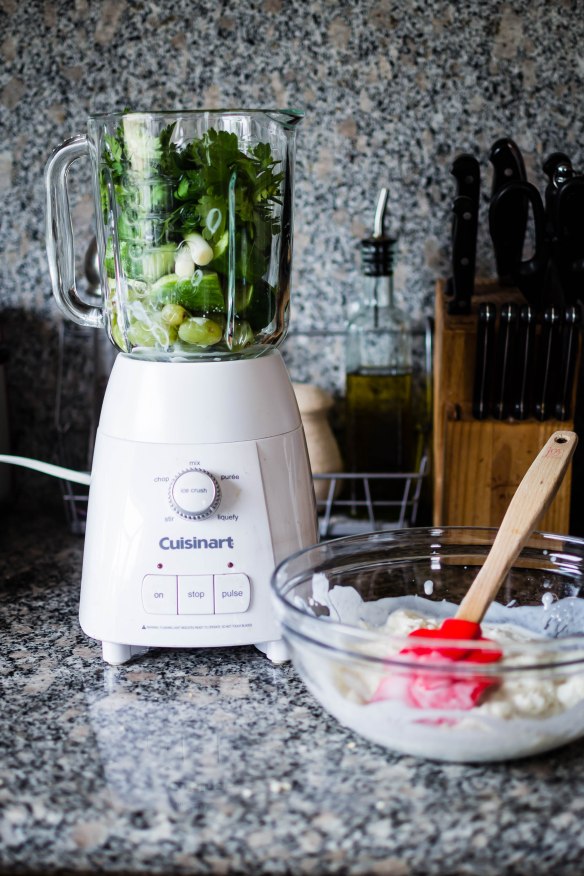
Though the green iteration of this cold soup can include anything from tomatillos to green bell peppers, I decided on cucumbers for the crisp, liquid coolness, and grapes for a sweet touch that I thought would go well with the ginger. To keep things feeling savory, a few scallions made their way into the mix, as well as a handful of parsley for an herbaceous flavor and a more brilliant green color.

As for the mayonnaise, a traditional gazpacho incorporates generous glugs of olive oil, and what else is mayonnaise if not another fat source, already emulsified in itself? The few tablespoons I decided to allow in the soup didn’t feel like adequate representation of the ingredient, so I sliced up the other half of the sourdough batard, slicked it with a thin layer of mayo, and toasted it under the broiler for a warm, crunchy accompaniment to provide contrast. For aesthetic value and interest, as you can see, I dolloped in a touch of yogurt and a few halved grapes just before serving.

We found this tasty, and I think it would be an incredibly refreshing first offering at an outdoor gathering, particularly fun served in tall shot glasses (perhaps without the garnish) for cool, quick sipping. It wasn’t our absolute favorite, though I must admit its flavor improved given a night in the fridge to let the flavors intensify. Straight out of the blender it will taste quite sweet, but after the requisite minimum of two hours’ chill time, it edges back toward the savory side as the cucumber asserts itself. We found the buttermilk needed a touch of help from some vinegar for the right tang, and the ginger in my version was surprisingly mild, so I’m offering a range in my ingredient list below; aim high if you want a more assertively spiced soup.
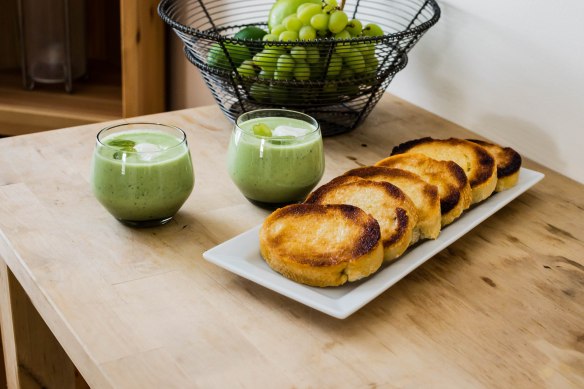
Green Gazpacho “Shooters” with Mayonnaise Toasts
Serves 6 as an appetizer
2½ hours (includes chilling time)
For gazpacho:
1 cup crumbled or torn sourdough bread
1 cup buttermilk
3 small seedless cucumbers (I like the Persian variety)
1 cup seedless green grapes
3-4 scallions, white and pale green parts
⅓ cup parsley leaves and stems, or a combination of parsley and mint
1-2 tablespoons grated fresh ginger
3 tablespoons mayonnaise
2 teaspoons white wine vinegar
Salt and pepper to taste
For toasts:
Thin slices of sourdough
Mayonnaise to spread
To serve:
Dollops of yogurt, optional
A few additional green grapes, halved, optional
Snipped chives, or individual parsley and/or mint leaves, optional


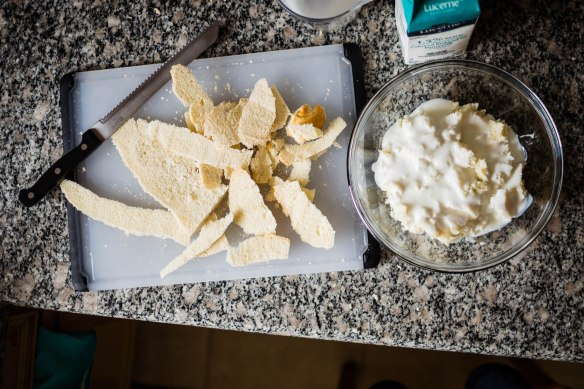
  • To make the gazpacho, combine the torn or crumbled sourdough and the buttermilk in a bowl and let sit 10-20 minutes. Meanwhile, cut the cucumbers and scallions into rough chunks and add to a blender with the grapes, parsley (or parsley and mint), ginger, mayonnaise, and vinegar. After the bread and buttermilk have soaked, add this as well and blend until smooth. Return to the bowl (or just keep it in the blender, if you prefer) and refrigerate for at least 2 hours, or overnight for more intense flavor.
  • When you are ready to serve, preheat your broiler and spread the slices of sourdough with a very thin layer of mayonnaise, being careful to get it all the way to the edges (otherwise burning results, as you can see from a few of mine). Set the toasts in a single layer on a broiler pan or other oven-safe tray and broil just until they are lightly browned and just starting to become crisp.
  • Pour or ladle the gazpacho into small bowls or glasses, garnish with a dollop of yogurt, a leaf or two of complementary herbs, or a few fresh grape halves, and serve with the toasts on the side.

Rain check

Guys, I thought I could do it. I really did. Two weeks in a row! Back to normal! And then there was a weekend punctuated by a wonderful play, wonderful friends, wonderful food, and one too many wonderful daiquiris… followed, not so surprisingly, by a day during which I got no momentum until mid-afternoon, and grudgingly decided I needed to be responsible with my time and prep for the week ahead instead of racing to make and photograph something for us.

But rest assured, all is not lost! I have one more Monday left in May, my Chopped Challenge “producer” is back with lots of ideas, and I have an appetizer in mind that I hope will be the perfect bright, springy addition to whatever your Memorial Day weekend might hold. Just… hold that… for a little bit… and I’ll be back soon.

Miso Butter Broiled Shiitakes

It has been a busy couple of months. I’m getting used to the lack of cooking companion in my doorway, watching intently as food moves from countertop to stove (and sometimes to the floor – much consternation resulted!), and I’m slowly regaining that urge to putter around and experiment in the kitchen. I didn’t know how much this part of my life would be impacted by the absence of a big, golden dog.

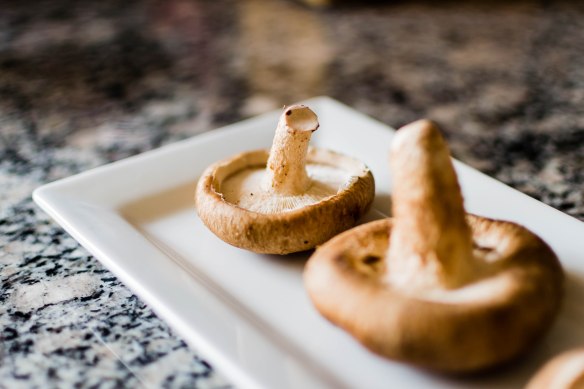
But anyway, in addition to that change, we’ve also been busy planning our summer (more on that soon…), and working through the semester, and at the end of April, N. crossed a huge item off his bucket list as he successfully finished the Eugene Marathon! Not only was this a major accomplishment for him; it also provided the inspiration for this post. During that weekend, we stayed with our friends S. and M., and as part of a Friday evening happy hour spread, S. made these mushroom caps, smeared with a mixture of miso paste and butter, broiled until charcoal black but so savory and deep and perfect we could barely keep our fingers away long enough to let them cool. They were a restaurant recreation of hers, from an appetizer at a local izakaya, and I haven’t stopped thinking about them since. On a long, slow Saturday, punctuated by errands and an intense summer travel planning session, they seemed the right late-afternoon accompaniment to a glass of pinot noir.

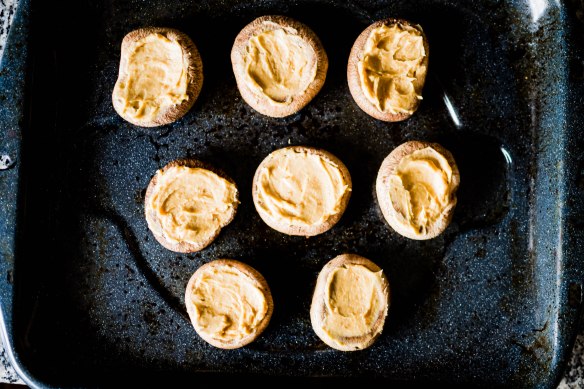
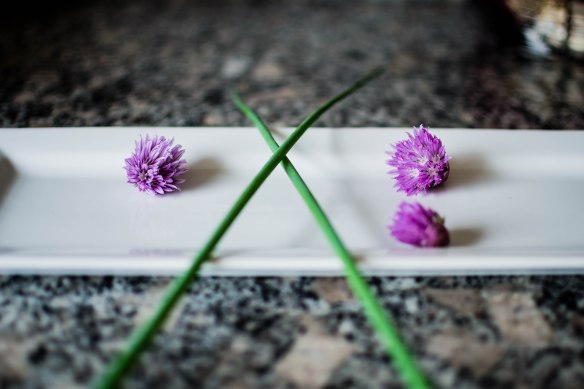
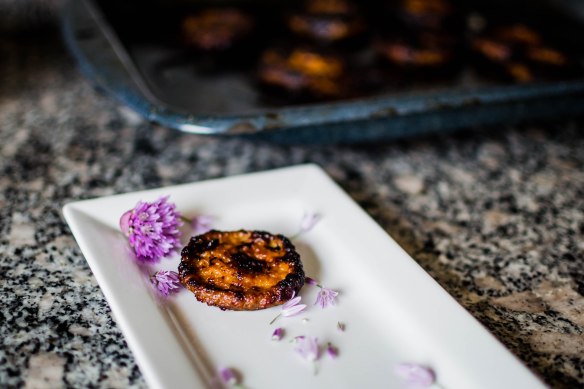
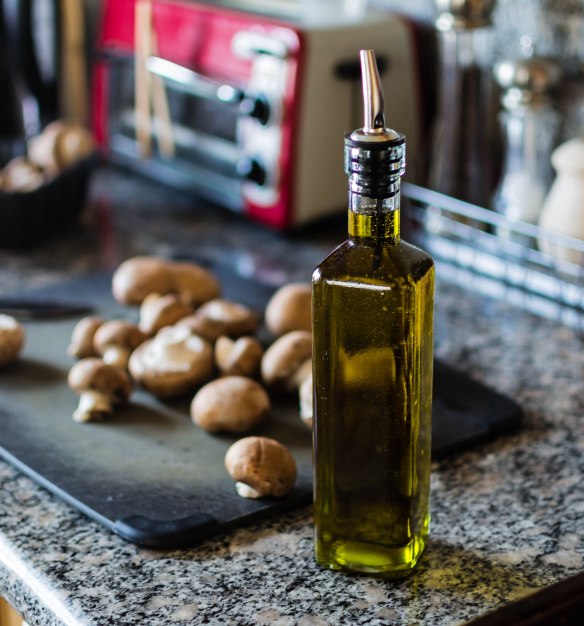
The ingredient list here is unusually short, for me: shiitake mushrooms, miso, butter. Maybe a shower of chives, if you want a little color and hint of onion-y freshness on top. The mushrooms are stemmed, the miso and butter are whisked or smeared or stirred together, the mixture gets liberally frosted onto the gills of the shiitakes, and into the broiler they go. 5-10 minutes later, you are dispensing small, homely saucers approximately the temperature of the molten center of the earth, but so incredibly savory and chewy and crusty and almost too salty in just the right way, that if you are anything like me, you will already have eaten a few in the kitchen before anyone else knew they were ready.

When you broil miso and butter together, some of the intense mixture seeps down into the mushroom as it softens and barely cooks through, but much of it remains trapped in the enclosing folds of the cap, where the butter bubbles and the miso takes on an appealing char not unlike the crusty exterior of a grilled steak.

The trickiest part of the whole procedure is managing your broiler. You want the mushrooms to cook, but you also want the deep browning on top, and since every broiler is so different, I’ve included below only the most basic of instructions. Yours might do best on low, or on high, and it might take as few as four or as many as ten minutes for satisfactory results. In any case, I’d say to let them go a tiny bit longer than you think you need to, because I promise it isn’t burning; it’s just getting better.

Miso Butter Broiled Shiitakes
10-15 minutes, depending on your broiler
For 8 shiitake caps:
8 large shiitake mushrooms, stems removed
2 tablespoons red miso paste (or use white for a less intense miso flavor)
4-5 tablespoons softened (not melted) unsalted butter
sprinkle of chives to garnish, optional


  • Preheat your broiler. I set mine to low with the rack closest to the broiler element. Broilers are all so different, so you might need to experiment a bit.
  • In a small bowl, combine the miso paste and softened butter with a flexible rubber spatula. Mix and smash and stir until the butter and miso are homogenized.
  • Using the same spatula, fill each cap with the miso and butter mixture. Depending on the shape of your shiitakes, you might have more or less room to fill. Mine were quite roomy and I used almost all of the mixture. If yours are small or flattish, you will probably have miso butter left over. May I suggest an amazing spread for avocado toast?
  • Arrange the filled mushroom caps evenly, with space in between, on a broiler-safe tray or pan. Broil until the miso and butter mixture is bubbly and very, very dark – it will look a little burned – and the mushroom caps have softened and flattened a bit. Again, broilers are so different. On low, mine took about 7 minutes. Play with yours and judge accordingly.
  • Remove from the oven and let sit 1-2 minutes, until they are no longer the temperature of fresh lava. Sprinkle with chives if desired, scoop onto a decorative plate, and consume immediately.

Fake-out “beef and broccoli” over brown rice cakes

I fell off the wagon in a big way. I know. Between the time of the semester and the recent loss of my best canine kitchen helper*, I haven’t felt particularly inspired in the kitchen as of late. And I’m behind on my Chopped Challenges. The producer/judge has been informed of this and is apparently “cooking” up a basket for me… But I do have one little triumph I’d like to offer.

I tend to vehemently resist foods that try to be other foods – I like tofu and tempeh, but I like them for what they are, not as “fake meat.” I’ll happily buy both soy-based sausages and bratwurst in the same shopping trip, because I like the taste of each one. So it’s not really common for me to concoct vegetarian meals for the purpose of substitution or imitation. But when, a few weeks ago, I unceremoniously tipped a few tablespoons of oyster sauce over a skillet full of well browned mushrooms and kale and the result tasted almost exactly like a plate of beef and broccoli from a neighborhood Chinese restaurant, and when we spent the part of the evening usually reserved for reluctant washing of dishes instead picking the leftovers out of the skillet, I decided this one was worth sharing.

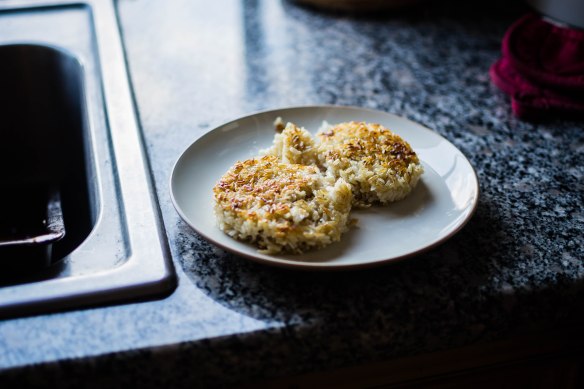
Recently I’ve discussed my new obsession of crisping rice in the pan before serving, and as the owner of a new stove with magnificently hot burners, this practice is getting easier and more dependable, and I just can’t. stop. doing. it. Here, I thought the crisp nuttiness of the rice would be a great flavor and textural contrast to the vegetables and their savory sauce. In lieu of a fancy ring mold, I packed steaming spoonfuls of cooked brown rice into a biscuit cutter, pressing the rice down firmly to create a disc that stayed together, before levering it carefully a pan of extremely hot oil to brown and crisp on each side.

It’s a classy looking presentation, too, if you’re careful enough that the cakes stay together during transport, as you can stack or fan the cakes artfully across a plate or platter before smothering them with their umami-laden topping.

For a light dinner (but heavy in flavor), we didn’t think this needed another thing, but if you want added substance, a good bowl of won ton or hot and sour soup as a lead-in certainly wouldn’t be amiss.

* At the very end of March, after much discussion and heartache, we let our Lucy go. She was almost fifteen and her quality of life was beginning to diminish due to mobility problems and increasingly frequent infections that were becoming resistant to antibiotics. Don’t worry, though; we sent her out with true foodie-style aplomb: on her last day she had bacon for breakfast, and a big slice of chocolate cake after a lunch of chicken, rice, and broccoli bits (her favorite vegetable), because why not? Eventually, her remains will fertilize and hopefully help grow a raucous mix of wildflowers in the back corner of our yard, beneath a pink trumpet tree. We think she would like that.

She couldn’t stand like this anymore, but this was her favorite way to be in the kitchen with me: interested and close to the food.

Fake-out “beef” and “broccoli” on brown rice cakes
Serves 2-3
About 60 minutes (brown rice takes a while…)
1 cup raw brown rice
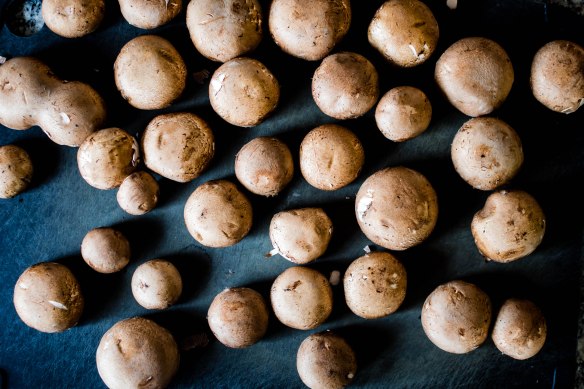
24 ounces crimini mushrooms
8 ounces kale
about 6 tablespoons olive oil, divided
2-3 tablespoons oyster sauce
1 tablespoon soy sauce or to taste
black pepper to taste
1-2 tablespoons sliced green onion tops, dark green parts only


  • Cook the 1 cup brown rice according to package directions. I always use my rice cooker, where it takes 45-50 minutes. You’ll prep and cook everything else while it is working. When it finishes, remove the lid of the cooking vessel to let it cool slightly, and stir in the 1-2 tablespoons sliced green onions.
  • Preheat the oven to 400F. As soon as you turn it on, line a sheet tray with aluminum foil, drizzle on 2 tablespoons olive oil, then put that in the oven while it preheats, so the oil is hot when the mushrooms are ready.
  • While the oven and the pan heat, prep the vegetables: stem the mushrooms, wipe the caps gently if they seem dirty, then quarter each one. Remove the central tough stem from the kale and chop into bite-size or slightly larger pieces (it will wilt down a bit as it cooks), and set aside. Slice up the green onions and set them aside as well.
  • When the oven has preheated, carefully remove the oiled pan, add the mushrooms and a little more oil, then place back into the oven. Roast at 400F for 20 minutes, remove and pour off any collected liquid, gently toss the mushrooms, and return to the oven to roast for another 20 minutes. They will be deeply browned, a bit wrinkled, and concentrated in flavor.
  • When the mushrooms have about 10 minutes to go, heat a scant 1 tablespoon olive oil in a large skillet over medium heat. Add the kale all at once and let it cook down for a minute or two, then toss in about 1 tablespoon water to help. Wilt until it is as tender as you like; I like a bit of bite in there still, so I only cook it for 3-4 minutes.
  • When the mushrooms and kale are finished cooking, add the mushrooms to the skillet with the kale, stir in the oyster sauce (start with 2 tablespoons – it is strong), then season to taste with soy sauce, black pepper, and/or more oyster sauce as you wish. Set aside (if you want fewer dishes, dump the vegetable mix back onto the sheet tray you cooked the mushrooms on, turn off the oven, and put the tray back inside – the residual heat will keep things toasty while you finish the dish. Meanwhile, quickly wash out the skillet, dry, and continue as directed below.)
  • To make the rice cakes, heat the final 2 tablespoons olive oil in a skillet over high heat until the oil is shimmering and almost smoking. While it warms, if you haven’t done so already, mix the 1-2 tablespoons sliced green onions in with the rice. Pack about ⅓ cup rice into a 3 inch ring mold or biscuit cutter set on a cutting board that can handle the heat, pressing down very firmly with the back of a spoon. Carefully remove the cutter; if you’ve packed tightly enough, the rice should stay together. Repeat until you have sufficient rice cakes; plan for 2-3 each (I found 2 per person was perfect; I think N. would happily have gone for a third).
  • Use a spatula to carefully transport the rice cakes from cutting board to skillet one at a time. Once they are in the skillet, do not adjust or move them. Turn the heat down to medium-high, and let them sit and sizzle for 3 minutes without disturbing them. This is essential for structural integrity.
  • After 3 minutes undisturbed, gently but firmly flip each rice cake using a thin spatula, and cook another 3 minutes until nicely browned on both sides.
  • To serve, arrange rice cakes on a plate as desired, add a few scoops of kale and mushroom mixture on top, and eat immediately.

Tempura Salmon Tacos

As I mentioned not long ago, I’ve completely caught N’s obsession with tacos and now I want them all the time. In past years I thought the concept of “Taco Tuesday” was a bit silly and boring, but now it seems brilliant, because of course you wouldn’t do the same old ground beef and shredded cheddar every week; you would change it up and have charred vegetable tacos one week, slow cooked carnitas with pickled onions another week, and of course you would need fish tacos in there at least once a month.

Fish tacos tend to come in two camps: grilled and fried. When grilled, the fish is flaky and barely smoky and feels righteously healthy (at least as healthy as a taco can be), especially since it’s usually topped with confetti of cabbage, maybe a minute dice of tomatoes and, if you’re me, some paper thin slices of radish for a little peppery crunch. A spicy creamy drizzle and a generous dollop of guacamole are requirements.

But if I have to choose, I’m sure it will come as no surprise to you that I’m almost always going to go with fried. Encased in batter, sometimes cornmeal, sometimes flour, sometimes with beer, the fish stays molten hot and so juicy, and the batter is (ideally) crisp and crunchy and thus adds perfect texture even to a soft tortilla. Of course, many people’s objection to this format will likely be that it is unnecessarily heavy or fatty, and they are right: the wrong batter can be gloppy and greasy and excessive. Luckily, I have a solution to that: tempura.

Light and crisp and golden and melt-in-your-mouth-barely-there, tempura is, of course, that perfectly crunchy deep-fried coating for seafood and vegetables so common in Japanese restaurants. Its lightness is frequently achieved through the use of seltzer water as the liquid component in the batter, and sometimes rice flour, which fries up lighter and crispier than wheat flour.

The big problem with tempura, though, and what makes it a pain to do at home, is the deep-frying part. For a simple fish taco dinner, heating up a vat of oil is not high on my priority list. So I wondered if you could achieve satisfying tempura results with a shallow fry, not unlike old-fashioned fried chicken in a cast iron skillet. A few experiments later, I can definitively report that, although you have to be a touch more careful with the batter sticking to the pan, shallow-fried tempura is a completely viable option. Less oil means less time, less waste, and less of that fried smell in your kitchen (although it’s worth noting that an open window and a few votive candles lit for an hour or two can clear out most of that). My tempura batter takes the best of both worlds of fried fish, combining rice flour and baking powder not with the traditional seltzer, but with beer for a little extra flavor along with the requisite fizz.

Fish tacos are usually made with white fleshed fish of some kind – cod or halibut or mahi – but I love salmon, and have had some stellar fish and chips platters using this dense, meaty, pink option, so here I’m using it in lieu of more traditional options. You can certainly change out the type of fish you use, but I can’t speak for the cooking time of other fish since I’ve only tested the salmon with this method.

Of course half the fun of a fish taco is adorning it with various toppings, so here I’ve got two on offer for you: a red cabbage slaw bright with lime and cilantro, and a smash of avocado and corn to make up just before serving. We thought they needed nothing more, but if you like that creamy spicy sauce, I suggest whisking a few drops of sriracha into some buttermilk for a tangy kick to drizzle on.

Tempura Salmon Tacos
Serves 4
About ½ hour, if you are quite organized
For red cabbage slaw:
¼ head of red cabbage, grated or shredded or very finely slices (you can use green cabbage here too; I just like the unexpected bright color of the red)
¼-½ cup chopped cilantro, leaves and tender upper stalks
zest of 1 lime
juice of ½ lime
½ teaspoon salt
optional: 1-2 tablespoons mayonnaise or wasabi mayonnaise, if you like your slaw creamy
For tempura salmon:
1 pound salmon, cut into 1×3-4 inch strips (approximately)
⅔ cups rice flour
1 teaspoon baking powder
1 teaspoon salt
6-8 ounces beer (go with a pale ale or lighter; this is not a place for a deep roasty stout. Save that for waffles)
2-3 cups vegetable oil
For corn avocado smash:
1 ripe avocado (I like haas)
½ cup fresh or defrosted corn kernels
2 tablespoons thinly sliced green onion tops (dark green parts only)
¼ teaspoon salt or to taste
¼ teaspoon black pepper or to taste
lime juice to taste
To serve:
Tortillas (we like crunchy corn shells for this, but soft or blistered corn, or even flour, would also be tasty)
Optional garnishes: radish slices, crema, buttermilk and sriracha, sour cream, additional cilantro, green onion, or lime


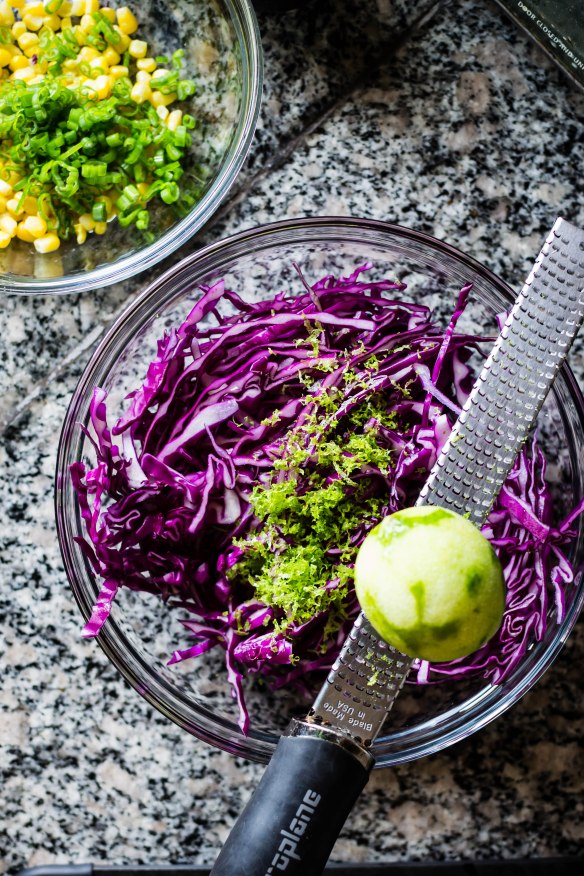
  • First, make the cabbage slaw. Toss together the cabbage, cilantro, lime zest and juice, and salt in a medium bowl. Set aside for at least 10 minutes to let the salt and lime juice permeate. If you like a creamy slaw, toss in 1-2 tablespoons regular or wasabi mayonnaise just before serving.
  • With the slaw done, turn your attention to the fish. In a cast iron or other large, heavy skillet, heat enough vegetable oil to come about 1 inch up the sides. While the oil heats, prep a warming tray: place a wire cooling rack over a baking sheet and place in the oven. Heat the oven to 300F.
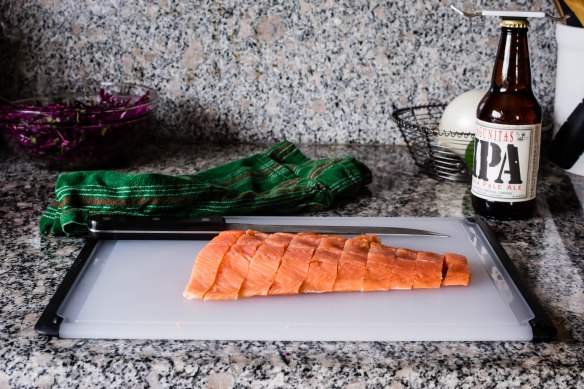
  • Next, slice the fish into 1×3-4 inch strips or “fingers.” You can alter the size if you prefer, but this size cooks quickly and fits well into a taco shell.
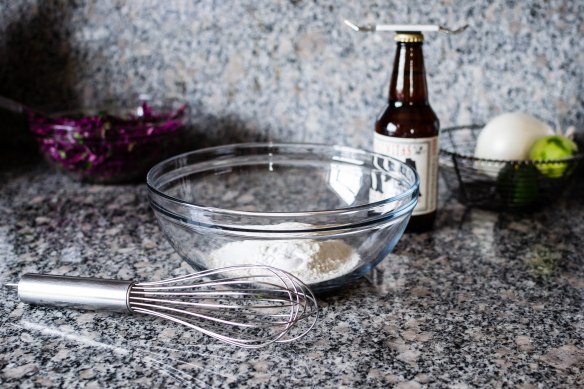
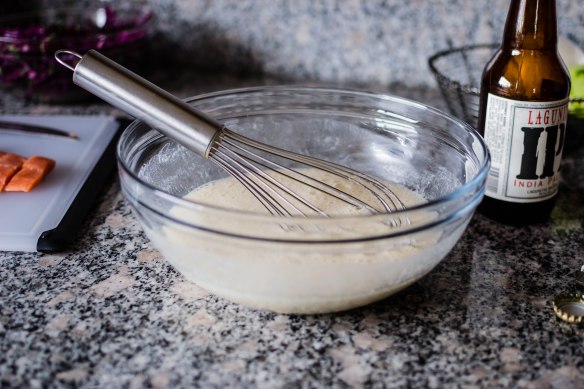
  • When the oil reaches a temperature between 350-375F, whisk together the rice flour, baking powder, and salt in a large bowl. If you prefer a very light batter, add 8 ounces of beer, whisking constantly as you pour it in. If you prefer a more substantial batter, add only 6 ounces of beer.
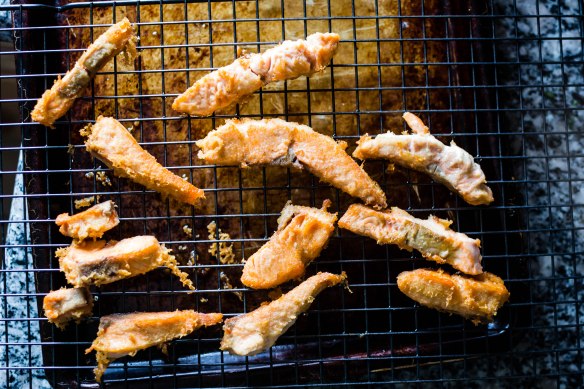
  • Now you are ready to fry. Add 5-6 strips of the fish to the tempura batter, submerge to ensure they are fully coated, then gently add them to the oil one at a time (it will sizzle aggressively), being sure they are separate from one another in the skillet. Cook 1-2 minutes per side, until the batter is lightly golden and the fish is barely cooked through (this doesn’t take long; you’ll be surprised how fast it is). Remove the fish to the warming rack in the oven. Continue to fry the fish in batches until it is all cooked.
  • Either in between, or just after the last batch of fish goes into the oven to keep warm, make the corn avocado smash. Halve, pit, and cube up the avocado into a small bowl (I like this method) Use a fork or the back of a spoon against the side of the bowl to lightly smash the cubes of avocado to your desired texture. I like it fairly chunky. Add the corn, green onion tops, salt, pepper, and lime juice, and gently stir to combine.
  • To serve, add a few fish strips to a warmed, grilled, or toasted tortilla, then top with the slaw and the smash in your desired order and quantity. Eat immediately.