Here we come to a turning of the seasons…

With the slow and probably undependable change in weather, it is becoming harder to budget my time according to the schedule established by winter.  My days, approximately, consisted of: teach class, hold office hours, come home, work on dissertation, feel sorry for myself about the rain, cook, fall into bed.  Blog about said cooking once a week.  Now, I have replaced “feel sorry for myself about the rain” with “feel sorry for myself about allergies and the amount of time I can’t spend outside because a.) it makes my throat close up and b.) there’s that whole dissertation thing that didn’t go away just because there are radish sprouts in my garden.

The cooking-related result of this achingly slow emergence of sun and the degree by degree warming happening outside is that I long for vegetables.  And yet, because I have been spoiled by the last two years of growing fresh vegetables in our backyard, I find myself unsatisfied with the produce currently available to me.  “On-the-vine” tomatoes at the grocery store?  Insipid.  Watery.  All but flavorless.  Cucumbers?  Slightly bitter and lacking that impossible crispness I like so much.  Greens?  Acceptable, but when you cannot cut them leaf by leaf as needed from the still growing plant, they wither and waste so quickly in the refrigerator.

And yet my yen for garden fresh and mentally satisfying interpretation of “healthy” won out when choosing last week’s Bittman, our first foray into the “salads” category:

“75. Wild Rice Greek Salad: Toss cooked wild rice (or mix wild and white) with chopped tomatoes, cucumber, red onion, kalamata olives and crumbled feta.  Dress with olive oil, lemon juice, parsley and mint.” 

This sounded flavorful enough to disguise any less-than-amazing harvest I might find at the grocery store.  I decided to use brown rice instead to up the flavor and fiber content, and collected:

2 cups pre-cooked wild rice (from Trader Joe’s)

1 cup uncooked brown rice

3 medium tomatoes, chopped in large pieces

½ cucumber, halved and sliced

½ cup red onion, slices quartered

½ cup kalamata olives, halved

½ cup crumbed feta cheese

½ cup each roughly chopped Italian parsley and mint

¼ – ½ cup olive oil

Juice of half a lemon

Salt and pepper to taste

I cooked the brown rice in my rice cooker, and when it was done about 40 minutes later I mixed in the wild rice, which had been sitting at room temperature.  I figured they could meld and match each other’s temperatures while I prepped the rest of the ingredients and cooked the salmon I had decided to serve with our salad.

While the brown rice was still warm I tossed it with the olive oil, lemon juice, and a few grinds of salt and black pepper.  One of the most important lessons I have learned about grain-based salads of any kind is to dress it while the base is still warm, so the flavorful liquids can permeate the rice or pasta or quinoa and flavor the comparatively bland grain.

I sliced up my onion and immersed the slices into a bowl of ice water.  This removes some of the astringency from the onion, leaving it mild and very crisp.

While the rice cooled and the onion chilled out, I turned my attention to the fish.  I used:

1 lb. wild salmon, skin on, bones removed
4 tb. butter

½ – 1 cup white wine

2 garlic cloves, finely minced

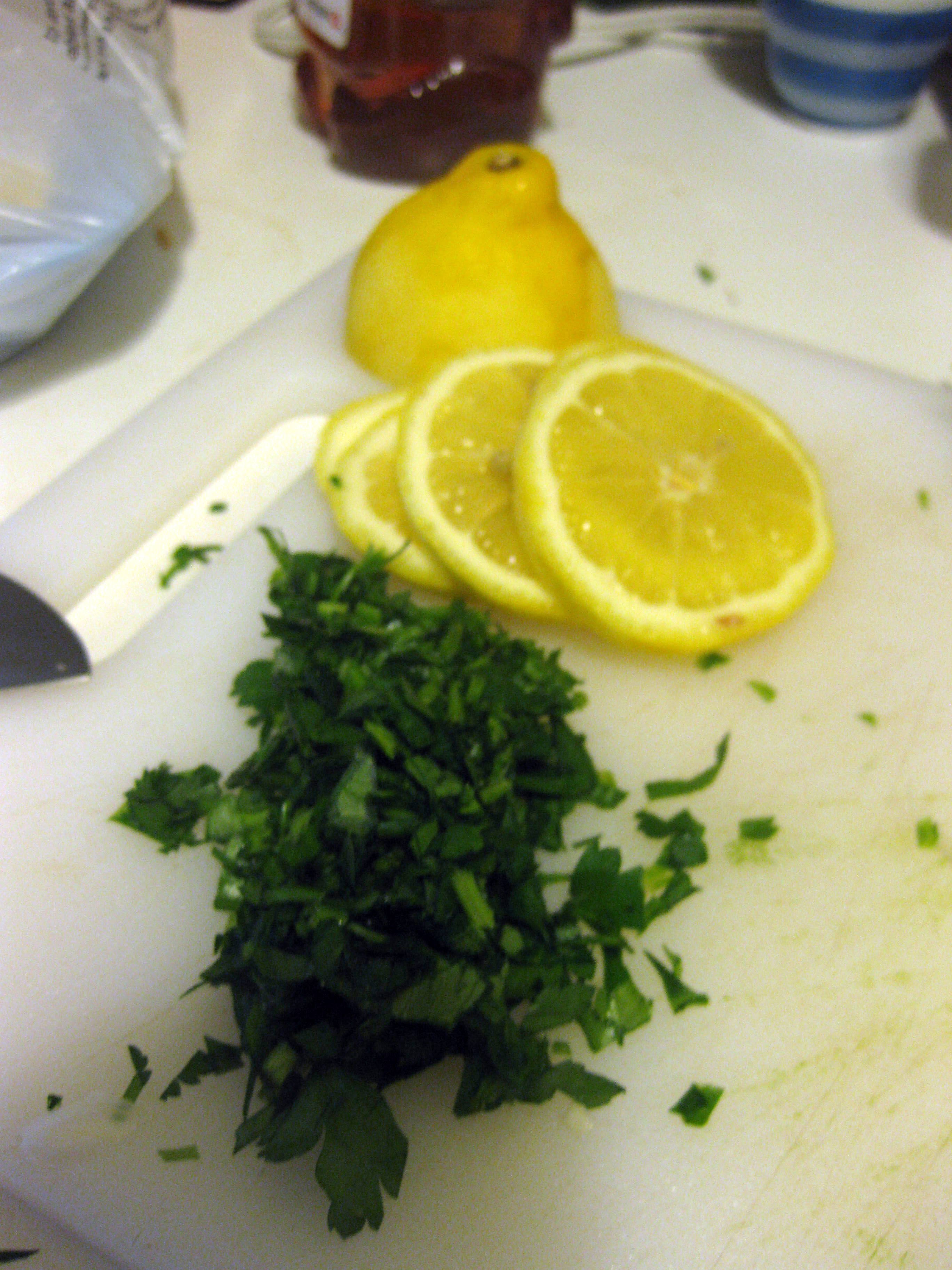
1 TB lemon zest

Half a lemon, sliced (convenient, no?)

2 TB roughly chopped Italian parsley

Salt and pepper to taste
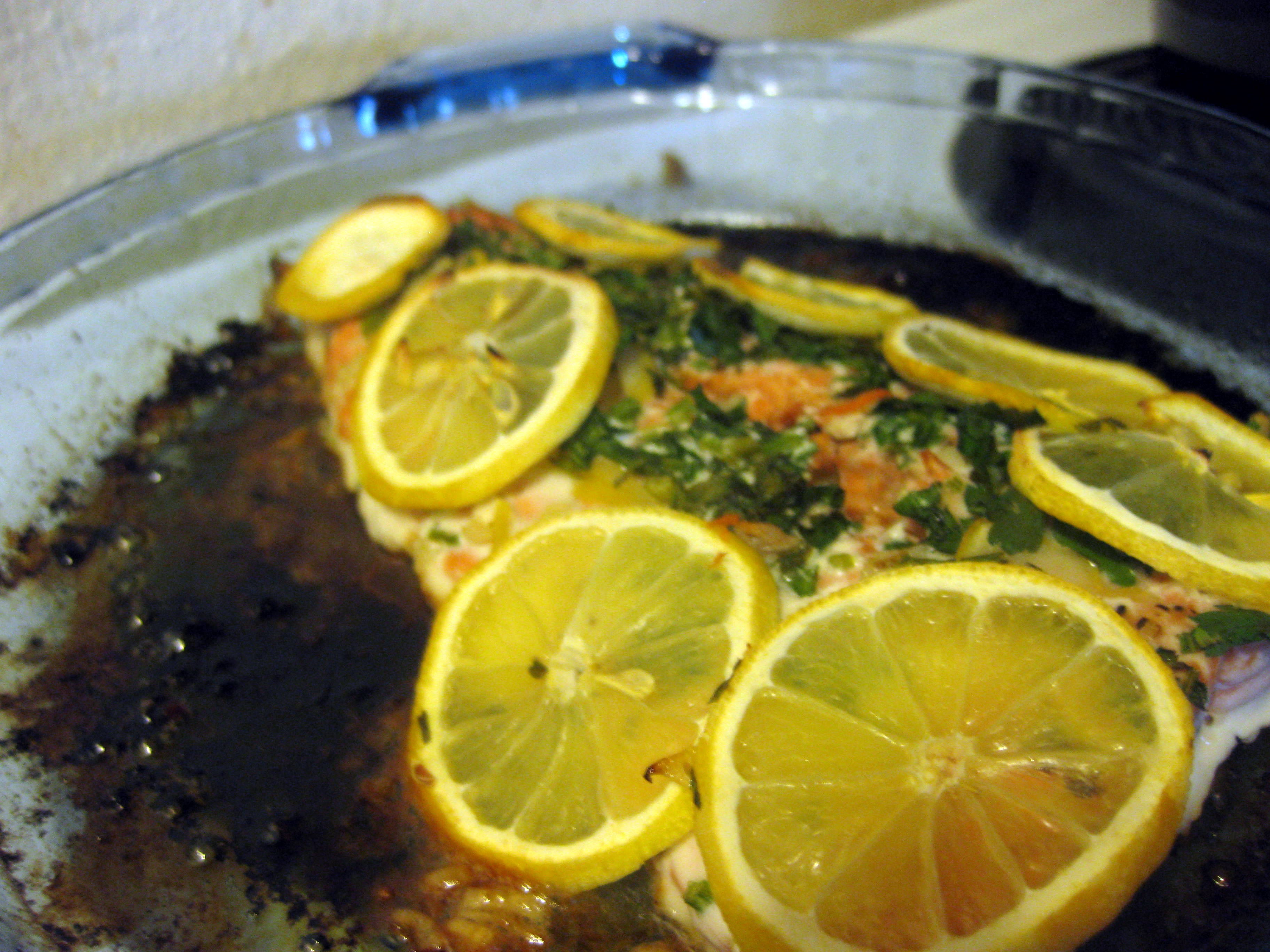
I set the fish in a baking dish on the counter to begin coming to room temperature so it wouldn’t take so long to cook.  I preheated the oven to 400F and then, in a small saucepan, melted the butter and added the garlic, wine, and lemon zest.  I let this cook together for ten minutes or so at a very low simmer.  Then I salted and peppered the fish, poured the sauce over it, sprinkled on the parsley and placed the lemon slices over the top before stowing the whole beautiful thing in the oven for half an hour.

With moments remaining on the clock, I assembled the rest of the salad: tomatoes, cucumbers, onions (drained and de-iced, thank-you-very-much), olives, cheese, and herbs went into the dressed, seasoned rice and received a relentless toss.  Now nothing remained but to evacuate the oven, pile our plates high, and eat.

Both elements of the dinner were excellent, although I should have cooked the salmon a few minutes less.  It was fleshy and rich, with a tinge of acidity from the wine and the lemon zest, while the butter and wine had kept it moist and delectable.  It could have been flakier, but then, that was my zealous overcooking.

The salad was the freshness I’d been hoping for, though because it contained brown rice it was still nice and filling.  Here again, the lemon added the right tanginess and woke up the rice and vegetables.  Similarly, the sharp saltiness of the olives and feta cheese, mingled almost unexpectedly amidst the mild vegetation, made this salad a glorious thing to continue dipping my fork into.  I served it at room temperature, so the rice was tender and smooth to bite through, lacking that starchy crunch it sometimes has straight out of the refrigerator. 

We ended the meal feeling full but not overstuffed, cravings attended to and abated, and yet… And yet no less anxious for the seasons to truly turn.

Capacity

It’s getting a little busy around here.  Being a PhD student is a strange “profession,” if you can call it that, because the workload hefts itself around in such varied ways.  In the past week I have been a researcher, a teacher, a session organizer (for a conference that doesn’t take place until July 2012!), a not-nearly-ready-even-though-my-flight-leaves-Thursday conference attendee, as well as a housewife, a hostess, an unprofessional baker, a very unprofessional blogger, and a dogmom.  And the craziest thing is, with only two or three exceptions that’s what I am every week.  It tends to produce feelings of insufficiency.

So this past week we picked a stuffing.  It seemed only appropriate, since I have such a full plate in the figurative sense, to match this in the literal world.

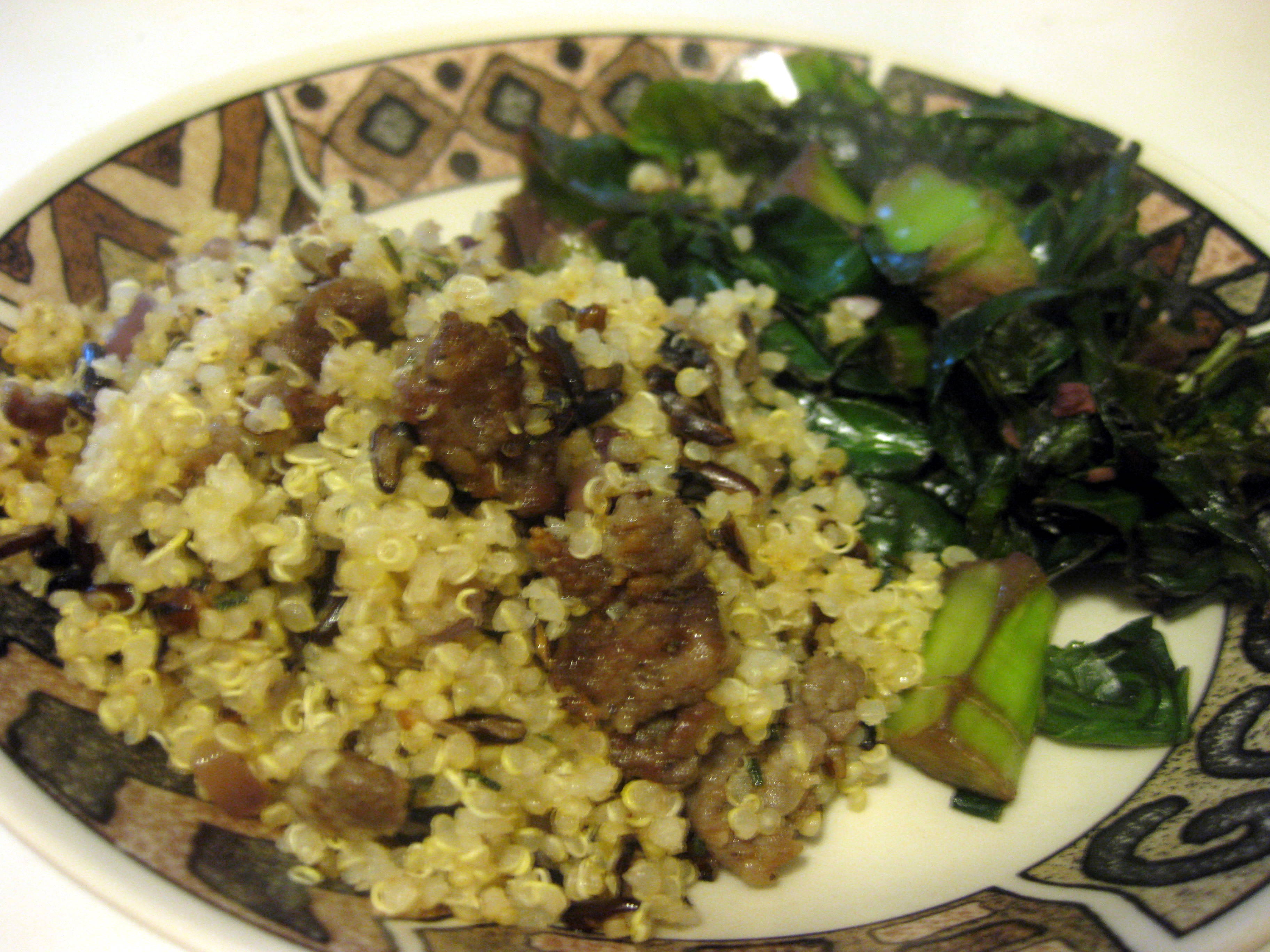
“24. Combine a little cooked wild rice with much more cooked quinoa; sauté crumbled sweet Italian sausage with onion and fresh rosemary.  Toss together.  Bake in an oiled dish or use as stuffing.”

Since I never stuff poultry, and the pork chops I would consider stuffing are on N.’s “I don’t eat that” list, I guess what we ate this week was a “dressing,” which is a term I’ve never understood.  Nevertheless, I collected ingredients, once again feeling delight at Trader Joe’s as I found a bag of pure, pre-cooked wild rice, and assembled the following:

1 cup raw quinoa, cooked according to package directions

½ cup wild rice

8 oz. Italian pork sausage

¼ cup red onion, diced

1 TB fresh rosemary, minced

Salt and pepper to taste

While the quinoa cooked, I added the sausage to a skillet with a tiny slick of oil and broke it up with a spatula so it would brown into crumbles.  When the sausage was more than halfway done, I added the onions and then the rosemary so their flavors would mingle and they would benefit from the sausage fat as a caramelizing agent.

When quinoa and sausage (and friends) were done, I stirred the meat mixture and the wild rice into the quinoa, then put it in an ovenproof casserole dish and stowed it in a 350F oven for half an hour.

In the last few minutes of baking time, I prepared our side dish: in the same pan as I had cooked the sausage, I tossed about half a bag of mixed southern greens and a few minced cloves of garlic.  As they began to cook down, I added a generous splash of red wine and a tablespoon or so of soy sauce.  This tenderized the tougher stems and flavored the leaves with tangy, salty assertiveness.

The greens were, as I already knew they would be, delicious.  We are entering the time of year when I start to crave excessive quantities of vegetables (last night I kept returning to the kitchen to snag lukewarm pieces of kale from a saucepan, and tonight’s leftover roasted broccoli didn’t even make it to the refrigerator), so the pile of slightly bitter, slightly saline roughage on my plate was the highlight for me.  The quinoa “stuffing” was also very tasty.  I don’t usually add meat to my stuffings, but here the fattiness of the sausage was a welcome foil to the nutty, healthy-feeling quinoa.  The wild rice and rosemary lent woodsy, piney flavors, making this an ideal stuffing for a wintry dinner.  I do think pork chops would receive this filling well, as would portabella mushrooms.  For us, as the wine sauce from the greens slowly bled its way across the plate into the quinoa, it was a lovely, protein packed dinner. 

But as so frequently seems to happen with these Bittman experiments, the leftovers took me by pleasant surprise.  The next day, I dressed a plate of arugula with lemon juice, olive oil, salt and pepper, then topped it with a few scoops of the quinoa mixture and popped it in the microwave for a minute.  The resulting warm salad was stupendous.  The lemon juice added just the right kick of acid, which I hadn’t realized the dish had been lacking.  Salty, crunchy, comforting and peppery all at once, it was a lunch that needed no accompaniment.  And when you are nearing your capacity from trying to be everything at once, realizing you are going to make it and you need no accompaniment is an empowering thing.

Contrast and Comfort

This week I asked N. to contribute to our menu by choosing which Bittman dish he would like to most immediately consume.  I figured this was a safe proposition because, really, everything on the list sounds tasty, and there was almost nothing I was unwilling to make.  Driven perhaps by the distinctly discomforting knowledge that Spring Break is only one week long and we were already in it, he picked the ultimate comfort: spuds.

“63. Slice potatoes thin and layer them in a nonstick skillet. Dot with butter and add enough half-and-half or milk to come three-quarters of the way to the top of the potatoes. Bring to a boil and simmer until liquid reduces a bit, about 10 minutes. Transfer to a 400-degree oven for 10 minutes until just brown, reduce to 300 degrees and cook until tender, 10 to 20 minutes more.”

Potatoes and butter and milk?  How much more comforting does it get?

I made a few additions, and collected the following:

3 russet potatoes, peeled and thinly sliced

2-4 cups milk? (depends on the size of your skillet and how you layer your potatoes)

2 TB butter, cut into small chunks

6 cloves garlic, skins intact

½ tsp each salt and pepper

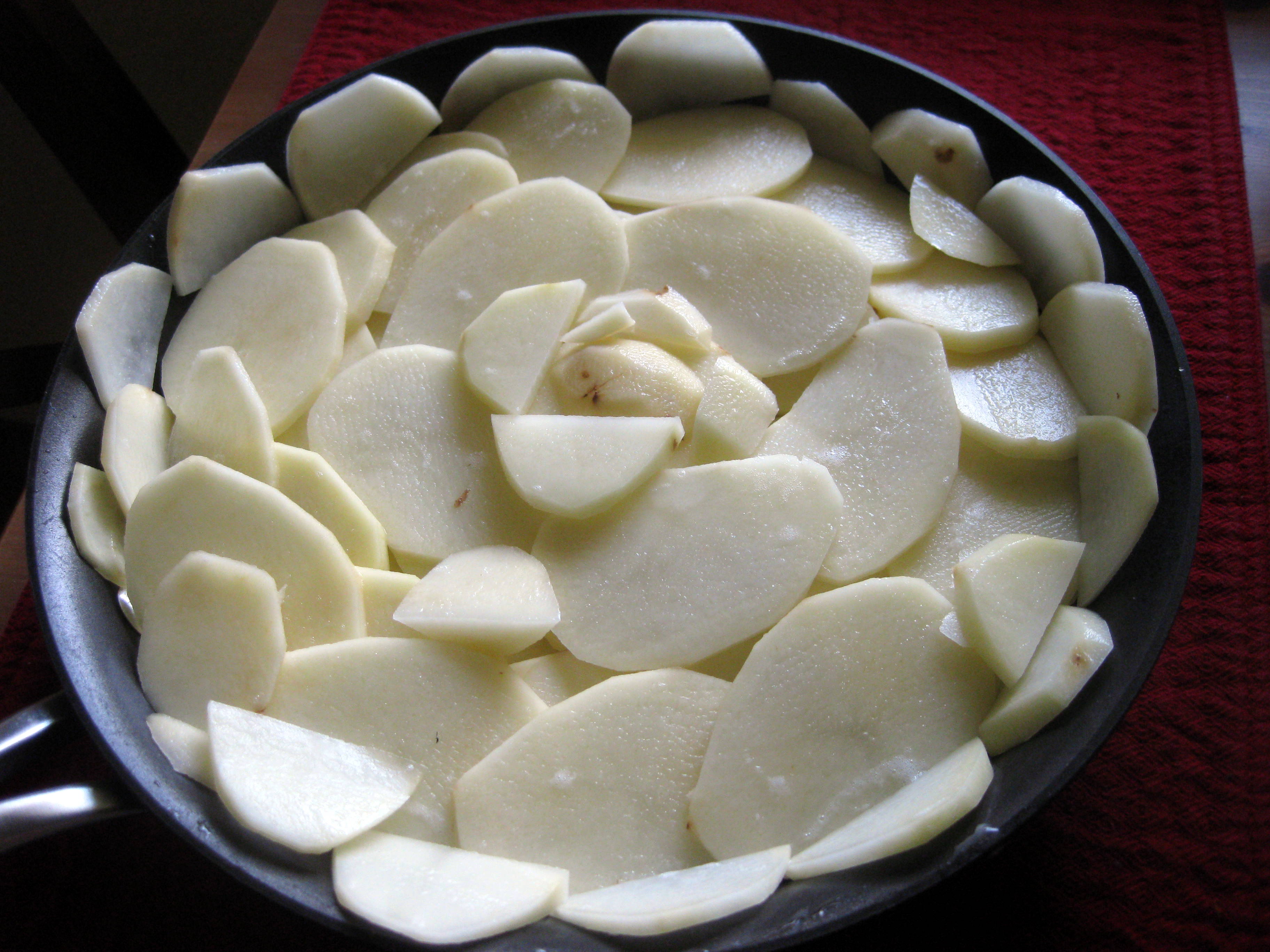
Once the potatoes were sliced, I arranged them in my skillet in a circular, overlapping pattern, hoping to create even layers and therefore even cooking. I added salt and pepper to the top layer and then, struck by the idea of roasted garlic flavor permeating the milk, nestled the whole, unpeeled garlic cloves around the skillet.  I dotted the top with butter, poured on the milk slowly until it emerged around the edges of my top layer, and set my humble skillet on the stove.

Though it took a while to heat up, as the milk was refrigerator-cold, once the boiling began it was frantic and violent.  I turned things down and let it simmer for a while before sliding the bubbling cargo carefully into the oven.  I’m not sure how much reducing went on, but some splashing into the stove’s drip trays definitely did.  Boiling milk is a fearsome hazard to a clean stove.  I know this now.

With the gently softening potatoes safe and warm, I turned my attention to our vegetable dish.  Slightly amended from a recipe in Cooking Light magazine, I made Panko-crusted broccoli to pair with the potatoes. While steaming some broccoli in the microwave, I browned about a cup of Panko bread crumbs in a few tablespoons of olive oil over medium-high heat.  They are needy little things, apt to burn if they feel slighted for attention.  Once they were a pleasant golden, however, I removed them from the pan and heated another few tablespoons of olive oil.  I tossed in three cloves of garlic, all the broccoli, which was just barely tender, and a teaspoon or so of my favorite Black and Red pepper blend from Penzey’s.  Then all that remained were a few quick tosses to combine, and some gentle ignoring to allow the broccoli to sear and brown a little in the pan.

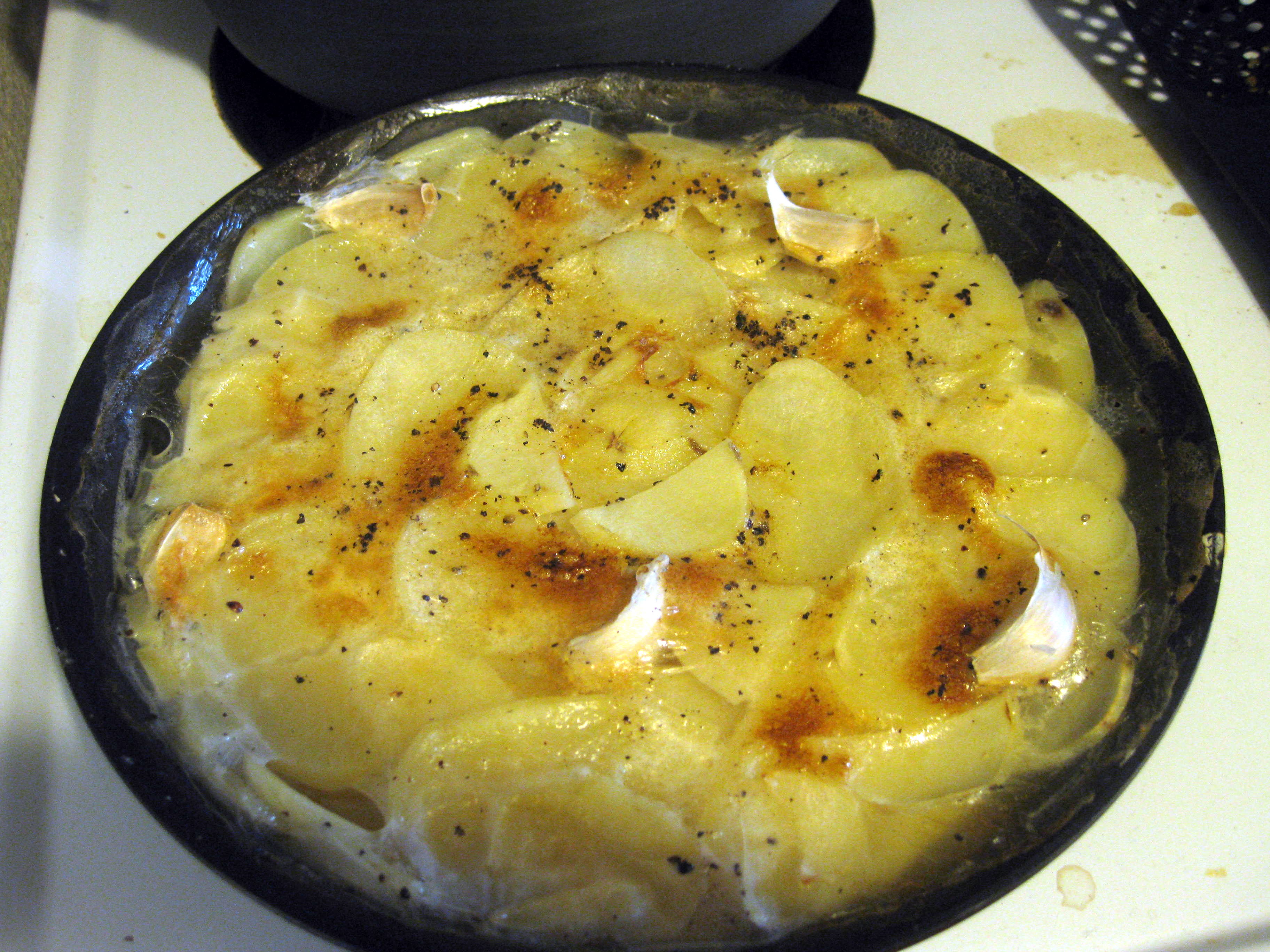
During this sautéing process, I managed to remember to turn the oven temperature down, and soon my potatoes were not only blanketed by a skim of brownness, but were achingly tender all the way down to the bottom layer. Liberation from the oven was the only logical next step.

Piled up next to my sizzling, seared broccoli, the potatoes were a snowy pile of perfect contrast.  The broccoli was crisp and fresh and a little spicy, while the potatoes were so delicate they almost mashed themselves as I spooned them out of the skillet.  The garlic had not permeated the milk (though that didn’t stop us from pressing it out of its skin and mixing it in), so the flavor of the dish was very gentle.  It was almost bland, which made me glad I’d added salt, but I think next time I would remove the garlic from its skins and nestle it amidst the potato layers rather than just on the top, and I might add sprinklings of Parmesan cheese between layers too, for a salty kick and additional flavor.  The star of the whole meal, however, was the Panko.  Crisp and complementary on the broccoli, it was also good as a topper for the potatoes.  It soaked up the silky remnants of the milk without getting soggy, and provided the kind of textural element the foodie-folks are always talking about.

With leftovers stowed in the fridge and the first day back to school reluctantly attended but assuredly conquered, I see the near future of these Tupperware-swaddled babies: smashed down with a fork, some butter and cheese folded in, and maybe a few leaves of baby spinach to add some attempt at health.  If I’m lucky, they might approximate the potato and kale soup I tasted at Humble Beagle the other night, which was less a soup than a bowl of thick, flavorful, wonderfully creamy blended potatoes.

It’s comforting to know such deliciousness is only a microwave away.

Shame

Twice a year (approximately), a truly embarrasing-to-admit-you-are-obsessed-with-what-with-being-an-intelligent-and-well-educated-woman reality television show starts a new season.  And I MUST watch it.  And I don’t watch it alone (most of the time).  Several female friends are also implicated in this shamefulness, and because the show involves large quantities of too-skinny women, we like to pair our guilty viewing sessions with dessert.

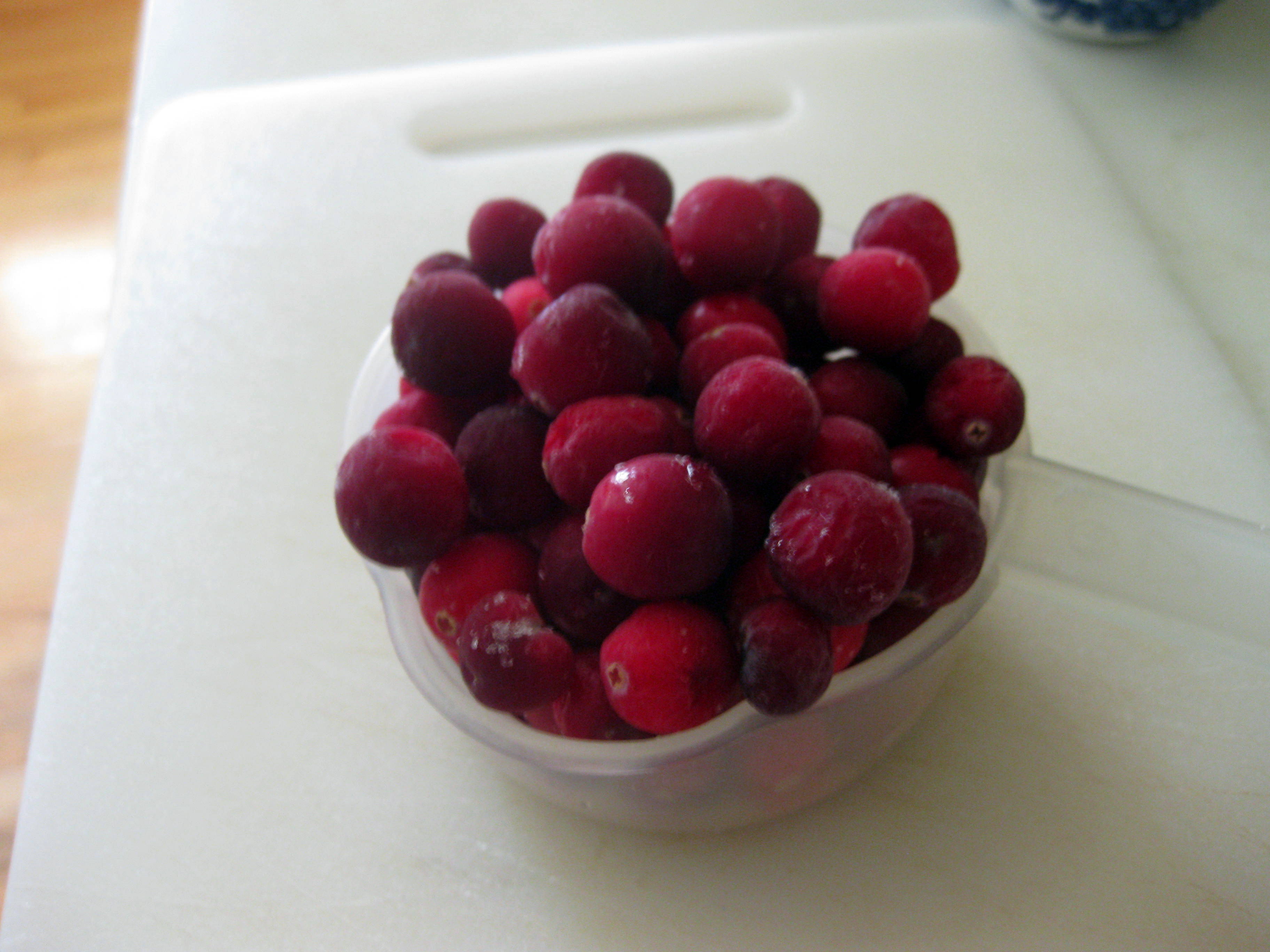
As a new season of this show recently started, I thought this would be a great opportunity to breach the dessert section of my Bittman project.  With Pink Lady apples on sale during my weekly pilgrimage and foggy (but accurate!) memory of a bag of cranberries, frozen in November, jammed in the back of my freezer, everything came together.

“99. Apple-Cranberry Crumble: Peel and slice 4 large tart apples.  Toss with a cup of cranberries, the juice and zest of a lemon and ¼ cup brandy, apple cider or water and put into a buttered baking dish.  Pulse ½ cup cold butter, ½ cup oats, ½ cup walnuts or pecans, ½ cup flour, ¾ cup brown sugar, 1 tablespoon cinnamon and ½ teaspoon ginger in a food processor until crumbly – not fine.  Top the fruit with this and bake until bubbly, about 45 minutes.”

Because I did almost exactly this, and because the quantities are listed here, I’m not going to type out an ingredient list – it would be very repetitive.  But I will tell you the changes I made, due to ingredient lack and personal preference, and which worked out well.

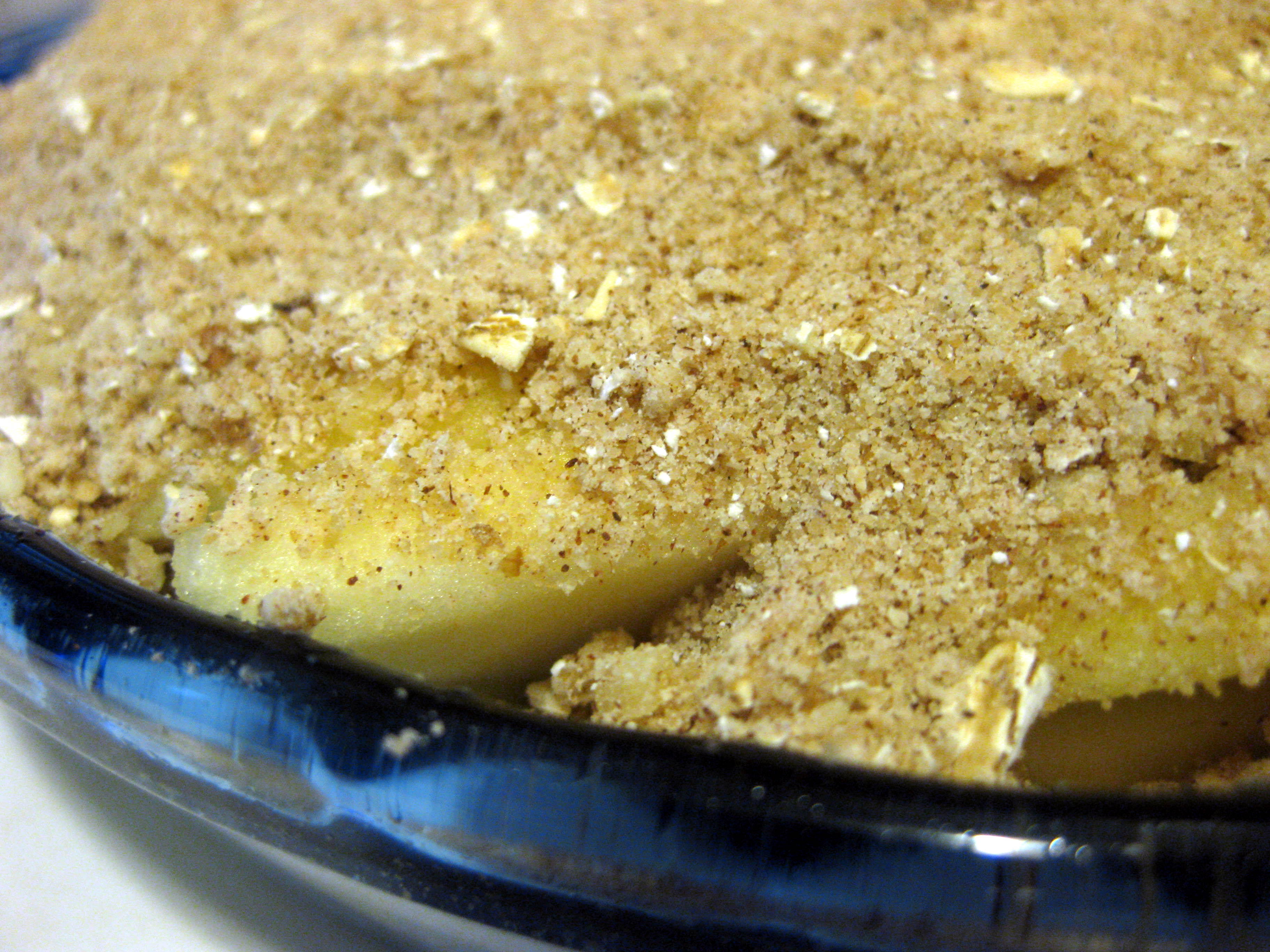
I didn’t have brandy, so I used spiced rum instead.  Because the apples were mouth-wateringly tart and the cranberries relentlessly so, I decided to divide the sugar and put about ¼ cup in with the filling, leaving only ½ cup in the topping.  This still rendered a very sweet topping, especially on the leftovers ice cold from the fridge.  I think I pulsed the topping too much, because what resulted was almost like graham cracker crumbs.  I exacerbated the cookie-like texture because, using a pie pan clearly too small for all this goodness, I patted the topping on fairly firmly to keep everything together.  I think a 9×9 square baking dish would be the right size for this dessert.

I preheated the oven to 350F for this, because it’s a fairly standard temperature for desserts and Bittman doesn’t specify.

Perhaps because the topping was packed on so tightly, or because the Pink Lady apples I used were less juicy than Granny Smiths, which is my usual pie apple, 45 minutes later there wasn’t much bubbling.  The topping had, however, turned golden and crispy, and the smell of apples and cinnamon mixed with a tantalizing tartness had permeated the house.  I’ve discovered in the past year that all those Food Network chefs who tell you doneness can be determined by smell do have a point.  It smelled ready, I decided it was done, and my nose and I were right.

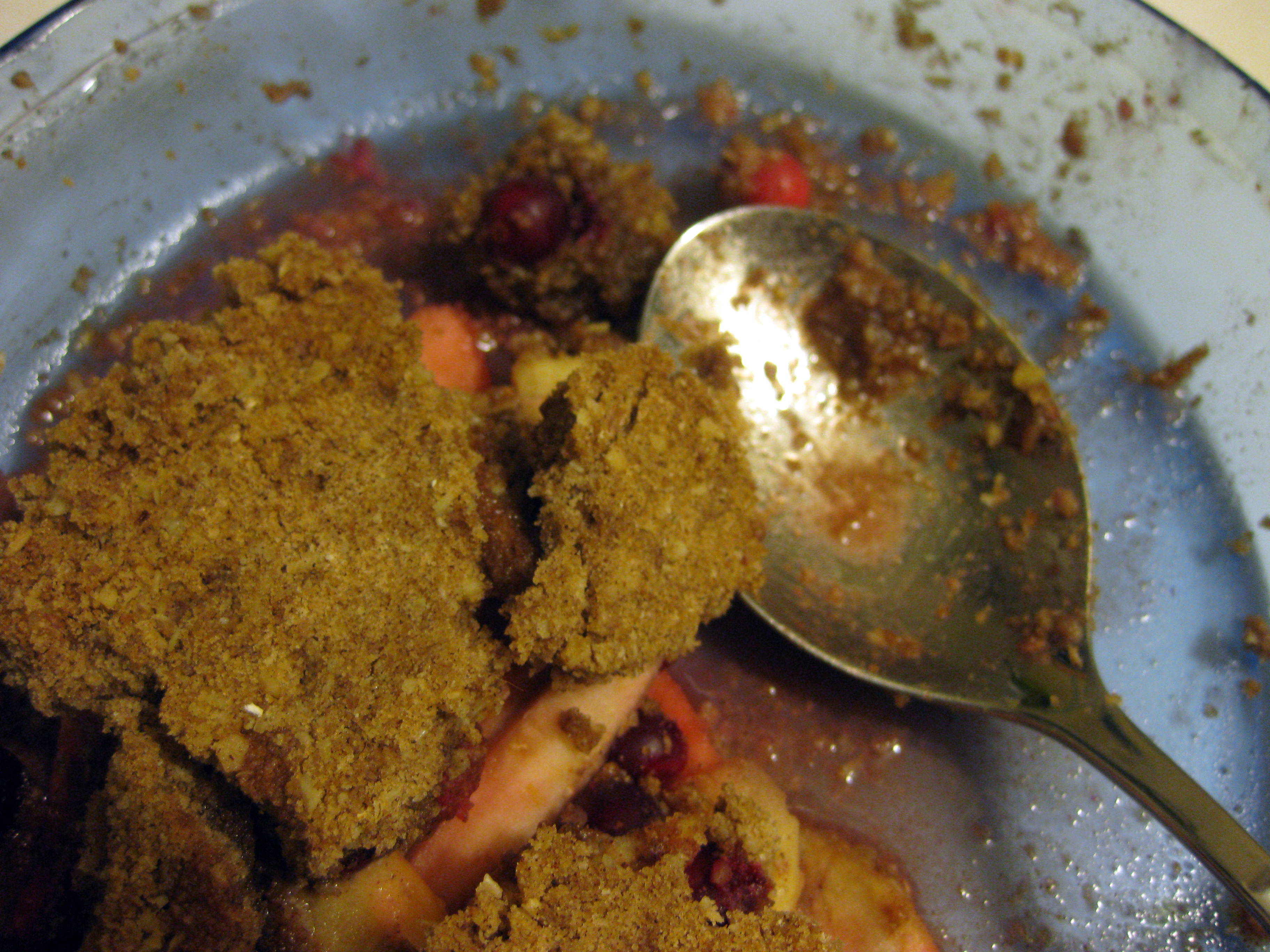
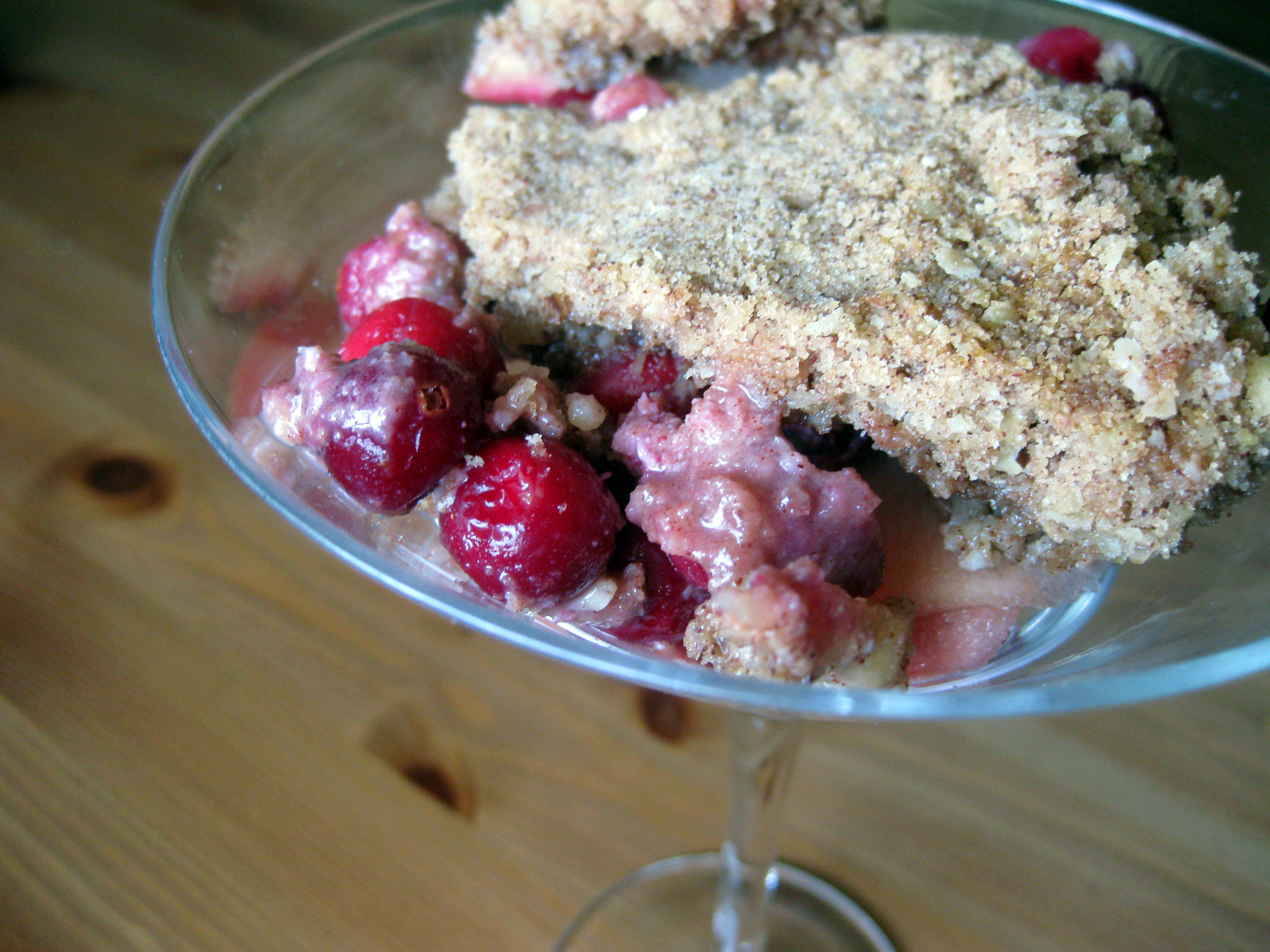
When I served this, spooning tender apple slices stained with juice from the popped cranberries and blanketed with a crunchy, cookie-like layer of awesome, one serving proved not enough.  In fact, between me, the two ladies I was sharing with, and N. when he sneaked through to pick up dessert near the end of the show, we devoured about ¾ of this simple, homey treat in one evening.  And we didn’t even have ice cream on the side.

Clearly, my assessment on this pick is that it was fantastic.  Easy ingredients, easy to make, and so difficult to mess up that it can be served to company the first time you attempt it.  Pleasantly, the apples maintained a bit of texture even after almost an hour in the oven.  The rum was soaked up and cooked off, leaving only the barest tingling spice that went well with both the apples and the cranberries.  Even with the addition of brown sugar in the filling and the richness of the crumble, the cranberries and lemon kept the whole dish feeling very bright.  It made me think that with more cranberries, smaller pieces of apples, and no topping, this could be a delightful take on cranberry sauce.

As these things so often go, and as good as our first decimating exploration was, this dish’s debut was not its best showing.  Rather, two days later when I needed a pick-me-up and saw the aluminum foil covered pie plate balancing unsteadily atop several stacked Tupperwares, I discovered its chilly waiting period had brought it to perfection.  The apples were incredibly flavorful, the cranberries were still tart but had mellowed into something resembling sweetness, and the crumble on top was like a cinnamon-scented crust on the best New York cheesecake you’ve ever had.  So delicious.  And really, as good as the apple and cranberry pairing was, I see no reason this topping couldn’t be patted over other types of fruit.  Pears and raisins, if you added a little nutmeg to the topping, would be stellar.  Plums, peaches, maybe even cherries, could happily burble away under such a glorious blanket.  And though next time I might pulse the topping less and sprinkle over the fruit rather than pressing, this is a dessert I will not forget to make again.  Maybe every time a new shameful viewing season begins.

Grain Games

When I was a teenager, my aunt gave the family a book of board games.  There were little flat pieces that looked like mancala stones to play the games in a zip-up baggie that hung off the spiral binding of the book, and lots of games we had never heard of and, in truth, some that we never ended up playing.  In fact, after some experimentation there was only one game that ended up being played with any regularity.  It was called “Dalmation Pirates and the Volga Bulgars,” and featured a board drawn over a beautiful clay-sculpted background of waves a tiny town, and even a Playdough-looking sea serpent.  The objective was for the 24 pieces representing the pirates to try and occupy completely the nine spaces representing the town.  The objective for the Bulgars, of course, was to prevent this from happening by capturing (through jumping pieces, like checkers) enough Pirates to make their occupation impossible.

I was never a fan of checkers or chess, or even Othello, because I wasn’t very good at them and didn’t like the idea of investing enough losses to learn the game well and begin to excel, but for some reason this Pirates vs. townspeople game appealed to me.  I played it with my dad, and I always wanted to be the Bulgars.  Maybe I liked the art surrounding the game, maybe I liked the fact that it was new to both of us, but something about it appealed, and I was good at it.  My defense of my town was of paramount importance, and my land- and sea-going people-pieces were strong and resilient and very fond of capturing pirates.

This seems like a strange way for a food-related post to begin, and indeed my memory is based on homophones, not homonyms, but this week’s Bittman choice reminded me of this old favorite:

“49. Halve and seed acorn, butternut or delicata squash and roast until squash begins to soften. Meanwhile, cook bulgur, drain and toss with coarsely chopped pine nuts and currants. Add a bit of the stuffing to each squash half and sprinkle with cinnamon. Bake until squash is tender.”

I don’t cook bulgur very often, but every time I hear the word, see the word, think about this hardy, tasty grain, my mind goes not to the food itself, but back to a winter afternoon, sitting on the floor in the living room with my dad, playing “Dalmation Pirates and the Volga Bulgars” in a room only recently divested of shreds of wrapping paper.  It’s that kind of fond memory.

With the autumnal flavor combinations in this dish, I could see it accompanying a game of Pirates vs. Bulgars quite nicely.  Here’s what I used:

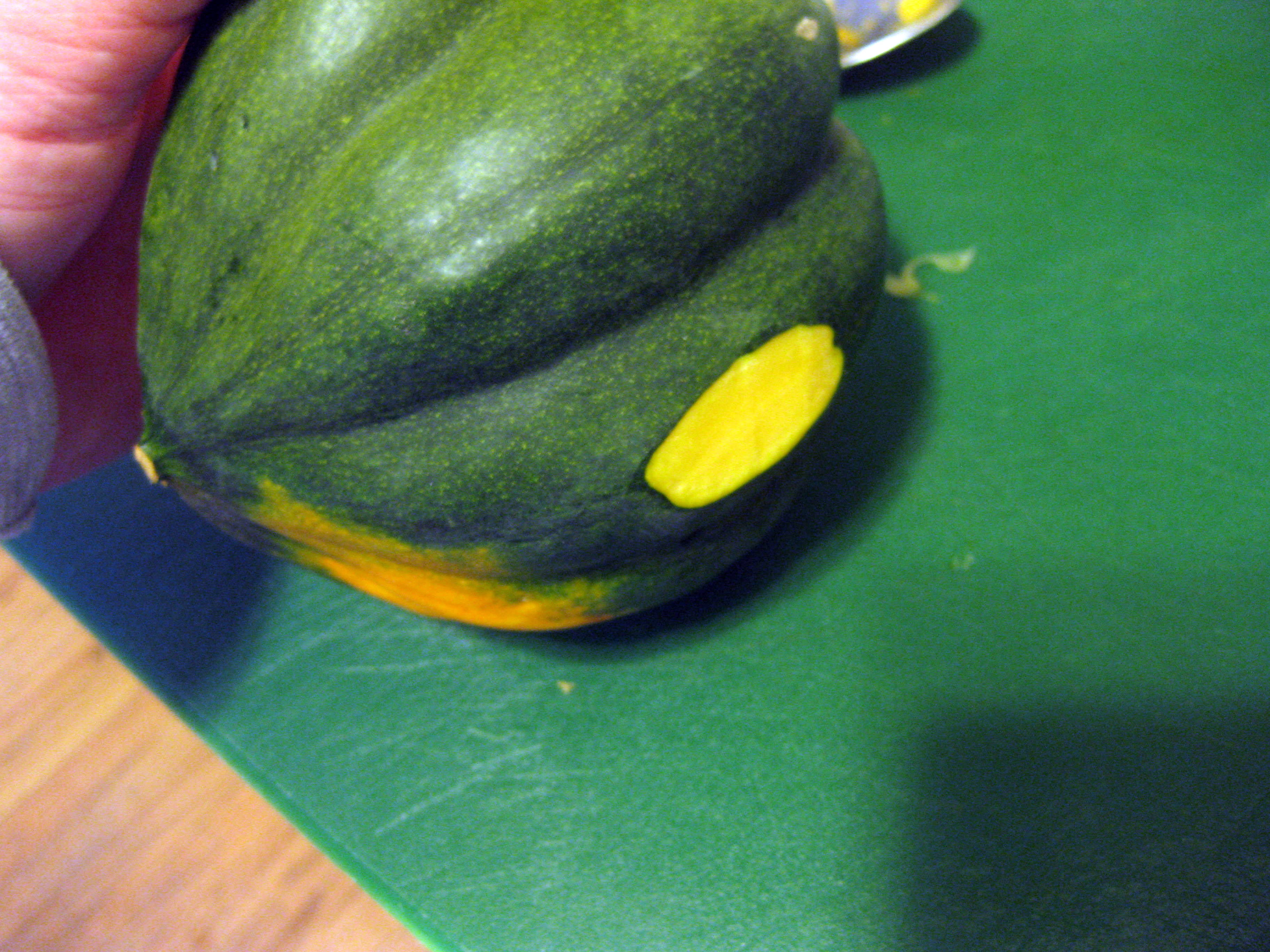
1 acorn squash, halved, seeded, and balanced by cutting a thin strip from one of the ridges to help it stand up

1 cup bulgur wheat, cooked in 2 ½ cups water or broth

2-3 TB pine nuts, toasted and coarsely chopped

2-3 TB currants

2-3 TB parsley, finely minced

4 TB butter

1 tsp cinnamon or to taste

Salt and pepper

After prepping the squash, I nestled them against each other in a 9-inch metal cake pan, salted and peppered the inside well, added probably ½ TB of butter to each well, and stowed them in the oven, which I’d preheated to 375F.

While the squash began making, I prepared the bulgur.  I used 2 ½ cups of water for my 1 cup of bulgur, and tossed in 2 TB of butter just to add some richness.  Preparing bulgur is like a combination of rice and couscous: you allow the water to come to a boil, then add the bulgur and cook until the water is absorbed and the grains are tender but still chewy.  It took about 25 minutes.

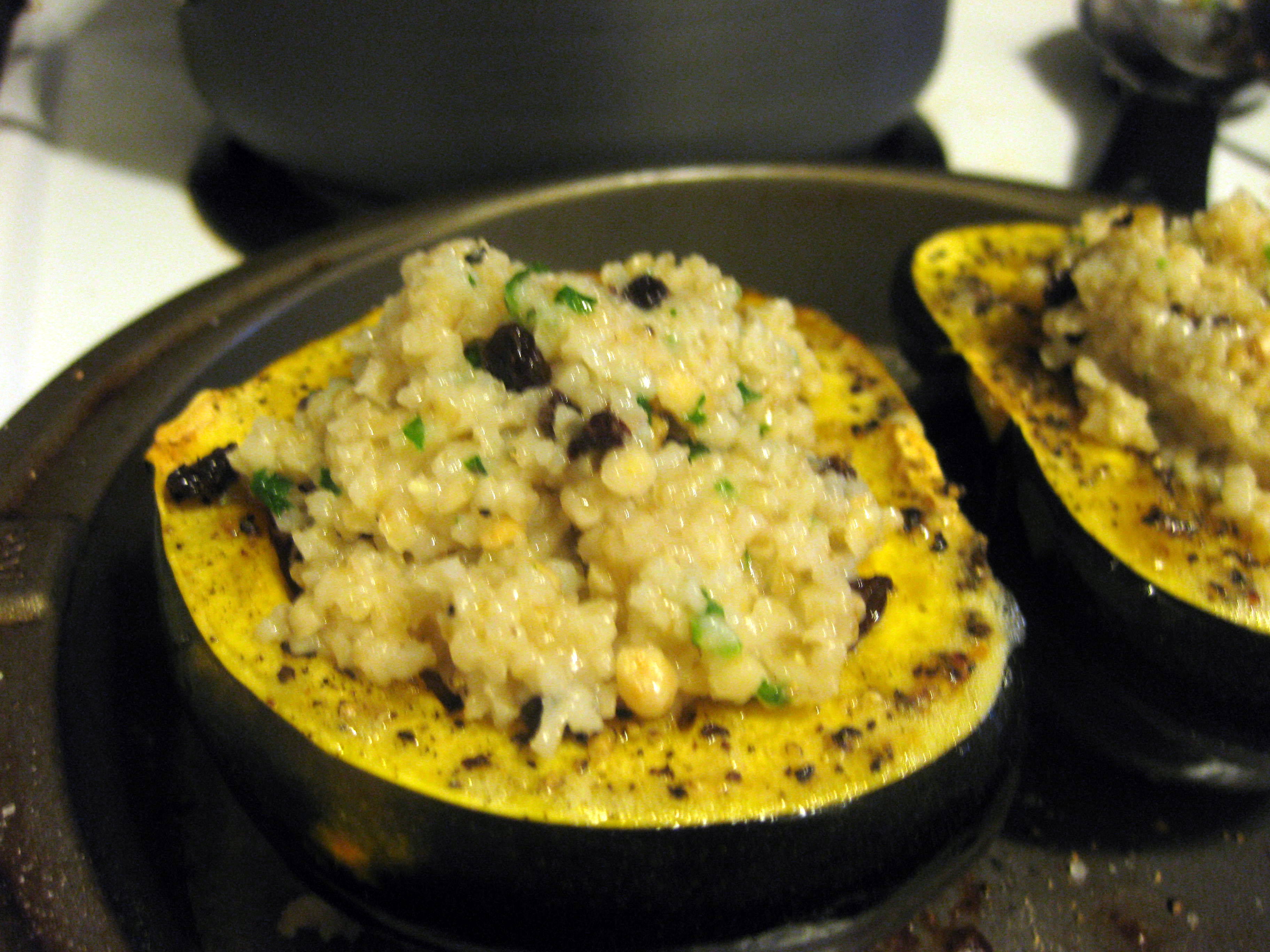
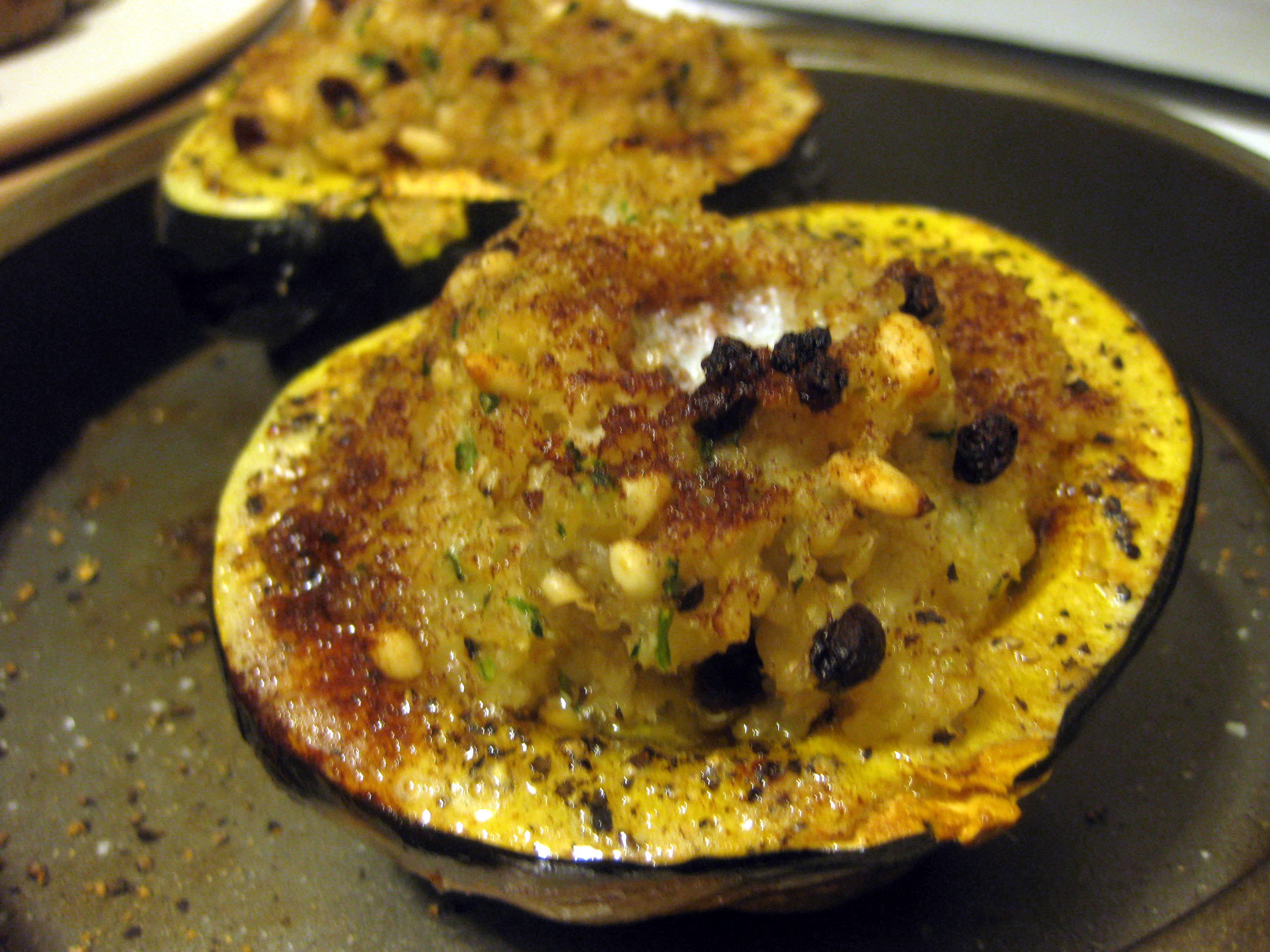
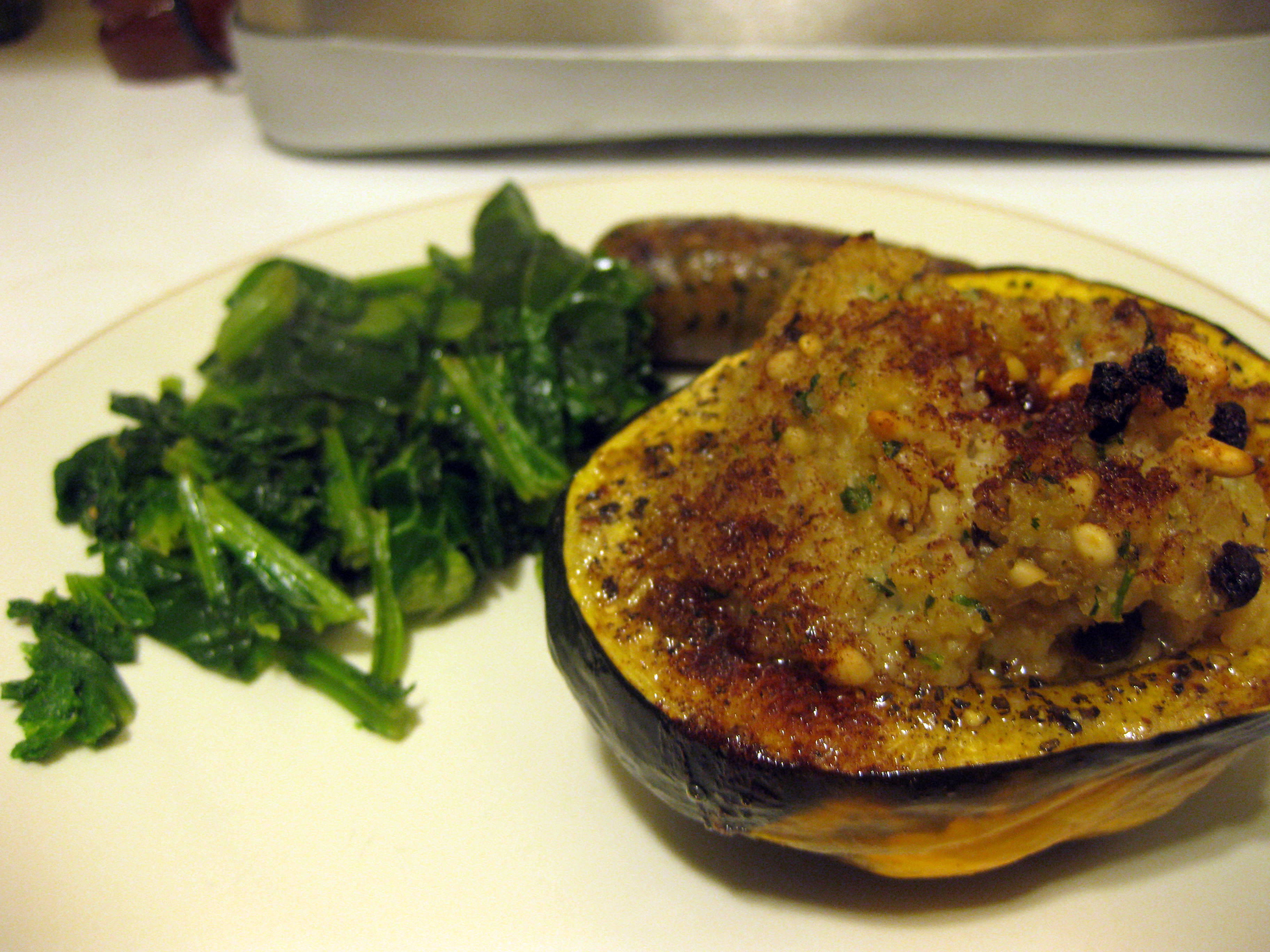
When the bulgur was done, I stirred in the pine nuts, currants, and parsley, which is not on Bittman’s recipe but which I had kicking around in the fridge, begging to add some color to something.  I excavated my squash babies from the oven, basted them up the sides a bit with the now-melted butter in their cavities, then filled up those caves with a few mounded scoops of bulgur stuffing.  I sprinkled the top with cinnamon and then, spurred perhaps by watching too much Paula Deen on the Food Network, halved my last TB of butter and pressed the little cubes gently atop each mound of stuffing.

My Bittman Bulgurs went back into the oven for about 20 minutes while I prepped the rest of our meal: chicken basil sausages and sautéed greens.  Trader Joe’s occasionally has a tremendous sack of mixed “southern” greens including mustard greens, turnip greens, and a few other shreds of deliciousness that I like quite a bit.  Taking my cue from last week’s green bean triumph, I blanched a big pot of these greens for a few minutes, scorched off my sausages, then added the drained greens to the sausage pan, where they sizzled insistently and picked up some meaty flavors.

When I dared to peek at the squash boats, and tentatively poked down into their hopefully-now-softened flesh with a fork, I found the stuffing had taken on a crunch-promising-crust and the squash beneath was achingly tender. 

When we dug in, cracking through the crunchy tip of the stuffing pinnacles and scraping the soft orange squash beneath it, I wasn’t sure what to anticipate.  The cinnamon idea was throwing me off.  Even though there was no added sweetener, the cinnamon gave off warm spicy dessert tones, and I think I was expecting that to clash with the squash.  But I had forgotten, somehow, momentarily, that propensity of squash to collect flavors and, chameleon-like, transform itself from a savory item to a potential dessert.  And yet here, while it blended well with the cinnamon and the currants, neither the stuffing nor its vessel read dessert.  They were just warm and comforting, with the surprise spice and crunch on top to add excitement.  The bulgur was still slightly chewy, with that golden nuttiness whole grains so often have, and I considered that if you wanted to make this gluten-free, you could use brown rice or quinoa with fairly similar results.

Packing up the remains of dinner, I realized with delight that one slightly manipulated half of acorn squash fits perfectly in one of my round Tupperware containers.  I wedged it in carefully, added a bit more stuffing, and offered it a benediction: “Good night, Lunch.”

Going Greek

On some Friday nights, after visiting a bar near campus where we share Happy Hour with folks from our department, N. and I stroll back to the parking lot where we’ve left our car, arm in arm and happy to be starting the weekend together.  We approach the lot, now almost empty of cars, only to find it occupied by three or four large, noisy, overstuffed school buses, jammed to the gills with undergrads in disco dresses, in plastic pants, in formalwear and stacked heels and spiked hair and too-short skirts.  Last week there were a few girls in lederhosen.  They are from fraternities and sororities, heading out to formal nights or costume nights or party-till-you-forget-who-you-are nights, and we have to skirt around the buses in our car to escape from the parking lot and head home.

The lederhosen last week got me thinking: I’ve seen a definite shortage of togas among these party-goers (and I’m not just punning on the shortness of skirts here), replaced by lots of skimpy costumes.  It made me wonder whether they know that the tradition of fraternity toga parties is from the designation of these organizations as “Greek.”  Do they recognize this connection, or have they made the leap that togas are costumes, but there are lots of other costumes, so let’s just have a costume party?

I was never a sorority girl, and though I love a good costume party, I haven’t yet attempted the complex transformation from innocent white bed sheet to Classical garment.  Togas are one thing, but this week’s Bittman choice is, to me, a much more enjoyable way of going Greek. 

“62. Spinach-Cheese Pie: Sauté chopped garlic and two pounds of chopped spinach in plenty of olive oil until wilted and tender.  Remove from the heat and stir in ½ to ¾ cup crumbled feta or firm goat cheese, and a tablespoon chopped dill or mint. Layer 5 sheets phyllo dough in a greased baking dish, brushing each one with olive oil before adding the next. Spread the spinach over the phyllo, then top with 5 more phyllo sheets, each brushed with olive oil. Tuck in the edges if they extend over the ends of the pan, slash the top of the pie diagonally in a few places and bake until golden brown, 30-40 minutes.”

This is basically spanakopita, so I knew from the beginning it would be good.  With the addition of 3-4 thinly sliced green onions and liberal seasoning of salt and pepper in my spinach, I followed this unusually precise almost-recipe to the letter.  Here’s what I used:

2 10 oz. packages frozen chopped spinach, defrosted and very well drained (I know this isn’t two pounds, but it’s what I had in the freezer)

4 cloves garlic, finely minced

4 green onions, finely sliced (white and green parts)

1 generous TB finely chopped dill

½ cup crumbled feta cheese

10 sheets phyllo dough

Olive oil

Salt and pepper

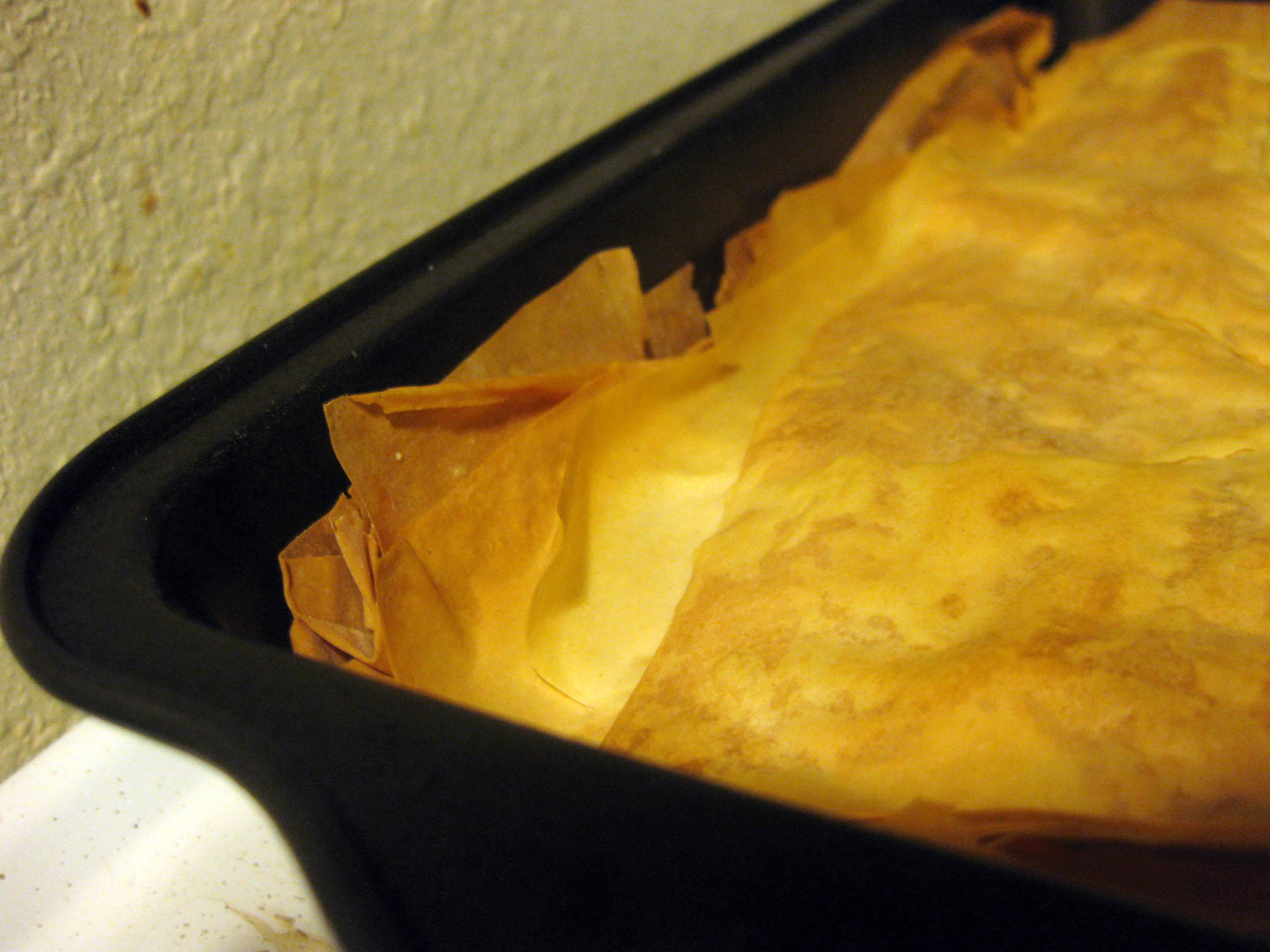
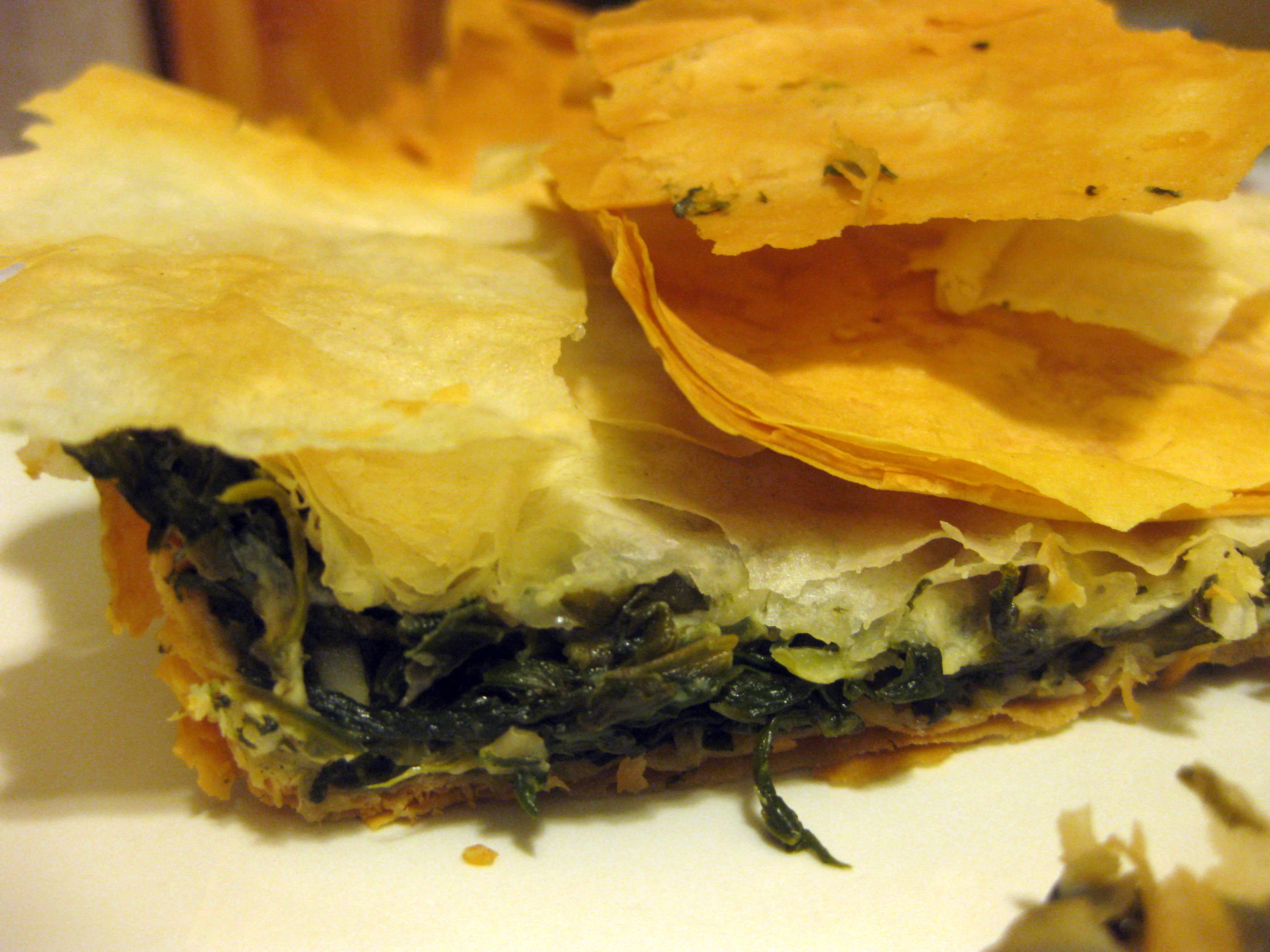
I forgot to snap a shot of the filling before tucking it in, but the fully constructed “pie” was lovely.  I opted not to fold under all the edges after layering up in a baking dish, because I love that crunchy paper-thin crispness exposed edges of phyllo take on in the oven.  Messy sheets are not always a bad thing.

I let the crisping, warming, melting, softening happen for 30 minutes in an oven preheated to 375F, and readied our soup course.

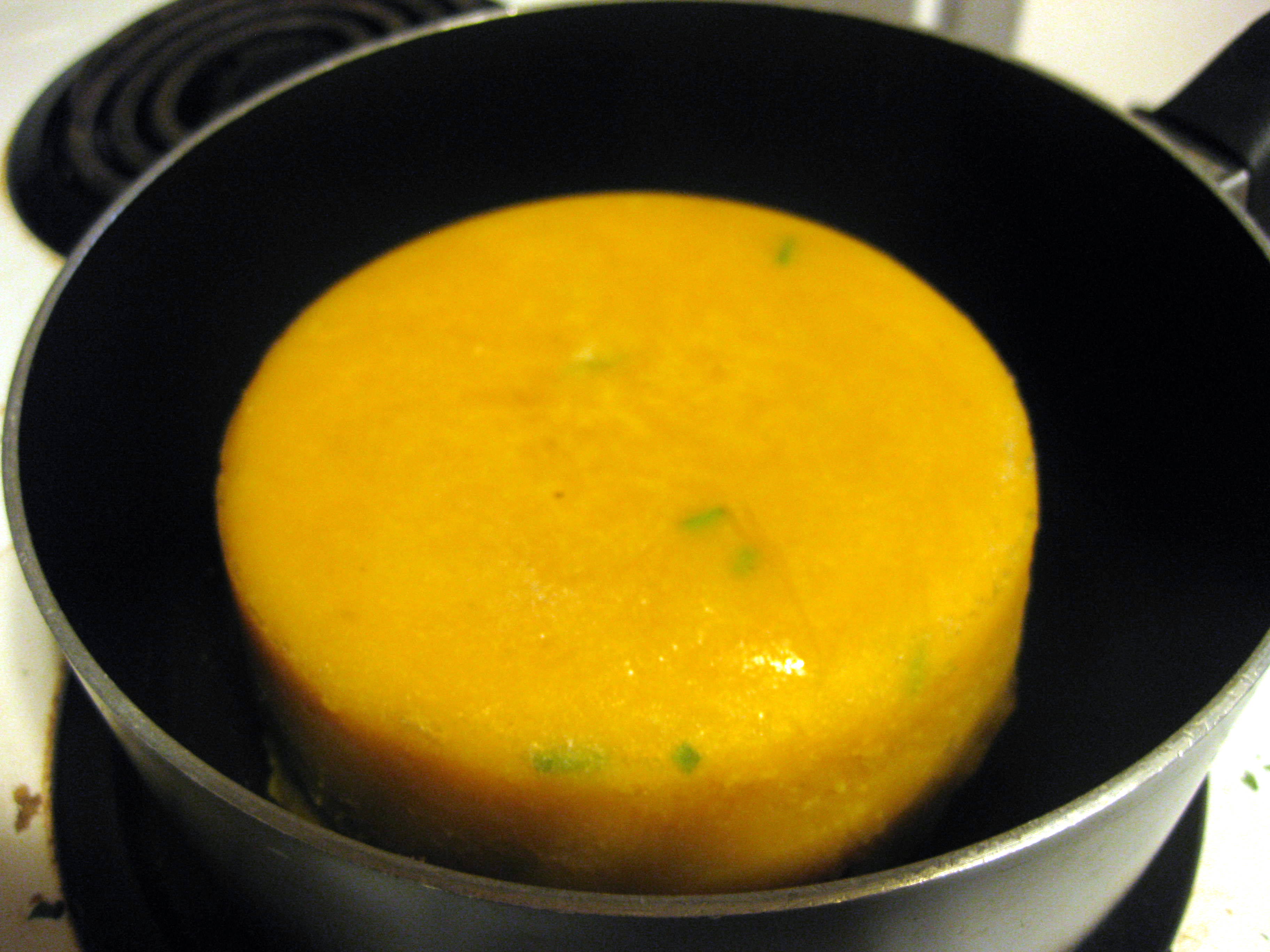
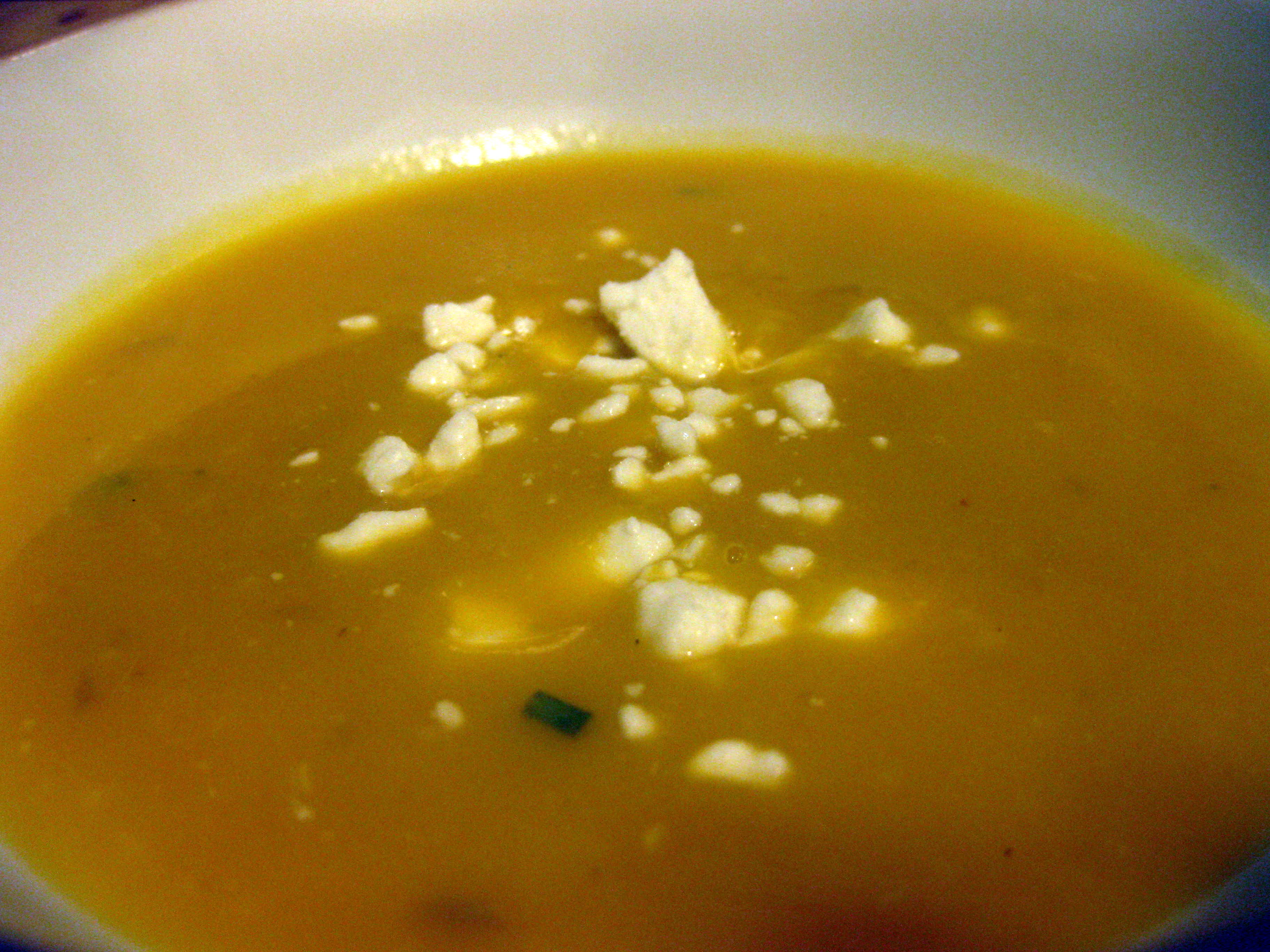
To contrast the green and soft matte golden brown of the spanakopita, I turned to a frozen friend: butternut squash soup from this fall, which we’d consumed half of and stashed away the remainder for a lazier day.  I plunked the solid orange disk into a pot and added a splash of roasted garlic-infused chicken broth to loosen it up a little (the original batch had been more like a puree than a soup).  Then I left it to its own devices on medium low until sluggish bubbles were forming and the spanakopita was golden and done.

This is why I love phyllo: look at those edges!  Fragile shards of flaky crunch where the edges protrude alone, but the soft tender feeling of pastry on the inner layers.  I decided I like the flavor and texture of butter between the sheets slightly better than olive oil, but this way was probably better for us.  Butter just adds additional richness.


This was so tasty, and so surprisingly light that we were glad of the soup as a hearty accompaniment.  The phyllo really does give the impression, when it is layered together like this, of a thick crust, but it is so thin and fragile that it’s almost like having no starch at all in the dish.  The spinach, dill, and feta mixture is the perfect blend: green hearty healthy tenderness from the spinach, bright freshness from the dill, and crumbly tart salty brine from the feta interspersed amidst the vegetation.  If you didn’t want to take the time with the phyllo, this would also make a great quiche filling, or a Mediterranean option to pack into stuffed mushrooms.

The feta was so good in the spanakopita itself that I thought it would make a nice topping for the soup, brightening the slow comforting sweetness of the squash and potato mixture.

It’s good to be right.