Reuben Meatballs

When I wax on about some deeply held, sentimental food memory, it’s usually in reference to one of the women in my family. My mom and my aunts are great cooks, my Nana was a powerhouse in the kitchen, and my sister is always my sounding board for dish ideas and inspiration.

2015 Blog August-0349But this one really originates from my dad. Dad doesn’t cook much. He is a master of coconut French toast, and he mans the grill for our family, but he isn’t often stirring a pot over the stove or pushing something into the oven. One of his specialties, though, is the reuben. He builds the sandwich, packs four of them tightly into my parents’ ancient, stained electric skillet, and somehow manages to flip each one perfectly.

2015 Blog August-0320When I was little, I though Dad had invented this sandwich. I mean, if you stop and think about it, it’s a strange collection of ingredients: corned beef and swiss cheese are reasonably normal, yes, but then you add a layer of sauerkraut and douse it with Russian or Thousand Island dressing straight out of the bottle? And dark rye is such a dad-bread, isn’t it? Only a dad would make you a school sandwich on rye bread. These reuben things must have been one of my dad’s concoctions – his own weird, elevated version of a grilled cheese sandwich.

2015 Blog August-03302015 Blog August-0336Imagine my astonishment, then, when I started seeing reubens on restaurant menus. This was a real thing! This wasn’t just a weird Dad-dish! I already liked reubens, as odd as I thought they were, but as an adult it’s hard for me to pass one up when it appears on a sandwich menu. One of our favorite haunts in Eugene had a tempeh version I’m working on recreating. I love a grilled sandwich, and the savory, meaty, melty business, along with the sagging pickle of the sauerkraut and the tangy sweetness of the dressing makes this worth the 5-6 napkins it usually requires.

2015 Blog August-0338It’s no great surprise, then, that reubens became an inspiration for a meatball. Here, I’ve borrowed and shifted a bit, but tried to capture the essential elements of the classic sandwich in these compact packages. Ground beef is lightly mixed with finely diced pastrami, a bit of ketchup and mayonnaise to echo the dressing, some roughly chopped capers or diced pickle, chopped dill, and, if you like (I don’t), a minimal sprinkle of caraway seeds as a nod to the traditional rye bread of the original sandwich.

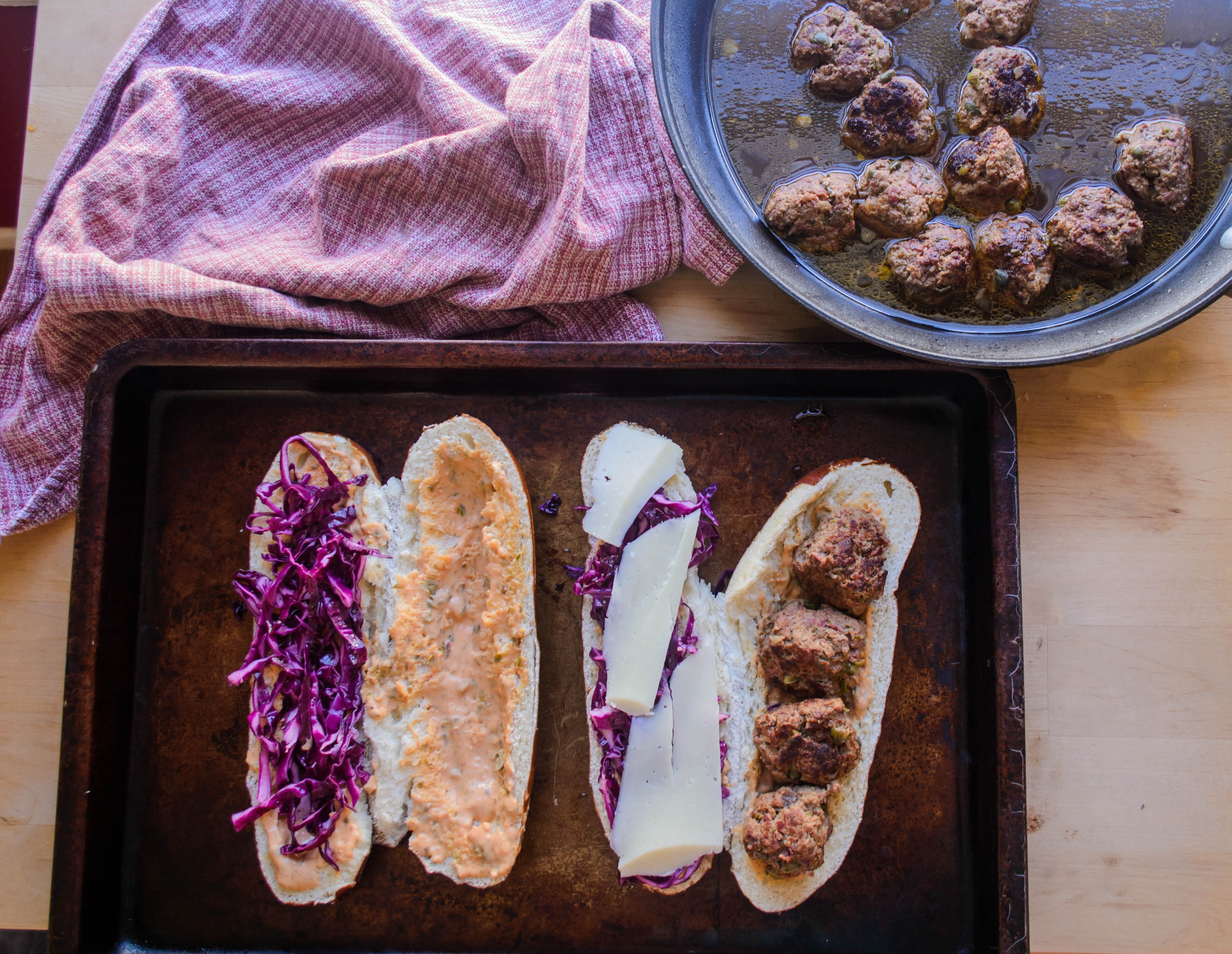
2015 Blog August-03392015 Blog August-0343Though I originally thought of just jamming all the essentials into the meatball itself, I couldn’t imagine presenting this meatball in any other format than a sandwich. Thus, the cabbage, here lightly pickled rather than deeply brined (which, if you’re keeping track, needs to sit for a few hours before you make the sandwich), and the cheese, remain outside the meatball itself. As for the dressing, I spice up the original by adding sriracha and grated garlic to the standard ketchup and mayonnaise blend, and throw in some minced capers instead of the dill pickles. And I know, this is an affront to authenticity, but I couldn’t picture a quartet of meatballs sitting easily between two slices of rye bread, so I exchanged, keeping the depth of color but not the precise flavor, and went with a pretzel roll.

And if a regular pretzel roll isn’t enough for you, I found these at my Whole Foods:

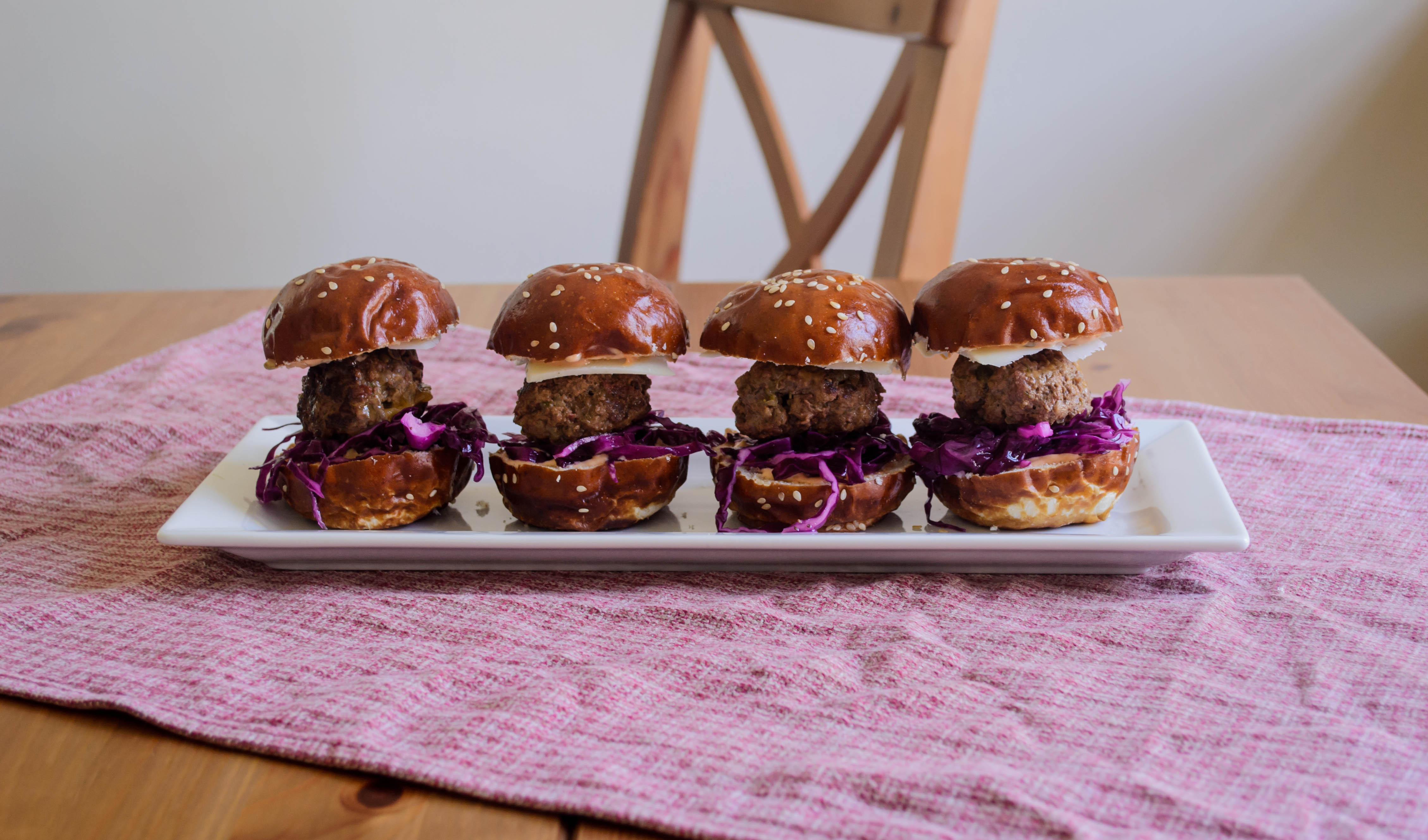
2015 Blog August-0326That’s right, mini pretzel rolls. Pretzel roll meatball sliders. I know. But I couldn’t help myself.

2015 Blog August-0358Our assessment? These are some goooood meatballs. The bits of pastrami mixed in with the beef makes them incredibly flavorful, and you can definitely taste the dill and the mild pickled essence of the capers in the final product. I love the crispness of the cabbage – it’s not as strongly briny as sauerkraut, but it is bright with flavor and retains some texture, which is a nice addition. As we finished our sandwiches, N. turned to me and declared that these were his favorite meatball thus far. I asked him why, and he said “they’re just so… so savory!” So there you are. A most savory meatball, for my own twist on the ultimate dad-sandwich.
2015 Blog August-0355

Reuben Meatball Sandwiches
Makes 4 sandwiches or 16 sliders
For cabbage:
2 cups finely sliced or shredded red or green cabbage
1 teaspoon kosher salt
1 teaspoon sugar
½ teaspoon celery seeds (optional)
1 teaspoon apple cider vinegar
2 teaspoons olive oil
For meatballs:
¼ cup minced red onion
1 pound ground beef (I recommend at least 85% lean, 15% fat. Less fat could result in a dry meatball)
¼ pound pastrami or corned beef, finely diced
2 tablespoons capers or dill pickles, coarsely chopped
1 tablespoon finely chopped fresh dill
2 tablespoons mayonnaise
2 tablespoons ketchup
1 teaspoon caraway seeds, optional
¼ teaspoon salt
¼ teaspoon pepper
3-4 tablespoons olive oil
2-3 cups beef or chicken broth
For sandwich:
4 pretzel rolls or rye rolls of about 8 inches in length, or 16 slider buns
¼ cup mayonnaise
¼ cup ketchup
1 tablespoon sriracha, or to taste
2 cloves garlic, finely minced and then crushed into paste with the flat of a knife
2-3 tablespoons minced capers
black pepper to taste
sliced or grated swiss cheese (as much as desired for each sandwich)


  • In a medium bowl, toss the cabbage with the other slaw ingredients: the salt, the sugar, the celery seeds, the vinegar, and then the olive oil. Let sit at room temperature for at least two hours, tossing occasionally, or refrigerate overnight.
  • For the meatballs, heat 1 tablespoon of olive oil in a large skillet and add the onions. Cook over medium-low heat until the onions are quite tender and just starting to take on some color – about 15 minutes. Set aside to cool.
  • Combine remaining meatball ingredients in a large bowl and mix lightly with your fingertips to combine evenly. The pastrami will want to stick together, so be sure to mix attentively so it integrates well. Add the onions last, once they’ve had time to cool.
  • Heat up 1-2 teaspoons of the olive oil in a large skillet over medium-high heat. When it shimmers and spreads easily, drop in a teaspoon of the meatball mixture, flatten it out, and fry about a minute on each side, or until cooked through. Taste for seasoning, and adjust salt and pepper accordingly for the rest of the mix.
  • Wet your hands for less sticking, and roll the meat mixture into 16 meatballs of equal size – they will be somewhere between a walnut and a golf ball in diameter.
  • In the same large skillet in which you fried the tester, heat the remaining olive oil over medium-high heat. When it is shimmering and spreads easily in the pan, add the meatballs in a single layer, not touching one another (you will likely need to fry in two batches). Brown on all sides (about 2 minutes on each surface), then remove to a clean plate and repeat with the remaining meatballs.
  • You will likely have a lot of residual fat in your skillet. Wipe it out (no need to wash – a paper towel will do) and then return it to the heat. Add the broth and bring it to a simmer, then carefully relocate the meatballs back into the skillet. You want enough broth to come about halfway up the meatballs. Clamp on the lid, turn the heat down to medium or medium-low, and simmer for 15 minutes, turning each meatball once about halfway through.
  • While the meatballs simmer, start your sandwich construction. Split the rolls you’ll be using and scrape out some of the fluffy interior – we need to make room for the meatballs to nestle. Set the open rolls on a baking sheet and preheat your broiler.
  • In a small bowl, combine the ¼ cup mayonnaise, ¼ cup ketchup, the sriracha if desired, the pasted garlic and the finely minced capers. Add black pepper to taste. Spread about a tablespoon on each side of your sandwich rolls (or about a teaspoon, if you are using slider buns).
  • Pour off any liquid your lightly pickled cabbage may have exuded, then add a few tablespoons of the cabbage to one side of your sandwich roll, right on top of the sauce. Top the cabbage layer with a thin layer of swiss cheese.
  • When the meatballs are done, wedge four per sandwich (or 1 per slider) into the space you made by scraping out some of the roll’s interior. Top them with a thin layer of cheese as well, then carefully insert the baking tray of sandwiches into the broiler and cook, watching carefully, just until the cheese is nicely melted.
  • Squash the sandwich closed and serve immediately, ideally with a good, dark beer.
Cinnamon Mocha Swirl Bread

Food blog June 2015-0938Around here, we take afternoon snack time very seriously. During the school year, it’s an opportunity to sit down together for a few minutes and work our way through notable moments from the day. During the summer, it’s a good way to reconnect from whatever individual projects we might have lost ourselves in. It feels like a restart, in a lot of ways, which can be important if the day hasn’t gone all that well.

Food blog June 2015-0916More than that, though, we are gluttons, and our mid-afternoon snack, or “teatime” as my wannabe Londoner husband likes to call it, is a sacred few minutes reserved for cramming something delicious into our mouths. Usually this is something quick: chips and salsa, or crackers and cheese; on Fridays it often dovetails into an impromptu happy hour of some sort (stay tuned for snack-y developments on this front, by the way…). But sometimes I like to get fancy.

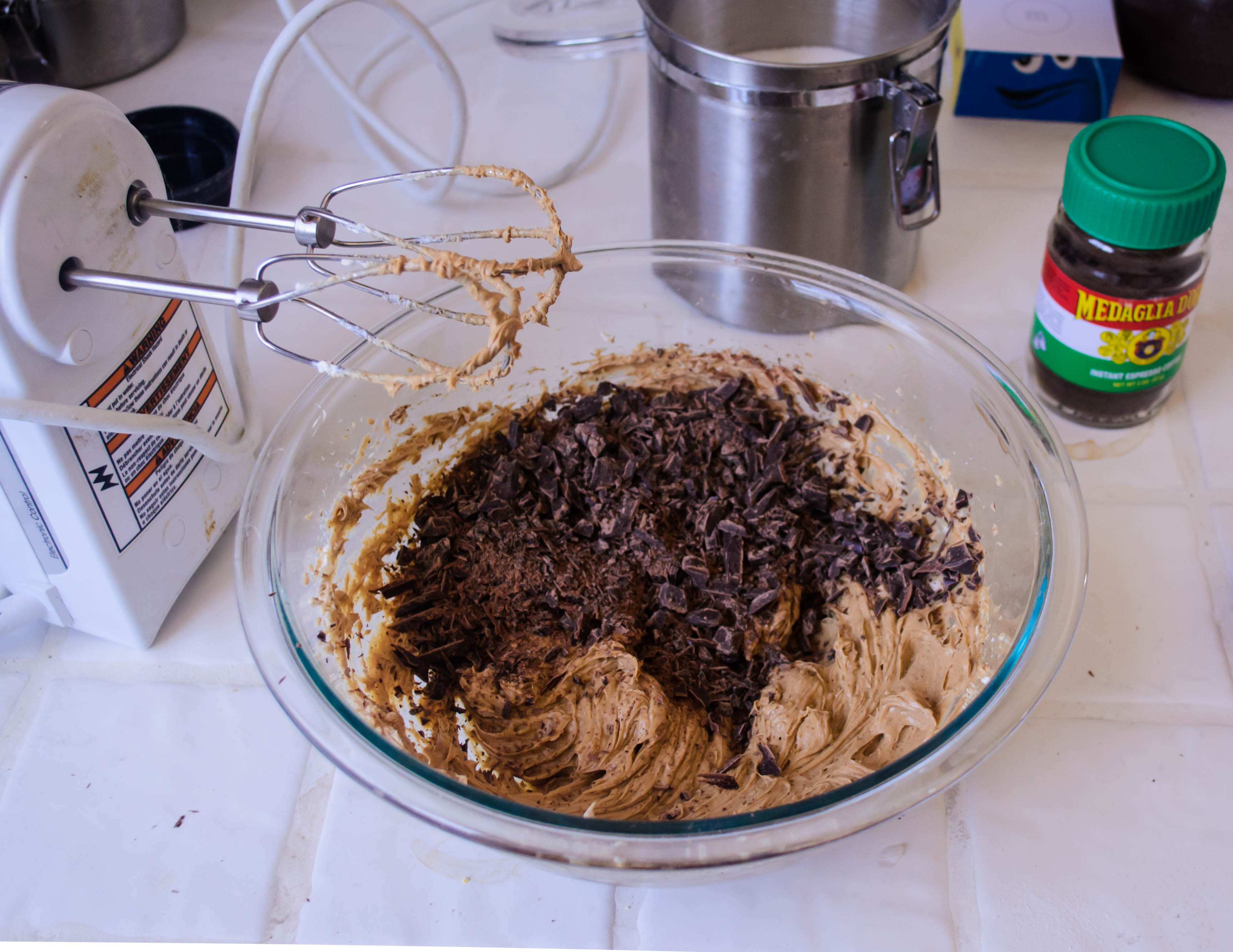
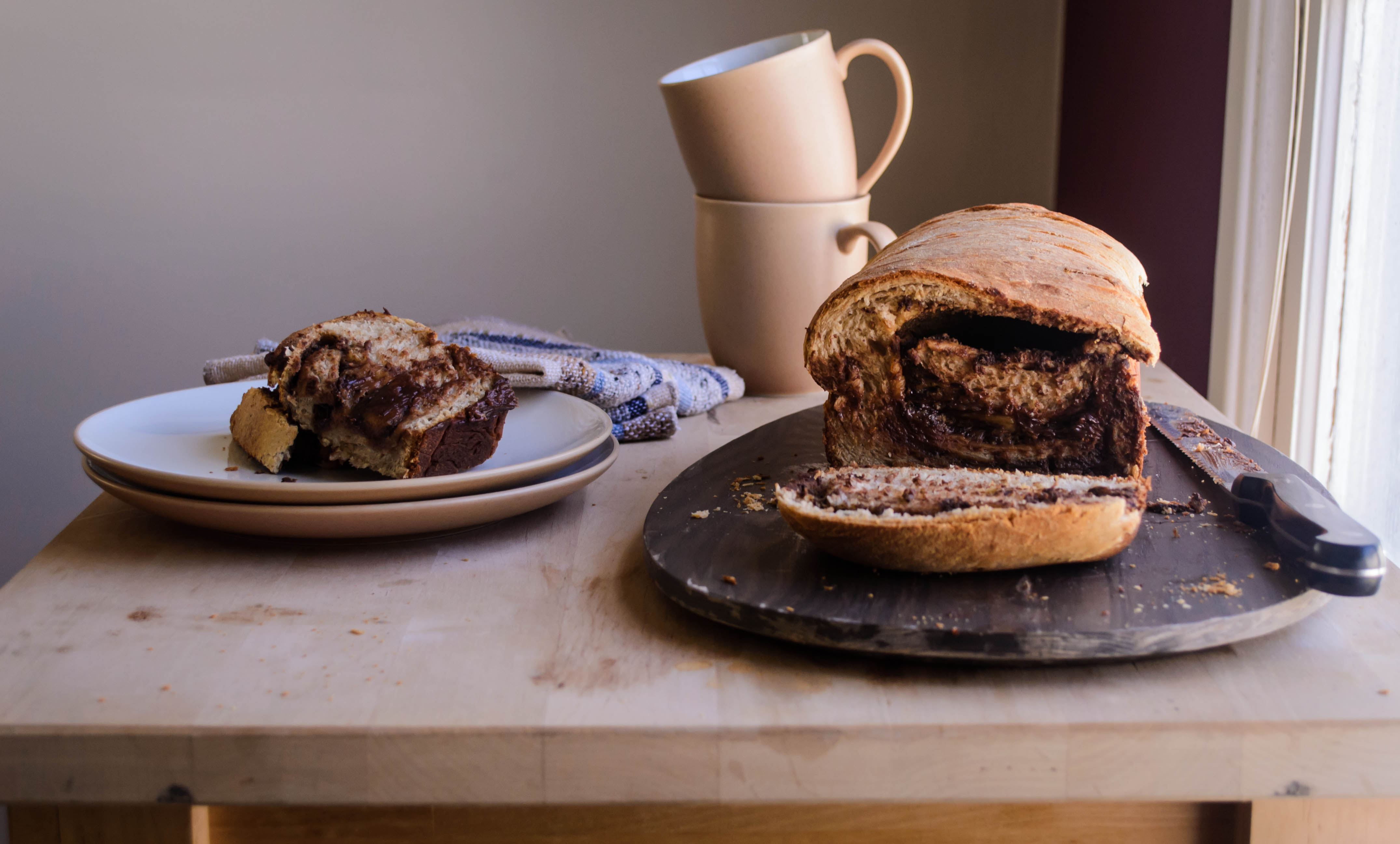
Food blog June 2015-0911Spurred by this month’s Twelve Loaves theme “A Little Something Sweet,” I decided a special “teatime” loaf was in the works: I wanted a swirled bread, and since N. was working his way through his very last week of school, I decided something with a bit of pick-me-up was called for. Playing with flavors of Mexican chocolate and tiramisu, with a block of cream cheese thrown in for good measure, I ended up with this stunner: a lightly sweet cinnamon spiced loaf, with an unapologetically thick filling of sweetened cream cheese, espresso powder, and chopped semi-sweet chocolate. Yes, please.

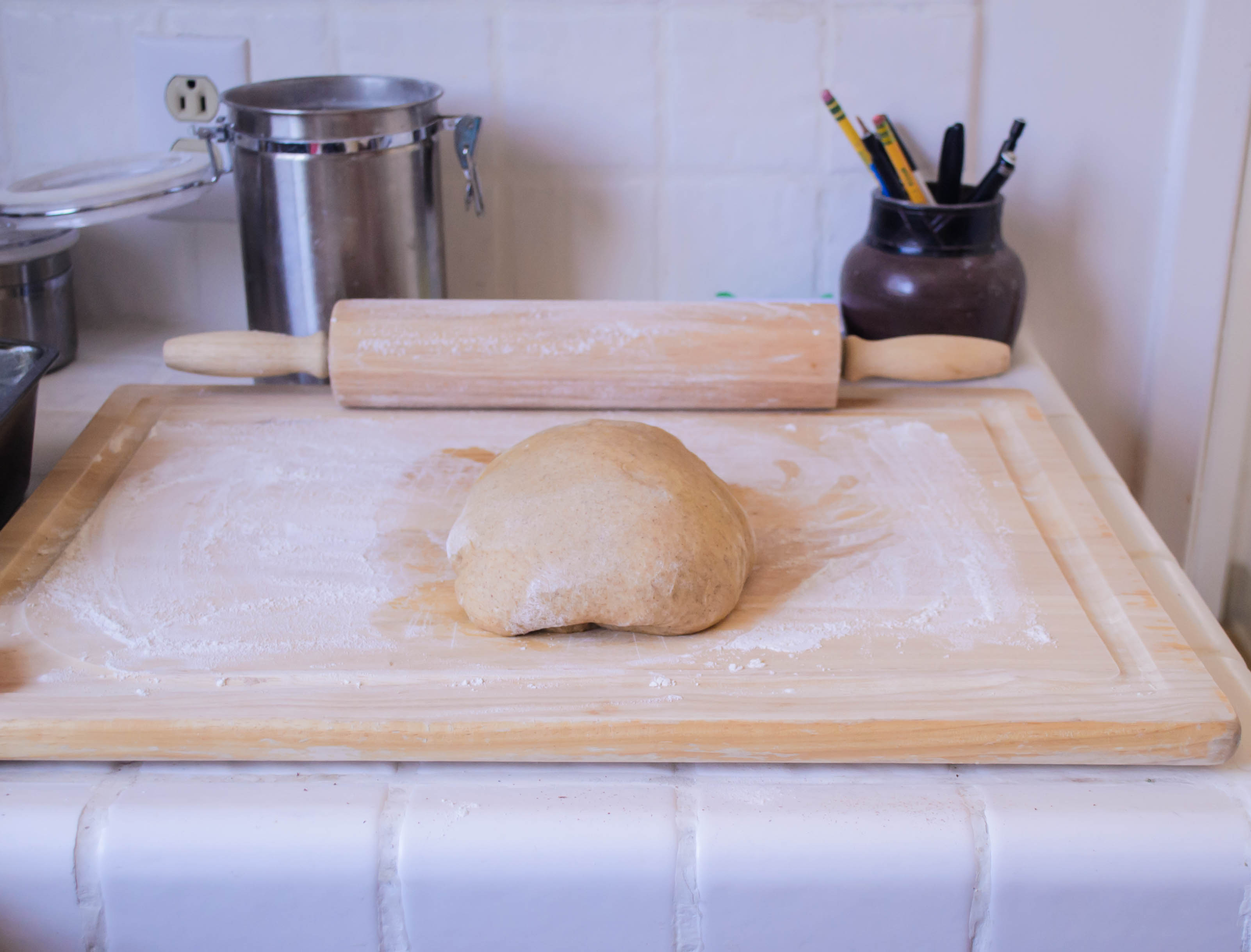
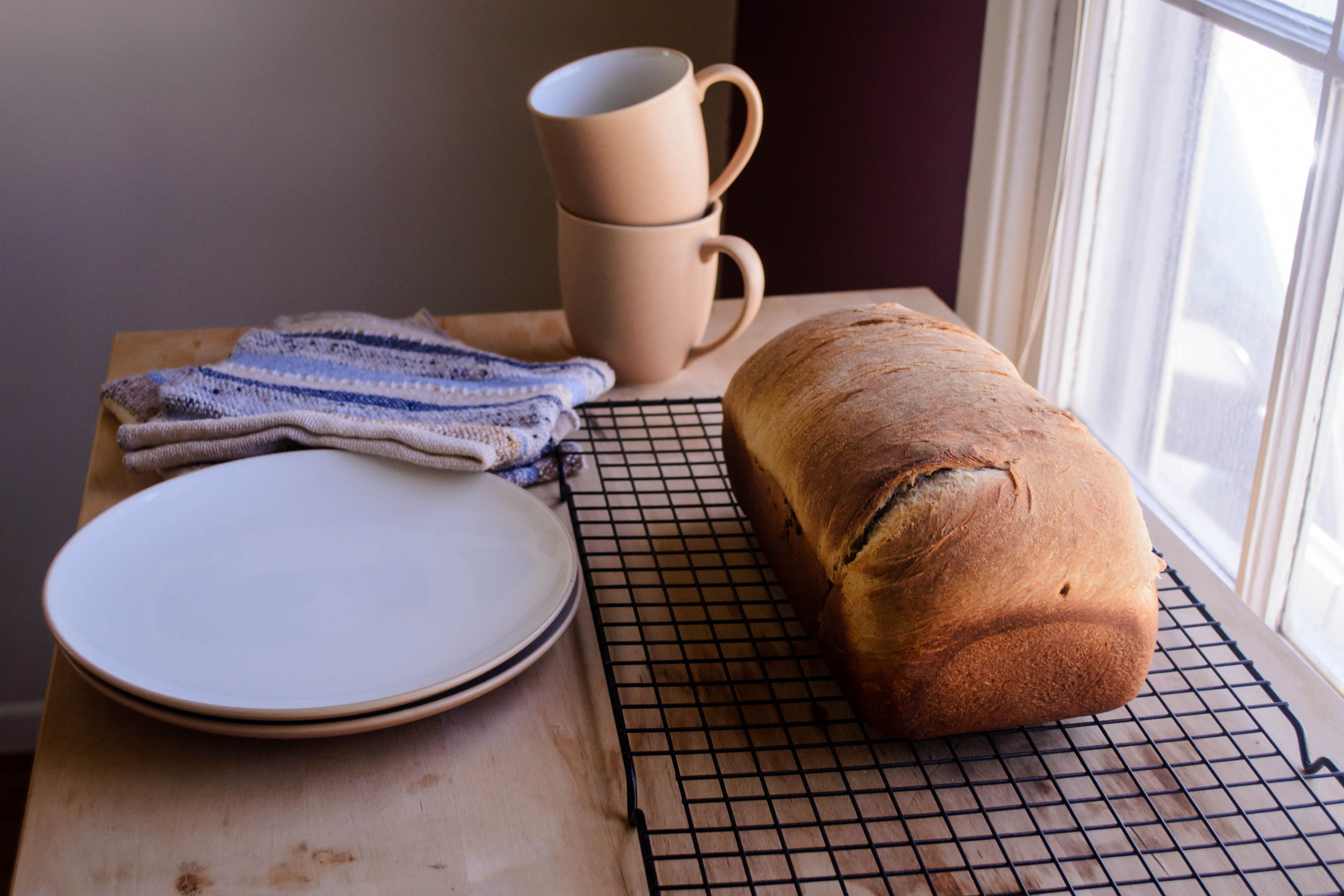
Food blog June 2015-0910The production of this loaf is fairly standard: a good knead, two rises, with the application of the filling in between, and the better part of an hour in the oven. The most difficult part, honestly, is waiting for the finished loaf to cool enough to slice into it without making a mess. I waited almost long enough.

Food blog June 2015-0915Oddly, despite the Mexican and Italian dessert inspirations, what this reminded me of more than anything else was mocha chip ice cream. You know, the luscious, rich brown scoops with just the right amount of coffee flavor, studded with chunks of dark chocolate. Except in my version, it’s a soft swirl through a moist slice, and the chocolate pieces melt easily on your tongue (one of my biggest complaints about “chip” anything ice cream: the cold, hard chunks of chocolate. I know, I know, first world problems).

Food blog June 2015-0920Food blog June 2015-0921Obviously, this is a rich bread. I’d say it’s more than a “little” something sweet, but let’s indulge anyway. Unless caffeine doesn’t disrupt your sleeping patterns, I’d stay away from it as a bedtime snack. But as a pick-me-up in mid-afternoon, or mid-morning for that matter, it’s solid. I can imagine thick slices on a brunch table as well, maybe even as part of a bridal shower (colors: espresso and vanilla?) since the presentation is so pretty. But then, I’ve got weddings on the brain this summer.

Food blog June 2015-0933Oh, p.s., like my new “studio” set-up next to the window? My Photo Friday post from the other week had such lovely lighting I decided to make it a more regular shoot location. I’m looking forward to playing more with angles and light at different times of day.

Food blog June 2015-0942

Cinnamon Mocha Swirl Bread
Makes 1 large 9×5 inch loaf
For dough:
2 teaspoons active dry yeast
½ cup lukewarm milk (I use whole milk)
¼ cup granulated sugar
2 teaspoons cinnamon
½ teaspoon salt
1 teaspoon vanilla
2 eggs
¼ cup + 1 tablespoon unsalted butter, soft or melted and cooled, divided
2-3 cups bread flour
For filling:
8 ounces cream cheese, at room temperature
2 tablespoons instant espresso powder
5 tablespoons granulated sugar
4 ounces semi-sweet or bittersweet chocolate, chopped or broken into small pieces
  • In a glass measuring cup, combine the lukewarm milk and the yeast, and let sit for 5-10 minutes to allow the yeast to wake up a bit. While you wait, combine the sugar, cinnamon, salt, vanilla, eggs, and ¼ cup of butter in the bowl of a stand mixer (or just a large mixing bowl).
  • When the yeast and milk mixture is bubbly and smells like bread, add it into the egg and butter mixture and stir well to combine. Add 2 cups of the flour, and stir well to combine again.
  • If you are using a stand mixer, fit with the dough hook attachment and begin to knead on medium speed. If you are working by hand, dump the dough out onto a floured board and knead for about 5 minutes. As needed, work in more flour ¼ cup at a time until the dough is easy to handle. I ended up using about 2 ¾ cups total. In the stand mixer bowl, it will start to pull away from and then slap the sides.
  • After you’ve kneaded for about 5 minutes, the dough should feel smooth and stretchy and be texturally reminiscent of play-dough. At this point, lightly oil the inside of a large bowl (I use the stand mixer bowl for this – you don’t even need to clean it out), flip the dough around in it to coat all sides, then cover with plastic wrap and set aside to rise until doubled; about 90 minutes.
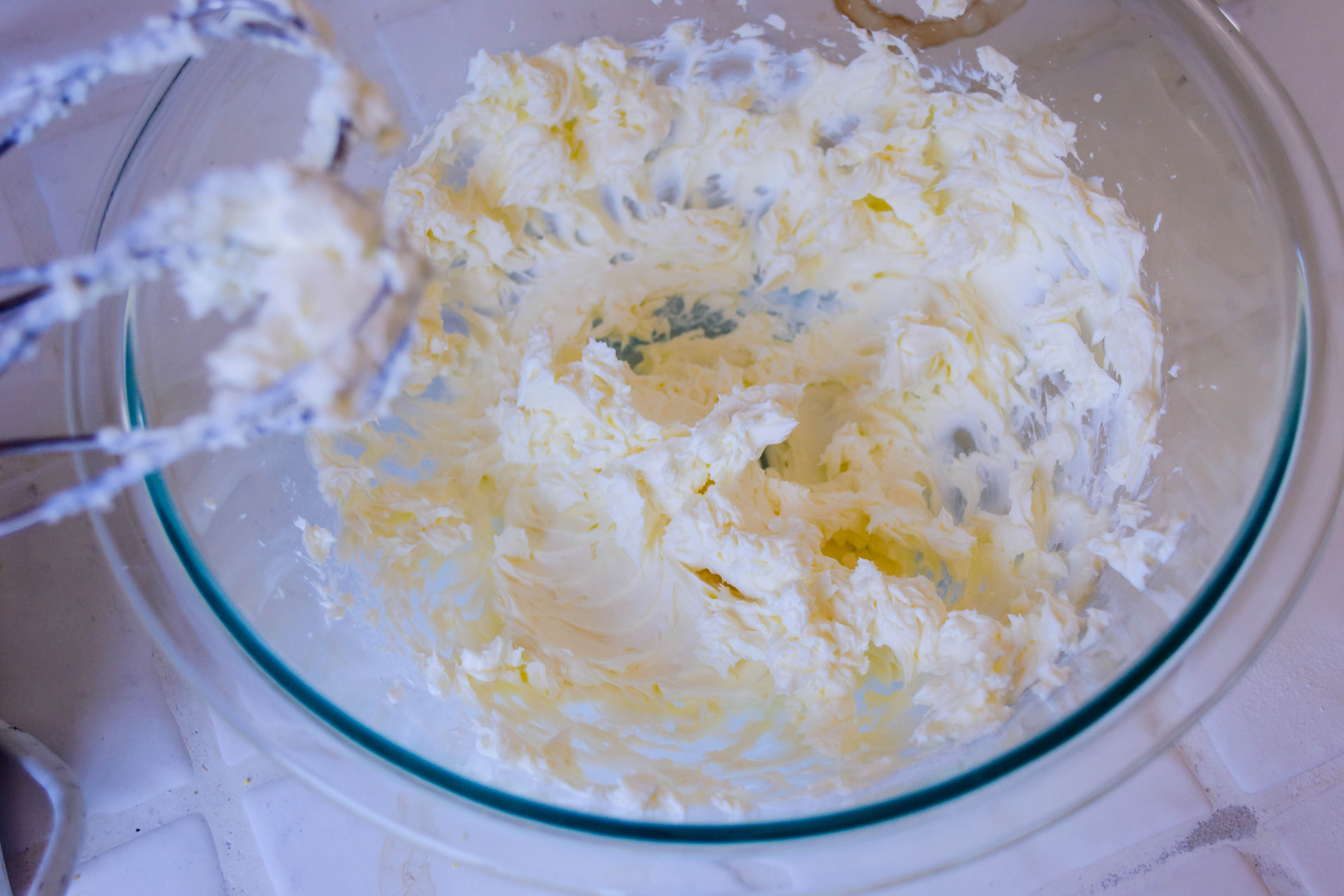
  • While you wait for the dough, make the filling: in a medium bowl, beat together the cream cheese, espresso powder, and granulated sugar until light and fluffy; 1-2 minutes. Then gently incorporate the chopped chocolate, and set aside.
  • When the dough has doubled, punch it down by depressing your fist gently into its center to release trapped air, then let it rest for 5 minutes to get its breath back. Turn it out onto a floured board and roll into a rectangle of roughly 9×16 inches.
  • Spread the dough rectangle with the filling, leaving a border of about 1 inch on all sides to ensure minimal overflow. Working gently, roll up into a log starting from the short edge (so you’ll end up with a fat log about 9 inches long). Crimp the edges at the end to seal it – be aggressive! The dough might not want to stick to itself at first.
  • Now that you have your fat log, well-sealed, twist it 4 or 5 times to disperse the swirl. This may stretch it out a bit, so when you carefully wedge it into a buttered 9×5 inch loaf pan, just tuck the ends underneath.
  • Once the loaf is settled in the pan, rub the top with the remaining 1 tablespoon of soft or melted butter, then cover lightly with plastic wrap, set aside for another 30 minutes, and preheat the oven to 375F.
  • By the time your loaf has risen for another 30 minutes, it should have come close to doubling in size again, and your oven should be fully preheated. Bake the loaf in the preheated 375F oven for 35-40 minutes, until the exterior is nicely burnished and the interior tests 180-200F (A skewer that comes out clean works too, though be careful, because the cream cheese filling will remain gloopy).
  • Cool loaf in pan for at least 10 minutes, then remove from pan and cool on a wire rack for at least another 10 minutes. The cream cheese and chocolate need time to solidify a bit, or the layers within the loaf will threaten collapse.
  • Enjoy with coffee, or tea, or milk, or your fingers. Keeps well in the fridge for 4 or 5 days (probably more would be fine, but ours didn’t last longer than that). Bring to room temperature before eating for best leftovers.

#TwelveLoaves is a monthly bread baking party created by Lora from Cake Duchess and runs smoothly with the help of Heather of girlichef, and the rest of our fabulous bakers.

Our theme this month is A LITTLE SOMETHING SWEET. For more bread recipes, visit the #TwelveLoaves Pinterest board, or check out last month’s mouthwatering selection of #TwelveLoaves Mexican Breads!

If you’d like to bake along with us this month, share your “A Little Something Sweet” Bread using hashtag #TwelveLoaves!

Rice Rolls

Food blog April 2015-0598As I revealed last week, my trio of vegetable pickles are just one part of a larger project: a meatball banh mi. These rice rolls are part two. Banh mi, in Vietnamese, really refers not to the wonderful sandwich layered with pate or pork or tofu and stacked with vegetables, pickles, and spice, but to bread itself. Colonization brought the French baguette to Vietnam, and the blending of flavors is a much nicer postcolonial remnant than such occupations frequently bring.

Food blog April 2015-0567Food blog April 2015-0570Though the culinary melding is quite harmonious, banh mi bread brings with it a great deal of internet controversy. Though most shops that sell the popular sandwich buy their baguettes from Vietnamese bakeries rather than making them in-house, crazy people people like me who want to re-craft the “genuine article” share their complaints, secrets, and professed revelations all over forums and comment threads, arguing over proportions and procedure and shape, and at some point, the argument usually involves discussion of flour type, gluten development, and protein content.

Food blog April 2015-0572Food blog April 2015-0574Food blog April 2015-0580The main debate when it comes to banh mi bread is the texture and composition. Though I’ve had these sandwiches on bread ranging from baguette or french roll to essentially a toasted hot dog bun, the ideal is a crisp, thin crust with a soft interior. The phrase “shatteringly crisp” is used with reverence. The internal structure should be light and soft and more delicate than the spongy chew of ciabatta. Rice flour is supposed to be the answer. Because it does not contain gluten, it will not result in the formation of the chewy texture a well-kneaded baguette can produce. However, food writer Andrea Nguyen, who knows a thing or two about Vietnamese food, asserts (assertively, even!) that rice flour is not a necessity, and in fact may even hinder the lightness and delicacy of the bread interior. However, without access to her cookbook or the combination of vital wheat gluten and vitamin C tablets she makes use of, I stuck with my usual method: a combination of promising-looking recipes plus my own instinct. Despite the to-rice-or-not-to-rice controversy, I decided to use a small percentage of rice flour. After all, I had some. Why not give it a shot.
Food blog April 2015-0581I also decided, veering far from tradition, to add some rye flour to the mix. According to Simply a Food Blog, a little bit of rye flour adds a compelling flavor and some additional sugars to the dough for the yeasts to gobble up. I like the gentle toastiness of rye flour, so I incorporated some of that as well.

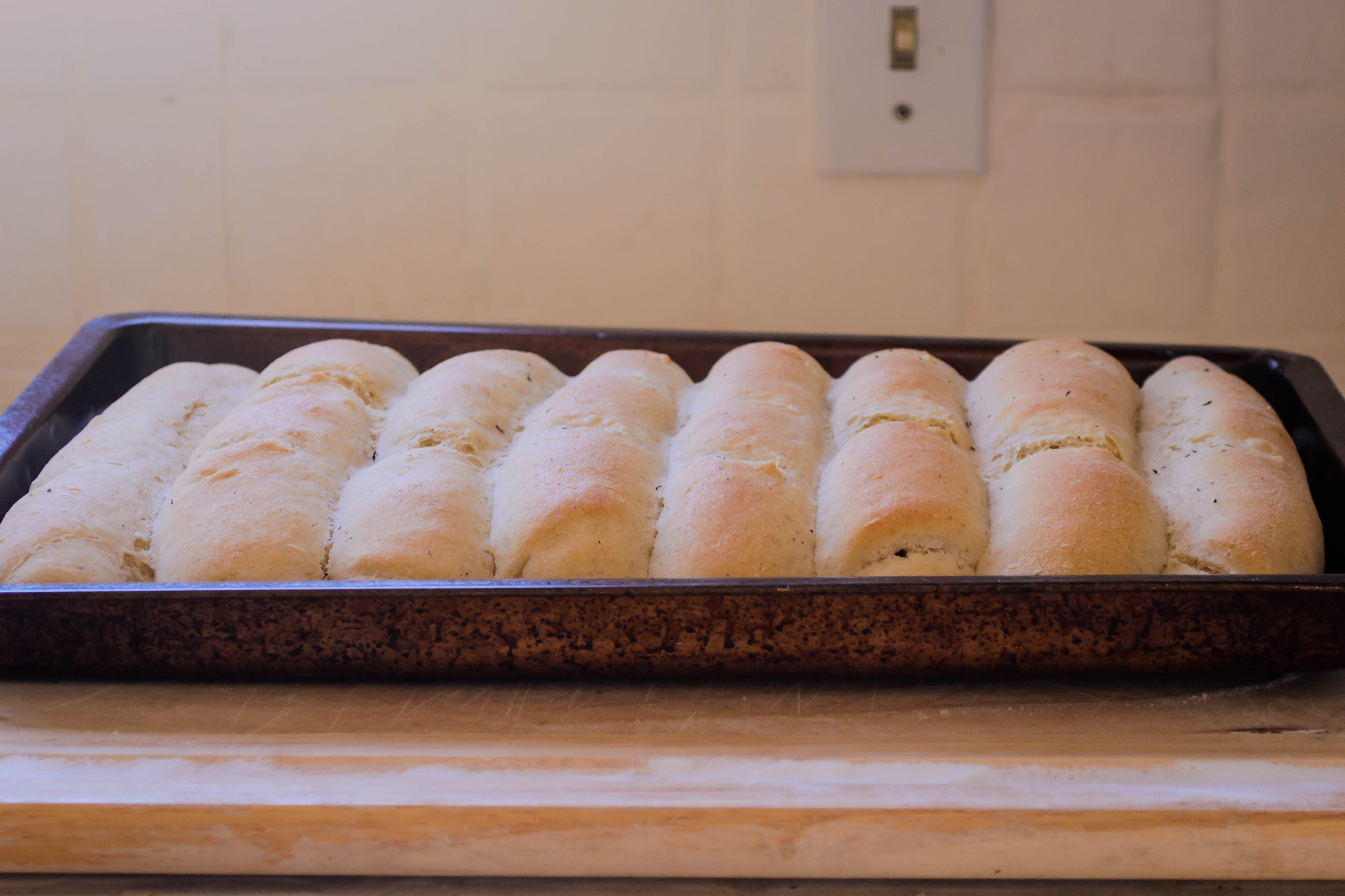
Food blog April 2015-0586Food blog April 2015-0588In addition to the Simply a Food Blog suggestion, I also used Rice and Wheat and A Bread A Day in my recipe creation, and ended up with an ingredient list and procedure that created something much closer to a sausage roll or a bun than a crisp crusted baguette.

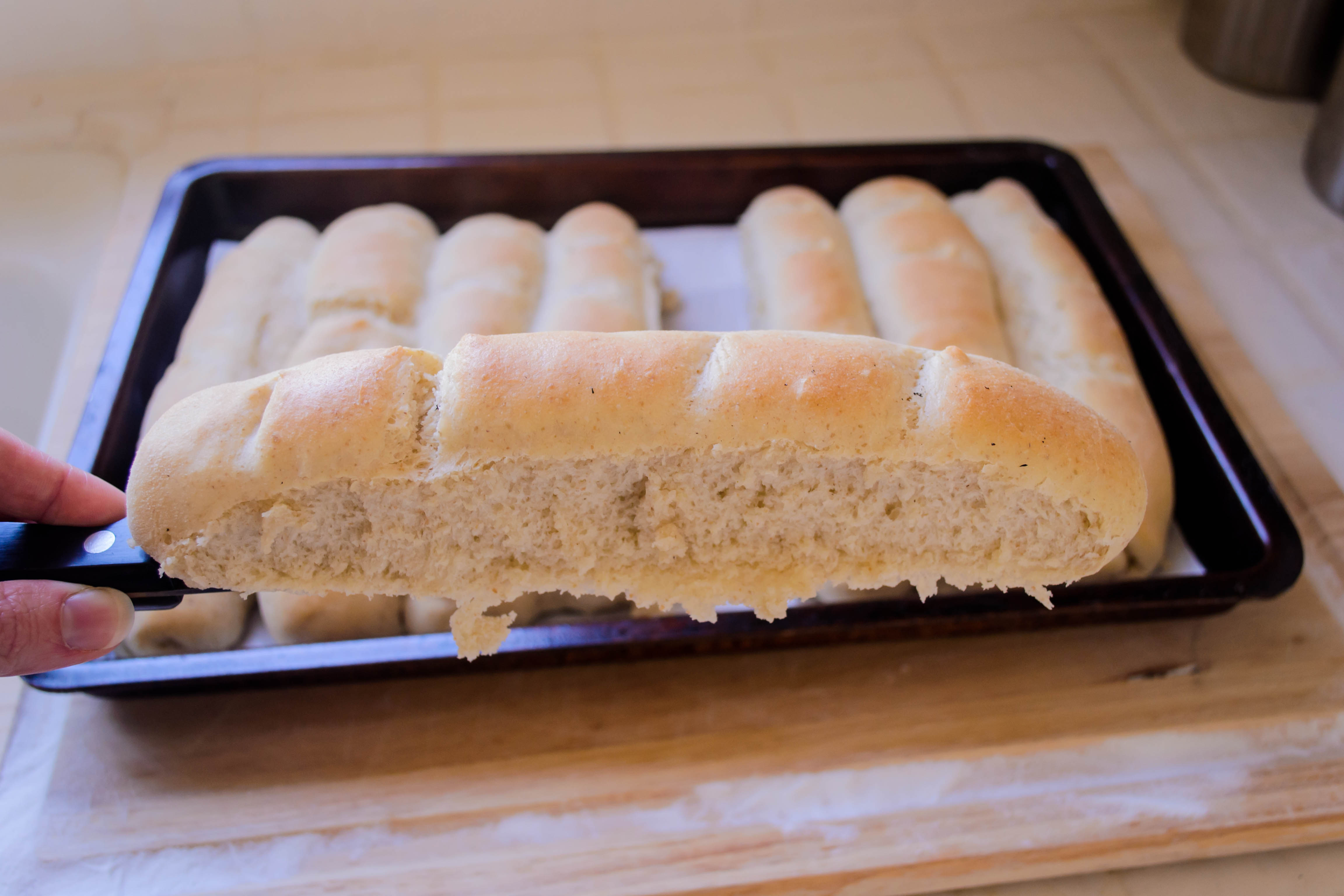
Food blog April 2015-0589Yes, I’ll admit, these are not the banh mi wrappers of your dreams (well, at least not if you are bivouacked in the “shatteringly crisp” camp). Though these rolls have a thin crust, it is just enough for the teeth to play with, not a staggering crunch you can hear across the table. At first I was perturbed by this, but it only took splitting one open, still warm and fluffy from the oven, and slicking the interior with butter to show me that while this might not be a traditional Vietnamese baguette, it is a delicious piece of bread. Though I filled ours with the meatballs I’ll show you next week, it would be more than welcome at any summer grilling event, whether your intended fillings are kielbasa or veggie dogs.

Food blog April 2015-0590As I thought more about this issue of inexactness, I decided I didn’t care. After all, this is my sandwich. A thin crust that shatters upon impact is fine, but my version keeps the roof of your mouth unscraped and your placemat a lot less crumb-scattered. As Joe Pastry pointed out just recently, tender bread is a boon for a sandwich. Mine offers a pleasant depth of flavor from the addition of the rye flour, and its soft, fluffy interior is exactly the kind of squashy that I favor in a sandwich. Besides (I compellingly convinced myself), the crisp crunch of the vegetables stacked up between the halves of the roll provide sufficient textural contrast. Why not, then, surround them with something a bit on the softer side?

Food blog April 2015-0594These rolls are best just cooled from the oven. They are okay on the second day, but I highly recommend toasting them for consumption on any day following the one they were made.
Food blog April 2015-0596

Banh Mi Rice Rolls
Makes 8
1 tablespoon active dry yeast
1 teaspoon sugar
2 cups (16 ounces) lukewarm water
1 cup rice flour (about 5 ounces)
½ cup rye flour (about 2.5 ounces)
2 teaspoons salt
3-4 cups all-purpose flour (we don’t want the extra chewiness of bread flour)
2 tablespoons soft butter
  • Combine the yeast and sugar with the water and stir, then let sit for 5-10 minutes until it is bubbly and smells like warm bread.
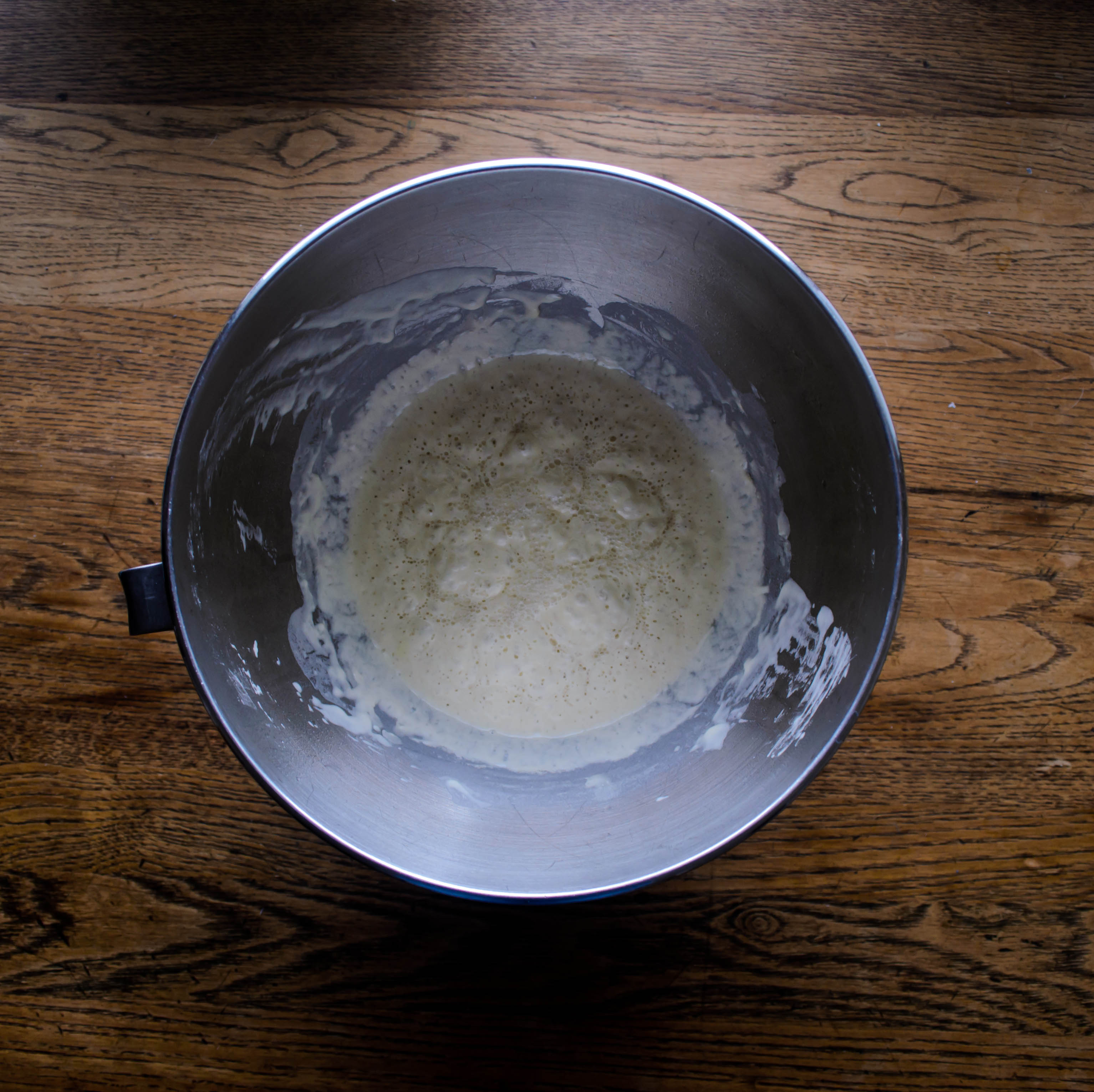
  • In the bowl of your stand mixer, combine the rice flour, rye flour, butter, and water and yeast mixture with the paddle attachment. It will be very, very wet – basically a liquid. Let it sit for 10-20 minutes – rice flour needs extra time to absorb water. It will seem a bit floppier when you return.
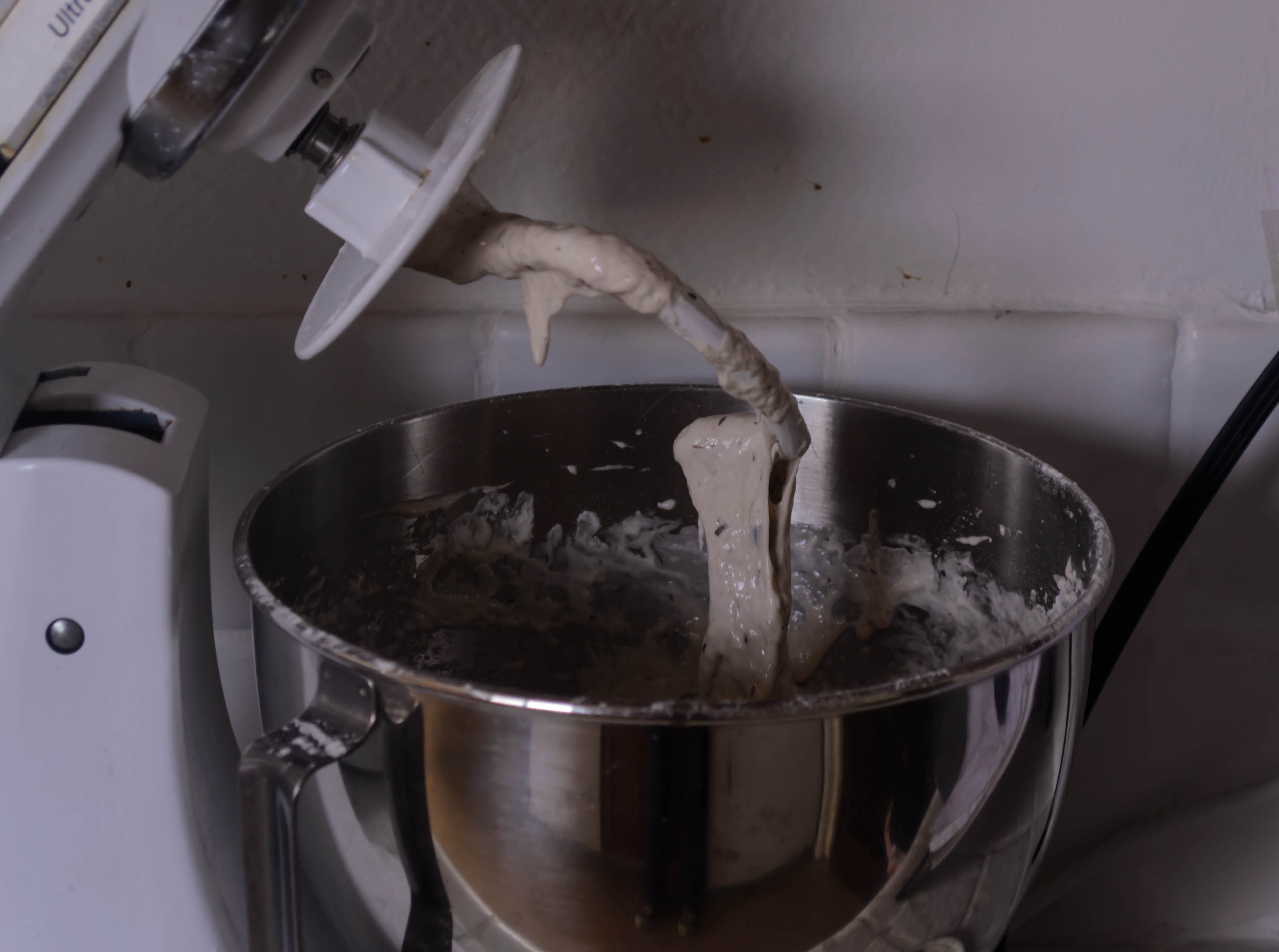
  • After 10-20 minutes resting time, add 2½ cups of the all-purpose flour and all of the salt, then mix with the dough hook attachment on medium speed to form a soft but not overly sticky dough. After about 5 minutes, the dough will start to gather into a ball and stretch to slap the sides of the bowl as it whizzes around. If the dough is not coming together after about 5 minutes, add an additional ¼ cup of flour as needed. I ended up with a little more than 3 cups of all-purpose flour in the mix. Knead on medium speed until the dough is smooth and elastic, a total of 7-10 minutes.
  • Oil the bowl and turn the dough ball over to lubricate on all sides, then cover with plastic wrap and let rise until doubled; 45-60 minutes. In my warm home office, it only took 45 minutes.
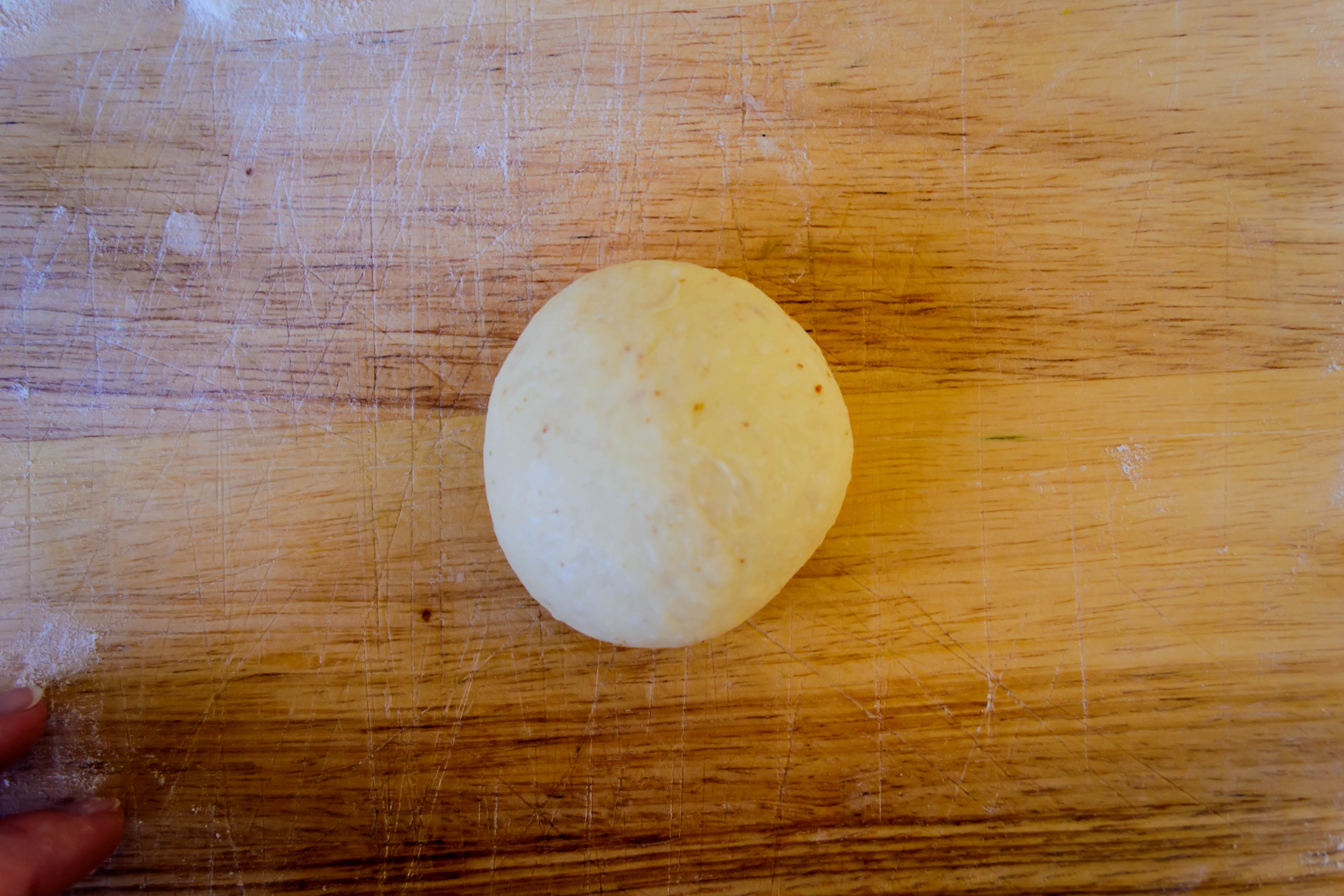
  • Turn the risen dough out onto a board dusted with rice flour and cut into 8 equal pieces. Roll each into a ball, flatten into a disc with the heel of your hand, then let rest 5-10 minutes.
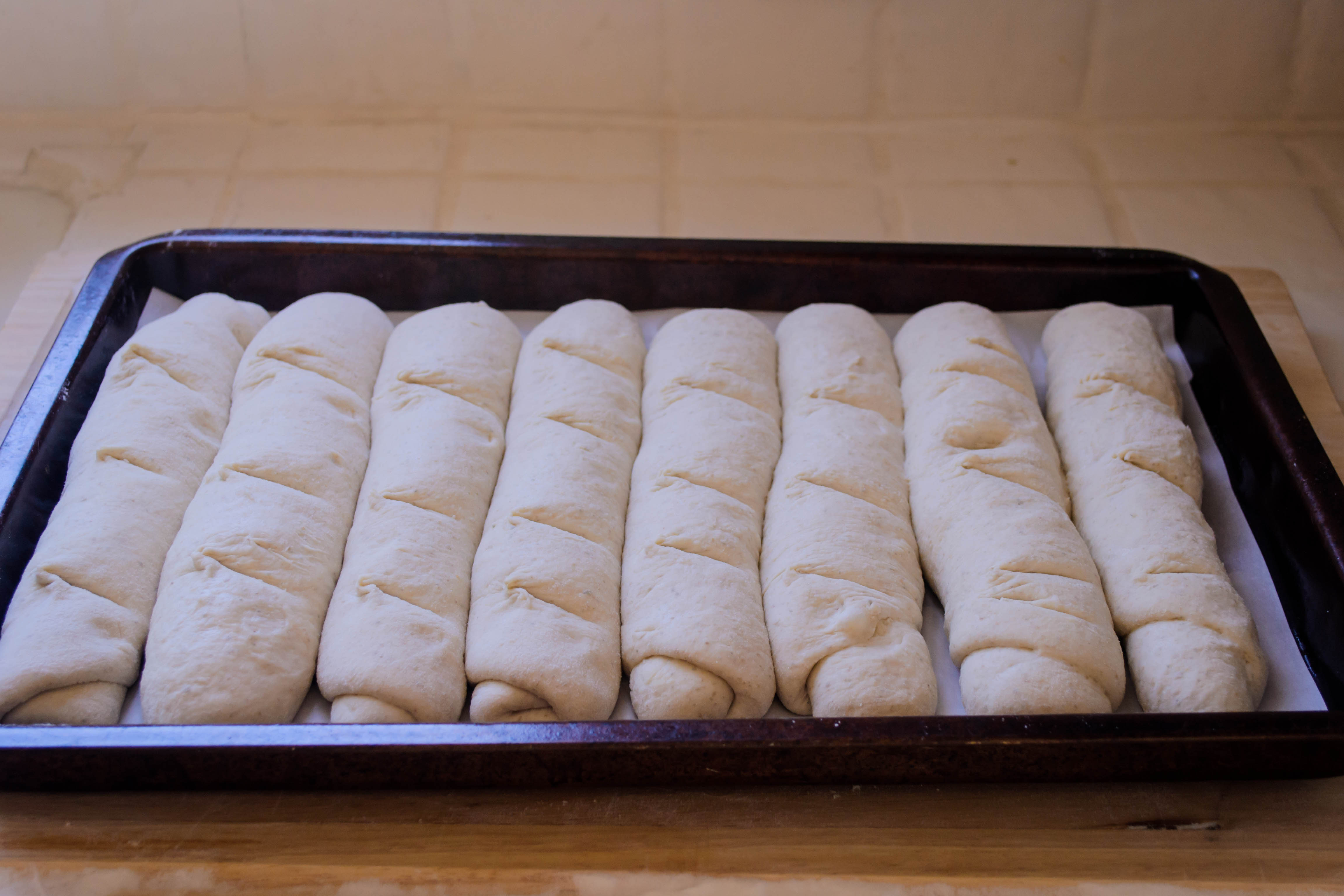
  • Roll each flattened piece of dough into an oval about 8 inches long by 6 inches wide. Working from the long side, roll up each oval into a cylinder of about 8 inches long (the dough will want to stretch – try to keep it at the 8 inch mark). Pinch the exposed edge into the side of the cylinder to create a seam.
  • Place each dough cylinder seam-side down on a parchment lined baking sheet. (If you don’t mind the buns touching, all 8 will fit on the same sheet. If you want them to remain separate, don’t put more than 4 on the same baking sheet). Cover lightly with plastic wrap or a clean kitchen towel and let rise 30-45 minutes until puffy. To determine whether they’ve risen enough, poke gently; the depression made by your finger should recover about halfway – if the depression disappears completely, it has not risen long enough.
  • While the dough is rising, preheat the oven to 450F with a baking stone inside for even heating. Prepare a spray bottle full of water to spritz the loaves.
  • When risen, slash the loaves at a 45 degree angle (or angle of your choosing; mine are clearly not 45) with a razor blade or serrated knife, then spray lightly with water and quickly place into the preheated oven. Bake for 2 minutes, then spray loaves again lightly with water. Bake 3 minutes more, then spray lightly again.
  • Reduce the oven temperature to 400F and bake an additional 10-15 minutes, or until loaves register 200-210F inside.
  • Let cool at least 10 minutes before splitting, spreading, or just going in for a big bite.

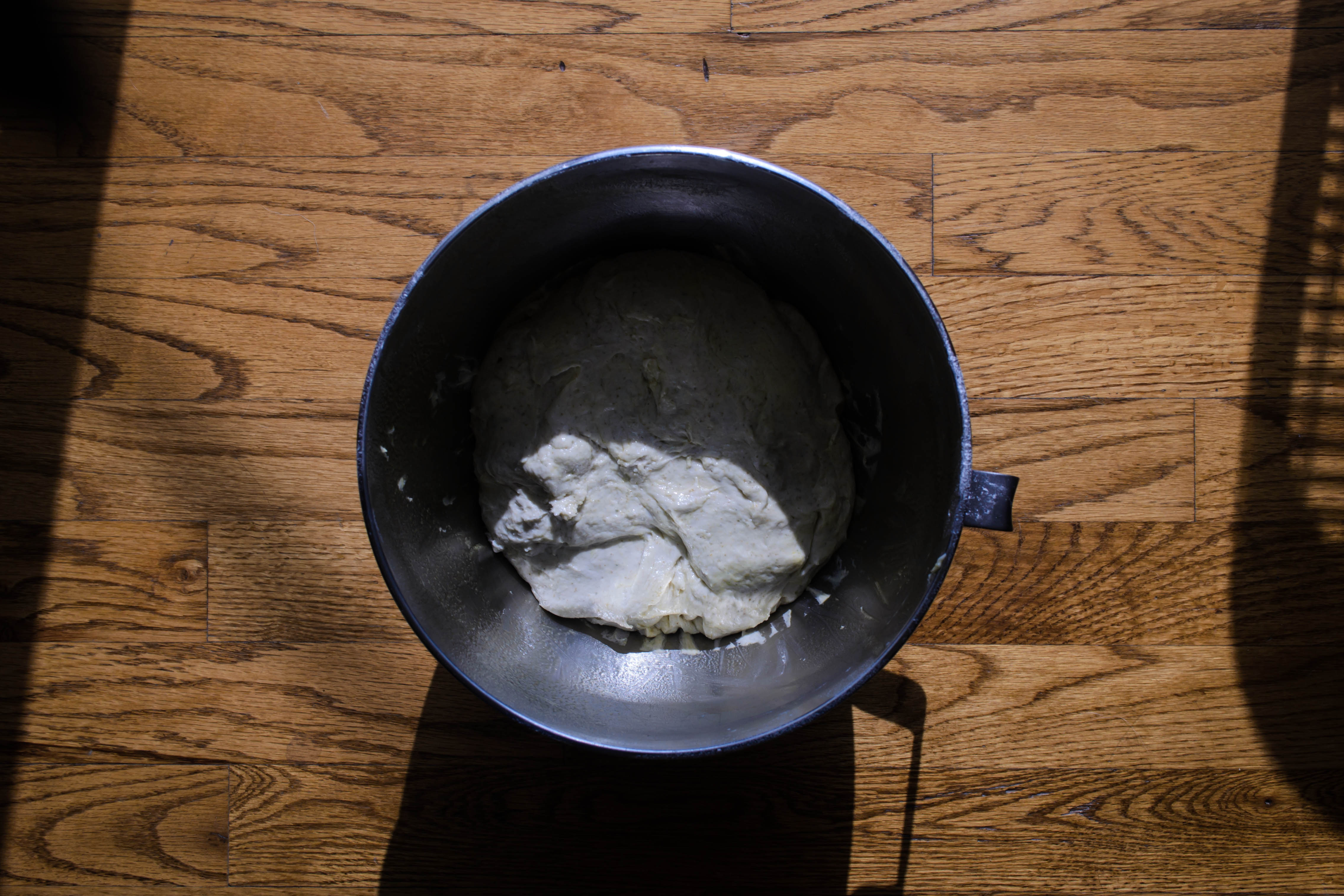
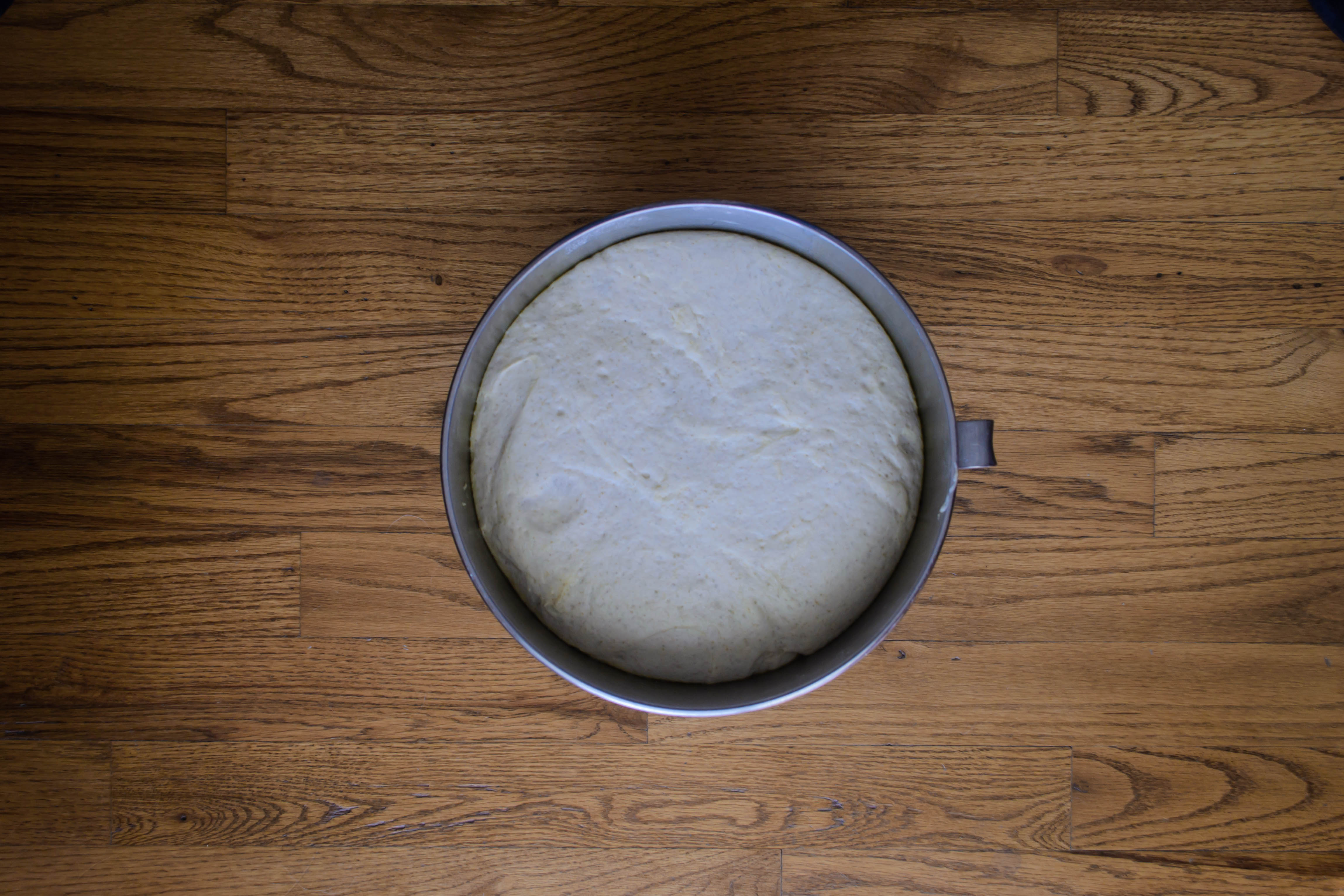
Olive Ciabatta for #TwelveLoaves February

Food Blog February 2015-0394The February assignment for Twelve Loaves left me stumped for a few weeks. Olives. What bread would I bake with olives? I couldn’t think of much that fit and sounded delicious. I mean, there was olive ciabatta of course, but apart from that… bagels? Pull-apart bread? Nothing sounded too inspiring except… oh. Well. I could make olive ciabatta. Sometimes the first ideas – the immediate ideas – are the best.

Food Blog February 2015-0375I tried making ciabatta once before, in the early days of my dough challenge. Though the rolls tasted fine, they were not the crunchy crusted, flour dusted, chewy, bubbly, homely smash of a loaf that makes a good ciabatta what it is.

Food Blog February 2015-0370Ciabatta is a reasonably recent Italian response to French baguette, and means “slipper,” which refers to the elongated, flattish shape – I imagine a well-loved pair of house slippers worn by an old man as he shuffles through his day. The lovely contrast of ciabatta loaves – the crisp exterior hiding a honeycomb of fat holes in a lovely chewy center – is achieved through several challenges: an overnight ferment of flour, water, and a touch of yeast called a biga (I kept saying it out loud. Biga. Bee-gah. Beeeeeegah), an extremely wet dough, and quite high oven heat.

Food Blog February 2015-0376For mine, I settled on the extremely clear directions from the kitchn. I’ve made only very minor adaptations, adding olives (as you might expect), and a glug of olive oil to pump up the olive flavor and add a touch of richness. A bit of fat in the loaf also prevents it from going stale quite so quickly, though you likely won’t need to worry about these loaves hanging around long.

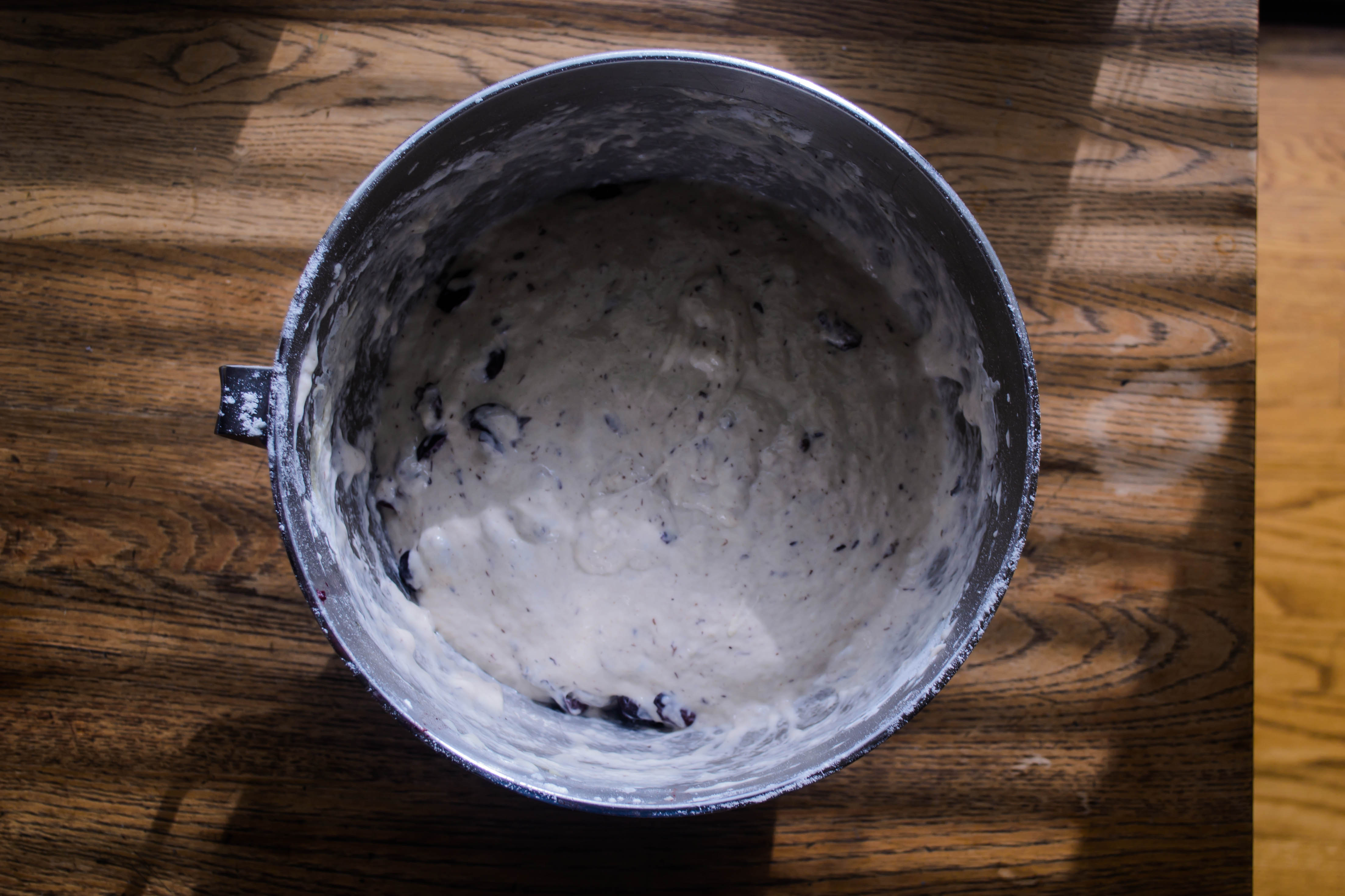
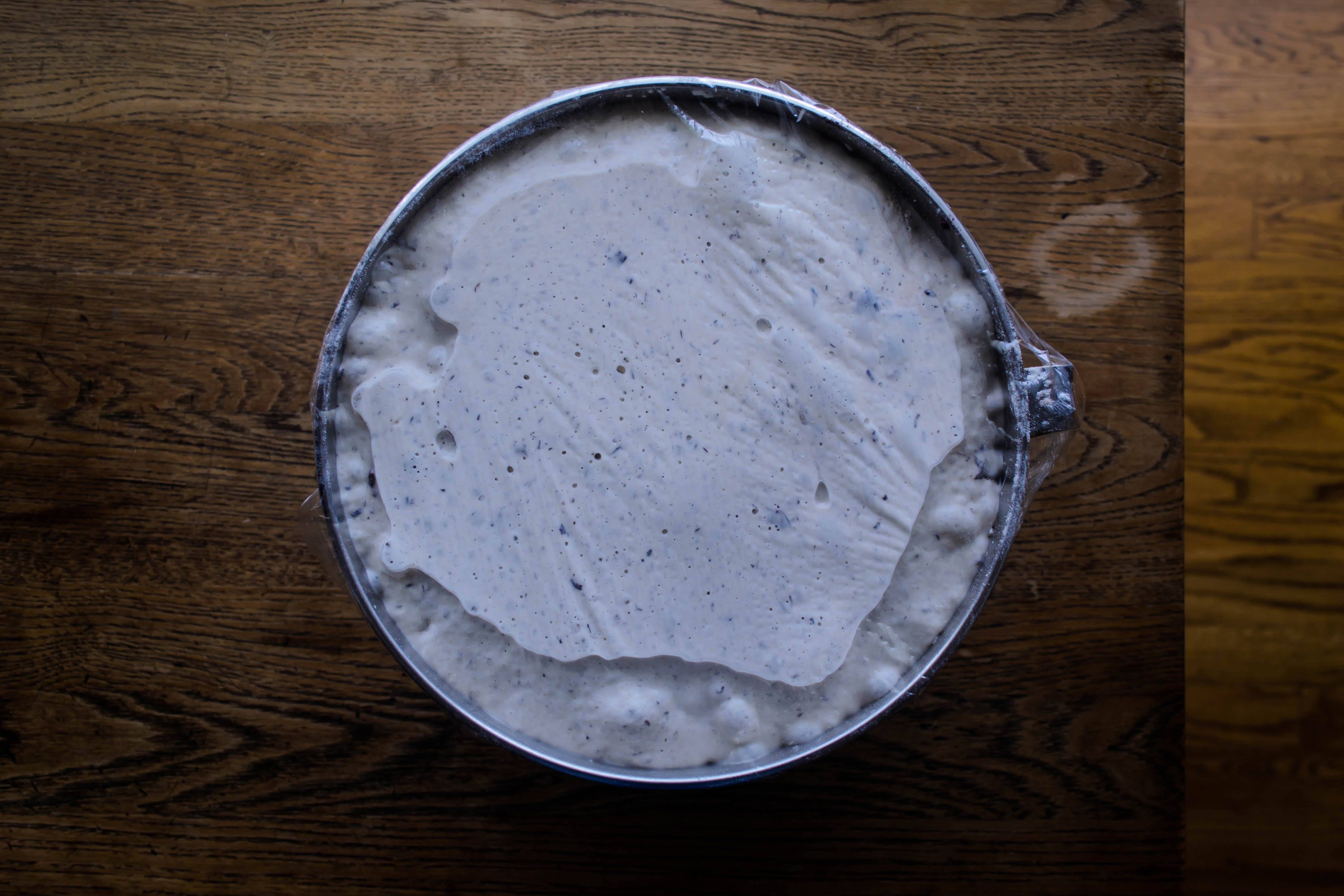
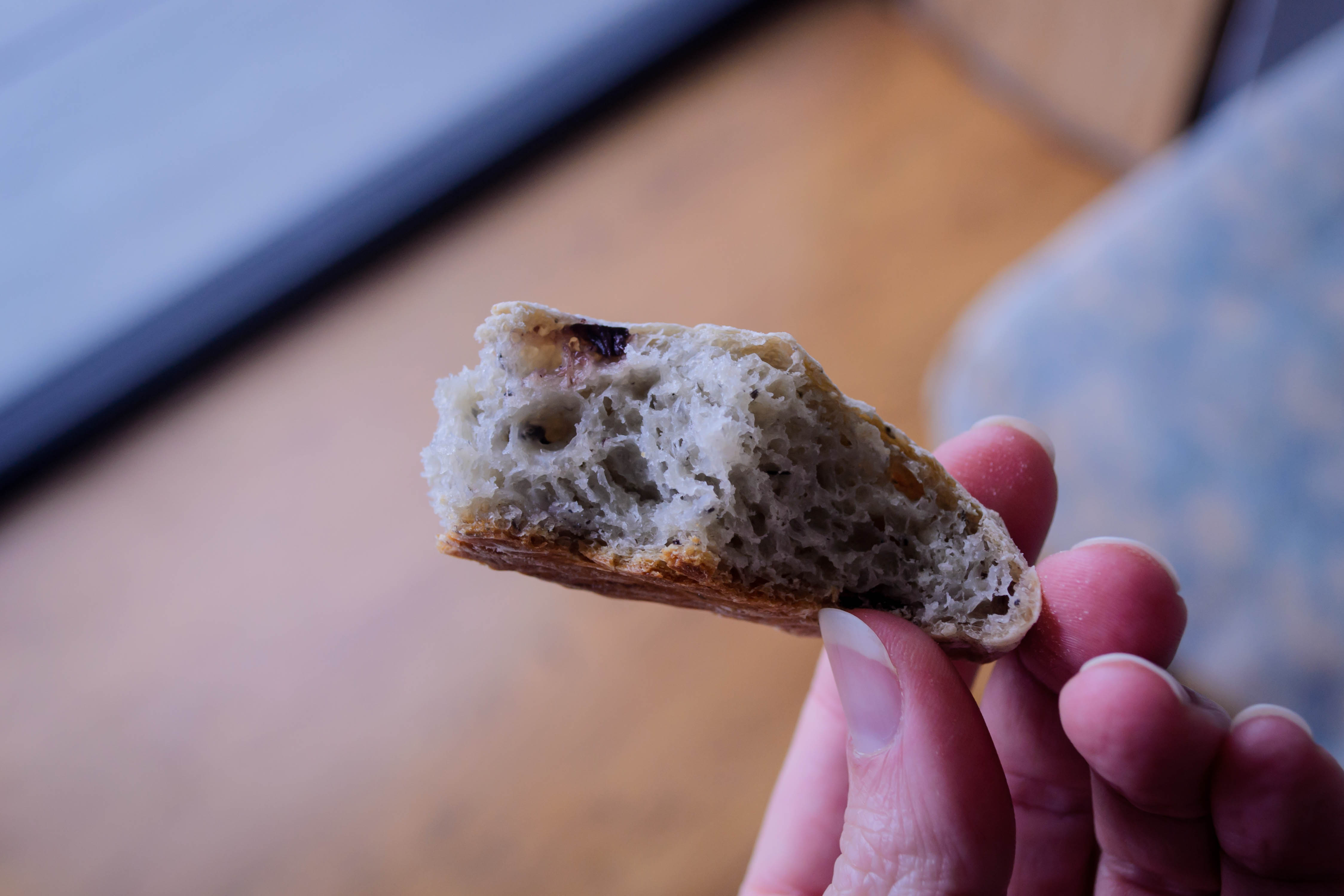
Food Blog February 2015-0378Food Blog February 2015-0379Apart from the biga, which transforms overnight from a strange, unappealing paste to a bubbling puddle that smells vaguely alcoholic and is quite clearly alive, this bread follows the standard process: knead, rise, shape, rise again, bake. Here’s the deal, though. Above I mentioned “extremely wet dough.” I mean it. I wouldn’t make this bread without a stand mixer. Though it collects together a bit around the dough hook during its long knead, it never forms a real ball, before or after the rise. When you dump it out onto a board, it sticks to everything. I mean everything. That whole dusting of flour that makes a ciabatta so recognizable? That’s not aesthetic. That’s necessary. “Well-floured board” has never been such a serious statement of setting.

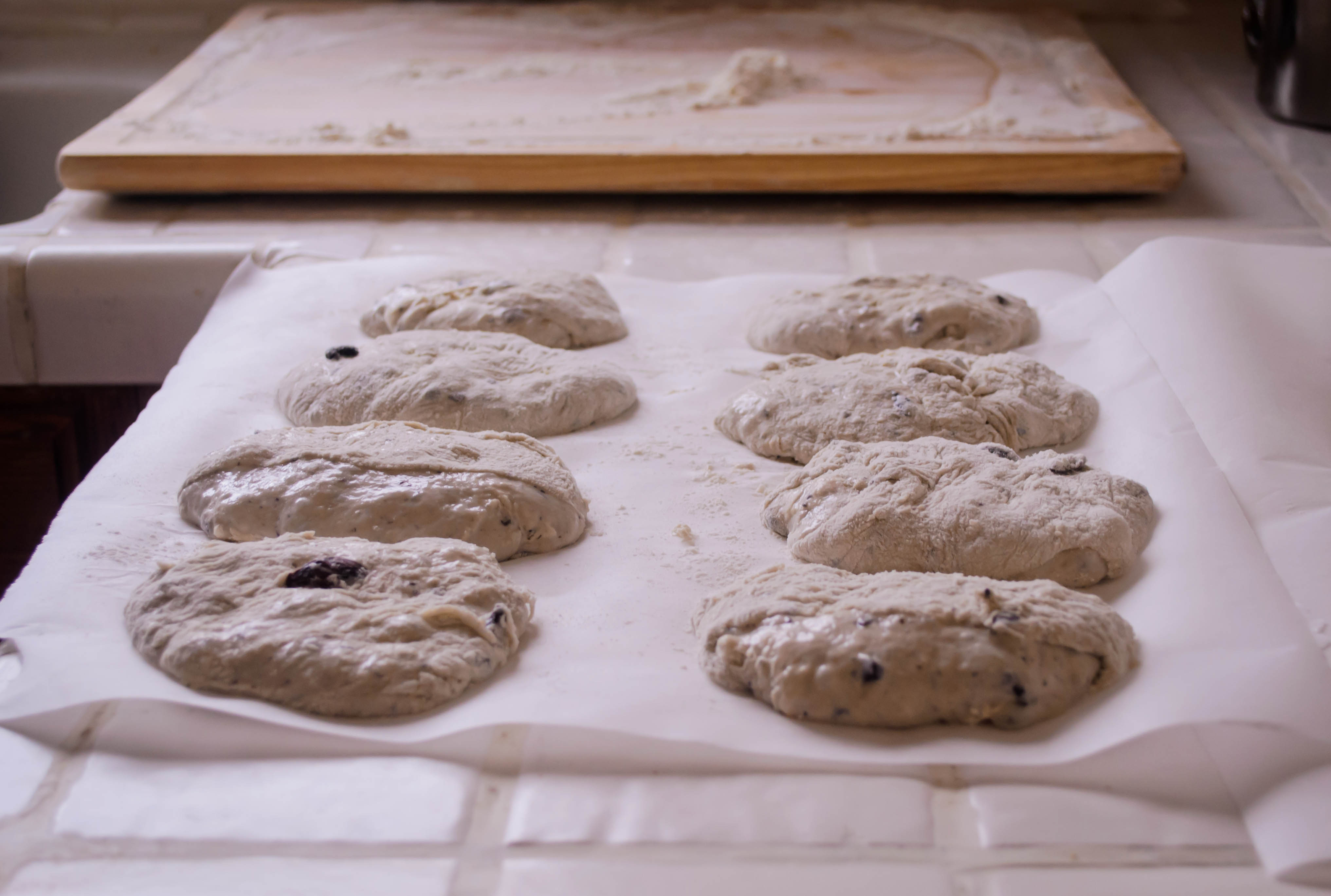
Food Blog February 2015-0381Fortunately, I’ve been making sourdough lately with a fairly wet dough, so the look of the olive-speckled, bubbly mass after three hours of expansion didn’t unnerve me too much. When it came time to shape the loaves (I opted for eight sandwich-sized rolls and one large loaf), I picked up the first one and just laughed. “Shaping” is a word you can use, but without a banneton or brotform of some sort, the dough just sort of sighs into the form it wants to be and stays there, a slightly contained puddle oozing its way threateningly toward the edges of the parchment paper you’ve so carefully flopped it onto. When I handled the rolls, in texture they reminded me bizarrely of – don’t laugh – a fresh oyster or an egg yolk sitting in my hand.

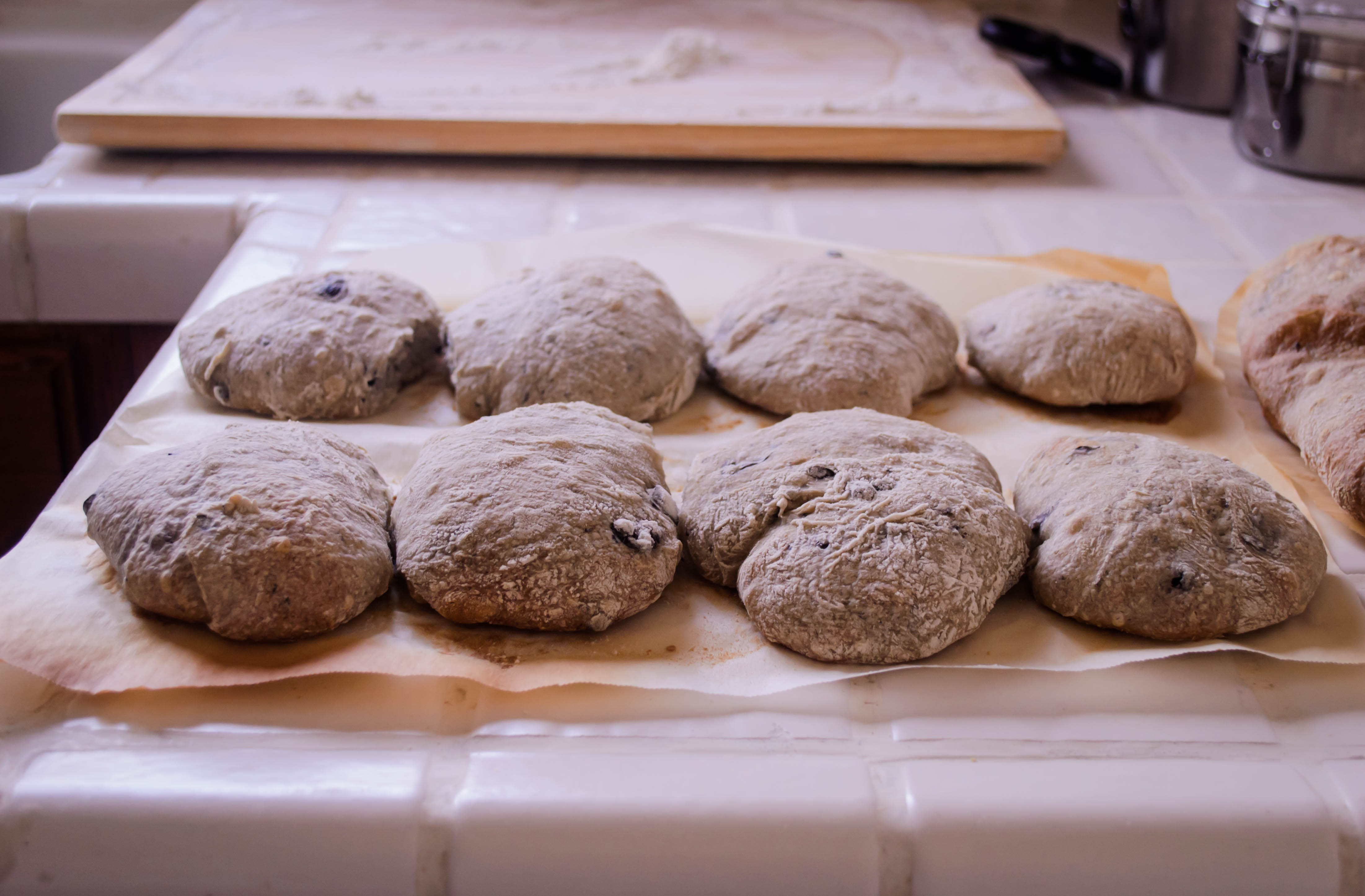
Food Blog February 2015-0383Despite the dicey textural proceedings, as bread so often and comfortingly does, it did what it was supposed to do in the oven. The loaves didn’t spring up all that high, but they did retain a network of lovely bubbles, and they did develop that moist, almost tacky texture that I, at least, require in a good ciabatta.

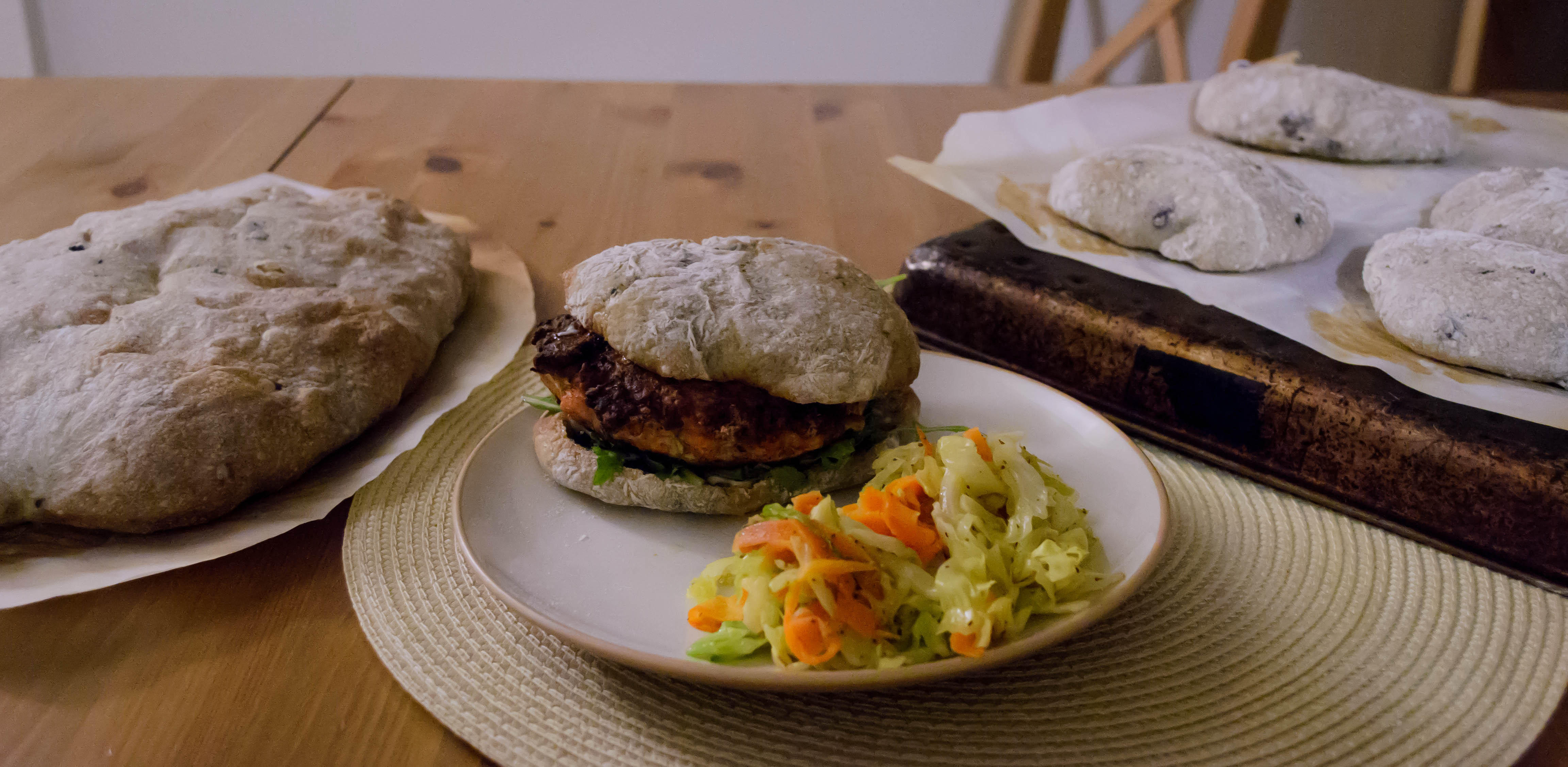
Food Blog February 2015-0387When I considered how to serve these, after I got past the urge to just tear into them and eat four or five (I stopped at one), I decided to go back to the first, unsuccessful attempt. In our previous, not-ciabatta meal, I’d used the rolls as vehicles for salmon burgers inspired by an old favorite restaurant in Eugene. Salmon burgers, then, it would have to be: a mixture of fresh and smoked salmon kneaded with egg and flour to help hold them together, parsley, a bit of garlic, and some salt and pepper. The olives in the bread were a nice addition, lending some light brininess to the burger appropriate to its marine origins.

Food Blog February 2015-0396I have to admit, though, as civilized as we were with those initial rolls, the remainder got packed into a Ziploc bag, stowed in the backseat of the car, and torn into just as they were when we needed a snack during this past weekend’s mini vacation. And that way – a day old, unheated, unadorned – they were just as good. Food Blog February 2015-0402

Olive ciabatta
Makes 2 large loaves, 16 sandwich-sized rolls, or 1 large loaf and 8 rolls
Adapted (barely) from the kitchn
For biga:
4 ounces (1/2 cup) room temperature water
½ teaspoon active dry yeast
5 ounces (about 1 fluffed cup) all-purpose flour
For dough:
17 ounces (just over 2 cups) water
1 teaspoon active dry yeast
Rested biga
20 ounces (about 4 fluffed cups) all-purpose flour
2 teaspoons kosher salt
1 tablespoon olive oil
1 cup drained, rinsed, and coarsely chopped kalamata olives


  • To make the biga, combine the ½ teaspoon of yeast and the 4 ounces of water in the bowl of your stand mixer. Stir and let sit to dissolve for 5-10 minutes. Add the flour (I highly recommend using weight measurements, as does the kitchn recipe) and stir by hand or with the paddle attachment for 1-2 minutes to start the gluten chains working. It will form a thick gluey goo. Cover with plastic wrap and let it sit at room temperature overnight.
  • The next day, the biga will look bubbly – rather like the top of a pancake when it’s ready to flip – and smell slightly fruity or alcoholic.
  • For the ciabatta, combine the 17 ounces of water and 1 teaspoon of yeast in a small bowl and stir to combine. I used my 2-cup glass measuring cup for this. Let sit for 5-10 minutes until the mixture is slightly bubbly and smells like bread. Then, dump the yeast and water into the rested biga and use a spoon or your hands to break it up a bit – this will feel disgusting but it’s necessary to ensure smooth integration.
  • Add the 20 ounces of flour, the salt, and the olive oil, and stir to form a thick, wet dough (though it’s more like a batter). Leave it to rest for 10-20 minutes to give the water time to hydrate the flour.
  • After 10-20 minutes, add the chopped olives to the dough/batter and knead on medium speed with the dough hook attachment for 15-18 minutes. On my stand mixer (brand KitchenAid), this was level 6. As the kitchn notes, keep an eye on your mixer, as it tends to walk its way across the counter at this speed.
  • The dough will remain very wet and fairly loose, sticking to the bowl, though the kitchn’s procedure says it will start to pull away from the sides of the bowl and begin slapping the sides around the 7 minute mark. Mine didn’t start this slapping pattern until I turned up the speed to medium-high for a minute or two. (If your machine seems to be heating up a lot and you are worried about it, pause halfway through the knead and let it cool down a bit – this won’t hurt the dough at all; it will simply collapse back into a wet batter while you wait.)
  • After 15-18 minutes, the dough will still turn into a loose puddle when you turn off the machine, but it should be smooth and shiny with bits of olives scattered through it. Cover it with a layer of plastic wrap and set it in a slightly warm place (70-75F) for 2-3 hours, until it triples in size.
  • Before we get into the messy part, preheat your oven to 475F and, if you have one, stow a baking stone inside. If you don’t, turn a cookie sheet upside down and place that on one of the racks instead. I used one baking stone and one inverted cookie sheet.
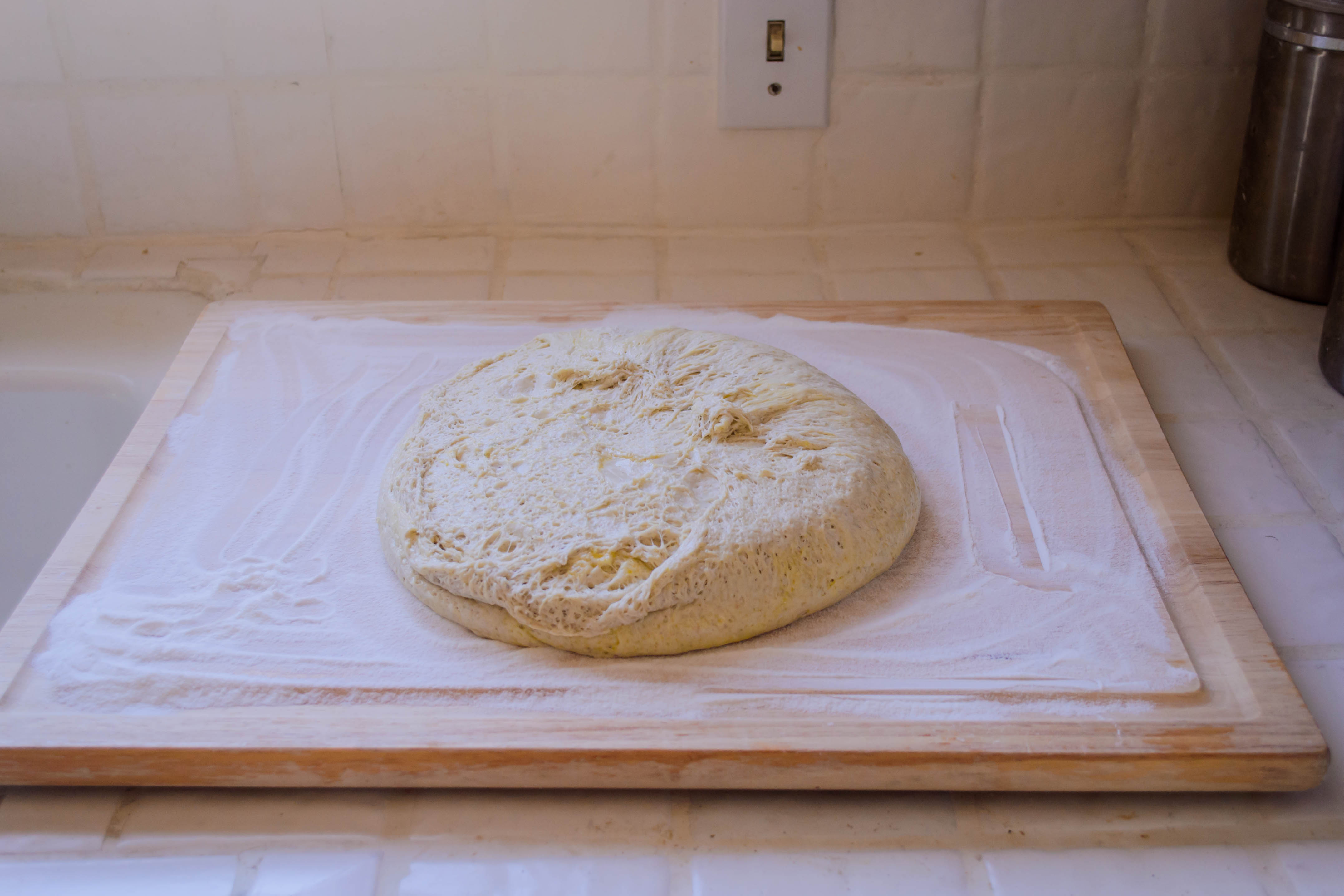
  • Now, here’s where the “well-floured surface” comes in. Scrape and pour the dough out of the bowl onto a very well-floured board, trying not to deflate it too much (we want those bubbles), then set two pieces of 9×13 inch parchment paper near your work surface. Sprinkle another layer of flour on the top surface of the dough. Use a pastry scraper or a pizza cutter, again dusted with flour, to cut the dough in half. If you are making rolls, cut each half into the desired number.
  • With floured hands, gently but quickly scoop the loaves or rolls one at a time from the board to the parchment paper. To achieve a dimpled, textured surface, press your fingers lightly into the dough. This will also flatten it into the expected “slipper” shape.
  • Let the loaves or rolls rise, uncovered, 30-40 minutes. They will puff a bit, but more out than up, and more big bubbles may develop.
  • When it’s time to bake, use the parchment sheets to slide the loaves right onto the baking stone or inverted baking sheet, parchment and all. Keeping them on the parchment ensures their bubbly structure won’t be disrupted by the relocation. Bake 20 minutes for rolls, 25 minutes for loaves, until golden brown, lightly crusty, and puffed. Remove from parchment to a wire rack to cool.

Trying-to-be-patient Brown Butter Brioche

Food Blog Jaunary 2015-0297It’s always interesting to see what the Twelve Loaves baking group decides on as a January theme. This is a time of renewal, of fresh beginnings, of starting again or trying again or reestablishing. Last year they asked for simplicity, prompting me to try my hand at sourdough, made by weight rather than volume measurements. This year, they asked for something a little more poetic but just as abstract: bake a loaf inspired by a New Year’s resolution.

Food Blog Jaunary 2015-0292I knew immediately I would make brioche. One of my New Year’s resolutions for 2015 is to be more patient. While this would be a good goal in any area of life (or perhaps all of them), for me, it’s very specific. I want to be more patient with Lucy when we take our daily walk. My dog-daughter will be twelve years old in the spring, and though she’s still very energetic and quite healthy, she has slowed down over the years. Some of this is age, but some is insistence on getting what she wants. For her, our outing is not a walk. It’s an extended sniff. She wants to stop at every bush, at every bench, at every blade of grass, it sometimes seems. This can easily push a two mile walk into an hour-long endeavor.

Fall and Winter 2014-0915Like most of us, though, I’m a busy person. At least I feel like I am. When I get home from work, after a brief decompression (read: Facebook and a snack), I want to walk Lucy, do a final check of my email inbox, and get on with cooking dinner. Ultimately, I want to get these things done so I can changed into pajamas and deposit myself on the couch. Sniffing every blade of grass impinges on this plan, so over the past year or so I found myself getting frustrated, and even quite angry when Lucy stopped, and stopped, and stopped again.

Food Blog Jaunary 2015-0265Food Blog Jaunary 2015-0266Food Blog Jaunary 2015-0267Food Blog Jaunary 2015-0268In November I was getting ready to snap at her about such a stop, and instead I stopped. Chelsea, she’s a dog. This is her daily chance to get outside and experience the world. She doesn’t understand what I’m even asking, let alone why I’m asking, and all my impatience is doing is making us both feel bad. And really, what’s the damage to my schedule if I do let her have an extended nasal examination of the things she’s most interested in? All told, three, maybe five minutes.

Food Blog Jaunary 2015-0269I can handle that.

So I am trying to be more patient with her, gently encouraging her to hustle along rather than snapping at her. I’m delivering commands in a calmer voice, and letting the sniff session go on an extra few seconds before delivering that command at all. I’m not at total karmic peace with the extra time spent yet, but I’m working on it.

Food Blog Jaunary 2015-0275Brioche is my bread project, then, because it’s a loaf that requires patience. Rich with eggs and loaded with butter, brioche is the “cake” from the famous quote misattributed to Marie Antoinette. To integrate the massive quantities of butter the loaf requires, most recipes detail a process of bringing the fat to just the right temperature and incorporating it into the dough a maddening single tablespoon at a time. Too cold, and the butter won’t mix in. Too warm, and it will collapse the dough into a soupy mess. Too much at once, and the dough will get greasy and separate unpleasantly. It takes, typically, a 20-30 minute knead time to get the gluten chains in the flour tangling nicely and then incorporate all of that butter. After this, a long, slow, cool rise time is required, in part to build flavor, in part to develop structure, and in part just to make it easier to handle – that butter has to chill down before the dough can be manipulated successfully.

Food Blog Jaunary 2015-0270Food Blog Jaunary 2015-0271Food Blog Jaunary 2015-0272By the time you are finally ready to bake the thing, a brioche has usually been under construction for the better part of a day, if not two (sponges and overnight refrigerated rises are common). But the result – a spongy tender, light-as-air crumb inside a deeply browned crunchy crust – is remarkable. It reminds me of challah, another egg-laden loaf requiring multiple rises, but is more finely textured and even a bit richer. If your gourmet burger arrives on a deeply, perfectly rounded bun so shiny it looks lacquered and leaves a sheen of fat on your fingertips when you set it back down on the plate with a sigh, you’ve had brioche. It’s a frequent choice for a truly decadent french toast, and I was prepared, with a cringe, to sink myself into making it.

Food Blog Jaunary 2015-0273When I looked around at recipes for points of comparison, I came back, as I often do, to Cooks Illustrated, which featured a practically fool-proof take on brioche. To combat the frequent problems associated with the quantity and temperature of the butter, recipe developer Andrew Janjigian opts for a no-knead approach, relying on a combination of gentle folding of the dough (see photo series above), and time, to stimulate gluten production. The very wet dough brioche requires works well for this method, because the moister the dough, the better the enzymes in there activate the gluten. Janjigian explains that this no-knead method leads to another benefit: since we aren’t kneading the dough, we can’t spend 20 minutes mixing in all the butter. Melting it and stirring it in all at once works just fine.

Food Blog Jaunary 2015-0277As I read his explanation of the changes he’d made from the original and recognized the ease involved compared to the traditional procedure, I was almost sold. A small part of me protested that this might be cheating – that if I was really making something to represent the resolve to be more patient, I should go with the typical long knead, slow-and-steady incorporation of butter, and force myself to avoid shortcuts. But in reading the recipe again, I realized this was still going to be a long process. Even before chilling the dough overnight, I would need to perform a series of folds on the sticky, wet mass I’d created to help activate the gluten. Using large chunks of my Friday and Saturday to put this together, attend to timers, coordinate myself through the rising and proofing process, and get through the agonizing final two hours of waiting for the baked loaves to cool enough for slicing, was going to take plenty of patience. I’m only human, and it’s only January. If I’m going to be successful in this resolution, baby steps might be the way to go.

Food Blog Jaunary 2015-0278Food Blog Jaunary 2015-0279Food Blog Jaunary 2015-0280Food Blog Jaunary 2015-0281The nail in the coffin, though, was when I checked Joe Pastry’s version of brioche. He suggests pumping up the flavor by using brown butter. Since I was already going to be melting the butter, this was clearly the right thing to do. Tiny speckles of toasted nuttiness running through my dough? Yes, thanks. Now, please.

Food Blog Jaunary 2015-0282Food Blog Jaunary 2015-0283Food Blog Jaunary 2015-0284Food Blog Jaunary 2015-0285Well, not now. Two long, patient days from now. But at the conclusion of those days, slicing through a softly shattering crust into a pillowy yellow interior laced with bits of brown butter, it was all I could do to eat each slice in more than one bite. Because, you know, patience.

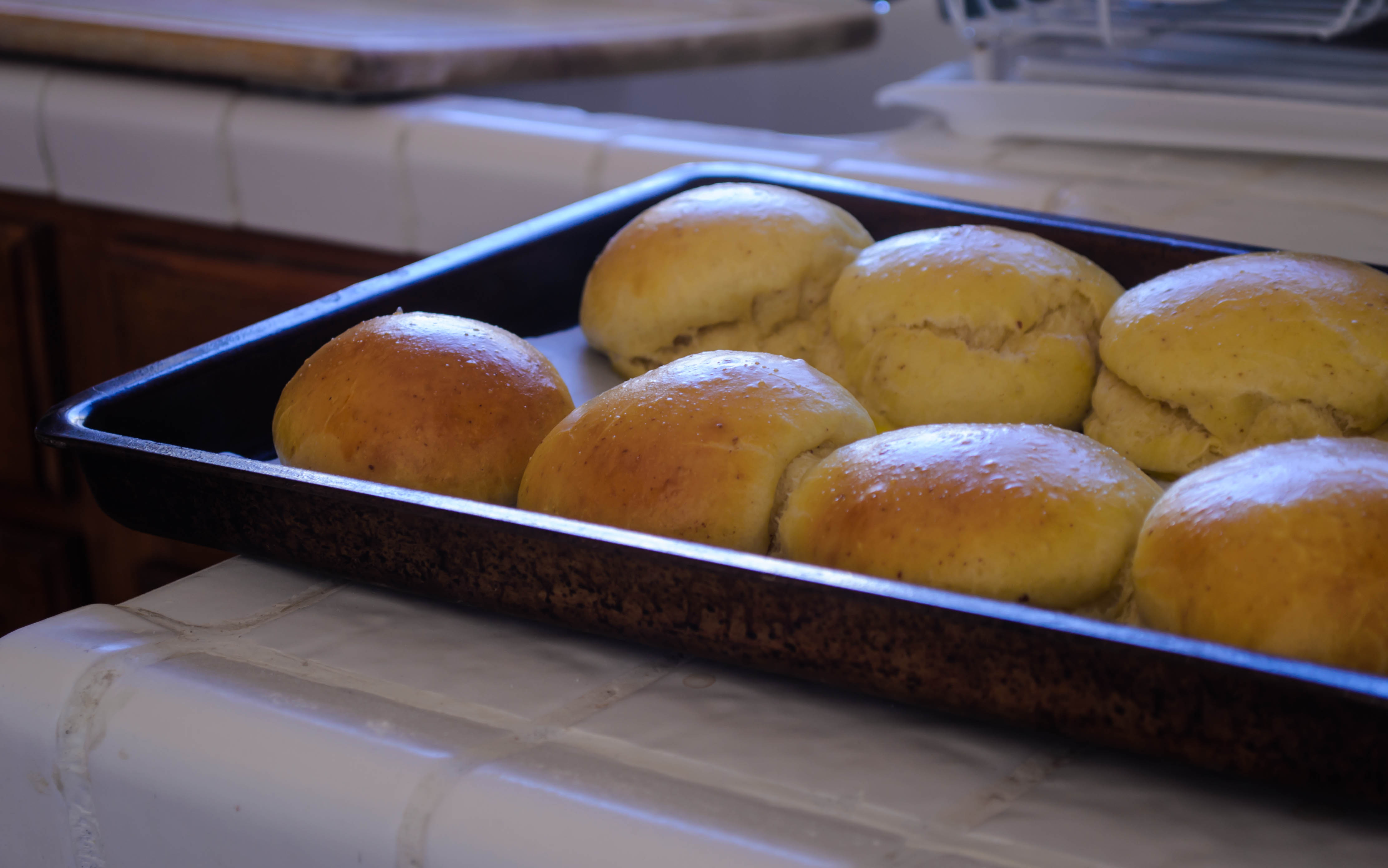
Food Blog Jaunary 2015-0288Food Blog Jaunary 2015-0289Serving suggestions: there’s not much you shouldn’t do with brioche. It can be a bit soft for a sandwich, but makes glorious toast and french toast. My recipe is for one regular loaf and 8 small or 6 large buns, and we used the bun shape for veggie burgers. Because they are more compact, the buns hold up to rough handling a bit better than the slices, so feel free to load them with pulled pork, or crab cakes, or egg salad, or whatever moves your taste buds most deeply.
Food Blog Jaunary 2015-0296

Trying-to-be-Patient Brown Butter Brioche
barely adapted from Cooks Illustrated
makes 1 loaf and 8 small or 6 large buns
16 tablespoons unsalted butter (2 sticks)
½ cup room temperature or slightly warm water
⅓ cup sugar
2 ¼ teaspoons active dry yeast
7 large eggs, divided (but not separated!)
3 ¼ cups bread flour
1½ teaspoons salt + a pinch
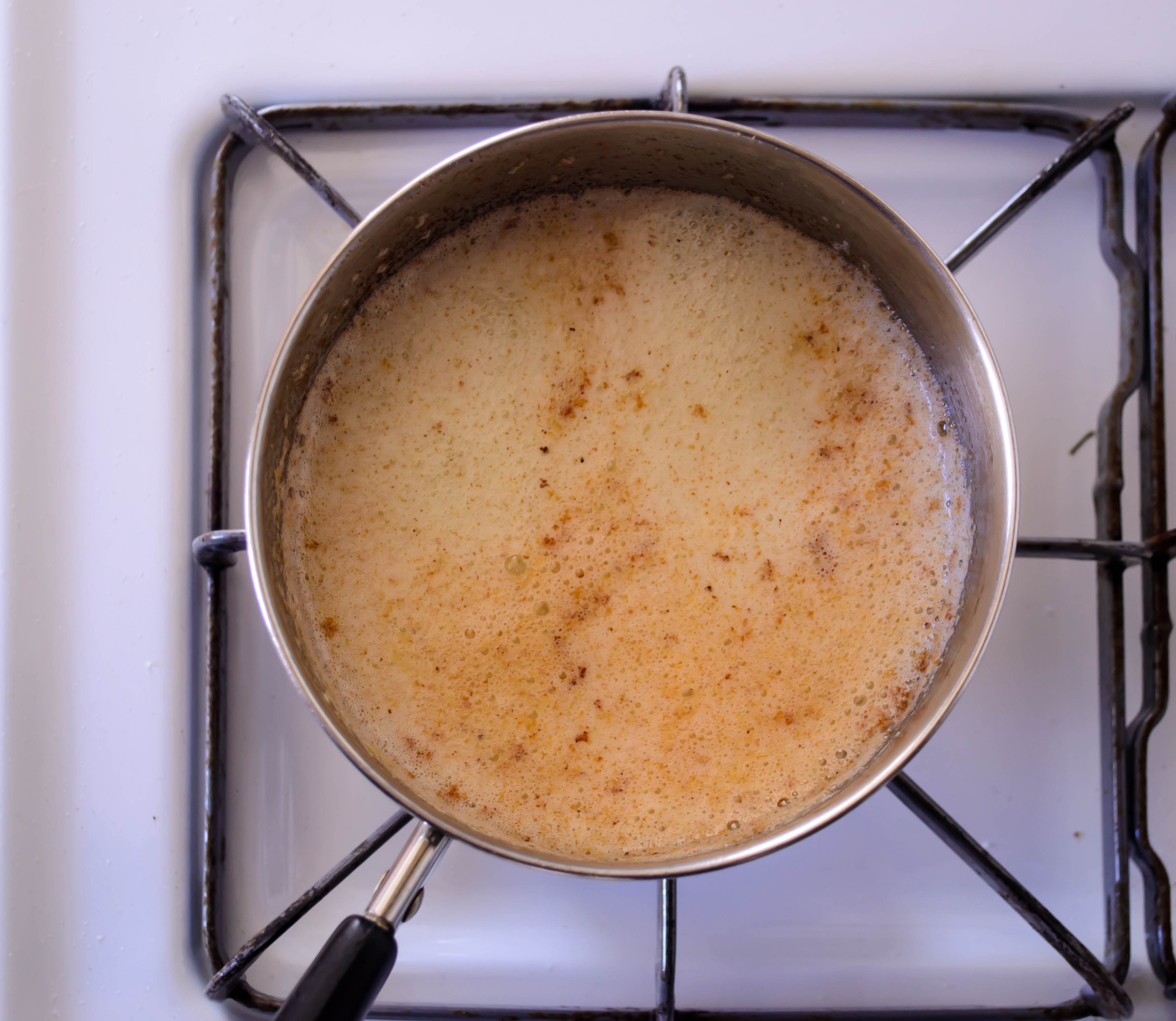
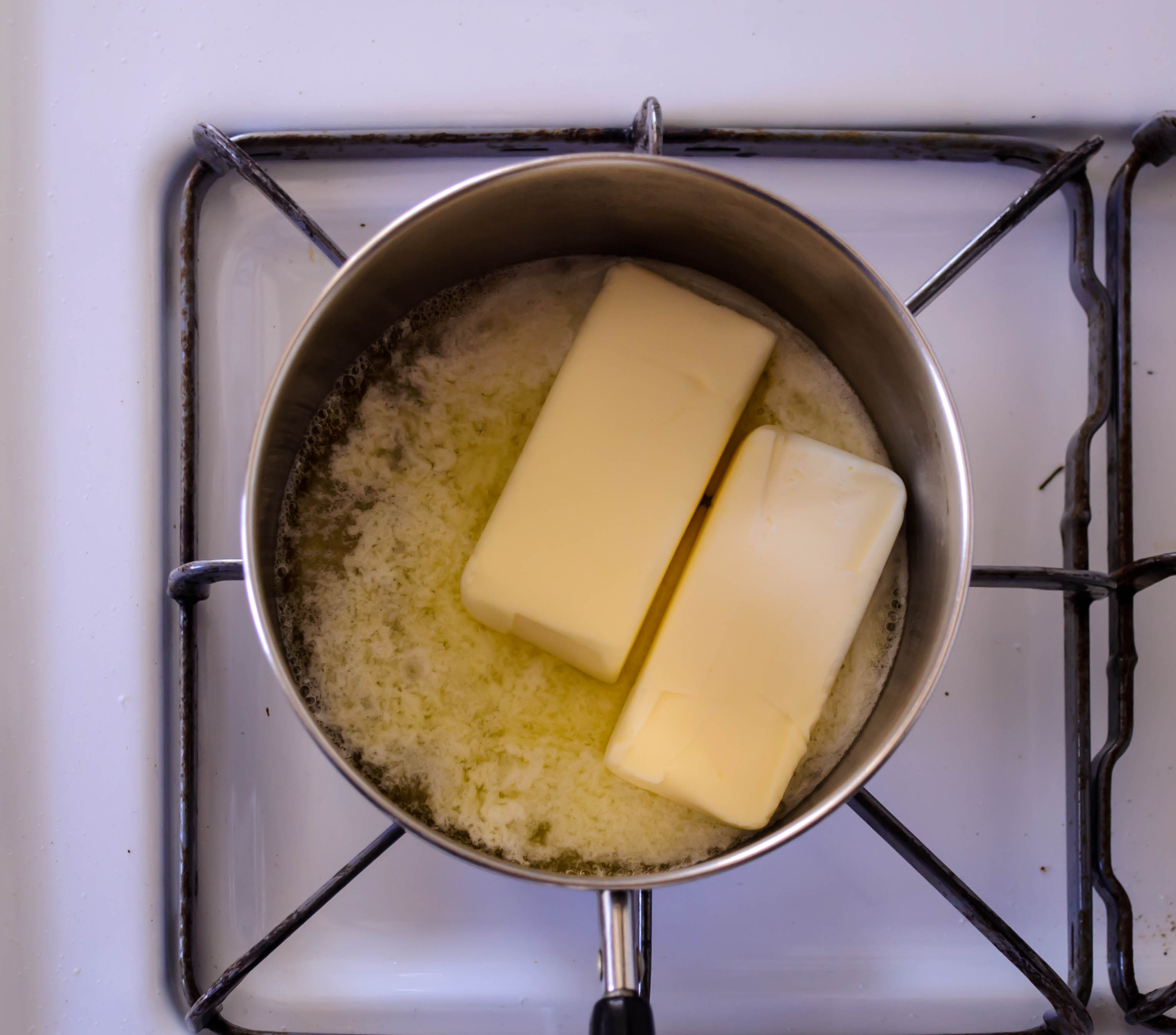
  • Day one: melt the butter over medium heat in a small saucepan, preferably not with a dark bottom (it makes it easier to see the butter browning). As it melts, it will sputter and foam up. The foam will eventually subside, but shortly thereafter it will get foamy again. At this point, tilt the pan a little bit (carefully) to see the bottom – little specks of solids should be getting golden-brown. Let them get golden and then chestnut brown, then turn off the heat and set the pan aside to cool. These little dark bits are what makes it brown butter.
  • While the brown butter cools (pop it in the fridge for a few minutes if you are nervous about the temperature), combine the water, sugar, and yeast in a large glass measuring cup or a medium bowl. Stir well, then set aside for 10 minutes to allow the yeast to activate.
  • Meanwhile, whisk together the flour and salt in one bowl (a large one), and 6 of the eggs in another (a small one will do). When the yeast mixture is bubbly and smells like warm bread, add the whisked eggs and stir to combine. Whisk in the cooled brown butter, then dump the whole wet mess into the bowl with the flour and salt. Stir with a wooden spoon until no flour streaks remain. It will be a damp lump that looks more like thick cake batter than like dough.
  • Cover the bowl of dubious dough with plastic wrap and let it sit for 10 minutes.
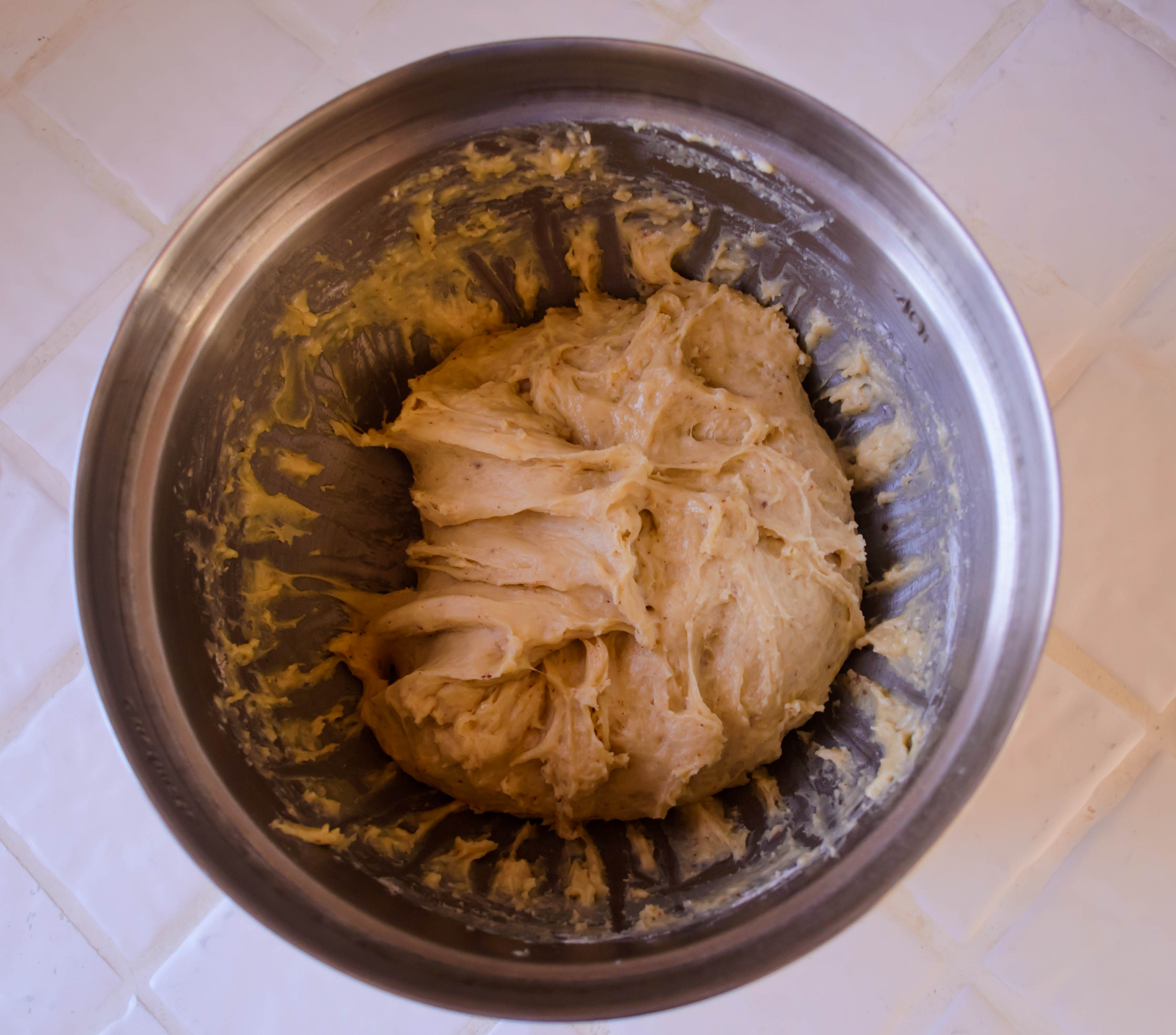
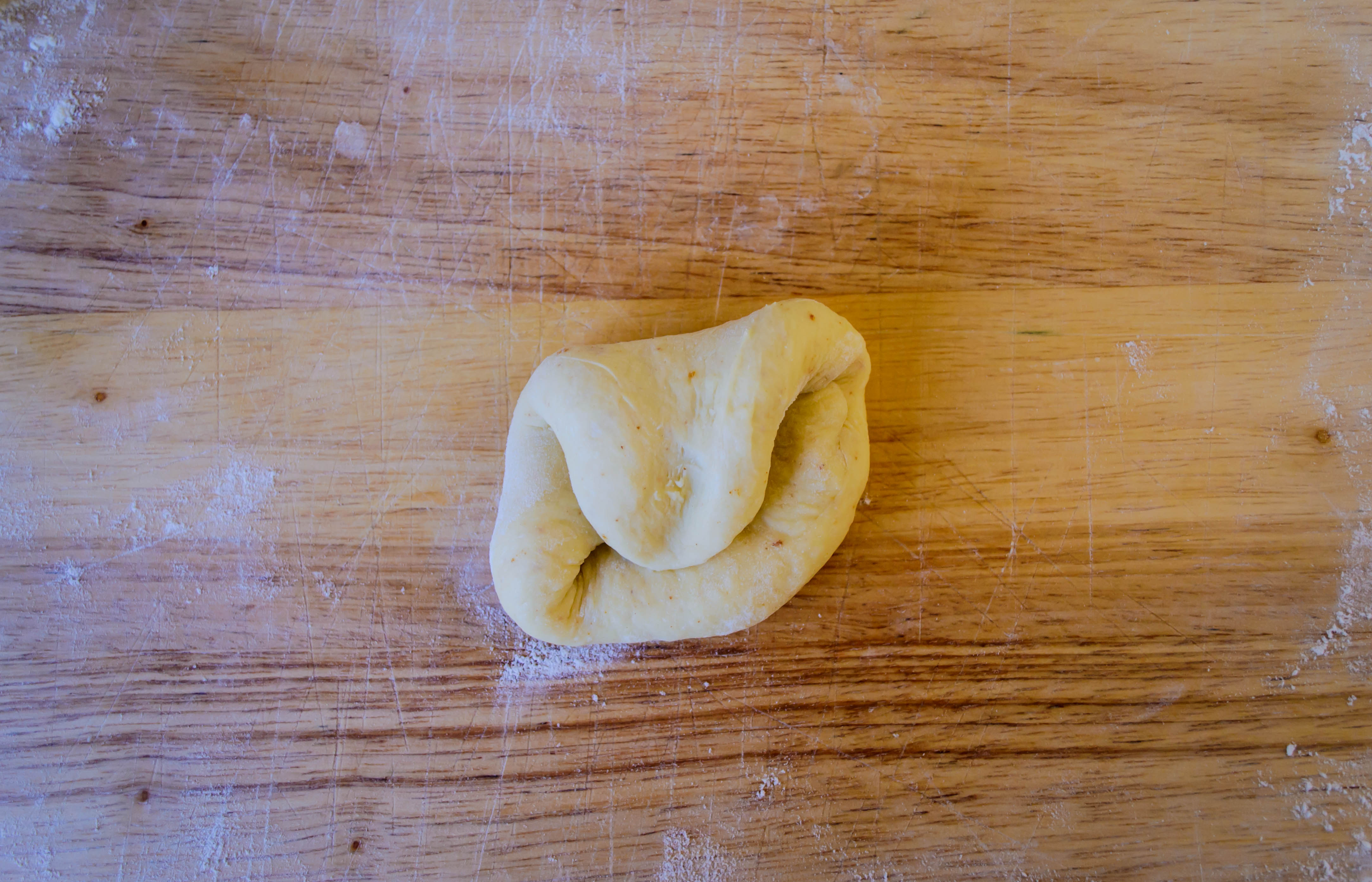
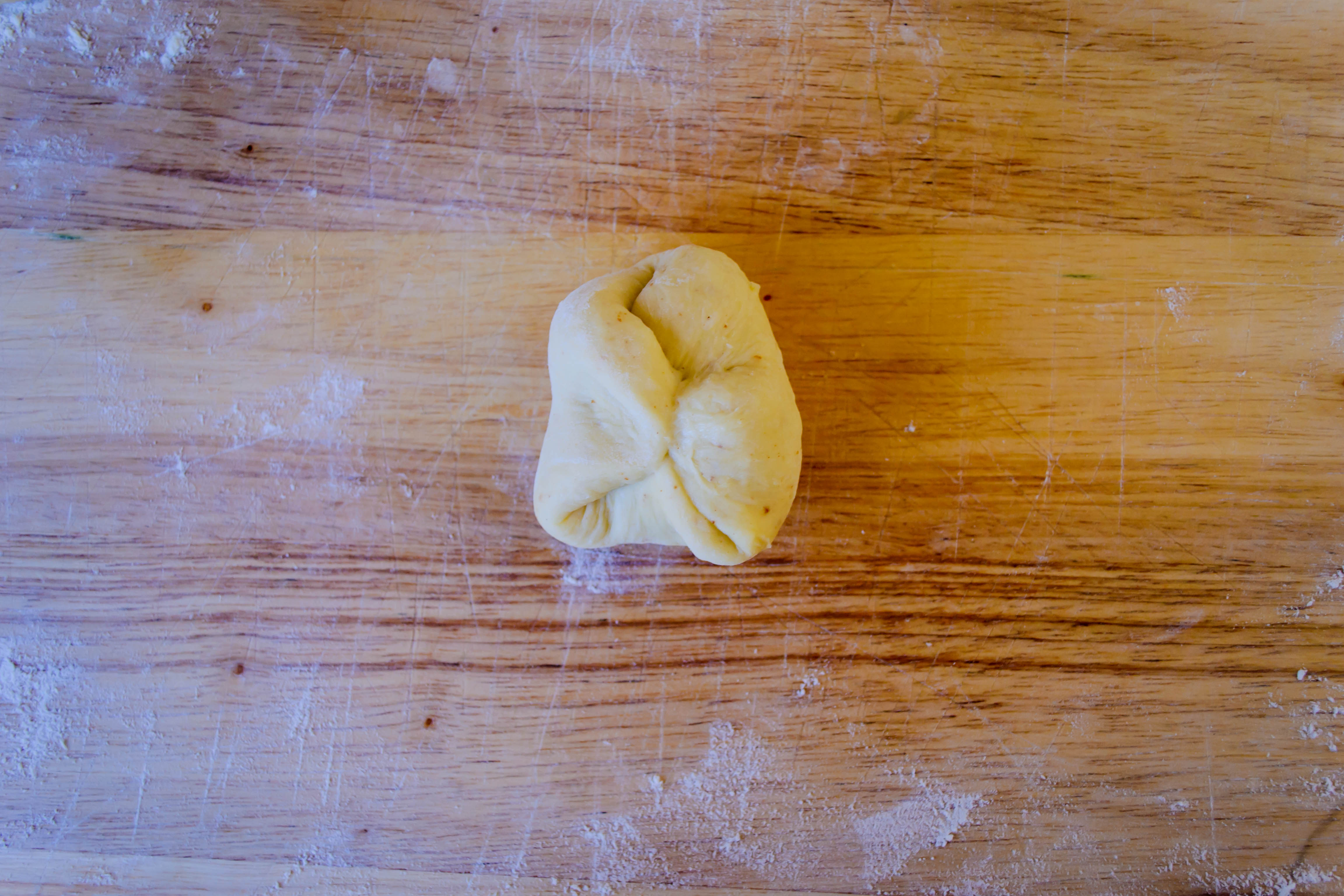
  • Uncover the dough and pull up one edge with your fingertips (sprayed with non-stick spray or lightly coated with oil, if you’re concerned about stickiness), then fold that edge over the middle of the dough ball (see photo series above). Turn the bowl 45 degree and fold again. Repeat the process until you have made 8 folds.
  • Cover with plastic wrap and let rise for 30 minutes. Repeat this folding and rising process every 30 minutes for 3 more times (so you’ll do this folding process 4 times over the course of 2 hours). This helps activate the gluten without the labor intensive kneading process. After the fourth and final folding circuit, replace the plastic wrap and stow the bowl in the refrigerator overnight.
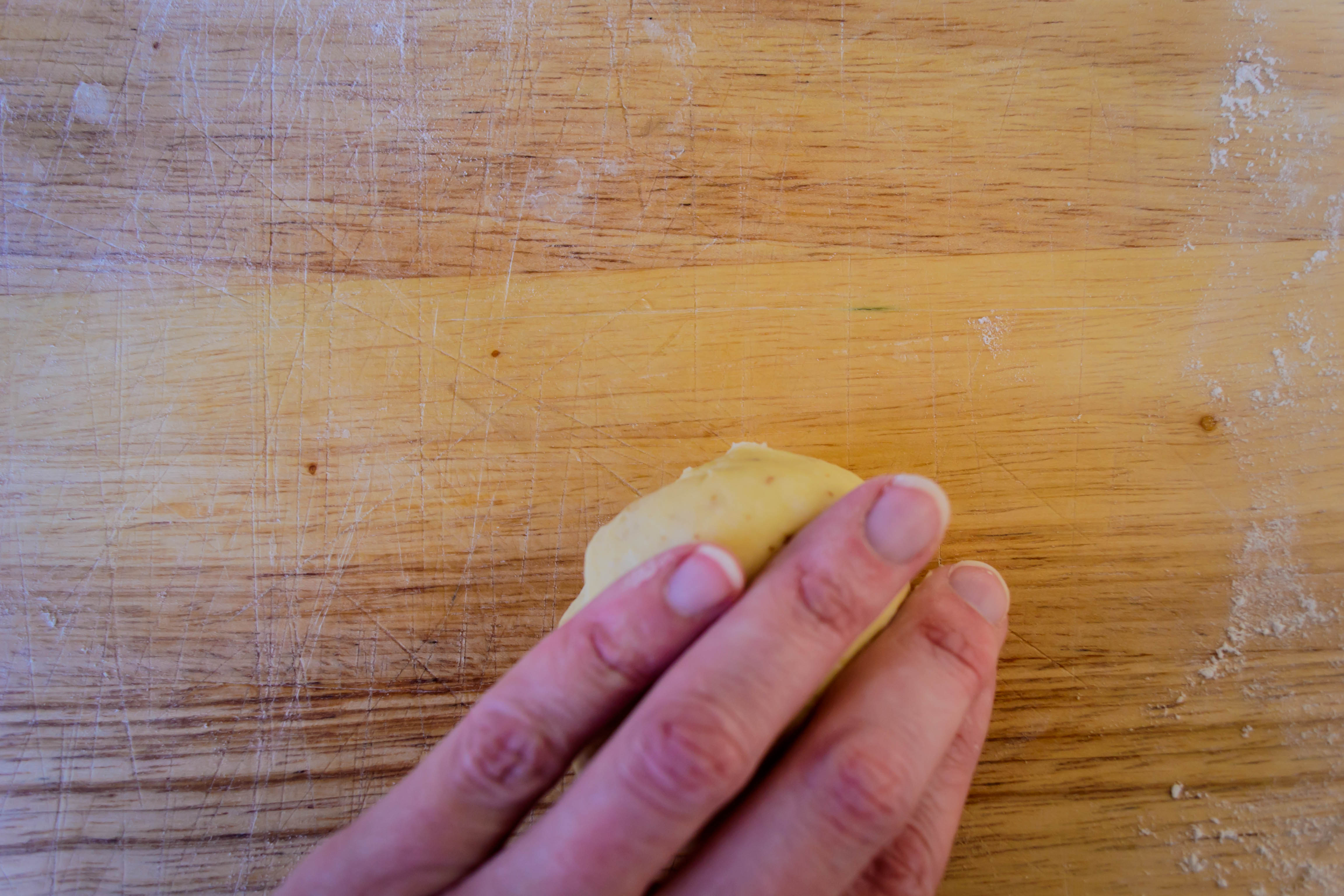
  • Day two: remove the dough from the refrigerator and relocate it to a well-floured board. Divide it into four pieces. Working one at a time, pat two of the pieces of dough into about a 4-inch round. Around the circumference of the dough, fold in the edges toward the center to form a clumpy ball (see photo series above). Turn the dough ball over and form your hand around it like a cage, then roll gently with very little pressure in light circles on the board to form a smooth, taut round (see Joe Pastry’s excellent tutorial if you need help with this). Repeat with the second piece of dough.
  • The remaining two pieces are for the buns. Divide each of them into equal thirds or quarters, depending upon whether you want 6 or 8 buns. Repeat the flattening, folding, and shaping process with each of these smaller dough pieces, then cover all dough rounds with plastic wrap and let them rest for 5 minutes.
  • Grease one loaf pan and one baking tray (or line it with parchment paper). After the dough balls have rested for 5 minutes, flip them to expose the seam side and repeat the flattening, folding, and shaping process with each one. This creates a finer, more uniform texture in the final product – a step worth doing.
  • Place the two larger balls into the loaf pan, pressing them gently into the corners. They will rise and merge into each other while baking. Place the 6 or 8 smaller rounds on the prepared cookie sheet. Cover both loosely with plastic wrap and leave to rise until almost doubled in size – this should take 1½ – 2 hours. Even after this rise, the loaf may look a bit puny. Don’t worry; it rises quite impressively in the oven.
  • Half an hour before baking, be sure your oven rack is in the middle position and preheat the oven to 350F. Cooks Illustrated suggests placing a baking stone on the rack to preheat along with the oven, perhaps to create a more even shot of heat.
  • When the loaf and the buns have nearly doubled, beat the final egg with the pinch of salt. Remove the plastic wrap and brush the loaves with the egg mixture. Set the pans in the oven (on the stone, if you’re using one), and bake until the tops are golden brown and the internal temperature registers 190F. This will take 18-20 minutes for the buns, and 35-45 minutes for the loaf. If you can remember, rotate the pans halfway through baking.
  • Once cooked through and shiny golden on top, transfer pans to a wire rack and cool for 5 minutes. Then remove from pans, return to wire rack, and cool at least 2 hours before slicing and serving.

Rye and Mushroom Stuffing with Chestnuts and Hazelnuts

Food Blog December 2014-0936A few months ago, my sister and her boyfriend engaged in a Whole 30 food challenge to help them feel healthier and more in control of their diets before the holiday season. As part of the challenge, and to silence naysayers convinced this would mean a barrage of boring, bland food, my sister took photos of almost every meal they ate. Some of these looked so good I was ready to hop on the bandwagon myself (though, as she admitted, going without cheese for that long was a hardship. First world problems, I know).

Food Blog December 2014-0930One dish in particular caught and held my imagination. R. called it “hazelnutted mushrooms.” The combination of two much beloved, earthy, woodsy ingredients made me think of Oregon and long for its damp autumnal glory as Los Angeles cycled through week after week of 80 degree days.

Food Blog December 2014-0929As the idea simmered in my mind, I kept thinking of other ingredients that would pair well with hazelnuts and mushrooms. Sage, certainly, with its dusty sharpness. Whiskey, to deglaze with that sear of burning honey. Maybe even chestnuts, with their curious texture and meaty sweetness.

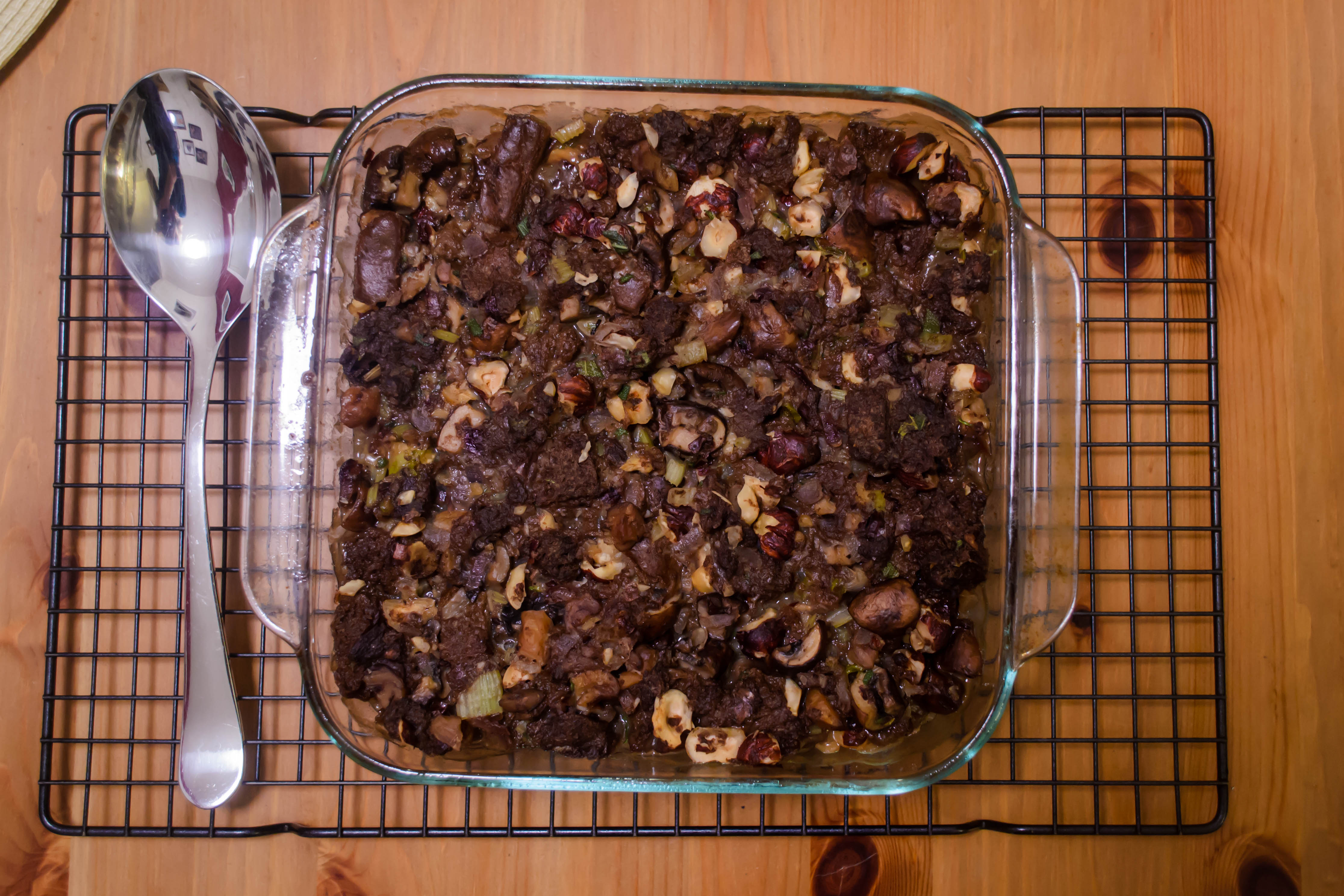
Food Blog December 2014-0932Once chestnuts entered the picture, there was no doubt this was destined to become a stuffing. With half a loaf of dark pumpernickel rye bread in the fridge longing for an application, I took action. Butter, onions, celery, deeply caramelized mushrooms, and the crunch and odd sweetness of chestnuts bolstering the broth-moistened bread and toasted hazelnut bits. The whiskey adds just a gentle flavor and a great smell to the stuffing that backs up the flavor of the chestnuts and somehow makes them make more sense as an ingredient – I wouldn’t do without it, but you can if you wish.

Food Blog December 2014-0935You’ve likely noticed there are fewer photos here than usual – it turns out that though “brown food tastes goooood” as Anne Burrell is apt to note in her throaty growl, it doesn’t always produce the most flattering or interesting photograph. Regardless, this brown food is indeed good, and deserves your attention. Though we weren’t willing to put this on the Thanksgiving menu (we are boring sticklers, and this big a shift in the sides might cause turmoil), it has considerable promise as a winter companion to roasted meats at other cold-weather holidays, especially if you tend to go with pork or beef. I think stuffed pork chops would be a particularly nice application. We kept it simple, though, and went (almost) vegetarian, pairing moist, heaping spoonfuls with mashed sweet potatoes and salty, crispy roasted brussels sprouts.

Food Blog December 2014-0936

Rye and Mushroom Stuffing with Chestnuts and Hazelnuts
Serves 6-8 as a side
6-8 slices dark rye bread, preferably stale
¾ cup raw, unsalted hazelnuts
6 tablespoons butter
½ a red onion, diced
2 large ribs of celery, diced
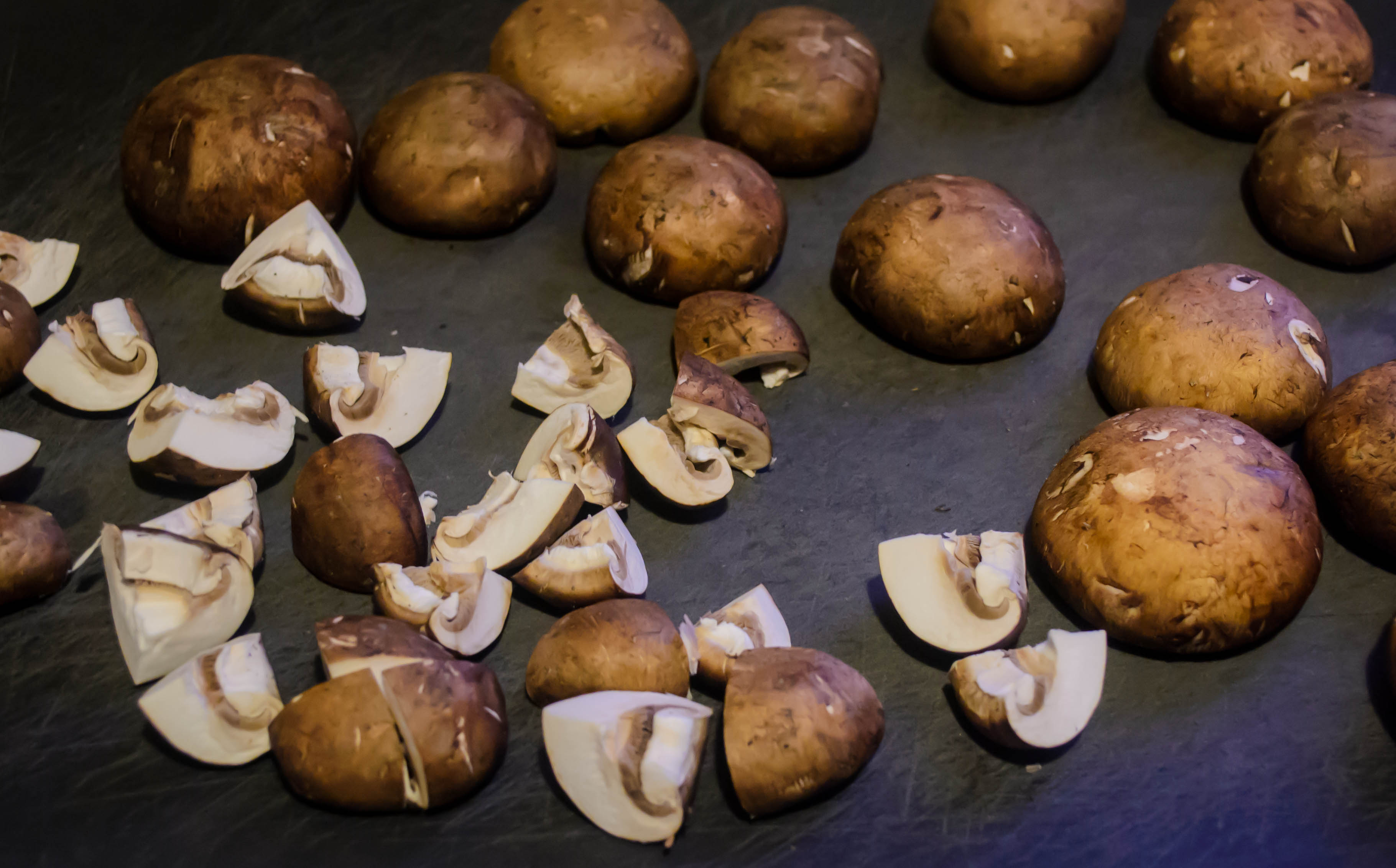
¾ pound (12 ounces) crimini mushrooms, stemmed and quartered
½ cup (6-8 ounces) cooked, peeled chestnuts, roughly chopped
8-12 fresh sage leaves, minced
¼ cup whiskey (I used Jack Daniels – you use what you like, or omit it and use extra broth instead)
2 – 2 ½ cups broth, chicken or vegetable
Salt and pepper to taste (how much salt you use will depend on the sodium content of your broth)


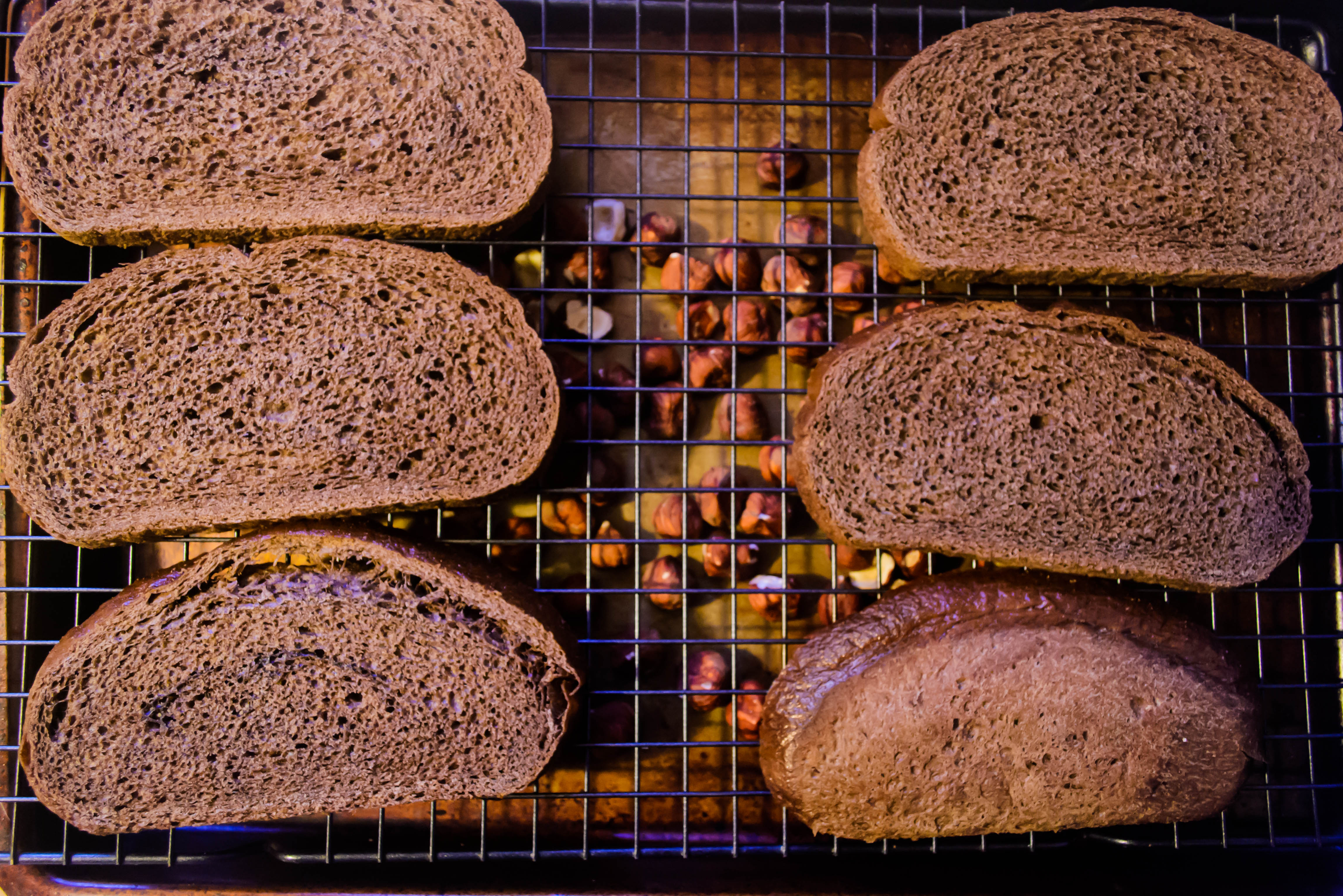
  • Preheat your oven to 350F and position a rack in the middle slot. Fill a baking sheet with your hazelnuts. Place a wire rack in the tray (it should fit over the hazelnuts) and spread out your rye bread on a single layer atop it. Toast in the preheated oven until the bread is quite dry and the hazelnuts are starting to look slightly oily; 10-15 minutes. Remove and set aside to cool.
  • Meanwhile, heat your broth in a small pot or in the microwave – it doesn’t need to be boiling, but it should be quite hot. If it does boil, turn it down to avoid losing too much through evaporation.
  • Melt the butter in a large skillet over medium heat. Add the diced onions and celery and cook until softened and translucent; 5-8 minutes.
  • Add the mushrooms and cook for an additional 5-8 minutes, until the mushrooms have soaked up much of the moisture in the pan and are soft. They may begin to brown a bit; that’s a good thing.
  • Add the chopped chestnuts and the sage and let them warm through for 1-2 minutes.
  • While the vegetables are cooking, chop your hazelnuts into rough chunks (it’s wise to wait until they are cool enough to handle), then add them to the vegetable mixture in the skillet.
  • Turn off the heat and immediately add the whiskey, which should bubble furiously when it hits the surface of the pan. Stir to combine – much of the whiskey will evaporate.
  • Tear or cut the rye bread into small pieces or cubes. It should be quite dry. Add the bread cubes to the pan and stir well to combine.
  • Now, add 2 cups of the hot broth and stir to combine. If the bread still seems fairly dry, add the remaining ½ cup. Season with salt and pepper to taste, then put a lid on the skillet and let the mixture sit for five minutes to allow the bread to absorb the broth.
  • After five minutes (or more – allowing it to sit a while at this stage is fine), deposit the stuffing mixture into a greased 9×9 inch baking dish, spread or pat into an even layer, and bake in your preheated 350F oven for 30-35 minutes, until the top layer is crusty but the interior is still nice and moist.
  • Serve hot, as an accompaniment for meat or veg.