 A few weeks ago, my dad sent an email to me, my mom, and his sisters: a reading recommendation replete with a link to a story from All Things Considered. This is, in itself, not unusual. Dad often sends along news items he thinks are important or interesting. What made this one unusual and, frankly, quite special, was that it was about the acute and wonderful memories food makes for us. It was a story about a baker and a request for a very special cake – an old German cake made with damson plums. The request for this cake threw her back years to her childhood and a cake – the same cake – her opera singer mother used to make. As she watches and smells it baking, she feels like her mother Helga is there too, in the oven with that cake, singing through time and death and all those plums, and she cries tears of grief and nostalgia and joy.

 Dad sent it because he thought it was a good story, but also because his mother – my Nana – used to make a coffeecake with damson plums, which made this all sound so familiar. He asked if anyone had her sweet dough recipe, and suddenly the emails were flying. He was not the only one who felt the connection here. My aunts were likewise plunged into memories. Though the cake in the NPR story was a shortbread dough topped with plums, Nana’s cake, like the one her mother made before her, used a yeast dough. It was made in a square pan and she always made two at a time so she could share one with Pap, and have one for the three kids. It had to be damson plums or it just wasn’t right. It called back memories of eating, but also of being in the kitchen with their mother. Nana was with them in that cake.
 I knew I had to make it. It had called up too many happy memories for my family to remain simple nostalgia. Besides, I have Nana’s sweet dough recipe, and with the details I collected from my aunts’ emails, I felt like I had enough data to piece it together.
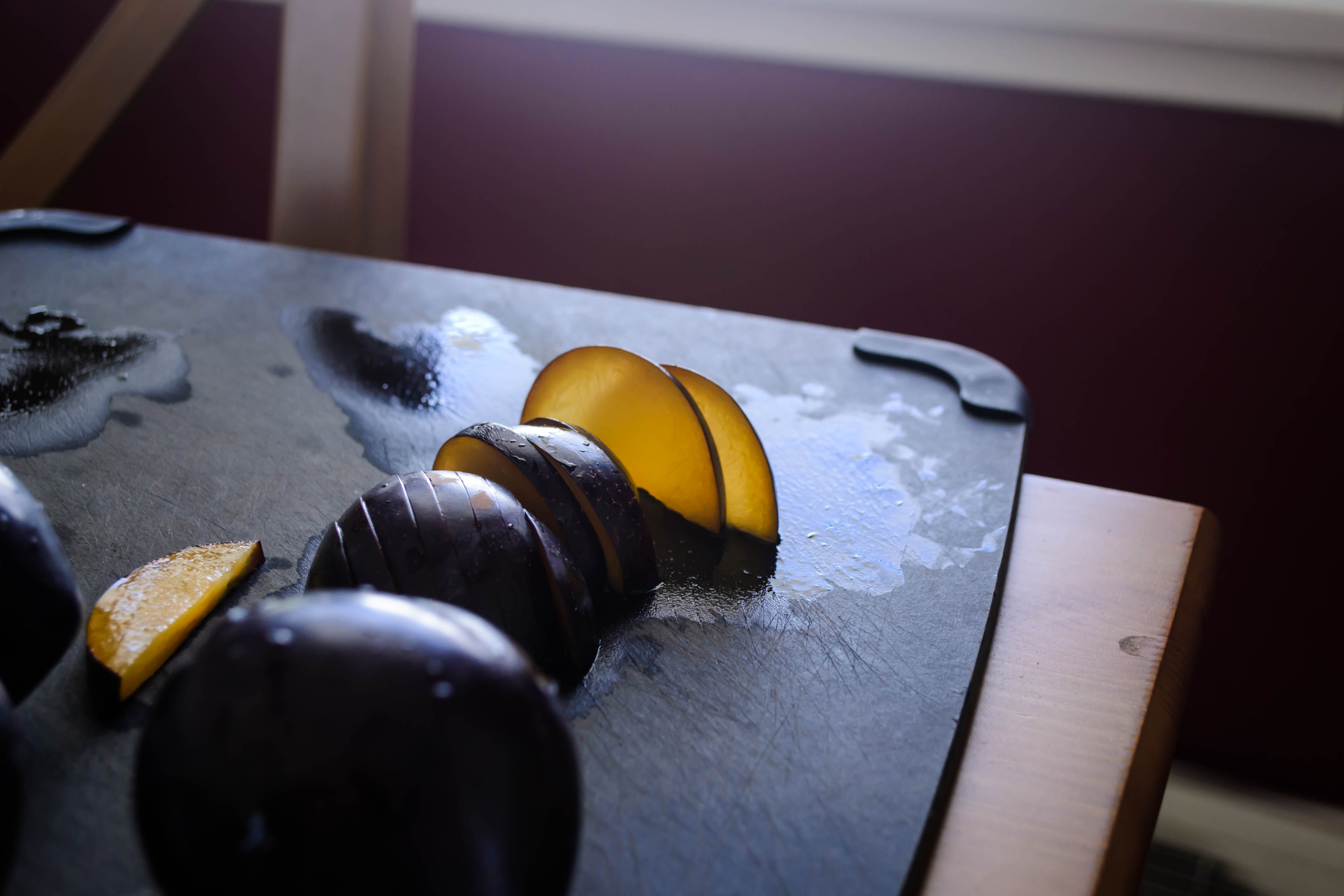
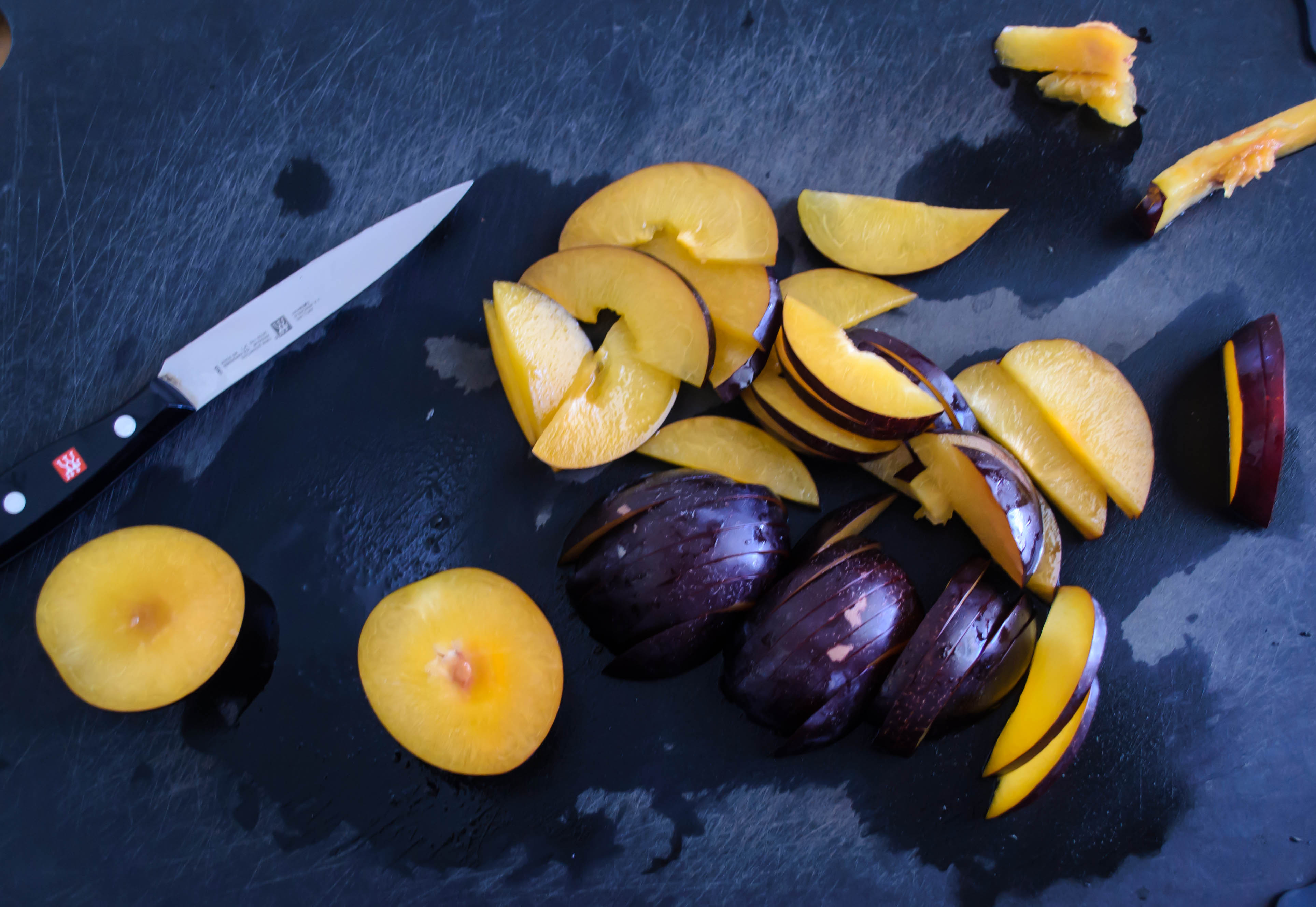
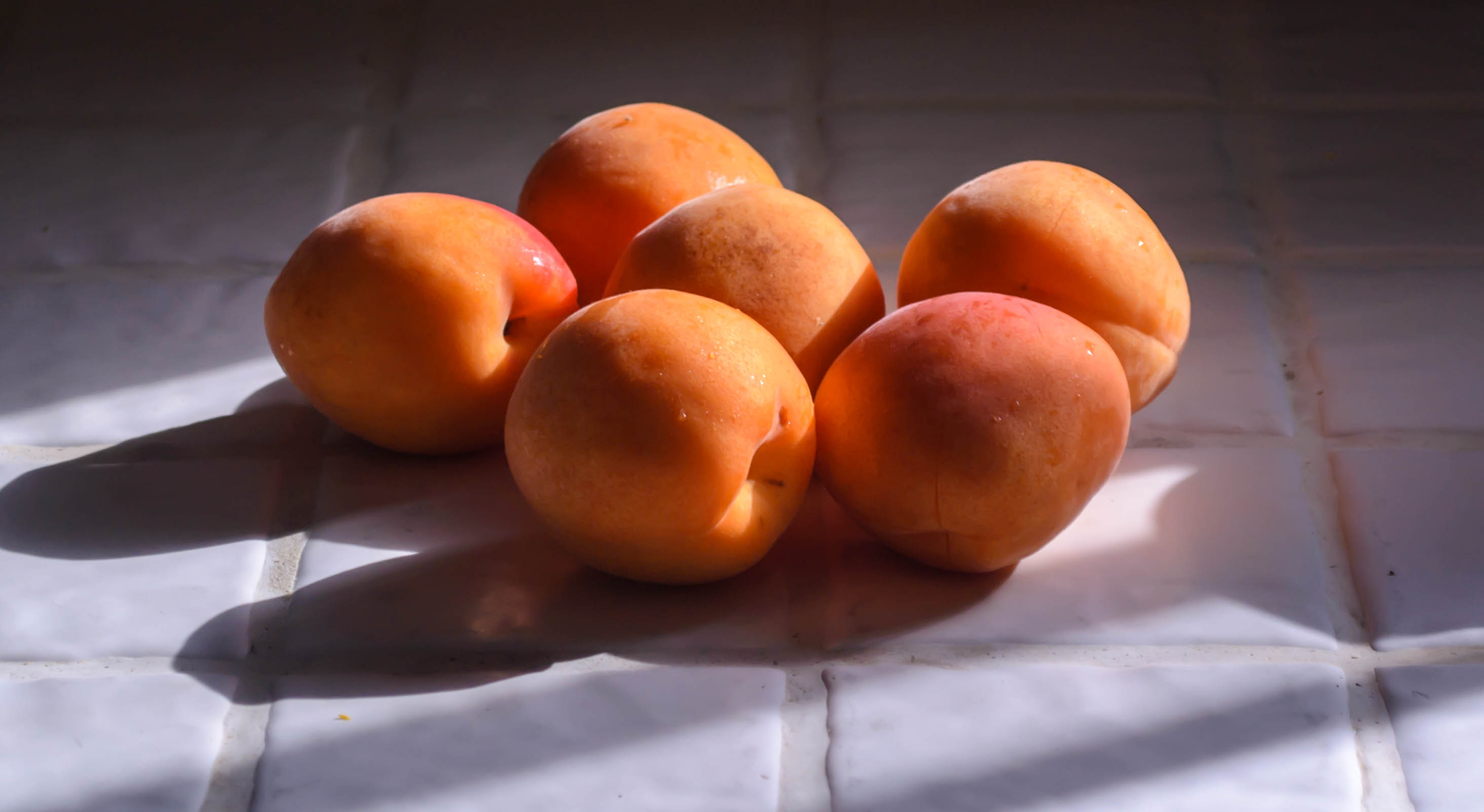
 But you know me. I fiddle. I adjust and tweak. I ruminate, and things change. So despite my pure intentions, this is not my Nana’s cake. First of all, I couldn’t find damson plums. Even at the stand at my Farmers’ Market that carries at least six different strains of plums and pluots, there was nothing labeled “damson,” and no one knew what I was talking about. A bit of internet research suggested I might try an Italian plum as a close substitute, but without ready access to those either, I settled on a deep, black-purple skinned variety with yellow flesh. The point seemed to be a plum that was not terrifically sweet, since the cake itself is snack or breakfast fare, not a sugared up dessert. From there, with the main ingredient already an adaptation, I felt freer to play a bit as I constructed the recipe.
 From Nana’s original dough, I replaced water with milk, exchanged white sugar for brown, and added a healthy dose of cardamom. I suspect Nana never used cardamom in any of her baked goods, and likely never had any in her spice collection, but its pleasant citrusy aroma and warm spicy flavor go so beautifully with plums that I decided it was a necessary update. Since I was already playing quite a bit with what I imagine was Nana’s original procedure, I decided to go whole hog and add a simple streusel to the top just before baking. This was the right thing to do. A little extra spice, a little extra sweetness, turned crumbly in some places and melted into the plums in others, adding caramel loveliness to the whole thing.
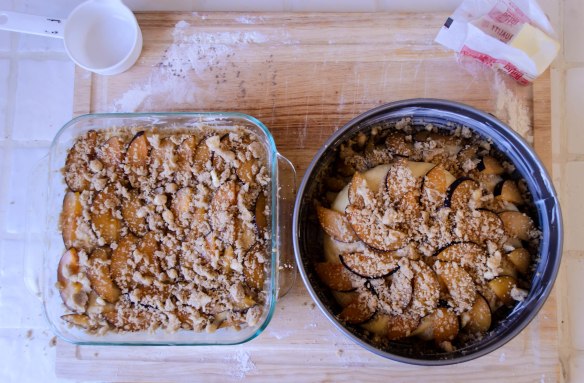
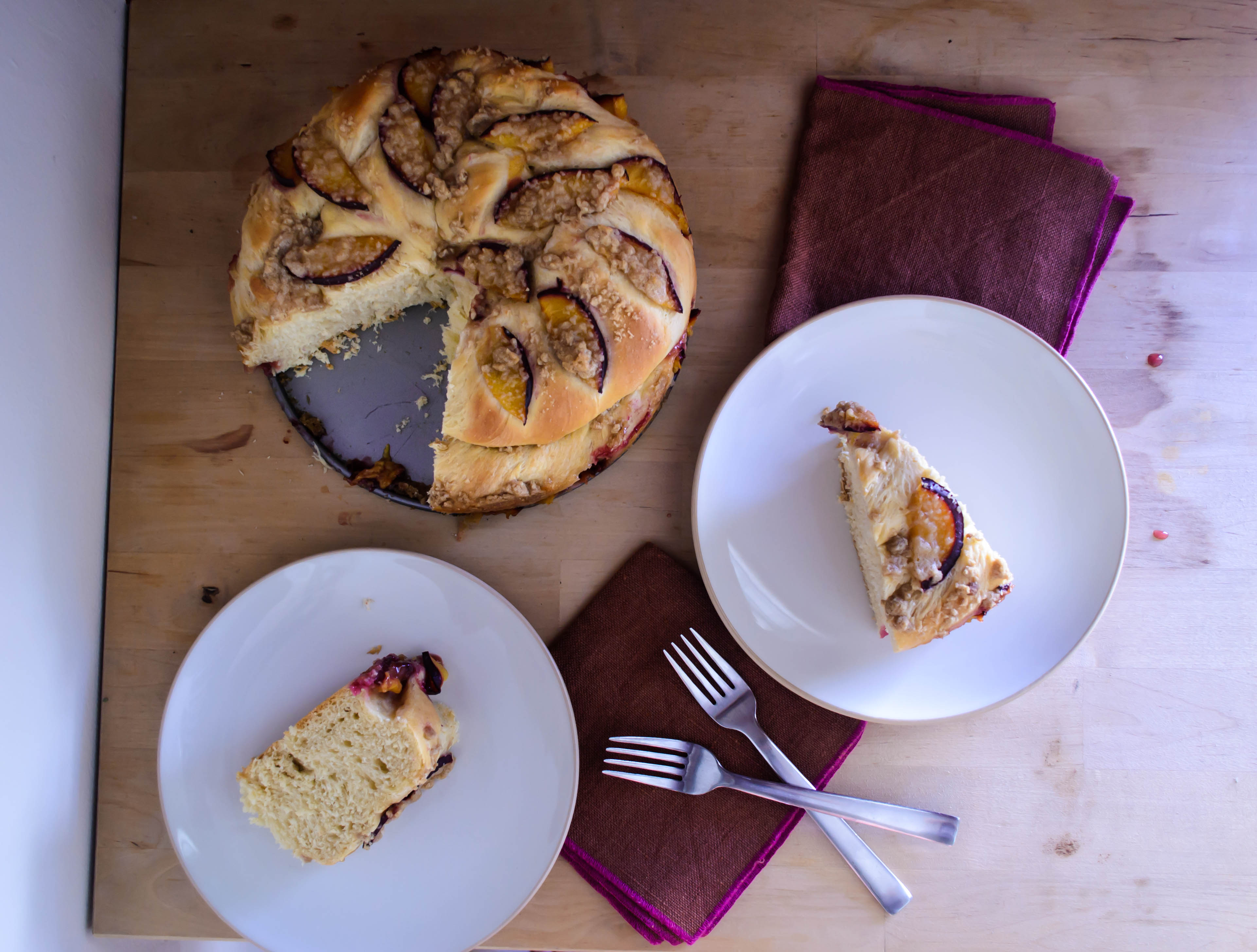
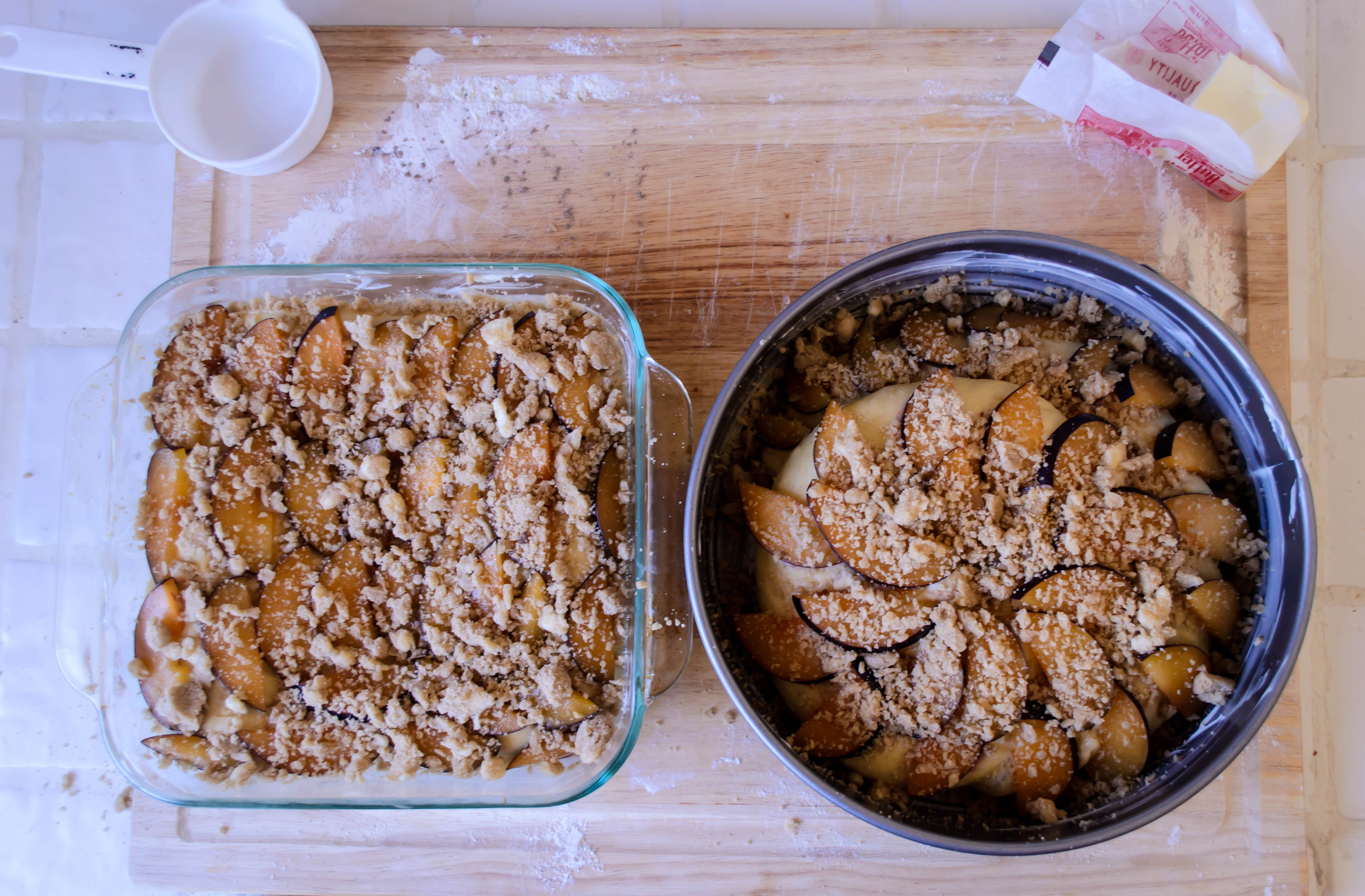
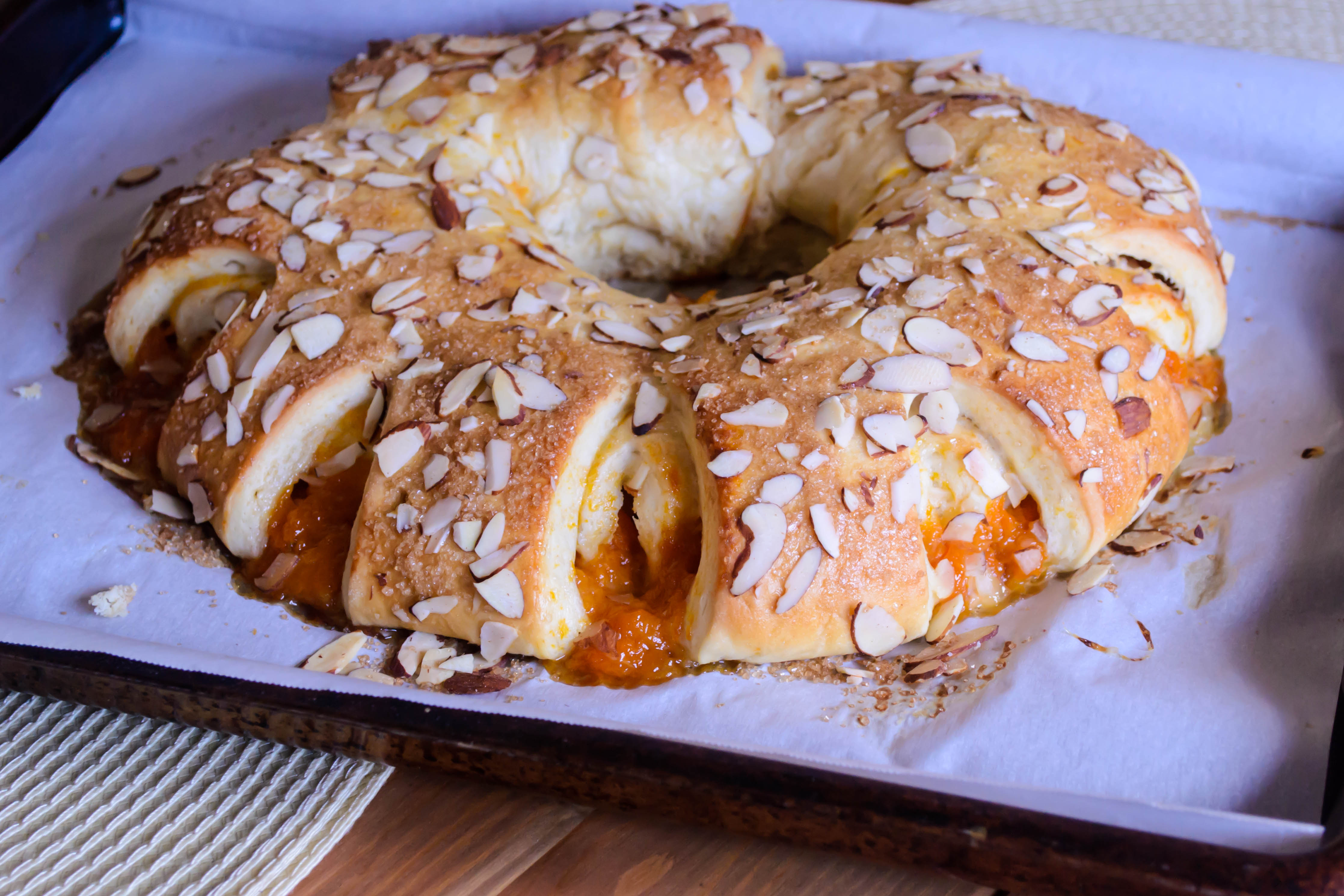
 Like Nana used to, I made enough dough for two cakes. Obeying the mandates of memory, I did one in a square pan. I wasn’t sure how it was going to turn out – just a hunk of dough flopped and poked into a pan – so for the other I tried for a twisted coil, laying the flat snail-shell of dough in a springform pan to rise. Interestingly enough, while adding streusel to the top was a successful adaptation, the pan and shape change was not so ideal. The square shape turned out better because it made for a more even distribution of plums. The coil, while it baked into a beautiful puffy spiral, was smaller to start with, which meant I couldn’t load on as many plum slices. When it expanded, both on the counter and in the oven, the plum distribution ended up a bit sparse (though the outcome was still delicious). The square shaped cake, which had nowhere to expand but straight up, retained its fruit coverage for a final product that can only be termed plummier. That, then, was the one I brought to work with me to share. By the time I left campus in mid-afternoon, only a tiny, plum-less corner remained.

 Nana, this is a good cake. I’m glad you made it, and I’m glad it was remembered. I don’t know whether you would have liked my version, and I know you wouldn’t have liked the mess I made in the kitchen while I worked on it. I do think, though, that you’d have liked the fact that I was happy while baking and that I made enough to share. And I think you would have liked that it made us all think about you so fondly.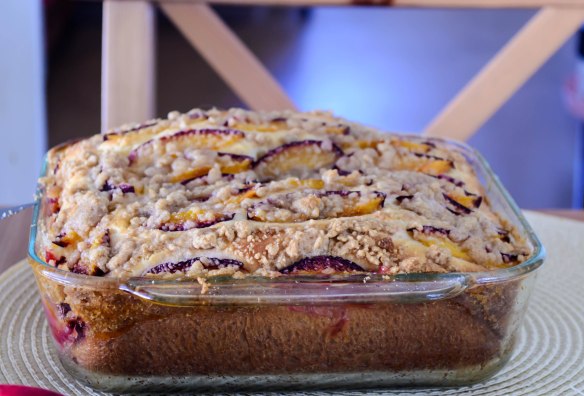

(Not damson) Plum Coffeecake
Makes two 9-inch cakes – one for you, and one to share
For the dough:
4 teaspoons active dry yeast
1 cup lukewarm milk
½ cup + a pinch of brown sugar
1 teaspoon vanilla
4 eggs
½ cup unsalted butter, soft but not melted
1 teaspoon salt
2 teaspoons ground cardamom
4-5 cups flour
4-5 yellow-fleshed plums, thinly sliced (firm, or even slightly underripe, will be easiest to work with)
For the streusel:
4 tablespoons cold butter
4 tablespoons flour
3 tablespoons brown sugar
1 teaspoon cardamom or cinnamon
pinch salt
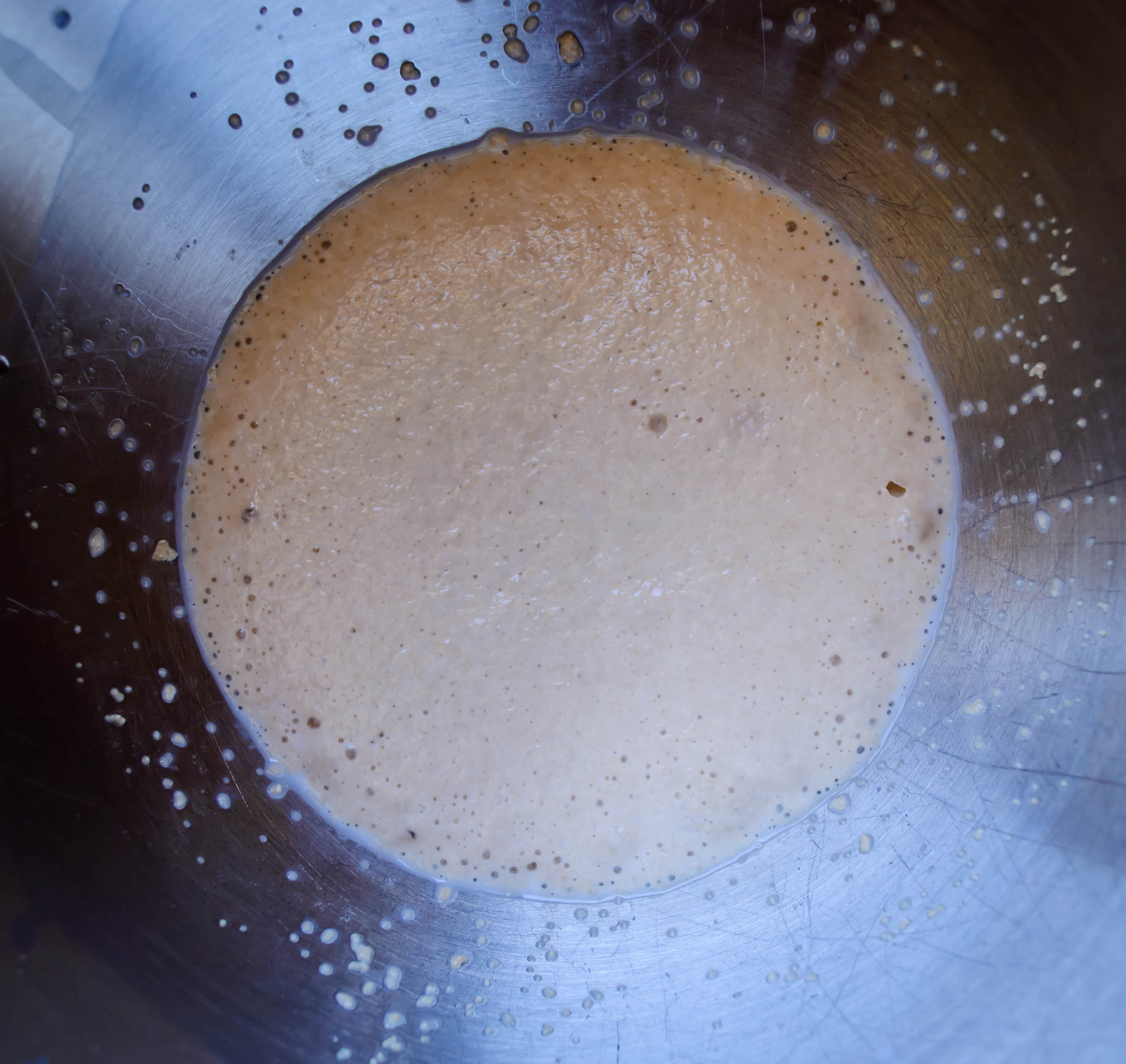
- Add the yeast and a pinch of brown sugar to the lukewarm milk and stir to combine, then set aside for 5-10 minutes for the yeast to burble and get foamy.
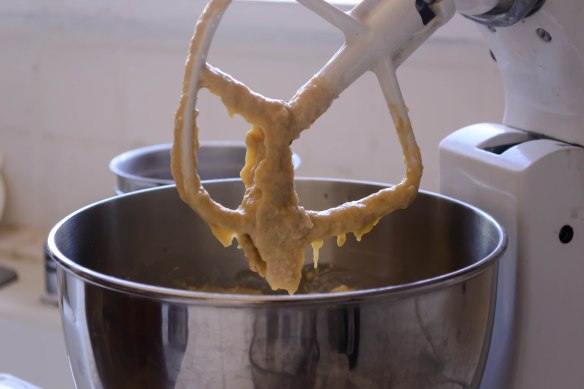
- Meanwhile, combine 3 cups of the flour, the salt and the cardamom in the bowl of a stand mixer. Add the yeast mixture, the eggs, and the vanilla and mix on low speed with the paddle attachment to combine.
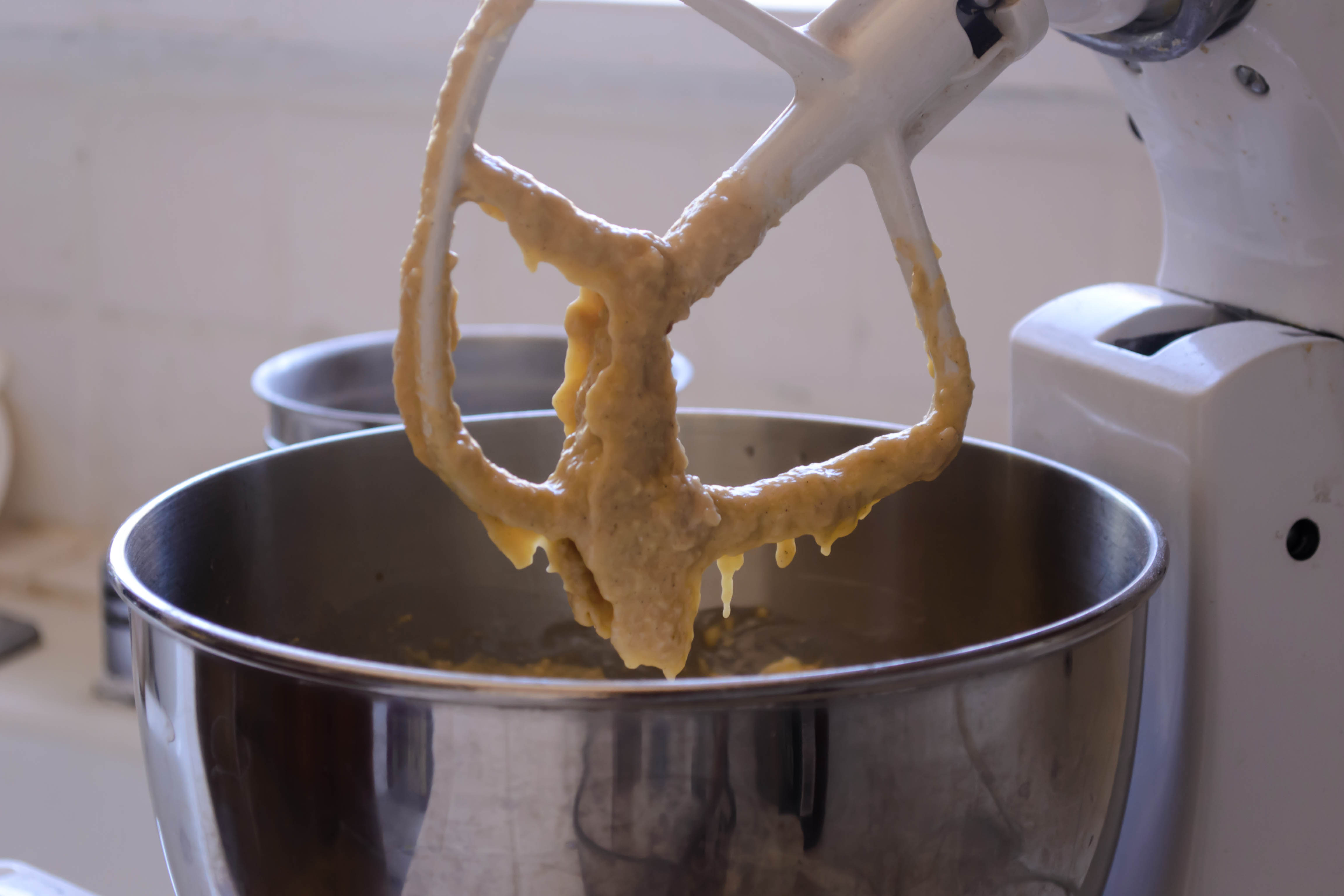
- When the eggs are mostly integrated, add the butter and mix on low speed until it is mostly absorbed into what will look like a wet batter. Add an additional 1 cup flour and mix until combined.
- Switch to the dough hook and knead for 5 minutes until a soft, elastic dough forms. If the dough looks very loose or sticky and is not coming together, add the final cup of flour ¼ cup at a time, kneading well between each addition. You may not need the full 5 cups of flour – mine took a total of 4 ¾ cups.
- When the dough is soft and stretchy – a bit like an elastic playdough – lightly oil the bowl, roll the dough around in it a bit, and then cover tightly with plastic wrap and set in a warm place to rise for 1 ½ – 2 hours, until doubled.
- While the dough rises, slice the plums.
- After the dough has doubled in size, punch it down by gently depressing your fist into the dough to release trapped air, then let it rest for 5 minutes to get its breath back.
- Divide the dough into two equal hunks, fold, push, or twist into desired shapes, and settle each loaf into one of two greased or buttered 9-inch square or springform pans. Nana did a simple square, but you could also roll the dough out into a long, wormlike log and then twist it like a rope over and over itself, then wind it up in a coil like a flat snail-shell.
- Top the shaped dough with plums, slightly overlapping the slices to accommodate for the additional rising time. Adding the plums now allows them to macerate a little and release some juice and flavor into the dough.
- Cover the cakes lightly with plastic wrap or a clean kitchen towel and let them rise again for 30-45 minutes. They will almost double.
- While the cakes rise again, preheat the oven to 350F and make the streusel.
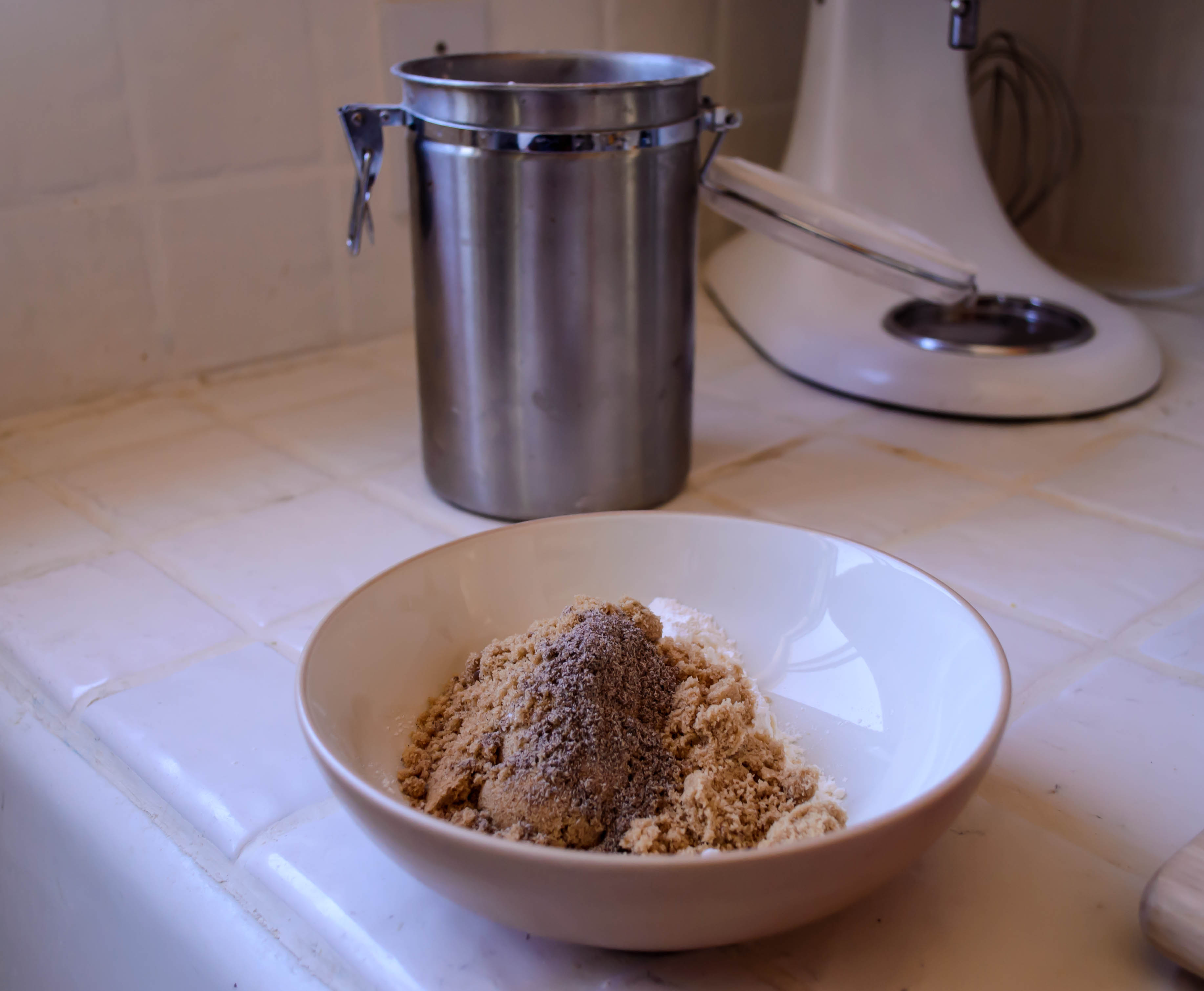
- In a small bowl, stir together the flour, brown sugar, cardamom or cinnamon, and pinch of salt for the streusel. Using your fingers, blend in the 4 tablespoons butter until the mixture is reminiscent of damp sand, and little clumps flatten but cling together when you press them between your thumb and forefinger.
- Just before the cakes are ready to go in the oven, remove the plastic wrap or kitchen towel and sprinkle on the streusel, using half for one cake and half for the other. It should be enough to cover the surface completely, but don’t skimp! Use it all, as the cakes will rise again in the oven and thus the coverage will decrease a bit.
- Bake 30-35 minutes until the streusel is golden, the tops of the cakes are nicely bronzed, and they are cooked through. Let cool at least 20 minutes before removing from pans or slicing.
- This bread, despite how rich it is, bakes up quite light and is best the first day. It will keep three or four days in the refrigerator, well-wrapped, but it does get a little dry. Nothing a quick trip in the microwave and maybe a slick of cream cheese can’t fix, though.




















 "blackberry-eating in late September"