Lemon Vanilla Pound Cake with Apricots and Whipped Ricotta

2016 Food Blog June-1030This world in the last few weeks has been a place of heartbreak and confusion and frustration and terror. I was bewildered, and angry, and I grieved, and I wrote and deleted various posts on various platforms that felt too tidy, and too ineffectual.

2016 Food Blog June-0981But amidst the heartbreak, and the anger, and the mistakes, there were these moments of strength and of recovery and of determination: one of my students, wearing a t-shirt that said “Caution: educated student of color.” I wanted to hug him. I wanted to say “great shirt.” I wanted to tell him to keep wearing it so proudly and to use that power and that dangerous-in-a-good way truth about himself to help change happen. I just smiled as he sat down at his desk. A sold-out message on every single one of the shirts bearing an excerpt from Lin-Manuel Miranda’s Tony award acceptance sonnet, which were being sold to raise funds for victims of the Orlando shooting. As a friend of a friend commented, agree with their objective or not, and whether their actions and their words were successful or not, the filibuster in the Senate and the sit-in in the House were pretty inspirational. Determination. Strength. Flashes of brightness and connection in an increasingly isolating world.

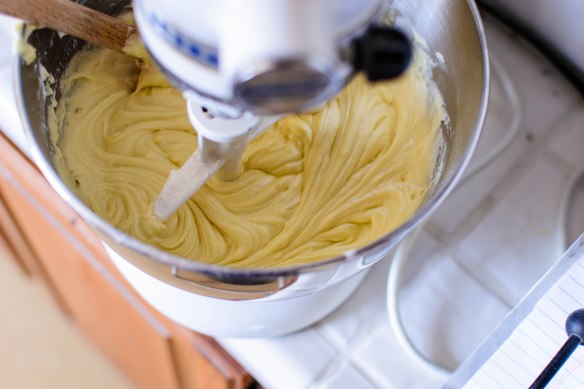
2016 Food Blog June-09832016 Food Blog June-09862016 Food Blog June-0991At first, because there was too much of the world in my brain with all of this going on, I couldn’t think of anything to make. As always, food seemed too trivial to worry about, and perhaps it is. But it is a comfort. Stumbling all unwilling into the kitchen was a chore, until I picked up a knife, and a whisk, and the familiar enfolded me. Perhaps because it was the first kind of cooking I learned to do, standing beside my mom, scooping or mixing or poking at cookies, baking seemed like the right way in. Then, inspired both by N’s recent snack preferences at a certain coffee corporation, and a gorgeous picture on King Arthur Flour’s instagram feed, I knew the answer was pound cake. In a way, it works with my tangled feelings: it’s a dense cake, weighty and substantial and thick, but shot through with lemon zest and topped with a drizzle that becomes crunchy and tart as it bakes it has those flashes of brightness I’m looking for and lifted by. KAF’s version incorporates some cream cheese along with all that butter, which I like for the barely discernible tang it promises.

2016 Food Blog June-1021You don’t need a lot to pair with pound cake; in fact, its very title suggests you need nothing, but I couldn’t resist a bit of excess. Bright, meaty, fuzz laden apricots, pitted and sliced into wedges, and a heaping dollop of barely sweetened whipped ricotta, lightened with cream, make the utilitarian slice a rich-but-not-too-heavy dessert.

2016 Food Blog June-10272016 Food Blog June-1029I wish you some comfort this week, and I hope you have something safe and solid in your life, and some flashes of brightness to turn your face toward.

2016 Food Blog June-1043Lemon vanilla pound cake with apricots and whipped ricotta
Adapted from King Arthur Flour
Makes 1 9×5 inch cake and approx. 1½ cups ricotta cream
2-2½ hours, including cooling time
For cake:
¾ cups unsalted butter, at room temperature (1½ sticks)
3 ounces cream cheese, at room temperature
1½ cups + 2 tablespoons sugar, divided
1 tablespoon lemon zest from 1-2 lemons
1 teaspoon baking powder
¾ teaspoons salt
5 large eggs, at room temperature
3 tablespoons milk
1¾ cups + 2 tablespoons all-purpose flour (I know it’s a weird amount; remember “pound” cake is based on weight measurements)
2 teaspoons lemon juice
For toppings:
4-5 fresh apricots, rinsed
1 cup whole milk ricotta cheese, cold
1 cup heavy cream, cold
2-3 tablespoons granulated sugar
additional lemon zest, optional


  • Preheat the oven to 350F and lightly grease a 9×5 inch bread pan. KAF is very specific about the measurements of the pan; otherwise you might get batter overflow.
  • In a mixing bowl (I used the bowl of my stand mixer), beat together the butter and cream cheese until well combined with no obvious lumps. Room temperature fats here will incorporate more quickly.
  • Rub together the lemon zest and 1½ cups of the sugar with your fingertips. This evenly distributes the zest and encourages it to release its oils, which are what give it that heady, perfumed flavor. Add the zest and sugar to the butter and cream cheese mixture and cream on medium-low or medium speed for about 1 minute, or until the mixture is pale and fluffy.
  • Add the baking powder, salt, and vanilla to the creamed butter and sugar and beat briefly to combine. Then, with the mixer running on low, begin to add the eggs one at time, mixing well between each addition. When the eggs are all integrated, add the milk and beat on high speed for 2-3 minutes until the mixture is light and fluffy. KAF notes the mixture may look curdled or grainy as you add the eggs; mine didn’t, though it did look a little grainy after I mixed the milk in. Either way, it’s nothing to worry about.
  • Now, sprinkle the flour gradually over the batter with the mixer running, and mix on low speed just until combined. Pour and scrape into the prepared pan, using a spatula to smooth the top.
  • Set the cake on a baking sheet for easy handling and in case of overflow, and stow in the preheated oven for 55 minutes.
  • While the cake bakes, combine the remaining 2 tablespoons sugar and the 2 teaspoons lemon juice in a small bowl, stirring until it reluctantly comes together into a thick syrup. After the cake has cooked for 55 minutes, remove it from the oven on its pan and brush or drizzle the sugar and lemon juice mixture over the top (you may need to re-stir the lemon juice and sugar mixture just before using it). Return the cake to the oven for another 15-20 minutes, or until a toothpick or cake tester comes out clean, or an instant-read thermometer inserted deep into the center reads 200-205F (as KAF notes, there may still be a touch of gooiness to the very top crown where the cake has split; don’t worry about this).
  • Cool the cake on a rack in its pan for at least five minutes, then turn out of the pan and rest on the rack until it is completely cooled.
  • About 20 minutes before you are ready to serve the cake, place a metal bowl and beaters or whisk attachment into the freezer. This helps the cream whip up faster. While they cool, pit the apricots and cut them into thick wedges. Once the bowl and beaters are cold, add the heavy cream and ricotta to the bowl and begin to mix on low speed. Sprinkle in the sugar and, as you see the mixture thicken, raise the speed to medium. Whip at medium speed until the ricotta cream has thickened to your desired consistency; probably 2-3 minutes if you started with cold equipment.
  • To serve, cut the cake into thick slices, and serve one slice topped with a few wedges of apricot, a dollop of whipped ricotta cream, and a few strands of lemon zest, if desired.

Save

“Rumpled Donuts”

2016 Food Blog January-0343Some of the blog search terms I’ll be using for this year’s project are straightforward, and some made proto-recipes fly immediately into my head. This one did not. Part of the reason I chose to do it first was simply because I wasn’t sure what “rumpled donuts” should be, and wanted to figure it out before I was too deep into the spring semester.

2016 Food Blog January-0316Though I can think of what many “rumpled” baked goods might look like – particularly rumpled pancakes, which might be crepes, or maybe that lovely giant Dutch baby or German pancake that rises up past the edges in the pan – I couldn’t fathom what a rumpled donut might be. If you’re still out there, searcher, what were you after? When I think “rumpled,” I think unmade bed sheets. It’s uneven. It’s piled and layered, and that meant my dough, whatever I opted for, would also have to be uneven. Clearly this is a problem for regular dough – in almost all baked goods you want your dough or batter to be rolled or spread or patted out to the same thickness all the way across, for even cooking. It would need, then, to be a non-traditional dough.

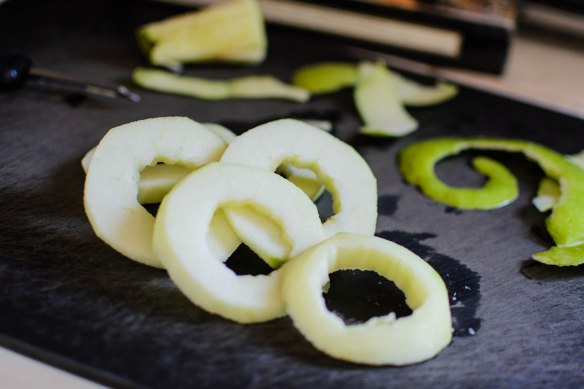
2016 Food Blog January-0319I’m not sure what eventually led me to phyllo. Certainly I thought of my favorite donut, the perfectly delicious but sometimes overlooked apple fritter, and somewhere in the contemplation of apple and cinnamon and unmade beds, I thought of a crumpled layer of phyllo dough, and I knew exactly what I would do. Phyllo would get twisted and wrapped around a ring of apple, then fried until crisp and dredged in a healthy layer of cinnamon sugar. Bingo. Rumpled donut. The apple slices would have to be cooked for a while first, though, since the phyllo would fry so quickly.

2016 Food Blog January-0312Next to making caramel, frying is the cooking project that puts me most on edge. The oil takes a long time to come up to temperature, it seems like so much, and there’s always the fear that, well, you have a vat of boiling oil on your stove right next to your hands, and arms, and legs, and all those body parts you’d prefer remained un-fried. In this case, there was also the complication of working with phyllo, which needs to be treated quickly and delicately to avoid tearing or drying out. For that reason, even after deciding exactly what I would do, I put off making these for three weeks. Surely, I thought, they would be more trouble than the end product was worth.

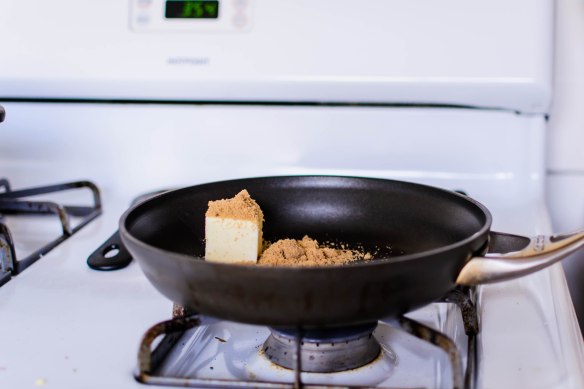
2016 Food Blog January-0330Untrue. I’m not in a rush to make them again, but for a pure experiment they were amazing. The apple rings are meltingly tender after a sauté in butter and brown sugar spiked with a cinnamon stick. The loose buttery caramel they leave behind is the perfect slick to brush between phyllo layers to help them cook through and to sweeten the tasteless, papery dough. Once fried, which only takes about a minute on each side, the phyllo is impossibly crisp, not particularly greasy, and deeply golden. It’s like a croissant and an apple fritter had a beautiful affair. I made six of these, since that’s how many rings I divided my apple into, and since each one consisted only of one slice of apple and one sheet of phyllo, N. and I felt no compunction whatsoever about eating three each over the course of the afternoon and evening.

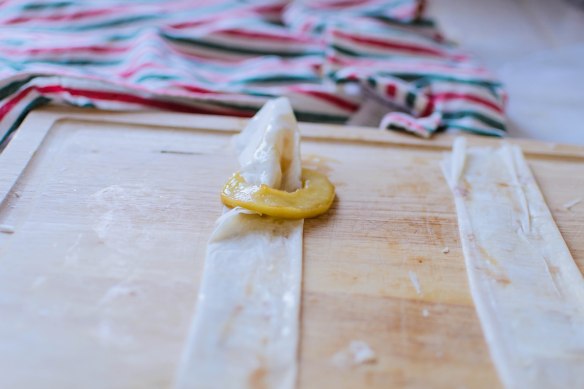
2016 Food Blog January-03392016 Food Blog January-0337Here’s the thing, though. Most of the recipes I post here, I want you to cook. I try to make them precise, and organized, and exact, so you can replicate them successfully, with your own touches, if you wish. This one is different. Unless you’re really into what you’re seeing here, don’t make these. They were outstandingly delicious, yes, but they were also a giant pain to execute. The apples tore, the phyllo tore, there was sugar everywhere, and as you’ll see below, the process of folding and twisting and wrapping is tricky to describe and to do (and impossible to take pictures of – I gave up). What I’d advise instead, and what I will likely do when a craving for fried phyllo arises, is to forget about the donut ring shape. Just make packets – twist or roll or wrap up a sautéed slice or plank of apple in phyllo layers and drop it into the oil that way. It will still produce sweet, tender apples in flaky, crispy layers of dough that shatter everywhere upon impact, but you’ll save yourself a lot of irritation in the construction phase. And if apples aren’t your jam, I’d imagine you could use almost anything: a smear of pesto, a dollop of nutella, a slice of brie spread with fig or apricot preserves and wrapped in prosciutto inside that papery crispy envelope.

2016 Food Blog January-0309Just in case, though, what follows is my procedure, as clearly as I can describe it, for my attempt to invent the “rumpled donut.” Enjoy!

2016 Food Blog January-0344

Rumpled Donuts
Makes 6
45-60 minutes, roughly, depending on how many donuts you fry at a time
1 large green apple
4-5 tablespoons of butter
2 tablespoons brown sugar
1 cinnamon stick
pinch of salt
6 sheets phyllo dough (or however many apple rings you end up with)
1-2 quarts vegetable oil
½ cup granulated sugar
2 tablespoons cinnamon


  • Begin to heat the oil to 350F in a deep pot. I use one with straight sides, but a wok would probably also work nicely. Oil should be at least three inches deep.
  • While the oil heats, prep your ingredients. Skin the apple and core it, leaving a hole down the center at least 1 ½ inches in diameter. Cut the cored apple into ¼ inch thick rings – for me, this made 6 even slices.
  • Melt 4 tablespoons of the butter in a skillet over medium heat. Add the brown sugar, the cinnamon stick, and the pinch of salt and stir or whisk together the sugar is fully dissolved into the butter. Add the apples in a single layer and sauté until tender, about 2 minutes per side. When apple slices are tender but not mushy, turn off the heat, remove apple slices from the pan, and set them aside to cool until room temperature, or just barely warm.
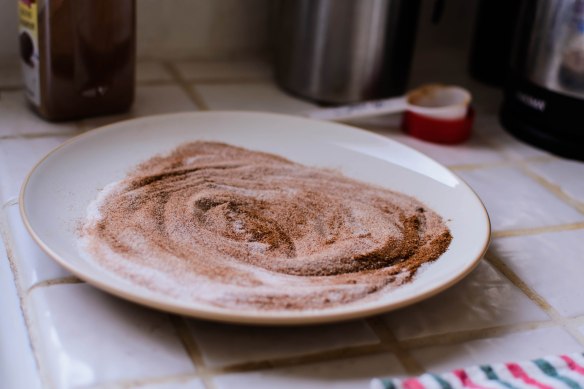
  • While the apples are cooling, combine the granulated sugar and cinnamon in a small dish, and prepare a work station for the phyllo dough. You will need a large board and two slightly damp kitchen towels. Lay one towel down on a countertop, place the 6 sheets of phyllo on it, then cover the phyllo with the other towel. Phyllo dries out fast, and when it dries it becomes brittle and even more difficult to work with. Set out a wire rack with paper towels, or a cookie sheet, or a large plate underneath – this is where you will set your finished rumpled donuts.
  • Carefully separate one sheet of phyllo from its companions and spread it out on the large board. Cut it in half width-wise so you end up with two fatter rectangles (as opposed to two thinner ones, as you would if you cut it lengthwise). Use the leftover butter and sugar mixture in your pan to brush lightly over each rectangle (if this has solidified and seems unbrushable, add the additional tablespoon of butter, put it over low heat, and stir or whisk together until melted and spreadable again). Fold each phyllo rectangle in half lengthwise for two longer, thinner strips. Repeat, brushing and folding again, for each piece so you have two thin strips of phyllo.
  • Now comes the pesky part. Take one of your apple rings and carefully insert one of the phyllo strips through the hole in the center. Pull the apple through about ¼ of the length of the phyllo, and wrap that ¼ back around the apple ring. Draw the remaining phyllo strip around the apple ring and back through the hole. This is easiest if you draw the end of the phyllo through as though you were threading a needle, rather than pushing from the middle of the phyllo strip, which can encourage tearing. Continue to draw the phyllo through and carefully wrap it around the apple ring in a spiral, and repeat with the second strip. You will need both to form a full spiral of dough around the apple, completely encircling it. Tuck the ends of phyllo into the central hole of the apple to secure.
  • Repeat with the remaining apple rings and sheets of phyllo.
  • When you have wrapped your apples and your oil has reached a temperature somewhere in the window of 350-365F, you are ready to fry. Use a skimmer or a kitchen spider to carefully lower the “donuts” into the oil one at a time. If your pot is wide, you can fry more than one at once. I just did one at a time.
  • Fry the “donuts” until deeply golden, then flip and repeat. For me, this took about 1 minute per side. Carefully remove with the skimmer and let it drain over the pot of oil for a few seconds, then sprinkle liberally with the cinnamon sugar mixture (be sure to get both sides!), and set gently on the wire rack to cool for at least 5-10 minutes. This will ensure that all surfaces stay crispy. Keep an eye on your oil temperature, ensuring that it remains in the 350-365F range.
  • Repeat with remaining donuts, and eat as soon as they are cool enough to handle, with plenty of napkins at the ready. We did not save any, so I don’t know how they store, but my guess is the phyllo will not retain its perfect crunch overnight.

Apple Cranberry Hand Pies

2016 Food Blog January-0251When my sister was a kid, she somehow acquired a cooking toy the internet tells me was called “McDonald’s Happy Meal Magic: Pie Maker.” Released in 1993 (feeling old yet?), it allowed the user – with parental guidance, to be sure – to create a small pocket snack that, at least in inspiration, vaguely approximated the fast food giant’s classic dessert. The “pies” this toy made can’t have been very good; from what I recall, they consisted of a piece of store-bought bread, crusts removed, that you rolled out thin and topped with a small hill of fruit filling (I remember applesauce; my sister recalls jam). You then folded the bread over the filling, placed it in a little box-like contraption and, upon forceful application of the lid, squashed and crimped it into submission. You could then sprinkle on some cinnamon sugar, and eat it immediately.

2016 Food Blog January-02192016 Food Blog January-0221The problem with this, aside from the fact that it doesn’t sound very appetizing anymore, was that after going to all the trouble of removing crusts, rolling out, squashing and crimping, my mom would only let us eat one or two at a time. And I can’t imagine they would keep well.

2016 Food Blog January-0222Regardless of practicality or flavor, though, I remember this being a lot of fun. There was a satisfaction to assembly-line production of “dessert” items that, though not as prolific as Lucy and Ethel’s experience, meant we had the ability (if not the permission) to create high volumes of sweets.

2016 Food Blog January-0224This was my introduction, though I didn’t realize it, to hand pies. A sweet rejoinder to pasties, flaky dough encases a fruity filling in a single serving that, true to its name, can be picked up (once it has cooled enough, of course) and eaten straight out of hand. It can also, of course, be topped with a scoop of ice cream, or drizzled with caramel, or a dozen other plate-and-fork applications, but the glory of being able to lift one straight off of a baking sheet and walk away utensil-free is worth noting.

2016 Food Blog January-0225A mid-winter pie should be sweet, yes, but it should also be tart and bright to wake up your sluggish, post-holiday self. I decided on apple and cranberry. I always buy a few extra bags of cranberries when they are on sale in November and December, and stow them in the freezer in case I get early spring cravings for cranberry sauce.

2016 Food Blog January-0233The dough for hand pies needs to be easy to manipulate, since you’ll be rolling and cutting and folding and crimping, so I went with the cream cheese dough I’ve been dabbling with lately – it is a moist dough, so it doesn’t tear as easily as some, and the cream cheese as well as butter keeps it fairly tender even when you work it a bit.

2016 Food Blog January-0237The filling is lightly adapted from Joy the Baker’s Apple Cranberry Crumble pie.  In addition to the classic procedure – toss the apples with sugar, cinnamon, lemon juice – Joy includes two extra steps: let the apples macerate for thirty minutes or so, to create a puddle of sweet, spiced juices. Rather than just dump this into a pie shell, in a stroke of genius, you bubble the juices down with some butter to create a thick, syrupy caramel, which you promptly stir back into the fruit before filling your crust. You end up with a slightly less wet filling, which is a fine thing on the mess front, and a deeper, more developed flavor. I took the liberty, and I think Joy would approve, of adding a few tablespoons of bourbon to my juice mixture before I boiled it down into a syrup.

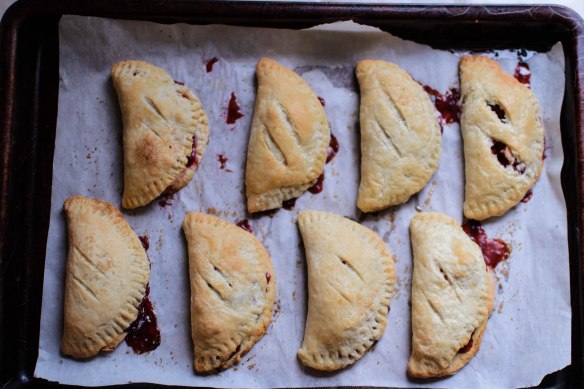
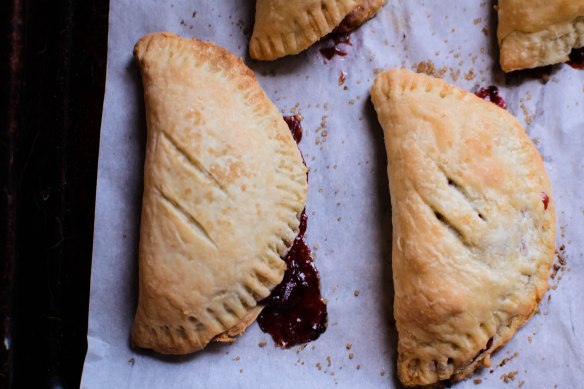
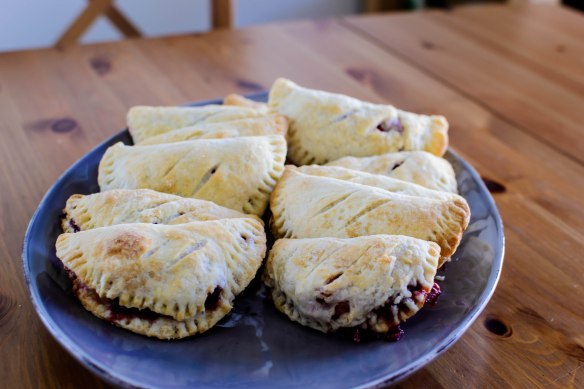
2016 Food Blog January-0242These are lovely little pockets of sweet tartness. In the time it takes the crust to go pale gold and fluff up into pockets of flakiness, the small chunks of apples and coarsely chopped cranberries swimming in syrupy cinnamon caramel have time to cook through, but not turn to mush. Your only enemies here are time and heat – as with all butter-based pie crusts, if the butter in the dough warms up too much before it goes in the oven, the crust will not puff and flake, as the butter will melt right out of the dough before it has a chance to create layers of pastry. But you can surmount this by carefully moving back and forth between prep with the crust and the filling, making use of your fridge in between, and still put forth a dessert in about two hours. I brought one to N. to sample, and he returned ten minutes later with an empty plate and said “that was really, really good. Now I just want four more.” I didn’t tell him I’d already eaten two and was contemplating another.

2016 Food Blog January-0259I call that a win.

2016 Food Blog January-0275These will keep wrapped in aluminum foil for 2-3 days before the pastry starts to get a bit soggy. Good news, though: they reheat perfectly in a 300F toaster oven.

2016 Food Blog January-0250

Apple Cranberry hand pies
Makes 16 5-inch pies
Time: about 2 hours
For Crust:
2 ½ cups all-purpose flour
2 tablespoons granulated sugar
1 teaspoon salt
8 ounces cold full fat cream cheese
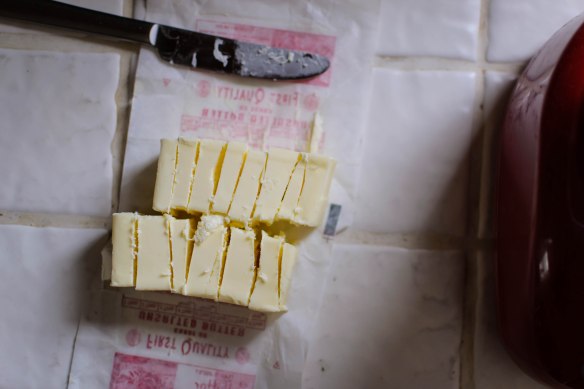
8 ounces cold unsalted butter (2 sticks), cut into thin slices
3-4 tablespoons very cold water
For Filling:
3 large granny smith or other tart apples, peeled, cored, and cut into ¼-½ inch chunks
1 tablespoon lemon juice
¼ cup packed brown sugar
¼ cup granulated sugar
2 teaspoons cinnamon
¼ teaspoon salt
2 tablespoons butter
2 tablespoons bourbon (optional)
1 tablespoon cornstarch
For assembly:
Flour, for dusting
Coarse sugar, to sprinkle


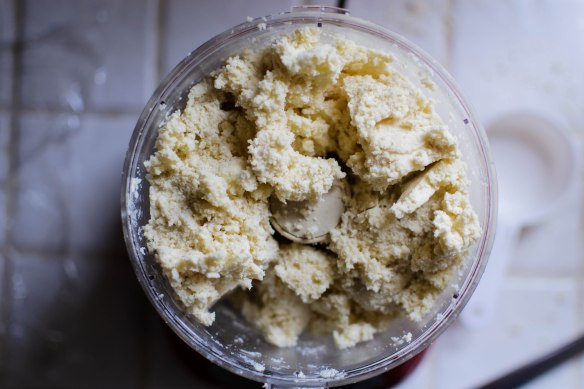
  • To make the crust, pulse the flour, salt, and sugar in the belly of a food processor until evenly distributed (consider doing this in halves – my food processor could barely handle the whole quantity). Add the cream cheese and let the mixer run until the mixture is homogeneous – it will be the texture of barely moistened sand and stay together only a moment when pressed between thumb and fingertip, as in the photo above.
  • Dump in the slices of butter and pulse in 1 second intervals until most of the butter is broken up and, when tested, the mixture stays together when pressed between thumb and fingertip.
  • Drizzle in 3 tablespoons of the cold water and pulse again briefly once or twice. We are looking for the mixture to just start to come together into a rumbling ball in the belly of the machine. If the mixture seems too dry, add the last tablespoon of water and pulse again briefly to bring together.
  • Stretch out a piece of plastic wrap on your countertop and dump the contents of the food processor onto it. Remove the blade and use the plastic wrap to help you shape the dough into a disc about 6 inches in diameter. Try to handle it as little as possible to keep it tender. Wrap it up and stow it in the fridge for at least an hour.
  • While the crust chills, make the filling. Combine the apple chunks, lemon juice, brown sugar, granulated sugar, cinnamon, and ¼ teaspoon salt in a large bowl. Toss with a spatula or your fingers to evenly distribute the spicy, sugary coating. Gently maneuver the apples and their sugar and spice mixture into a fine mesh sieve and position this over the large bowl you were using, then set aside for at least 30 minutes (Joy says up to three hours, though I didn’t leave mine this long). The objective here is to catch the drippings.
  • While the apples drip, preheat the oven to 400F and line two baking sheets with parchment paper. Remove the pie crust disc from the fridge. Lightly flour a large board and a rolling pin, then unwrap the disc, divide it in half, and set half on the floured board. Pop the other half back into the fridge until you are ready for it. Using firm and deliberate strokes, roll out the first half of the dough into a rough circle about ¼ inch thick. Every few rolls, shift the dough circle around, flipping it and adjusting it on the board – this will minimize sticking. You can also add more flour if needed.
  • With an even ¼ inch layer of dough, use a floured cutter or lip of a glass to cut the dough into circles. I went with 5 inches in diameter. To avoid extra stickiness or tearing the dough, press straight down without twisting. Once you have cut all the way through the dough, then you can twist the cutter a bit to loosen the round from the board.
  • Once you have made all the circles you can, gather together your scraps and re-roll them – you want to do this as quickly as you can to prevent the butter from softening too much. Roll out and cut again, then repeat with the other half of the dough. Position your dough circles on the prepared baking sheets (it’s okay if they overlap – they won’t stick), and put them into the fridge to chill out again.
  • Now turn back to the filling. When you have at least ½ cup of liquid from the apples, pour it into a small saucepan along with the 2 tablespoons butter and the bourbon, if using, and cook over medium-low heat until it becomes thick and syrupy, and only about ⅓ cup remains.
  • While the apple drippings cook down, plop the apples back into the original large bowl. Using the same food processor you used for the crust (you can wash it out if you want – I usually just scrape out any big lingering bits), pulse up the cranberries until they are coarsely chopped. You can do this by hand if you want, but it is fairly messy.
  • Add the cranberry pieces to the apple chunks in the large bowl, and toss them with the cornstarch until the cornstarch is no longer visible.
  • When the apple drippings are reduced to a thick, syrupy caramel, pour it back over the fruit and toss gently to combine.
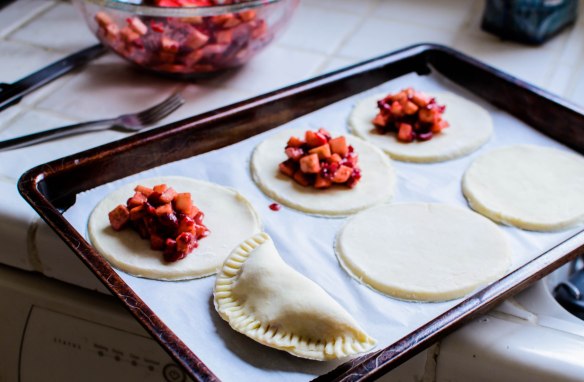
  • Now, pull the prepared dough rounds out of the fridge (I’d do one baking sheet at a time), and add 1½-2 tablespoons filling to each 5-inch round of dough. You will be tempted to add more. Don’t do it! 1½, or a scant 2, tablespoons is all that can safely fit. If your rounds are smaller, you will, of course, need less filling. When all rounds are filled, you’ll likely have a tablespoon or 2 of filling left over.
  • As you place each tiny pile of filling in the middle of the dough round, fold it in half and press the edges together with your forefinger and thumb. To seal each little half-moon package, set it down on the floured board or on your baking sheet and press down on the edges all the way around with the back of the tines of a fork.
  • Settle each crescent evenly spaced on your baking sheet – you should be able to fit 8 per sheet without them touching each other. Slash the top of each one lightly with a knife to give an escape valve for steam, and if desired, sprinkle on a pinch or two of coarse sugar before levering them into the oven.
  • Bake at 400F for 25-30 minutes, until the crusts are puffed and golden brown, and possibly a bit of gooey syrup escapes from the less-carefully-crimped edges.
  • Cool for at least 10 minutes before digging in. They are perfect on their own, but I suspect a scoop of vanilla ice cream wouldn’t hurt matters…

Chai Spiced Sweet Rolls

2015 Food Blog December-0645Last week the Twelve Loaves bakers turned out an impressive collection of holiday breads. I had my plan in place, but as I noted on last week’s cheat entry, holiday weekends ironically don’t always allow for baking projects. Now that I’ve had an extra week to get myself in order, I can show you what I intended to contribute: tiny sweet rolls, one to two bites for easier consumption, threaded through not with the classic pairing of cinnamon and brown sugar, but a more complex combination of spices drawn from the wonderful, warming blend that is masala chai, or chai tea. It’s not a traditional holiday bread, but the layering of slightly spicy flavors in chai has always reminded me of gingerbread. By the power of association, then, here we are.

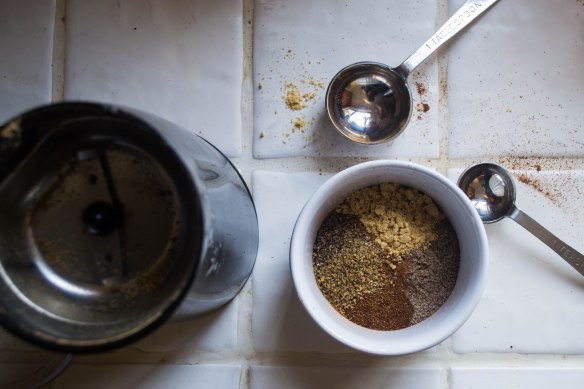
2015 Food Blog December-0619Like many spice mixtures, chai does not have a set blend – many warm notes are added to the black tea leaves to produce the complex, slightly spicy flavor. Cardamom plays a dominant role, and cinnamon, ginger, and black peppercorns are usually present as well. Star anise contributes a subtle licorice note, and cloves and fennel also sometimes make an appearance.

2015 Food Blog December-06262015 Food Blog December-0633For mine, since I used standard aniseed instead of the more traditional star anise (sometimes the grocery store is out and you’re too lazy busy to walk down to the Indian market), I omitted the fennel – a breath of licorice flavor is more than enough for me. Balancing these strong spices can be a tricky task – I wanted my blend to lead with the sweeter cardamom and cinnamon, and be backed up by the depth of the cloves and aniseed. The black pepper and ginger should be subtle – a warming heat rather than aggressive spiciness.

2015 Food Blog December-06272015 Food Blog December-0630I used my Nana’s sweet dough recipe for the base here, amping up the butter a bit and adding an extra egg, but I substituted honey for the sugar the original recipe calls for, since my favorite chai blend incorporates it. The floral notes of the honey make for a slightly more flavorful dough. A splash of vanilla, too, plays well with the spices and the honey.

2015 Food Blog December-0635Many cinnamon rolls are dripping with melted brown sugar and pack a sugar-overload punch that can get you through an entire crowded mall and its parking lot at Christmastime before you come down from your high. These tiptoe a bit more subtly into the holiday air. They are sweet, yes, but tempered. The spices come through, but you can still taste the honey and vanilla in the dough.

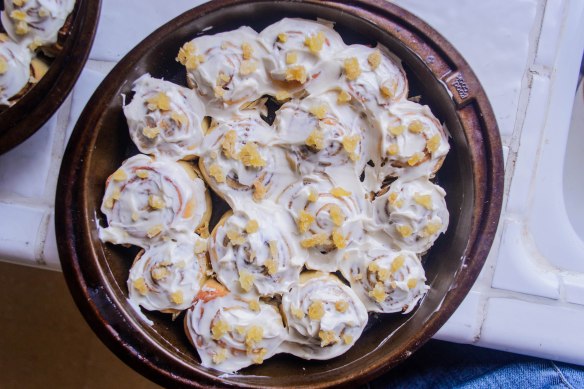
2015 Food Blog December-0637These would be perfectly fine on their own – in fact, N. and I bull-dozed through three of them quite unadorned when we did our quality control test, but I can’t help feeling, since they are inspired by a call for holiday breads, that a little excess is needed. A cream cheese frosting, then, lightly sweetened with honey and vanilla, seemed appropriate to smear over the top. And lest it begin to feel too heavy, a scattering of finely chopped crystallized ginger or orange zest brightens them up so you can almost – almost – get away with calling them breakfast.

2015 Food Blog December-0643

Chai Spiced Sweet Rolls
Makes 32-36 mini rolls
Approximately 3 ½ hours start to finish (unless you refrigerate overnight for the second rise)
For dough:
½ cup warm milk
pinch granulated sugar
2 teaspoons active dry yeast
¼ cup honey
1 teaspoon vanilla
2 eggs
¼ cup room temperature or just melted unsalted butter
2-3 cups all-purpose flour (you may not use all of it)
½ teaspoon salt
For filling:
¼ – ½ cup unsalted butter, melted
½ cup brown sugar
1 tablespoon cardamom
1 tablespoon cinnamon
1 teaspoon ground ginger
¾ teaspoon ground star anise or ½ teaspoon ground aniseed (be sparing; it’s strong stuff)
½ teaspoon ground black pepper
½ teaspoon ground cloves
For frosting:
8 ounces full fat cream cheese, at room temperature
¼ cup honey
1 ½ teaspoons vanilla
1 tablespoon milk (optional – to thin)
1-2 tablespoons finely chopped crystallized ginger or orange zest, optional
  • In a 2-cup glass measuring cup, warm the milk to just about body temperature (when you dip your finger in, it should feel neutral or barely warm). Sprinkle in the pinch of granulated sugar and the active dry yeast, stir briefly, and set aside to bubble for about 10 minutes.
  • In the bowl of a stand mixer, use the paddle attachment to combine the honey, vanilla, eggs, and softened butter. Once the yeast and milk mixture is bubbly and smells like bread, add it to the other wet ingredients and combine.
  • Now add 2 cups of the flour and the salt, and mix with the paddle attachment until evenly moistened. Switch to the dough hook and knead on medium speed for about 5 minutes, adding more flour ¼ cup at a time if the dough seems too wet. I used just over 2 ½ cups of flour. When adequately kneaded, it will be the consistency of slightly sticky play-dough.
  • Spray or oil the inside of your bowl with non-stick spray, turn the dough ball over to coat it, and then cover the bowl with plastic wrap and set it aside, preferably in a warm place, to rise until doubled: 1 ½ – 2 hours.
  • While the dough rises, prepare the filling ingredients. Melt the butter, measure out the brown sugar, and combine the cardamom, cinnamon, ginger, star anise, black pepper, and cloves in a small dish. This is also a good time to butter or grease two round 9-inch cake pans.
  • After the dough has doubled in size, punch it down by depressing your fist into the center to release the air, then let it rest for 5-10 minutes. This will make rolling much easier. Turn it out onto a floured board and cut in half with a dough scraper or a sharp knife. Return one half to the mixing bowl and, with a floured rolling pin, roll out the other as thin as possible without tearing, or at least to a 12×16 inch rectangle. If it seems sticky, use a dough scraper to release it from the board, sprinkle a little flour underneath, and rotate the dough 180 degrees before rolling again.
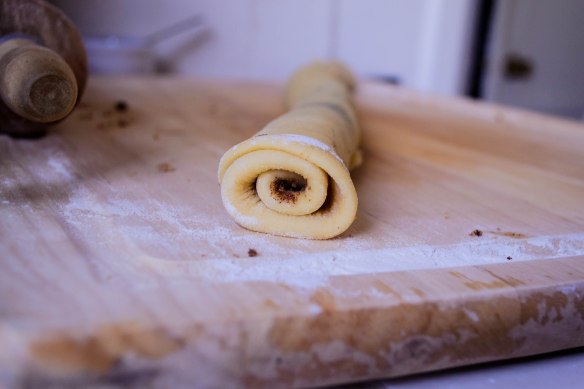
  • Smear your 12×16 inch (or bigger) rectangle with melted butter, then crumble on half of the brown sugar in an even layer. Sprinkle on a heaping tablespoon of the chai spice mixture, then use your fingers to spread the spices and sugar evenly over the surface, leaving a ½ inch border on one long edge of the dough. This will be the end of the roll.
  • Starting in the middle, begin rolling up the long edge of the dough (opposite the side on which you left the border), moving outward to the edges and trying to keep the roll even. You want to roll this tightly – the tighter the roll, the better it will stay together when sliced. As you get to the end of the roll, start to stretch the edge on which you left the border up over the existing roll, pinching it lightly into the roll to adhere. When finished, you should have a long, skinny log only an inch or two in diameter.
  • To slice, use a serrated knife and saw back and forth applying as little pressure as possible. Slice the long log into 1-inch segments, and position each cut side up in one of your prepared 9-inch cake pans, spacing them slightly to give them room to puff.
  • Repeat with the other half of the dough.
  • Cover the filled cake pans with plastic wrap and let rise for 45-60 minutes until doubled again, or, if you are short on time, stow them in the refrigerator overnight (bring to room temperature before baking).
  • 30-40 minutes before baking, preheat the oven to 375F. When the little sweet rolls are puffed and ready, remove the plastic wrap and bake until pale gold on top and just barely set in the middle: 10-12 minutes.
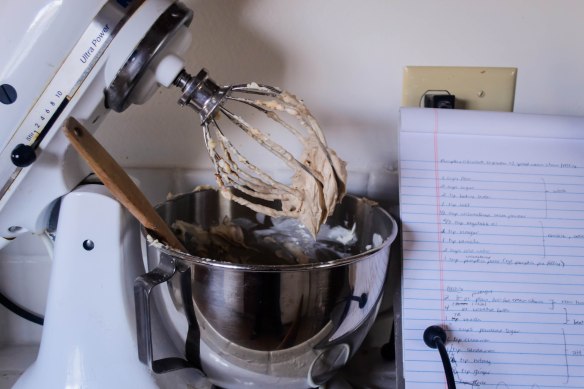
  • While the rolls cool, make the frosting. Use a handheld electric mixer, or a stand mixer with the whisk attachment, to blend together the cream cheese, honey, and vanilla until fluffy. This will take 1-2 minutes, and at first the cream cheese will get clumpy and look separated – don’t worry! Just keep mixing and it will come back together. If it seems too thick, dribble in 1 tablespoon of milk and mix again to desired consistency.
  • When the rolls have cooled, spread on the cream cheese frosting using a small rubber or offset icing spatula. If desired, top each with a spare sprinkle of finely chopped crystallized ginger or grated orange zest.
  • Best served warm or at room temperature.

Dill and Cream Cheese Crust

I’ll be the first to admit that this post is totally cheating. Despite my plans to participate in December’s Twelve Loaves project (they are cooking holiday breads and I can’t wait to check out the offerings tomorrow), amidst cleaning and cooking and family and tree hunting (since we visit family during the actual Christmas holiday, I like to get my tree early so I can enjoy it for a couple weeks first), there was also a pile of grading to be done, and oh, right, lesson planning so I know what I’m doing in class this week would be good too, and there simply weren’t enough hours in any of these glorious days to include several rises, and shaping, and spicing, and glazing, and all those steps I’d intended to embark on to have something sweet and festive to share with you today (no spoilers, though, only hints, because I still want to make them…)

Instead, here’s a cheat post to tide us all over. There are no photos (besides the one from Instagram yesterday; take a peek down on the right side of the page), and only a quick little recipe, but if you, like me, struggle endlessly with pie crust, you might want to give this one a try. It is decadent but simple, since all the work is done in a food processor, it rolls out like a dream, and I even managed to keep it flaky! I’m including suggestions for both savory and sweet below, and feel free to omit or change out the herbs to your liking. I used the sweet variety for my Thanksgiving pumpkin pie on Thursday, and the savory for a turkey pot pie on Saturday.

Both recipes are adapted from Shirley O. Corriher’s wonderful book Bakewise, and make enough for 1 single-crust 9-inch pie. Including chilling time for the dough, they take a little under 90 minutes, and the procedure is exactly the same.

Cream Cheese pie crust
1 cup flour
For savory: 1 tablespoon finely chopped fresh dill
For sweet: 1 tablespoon granulated sugar
1 teaspoon salt
4 ounces full fat cream cheese
4 ounces cold, unsalted butter, cut into slices
1-2 tablespoons very cold water


  • In the belly of a food processor, pulse the flour, dill or sugar (depending on whether you’re making sweet or savory), and salt until evenly distributed. Add the cream cheese and let the mixer run until the mixture is homogeneous – it will be the texture of barely moistened sand and stay together only a moment when pressed between thumb and fingertip.
  • Dump in the slices of butter and pulse in 1 second intervals until most of the butter is broken up and, when tested, the mixture stays together when pressed between thumb and fingertip.
  • Drizzle in 1 tablespoon of the cold water and pulse again briefly once or twice. We are looking for the mixture to just start to come together into a rumbling ball in the belly of the machine. If the mixture seems too dry, add the second tablespoon of water and pulse again briefly to bring together.
  • Stretch out a piece of plastic wrap on your countertop and dump the contents of the food processor onto it. Remove the blade and use the plastic wrap to help you shape the dough into a disc 4-6 inches in diameter. Try to handle as little as possible to keep it tender. Wrap it up and stow it in the fridge for at least an hour.
  • About ten minutes before you are ready to roll out the crust, remove the chilled disc from the refrigerator and set it on the counter. The fats inside the dough need to warm just a little bit to make rolling easier. When ready, dust a bread board generously with flour, unwrap the disc of dough and sprinkle it with flour as well.
  • With a floured rolling pin, roll out the dough in a rough circle. Start in the center and push forward, then back again toward you. If the dough cracks, don’t worry, just keep rolling and it will usually come back together.
  • After one or two rolls in one direction, turn the dough 90 degrees and flip it over, then roll again. Continue this process, rolling, turning, and flipping, and rolling again, until you have a circle about 11 inches in diameter. Re-flour the board, the crust, or the rolling pin in between if things start to get sticky.
  • Carefully drape about half the dough over the rolling pin and quickly move it to your 9-inch pie plate. Settle it in gently, easing it into the bottom edge of the pan, and rather than cutting off the excess, fold it back and wedge it between the pie plate and the crust itself. A little extra crust at the top is always a good thing. Use your thumb or a fork to press the edges at the top for a decorative border.
  • Fill and bake as directed, and enjoy.

Pumpkin Chocolate Cupcakes with Spiced Cream Cheese Frosting

2015 Blog November-0577The beauty of having a perfect chocolate cake recipe, as I do, is that it’s always there in the back of your memory, ready for any holiday, any event, any Wednesday evening you really need a piece of cake. It’s always tender, it’s always moist, it tastes refreshingly of cocoa but is not overly sweet. It is easy to make – 45 minutes from empty bowl to tins hot out of the oven if you’re organized, and its recipe is easily halved and quartered for when you want a single layer, and when you just need a 6-inch cake for you and somebody you’re willing to go halfsies with right out of the cake tin.

2015 Blog November-05572015 Blog November-0560Because this recipe is so dependable, because it is so easy and so well loved I’ve learned the measurements by heart, I’ve basically come to the conclusion that it is magic. It’s delicious, it’s quick, it’s vegan (until you drape it in whipped cream), which also means it’s cheap. But most magically, it is easily modified in dozens of ways, and every time it seems to come out right. I’ve made it gluten-free, I’ve soaked it in liqueur, I’ve added coffee, I’ve used olive oil instead of vegetable oil, I’ve switched out the type of vinegar, I’ve turned it into cupcakes; somehow, it just always works.

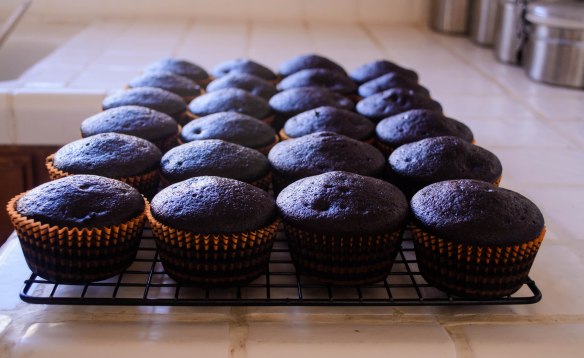
2015 Blog November-05622015 Blog November-0563Here, in the ultimate experiment, I added an entire cup of pumpkin puree without adjusting any of the other ingredient values, and it STILL WORKED. That shouldn’t be possible. Pumpkin is so wet that dumping in such a healthy portion of it should require some tweaking. But because this cake is magic, it produced more than two dozen deeply dark, tender, moist cupcakes within an hour and a half.

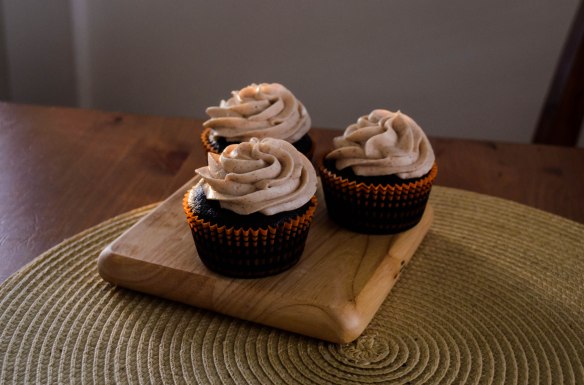
2015 Blog November-05642015 Blog November-05662015 Blog November-0569Though I usually fill and slather this cake in an unapologetically thick layer of whipped cream, for cupcakes, I wanted to play with the subtle pumpkin flavor by spiking the frosting with the spices of pumpkin pie. Cream cheese frosting is a perennial favorite of mine, though for some reason I always forget about it when I’m not addressing a carrot cake. Here, though, it works perfectly: the tang of the cream cheese prevents the frosting from getting too sweet too fast, and it can hold up to the strong flavors of the spices that get whipped in.

2015 Blog November-0573Plus, bonus, cream cheese frosting is easy to pipe because it remains nice and stiff, which means you end up with professional looking cupcakes you can impress your coworkers or your Thanksgiving guests with. You know, if you feel like sharing.

2015 Blog November-0575

Pumpkin Chocolate Cupcakes with Spiced Cream Cheese Frosting
Makes 28
60-90 minutes (plus at least 30 minutes cooling time for cupcakes)
For cake:
3 cups flour
2 cups sugar
2 teaspoons baking soda
1 teaspoon salt
½ cup unsweetened cocoa powder
⅔ cups vegetable oil
2 teaspoons white vinegar
1 teaspoon vanilla
1 cup unsweetened pumpkin puree (NOT pumpkin pie filling)
2 cups cold water
For frosting:
16 ounces (2 packages) plain, full-fat cream cheese, at room temperature
4 ounces (8 tablespoons or 1 stick) unsalted butter, at room temperature
1 tablespoon vanilla
2-3 cups powdered sugar
1 teaspoon cinnamon
½ teaspoon cardamom
¼ teaspoon nutmeg
¼ teaspoon ginger
  • Preheat the oven to 350F and spray or line a 12-cup muffin tin with cupcake wrappers. Set aside.
  • In a large mixing bowl, or the bowl of a stand mixer, whisk together the flour, sugar, baking soda, salt, and cocoa powder. It turns a lovely pale pinkish color when the cocoa is fully integrated.
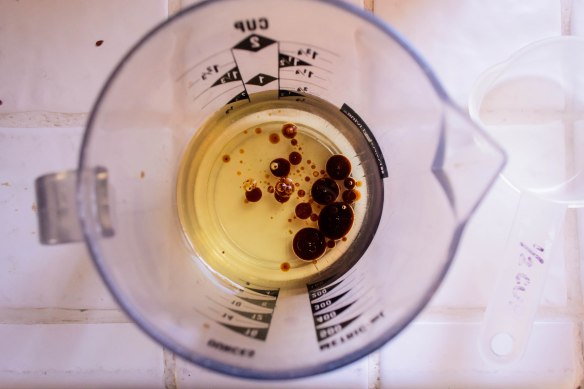
  • In a 2-cup glass measuring cup, measure out the vegetable oil and stir in the vinegar and the vanilla. Carefully add the pumpkin puree and whisk together. Add to the dry ingredients and use the stand mixer or an electric handheld mixer to combine – it will form a wet, clumpy mess.
  • With the mixer running on low, slowly add the 2 cups of cold water. As the batter loosens you’ll want to add no faster than a trickle lest the now suddenly deep, deep cocoa-brown batter splatters.
  • Once all the water is added, continue mixing until well combined – at least a minute. Be sure to scrape the bottom of the bowl with a spatula to ensure no hidden pockets of dry ingredients.
  • When the batter is fully mixed, scoop ⅓ cup into each cavity of your prepared muffin tin. I use an ice cream scoop that holds ⅓ cup and has one of those trigger pieces that sweeps across and cleans out the scoop – I highly recommend this. It’s very convenient.
  • Bake for 18 minutes or until a toothpick or cake tester inserted comes out with only a moist crumb or two. Cool in muffin tin for 5-10 minutes, then remove to a wire rack to cool completely. Repeat with remaining batter until all cupcakes are baked and cooled.
  • To make the frosting, drop the cream cheese into a large bowl and beat well with an electric handheld mixer or the whisk attachment on a stand mixer. When the cream cheese is looking fluffy, scrape down the sides, add the room temperature butter, and beat again until mixture is thick and fluffy. Scrape down the sides, add the vanilla, and beat once more.
  • Now, sift in the powdered sugar ½ cup at a time, beating well in between each addition. You will want to start with slow speed each time to avoid a powdered sugar cloud. Once you’ve hit the 2 cup mark, let the mixer run for 2-3 minutes until the frosting becomes very thick. Give it a taste to check for sweetness and texture. If it seems thick enough for your purposes, add the spices, beat to integrate fully, and you’re done (I found 2 cups was perfect in flavor and texture). If the frosting is not thick enough, add the remaining powdered sugar ½ cup at a time, beating well, for additional stiffness. Then add the spices, beat to integrate fully, and prepare to frost the cupcakes.
  • If you have a piping bag, fit it with a star shaped tip and use a rubber spatula to fill it halfway with frosting. If you don’t have a piping bag, cut the bottom corner off a gallon sized zip-top freezer bag and slide in a star shaped tip (or just leave it open for a less defined swirl of frosting). Half fill with frosting. Use your fingers to gently smoosh the frosting toward the bottom of the bag. Twist the top (empty) half of the bag around two or three times.
  • To frost the cupcakes, hold the filled half of the bag in your dominant hand and a cupcake in your other hand. Without touching the icing tip to the surface of the cupcake, squeeze the bag gently and move your hand in a clockwise circle, letting the frosting ooze out and create a curlicue of frosting on top of the cupcake. Repeat until all cupcakes are frosting, refilling the bag when needed. You’ll likely have some extra, which seems to me like a terribly good thing, and which apparently freezes quite well.
  • Refrigerate cupcakes until ready to serve – they keep just fine overnight (and, in fact, were still moist and tender into day three).