Chicken’n’chutney

We’ve become huge fans of roast chicken this year. I rub a mix of herbs, salt, pepper, garlic, lemon zest and olive oil under its skin, and stuff it full of the same herbs, a few cloves of garlic, and half a lemon. The lemon is, I think, the secret weapon. It gives the finished meat a really nice light suggestion of citrus. I’ve also started creating my own rack in the cheap metal rectangular baking pan that subs in for a roasting pan in my kitchen: on Kelsey Nixon’s suggestion, I make a triangle in the bottom of the pan out of a few carrots, a few sticks of celery, and a halved onion. This gives the chicken a nice platform to sit on so it doesn’t steam in the juices it exudes. Plus, I like to think the extra vegetables impart a nice, delicate flavor into the meat as well. (Plus plus, the vegetables roast down and caramelize in the chicken fat and juices, and you can extract them from the pan and gobble them as an extra veggie with your dinner, as you can see I’ve done with the carrots below. Their skins maintain the tiniest resistance to the teeth, and they taste like all the goodness of chicken skin, but really you’re just eating a roasted carrot!) I roast breast side down, always, to keep the white meat as juicy as possible. I’ve done this vegetable trick with our Thanksgiving turkey the last two years as well and I’m ridiculously pleased with the results.

But this isn’t about Bittman, is it? To go with this chicken, I decided to go with one of his chutney ingredient combinations:

“5. Apple Chutney: Cook big chunks of peeled, cored apple with a little apple cider, Dijon or whole-grain mustard and chopped sage until the chutney thickens. Don’t cook it until it becomes apple sauce unless you want to.”

Between that day and this moment, I lost the small square of paper onto which I scribble quantities. Alas. So what follows are approximations from memory, but I think this is really a “how you like it” sort of dish, so you’d be using my values only as approximations anyway.

3 crisp, tart apples, peeled, cored, and cut into large chunks (I had Fujis, but Granny Smith or similar would also be delicious)

¼- ½ cup Gravenstein apple juice

1 generous TB whole grain mustard

1 TB finely minced sage

I tumbled these together in a small saucepan and cooked it over medium heat for fifteen minutes or so, stirring infrequently and gently, until the apples became soft but still resistant, and the juice had somehow thickened into what was not quite chunky applesauce, but was securely on its way.

We ate this draped over juicy, moist hunks of chicken, and while not the same perfect pairing as I think it would be with a well breaded and deeply fried pork chop, it was pretty delicious. I liked the combination of apples and mustard: they added a tart sweetness that balanced well with the sharp spice and the deep earthy flavor of the sage.

With this, in what must be one of the more monochromatic plates ever made, we had parsnip “puree.” I place this descriptor in quotations because my results were less than smooth. I didn’t core the parsnips or roast them long enough to make them sufficiently tender for my immersion blender. Alas. They were delicious, however, and they are a commodity I plan to revisit. Once I get the specs correct, I will certainly share the recipe here. It involved butter, and heavy cream, and roasted garlic, all in embarrassingly large quantities. But once you swirl them together you can’t see how much there ever was, which means it doesn’t count, right?


Spic(k)ed apple cider

No photos tonight, just a quick question:

What do you get when you combine

16 oz. Trader Joe’s Gravenstein apple juice

2 shots Kraken black rum

2 cinnamon sticks, broken in half

4 whole cloves

1 liberal squeeze of honey

and simmer slowly for about 15 minutes?

The perfect winter warmer for two on a cozy little evening at home.

Yes, that.

Quick, quick!

So I’m behind again.  I have been cooking, I just haven’t been posting.  It’s funny, the cooking part feels necessary and timely because hey, it’s dinner!  But the posting part – if I’m typing something these days, it had better be either my dissertation or a PowerPoint slideshow for the class I’m teaching.  If it’s something else, Puritan guilt sets in.

But I have so much to share that I had to start working through the backlog.

“32. Cook couscous in stock or water. With a fork, stir in cinnamon, chopped mint, lightly sauteed pine nuts and melted butter.  Bake in an oiled dish or use as stuffing.”

The players:

1 box plain couscous

2 cups water

pinch salt

¼ cup pine nuts

¼ cup butter

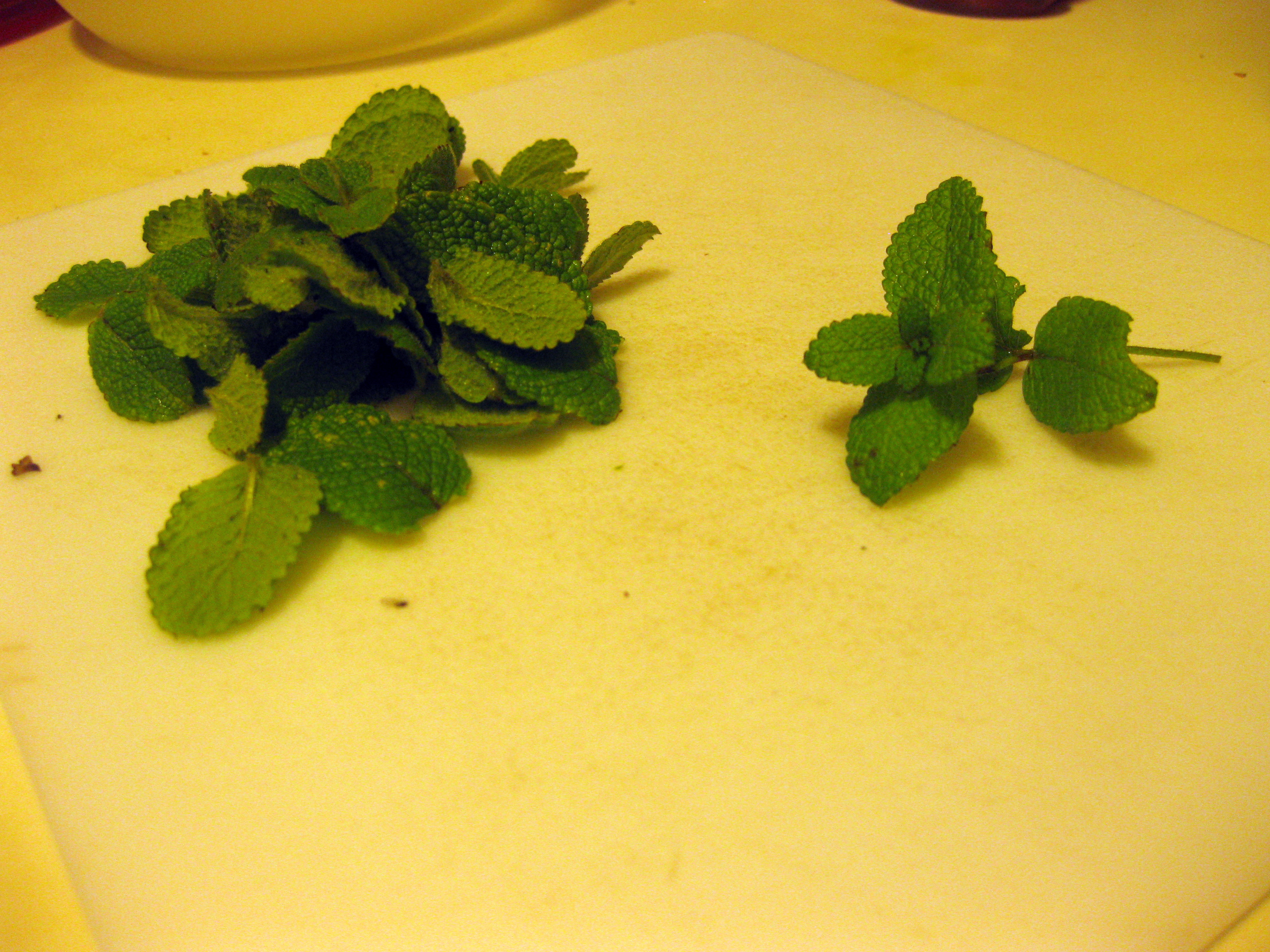
¼ cup chopped mint

2 tsp cinnamon

salt and pepper to taste

The process:

Preheat the oven to 375F

Cook couscous in water with a pinch of salt according to package directions.  If you have vegetable broth or chicken broth, use that.   

While the couscous cooks, chop the mint, melt the butter in a small skillet and add the pine nuts.  Sizzle over medium-low until the pine nuts are barely browned.

When the couscous is done, fluff it with a fork, toss in remaining ingredients, and stir together.  Transfer to your oiled baking dish and bake for 25-30 minutes, or until the top is just crunchy and golden.

We had this with smoked apple and chardonnay chicken sausages and some steamed broccolini and it was tasty, but not stellar.  The pine nuts were roasty and delicious, and the cinnamon added a nice flavor twist, but it seemed to be missing something.

My theories are as follows:

1.)    This would be better as a stuffing than as a side; I’m thinking stuffed pork chops or turkey.

2.)    It would be an awesome base for a tagine of chicken or lamb.

3.)    Dried fruit mixed into the couscous blend would add a sweetness for the cinnamon to play with.

I did only one of these things to the leftovers, and it made a definite improvement.  Diced dried apricots rounded out the flavors nicely and made it seem almost like a pilaf.  Chopped dried figs, dates, or currants would also be delightful.


I have so much more to tell you.  Cross your fingers I can make it through enough of my academic work to check in again next week!

Chutney

Oregon has dealt us an interesting summer.  My garden languishes, late blooming and unsure of itself in May, June, and even into July, then caught off guard by sudden heat, and now stretching for a sun that may almost be gone for the season.  I hate to admit it, but it looks like fall might be on the way.  This called for something to span the season gap.  Indian summer, perhaps, but inspired from an Eastern palate (palette too?), not the New World.

“10. Ginger-Apricot Chutney: Put dried apricots in a saucepan, cover with water and bring to a boil. Add lemon juice, minced fresh chili, grated ginger, a couple of cloves and a pinch of cayenne. Cook until thick.”

This seemed to fit the bill.  Served with grilled chicken, it would be room temperature but highly spiced, and the textural element of the dried, then rehydrated, then cooked apricots promised to be interesting.  I used:

1 cup dried apricots, coarsely chopped

Enough cold water to cover the apricots

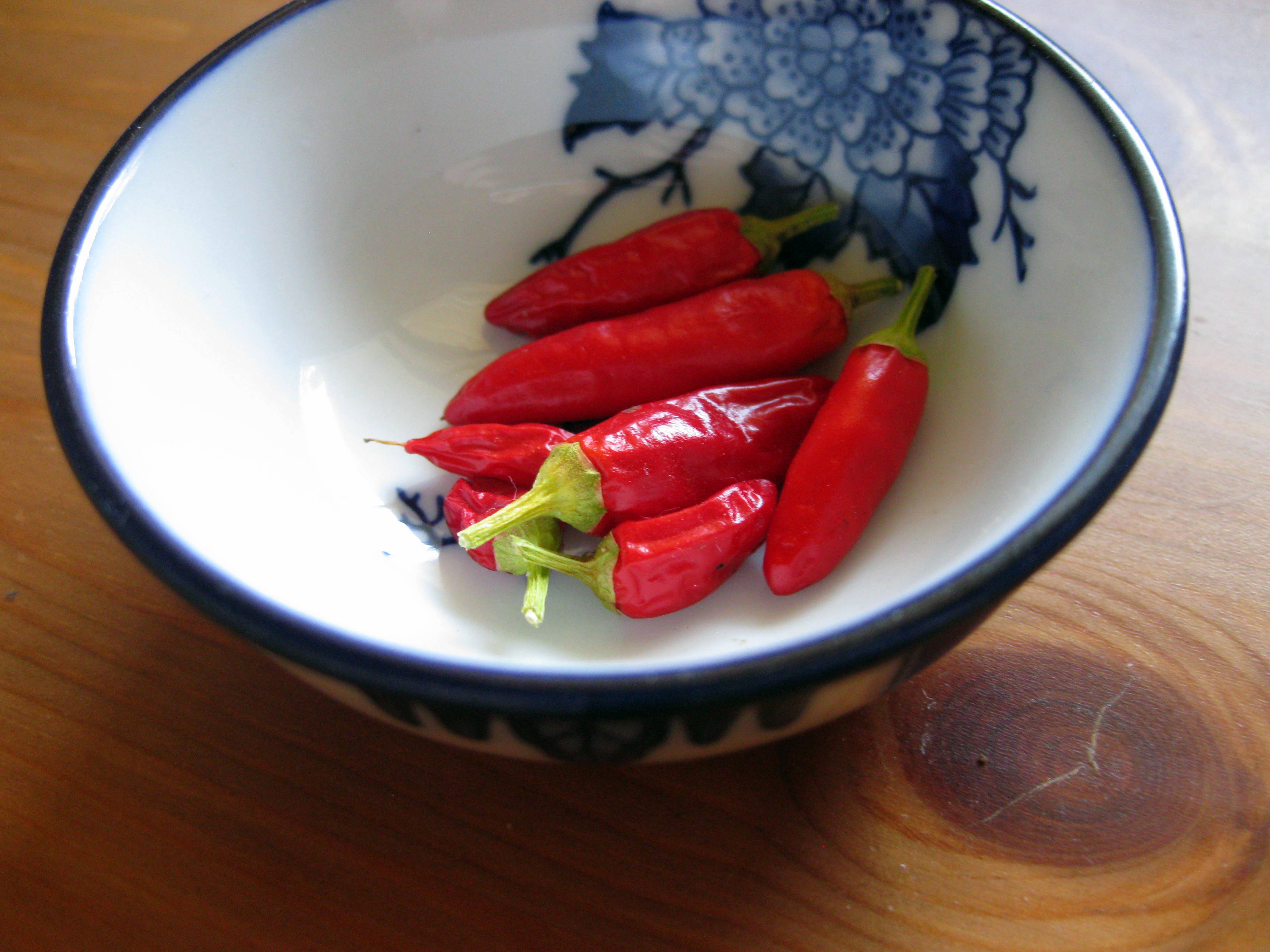
3 teeny, teeny tiny “super chili” peppers from my backyard, seeds removed, finely diced

1 generous TB grated ginger (it’s really easy to grate if it’s frozen, and since it keeps so well and so long in the freezer, that’s one more reason to stow it there!)

juice from 1/3 of a lemon

3 cloves

Pinch of salt and black pepper

Our friend M. moved out of the state a few months ago, and before leaving she had a “Go Away” party that consisted mostly of whiskey, bean dip, and trying to get her friends to take all her unwanted possessions.  She was leaving by air, so everything she took had to fit in a couple of suitcases and a cat carrier, and we, feeling like thieves and voyeurs, pillaged through her kitchen cabinets and drawers taking what we wanted.  Among other things, I came away with jars and jars of spices, and a tiny little copper-bottomed saucepot that has quickly become my favorite.  This was the perfect vessel for chutney.  I plopped the sticky apricots in, covered them with cold tap water, and cranked the burner on my stove to high while I prepped the other ingredients.

When the water was boiling fiercely, I added the peppers, the ginger, the lemon juice and the juiced segments of rind and pulp, and the cloves.  After letting it bubble for a few minutes, I dipped in a tentative spatula and tasted, just the liquid, for seasoning.  Let me just say I’m glad I didn’t add any cayenne.  A few grinds each of salt and black pepper were all additional seasoning this needed.

While N. grilled us some tandoori-spiced chicken breasts (think yogurt, cumin, cinnamon, paprika…), I calmed the heat to medium and watched my little saucepot bubble, while the apricots slowly broke down and the liquid began to evaporate, leaving a viscous, jelly-like consistency behind.

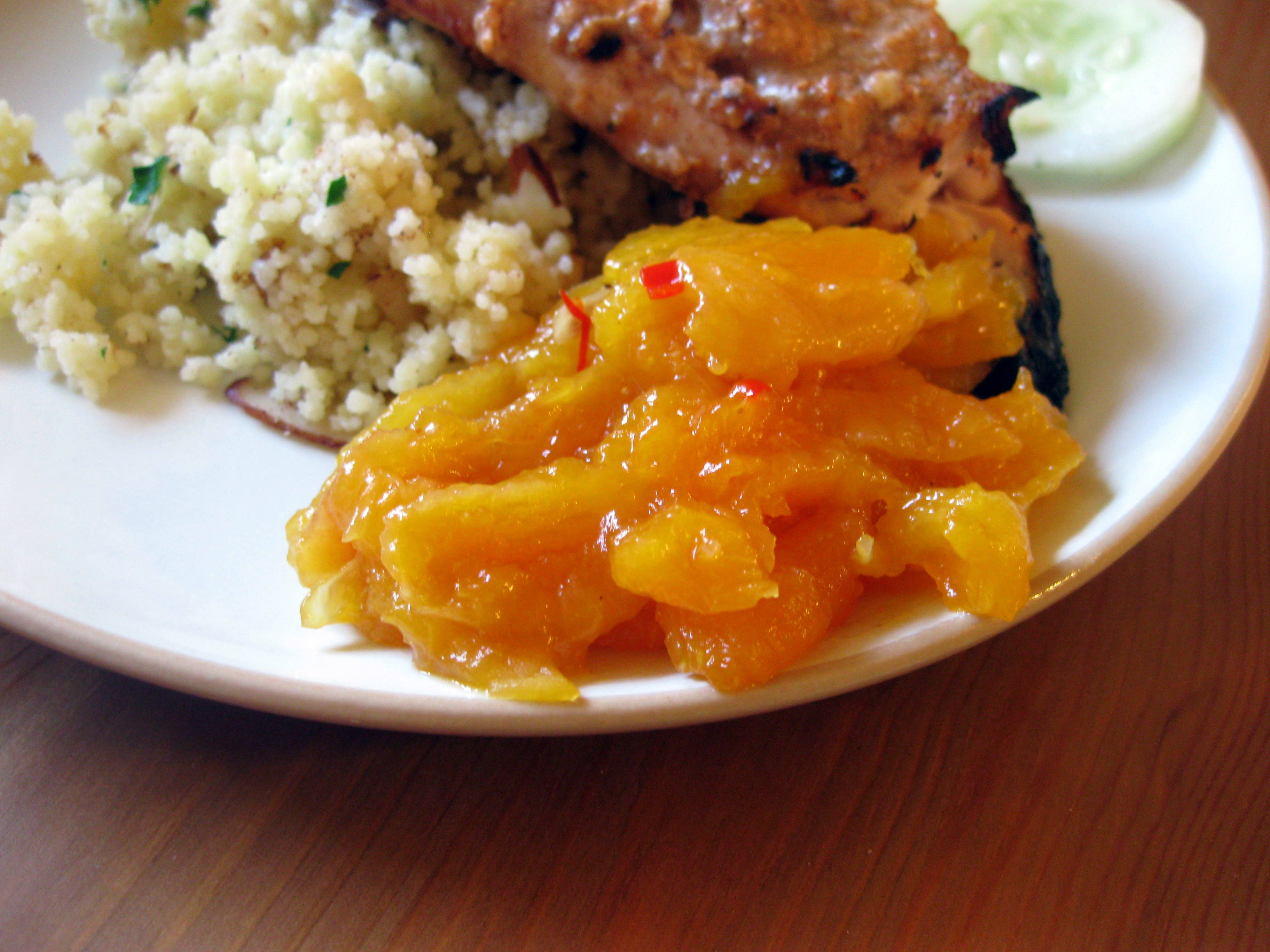
Twenty minutes after adding all the spices, most of the water was gone and the mixture was thick and syrupy and a lovely rich orange flecked with red from the chilis.  I pulled it off the heat, tasted again, and around the burned tongue discovered loveliness.

This was a really nice chutney because it addressed almost every type of taste.  There was copious sweetness from the apricots, there was heat from the chilis, there was a different kind of heat from the ginger, and the cloves and lemon juice added tinges of bitterness and sourness.  It was the variety of heats that I really appreciated, though, because it made every bite really interesting: the ginger was there right from the start, encasing the tip of the tongue with heat.  The peppers kicked in as we chewed, with a fresh bright hotness like a fiery salsa, but just for a moment.  Then the cloves added earthy warmth at the back of the throat while the kick from the ginger still lingered on the tongue.  Combined with the well-spiced sauce on the chicken, it was delightful eating. 

As we ate, our bellies warmed with the spice but also the goodness of the meal, and the occasional slice of raw cucumber was a welcome relief against the building heat we were intent on gorging ourselves with.  As I type, the sun has torn through its cloud cover and the temperature has increased by 4 degrees.  Slow burn.  Indian summer indeed.

Currying flavors

The thing about Mark Bittman’s make-ahead sides is that they are all ostensibly created with a main of turkey in mind.  They are, after all, Thanksgiving inspirations.  Therefore, when I ask myself the inevitable question each week “what should I serve this with?”, I suppose I shouldn’t be surprised when the first thing that pops into my head is “that would taste really good with roast fowl!”  Of course it would.  That plays into the composition of Bittman’s list.

But we don’t want turkey every week, or chicken, for that matter.  Lately, both for ease, for cleanliness, for cost, and in some minor and embarrassingly halfhearted respects for moral and environmental concerns, I’ve been more drawn to vegetarian fare.  Potatoes, rice, grains, beans: these guys don’t cross-contaminate my kitchen.

So I’m having to be unusually creative in my search for accompaniments for the accompaniments I’m cooking.  This week N. chose, from a short list, an interesting combination:

“43. Toss chunks of butternut squash with butter and curry powder.  Roast until half-tender, then stir in chunks of apple and some maple syrup.  Cook, shaking the pan occasionally, until everything is nicely browned and tender.”


The mystery about butternut squash is, for me, as with some other orange produce, whether to treat it as a starch or a vegetable.  It seems to occupy some strange and unnecessarily cryptic middle ground.  It’s not green or leafy, but it’s also clearly not a tuber, no matter how much its deep autumnal color reminds me of a good hearty yam.  Yet, if I’m not serving meat with dinner, pairing a butternut squash roast with  vegetables seems not substantial enough, but opting to serve it alongside, say, mashed potatoes, seems excessively filling and somehow repetitive.

I opted for another strange middle ground and went for sauteed red chard stirred into quinoa.  As a nod to the seasonal intentions of the squash dish, I cooked my quinoa in turkey broth I made and froze a day or two after Thanksgiving.  I like the deeper, richer flavor that results from cooking grains and small pastas in broth or milk rather than water.  So our dinner basically consisted of two side dishes, but I decided I didn’t really mind.

Here’s how it went:

1 medium butternut squash, peeled, seeded, and chopped into small chunks

2 apples (I used Braeburns) quartered, cored, and chopped into chunks

1 onion, diced (I thought the extra savory flavor would be nice, since apples and squash are so sweet)

1 TB curry powder

2 TB melted butter

1-2 TB maple syrup

I tossed the chunks of squash on a cookie sheet with melted butter and curry powder, then slid it into a preheated 375F oven to roast for 20 minutes.  Meanwhile I prepped my apples and onions.  After 20 minutes when the squash chunks were just beginning to give, I pulled the pan out of the oven and added the apples, onions, and maple syrup – a decadent drizzle over the top that I hoped would pair well with the curry – mixed it all around together, and dropped it back in the oven for another 20 minutes (but really, it took almost half an hour).

While the roasting fruits softened and the maple syrup made suggestions of carmelization on their corners, I addressed our other side dish.  I stripped the chard leaves from the stems, chopped the stems into a fairly small dice, and plunged them into a pot with a couple teaspoons of olive oil.  I sauteed them over medium heat until they were just beginning to soften, then added the quinoa.  In one of my favorite quinoa recipes, Danny (the Chef of Gluten-Free Girl and the Chef ) suggests toasting the quinoa before adding any liquid, much as you toast the rice in a risotto before deglazing the pan.  I toasted for a few minutes, then poured in the turkey stock and clapped on the lid.  When there were only five minutes left on my timer, I added the chopped chard leaves into the mix, stirred it together well, and replaced the lid so it could finish cooking.  It worked perfectly.  The chard had just enough time to steam as the final few tablespoons of water were absorbed, but not enough time to overcook and lose all semblance of texture.  I can’t stand that sliminess that greens sometimes get after too much contact with the heat.  To my delight, the quinoa had taken on a lovely deep rosy color thanks to the chard stems, and the toasty nutty crunch of the grain worked really nicely with the healthful greenness of the chard leaves.

When I pulled the butternut and apple mixture out of the oven, all I could smell was sweetness and curry.  The maple syrup had thinned in the heat, but cloyed onto the chunks of fruit as it cooled again.  The mixture was really nice.  Butternut squash and apples are very good friends, and leaving the skins of the apples on was a wise choice because it added textural interest to the dish.  The curry made the flavors deep and warm and spiced, and the maple syrup was a nice hit of sweetness.  This one I would make again with no reservations, and only one (okay, maybe two) changes.  I put the diced onions right onto the cookie sheet, raw from my cutting board.  When I make this again, I will soften them lightly in butter first.  They didn’t roast quite long enough to quell the astringent tang onions sometimes have, and I could feel them in the back of my throat afterward.  Mellowing them out on the stovetop first would be the right thing to do.

To change it up from curry, I think garam masala would also be delicious on this mixture, and fortunately (and conveniently!) enough, Aarti of aarti paarti has just posted suggestions for making your own!  How timely!  How fortuitous!  Let’s make some!  And then, make this autumnal dish.  Maybe with turkey.  Maybe with chicken sausage.  Maybe, as I realized only after dinner was over, with potato masala burgers from Trader Joe’s.  What a congenial blend of spices that would be to curry favor with your family!

Apologies for the punning… I couldn’t resist.

Vignettes

The Oxford English Dictionary defines a vignette as

An ornamental or decorative design on a blank space in a book or among printed matter, esp. at the beginning or end of a chapter or other division, usually one of small size or occupying a small proportion of the space; spec. any embellishment, illustration, or picture uninclosed in a border, or having the edges shading off into the surrounding paper; a head-piece or tail-piece.

Very well, then.  If you’ll permit me, I present you a few vignettes, accompanied only by a smattering of explanatory text, of the food we’ve been playing with over the past few months, while my dissertation lengthened and my sad little blog slowly became emaciated.  Since this is a season of excess, I’d like to fatten it up a bit.  Here’s a start:

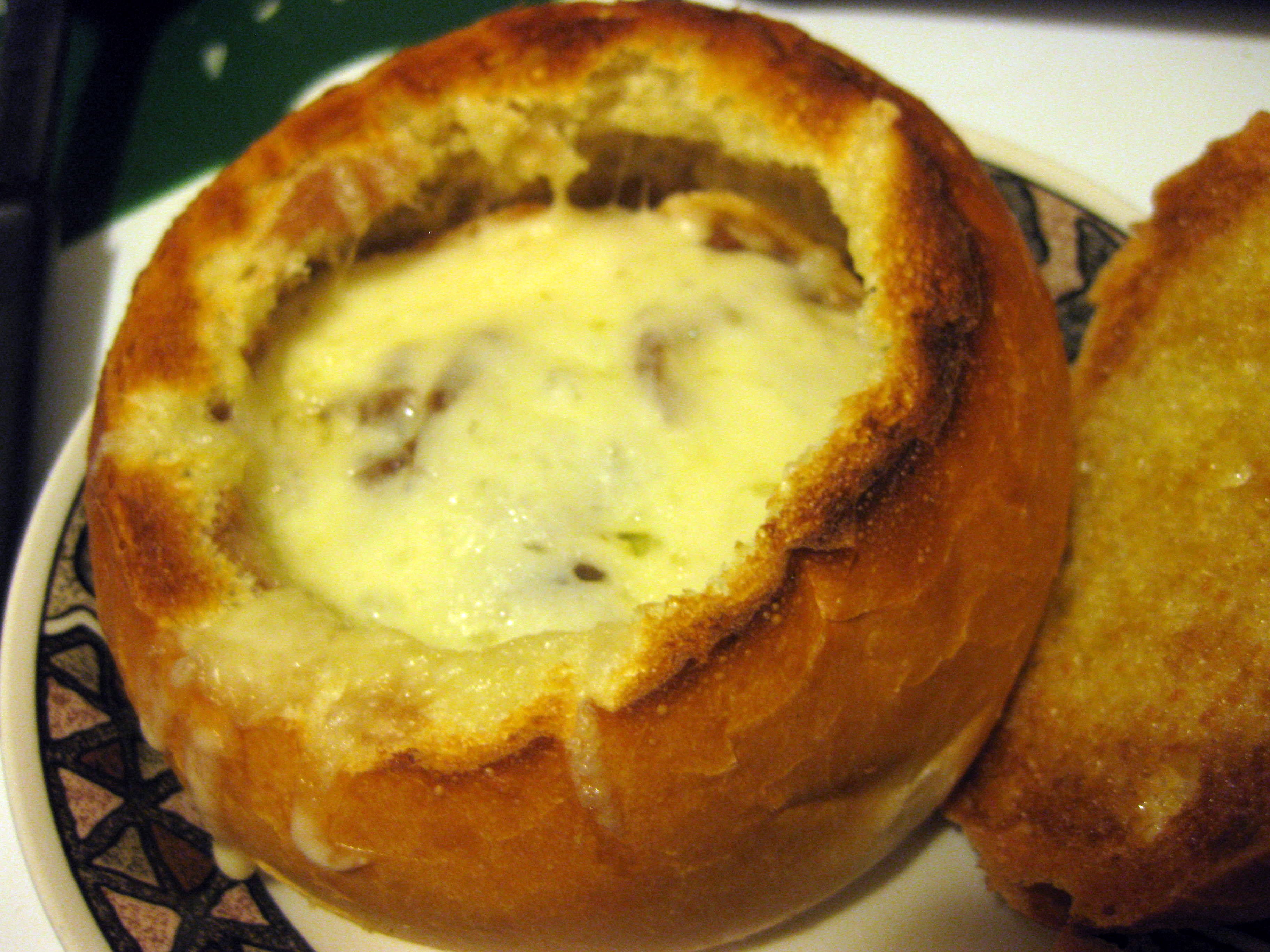
Serving suggestion for French Onion soup: hollow out a sourdough bread bowl, toast the inside, coat with a crust of Parmesan cheese, and flood with soup.  Top with Swiss cheese and broil until the bread crusts and the cheese blisters.  Try not to burn your tongue.

To celebrate, or perhaps provide an epitaph for, our pathetic tomato season this year, I made a roasted green salsa for Halloween.  Tomatillos, which flourished happily, green tomatoes, which did not, jalapeno, onion, garlic, and plenty of cumin.  Roasted, cooled, pulsed together with salt, lime juice, and cilantro.  Tickling and spicy and smoky, and perfect for a rainy Halloween.

Seeking fruit without the healthful feeling, I made crustless “apple pie” one evening with great triumph.  Apples sliced thinly, tossed with a tablespoon or two of flour, butter, and a hefty sprinkling each of sugar and cinnamon, bake in the oven for half an hour.  I left the skin on for color, chew, and nutrients, and we were both delighted with the syrupy excellence they eschewed.  It was not unlike the filling in an apple pie crepe from The Vintage which, if you haven’t visited, you should.  With haste.

Spurred toward the heady, heavy, comforting feel of winter food by this apple pieless dessert, we delved into the season of rich sauces, hearty vegetables, and warm fatty indulgences.  Perhaps yearning for protein in the darkness of November’s cold snap, we opted for a rich beer and beef stew replete with parsnips, carrots, and cup after cup of rich brown mushrooms spilling earthy thickness into the stew.  Whole grain mustard offered intrigue, a whole bottle of Jubelale provided dark yeasty flavor, and a glug of beef broth tied the flavors together.  Good stew meat from Long’s Meat Market (warning: the website has sound) was the clear star, and even the “low quality” stew meat I bought, intended to be cooked long and low to tenderize, was so juicy, so flavorful, and so ridiculously good, that I couldn’t stop myself from gulping down three or four pieces after only searing them crusty brown on all edges.  Lucky for us, I made a full recipe and froze half, so when the celebratory delectability of December ends and the long, cold middle of winter sweeps into Oregon, we will have reserves to bolster us until the sun appears again. 

Fortunately this same reserve will not have to serve this site.  Holidays approach, and with them a break from school, which means a break from dissertating, a break from grading, and a break from relentless reading.  Rather, I intend to poise myself in my kitchen and dart behind and before the camera, mincing, stirring, pouring, focusing, clicking.  And, inevitably, writing.  To you.  Happy December!