Apple Onion Breakfast Meatballs

I have to admit, this meatball is a bit of a cheat. I mean, when it comes right down to it, this is a breakfast sausage patty, spiked with small chunks of apple and onion sautéed in butter, slivers of sage, and a generous glug or two of maple syrup. And plenty of black pepper, of course. I know, what’s to complain about there? But essentially, it’s just that, rolled into a meatball form instead of flattened into a patty. I’ve made this a number of times already as a sausage patty, and the simple change feels a bit dishonest – a bit like a masquerade. But the thing is, it allows me to tell you about an event for which I feel a great deal of fondness. So consider this a cheat with good intentions. An excuse, let’s say, to tell you about a time of warmth which, as the winter rolls on, might be something you need.

(Additionally, as I’ve recently noticed, sorry about the lousy photo quality on the in-post photos. I’m thinking this is largely due to artificial lighting, which makes maybe one good thing about that whole Daylight Saving Time curse that has fallen upon us, but also might be a WordPress thing, because if you click on the image for a larger version, it looks clearer and higher quality – more like the original shot.)
Food Blog March 2015-0431The apple and onion in these meatballs (or patties) play very well with the sage and the fatty pork, and the maple syrup results in stellar caramelization, while giving a nod to the “breakfast” idea. This combination was so successful at home in some trial runs and at a summer gathering last July that I broke it out again this January. One of my dearest family friends, a young woman I’ve known so long it feels strange to acknowledge that she is, in fact, a young woman rather than a kid, got married in November, in Chile. She and her now-husband’s Southern Hemisphere nuptials meant that only a small handful of her American friends and family were able to attend. In January, then, while many of us were still off work for the holiday, they had a “stateside celebration” in northern California, which N. and I thankfully were able to attend.
Food Blog March 2015-0420The bride’s mother, whose capacity for party planning is unparalleled, rented a house for the weekend for the “kids” to stay in, and as the oldest members of that no-longer-accurate category, N. and I somehow got in under the age wire and hung out with the “young people” at the party house. This allowed for opportunities like feeding (fat, greedy, possibly possessed) miniature ponies who happen to live on the grounds, wandering an impressive, decked-out-for-Christmas back garden, exclaiming over the proliferation of strange decor choices in the house (lots of religious imagery, a fully decorated Christmas tree in every room of the house, a large rocking horse at the foot of our bed, Victorian and Rococo linens and bathroom paintings, modern art pieces contributed by grateful former guests, a fur stole my sister briefly considered wearing to the party), and riding to and from the event itself in an aesthetically impressive but poorly stocked limousine, my first limo ride ever. (Really, this house was amazing. A Secret Garden/Windsor Mystery House of a place, and we were so lucky to get to experience it).

Food Blog March 2015-0423To offer my thanks, of course I turned to food, offering to cook breakfast for all of the “kids” on the morning of the marriage blessing ceremony. This offer was met with enthusiastic approval, and so my sister and I got up early(ish) and set about finding the least battered tools in the kitchen (it contained an astounding variety of dishes and utensils, but as you might expect of a rental property, many were not well maintained) to make breakfast-for-eight. Among the offerings were these same sausage patties, which were met with considerable acclaim. There were no leftovers.

Food Blog March 2015-0425I realize this is not much about meatballs, but for me, food is so tied to the people I’m feeding and the events surrounding its production that they become part of the taste. These people we were celebrating are so dear to me, and became so with such haste, that I can’t remember a time I didn’t think of them as an extension of my family. She was my bridesmaid when I married, and now at the celebration of her own marriage, it felt so tied to my own declarations of love and familial belonging. As I said when I offered my toast at their reception – while remarking on the tendency my eyes suddenly had at trying, on their own, to alleviate California’s massive drought – there has never been a time when I was not so, so happy to see them. This has been true from the very first time we met (it was raining then, too, relieving this poor parched state once again, as the now-bride’s father welcomed us in with the shout “We’re having a rain party!”), till that evening, surrounded by others they love, who love them.

Food Blog March 2015-0430This is all a bit tumbling and confessional and warm, but I know you’re really here for the meatballs, so let’s get to it. All I’ve done is taken the same ingredients from my sausage patties and rolled them into a meatball, rather than flattening them for the pan. But really, they are perfect either way. They are one of those offerings that, even if they get a little dark on the bottoms from the sugars in the maple syrup (and they may, so don’t despair), they are gobbled up willingly. And even if they stay in the pan a bit too long because you are taking the time to catch up with family who re friends who are family, they stay moist thanks to the apple and onion threaded through them. They are a standby indulgence. I hope they become that for you as well.

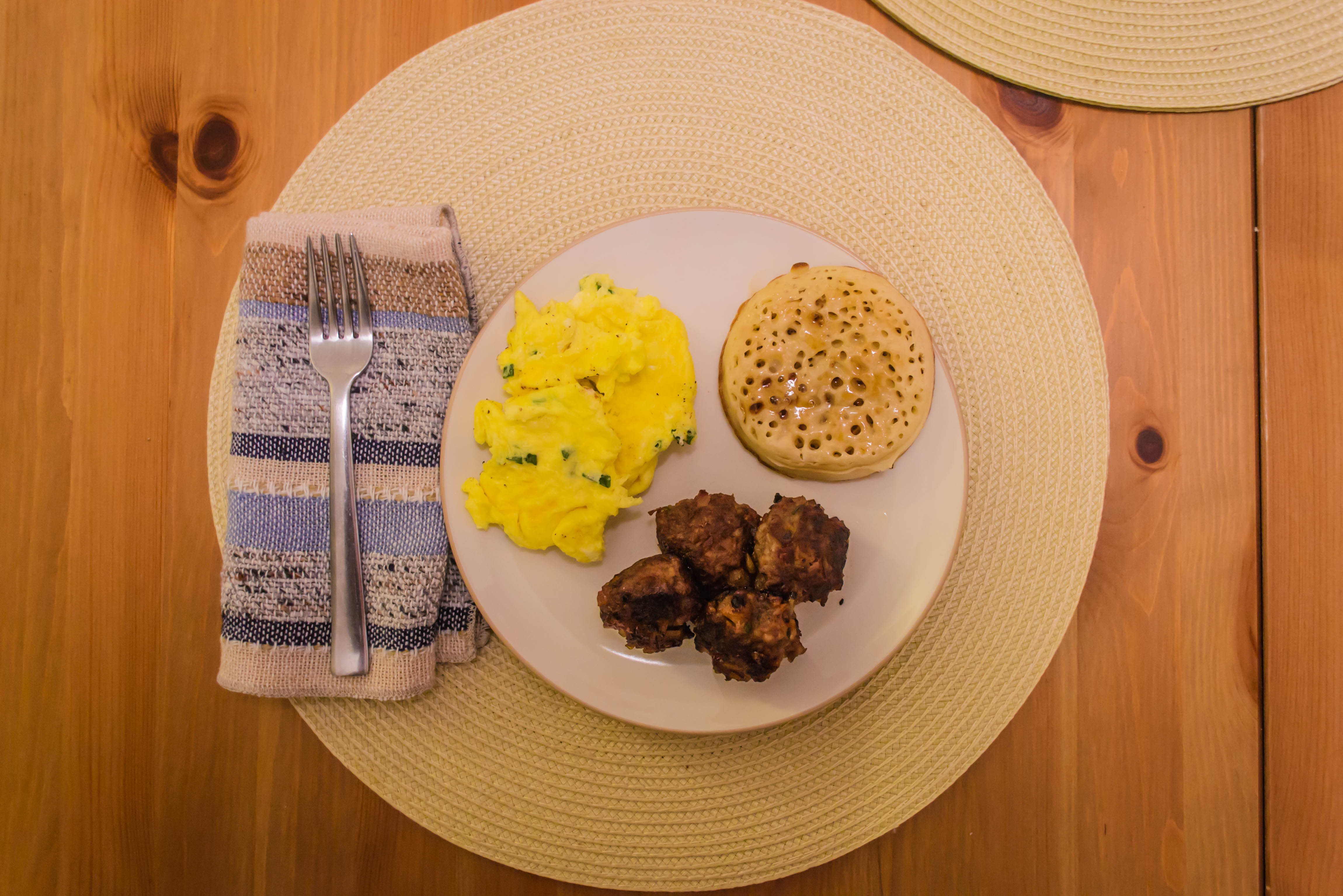
Serving suggestions: as you can see, we had ours alongside a fluffy pile of scrambled eggs and some well toasted crumpets. They would also be perfect stuffed inside a pillowy buttermilk biscuit as a fancy little breakfast sandwich bite, and I certainly wouldn’t say no to a pyramid of them gracing a belgian waffle or two. In short, pick your breakfast favorite, and add these.


Apple Onion Breakfast Meatballs
Serves 2-3 (but is easily doubled or even tripled)
2 tablespoons butter
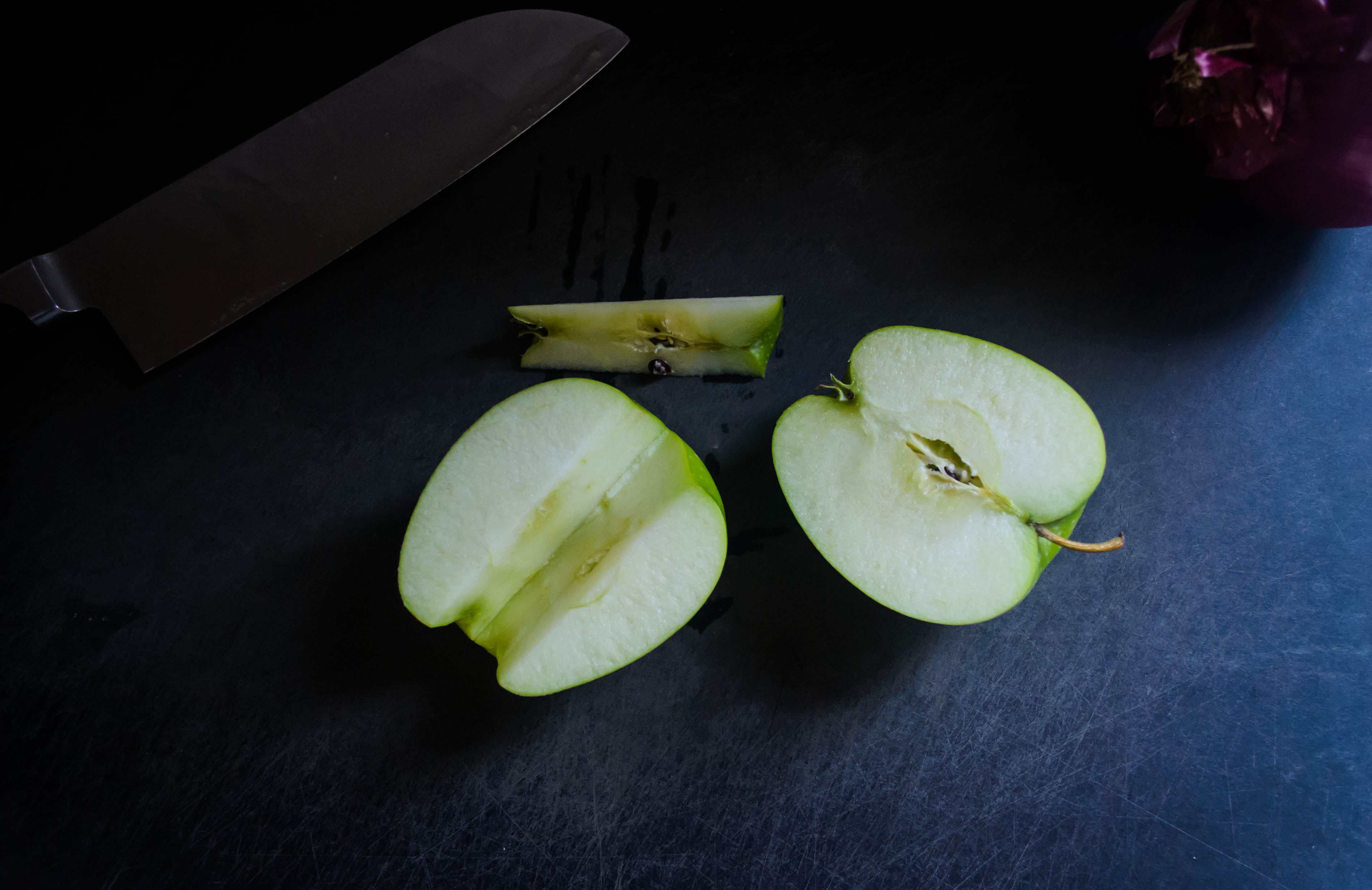
⅔ cup diced green apple (about half a medium apple)
⅔ cup diced red onion (about half a small onion)
⅛ teaspoon each salt and pepper
1-2 teaspoons sage (sage is strong!)
8 ounces pork sausage
2 tablespoons maple syrup


  • Heat 2 tablespoons butter over medium heat. When melted, add apples and onions, season with ⅛ teaspoon each salt and pepper, and cook over medium or medium-low heat until tender: 5-8 minutes.
  • In the last 30 seconds or so of cooking, add the sage and stir to integrate. Then remove from heat and let cool until room temperature or barely warm.
  • In a medium bowl, combine the sausage, maple syrup, and cooled apple and onion mixture. This is already seasoned, thanks to the salty sausage, the sweet syrup, and the salt and pepper added to the cooked apples and onions. If you like a heavy hand with the seasonings, though, feel free to add an additional ⅛ teaspoon each of salt and pepper.
  • Using moistened fingertips, mix well until apple and onion pieces are evenly distributed. Moisten the palms of your hands as well, then gently roll mixture into 10-12 equal sized balls – it will be soft.
  • Heat the same skillet you used for the apple and onion over medium heat and gently add the meatballs evenly spaced, not touching each other. Cook over medium heat until browned on all sides – about 3 minutes per side – then cover the skillet with a lid and turn the heat down to medium-low. Let sizzle until meatballs are cooked all the way through – another 8-10 minutes. If the bottoms of the meatballs begin to look a bit on the dark side, add a few tablespoons of water to the pan.
  • Serve hot or warm with breakfast foods of your fancy.
Beer Braised Beans

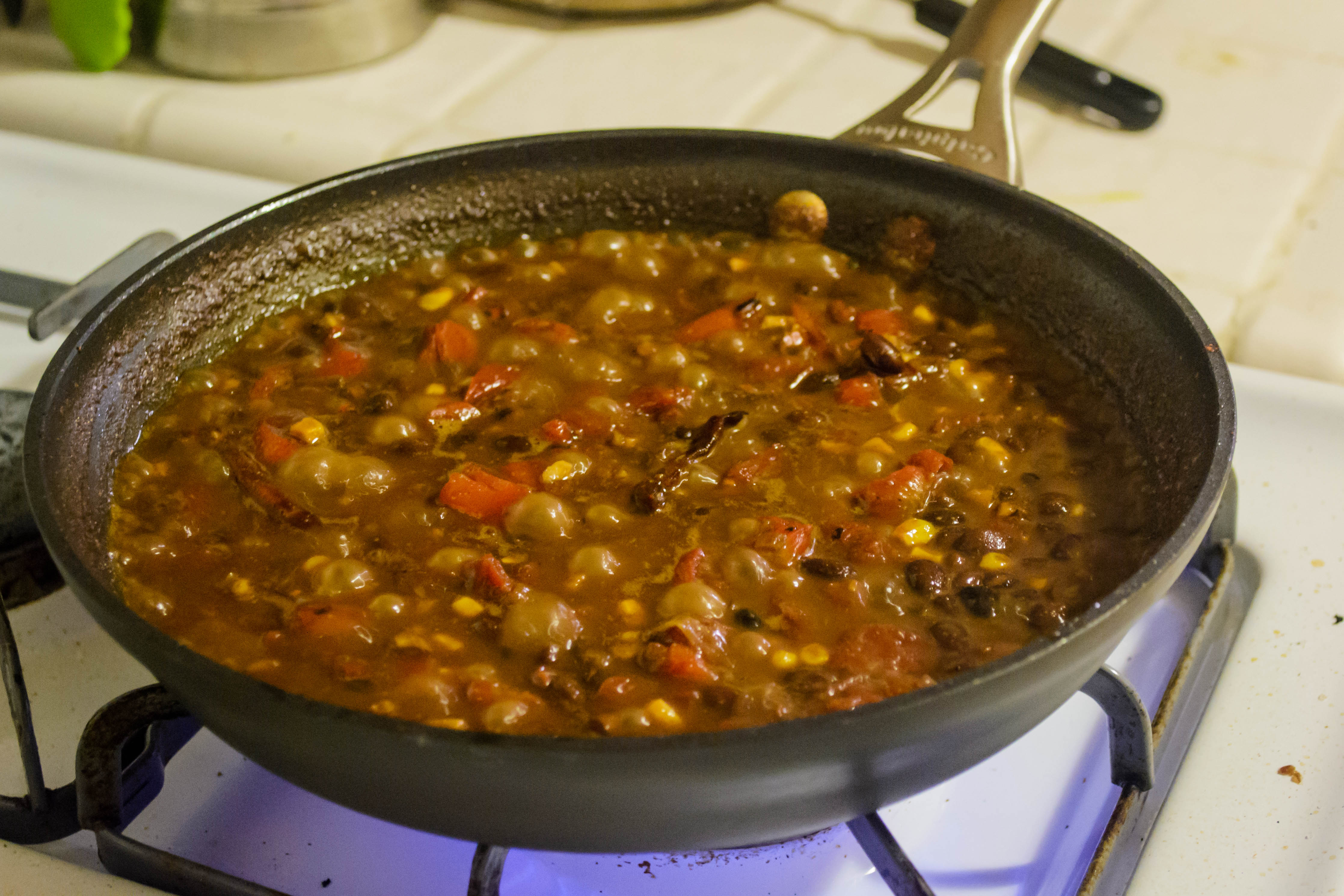
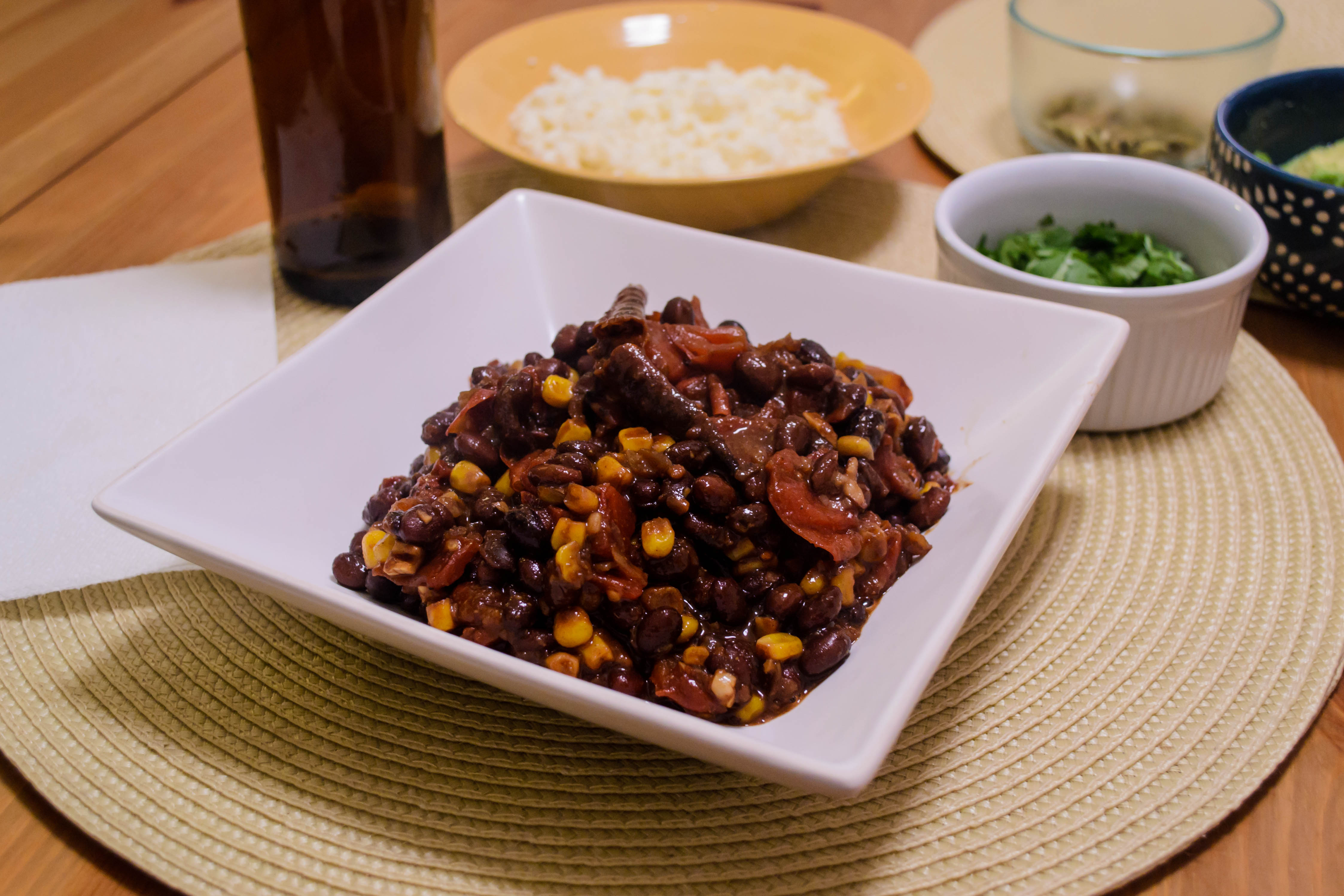
Food Blog March 2015-0444There is little glamour in a pot of beans. Beans are humble, simple food. They are inexpensive, they fill you up, and most often they serve as a neutral backdrop for flashier plate-mates: pork, beef, cheese… When it comes to aesthetics, things don’t get much more exciting. Photographing a pot of beans is not particularly rewarding. The overwhelming, well, brownness of the whole deal makes any tremendous infusion of flavors discernible in descriptors only. In short, I suppose, beans are not Pinterest food.

Food Blog March 2015-0435More and more, though, I’m appreciating beans – not as an excuse to shovel away great spoonfuls of bacon and brown sugar (though really, that sounds far from terrible), but for their savory value. Beans are a vehicle for flavor. They are, as a friend once remarked while I was preparing dinner, “Nature’s little sponges.” Aside from the fact, as I pointed out, that sponges are in fact Nature’s little sponges, this tends to be quite true. Beans learn by osmosis.

Food Blog March 2015-0436Typically I take advantage of this tendency to suck up flavors in Latin American directions: cumin, garlic, various chiles. A few months ago, though, needing another few minutes before dinner and not wanting the beans that had been simmering away on the stove for who-know-how-long to dry up, I cast about the kitchen and emptied a bottle of beer into the pot. I’m not going to say angels sang or the clouds lifted (because let’s be honest; this weekend’s welcome rain aside, this is Southern California. What clouds?), but the revelation was substantial in its own way. Beans already have an earthiness that separates them from the rest of the fruit and vegetable kingdom. Theirs is not the leafy greenness or plump juice of their compatriots, but a creamy, grounded neutrality. Brown. Earth. How odd that they grow on bushes and vines rather than beneath the surface, like potatoes.

Food Blog March 2015-0440Beer, I found, enhances this earthiness perfectly, especially a dark beer like a porter or a stout. The bitterness of an ale or even a lager is tempered in a darker brew, giving way to toasted, bready flavors that mingle well with the earthy pleasantness of beans. Since this discovery, we’ve charged through a number of bean-and-beer concoctions, including a chile that also contained hunks of slow cooked bison stew meat and a barrage of spices – a triumph. But the one I want to come back to for you is the original, simple combination. Beer and beans. A few flavor enhancers by way of garlic, onion, some almost-burned corn kernels, and a scoop of fire-roasted tomatoes, and you’re looking at a side dish that I’d push away the mains for.

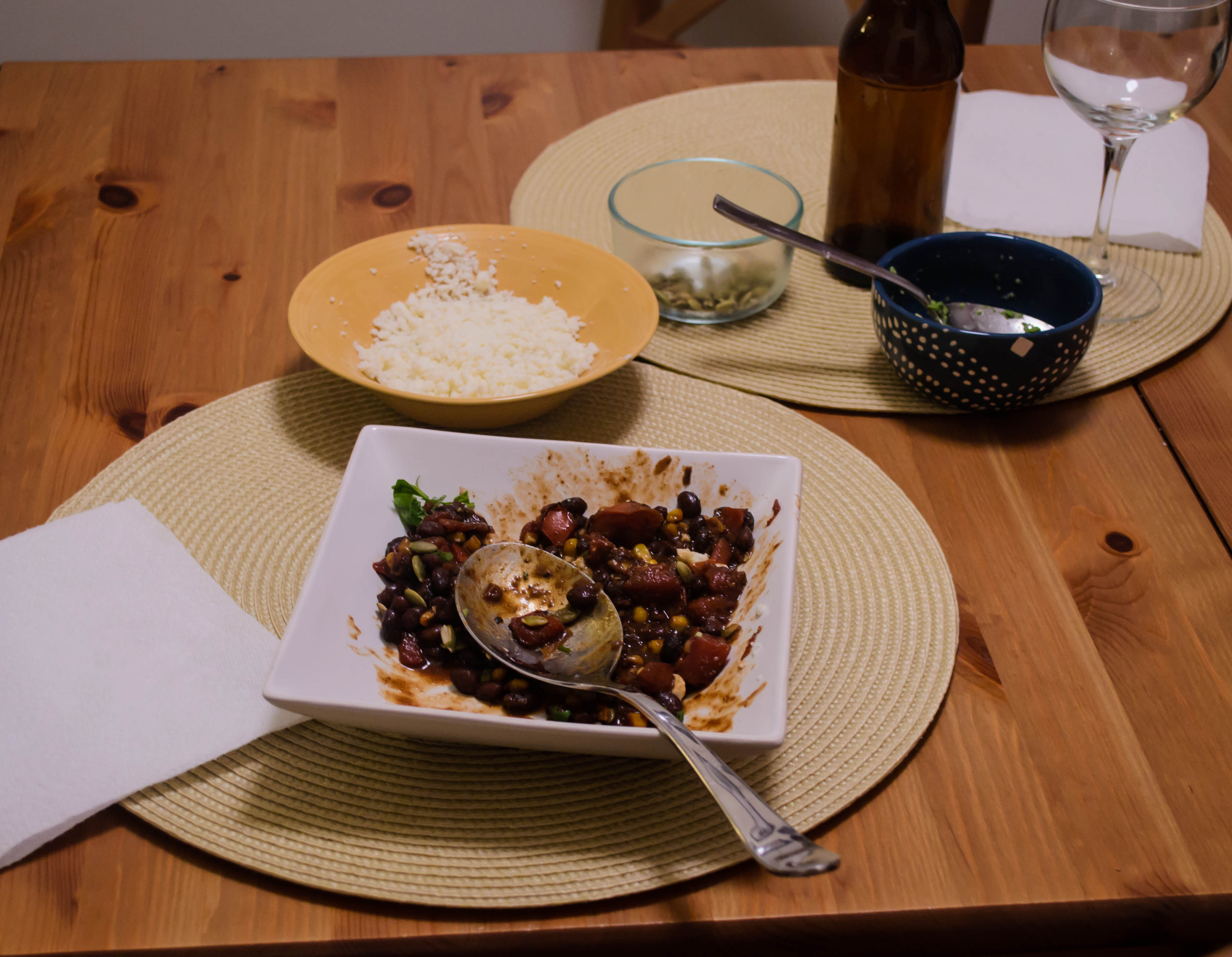
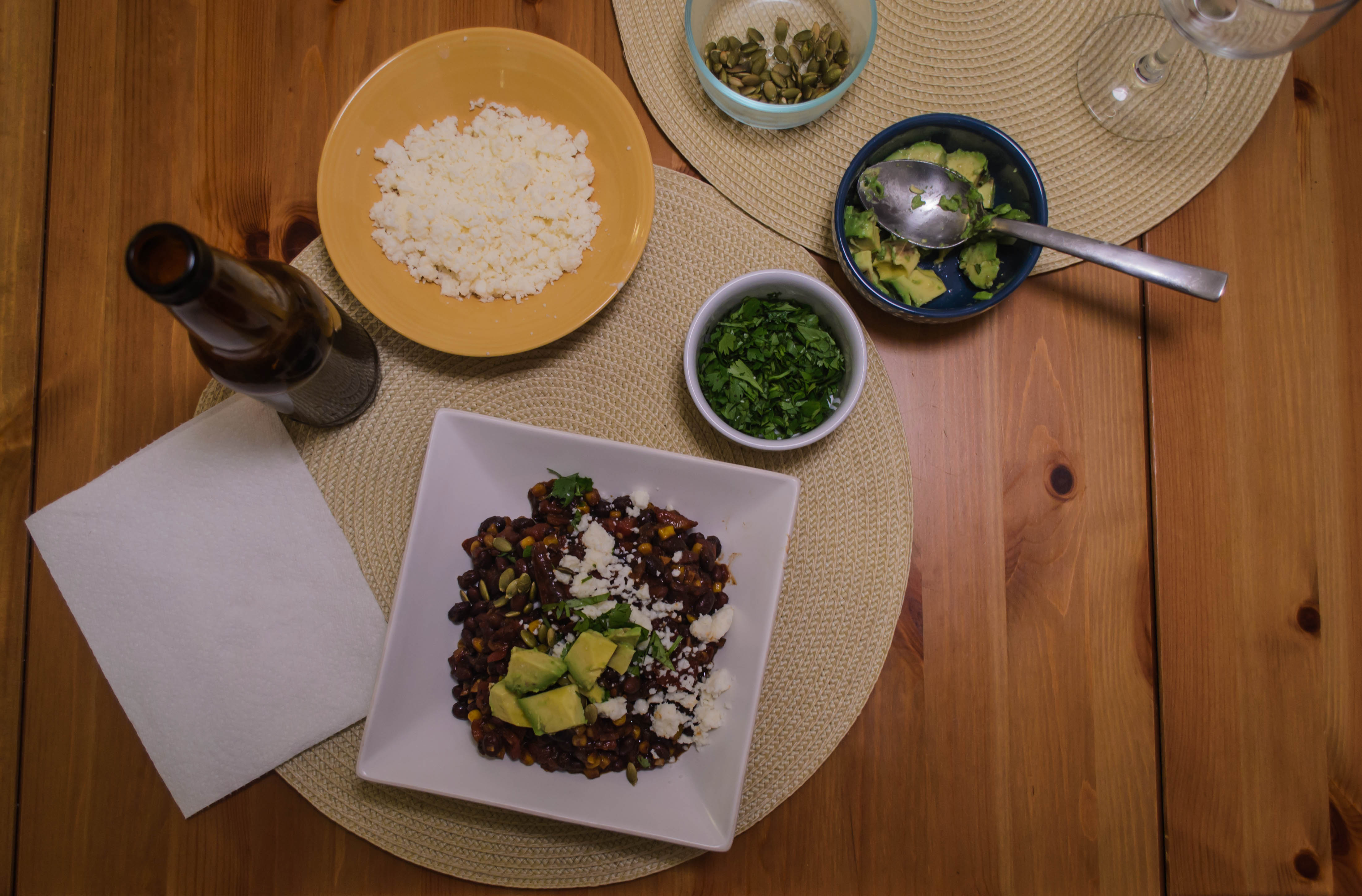
Food Blog March 2015-0439If you like a good garnish, I recommend the standards: crumbled queso fresco, cilantro, toasted pumpkin seeds, generous chunks of avocado, perhaps a dollop of sour cream or a few snippings of chives. But really, these beans don’t require much beyond a bowl, a spoon, and a belly in need of warming.
Food Blog March 2015-0442Food Blog March 2015-0445

Beer Braised Beans
Serves 2 as a main; 3-4 as a side dish
2 tablespoons olive oil
1 dried chile of your choice (I like ancho chiles for this)
½ cup diced red onion (about ½ a medium onion)
1 teaspoon ground cumin
1 teaspoon ground coriander
2 cloves garlic, minced
½ cup corn kernels (defrosted, if you’re using frozen corn)
14-16 ounce can of black beans
1 cup drained fire-roasted tomatoes, from a 14 ounce can
12 ounces of dark beer like a porter or a stout
salt to taste
garnishes of your choosing: crumbled queso fresco, avocado, cilantro, pumpkin seeds, etc.


  • Heat the olive oil over medium heat, then add the dried chile and the onions and sauté for 1-2 minutes. The chile may sputter a bit, and the onions will start to turn translucent.
  • Stir in the cumin and coriander and continue to cook for another 1-2 minutes, turning the heat down to medium-low if the onions threaten to burn.
  • Add the garlic and corn, turn the heat back up to medium if you previously lowered it, and sauté, stirring occasionally, until the corn picks up some roasty color; about 3-5 minutes.
  • Now pour in the beans, canning liquid and all, along with the tomatoes and the beer. Turn the heat up to medium high, stir to ensure nothing is sticking to the bottom of the pan, and let it bubble away, stirring occasionally, until much of the liquid is absorbed. For me, they reached the consistency I wanted in 20 minutes – not totally dry, but not tremendously soupy either.
  • Taste for salt (canned beans can sometimes be quite salty, and reducing the liquid enhances the sodium content), pick out the dried chile, and serve hot with whatever garnishes you wish.

Mom and Myrna’s (Swedish) Meatballs

I fervently hope you have at least one recipe in your arsenal that your family is just mad about. In my case, I guess that might be… tacos? Or perhaps, pardon the sub-par photography, pot pie. For my mom, this recipe is a take on Swedish meatballs from an old cookbook with a faded gold cover. Populated by numerous, lightly ethnic recipes from various European and Mediterranean regions, the cookbook is most stained and marked (Mom makes adjustments in the margins with pencil) on the “Myrna’s Meatballs” recipe. On the facing page is a photograph of a woman (Myrna, I guess) with well-teased chestnut hair, large glasses, and a round face, in the process of lighting candles over a nicely stocked dining room table.

Food Blog February 2015-0364The meatballs themselves, with their mixture of beef and pork seasoned with warm spices and draped in rich brown gravy, are definitely a take on the Swedish smorgasbord classic, and my family is nuts for them. Every year when we plan our Christmas menu, the one item that doesn’t change, it seems, is these meatballs. This past year, because the plan was all rolled appetizers, the meatballs didn’t fit the theme. Rather than skip them, however, they became Christmas Eve dinner instead. Christmas was saved. For Christmas 2015, we’ve already decided the theme will be “food on a stick” (because, I mean, what else would we do while eating the current year’s offerings than plot options for next year’s celebration?). My sister has already excitedly declared that we’ll just stab the meatballs with toothpicks, and that’s one dish done.

Food Blog February 2015-0349I must confess: I like these meatballs quite a bit, and I enjoy them when they show up in the Christmas spread, but they aren’t quite on my deathbed menu. They are tender and tasty, and the gravy in particular – depth and extra richness imparted by a mere teaspoon of instant coffee powder – is a savory treat. But something about the meatball itself made me want to fiddle.

Food Blog February 2015-0350In one of those lovely coincidences the universe sometimes hands out, the Cooks Illustrated issue in my, well, my bathroom magazine rack (what?) just happened to contain a Swedish meatball recipe, and though many of the ingredients were the same as Myrna’s immortal list, the procedure was different enough to catch my attention. Since one of the things – I think – I wanted to adjust about the family meatball of choice was the texture, it seemed fortuitous to combine-and-conquer.

Food Blog February 2015-0352The main difference in the CI version of Swedish meatballs is the way the meat is prepared. Mom and Myrna knead together the pork, beef, a handful of parsley, spices (plenty of black pepper, as Mom is always telling me), lightly sauteed onions, and  breadcrumbs soaked in milk (called a panade) in a bowl before forming soft balls. Taking a cue from sausage making, CI recipe tester J. Kenji Alt instead vigorously paddles the pork in a stand mixer with spices, baking powder for lightness, and the traditional sopping panade. A touch of brown sugar goes in too, for a background hint of sweetness. Grated onions and salt join this combination, and the whipped meat paste is only lightly combined with ground beef. This results in a tender, light meatball with a sort of springiness, achieved by stretching the meat proteins in the pork as it is paddled into a paste-y emulsion. It also more evenly distributes the fat through the meat, which seemed worth imitating.

Food Blog February 2015-0353In my version, because I also wanted to minimize the number of dishes I was going to make N. wash (our version of an egalitarian kitchen: whoever cooks, the other one has to wash up. You can guess how this usually works out), I decided to go for the food processor instead of the stand mixer. I was going to use it to make fresh breadcrumbs anyway, and decided relying on it to grate my onions and mix up the meat would keep things easy. In retrospect, this seems counter-intuitive – wouldn’t the blade tear apart the meat proteins, rather than elongating them? Yet it did produce a pleasing texture.

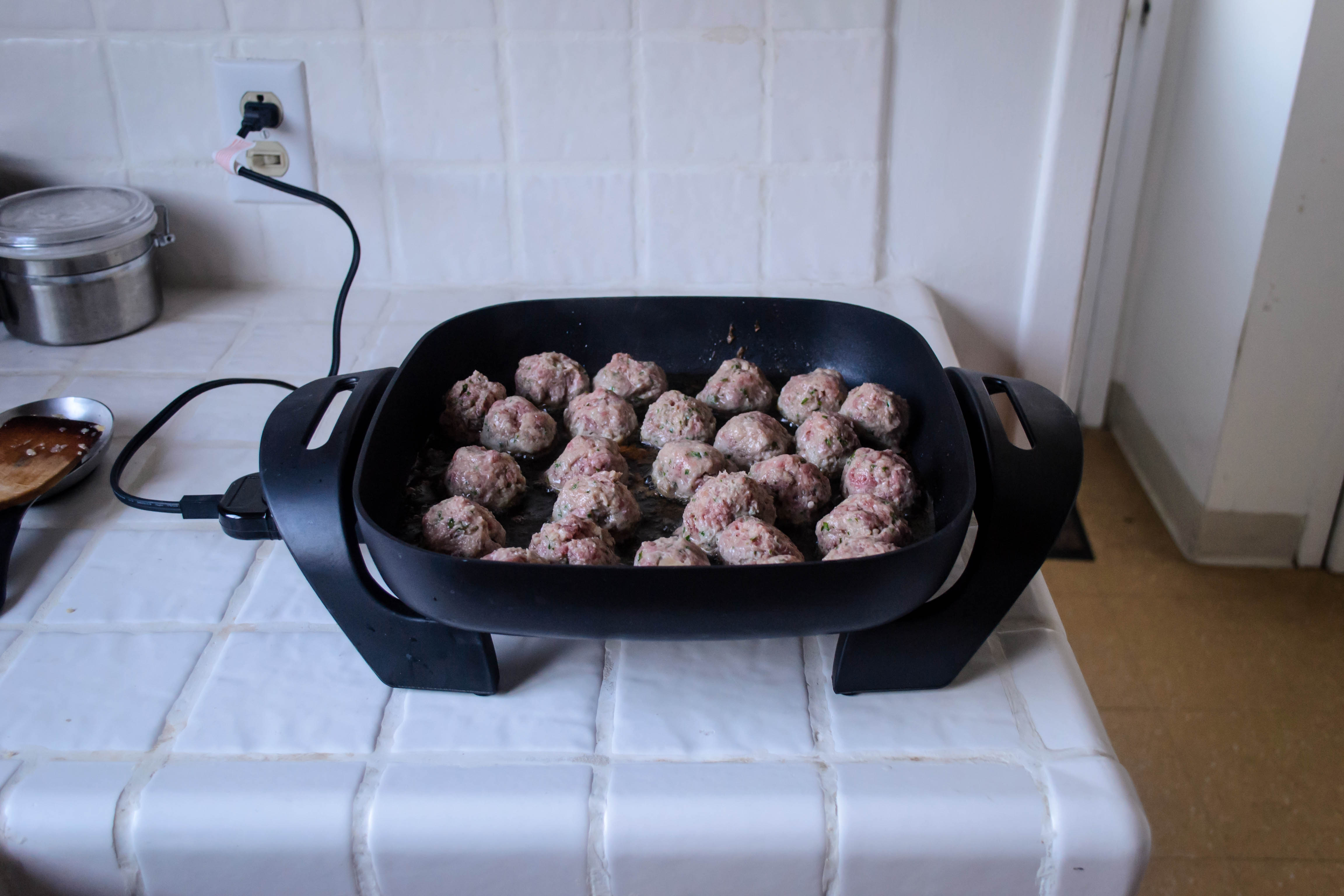
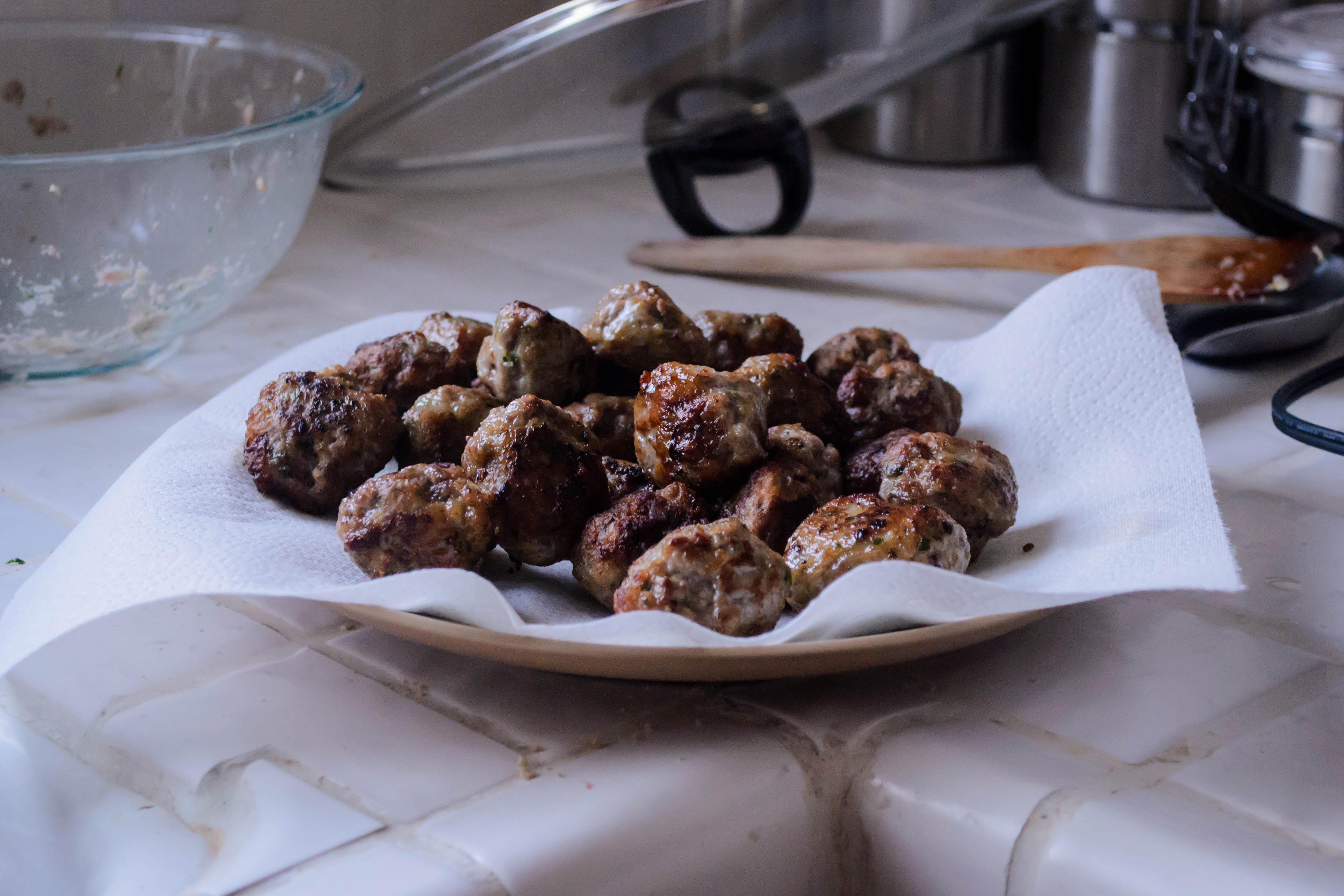
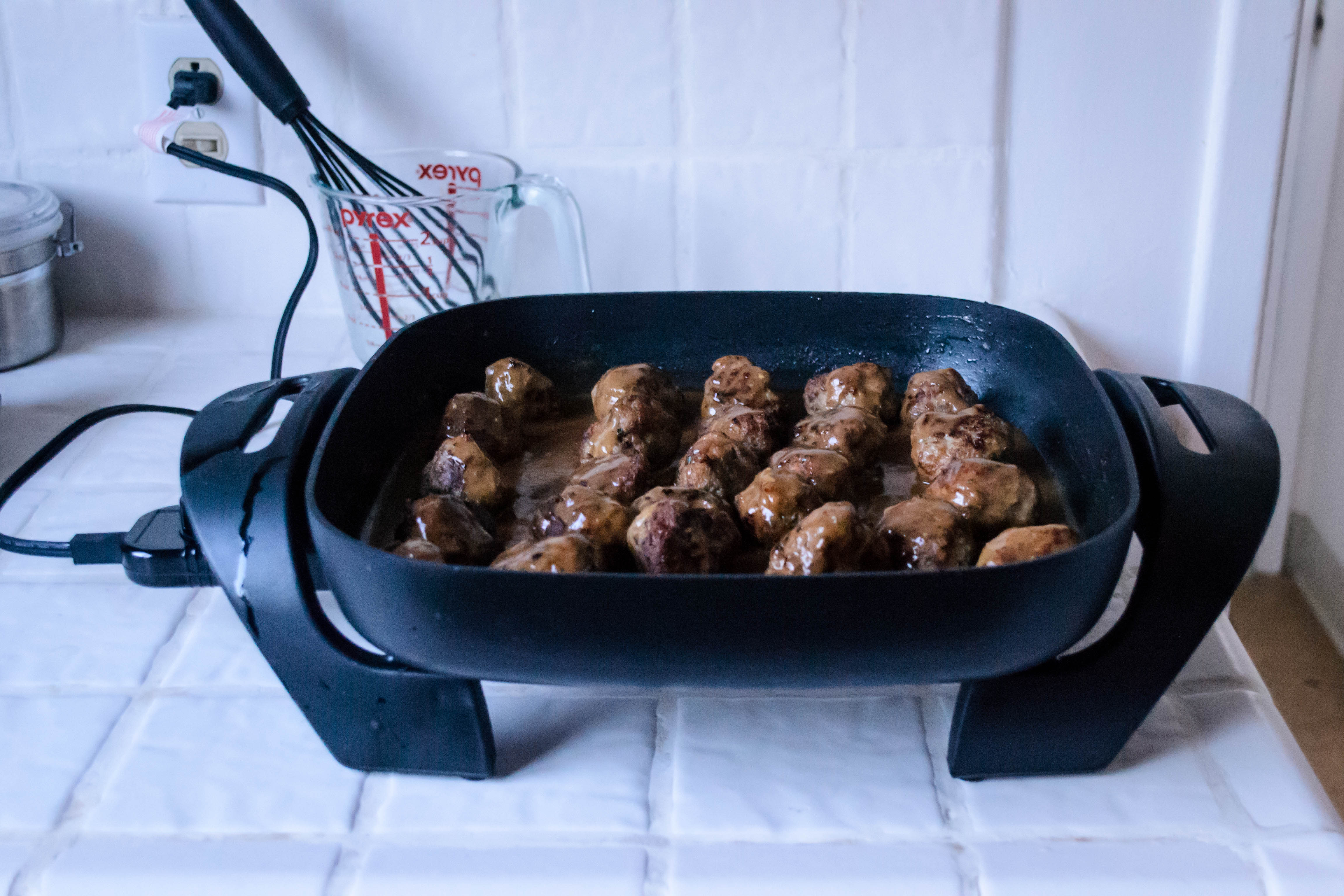
Food Blog February 2015-0355Mom (and Myrna) brown their meatballs in a few tablespoons of butter, then finish them by simmering them in the gravy for half an hour. The CI version, on the other hand, does more of a shallow fry in vegetable oil, cooking the meatballs completely and then just running them through a quick turn in the sauce. I decided, again, on a slight compromise. I used less oil than the CI recipe, and browned the meatballs on all sides, opting to use my electric skillet so I could control the oil temperature. Once the meatballs were golden and felt almost crisp, I drained them, whisked up the sauce in the same skillet, and returned them to the gravy for the requisite half hour simmer. Any opportunity to add flavor seemed like the right thing to do.

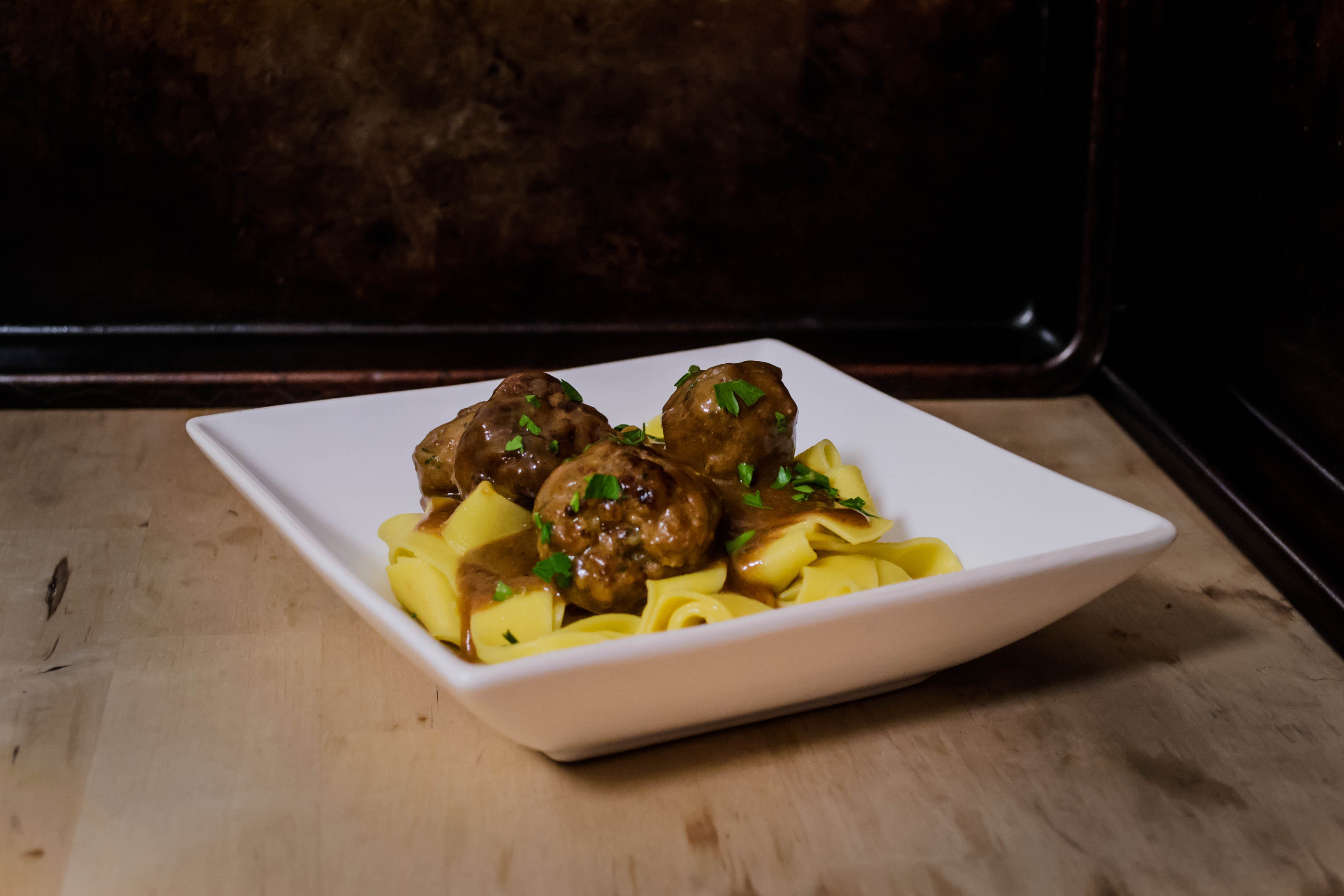
Food Blog February 2015-0356When we couldn’t take the aroma anymore (the dog kept appearing in the doorway of the kitchen, wagging and smiling. Their eternal hope is so encouraging and so sad), I boiled up some egg noodles, tossed them with butter and parsley, and ladled on the main event.

Food Blog February 2015-0360I don’t think I’m allowed to say that my meatballs were better than Mom’s. But they were very, very good. I think the textural change – a subtle tenseness to the exterior that burst when you bit through it, and a tightness to the meatball that was somehow not at all dense – was an improvement. I also added a reserved squeeze of dijon mustard to both the panade mixture and the sauce, and that, along with the bare hint of sweetness from the brown sugar, was a good choice.

Food Blog February 2015-0366But in addition to the texture and the minimal flavor upgrades, I think the nest of buttery noodles made the dish. When we eat these meatballs at Christmas time, they are usually part of a large spread – one little corner of a plate full of wildly varied appetizer items. Here, resting atop an eggy bed, glazed with thick gravy, we really had a chance to appreciate their deep, warm flavors.

Food Blog February 2015-0364

Mom and Myrna’s (Swedish) Meatballs
Makes 25-30 1-inch meatballs
For meatballs:
1½ cups bread crumbs (from 1-2 slices of bread)
1 cup whole milk or half and half
1 teaspoon dijon mustard
⅓ cup grated onion (about ½ of a large onion)
1 tablespoon butter
½ pound ground pork
¼ cup chopped fresh parsley + 1 tablespoon for serving
⅛ teaspoon fresh grated nutmeg
⅛ teaspoon ground allspice
⅛ teaspoon freshly ground black pepper
1 teaspoon salt
½ teaspoon brown sugar
1 teaspoon baking powder
½ pound ground beef
1 cup vegetable oil
For gravy:
2 tablespoons butter
2 tablespoons flour
1 teaspoon instant espresso powder
1 teaspoon dijon mustard
½ teaspoon brown sugar
1¼ – 1½ cups beef broth
salt and pepper to taste (taste first; sodium content in beef broth may vary)
  • Using the disc shredder of a food processor or a box grater, grate the onion and cook it in 1 tablespoon butter over medium low heat until tender and translucent but not browned. Set aside to cool.
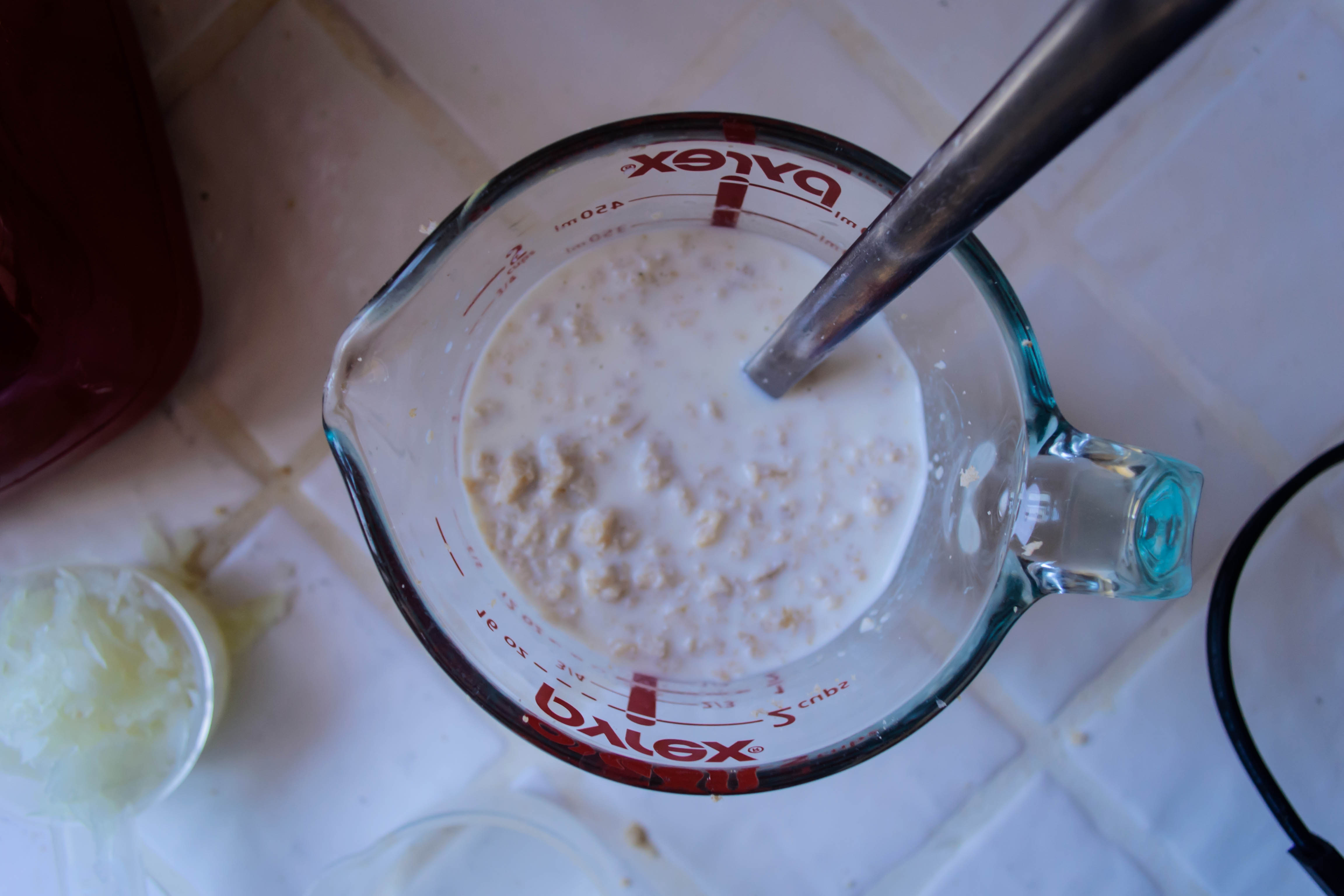
  • While onion cooks and cools, use the regular blade of a food processor to create 1½ cups bread crumbs from 1-2 slices of bread (stale is fine). Combine the bread crumbs, the milk or half and half, and 1 teaspoon of dijon mustard in a small bowl and let soak for 5 minutes.
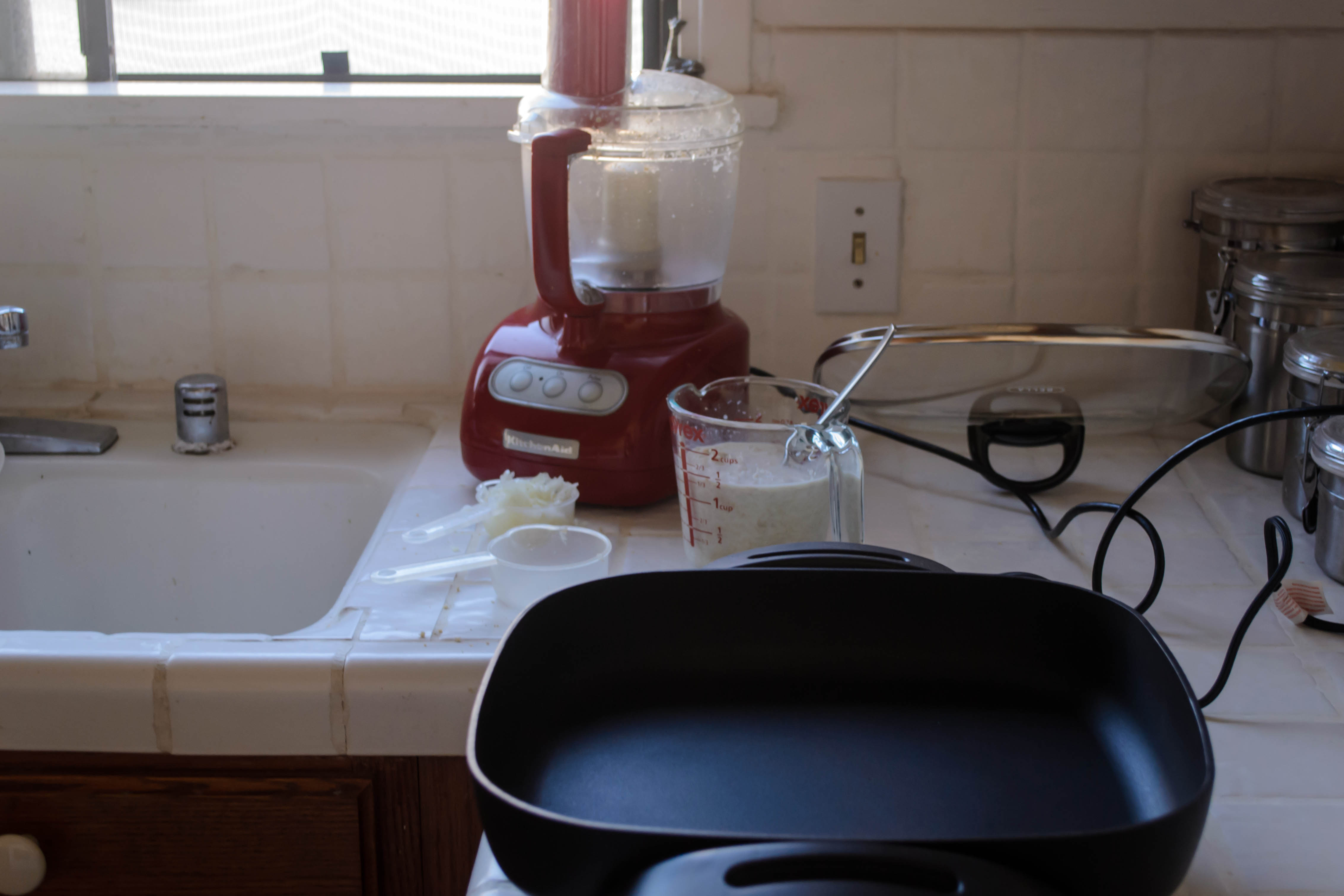
  • Add the ground pork, cooled onions, ¼ cup parsley, salt, baking powder, brown sugar, and spices to the food processor. Squeeze out the soaked bread and add that as well.  Process for 1-2 minutes into a smooth, homogenous mixture. Pause to scrape down the sides as needed.
  • Dump the pork and bread paste into a large bowl and add the ground beef. Using your hands or a spatula (but hands work better), gently fold the beef into the pork mixture until just incorporated. With moistened hands, form generous tablespoon-sized balls (about 1 inch) from the meat mixture.
  • Heat oil in a straight-sided skillet to 350F, or until the first meatball sizzles when cautiously dipped in. I used my electric skillet to help monitor the temperature. Fry the meatballs, turning as needed, until brown on all sides – about 5 minutes. Remove and let drain on a paper towel-lined plate or tray while you make the gravy.
  • For gravy, carefully pour out the remaining oil in the pan, but leave any browned bits behind for extra flavor. These are called fond. Melt the 2 tablespoons butter over medium heat, then sprinkle in the flour and whisk together. Let flour and butter cook for 1-2 minutes into a loose, lightly golden smear. Stir in the instant espresso powder, the brown sugar, and the dijon mustard. Add the beef broth, whisking constantly to deter lumps. Continue to whisk slowly until mixture reaches a simmer and thickens to a gravy consistency. Taste for seasoning, keeping in mind flavors will intensify as it continues to simmer.
  • Add the meatballs to the gravy in the pan, cover, and cook over low to medium low heat for 30 minutes, basting the meatballs occasionally.
  • Serve hot or warm over buttered egg noodles, mashed or boiled potatoes, or with toothpicks for an appetizer or smorgasbord spread. Sprinkle the final tablespoon of parsley over the starch or the meatballs themselves for a little brightness.

Roasted Cauliflower and Chick Pea Tacos

Food Blog February 2015-0342I’m sure it won’t surprise you to learn this, but I am one of those people who makes a meal plan. Every week, before we head to the grocery store, I write out a shopping list. I like to know what we’ll be eating most nights ahead of time, to be sure the pantry is adequately stocked, but also to prevent a lot of impulse buys or take-out emergencies (also I just love making lists. You probably aren’t surprised by that either). When I put the meal plan together, I usually ask N. for some input. Sometimes it’s because I need a little inspiration, sometimes it’s because I want to make sure he’s getting a meal or two he’s excited about, and sometimes, I’ll admit, it’s just because I want him to feel like he has some say about what happens in our kitchen.

Food Blog February 2015-0322This considerate move doesn’t always play out as helpfully as expected, however. Most weeks, without even looking at the list or at the meals I’ve proposed, he immediately says “tacos.” Nothing else gets this kind of instantaneous, definitive response. Tacos. Sometimes, when he says this, we’ve just had tacos. Sometimes, when I query him further, he doesn’t seem very enthusiastic about the suggestion he’s just made. Sometimes I’m just not in the mood for tacos (I mean, we JUST had them) and so I nod and smile and write down something else instead.

Food Blog February 2015-0324Finally, though, I got curious, and yesterday I asked him why he suggests tacos so frequently. Does he really like them that much? What is it about a taco that he finds so compelling? Turns out it’s not the food, exactly, but the name. Be warned, people. This is what happens when you fall for a words person. He really likes the sound of the word “taco.”  It is, he claims, an interesting sounding word. You can put emphasis on each of the syllables in turn, you can change the pronunciation of the vowel, you can draw out the length of each part of the word, all with different sounds and results. He then proceeded to say “taco” four or five times. It is, I must admit, a fun word to say. I’ll wait while you try it a few times…

Food Blog February 2015-0328As much fun as the word is, N. noted that he likes the dish as well, and it got me thinking about the constituent parts – what makes a taco a taco? As I see it, tacos break down into three major components: the shell, the “meat,” and the sauce. Of course you can – and often should – add cheese and lettuce and other garnishes, but I think you have to have at least these three parts. Once you have these critical components, you can take your tacos in a variety of directions.

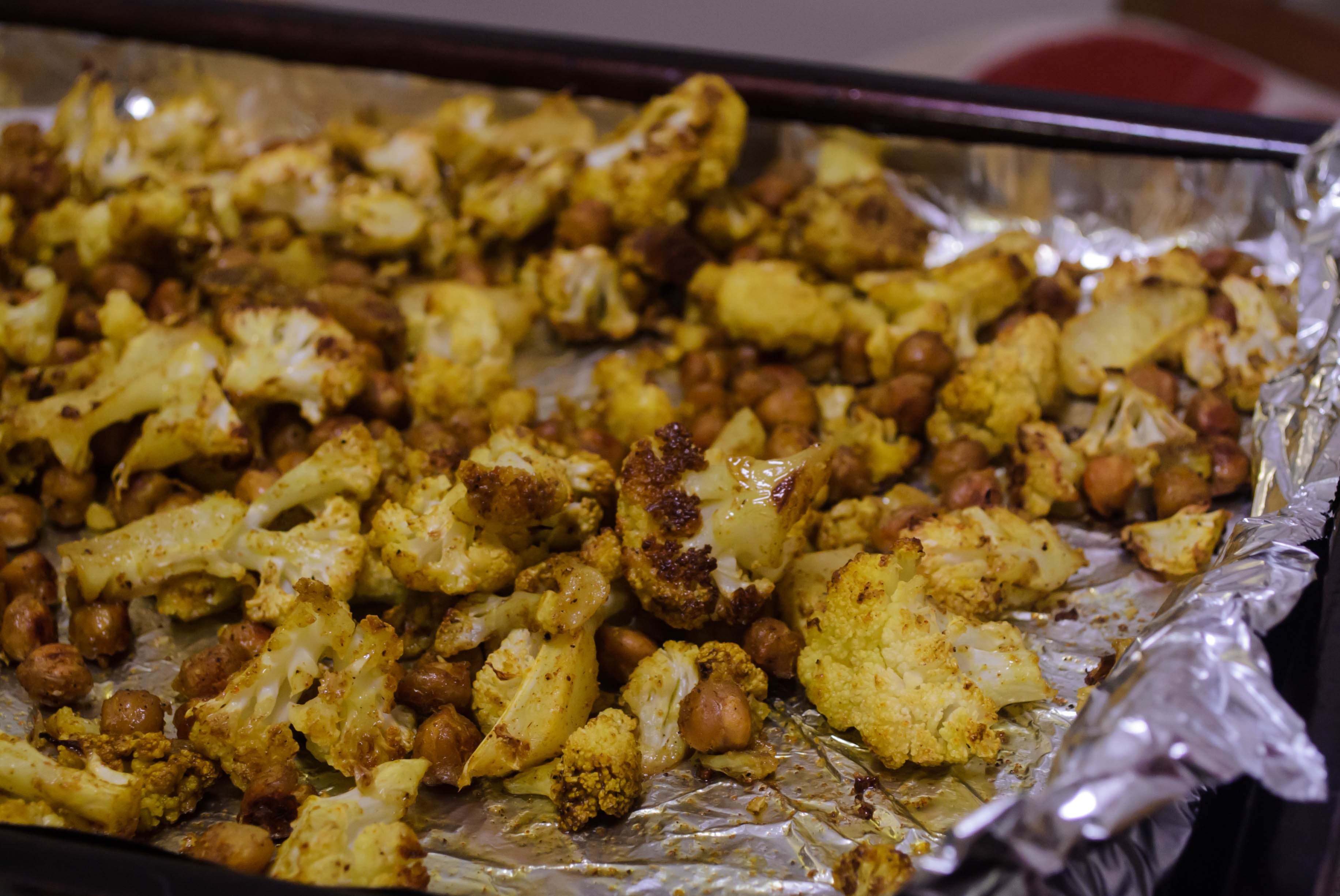
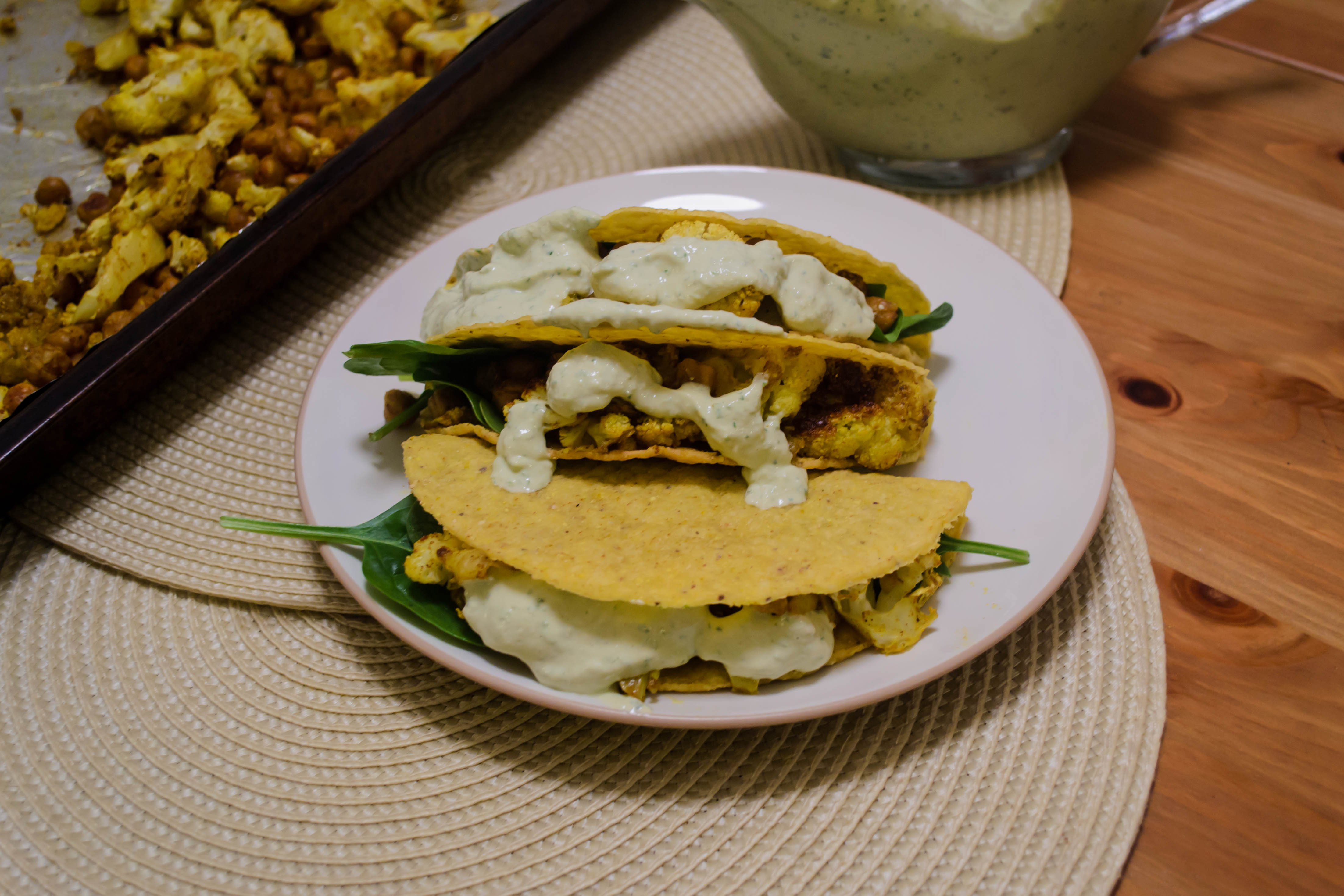
Food Blog February 2015-0335Perhaps because N. is so fond of them – whether it’s the word or the dish itself – I quickly tire of the standard ground-meat-with-cheese-and-things compilation, and look for other options. We’ve had grilled zucchini tacos with crumbled queso fresco and lime, dozens of incarnations of fish tacos (my favorite always involves a corn relish and plenty of smashed avocado), tofu tacos overloaded with pepperjack cheese, and I’m working on a potato taco inspired by an amazing version at – of all places – the Getty Museum cafeteria. This time around, though, I wanted something a little more outside the box (or should I say outside the shell? No, you’re right, I probably shouldn’t. Let’s pretend it didn’t happen). I’m not sure where the combination came from (if I’m honest, probably Pinterest), but I decided on a tumble of roasted cauliflower and chick peas, liberally spiced with a ras al hanout-esque blend and drizzled with a sauce of tahini and yogurt, tangy with lemon and flecked with parsley.

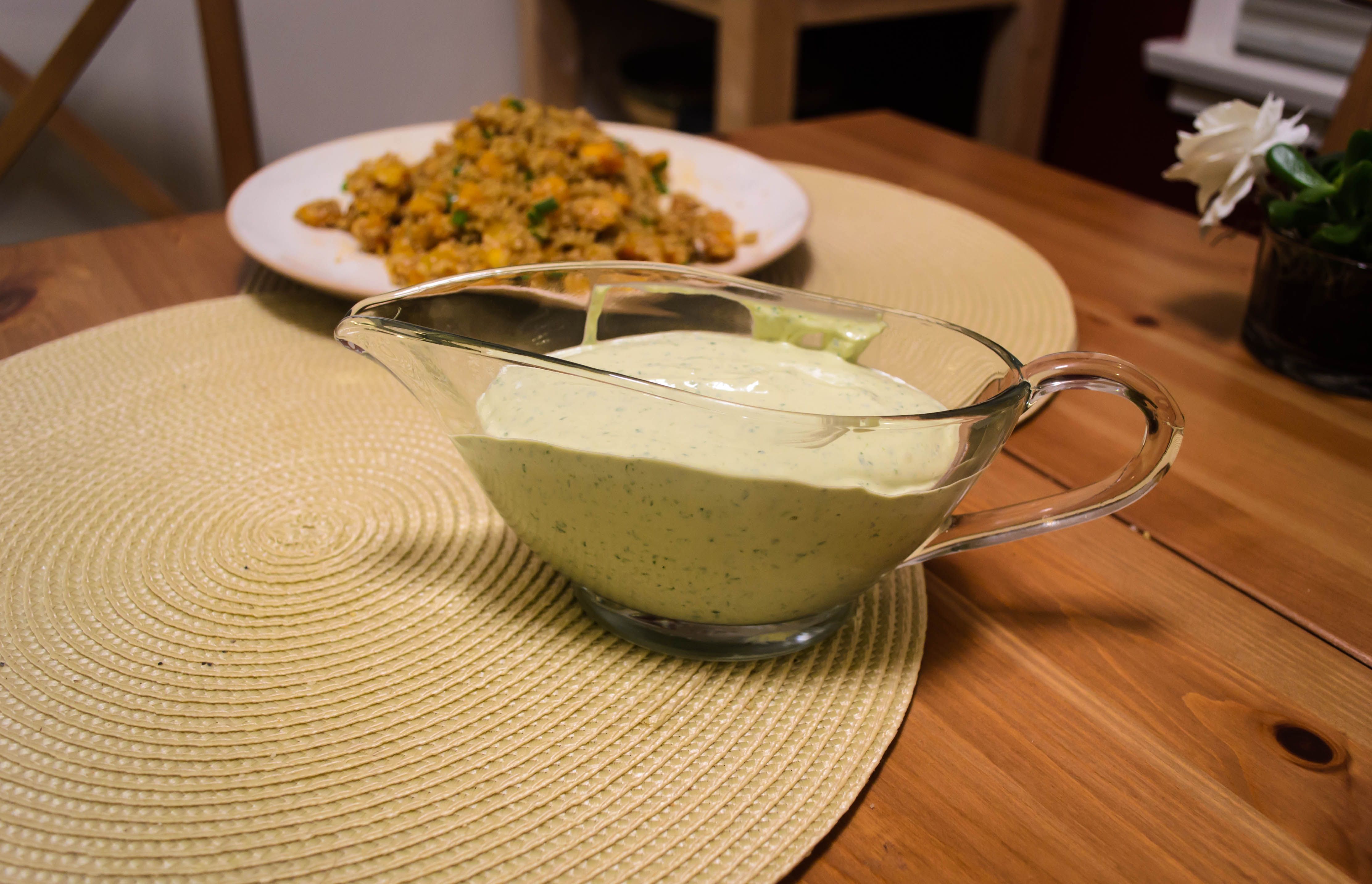
Food Blog February 2015-0332What resulted was not N.’s favorite taco ever (though I doubt it will stop him from requesting them), but I am finding, a day or two later, that I’m mildly obsessed with them, especially the sauce. It wasn’t fancy, but there was something quietly brilliant about how the yogurt and parsley lightened up the earthiness of the tahini. Roasted vegetables, though I will almost never say no to a bowl of them, can feel a little heavy. Blanketed with this sauce, they are bright and buoyant, and the creamy spread is just as fitting against the soft unctuousness of the cauliflower as it is against the toasted crunch of the chick peas.

Food Blog February 2015-0336This is one of those recipes where the list of spices looks daunting, and by all means, if your spice cabinet is not as ridiculous overflowing full as mine is, go easy on yourself and use a pre-mixed blend. I won’t judge. Ras al hanout is a North African combination of spices, one of those lovely warm mixtures incorporating options American dishes usually reserve for desserts. Really, though, any mixture of Mediterranean or Middle Eastern spices would be lovely here – choose your favorite and apply accordingly.

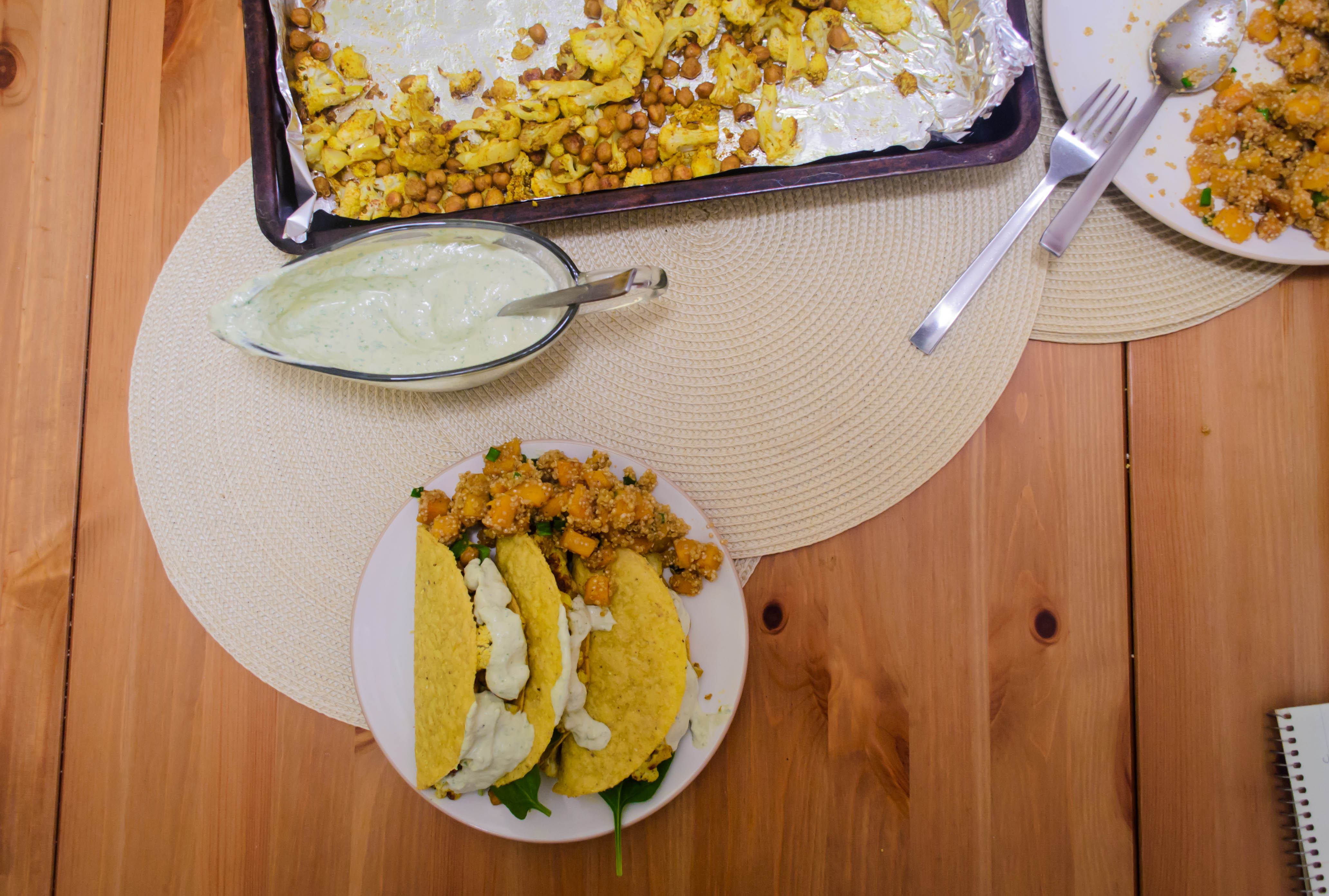
Food Blog February 2015-0338Once you’ve got the spices sorted, this dish is a multi-tasker’s dream. The cauliflower and chick peas need a good chunk of time in the oven at high heat, and while they are roasting you have plenty of time to whip up the sauce, warm the taco shells according to your favorite method, and even concoct a side dish (we ended up with sautéed cubes of butternut squash folded into a bit of cooked quinoa and a shower of green onions). By the time the filling finishes roasting, all you have left to do is scoop and serve, and if you’ve been reasonably efficient it has probably taken you just under an hour.Food Blog February 2015-0342*Note: you’ve probably noticed by now, and may be horrified by the omission, that these tacos don’t include a cheese component. With the yogurt and the deep earthy roasted flavors of the vegetables, I found I didn’t miss it. If you can’t do without, however, I suggest a few crumbles of feta to fill the void.


Roasted Cauliflower and Chick Pea Tacos
Makes 10-12 tacos

For the tacos:

½ teaspoon ground cardamom
½ teaspoon ground cumin
½ teaspoon ground coriander
½ teaspoon ground ginger
½ teaspoon ground turmeric
½ teaspoon freshly cracked black pepper
¼ teaspoon ground allspice
¼ teaspoon ground cloves
¼ teaspoon cayenne pepper
1 teaspoon coarse salt
6 tablespoons olive oil
1 head cauliflower, cut into bite-size florets
15 ounce can chick peas, drained and dried
1 cup loosely packed baby spinach leaves
taco shells
For the sauce:
½ cup tahini
½ cup plain greek yogurt
½ cup flat-leaf parsley
2-3 tablespoons lemon or lime juice, or a combination
1 teaspoon honey
½ cup water, to thin
salt and pepper, to taste


  • Line two baking trays with aluminum foil and place them in the oven. Preheat oven, trays and all, to 450F.
  • In a small bowl, combine all of the spices and the salt, stirring to be sure they are well-blended. Add the olive oil and stir or whisk to combine.
  • In a large bowl, toss the cauliflower with about ⅔ of the spiced olive oil mixture, then spread on one of the preheated baking trays in a single layer (if possible).
  • In the same bowl, toss the chick peas with the remaining olive oil and spice mixture, then spread onto the other baking tray.
  • Stow both baking trays in the oven and roast at 450F for 20 minutes. After 20 minutes, remove the tray of chick peas, shake them around a bit to deter sticking, and set aside. They should be toasty and crunchy. Shake and stir the tray of cauliflower pieces to promote even browning, then return just the cauliflower tray to the oven and roast for another 10-15 minutes, until both sides of most pieces are nicely browned.
  • While vegetables are roasting, combine the tahini, yogurt, parsley, honey, and lemon juice in a food processor and whir to create a thick paste. With the food processor running, dribble in the ½ cup of water slowly to transform the paste into a sauce. You may not need the entire ½ cup – thin to your desired consistency. Season to taste with salt and pepper, then set aside and prepare your chosen form of taco shells according to your preferences.

  • When the cauliflower is nicely browned and tender, toss it with the chick peas and stuff the mixture into taco shells with a few spinach leaves for freshness. Top with tahini yogurt sauce and serve immediately.
Grapefruit Bars

Food Blog February 2015-0311It’s citrus season. The trees are heavy. An amble through my neighborhood right now would send you past oranges, mandarins, tangerines, lemons, and who knows what other hybrids and splices, all sagging on their branches, almost unable to bear their own weight. When we first moved here in the summer of 2012, I couldn’t believe how much fruit was wasted. Who in their right mind could let it just fall to the ground and rot? And yet as I type, my own lemon tree – sequestered away in its little corner of our backyard – is groaning with a load I can’t reach, its thick, sharp tangle of twigs protecting it from an invading ladder.

Food Blog February 2015-0237So when I cast about for a subject to post about this week, you’d think I would have wandered out and reached up, pulling what fruits I could reach down from my own harvest. But lemons aren’t my favorite. Oh I love a fresh, pulpy lemonade. I could eat lemon curd straight out of the jar. And a tiny, hangnail-puckering squeeze into a chicken or a bean dish is almost essential. But if I’m going to celebrate citrus season and its glories, I’m going to go with my favorite: grapefruit.

Food Blog February 2015-0303Sometimes maligned for its stubborn, bitter pith and its curious ability to render certain drugs either useless or too effective, it is my favorite because it is so complex. Sweet, tangy, sour, infernally juicy, it, and not orange juice, is my choice of beverage when I’m sick. I love the smell of the peel under my fingernails. I could eat grapefruit (and have) until my tongue stung and my lips swelled with the tartness.

Food Blog February 2015-0304But if grapefruit is a bit testy as a raw product, it’s equally challenging in a dish. There are (at least compared to other citrus fruits) a paucity of grapefruit dessert recipes out there, which has always seemed like a shame to me. The lovely play of sweet and sour with that beautiful color (I prefer a red grapefruit myself) seems perfect to match with sugar.

Food Blog February 2015-0306Tired of the standard, tried-and-true lemon bar, then, I set out to conquer a grapefruit version. My first time through yielded highly positive results – grapefruit zest and lemon zest in the shortbread crust, just for some extra bright punch, a silky smooth custard layer of pale salmon pink, and a careful dusting of powdered sugar across the top. A few adjustments, a bit less flour, and it would be perfect.

Food Blog February 2015-0307Of course, I didn’t take any photographs of this perfect little bar, because I was only experimenting. Yesterday, when I made the batch to share with you, I learned what can go wrong. You see, the basic recipe for a fruit bar like this is to make a shortbread crust – flour, butter, sugar, a breath of salt and maybe a little flavoring agent or two – and bake it just until it starts to turn a bit golden. Then you let it cool a bit until the butter, now molten, solidifies to make a firm layer. You pour on a mixture of fruit juice, eggs, more sugar, and possibly some kind of thickening agent (cornstarch, in this case), and then carefully lever the quavering thing back into the oven to cook through.

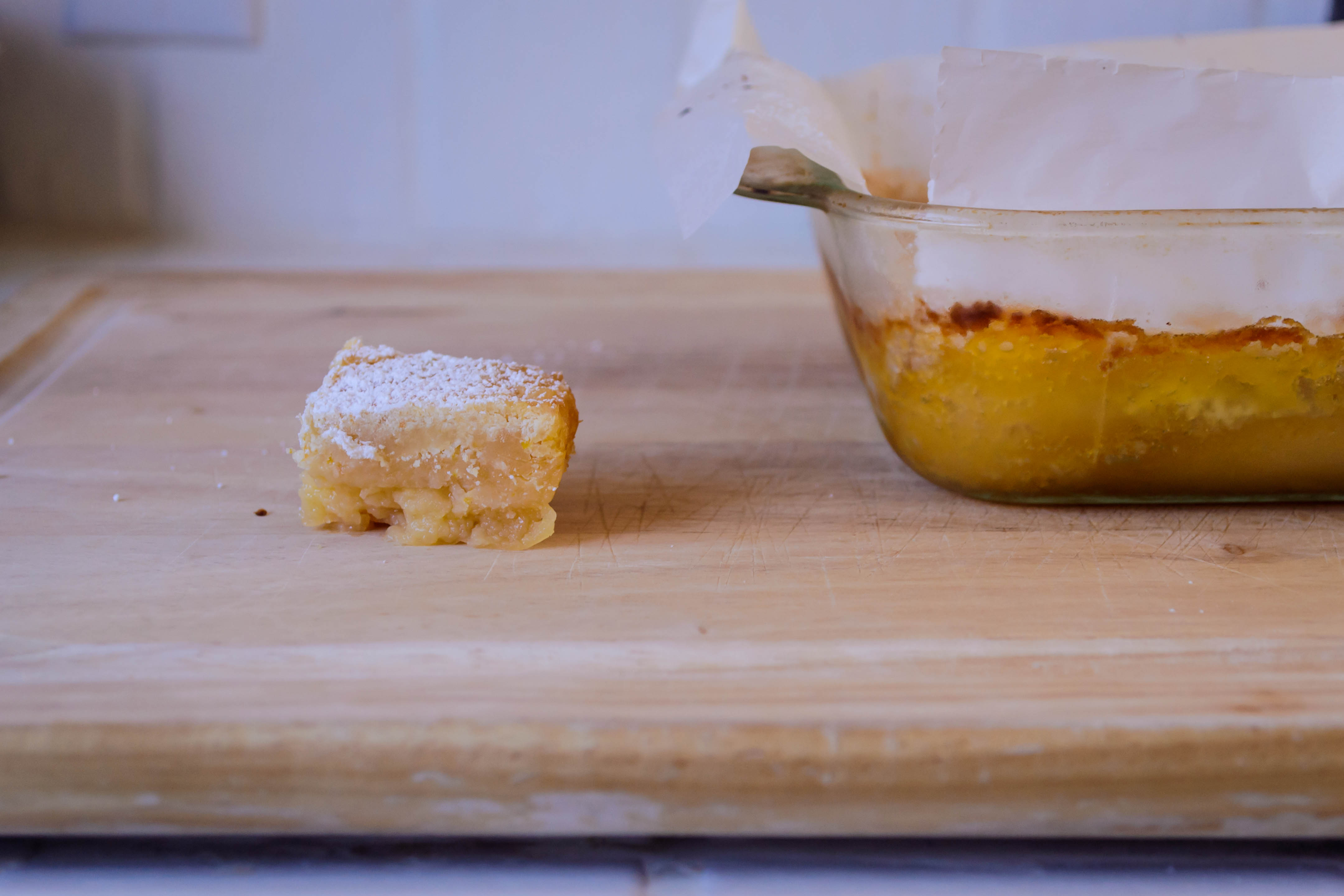
Food Blog February 2015-0308The middle step – letting the crust cool – is important. Yesterday I forgot about that step. Here’s what happens when you don’t: the beautiful, pale pink liquid filling plunges straight down, bursts through the crust, and breaks it up into floating islands of mush. You despair. You yell. You say some words that make you glad the windows weren’t open. Then you put it in the oven anyway, and even though what comes out isn’t exactly what you were intending, it still looks passable and it tastes perfect.

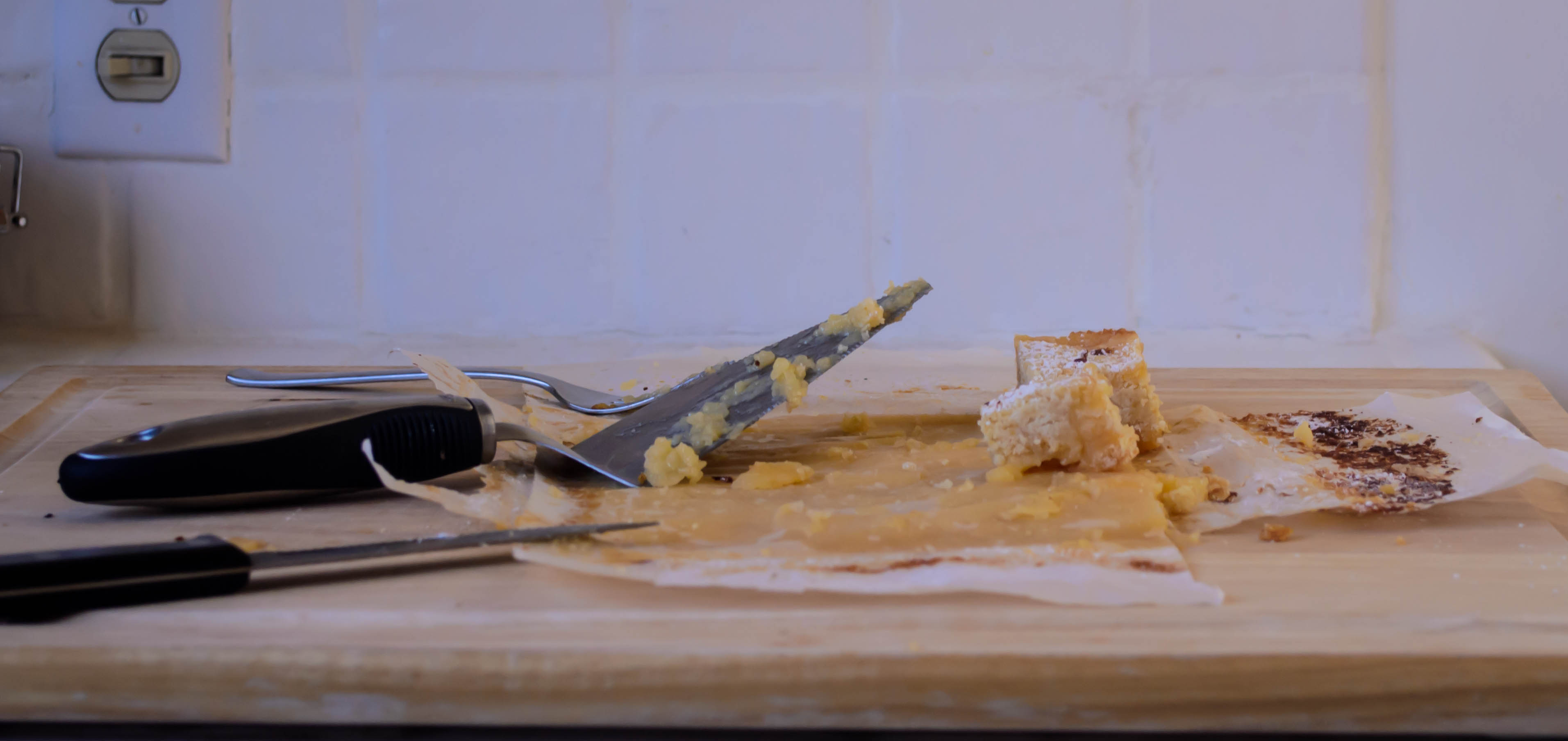
Food Blog February 2015-0312Curiously, as my grapefruit bars baked, the disrupted crust layer floated up above the (apparently) heavier “filling” layer. What came out of the oven looked more like a cake than the bars format I was expecting, but aside from making it a bit harder to cut (the grapefruit filling smooshes out as you press the blade down), they were fairly acceptable. Tangy, sweet, a play of light crunch and velvet curd, and a huff-inducing layer of powdered sugar over the top to keep you from inhaling too fast.

Food Blog February 2015-0314So the directions I’m providing you are what you should do. They will give you the expected format: a layer of shortbread-like crust on the bottom, topped by a thick layer of soft, slightly jiggly essence of grapefruit. Just don’t forget to let the crust cool. Unless you’d prefer, to echo the persnickety challenge of grapefruit itself, my upside down version. Food Blog February 2015-0320

Grapefruit bars
Makes 9×9 inch pan
Crust:
8 tablespoons butter (½ a cup or 1 stick), at room temperature, cut into cubes
½ cup sugar
1 cup all-purpose flour
¼ teaspoon salt
zest of 1 grapefruit (for extra punch in the crust, add the zest of 1 lemon as well)
Filling:
3 eggs
1 cup sugar
zest of 1 grapefruit
1 cup freshly squeezed grapefruit juice (2-3 large grapefruits)
4 tablespoons butter, at room temperature, cut into cubes
2 tablespoons cornstarch
powdered sugar, for dusting


  • Preheat the oven to 350F and prepare your baking pan: cut two 15-inch sheets of parchment paper and arrange them in a cross shape, then insert this cross shape into a 9×9 inch baking dish with the edges hanging out. This forms a kind of sling that will help you remove the bars from the baking dish without breaking them apart. Spray the inside of the dish (including the parchment paper) with non-stick spray, for extra insurance.
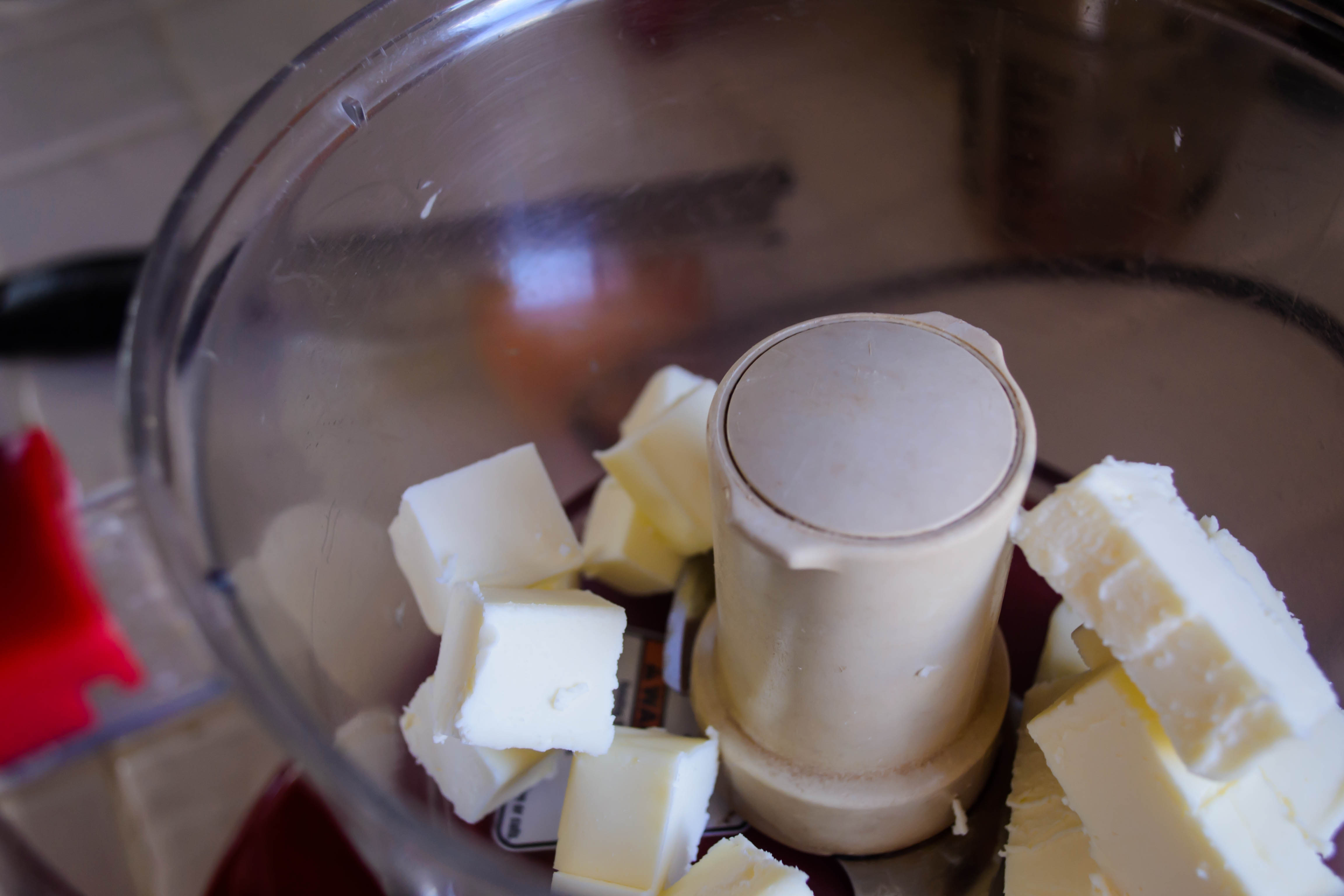
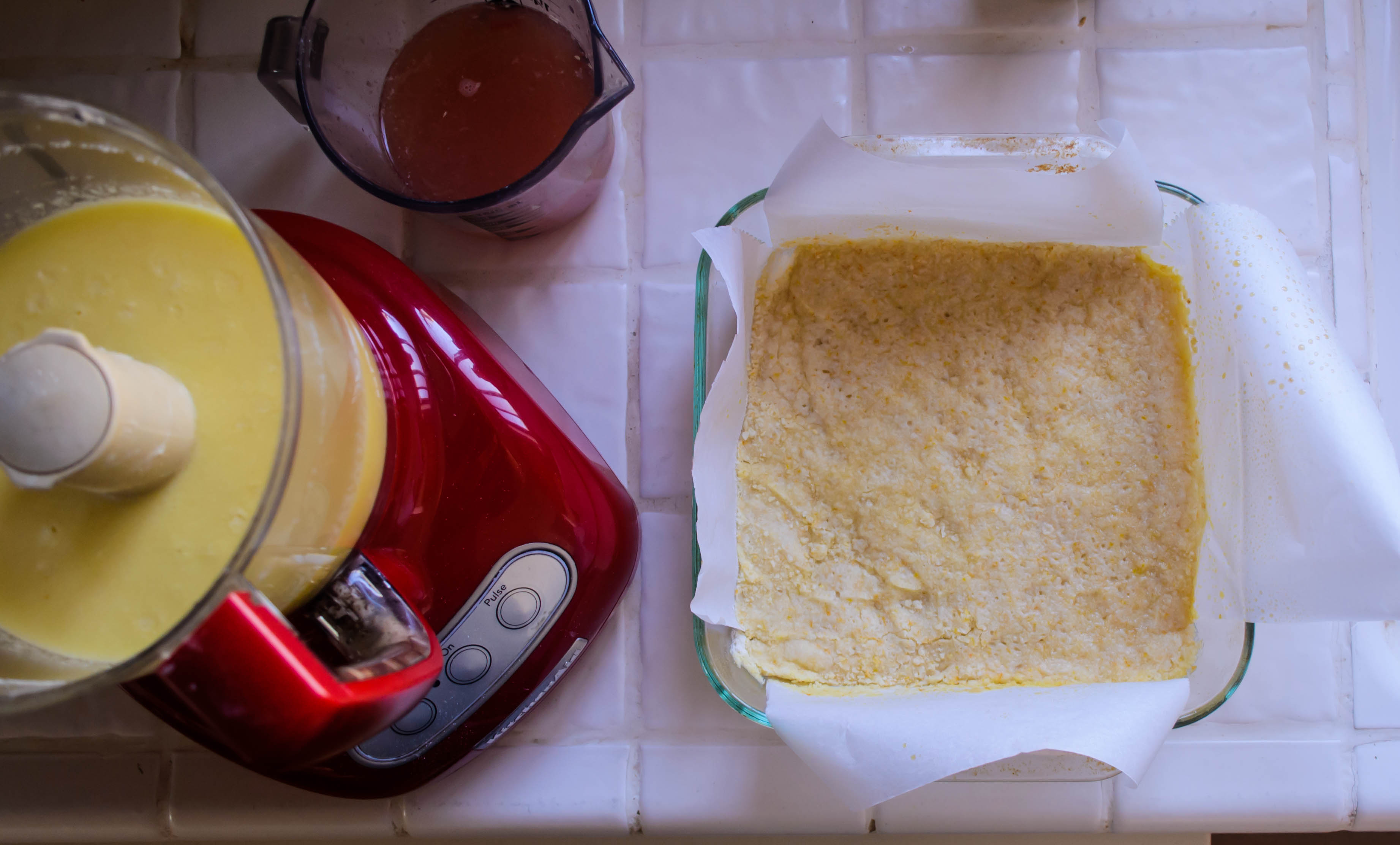
  • To make the crust, place the butter, sugar, flour, salt, and zest into a food processor and let run until the ingredients are combined and begin to clump together a bit.
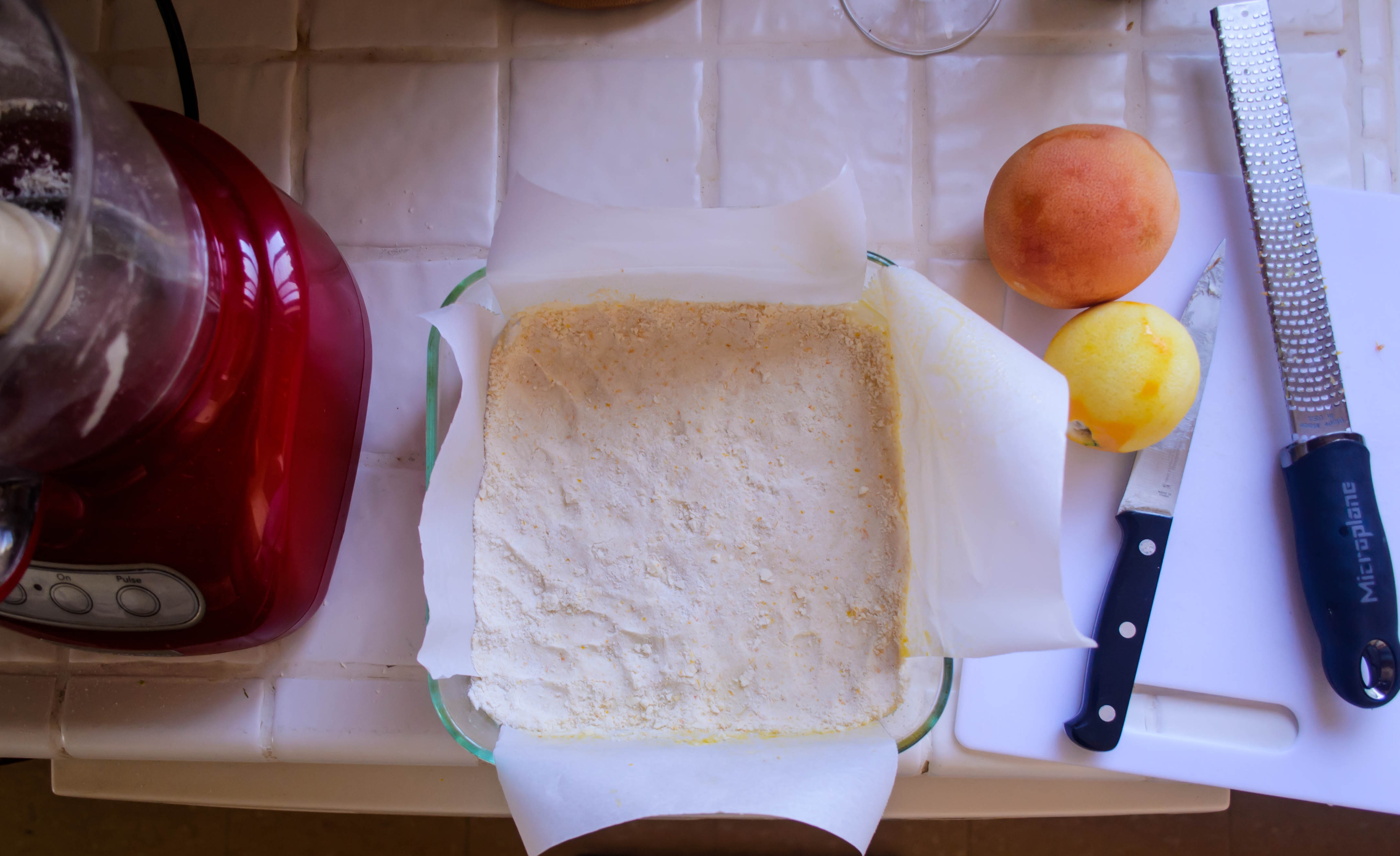
  • Dump and scrape the clumpy crust bits straight into the prepared baking dish, and use your fingers or the smooth bottom of a measuring cup or a glass to gently but firmly tamp the crust down into an even layer.
  • Bake at 350F for 15-20 minutes, until it is pale golden brown and has a tender crust. If it puffs up while baking, stab it a few times with a fork to deflate it. Remove from oven and let cool for at least 10 minutes.
  • While the crust cools, make the filling. In the same food processor bowl (you don’t even have to wash it; so many of the ingredients are the same), place the eggs, sugar, butter, cornstarch, and grapefruit zest. Whiz to combine.
  • Add the grapefruit juice and whiz to combine again. The mixture will be quite liquid and will look curdled, but it will bake up just fine.
  • Note: there isn’t quite enough fat in this mixture to emulsify fully, which means if you leave it sitting for a while it will separate. Whir it up once more just before pouring onto the crust, or make and pour on immediately, and it should be fine.
  • Carefully pour the filling over the crust, then just as carefully, return it to the oven (the filling will slosh around a bit if you are too hasty about this) and bake for 40 minutes, or until the filling is just set. It may leave the barest sticky bit of grapefruit-y curd on your finger when you test it.
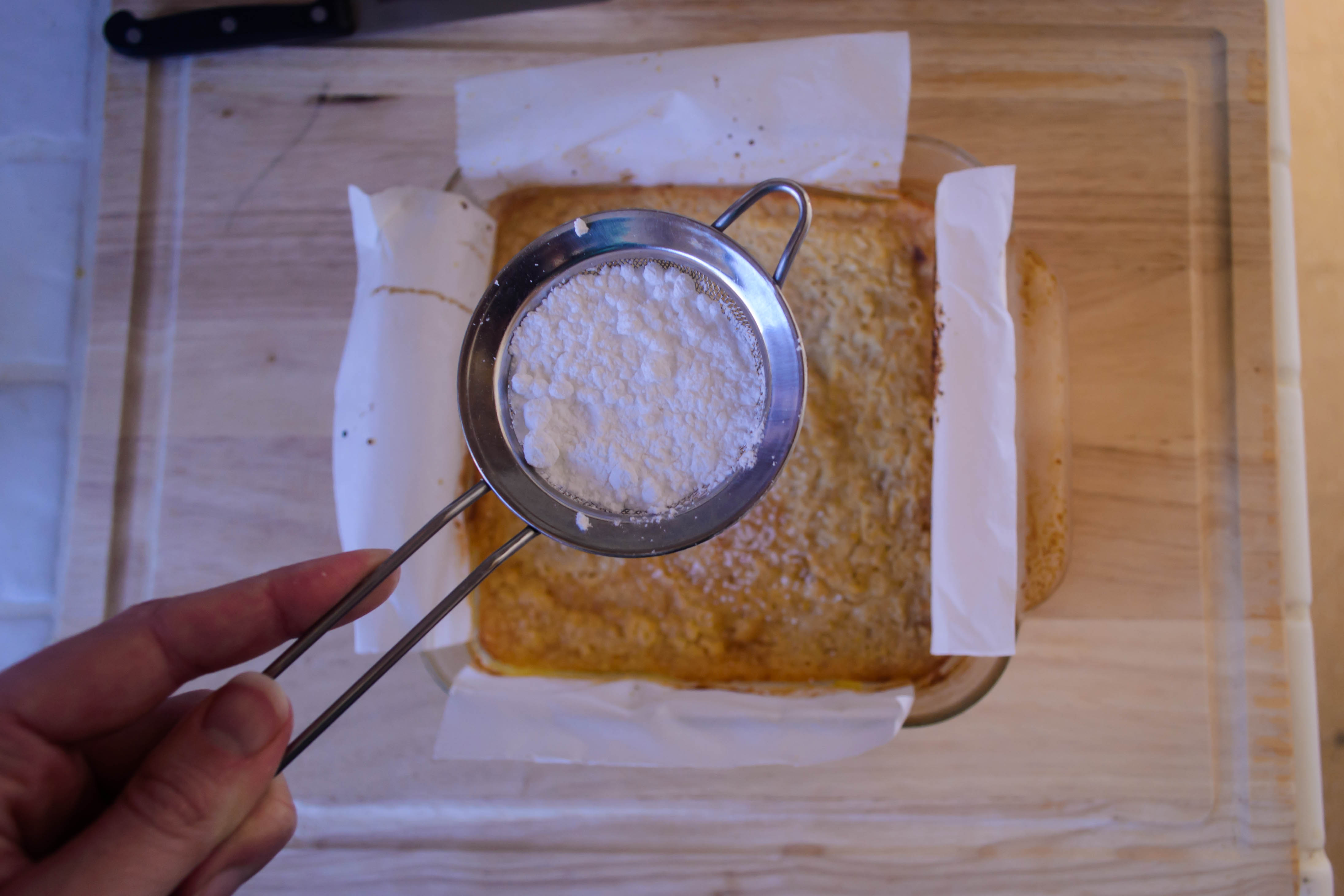
  • Let cool completely (seriously), then dust with a healthy layer of powdered sugar, if desired. If you dust it while hot, the bars will immediately absorb all the powdered sugar.
  • To slice for serving, use the parchment paper sling to hoist the whole square out of the baking dish onto a cutting board. Trim off the edges if you wish, then use a very sharp knife or a pizza cutter to slice into squares or rectangles of desired sizes. If the knife or pizza cutter gets gummed up along the way, dip it into a dish of hot water in between slices.

Trying-to-be-patient Brown Butter Brioche

Food Blog Jaunary 2015-0297It’s always interesting to see what the Twelve Loaves baking group decides on as a January theme. This is a time of renewal, of fresh beginnings, of starting again or trying again or reestablishing. Last year they asked for simplicity, prompting me to try my hand at sourdough, made by weight rather than volume measurements. This year, they asked for something a little more poetic but just as abstract: bake a loaf inspired by a New Year’s resolution.

Food Blog Jaunary 2015-0292I knew immediately I would make brioche. One of my New Year’s resolutions for 2015 is to be more patient. While this would be a good goal in any area of life (or perhaps all of them), for me, it’s very specific. I want to be more patient with Lucy when we take our daily walk. My dog-daughter will be twelve years old in the spring, and though she’s still very energetic and quite healthy, she has slowed down over the years. Some of this is age, but some is insistence on getting what she wants. For her, our outing is not a walk. It’s an extended sniff. She wants to stop at every bush, at every bench, at every blade of grass, it sometimes seems. This can easily push a two mile walk into an hour-long endeavor.

Fall and Winter 2014-0915Like most of us, though, I’m a busy person. At least I feel like I am. When I get home from work, after a brief decompression (read: Facebook and a snack), I want to walk Lucy, do a final check of my email inbox, and get on with cooking dinner. Ultimately, I want to get these things done so I can changed into pajamas and deposit myself on the couch. Sniffing every blade of grass impinges on this plan, so over the past year or so I found myself getting frustrated, and even quite angry when Lucy stopped, and stopped, and stopped again.

Food Blog Jaunary 2015-0265Food Blog Jaunary 2015-0266Food Blog Jaunary 2015-0267Food Blog Jaunary 2015-0268In November I was getting ready to snap at her about such a stop, and instead I stopped. Chelsea, she’s a dog. This is her daily chance to get outside and experience the world. She doesn’t understand what I’m even asking, let alone why I’m asking, and all my impatience is doing is making us both feel bad. And really, what’s the damage to my schedule if I do let her have an extended nasal examination of the things she’s most interested in? All told, three, maybe five minutes.

Food Blog Jaunary 2015-0269I can handle that.

So I am trying to be more patient with her, gently encouraging her to hustle along rather than snapping at her. I’m delivering commands in a calmer voice, and letting the sniff session go on an extra few seconds before delivering that command at all. I’m not at total karmic peace with the extra time spent yet, but I’m working on it.

Food Blog Jaunary 2015-0275Brioche is my bread project, then, because it’s a loaf that requires patience. Rich with eggs and loaded with butter, brioche is the “cake” from the famous quote misattributed to Marie Antoinette. To integrate the massive quantities of butter the loaf requires, most recipes detail a process of bringing the fat to just the right temperature and incorporating it into the dough a maddening single tablespoon at a time. Too cold, and the butter won’t mix in. Too warm, and it will collapse the dough into a soupy mess. Too much at once, and the dough will get greasy and separate unpleasantly. It takes, typically, a 20-30 minute knead time to get the gluten chains in the flour tangling nicely and then incorporate all of that butter. After this, a long, slow, cool rise time is required, in part to build flavor, in part to develop structure, and in part just to make it easier to handle – that butter has to chill down before the dough can be manipulated successfully.

Food Blog Jaunary 2015-0270Food Blog Jaunary 2015-0271Food Blog Jaunary 2015-0272By the time you are finally ready to bake the thing, a brioche has usually been under construction for the better part of a day, if not two (sponges and overnight refrigerated rises are common). But the result – a spongy tender, light-as-air crumb inside a deeply browned crunchy crust – is remarkable. It reminds me of challah, another egg-laden loaf requiring multiple rises, but is more finely textured and even a bit richer. If your gourmet burger arrives on a deeply, perfectly rounded bun so shiny it looks lacquered and leaves a sheen of fat on your fingertips when you set it back down on the plate with a sigh, you’ve had brioche. It’s a frequent choice for a truly decadent french toast, and I was prepared, with a cringe, to sink myself into making it.

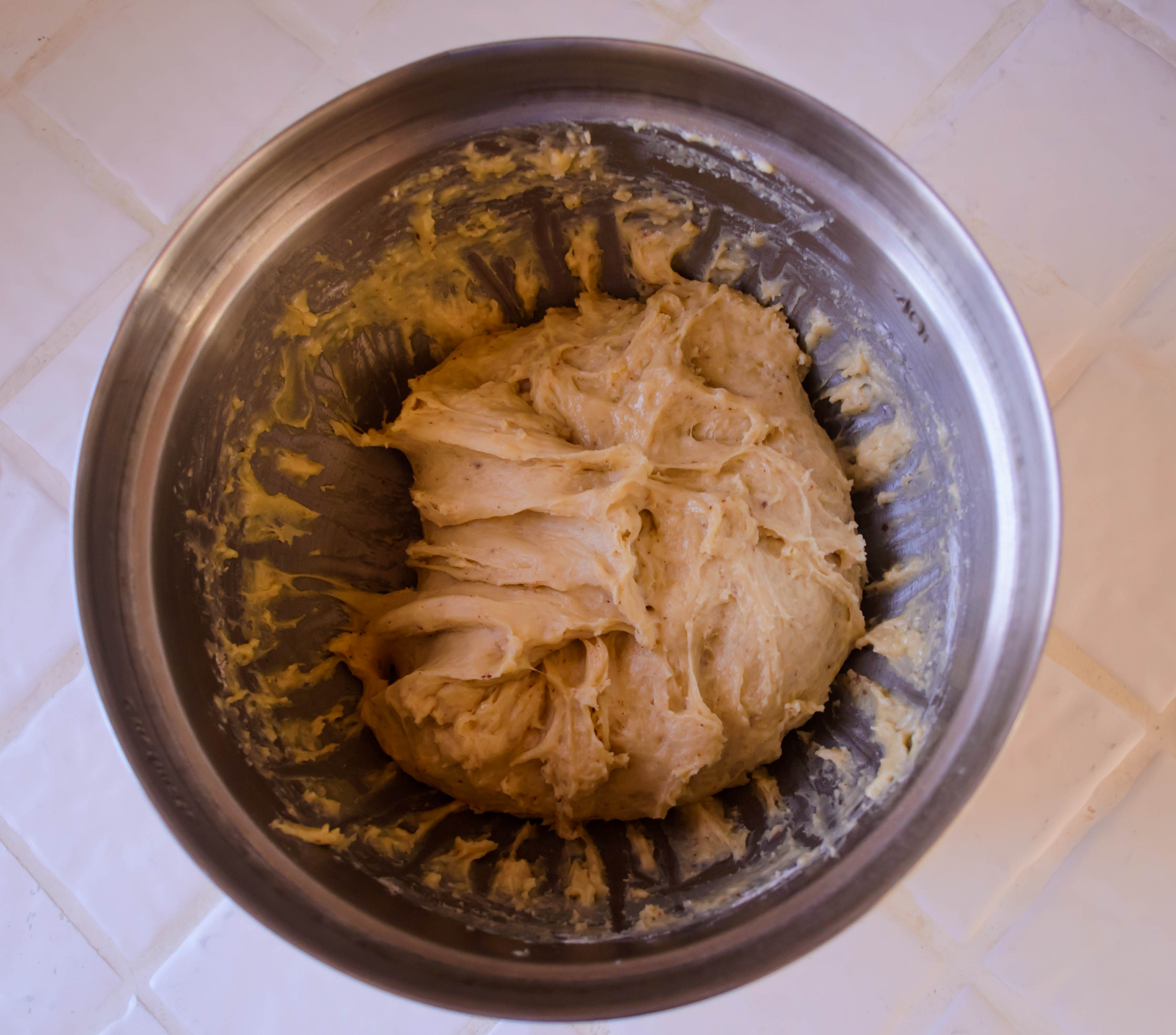
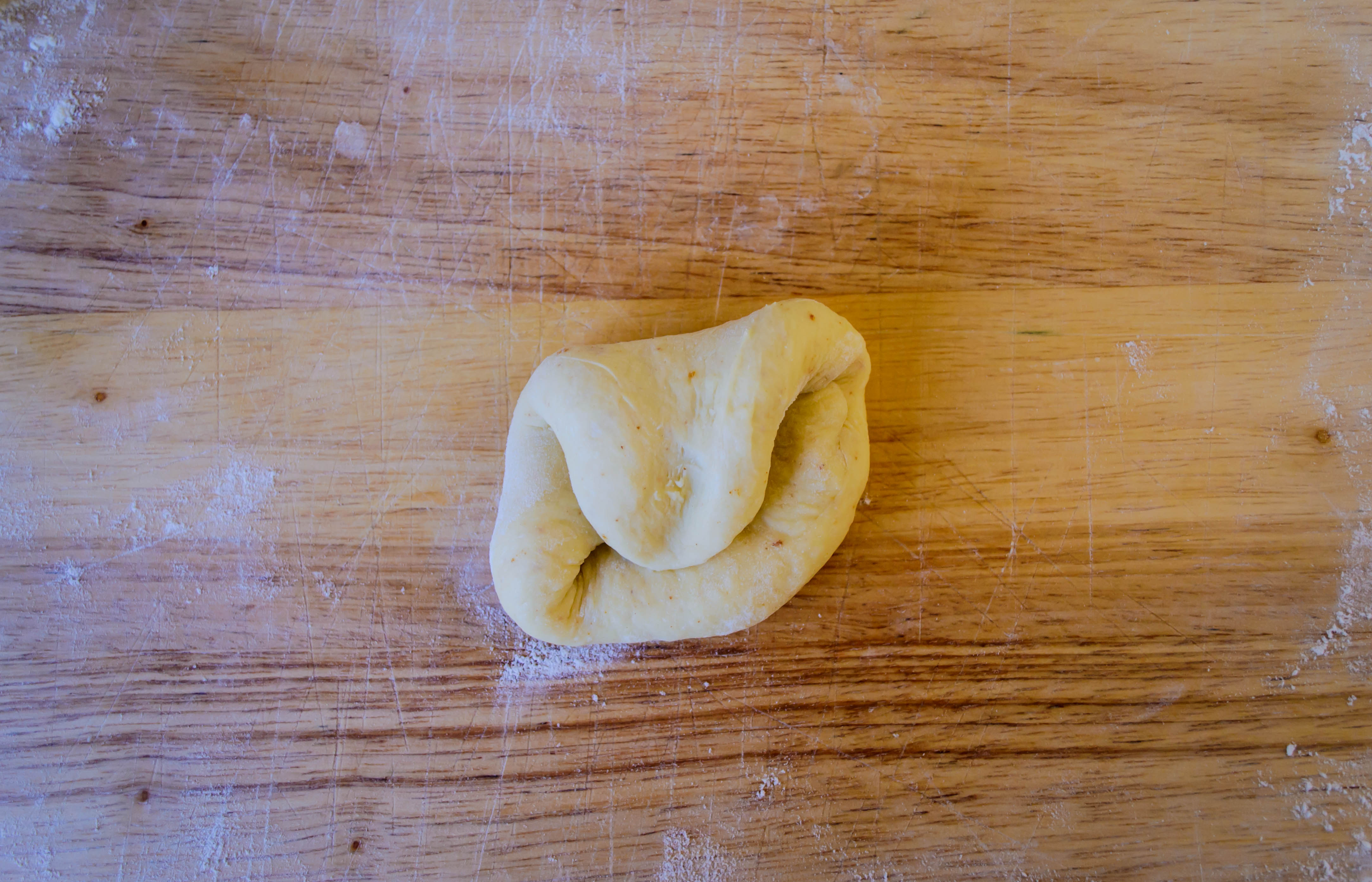
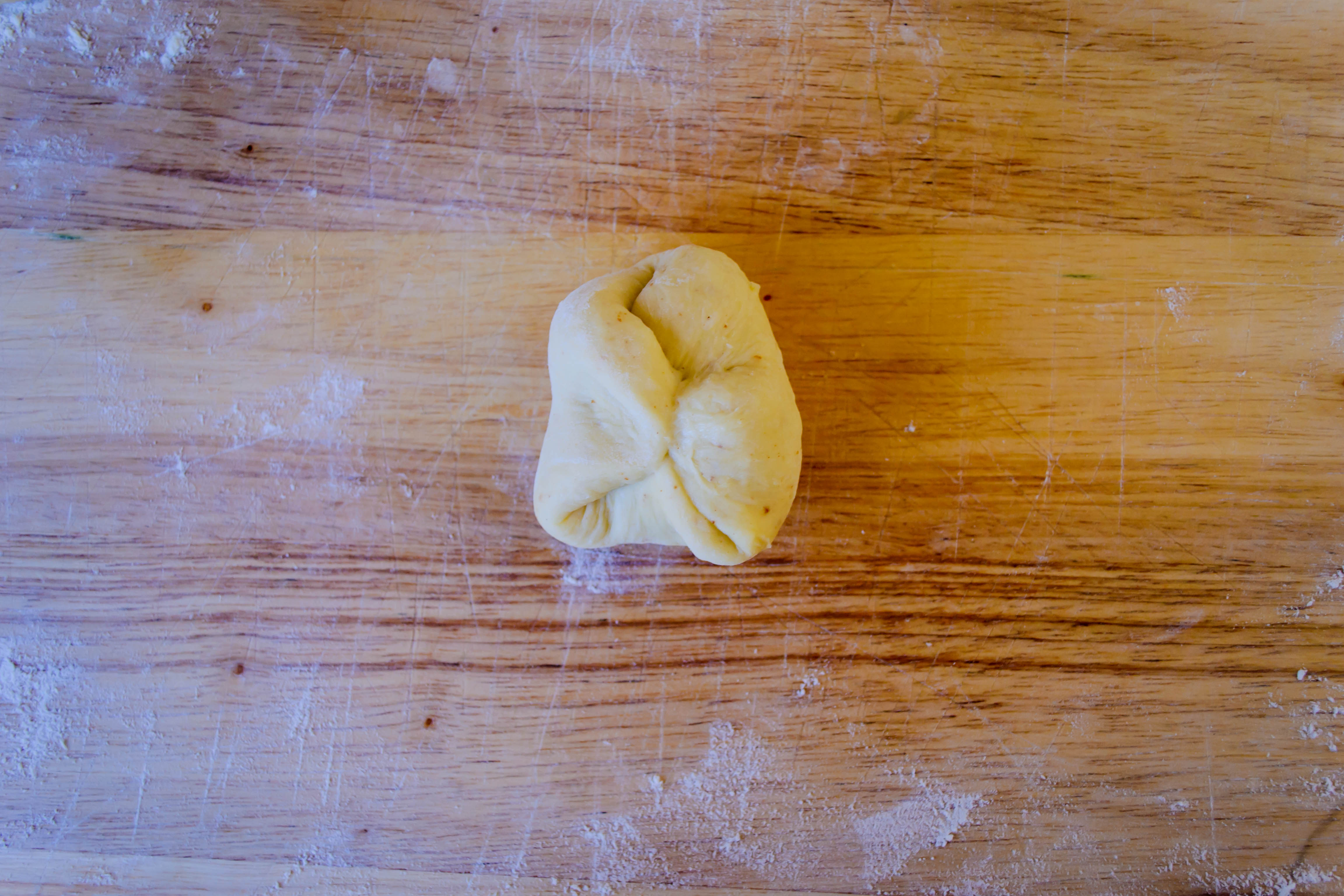
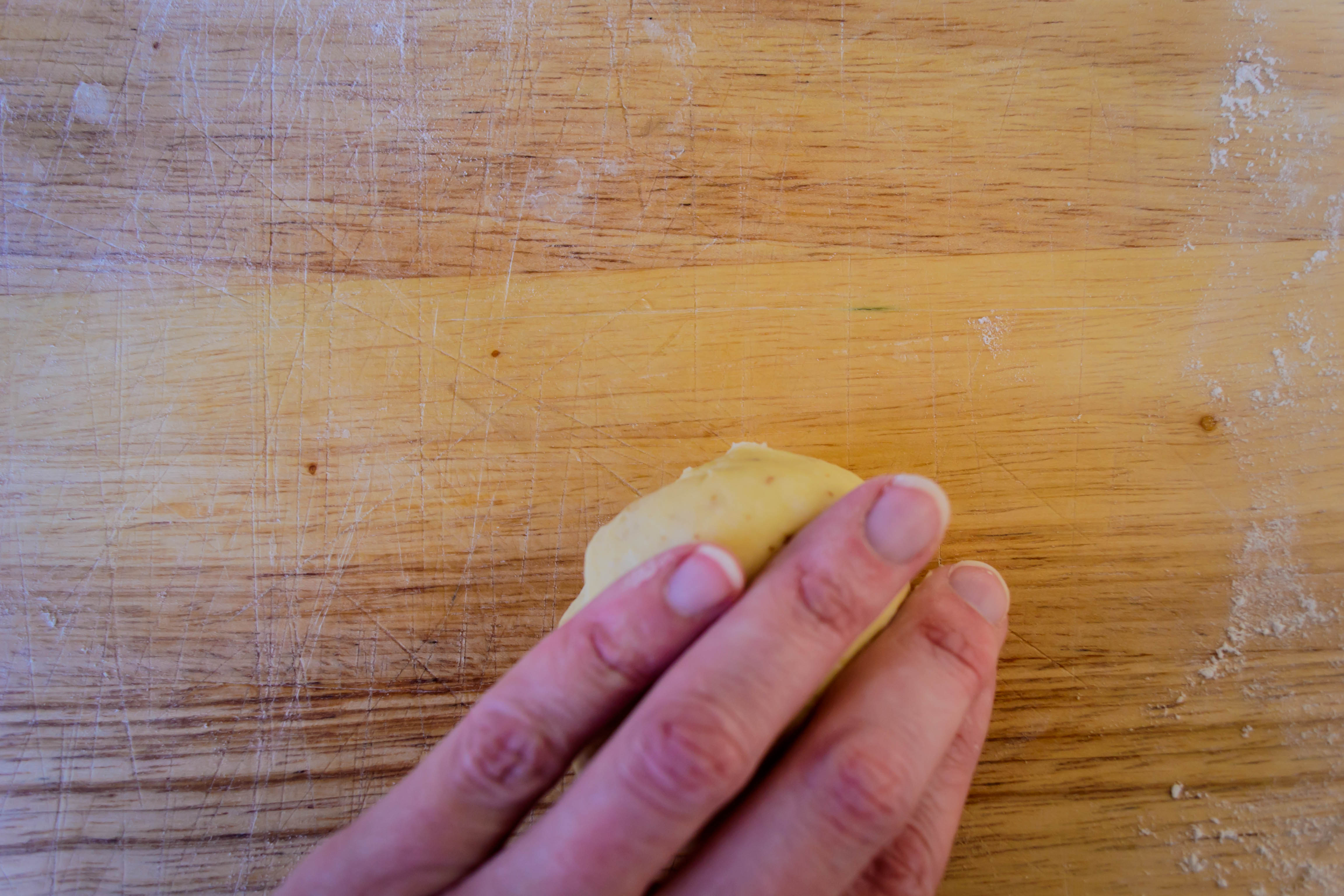
Food Blog Jaunary 2015-0273When I looked around at recipes for points of comparison, I came back, as I often do, to Cooks Illustrated, which featured a practically fool-proof take on brioche. To combat the frequent problems associated with the quantity and temperature of the butter, recipe developer Andrew Janjigian opts for a no-knead approach, relying on a combination of gentle folding of the dough (see photo series above), and time, to stimulate gluten production. The very wet dough brioche requires works well for this method, because the moister the dough, the better the enzymes in there activate the gluten. Janjigian explains that this no-knead method leads to another benefit: since we aren’t kneading the dough, we can’t spend 20 minutes mixing in all the butter. Melting it and stirring it in all at once works just fine.

Food Blog Jaunary 2015-0277As I read his explanation of the changes he’d made from the original and recognized the ease involved compared to the traditional procedure, I was almost sold. A small part of me protested that this might be cheating – that if I was really making something to represent the resolve to be more patient, I should go with the typical long knead, slow-and-steady incorporation of butter, and force myself to avoid shortcuts. But in reading the recipe again, I realized this was still going to be a long process. Even before chilling the dough overnight, I would need to perform a series of folds on the sticky, wet mass I’d created to help activate the gluten. Using large chunks of my Friday and Saturday to put this together, attend to timers, coordinate myself through the rising and proofing process, and get through the agonizing final two hours of waiting for the baked loaves to cool enough for slicing, was going to take plenty of patience. I’m only human, and it’s only January. If I’m going to be successful in this resolution, baby steps might be the way to go.

Food Blog Jaunary 2015-0278Food Blog Jaunary 2015-0279Food Blog Jaunary 2015-0280Food Blog Jaunary 2015-0281The nail in the coffin, though, was when I checked Joe Pastry’s version of brioche. He suggests pumping up the flavor by using brown butter. Since I was already going to be melting the butter, this was clearly the right thing to do. Tiny speckles of toasted nuttiness running through my dough? Yes, thanks. Now, please.

Food Blog Jaunary 2015-0282Food Blog Jaunary 2015-0283Food Blog Jaunary 2015-0284Food Blog Jaunary 2015-0285Well, not now. Two long, patient days from now. But at the conclusion of those days, slicing through a softly shattering crust into a pillowy yellow interior laced with bits of brown butter, it was all I could do to eat each slice in more than one bite. Because, you know, patience.

Food Blog Jaunary 2015-0288Food Blog Jaunary 2015-0289Serving suggestions: there’s not much you shouldn’t do with brioche. It can be a bit soft for a sandwich, but makes glorious toast and french toast. My recipe is for one regular loaf and 8 small or 6 large buns, and we used the bun shape for veggie burgers. Because they are more compact, the buns hold up to rough handling a bit better than the slices, so feel free to load them with pulled pork, or crab cakes, or egg salad, or whatever moves your taste buds most deeply.
Food Blog Jaunary 2015-0296

Trying-to-be-Patient Brown Butter Brioche
barely adapted from Cooks Illustrated
makes 1 loaf and 8 small or 6 large buns
16 tablespoons unsalted butter (2 sticks)
½ cup room temperature or slightly warm water
⅓ cup sugar
2 ¼ teaspoons active dry yeast
7 large eggs, divided (but not separated!)
3 ¼ cups bread flour
1½ teaspoons salt + a pinch
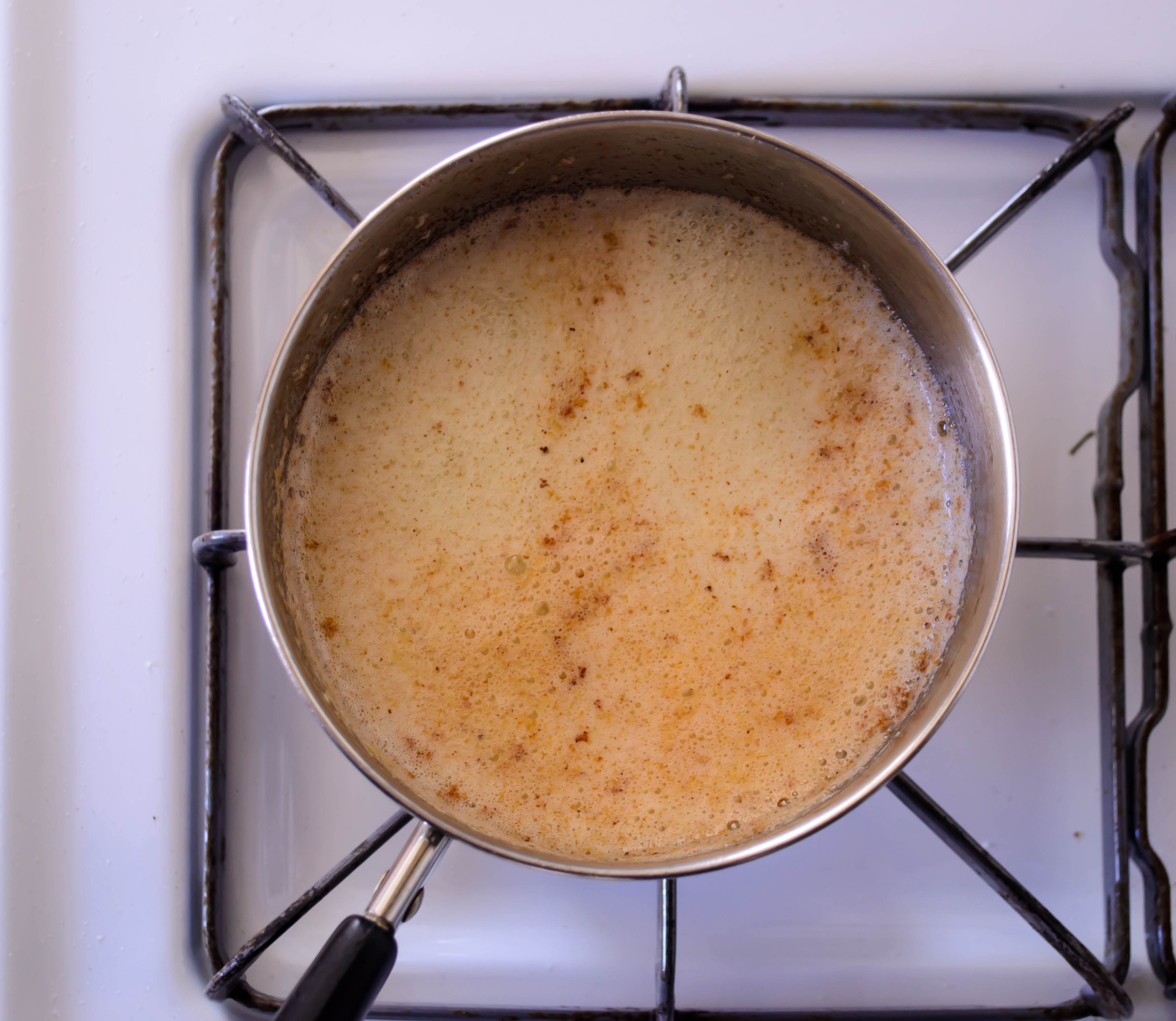
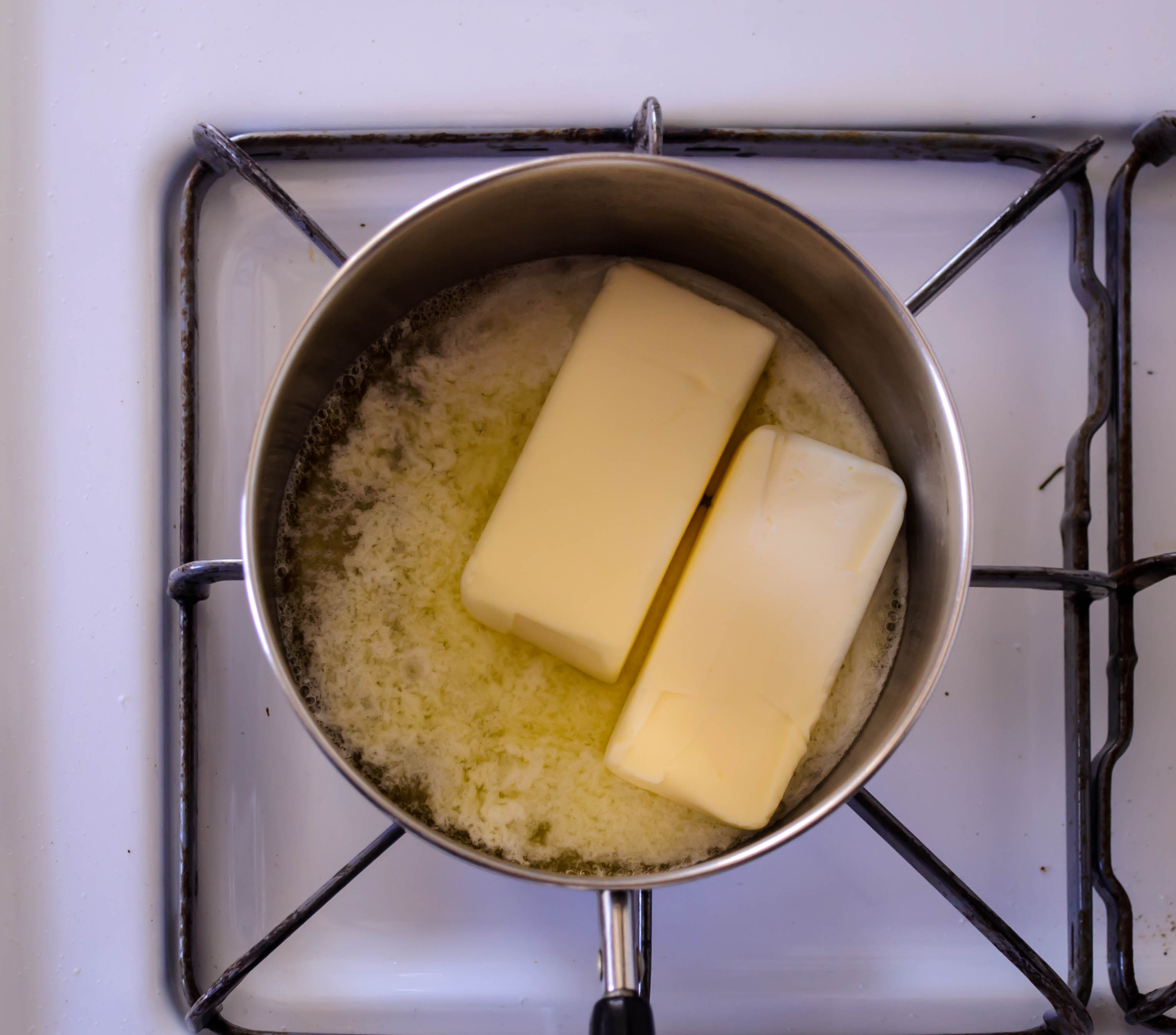
  • Day one: melt the butter over medium heat in a small saucepan, preferably not with a dark bottom (it makes it easier to see the butter browning). As it melts, it will sputter and foam up. The foam will eventually subside, but shortly thereafter it will get foamy again. At this point, tilt the pan a little bit (carefully) to see the bottom – little specks of solids should be getting golden-brown. Let them get golden and then chestnut brown, then turn off the heat and set the pan aside to cool. These little dark bits are what makes it brown butter.
  • While the brown butter cools (pop it in the fridge for a few minutes if you are nervous about the temperature), combine the water, sugar, and yeast in a large glass measuring cup or a medium bowl. Stir well, then set aside for 10 minutes to allow the yeast to activate.
  • Meanwhile, whisk together the flour and salt in one bowl (a large one), and 6 of the eggs in another (a small one will do). When the yeast mixture is bubbly and smells like warm bread, add the whisked eggs and stir to combine. Whisk in the cooled brown butter, then dump the whole wet mess into the bowl with the flour and salt. Stir with a wooden spoon until no flour streaks remain. It will be a damp lump that looks more like thick cake batter than like dough.
  • Cover the bowl of dubious dough with plastic wrap and let it sit for 10 minutes.
  • Uncover the dough and pull up one edge with your fingertips (sprayed with non-stick spray or lightly coated with oil, if you’re concerned about stickiness), then fold that edge over the middle of the dough ball (see photo series above). Turn the bowl 45 degree and fold again. Repeat the process until you have made 8 folds.
  • Cover with plastic wrap and let rise for 30 minutes. Repeat this folding and rising process every 30 minutes for 3 more times (so you’ll do this folding process 4 times over the course of 2 hours). This helps activate the gluten without the labor intensive kneading process. After the fourth and final folding circuit, replace the plastic wrap and stow the bowl in the refrigerator overnight.
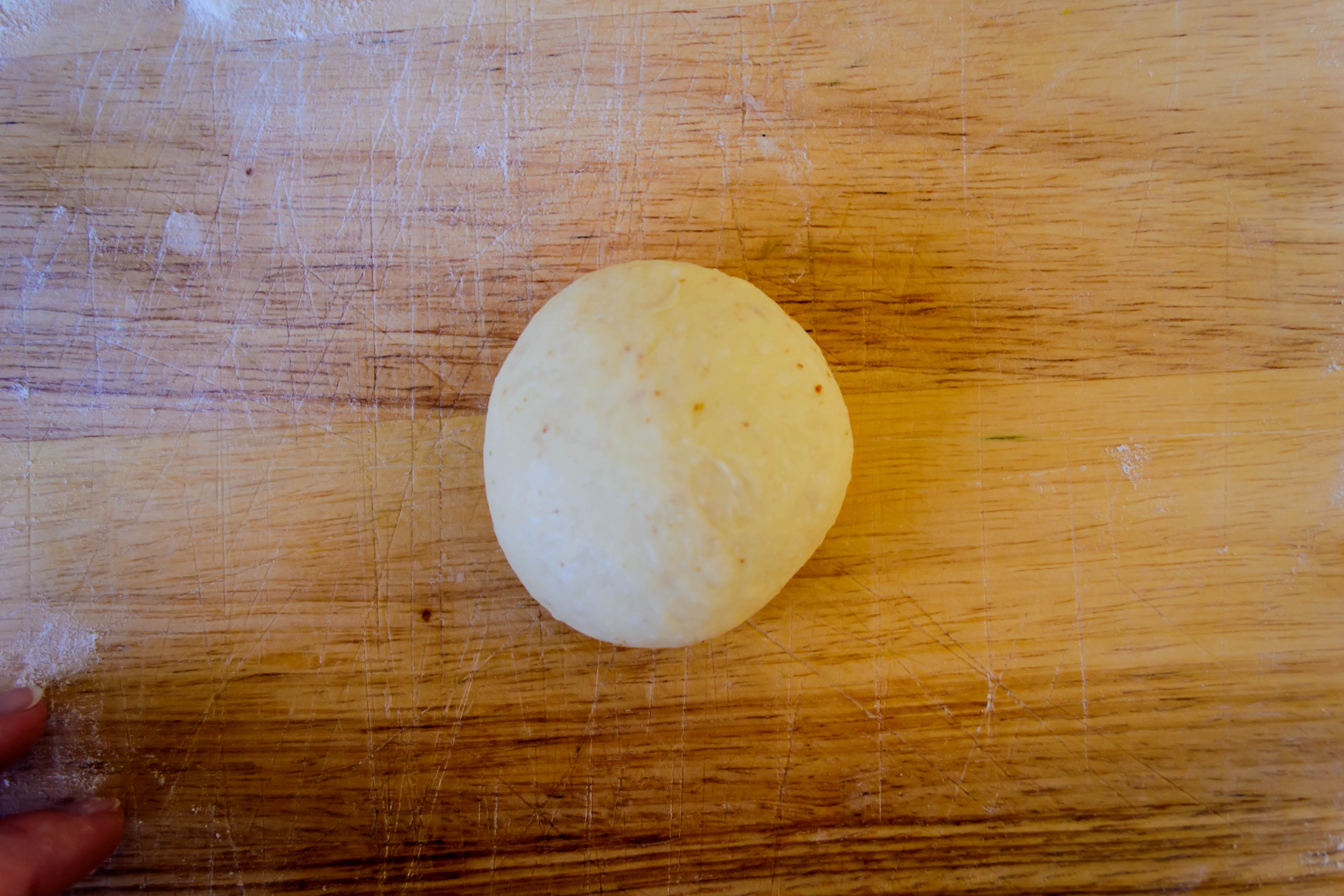
  • Day two: remove the dough from the refrigerator and relocate it to a well-floured board. Divide it into four pieces. Working one at a time, pat two of the pieces of dough into about a 4-inch round. Around the circumference of the dough, fold in the edges toward the center to form a clumpy ball (see photo series above). Turn the dough ball over and form your hand around it like a cage, then roll gently with very little pressure in light circles on the board to form a smooth, taut round (see Joe Pastry’s excellent tutorial if you need help with this). Repeat with the second piece of dough.
  • The remaining two pieces are for the buns. Divide each of them into equal thirds or quarters, depending upon whether you want 6 or 8 buns. Repeat the flattening, folding, and shaping process with each of these smaller dough pieces, then cover all dough rounds with plastic wrap and let them rest for 5 minutes.
  • Grease one loaf pan and one baking tray (or line it with parchment paper). After the dough balls have rested for 5 minutes, flip them to expose the seam side and repeat the flattening, folding, and shaping process with each one. This creates a finer, more uniform texture in the final product – a step worth doing.
  • Place the two larger balls into the loaf pan, pressing them gently into the corners. They will rise and merge into each other while baking. Place the 6 or 8 smaller rounds on the prepared cookie sheet. Cover both loosely with plastic wrap and leave to rise until almost doubled in size – this should take 1½ – 2 hours. Even after this rise, the loaf may look a bit puny. Don’t worry; it rises quite impressively in the oven.
  • Half an hour before baking, be sure your oven rack is in the middle position and preheat the oven to 350F. Cooks Illustrated suggests placing a baking stone on the rack to preheat along with the oven, perhaps to create a more even shot of heat.
  • When the loaf and the buns have nearly doubled, beat the final egg with the pinch of salt. Remove the plastic wrap and brush the loaves with the egg mixture. Set the pans in the oven (on the stone, if you’re using one), and bake until the tops are golden brown and the internal temperature registers 190F. This will take 18-20 minutes for the buns, and 35-45 minutes for the loaf. If you can remember, rotate the pans halfway through baking.
  • Once cooked through and shiny golden on top, transfer pans to a wire rack and cool for 5 minutes. Then remove from pans, return to wire rack, and cool at least 2 hours before slicing and serving.