The Buttercream Project part 4

Time has come and gone and I am now not only a Bittman truant, but two buttercream posts behind. I’ve got to catch up. But I have an excuse. It looks like this:

Yes, the dissertation is complete. Well, it’s complete in the sense that I’ve distributed it to my committee. Three weeks from now – three weeks from yesterday, actually – I will defend it. But in the meantime, cupcakes!

What I learned this round, which I baked about a month ago:

Cake flour makes the most delicate, light, bakery-style cake. It’s worth the extra cost.
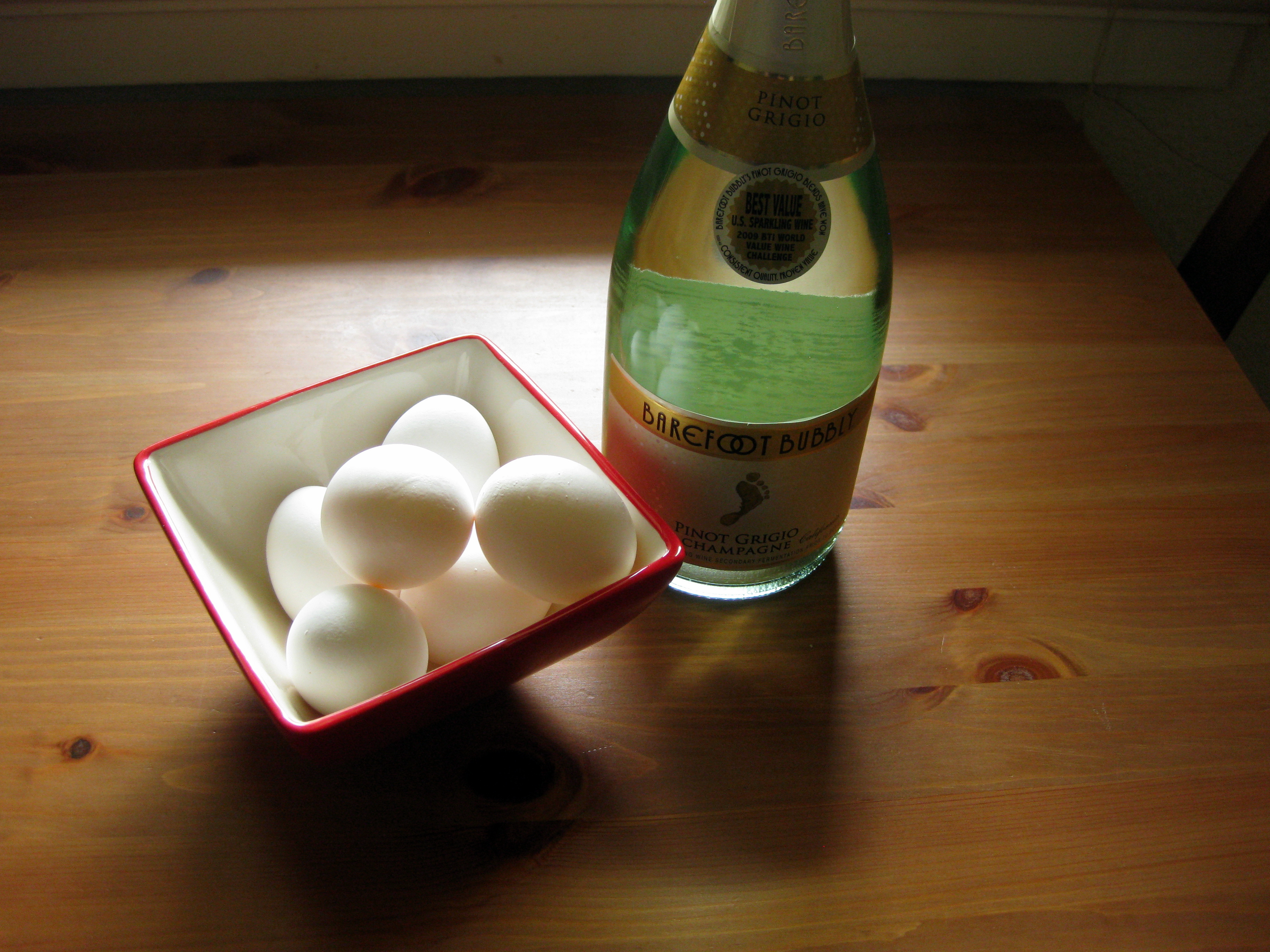
Barefoot’s Pinot Grigio sparkling wine is a good choice for cake; it has a crisp brightness and is strong enough to stand out as a distinct flavor once the cake is cooked.

Buttercream sometimes looks like it’s going to fail, but then you just continue to whip it and it comes together.

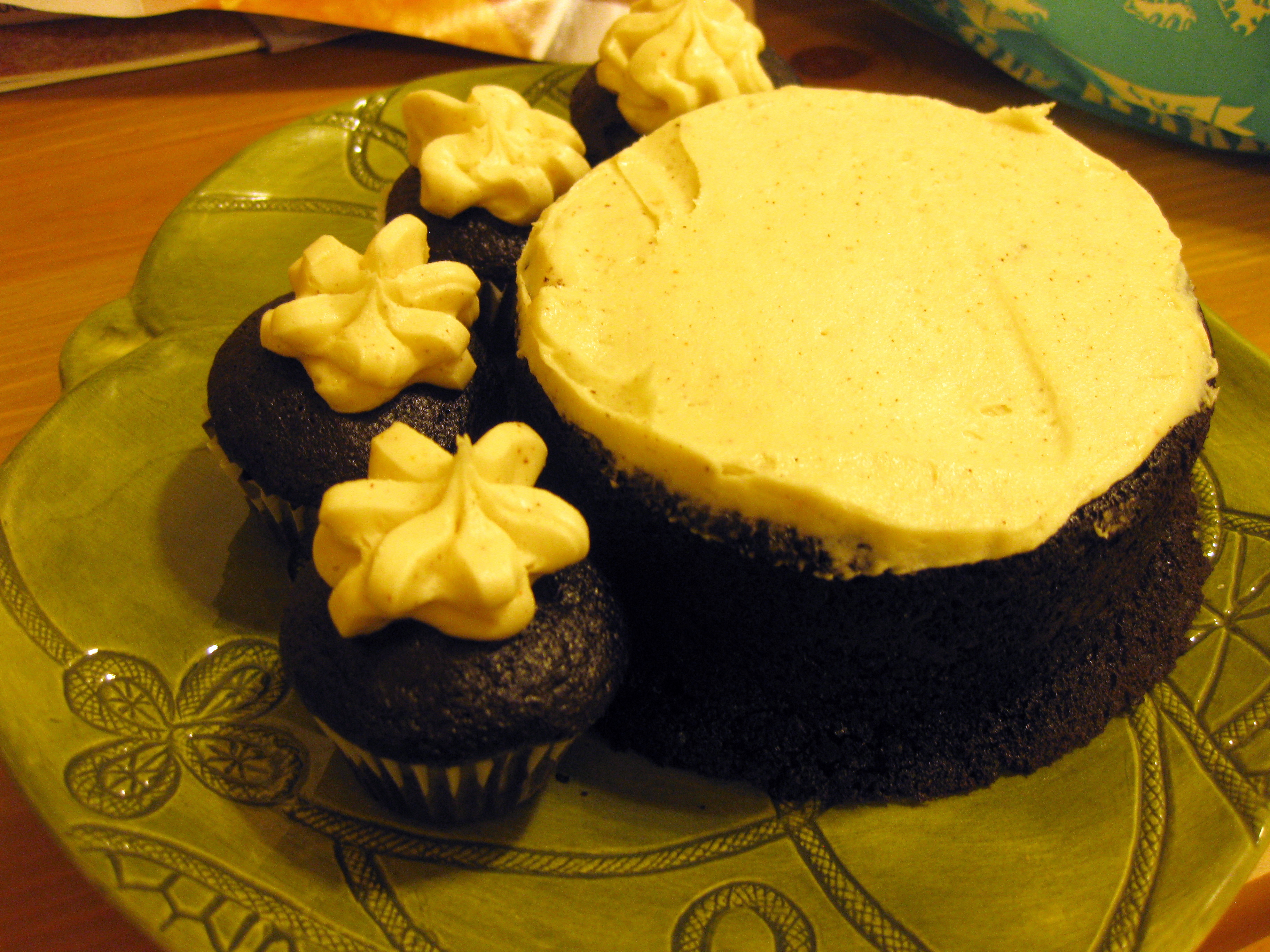
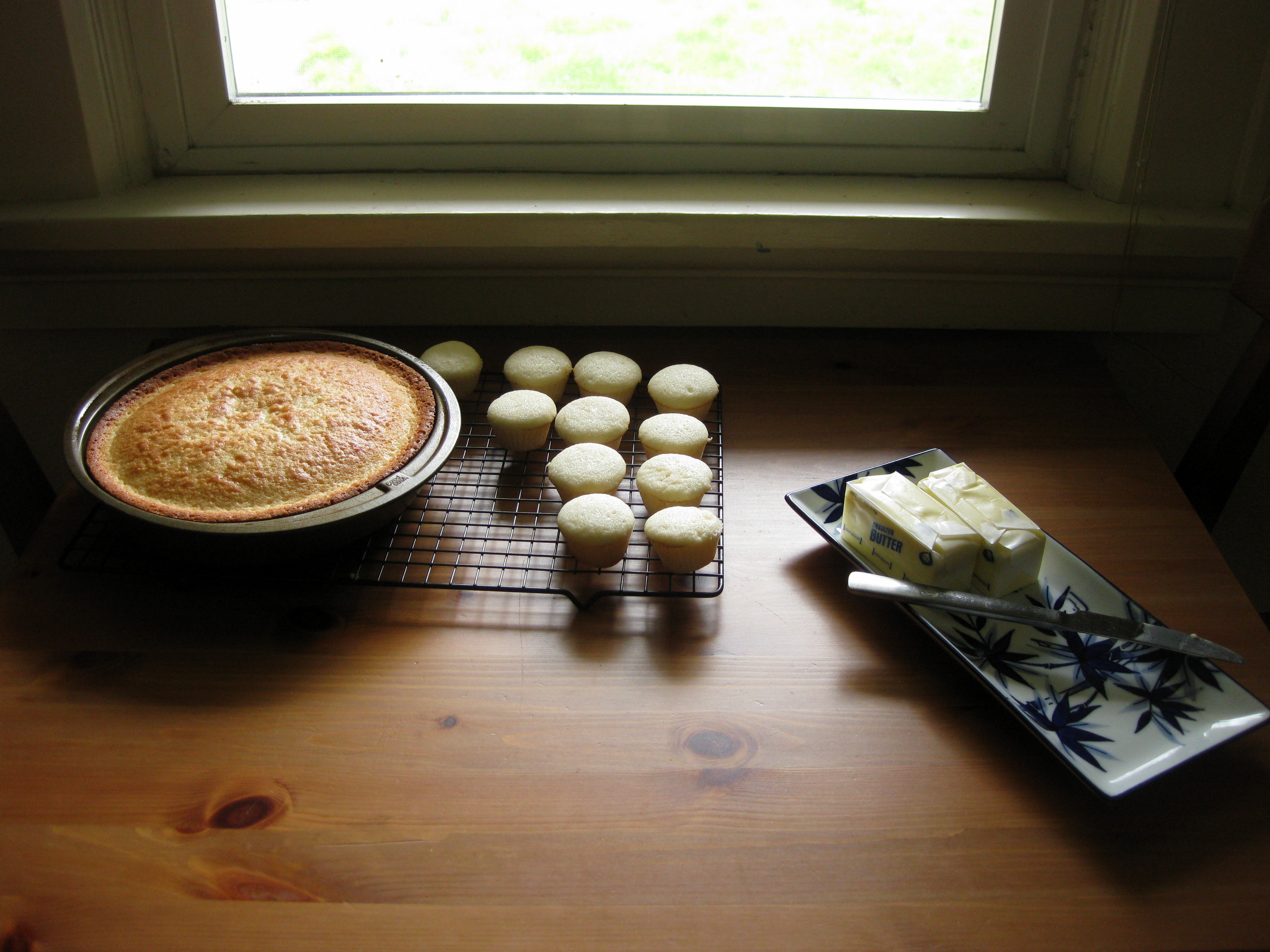
This round, I did champagne cake with a mascarpone and apricot jam filling, and mascarpone buttercream. I wanted to try a full sized cake so I could practice getting the frosting nice and smooth.

My assessments: the cake was perfect. It smelled good, it tasted good, it had a moist crumb with a slight squish between the teeth – excellent eating. Cornelli lace all over the top is really quite pretty, but not too twee or too formal.


The filling was… okay. Tasty, but not perfect. I think the jam with the mascarpone added too much richness to an already rich product. Perversely, I think this particular filling would be better with a chocolate cake. It would be a contrast in both color and flavor that simply wasn’t present here. J. and H. liked it, and of course their vote is most important, but I wasn’t satisfied yet.

The buttercream, my nemesis, was almost a disaster. I made a big batch of frosting, because I wanted to frost the full cake and practice making flowers on the mini cupcakes. I bought myself a petal tip from Michael’s and was itching to try it out. This time, it would have to be perfect.

Here’s the thing, though. When you double the amount of fat in a frosting, you also have to double the amount of sugar! As I whipped together a cup of butter and a cup of mascarpone cheese, and as I added cup after cup of powdered sugar, things were not coming together. No, in fact things were starting to separate. A pool of liquid formed as the clumps of butter and cheese turned into strange creamy granules instead of an even mass. I started to fret. I got a little scared.  This was NOT how this round was supposed to go.

And then, logic and revelation triumphed over fear. Maybe the fat was too warm. Yes, it was melting in protest. I stowed it in the fridge for twenty minutes or so.

When I pulled it out, it was better, but still disappointingly far from smooth. And then I remembered: if you have to use 3-4 cups of sugar for 1 cup of butter, you’ll probably have to use 6-8 cups of sugar for 2 cups of fat. And I’m trying to get a PhD…

As I added more sugar, things got a little better. As I added more sugar, it started to smooth out. And then after my final addition, I let the mixer rip for a good minute or two, and magic happened. The frosting smoothed and softened and became this delicious creamy cloud. My lungs heaved relief. The moral of this, apparently, is: if your buttercream isn’t perfect, add more sugar and beat it longer. Whip the resistance right out of it.

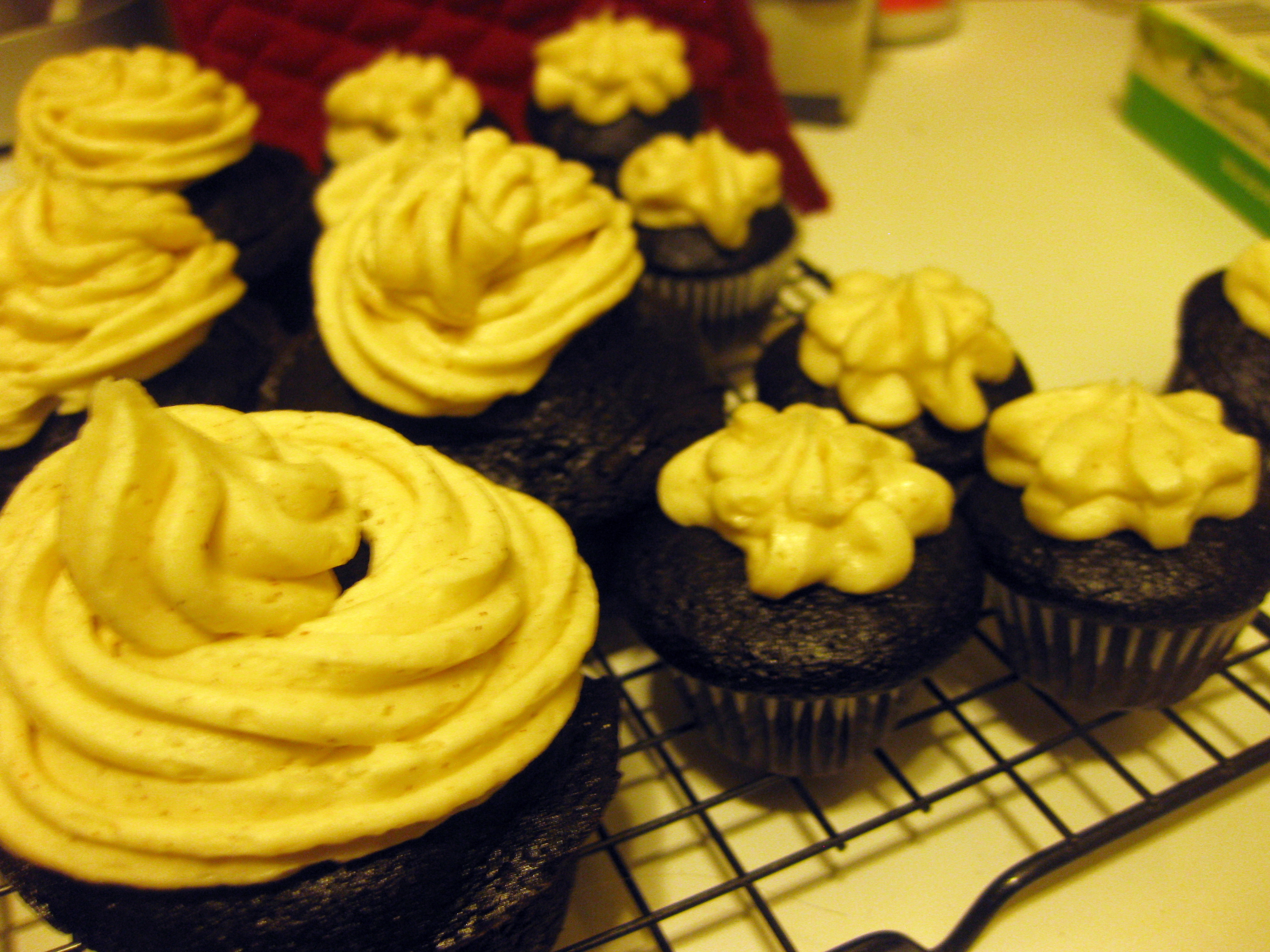
Despite the improved texture and the excellent flavor, my frosting attempts were still imperfect. The swirls I put on the full size cupcakes threatened to topple over the delicately curved hills onto which I optimistically piped them. They still looked nice, but the edges and ripples weren’t sharp, and I shoved them into the refrigerator before they had time to break down any further.

The mini cupcake flowers were another fresh learning experience. I tried. Oh I tried. I watched the video twice and followed it exactly, and again, the petals were thick and dull. They looked more flower-like than my previous attempt, but they weren’t the beautiful fluted edges Alice achieves with such ease. Nevertheless, for me, improvement is improvement. Progress counts. This was the best so far, and just needed some minor (I hoped) adjustments to make it wedding-worthy.

It’s a good metaphor for my own progress, really. Even the best work can stand improvement. Let’s hope my revisions, as I note them, are as minor as tweaking a frosting method. Flute the edges. Visit the thesaurus. Adjust a sentence or two. Or five. Add powdered sugar. Enjoy.  Aren’t these things, at their heart, not so different? Let’s hope so.
Resistance

There are 3½ weeks to go until my whole dissertation is due to my committee. I’m through revising three of the six chapters, and embarked on the fourth this morning. Dinners vacillate wildly between complex assemblages of roasted vegetables with ancient grains, comforting cheese-laden casseroles, and baked potatoes with steamed broccoli. My Bittman file (yes, I keep the selections in a manila folder, wouldn’t you?) is buried somewhere under piles of criticism on medieval theology and monographs about poems you’ve never heard of. And the selection I have to share wasn’t my favorite. As usual, these things combine to mean I have all but zero motivation to post. But I’ll do it anyway. For you. Because this project needs completion.

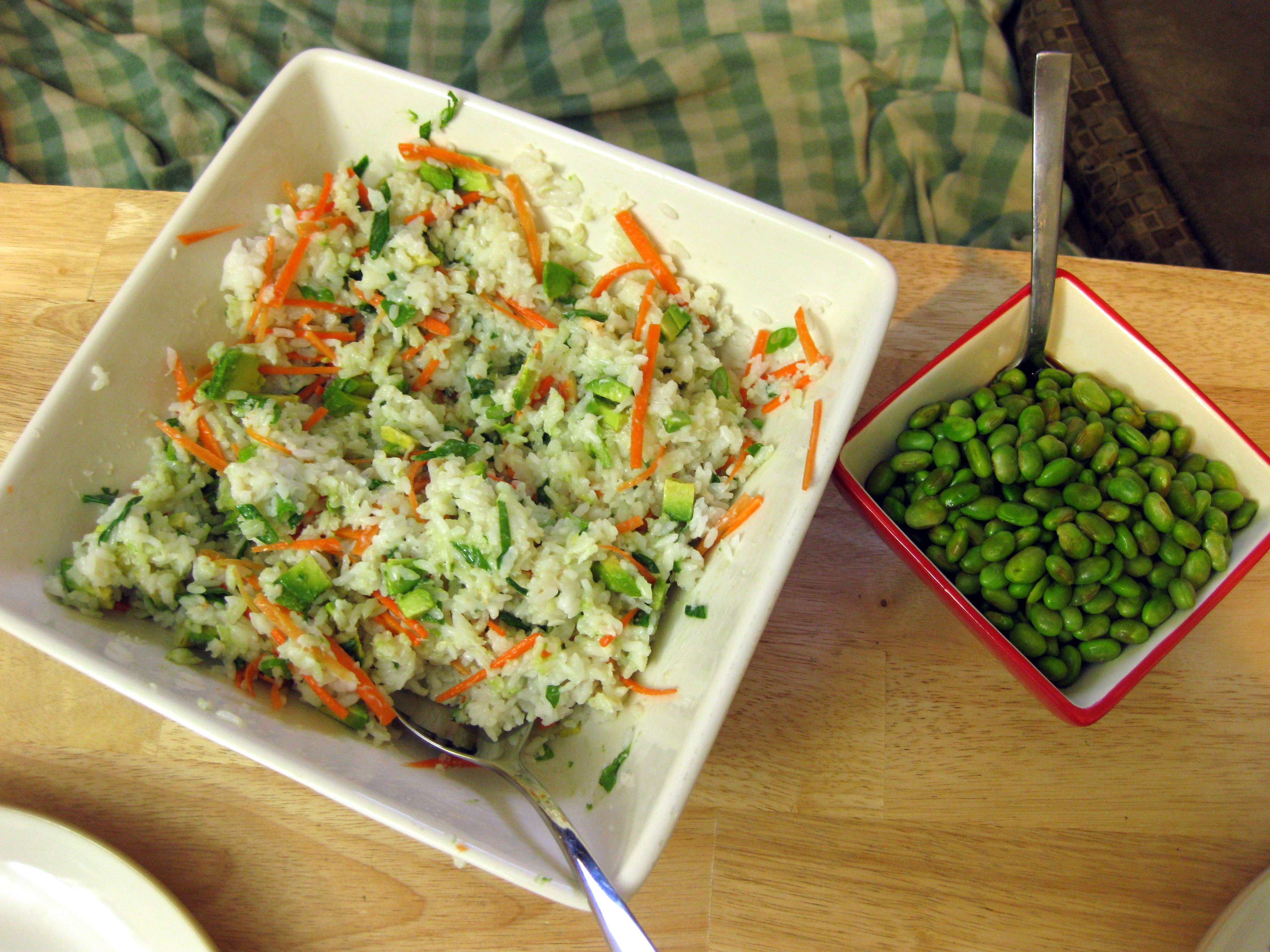
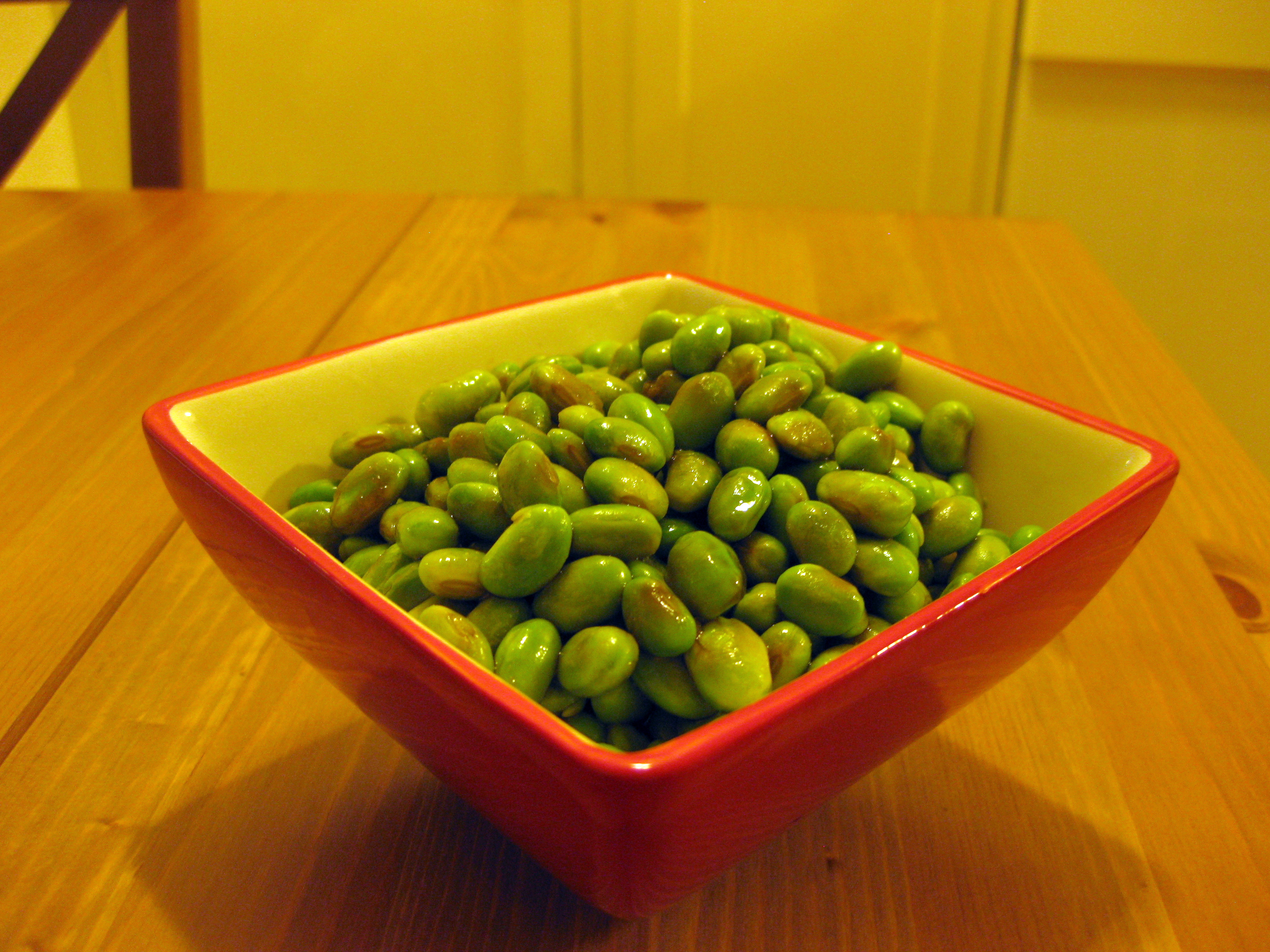
“55. Steam and salt edamame. Whisk soy and honey together in a small saucepan over low heat. Add grated ginger and a bit of cornstarch, stir until slightly thickened and pour over edamame.”

This sounded intriguing, so I decided to pair it with a dish my friend and colleague J. calls “scatter sushi”: all the ingredients you might find in your favorite roll diced small and integrated into a bowl of well vinegared sushi rice. Ours had carrots, green onions, crumbled roasted seaweed, avocado, and crab meat. I’ve also made it with shrimp (when N. was out of town, of course), and it’s delicious.

But anyway, again I’m resisting the heart of the post. Here goes:

16 oz. frozen edamame, blanched in boiling salted water, then drained

½ cup reduced sodium soy sauce

2 TB honey

2 tsp ginger, grated with my microplane

2 tsp cornstarch

As the edamame were blanching, draining, and cooling, I mixed the other ingredients together in a small saucepan and brought them to a slight simmer.  The sauce took a minute or two to thicken, and once it was barely viscous I drizzled it over my bowl of beans and served with a slotted spoon.

This had promise, but in its current form I think it fell a little flat. I didn’t love the slippery slickness the cornstarch imparted to the dressing: it clung to my lips and tongue in an unappealing way. Or maybe there was just too much of it. I think this concept would realize its potential if it became part of a full salad stuffed with brightness and texture: red bell pepper, finely julienned carrots, green onion, maybe even grilled tofu or roasted sweet potato or chunks of firm-fleshed white fish. It needed only a light dressing, not the soupy drenching I gave it. And maybe the sauce didn’t even need the cornstarch. I recognize its thickening purposes, but couldn’t the soy sauce just be reduced a bit instead?

As I work through revisions on the longest, most involved project I’ve ever undertaken, I find myself only rarely wanting to completely start over.  And I think that’s good.  Revisions are one thing, but stubborn resistance and insisting on from-scratch perfection can stay in the kitchen…

Spiking your stuffing

The one part of Thanksgiving dinner I refuse to make from scratch is the stuffing.  I don’t know why, but no stuffing has ever lived up to the Stove-top brand blend my mom puts together: one box of turkey stuffing, one box of cornbread stuffing, mixed up and tossed together and then, rather than just stirred into boiling water, baked in a casserole dish for twenty minutes or so right before serving, so the top is crusty and crunchy.  This is easy to do, since it takes my dad at least twenty minutes to get the turkey carved.  This is smart to do because it makes a texture contrast and provides a gravy sponge.  Other stuffing mixes I’ve tasted, and the homemade one I attempted this past year for A., who doesn’t like celery (have you ever tried to find a stuffing mix without celery?  Impossible!), just haven’t measured up.

And then, Bittman.

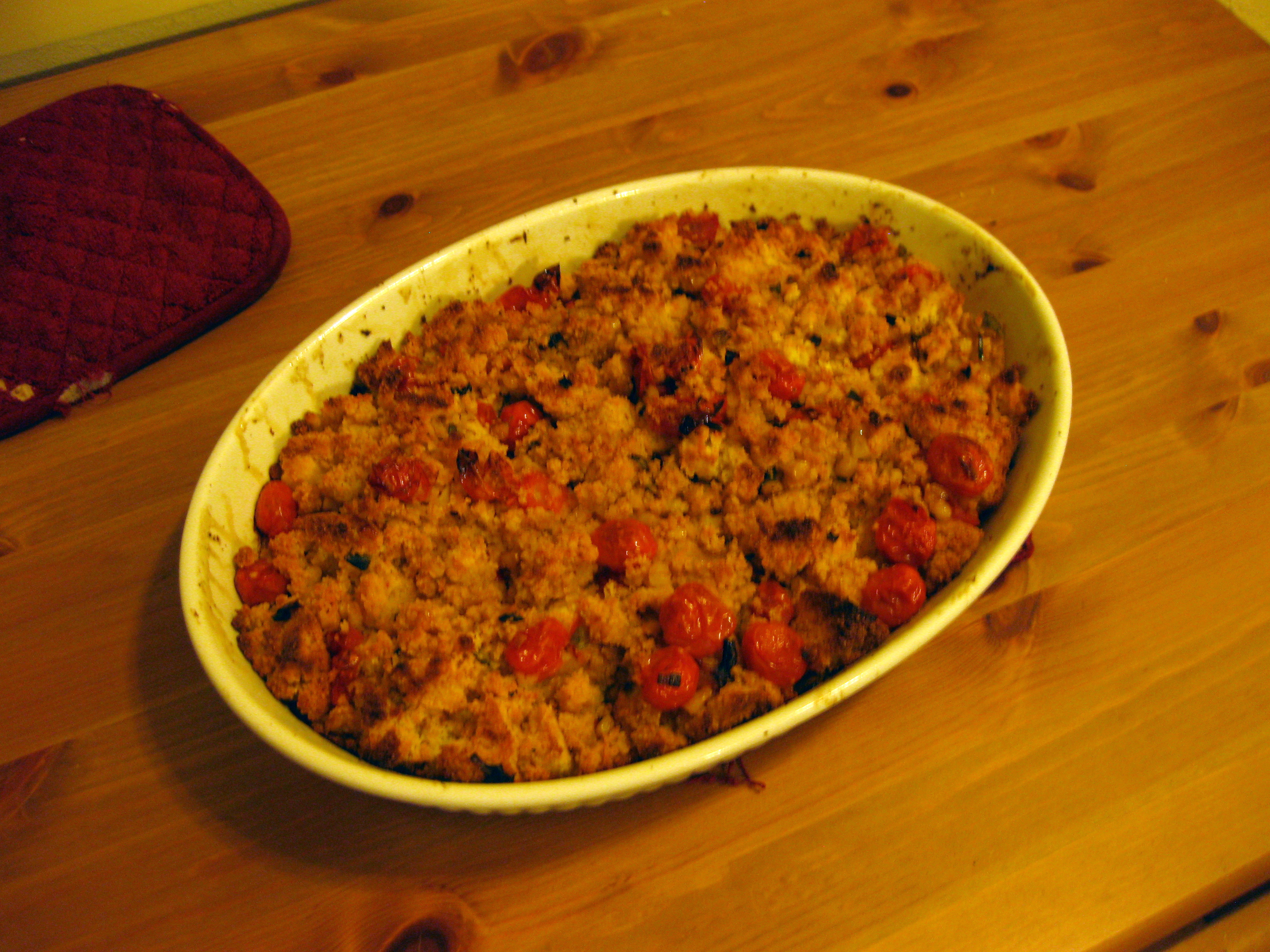
“26. Chop corn bread into cubes. Sauté cherry tomatoes, scallions and corn kernels in butter or oil. Deglaze the pan with beer, then empty the pan over the corn bread. Bake in an oiled dish or use as stuffing.”

You guys, this was amazing.  And given how you now know I feel about stuffing, that’s saying something.  Amazing.  Here’s what I used:

6 cups (roughly) corn bread cubes, toasted (use your favorite recipe)

4 TB butter

6-8 beefy green onions

1 pint red cherry tomatoes, rinsed and dried

1 cup corn, fresh or frozen (if frozen, defrost it first)

Salt and pepper

12 oz. beer (I used Drifter)

I made a pan of cornbread from my favorite recipe in a larger pan than usual; I thought this would result in a slightly drier bread, so it wouldn’t become mushy when the liquid was poured over it.  The cornbread was still pretty moist and springy, though, so after it had cooled for a while I cubed it, scuffed it around in the pan a bit to separate the clinging pieces, and tossed it back in the oven at 400F for fifteen minutes or so to get some toasty edges and dark golden spots on it, then set it aside to cool completely.  This worked beautifully and I’d recommend it, especially if your cornbread is moist and cakey.

While the oven was occupied by an herb-stuffed chicken (again, I know.  I can’t help it), I melted the butter in a skillet over medium heat and sliced the green onions, using the white and green portions.  I tossed these little rings into the sizzling butter along with the corn, and agitated them gently.  When the onions were soft and the corn just beginning to caramelize, I added the cherry tomatoes and seasoned the whole skillet with salt and pepper and, on a whim, a few shakes of garlic powder.

I turned the heat up to medium high for just a few minutes until the cherry tomatoes started to burst through their skins, spilling pulp into the mix, and the corn had browned delightfully, leaving the kitchen smelling like summer.

I then switched off the heat and poured in a full bottle of beer, nutty, yeasty, and brown (Drifter is a pale ale, so it has some body and depth – I wouldn’t go any lighter than pale ale, and might in fact prefer something darker: a brown ale like Newcastle, or even a porter if it’s not too strong).  The aroma changed from summer to fall harvest in an instant as the beer fizzed over the vegetables.

After scraping the bottom of the skillet gently with a spatula to remove any persistent browned bits, I poured the whole steaming bubbling mass over my pan of cornbread cubes and tossed gently to distribute the liquid evenly.  Then I stowed the pan in the oven: 350F for 25-30 minutes until the top is deeply golden and just crunchy.

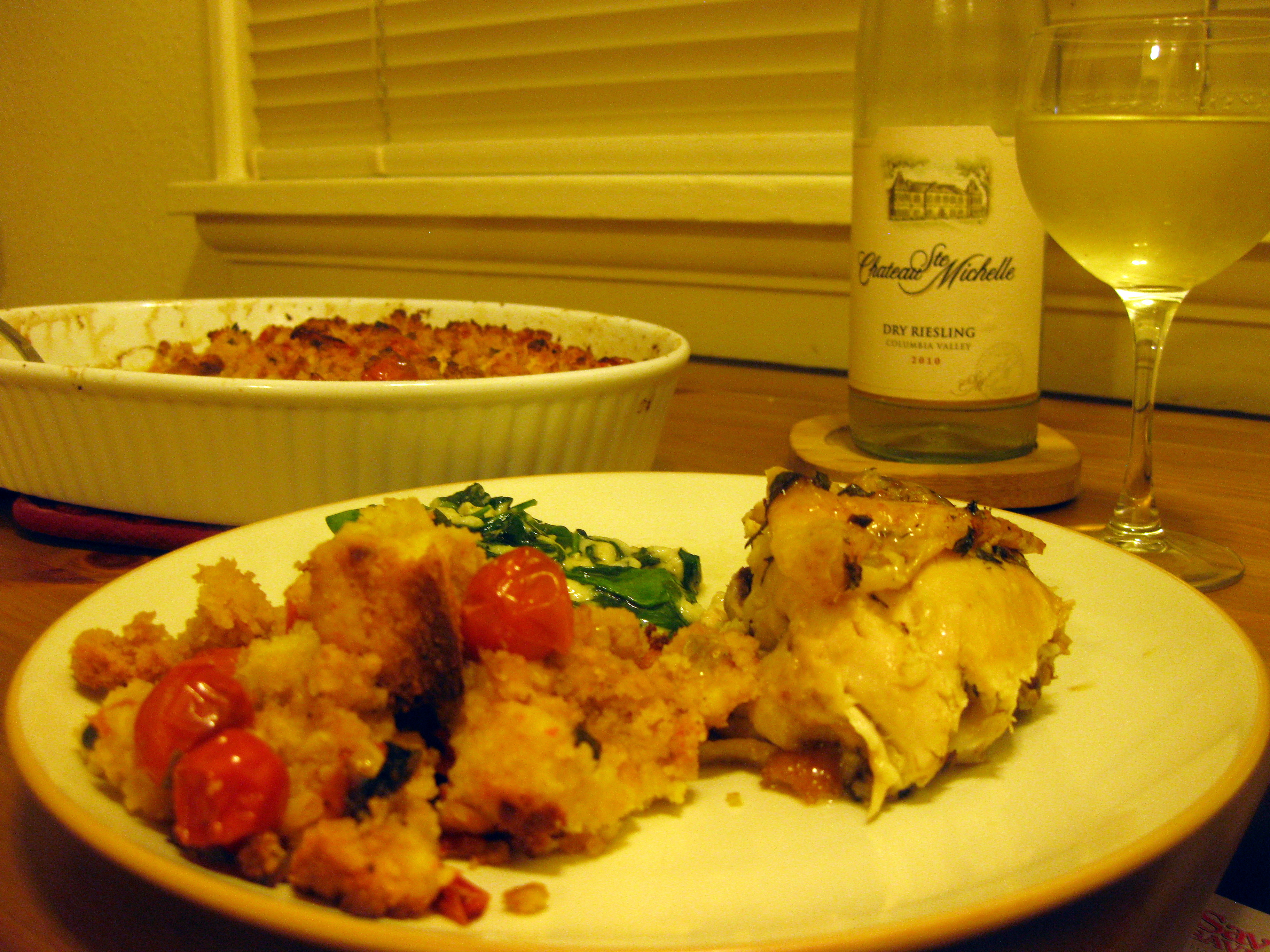
We ate this with roasted chicken and creamed spinach.  Vegetarians shield your eyes, but the chicken just collapsed so beautifully across my carving board that I felt I had to show you:

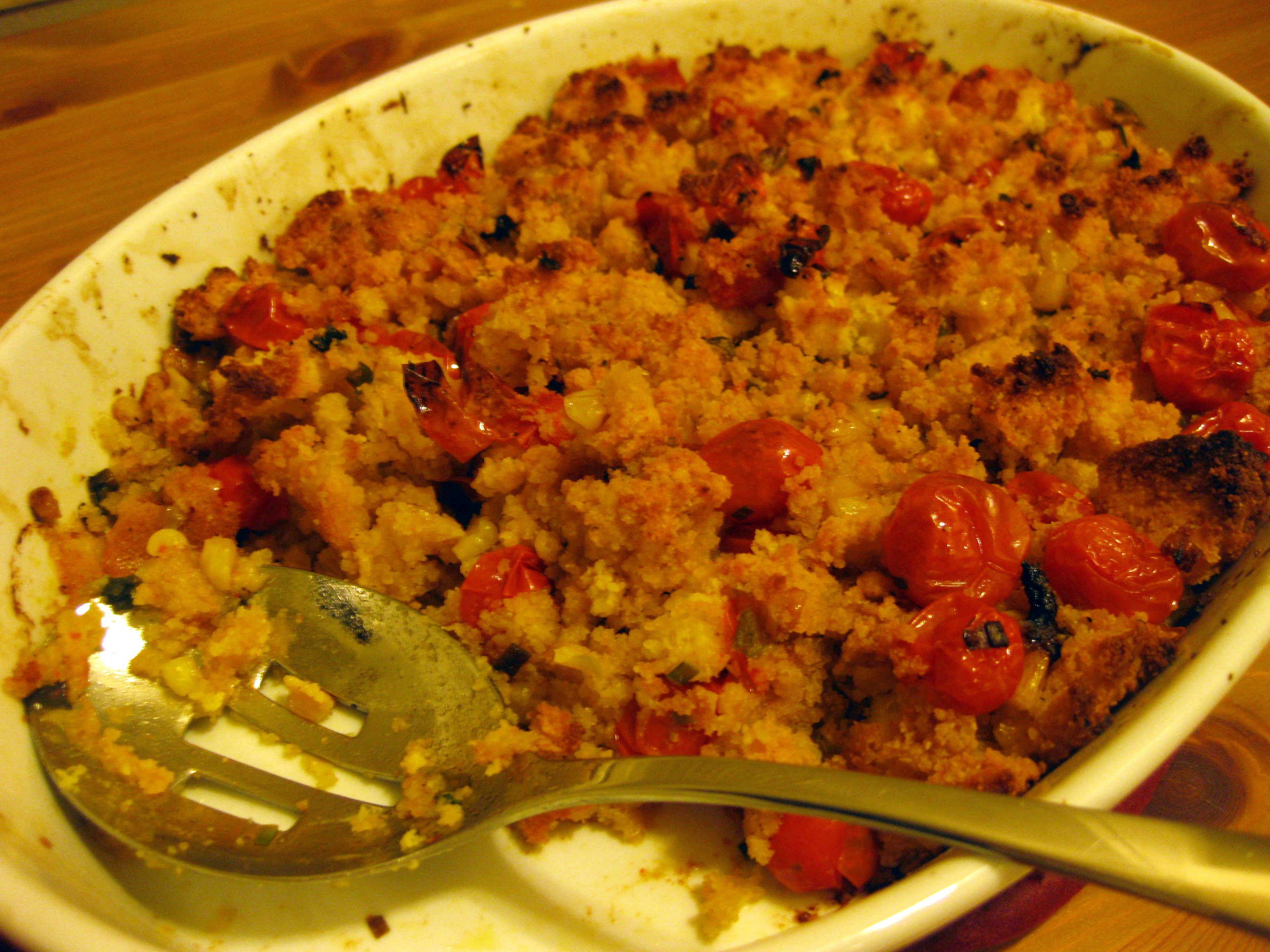
But the stuffing!  The stuffing was incredible.  The cornbread soaked up the beer, and the sweetness of the bread plus the sourness of the ale created this yeasty glory I couldn’t stop eating.  And I don’t like beer.  It was just such a perfect liquid for this dish, contributing just the right amount of malty bitterness.  The tomatoes got richer and sweeter in the oven, as did the corn kernels, and they partnered with the green onions to make such a good accompaniment to the cornbread that I’m almost tempted to add them into the batter in my next pan.  Or maybe into a compound butter to spread on top.  That would be better, texture-wise.  Green onions, cherry tomatoes, and corn: three musketeers. 

This stuffing was gone in two days.  With only two of us eating.  It was that good.  If you’re in the Northwest, where Spring is shunning us, make this now while you still need your oven to keep warm.  Accompanying some baked sweet potatoes and leafy greens, this becomes a vegetarian meal.  If you use oil instead of butter and have a good egg replacement, it could be vegan.  If your cornbread is free of wheat flour and you use gluten-free beer, it could be gluten-free as well.  However you make it, make it.  This one is too good not to try.

The Buttercream Project 3

My favorite weekends always turn out to be the ones that revolve around cooking.  You know the ones I mean.  You have a dinner party, or a potluck, or an afternoon on the porch surrounded by cookbooks, or you watch a marathon of FoodNetwork shows while almost absent-mindedly spooning one of your favorite indulgences into your mouth…

I wouldn’t know what that’s like…

Seriously, though, I am suddenly having one of those weekends.  Our friend Sh. is sharing a pulled pork dinner with us tonight, so by 9am (which felt like 8am, cursed Daylight Savings…) I was standing at the kitchen counter, pouring ginger ale and Jack Daniels whiskey atop 4 pounds of pork butt in my slow cooker, and deciding whether it needed anything besides salt and pepper to round out the flavors (I decided on a big chunk of fresh ginger and a few shakes of Worcestershire sauce).  Now, I’m sitting in the kitchen babysitting a pot of polenta, which I’ll cook, spread, and chill today to be cut into squares, pan-fried, and eaten later this week, and keeping a wandering eye on some cornbread, which we’ll have tonight with the pulled pork.

And yet this post isn’t about any of those things.  Whether you believe it or not after that extended tangential introduction, this post is about buttercream.  Again. 

I’ve completed my third buttercream experiment, and I must report mixed success.  I decided this time I’d better try out the cake recipe I’ll be using for the wedding in cupcake form so I could start nailing down baking times.  On a whim, I picked up some cake flour, which I’ve never used before.  This was for texture: often my cupcakes, if they are not chocolate, end up with a suspiciously muffin-like consistency, and I didn’t want that for these babies.  I also picked up some mascarpone cheese to continue the experiment in de-sweetening the frosting.

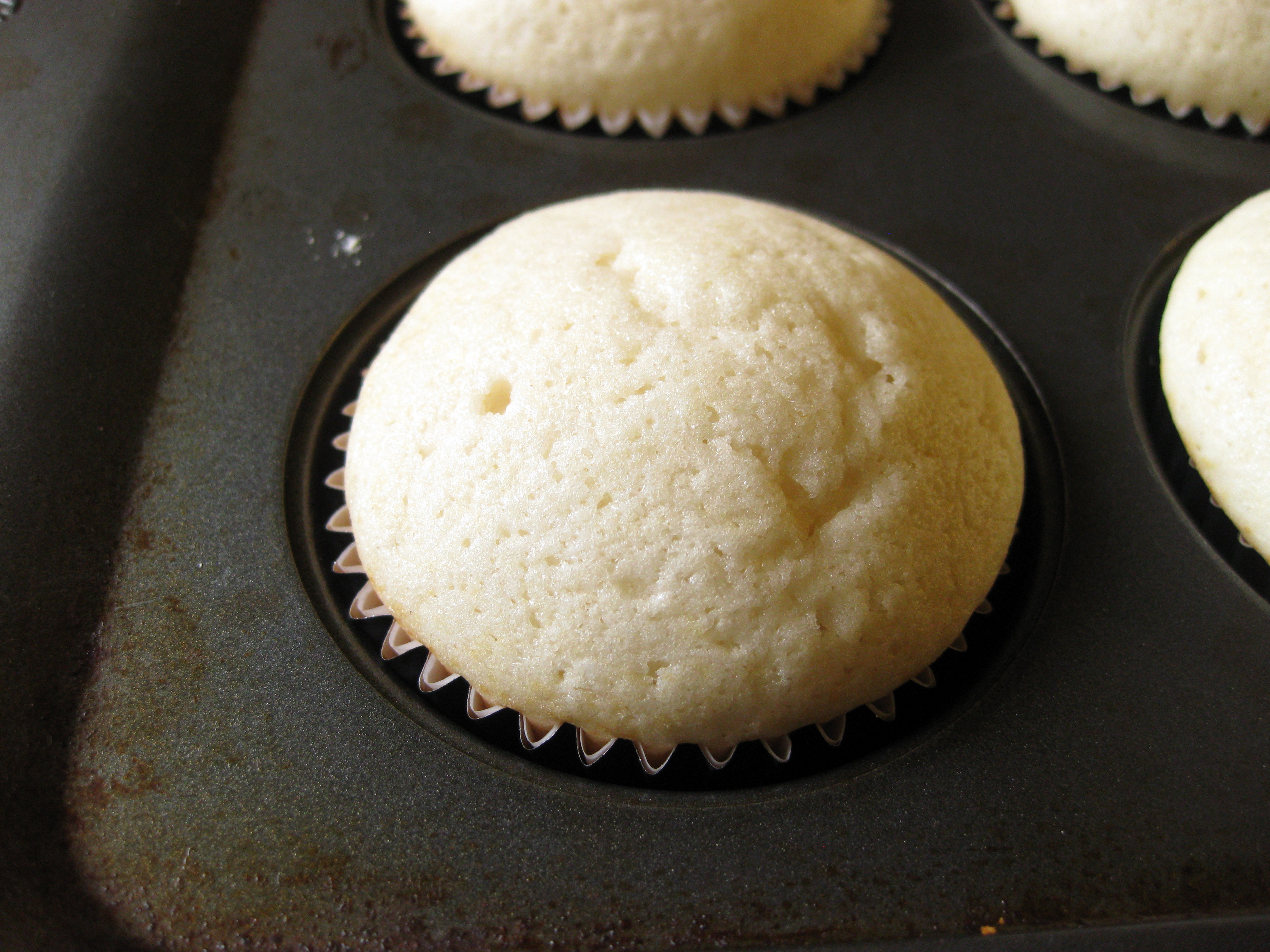
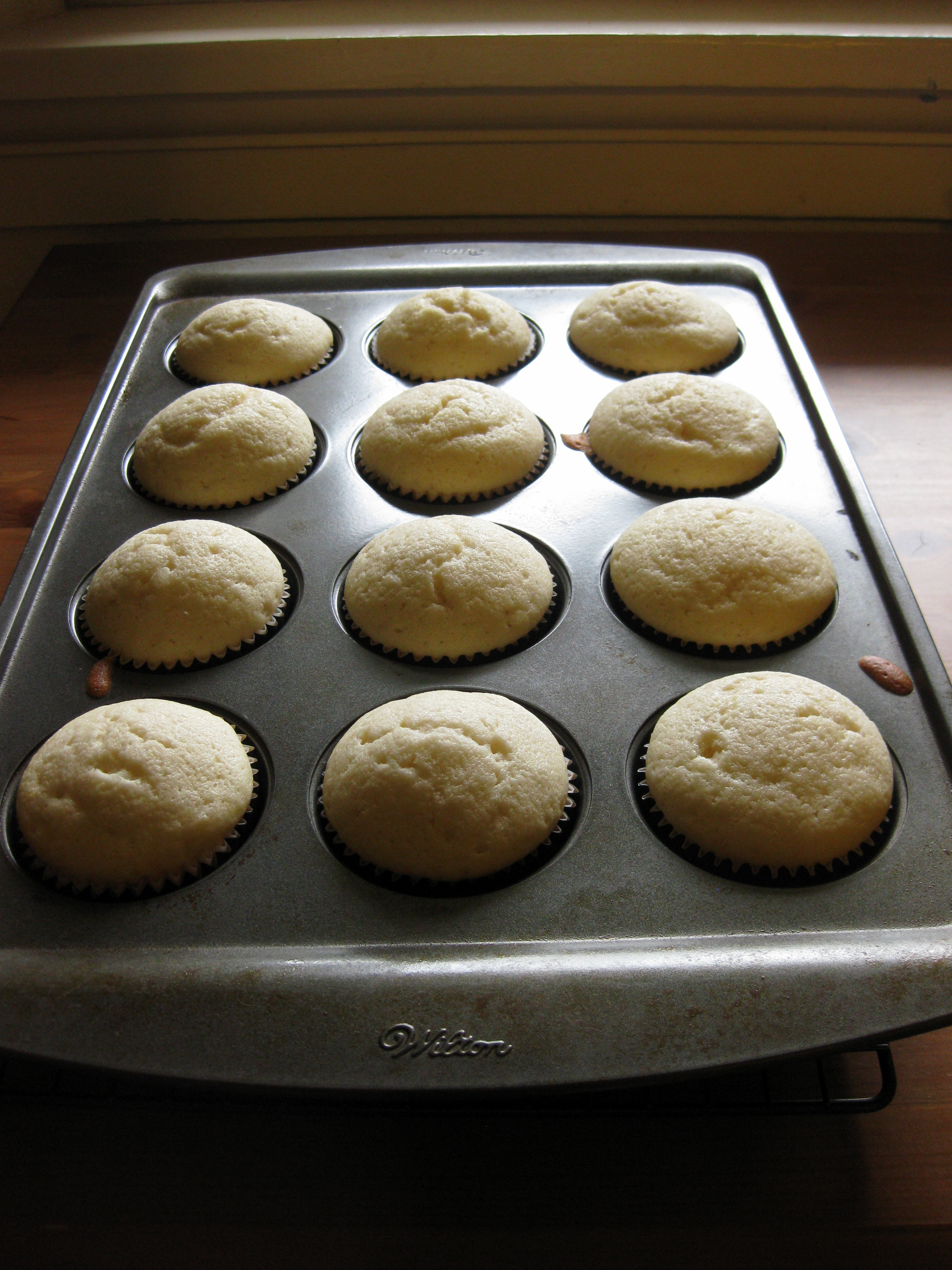
The baking process involved a lot of checking the cupcakes with a trembling toothpick, hoping for the barest of moist crumbs, not a completely clean tester.  I have found the completely clean tester is a recipe for overcooked baked goods, especially when it’s something very tender and delicate like cupcakes, because the cake continues to cook for a while as it sits in its tin on the cooling rack.  Tough cupcakes would not do.  Fortunately for me, they cooked up the color of pale cream and sported perfectly slight, perfectly shaped domes. They were pillowy tender.  They smelled good too – sweet and soft with the barest hint of floral fruitiness from the sparkling wine I used.

As they cooled, I started the buttercream process.  I wasn’t nervous at all this time – hadn’t my previous attempt come out smooth and creamy and lusciously perfect?  This time, I was golden.

This time, unfortunately, my kitchen was about 59 degrees Fahrenheit and, despite having left the butter out for hours and hours, it wasn’t the same squashy softness it had been last time.  The mascarpone cheese I decided to use was fresh from the fridge, since it was already soft enough that it didn’t occur to me having it at room temperature would make a difference.

It does.

Here’s what happened.  I whipped together a cup of butter and a cup of mascarpone cheese.  I sifted in about 3 cups of powdered sugar, a slight sprinkle of salt, and then trickled in a couple tablespoons of whole milk and a splash of vanilla (I can’t find champagne extract anywhere besides Amazon.com, where it costs upwards of $12 for a teensy bottle.  Needless to say I haven’t bitten that bullet).

Immediately I knew this wasn’t going to be perfect.  Already I could see tiny little clumps of butter, rechilled by the cold cheese, and tiny lumps of sugar, courtesy of a hasty and careless sifting session.  I pressed on regardless, deciding in the moment that this experiment was about taste, not texture.  Let’s get the taste right first, I told myself, to avoid the tumble into hysterical depression the blue poo cake had wrought.

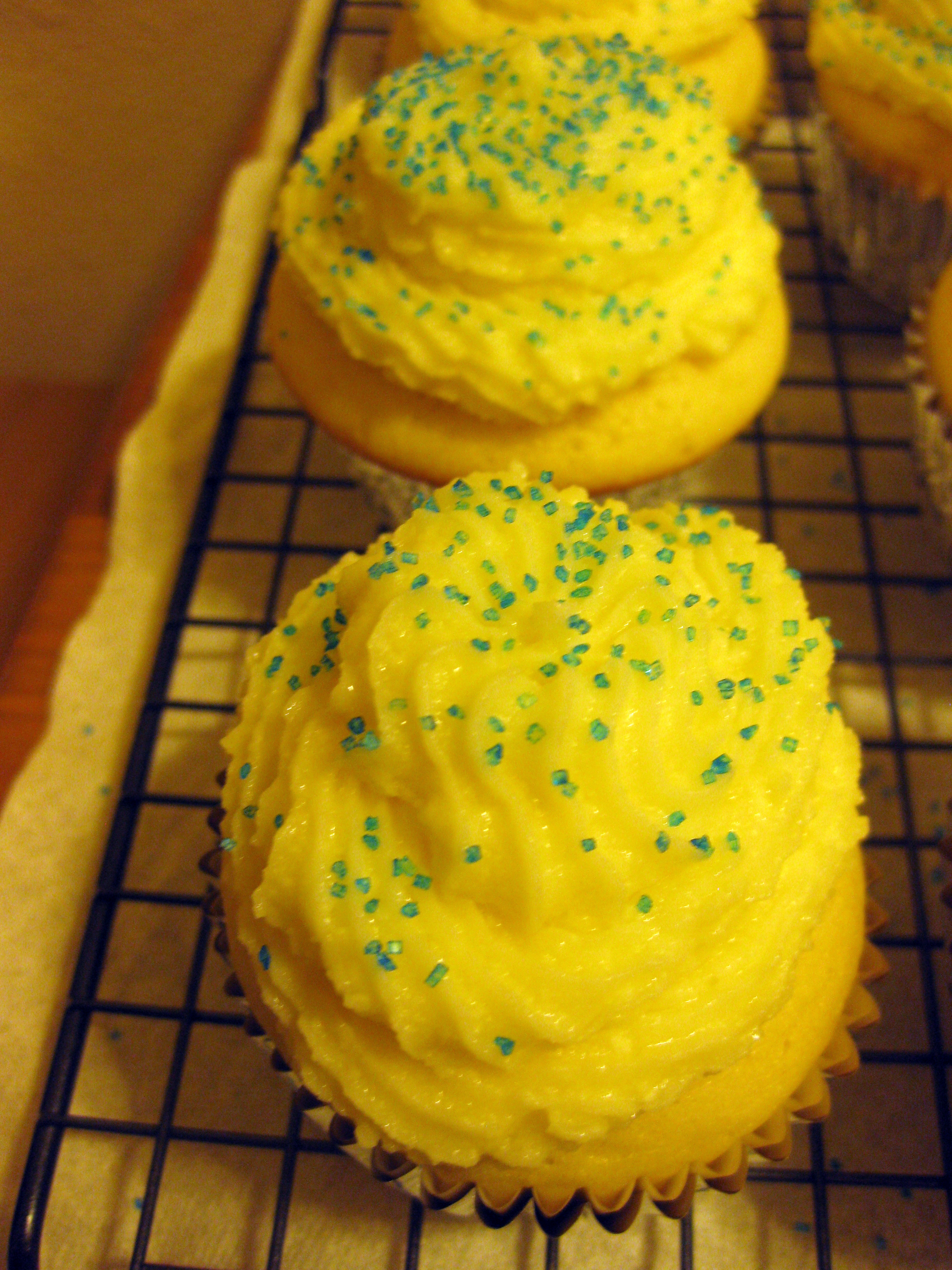
So I loaded up a piping bag with my new fancy-pants metal star tip and went to work on the full sized cupcakes.  In the process I got enough frosting on my fingers to be able to taste, and I have to say I was incredibly pleased.  The mascarpone cheese added another layer of velvet and creaminess, and because it is not sweet to begin with, there wasn’t as much overwhelming saccharine powdered sugar taste to the finished product.  The touch of salt probably helped with that too.  It was just incredibly rich and moist and lovely.

The texture, on the other hand, sucked.  Well, that’s not fair.  It wasn’t ideal.  It was slightly grainy, and the star tip’s sharp edges combined with my not-exactly-quite-as-smooth-as-I’d-wanted icing produced rough crumples on my swirls of frosting rather than delicate demure rosettes.

Hasty, thoughtless, and stubborn, I pressed on to my next experiment.  I’d found this the previous month: a video tutorial about making beautiful blue flowers on mini cupcakes, and I wanted to surprise my bride by testing these out.  I considered, as I dripped blue food coloring into the remaining buttercream, rewatching the video.  And then I talked myself out of it.  I’d watched it twice, I remembered basically what she’d said to do, and she made it look abysmally simple.  I’m marginally artistic.  How hard could it be? 

For starters, the frosting was now looking a little wet.  Terrified of a repeat blue poo scenario, I added more powdered sugar.  But now I was in a hurry, because I had girlfriends coming over for a TV night and I wanted to serve them beautiful, frosted cupcakes (notice I didn’t say beautifully frosted cupcakes.  I was trying to be realistic).  So I didn’t sift the sugar.

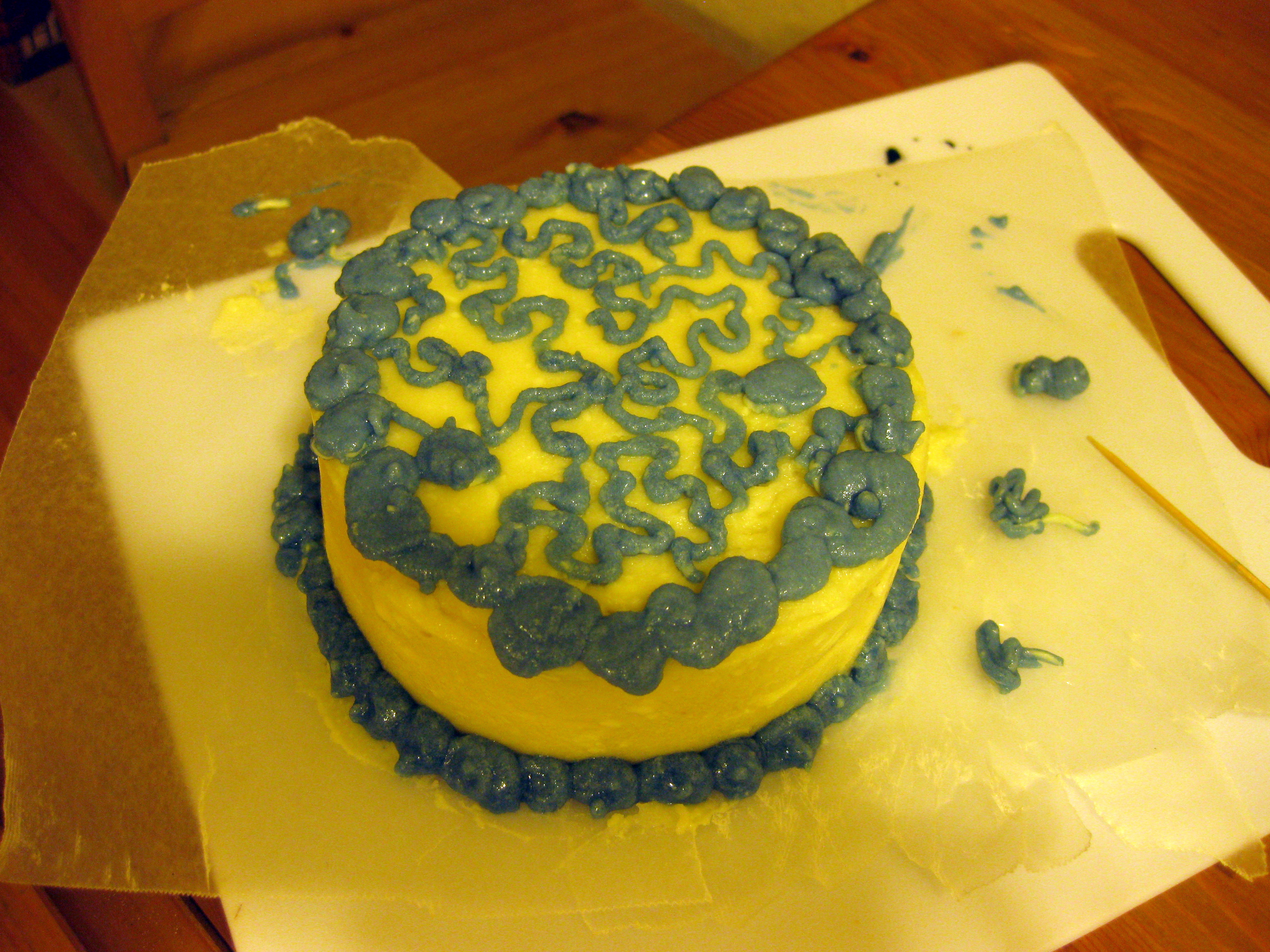
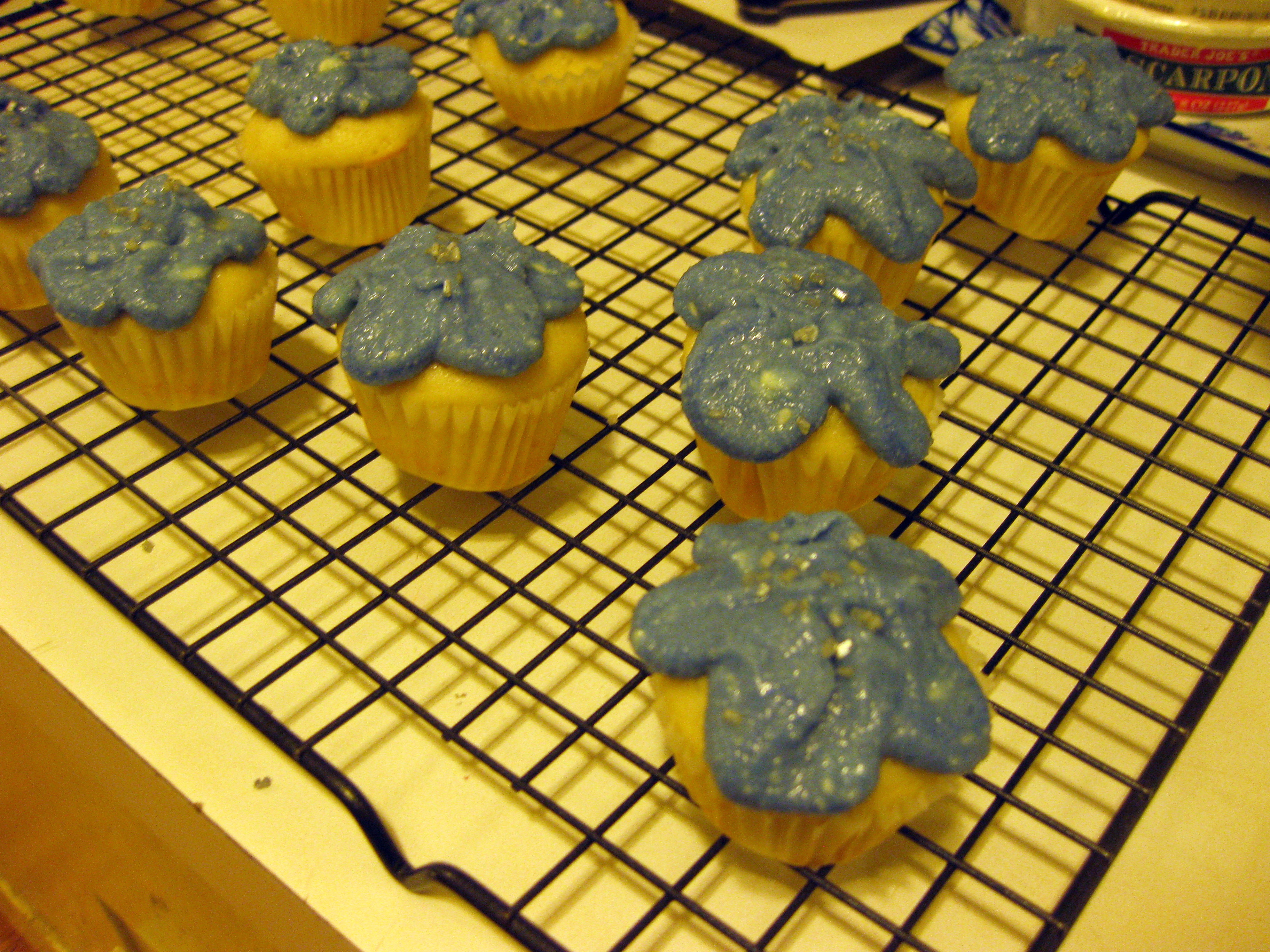
This, as you might expect, resulted in more lumps.  But I was not to be discouraged.  I slapped some icing into a bag with a tip that looked similar to the one in the video tutorial, and started trying to make flower petals.  I made circular blobs.  There were no delicate curling edges, no gentle petal shapes, and the lumps of powdered sugar I’d stubbornly ignored made the frosting emerge from the piping tip unevenly.  I ended up with deformed starfish in a lovely cornflower-esque shade on the mini cupcakes, and a spotty lace pattern surrounded by blue blobs on the tiny taster cake I’d made for the bride and groom.  (It was supposed to be cornelli lace, but when hunks of cold butter in your frosting burst out through the piping tip, all bets are off.)  I did, however, glean a valuable tip for frosting a cake from the Barefoot Contessa: once you have your layer covered, dip your frosting spatula in very hot water and run it gently over the sides and top surface of the cake.  The hot water lightly melts the very outer molecules of butter and sugar and solders them together while smoothing them out, resulting in a perfectly level layer of frosting.  I tried this out to great success.

But back to the cupcakes.  Undaunted by their aesthetically challenged appearance, I sprinkled them with silver-gray sprinkles and presented them proudly to my friends, who pronounced them praiseworthy masterpieces.  I privately thought them too kind, but it is gratifying to have good friends who support your stubborn goofy screw-ups and prevent you from being too hard on yourself.

It was only the next day that I rewatched the tutorial video and saw that not only was a using the wrong tip to pipe these petals, but I was holding it the wrong way.  This gave me hope.  Next time, next time when butter and mascarpone are at the same temperature, when it’s warmer in the kitchen, when a fresh bag of powdered sugar and careful sifting result in a perfectly velvet texture, and when I acquire a rose petal icing tip, I will be on my way.  The flowers won’t be perfect, but they will actually resemble flowers.  Next time. 

I keep ending these posts by talking about what I will do next time.  Upon reflection, it seems dangerous to be counting always on next time in this project.  There will come a time when “next time” no longer works, and on that day in July I’d better get everything right.  What if the butter is too soft?  What if I over whip it?  What if there are lumps?

Fortunately I still have a few next times to lean on.

Marshmallow Topping for Adults

To me, there is no better title for this entry than Bittman’s designation.  Sometimes things don’t need to be complicated or alliterated or made cleverer.  Sometimes all they need is a little story to get them started.

For the past five years or so, my family has been driving up to Oregon to spend Thanksgiving at our house.  Since we discovered a recipe for Chipotle Mashed Sweet Potatoes, which melds the flavors of autumn with the heat of adobo sauce, we haven’t needed any additional fixings for our tubers.  This was not always true.  When we used to share Thanksgiving with a very dear set of family friends, L. inevitably made sweet potato casserole.  You know the one.  The sweet potato casserole.  Boiled sweet potatoes, mashed or beaten smooth.  Sweetened – as she was always proud to proclaim – only with orange juice.  Smoothed into a square glass baking dish and then topped until no hint of orange could be seen with a careful and meticulous layer of miniature marshmallows.  Thieving hands were scowled at.  Broil to perfect, swollen, golden-brown puff.

I liked this.  Well, I liked the idea of it.  Mashed sweet potatoes are delicious, and toasted marshmallows are my favorite part about a campfire.  But together, especially next to turkey and dressing and tart wonderful cranberries, it was never my favorite.  Bittman offers a grown-up alternative:

“60. Marshmallow topping for adults: Roast or boil chunks of sweet potato, put them in an oiled baking dish, top with dots of cream cheese, and sprinkle with a mixture of brown sugar, chopped pecans and chopped fresh sage. Broil until lightly browned.”

In my imaginary food dictionary, this would appear under “decadence.”  It just sounds so rich and so perfect, without the chalky powdered sugar edge of marshmallows.  Here’s how it happened:

1 ½ huge sweet potatoes cut into 1 inch chunks (I think I used the kind marked as “garnet yams”)

2/3 cup chopped pecans

Scant ½ cup brown sugar, or perhaps less.  It was a bit sweet.

1 TB finely chopped sage

4 oz. cream cheese

About an hour before you intend to broil this, stow an 8 oz. block of cream cheese in the freezer. This is just enough time to allow it to firm up enough to cut into chunks without mushing all over your hands.

Preheat the oven to 400F.

Toss the sweet potato chunks in olive oil, salt, and pepper, then roast them on a baking sheet for 35 minutes or until soft and slightly caramelized.  While they roast, combine the pecans, brown sugar, and sage in a small bowl and toss together well.

When the sweet potatoes are tender, transfer them to a lightly oiled 9×9 inch glass baking dish.  Remove the cream cheese from the freezer and cut it into small chunks.  Scatter the chunks of cheese evenly across the surface of the sweet potatoes, then crumble the pecan mixture evenly over the beautiful field of orange and white you’ve created.

Broil the whole delectable mess until the sugar caramelizes and begins to melt, and the cream cheese goes a little weak in the knees.  Don’t let it go too long or the sugar will burn.

Eat.

We did just that.  There was very little left over for repeat meals, so I had no excuse to repurpose the leftovers.  But in this case I wouldn’t have needed to, because it was stellar.  A bit on the overly sweet side, perhaps, but that’s what made it such an accurate modernization of the marshmallow madness it mimics.  The cream cheese, broiled to the edge of melting, was a tangier, softer version of the marshmallows from the original, and its form in small chunks just losing their shape made it look similar too.  Pecans and sweet potatoes are great friends, and with the addition of the brown sugar they became the equivalent of that couple on Valentine’s Day.  You know the one I mean.  Except you get to eat this, so it’s much better than intruding within a 20 foot radius of that couple.  The sage was an earthy, herby warmth that I wouldn’t suggest omitting.

My only suggestion about this, aside from perhaps cutting back a bit on the quantity of brown sugar, would be to add a little salt into the topping mix.  It would be a nice extra bite to bring out the pecan flavor, and salt with brown sugar is just so darn tasty.

This was delicious with Brussels sprouts seared in a cast iron pan, but it would be equally good with stuffed pork chops, or roast chicken, or the big Thanksgiving bird itself.  Or just in a big bowl, with a big spoon, and a private table.  And no one looking.  Fanciest take on sweet potato casserole I’ve seen in a while.

If that’s not fancy enough for you, I thought of a way of making it even fancier.  For appetizers, cut the sweet potatoes into rounds instead of chunks.  Roast and mix topping as directed.

Instead of freezing the cream cheese, let it come to room temperature and put it in a piping bag with a star tip.  When the sweet potatoes are roasted and have cooled a bit, pipe the cream cheese in a pretty little whirl atop the sweet potato round, then sprinkle with the topping and broil as before.  Presto!  Brilliance in two little bites.  No marshmallows required.

The Buttercream Problem 2: What Problem?

Thanks for the support and thoughts on my previous buttercream post.  I appreciate knowing you are out there, lurkers and likers!

The title of this post might be a bit of a lie, because can you really call something “Problem, part 2” if it isn’t too much of a problem anymore?  Maybe “The Buttercream Project” would be more accurate.

Anyway, I owe this amelioration of gloop, sludge, and anxiety in part to my own intuition, but in larger part to Leah at “So, How’s it Taste?” and her recipe for Cinn-Chili Chocolate Cupcakes with Cinnamon Buttercream.  With a chapter draft submitted and a guiltlessly girly shopping trip/reward for my efforts over, I wanted to bake a little something for my officemates AND do a buttercream practice.

Here’s what I learned:

It’s important to sift the powdered sugar.  Otherwise you end up with little clumpy bits that don’t incorporate completely (which happened at New Year’s on the blue poo cake).

It’s important that the butter be fully softened, and that you whip it up well before adding any of the sugar, lest it not incorporate fully (which happened at New Year’s on the blue poo cake).

A couple of tablespoons of whole milk help smooth things out.

I probably should use champagne extract or flavoring, not champagne itself, because so little liquid is needed to keep this pipe-able and smooth (but not turning into blue poo.  I’m just saying…).

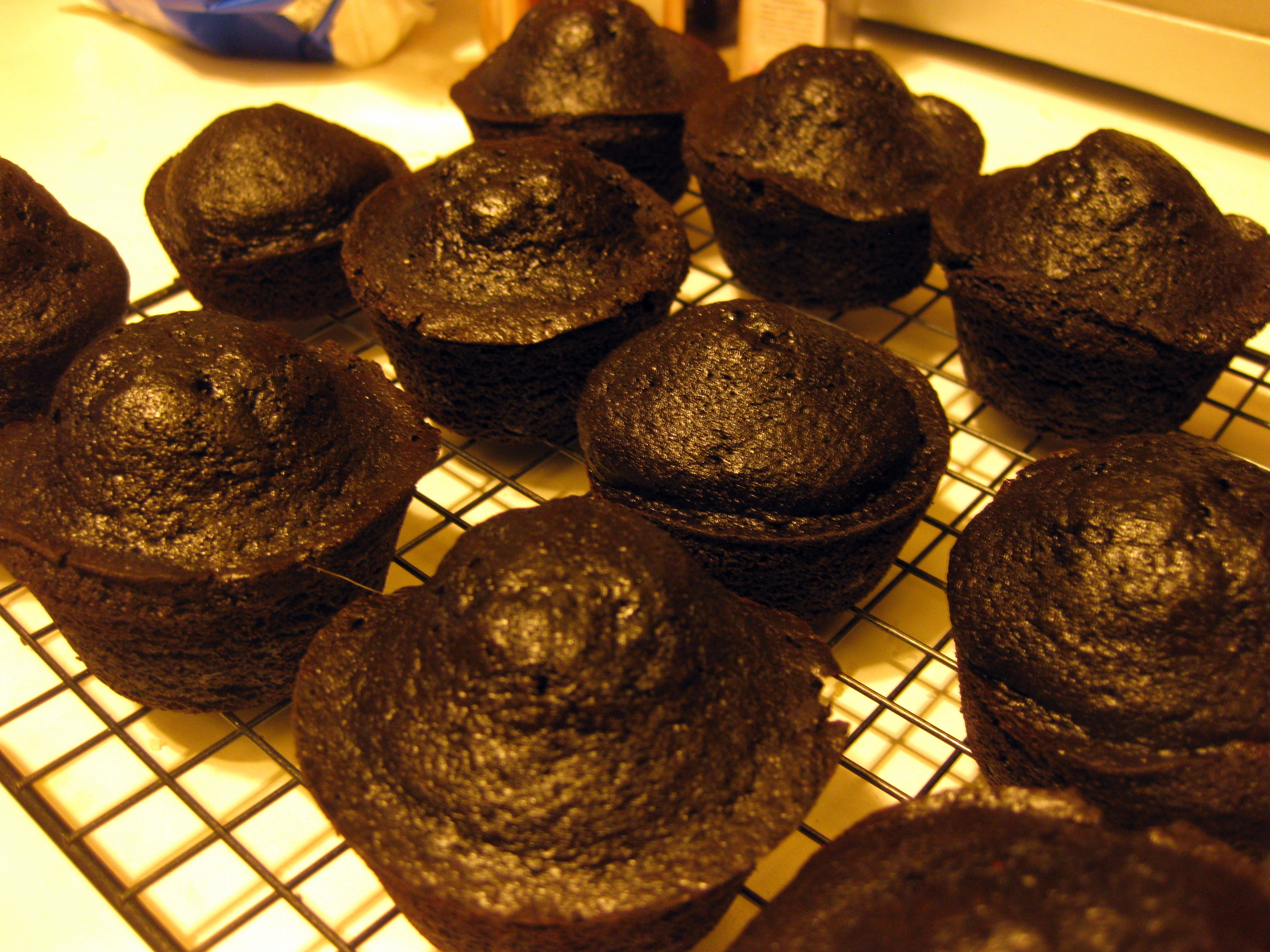
So the frosting whipped up really nicely – smooth and buttery and even – but the cupcakes were no slouch either. The combo of chocolate, cinnamon, and cayenne is, I’ve decided, one that should be present in everything from cupcakes to hot cocoa to coffee to a spread for sourdough toast. It was warm and toasty and dark and rich and left just a little lingering heat in the back of your throat after the last swallow of cupcake. The cakes were really, really dark – almost black – because I used Hershey’s “Special Dark” cocoa powder instead of just the regular stuff. They had a nice moist crumb and weren’t overwhelmingly sweet.

The buttercream was delicious too. It was pretty sweet, though that’s difficult to combat, I think, but the heat of the cayenne and the warmth of the cinnamon in the frosting cut the sugar. Also, after a night in the fridge the frosting seemed less aggressively sweet – giving the butter and sugar time to hang out together might have done something the mellow the cloying flavor buttercream can have. I used less cayenne in the frosting than Leah’s recipe specifies, though I did add the barest sprinkle over the top when the cupcakes were all frosted.

Here’s what I learned about the process of frosting: cupcakes are easy, and a properly made buttercream spreads with surprising smoothness over a flat surface (I made one tiny “cake” for the bride and groom as a taster and smoothed icing across the top). With an offset spatula or a metal scraper at my disposal, I bet I can get the thing even and gorgeous.

Here’s what I learned from the bride: she LOVES the idea of doing cupcakes and mini cupcakes as additions to the cake, and we’ve decided to use an asymmetrical cake stand  for the actual cakes. This means I don’t have to stack anything, just make three separate, differently sized cakes, and a Subaru-load of cupcakes.

So here’s the plan: the cakes will get frosted with buttercream and decorated in some as-yet-to-be-determined way. The cupcakes will get frosted with a star tip much like I’ve done here, and possibly drizzled with blue crystal sprinkles. As for the mini cupcakes, I found a tutorial for making pansy-like flowers out of buttercream on minis, and the next time I do a trial run I’m going to give this a try to see if it’s something me and my meager piping skills can pull off.

Next month: I’ll make the champagne batter the cake will actually be made of and bake it in cupcake form so I can start to get times down. It wouldn’t do to have dry cupcakes. Then I’ll try out this flower pattern on the minis and see how it turns out. With luck, it will go as well as this month’s new buttercream recipe did!

Stay tuned… I added a “wedding” tag, and all the buttercream and cake-related posts will end up in that category for easier access.