Zucchini Spice Bread with Cherries (now with post and recipe!)

This past summer, we did not grow zucchini. Still traumatized by the various baseball bats we had to consume the previous year, N. flatly refused it. He couldn’t find the humor even in my joke that we would only grow a small one… Needless to say, no zucchini graced our table this summer.

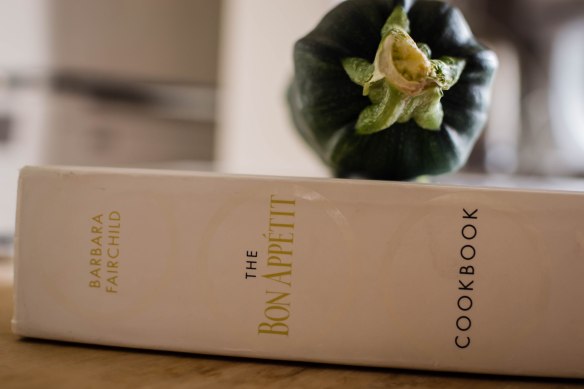
But I missed it. In particular, I missed my favorite zucchini bread recipe, a cinnamon-spiced affair with an appealingly-crusty top but still-moist center from The Bon Appétit Cookbook that I’ve made probably at least a dozen times. It’s lightly sweet, it’s not overwhelmingly, well, zucchini flavored, and you don’t even have to squeeze out the grated squash before adding it to the mixture. In fact, you shouldn’t; the recipe relies on some of that wetness to attain the correct consistency. Buying zucchini from the grocery store to put toward this purpose just didn’t seem right – this was, as the book itself declares, a recipe designed for a zucchini harvest.

So when one of my coworkers advertised her bounty, I suggested that I’d be willing to take one of her prolific squashes off of her hands, and as a result I received a delivery at least as long as my forearm. Yes. This meant zucchini bread. To keep myself interested, in this incarnation I not only included the deeply toasted chopped walnuts the recipe calls for, but subbed in some almond flour for part of the all-purpose flour to add extra nuttiness and – not that this recipe needs it – assured moisture. I also added my most recent baking obsession: a generous few handfuls of tart dried cherries. And then, since just a loaf will never do, I made four. And I still had a chunk of zucchini left that’s probably still at least 6-7 inches long.
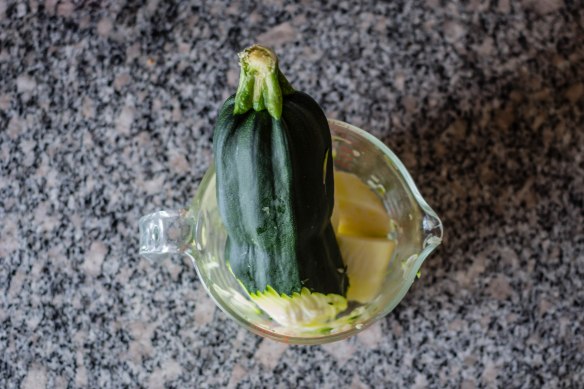
This recipe calls for two cups of grated zucchini. And that seems like a lot, until you realize it really only takes one reasonably sized squash to make that amount. So here I’m offering a recipe for two loaves, since if you’re facing down a bed-full of zucchini, that’s the least you’ll want to make. They freeze beautifully too, so you can sock away a loaf or two until you, or your family, or your neighbors, are feeling zucchini-receptive again. I’m sure I don’t need to tell you that, just in case the end pieces feel a little dry, toasting and adding a generous smear of cream cheese is revelatory.
 

Zucchini Spice Bread with Cherries
Adapted (barely) from The Bon Appétit Cookbook
Makes 2 loaves 9x5x3 inch loaves
2 cups chopped walnuts
6 large eggs
4 cups granulated sugar
2 cups vegetable oil
2 teaspoons vanilla
4 cups all-purpose flour
1 cup almond meal or almond flour
2 teaspoons salt
2 teaspoons ground cinnamon
2 teaspoons baking soda
½ teaspoon baking powder
4 cups coarsely grated zucchini, not squeezed
2½ cups dried tart cherries, such as Montmorency


  • Preheat the oven to 350F. While it heats, scatter the walnuts on a cookie sheet and put it in the oven to toast. The nuts should go about two shades darker brown and look slightly oily when you take them out. Once nicely toasted, remove from the oven and set aside to cool.
  • Prepare two metal loaf pans by spraying with non-stick cooking spray or rubbing with butter or oil.
  • Using an electric mixer or a stand mixer, beat the eggs in a large bowl until they are foamy. With the mixer running, gradually add the sugar, then beat until the mixture is very thick and pale. This takes a good 3-4 minutes. Slowly beat in the oil, then the vanilla.
  • In another bowl, whisk together the flour, the almond meal, the salt, cinnamon, baking soda, and baking powder. With the mixer on low speed, beat in this dry mixture in three additions, scraping down the sides of the bowl in between.
  • Gently fold in the walnuts and cherries to ensure even distribution. The batter will be extremely thick. Don’t despair! Fold in the zucchini (it will be almost too much for a standard stand mixer, but it will fit. Mostly). The batter will loosen up considerably as the grated pieces release moisture.
  • Divide the batter evenly between the two prepared pans and bake at 350F until the top is dry and crusty, and a toothpick or cake tester inserted comes out clean. This pretty dependably takes about 1 hour and 30 minutes. Cool the loaf for at least 5 minutes in the pan before turning it out onto a rack to cool completely.

Banh mi salad (no recipe)

I don’t have a recipe for you today, but I do have a suggestion that, like my almost-too-late discovery of the aperol spritz in Venice, has probably already occurred to you. But just in case. It turns out that banh mi, that beloved Vietnamese sandwich that, along with pho, is probably the nation’s most well-known dish in the United States, translates amazingly well into a salad. You chop or stack all the ingredients from the sandwich – well seasoned and seared tofu, or pork, or chicken, fresh cucumbers, wafer-thin jalapeno slices, assorted vegetable pickles, soapy-fresh cilantro sprigs – atop crisp, juicy romaine or crunchy shredded cabbage (or a combination of both). You toss it gently with a dressing made from mayonnaise, sriracha, fish sauce, and lime juice or rice vinegar. Finally, since banh means “bread” in Vietnamese, so it couldn’t be banh- anything without a bread component, you fry the torn innards of a baguette in a generous quantity of oil, sprinkle them with a little salt, and pile them to precarious heights on top.

And if you already have some of these items lying around – like, say, you had banh mi sandwiches a few day before – it comes together in the time it takes you to fry the croutons.

Boom. Lunch is served.

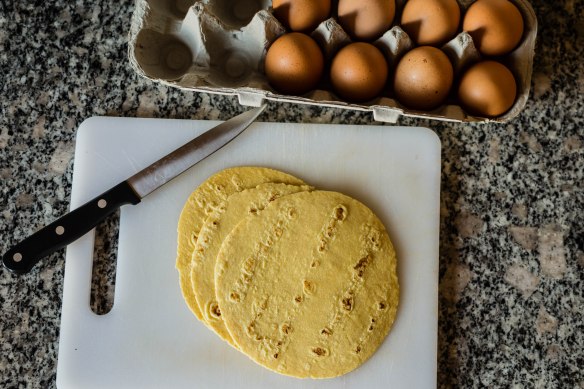
Huevos Rancheros con Frico

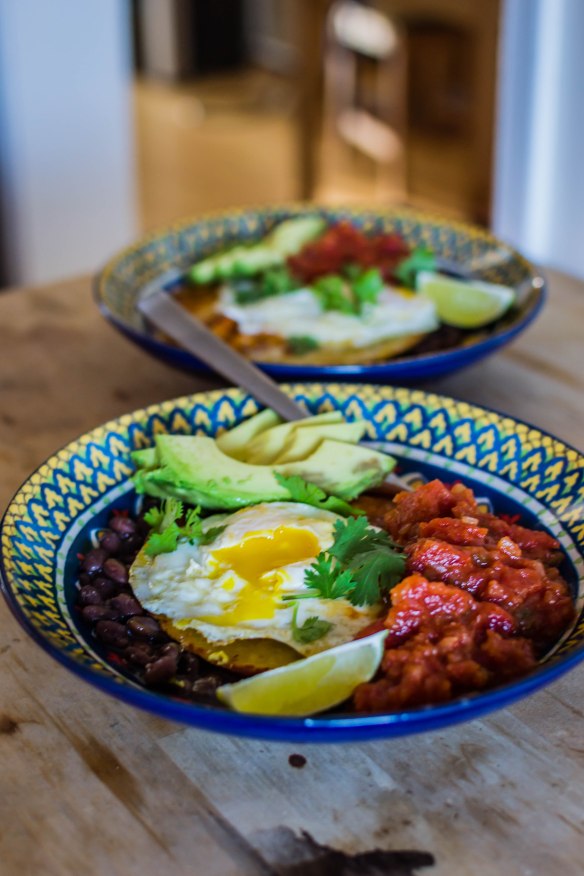
The first iteration of this meal was a lunch I threw together when I wasn’t satisfied by any of the leftovers already in my fridge. And it was easy: egg, cheese, tortilla, a scoop of salsa. Done. But instead of melting the cheese on top, I flopped the toasted tortilla over and held it down with my spatula so the cheese sputtered and hissed directly against the pan. A minute or two later, a quick but determined scrape, and the tortilla emerged with a frico of pepperjack welded on, crispy and seared and ready. And as soon as that happened, I was no longer alone at the stove. Suddenly instead of the sandwich he’d been intending, N. wanted my lunch. He was entranced by that crunchy layer of cheese, so a few days later we had it for dinner, this time bulking things up with the addition of a bed of black beans for the tortilla to rest on.

Three days later, we already wanted it again. A week after that, we had it a third time. That tells you something. And unlike so many of my recipes here, this is quick – no more than 20 minutes and it’s ready to go – and takes a few shortcuts along the way: canned black beans, jarred salsa. Of course you could go the extra mile and start from scratch, but for what is essentially the quickest weeknight dinner I’ve made in months, I’m not going to bother.

Huevos rancheros is a simple dish, usually eggs and salsa atop tortillas, with beans, cheese, and other accompaniments optional. Basically it’s a fried egg taco. Frico, on the other hand, is an Italian creation probably originally invented to use up cheese rinds. Though there is a version that incorporates potatoes and other vegetables fried into something like a rosti or latke (which N. has informed me he now wants), the sort Americans are probably most familiar with – and certainly my version here – is a thin round of plain old cheese, fried until it holds together.

Most fricos are made with hard cheeses – think “parmesan crisps” or similar – and can be fried just until they are malleable, then draped over a jar or muffin tin or rolling pin to shape them into baskets or bowls or other decorative shapes. But they can also be baked or fried until they are crisp and shattering discs you could stack in a savory napoleon or crumble onto a salad or, in my favorite application, crust the outsides of a grilled cheese sandwich.

But this frico is made with softer cheese: I tried both cheddar and pepperjack, and found I preferred the latter. When you first turn it into the pan, a distressing quantity of grease appears and the cheese bubbles worryingly around the outer edges of the tortilla, and you are sure this isn’t going to work at all. Give it a minute or two, though, and then cautiously but firmly apply your spatula, and the tortilla should have a crunchy, orange, lacquered coating. You then have only to set the egg on top, pile with accouterments, and gobble up the whole thing.

You can, of course, use multiple skillets here, and make more than one at the same time. I opted to cook the eggs first and set them aside to stay warm while I did the tortillas, because my dishwasher (I have one of those human models, not the mechanized kind) appreciates when my cooking projects don’t result in a whole sinkful. I’ve also opted in the ingredients to list quantities for each egg-cheese-tortilla stack, which of course can be easily doubled, tripled – or, should you have a large griddle and some brunch-loving friends – multiplied to serve what will no doubt be a happy crowd.

Huevos Rancheros con Frico
15-20 minutes
quantities and instructions for one, but oh-so-easily multiplied
½-1 cup canned black beans
1-2 tablespoons vegetable oil
1 egg
1 corn tortilla
1-2 ounces pepperjack cheese, thinly sliced
¼ cup salsa, or more as desired
3-4 avocado slices
optional: torn cilantro and/or a lime wedge


  • In a small pot, heat the black beans along with their liquid over medium heat; let them simmer until most but not all of the liquid has been absorbed and the beans are hot.
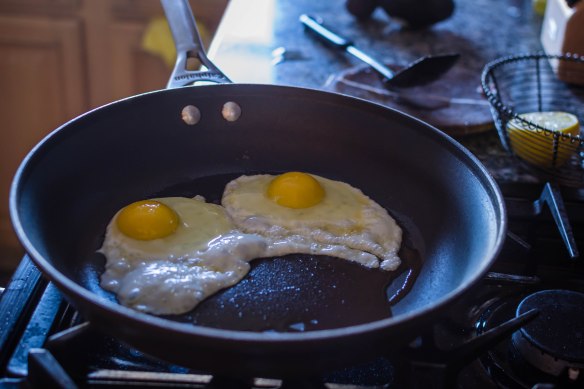
  • While the beans simmer, heat 1 tablespoon of the vegetable oil in a skillet over medium heat. Crack in the egg sunny-side up, sprinkle a little salt on the yolk, and cook until the white is just set and the edges are starting to brown slightly. Carefully flip over to finish either over easy or over medium, depending on your preferences. Remove and cover to keep warm (I like to place mine in the shallow bowl I use to serve and cover with another shallow bowl).
  • If the pan looks dry, add the other 1 tablespoon vegetable oil, let it heat for a minute, then add the tortilla. Fry the tortilla until well toasted with deeply browned spots on both sides.
  • Remove the fried tortilla from the pan and use a paper towel to wipe most of the oil out of the pan. Top the toasted tortilla with the pepperjack, arranging the slices so most of the tortilla surface is covered. Add back to the skillet, still on medium heat, with the pepperjack side down, directly against the surface of the pan. Cook undisturbed for 2-3 minutes. Fat from the cheese will be released and the cheese will look like it’s all going to ooze out the sides. Don’t worry.
  • After 2-3 minutes undisturbed, use a wide spatula to carefully but firmly loosen the cheese from the pan surface. Flip the whole tortilla back over so the cheese is on top.
  • To serve, pile the hot black beans in a shallow bowl. Place the tortilla, cheese side up, on top of the beans. Carefully put the egg on top of the cheese-crusted tortilla. Top with salsa, avocado, cilantro and lime if desired, and eat immediately.

Project Cook: Herbed Fougasse (no recipe)

There’s a new season of a certain baking show out on Netflix which, at least in the US, they are releasing only week by week. I’m salivating to watch it, but because I know I can’t control myself, I’m not letting myself start until I have a good backlog of episodes built up. Instead, I’m watching… wait for it… older seasons of the same show. Surprise!

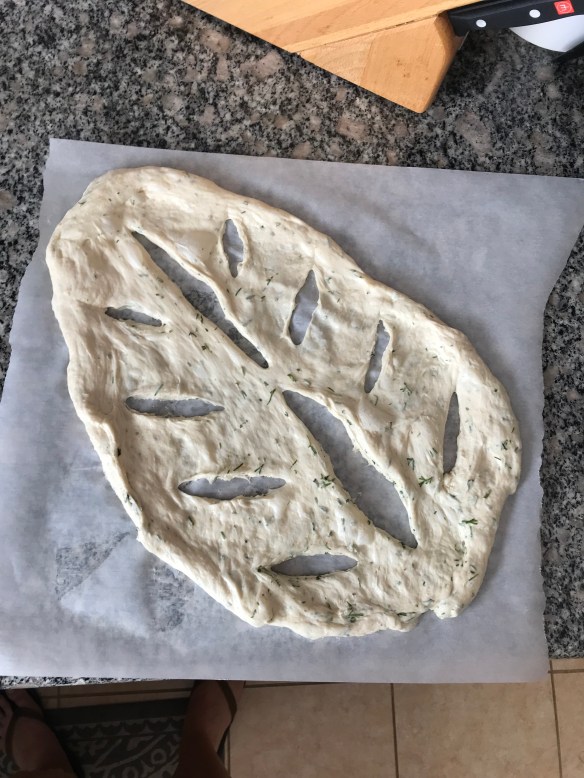
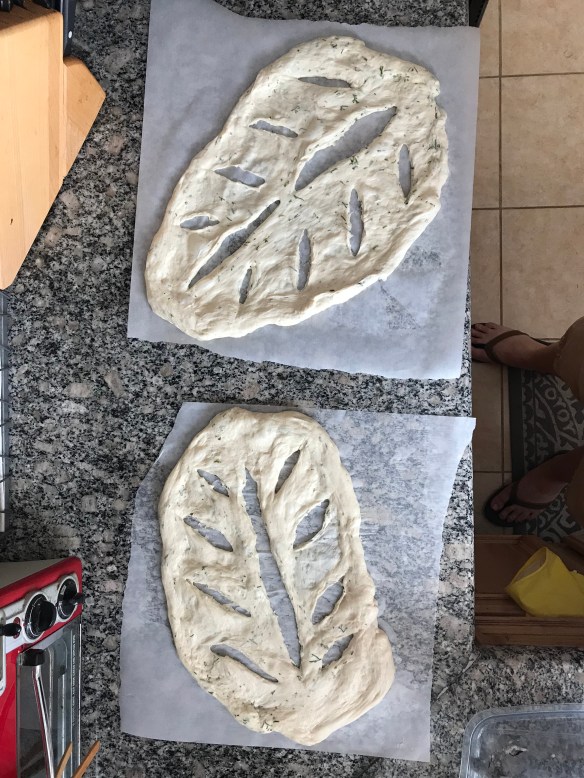
In a recent episode I watched, the bakers were tasked with making two fougasse loaves as their technical challenge. A fougasse is a bread hailing from southern France, usually flavored with herbs, shaped and slashed to resemble a leaf or an ear of wheat, with a chewy interior and a lightly crunchy crust. It is a bit oily, and is best – in my humble opinion, anyway – when it is topped with some coarse, crunchy salt. It’s the bread N. and I gravitate toward whenever we pick up a loaf from Whole Foods’ bread counter.

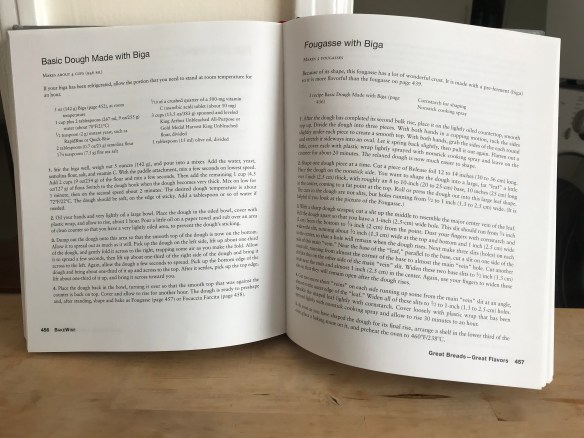
If the bakers on the show could do it, even not knowing what the final loaf was or how it should look, I determined I could too. I went for that wonderful, reliable text that is Shirley O. Corriher’s Bakewise, and slightly adapted her recipe for Fougasse with Biga. A biga is a pre-fermentation starter, like a poolish, that adds flavor and helps create a light texture. I subbed in some of my sourdough starter.

Corriher’s recipe doesn’t include any flavoring beyond what’s in the bread itself, but I opted for some mixed herbs – chopped rosemary and dill, and some tiny thyme leaves – to amp up the flavoring.

This is a project cook because the bread requires not one, not two, but three rises before baking. Corriher doesn’t knead much, but uses a stretching and folding method in between rises called autolysis. The dough that results is quite soft and sticky, but results in beautifully chewy, tearable cords of finished bread all the way around the leaf (except, as you can see, in a few spots where the dough stretched a bit too thin – these were aggressively crunchy instead, though still delicious).

All told, these were worth a morning of rises and folds and stretches, and despite that the original intention was to have bread with our dinner, since I wound up with two and they were still warm at lunchtime, we had to at least sample the goods… Next time I will add a little bit more salt to the dough itself – sprinkled on top was good, but the interior was a touch bland – and will not follow Corriher’s instruction to sprinkle the tops with cornstarch before their final rise. I’m not sure what it accomplished, and I didn’t love the look on its way out of the oven. I will add the herbs again, and I certainly will repeat the still-oven-hot drizzle of olive oil and coarse salt, as I did in this iteration.

* quality note: all photos this week taken with my iPhone.