Lemon rosemary shortbread
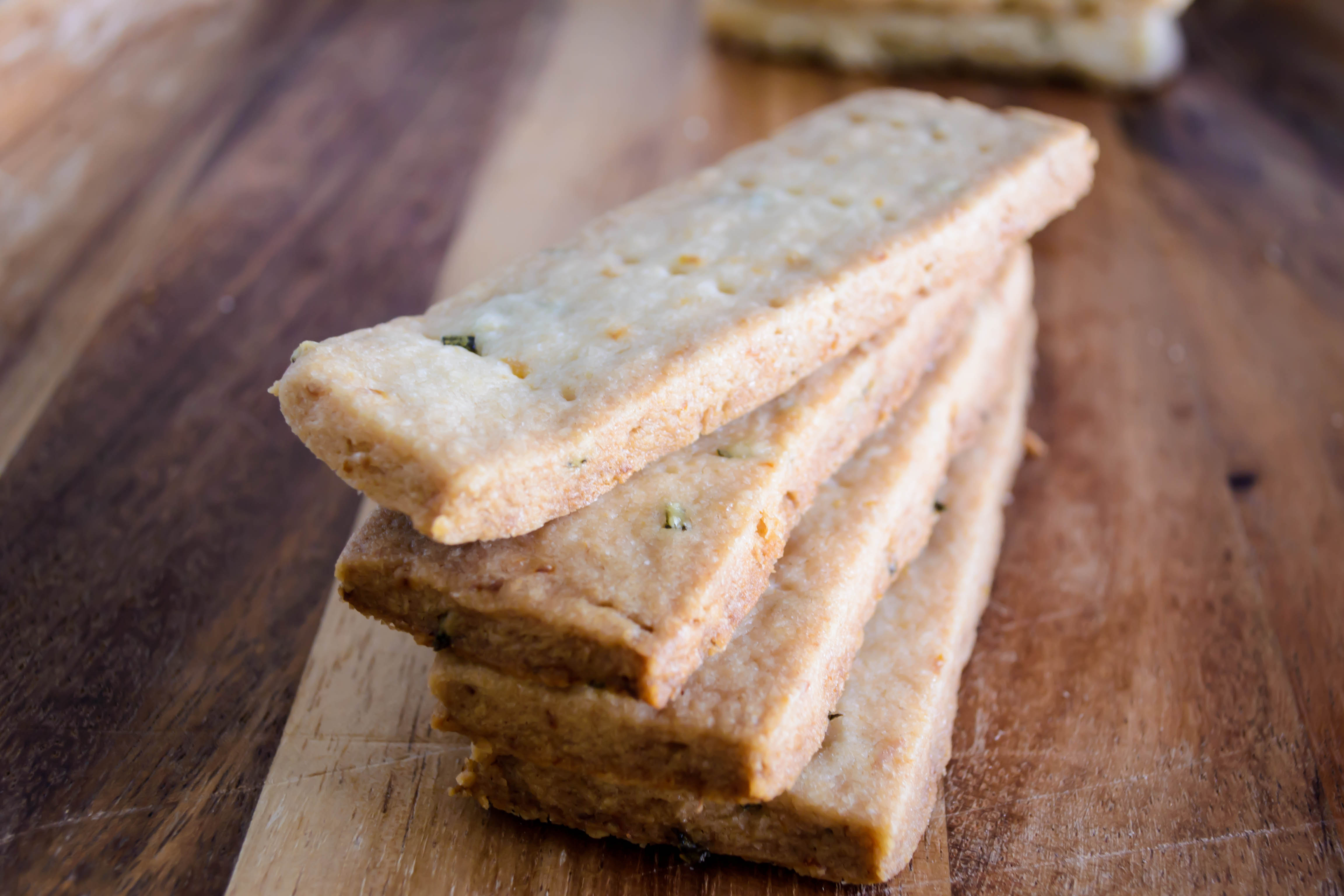
Lemon rosemary shortbread
 Even though I’m getting sauced this year (is that joke already old?), I’m not abandoning my bread ambitions. I love the monthly challenge of Twelve Loaves, and I received a sourdough starter as a Christmas gift that, according to its bequeather, “needs some TLC.” Anxious to do it right, I scoured the internet for suggestions, of which there are no shortage, and in many cases, no consistency, which, delightfully and frustratingly, appears to be no problem at all! I distilled the various directions down into what felt like a successful (read: doable) routine for me. I fed it flour and water, it smells like San Francisco, and I’ve named it Bubblin’ Bertram. Is that weird? Probably.
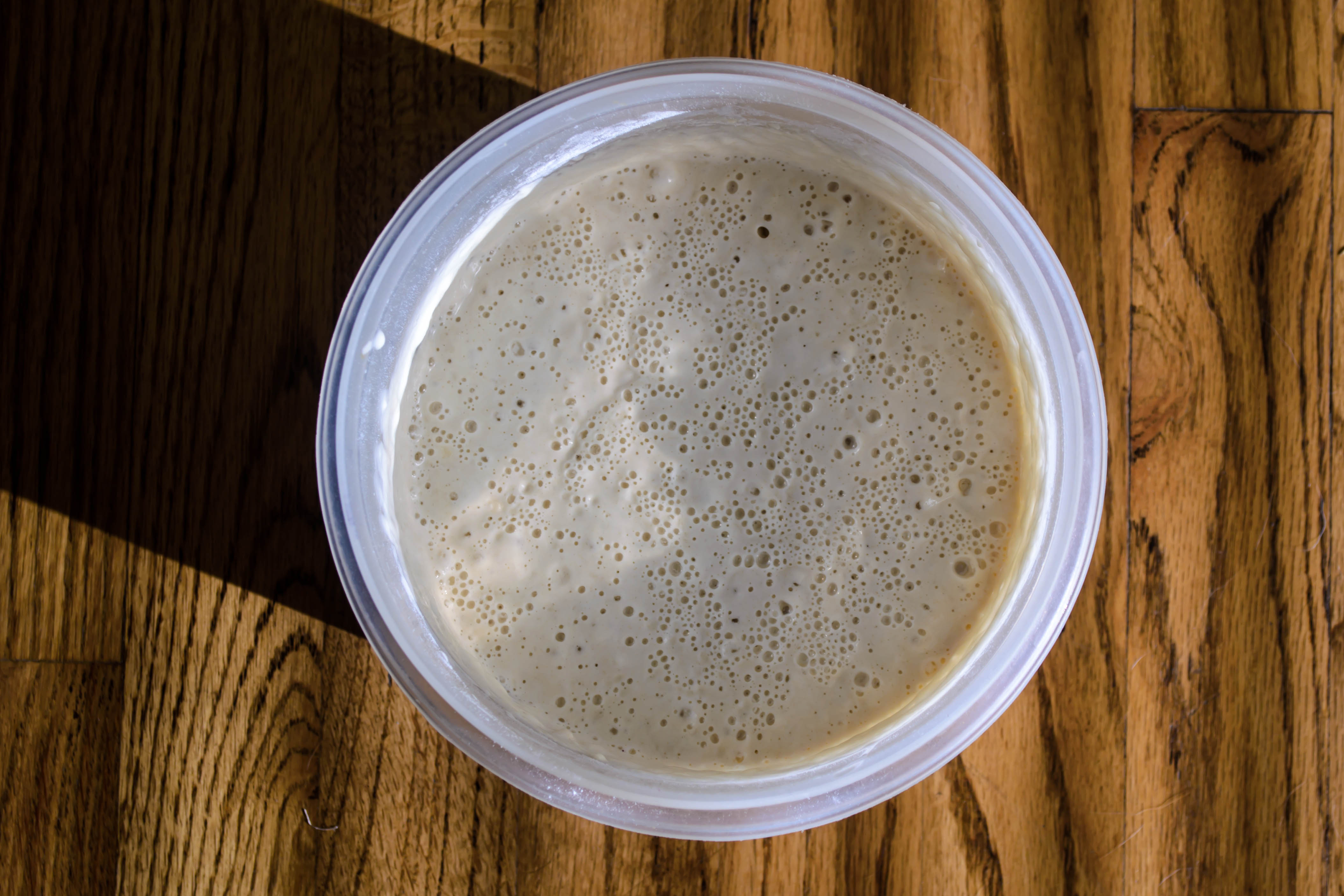
Bubblin’ Bertram bubblin’ away
This month’s Twelve Loaves challenge is “Keep it Simple.” As you know if you’ve spent any time on this blog, that tends to be difficult for me. I like a classic. I like a basic, fundamental recipe, but I like to twist it a little, to ask it to shimmy along with me into something fresh and bright and different. To make my predilection for complexity work with the challenge set, and to to celebrate both my new housemate (what? Yeast is alive!) and the kitchen scale Santa brought me (thanks, Mom and Dad!), I decided to face basics in a way I’ve never done before: by weight.
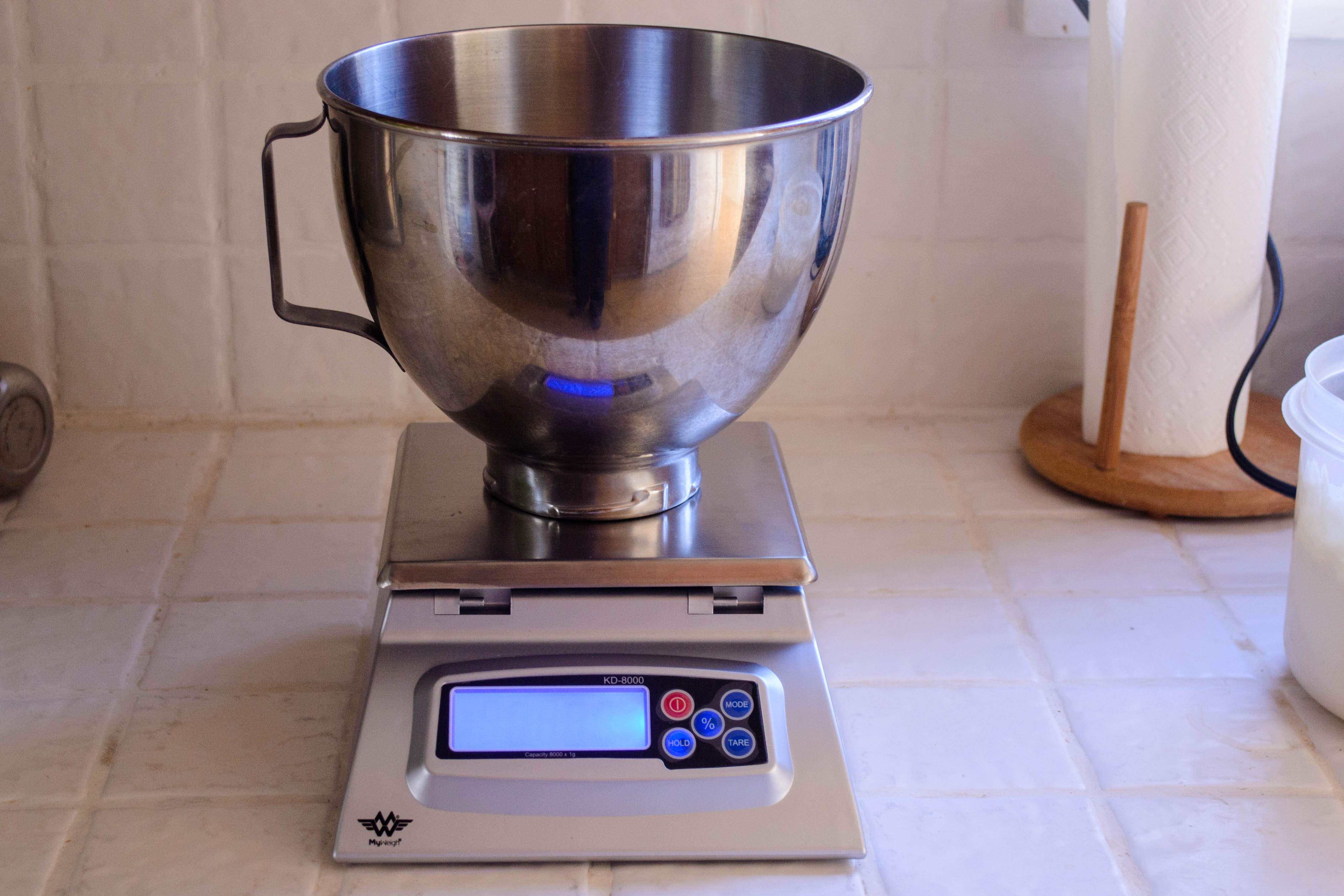 Baking by weight is hardly new. Shauna talks about it all the time, and it is just as true for baking with wheat flour as it is for using gluten-free flour mixes. Michael Ruhlman has written a whole book that relies on it. But it was new for me. There is something bizarrely scary about ignoring your measuring cups, though I’m not sure why, because working by ounces is admittedly so much more precise.
 So I threw caution (and habit) to the wind and dove in, dipping up some of my burbling fed starter, glorying in the yeasty sour smell, and kneading it gently into flour, water, salt, and a breath each of butter and honey for a little extra flavor and moisture. It made a lovely soft dough, and I lovingly nestled it in an oiled bowl, covered it with plastic wrap, and set it aside to swell.

“Shaggy” dough
And then it sat. And I sat. And we sat. And I paced. And it did nothing. For hours. No rising. No bubbling. No noticeable change of any kind. I went back to the internet and searched for solace.
 Three hours later, finally, my dough had almost doubled. In my warm home office, this usually takes a maximum of 90 minutes. But I had used no commercial yeast, only what was naturally in the starter. It takes those little guys a while to gulp down all the new food they’ve been handed, and to expel the gas that causes dough to puff and thicken.

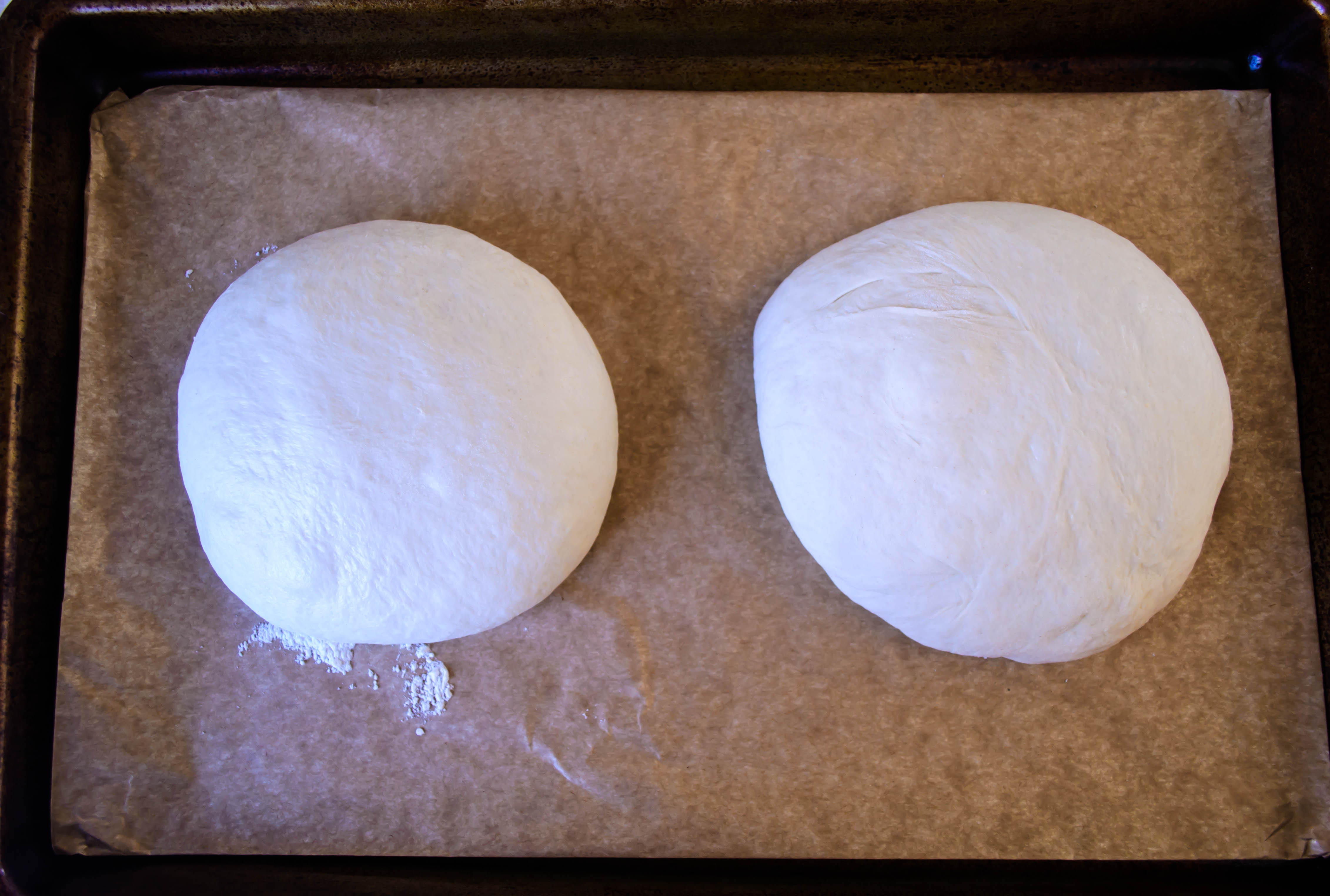 Now that I knew time was the real challenge, everything else fell into place. I divided the ball of dough in two, lightly shuffled them around in some flour and shaped them into rounds, and let them rise again for an hour and a half. They didn’t puff very high, but they did expand into fat floppiness, like doll-sized beanbag chairs. But this didn’t seem to matter. Slashed artfully across the top to help gasses escape while baking, coerced into a steam-filled oven for half an hour, and we had a conjoined pair of soft, browned loaves, moist, warm, on the dense side of fluffy, and lightly but noticeably sour. Simple.

 Simple Sourdough Boule, by weight
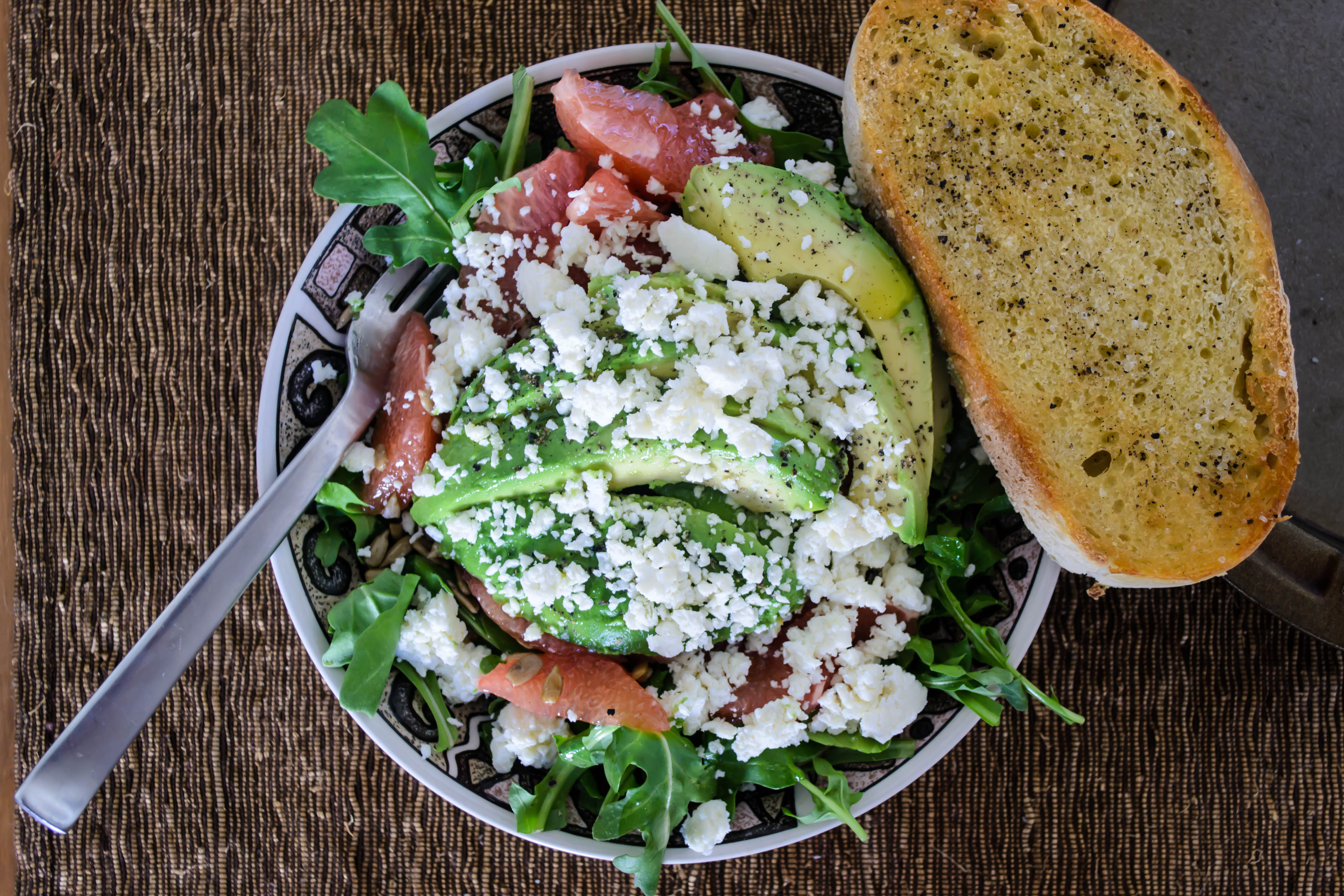
Winter fruits salad
I think it’s a good idea to start with the basics. I don’t rush my students straight into composing multi-source research papers; starting a new project here seemed to hold to the same strictures. I’m not racing right into hollandaise. I’m not drenching your January palates with demi-glace, homemade mayonnaise, or even beurre blanc (though these are coming, have no fear). No, we’re going to start with something foundational, and at least for me, something familiar: bechamel.
 Here’s the thing, though. As I’ve dipped my toe tentatively into the field of culinary history (side note: one of my new secret pretend-careers is culinary historian – fascinating!), what stands out more and more brightly to me is how rarely familiar actually is. Bechamel is an excellent example. It’s a white sauce. It’s one of the classic mother sauces. It forms a base for numerous other sauces: the luscious cheddar and beer laced concoction you drape over toast to make Welsh rarebit. The silky, creamy mess redolent of parmesan that becomes alfredo. Even the simple melting glory you toss with elbow noodles to make macaroni and cheese (can you tell we’ll be delving into cheese sauces?!). But its history is not without contradictions. Even the Medici family figure into it! According to some Catherine de Medici brought a retinue of Italian chefs with her into France when she married Henri, Duke of Orleans, and bechamel sauce flowed straight from their kitchens out into the rest of France. There are stories that it was invented by (though more likely named for) a steward called the Marquis Louise de Bechameil. The tradition of reducing cream sauces probably began in 18th century France, but the “mother sauces,” of which bechamel is one, were created in the 17th century. And boiling or simmering food items in milk, as some bechamels do, goes back to medieval cuisine.
 National and temporal origins aside, there are even disputes about what goes into it. I’ve always made a bechamel sauce from three main ingredients: butter, flour, and milk. But there are thoughts about what kind of dairy should be used, and which flavoring agents are permissible, and some traditional recipes even call for sticking an onion with cloves and letting this flavor the milk as it heats.
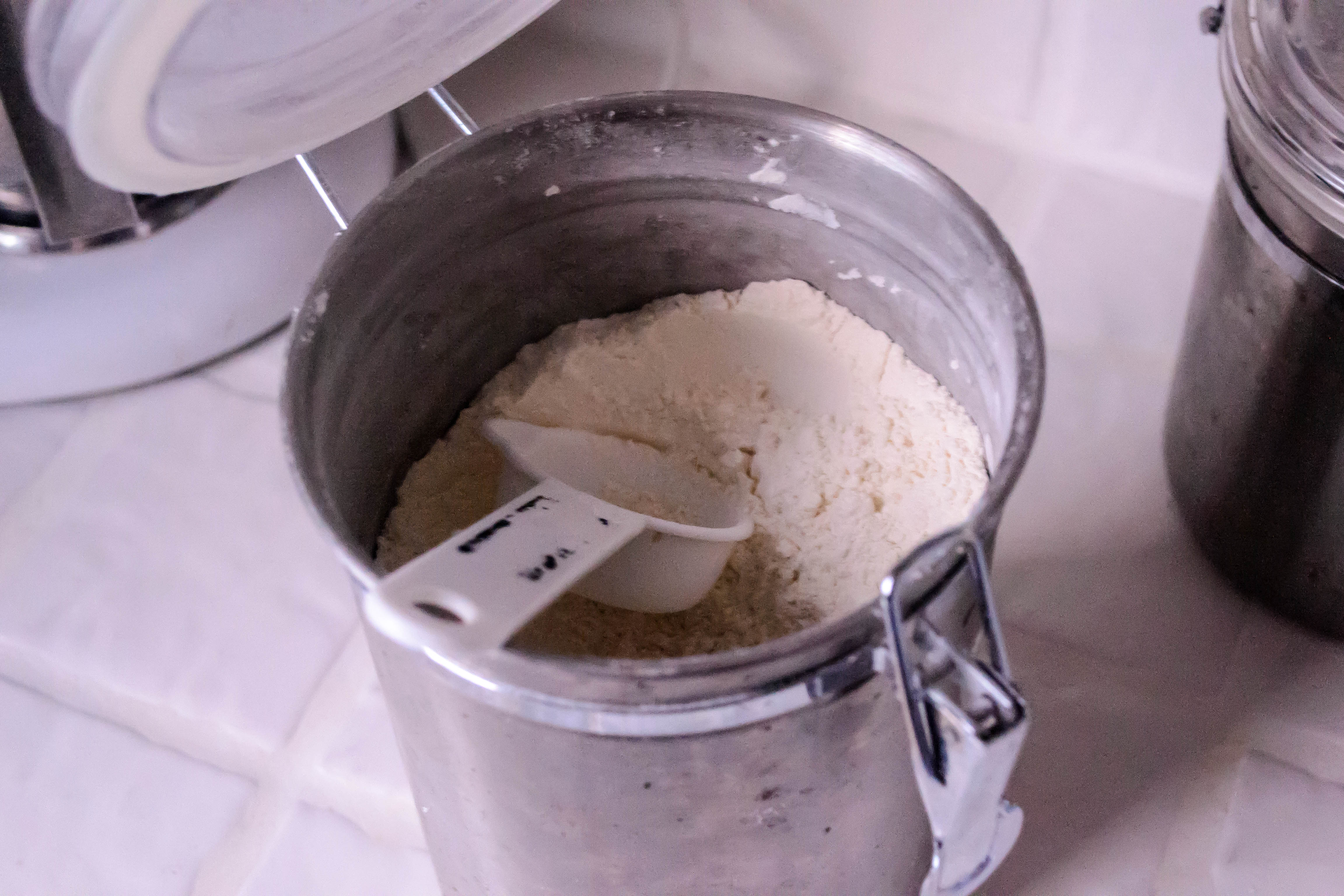 Lest we get confused right out of the gate, however, I’m going to stick with what feels familiar and comfortable. Butter, flour, milk. A pinch of salt. A grind or two of pepper. French traditionalists would have me use white pepper, since it won’t disrupt the homogenous ivory color of the sauce, but I like seeing those little specks of flavor. Not to mention, I didn’t have any white pepper in my kitchen. A sauce made of butter, flour, and milk can only taste like so much, so I’ve also adopted the Italian addition of some nutmeg, freshly ground, to amp up the flavor. Now we have a lightly speckled pool of creaminess, like the slight freckles on a fresh egg.
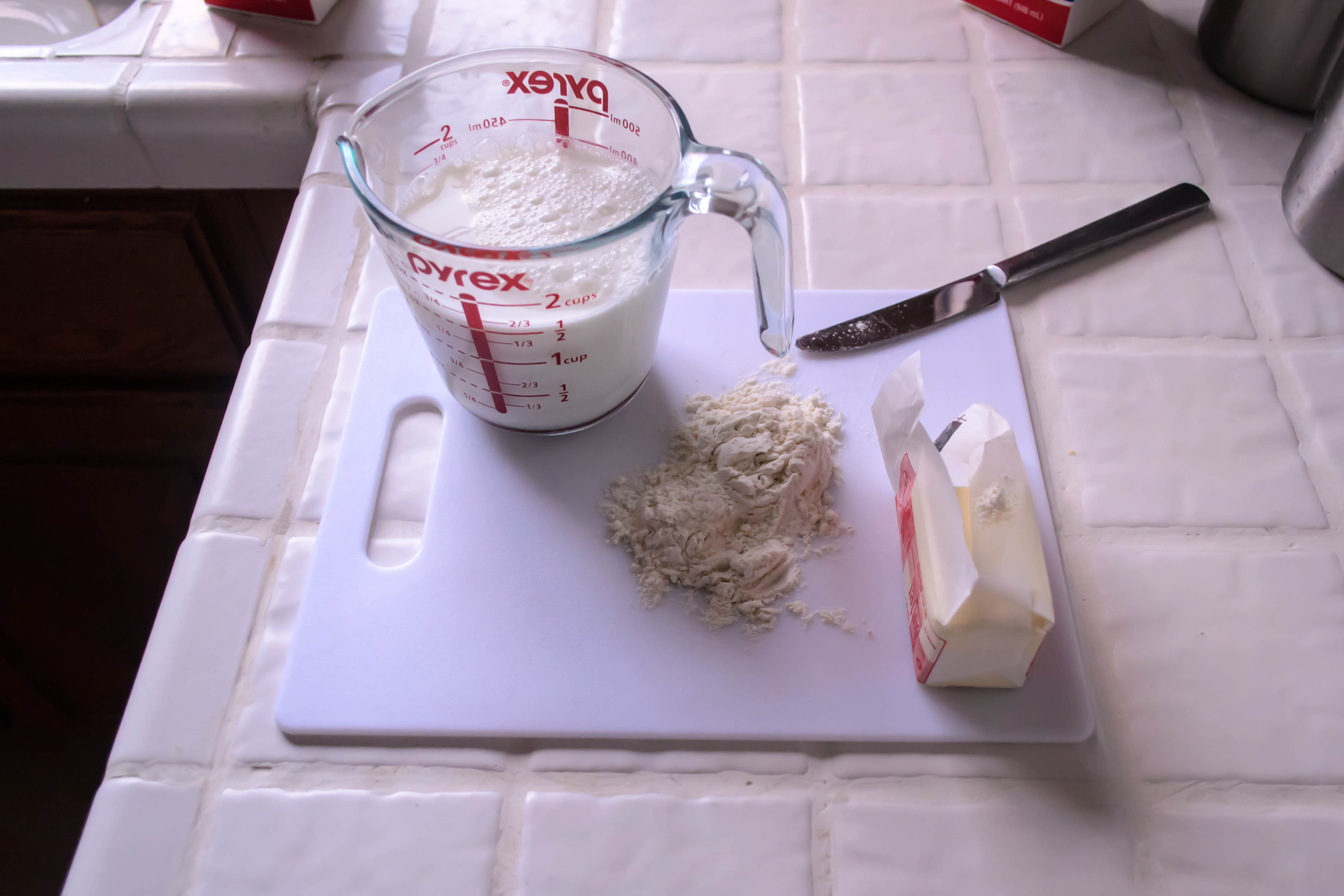 Here’s how a bechamel works: you melt butter, add an equal portion of flour, and cook for a minute or two to allow the flour to dissolve and distribute. This combination – equal parts butter and flour – is called a roux, and it is the classic thickening agent. Everything from gumbo to cream gravy is thickened with roux.
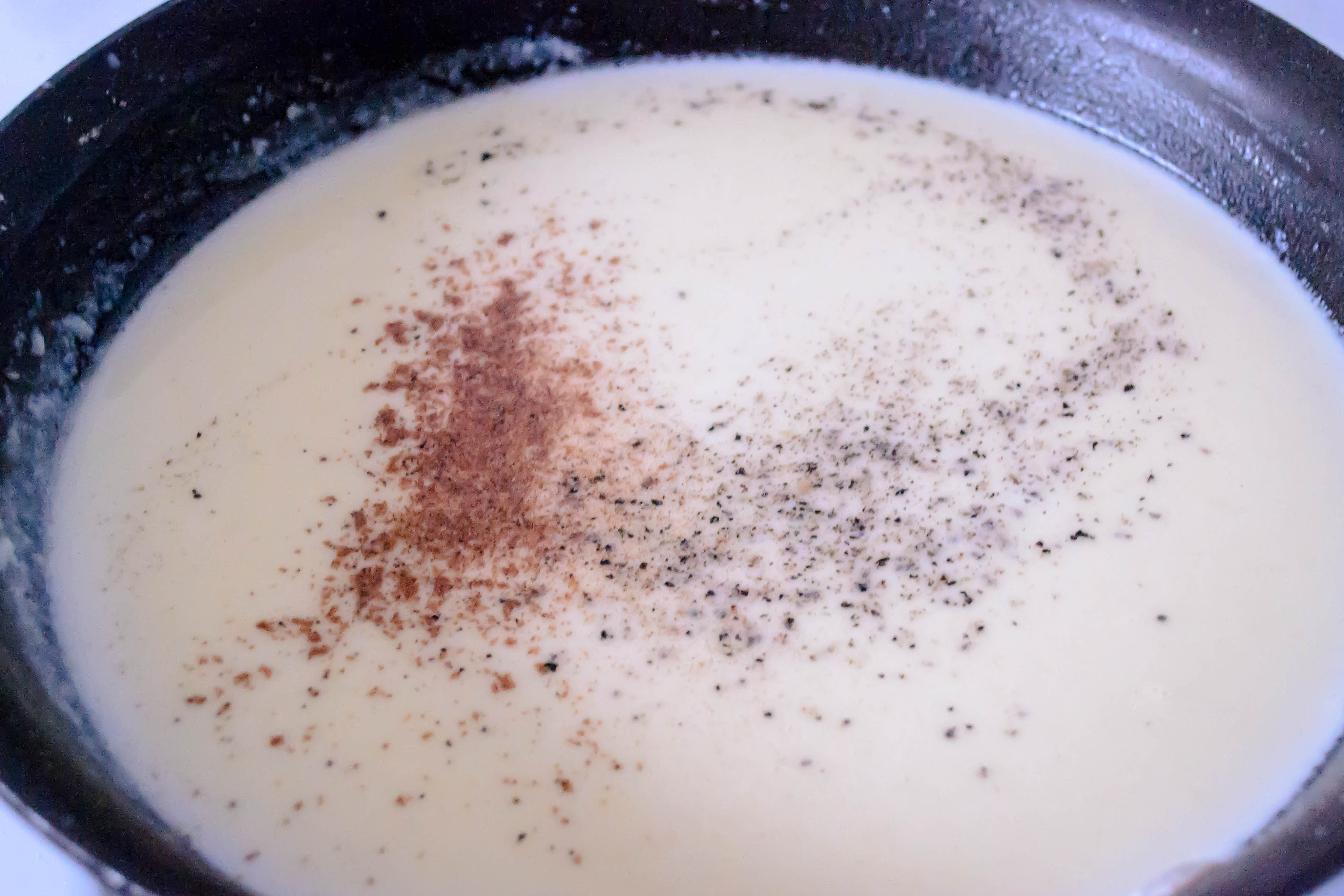 To transform the roux into a sauce, then, you have to add liquid. For bechamel, that’s milk. So we add a quantity of milk, preferably warm, a little at a time, whisking and whisking until a velvet smooth sauce forms. The quantity of milk added depends on the desired thickness of the final end product. Being sure the milk is warm, and adding it slowly, guards against lumps. This sauce is about luscious smoothness and creamy thickness. Lumps won’t do.
 The magic of bechamel is that you won’t know how thick it is going to be until it starts to simmer. It takes a bit of time for the flour granules to hydrate, and only once they are fully incorporated and warm enough to bubble will the true viscosity of the sauce reveal itself. The one we are going to produce here gets just a touch thicker than a pool of melted ice cream. It’s easily pourable, but it will also coat the back of a spoon, clinging in a smooth layer until you, say, run a finger through it to have a taste.
 You can do a lot with a bechamel. As I noted earlier, it is the foundational component of a good cheese sauce. It’s also the classic white sauce component in a traditional lasagna. It can be draped over steamed vegetables, or make the base for a chowder or other cream soup, or even rest gently over a pounded, breaded, pan-fried chicken cutlet. But since I am working with classic and simple here, I wanted to go with a dish that really lets you experience the creamy loveliness of a bechamel: croque monsieur.
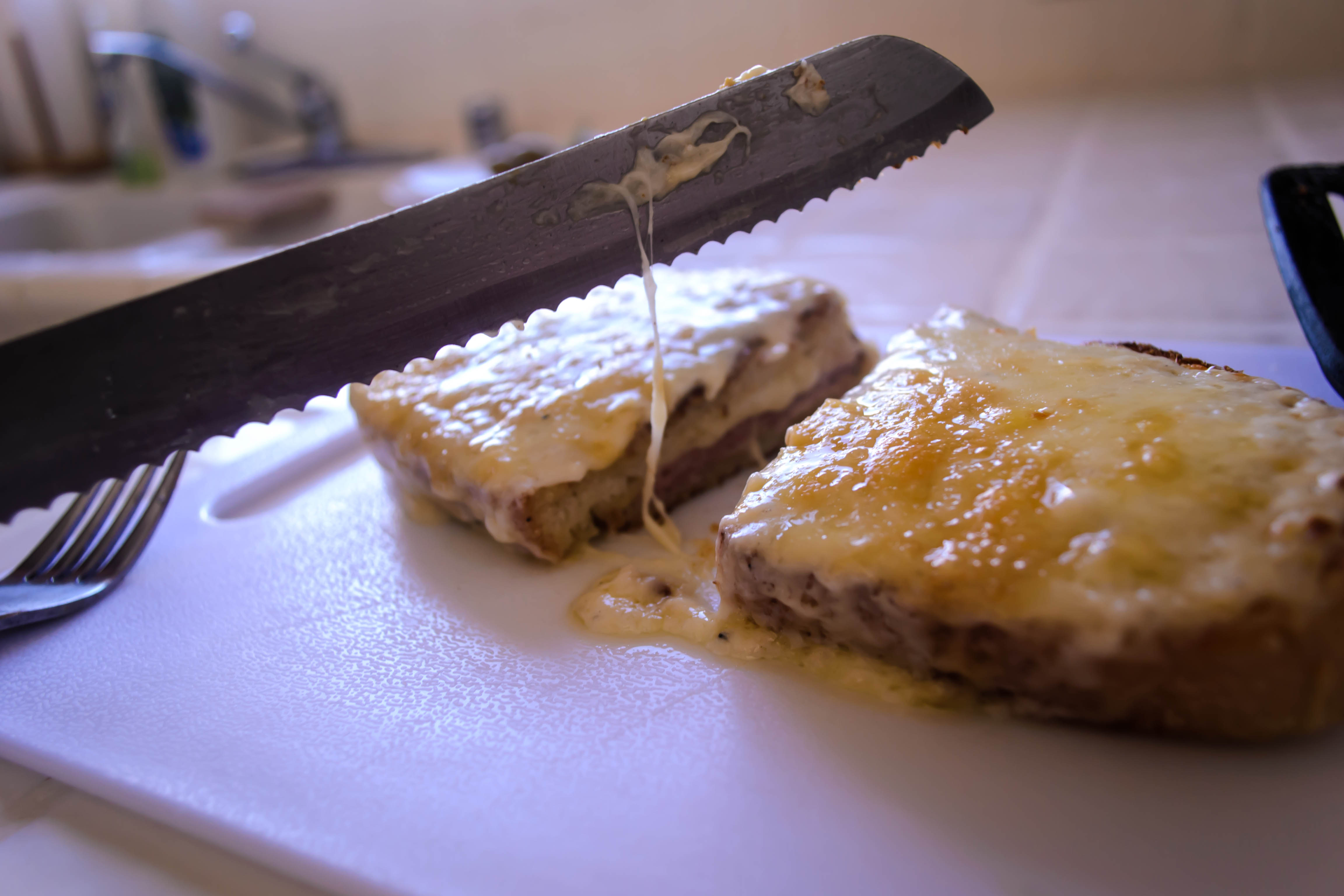 Now you’re raising your eyebrows. I know; croque monsieur is essentially a grilled ham and cheese sandwich. Ham and swiss, to be specific. It’s a name taken from the French verb croquer, which means “to crunch” or “to munch.” Thus the sandwich is, if I dare, a Mister Crunch. N. loved this. He’s been calling the sauce in question a “bleckmel” to make me laugh; he knows full well how to pronounce it (he did take French, after all), and he was so delighted by the literal translation of our dinner that he started to call it a “Crunchy Human” sandwich, eliminating the gendered title: a sandwich for everyone! (I should note, however, that there is a “female” version of this sandwich: a croque madame is the same grilled ham and swiss, with the addition of a gently fried egg on top.)
 So let’s do this. A perfectly crunchy sandwich, laden with melting swiss and a thin layer of smoky, salty ham, topped with spoonfuls of perfectly creamy bechamel, sprinkled with more cheese, and broiled until golden bubbles swell on the surface. It’s a fork-and-knife sandwich, and it’s far from a light lunch, but it is, I think, a good way to start.

Generally speaking, N. and I are boring restaurant attendees. One drink apiece, no appetizers, an entrée for each, and by then we are too full for dessert. The most exciting thing we do (hold your breath, folks) is to share plates, particularly when we are torn between what we want to order. This is likely borne out of graduate school poverty, though in a world of extravagant portion size it seems like a reasonable practice to continue.
 But once in a while, an appetizer or a side dish sounds so luscious, or so interesting, or so, I don’t know, good (are we still allowed to use that word?), that we can’t resist it. At one of our more favorite haunts a week or two before the holidays, we were enticed by just such a side – a craggy mass of mashed potatoes threaded with strands of Brussels sprouts and bacon, a suggestion of cheddar, and broiled until the top was smattered with crusty dark bits. It sounded like a dream. It was… fine.


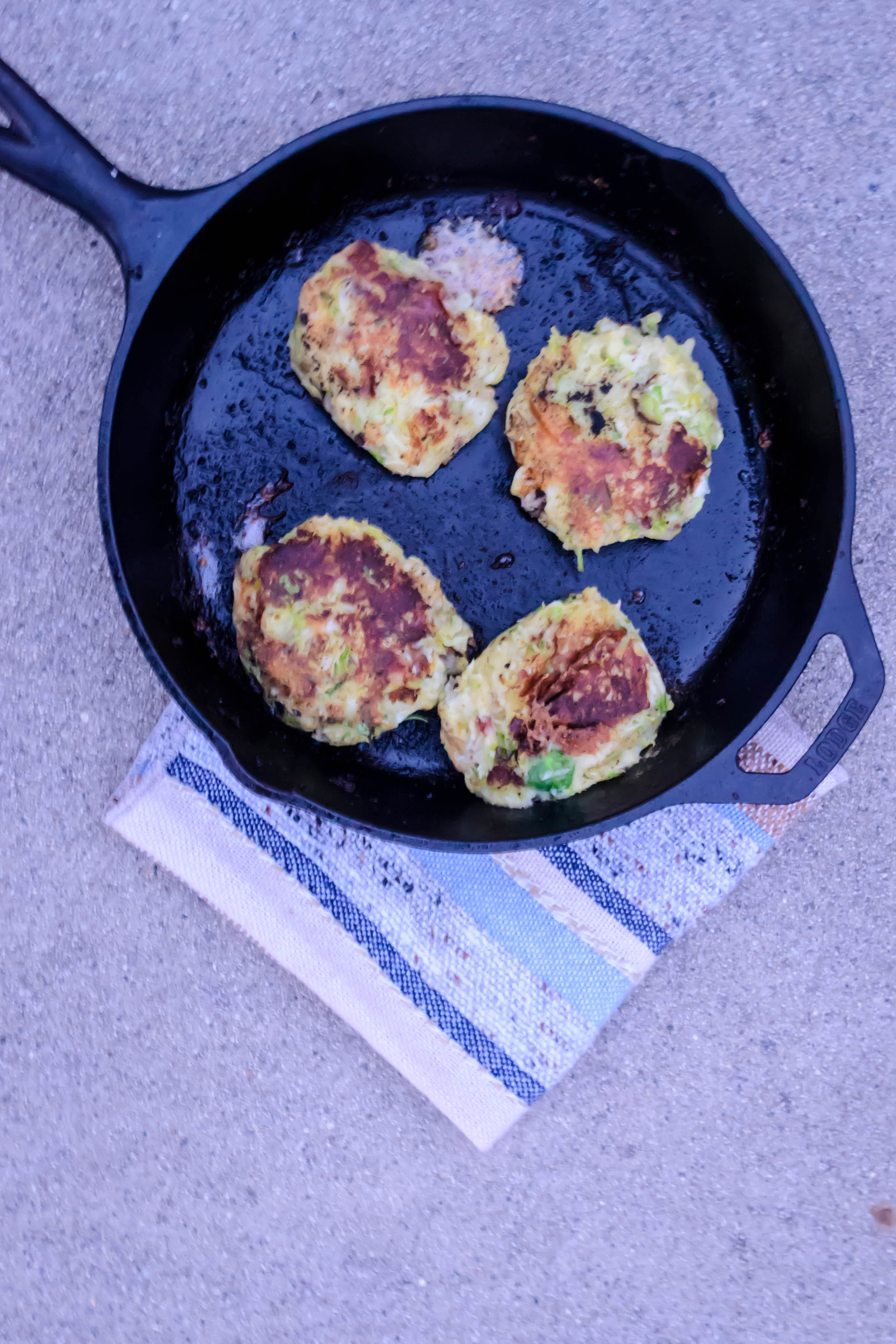
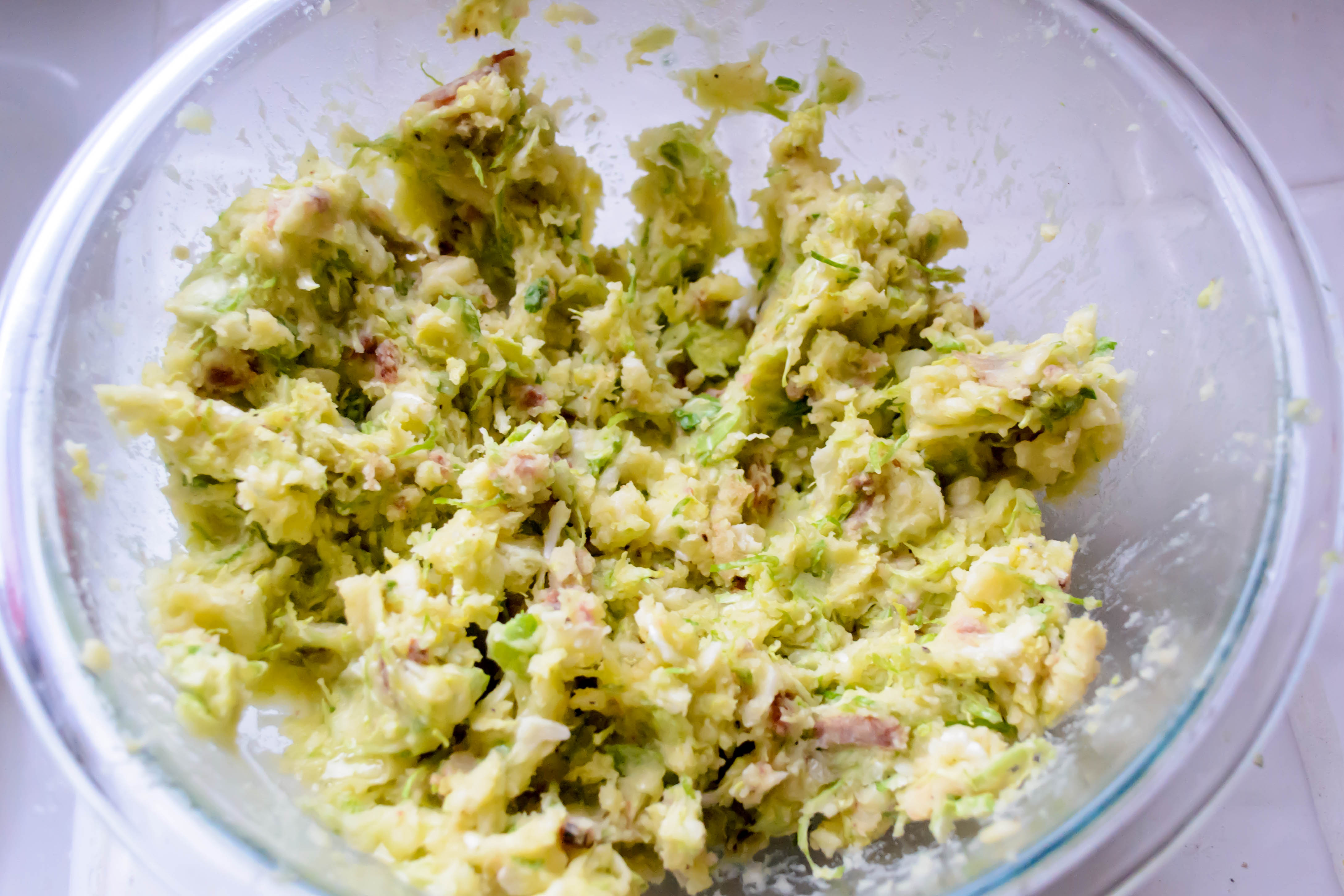 As I ate it, I couldn’t help but feel that the flavors could have been stronger. More cheese. More bacon. More crunch. It needed to be, perhaps not a heap of mash subjected to broiling, but shaped into tender cakes and fried in a pan. Yes, cheesy patties shot through with ribbons of Brussels sprouts and chunks of bacon, fried up in the very bacon grease the meaty bits had expelled as they cooked. Crunchy, creamy, melting, with enough green that a very imaginative person could just barely declare them virtuous.
 What I ended up with was a marriage of that classic British leftovers dish bubble and squeak (though certainly in a modern reinterpretation), and a latke so unkosher that we might as well have piled shrimp on top and called it a day.
 Yukon gold potatoes have quickly become my standard for mash (I could even call them the “gold” standard, but you might groan at that, eh?), and this dish is no exception. Their flavor is terrific – hearty and rich – and they whip into lovely buttery fluff. And here, where texture is intentional, there is no need to peel them. The tissue-thin skins shred into the mix and echo the ribbons of Brussels sprouts. Chewy crisp hunks of bacon stud the cake with smoky saltiness, and do yourself a favor and use the sharpest cheddar cheese you can find – it needs to be saliva-inducing to stand up to the other flavors here. A single egg, lightly beaten and worked in, holds the cakes together, and then it’s just a question of heating up your cast iron skillet and frying them to order. I can imagine scarfing these for breakfast, lunch, or dinner, and I’m admitting nothing, but they are even acceptable stolen cold out of the fridge.
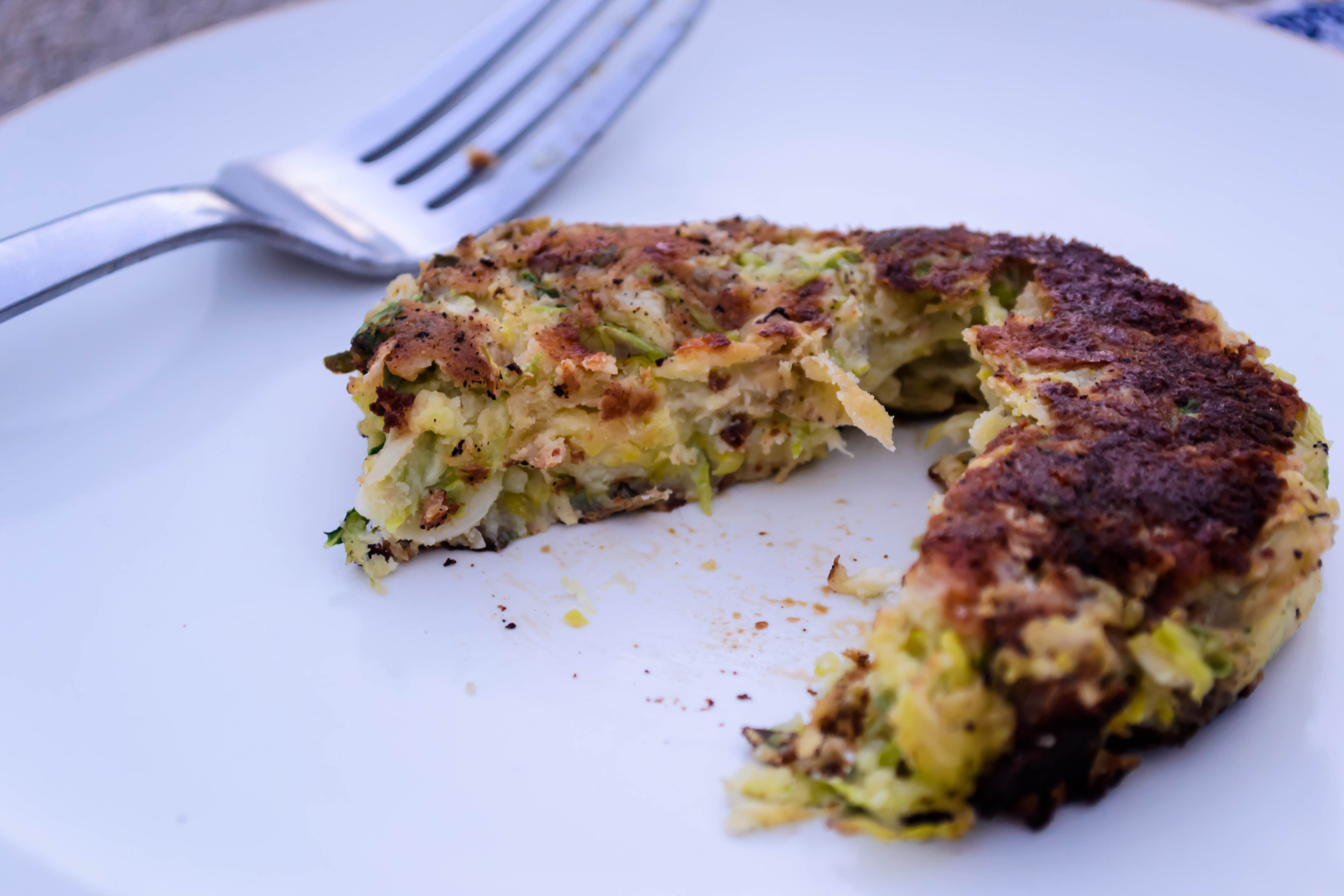 *A note about bacon grease: I found, as I fried these, that bacon grease lends terrific flavor, but because it can be shot through with remnants of browned bits from frying the bacon, it can make the exterior of the cakes quite dark. To prevent this, as in the directions below, I recommend that you pour out the grease, reserving only a tablespoon or two. If you’re feeling particularly fussy, you can strain this reserved portion, but I wouldn’t be too worried about that. Discard the rest (or save for some other application) and wipe out your pan in between frying the bacon and frying the cakes. When it is time to fry again, combine the reserved bacon grease with some olive oil. You’ll still get the smoky, unctuous flavor, but the olive oil raises the smoke point and will produce a golden, rather than an almost-black, crust.
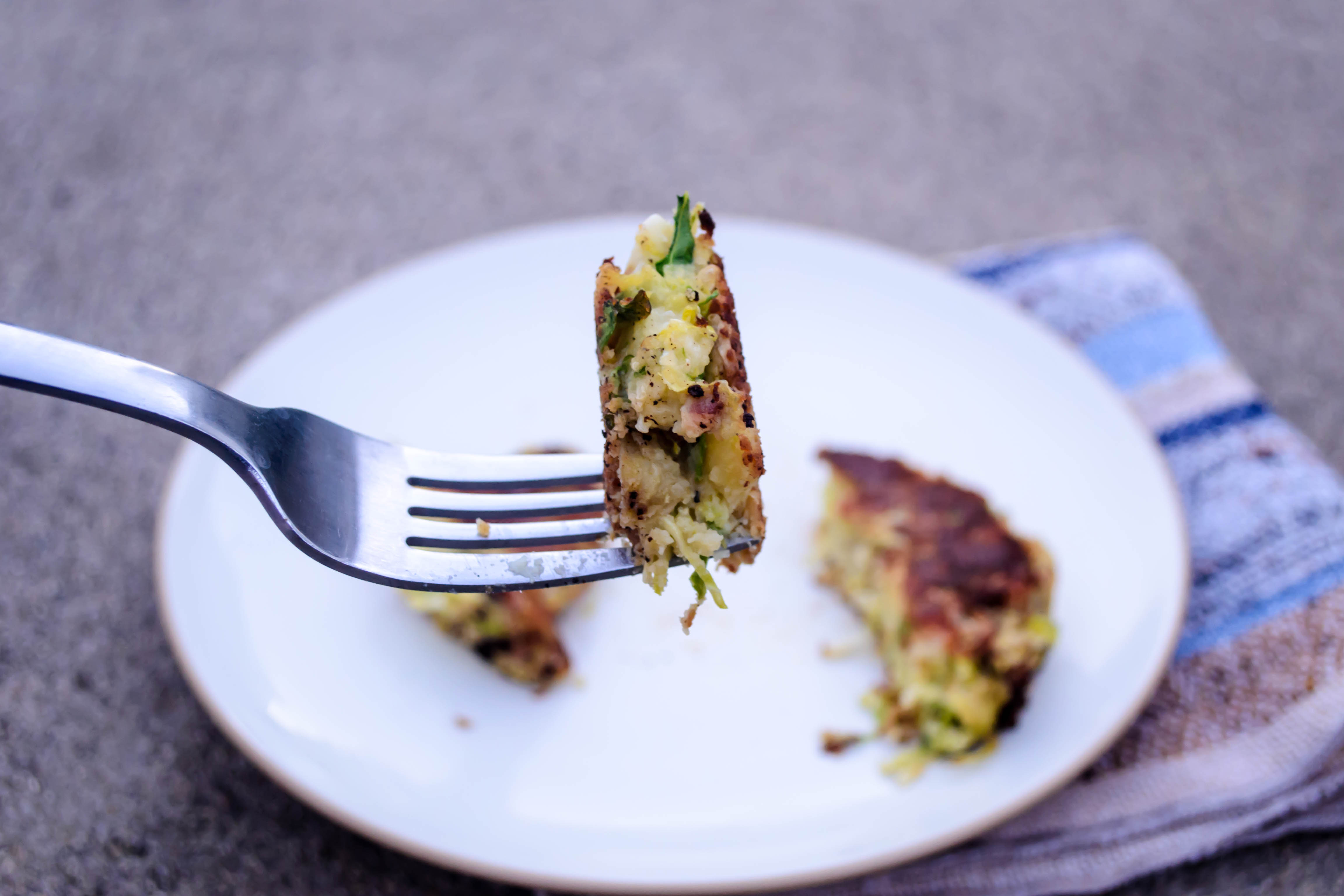 Cheesy Brussels and Bacon Mashed Potato Cakes
 A fabled land of farmers, farm shares, fancy (and not so fancy) restaurants, family meals, food projects and more.
cooking my way through my dissertation, one egg at a time
Fearless cooking from a tiny NYC kitchen.
food, in so many words.
Recreating the famous dishes of famous writers. Part recipe blog, part historical discussion, entirely unabashed love of books.
Epicurean Adventures from Eugene, Oregon
Celebrating the Harvest
Modern Iranian aka Persian Food & Culture Blog - Cuisine, Recipes, Stories , Photos, Pictures, DIY tutorials
Exploring Culinary Traditions of Africa, African America and the African Diaspora
food, in so many words.
food, in so many words.
food, in so many words.
Food-Stories-Recipes-Love
WordPress.com is the best place for your personal blog or business site.
 "blackberry-eating in late September"