Breads of the World: Naan-e-komaj

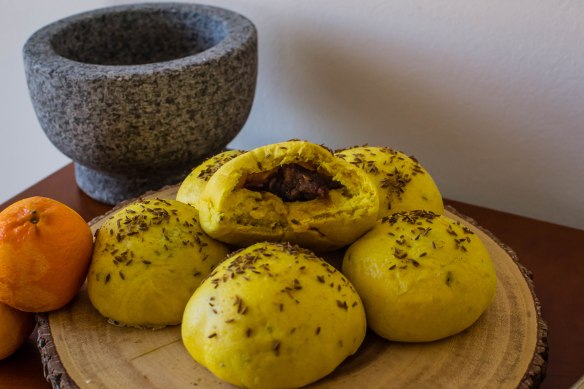
Last week I took you on my own rabbit-hole investigation of a Persian bread called komaj or naan-e-komaj that I had chosen as the inaugural bread for my 2021 project. This week, I present the end result: a set of soft, pillowy, sunshine-yellow date-stuffed buns, and the recipe I used to make them. Since you’ve already got the potential history behind them – I’ll admit, the trail I followed last week could just be a set of coincidences; sometimes different dishes are called the same thing – I’ll try to keep my introductions here short and just give you some thoughts on process and flavor, and plenty of photos to enjoy.

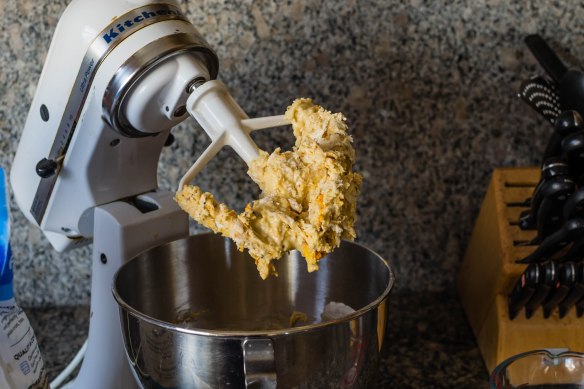
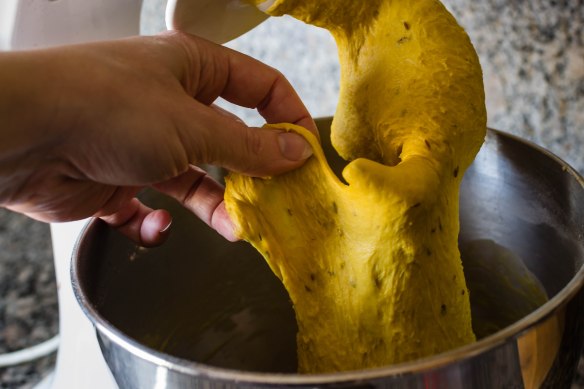
Stretching the dough for the “windowpane test”

Almost there…

These are definitely a “project cook” item, as I suspect most of the breads I offer this year will be. Yeast-risen bread needs time, and these require not the usual two, but three rises before they are ready to bake. I tried to streamline a bit: unable to compromise the length of the rises much, even in my unseasonably warm Southern California kitchen, I settled instead for simplified shaping. The Maloufs, and the baking group who led me to their recipe, shape their buns with a cookie cutter, rolling out a rectangle of dough, brushing with water, milk, or egg to ensure adherence, placing the filling, folding the dough over itself to encase the filling, and stamping out a round or heart shape. I decided instead to go with my usual bun shaping method, which consists of folding, pinching, and rolling a rectangle of dough into a ball using the slight tacky tension between dough and board to seal the seam. You can see this process in my photos below or, if you need a more detailed step-by-step, check out yesterday’s instagram post for a short (awkward, one-handed) video demo of the folding and rolling: over there I’m just blackberryeating.

The only disadvantage to my method is that it can, if you’re not careful, result in the filling starting to protrude through the now-overly-thin top layer of dough. The solution is, I think, to flatten the corners rather than the middle of your dough rectangle before filling and folding, and to execute the roll-to-seal process fairly quickly. The good news is, since you’re making 16 buns you do have ample opportunity to perfect your method.

Shaping the buns: place about 1 teaspoon date filling in the center of a dough rectangle. Keep the center thicker than the corners, if you can.

Fold the corners of the dough rectangle up over the filling, then pinch together into a little purse.

Roll the ball, pinched side down, in little circles on a barely floured board with your fingers in a cage shape.

Rolling in a little circle between your fingers and palm helps close up the bottom seam.

This was my bottom seam – now it’s starting to seal together. A few more rolls and it will be ready!

Ultimately, these were 100% worth the time and the research. They are delicious. The date and cardamom filling, to which I couldn’t resist adding some orange zest, is rich and sweet, but each bun holds only a teaspoon or so, which means it’s also not overwhelming. The bun itself is soft with a slight chew, not too sweet, and on the edge of doughy inside, which makes me think of an almost-underbaked challah, or the perfectly moist interior of a Hawaiian roll. Yours will be slightly less bright yellow than mine – my hand slipped as I was measuring out turmeric and I ended up with a fair bit more in the mix than my recipe calls for. It may seem a bit odd to have cumin – a decidedly savory flavor – along with a sweet date filling, but don’t skip it. The play between the toasty, almost smoky cumin and the sugary dates is lovely, and makes these buns less a dessert item, perhaps, but a definite contender for breakfast, and perfect as a mid-morning or mid-afternoon snack with tea or coffee.

(Naan-e-)komaj
Makes 16 buns
About 3½ hours
This recipe is my version of two interpretations: it starts with the recipe from Saraban: A Chef’s Journey Through Persia, Greg and Lucy Malouf’s recreation of the bread they loved in southern Iran, and pulls in some suggestions from SaffronAmbrosia, the site of a participant in the baking group who auditioned and adapted the Maloufs’ recipe. The addition of the orange zest is my own; given the love of rose- and orange-blossom water in Persian cooking, I couldn’t resist a bit of citrus flavor to brighten the date filling.
For dough:
2 teaspoons active dry yeast
2 tablespoons warm water
pinch + ¼ cup sugar, divided
⅔ cup warm milk (or water)
1½ tablespoons olive oil
1 egg
3¾ cups bread flour
1 teaspoon turmeric
1 tablespoon whole cumin seeds, toasted and lightly crushed, divided
¾ teaspoon kosher salt (or ½ teaspoon table salt)
For filling:
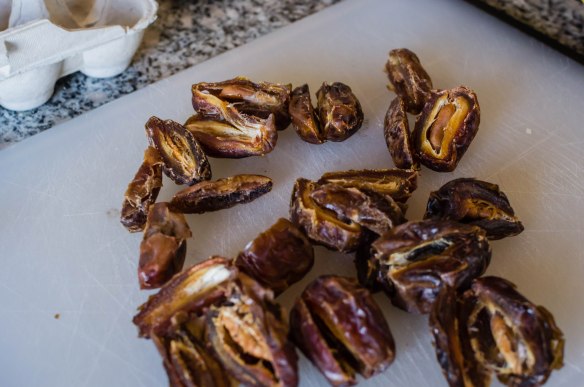
12-15 medjool dates, pitted and cut into chunks (if they are firm rather than soft and sticky, soak them in hot water for about 10 minutes before chopping)
2 tablespoons unsalted butter, softened
1-2 teaspoon(s) ground cardamom (start with 1; cardamom is strong!)
zest of ½ an orange, optional
pinch of salt, optional
To finish:
Milk, cream, or egg yolk to brush on top before baking
Optional: powdered sugar to dust after baking


  • Combine the yeast and 2 tablespoons warm water in a large bowl (I used the bowl of my stand mixer) and let sit for 10-15 minutes, until the yeast is bubbly and smells like bread. Using a wooden spoon or the paddle attachment, stir in the remaining sugar, warm milk (or water), olive oil, and egg.
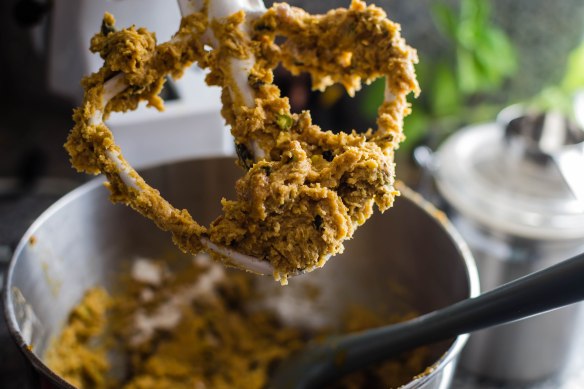
  • Now add 3 cups of the bread flour, the turmeric, 2 teaspoons of the cumin seeds, and the salt. Stir with a spoon or the paddle attachment until the dough is starting to come together – it will have a rough, shaggy consistency. Switch to the dough hook or, if you aren’t using a stand mixer, tip the mixture out onto a well-floured board and knead until the dough becomes smooth and pliable and is no longer sticky. If it seems too wet, add the remaining flour ¼ cup at a time as needed – you might not use the whole amount. I ended up using only 3¼ cups total. When your dough is smooth and elastic, set it in a lightly oiled bowl, cover it with a clean cloth or plastic wrap, and set it aside until it has doubled – about an hour, depending on how warm your kitchen is.
  • At the end of the first rise, when the dough has doubled in size, “punch it down” by deflating it gently with your fist, then re-cover and set it aside to rise again for another hour. During this second rise, make the filling: combine the dates, butter, cardamom, orange zest, and optional pinch of salt. You can just mix them in a bowl if you want a chunky filling, or if you want something smoother, like a paste, use a food processor and pulse until the filling reaches your desired consistency.
  • When the dough has finished its second rise, turn it out onto a lightly floured board and divide it into 16 even pieces. I find this is easiest by first dividing into 4 large pieces, then cutting each in half and then in half again. Working with one piece at a time, roll or gently pull to flatten into a rough rectangle. There are two approaches you can use to shaping these. My method is to roll round buns, which I think is slightly easier but your filling may end up off-enter. The Maloufs and the baking group stamp out theirs with a round or heart-shaped cookie cutter, which is pretty and results in a centered filling, but requires rerolling the scraps. If you’d like to use that method, go here for instructions.
  • If you’re using my method, working with one piece of dough at a time, add a teaspoon of filling into the center of the dough rectangle. Fold each corner up and over the filling, trying not to stretch the dough too much. Pinch together the folded corners into a seam, but don’t press too hard, or the filling may start to poke through the top. Turn the dough ball over and form your hand around it like a cage, then roll gently with very little pressure in light circles on the board to form a smooth, taut round (see Joe Pastry’s excellent tutorial if you need help with this, or check my  instagram post from yesterday for a video demo). Let the shaped, sealed buns rise, covered, on the cookie sheet for about 15-20 minutes.
  • While the buns have their final rise, preheat the oven to 400F. After this final rise, paint the tops of the buns lightly with milk, cream, or an egg wash (egg yolk combined with 1-2 teaspoons water). Sprinkle the remaining 1 teaspoon cumin seeds over the top of each one, then bake in your preheated 400F oven for 8-10 minutes.
  • Let the finished buns cool on a rack for at least 10-15 minutes, then dust with powdered sugar if you wish. Serving with tea, like a spicy-sweet chai, or a cup of Turkish coffee would be ideal. Like many sweet buns these are best the day they are made, but leftovers are easily and deliciously reheated.

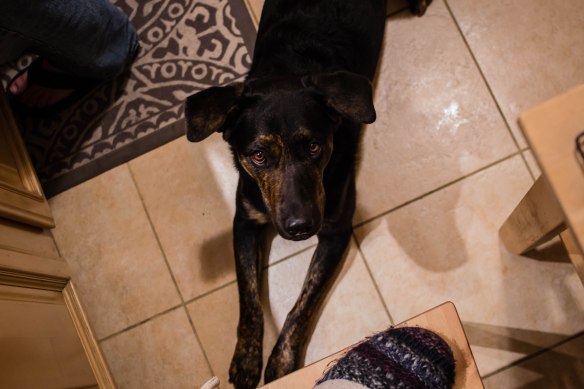
A small hungry helper who protests that she did not get any komaj to sample…

Manhattan Beach Post’s Bacon Cheddar Biscuits (no recipe)

If you live near me, in the South Bay area of Los Angeles, I hope you have been to Manhattan Beach Post. Headed by Chef David LeFevre (notable a few years ago on food TV for falling one unfortunate battle short of being crowned the newest Iron Chef), it’s an upscale-but-casual spot near the beach, with inventive small plates designed to be shared. You and your dining partner order maybe 3 or 4 things, and they are served as they are ready, which means you might get your fish “main” before you get your pan fried spicy green beans, but that’s okay. It adds to the ability to play with flavor combinations as each new plate arrives at your table. Plus then you have more time to examine the cocktail list to see what to order next…

One of the highlights at MBP comes in the form of their bacon cheddar biscuits. Studded with chunks of cheese that ooze out into crisp, lacy patterns as they bake, they are served still steaming with a small pot of whipped, lightly salted maple butter. People order them by the dozens.

Since, given my penchant for wanting everything, MBP gets a little pricey for a weekly visit, the stretches in between those biscuits get to feeling long. I’m no amateur with biscuits myself, given that a quick word search on this very site turns up no less than eight successful variations and one small disaster, but MBP’s are achingly tender and flavorful and rich in ways mine fall slightly short of. They also have that inimitable quality of being made by someone else, which so often raises the deliciousness quotient a few notches.

I’d certainly be willing, though, given their place in my taste memories, to make them myself, so you can imagine my delight when a week or so ago I found this recipe for the very thing. Naturally this went immediately to the top of my “to make” list, only to be foiled by a series of “there’s no way we’re turning on the oven, nope, not a chance” days in a row.

But a week after the initial find, we had a cooler afternoon, and I collected myself, halved the recipe, and produced a tray of tender, lightly browned blobs oozing with cheese that we gobbled up alongside a salad to pretend we were being responsible. And then three days later we made them for breakfast, sans chives, cheddar, and bacon, splitting them gently and spreading them thickly with maple butter. And I have to say, both times they were just perfect: light, fluffy, tangy from buttermilk, just barely edging toward sweet and salty, and something I’d always be happy to have a half dozen of in the freezer, just for spur-of-the-moment biscuit cravings (what, you don’t have those?).


A few notes: I subbed out bacon for pancetta in my savory version because, for a weeknight, I couldn’t pass up the convenience factor of the pre-cubed packet I had only to shake into a frying pan. The dough itself, if you can call it that, just barely holds together, but try to resist the urge to add more liquid, which turns it into a sticky mess almost immediately. As with scones and other such beasties, the key is to mix and knead as little as possible to preserve tenderness; I didn’t even mess with my rolling pin, but just patted the mess into something like a rectangle with lightly floured hands, then sliced the whole thing into squares with a knife instead of bothering with a biscuit cutter. And don’t pass up the brush of butter and sea salt on the top (LeFevre calls for clarified butter; I just used my regular unsalted, melting a little in the warmth of the preheating oven). It promotes browning nicely and offers a little extra decadence, and the crunchy flakes of sea salt are a delight.

Project Cook: Seeded Pumpkin Biscotti

A few weeks ago, Irvin from Eat the Love posted on his instagram feed that he wasn’t seeing many pumpkin recipes from the bloggers he follows, and both politely and in fun, essentially told everyone to step it up! Instantly (although I’m definitely not one of his favorites – I doubt he knows I exist!) I knew I wanted to make pumpkin biscotti, using one of his tricks (more on that later). I would stud them generously with pumpkin seeds since I’d had that bag of pepitas in the pantry forever,* and maybe some other nuts, and top them with coarse, crunchy sugar or a criss-crossed shiny glaze, and I’d be right on trend.

And then, of course, I didn’t. Instead we had friends over, and I graded papers, and the kitchen was too warm, and I lost track of my biscotti for a while, but this past weekend, in between setting out Halloween decorations (and, of course, more grading), I finally got down to it. Supplies bought, I went looking for the rest of the ingredients, and after tearing through my pantry shelves, realized the wellspring inspiration for the whole recipes – the pumpkin seeds – were nowhere to be found.

Cut to me, grumbling and grouchy, on an emergency trip to the nearest grocery store, scouring what felt like every aisle until I finally found some, in measly little 2 ounce packages, next to the cocktail peanuts. Project back on track.

For the base dough, I turned to the gurus at King Arthur Flour. While their recipe looks delicious, I knew I wanted to raise the stakes a bit with various sources of crunch, and – here’s where Irvin becomes important for this recipe again – I wanted to use his pumpkin trick of drying the puree out on the stove before integrating it into the recipe. The problem with pumpkin, as I’ve noted previously, is its massive moisture content. The KAF recipe contains only ½ cup pumpkin puree, likely because it’s so wet that adding much more would not allow for crunchy cookies. I figured since I was going to reduce the moisture so much I could increase that quantity by half. This would give me a dryer ingredient with a more intense pumpkin flavor.

But making my mixture less wet entailed potential recipe problems. Biscotti should be crunchy, but reducing moisture content too much could lead to stale-tasting cookies, or a mix that didn’t hold together properly. Time to do some research. My favorite biscotti recipe, from the very first issue of Bon Appétit I ever bought, is flavored with lemon and walnut and has become a family Christmas standard. It differs considerably from the KAF recipe for pumpkin biscotti, with more egg, a good bit more butter, and of course a staggering 3 cups of chopped walnuts I was not planning to come even close to. The recipe creation then became guesswork, which involved a series of texts between me and my sister to try and figure out how to proceed.

I settled on increasing the amount of egg and butter, but not quite as much as my old reliable standby. Since I’d be adding nuts and seeds, I also opted to change up KAF’s procedure a bit to match the one I was used to: rather than putting the shaped, sticky batter straight into the oven, I wrapped mine in plastic wrap (which also helps shape it – more below…), chucked it into the fridge for a few hours, and then unwrapped and baked it once it had firmed up.

My go-to lemon and walnut biscotti recipe advocates cooling the flattened dough logs completely after their first bake, then slicing, lying the cookies down on their cut sides, and baking again at low heat. The KAF recipe I was half-following suggests cutting while still hot, then baking again with the cookies standing up on their flat bottom edges. I was intrigued and tried this new way, and I might never go back. Yes, the slicing requires delicacy, especially because the pumpkin seeds and pistachio pieces are harder than the surrounding dough, but cooking them standing up means first: the coarse sugar you press into the top stays put, and second: they brown evenly on both sides. Even browning, sugar-crunch layer, and you can even fit more on the baking tray at once. Say no more. I’m sold.

But I guess really there is one more thing to say, and that’s our assessment. These are outstandingly delicious. They are spicy and crunchy and not too sweet, and though the pumpkin flavor is mild it’s definitely there. The sparkling coarse sugar on top is perfect against the earthiness of the nuts and pumpkin seeds inside. It’s a good thing I’m taking a batch in to work tomorrow, because by the time I remembered I should count how many cookies this recipe made to report here, we had already eaten… enough of them… that guesswork was required, and when I realized I was eating what might have been my fourth in an hour or so, I sentenced them all to wait in a hard-to-open Tupperware on top of the fridge with the Halloween candy so they would be harder to access. We will certainly make these again, as should you. And I’ve already plotted out a version with amped up ginger and chopped dried apples for Christmas. Move over, lemon and walnut standard. Or at least be ready to share the plate.

* for a clear explanation of the difference between pepitas and plain old pumpkin seeds, see here.

Seeded Pumpkin Biscotti
Adapted from King Arthur Flour
Makes approximately 3 dozen
About 4 hours (including resting time) or overnight
1 cup pumpkin puree
½ cup pepitas
½ cup roughly chopped pistachios
6 tablespoons unsalted butter, softened
⅔ cups granulated sugar
1½ teaspoons ground cinnamon
¼ teaspoon ground nutmeg
scant ¼ teaspoon ground ginger
1½ teaspoons baking powder
½ teaspoon salt
2 eggs
2 cups all-purpose flour
1 tablespoon flax seeds
2-3 tablespoons coarse sugar, such as turbinado or demerara, for sprinkling


  • In a small skillet, cook the pumpkin puree over high or medium-high heat for about 15 minutes, stirring frequently, until the color has deepened and the puree has dried and has a texture something like a thick, crusted frosting. It will be reduced by about half. Set aside to cool.
  • While the pumpkin puree is reducing, if desired, toast the pepitas and chopped pistachios in a 300F oven for about 10 minutes. Set these aside to cool as well.
  • In a large bowl, or the bowl of your stand mixer, cream together the butter and granulated sugar. Add the cinnamon, nutmeg, ginger, salt, and baking powder, and beat with the paddle attachment until smooth and creamy.
  • Beat in the eggs and the cooled pumpkin puree until well combined. The pumpkin will take a minute or two to fully integrate.
  • With the mixer on low speed, add the flour a ½ cup at a time, then the flax seeds and the cooled pepitas and pistachios. Be sure to scrape the bottom of the bowl once or twice to ensure everything is mixed in. The resulting mixture will be very sticky.
  • Cut two pieces of cling wrap and spread them out on a clean counter. With a determined spatula, scrape half the dough mixture onto each. Using the plastic wrap, push and mold the dough into two long rectangles of about 10 x 2½ inches. Wrap them up in the plastic wrap, put them on a cookie sheet or other flat tray, and stow in the fridge for at least two hours, or overnight.
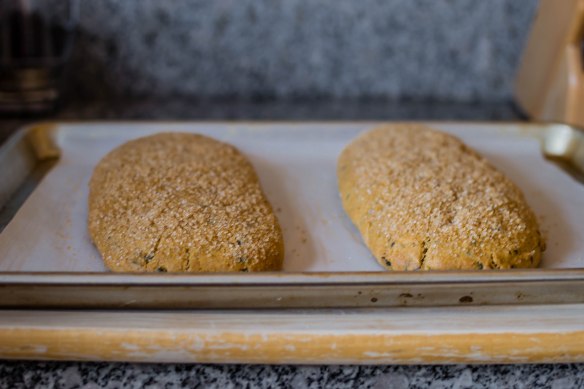
  • When you are ready to bake, preheat the oven to 350F. Retrieve the dough logs from the refrigerator, unwrap them from the plastic wrap, and position them an inch or two apart from one another on a parchment lined baking sheet. Sprinkle the tops with the 2-3 tablespoons coarse sugar, then use your hand to spread the sugar evenly and gently press it in to the top of the dough a bit so it adheres.
  • Bake the dough logs for 25 minutes; they will be just firm. Remove from the oven and let cool 10-15 minutes. Meanwhile, reduce the oven temperature to 325F.
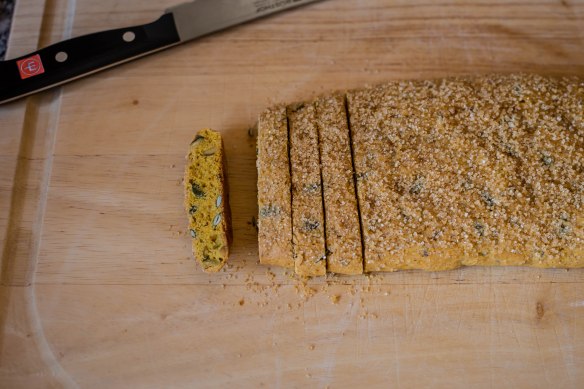
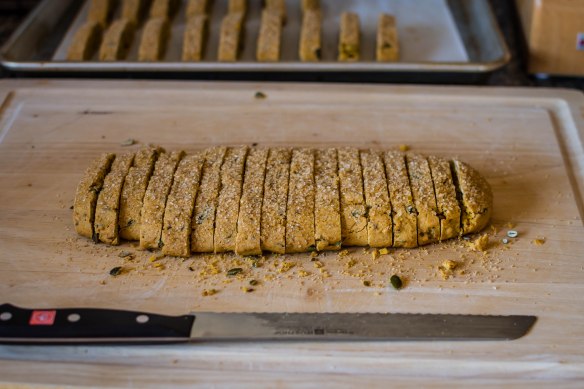
  • After 10-15 minutes, use a sharp serrated knife to cut the logs crosswise into ½ inch slices. Use a gentle sawing motion to avoid breaking up the slices, which will still be very delicate at this point. Some of the nuts and seeds will be harder to cut through. Be sure to cut as straight up and down as possible; if the biscotti are thicker on the top than the bottom, they won’t stand up correctly for their second baking.
  • Stand the biscotti on their bottom edges on the same parchment lined baking sheet you used to bake the flattened logs. They can be fairly close together but should not be touching. Carefully return the pan to the 325F oven and bake for 40-45 minutes, until they are getting golden brown around the edges. They will still be soft in the middle.
  • KAF recommends turning off the oven, cracking the door, and allowing the biscotti to cool completely while inside, likely to ensure the finished cookies are crunchy. I did not do this because I had something else I needed to bake; I cooled them in the oven only 5 or 10 minutes, then removed the pan to a counter top and let them cool completely. Mine were still perfectly crisp all the way through.
  • Serve when completely cooled. Perfect with coffee, chai or other tea, or straight off the pan.

Zucchini Spice Bread with Cherries (now with post and recipe!)

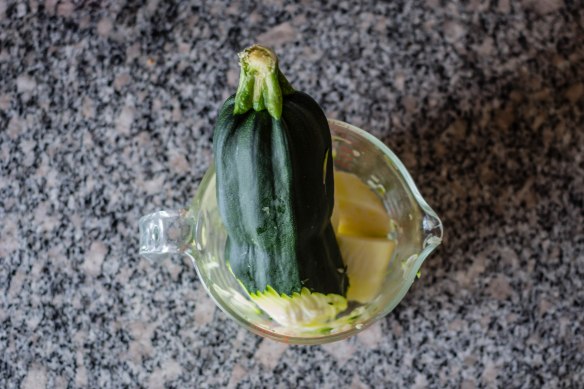
This past summer, we did not grow zucchini. Still traumatized by the various baseball bats we had to consume the previous year, N. flatly refused it. He couldn’t find the humor even in my joke that we would only grow a small one… Needless to say, no zucchini graced our table this summer.

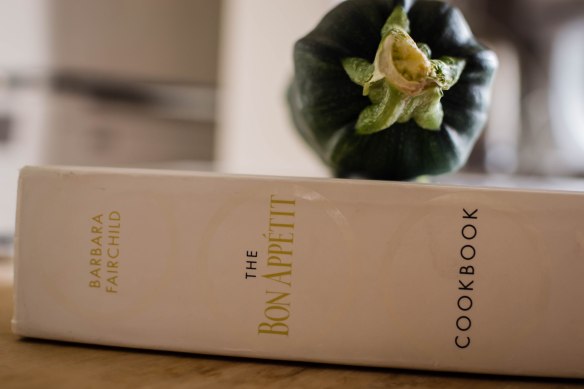
But I missed it. In particular, I missed my favorite zucchini bread recipe, a cinnamon-spiced affair with an appealingly-crusty top but still-moist center from The Bon Appétit Cookbook that I’ve made probably at least a dozen times. It’s lightly sweet, it’s not overwhelmingly, well, zucchini flavored, and you don’t even have to squeeze out the grated squash before adding it to the mixture. In fact, you shouldn’t; the recipe relies on some of that wetness to attain the correct consistency. Buying zucchini from the grocery store to put toward this purpose just didn’t seem right – this was, as the book itself declares, a recipe designed for a zucchini harvest.

So when one of my coworkers advertised her bounty, I suggested that I’d be willing to take one of her prolific squashes off of her hands, and as a result I received a delivery at least as long as my forearm. Yes. This meant zucchini bread. To keep myself interested, in this incarnation I not only included the deeply toasted chopped walnuts the recipe calls for, but subbed in some almond flour for part of the all-purpose flour to add extra nuttiness and – not that this recipe needs it – assured moisture. I also added my most recent baking obsession: a generous few handfuls of tart dried cherries. And then, since just a loaf will never do, I made four. And I still had a chunk of zucchini left that’s probably still at least 6-7 inches long.

This recipe calls for two cups of grated zucchini. And that seems like a lot, until you realize it really only takes one reasonably sized squash to make that amount. So here I’m offering a recipe for two loaves, since if you’re facing down a bed-full of zucchini, that’s the least you’ll want to make. They freeze beautifully too, so you can sock away a loaf or two until you, or your family, or your neighbors, are feeling zucchini-receptive again. I’m sure I don’t need to tell you that, just in case the end pieces feel a little dry, toasting and adding a generous smear of cream cheese is revelatory.


Zucchini Spice Bread with Cherries
Adapted (barely) from The Bon Appétit Cookbook
Makes 2 loaves 9x5x3 inch loaves
2 cups chopped walnuts
6 large eggs
4 cups granulated sugar
2 cups vegetable oil
2 teaspoons vanilla
4 cups all-purpose flour
1 cup almond meal or almond flour
2 teaspoons salt
2 teaspoons ground cinnamon
2 teaspoons baking soda
½ teaspoon baking powder
4 cups coarsely grated zucchini, not squeezed
2½ cups dried tart cherries, such as Montmorency


  • Preheat the oven to 350F. While it heats, scatter the walnuts on a cookie sheet and put it in the oven to toast. The nuts should go about two shades darker brown and look slightly oily when you take them out. Once nicely toasted, remove from the oven and set aside to cool.
  • Prepare two metal loaf pans by spraying with non-stick cooking spray or rubbing with butter or oil.
  • Using an electric mixer or a stand mixer, beat the eggs in a large bowl until they are foamy. With the mixer running, gradually add the sugar, then beat until the mixture is very thick and pale. This takes a good 3-4 minutes. Slowly beat in the oil, then the vanilla.
  • In another bowl, whisk together the flour, the almond meal, the salt, cinnamon, baking soda, and baking powder. With the mixer on low speed, beat in this dry mixture in three additions, scraping down the sides of the bowl in between.
  • Gently fold in the walnuts and cherries to ensure even distribution. The batter will be extremely thick. Don’t despair! Fold in the zucchini (it will be almost too much for a standard stand mixer, but it will fit. Mostly). The batter will loosen up considerably as the grated pieces release moisture.
  • Divide the batter evenly between the two prepared pans and bake at 350F until the top is dry and crusty, and a toothpick or cake tester inserted comes out clean. This pretty dependably takes about 1 hour and 30 minutes. Cool the loaf for at least 5 minutes in the pan before turning it out onto a rack to cool completely.

Huevos Rancheros con Frico

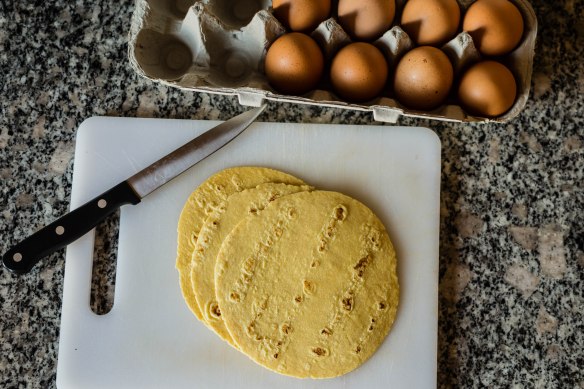
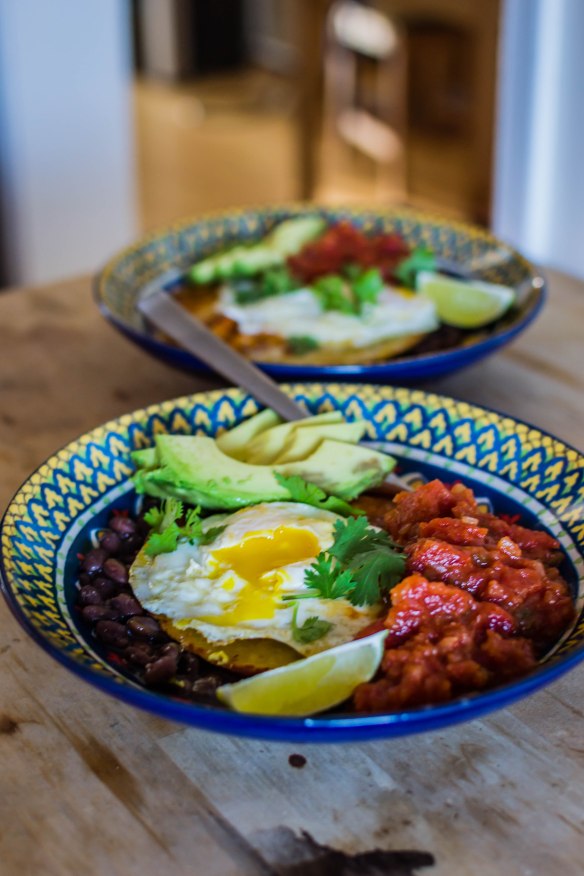
The first iteration of this meal was a lunch I threw together when I wasn’t satisfied by any of the leftovers already in my fridge. And it was easy: egg, cheese, tortilla, a scoop of salsa. Done. But instead of melting the cheese on top, I flopped the toasted tortilla over and held it down with my spatula so the cheese sputtered and hissed directly against the pan. A minute or two later, a quick but determined scrape, and the tortilla emerged with a frico of pepperjack welded on, crispy and seared and ready. And as soon as that happened, I was no longer alone at the stove. Suddenly instead of the sandwich he’d been intending, N. wanted my lunch. He was entranced by that crunchy layer of cheese, so a few days later we had it for dinner, this time bulking things up with the addition of a bed of black beans for the tortilla to rest on.

Three days later, we already wanted it again. A week after that, we had it a third time. That tells you something. And unlike so many of my recipes here, this is quick – no more than 20 minutes and it’s ready to go – and takes a few shortcuts along the way: canned black beans, jarred salsa. Of course you could go the extra mile and start from scratch, but for what is essentially the quickest weeknight dinner I’ve made in months, I’m not going to bother.

Huevos rancheros is a simple dish, usually eggs and salsa atop tortillas, with beans, cheese, and other accompaniments optional. Basically it’s a fried egg taco. Frico, on the other hand, is an Italian creation probably originally invented to use up cheese rinds. Though there is a version that incorporates potatoes and other vegetables fried into something like a rosti or latke (which N. has informed me he now wants), the sort Americans are probably most familiar with – and certainly my version here – is a thin round of plain old cheese, fried until it holds together.

Most fricos are made with hard cheeses – think “parmesan crisps” or similar – and can be fried just until they are malleable, then draped over a jar or muffin tin or rolling pin to shape them into baskets or bowls or other decorative shapes. But they can also be baked or fried until they are crisp and shattering discs you could stack in a savory napoleon or crumble onto a salad or, in my favorite application, crust the outsides of a grilled cheese sandwich.

But this frico is made with softer cheese: I tried both cheddar and pepperjack, and found I preferred the latter. When you first turn it into the pan, a distressing quantity of grease appears and the cheese bubbles worryingly around the outer edges of the tortilla, and you are sure this isn’t going to work at all. Give it a minute or two, though, and then cautiously but firmly apply your spatula, and the tortilla should have a crunchy, orange, lacquered coating. You then have only to set the egg on top, pile with accouterments, and gobble up the whole thing.

You can, of course, use multiple skillets here, and make more than one at the same time. I opted to cook the eggs first and set them aside to stay warm while I did the tortillas, because my dishwasher (I have one of those human models, not the mechanized kind) appreciates when my cooking projects don’t result in a whole sinkful. I’ve also opted in the ingredients to list quantities for each egg-cheese-tortilla stack, which of course can be easily doubled, tripled – or, should you have a large griddle and some brunch-loving friends – multiplied to serve what will no doubt be a happy crowd.

Huevos Rancheros con Frico
15-20 minutes
quantities and instructions for one, but oh-so-easily multiplied
½-1 cup canned black beans
1-2 tablespoons vegetable oil
1 egg
1 corn tortilla
1-2 ounces pepperjack cheese, thinly sliced
¼ cup salsa, or more as desired
3-4 avocado slices
optional: torn cilantro and/or a lime wedge


  • In a small pot, heat the black beans along with their liquid over medium heat; let them simmer until most but not all of the liquid has been absorbed and the beans are hot.
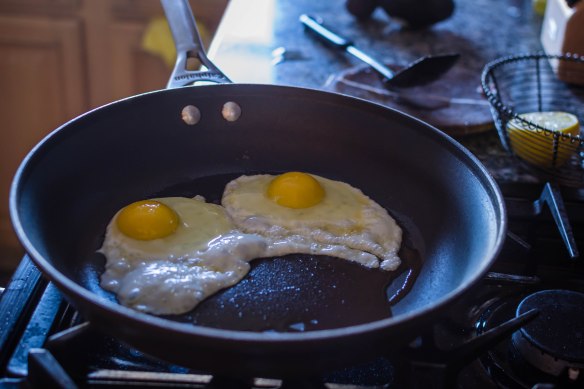
  • While the beans simmer, heat 1 tablespoon of the vegetable oil in a skillet over medium heat. Crack in the egg sunny-side up, sprinkle a little salt on the yolk, and cook until the white is just set and the edges are starting to brown slightly. Carefully flip over to finish either over easy or over medium, depending on your preferences. Remove and cover to keep warm (I like to place mine in the shallow bowl I use to serve and cover with another shallow bowl).
  • If the pan looks dry, add the other 1 tablespoon vegetable oil, let it heat for a minute, then add the tortilla. Fry the tortilla until well toasted with deeply browned spots on both sides.
  • Remove the fried tortilla from the pan and use a paper towel to wipe most of the oil out of the pan. Top the toasted tortilla with the pepperjack, arranging the slices so most of the tortilla surface is covered. Add back to the skillet, still on medium heat, with the pepperjack side down, directly against the surface of the pan. Cook undisturbed for 2-3 minutes. Fat from the cheese will be released and the cheese will look like it’s all going to ooze out the sides. Don’t worry.
  • After 2-3 minutes undisturbed, use a wide spatula to carefully but firmly loosen the cheese from the pan surface. Flip the whole tortilla back over so the cheese is on top.
  • To serve, pile the hot black beans in a shallow bowl. Place the tortilla, cheese side up, on top of the beans. Carefully put the egg on top of the cheese-crusted tortilla. Top with salsa, avocado, cilantro and lime if desired, and eat immediately.

Tempeh “breakfast sausage” crumbles

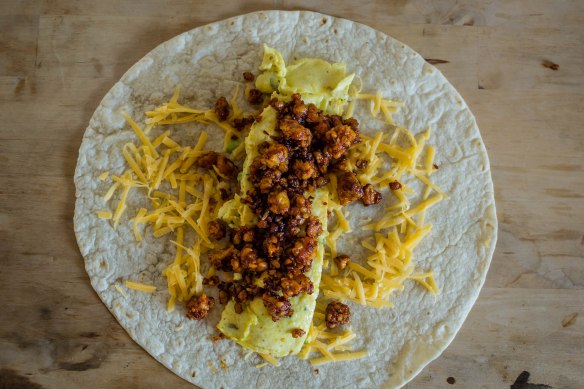
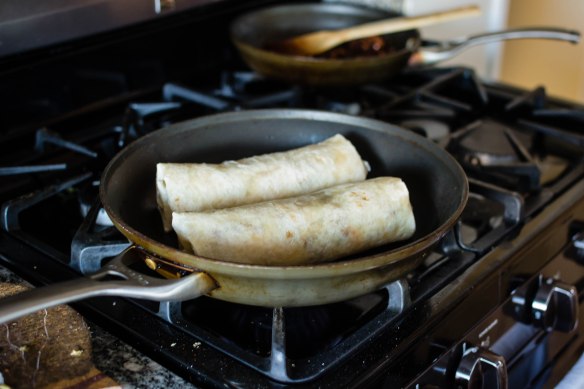
In our continuing efforts to reduce the amount of meat in our diet, I’ve been examining some of our standbys and thinking about how we could replace or eliminate the animal protein and still wind up with a delicious meal. One such subject for experimentation that yielded very satisfying results was our favorite comfort classic: the breakfast burrito. My typical procedure is gratuitous. I fry up some crumbled breakfast sausage, cook hash brown patties in the sausage grease (I like the ones from Trader Joe’s; starting from raw potatoes both takes a while and never yields the perfectly crispy results I’m after), then scramble some eggs. All this, along with some shredded cheese, sometimes a few slices of avocado, and some sort of spicy sauce, get folded into an enormous tortilla, and then seared on either side in a nice hot pan so the tortilla loses that raw flavor and the cheese has a chance to melt a bit.

Since there’s already so much happening inside that tortilla, subbing out the sausage and figuring out how to flavor tempeh to work as its stand-in seemed like a worthy project. The main issue that separates tempeh and sausage (besides that obvious truth that one is made from pig and the other is made from soy beans) is an absence of fat and salt. Frying the tempeh in plenty of olive oil and seasoning it aggressively seemed a logical step toward creating an adequate substitute. But before doing that, there’s a secret I’ve learned from S.: steaming.

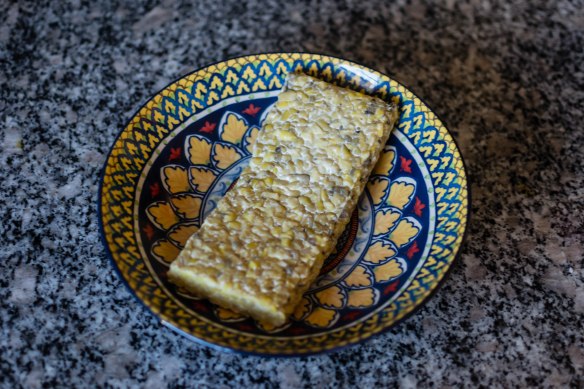
Tempeh is fully cooked when you open up that vacuum-sealed package and take out that weird, bumpy beige block. But it is also cold and hard and needs a little prep to make it more amenable to accepting flavor. After all, you can’t exactly stud it with garlic and rosemary like a leg of lamb. Wrapping the block in a damp kitchen towel (or just a paper towel) and popping it into the microwave for 2-3 minutes first makes it suck in flavors a bit better – I like to think of it as… opening its pores. From that point, you can marinate or salt or fry or whatever you like, and the tempeh will do a little more than just… get warm.

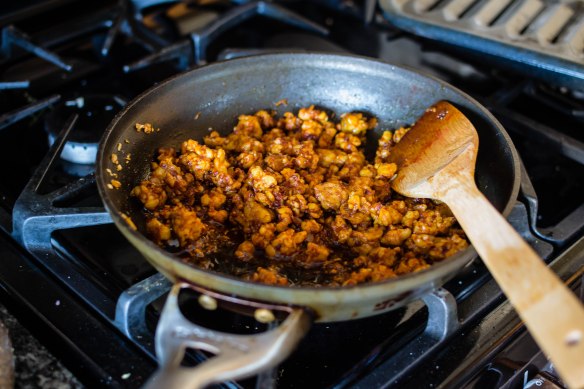
From there, fat and salt and flavor are your focus. I considered adding smokiness: the depth of smoked paprika and the funk of Worcestershire sauce seemed like a good bet. Finally, a little squeeze of tomato paste added color and savory richness the tempeh just didn’t have. All browned together with some black pepper made a satisfying pan-full, but in my second attempt I opted to sauté some onion and garlic first for added moisture and flavor complexity we were happy with.

Look, this isn’t really a replacement for breakfast sausage. It doesn’t taste like pork, and it doesn’t cook like it either. But it is delicious, and the texture is surprisingly close, especially when you combine it with other things. I wouldn’t put it on a pizza, but wrapped up with other deliciousness in a breakfast burrito, it is savory and comforting and feels a little fatty: exactly what we needed for the night before the new semester begins. Sprinkled over a baked potato along with some shredded cheese and maybe steamed broccoli, it would be outstanding. And I must admit, the little bit I have left over in the fridge? I’m looking forward to eating it cold, right out of the container, when I get home from – gulp – work tomorrow.

Tempeh sausage crumbles
About 15 minutes
1 shallot or ¼ medium onion, diced
2 cloves garlic, minced
¼ cup olive oil + possibly more
salt and pepper to taste
8 oz. tempeh
½–1 teaspoon smoked paprika
2 teaspoons tomato paste
2 teaspoons Worcestershire sauce (fair warning: Worcestershire usually contains anchovies, so if you don’t eat fish, you can replace this with soy sauce or even Bragg’s liquid aminos for a similar flavor.)


  • Liberate the tempeh from its packaging and wrap it lightly in either a clean, damp kitchen towel, or damp paper towels. In its wrapping, heat it in the microwave for 2 minutes, then set it aside until it has cooled enough to handle. This steams the tempeh, making it more receptive to absorbing flavors.
  • While the tempeh steams and then cools, heat the olive oil in a skillet over medium heat. Add the onion or shallot and garlic, and turn the heat down to medium low. Season with salt and black pepper and let them sweat until soft and translucent but not browned.
  • When it is cool enough to handle, crumble the tempeh – I like it like granola: some large chunks and some more like pea- and even oat-sized. Stir it into the onions and garlic and turn the heat back up to medium before adding the smoked paprika, tomato paste, and Worcestershire sauce. Stir well to incorporate everything.
  • Cook over medium heat for 5-8 minutes. If it looks dry after 2-3 minutes, add a tiny bit more oil. Taste for seasoning; it probably needs more salt and more pepper.
  • When the tempeh is heated through and has taken on some color on the outside, it is ready. Eat as is, or add to the entrée of your choice: over baked potatoes with some cheese and maybe steamed broccoli, in a hash, over a salad, or as we like it, wrapped up with hash browns, eggs, and cheddar in a breakfast burrito.