Dessert Latkes

One of the great shames of holiday food, I feel, is how assertively we restrict it to holidays. Every Thanksgiving when I eat that first piece of turkey straight off the carving fork (there are privileges to being the cook), I think to myself, “why do I only make this once a year?” Of course, that’s after I’ve already had a glass of wine and a few snacks, so I’m repressing the amount of work I’ve just undergone to get that thing defrosted, prepped and suitably accompanied, and haven’t yet allowed myself to think about the labor to come of denuding its carcass, fabricating broth, and dreaming up leftovers.

But turkey is only one example. There are so many other foods that we reserve strictly for their special day. In my family, the challah my mom taught us to make gets trotted out on Christmas Day, and sometimes on Easter. It was a surprise to me to learn that my aunt N. makes it multiple times a year, whenever she and her husband want a slice. But this is a silly thing to be surprised about. Why shouldn’t we make whatever foods we crave, whenever we crave them? I don’t think gingerbread would cease to be special just because I make a batch in March and in October as well as the night before Christmas. Besides, holding onto these foods as once-a-year-sacred means we don’t get an opportunity to experiment with them, since whatever masses you’re feeling probably want THE dish, not a derivative thereof. And okay, I admit, the old standard is good in itself, but the opportunity to play is one of the great rewards of cooking: what if I added apples to the gingerbread this time around? How would the turkey be with dill and mustard powder rubbed into the butter?
One of the great injustices of this restriction of holiday foods is that people are not, I suspect, ingesting as many latkes as they rightfully should be. While it’s true that these carry a slightly more meaningful symbolic link to their holiday than gingerbread does, indulging their delectable crispiness without pondering on the miracle of the oil lasting a full eight nights feels to me like sensible celebration rather than sacrilege. And once you get into the habit of eating latkes throughout the year, rather than just during Hanukkah, you start to realize that potato and onion are nice and all, but there are other options out there that deserve attention in crispy fried form.
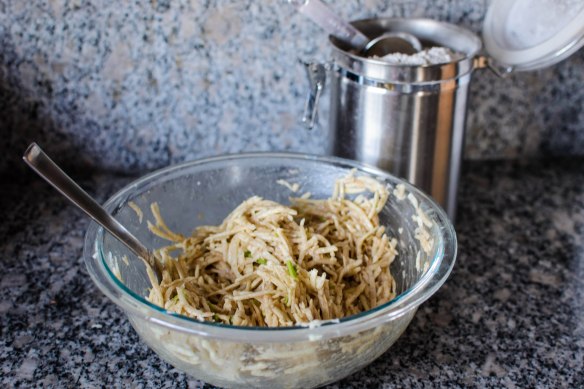
This time around, I wondered what would happen if you moved latkes from the dinner to the dessert course. Sweet potatoes seemed like a natural choice, and instead of onion, I went with apple – it adds a tart sweetness that mellows as it cooks, and it would contribute, I thought, similar water content as the onion in the original. A toss with flour and eggs, some cinnamon to lend extra autumnal feeling, the requisite bubbling fry, and then a stack dripping with maple syrup, or sweetened sour cream, or maybe a drizzle of honey for really tooth-aching indulgence.
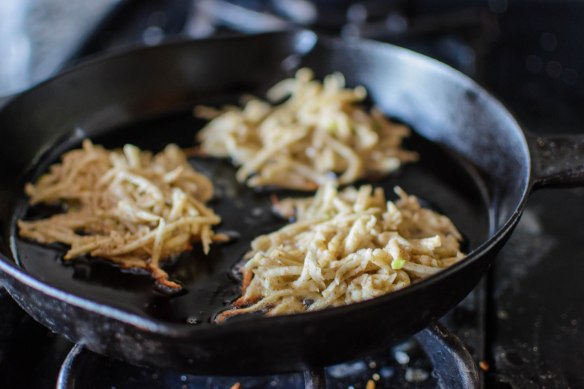
When I dug in, I found the combination of frying and sweetness reminded me ever so slightly of funnel cake – the snowy sprinkle of powdered sugar on top would have fit right in. I do suggest using orange sweet potatoes (often marketed as yams) if you are serving these for dessert; they are a little less firm in texture when they cook, but they are definitely sweeter. On the other hand, if you are looking for an interesting, produce-led alternative to pancakes, use the slightly less-sweet yellow or white fleshed sweet potatoes, and these could slide right in as a breakfast – perhaps for the holidays, okay, but in the spirit of not restricting ourselves, perhaps for any cool morning the urge for something special arises.

* though these are designed to be sweet, they could easily edge back toward the savory camp with the addition of black pepper or sage, and a more traditional topper of plain sour cream. Or you could make them even more dessert-like by adding other wintery spices we associate with pies and cakes – maybe even pumpkin (pie) spice in all its polarizing glory, as a nod to the season.


Dessert Latkes
30-45 minutes
Makes 9-10 3-inch latkes
2 medium sweet potatoes – orange fleshed for a sweeter product, white fleshed for less sweetness
1 medium granny smith apple
2 eggs
¼ cup all-purpose flour
1 teaspoon baking powder
½-¾ teaspoon salt
1 teaspoon cinnamon
Vegetable oil to fry
Maple syrup, powdered sugar, honey, or sour cream mixed with some brown sugar, to serve


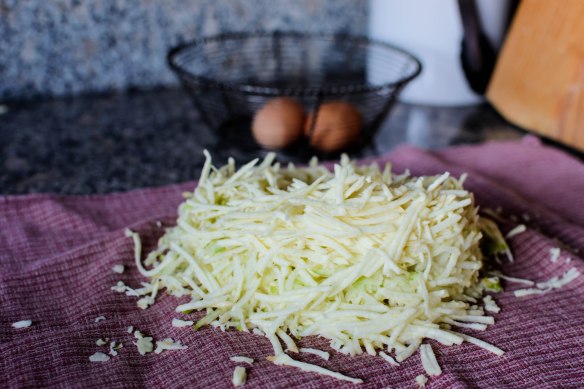
  • Peel the sweet potatoes. If using a box grater, shred them with the large holes. If using a food processor, cut them down into large chunks that will just fit in the feed tube. Quarter and core the apples. Use a box grater or food processor fitted with the shredding disc to shred the sweet potatoes and apples. Scrape the shreds straight onto a clean kitchen towel and wring it out vigorously into the sink. When you’ve exhausted your arm muscles, let the towel-wrapped shreds sit for two minutes, then squeeze again. You should be able to extract a little more.
  • In a large bowl, beat together the eggs, the flour, the baking powder, the salt, and the cinnamon. Dump in the drained sweet potato and apple shreds and mix well – I find a fork works reasonably for this, but nothing is as good as your fingers to ensure even integration.
  • Heat vegetable oil in a large skillet over medium-high heat; you want enough to come about ½ inch up the sides (the quantity will vary depending on the size of your pan). Cast iron is my vessel of choice for latkes.
  • When the oil is shimmering, carefully place small heaps of the latke mixture straight into the skillet – I use my hands for this, but of course you’ll need to be very careful. Ensure the small heaps don’t touch one another. Use the flat side of a spatula to gently flatten each heap.
  • Cook over medium-high heat 4-5 minutes, until the bottoms are crisp and well browned. Flip and cook another 3-4 minutes, then remove from heat and repeat with remaining mixture.
  • While you are cooking the latkes, it’s useful to store each batch in a 300F oven on a wire rack placed over a cookie sheet. This keeps them warm and lets any excess oil drip off.
  • To serve, stack up a pile of latkes and drizzle, sprinkle, or pour on your desired topping. Eat hot.

Drunken Fig and Honeyed Walnut Sundae

As I type this, I am sitting in my parents’ backyard, at a table in what I’ve been calling their “redwood grove,” sipping a glass of prosecco and thinking about vacation. I think there are a few different levels of vacation, and with them come differing levels of indulgence. The good old “staycation,” a concept that has been around for decades but which only became an official word in the Oxford English Dictionary in 2010, seems to call for something humble – homey – perhaps a slice of pound cake with some berries or a smear of jam and not much else. A heavy-duty vacation – the kind that requires airline travel or a passport – requires something more indulgent. On a voyage up and down the East Coast that N. and I took a number of years ago, we unexpectedly ended up in a first class train cabin on a leg from Boston to New York City, and as we sat back and wondered at our luck, an attendant suddenly, unexpectedly, dropped off two gleaming glasses of lush, impossibly light chocolate mousse. That’s a big vacation dessert. Indulgent. Rich. Not the first thing you’d choose from a cookbook. Big vacations are opera cakes and crème brûlée and napoleons.

But there are also in between vacations: those that require only a day trip, or when you lie around in your rented beach-house-for-the-weekend with no agenda besides thinking all day about what will be for dinner, and then scrapping all your plans and going to get tacos instead. There are the ones that consist of living with friends for a week because you only get to see them once a year, or dropping by the family’s house for a few warm evenings to shake off the spent semester, or grabbing a hotel room unexpectedly because the glory of the afternoon wore on so long you can’t bear the idea of the drive home, and besides, you’re on vacation.

This dessert is for one of those in between kinds of vacations. The idea came from Judy Rodgers’ red wine figs in her Zuni Café Cookbook, a thick tome spilling with interesting combinations that I’m still working my way through, and a garam masala laced bowl of walnuts I whipped up for a last minute happy hour a month or two ago. The result is a glorious trifecta of textures and temperatures: ice cream, chewy figs steeped in warm, orange-spiked red wine, and toasted walnuts tossed in spiced honey. It’s a very adult sort of sundae – no sprinkles, no bright berries, no whipped cream or chocolate of any sort. Yet it’s also indulgent – wine-drenched figs intense enough you’ll only want a few, and warm walnuts dripping with honey, so reminiscent of baklava, slowly melting the rich, cold, sweet ice cream underneath. And if you are lucky enough to choose an ice cream that is studded with dozens of tiny, crunchy seeds scraped from that precious pod, well, all the better.

And now that you have this on a Monday, you’ve got something to dream about (and get going: the figs need a few days to steep and soak up that wine) until you get to your weekend, and whatever kind of vacation it holds.

Drunken Fig and Honeyed Walnut Sundaes
Makes 4 sundaes
About 40 minutes active time, plus at least 2 days for figs to steep
For Drunken Figs:
1½ cups red wine
2 tablespoons orange liqueur, such as Grand Marnier
2 bay leaves
1 strip of orange zest, about half an inch wide, taken from stem end to navel end of orange
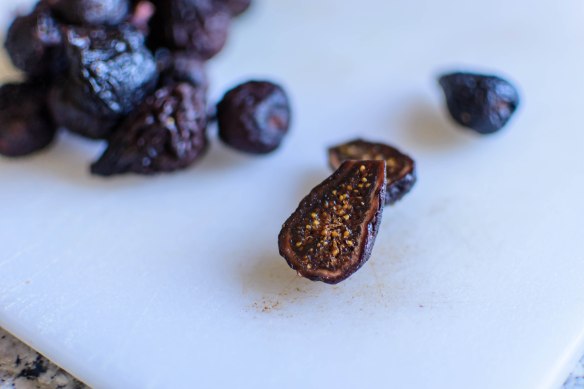
8 ounces dried black mission figs
1-2 teaspoons honey
For Honeyed Walnuts:
1 cup walnut halves or pieces, roughly chopped
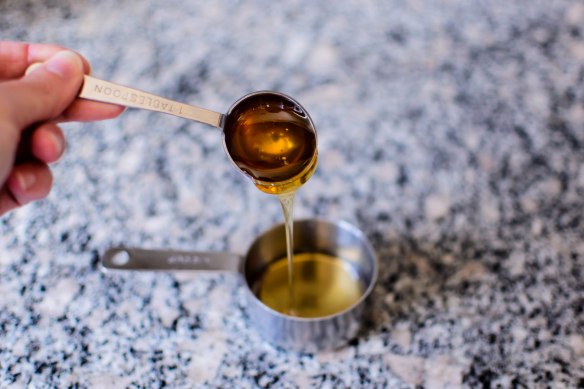
2 tablespoons honey
¼ – ½ teaspoon salt (we found ½ teaspoon was right on the edge of being too much)
½ teaspoon garam masala
To serve:
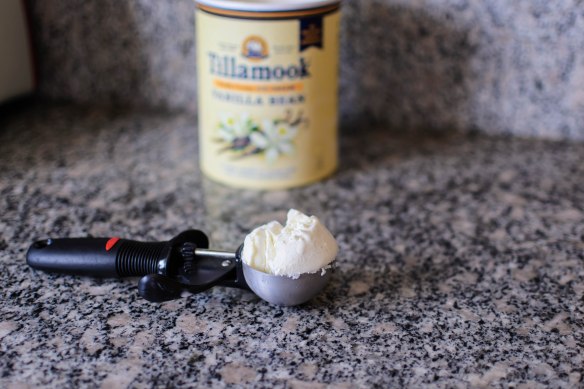
Vanilla bean ice cream, about two scoops per person


  • To make the drunken figs, heat the wine and orange liqueur in a small saucepan with the bay leaves and boil until it has reduced to ½ cup. This will take around 20 minutes.
  • While the wine reduces, stem and halve the figs (cut from stem end to belly end to expose all of the seeds) and place them in a 2 – 4 cup vessel with a tight fitting lid. Add the strip of orange zest.
  • When the wine has reduced, stir in the honey, then pour over the figs and zest. Cover and shake, “leave to swell for a few days,” shaking periodically (for me, this ended up being 2 days), then refrigerate until ready to use. Serve at room temperature or slightly warm.
  • To make the honeyed walnuts, preheat the oven to 300F and scatter the walnuts on a baking tray. Bake until lightly browned and fragrant; 10-15 minutes. While they toast, combine the honey, salt, and garam masala in a small bowl with a whisk. When the walnuts come out of the oven, immediately scrape and pour the honey over them and toss to coat. The hot walnuts will heat and thin the honey, making it easier to combine.
  • To serve, place two scoops of ice cream into a dish of your choice. Scoop and drizzle about ¼ cup of the walnuts over the top, then add 5-6 fig halves plus a little remaining liquid, if there is any. Eat immediately.

Save

Apple Bourbon Caramel Topping

If you’re following along on Instagram, you’ll have seen that N. and I have been up to big things. Huge things! House shaped things! According to the bank, and the escrow office, and our realtor, and the seller, we are now home-owners! We can’t quite believe it ourselves, but enough independent sources verify it that we’re coming to think it must be true. Between the searching, and the paperwork, and the other paperwork, and the packing, and the paperwork, and the fact that the semester is still in, if not full, at least substantial swing, there hasn’t been a great deal of time for blogging.

But still, home ownership achieved on a house that was, quite frankly, nicer than what we’d expected we would be able to find, feels like cause for celebration. So quickly, on a day during which I need to take care of so many things, I want to give you something with which to pause, and to celebrate.

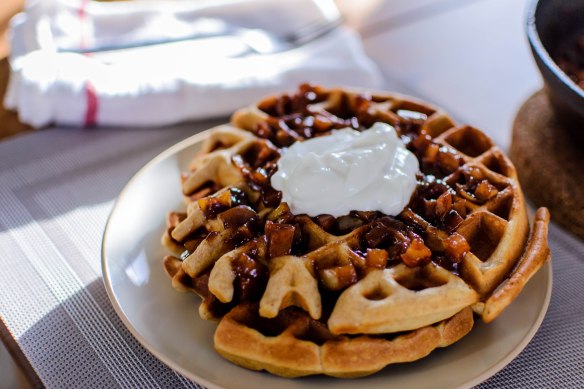
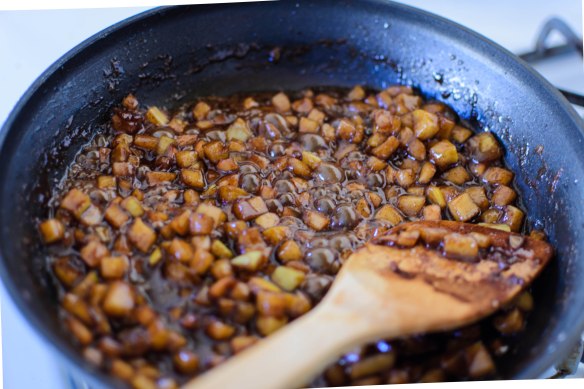
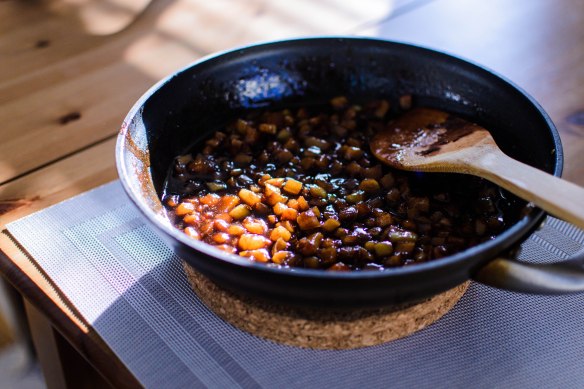
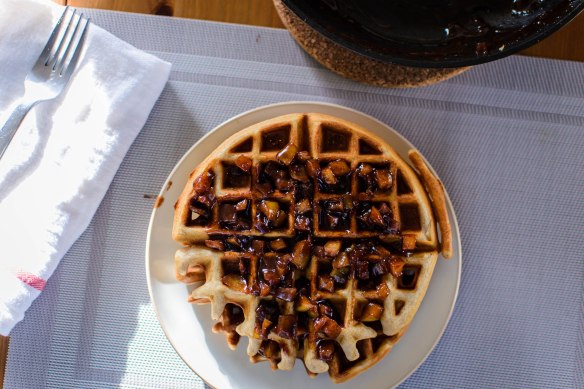
The nice thing about May is that even though it’s spring, there are still the occasional chilly days during which something warm and sweet is everything you need, and on the others, you can just pile that something warm and sweet over something cold and thick. It’s a can’t-go-wrong topping. Think apples. Think bourbon. Think deeply melted and gooey and caramel-y brown sugar, and the right spice of cinnamon, and a swirl of butter, all melted gloriously together, ready to crown anything from waffles (as we did) to pancakes to bread pudding to french toast to ice cream.

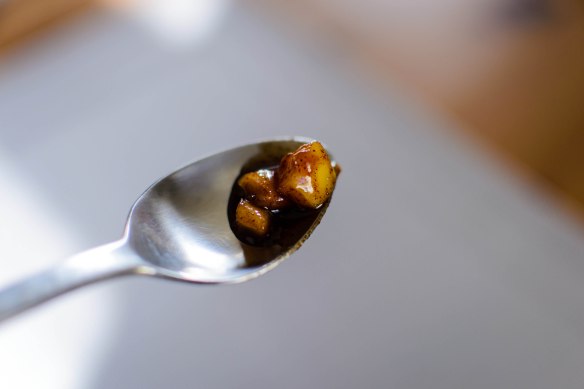
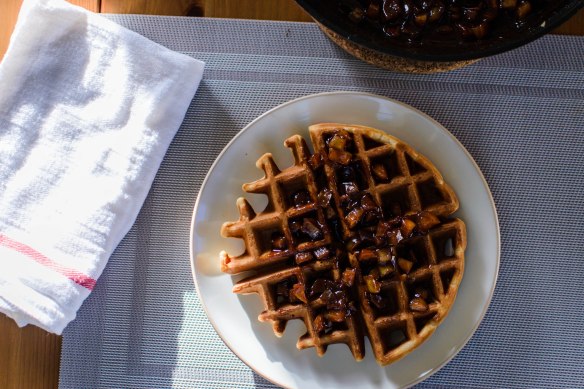
My serving suggestion: make yourself a batch of waffles. I like these, as they allow me to use up some sourdough starter from baking days when I’ve gotten a little too enthusiastic, and unlike many sourdough waffle recipes, don’t require an overnight rise. Layer a waffle, a generous spoonful of caramel, then repeat, and add a heaping dome of greek yogurt right on top. The caramel is decadent and the apples provide excellent texture and fall perfectly into the holes of the waffle, and the yogurt is all tang and creaminess and acidic balance for the sweetness of the caramel. It’s breakfast, it’s brunch, it’s a sweet breakfast-for-dinner, and it’s an unquestionably good late-night-when-you-may-have-already-had-some-bourbon snack.

Enjoy. I hope you have something lovely on your plate to celebrate.


Apple Bourbon Caramel Topping
20-30 minutes
Makes ¾ – 1 cup (enough for 3-4 servings of waffles)
4 tablespoons butter
2 apples, quartered, cored, and diced into ¼ inch chunks (I leave the peel on because I like the texture. If you don’t like it, you can peel the apples first)
½ cup brown sugar
2 teaspoons cinnamon
pinch salt
1 teaspoon vanilla
2-4 tablespoons bourbon
1 teaspoon lemon juice
2 tablespoons heavy cream


  • In a skillet or saucepan, melt the butter over medium heat. When it is fully melted and foaming, add the apple chunks. Cook over medium heat, stirring occasionally, until they are tender: 5-10 minutes. If they seem to be browning aggressively, give them a good stir and turn down the heat a bit.
  • Once the apple pieces are tender, add the brown sugar, salt, cinnamon, and vanilla. Turn down the heat to medium-low, if you haven’t already. Cook down until the brown sugar is fully dissolved and the mixture is bubbly and thick: 2-3 minutes.
  • Off the heat, add the bourbon and the lemon juice, then stir to combine and simmer slowly for about 10 minutes. At the last minute, stir in the heavy cream.
  • Serve warm over waffles, pancakes, French toast, ice cream, or (almost) anything else you can imagine.

Miso Brown Butter Krispie Treats

This one is, I have to admit, a bit of a cheat. But when it’s the day after the horror that is the spring time change, a fifteen minute “baking” project that barely adapts perfection is about all a person can be expected to churn out.

Have you had Smitten Kitchen’s salted brown butter crispy treats? Please tell me you have. It’s one of the recipes that was so successful on her blog that she put it into her first cookbook as a tried and true favorite. One of our friends calls them “the precious” and I have to say, he’s not far off. The same old gooey, crunchy squares from childhood, but bumped up with the nutty toastiness of brown butter, and a judicious sprinkle of sea salt that makes them fly. We first discovered them through a batch S. made, and she consequently became our dealer while we were in Oregon, though now that we’re so many miles separate from her I’ve had to take up the mantle myself.

I’m not sure what gave me the idea – perhaps seeing several miso caramels on Food Network, or maybe SK’s own miso caramel corn – but the idea of adding a scoop of miso paste to these already flawless squares seemed to toe the line between genius and potentially horrifying.

So I did it.

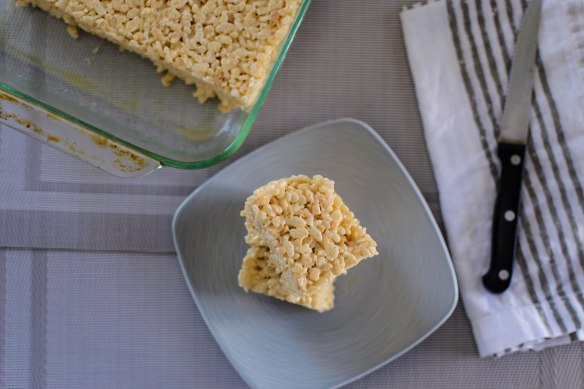
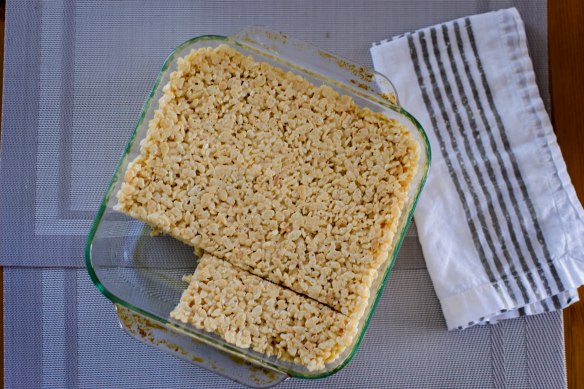
The result is, surprisingly, somehow butterscotch-esque, despite no brown sugar or vanilla in the mix, and completely addictive. There’s no flaky sea salt anymore – the miso has plenty of salinity of its own – although I think you could get away with a tiny sprinkle if you can’t do without so I’ve made it optional, and I don’t even think you’d need to brown the butter, but I still did because since it needs to be melted anyway, it’s not really that much more effort.

So here, backed by Deb’s ingenuity and a mere four ingredients (well, five if you add salt), is my offering for you today: all the goo, all the sweetness, all the crunch, but with a new twist that will, I suspect, leave you tasting, and tasting again, and suddenly wondering where the whole pan got off to, because you couldn’t possibly have just eaten the entire thing…

Miso Brown Butter Krispie Treats
Marginally adapted from Smitten Kitchen‘s salted brown butter crispy treats
15-20 minutes
Makes 8×8- or 9×9-inch square pan of treats
8 tablespoons unsalted butter (½ cup; 4 ounces)
1-1½ tablespoons miso paste
⅛ teaspoon salt, optional
10 ounce bag of marshmallows
6 cups crisped rice cereal


  • Butter or spray an 8×8 or 9×9 inch pan, then set aside.
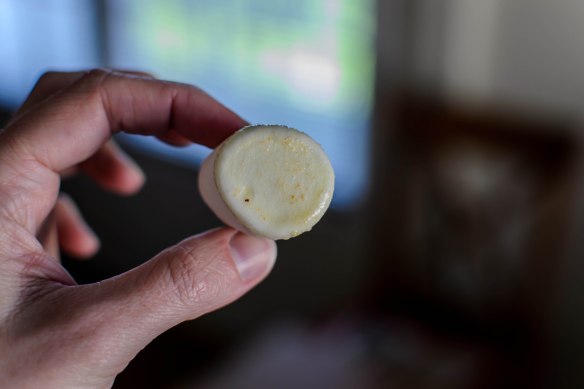
  • Add the butter to a saucepan and melt over medium heat. Once it has completely melted, turn the heat down to medium-low and keep an eye on it as it foams up, then subsides, then starts to brown into toasty little bits on the bottom of the pot. It’s easiest to use a pot that does not have a dark surface, since you can see color changes in the butter more easily. If your pot has a black surface, though, and you think you’re there, you can quickly dunk in a marshmallow and see whether the butter it captures has brown flecks in it (then, if you must, you can eat it). The moment you discern these little brown flecks, turn the heat off so the butter solids won’t burn.
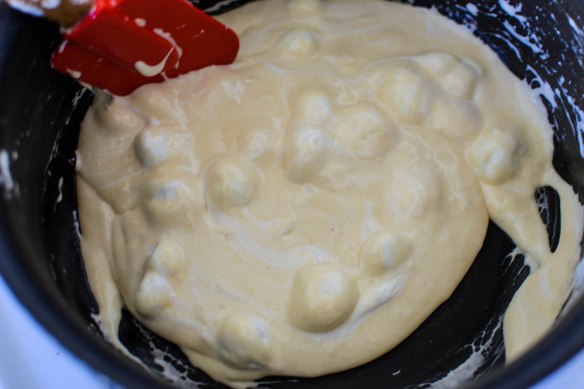
  • With the heat off, add the miso paste, the salt, if using, and the marshmallows. Stir firmly with a flexible rubber spatula, being sure to distribute the miso paste evenly. The residual heat should be enough to melt the marshmallows, and you’ll end up with a sticky, pale golden pool of goo. Add the 6 cups of cereal all at once and stir in. You’ll need to be quite firm, again, to ensure even distribution.
  • Dump and scrape the cereal mixture into the prepared pan and press down firmly into an even layer, being sure to push it into the corners as well. You can use the same rubber spatula for this, or a piece of waxed paper, or the bottom of the cup measure you used for the cereal – it shouldn’t stick too much.
  • Set aside until fully cooled, then cut into squares of your desired size and consume.

Brownie Chunk Cookies update

No new recipe today, I’m afraid, for though I do know what our soup for March is, a combination of being back in school for the semester and unexpectedly running out of eggs has not left enough time for composing and photographing a final February dish.

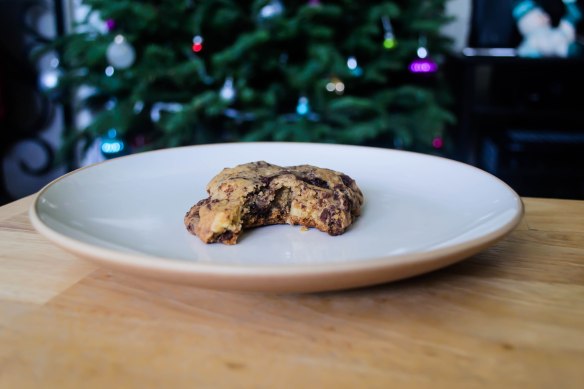
That being said, if you need a sweet baking project in the next week, may I suggest this one? And may I suggest further, after a little experimentation this weekend, that the addition of about 2 teaspoons of instant espresso powder to the brownie component, and about 1 teaspoon of cinnamon to the cookie component, makes something even more transcendent?

Food Blog December 2014-0972

Till next week, my friends…

Brown Butter Apple Pound Cake

I’ve tried to start this post three or four times now. The first time I tried to skirt the events of the last week entirely, but that felt like lying. The second time I was overtly political, explaining exactly how I felt and why. That felt more honest, but it didn’t feel like the right move. The third time I tried to be conciliatory, citing concerns on both sides.

2016-food-blog-november-0385In the face of change, particularly because it is not the sort of change I agree with or was hoping for, I retreated to comfort. I know this is not particularly useful. I know I am reasonably safe for a number of reasons, and closing the blinds and wallowing is not helping the people who are – or soon may be – not so safe, but I did it anyway. Finally, I decided I need more time to process what I want to say, so I’ll offer this instead, as unhelpful and uninspiring as it might be: this week was rough. Let’s have cake.

2016-food-blog-november-03382016-food-blog-november-0329For me, the deepest and firmest food comfort is baking. It makes me think of being a child, it makes me think of warmth and sweetness; it makes me feel sound. In his examination of sugar and its coming to and impacts on Europe, particularly England, Sidney W. Mintz suggests that perhaps the reason we are so attracted to sugar, especially when we are young, is because human breast milk is sweet. So it makes sense that when we are troubled, or we feel that we need safety and security, we turn to sweet foods.

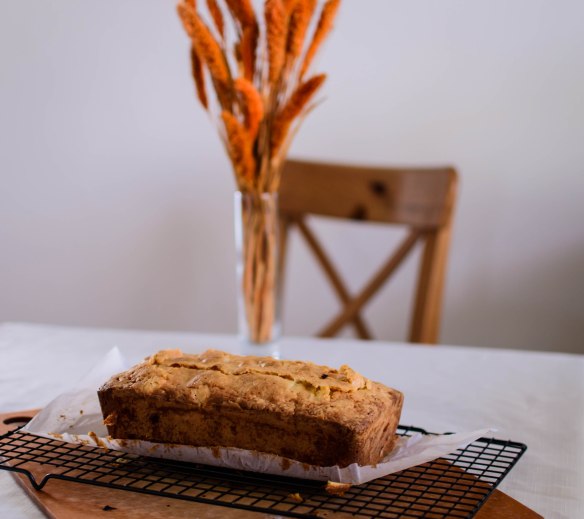
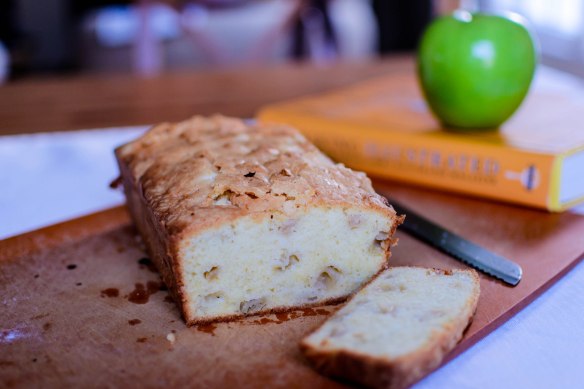
2016-food-blog-november2016-food-blog-november-0356The original inspiration for this cake came from Starbucks. A few years ago as part of their fall line-up of baked goods, Starbucks rolled out a brown butter pound cake spiked with Washington apples, and after sampling the dense crumb and the wet, almost too sweet apple chunks, I wanted to do my own version. For the base recipe, I went with that great baking bible Baking Illustrated, by the same cooks and recipe testers as Cooks Illustrated. Their pound cake uses cake flour for a tight but tender crumb, plenty of butter, and the richness and color and emulsifying power of extra egg yolks, rather than all whole eggs. Mine adds the extra step of browning the butter first (which then necessitates refrigerating it back into solidity before creaming it with the sugar), and a generous two cups of apple cubes – granny smith, for the tartness and minimal juice expelled during baking.

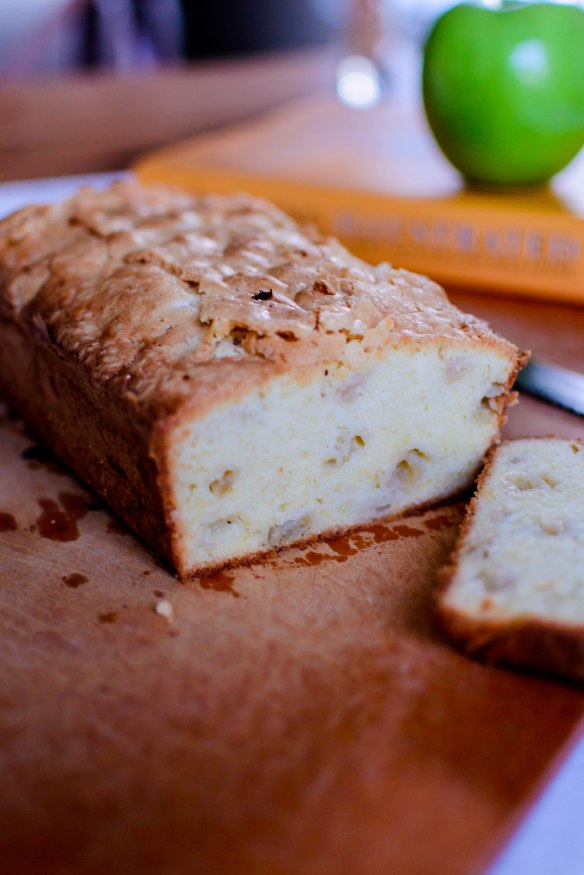
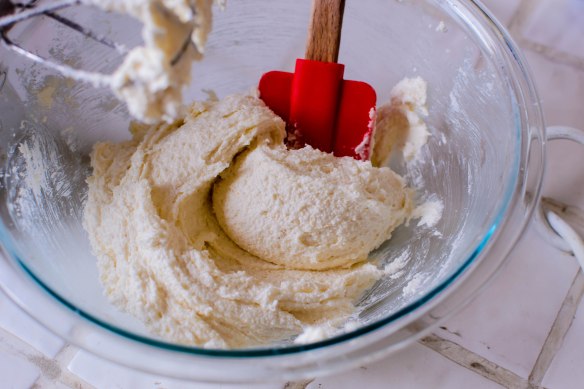
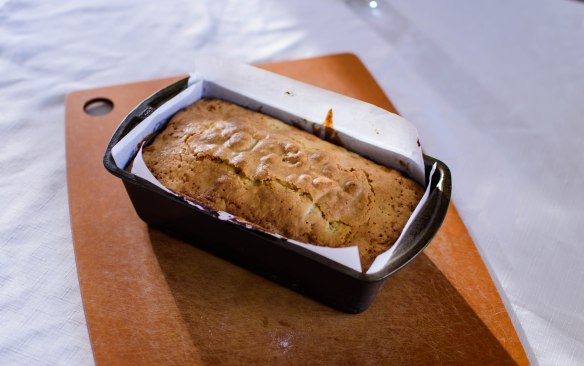
2016-food-blog-november-03462016-food-blog-november-0352Most pound cakes have a soft top that splits as it bakes, and this one did offer that classic cleaving in the center, but the rest of the top – the browned exterior on either side of that tender split, was crisp and delicate and almost wafer-like – think of the top shiny, flaky layer of an excellent pan of brownies – perhaps because I was so enthusiastic in creaming the butter and sugar and then beating in the eggs. My batter looked like a good fluffy buttercream in its initial stages.

2016-food-blog-november-0363I usually bring my baked offerings to work with me, leaving only a serving or two to enjoy at home, and this was no exception, but we were sorry about that. Especially as the week wore on, we wanted more of this comforting, moist-but sturdy, not-too-sweet confection, preferably in thick slices. But alas, it lasted only a few hours in our mailroom.

2016-food-blog-november-0368It’s funny in that uncomfortable way, but the last time I made a pound cake was also a heavy time. It’s an uncomfortable metaphor – perhaps I should start perfecting an angel-food cake recipe instead – but hindsight is what it is, and here we are. Cake.

2016-food-blog-november-0371Maybe the best way I can conclude today is with Kurt Vonnegut. In his novel God Bless You, Mr. Rosewater, one character offers the following as a baptismal statement to a pair of brand new twins: “Hello babies. Welcome to Earth. It’s hot in the summer and cold in the winter. It’s round and wet and crowded. On the outside, babies, you’ve got a hundred years here. There’s only one rule that I know of, babies – ‘God damn it, you’ve got to be kind.’”

2016-food-blog-november-0386

Brown Butter Apple Pound Cake
Makes 1 9x5x3 inch loaf
About 90 min
16 tablespoons unsalted butter (2 sticks)
1⅓ cups sugar
3 large eggs + 3 large egg yolks, all at room temperature
1½ teaspoons vanilla
1½ teaspoons water
½ teaspoon salt
1½ cups cake flour
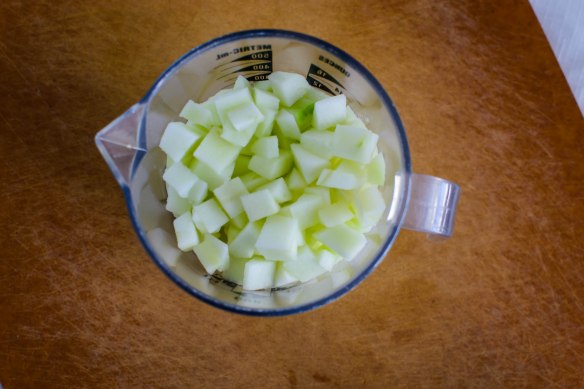
2 cups ½-inch cubes of granny smith apple; 1 large apple or 2 small

  • First, brown the butter. In a small saucepan, preferably with a light colored bottom so you can see what is happening, melt the butter over medium heat. As it melts, it will foam up. Keep swirling and checking the color underneath that foam; it will gradually darken from yellow to golden, and the foam will recede a bit. Watch very closely at this point, occasionally tipping the pot to see the bottom – little white solids will have collected. When these begin to turn brown, the butter will smell toasted and nutty. Take it off the stove and stow it in the refrigerator until it has solidified but is not too hard – your thumb should still press in easily.
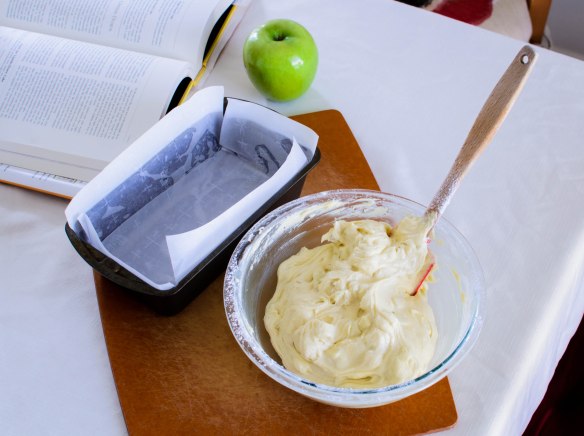
  • While the butter cools down again, preheat the oven to 375F and prepare a loaf pan by spraying with non-stick spray and lining with parchment paper. Prep the apple by peeling it, quartering and coring it, and then slicing and cubing into ½ inch pieces.
  • In a mixing bowl (Baking Illustrated recommends using a stand mixer, but I used a glass bowl and my regular electric mixer and it was fine), combine the re-solidified butter and all of the sugar. Mix at medium speed until very light and fluffy, at least 3-4 minutes. Really. That long. It will take on a texture much like a slightly grainy buttercream frosting.
  • Beat the eggs with the egg yolks, the water, and the vanilla and, with the mixer still running, dribble in this egg mixture until all is well combined. At this point the batter will be very thick and glossy and still a bit reminiscent of frosting.
  • Now, sift in ½ cup of the flour with the salt right over the top of the batter. Once it is all snow-drifted on top there, use a rubber spatula to fold it in. Once fully combined, repeat the sifting and folding with the second ½ cup of flour.
  • Sprinkle the apple cubes over the batter, then dust with the remaining ½ cup flour. Giving the apple chunks a little flour coating helps them stay suspended in the batter during baking, rather than sinking to the bottom. Repeat the folding process one final time, being sure the flour is fully incorporated and there are no dry pockets.
  • With your rubber spatula, pour and scrape the batter carefully into the prepared loaf pan. Smooth off the top if you like, then stow in the preheated oven for 45-55 minutes, or until a toothpick insertted comes out with just a few damp crumbs.
  • Let the loaf cool in the pan on a wire rack for 5 minutes, then use a second wire rack placed over the top of the pan to invert. The loaf will plop right out, upside down, onto this second rack. Carefully remove the pan from the loaf and flip the loaf back over top-side-up to cool completely. Peel off the parchment paper, transfer to a cutting board, and slice up thickly to eat.

Save

Save

Save