Chopped challenge: halibut, bacon ends, vodka, kale

2016 Food Blog February-0360One of my favorite games to play with N. when we are out, about in the world, is a riff on my favorite television show: Chopped (another favorite is noting a couple and trying to determine the status of their relationship based on their clothing and body language, and sometimes, how we think their evening will conclude. We are, clearly, lovely people). Specifically, he will tell me whether I’m to build an appetizer, an entrée, or a dessert, and will then list four random ingredients. Unlike the show, where the contestants have a mere half hour to create a meal that incorporates all four, I simply have to describe the dish I would make.
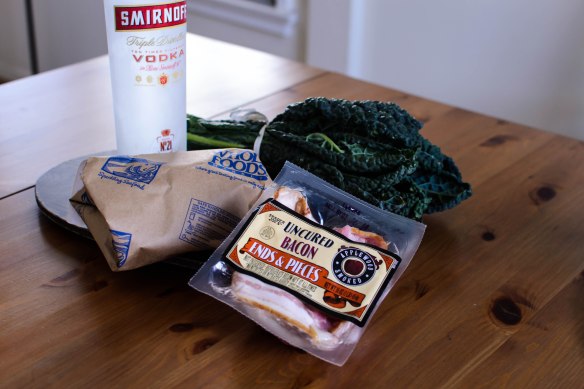
2016 Food Blog February-0350I love this game. Like this year’s blog project, it gives me a chance to stretch my imagination; it’s like a trivia game, except instead of just knowing the answer, I get to invent it. Last fall we were waiting in line somewhere and N. gave me the following as an entrée round basket of mystery ingredients: halibut, bacon ends, vodka, and kale. “Easy,” I said, and rattled off my entry: diced bits of bacon, rendered until crisp. Halibut cooked in the bacon fat with just a little bit of brown sugar. Bright kale sautéed until just wilted, then tossed with the crisp diced bacon, all balanced over a puddle of rich, creamy polenta and crowned with a few spoonfuls of some kind of vodka cream sauce.
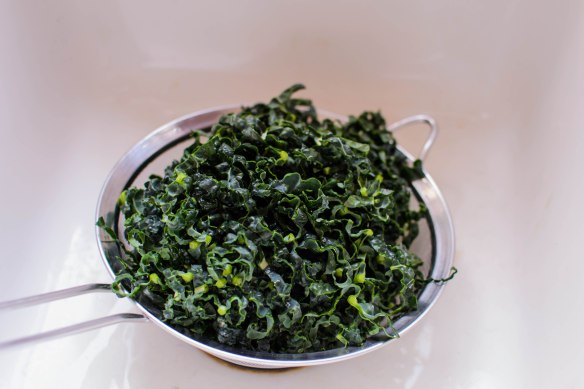
2016 Food Blog February-0354Typically, after the presentation of a meal idea, we discuss briefly and move on. This one, though, sounded so good that I decided I should actually make it. As this process usually goes, I then spent the next few months thinking about it, gradually adding layers and complications, and ultimately being influenced by the show itself for several of the components (notable the kale: in one episode a contestant slices kale across the grain into a fluffy pile of thin confetti before sautéing and salting so aggressively that judge Alex Guarnaschelli, on whom I have a relentless lady-crush, admiringly declares it somehow like a potato chip in addictive deliciousness).

2016 Food Blog February-0355The dish I ended up making doesn’t deviate much from the original plan. I did indeed render the bacon, though I reserved some of the fat for the halibut and used most of it to cook the kale. In addition to bacon and salt, the kale also got a drink of vinegar to enhance the potato chip comparison. The halibut remained as envisioned: salt, pepper, a light sprinkle of brown sugar (at the suggestion of a bed and breakfast owner during a family vacation in Alaska when I was in high school), and a light sear until the center is just cooked, pearly and opaque. The polenta, which is fast joining mashed potatoes as a favorite starch option, ended up with some corn kernels thrown in, which is an easy but stupendous addition I insist you try. The vodka got flamed in some brown butter, then whisked with a bit of lemon juice and mustard to create a rich, barely emulsified sauce that tasted perfect on everything. I knew I was in love when, after only a few bites, I was already texting my sister to tell her about it.

2016 Food Blog February-0364This is one of those dishes that is complicated only because it has multiple components, and you want them to be done at the same time. Therefore, though I’ve divided up the ingredient lists per element (polenta, kale, fish, sauce), in the procedure I’ve indicated when to switch back and forth between pans.

2016 Food Blog February-0360

Brown sugar halibut with creamy corn polenta, salt and vinegar bacon kale, and vodka brown butter sauce
Serves 2
30-40 minutes, but you must be quite organized
For polenta:
3 cups low sodium chicken broth
1 cup whole milk
½ cup fresh or frozen, defrosted corn kernels
¾ cup polenta
1 teaspoon salt
½ teaspoon black pepper
2 tablespoons butter
For kale:
3 slices bacon or bacon ends, diced (about ½ cup)
3 garlic cloves, peeled and cut into very thin slices/slivers
2 bunches kale, washed well and patted or spun dry
1 tablespoon white wine vinegar
¾ teaspoon salt
For sauce:
4 tablespoons butter
¼ cup vodka
zest of one small lemon (1-2 teaspoons)
1 teaspoon lemon juice
1 teaspoon Dijon mustard
salt to taste
For halibut:
2 6-ounce boneless, skinless halibut filets
salt and pepper to taste
1 teaspoon brown sugar
2 tablespoons olive oil
1 tablespoon bacon fat (from kale preparation)


  • Start with the polenta, since it takes the longest: combine the chicken broth, milk, and corn kernels in a medium pot and bring to a simmer over medium heat. Add the polenta, the salt, and the pepper, then whisk constantly until the mixture starts to thicken. At first it will seem like there is not nearly enough polenta; keep whisking. Once the mixture has thickened to a loose pudding consistency and is threatening to bubble, clap on the lid and turn the heat down to medium-low or low. Cook, stirring occasionally, until it is creamy and thick, and the polenta granules are tender, 15-20 minutes. Just before serving, add the 2 tablespoons butter and gently stir in until well combined. If the polenta is ready before the rest of the meal, hold it over very low heat, stirring occasionally, until the other components are ready.
  • As soon as you put the lid on the polenta, place the diced bacon in a large skillet and heat over medium. Cook, stirring occasionally, until crisp, then remove to a paper towel with a slotted spoon to drain. Reserve 3 tablespoons of the fat and discard the rest.
  • While the bacon is cooking, prepare the garlic and kale: cut the peeled garlic cloves into very thin slivers. Gather the washed and dried kale in a stack and, using a very sharp knife, slice the kale “against the grain” (perpendicular to the stem) into very thin slices. You are looking for the effect of shredded cabbage or kale confetti. Continue to slice down until the stems thicken – about halfway down the leaf. Reserve the remaining stem and leaf segments for pesto or kale chips.
  • Pour two tablespoons of the reserved bacon fat back into the large skillet and heat over medium until it is shimmering. Add the garlic slivers and toast them until they are just starting to brown, about 45 seconds. Immediately add the kale all at once and cook 2-3 minutes, tossing occasionally, until it is bright green and barely wilted. Add the vinegar, salt, and reserved bacon pieces; toss to combine. Remove from heat and set aside until just before serving.
  • To make the sauce, melt the butter in a small saucepan. It will foam up, then the foam will clear, and the butter will start to take on a toasted color. At this point, remove the saucepan from the heat and add the vodka. Once the alcohol is added, put the pan back on the heat. If you’re feeling brave, light a stick lighter and ignite the surface of the mixture; it will flame up just for a few seconds. Swirl the pan and the flame will go out, then simmer for 1-2 minutes to burn off a little more of the alcohol flavor. Add the lemon zest, lemon juice, and mustard and whisk to combine. Lower the heat as low as it will go, just to keep the sauce warm, and whisk occasionally to keep it emulsified.
  • The last step is the halibut. In a medium skillet, heat the 2 tablespoons olive oil with the remaining 1 tablespoon reserved bacon fat over medium high heat. While the fat warms, season the halibut with salt, pepper, and brown sugar on both sides. When the fat in the pan is shimmering, carefully add the halibut filets. Cook, undisturbed, for two minutes, then carefully flip using tongs and/or a thin, flexible spatula, lower the heat to medium, and cook 3 minutes more until the fish is pearly-white in the center and flakes easily.
  • As soon as you flip the halibut filets, put all the other components of the meal back over medium-low heat, just to warm through until the fish is ready.
  • To plate, spoon a generous puddle of polenta in the center of a plate or a shallow bowl. Use tongs to add a generous pile of kale in the center. Balance the fish at an angle with one end on the pile of kale and the other in the polenta, then spoon the sauce over the fish; it will be thin, so it will spill into the kale and polenta. Serve immediately.

Rain Check + Roasted Carrots

Most of the way through a long weekend during which I did nothing, which was not enough, and therefore the weight of the semester starting tomorrow built up castles and piles and walls of things to do, that I just couldn’t start since I’d already put them off too long, I found myself feeling a bit unready, and a bit homesick, and a bit cranky about it all. The moment I decided I could take this week off from recipe writing and photo editing and blog posting, it all suddenly seemed more doable.

So I did.

Except, it’s worth popping in to say, that if you find yourself in possession of a bundle of slim, whiskered, rainbow colored carrots, and you toss those in a concoction of roughly equal parts mango chutney (or apricot jam), dijon mustard, and olive oil, and you spread them out on a cookie sheet and sprinkle them with salt, you can roast them at 400F until they are caramelized on the outside and just tender on the inside (anywhere from 15 minutes for very thin spears to 45 minutes for fat ones), and you can challenge yourself to see how many fit on your fork tines at once, and you can fight over the last almost-charred morsel, and your evening suddenly has a lovely chance of being bright.

Almond Raisin Roasted Cauliflower

2015 Blog September-0517This week, Los Angeles finally had some mercy on us and allowed the temperatures to drop just a bit. My building at work turned off the air conditioning in our offices. I didn’t change into shorts immediately upon getting home. In fact, I actually – and you might be shocked here, so get ready for it – I actually put on a sweatshirt and wore it quite comfortably for several hours. I dug my bedroom slippers out from the dust-bunny-laden corner of the closet and slid grateful, almost chilly, feet into their old embrace.

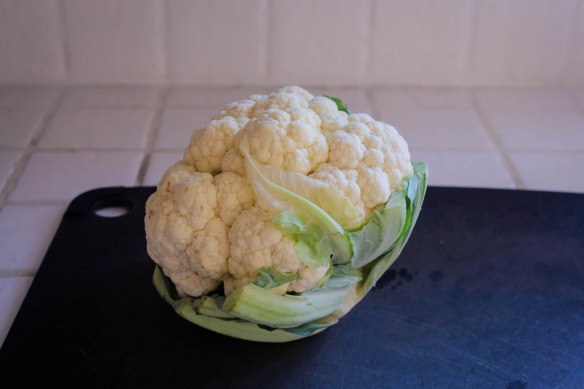
2015 Blog September-0501Of course, since this relief might not last very long, I did the only sensible thing I could, which was to buy a head of cauliflower and shove it into a high-temperature oven. Cauliflower and I were never friends in childhood, but Mark Bittman changed all that for me by offering a high-heat roast, rather than a steam or a boil, as the plan of attack. In fact at this point, I think N. and I would happily eat a tray of roasted broccoli and cauliflower three or four nights a week, without much to accompany them.

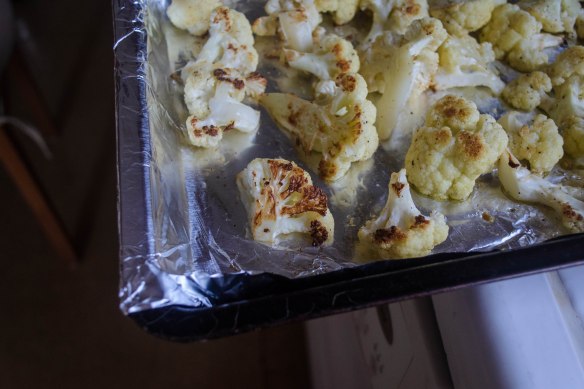
2015 Blog September-0502On occasion, though, a bit of accompaniment is nice. Though my typical procedure is just salt, pepper, and plenty of olive oil, I wanted to give the cauliflower some friends to play with as it bronzed slowly over the flames. The vegetable itself has such a mild flavor that it can easily go in a sweet or a savory direction, and I decided I wanted to play with these borders. Adopting a vaguely Mediterranean direction, after the first blast of roasting I scattered a handful each of golden raisins and sliced almonds over the cauliflower. Back it went just long enough for the florets to brown and the almonds to toast, but not quite long enough to burn the nuts or the delicate raisins. On the contrary, the raisins plump up a bit as they suck in some of the oil and moisture released from the cauliflower. A quick shower of chopped parsley as the tray leaves the oven, and the dish is ready.

2015 Blog September-0506The flavors here are perfect, and it’s hard to describe perfection, but my unexpected favorite thing about this dish was the play of textures. The cauliflower gains an almost-crisp crust on its exterior, but the inside is meltingly soft in an entirely pleasant way. The raisins don’t stay plump for long after exiting the oven, but they provide a subtle chewiness I enjoy, and the almonds are a perfect crunch.

2015 Blog September-0509I usually try to give you pairing suggestions, and while I think this would be good with everything from turkey to lamb, I feel no shame in admitting that, since I was dining solo, I just ate the whole tray and called it a night.

2015 Blog September-0511

Almond Raisin Roasted Cauliflower
Serves 2-3 as a side, 1 as a main
45-50 minutes, mostly unattended
¼ cup olive oil
1 teaspoon salt
¼ teaspoon pepper
1 medium head of cauliflower
generous ⅓ cup golden raisins
generous ⅓ cup sliced untoasted almonds
¼ cup roughly chopped fresh parsley


  • Preheat the oven to 450F with a foil-lined 9×13 inch baking tray inside. We want to preheat the cooking surface as well as the oven to start the cooking process immediately.
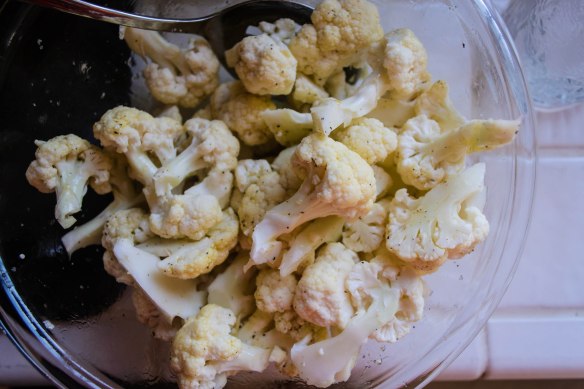
  • While the oven heats, whisk together the olive oil, salt, and pepper in a large bowl. Cut the cauliflower into medium florets (a large bite-size) and toss in the seasoned oil for even coating.
  • Carefully remove the preheated baking tray from the oven and dump on the oiled florets, arranging them in a single layer. Return to the oven and roast for 20 minutes, during which time you can assemble and prep the remaining ingredients.
  • After 20 minutes, take the tray out of the oven and, using tongs, flip over the florets. Yes, each one. Yes, it’s tedious, but it will make for a better end product. Push them back into the oven and roast for another 10 minutes.
  • Remove the tray from the oven again and scatter the raisins and then the almonds over the cauliflower. This protects the raisins a bit and ensures the almonds toast nicely. Back into the oven once more for a final 10 minutes, then remove, scatter with chopped parsley, and serve hot or warm.


Spiced Fried Coconut Rice and Plantains

2015 Blog September-0542As I’m sure will come as no surprise to you, I’ve always been very interested in food in books. But not food books, so to speak, just food that appears in stories. The kind I like is not food that is instrumental to or driving the story; not food that makes the plot twist and turn. I’m more fond of food that is incidental. Food that brings characters together and lets them pause for a moment. Food that, perhaps, the author got too carried away with describing (I’m looking at you, Brian Jacques).

2015 Blog September-0524The inspiration for this dish is something I’ve thought about and forgotten about on and off since I was in my early teens. Roald Dahl, easily my first author crush, has been on my bookshelf since I was five or six years old. But it wasn’t until I was in middle school that I discovered his two autobiographical books Boy and Going Solo. In the latter, as he relates his time as an RAF pilot, he describes a dish cooked for him by a local Sergeant outside of Dar es Salaam in Tanzania:

There was a 44-gallon drum of drinking water in one of the trucks and everyone helped himself. Then the Sergeant made a fire out of sticks and began cooking supper for his men. He was making rice in an enormous pot, and while the rice was boiling he took from the truck a great stem of bananas and started snapping them off the stem one by one and peeling them and slicing them up and dropping the slices into the pot of rice . . . It was absolutely delicious. The rice was unhusked and brown and the grains did not stick together. The slices of banana were hot and sweet and in some way they oiled the rice, as butter would. It was the best rice dish I had ever tasted and I ate it all and felt good and forgot about the Germans. (Dahl 60-61)

I had never been particularly drawn to brown rice or to bananas, but the description of the way the bananas made the rice buttery and slick appealed deeply to me.

2015 Blog September-0532Here, I’ve taken the Sergeant’s basic ingredients and added a bit of my own flair. Impatient, I used white rice rather than brown, but chose basmati to echo the idea that the grains remained separate. A recent return of plantains to my grocery store determined the “banana” component, and since I can’t bring myself to cook plantains any other way besides frying them in thick slices, then smashing them down and frying again in an homage to tostones, I decided the bananas in my version would end up layered atop the rice, not cooked with it.

2015 Blog September-0522Since simple rice and bananas, though it sounded comforting and fulfilling in theory, might end up a bit boring in execution, I decided to cook the rice in coconut milk and then stir-fry it with some spices. This would take care of the “oiled” component from Dahl’s dinner that might otherwise go missing. A sprinkle of cilantro and a squeeze of lime juice would finish the dish.

2015 Blog September-0529Though my final dish was quite different from Dahl’s, my reaction was similar. I ate it all, I felt good, and I could see why Dahl told the Sergeant “You should open a restaurant and become rich” when he finished his plate (61). The plantains, though sweet by nature, teeter in the savory realm with a generous pinch of salt and a spare dusting of cayenne pepper. The rice recalls sweetness with the coconut milk and cinnamon, but a dose of coriander and a bay leaf hold it back from the edge of becoming a dessert rice dish.

2015 Blog September-0537A note about my plantains: though I’ve called this an “homage to tostones,” my results are only loosely similar. Real tostones use green plantains, cut thin slices, and after frying, smashing, and frying again, the resulting golden-brown coins are crisp and flat and something like the love child of bananas and potato chips. My fried plantains use a yellow plantain – not yet tremendously soft, but certainly not the hard, starchy green variety most commonly used for the dish. I shallow fry rather than deep-frying the slices, but the process of frying lightly to cook through, then smashing, then frying again to achieve a bronzed exterior remains the same. Be sure to salt them when they are hot to keep them savory.

2015 Blog September-0538

Spiced Fried Coconut Rice and Plantains
Serves 2
About 1½ hours (1 hour of resting time)
1 cup long-grain rice, such as jasmine or basmati
2 cups coconut milk (not coconut cream) (you could also use water, or vegetable or chicken broth)
¼ teaspoon salt
⅛ teaspoon black pepper
1 dried bay leaf
3 tablespoons coconut oil (you could also use vegetable oil)
1 teaspoon cinnamon
1 teaspoon cardamom
1 teaspoon coriander
1 large yellow plantain (it should have minimal black streaks and feel medium firm)
3 tablespoons coconut oil (you could also use vegetable oil)
salt for sprinkling
cayenne pepper for sprinkling
2-3 tablespoons chopped cilantro
squeeze of lime juice


  • In a medium pot, stir together the rice, coconut milk, salt, and pepper. Add the bay leaf and bring to a boil. Stir once, reduce heat, and simmer for about 15 minutes, or until coconut milk is absorbed and rice is tender. Let sit with the lid on for 5 minutes, then fluff with a fork and let cool for about 1 hour. This helps the grains stay separate and not get gummy when fried.
  • While rice is cooling, prepare and cook the plantain. Peel the plantain and cut it into ½ inch slices. Heat 3 tablespoons coconut oil in a large skillet over medium heat. Add the plantain slices in a single layer and fry until soft: 1-2 minutes per side. Remove to a paper towel lined plate or cutting board.
  • Place another layer of paper towels on top of the lightly fried plantain slices. Using a potato masher or a wide spatula, gently flatten the plantain slices to around ¼ inch thick. Turn up the heat under the skillet to medium-high and return the flattened slices to the oil. They may stick a bit to the paper towel: be gentle but firm as you peel them away!
  • Fry the plantain slices again in the hot coconut oil until a crisp golden crust forms – about 2 minutes. Flip and fry again for another 2 minutes, or until golden on both sides. Remove to a fresh layer of paper towels and immediately sprinkle with salt and cayenne pepper.
  • Turn the heat down to medium and spoon in the remaining 3 tablespoons coconut oil. Add the cinnamon, cardamom, and coriander and let them sizzle for 30-45 seconds, just until their aromas start to mingle. Then, remove the bay leaf from the cooled rice and dump the rice in all at once.
  • Mix frantically to incorporate the spices, then let the rice sit undisturbed for 3-4 minutes to pick up a bit of a crust. Flip around with a spatula and fry another 2-3 minutes for even toasting.
  • To serve, mound about a cup of rice in the center of a shallow bowl. Layer half the slices of plantain on top, then sprinkle with chopped cilantro and squeeze on a few drops of lime juice. Repeat for the second diner, and serve immediately.
Beef Stroganoff Meatballs

2015 Blog October-0554These are the meatballs that started it all. On a whim, in a post I wrote to publicize Shauna’s (at the time) most recent cookbook, I mentioned off-hand the idea of roasting the mushrooms in the Russian classic beef stroganoff – a savory stew of long-cooked beef with onions and mushrooms, often draped over egg noodles or mashed potatoes.

2015 Blog October-05462015 Blog October-0548Somehow, as it simmered in my head, the concept of roasted mushrooms, well, mushroomed, and turned instead into adapting the whole dish into a meatball. Onions and mushrooms, sautéed down in butter until tender and moist, studding a beef meatball floating in a beefy wine sauce, finished with a generous dollop of sour cream. It sounded exactly right, and though a few ingredients added themselves to the mix – thyme in the meatballs, a bay leaf in the sauce and a sprinkling of fresh herbs of the top – they stayed in basically the same form as the year stretched on. From there, in fact, they launched the whole meatball project: if beef stroganoff could be remade in meatball form, why couldn’t other classic dishes? And if I could come up with enough of those, I was set with a project for the year. It became a plan.

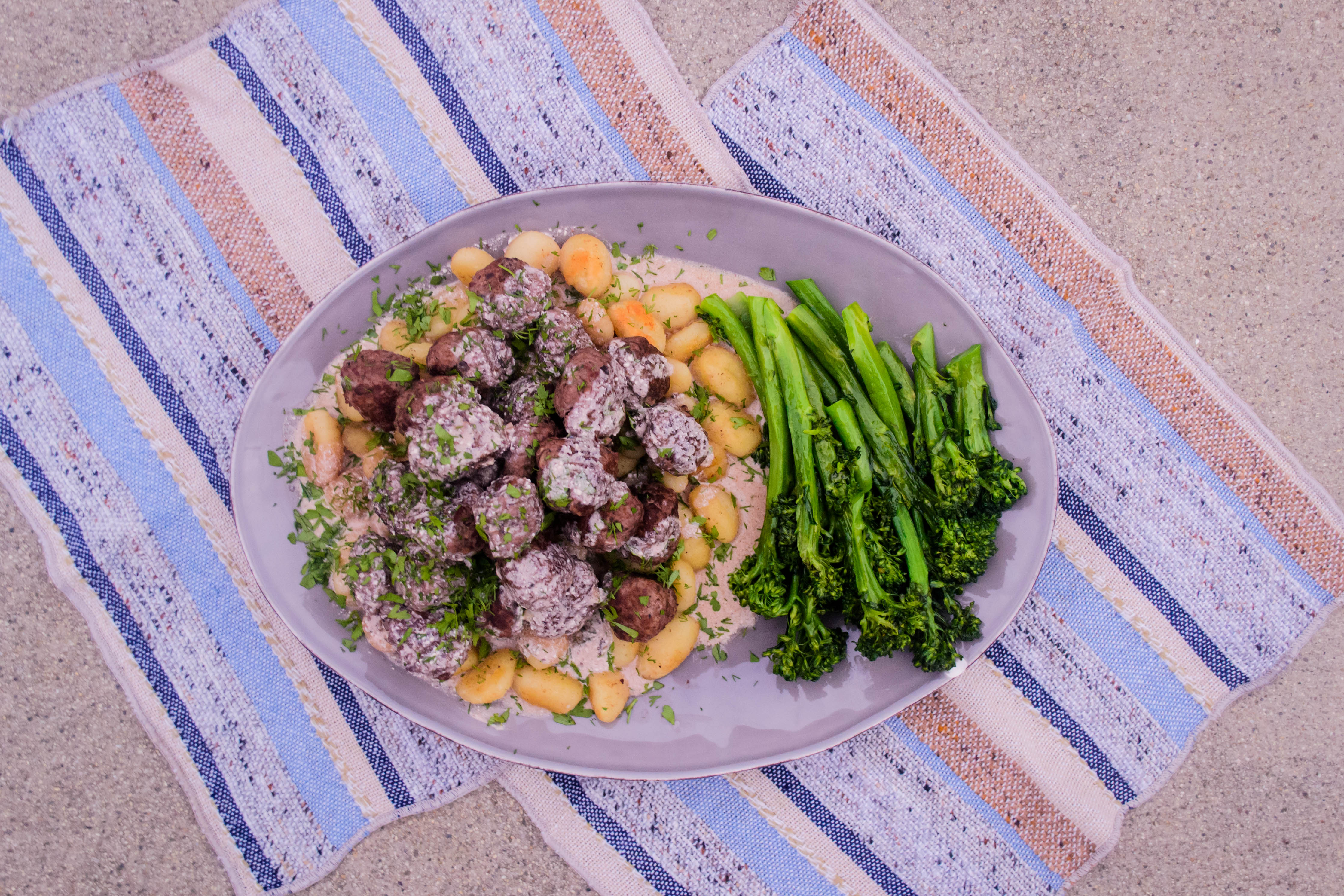
2015 Blog October-05492015 Blog October-0551As ideas came thick and fast, and the seasons grew warmer, stroganoff was put off month after month. Finally, in a rare cool weekend, I was able to return to the idea and let me tell you, it was a worthy origin story. My sauce broke, but yours won’t, because you will start with your sour cream at room temperature and add it slooooowly with the heat off, won’t you? And your meatballs will be tender and moist, after simmering but not boiling in the rich, slightly thickened sauce. And though you can certainly serve these as we did, piled atop pan-toasted gnocchi, a pillow of sour cream mashed potatoes or a bowl of egg noodles would be equally welcome.

2015 Blog October-0552

Beef Stroganoff Meatballs
Makes 24-28 tablespoon sized meatballs
45-60 minutes, very approximately
4 tablespoons olive oil, divided
2 tablespoons butter
½ cup minced white onions
1 cup minced mushrooms (I like crimini)
¼ teaspoon freshly ground black pepper
1 teaspoon fresh thyme leaves
1 pound ground beef, preferably 85% lean / 15% fat (any leaner and the meatballs run the risk of being dry)
1 teaspoon salt
2 tablespoons dijon mustard
1 egg
1 cup red wine
2 cups low-sodium beef broth
1 bay leaf
¾ cup full-fat sour cream, at room temperature
1-2 tablespoons each minced dill and parsley, to garnish
pan-fried gnocchi, egg noodles, or mashed potatoes, to serve


  • In a large skillet, heat 2 tablespoons of the olive oil with the butter over medium-low heat. Add the onions and stir once, then let cook gently while you prepare the mushrooms.
  • Add mushrooms, ¼ teaspoon pepper, and the thyme to the gently cooking onions and raise the heat to medium, then cook, stirring frequently, until tender and lightly browned – around 5-8 minutes. Let cool.
  • In a medium glass bowl, combine ground beef, salt, mustard, egg, and the cooled mushrooms and onions. Use your fingertips (preferable) or a spatula to lightly bring everything together; we are aiming for a mixture in which the aromatics and seasonings are evenly distributed.
  • In the same skillet you used for the onions and mushrooms, heat a few drops of olive oil over medium heat. When it is shimmering, add a teaspoon-sized patty of the meat mixture and cook on both sides until done. Taste for seasoning and adjust for the rest of the mixture, if needed.
  • Using moistened hands, roll tablespoons of the meat mixture into tight but tender spheres, setting each on a plate until all are rolled. In the same large skillet, heat the remaining 2 tablespoons of olive oil over medium heat. Add the meatballs in a single layer, not touching each other (this will probably take at least two batches). Cook until browned on all sides (2-3 minutes per side), then set aside on a clean plate. Repeat until all meatballs are browned.
  • When all meatballs are browned and set aside, add the red wine all at once and use a wooden spoon or spatula to loosen the browned bits from the bottom. This is called fond, and it contains a lot of flavor. Add the beef broth and the bay leaf, and bring to a boil, then reduce the heat and let the broth and wine mixture simmer for 10 minutes.
  • Carefully add the browned meatballs back into the liquid and return to a simmer, letting the meatballs roll in their broth and wine bath for 10 minutes. At this point, it would be wise to get the starch component ready as well.
  • When the meatballs are cooked through, dish them out with a slotted spoon to a temporary storage plate. Turn off the heat and slowly whisk in the sour cream ¼ cup at a time. Don’t add it all right away, and by all means don’t add it straight out of the refrigerator – this will cause it to turn grainy and look curdled (though it will still taste okay). Slow incorporation is key.
  • Once sour cream is fully incorporated, return skillet to low heat, add the meatballs back in once more, and cook just until sauce and meatballs are warmed through.
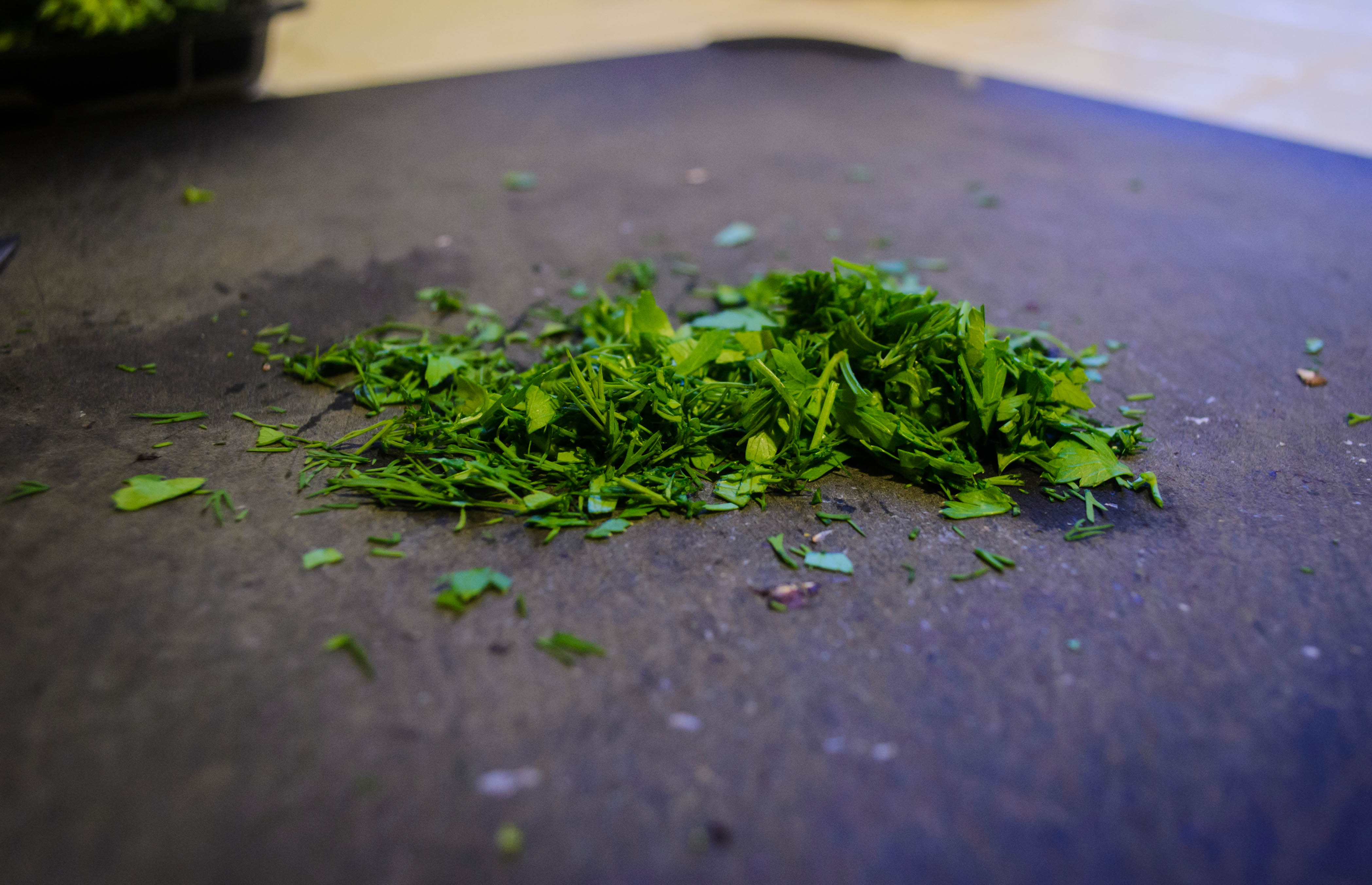
  • To serve, pile meatballs with a healthy helping of sauce atop pan-fried gnocchi, mashed potatoes, or egg noodles, and garnish with a sprinkle of fresh dill and parsley.

Lamb meatballs with basmati pilaf and pomegranate drizzle

2015 Blog September-0440I don’t remember the first time I had lamb. I suspect it was a special occasion – probably Easter – and I suspect I had it in the company of a generous scoop of that emerald green mint jelly that still, in my memory, is the perfect accompaniment for the slight gaminess of a well-seared chop or slim carved slice.

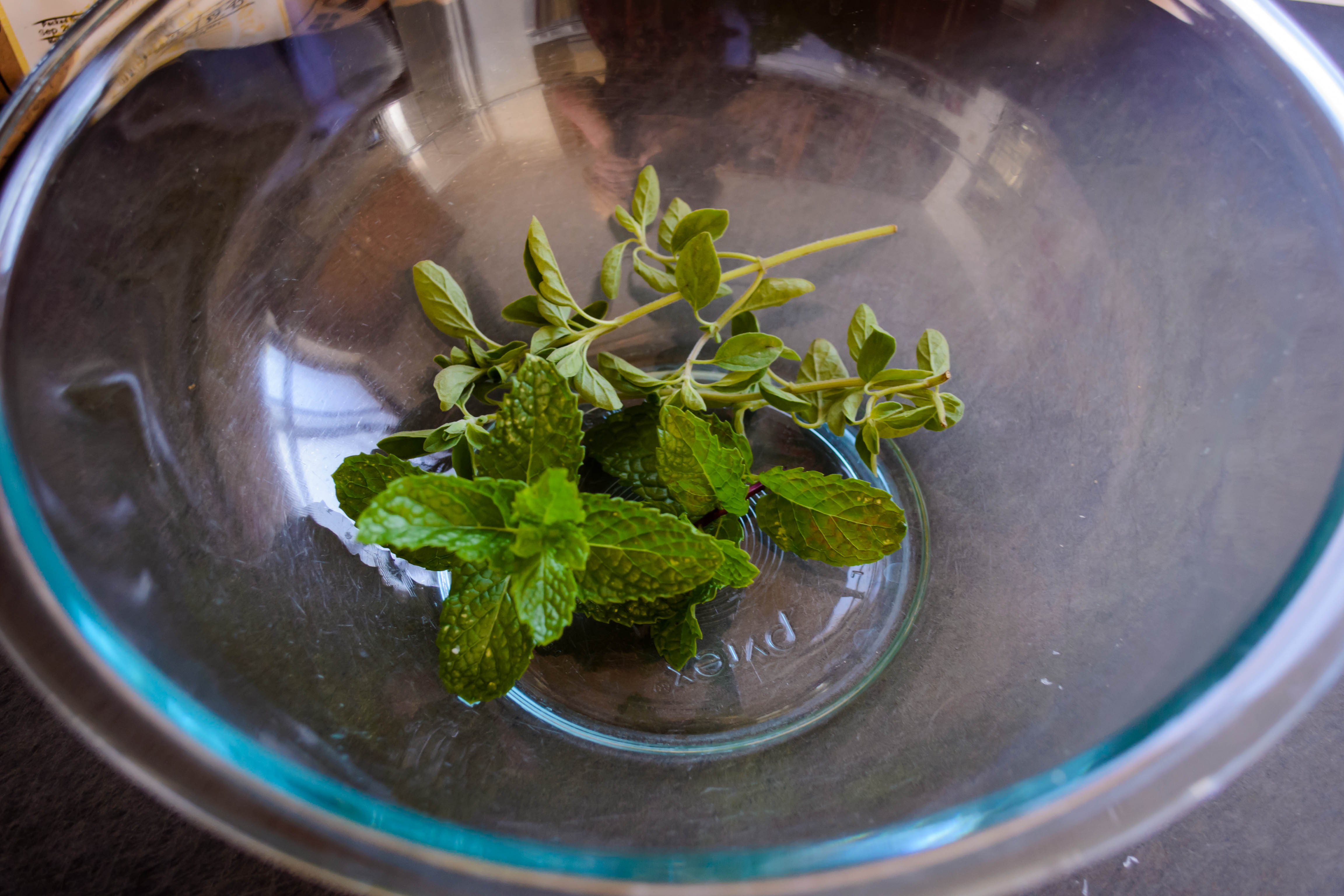
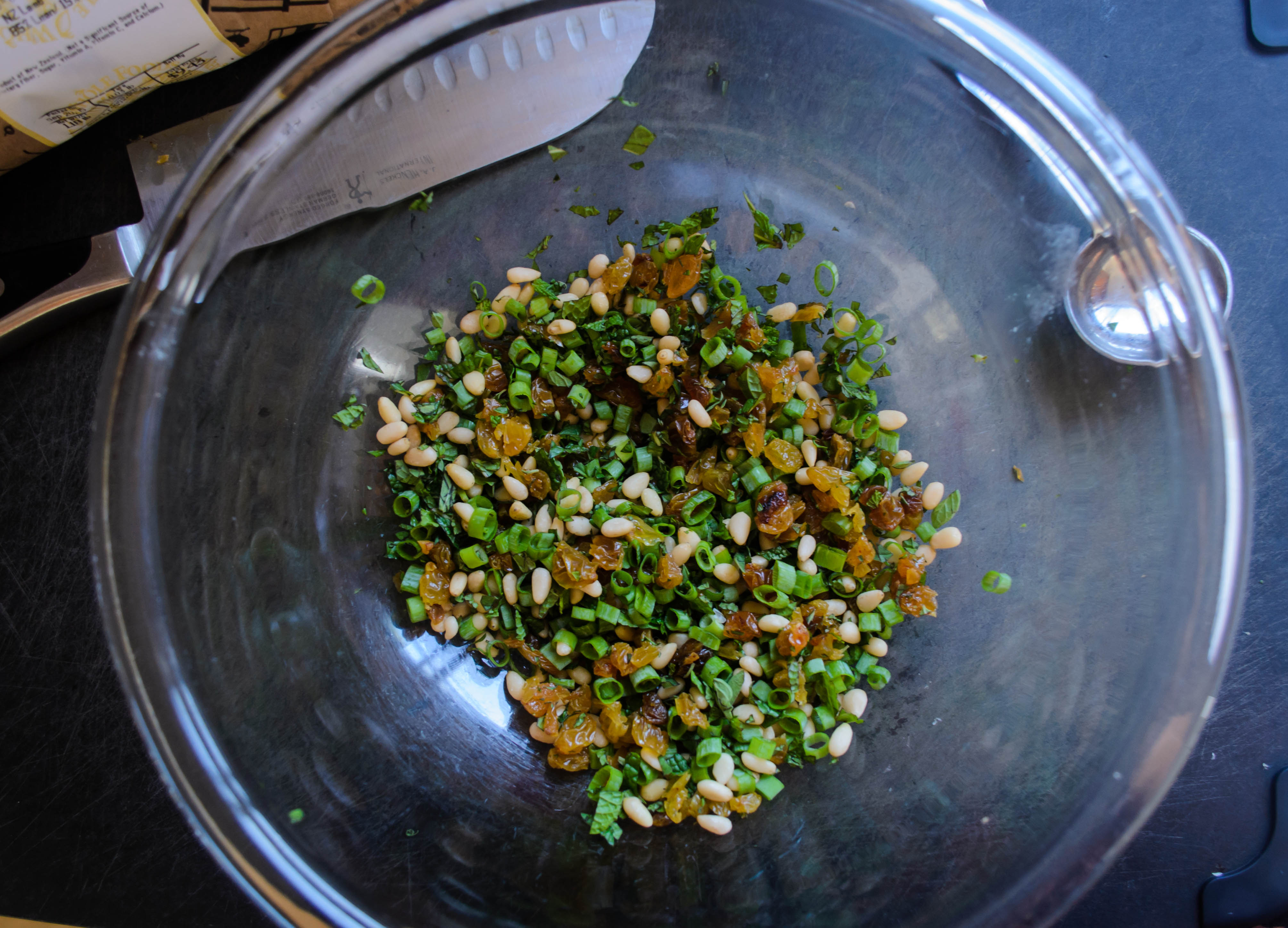
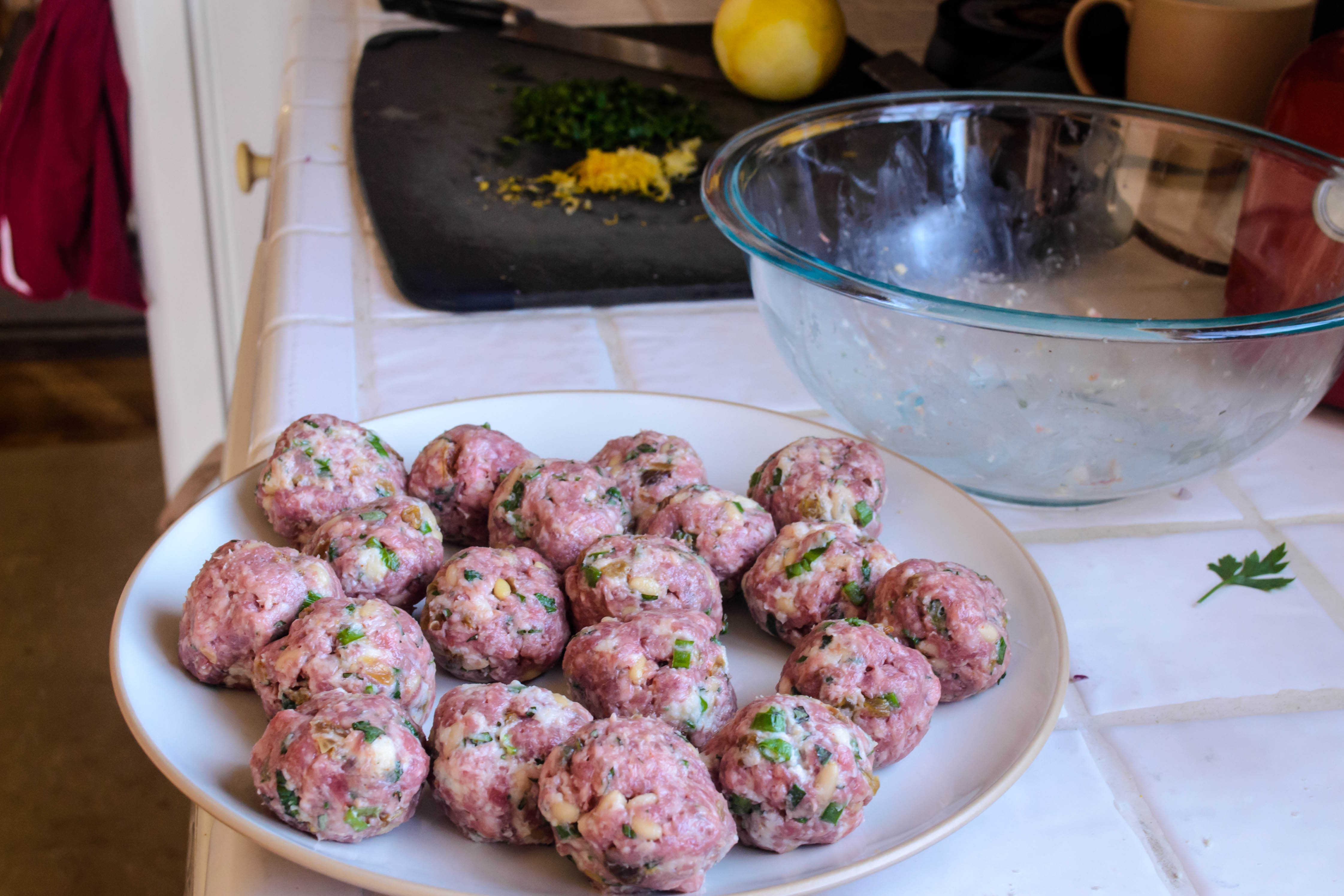
2015 Blog September-0423To bring lamb into the meatball fold (too much? I couldn’t resist), I went back to the mint pairing with a few fresh sprigs, but decided to dress up the seasonings a bit more, pushing these meatballs in a Mediterranean direction. Oregano joined the mint, along with green onions, pine nuts, a small handful of coarsely chopped golden raisins, a tiny touch of cayenne pepper to keep things interesting. Fresh breadcrumbs soaked in cream keep the meat mixture springy and moist, and after a sear and a simmer in beef broth, they are fragrant and herbaceous, tugging toward both the savory and the sweet.

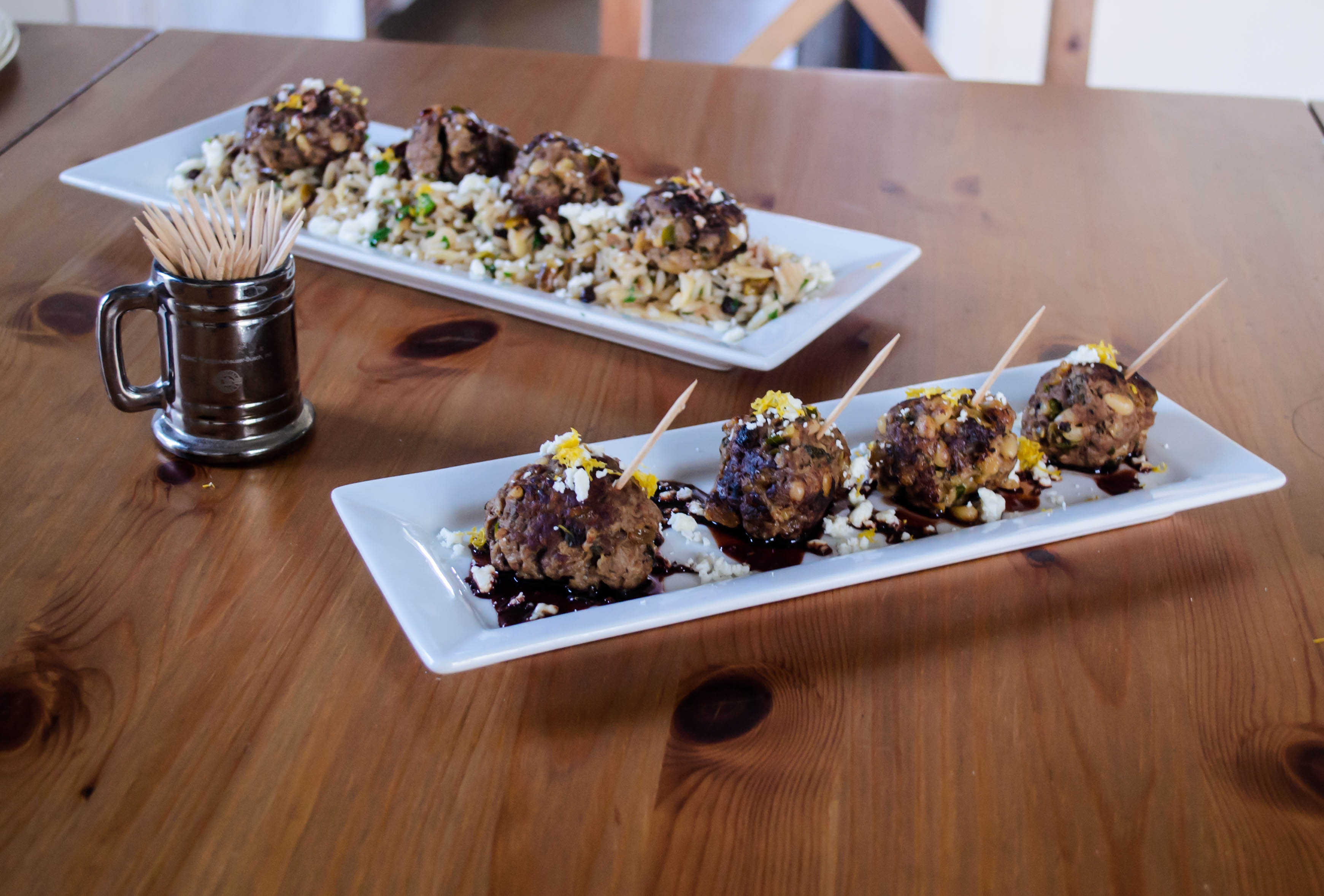
2015 Blog September-0426In dreaming these up, I knew I wanted to play with the sweetness of the traditional mint jelly, but push it in a more grown-up direction. Lamb and chutneys are also a common pairing, since lamb goes so nicely with fruit, and in searching for that agradolce flavor – the Italian sweet/tart/sour answer to a gastrique, I hit upon a thick, puckering drizzle of pomegranate juice and balsamic vinegar, reduced down into a glossy syrup, that would be as delectable over vanilla ice cream as it is here over meat. To finish, according to my notes, all is needed is lemon zest and a “sparing crumble of feta.”

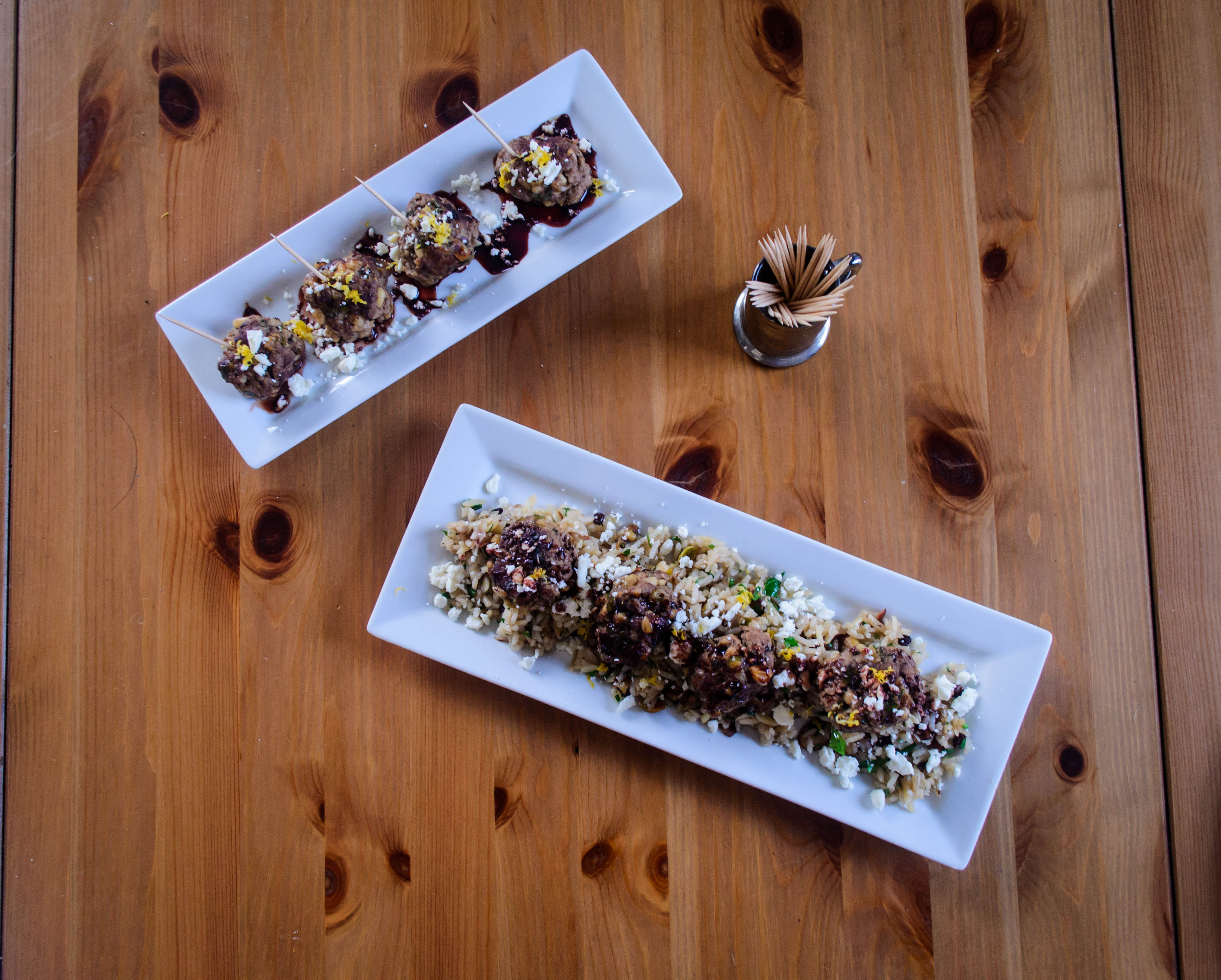
2015 Blog September-04332015 Blog September-0435Just like this – a meatball drizzled in syrup, sprinkled with briny cheese and a touch of bitter citrus rind, these make perfect appetizers. They require only a toothpick, and since they are even better at room temperature than they are steaming from the pan (time to cool gives the herbs a chance to assert their flavors), they are ideal for a party. If you’re looking for an entrée application, though, I also opted for a basmati pilaf, all nutty and fluffy and toasted, spiked with currants and nuts and a little fresh parsley to finish, that these meatballs can be happily snuggled into.

2015 Blog September-04312015 Blog September-0437These are, without question, my favorites of the meatball project thus far. When it’s done right, the play of savory and sweet is one of my favorite taste combinations. And I must, for the sake of your stomachs, eschew modesty and admit: here, it is done right.

2015 Blog September-0444

Lamb meatballs with basmati pilaf and pomegranate balsamic drizzle
Serves 4-5 (with 18-20 1-½ tablespoon meatballs)
45 minutes if you’re quite efficient, 60-90 minutes if you’re not
For drizzle:
¼ cup balsamic vinegar
1 cup unsweetened pomegranate juice
For meatballs:
1 cup fresh breadcrumbs
½ cup milk or cream
1 lb. ground lamb
¼ cup finely sliced green onions, dark and light green parts only (save the bulbs for another night)
1 tablespoon minced fresh oregano
2 tablespoons minced fresh mint
¼ cup roughly chopped golden raisins
¼ cup pine nuts
½ teaspoon salt
⅛ teaspoon cayenne pepper
3 tablespoons olive oil
1-2 cups beef broth
For pilaf:
3 tablespoons butter
3 tablespoons roughly chopped pistachios
3 tablespoons sliced almonds
¼ cup minced red onion
¾ cup basmati or other long-grain rice
¼ cup orzo (small rice-shaped pasta)
1 bay leaf
3 tablespoons currants
¾ teaspoon black pepper
½ teaspoon salt (but taste your chicken broth first – you may need more or less salt)
2 cups low-sodium chicken broth
¼ cup roughly chopped parsley, to finish
To serve:
½ cup finely crumbled feta cheese
zest from one lemon


  • Combine the balsamic vinegar and pomegranate juice in a small pot and set it over medium heat. Bring to a boil, then reduce to just simmering and let it go for 30-40 minutes, stirring occasionally, until it has become a thick, glossy syrup the consistency of molasses. When that happens, remove from heat immediately and set aside.
  • In a glass measuring cup or small bowl, combine the fresh breadcrumbs and the milk or cream and let sit for about 10 minutes to soak. While they suck up the moisture, chop and prep your remaining meatball ingredients (and the pilaf ingredients, if you have time).
  • Add the ground lamb, the green onions, the oregano, the mint, the golden raisins, the pine nuts, the ½ teaspoon of salt, and ⅛ teaspoon cayenne pepper to a medium mixing bowl. Using a fork or your fingers, lift the bread crumbs out of the milk or cream, let any excess liquid drip off briefly, and add them to the other meatball ingredients. Use your fingertips to combine the meatball ingredients, mixing lightly but thoroughly to distribute the wet bread and the sticky meat evenly.
  • In a large skillet, heat the 3 tablespoons of olive oil over medium heat. Add about a teaspoon of the meat mixture and fry for about a minute on each side until cooked through. Taste for seasoning and adjust salt and cayenne pepper quantities as desired. It’s okay to leave them slightly undersalted, though, as the feta you’ll crumble over at the end is so salty.
  • With moistened hands, scoop up 1-½ tablespoon quantities of the meat mixture and roll them into spheres. This should net you 18-20 meatballs. Place as many meatballs as will fit in a single layer without touching one another in the preheated skillet, and brown on all sides over medium heat – about 2 minutes per side. Remove to a clean plate. Repeat until all meatballs are browned on the outsides.
  • Wipe out the meatball skillet with a paper towel to remove the excess fat, then add the 1-2 cups beef broth and bring to a simmer. When it is bubbling, carefully add the meatballs back into the skillet – you want enough liquid that it comes approximately halfway up the sides of the meatballs. Cover with a tight-fitting lid and let simmer 15-20 minutes, turning all meatballs once.
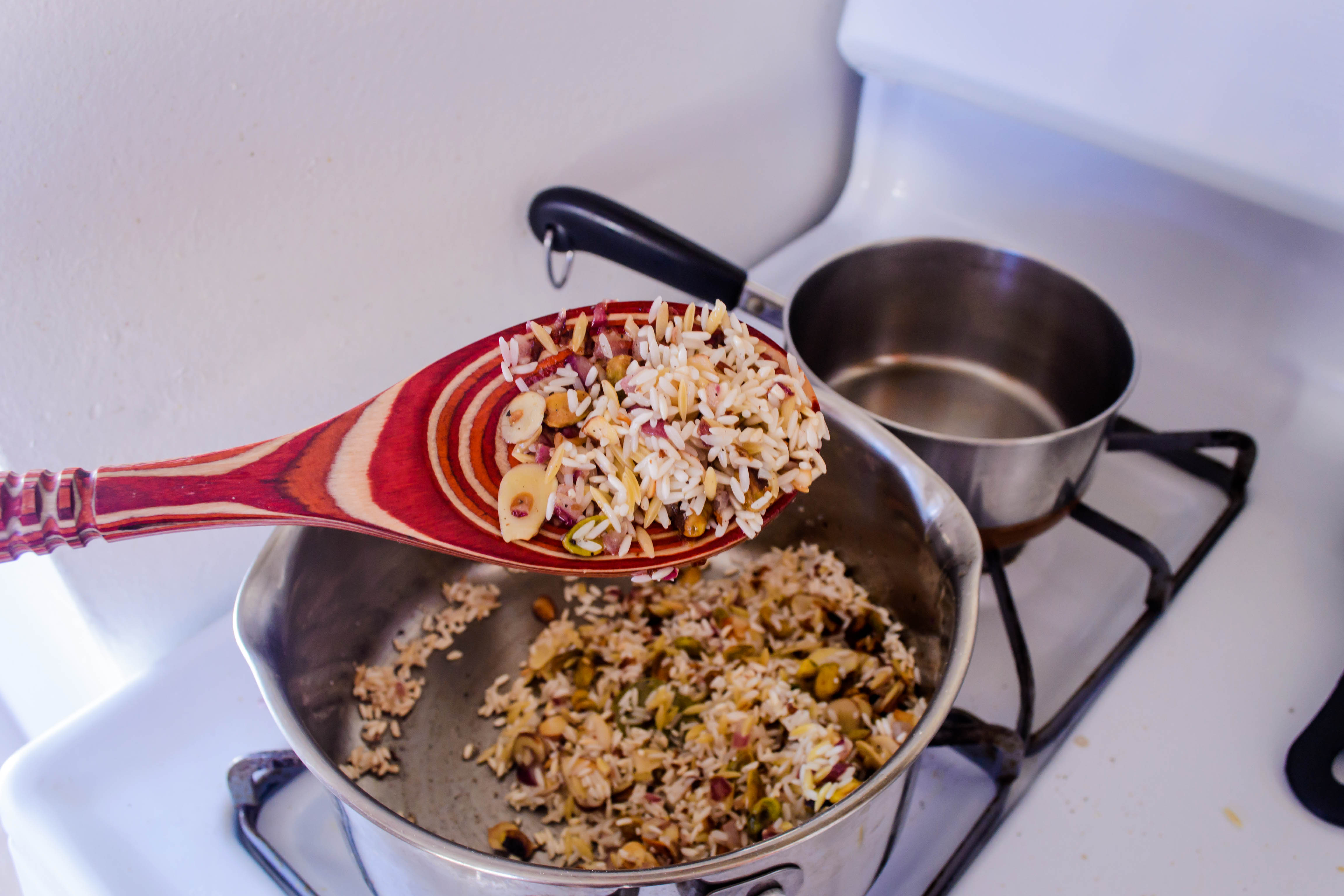
  • The moment the meatballs hit their simmer, make the rice. Heat the 3 tablespoons butter in a medium pot over medium heat. Add the pistachios and almonds and toast, stirring frequently, until lightly browned. Add the ¼ cup minced red onion and sauté until onion is translucent and tender – 3-5 minutes. Stir frequently to ensure the nuts do not burn.
  • Add the rice and the orzo to the onion and nuts and stir to coat evenly with the melted butter. Toast over medium heat for 1-2 minutes, just until the rice gains some opacity. Add the black pepper, the salt, the bay leaf, the currents, and the chicken broth. Stir well and cover with a tight-fitting lid.
  • Bring the rice mixture to a boil, stir once more, and reduce heat to a simmer. Simmer 15 minutes, or until rice is tender and has absorbed all the broth. Stir in the parsley and fluff with a fork before serving.
  • To serve, nestle 4-5 meatballs per diner on a bed of the fluffy pilaf. Drizzle a few teaspoons of the thick, glossy pomegranate syrup over the meatballs, crumble on some feta and lemon zest, and serve warm or at room temperature.
  • Alternatively, for appetizers, make a decorative drizzle of the pomegranate glaze on an attractive platter (I prefer white, for the contrast), spear the meatballs and place them atop the glaze layer, and then dust the whole thing lightly with feta and lemon zest. Serve the rice alongside, or not at all.