Savory Greek “cheesecake” dip

Food Blog December 2013-2977Ricotta cheese and I have a strange (strained?) relationship. I want to love it. Dishes in which it features – lasagna, calzone, a certain breed of cheesecake – sound to me decadent and worthy. But when I do eat it, I feel torn. It’s a texture thing, isn’t it? It has this graininess – a kind of luscious roughness that doesn’t feel quite right. I want it to make up its mind. Either be feta, all craggy and crumbling and tang, or be mascarpone, relentlessly silken. But ricotta is neither. It resists singularity. It hovers in the middle there, taunting me with its bothness.

Food Blog December 2013-2967Just before our annual in-laws holiday shuffle, I needed to use up some of our perishables, and there was half a container of ricotta, lonely and renounced in the back corner of the fridge. With lemons coming in on my backyard tree, I suddenly thought of a feta dip flavored with lemon zest and oregano and garlic that I’ve made dozens of times, and wondered how it would fare with this creamy cousin as its star player. I’d also been itching to try baked ricotta, after hearing that it transforms in the oven into something airy and rich. With a block of cream cheese also wailing its abandonment and crackers to use up before the trip at the end of the week, hey presto, my lunch menu was suddenly all about a savory Greek inspired dip.

Food Blog December 2013-2972Unlike a standard baked ricotta, I didn’t add any eggs here. This omission, plus the addition of cream cheese, kept the dip quite thin – not the quasi-souffle texture you might be expecting. Were I to make this again, I might add an egg or two just to puff it up a bit more. If you try it that way, let me know how it turns out.

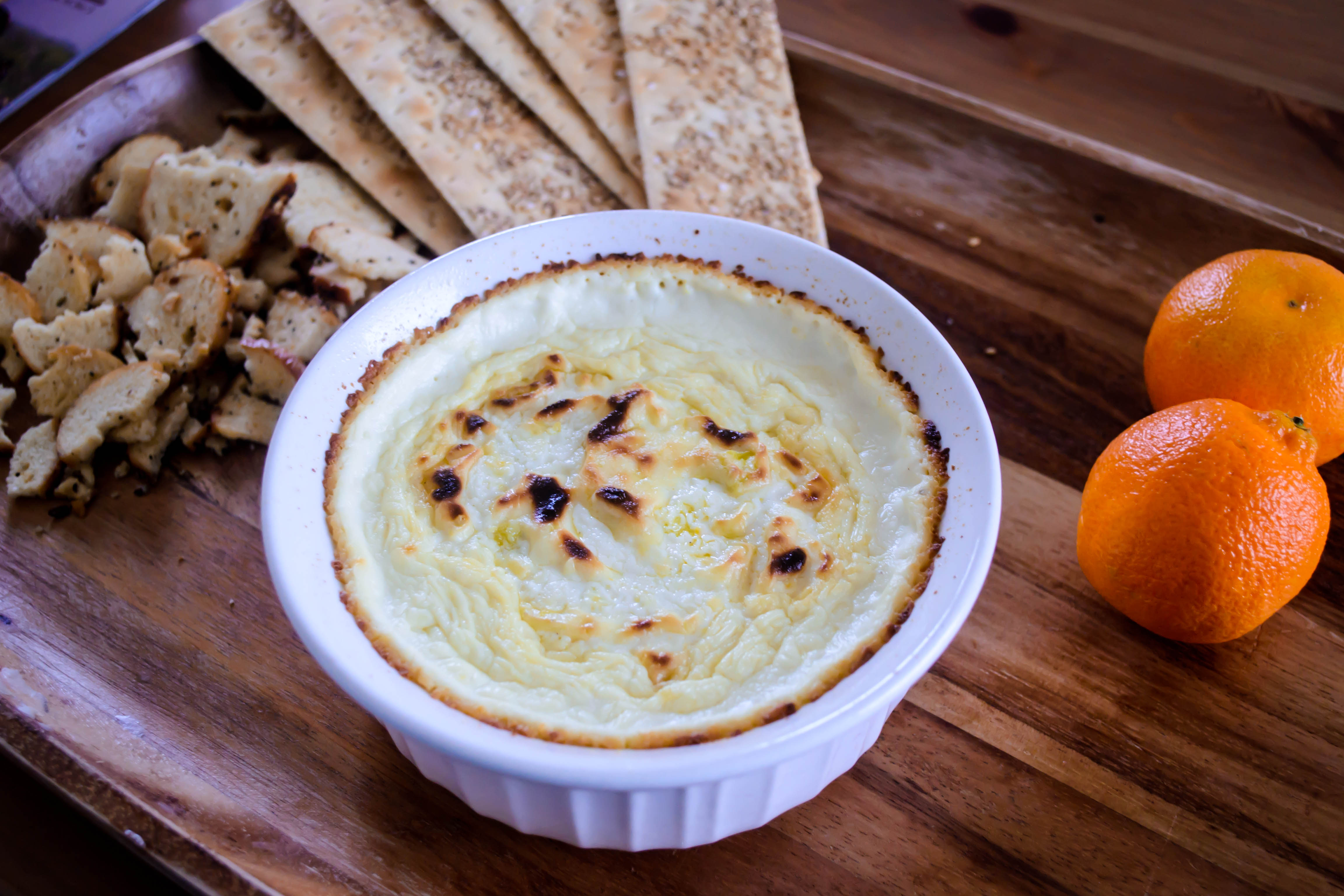
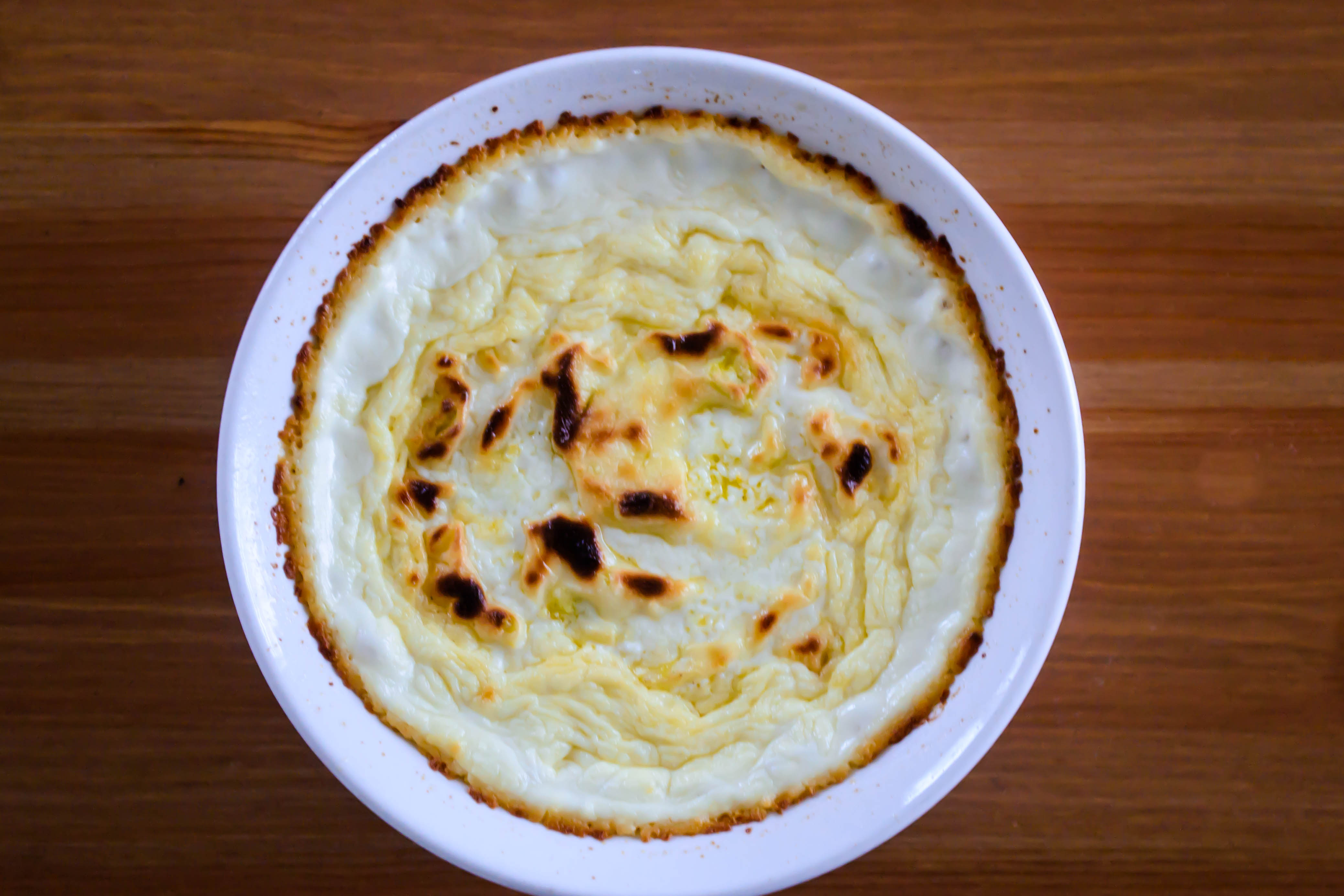
Food Blog December 2013-2973Thanks to these changes, what you’re getting here is essentially melted creaminess that, at least when it’s hot, won’t even need spreading, covered by a layer of golden-brown bubbles that are easily pierced with the persistent corner of a cracker. It’s soft, it’s hot, it’s herby and spicy and perversely fresh, thanks to the lemon zest, and while I had it with crackers, it could be easily compelled to drape itself over sticks of fresh vegetables or bread. Pita chips, too, would be particularly nice. I’d be clever and current and say it would make a superb addition to a Superbowl game day spread, but I’ve narrowly missed that opportunity which, for me, seems somehow fitting. Instead, bake yourself a batch of this to fend off the post-holiday cold of the next month or two, when winter always seems the longest. Food Blog December 2013-2975

Savory Greek “cheesecake”dip
Makes a generous 1 cup
4 ounces ricotta cheese, at room temperature
4 ounces cream cheese, at room temperature
2 cloves garlic, finely minced
Zest of one lemon
¼ teaspoon dried oregano, or ½ teaspoon fresh, finely chopped
3 pepperoncinis, finely minced
Salt to taste (start with ¼ teaspoon)


  • Preheat the oven to 400F and spray or oil a 16 ounce (2 cup) oven-safe dish. I used the smallest soldier in my Corningware collection.
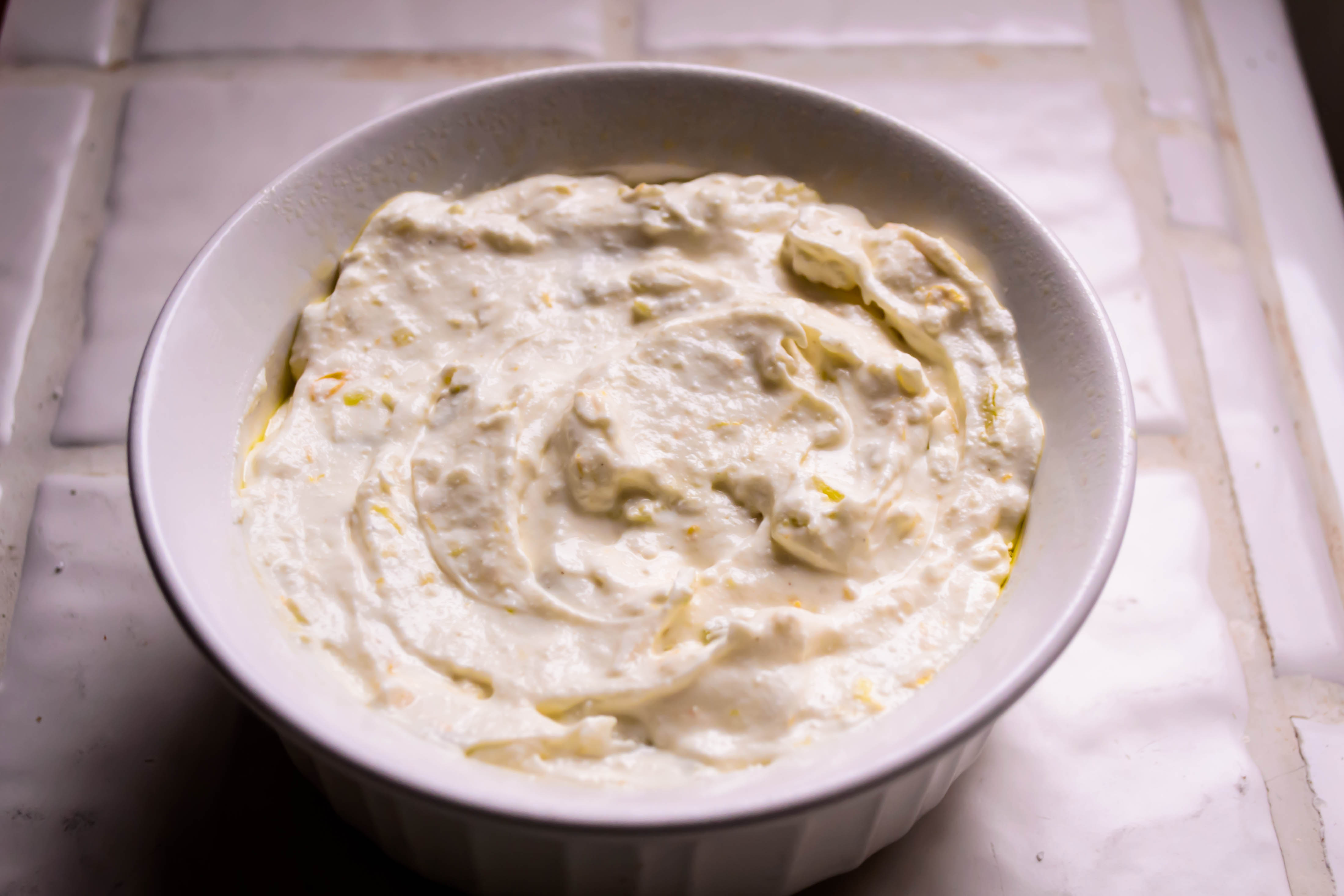
  • In a small bowl, mix the cheeses thoroughly until they are quite smooth. Lumps are the enemy here, as they signal incomplete incorporation.
  • Add the remaining ingredients, mixing well to combine evenly. Taste for salt and add more if needed.
  • Using a rubber spatula, scrape into your prepared dish, smoothly the top a bit for even browning.
  • Bake for 25-30 minutes, or until the top is burbling and oil is sizzling around the edges.
  • If you want more browning, carefully place it under the broiler for a few minutes to let some of the bubbles turn deeply golden and barely crusty.
  • Remove from the oven and let sit for 5 minutes or so, just until it is cool enough to eat without scorching your throat. Serve with chips, thin slices of toast, crackers, or a crudités platter.

Quick Chocolate Bark

If you have leftover chocolate from the holidays (hah), or if you need something impressive for that New Year’s Eve party you didn’t expect to be invited to (double hah), but you aren’t feeling up to full-blown candy making, this is your recipe.

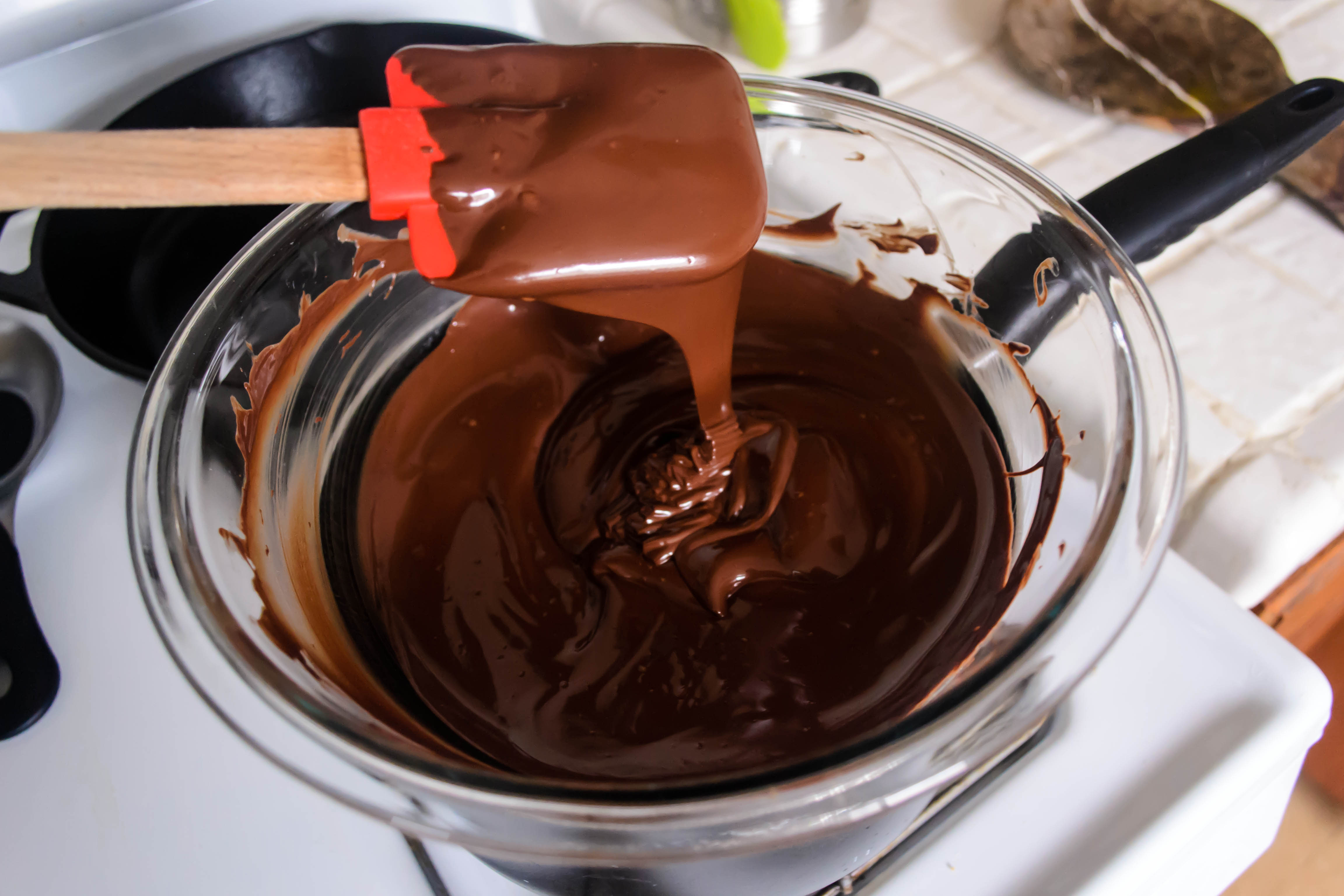
Photo Friday 2013-2955Chocolate bark is dead simple to make, totally delicious, and looks very fancy – essentially, you are producing a custom fruit and nut candy bar, but it takes only as long as the time chocolate needs to melt into a smooth, gloriously dark river of supple brown satin, and the time it takes that satiny pool to harden again. This leaves you sufficient time to shower, put on makeup, find the other earring from that pair that never stays together in the drawer, and possibly practice your dance moves, just in case.

Photo Friday 2013-2961Just before you leave for the party (or moments before your guests arrive), you can cut up the block of glorious, jewel-studded candy into neat bricks or, if you’re me, random quadrilaterals (random shapes and sizes = no one questioning your honesty when you say you made it yourself), stack it on your prettiest serving platter, and wait for it to disappear.

Photo Friday 2013-2965 Fruit and nut chocolate bark
makes a 9×14 inch slab, approximately
8 oz. semi-sweet or bittersweet chocolate
1/2 cup chopped, toasted almonds
1/2 cup dried cranberries
1/2 cup chopped dried apricots
  • Pour about 1 cup of water into a medium pot and begin to heat it over medium-low heat on the stove. Place a glass bowl over the top of the pot, being sure it covers the opening completely but does not touch the water inside. You are making a double boiler.
  • Cut the chocolate into small pieces and deposit it into the glass bowl. Stir occasionally. It will melt slowly as the water in the pot below the bowl heats. If the water comes to a boil, turn the heat down or off completely. The residual heat will be more than enough to melt the chocolate.
  • If you haven’t already chopped and/or toasted your toppings, now is a good time. Just take care to check and gently stir your chocolate every minute or so, to ensure that it doesn’t seize or burn.
  • Line a cookie sheet with parchment paper or wax paper.
  • When the chocolate is completely melted into a glossy, shiny puddle, pour it slowly and evenly onto the parchment paper-lined cookie sheet, leaving a slim border around the edges.
  • Using a rubber spatula or an off-set icing spatula, spread the chocolate into a rectangle of even thickness. Mine was about 9×14 inches, though I’ll confess to not measuring it exactly.
  • Sprinkle the fruit and nuts over the warm, still semi-liquid chocolate in whatever pattern or quantity you like. Set aside to cool.
  • After an hour or two, the chocolate will have hardened around the fruit and nut pieces, holding them in place. To serve, cut the slab of chocolate into chunks with a sharp knife.

Peppermint Marshmallows

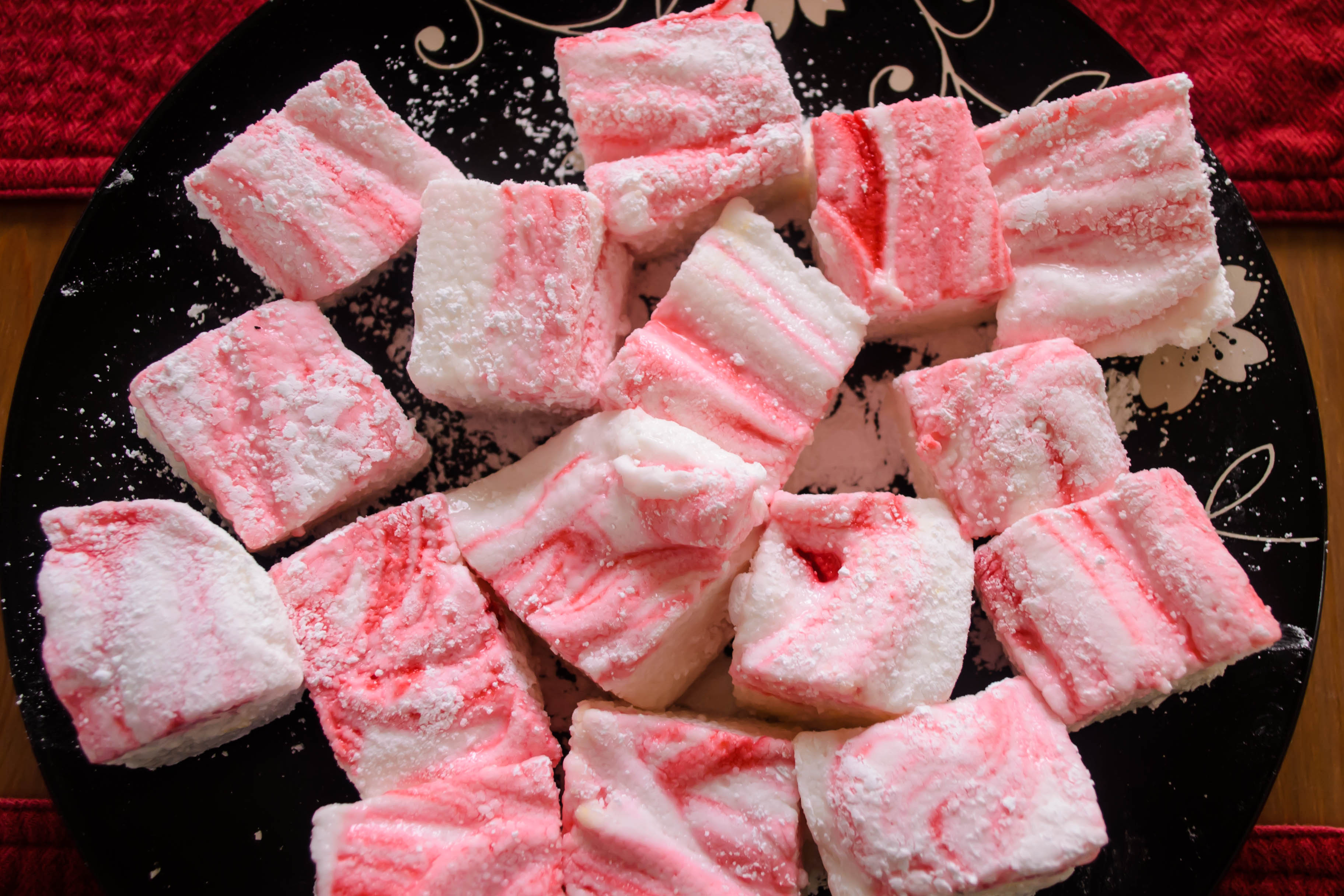
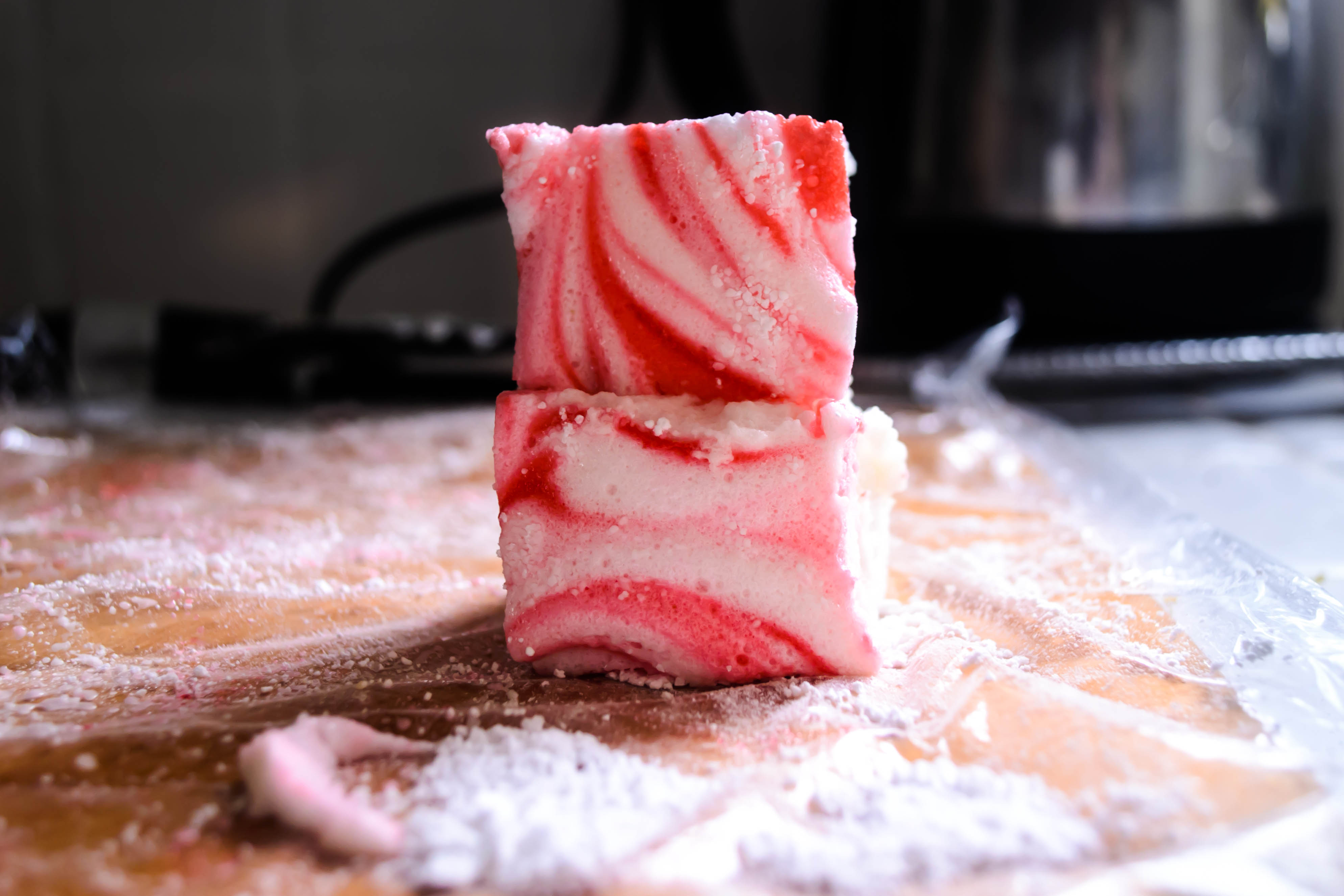
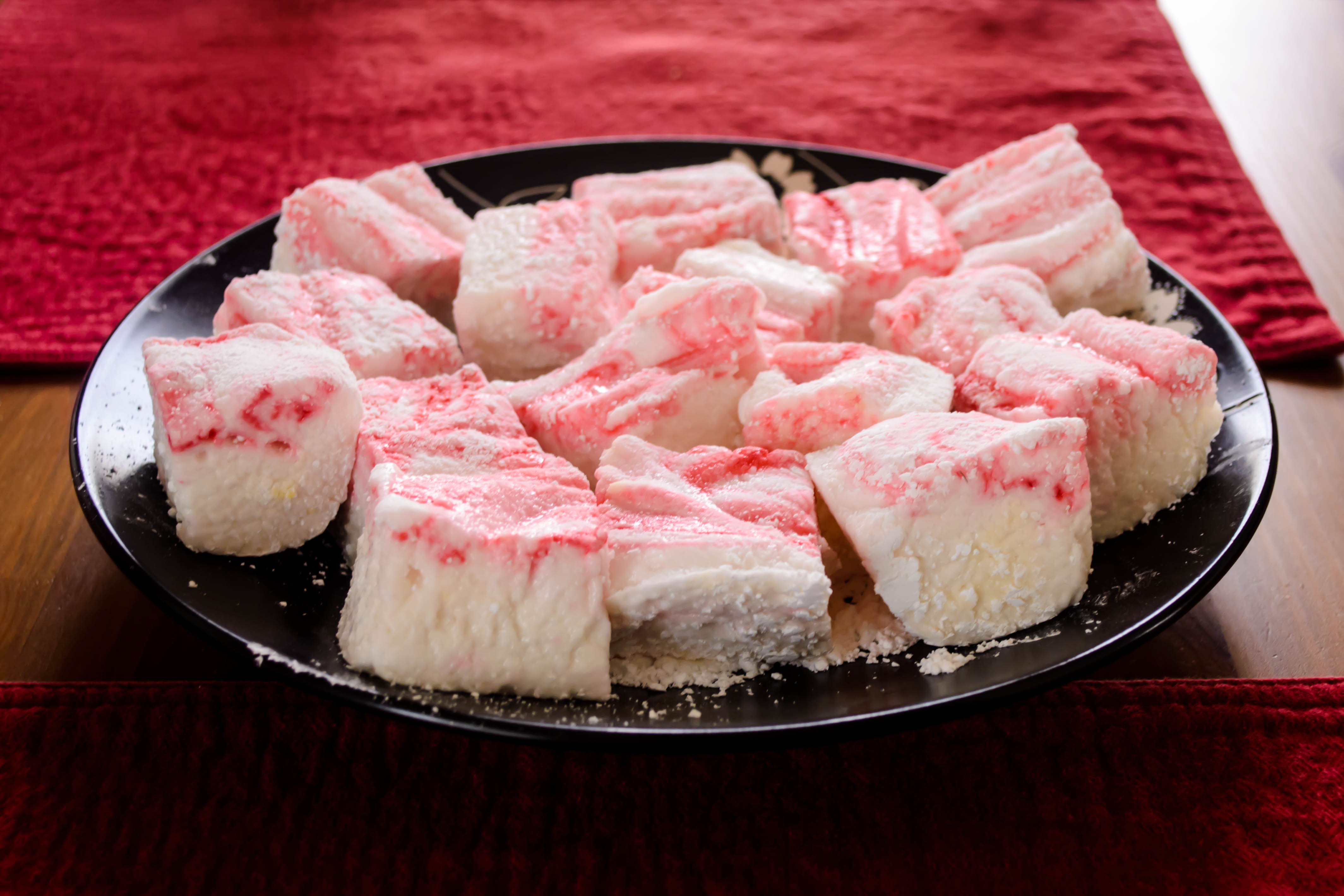
Last week I promised you something sweet and holiday inspired, but gave you very little else to go on.  I didn’t know, yet, that what I would have to offer would be a beautiful red and white swirl, a puffy, gooey, perfectly melting cube of magic, like a candy cane exploded into clouds and rained powdered sugar all over my kitchen.

Food Blog December 2013-2952Marshmallows.

Food Blog December 2013-2944Specifically, peppermint marshmallows, flavored with mint extract and swirled with a few drops of red food coloring to emulate the striping in a candy cane.

Food Blog December 2013-2935Marshmallows look like an ambitious cooking project, and I’ll admit they are not quite as easy as, say, your average chocolate chip cookie or gingerbread recipe. But they are so, so worth trying. When you compare store-bought marshmallows to homemade they are, as I explained yesterday, like the difference between those sheets in a discount motel, and the Egyptian cotton sheets with the sky-high thread count you dream about treating yourself to maybe that’s just me…). The homemade ones are soft and luxuriously puffy, and they linger on your taste buds without that powdery residue you get from the kind that come out of a bag. Plus, you get to play with gelatin and egg whites.

Food Blog December 2013-2921Food Blog December 2013-2927Food Blog December 2013-2930Food Blog December 2013-2931To make mine, I looked to two of my sweets inspirations: David Lebovitz and Irvin Lin. I’ve been reading these two men’s blogs for years now, continually impressed as they churn out ambitious baking projects I never, three or two or even one year ago, would have considered attempting. Then over this summer my sister and I decided to try Irvin’s red velvet s’mores with cream cheese marshmallows, and the recipe he put together was so precise and, once I got over my fear of the boiling sugar syrup, so unthreatening that I decided homemade marshmallows should become at least a semi-regular part of my repertoire.

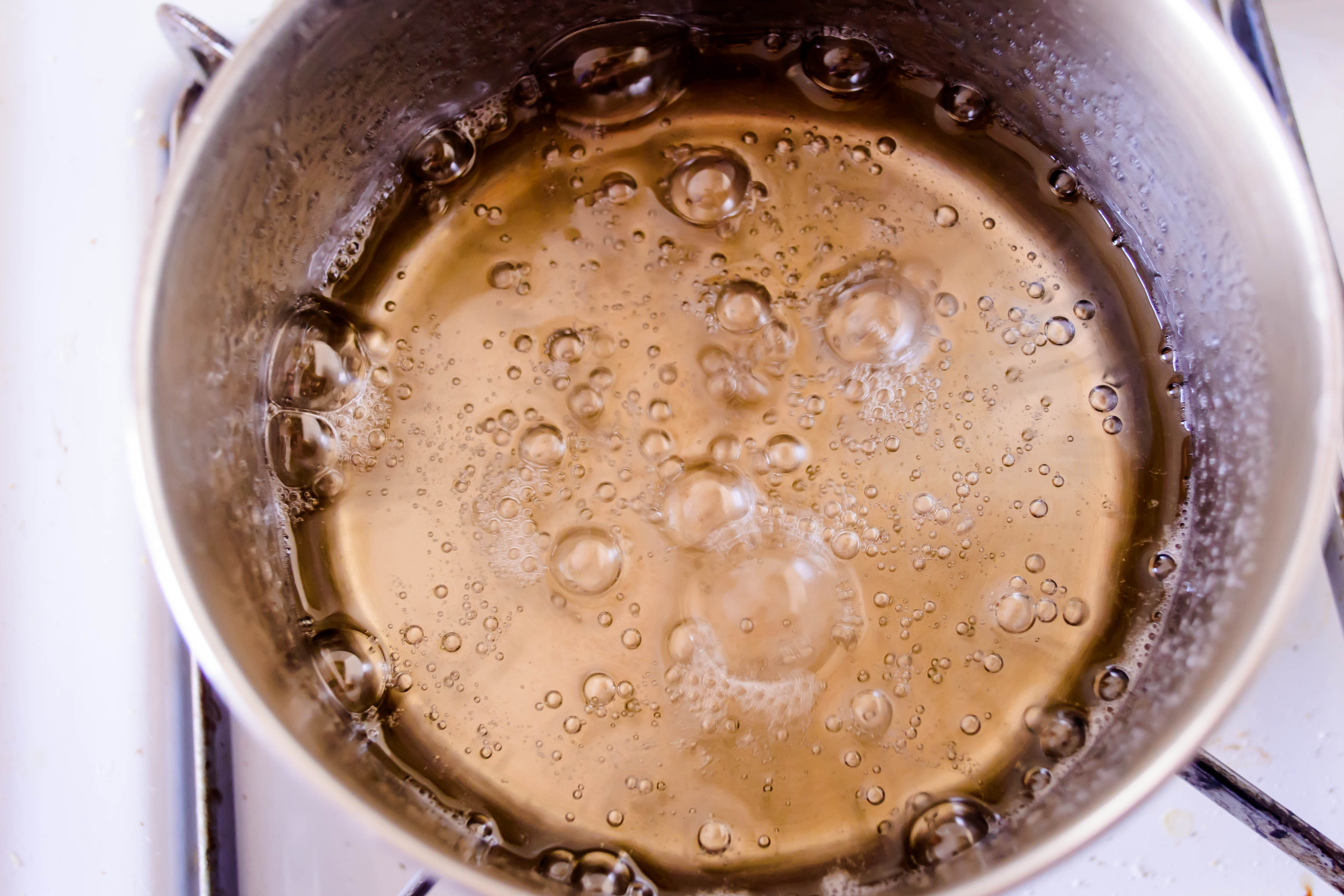
Food Blog December 2013-2923This is essentially a three-part recipe. First, you dissolve some gelatin in cold water.  While it softens and thickens and turns into a curious gooey business that resembles nothing so much as that sticky glue magazine companies use to affix perfume fold-outs and coupons to their pages (how delicious does that sound?!), you melt some sugar with corn syrup and a touch more water, making a barely golden syrup that bubbles and thickens but doesn’t hurt you, because you stir carefully and make sure you have shoes on, in case of disasters. It takes some time for the syrup to come up to the requisite 240F degrees, so while you wait, you whip some room temperature egg whites to soft peaks, helping them along the way with a pinch of cream of tartar.

Food Blog December 2013-2936Food Blog December 2013-2942Food Blog December 2013-2941Then all that remains is to combine. Off the heat, you scrape the gelatin, now congealed into this weird, pecan-pie-filling consistency, into the syrup, whisk to combine, and then pour the still-hot gelatinized syrup carefully into your egg whites. You whip them for a long time – ten minutes long! – and they expand triumphantly until you aren’t sure your stand mixer can hold them all. At the last minute, you add some vanilla and mint extract, and then deposit into a well-greased baking dish, swirl with some food coloring if desired, and stow in the fridge overnight to cure.  The next day, you have a wide dish of marshmallow, which you can slice, toss with powdered sugar, and use for whatever purposes your heart desires.

Food Blog December 2013-2945I found, through intense and repeated experimentation (I do these things for you…) that they melt with almost no resistance in cocoa, and would be a revelation dipped in dark chocolate. You could likely torch them just a bit to top a peppermint variation of a grasshopper or chocolate cream pie. But I find that with this peppermint flavor in particular – swirled for the holidays and almost aggressively minty – I like them best straight out of the refrigerator.

Food Blog December 2013-2951

Peppermint Marshmallows
Adapted from Eat the Love and David Lebovitz
Makes one 9x13x2 inch pan slab of marshmallow, which you can cut to your desired size
2 envelopes unflavored gelatin (about 14.5 grams, though the quantities on the Knox brand box are not very forthcoming)
¾ cups water, divided
4 egg whites, at room temperature (being at room temp helps them whip faster)
¼ teaspoon cream of tartar
1 cup granulated sugar
⅓ cup light corn syrup
1 teaspoon vanilla
1 teaspoon peppermint extract (or less – it’s quite strong)
10-12 drops red food coloring (optional)
1-2 cups powdered sugar, for coating cured marshmallows to prevent sticking


  • Grease a 9x13x2 inch baking dish with non-stick spray. Mine was butter flavored and looked a little yellow – I’d advise a white or clear version.
  • In a small bowl, sprinkle the gelatin powder over ½ cup of the water, then set aside to gel.
  • In a small saucepan, combine the sugar, corn syrup, and remaining ¼ cup of water, then stir over medium heat. Use a candy thermometer to moderate the temperature – you are looking to heat this to 240F.  This will probably take about 8-10 minutes, with the last 10 degrees taking the longest. You can turn away from this now and then, but be sure to stir regularly as the sugar dissolves to prevent it from burning.
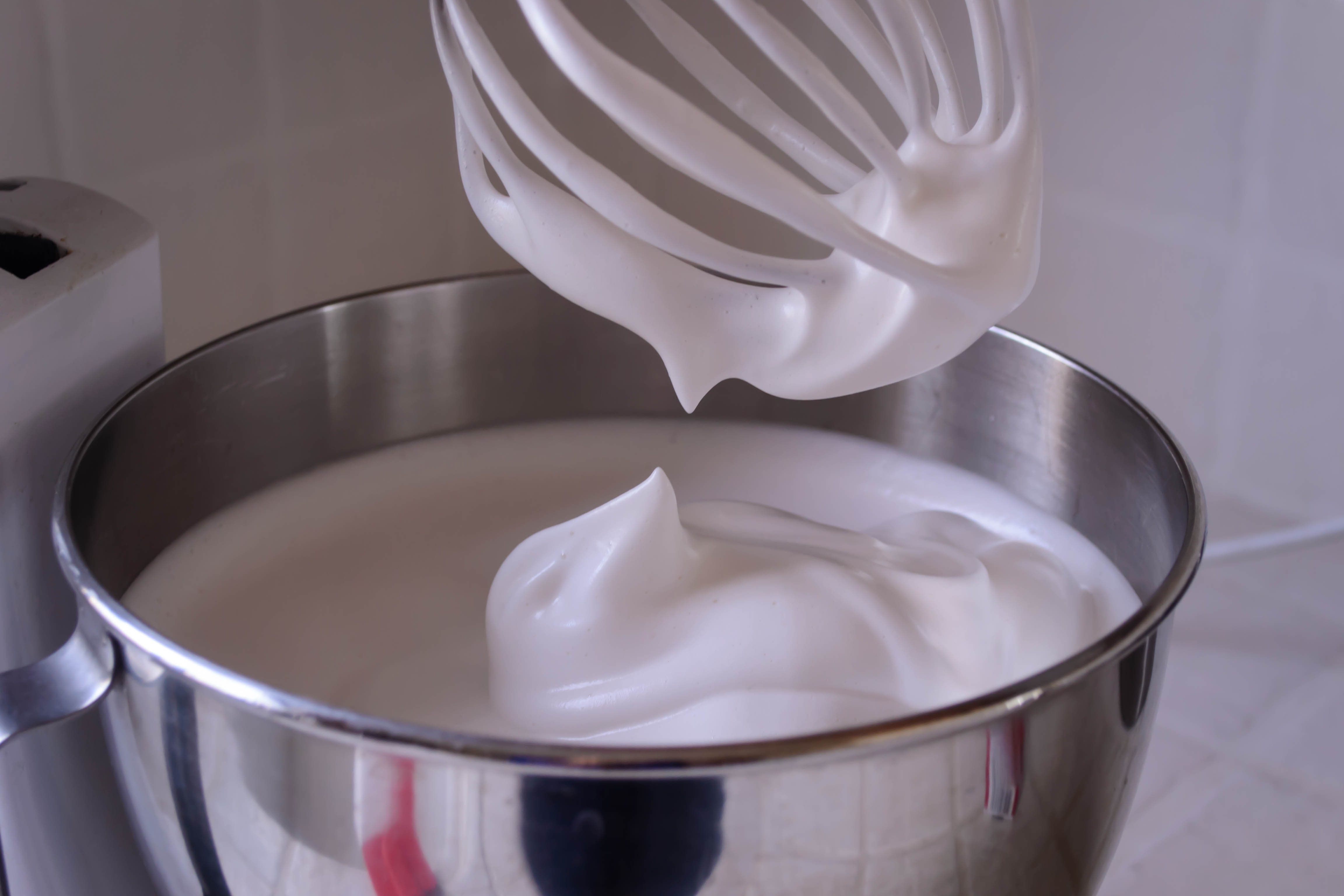
  • While the syrup heats, beat the egg whites with the cream of tartar in the bowl of an electric stand mixer (or in a large bowl with a hand-held mixer, but using a stand mixer is much easier and faster) until they form soft peaks. When the whisk or beater attachment is pulled out of the eggs, what remains on the attachments will droop a bit back toward the bowl – those are soft peaks – peaks that fold over.
  • When the syrup reaches 240F, remove it from the heat and scrape the gelatin into the hot syrup, stirring with a whisk to dissolve. Drizzle a few tablespoons of the hot syrup mixture into the egg whites and mix gently, just to warm them up so they aren’t shocked.  Then, with the mixer on medium speed, pour the syrup into the egg whites in a slow but steady stream, being careful to aim for the whites themselves, not for the whisk or the side of the bowl, which can cause droplets of hot syrup to fly out onto you. As Irvin says, this sounds scarier than it is. Just be careful and you’ll be fine.
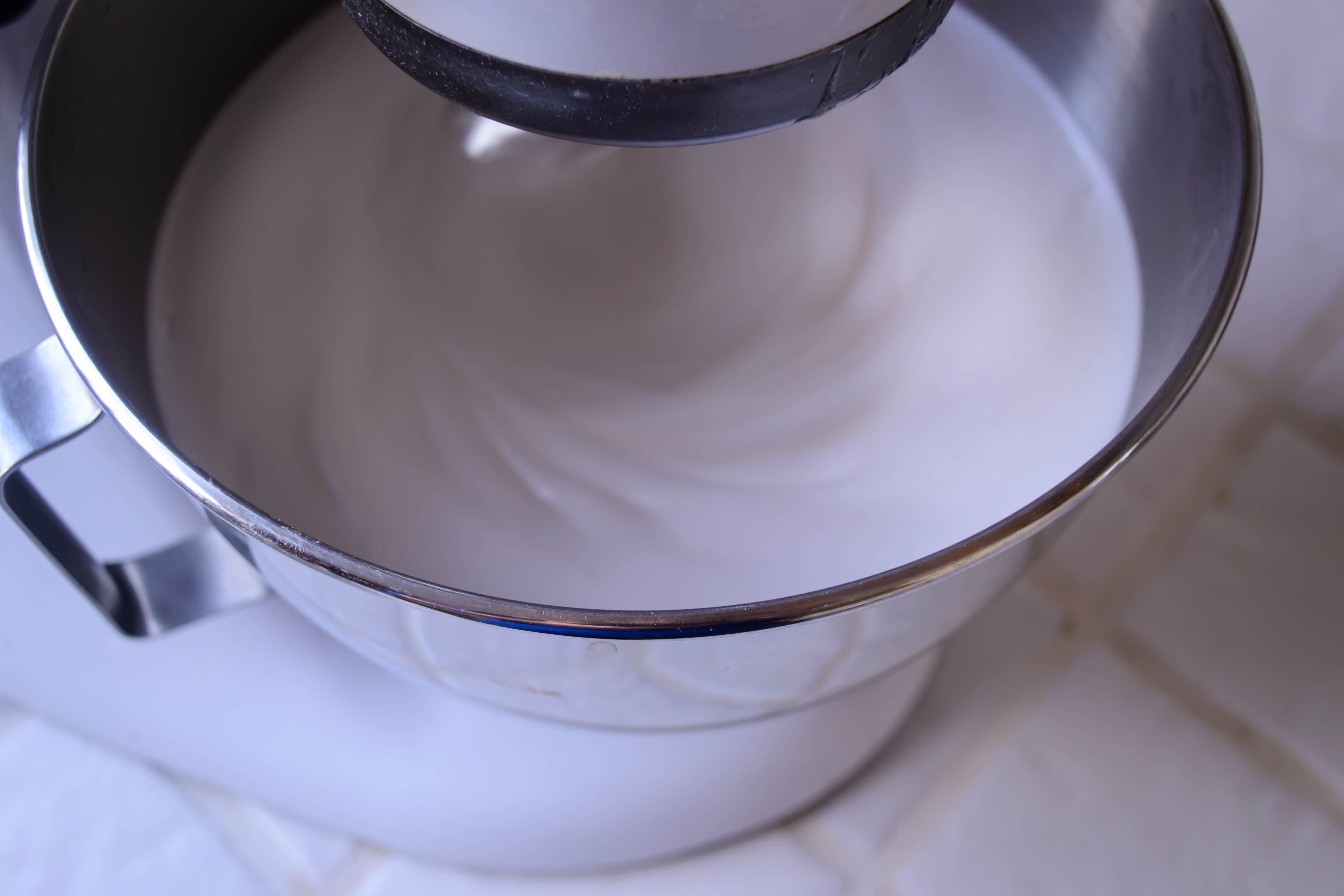
  • With all of the syrup poured in, turn the mixer speed up to medium-high and beat for 5 minutes. The egg whites will take on the consistency of a thick whipped cream.
  • After five minutes, add the vanilla and peppermint extract, then increase the mixer speed to high and beat for another five minutes. The mixture will increase dramatically in volume, become glossy and thick, and resemble that marshmallow fluff you can buy in jars.
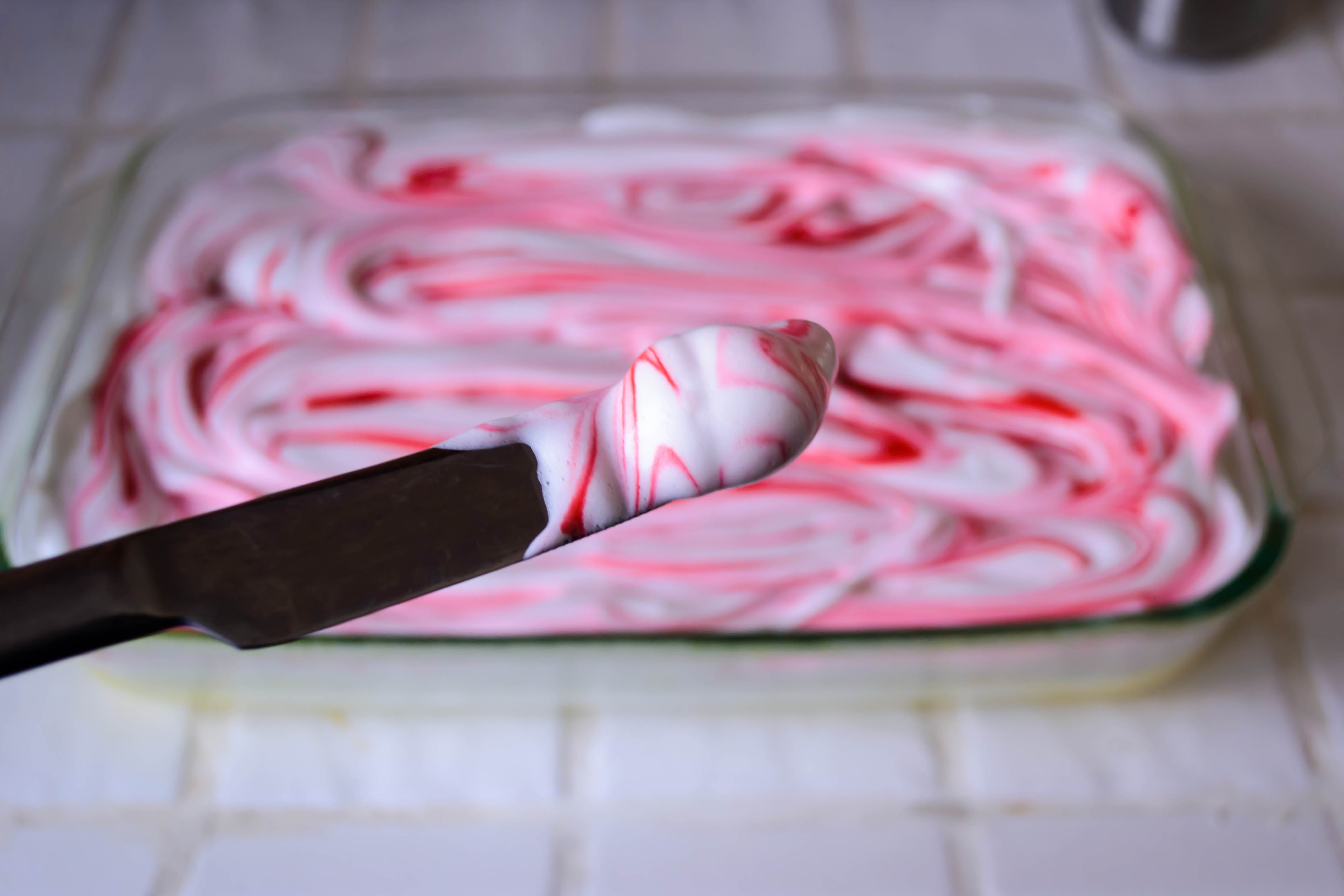
  • You’ve now beaten your egg whites for a total of ten minutes. Use a rubber spatula, greased for extra insurance if you wish, and pour/scrape the mixture into your greased 9×13 inch pan. For the swirly candy cane effect, drip 10-12 drops red food coloring over the surface of the marshmallow, spacing the drops evenly for best coverage.
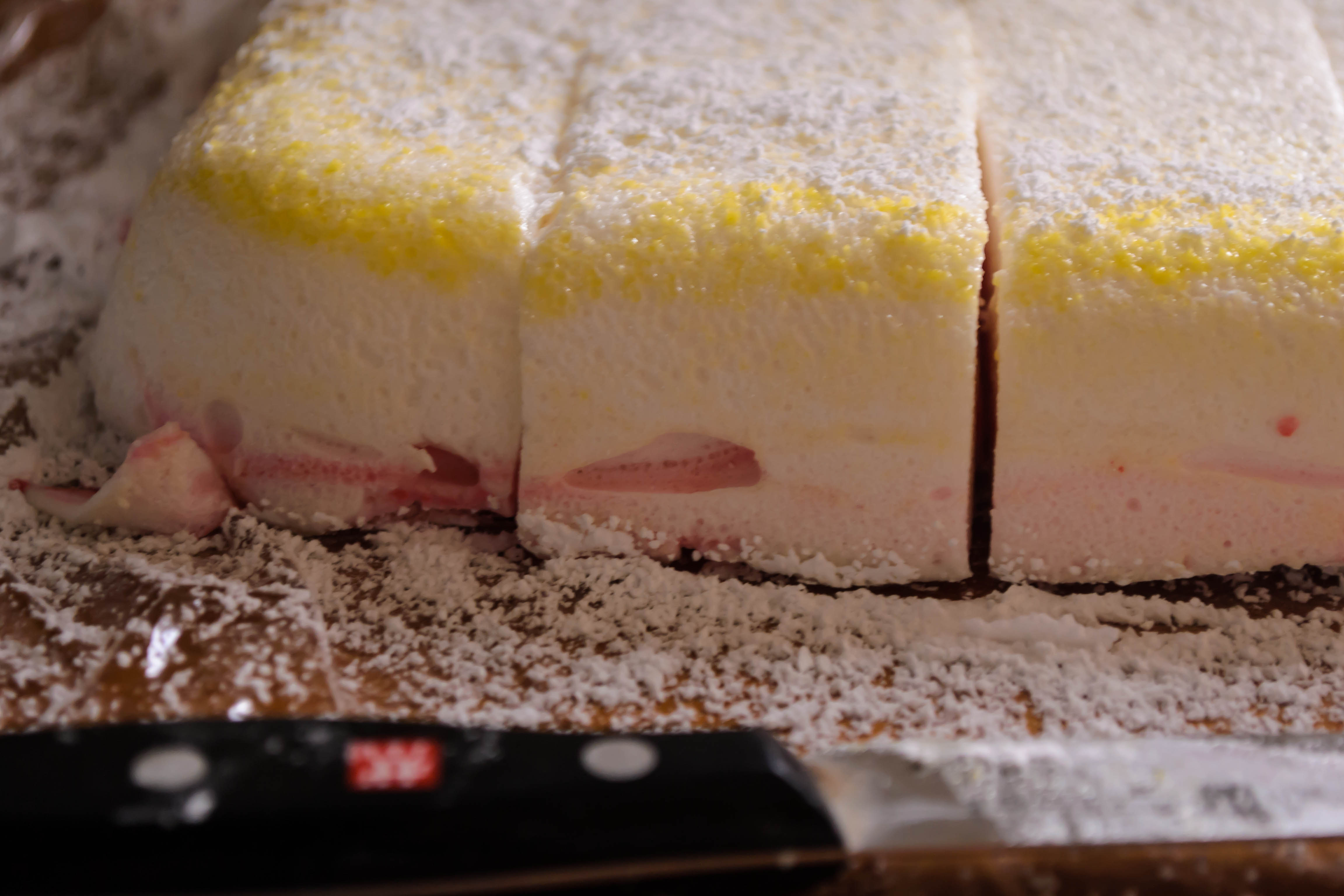
  • Gently insert the tip of a butter knife into the marshmallow mass and swirl around, dragging the food coloring over and through the pan to create a swirled effect. Don’t overdo it, though – you want well-defined swirls, not pink marshmallows.
  • When you are satisfied with your swirls, cover the pan tightly with plastic wrap, taking care not to let it touch the top of the marshmallows (it would stick like crazy), and stow it in the fridge overnight, or at least 8 hours, to let the marshmallows cure.
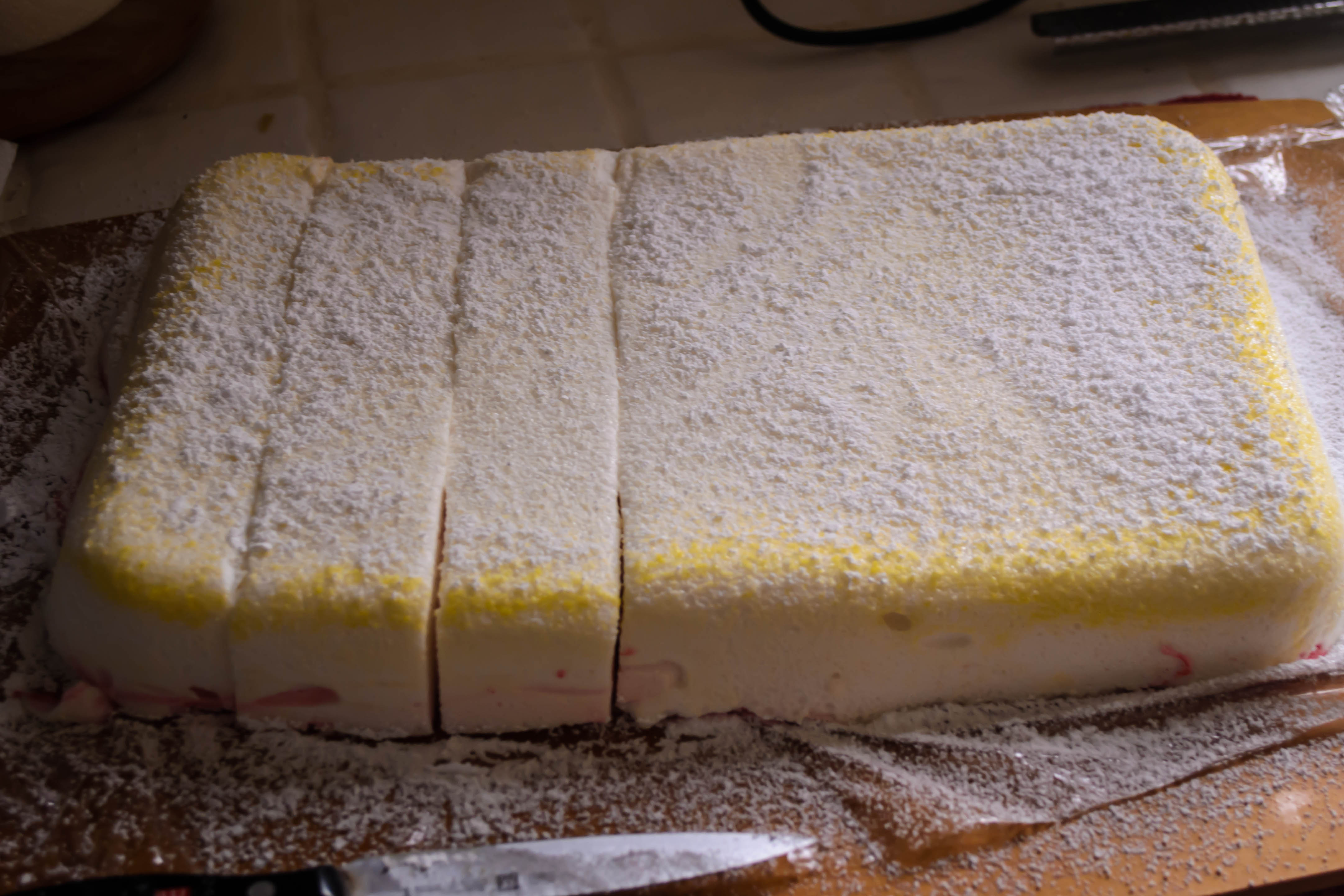
  • After marshmallows have cured, all that remains is to liberate them from the pan, slice them to your desired size (I used a pizza wheel for this), and toss them in powdered sugar to keep them from sticking to everything they come in contact with. To do this, I put 1-2 cups sifted powdered sugar in a brown paper bag, added the marshmallows, and shook them gently until they were evenly coated. Then, remove and consume as desired!

Cranberry and White Chocolate Sweet Rolls

When I read this month’s Twelve Loaves premise of holiday breads, I was stumped for a few days. To me, and to my family, holiday bread means challah, and not only have I done that one here, but I’ve done it for another Twelve Loaves challenge! I certainly couldn’t reprise it. “Holiday” would have to mean “in the spirit of,” and not “in my own traditions.” I’d been kicking around the idea of pairing fresh cranberries and hunks of white chocolate in a cookie for some time, and somehow* this flavor combination morphed into the conception for a sweet roll. Softly sweet, chewy and rich, embracing a sweet tart filling, and drizzled all over with a white chocolate and cream cheese glaze, and the holidays are basically accounted for.

Food Blog December 2013-2912I used my Nana’s sweet dough again – it is proving to be such a reliable and user friendly recipe that I see no reason to change it. The dough comes together into an almost play-dough consistency when it’s been kneaded enough, and it rises, slow and steady, tender but elastic, easily rollable, and neutral enough in flavor to accept any filling you throw at it. I opted to dress it up for the season with a touch of vanilla. A grating of orange peel would probably be lovely as well.

Food Blog December 2013-2886Food Blog December 2013-2891Food Blog December 2013-2894Food Blog December 2013-2900These take two rises – one to let the dough expand and form gluten chains, and one after rolling out, filling, and slicing, to redistribute the yeast and develop the flavor a bit more – before a quick 20 minutes in the oven. I went for mini sized rolls, so I could have more of them, which entailed dividing my dough in two.

Food Blog December 2013-2898Food Blog December 2013-2899Food Blog December 2013-2902You could certainly also do full-sized rolls, which might require a slightly longer baking time. While they are still hot, golden and just crusty on top, but bubbling around the sides with the escaped gush of cranberries, you tip a smooth, ivory stream of melted cream cheese and white chocolate over them, and let them cool as long as you can stand it before serving. The brightness of the cranberries peeking out from under the frosting makes a nice contrast that does reference the Christmas holiday, especially if you really go for the obvious and serve it on a green plate. Not that I would ever do such a thing.

Food Blog December 2013-2901Food Blog December 2013-2904We thought these were quite tasty, and a refreshing twist; certainly worthy of ending up in my department mailroom as a last-week-of-school treat, but if I’m honest, they are not the “match made it heaven” combination I had thought they would be. Cranberries and white chocolate are a holiday fling – experimenting, having fun, but they know it won’t last. They will probably break up come January, and cranberry might skitter home to orange to make amends. White chocolate, on the other hand, stimulated by cranberry’s tartness, might shack up with raspberries for a while, and you guys, what about tender raspberries and shards of white chocolate all wrapped up in a soft, champagne cake roulade? I think I just made you a come-summer promise…

Food Blog December 2013-2907* “Somehow” probably means Deb, whose recent post on cranberry sweet rolls could just possibly have kicked my brain into this direction.

Food Blog December 2013-2916

Cranberry and white chocolate sweet rolls
Makes 18 mini sweet rolls
For the dough:
2 teaspoons yeast
½ cup warm milk
1 egg
1 teaspoon vanilla
¼ cup softened butter
1 teaspoon salt
¼ cup sugar
2 ¼ cups bread flour
For the filling:
12 ounces fresh cranberries
½ cup sugar
8 ounces white chocolate, broken into small pieces (or you can use white chocolate chips)
¼ cup melted butter
For the icing:
4 ounces cream cheese
4 ounces white chocolate, broken into small pieces (don’t use chips here – they contain a stabilizer that prevents them from melting silky smooth)
1 tablespoon milk or cream


  • In the bowl of a stand mixer, combine the warm milk and the yeast and let them stand for five minutes while the yeast wakes up. It will begin to smell bready and bubble slightly.
  • Add the ¼ cup softened butter, the egg, and the vanilla to the yeast and milk combination and mix with the paddle attachment just until combined.
  • Add the sugar, salt and two cups of the flour to the wet ingredients and mix with the paddle attachment just until a wet, softly shaggy dough forms. Switch to the dough hook attachment and knead for 6-8 minutes or until the dough comes together into a firm ball and is somewhere around the consistency of play-dough. If the dough is extremely sticky, add the additional ¼ cup of flour, 2 tablespoons at a time, just until the dough is workable again.
  • After 6-8 minutes of kneading, place your ball of dough in a buttered or oiled bowl (I just lift it out of the stand mixer bowl, spray it with non-stick spray, and put the dough back in), cover with plastic wrap, and let it rise until doubled – usually about 90 minutes. My house was on the chilly side on the day I made this, so it took me more like two hours.
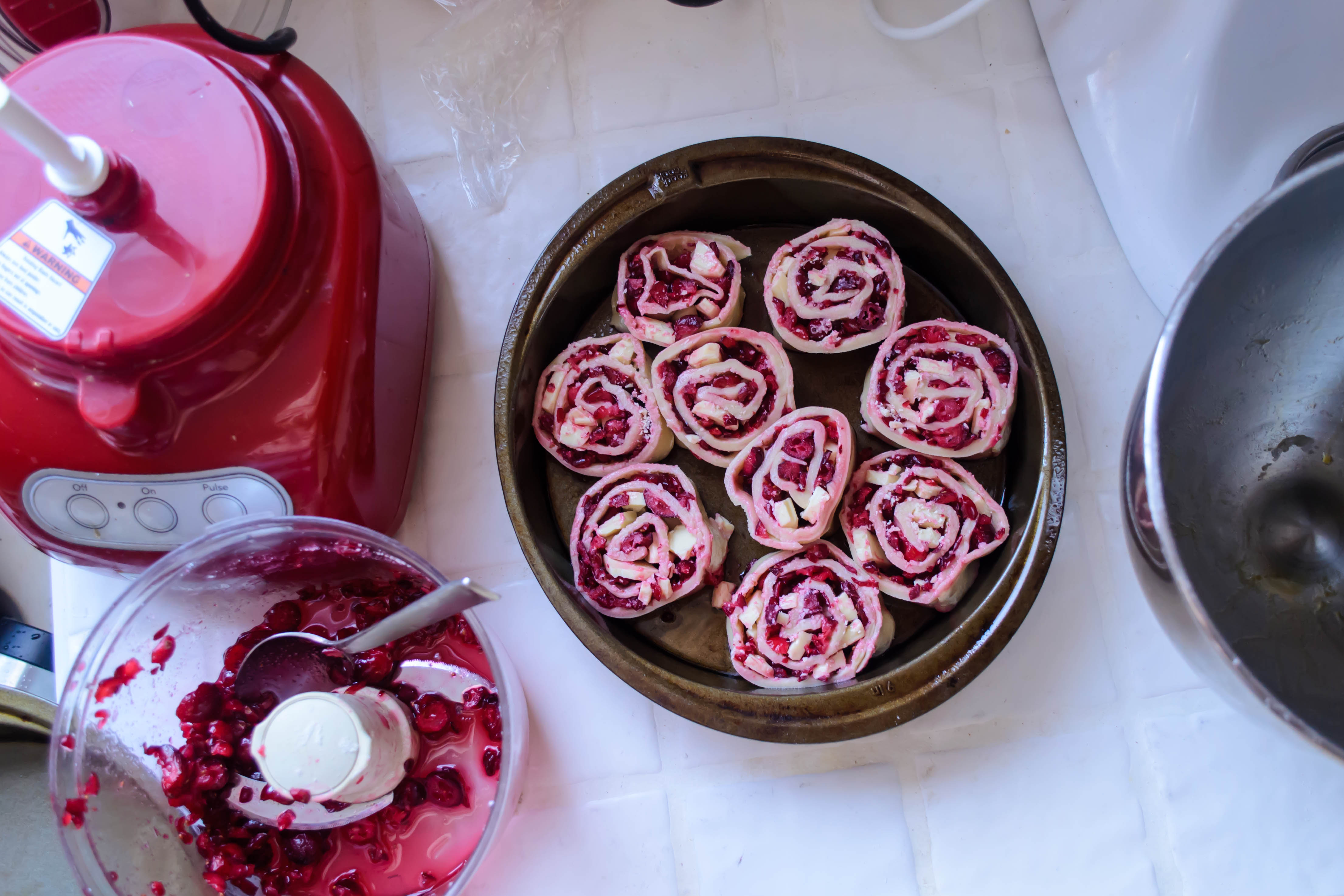
  • While the dough rises, make the filling components: place the cranberries and the ½ cup of sugar in a food processor and pulse three times for three seconds each. This sounds fussily precise, but you don’t want to decimate the cranberries; just break them up a bit so they will cook faster. Chop the white chocolate and melt the butter, and you are ready to go.
  • Punch down the dough by depressing your fist gently into the center of it to release the trapped gasses. Let it sit for five minutes to get its breath back.
  • If you are making mini rolls, divide the dough in half. Place the half you are going to work with on a floured board, and reserve the other half in the bowl you let it rise in.
  • Using a floured rolling pin, roll out the dough into a rectangle of about 9×12 inches, or as close as you can get. It will be quite thin, but that’s okay. It’s going to expand when it rises again on the counter and in the oven.
  • Brush the rectangle of dough with the melted butter, leaving at least a ½ inch margin on all sides. Then, respecting the same margin, sprinkle on half of your cranberry mixture and half of your chopped white chocolate.
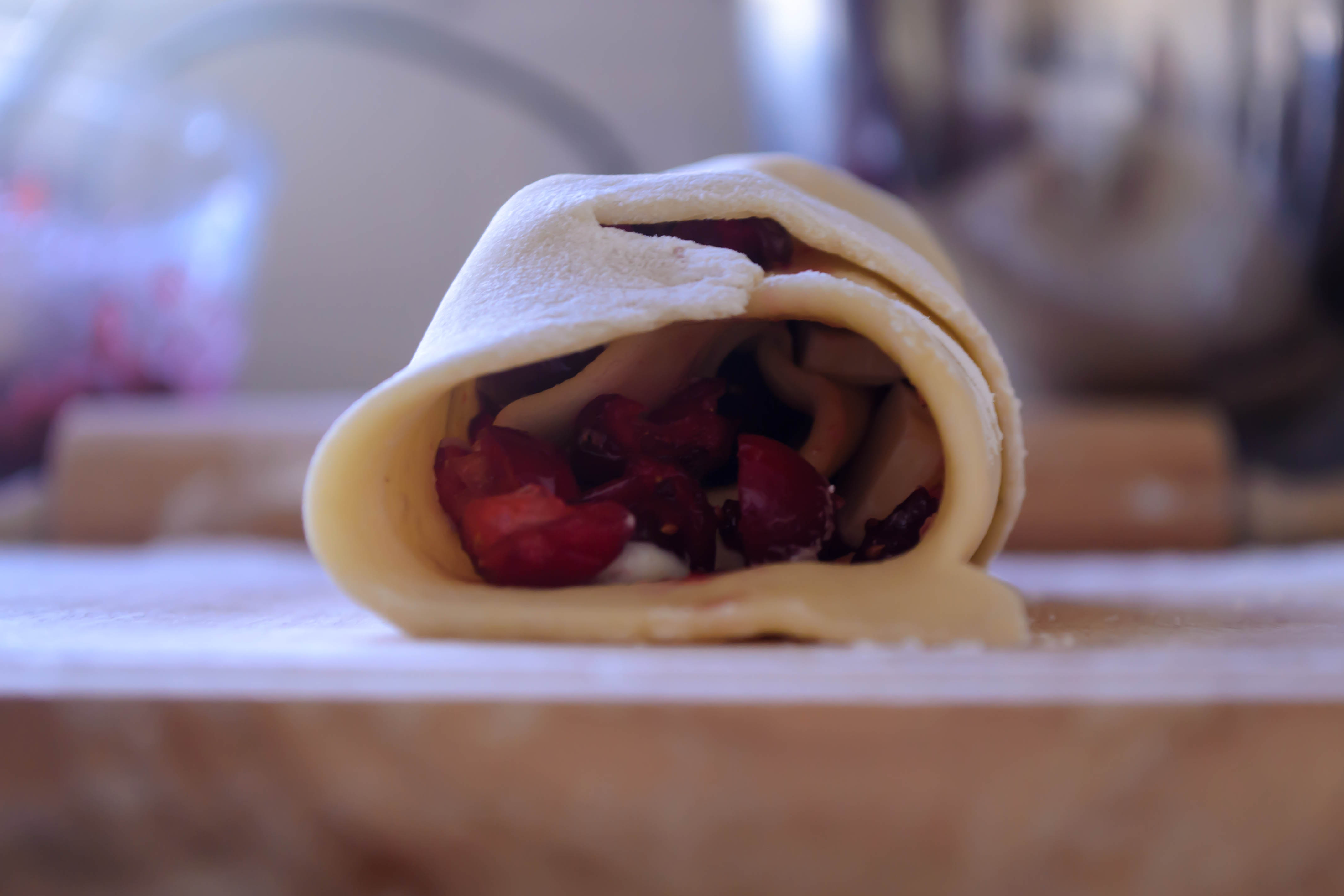
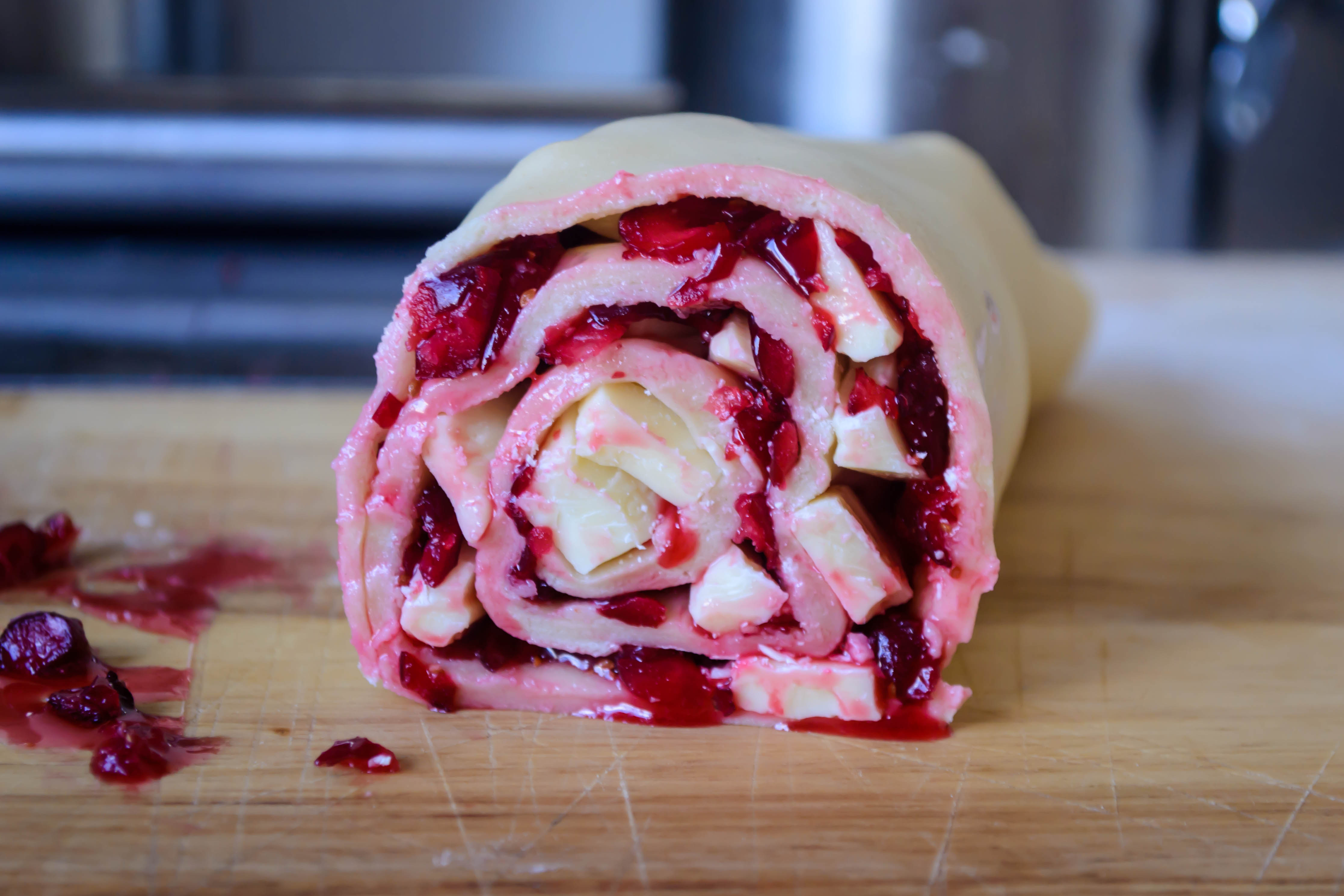
  • Now roll up the dough: starting with the long edge closest to you, begin rolling in the middle, then moving out evenly to each side, to create a long log. Crimp the long edge on the other side firmly to the roll itself to prevent deconstruction later. A few cranberry bits may fall out as you do this; that’s okay. Just stuff them back in.
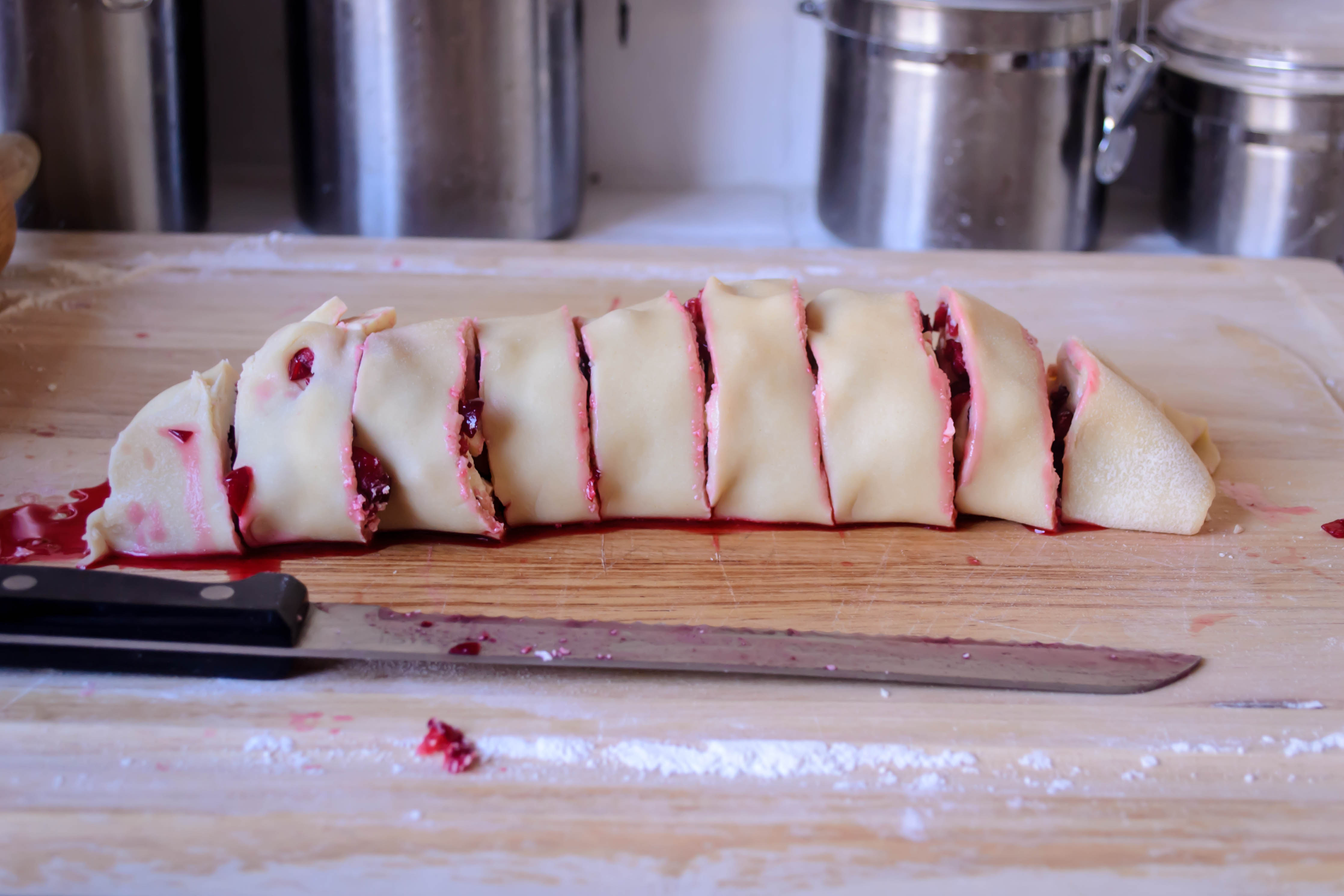
  • Slice the log into 1-inch slices with a sharp serrated knife, moving the knife back and forth across the surface but applying very little pressure. This will produce truly round sweet rolls, rather than smashed, oddly-shaped ones.
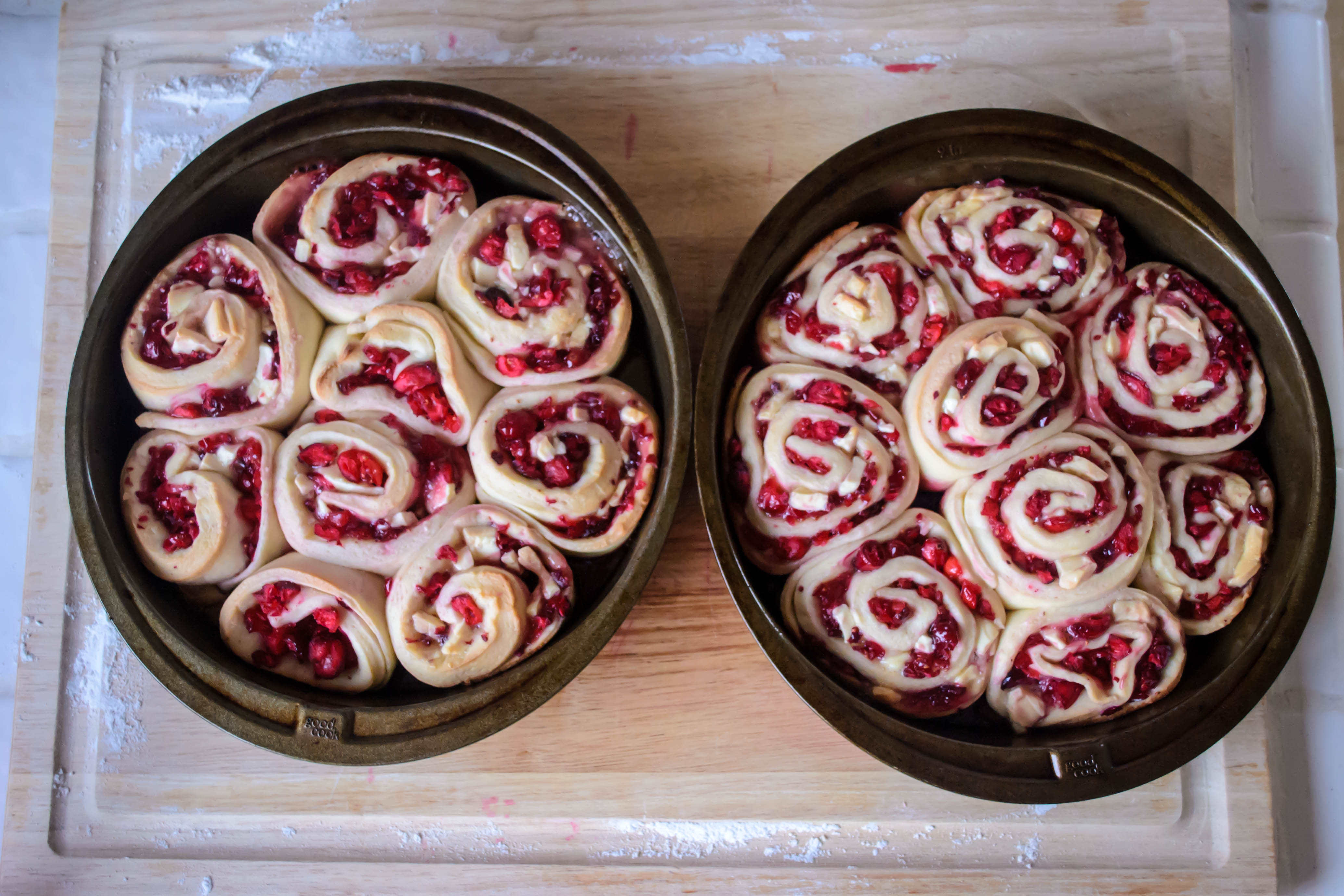
  • Place the slices cut side up, so the red-spiked spiral shows, in each of two greased 9-inch cake pans. They should be spaced evenly, and don’t worry if there is room in between them, since they are going to rise again.
  • Cover each pan with plastic wrap and let rise again in a warm place for 30-45 minutes. Meanwhile, preheat the oven to 375F.
  • Once the rolls have puffed again, jostling and pressing against each other in the pan, stow them in the preheated oven for 18-20 minutes, or until lightly browned on top and cooked through. Remove from oven and set on wire racks to cool.
  • While the rolls bake, you can make the icing. In a small pot, combine the cream cheese, white chocolate chunks, and milk or cream. Over low heat, stir constantly until everything has melted together into a velvety, smooth sauce (I mean it – if you step away, this is almost guaranteed to seize, getting grainy and unsalvageable). Once you have liberated the sweet rolls from the oven, pour the sauce liberally over them, using a spatula to spread it around evenly, if needed. Let everything cool before serving, so the sauce can solidify into icing, and the rolls themselves can firm up and stay together better.
  • These taste just as good straight out of the refrigerator as they do warm in the pan. Store them in the fridge covered with foil or in an airtight container for two to three days.

Chipotle and Cinnamon Sweet Potato Soufflés

I realize it might be a bit late for me to convince you, at this point, to make significant changes to your Thanksgiving menu.  If you are anything like me, you’ve had the whole meal planned out for several weeks now, including possibly which serving dishes you’ll be using for which dish (speaking of which, have you seen this?).

But if you are undecided, or if you still aren’t sure what you are doing with sweet potatoes, may I make a humble suggestion?  Put down the marshmallows.  Okay, give them one final squeeze and then put them down.  You don’t need that stuff.  Instead, may I offer you the promise of spiced velvet? Puffy, smooth, decadent-but-light velvet, spicy and sweet, rising up from its dish like some gravity-defying magic trick.

Food Blog November 2013-2841Yes, I’m talking about soufflé

Food Blog November 2013-2843I know, I know. Just want you want to worry about on one of the biggest food days of the year is the notoriously fussy, egg white driven glorious strangeness that is soufflé. You don’t want to worry about whisking, or folding, or, heaven forbid, fallen puffs that are competing with the turkey for oven space anyway.
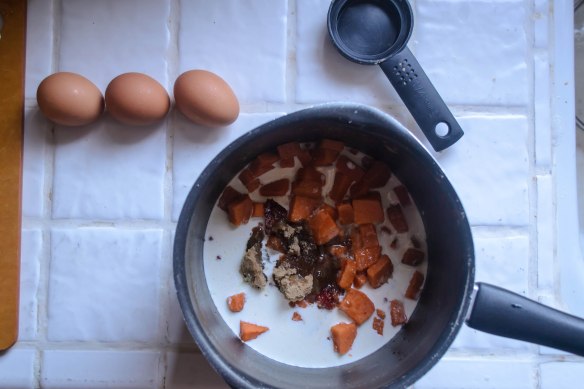
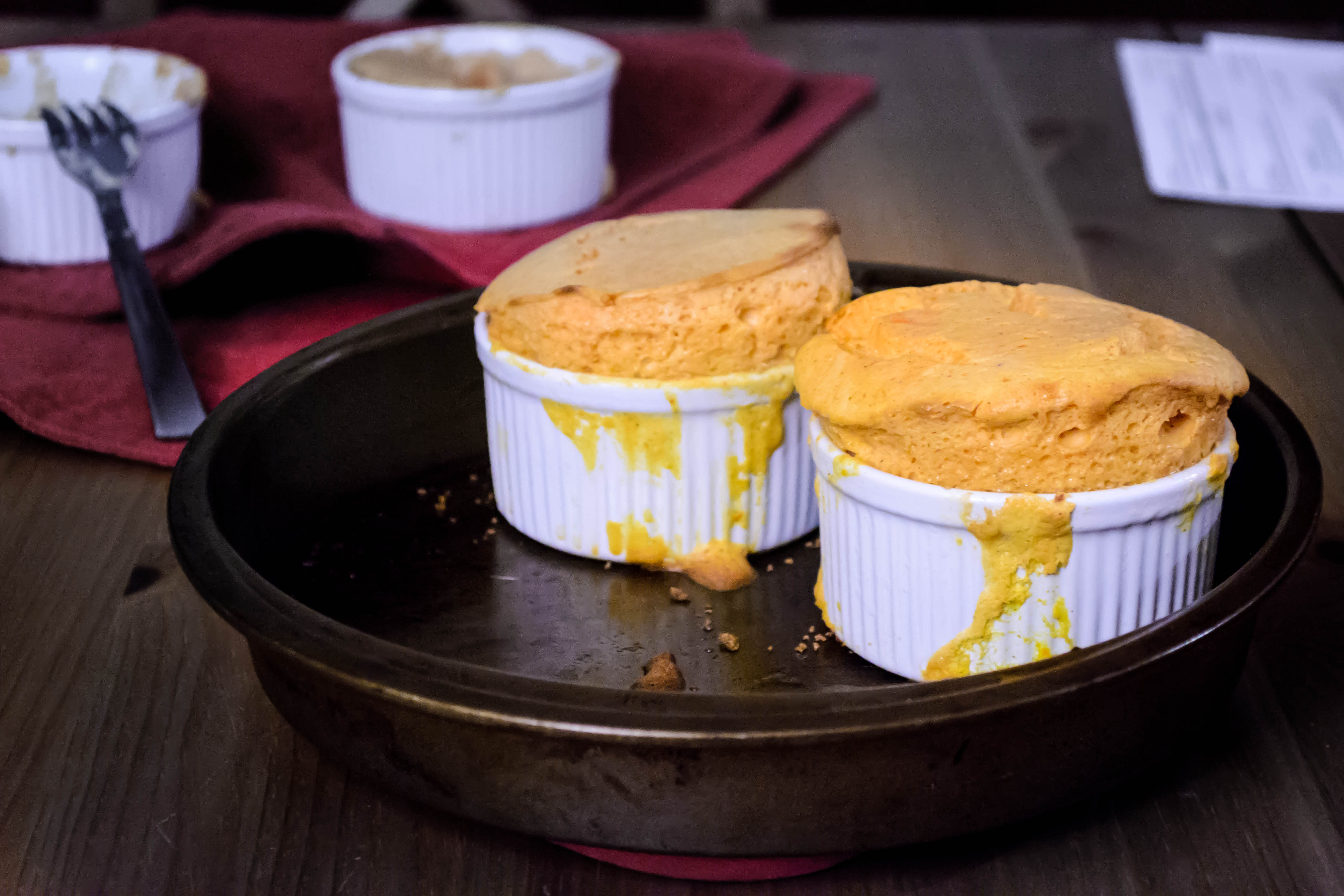
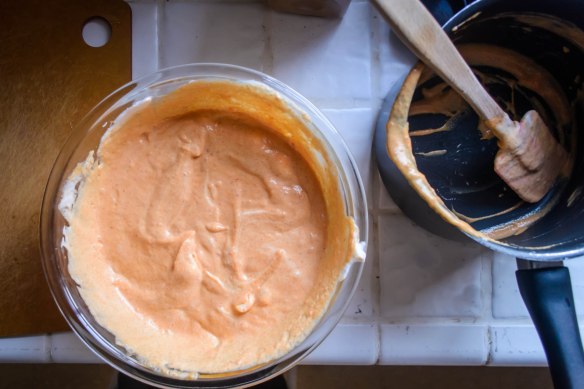
Food Blog November 2013-2818But as it turns out, at least in my experience, soufflé isn’t really that hard if you are a tiny bit patient and a tiny bit brave. And this one, with the beautiful pumpkin color of the sweet potatoes mellowed and enriched with heavy cream, brown sugar, and cinnamon, and lent a bit of extra pizzazz from a sparing dose of chipotle pepper and a fizz of lime juice, is a delightful choice. The base, lightened with three egg whites, climbs determinedly into large mushrooming domes, and the mixture conveniently uses three egg yolks as well, so you aren’t left with any extra yolks hanging around (though if you are, this is a great resource).

Food Blog November 2013-2819Food Blog November 2013-2821The thing about soufflés is, they depend on the expansion power of aerated egg whites. That’s what you are doing when you beat them to soft or even medium peaks: filling them with air. Bubbles form and stabilize, and so long as you aren’t too rough with them, they continue to expand in the oven, creating that otherwordly dome of perfect, velvety lightness. This is why soufflé recipes are so fussy about being sure you fold the whites into the flavor base: you don’t want to deflate them. This tutorial gives some helpful suggestions about this process, if you need a refresher or you’ve never been sure. And even that thing about not opening the oven door lest they collapse mid-bake is an exaggeration; though you don’t want to be swinging open and slamming shut the door every five minutes, I tentatively peeked inside once during my baking process, and no holiday-destroying collapse resulted.

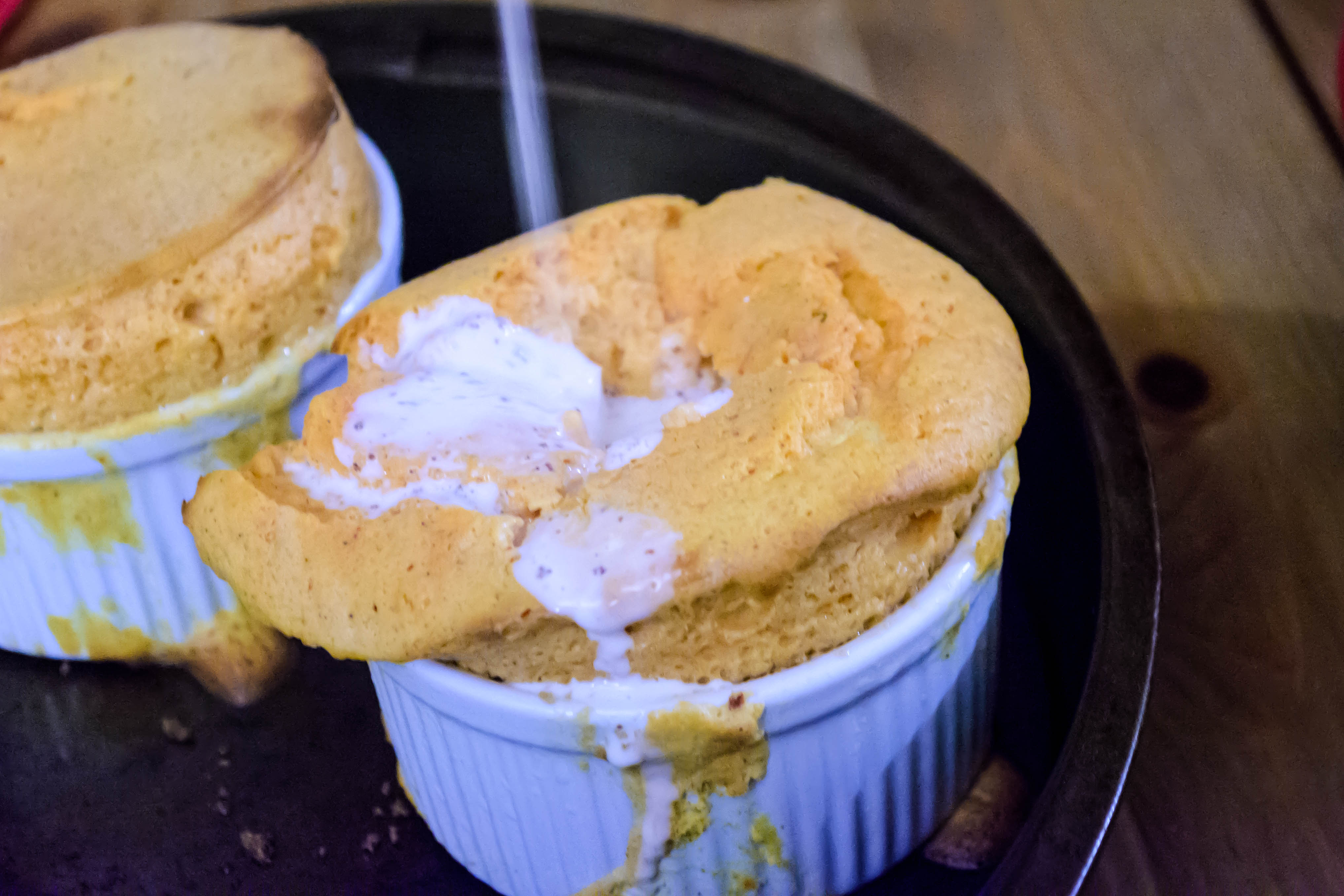
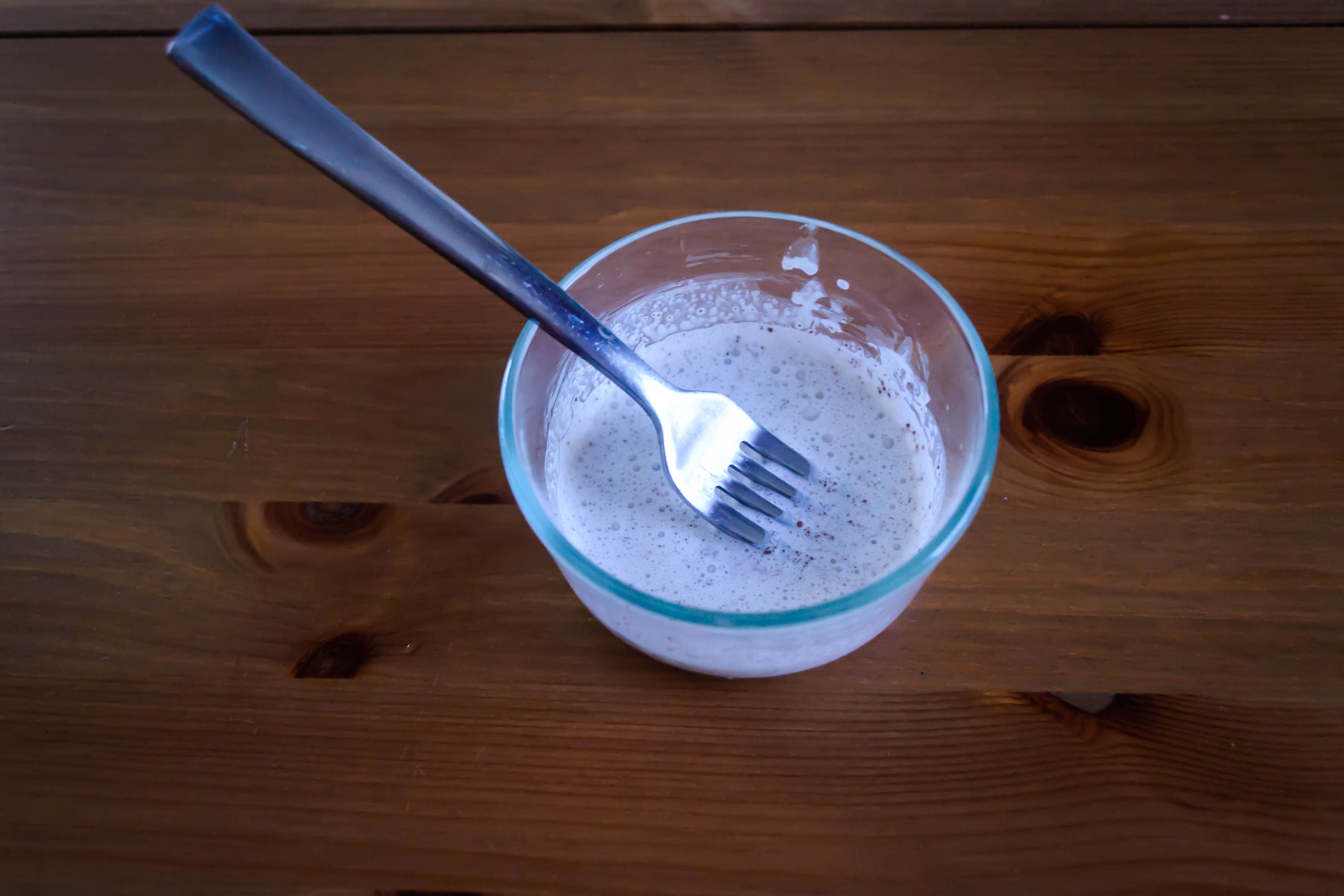
Food Blog November 2013-2825When you dig tentatively into these delicate, reality-bending puffs, they sigh and fold inward just a touch, the dry, slightly meringue toasted tops crease slightly, and you are free to dig out piping hot, fluffy forkfuls and jam them into your mouth with no further ceremony. Or, if you feel fancy (or if you have more than one gravy boat and you’re dying to take multiples for a spin), make some cinnamon cream to drizzle over the top: whisk about ½ teaspoon of cinnamon into a ½ cup or so of heavy cream (estimate 2 tablespoons of cream per diner), and you’ve got a simple and luscious sauce to add to your fluffy masterpieces. This also cools the heat, if you have diners with delicate tongues or you’ve gone a little heavy on the chipotle.

Food Blog November 2013-2827Soufflés may sound scary, and you may think Thanksgiving is no time to experiment, but I’ve got faith. I think you can do it. And when your mother-in-law, or your best friend, or your fussy aunt looks impressed, you can lie and say it was really hard but you’re so glad it came together as beautifully as it did. I won’t tell a soul. You can save the marshmallows for some hot cocoa, where they belong.

Food Blog November 2013-2839* Alternatives: if you don’t like spicy, take out the chipotle and add a few generous grinds of black pepper instead.  If you want this for dessert, add an extra 2 tablespoons of sugar to the souffle base itself, and maybe a teaspoon of vanilla, and top the baked soufflés with a sweeter version of the cinnamon cream referenced above: 1/2 cup heavy cream (estimate about 2 tablespoons per person), 1/2 tsp cinnamon, 2 teaspoons sugar, lightly, lightly whipped until only just barely thickened. If you want to booze it up, add a tablespoon or two of rum or bourbon.

If soufflé is just not going to happen but you still want marshmallow-free sweet potatoes, may I humbly suggest this as another option?

Food Blog November 2013-2831

Cinnamon and Chipotle Sweet Potato Soufflé
Hugely adapted from Cooking Light
Makes 6 servings
2 tablespoons butter, for ramekins
2 tablespoons brown sugar, for ramekins
2 cups sweet potato cubes, from 1 large peeled, orange-fleshed sweet potato
½ cup heavy cream
¼ cup brown sugar
2 teaspoons lime juice
½ a chipotle pepper from a can of chipotles in adobo (or more, if you like it spicy)
½ teaspoon salt
½ teaspoon cinnamon
3 egg yolks
3 egg whites
¼ teaspoon cream of tartar


  • Preheat the oven to 375F.
  • Butter and sugar six single-serving ramekins (mine fit a little more than ½ a cup), then stow in the freezer. The sugar sanding creates texture to help the soufflé climb the walls of the container, and freezing it makes it take longer to dissolve in the heat of the oven, so you’re giving your puff a head start.
  • Drop your peeled sweet potato cubes in boiling salted water and cook until they are very tender but not yet falling apart. Drain and set aside to cool.
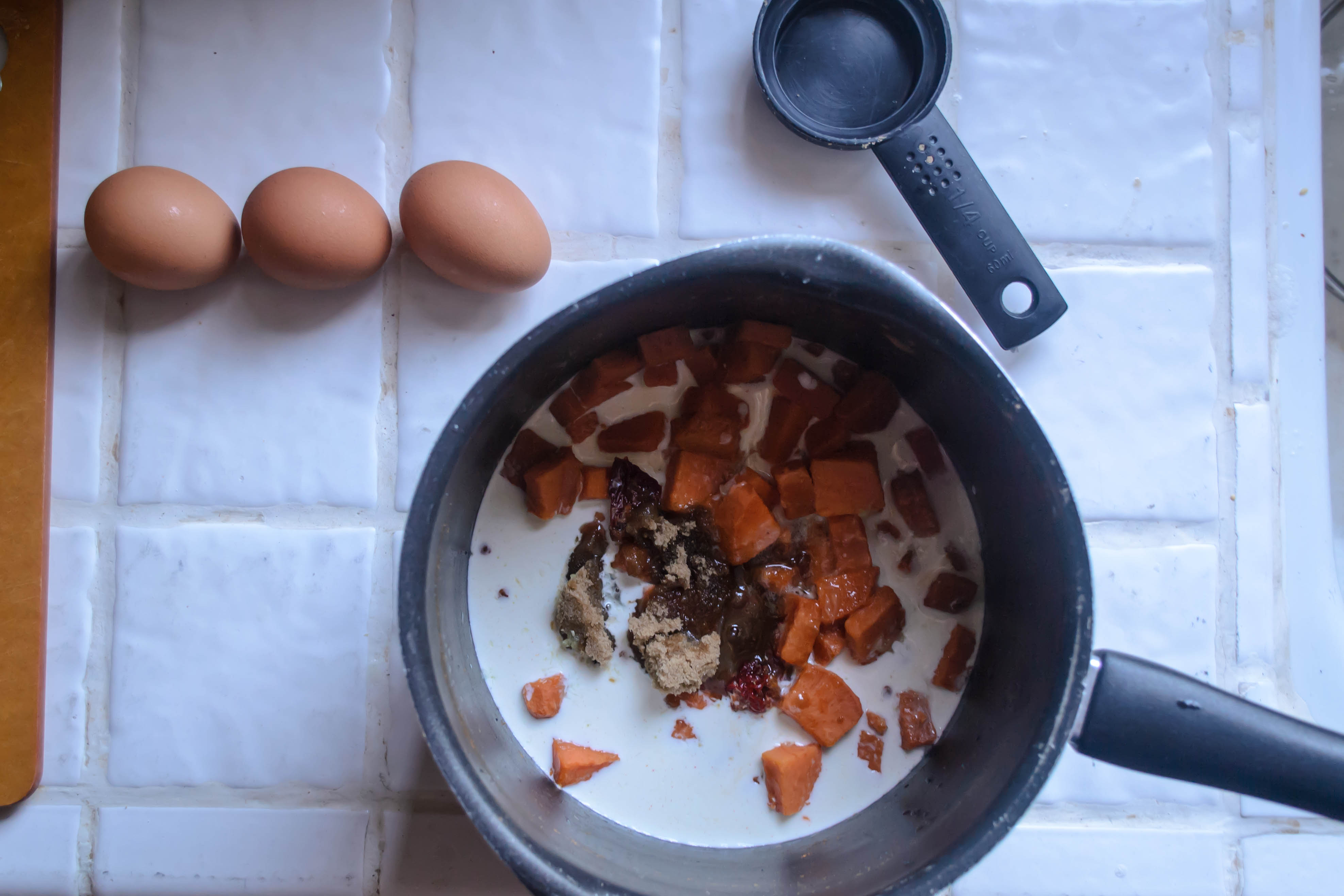
  • In a large bowl (or the same pot you used to cook the sweet potatoes), combine the heavy cream, ¼ cup brown sugar, lime juice, chipotle pepper, salt, and cinnamon. Add the sweet potato cubes and mash, whisk, or otherwise blend into a smooth, thick soup. I used my immersion blender, which worked very well. You could also use a regular blender or a food processor. The key here is that you want a scrupulously smooth mixture.
  • Separate the three eggs, dropping the whites into a clean, dry, medium mixing bowl and the yolks into the sweet potato mixture. Take care not to get even a trace of yolk into the whites, or they will not whip into peaks. Whisk or blend the yolks into the sweet potato mixture until no streaks of yellow remain.
  • Add the cream of tartar to the egg whites. Using a handheld electric mixture (or a whisk, if you need to work on your arms), beat the whites at first over medium, then high speed until medium peaks form. The whites will foam, and then become pure white, and finally begin to stiffen like a good whipped cream. To determine the stiffness of your peaks, turn off the beaters and lift them straight out of the whites. If you get little hills that collapse back into the mixture, you have soft peaks. If you get little tips that fold over just a bit when you pull the beaters away, you are looking at medium to stiff peaks, which is what we want.
  • Using a rubber spatula, deposit ⅓ of your whites into the sweet potato and egg yolk mixture and stir until no white streaks remain. No need to be careful with this part – full integration is just fine.
  • Now, slide the other 2/3 of the whites into the sweet potato mixture and fold in gently until just combined – some white streaks may remain and that’s fine. I like to fold by drawing my spatula around the edge of the bowl in a horseshoe shape, then pulling it back toward me in a straight line.
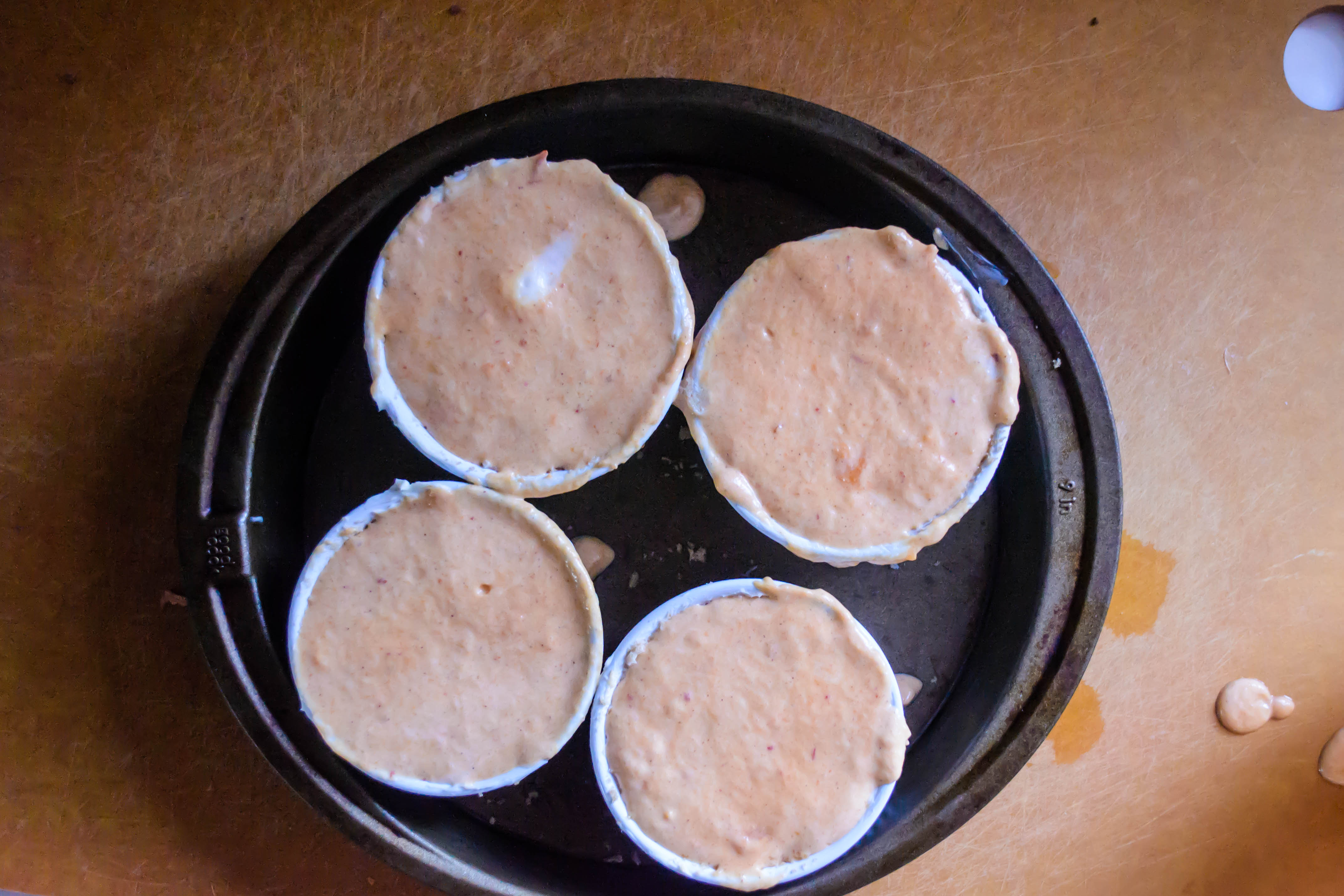
  • Retrieve your frozen ramekins and fill each with the soufflé mixture, being careful not to let it plop from too high (in case of deflation). When each cup is full, smooth off the top – this seems fussy, but it will aid in even rising.
  • Bake in a preheated 375F oven for 25-30 minutes, until the soufflés have puffed up at least an inch or two above the top rim of the ramekins. Nearly half an hour seems like a long time, and indeed, I was worried mine were overcooked because some of the edges took on a toasty golden color, but I found this contributed a delightful flavor, and was reminiscent of a perfect campfire marshmallow.
  • Serve immediately, plain or topped with cinnamon cream.
Goat Cheese Tomato Pie

All over the food blog world, folks are declaring that fall is here.  It’s the season for pumpkins and root vegetables and casseroles and braised meats.  Except that I live in Los Angeles, where it has been close to or over 90 degrees Fahrenheit for the past week and a half.  Where was this in June, Los Angeles?  Where was it in July (when we were further north and would have missed it!)?  Why now, now that school has started and I have to wear professional clothes all week and can’t be here to keep the windows open all morning, do we finally get the month or so of scorching temperatures when everyone else has packed up their popsicle molds weeks ago?

Food Blog August 2013-2488Well I’m not convinced that it’s fall.  I’m calling it late summer.  And this is convenient, because the heirloom tomato bushes that have grown into a vast jungle in my backyard are still heavy with fruit.  The Farmers’ Market we frequent is still bursting with bright bell peppers and corn and stone fruits, and hasn’t yet been taken over by cruciferous vegetables or potatoes.

Food Blog August 2013-2468A few weeks ago, stunned by the number of gleaming tomatoes we’d managed to produce, in shades of deep crimson and flame yellow, I did what anyone trying to find inspiration would do.  I asked Facebook.  And my friend M. responded with an idea I’d never considered: tomato pie.

Food Blog August 2013-2474Food Blog August 2013-2479Since tomatoes are a fruit, I suppose it shouldn’t seem so strange to put them in a pie.  (Isn’t pizza, in fact, the ultimate incarnation of a tomato pie?)  But I quickly determined that mine would be savory rather than sweet, and from there things fell together with little effort.  Creamy, tangy goat cheese pairs so well with the acidic sweetness of tomatoes, and a handful of fresh herbs from the garden add a grassy complexity to the dish.

Food Blog August 2013-2480Making a pie, of course, entails making a pie crust, and this remains one of my greatest nemeses in the cooking world (it’s all about the butter, I’m sure of it.  The size and the temperature are almost impossible for me to get right, and given this and all the trouble I had with buttercream frosting I’m almost convinced I should just have gotten it out in the open from the beginning and renamed this blog Butter Problems).  But I considered a few techniques I’d read about recently in Shirley O. Corriher’s genius book Bakewise, which takes a scientific approach to baking, not only providing stellar sounding recipes, but explaining carefully what each ingredient does for the final product, and offering options that will result in a subtly or staggeringly different end product.  In her section on pie crust, Corriher explains that crust texture is a near catch-22 between flakiness and tenderness.  Flakiness comes from leaving the butter in sizable chunks, so that during the baking process the crust puffs into layers before the butter has had a chance to melt fully.  Tenderness, though, comes from being sure the flour has been fully hydrated, which can only happen with full incorporation of the liquid element.  Yet overworking the dough makes it tough, and the flakiness quotient disintegrates as you break the butter into smaller and smaller bits.  See why I don’t like making pie crust?

Food Blog August 2013-2462Food Blog August 2013-2466But this crust was magic.  I decided that if what we really wanted was flakes and tenderness, and if fat helps along hydration and acidity contributes to a tender final product, then the little container of buttermilk that had been sitting quietly at the back of my refrigerator for weeks was the consummate answer.  And it was.  The crust came together quickly, rolled out like a dream, and was stable enough that I was actually able to give it some decorative edging before I packed it full of goat cheese and thick slices of tomato and shoved it into the oven.

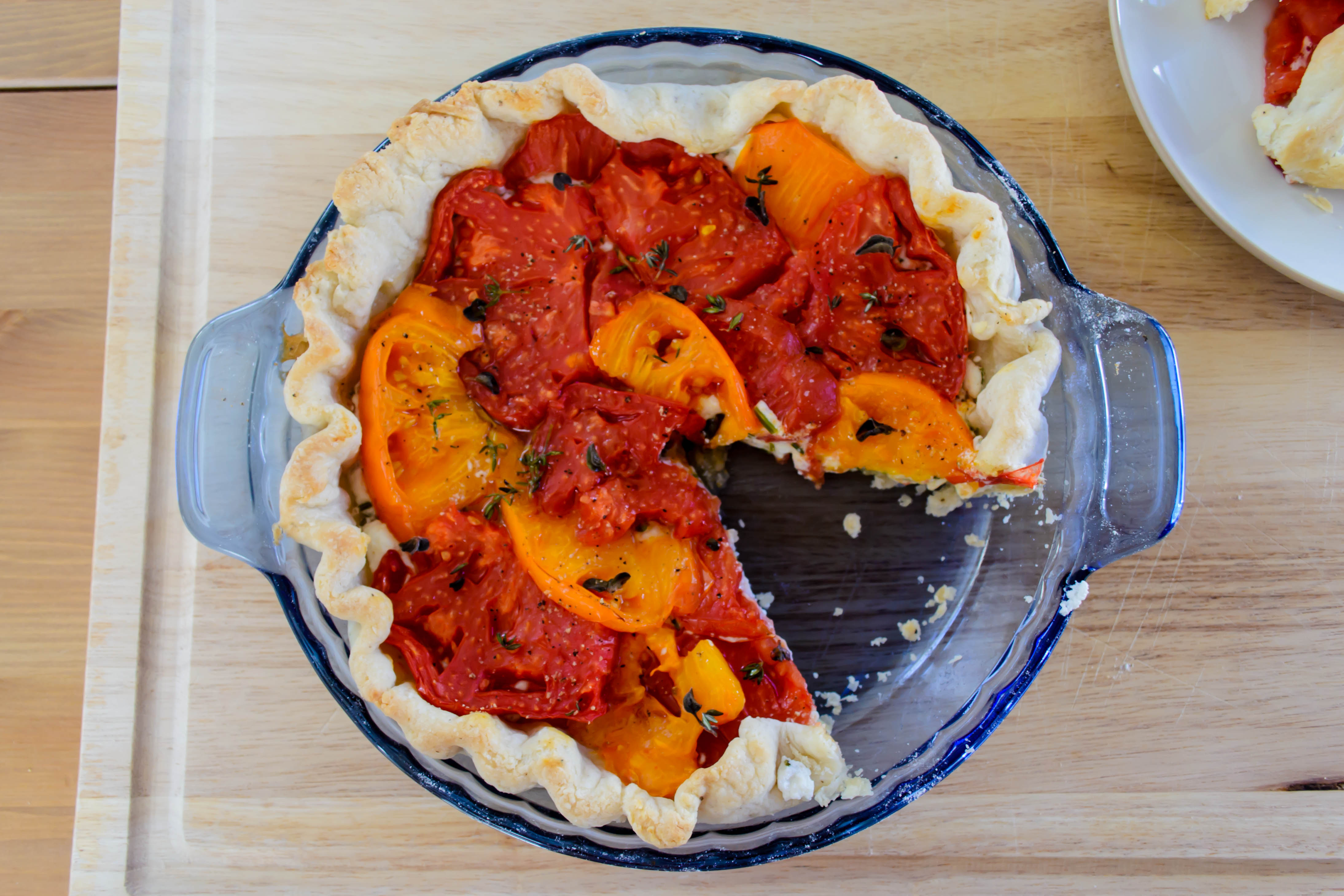
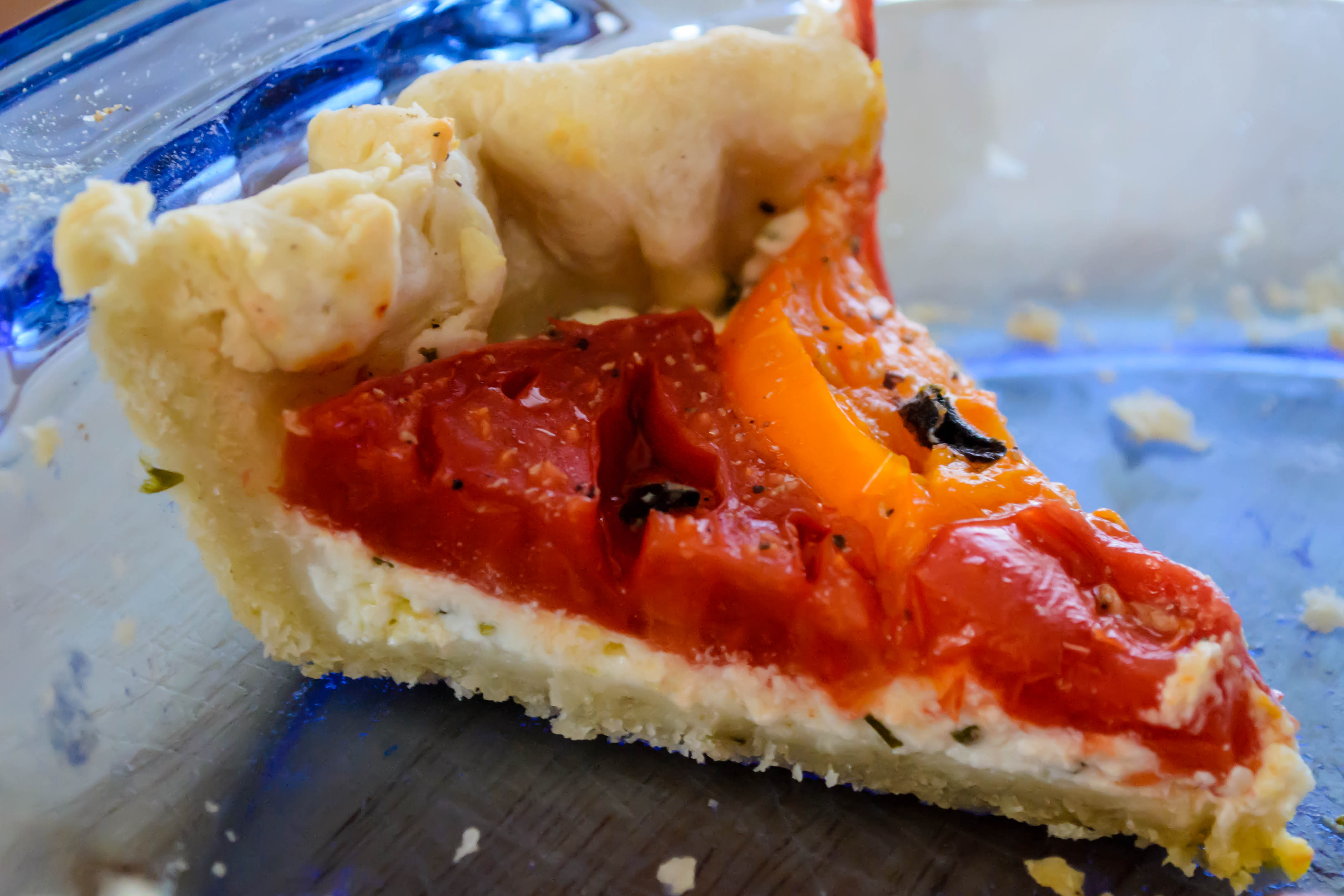
Food Blog August 2013-2482Food Blog August 2013-2483Food Blog August 2013-2485Food Blog August 2013-2491Food Blog August 2013-2495We weren’t exactly sure what to expect of this dish (in fact, when I said “tomato pie” to N., he made a very interesting face), but after we’d both gone back for a second slice, and then a sliver of a third, we decided that we must like it.  It’s a really nice balance of flavors, with the sweet sharpness of tomatoes mellowed into something almost meaty, but still light in spite of the layer of tangy cheese.  The perfect late summer supper.  But it would also, I think, be a great brunch option, or a light lunch with a fresh salad, or, cut into very thin slices, a beautiful canapé for a bridal or baby shower.

Food Blog August 2013-2499Goat cheese tomato pie
makes one 9-10 inch pie
For the crust:
6 oz. flour (or a fluffy 1 ½ cups)
1 tsp sea salt
¼ tsp ground black pepper
1 stick butter, very cold, cut into 8 pieces (if you are going to use your food processor to make the crust, the butter can be frozen)
3-5 TB buttermilk, very cold (I put mine in a little glass in the freezer for 5-10 minutes before I start making the crust)
For the filling:
8 oz. goat cheese, at room temperature
1 TB milk
1 clove garlic, finely minced, or ¼ tsp garlic powder
2 TB chopped chives
1-2 tsp chopped mixed herbs (I used thyme and oregano)
2-3 large heirloom tomatoes, cut into ½ inch thick slices (this quantity is inexact, since heirloom tomatoes differ in size.  You are looking for enough slices to create a slightly overlapped single layer over the goat cheese filling)
Salt and pepper to taste
Drizzle of olive oil


  • To make the crust, combine the flour, salt, and pepper in a bowl.
  • If you are using a food processor, dump in the chunks of butter and pulse on three-second intervals until the butter has been broken up a bit and some pieces are the size of walnut halves, while some are more like peas.  If you are using a mixing bowl, cut in the butter with a pastry blender, two knives, or your fingers.
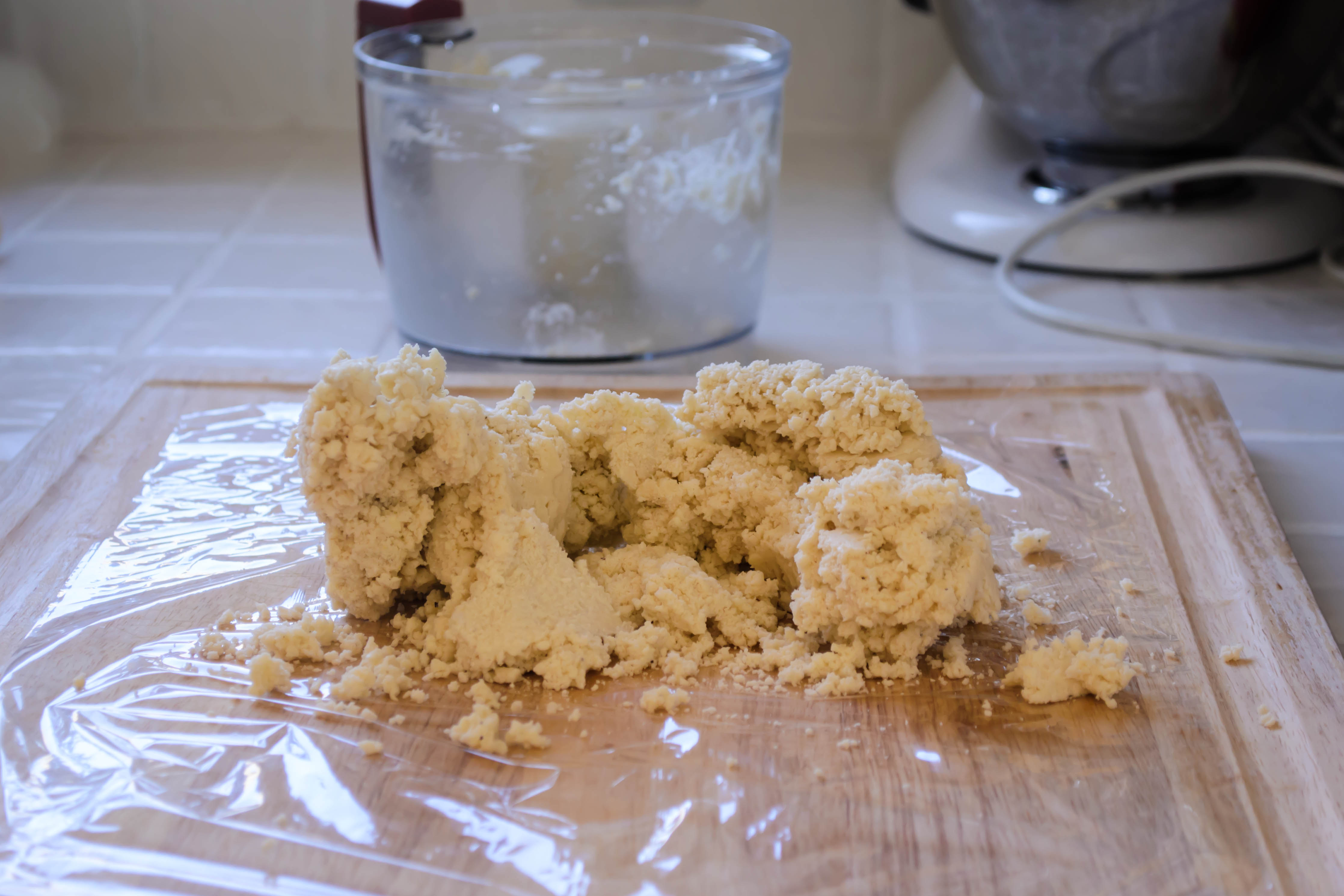
  • Dribble in 3 TB of the buttermilk and pulse again on three-second intervals (or use a fork or your fingers to combine).  If the dough begins to clump together like wet sand or crumbly cake, you are done!  If it is too dry to come together, add another TB of buttermilk and pulse again.
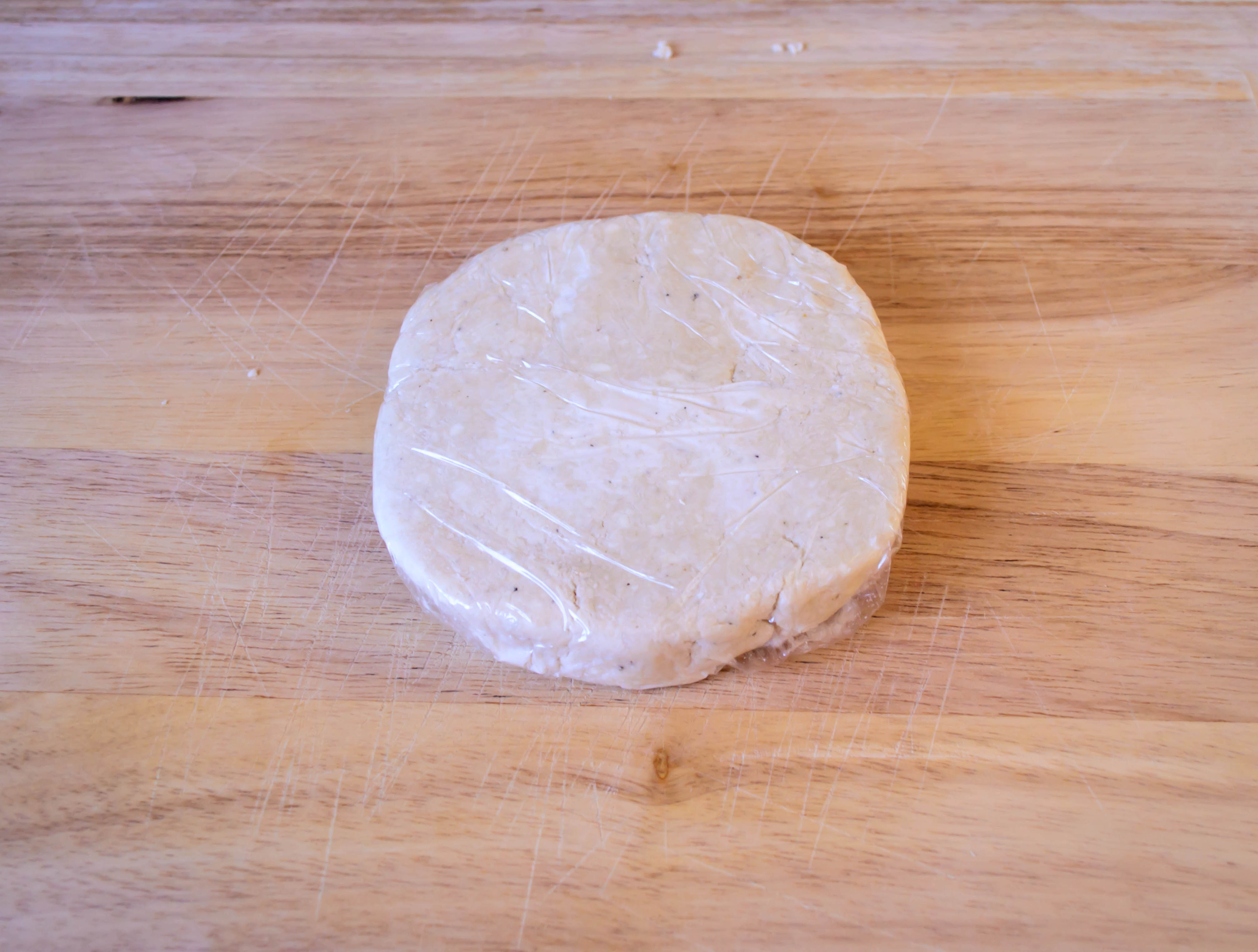
  • Dump out your crumbles of just-tacky dough onto a big piece of plastic wrap.  Using the plastic wrap to help you, press and squash and manipulate the dough into a disc of about 1 inch thick.  Wrap it up and stow it in the fridge for 30-45 minutes.
  • While the dough chills, prep the filling ingredients.
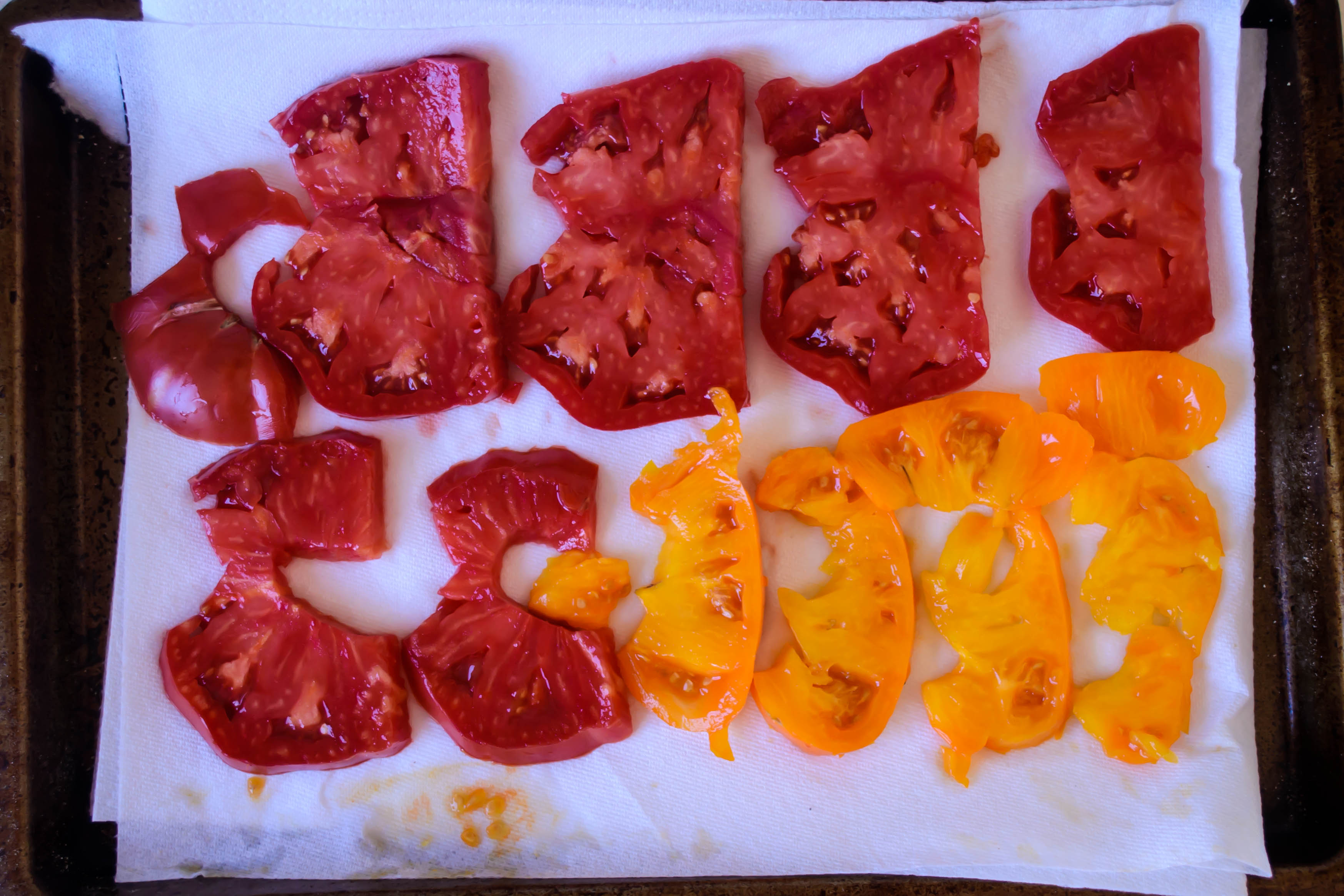
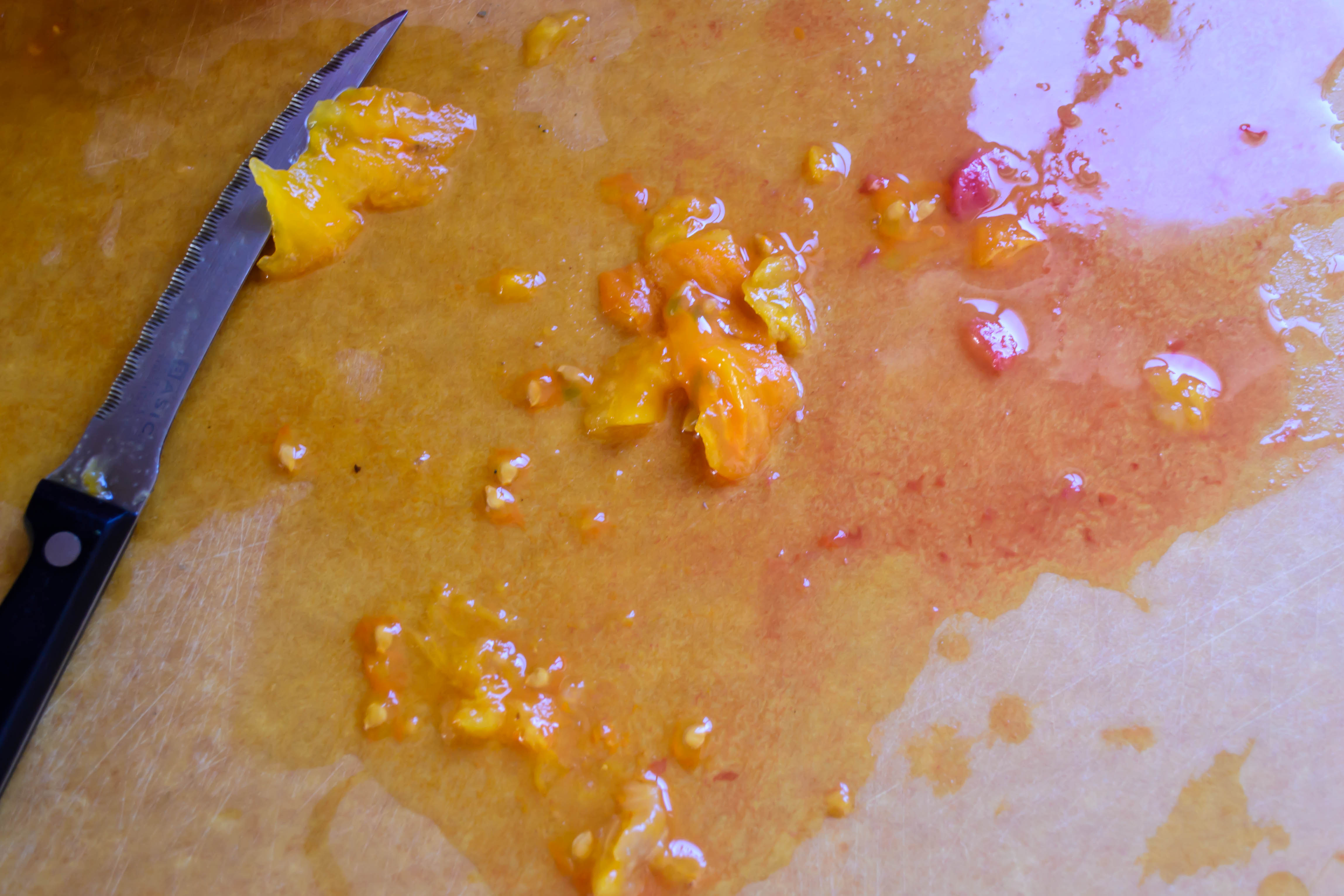
  • Place the sliced tomatoes on a double layer of paper towels lining a cookie sheet.  This will allow them to drain a bit, so they won’t expel quite as much juice in the oven.  Let them sit for at least 15 minutes.
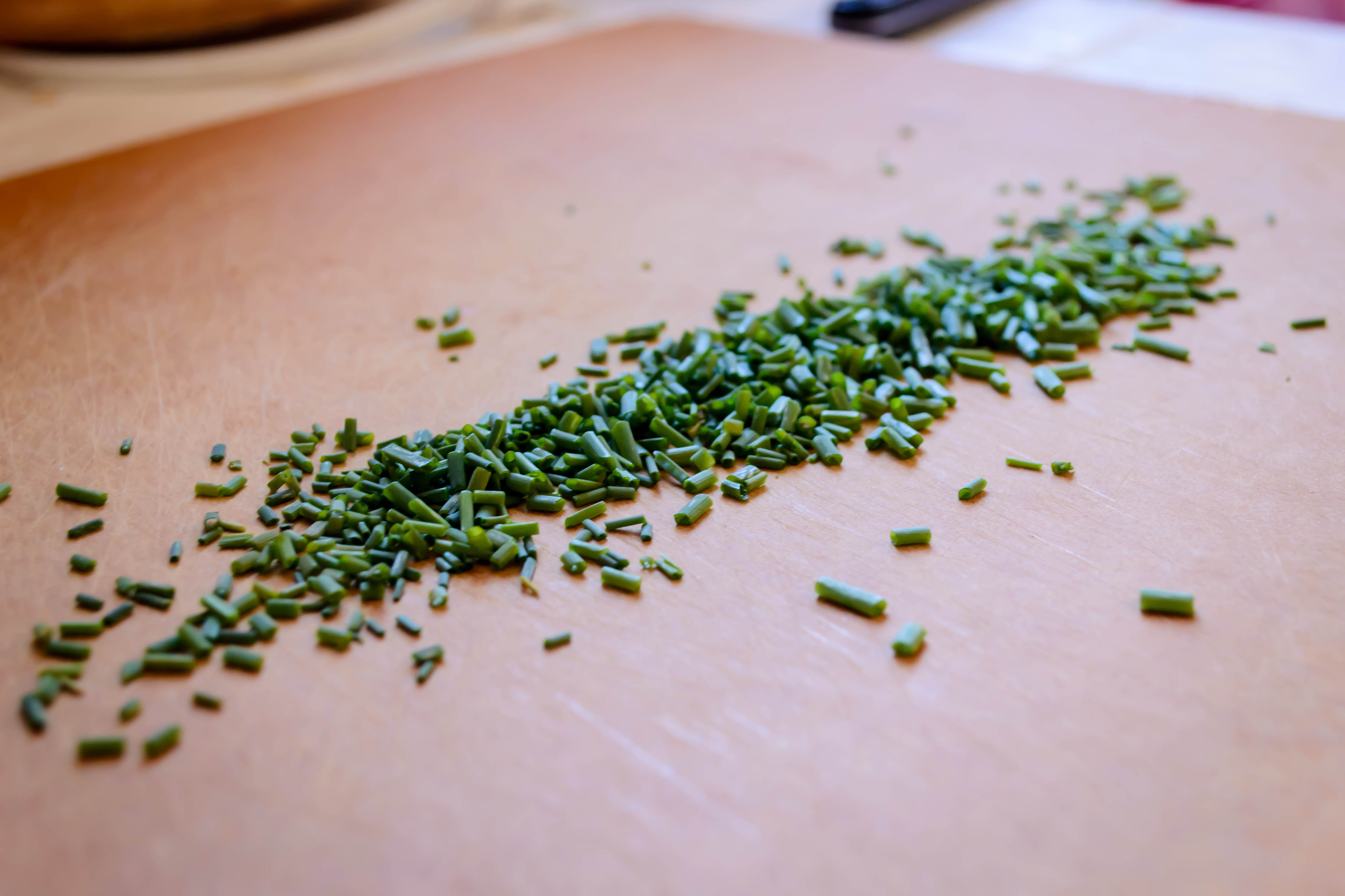
  • Once the goat cheese is at room temperature, combine it with the milk and the chives in a small bowl.  This miniscule quantity of milk thins the goat cheese out just enough to make it spreadable.  The chives are, of course, all about flavor.
  • Preheat the oven to 400F and transport your disc of dough from the fridge to a well-floured board.  Unwrap it and let it warm up just a touch – no more than five minutes or so.
  • With a rolling pin, push from the middle of the dough circle out away from you – toward what we might term the top edge.  Then, return to the middle and push back toward you.  You will now have a strange, elongated oval.  Rotate the disc about a quarter of a turn and repeat, so you’re slowly returning the dough to a circular shape.  If you get some cracks, don’t worry about it – you can either press the dough back together manually, or it will miraculously repair itself as you roll.  If things get sticky, sprinkle on some additional flour.
  • When your dough is rolled out into a basic circle with a diameter 1-2 inches bigger than your pie dish, it’s time to transport it once again.  Roll it up loosely around your rolling pin, then unroll it into the pie dish, draping it gently into the crease where the bottom of the pan becomes sides.  You should have some excess dough around the top.  That’s good.  In small sections, fold it in on itself so it is even with the top edge of the pie dish, creating a thicker edge.  If you wish, make this edge decorative by pressing it in at intervals with your thumb or the tines of a fork.
  • With a spatula, spread the goat cheese mixture in an even layer across the bottom of the crust.  Be careful not to press too hard, as you’ll squash the crust down.
  • Next, layer the tomatoes as attractively as you can manage (for me, this was not very much) over the cheese.  You can overlap them slightly, but the point here is to completely cover the cheese in something as close to a single layer as possible.  This will allow them to receive heat evenly – we don’t want some of them roasty and others stewed.
  • Sprinkle the tomato slices with your 1-2 tsp of mixed herbs, salt and pepper to taste, and a good glug of olive oil for gloss.
  • Bake at 400F for about 30 minutes, until the crust is cooked through and becomes golden, and the tomatoes begin to crumple.
  • Remove from oven and let cool for 10-15 minutes before slicing, to regain some structural integrity.  Tomato juice will gush about when you cut into it; there’s just no avoiding it.  But it will be that utterly delicious kind of gushing that you end up feeling pretty pleased about.  Serve warm or at room temperature.