The Adele – limoncello spritzer

Hi friends. Remember me? I promise I haven’t forgotten about us. I’ve just been… busy.

A week or two ago N. and I were talking about explanations our students give for their absences, or for requesting extensions, or for missed work, and it led into a discussion of the difference between reasons and excuses (which dovetailed into me raging against one of the judges on the Food Network show Chopped for calling a contestant’s explanation that the plate she wanted to use had been taken by someone else an “excuse” he didn’t want to hear). We decided it was, in some senses, a matter of semantics, and that in many cases it was too bad that “excuse” has taken on such a negative connotation. In thinking about how I’ve effectively abandoned you here, I do have some reasons for my absence, but I’m now approaching the point where they are fast becoming excuses, in all the negative ways we usually think of the word. I moved. (True, but we unpacked the kitchen and the computer with my photo editing software almost two weeks ago.) It’s hot. (Yeah, but it wasn’t last weekend or the weekend before that.) I’m tired. (Not so tired that I can’t teach, and grade, and whip up dinner, but tired enough that staging ingredients and capturing the right angles feels like a pretty steep mountain to scale around 4:30 in the afternoon.)

In the end, it doesn’t matter, because what’s important is getting back to it and making an appearance, right? So here’s mine. In the steaming slick of the weekend, peeking around the ragged corners of my own laziness reluctance summer schedule, I figured I could manage a cocktail.

This drink is in honor of my now former neighbor, the “now former” part of which saddens me greatly. Before the move, we were in the habit of having monthly happy hours with one set of neighbors, taking turns hosting an evening of snacks and drinks and music and conversation. It was a lovely way to end the week, and a great excuse reason to resupply the cheese drawer. A former bartender, A. always impressed me with her imaginative cocktail ideas (and got me hooked on vodka tonics – how did it take me until my mid-thirties to discover this dangerously refreshing option every single bartender in the country knows how to make?). It was always a different drink, always something slightly unusual (amaretto and almond milk, anyone?), and she always had the ingredients for it chilled and waiting. For our final happy hour as neighbors, despite not having a great deal of time to plan (packing – you know how it goes), I wanted to have something special to offer her, and it turned out to be this, a drink she liked so much I decided to make it again, and again, and name it after her.

Apart from our neighbors, the other thing I’m going to miss about the house we no longer live in is the lemon tree in the backyard. It wasn’t a standard Eureka or Lisbon lemon (the varieties most common in the standard U.S. grocery store displays), but it wasn’t quite a Meyer lemon either – the skin and pith were sturdy and thick, and they grew to larger sizes than the grocery store offerings (and man were they full of seeds, a feature I’m currently taking advantage of by sprouting and growing a few of my own). The first winter we lived there, I used the tree’s bounty to make limoncello, a lovely bottle I forgot about in the back of a cupboard and allowed to steep much longer than suggested, producing something tooth-achingly sweet and far too strong to be sipped. Over the five years we lived in the house, I slowly worked on that one bottle, adding it to desserts and drinks when a boozy kick of lemon seemed right. As moving day approached, I had only a few shots left in the bottle. To enjoy the sunshine of those lemons as long as possible, the day before we left I stripped the tree of every ripe lemon I could reach (don’t worry, there were still plenty for the new tenants… assuming they have a ladder…). To my dismay, this recipe uses the very last of these.

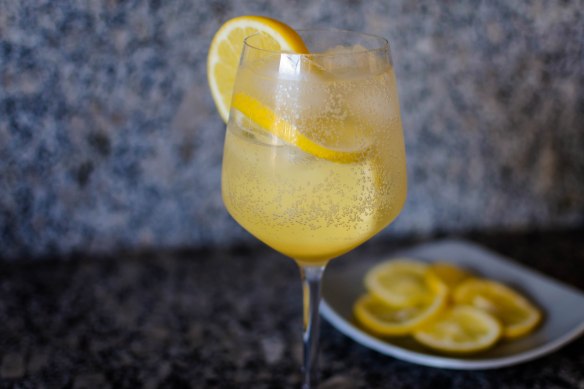
This is no great revelation, I’m afraid (after I made you wait for it for a full page to finally find out what’s in it!), but it is a perfect, and perfectly easy, cocktail for the season. It uses the very last drops of my limoncello, the very last slices of the last lemon I brought from the old house, and a simple fizz of seltzer water to top it up. And as I sipped it this weekend in my hot, still backyard, still scattered with the detritus of the week’s airborne celebrations (fireworks leave a lot of garbage behind!), it remained a lovely way to close out the week: fresh, bright, not too sweet, just the right subtle tickle, as we plow full swing into summer.

The Adele
Makes one (but so easily multiplied)
These are my quantities of preference – you can, of course, adjust to your own tastes, making the drink stronger or weaker, more or less citrusy, as you prefer.
3-4 ice cubes
1 ounce limoncello
1-2 lemon slices or wedges
5-6 ounces seltzer water (don’t use club soda – it contains sodium)


  • Place the ice cubes in a red wine glass (with a big bowl and a tall stem)
  • Pour in the limoncello and add the lemon wedge or slice(s), squeezing to release juice if desired
  • Top up with seltzer water, stir gently, and enjoy.

Save

Ranch Biscuits

We are still awash in boxes (and the desktop computer that I use for photo editing is still sitting in a closet, so these are straight from the camera shots) in this new house that is our house (our house! That is ours! No more landlord! I’m just a little bit excited about this…), but it is starting to feel like home. This “like home” is a different kind of “like home” feeling, though – unlike any I’ve felt thus far in my adult life. Previously, “home” meant “a place I will live for a few years.” It meant “this space I occupy but will, at some point, move on from.” While there is certainly the possibility that at some point, some day, we will dislodge ourselves from this house, it won’t be for a while. This is a place to actually do all those “maybe someday” things we’ve put off: lining drawers. Acquiring “grown-up” bookshelves (read: shelves that actually cost more than $30 or so). Planning and planting a vegetable garden. Finally framing those diplomas. And as anxious and antsy as I am to have it “finished,” we don’t have to do those things immediately, because we’re going to live in this lovely, quirky little house for a long time.

None of that is a beautiful transition into these biscuits, though don’t they look nice against that backsplash? (I promise I’ll stop talking about the backsplash soon.) They’ve been hanging out at the back of my consciousness for a while now, poking at me, and now that it’s grilling season and all I want to do is sit out back with a very cold drink and watch N. manhandle well marinated beef on the grill, I thought these would make a nice accompaniment to anything barbecue related. The flavors of ranch dressing in a sky-high biscuit make sense. I mean, they already share buttermilk in common, and herbs like dill and chives are a lovely way of perking up your average biscuit and making it more interesting. The kick of garlic, of onion powder, and of a little dry mustard could do nothing but improve the whole situation.

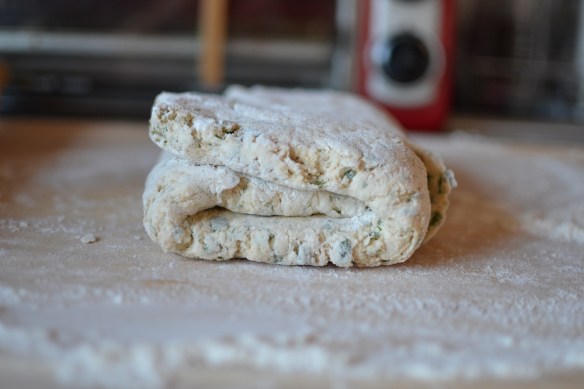
Aided by my adaptation of Ruhlman’s folding and turning method for biscuits with well-puffed layers, these inflated gorgeously in the oven and found their way in multiples to our plates (the first set we tore through were still so warm it was hard to discern the individual flavors). We inhaled the batch in a day and a half, and while they were delicious – herby and kicky and tangy from the buttermilk – we realized while devouring our second helping that we weren’t sure precisely how closely their flavors mimicked ranch dressing, since it had been so long since either of us had tasted that childhood standby.

So here’s my thought for you, as the fourth of July, that ultimate of grill-based holidays, approaches: if you try these, as a side for your ribs or a mop for your baked beans or an ever-so-tolerant napkin for the drips of melted butter coursing from your corn (oh, or maybe even as a sandwich base for the leftovers, with a slick of mayonnaise on both split sides to add that final missing ranch-y ingredient), will you let me know, friends, if they remind you of ranch dressing?

Ranch Biscuits
Makes 9-10 3-inch biscuits
30-40 minutes
2 cups all-purpose flour
1 teaspoon sugar (I like turbinado, but any granulated sugar will do)
1 teaspoon salt
2 tablespoons baking powder
1 teaspoon onion powder
1 teaspoon dry mustard
¼ teaspoon paprika
¼ teaspoon ground black pepper
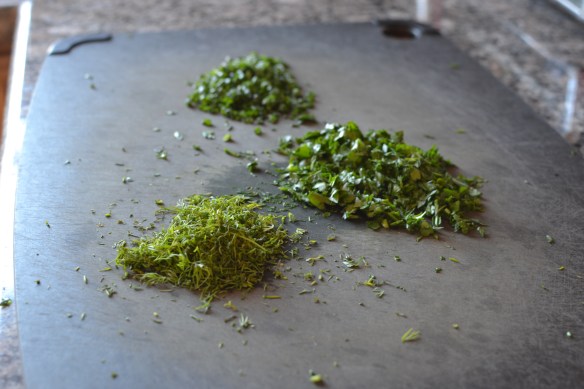
2 tablespoons finely chopped dill
2 tablespoons finely chopped chives
2 tablespoons finely chopped parsley
2 garlic cloves, finely minced
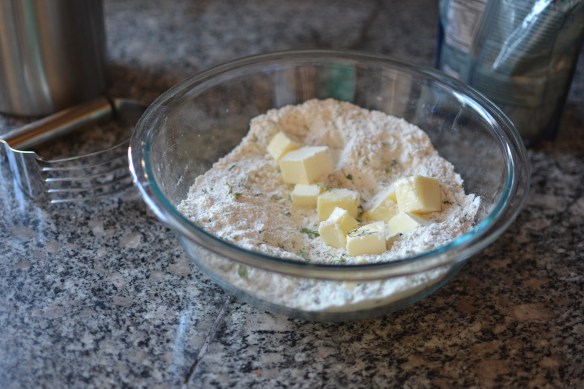
6 tablespoons cold butter, cut into chunks
6 ounces cold buttermilk (about ¾ cup)


  • Preheat your oven to 400F and line a baking sheet with parchment paper. In a medium bowl, whisk together the flour, sugar, salt, baking powder, onion powder, dry mustard, paprika, and black pepper. Add the finely chopped herbs and the garlic and whisk well to ensure even distribution (these wetter ingredients will want to clump together).
  • Plop in the cubes of cold butter and use a pastry cutter or your fingers to work the fat into the flour mixture. You are looking for butter bits the size of small peas. Pour in the buttermilk and use a fork or your fingers to mix it through the flour and butter mixture and bring the whole thing together into a shaggy, soft ball of dough (if it seems too dry and is not coming together, just set it aside for a minute or three – this will give the flour time to absorb the buttermilk a bit more).
  • Turn the dough out onto a well floured board, sprinkle some more flour on top, and knead with your hands two or three times just to catch any loose bits. With a rolling pin or your hands, press or roll the dough into a rough rectangular shape about ½ an inch thick. Fold the dough into thirds, then roll out again. Repeat, again folding the dough into thirds and then rolling it out; this creates more flaky layers. If the dough sticks to your board, use the flat blade of a butter knife or a pastry scraper to help you lift it free.
  • After you’ve rolled and folded, rolled and folded (so you’ll have done a total of six folds), roll out once more, this time to a thickness of 1 inch, and use a 3-inch round cutter (or the lip of a glass) to punch out biscuits. Push the cutter straight down through the dough; don’t twist until you are all the way through to the board, or you’ll crush the flaky layers! Repeat, placing the biscuit rounds on your parchment lined baking sheet, until you can’t punch out any more rounds. Re-roll the dough scraps (no need to fold again unless you want to) and repeat – with a 3-inch cutter, you should be able to make 9-10 biscuits about 1 inch thick.
  • Arrange the biscuits, evenly spaced, on the parchment lined baking sheet and bake for 18-20 minutes, until they are well puffed and the tops are pale golden and slightly dry.
  • Let cool for just a minute or two, then wrap up in a basket or stack on a tray, and watch them disappear.

Summer Vegetable Tzatziki

2016 Food Blog August-0683Sometimes the most difficult thing about these posts is deciding what to call them. Cucumber yogurt dip sounds good, but because there is the same amount of tomatoes here as there is cucumber, such a title feels like a lie of omission. “Cucumber tomato yogurt dip” starts to sound clunky, and it excises the radishes that provide such a good peppery crunch to the whole thing. And really, if your title includes everything in the finished product, it’s not a title at all – it’s an ingredient list. I tell my students that titles are hard. A title is the summary of all summaries. It should catch the audience’s interest and encompass the topic at hand and suggest the writer’s stance on it. But then, you don’t want to fall into the trap of emotive language: “Delicious Cucumber Yogurt Dip” makes up your mind for you before you have a chance to taste the thing yourself. And while that may be a fine thing for something like a food blog, in writing as a larger practice, it can be a problem. Your evidence should make the argument for you, not your manipulation of alluring language (can you tell the fall semester is imminent?!). Besides, that’s a pretty bold promise!

2016 Food Blog August--4But we’re moving away from the issue: a late summer dip flush with vegetables, crammed with texture, bound by the creamy thickness of good greek yogurt. As I continued to dither over titles, I remembered another suggestion I give my students: play with your audience’s existing knowledge. In my intro level composition class, I structure our readings around the theme of “the journey,” and once ended up with a student paper entitled “Don’t Stop Believing.” Genius. Well then. Crisp vegetables, cool yogurt, herbs, just enough salt to pull the flavors together; let’s go with tzatziki.*

2016 Food Blog August-0657This is not the most pinterest-worthy pretty dish, because once you enrobe vegetables in a coating of yogurt, the whole thing takes on a blurred creaminess that I was concerned to see reminded me of those yogurt-based fruit salads of my youth that someone always insisted on adding banana to. But be consoled! Though this is, I suppose, technically a fruit salad in that the starring ingredients are only masquerading as vegetables, it is savory and crisp and cleanly refreshing, and there are no mushy browning slices of banana hidden amidst the bright flavors you were expecting.

2016 Food Blog August-0664Of course this is perfect with chips of all kinds, and would probably make a nice accompaniment to falafel or skewered meat. But since I was roasting a chicken for dinner, I wanted to avoid heat sources of any kind earlier in the day, so I had mine on well salted pita chips and, in spite of earlier vacillation over titles, ended up with this simplest of solutions: just call it lunch.

2016 Food Blog August-0665Note: alas, for all its merits, this tzatziki does not keep well, nor is it a promising “make ahead” option. The tomatoes and cucumbers begin to give off juice almost immediately, and though the yogurt is quite thick, it does get watered down within the hour. It is best, then, for those moments when you need something fresh and bright and cool and easy, and you need it NOW-thank-you-very-much.

2016 Food Blog August--2-2* I considered raita as well, but while cucumbers and yogurt are pretty standard for a tzatziki, raitas can have all sorts of vegetables in them, are often a bit thinner, and sometimes carry a hit of spice so that even as you are cooling off, you are heating up again. Tzatziki, with its dominant ingredients and its chunky reputation, seemed to fit better here.

2016 Food Blog August-0683

Summer Vegetable Tzatziki
Serves 2-4
10-15 minutes, depending on your chopping speed
1 cup greek yogurt (don’t sub regular yogurt; you need the thick texture to stand up to the wetness of the vegetables)
1 cup chopped cucumber, seeded if you wish
1 cup quartered cherry tomatoes
3 radishes, sliced, julienned, then cubed (directions below)
1 tablespoon your choice of finely chopped soft-stemmed herbs (I went with chives. Cilantro, parsley, basil, or dill are other possibilities)
½ teaspoon salt, or to taste
⅛ teaspoon black pepper, or to taste


  • This is laughably easy, guys. Combine all ingredients in a large bowl and stir to combine, then taste for seasonings and adjust accordingly. But I said I’d explain about the radishes, so here goes: remove the tops and tails, then cut into thin slices. Pile up a stack of the slices and cut straight down into skinny little matchsticks – this is a julienne cut. Then, if you want the pieces even smaller, cut up those matchsticks into tiny cubes. This ensures even distribution of radish pieces, and ensures you aren’t biting down onto a giant chunk, which is nice if your radishes are particularly peppery.
  • If desired, use a rubber spatula to pour and scrape the tzatziki into a pretty serving bowl, and serve with your choice of dippables.

Save

Fried zucchini and eggplant sandwiches

2016 Food Blog August-0626What is it about summer and fried food? It doesn’t make sense. Why would we want, on the hottest of afternoons, foods at nuclear temperatures encased inside hot, thick, sometimes greasy breading that, should we make them ourselves, require rivulets of sweat and a pot of shimmering, toe-endangering oil? Is it the hazy memory of a thousand state and county fairs of collective childhood, studded with corn dogs and funnel cake and battered oreos? Is it the only kind of seafood we would eat for lunch as kids, and thus required for a beach day? Is it just that green tomatoes are only really worth eating when they are lovingly smothered by a cornmeal crust?

2016 Food Blog August-05902016 Food Blog August-0606I’ve done this height-of-summer-frying thing before, and here I am again, dunking breaded vegetables in hot oil to create a sandwich inspired by Disneyland and babaganoush (there’s an unexpected pairing, eh?), that ticks all the flavor marks including that deep, primal urge for crisp coated, meltingly soft centered fried food, on a sun-streaming, fan-screaming kind of week.

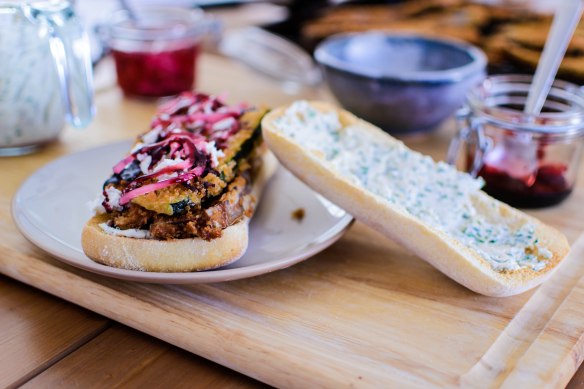
2016 Food Blog August--22016 Food Blog August-0613I said Disneyland and babaganoush, and that truly is how the sandwich was imagined. A few months ago on a trip to that happiest of places, I ordered a fried green tomato sandwich. It was good – the tomatoes were tangy and sharp, and the sandwich format made creamy, fatty remoulade a requirement – but I thought it could be more. Instead of just the green tomatoes, there could be zucchini. There could be eggplant. There could be, rather than a mayonnaise based sauce, something with yogurt, with herbs, with lemon. There could be tahini.

2016 Food Blog August-With the addition of that idea of sesame, I was suddenly in babaganoush territory, that lovely roasted eggplant dip, soft and pulpy and aromatic.* From there, all links to green tomatoes were cleanly severed, and I was daydreaming Mediterranean and Middle Eastern flavor combinations.

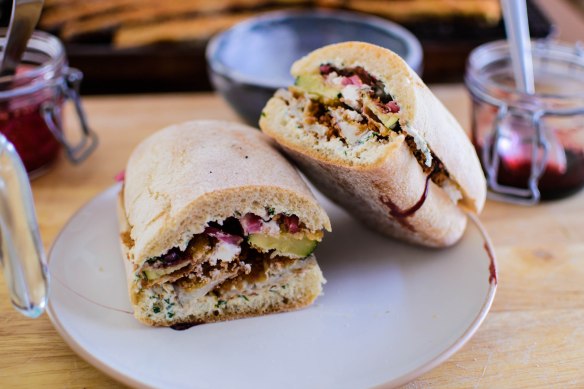
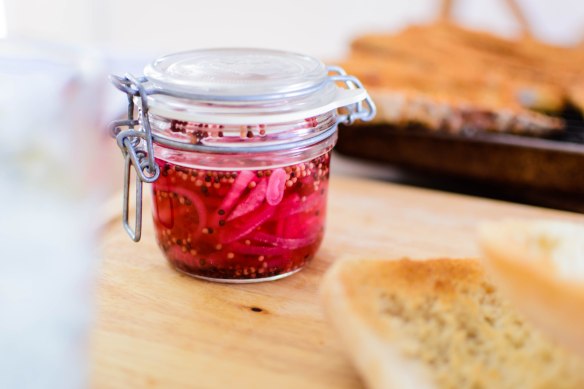
2016 Food Blog August-0616The sandwich we ended up with – the one that ticks every box (or perhaps every taste bud) – has the crunch-into-barely-resistant-softness of panko-coated fried vegetables, a tangy, rich spread of yogurt and tahini lightened with lemon and a mixture of herbs, and a shower of tangy crumbled goat cheese. It has pickled onions for a sour astringency, and the sticky sweet coup de grace of a drizzle of pomegranate molasses. You don’t want too much of it, but this wouldn’t be the same sandwich if you left it off. The bread is lightly toasted, and the breading for the vegetables carries a light dusting of cayenne pepper for a suggestion of heat. What’s more, you can eat the leftovers – if there are any – without the sandwich: stacked up kindling style and sprinkled and drizzled with the extras, the vegetables shine even more brightly. I had them for lunch this way the day after our sandwiches, and I’m kicking myself for not taking a photo or two before I plunged in.

2016 Food Blog August-0617A few notes: the pomegranate molasses can certainly be purchased if you don’t want to make it yourself – look for a Middle Eastern grocery store – but it’s pretty easy (and much cheaper) to make if you don’t mind taking the time. You will probably wind up with extra, which could be drizzled over everything from salad to grilled poultry to ice cream. Because it takes a while, to speed up the dinner prep you could make the molasses the day before, and store it in a glass jar in the fridge, where it will thicken considerably overnight. A minute or two before you are ready to assemble the sandwiches, immerse your jar of pomegranate molasses in a bowl of very hot water. It will warm and liquefy enough to be pourable again. As for the bread, we ended up with ciabatta rolls, but I think something seeded might also be nice for these sandwiches – perhaps these shaped like hot dog buns instead of full loaves. In any case if you use a roll or a bun instead of sliced bread, you’ll want to dig out the soft center so there’s room in the middle to stack up plenty of the vegetable slices.

2016 Food Blog August-06202016 Food Blog August-0622* I realize not all babaganoush contains tahini, but the ones I’ve liked do, along with lemon, and some herbs, and a shower of pomegranate seeds.

2016 Food Blog August-0628

Fried Zucchini and Eggplant Sandwiches
Quantities listed are for two sandwiches, but are easily doubled
About 45 minutes
Pomegranate molasses:
1 cup pomegranate juice (I like the POM brand)
Tahini yogurt spread:
2 tablespoons tahini paste
4 tablespoons (¼ cup) greek yogurt
1-2 teaspoons lemon zest (about 1 lemon)
1 tablespoon lemon juice
1 tablespoon finely chopped fresh chives
2 tablespoons finely chopped fresh parsley
1 tablespoon finely chopped fresh mint
¼ – ½ teaspoon salt, to taste
Sandwich:
1 cup vegetable oil
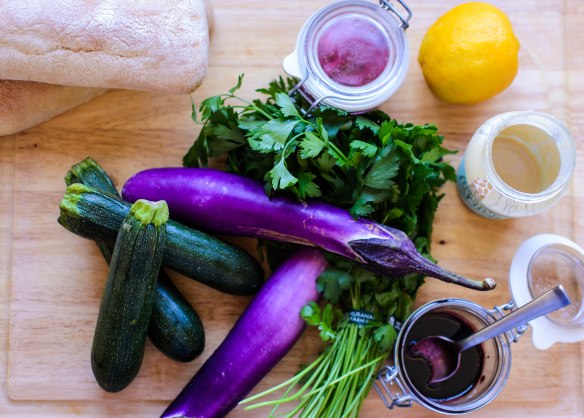
2 zucchini, cut into long planks
1 Chinese or Japanese eggplant, cut into long planks
¾ cups all-purpose flour
1 teaspoon salt + more for post-frying sprinkling
½ teaspoon cayenne pepper
2 eggs, beaten
2 cups panko breadcrumbs
¼ cup crumbled goat cheese
2 tablespoons pickled onions or to taste
2 sandwich rolls of your choice about 6-8 inches in length; we used ciabatta


  • Begin with the pomegranate molasses, as this takes the longest: pour the pomegranate juice into a small pot and boil over medium heat until you have only about 2 tablespoons left; 20-25 minutes. The juice will have a slightly thicker viscosity, and you’ll know it’s seconds from being done when the whole thing seems to be a frantic stack of bubbles. Set it aside to cool – it will thicken into a syrup. (You can also refrigerate overnight – see note above.)
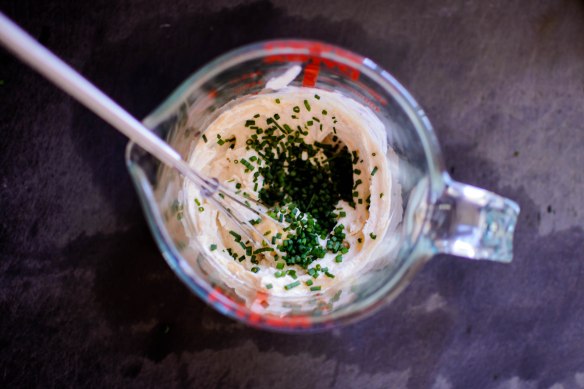
  • While the pomegranate juice reduces, make the tahini yogurt spread. In a small bowl, whisk together the tahini and yogurt with the lemon zest and juice. Add the herbs and the salt, whisk again to thoroughly combine, and taste for seasoning. Adjust quantities of salt and lemon juice as desired. Set aside.
  • For the sandwich filling, set up a three-part breading station: you will need three plates or shallow bowls. Pie plates work very well. On the first plate/bowl, combine the flour with the salt and cayenne, mixing well with a fork or a small whisk. Spread out the flour mixture in an even layer across the plate. In the second plate/bowl, crack the eggs and beat well to combine. In the third plate/bowl, dump 2 cups of the panko and spread out in an even layer.
  • In a large, deep skillet with straight sides, heat the oil to about 350F. While it warms up, bread the vegetables. First coat each slice of eggplant and zucchini in a light layer of flour. Then transfer to the egg and coat again, being sure all dry flour is covered. Finally, press lightly into the panko on both sides. Set each slice on a separate plate or a wire cooling rack until the oil is ready. Set another wire rack over a baking tray and place in an oven set for 300F. This is to keep the finished slices warm and crisp while the rest are frying.
  • When the oil hits 350F, begin adding the vegetable slices. Carefully place them into the oil individually, only adding four or five at a time to avoid crowding the skillet – the more you put in there, the lower the oil temperature gets, which can lead to a greasy end product. Fry over medium to medium-high heat until the panko coating is nicely browned and crisp, about 3 minutes per side. As the slices are finished frying, sprinkle them lightly with salt and add them to the wire rack set-up in the warm oven until you are ready to assemble and serve. Repeat until all slices are fried.
  • Split the sandwich rolls lengthwise and dig out most of the interior, leaving a thin layer of crust on all sides (you can keep the hunks you dug out for bread crumbs). Lightly toast the remaining crust in the oven with your fried vegetables or in a toaster oven, just until it is warm and slightly crisp on the outside.
  • To assemble, smear a tablespoon or two of tahini yogurt spread on each side of the sandwich rolls. Stack a few slices of vegetables onto the bottom of the roll, being sure you have both zucchini and eggplant on your sandwich. Strew on a few slices of pickled onion, about 2 tablespoons of crumbled goat cheese, and drizzle over about a tablespoon of pomegranate molasses. Clamp on the top of the roll, cut the sandwich in half with a serrated knife for easier eating, and serve immediately.


Beer Braised Cauliflower Tacos with Chimichurri

2016 Food Blog June-0973 The first heat wave of the summer has hit Southern California (actually, if I’m honest, it has hit most of the country. Stop cackling, Seattle), and as a result, the things I most want to consume are tacos, grilled anything, bright, herbaceous sauces with plenty of acid, and beer. Fortunately for everyone concerned, today’s recipe combines three of the four. Entirely decent odds.

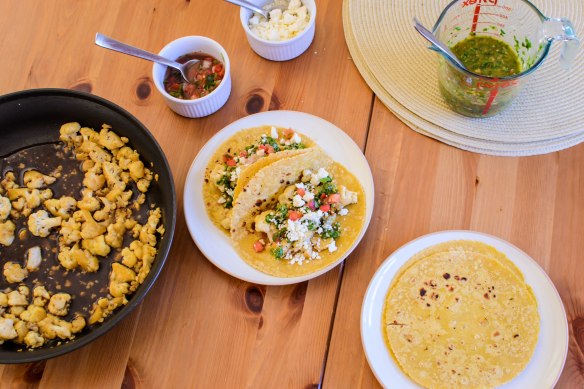
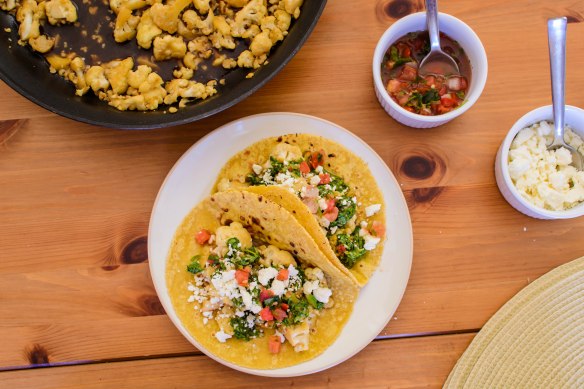
2016 Food Blog June-0946I had these tacos at a brewery restaurant in Venice, just on the other side of Highway 1. We’ve done cauliflower in tacos before, but that was a wintry dish. This one, with bright, sharp chimichurri sauce and briny crumbles of feta, is all summer.

2016 Food Blog June-0964As many breweries do, this one tries to use their beers in their food as well as in pint glasses, which makes a lot of sense. A glug or two of dark beer into a cheese sauce is perfect, and braising everything from beef to cauliflower in a simmer of ale rather than red wine just fits the venue.

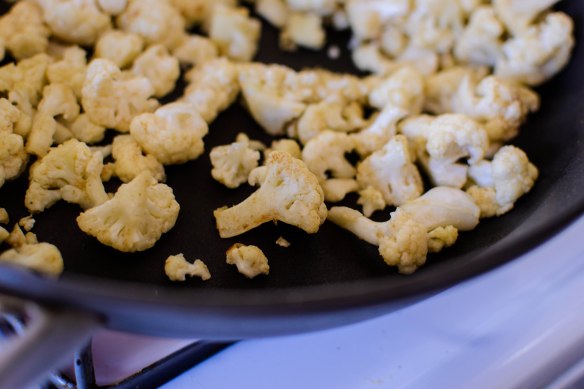
2016 Food Blog June-0972I suppose in this instance, braising isn’t quite accurate – a braise is a long, slow cook in liquid, and here the beer deglazes the pan and then simmers just until the cauliflower florets are tender – but the name sounds nice, doesn’t it? Anyway, the normally mild, sometimes musty vegetable picks up some color and char from a very hot skillet, then sucks in some of the nutty bitterness of whatever beer you pour, sputtering and steaming, into the pan with it. It’s not quite the same depth and richness as roasted cauliflower, but a lighter incarnation that is a bit less sweet.

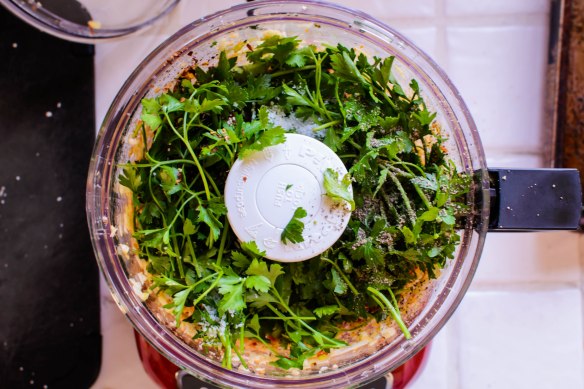
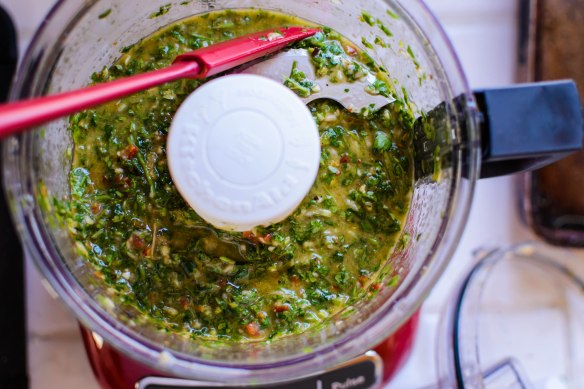
2016 Food Blog June-0958Once you pile the florets up into a nicely toasted tortilla, you spoon on some chimichurri sauce, a bright, Argentinian answer to pesto, possibly of Basque origin, that is traditionally used to both marinate and top grilled meat. It’s usually dominated by parsley, though sometimes cilantro and oregano make appearances, and gets its sharpness from raw garlic and a healthy dose of vinegar. Mine starts out traditional and then tempers the tang with red wine vinegar, rather than straight white, and sneaks in a bit of sundried tomato and green onion (though you could also use shallot) for a sauce that would make an equally good salad dressing, if you have some substantial greens laying around that need a kick. My version also uses much less oil than some, so feel free to glug in a bit more if you want a looser sauce.

2016 Food Blog June-0963A few crumbles of feta on top of the veg, and you’re ready to serve. And if you’re really feeling the beer-y flavor, perhaps a side of these black beans. Hit it, summer.

2016 Food Blog June-0976

Beer Braised Cauliflower Tacos with Chimichurri
Makes 1 cup chimichurri, and enough cauliflower for 4-6 tacos
About 30 minutes
For chimichurri sauce:
3-5 garlic cloves, peeled
2 tablespoons shallot or the whites of green onions
1 tablespoon oil-packed sundried tomato, drained
¾ cup packed parsley, stems and all
2 tablespoons cilantro, stems and all
½ teaspoon salt
½ teaspoon black pepper
½ teaspoon red pepper flakes
5 tablespoons (¼ cup + 1 tablespoon) red wine vinegar
⅓ cup vegetable or olive oil
For cauliflower tacos:
1 large head cauliflower, cut into bite-size florets
1 teaspoon salt
1 teaspoon ground cumin
2-3 tablespoons olive oil
12 ounces dark beer
soft corn tortillas, lightly grilled or toasted over an open flame
crumbled feta cheese, to serve
pico de gallo, to serve (optional)
additional cilantro, to serve (optional)


  • To make the chimichurri, blitz the garlic, onion or shallot, and sundried tomato in a food processor until the ingredients are well broken up. This ensures no large chunks of garlic in the final product. Then, pack in the parsley, cilantro, salt, black and red pepper, and vinegar, and pulse the food processor 2 or 3 times at 1-second intervals. Finally, drizzle in the oil and pulse again, 2 or 3 times at 1-second intervals, until everything is well chopped, but not so long that a fully emulsified paste is created. We are looking for the mixture to retain some texture. Set aside until ready to serve.
  • In a large bowl, toss the cauliflower with the 1 teaspoon salt, the cumin, and the 2-3 tablespoons olive oil. Preheat a large skillet or a grill pan over medium-high to high heat and, when it is quite hot, tumble in the oiled, seasoned cauliflower. It will sizzle tremendously.
  • Char the cauliflower on all sides – you are looking for dark bronzed marks on the outside, but not to cook it through – this should take 3-4 minutes.
  • Deglaze with the beer by adding it all at once and stirring gently. Turn the heat down to medium-low and cook until the florets are tender but still have some texture; about 5 minutes.
  • To serve, use a slotted spoon to pile up about ¼ cup of florets in each tortilla. Spoon over a few teaspoons of chimichurri, then a few teaspoons of crumbled feta. Add pico de gallo and a few extra cilantro leaves if desired, and serve immediately.