Roots!

This is not a Bittman recipe.  But it is something I made.  It’s hearty, it’s autumnal, it’s colorful, and it’s easy.  Oh, and it allows you to turn your oven on for around an hour and thereby heat up your house a bit!

Roasted Root Vegetables

3 carrots, peeled and cut into chunks

3 parsnips, peeled and cut into chunks

2 purple topped turnips, peeled and cut into chunks

2 rutabegas, peeled and cut into chunks (see a pattern here?)

1 sweet potato (or 1/2 of a mammoth yam), peeled and cut into chunks

1 tsp dried rosemary, or to taste

1 tsp sea salt

1/2 tsp freshly ground black pepper

olive oil to coat

Preheat your oven to 400F.  Peel and cut all vegetables into equal, bite-sized chunks.  Toss them with seasonings and olive oil in a 9×13 inch glass baking dish.  Use enough olive oil so that all chunks of root vegetable get an even coating and glisten slightly.  Depending on size of vegetables, this might range from between 1/2 – 1 cup of oil.

Roast until all vegetables are tender and begin to brown on the outside, 45 minutes to an hour, depending on size.

As you can see, this is almost ridiculously easy.  You can substitute for any of these vegetables you don’t like – easy additions or change-outs would be regular or fingerling potatoes, beets, even celery root.  Choose what you love, mix them well, and enjoy!

September

When I think of September, I think of two things: birthdays and school.  As a September birthday, I was always a little sad about the start of school, and not for the reasons you might think.  First of all, I was always one of the youngest in the class (I just made the district’s cut-off for the year I was in… everyone born only a week or two after me had to wait another year before starting kindergarten), and secondly, my birthday happened so soon after school started each year that the teacher usually hadn’t established how birthday treats would be handled yet.  Thus, we didn’t often celebrate my birthday in the classroom.  When I got to college, school on the quarter system meant my birthday happened during summer vacation.  This is fantastic in theory, but in practice it meant my friends were scattered across the country in their home towns, not collected around campus to gather.

So September is birthday month, and I make no apologies about allowing the celebrations to stretch out across at least a week in one direction or the other.  Or sometimes both!  In this phase of my life, I find myself surrounded by a lot of other September birthdays (think about it: nine months ago it was December, a chilly but also festive time…), and I never hesitate to celebrate by helping them celebrate.  As mine approaches this year, however, I must admit to having barely begun to think about the food that will go with it.

And on that note, I must also admit my school analogy: this week, I didn’t do my homework.  I had a Bittman recipe all picked out, I bought the ingredients for it, and then between indolence and a wave of unexpected (but, at least for me, not entirely unwelcome) heat, I never got around to making it.  Fortunately, however, I can give you some make-up work: a photo essay!  This past weekend I went to the first birthday bash of September, a joint affair for my friends B. and Ch., and a spread that put my hostess heart to shame.  Following are just some of the delights available to sample.


Raw vegetable medley cups.  The delicious spicy hummus and masala spread provided to dip them in not pictured.


Homemade jumbo sized “oreo” cookies, with all the cruch and creaminess of the Nabisco favorite.  I am pleased but also slightly concerned that I acquired the recipe from my hostess…

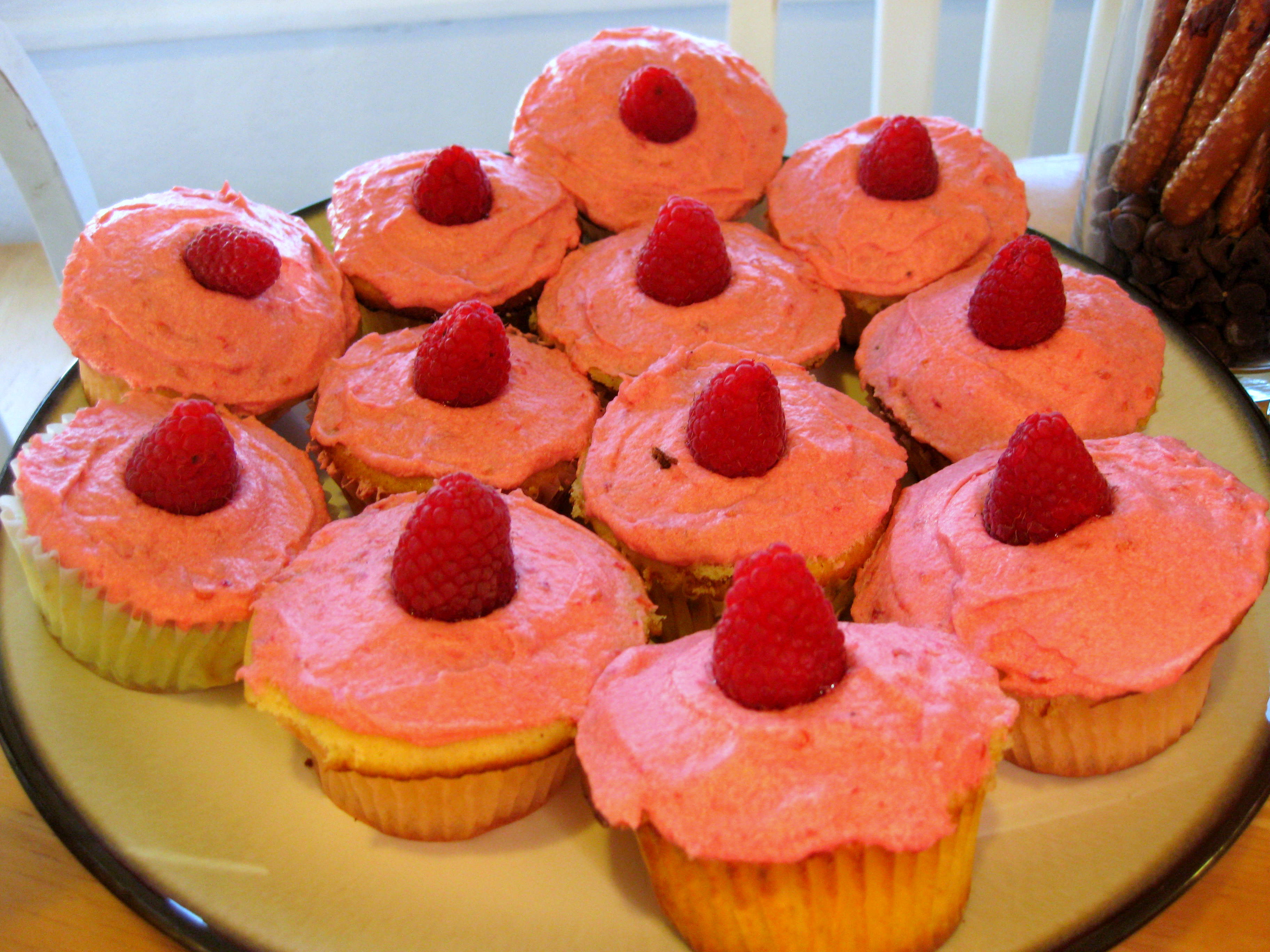
Lemon raspberry cupcakes.  Alas, somehow I neglected to sample one of these beautiful summery treats, but they looked amazing.

 Look how lovely these chocolate-dipped pretzel rods are!  Bakery case beautiful, but I’m almost positive Ch. dipped them herself.

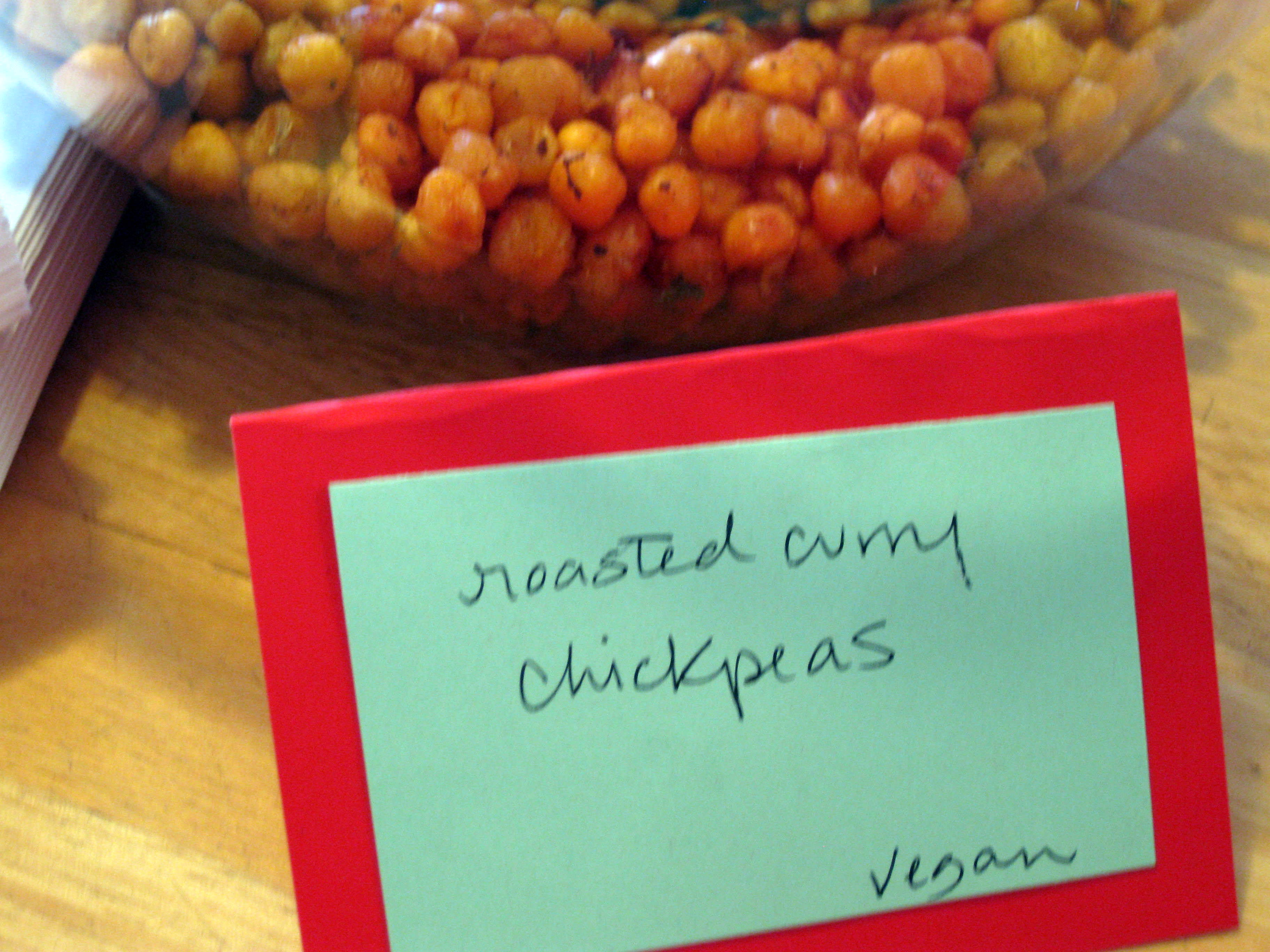
Here’s what really delighted me (besides these chickpeas, which were flavorful and crunchy and addictive): next to each item, Ch. made these lovely little cards not only naming the treat, but providing its dietary specifics.  Dishes were marked as “vegan,” “dairy,” or “gluten-free” so guests could determine for themselves what was safe for them to eat.  How kind and thoughtful, in today’s world with growing restrictions.

Thanks, Ch. and B.  It was a delightful party, and I was p-leased to celebrate you both.  I’m glad you were born!  Thanks for ushering in the birthday season with such tasty taste.

   Happy birthday!

Chutney

Oregon has dealt us an interesting summer.  My garden languishes, late blooming and unsure of itself in May, June, and even into July, then caught off guard by sudden heat, and now stretching for a sun that may almost be gone for the season.  I hate to admit it, but it looks like fall might be on the way.  This called for something to span the season gap.  Indian summer, perhaps, but inspired from an Eastern palate (palette too?), not the New World.

“10. Ginger-Apricot Chutney: Put dried apricots in a saucepan, cover with water and bring to a boil. Add lemon juice, minced fresh chili, grated ginger, a couple of cloves and a pinch of cayenne. Cook until thick.”

This seemed to fit the bill.  Served with grilled chicken, it would be room temperature but highly spiced, and the textural element of the dried, then rehydrated, then cooked apricots promised to be interesting.  I used:

1 cup dried apricots, coarsely chopped

Enough cold water to cover the apricots

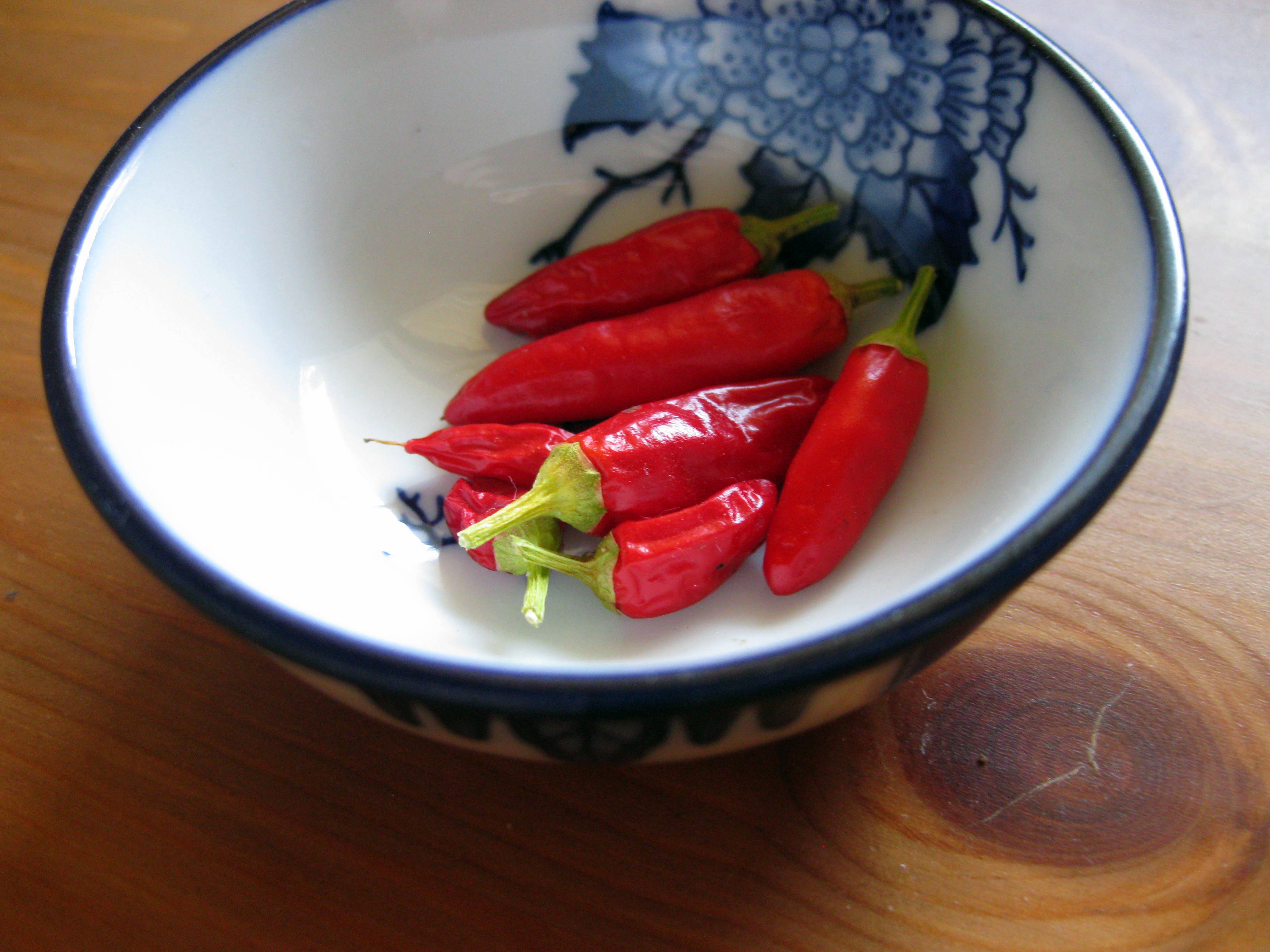
3 teeny, teeny tiny “super chili” peppers from my backyard, seeds removed, finely diced

1 generous TB grated ginger (it’s really easy to grate if it’s frozen, and since it keeps so well and so long in the freezer, that’s one more reason to stow it there!)

juice from 1/3 of a lemon

3 cloves

Pinch of salt and black pepper

Our friend M. moved out of the state a few months ago, and before leaving she had a “Go Away” party that consisted mostly of whiskey, bean dip, and trying to get her friends to take all her unwanted possessions.  She was leaving by air, so everything she took had to fit in a couple of suitcases and a cat carrier, and we, feeling like thieves and voyeurs, pillaged through her kitchen cabinets and drawers taking what we wanted.  Among other things, I came away with jars and jars of spices, and a tiny little copper-bottomed saucepot that has quickly become my favorite.  This was the perfect vessel for chutney.  I plopped the sticky apricots in, covered them with cold tap water, and cranked the burner on my stove to high while I prepped the other ingredients.

When the water was boiling fiercely, I added the peppers, the ginger, the lemon juice and the juiced segments of rind and pulp, and the cloves.  After letting it bubble for a few minutes, I dipped in a tentative spatula and tasted, just the liquid, for seasoning.  Let me just say I’m glad I didn’t add any cayenne.  A few grinds each of salt and black pepper were all additional seasoning this needed.

While N. grilled us some tandoori-spiced chicken breasts (think yogurt, cumin, cinnamon, paprika…), I calmed the heat to medium and watched my little saucepot bubble, while the apricots slowly broke down and the liquid began to evaporate, leaving a viscous, jelly-like consistency behind.

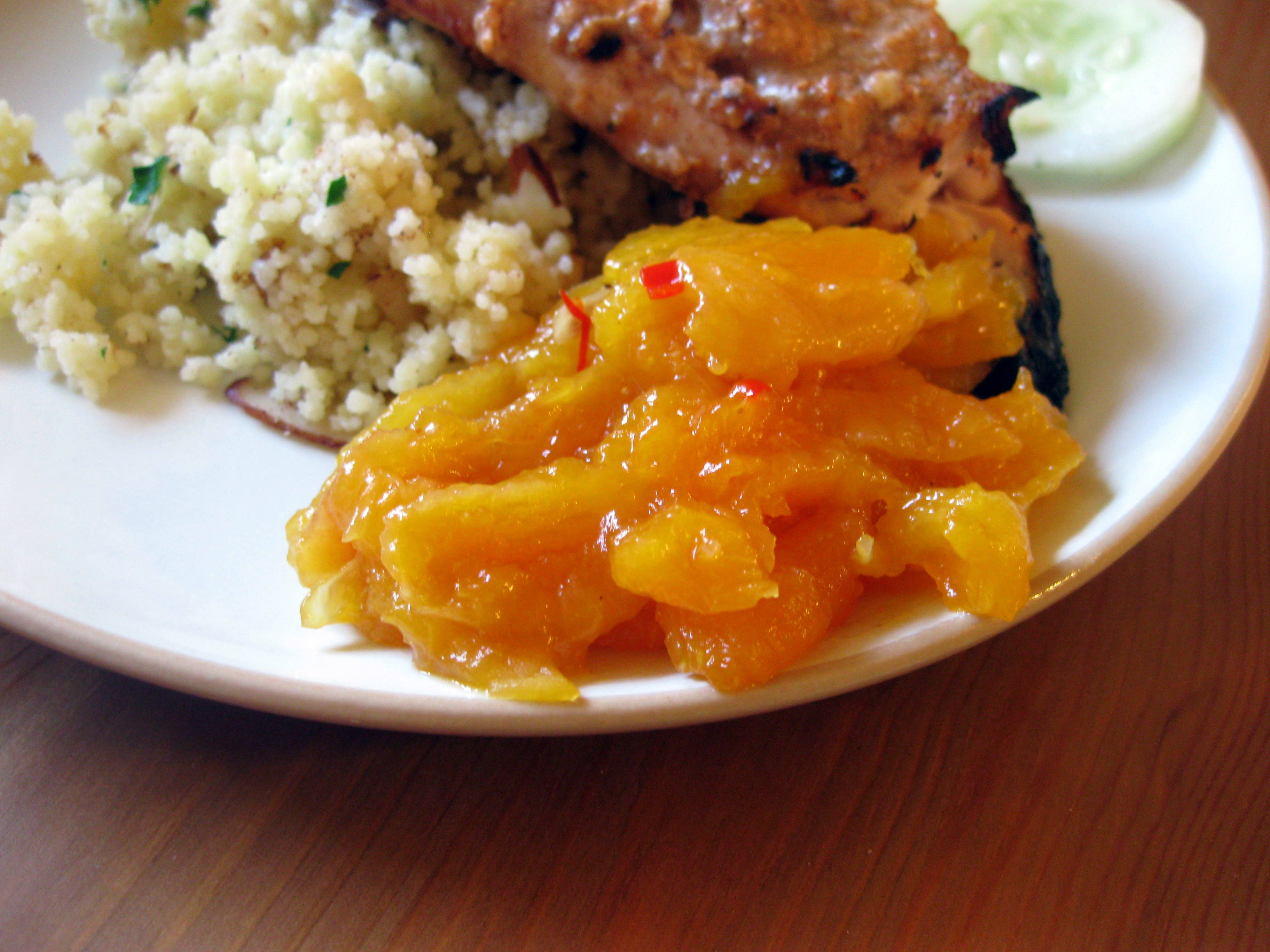
Twenty minutes after adding all the spices, most of the water was gone and the mixture was thick and syrupy and a lovely rich orange flecked with red from the chilis.  I pulled it off the heat, tasted again, and around the burned tongue discovered loveliness.

This was a really nice chutney because it addressed almost every type of taste.  There was copious sweetness from the apricots, there was heat from the chilis, there was a different kind of heat from the ginger, and the cloves and lemon juice added tinges of bitterness and sourness.  It was the variety of heats that I really appreciated, though, because it made every bite really interesting: the ginger was there right from the start, encasing the tip of the tongue with heat.  The peppers kicked in as we chewed, with a fresh bright hotness like a fiery salsa, but just for a moment.  Then the cloves added earthy warmth at the back of the throat while the kick from the ginger still lingered on the tongue.  Combined with the well-spiced sauce on the chicken, it was delightful eating. 

As we ate, our bellies warmed with the spice but also the goodness of the meal, and the occasional slice of raw cucumber was a welcome relief against the building heat we were intent on gorging ourselves with.  As I type, the sun has torn through its cloud cover and the temperature has increased by 4 degrees.  Slow burn.  Indian summer indeed.

Simple Slaw

This week, with a camping trip under our belts, I wanted distinctly contrasting things: to be back in my kitchen, and to have exquisitely simple things to make.  This salad seemed to fit that bill, given how easy it was to throw together AND how ripe it is for additions, which I will discuss in a bit…

“69. Shred carrots and cabbage (red, savoy or Napa). In a blender, whip olive oil, lemon or lime juice, a stemmed and seeded jalapeno, garlic and cilantro or parsley. Toss with the vegetables.”

This sounded easy and zesty – a new, simple take on coleslaw without the weighty mayonnaise.  I used the following:

2 carrots, peeled and cut into large chunks

1 head Napa cabbage, any dirty or severely damaged outer leaves removed, quartered and cored

½ green jalapeno, seeded (that was all I had.  Use more, if you like heat)

juice of 1 lime

2 TB parsley leaves

1 large clove garlic

½ – 1 cup olive oil (I didn’t measure, I drizzled)

salt and pepper to taste

honey to taste (around 1 TB)

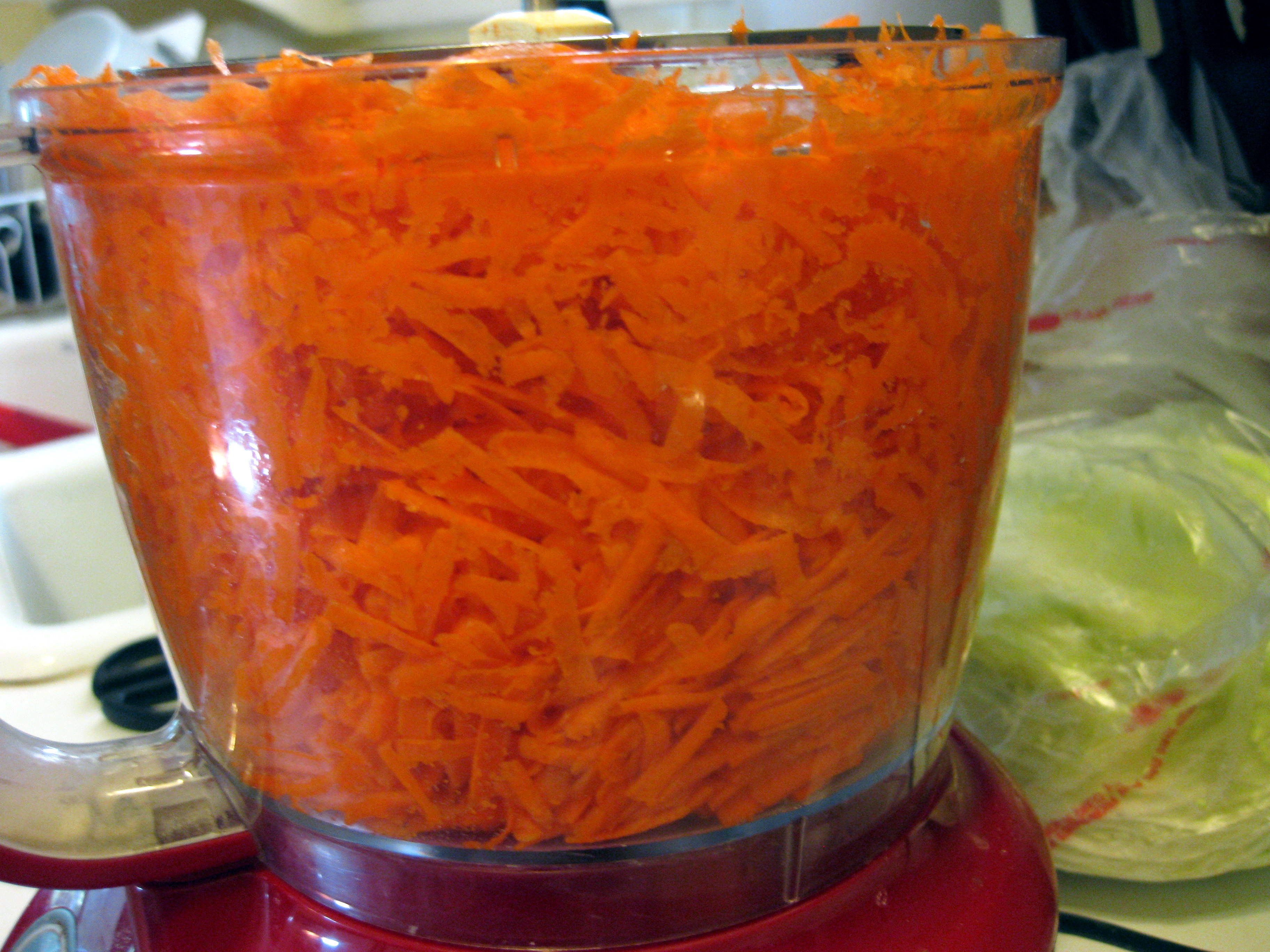
For ease, I decided to use my food processor instead of the blender Bittman suggests.  I shredded the carrots using the shredder disk, which could not have been simpler.  I tried to do the same with the cabbage, but the shreds were too fine – almost like confetti-ed tissue, so I sliced the cabbage very finely with a sharp knife instead.

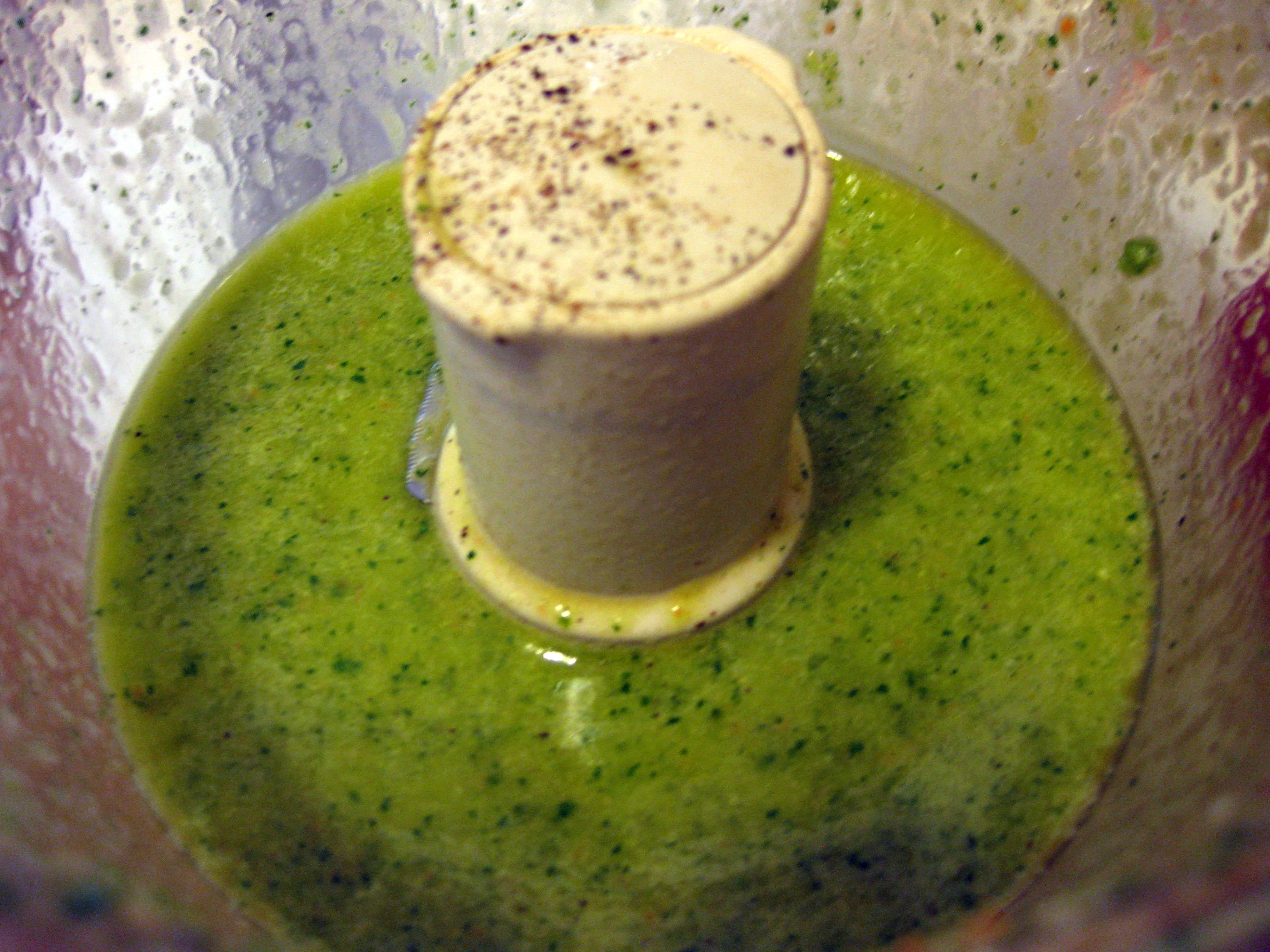
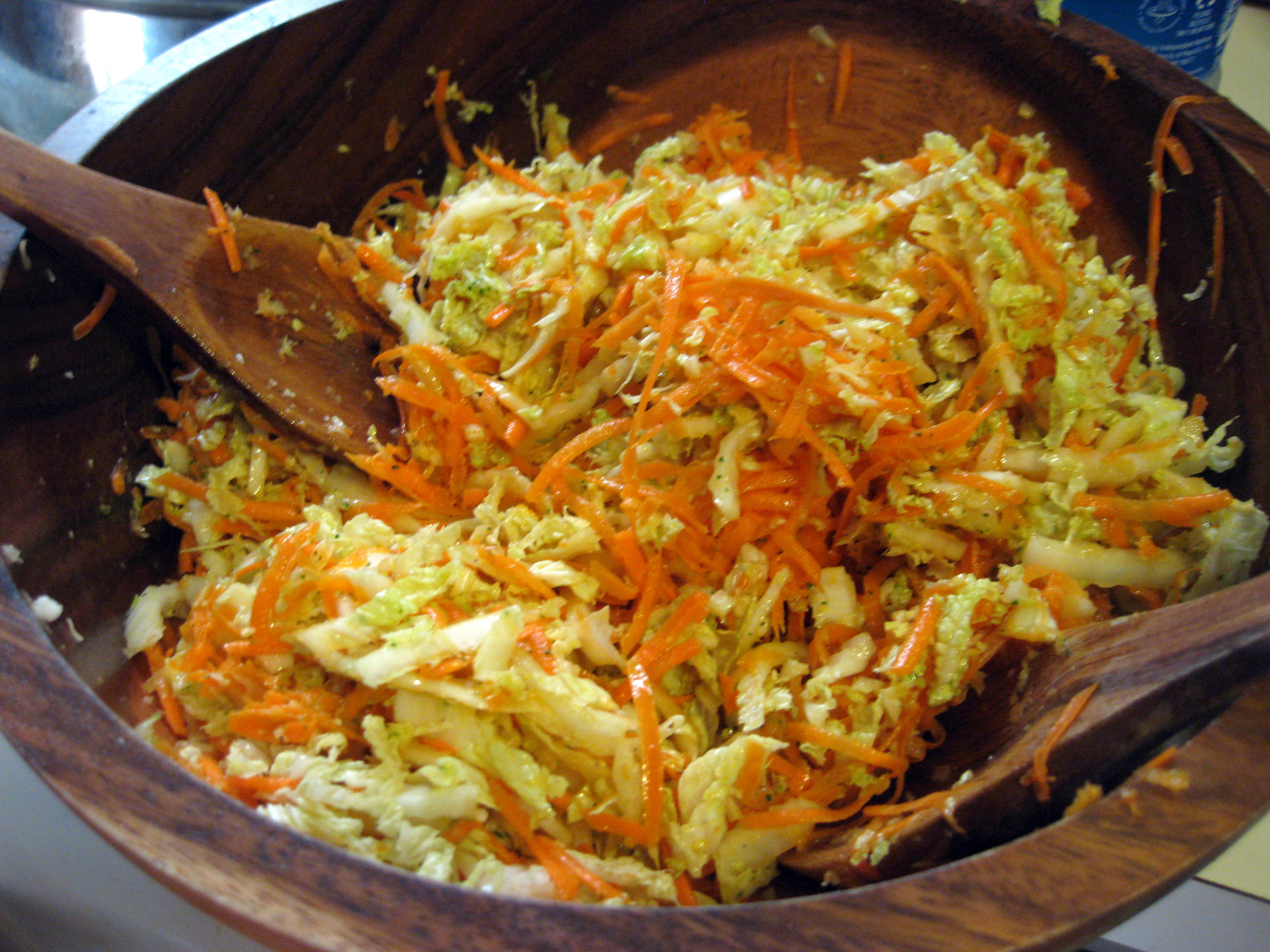
Once the carrot shreds and cabbage fluff were out of the food processor and ensconced safely in a big salad bowl, I fitted the machine with the blade instead and added the first 4 dressing ingredients.  I buzzed those until the jalapeno and garlic were finely diced, then began drizzling in the olive oil until a  dressing formed.  It didn’t emulsify and thicken as nicely as I would have liked, which I suspect was because 1.) I added the olive oil too quickly, and 2.) the food processor was not the best tool to use to create an emulsion.  Still, it smelled fresh and verdant and zesty.  I gave it a taste and decided it needed some seasoning and some sweetness, and therefore added salt, pepper, and a short drizzle of honey.  Then I poured just enough dressing to coat and moisten over the vegetables.  Adding the whole quantity would have caused a flood, so I stuck with a little over half.

As a very simple salad, this was good.  The vegetables were crisp and fresh, and the dressing had a definite citrus kick and a suggestion of heat.  As a foundation, or perhaps as a topping for pulled pork or a barbeque sandwich, this would be ideal.

I found myself imagining more, however.  You could add craisins to this, or golden raisins, and capitalize on the mild sweetness of the carrots and cabbage.  You could add toasted walnuts or sunflower seeds and get a different kind of crunch.  If you like a little extra zing, you could pop in some mandarin orange or grapefruit segments, or maybe even shredded or finely sliced green apple.  For additional vegetation, agonizingly thin slices of green or red onion, or another color of cabbage.  The adventurous might opt for radicchio or endive, though if you add such bitterness another tablespoon or two of honey in the dressing would be welcome.

But for me, if I’m honest, what was missing was not sweetness, or crunch, or bitter variety.  What was missing for me was the creamy, fatty, mouth-coating perfection of mayonnaise.  I couldn’t separate the shreds of cabbage and carrot from the perennial American picnic classic.  I wanted my veggies robed in that clumpy goopy stuff of sandwich and potato salad dreamscape and overdressed nightmare.  I didn’t want a simple healthy vegetable salad, apparently.  I wanted it to be coleslaw. 

Try some of these combinations out, because this would make a nice, light addition to grilled proteins, and if you do, tell me how you like it.  But don’t expect me to report on any of these fancy-pants ideas.  Because I just bet you can guess what I’ll be adding to my leftovers…

Currying flavors

The thing about Mark Bittman’s make-ahead sides is that they are all ostensibly created with a main of turkey in mind.  They are, after all, Thanksgiving inspirations.  Therefore, when I ask myself the inevitable question each week “what should I serve this with?”, I suppose I shouldn’t be surprised when the first thing that pops into my head is “that would taste really good with roast fowl!”  Of course it would.  That plays into the composition of Bittman’s list.

But we don’t want turkey every week, or chicken, for that matter.  Lately, both for ease, for cleanliness, for cost, and in some minor and embarrassingly halfhearted respects for moral and environmental concerns, I’ve been more drawn to vegetarian fare.  Potatoes, rice, grains, beans: these guys don’t cross-contaminate my kitchen.

So I’m having to be unusually creative in my search for accompaniments for the accompaniments I’m cooking.  This week N. chose, from a short list, an interesting combination:

“43. Toss chunks of butternut squash with butter and curry powder.  Roast until half-tender, then stir in chunks of apple and some maple syrup.  Cook, shaking the pan occasionally, until everything is nicely browned and tender.”


The mystery about butternut squash is, for me, as with some other orange produce, whether to treat it as a starch or a vegetable.  It seems to occupy some strange and unnecessarily cryptic middle ground.  It’s not green or leafy, but it’s also clearly not a tuber, no matter how much its deep autumnal color reminds me of a good hearty yam.  Yet, if I’m not serving meat with dinner, pairing a butternut squash roast with  vegetables seems not substantial enough, but opting to serve it alongside, say, mashed potatoes, seems excessively filling and somehow repetitive.

I opted for another strange middle ground and went for sauteed red chard stirred into quinoa.  As a nod to the seasonal intentions of the squash dish, I cooked my quinoa in turkey broth I made and froze a day or two after Thanksgiving.  I like the deeper, richer flavor that results from cooking grains and small pastas in broth or milk rather than water.  So our dinner basically consisted of two side dishes, but I decided I didn’t really mind.

Here’s how it went:
1 medium butternut squash, peeled, seeded, and chopped into small chunks

2 apples (I used Braeburns) quartered, cored, and chopped into chunks

1 onion, diced (I thought the extra savory flavor would be nice, since apples and squash are so sweet)

1 TB curry powder

2 TB melted butter

1-2 TB maple syrup

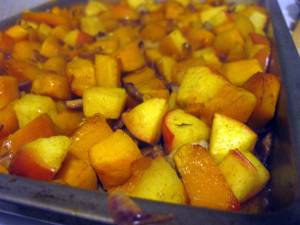
I tossed the chunks of squash on a cookie sheet with melted butter and curry powder, then slid it into a preheated 375F oven to roast for 20 minutes.  Meanwhile I prepped my apples and onions.  After 20 minutes when the squash chunks were just beginning to give, I pulled the pan out of the oven and added the apples, onions, and maple syrup – a decadent drizzle over the top that I hoped would pair well with the curry – mixed it all around together, and dropped it back in the oven for another 20 minutes (but really, it took almost half an hour).

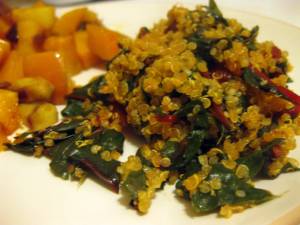
While the roasting fruits softened and the maple syrup made suggestions of carmelization on their corners, I addressed our other side dish.  I stripped the chard leaves from the stems, chopped the stems into a fairly small dice, and plunged them into a pot with a couple teaspoons of olive oil.  I sauteed them over medium heat until they were just beginning to soften, then added the quinoa.  In one of my favorite quinoa recipes, Danny (the Chef of Gluten-Free Girl and the Chef ) suggests toasting the quinoa before adding any liquid, much as you toast the rice in a risotto before deglazing the pan.  I toasted for a few minutes, then poured in the turkey stock and clapped on the lid.  When there were only five minutes left on my timer, I added the chopped chard leaves into the mix, stirred it together well, and replaced the lid so it could finish cooking.  It worked perfectly.  The chard had just enough time to steam as the final few tablespoons of water were absorbed, but not enough time to overcook and lose all semblance of texture.  I can’t stand that sliminess that greens sometimes get after too much contact with the heat.  To my delight, the quinoa had taken on a lovely deep rosy color thanks to the chard stems, and the toasty nutty crunch of the grain worked really nicely with the healthful greenness of the chard leaves.
When I pulled the butternut and apple mixture out of the oven, all I could smell was sweetness and curry.  The maple syrup had thinned in the heat, but cloyed onto the chunks of fruit as it cooled again.  The mixture was really nice.  Butternut squash and apples are very good friends, and leaving the skins of the apples on was a wise choice because it added textural interest to the dish.  The curry made the flavors deep and warm and spiced, and the maple syrup was a nice hit of sweetness.  This one I would make again with no reservations, and only one (okay, maybe two) changes.  I put the diced onions right onto the cookie sheet, raw from my cutting board.  When I make this again, I will soften them lightly in butter first.  They didn’t roast quite long enough to quell the astringent tang onions sometimes have, and I could feel them in the back of my throat afterward.  Mellowing them out on the stovetop first would be the right thing to do.

To change it up from curry, I think garam masala would also be delicious on this mixture, and fortunately (and conveniently!) enough, Aarti of aarti paarti has just posted suggestions for making your own!  How timely!  How fortuitous!  Let’s make some!  And then, make this autumnal dish.  Maybe with turkey.  Maybe with chicken sausage.  Maybe, as I realized only after dinner was over, with potato masala burgers from Trader Joe’s.  What a congenial blend of spices that would be to curry favor with your family!

Apologies for the punning… I couldn’t resist.
Envision whirled peas. And weddings.

There are two stories to be told here.  One is the story of a wedding.  Well, a wedding reception.  Well, a backyard barbeque eight months after the wedding that was my way of providing the couple with a reception.  The other is the story of a van.  Both occur in mid-July.  Let’s start with the latter.

I had completed my first year as a bona fide college student and was, like any bona fide college student, enjoying the summer in between shifts at my first job.  I was changing into a tank top in the back of my friend’s car at the Santa Clara beach boardwalk before heading out to the beach when I saw a van parked a few spots down.  Okay, so it wasn’t a van, it was a vintage old style VW bus, complete with tie-dye paint job, beads in the window, and Grateful Dead stickers everywhere.  But there was, as I discovered after straightening myself out and exiting my friend’s car, only one bumper sticker.  It read “Envision Whirled Peas.”  Read out loud, of course, it emerged as the hippie/peacenik/ flower child ultimate mantra.  Peace + food + word play = my day was made.  Maybe my week.

But back to the wedding story.  Ah, weddings.
The love, the beauty, the glowing smiles…

On the eve of my own wedding anniversary, a hot, beautiful day three years ago, I bring you a tableau of another.  A reception, at least, where my role was slightly different:
The heat of the kitchen, the stress of catering, the need for perfection…
I’m being overdramatic.  I’ve never catered a wedding before, and I still haven’t.  I simply cooked for our dear friends K. and T. this weekend.  I made a whole collection of things (full list is here), but I want to tell you about the crostini.
Thanks to A. and her delectable food sense, I made a pea, lemon, and mint puree to spread on crostini.  She called it “whirled peas.”

I defrosted one 16 oz. bag of petite peas and jangled them into the food processor.
Joining them: the zest of about ¾ of a lemon (one spot didn’t look so nice),
the juice of half that lemon,
probably ¼ cup of mint leaves,
coarse salt,
freshly ground black pepper.
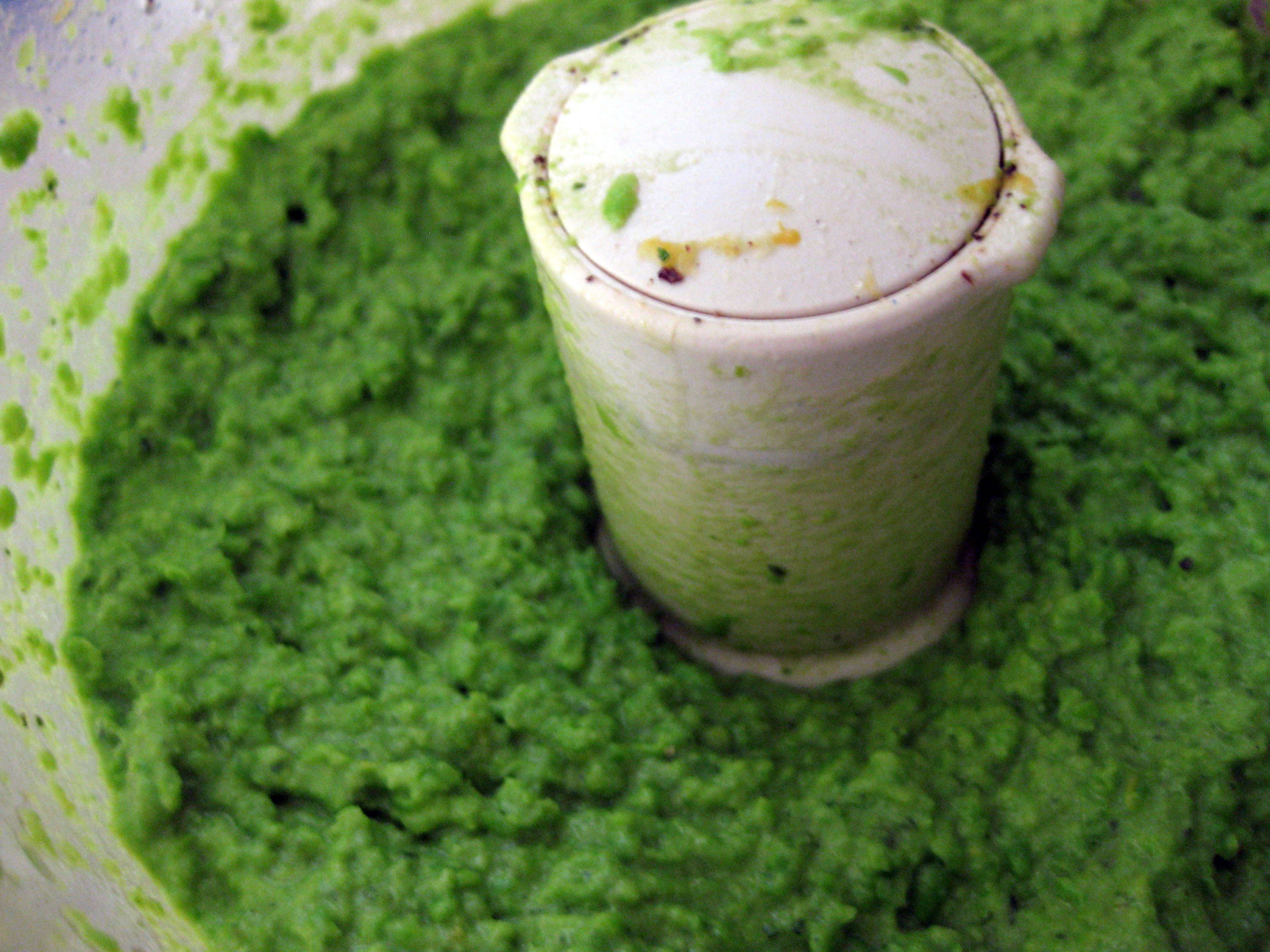
This fragrant mixture received an ample dose of olive oil (½ cup or so?  I didn’t measure) as I whirled it in the food processor for a good minute or two.  I wanted it as smooth as possible, but I still wanted it to be impossibly bright green.

As the time for the party approached (our first guest’s feet were practically climbing the front steps!), I sliced a slim sourdough baguette on an angle and, shielding each slice with a glug of olive oil, broiled them until they turned golden and crisp.  While the little toasts cooled, the lovely and accommodating K. helped me pick some nasturtiums from our front garden to top our creation.  Even a simple backyard barbeque needs a fancy-pants appetizer option!
I spread a generous helping of minty, citrus-y bright “whirled peas” onto each crostini before gently pressing the calyx of each flower gently into the emerald spread.  They looked like flower arrangements – miniature edible gardens that looked and smelled of springtime and fresh birth.

K. and T. loved them (and seemed to love everything about the evening – a hostess-and-wanna-be-caterer’s dream!), but I was a bit nonplussed.  The flavor was minty and fresh, but seemed to be missing something.  Perhaps tang.  Peas are naturally sweet, and mint paired with some sweetness reads as more sweetness.  I wanted something to tell my tastebuds this was a savory bite.  The pepperiness of the nasturtium was too mild to do the job.
Because I have plenty of leftovers, I am considering adding some lime juice, perhaps some basil and a zinging shaving of Parmesan, and turning this into something more like a pesto.  Whirled peas pesto.  Say it out loud with me… “world peace” pesto?

Envision it: One little crostini, two happy people, global cooperation and betterment.

Aren’t weddings fun?!

Stay tuned for results and additions!