“Parsley Pie”

2016 Food Blog February-0492Whereas last month’s blog experiment entry left me stumped for a while, not only do I know which post led this searcher to my blog; the dish I wanted to create coalesced pretty quickly in my mind. The search term “parsley pie,” with its bright green focus, seemed appropriately spring-y for this first warm week in Southern California. Though I had my own ideas already, I did a quick image search to see what other sorts of “parsley pies” turned up, and the answer is: not many. Most of what I saw were meat pies, with the addition of parsley to lighten up the filling or, in one case, add fiber. Some of these concoctions were the classic British pork pie, with high, golden sides and, sometimes, a hard boiled egg or two cunningly tucked into the filling, while some were shepherds pies, with parsley added to the ground lamb or to the mashed potato topping.
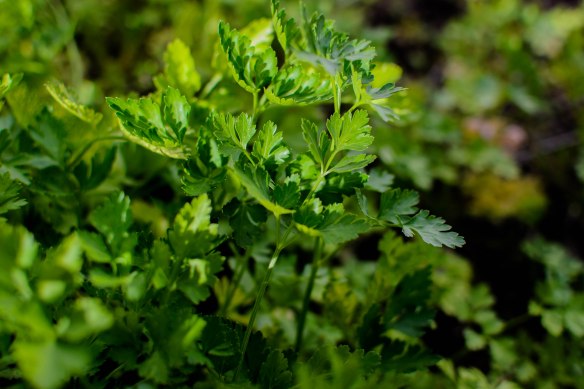
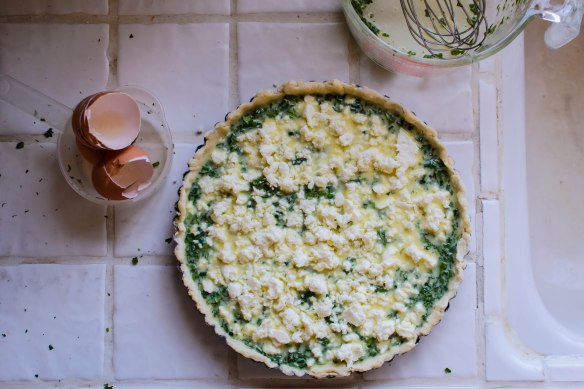
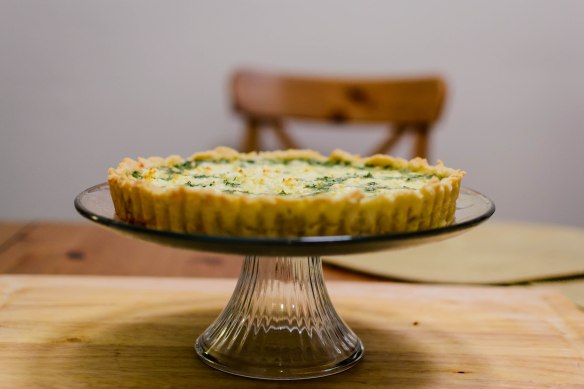
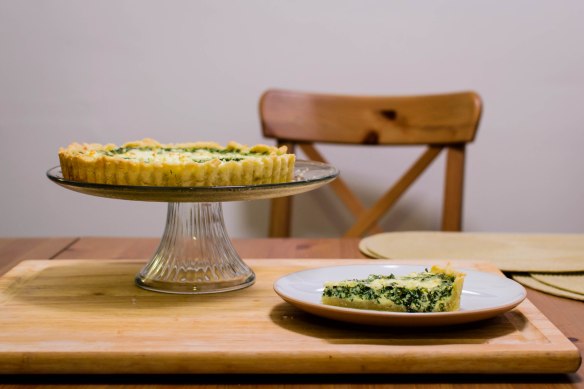
2016 Food Blog February-04372016 Food Blog February-04572016 Food Blog February-0458What I’d envisioned, quite contrary to these heavy options, was a pie where parsley dominated: something like a quiche Lorraine would be a neutral base, and allow for greater visibility for the heaping mounds of the freshly chopped herb in question. I suppose if I’m being absolutely honest I should call this a parsley quiche, but it does have a proper crust and a filling, and since that ultimate internet authority Wikipedia (hah!) classifies quiche as a “savoury pie,” I’m going to cross my fingers behind my back and declare that this counts.

2016 Food Blog February-04632016 Food Blog February-04732016 Food Blog February-0476Because there are no bulky chunks in the filling to hold it up, this must of necessity be a shallow pie. Thus it was a perfect opportunity to use the tart pan I bought myself for Christmas (though a pie pan would work fine). Along with eggs, milk, and of course the eponymous parsley, I whisked in a combination of other herbs: basil, cilantro, dill, and a few chives, to add some variety to the flavor. And because I can’t help myself, I topped the green freckled custard with crumbles of feta cheese, which admittedly adds a pleasant brininess that the pie would suffer without.

2016 Food Blog February-0500A few thoughts: if you’re going to make this, you have to like parsley. This seems a distressingly obvious revelation, but I mean it – this really, really tastes like parsley. If it’s too herbaceous for you, or you’re looking for a bit more to sink your teeth into, crumbled, crisp prosciutto, or lumps of crab, or slick slices of smoked salmon, would bulk it up nicely. Alternatively, a side salad with a thick wedge would make a perfect spring lunch. As for construction, if you use a tart pan you really have to be sure your crust forms an unbroken layer around the bottom edge of the pie. Cracks or very thin areas can lead to egg leakage in the oven. Don’t ask me how I know this.
2016 Food Blog February-0503

“Parsley Pie”
Makes a 9-inch pie
About 2 hours, including crust resting time
For crust:
6 ounces all-purpose flour (about 1¼ cups)
½ teaspoon salt
4 ounces unsalted butter (1 stick or 8 tablespoons)
2-4 ounces cold buttermilk (water would be fine too)
For filling:
4 large eggs
1 cup whole milk
1 cup chopped parsley
1 cup chopped mixed soft green herbs (such as basil, chives, tarragon, cilantro, dill, etc)
½ teaspoon salt
¼ teaspoon pepper (I used black, but white pepper would work too)
4 ounces crumbled feta cheese


  • To make the crust, combine the flour and ½ teaspoon salt in a food processor. Cut the stick of butter into 12-16 slices, then add these to the processor as well and pulse at 1 second intervals until the butter is mostly broken up into blueberry or cherry-sized chunks. With the processor running, dribble in the buttermilk just until the mixture starts to come together into a dry ball. You may not need all of the buttermilk. Turn the mixture out onto a large piece of plastic wrap and use the plastic wrap to help you quickly and decisively form the mixture into a flat disc about 6 inches in diameter. Wrap it up and stow it in the fridge for at least half an hour. Not only does this chill the butter, making for a flakier end result, but it allows the buttermilk to hydrate the flour.
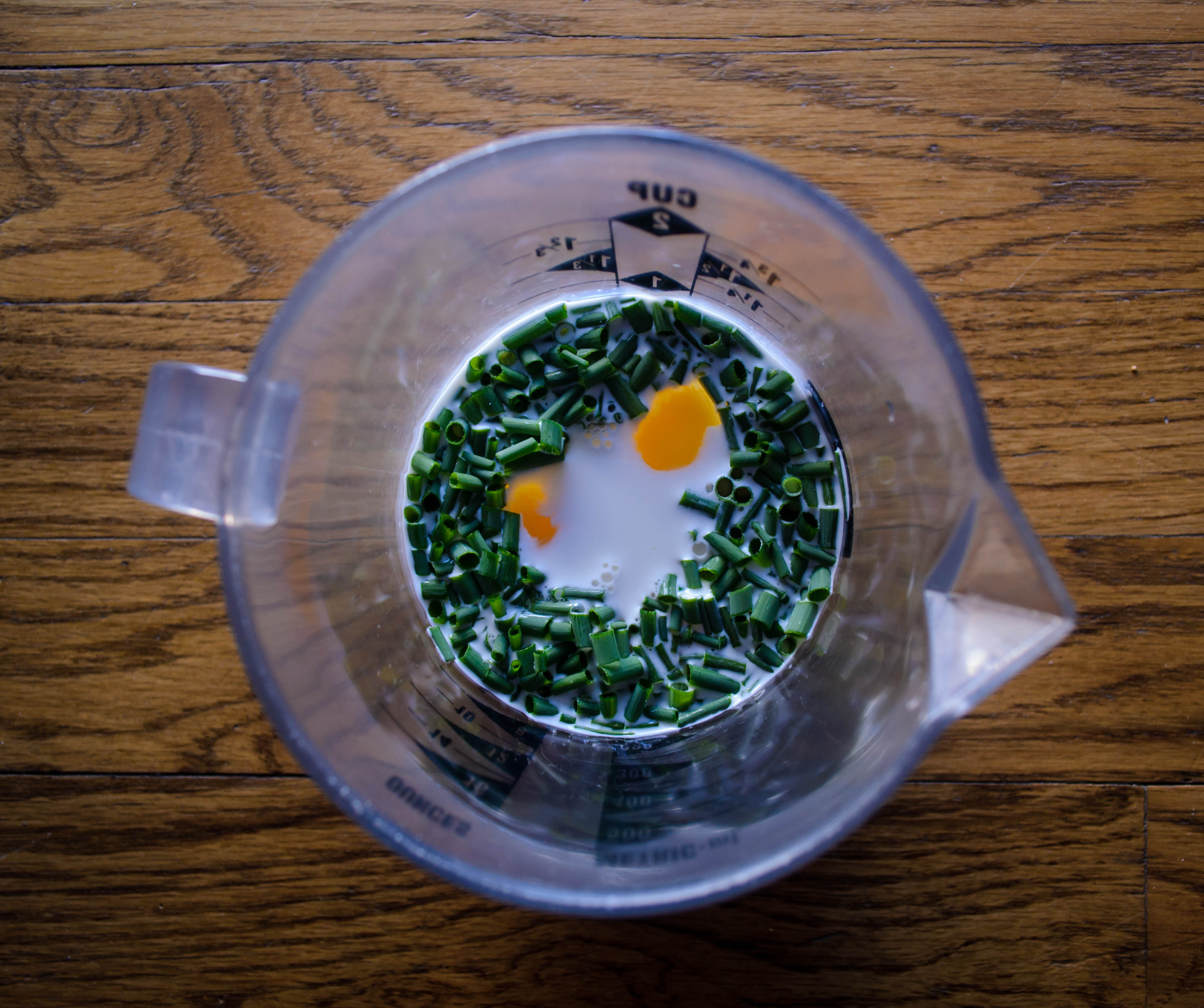
  • While you wait for the dough to chill, preheat the oven to 350F with a rack in the middle position, oil or butter a 9-inch tart pan or pie plate, and prep the filling ingredients. Whisk the eggs with the cup of milk and add in the chopped herbs, the ½ teaspoon of salt, and the ¼ teaspoon of pepper. Note: 1 cup chopped parsley means you chop before you measure, so you do need a rather large bouquet of herbs to meet the required amount.
  • You can whisk the feta in with the herb and egg mixture, or you can crumble it over the top of the custard when it’s poured into the crust. Or, of you prefer, you can do a little of both, mixing some in and saving some to sprinkle on top. You do you.
  • After at least half an hour in the fridge, remove the dough disc and unwrap it onto a floured board. Now, this is crucial: let it sit about ten minutes to warm up just a tad before you try to roll it out. When it has had a chance to shake the chill off, sprinkle its surface with a little flour and, with a floured rolling pin, roll it out into a circle about 11 inches in diameter. I like to start in the middle of the disc and push away from me first, then bring the rolling pin back all the way towards me. Then I turn the disc of dough 90 degrees and repeat, flipping it over if needed, until I have a rough circle.
  • Use the rolling pin to help you transport the circle of dough into the prepared pan. Drape the dough gently down into the edges and, if you are using a tart pan, be sure to press it lightly into the grooves on the side of the pan, and carefully patch any thin areas or cracks along the bottom. For extra insurance, place the tart pan on a cookie sheet – this makes for easier transport to and from the oven and, if you do suffer some leakage, keeps the mess contained, not on your oven floor.
  • Whisk up your filling mixture again to ensure even distribution, then gently pour it into the crust. Sprinkle some or all of the crumbled feta over the top, if desired, and carefully transport to the oven.
  • Bake 45-60 minutes until the crust is pale gold and the filling is set and has puffed slightly in the center. Remove to a wire rack and let cool at least fifteen minutes before you carefully remove the tart pan (if using) and center the pie on a serving platter. I used a cake stand because I like to be fancy for you. Serve warm or at room temperature.
Pumpkin Chocolate Cupcakes with Spiced Cream Cheese Frosting

2015 Blog November-0577The beauty of having a perfect chocolate cake recipe, as I do, is that it’s always there in the back of your memory, ready for any holiday, any event, any Wednesday evening you really need a piece of cake. It’s always tender, it’s always moist, it tastes refreshingly of cocoa but is not overly sweet. It is easy to make – 45 minutes from empty bowl to tins hot out of the oven if you’re organized, and its recipe is easily halved and quartered for when you want a single layer, and when you just need a 6-inch cake for you and somebody you’re willing to go halfsies with right out of the cake tin.

2015 Blog November-05572015 Blog November-0560Because this recipe is so dependable, because it is so easy and so well loved I’ve learned the measurements by heart, I’ve basically come to the conclusion that it is magic. It’s delicious, it’s quick, it’s vegan (until you drape it in whipped cream), which also means it’s cheap. But most magically, it is easily modified in dozens of ways, and every time it seems to come out right. I’ve made it gluten-free, I’ve soaked it in liqueur, I’ve added coffee, I’ve used olive oil instead of vegetable oil, I’ve switched out the type of vinegar, I’ve turned it into cupcakes; somehow, it just always works.

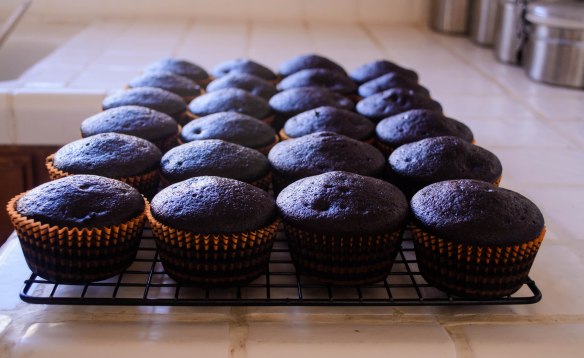
2015 Blog November-05622015 Blog November-0563Here, in the ultimate experiment, I added an entire cup of pumpkin puree without adjusting any of the other ingredient values, and it STILL WORKED. That shouldn’t be possible. Pumpkin is so wet that dumping in such a healthy portion of it should require some tweaking. But because this cake is magic, it produced more than two dozen deeply dark, tender, moist cupcakes within an hour and a half.

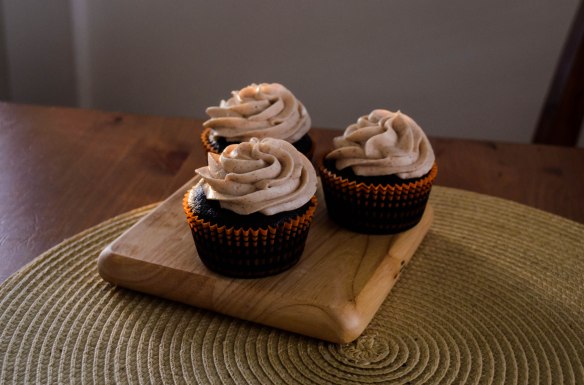
2015 Blog November-05642015 Blog November-05662015 Blog November-0569Though I usually fill and slather this cake in an unapologetically thick layer of whipped cream, for cupcakes, I wanted to play with the subtle pumpkin flavor by spiking the frosting with the spices of pumpkin pie. Cream cheese frosting is a perennial favorite of mine, though for some reason I always forget about it when I’m not addressing a carrot cake. Here, though, it works perfectly: the tang of the cream cheese prevents the frosting from getting too sweet too fast, and it can hold up to the strong flavors of the spices that get whipped in.

2015 Blog November-0573Plus, bonus, cream cheese frosting is easy to pipe because it remains nice and stiff, which means you end up with professional looking cupcakes you can impress your coworkers or your Thanksgiving guests with. You know, if you feel like sharing.

2015 Blog November-0575

Pumpkin Chocolate Cupcakes with Spiced Cream Cheese Frosting
Makes 28
60-90 minutes (plus at least 30 minutes cooling time for cupcakes)
For cake:
3 cups flour
2 cups sugar
2 teaspoons baking soda
1 teaspoon salt
½ cup unsweetened cocoa powder
⅔ cups vegetable oil
2 teaspoons white vinegar
1 teaspoon vanilla
1 cup unsweetened pumpkin puree (NOT pumpkin pie filling)
2 cups cold water
For frosting:
16 ounces (2 packages) plain, full-fat cream cheese, at room temperature
4 ounces (8 tablespoons or 1 stick) unsalted butter, at room temperature
1 tablespoon vanilla
2-3 cups powdered sugar
1 teaspoon cinnamon
½ teaspoon cardamom
¼ teaspoon nutmeg
¼ teaspoon ginger
  • Preheat the oven to 350F and spray or line a 12-cup muffin tin with cupcake wrappers. Set aside.
  • In a large mixing bowl, or the bowl of a stand mixer, whisk together the flour, sugar, baking soda, salt, and cocoa powder. It turns a lovely pale pinkish color when the cocoa is fully integrated.
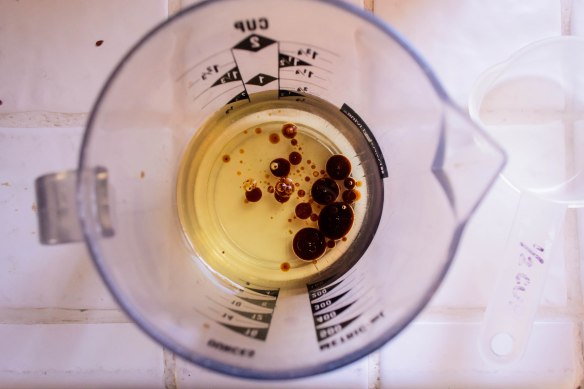
  • In a 2-cup glass measuring cup, measure out the vegetable oil and stir in the vinegar and the vanilla. Carefully add the pumpkin puree and whisk together. Add to the dry ingredients and use the stand mixer or an electric handheld mixer to combine – it will form a wet, clumpy mess.
  • With the mixer running on low, slowly add the 2 cups of cold water. As the batter loosens you’ll want to add no faster than a trickle lest the now suddenly deep, deep cocoa-brown batter splatters.
  • Once all the water is added, continue mixing until well combined – at least a minute. Be sure to scrape the bottom of the bowl with a spatula to ensure no hidden pockets of dry ingredients.
  • When the batter is fully mixed, scoop ⅓ cup into each cavity of your prepared muffin tin. I use an ice cream scoop that holds ⅓ cup and has one of those trigger pieces that sweeps across and cleans out the scoop – I highly recommend this. It’s very convenient.
  • Bake for 18 minutes or until a toothpick or cake tester inserted comes out with only a moist crumb or two. Cool in muffin tin for 5-10 minutes, then remove to a wire rack to cool completely. Repeat with remaining batter until all cupcakes are baked and cooled.
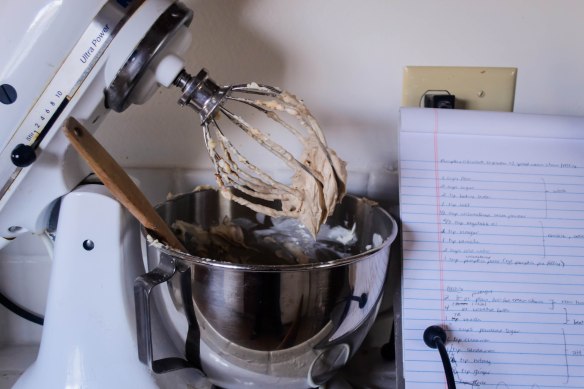
  • To make the frosting, drop the cream cheese into a large bowl and beat well with an electric handheld mixer or the whisk attachment on a stand mixer. When the cream cheese is looking fluffy, scrape down the sides, add the room temperature butter, and beat again until mixture is thick and fluffy. Scrape down the sides, add the vanilla, and beat once more.
  • Now, sift in the powdered sugar ½ cup at a time, beating well in between each addition. You will want to start with slow speed each time to avoid a powdered sugar cloud. Once you’ve hit the 2 cup mark, let the mixer run for 2-3 minutes until the frosting becomes very thick. Give it a taste to check for sweetness and texture. If it seems thick enough for your purposes, add the spices, beat to integrate fully, and you’re done (I found 2 cups was perfect in flavor and texture). If the frosting is not thick enough, add the remaining powdered sugar ½ cup at a time, beating well, for additional stiffness. Then add the spices, beat to integrate fully, and prepare to frost the cupcakes.
  • If you have a piping bag, fit it with a star shaped tip and use a rubber spatula to fill it halfway with frosting. If you don’t have a piping bag, cut the bottom corner off a gallon sized zip-top freezer bag and slide in a star shaped tip (or just leave it open for a less defined swirl of frosting). Half fill with frosting. Use your fingers to gently smoosh the frosting toward the bottom of the bag. Twist the top (empty) half of the bag around two or three times.
  • To frost the cupcakes, hold the filled half of the bag in your dominant hand and a cupcake in your other hand. Without touching the icing tip to the surface of the cupcake, squeeze the bag gently and move your hand in a clockwise circle, letting the frosting ooze out and create a curlicue of frosting on top of the cupcake. Repeat until all cupcakes are frosting, refilling the bag when needed. You’ll likely have some extra, which seems to me like a terribly good thing, and which apparently freezes quite well.
  • Refrigerate cupcakes until ready to serve – they keep just fine overnight (and, in fact, were still moist and tender into day three).

Thanksgiving Meatballs

2015 Blog November-0596I realize that it may be tantamount to sedition to suggest to most Americans that they consider having meatballs for Thanksgiving. Thanksgiving is sacred: though there might be ham, there MUST be turkey. Sometimes it is packed full of cornbread or sourdough stuffing; sometimes the stuffing gets baked separately and the turkey cavity is jammed with herbs and a half a lemon (that’s the way it usually goes in our house). There are potatoes of some sort – if you are my sister, they are always these chipotle mashed sweet potatoes, originally from Cooking Light. Gravy is less important to me than to some people – I realize there are secret recipes generations old, and then there’s that sludgy stuff that pours right out of a jar. As long as the turkey is moist, I tend not to fuss about the gravy. Cranberry sauce, however, is a must, and so are vegetables, though variety is much more acceptable here than in other parts of the meal. Later, if you can find a corner of room, there’s pumpkin pie, or perhaps pumpkin cheesecake, and maybe some sort of rum-drenched dessert drink.

2015 Blog November-05862015 Blog November-0584Given all that (are you hungry yet?), you might not want meatballs for Thanksgiving. But these are Thanksgiving IN a meatball. Everything – with perhaps the exception of the pumpkin pie – is accounted for: finely whirred onion and celery from the stuffing, soaked bread crumbs, gently sautéed herbs, even the occasional tart-sweet stab of a bit of dried cranberry. They get simmered in gravy that is lightly seasoned with rosemary and a few lemon slices, to keep it bright, and nestled tenderly in a bed of mashed potatoes. It’s all there. Even the eternal quandary that is Thanksgiving veg is factored in: a crisp tumble of fried brussels sprout leaves cascading over the top.

2015 Blog November-05812015 Blog November-0587The vegetable component here is inspired by several restaurants we’ve eaten at recently, which offer fried brussels leaves as an appetizer – a kind of alternative to a bowl of french fries or maybe, just maybe, an evolution of the ubiquitous kale chip. At first I was reluctant to pay $8.00 for a paper-lined dish of these crisp little things (oh Los Angeles), but the flavor – a toastiness that almost invokes sesame oil – and the salty goodness that makes me want to finish the whole bowl, usually wins me over. Besides, several experiments to perfect them for this dish have taught me that they are only deceptively pricey – the patience and time it takes to coax off individual leaves without damaging them makes it worth occasionally paying other people to do it.

2015 Blog November-0590Still, though, the crispy fried leaves add a really necessary textural component to this whole dish. The mashed potatoes are soft, the meatballs are moist and tender, the gravy is velvety; it needs a crunch. Even though it takes a while to produce enough leaves to be worth it, and even though the frying process itself is terrifying – the leaves have a high water content, so the oil fizzes up tremendously when you first add them – they are the perfect final garnish to the plate.

2015 Blog November-05952015 Blog November-0602I’m waxing ridiculous about the brussels sprouts, I know, so let me just say: the meatballs and the gravy they simmer in are delicious too. The vegetables inside keep things moist, and the hints of sweetness from the cranberries are a nice touch. I presume they would be tasty over noodles of some sort, or perhaps on a slider or crostini. But since this is about Thanksgiving, I couldn’t see deviating from the classic mashed potato. I’m not including a potato recipe here; you should make them however you like them. I will say, though, a crumble of goat cheese melted in at the last second is never a bad thing…

2015 Blog November-0603

Thanksgiving Meatballs
Makes 18-20 meatballs (about 2 tablespoons each)
60-90 minutes
1½ cups fresh bread crumbs (from 1-2 slices of bread)
1 cup whole milk or half and half
¼ cup grated yellow or white onion (about ⅓ of a large onion)
¼ cup grated celery (about 2 stalks of celery)
4 tablespoons butter, divided
1 teaspoon finely minced fresh sage
1 teaspoon finely minced fresh thyme
2 tablespoons finely minced fresh parsley
2 tablespoons finely chopped dried cranberries
⅛ teaspoon black pepper
1 teaspoon salt
1 pound ground turkey, dark meat preferable
2-3 tablespoons olive oil
2 tablespoons flour
¼ cup dry white wine, optional
2 cups low-sodium turkey broth
2 inch sprig of fresh rosemary
3-4 thin slices of lemon
1½-2 cups vegetable oil
2 cups brussels sprout leaves
Additional salt and pepper to taste
Mashed potatoes, made your favorite way


  • To make the bread crumbs, whir the slices of bread in a food processor into small, fluffy crumbs. Combine these crumbs in a small bowl or 2-cup glass measuring cup with the milk or half and half, and let soak at least 10-15 minutes while you prep and cook the vegetables.
  • Add the onion and celery into the food processor (no need to wash it out in between; everything’s going to the same place!), and let run until the vegetables are very finely minced.
  • Heat 2 tablespoons of the butter in a 12-inch skillet over medium-low heat and add the onions and celery. Sweat gently until the onion pieces are translucent and the celery is tender; 5-8 minutes. In the final minute, add the finely minced sage and thyme leaves. Turn off the heat, transfer cooked vegetables and herbs to a medium bowl, and let cool for about 10 minutes.
  • Once the vegetables have had a chance to cool a bit, add the parsley, chopped cranberries, pepper, and salt to the bowl. Gently squeeze out the bread crumbs that have been soaking in milk and add them as well; they don’t have to be squeezed dry, but ideally they should be no longer dripping. Add the turkey meat and use your fingertips or a fork to combine and evenly distribute all ingredients.
  • In the same skillet you used previously, heat the remaining 2 tablespoons of butter and the 2-3 tablespoons of olive oil over medium-low heat. While it warms, roll the meat mixture into balls about 2 tablespoons each. You should get 18-20 meatballs out of this quantity. As you roll each, place it on a clean plate.
  • When all meatballs are rolled, turn the heat under the skillet up to medium and gently add as many meatballs as will fit in a single layer, not touching each other. Brown for 2-3 minutes, then flip over and repeat once or twice more on the other “sides” of the meatball.
  • Once meatballs are browned on 2 or 3 sides, remove this first batch to a clean plate and repeat, until all meatballs are browned.
  • In the empty skillet, sprinkle the flour over the remaining fat and whisk into a golden bubbling sludge, then let cook 1-2 minutes. Add the dry white wine, if using, whisking immediately and constantly to integrate the flour evenly. When the wine is incorporated, slowly add the turkey broth, again whisking constantly, until no lumps remain.
  • Bring the liquid mixture to a simmer, whisking occasionally. Gently add the meatballs back in along with any liquid they have generated, clamp on a lid, and simmer for 15 minutes.
  • After 15 minutes, use a spoon or a pair of tongs to gently flip over each meatball. Add the sprig of rosemary and the lemon slices to the liquid in between the meatballs, then replace the lid and cook another 15 minutes.
  • During the cooking, prepare your mashed potatoes any way you like them.
  • To make the brussels sprouts, heat 1½-2 cups vegetable oil to 350F in a heavy, straight-sided pot. The weight is important because we want it to be stable. When it reaches 350F, carefully add the brussels sprout leaves. The oil will immediately bubble up furiously, so again, be careful.
  • Fry the leaves for 2-3 minutes, frequently agitating them with a skimmer or a kitchen spider. When a few tester leaves feel crisp, carefully skim them out onto a double layer of paper towels or a brown paper bag. Immediately sprinkle with salt and reserve until ready to serve. It is best to do these as close to the last minute as possible for heat and crispness.
  • To serve the whole dish, place a healthy serving of mashed potatoes into a shallow bowl. Spread them out a bit to form a well in the center. Spoon in a few tablespoons of the meatball gravy, then nestle in the meatballs – I recommend 4-5 per person. Add a bit more gravy over the top if desired, and shower with a crisp handful of fried brussels sprout leaves.

Bourbon vanilla pastry cream over pan-roasted stone fruit

2015 Blog August-0309After a few scrapped drafts of this post, both on the computer and in the kitchen, I’ve decided it’s basically a food representation of “To a Mouse” by Scottish poet Robert Burns. Though the title may not ring familiar, it contains perhaps the most famous – or at least well-known – line of his whole oeuvre: “the best laid plans of mice and men gang aft agley” or, if you’re not adept in 18th century Scottish diction, “often go awry.”

2015 Blog August-0265Things go awry. They just do. In this case, the inspiration, the trial run, the ingredient acquisition, and even the writing itself (there are two previous drafts of this post in my trash can that I never want to see again), all caused enough problems that this post almost didn’t happen.

2015 Blog August-0274But I’m getting ahead of myself. Let’s back up to bourbon. Through a conversation with a friend and former colleague on Facebook, I assigned myself a project: she said she’s been experimenting with bourbon dessert sauces, and wanted tips. In particular, she’s interested in a bourbon vanilla sauce that would be good served over ice cream and peaches. There had been texture and thickness and sweetness imbalances along the way, and I was immediately hooked on the challenge.

2015 Blog August-0278For the next month I took this sauce through a ridiculous number of mental transformations – at first it was going to be a riff on this nutmeg sauce, then it was going to be more like a caramel, and then it was going to be akin to a crème anglaise, thickened with egg and carefully tempered. Never mind that pouring what is essentially unfrozen, unchurned ice cream over a bowl of ice cream seems excessive.

2015 Blog August-0282The crème anglaise plan, though, went awry, as you might have suspected. I crawled out of the kitchen leaving behind a bowl of curdled weirdness that had used up the last few tablespoons of bourbon in the house and refused to think about it for a few days. It wasn’t an eggs scrambling problem. It was a two-fold issue, I think, of poorly managed temperature differences, and the fat in the sauce not getting along with the quantity of alcohol I added.

2015 Blog August-0285When I tried again, the sauce had, again, transformed. Now, in a house with limited air movement, during a patch of quite warm weather, as the sun slowly dripped across our roof, sauce seemed too fast-moving. As if echoing my own sluggishness in my appetites, I wanted something thick and smooth to dollop atop a piece of fruit. And I wanted it to be ice cold.

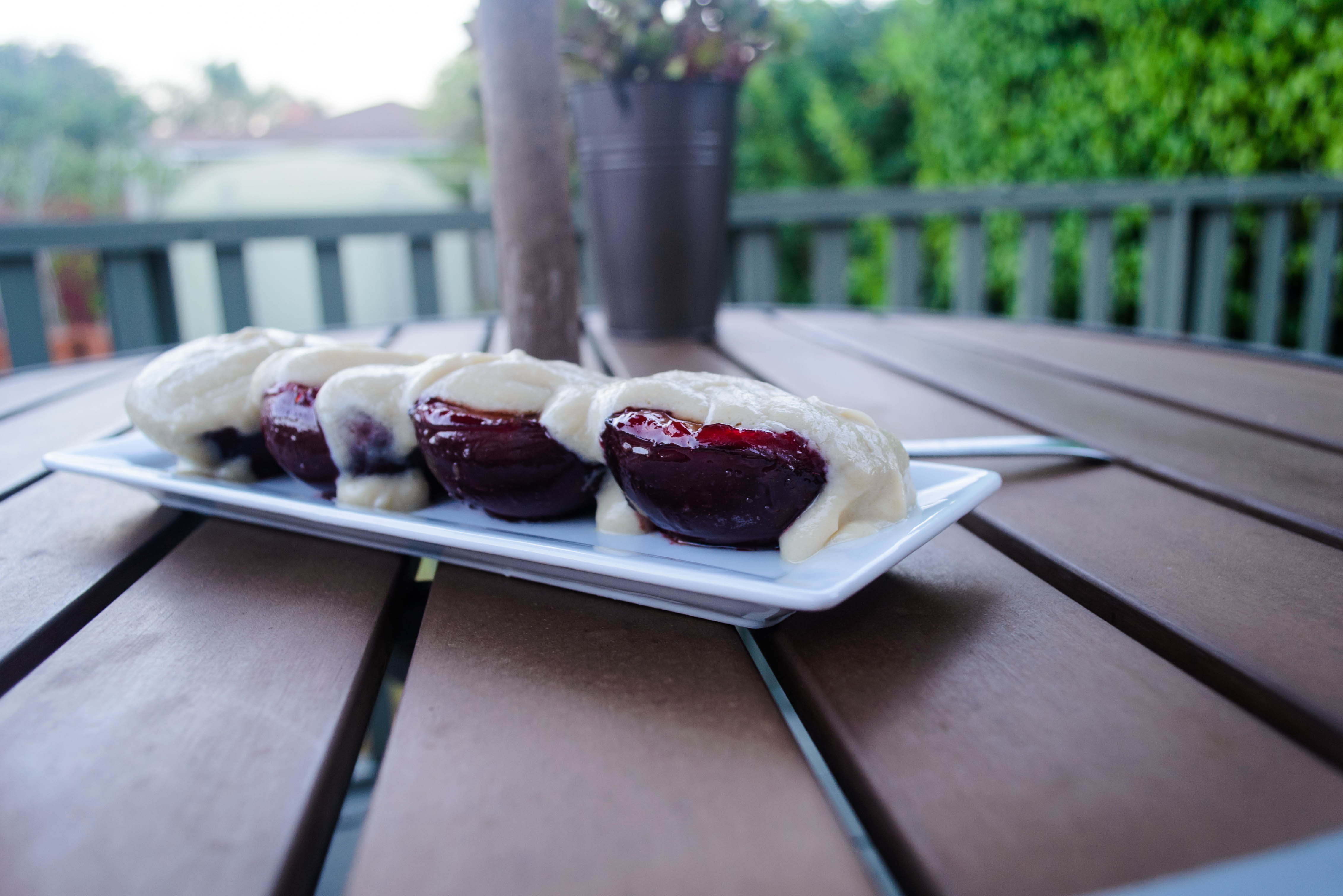
2015 Blog August-0307So I ended up with a pastry cream. This is not a sauce, B., even though that’s what you were after. It’s not particularly easy or quick, and it’s almost not even pourable. What it is, though, is rich, and cold, and thick, and strongly bourbon-y (so make sure you choose one you like!), and magnificent draped thickly over whatever stone fruit you happen to have. It’s also a good option for entertaining, because once it has been cooked it needs to chill for a few hours, which makes it very easy to casually slide it out of the fridge, spoon it thickly over a row of grilled or pan-roasted plums, or peaches, or apricots, and sit back down again before your guests really registered you were “making” dessert.

2015 Blog August-0308This, then, seems an apropos message for the week before the semester starts up again: things go wrong. They are going to go wrong. And then you have to decide what you’re going to do about it and work it out. So if you’re expecting hiccups, and imperfections, and requisite second takes, you’ll likely be calmer and cooler in the long run. Not a bad state of being in a heat wave or a first week of school. And if we’re being absolutely honest, having a new bottle of bourbon in the house during that week is not a bad state of being either. Just in case.

2015 Blog August-0318

Bourbon Vanilla Pastry Cream over Pan-Roasted Stone Fruit
Makes 2 – 2½ cups of cream
For the pastry cream:
2 cups half and half or 1 cup cream and 1 cup milk
¼ cup + 2 tablespoons bourbon, divided
Pinch of salt
½ cup sugar, divided
4 egg yolks
3 tablespoons cornstarch
1 tablespoon vanilla
2 tablespoons cold butter
For the roasted stone fruit:
1 whole plum OR ½ a peach OR 2-3 apricots per diner
1 tablespoon raw sugar per diner
Pinch ground black pepper, optional (best on plums, I think)
2 tablespoons butter


  • To make the pastry cream, heat the half and half (or milk and cream mixture), ¼ cup of the bourbon, 6 tablespoons of the sugar, and the pinch of salt in a small saucepan over medium heat. Bring it to a bare simmer. We don’t want it to reach a full boil.
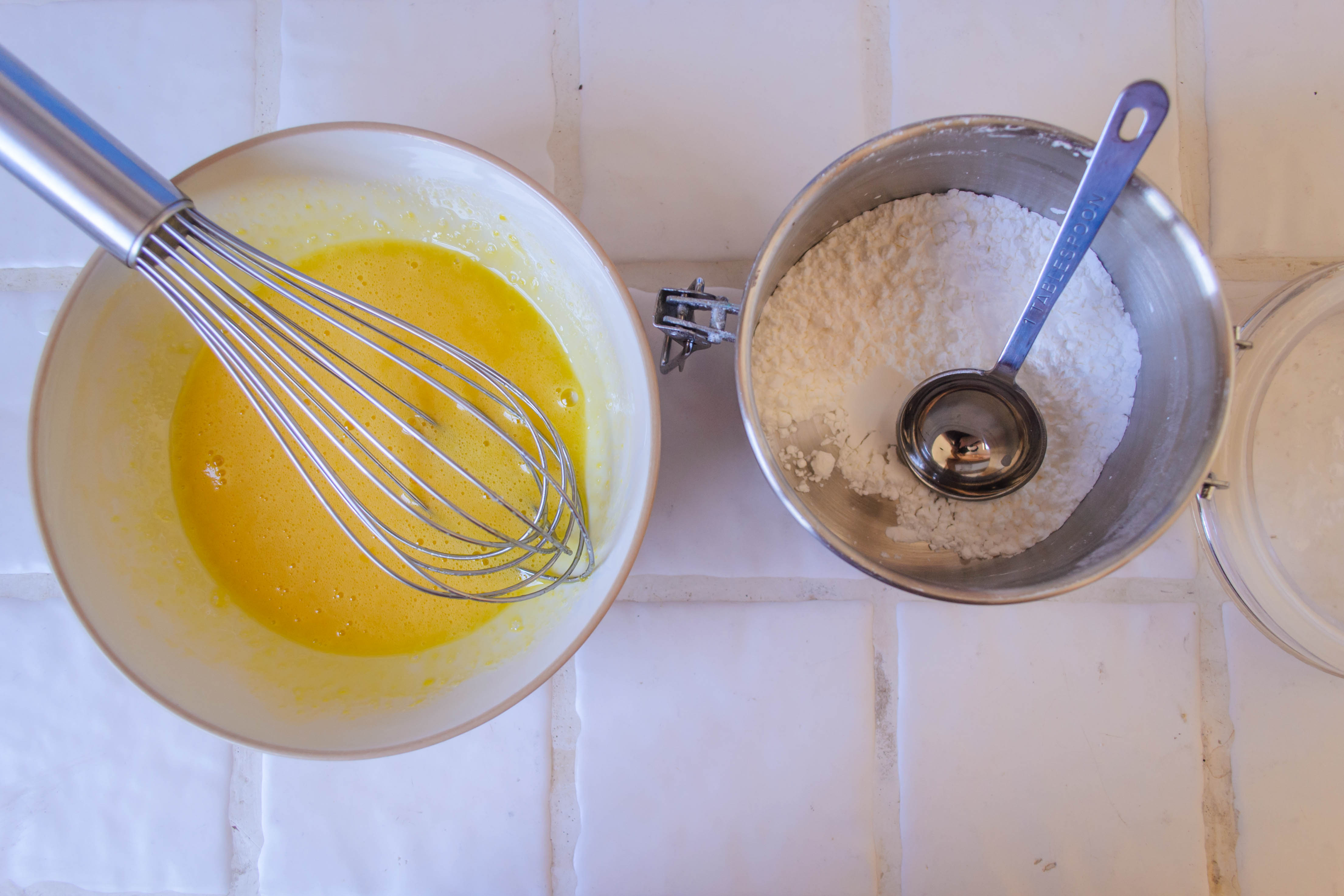
  • While the liquid mixture warms, whisk the egg yolks together with the remaining 2 tablespoons of sugar in a small bowl. Beat well until you can no longer feel any graininess from the sugar.
  • Whisk the cornstarch into the yolk and sugar mixture until all powder is gone and the mixture becomes thick and pale. It will take on a texture like melted ice cream.
  • When the milk mixture has come to a simmer, remove it from the heat and dribble about 2 tablespoons of it into the yolks, whisking furiously and continuously. This tempers the egg yolks – that is, heats them up just enough so that when they are added to the pot, they will be less likely to scramble.
  • Now, take a breath and a firm hold on your whisk, and pour the yolk mixture into the pot of milk, whisking continuously. Place the pot back over medium heat and continue to whisk until the mixture returns to a simmer. It will quickly become very thick – a bit like slightly diluted mayonnaise in texture – and take on a glossy sheen. The occasional big, sluggish bubble might emerge.
  • Once the mixture simmers, remove it from the heat and add in the vanilla, the remaining 2 tablespoons of bourbon, and the cold butter. Whisk continuously until the butter has melted in and everything is combined.
  • Pour the hot pastry cream through a fine sieve or mesh strainer into a bowl. Stir and push through with a spatula to catch any solid bits of egg or other unwelcome textural imperfections.
  • Place a piece of plastic wrap directly against the surface of the hot pastry cream (this prevents it from developing a “skin” across the top) and deposit it in the refrigerator until well chilled. The finished product will be approximately the thickness of mayonnaise.
  • When dessert looms near, prepare the fruit. Cut each fruit in half and twist or cut out the pit. Set halves cut-side up and sprinkle the exposed flesh with the raw sugar, using about 1 tablespoon per serving (so if you’re serving peaches, you might want less fruit per person than if you’re serving apricots. Either way, evenly distribute 1 tablespoon of sugar per serving over the halves of fruit). Sprinkle on the pinch of black pepper, if using.
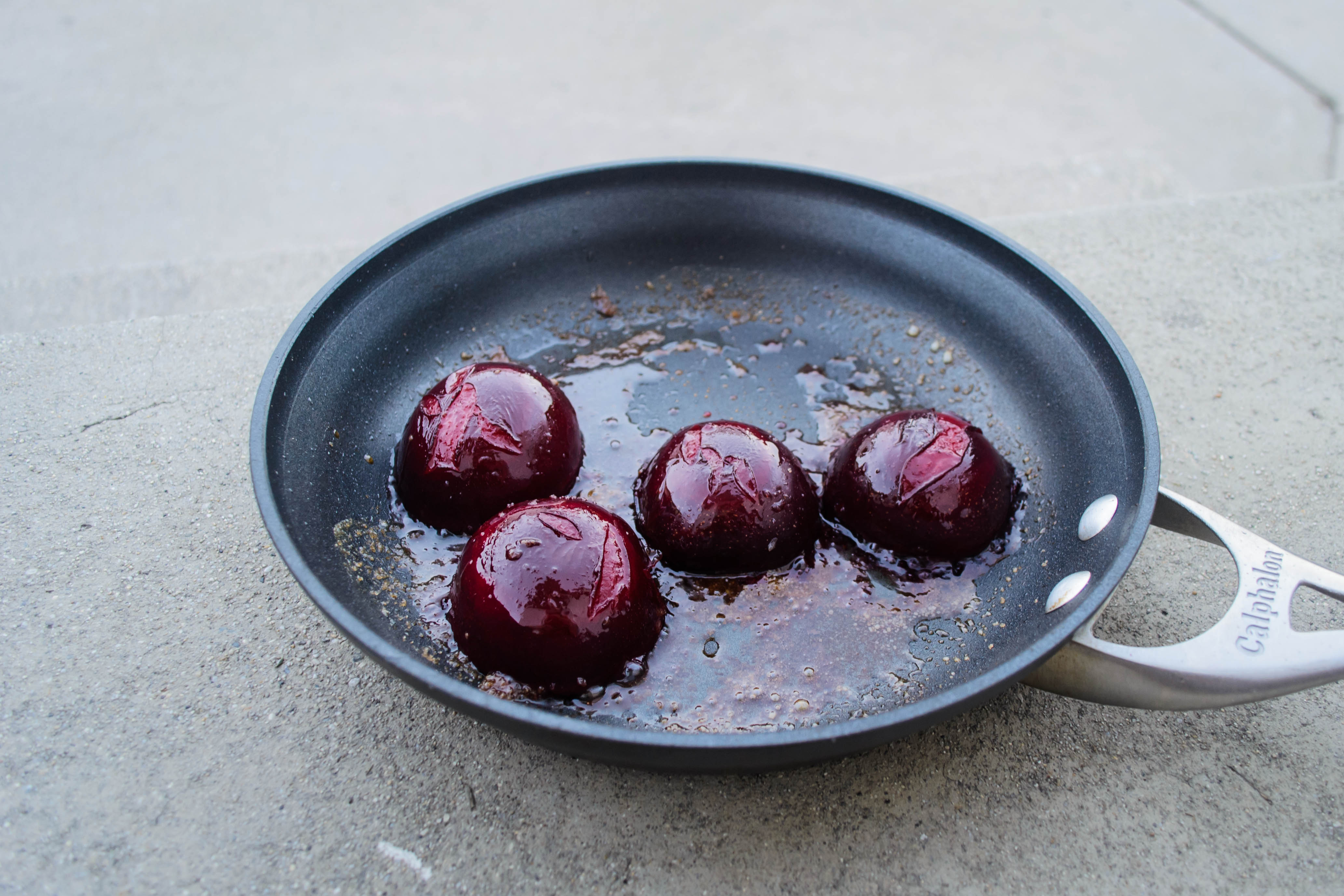
  • Heat the butter over medium-high heat in a skillet large enough to accommodate all of the fruit halves. When it sizzles, add the fruit, cut-side down, and let it cook undisturbed for 2-3 minutes, until the sugar is well melted and has caramelized into the fruit.
  • Flip the fruit over so it is cut-side up and cook another 2 minutes, until the skin wrinkles and tears a bit. This will result in fruit that is warmed through, but still firm to the bite. If you like your fruit softer, cook a few minutes longer or cut into smaller pieces.
  • To serve, position the fruit cut-side up on a plate, and dollop on a few spoonfuls of the pastry cream. If you go back for seconds, consider letting a friend drive you home.


Spinach and Goat Cheese Orchiette with Hazelnuts

One of the great things about the last house we lived in during our tenure in Eugene – the best house – the party house – was its location. Just over a mile from campus, it was also within walking distance of downtown (for the incredible produce and local craft market each weekend) and the fairgrounds.

Food Blog September 2014-0616The Lane County Fairgrounds played host to … well, let’s call it an interesting line-up of events. Among others, a gem and mineral show, a bridal show and wedding expo, a model train exhibit, and (I am not kidding) a wool festival. In the summers during the County Fair, we could smell the fried food and hear the cover bands from our backyard as the sun fell. Sometimes they were fun. But sometimes it was someone covering Huey Lewis and the News again. Now don’t get me wrong, I’m a believer in the power of love. After all, it don’t take credit cards to ride that train, and far be it from me to critique the theme song from Back to the Future! But several nights in a row, even if it’s only once a year, is pushing it.

Food Blog September 2014-0607Despite its foibles, the fairgrounds also hosted an annual event that N. and I went to every single year. The Friends of the Library Book Sale happened in the spring, and with most books priced at 50 cents or $1, the season was important, because we ended up having to establish rules. A household with two English literature PhD students may lack many things, but what it does not lack are books. By our third year in the program, we already had at least four bookshelves jammed so full we were piling books atop each other and committing the shelving equivalent of double parking with some of the smaller paperbacks. Every shelf sagged in the middle from the weight. Cheap books were a danger zone.

Food Blog September 2014-0611We ended up instituting a rule that we had to walk to the book sale. This required us to get some exercise and celebrate the season, but more importantly, it meant we were limited in what we could add to the collection by our own biceps. If you can’t carry it home, you can’t have it. It helped. A little.

Facing a room full of tables full of books, with more books in boxes underneath, is a daunting task. After I’d perused the “literature and fiction” area and the “classics” table, I would routinely wander to the cookbooks section. Selections here were usually hardback, which meant I’d be able to carry fewer of them, and (surprise, surprise) usually a bit pricier than the twelve ratty copies of Heart of Darkness with torn covers gracing the literature area. But for people with limited willpower, these kinds of hard and fast prohibitions are a good thing. They mean you have to really want what you’re getting, and that leads to better purchases.

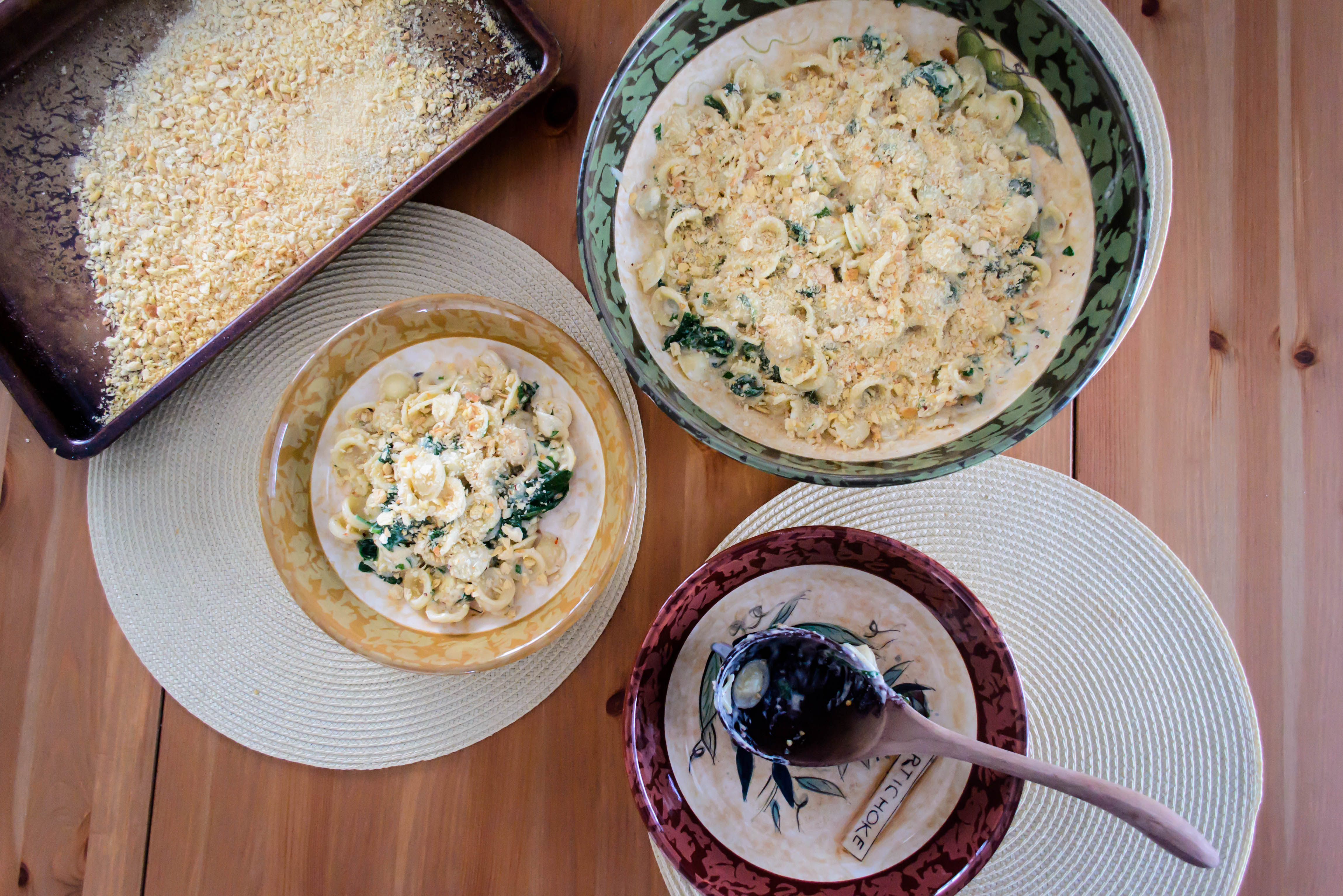
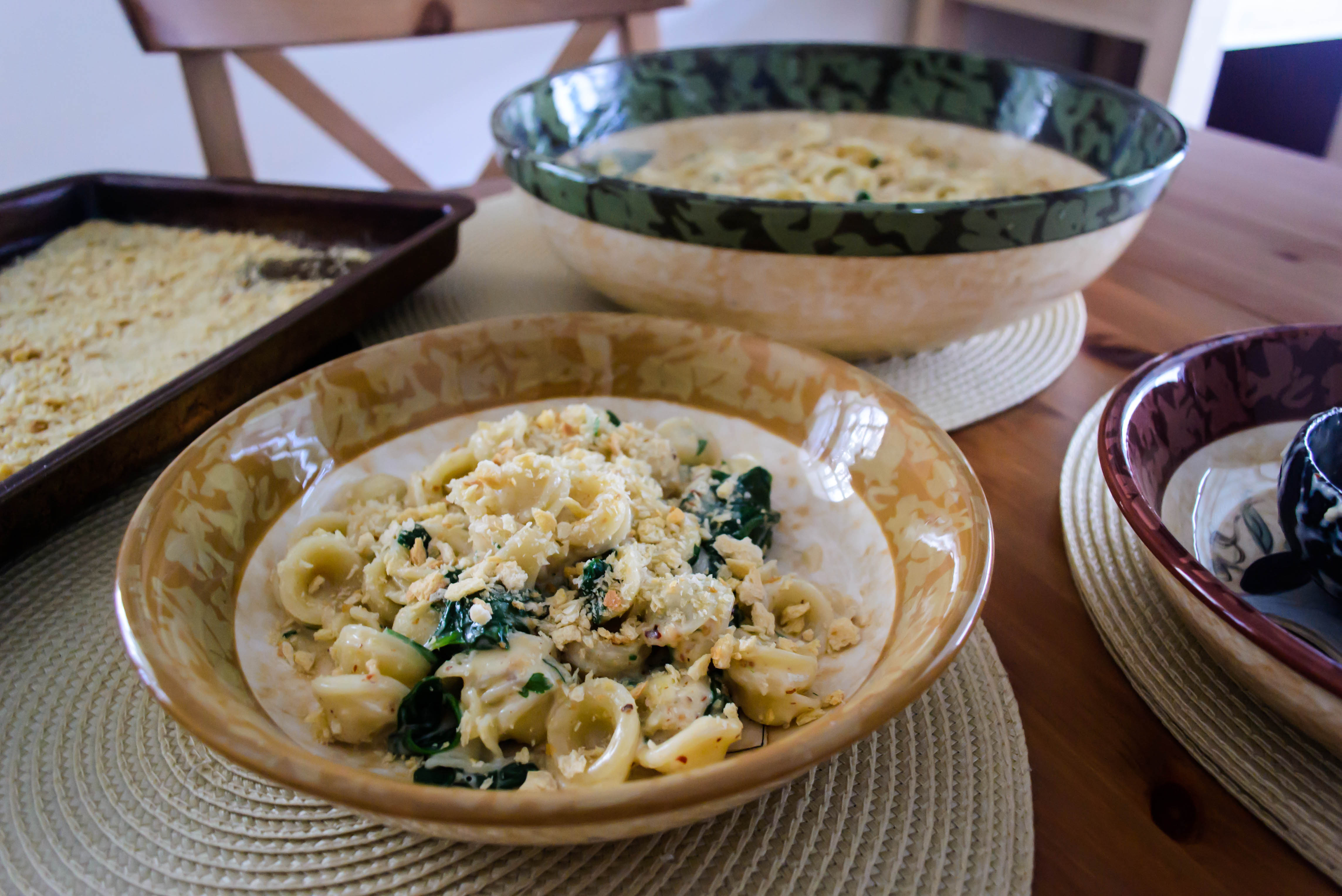
Food Blog September 2014-0610Food Blog September 2014-0612I acquired several good cookbooks via this method, including one containing the first yeast bread I ever made (and it was a success!). But by far, the star has been an old annual collection of Food and Wine Magazine recipes, and within that collection itself, the single page that receives the most attention contains a pasta dish by Mario Batali. It features goat cheese, hazelnuts, and red pepper flakes coaxed into a sauce to coat a pile of orchiette, those little domes of pasta named for their apparent resemblance to little ears (though to be honest they have always reminded me more of a lady’s cloche hat).

Food Blog September 2014-0614Batali’s recipe is delicious but basic. He blends the aforementioned ingredients with a smattering of chopped parsley, a glug or two of olive oil, and a healthy pour of starchy, steamy pasta water into a creamy sauce. After tossing the pasta in all this tangy, spicy, nutty glory, Batali adds a dusting of toasted bread crumbs for some needed crunch.

My version, though it maintains the procedure, plays to my own tendency for gluttony. Unsatisfied with just goat cheese, I add some shredded white cheddar for extra savory tang. N. is a fiend for bread crumbs, so I nearly triple the quantity called for in the original recipe. In an attempt to atone for these culinary sins, I also add a tremendous half pound of fresh baby spinach leaves, lightly wilted in the pasta water during the last minute of cooking. Further, it’s gluttonous in its allowances for laziness: the sauce, such as it is, is constructed in the serving bowl, the spinach cooks with the pasta, and though you do have to dirty up your food processor, you can process the bread crumbs and the hazelnuts in it one after the other with no need to do more than tamp it out a bit in between.

Food Blog September 2014-0617The finished dish is a mountain of pasta, caressed with sauce and threaded through with enough wilted spinach to eliminate the need for a side salad (though if you still want one, be my guest!). It’s a study in textures, with the orchiette themselves retaining a lovely chew, the spinach soft, the sauce silky but rumbling with pebbles of hazelnut resistance, and topped off with the perfect golden crunch of the toasty bread crumbs. Behind all this is the steady heat of the red pepper flakes, which I alternate quantities of – sometimes just enough to add a suggestion of spice, sometimes enough to clear the sinuses of the persistent fall allergies the LA basin is kind enough to grant me. Either way, it’s a dish that I forget about in between instances, but once I’ve tasted a fresh, steaming forkful, it becomes the only thing I want to eat ever again. Again.

Food Blog September 2014-0619

Spinach and Goat Cheese Orchiette with Hazelnuts
adapted from Mario Batali
Serves 8

1-1/2 cups fresh bread crumbs (whir 4-5 slices of sourdough in a food processor)
1/2 cup hazelnuts
6 ounces goat cheese, at room temperature
6 ounces extra sharp white cheddar, grated, at room temperature
1/4 cup extra virgin olive oil
1/4 cup minced fresh parsley
1 teaspoon crushed red pepper flakes (or to your taste; this quantity produces a moderately spicy flavor)
1 pound orchiette, preferable, or another vaguely shell-shaped pasta
8 ounces fresh baby spinach
salt and pepper to taste

  • Preheat the oven to 350F. Once you’ve processed your bread into 1-1/2 cups of fine crumbs, spread them out on a cookie sheet and toast them in the oven until golden, tossing and fluffing occasionally. Depending on the density and size of your crumbs, this will take 10-15 minutes. Once golden and crisp, remove from the oven and set aside.
  • Use the same food processor, shaken free of bread crumbs, to grind the hazelnuts into a gravel with individual pieces about the size of coriander or mustard seeds (i.e. we want them small, but not quite ground into a paste).
  • Heat well-salted water to boiling in a large pot and cook orchiette according to package directions.
  • Meanwhile, put the goat cheese, shredded cheddar cheese, crushed red pepper flakes, olive oil, parsley, and ground hazelnuts into a large serving bowl. Mash it about with a rubber spatula to combine into a thick, lovely, cheesy paste.
  • In the last minute of the pasta’s cooking time, add the 8 ounces of baby spinach leaves and push them down into the boiling water with a wooden spoon.
  • When the spinach is wilted but still bright green and the pasta is tender but still pleasantly chewy, drain both, reserving about 1 cup of the pasta water.
  • Add pasta and spinach to the serving bowl with the cheese and nut mixture. Begin to add the pasta water, 1/4 cup at a time, stirring, until a thick, sauce forms that coats the pasta evenly. This may not take the entire cup of water; thin the sauce just to your desired consistency.
  • Season to taste with salt and pepper, then scatter on the breadcrumbs immediately before serving.