 Perfect herb bouquet from our farewell dinner with our neighbors, now brightening up the bathroom counter. Sage, lavender, and thyme in flower. Herbs make such lovely little arrangements.
Happy Memorial Day.
Perfect herb bouquet from our farewell dinner with our neighbors, now brightening up the bathroom counter. Sage, lavender, and thyme in flower. Herbs make such lovely little arrangements.
Happy Memorial Day.
 You know I don’t usually do this – usually I report on something delicious, sharing the recipe so you can make it too – but I owe you a soup for May, and there’s absolutely zero chance of a recipe next week, since the moving truck comes on Friday(!!!!), so here we go (and besides, the photos came out so nicely). This one was… weird. It wasn’t bad, but it also wasn’t remotely our favorite. If you’re into an herby, grassy taste, you should go for it.
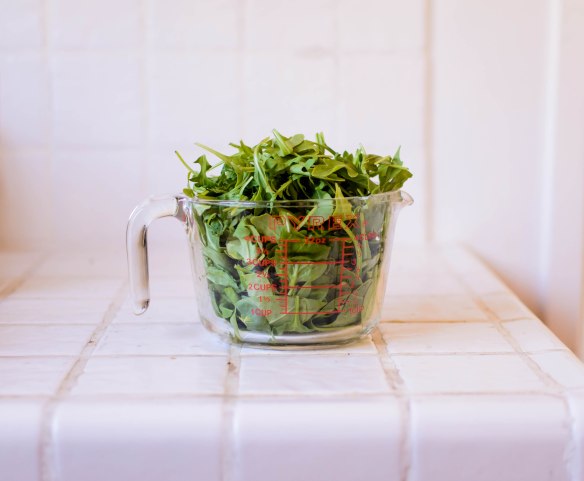
 The base here is a soup recipe from Ottolenghi that blends spinach, parsley, cilantro, and mint with a base of onions and garlic and broth. I added arugula to mine as well as some mustard seeds, and ended up with a murky green concoction that, I have to admit, was reminiscent of high quality lawn clippings. N. called it “pesto soup,” and despite the absence of basil, I tended to agree – thickened up a bit and tossed with pasta, it would have been delightful.

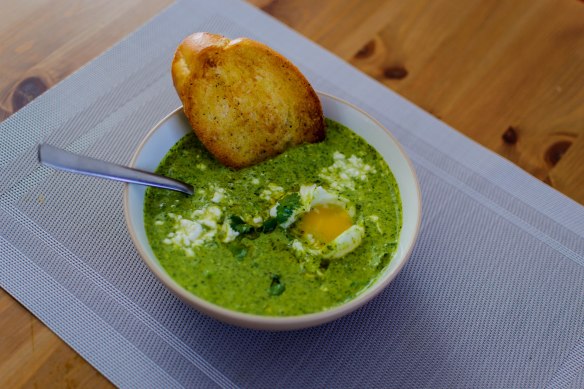
 Ever the glutton, I decided what this soup needed to add interest and richness was a poached egg, that darling of chefs everywhere (seriously, I think adding an egg is the culinary equivalent of “put a bird on it.”), and I was right. Broken into the soup, the yolk cut through some of the earthiness of the greens that got even better with the addition of a crunchy slice of garlic rubbed toast. So, in other words, the soup was improved by adding other things to the soup.
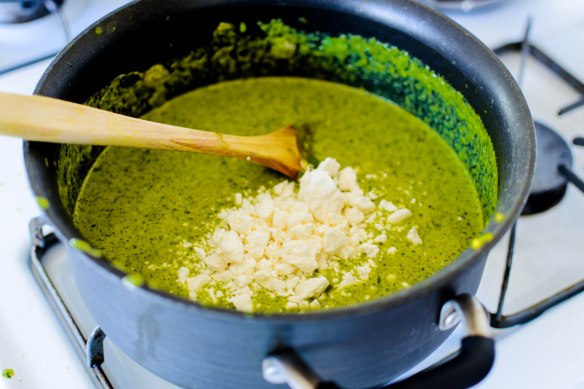 Perhaps it was the heavy dose of arugula, which contributed a peppery earthiness the soup didn’t need. Perhaps it was just upped quantities of the greens – I do have a tendency to go heavy on the flavoring agents and light on the liquid. Perhaps it was just a soup the likes of which we’ve never had before.
 I’ll be spending next weekend arranging my new kitchen, so I’ll see you when I can. Be well!
 Are you as obsessed as I am with the Great British Baking Show / Great British Bake-Off? Originally aired on BBC, a few precious seasons have traveled across the pond courtesy of PBS (seriously, how great is PBS? Let’s keep it, even if that means making a few phone calls). I devoured the first season that became available in the U.S., then was forced with the second (which PBS called season 3) into consuming only in bite-size chunks, since I watched as it aired week by week. It was excruciating – all I really wanted was to binge. So when our friend D. told me she had bought season 2 (in Britain, season 4 [yeah, we’ve made the numbering all kinds of weird]), I couldn’t resist but do the same (and then, of course, it became available on Netflix a week or two later. Typical).
 I won’t tell you who wins, in case you haven’t watched it, but I quickly developed some favorites, and one was Beca, the Welsh army wife who spun beautiful homey recipes into her bakes. One week, the bakers were asked to create breads with unconventional flours, to test their skills when gluten development was off the table. Beca made a focaccia using spelt flour and mashed potatoes, topped with rosemary sprigs and more potatoes, and I couldn’t hold myself back from the kitchen.
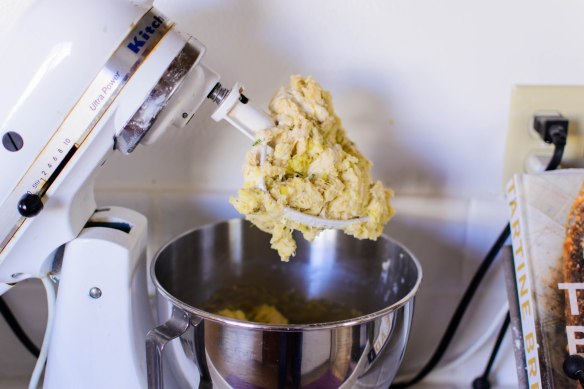
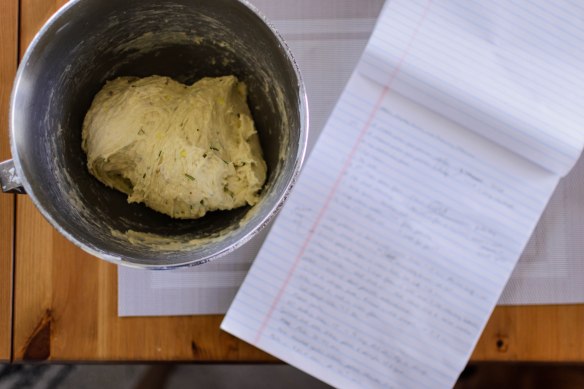
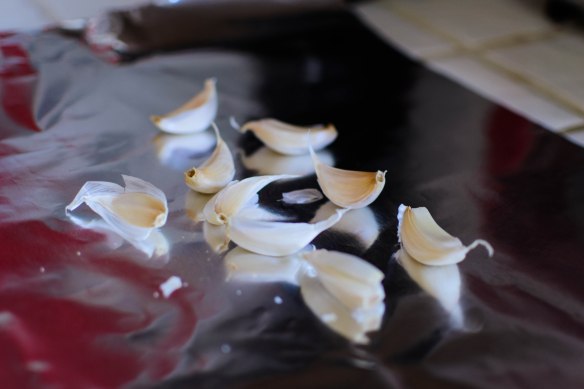
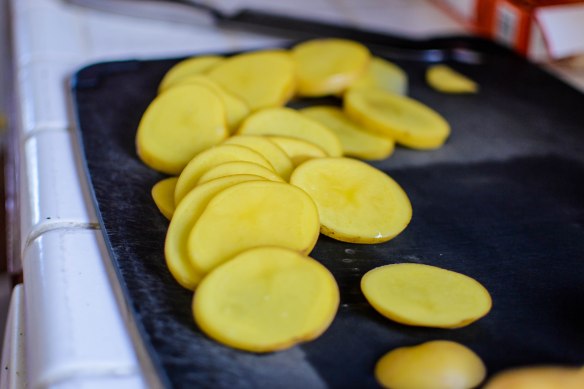
 My version goes back to standard old bread flour, since when I wanted the bread I wanted it nowthankyouverymuch, and wasn’t willing to wander the grocery aisles looking for spelt. I’ve simplified just a touch, using the same kind of potatoes for both the dough and the topping, and I’ve replaced her suggestion of gorgonzola with whole cloves of roasted garlic. Upon consultation with another recipe or two, I bumped up the quantity of olive oil for a lovely oily crustiness that is a good reminder that focaccia really is just an extremely thick-crust pizza.
 Including cooked and mashed potatoes in focaccia is not unusual, resulting in a dough with some heft and stickiness, but it bakes into such a satisfying, warm, golden rectangle that the clingy dough is ultimately worth dealing with, especially if you use a stand mixer to knead it. Unlike a regular loaf, this focaccia gets spread onto a well oiled baking sheet after its first rise, and prodded and stretched over the course of half an hour or so as it settles across the tray. As you persuade it to spread, you also aggressively stab at it with your fingertips to give it that classic dimpled look, which is somewhat satisfying if you’re, I don’t know, going through withdrawal because you don’t have any more episodes of a certain show to watch…
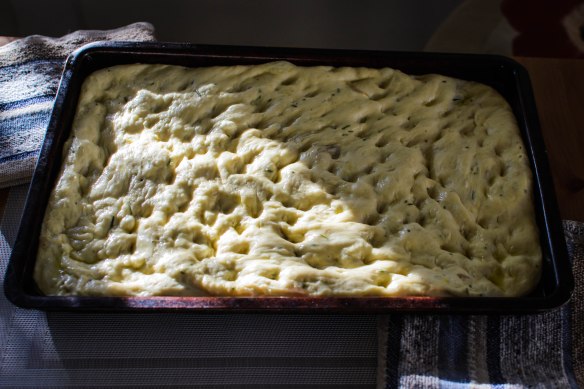
 Since I ended up irregularly shingling the top of this bread with potato slices, I was a little bit concerned that it wouldn’t rise well in the oven, and that the moisture of the potatoes would make the spots underneath them seem a bit doughy and under baked (Paul Hollywood would not be pleased). Delightfully, the whole thing rose nicely, and yes, the surface underneath the potatoes did look a little anemic compared to the well browned exposed parts in between, but it was cooked through and made for a pleasant textural contrast with the crunch of the bread and the crispness of the baked rosemary sprigs.
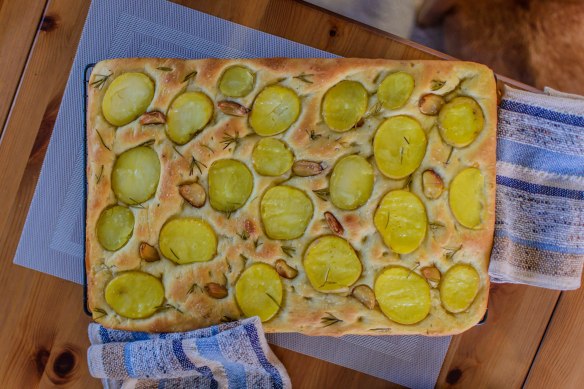 Since it is – perhaps with the addition of some cheese – a near equivalent of a pizza, focaccia is practically a meal in itself. But it also pairs well with roasted chicken, or a bowl of soup, or a crisp salad. We even sliced the last few pieces horizontally, toasted them for a few minutes, and used them as the base for sandwiches. Much of the stress of shaping, scoring, and steaming associated with a boule or baguette is eliminated, making this a perfect project for a slow, easy day, and perhaps a glass of sparkling wine or an amber ale as an accompaniment for the warm, well-oiled square you can hardly wait to cut for yourself.

 Two things come to mind when I think of split pea soup, both from childhood. In the real world, I think of my mom and sister – R. ate a lot of Campbell’s soups for lunch when she was little, and I remember Mom asking her whether she wanted some “hammy pea soup.” On screen, I remember the charming little clip from the beginning of Disney’s The Rescuers Down Under depicting how the fancy restaurant Bernard and Bianca go to gets its soup course to the table. Both memories charm me more than the actual product, so I decided, as a first real dip into the soup project, in a February that veers wildly between dreary and bright (and not just on a meteorological front), making this one over would be a rewarding project.
 I’ll be honest, though, right out of the gate: this is indeed a project. This is not a soup you’ll have on the table, or in a mug curled up on the couch, in a half hour or so. This is a multi-step, multi-hour prospect.
Are you still here?
Good.
 The average split pea soup is not unlike a dreary February day, the kind where you feel pressed into the couch by lack of motivation, or just unable to move away from your newsfeed. It is thick and heavy and sometimes muddy in flavor, as pulse-based soups can be. There are, I think, two ways to amend this. One is to go the daal route, amping up the spice quotient. The other, the one I chose, is to add freshness near the end of the cook time, forcing the wintry brew toward something springy, no matter what Punxsutawney Phil had to say this year.
 My method of freshening was almost entirely though association of the two major players. Split peas are a starchy, dry, processed product. Why not take them to a family reunion with their plump, sweet, former selves? A cup of frozen peas would jangle in at the end to brighten things up. The other major ingredient in the mix – the ham – is usually in the form of a “ham hock,” the lower part of the leg, smoked, with the skin and bone still present. Ham hock reminded me of collard greens, and I started wondering how some ribbons of greens, cooked until tender but not decimated, would do in this soup. Pairing collard greens with starchy legumes is hardly new – food historian Michael Twitty writes this important discussion of the cultural background of collard greens, including their frequent matching with peanuts in the cuisine of the African diaspora.
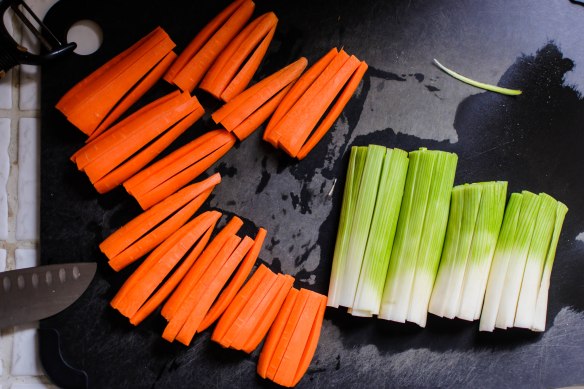
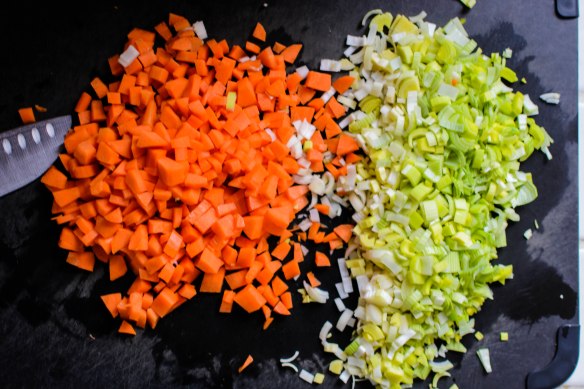 Split pea soup usually has some other starchy ingredient in it – most often potatoes. I opted to omit this entirely, but you could certainly add some back in, or change it up and use celery root instead for a more herbaceous flavor. Instead, I made my base simple: carrots for sweetness and color, leeks for a mild onion-y punch, and just a bit of garlic to keep things savory. At the last minute, I stirred in a handful of parsley for a final bright burst.
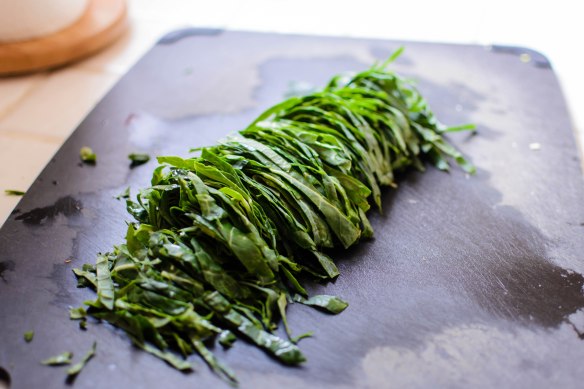 As I noticed when I consulted a few recipes for inspiration, differences in procedure really lie in how you treat the vegetables. Some recipes brown them first, then add the peas and broth, but this can result in disintegrated veg by the time the soup is ready. Some, to prevent this over-softening, add the vegetables part way through the cooking, but then the soup doesn’t benefit from the extra flavor a bit of caramelization and initial browning provides. The New Best Recipe cooks the vegetables in a separate vessel before adding them to the soup, and that would be fine if you don’t object to extra dishes… but I always object to extra dishes. I would rather it take longer and have less to wash up.
 In my procedure, we cook everything in the same pot. First, brown the exterior of the ham hock first (I used a smoked pork shank, but they are almost the same thing). Once it is crisp and golden on the exterior, the vegetables get browned in the residual fat (plus some fatty bits and pockets, if you want to carve any off and add them), then set aside until the final twenty minutes of simmering, so they retain some texture and have the extra flavor from the pork fat. Yes, this adds some time, but you’re prepped for a project anyway, right?
I have to admit, though I always want to like what I make, I wasn’t expecting to be crazy about this soup. With the dreary, February-gloom hanging around my expectations despite attempts to create brightness, I thought I would like it but not love it.
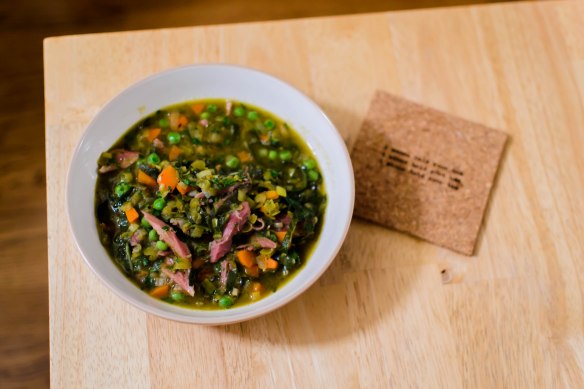
 It’s nice to be wrong sometimes, isn’t it? This soup exceeded my expectations by leaps and bounds. The play between the two kinds of peas – creamy and starchy on one hand and barely cooked pops of sweetness on the other – was delightful. The ribbons of collard greens were perfect: vegetal and tender, good flavor companions with the peas and the shreds of ham. Sometimes when I make a soup I end up freezing half of it and planning in vain to use it again, but this one we scarfed down the night of, and then for lunch the next day, and then for lunch again, and it was gone, and our bellies were warm and bolstered against the gloom of February.
This will keep in the fridge for 4-5 days in a sealed container, and reheats easily in the microwave or on the stove. You might need to add a drizzle or two of extra broth when reheating, since the peas suck up a lot of the liquid as they cook and as they cool. Delightfully, this is one of those soups that, while it’s delicious the first day, improves as it sits and its flavors mingle.
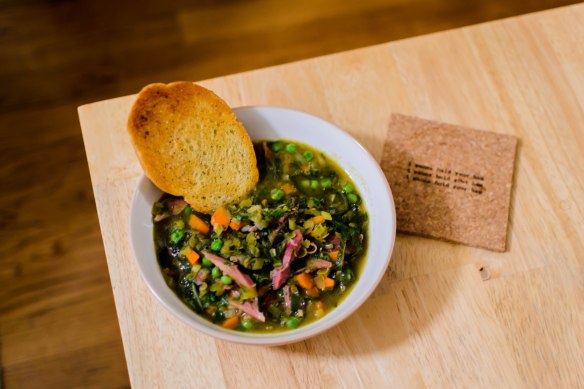 * yes, that coaster does say “I want to hold your ham.” It’s from a set my sister gave me that features misheard song lyrics, the technical term for which (can I tell you how much I love that misheard lyrics have a technical term?!) is mondegreen.
Save
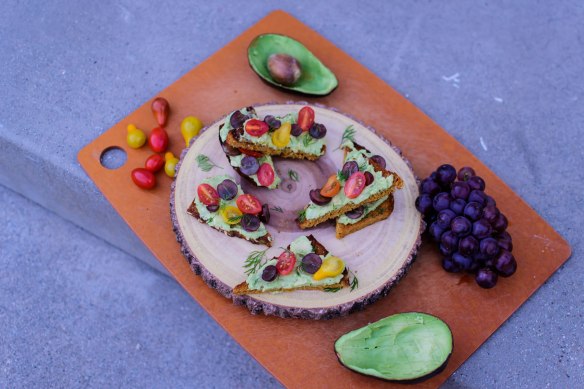
 This one is a restaurant recreation from a spot we like in Culver City. These guys appreciate the lux/simplicity combo that is avocado toast; in fact, they are also the inspiration for my last foray into this ever-so-trendy meal base.
 Cherry tomatoes and grapes seemed like a strange combination, and I was dubious about how well grapes would play with avocado, but it all works. The tomatoes are bright and acidic, and the grapes are tart enough that, with a squeeze of lemon and flake or two of salt on top, they toe the savory/sweet line successfully.
I hope all is well in your world.
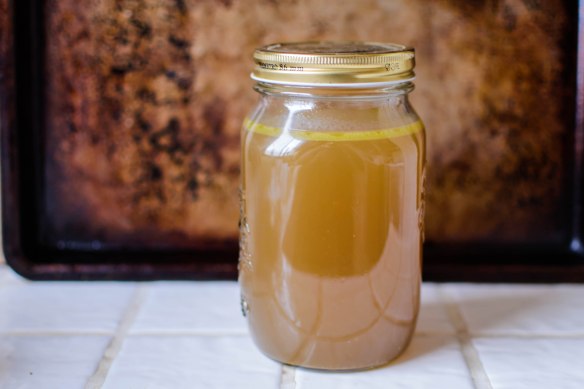 This last week has been a lot. A new president, an elderly dog with suddenly severe mobility challenges, a new president, a state that seemed to offer a pointed meteorological response, particularly on inauguration day (and then clear, sun-swept skies for the women’s march the next morning – what up, universe!), oh, and that whole new president thing. I opted, as is my usual practice, to respond in part by shuffling into the kitchen. Cooking doesn’t do a great deal on a large scale, but it makes me feel safe and in control, and it is with those feelings that I gain a foundation of strength and confidence to undertake other, more consequential actions. So let’s talk foundations. The foundation – the basis – of soup is liquid. That’s not always the part you add first, and it often doesn’t feel like the most interesting part,* but it’s what separates soup from puree, or pasta, or pile-of-diced-vegetables-with-some-beans-and-meat-or-maybe-potatoes.

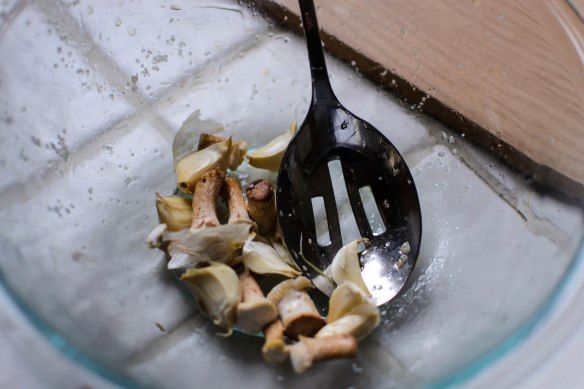
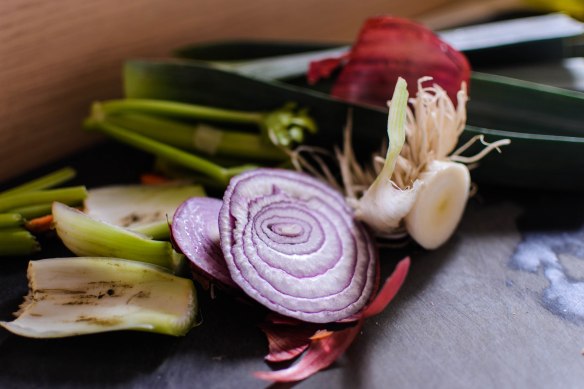 Obviously you have a lot of choice when it comes to choosing this liquid. You could, of course, work with plain old water, and per some rational arguments this does work, but most soups advocate for a stock or broth of some sort – usually the variety that most closely matches the “star ingredient” in the finished dish. I’d wager a guess that chicken and vegetable are the most common, with beef coming in a wavering third. There are many good options in the aisle at the store for all of these varieties – when I go with store-bought I opt for low-sodium – but what fun would it be if I told you to go out and buy the base of our project for the whole year? Nope. Doesn’t sound like me. We need a strong foundation. We’re going to make it ourselves.
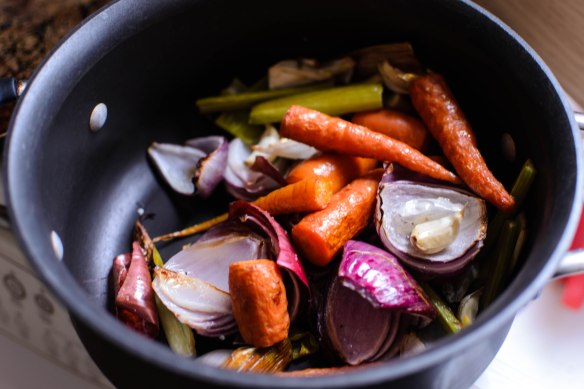
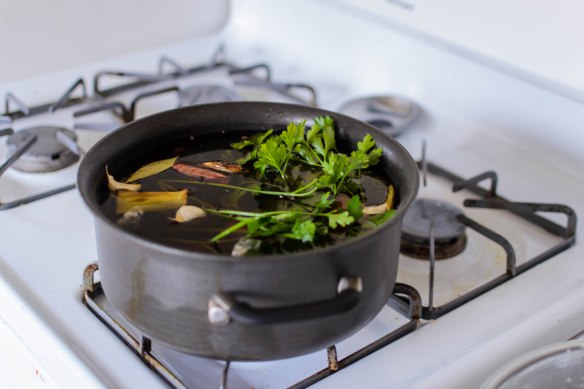 The first hurdle to surmount is the question of broth vs. stock. These terms get used pretty interchangeably, but there is a difference. Harold McGee offers mostly an etymological distinction, citing the latter as deriving from “an old Germanic root meaning ‘tree trunk’” and the former as “more specific and ancient,” going back to the turn of the first millennium with the root bru, which means “to prepare by boiling” – quite similar to our word “brew” (599). Alan Davidson agrees, adding that though broth or bru at its inception just meant the liquid and its contents, in recent centuries the word has implied the presence of meat. A broth could be the resulting liquid of brewing down these ingredients, or a finished product in itself, like the broth of a soup. Stocks, on the other hand, Davidson positions as less finished, component parts of a dish-to-be (108).
 More recently, though, at least in American cooking parlance, stock vs. broth tends to be a question of bones vs. meat. A broth is a liquid made from meat that has been simmering, usually along with vegetables and herbs for flavor. Stocks are made from bones as well as connective tissue, along with vegetables and aromatics for flavor, and the collagen extracted from the bones during the simmer results in a product with more body – a heft or thickness absent from broth. As Alton Brown notes, it is hard to remove all meat from bones when you are making a stock, which means that many homemade stocks are actually a hybrid between the two bases; that may be in part why we tend to use the words interchangeably. At least, that’s the answer I’m going for.
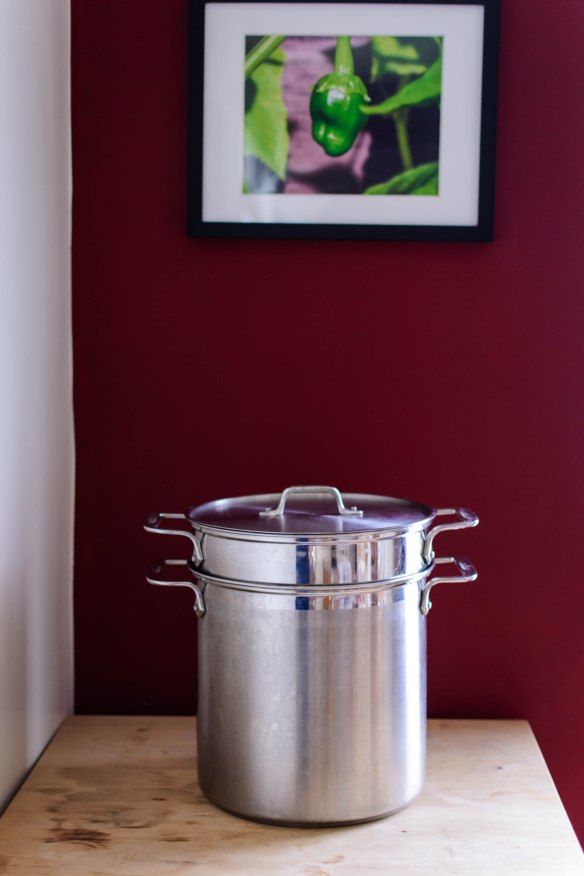

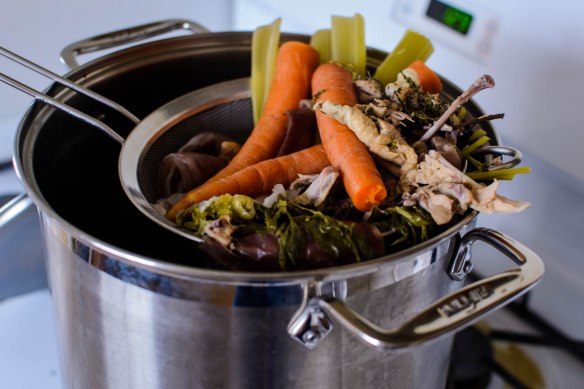 According to these defining principles, then, what we’re going to make here is one broth (no bones; all vegetables), and one stock (well, broth-stock. Brock? Stoth?). The ingredient lists are similar and the procedure is easy, if a little time-consuming: roast some veg or a chicken, pop the roasted veg or bones in a big pot, add flavoring agents, cover with water, simmer long enough to produce a bronzed, aromatic liquid. Strain, cool, and store. That’s it. Yes, it’s an additional step or two on your quest for soup, but it makes plenty, and then you’re set for a few months, depending on the frequency of your broth needs. Call it a project for a rainy day, which we seem to be having plenty of lately.

 I particularly like making the effort just after Thanksgiving, when the bones and trimmings of that turkey carcass make enough meaty, strengthening, belly-consoling stock to service my soup, stew, risotto, couscous, and arroz con pollo needs for at least a quarter of the year.**

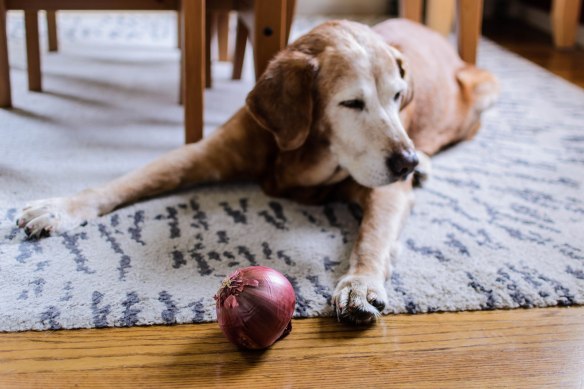
 * it’s also not the most interesting or sexy thing to take photos of, so I hope you appreciate Lucy’s willingness to help out by posing with various vegetables (she couldn’t be bothered with the celery, so we stuck with onion and carrots).
 ** with the Thanksgiving turkey carcass, I increase the amount of water in the mix, but tend to leave the other ingredient quantities about the same.
A fabled land of farmers, farm shares, fancy (and not so fancy) restaurants, family meals, food projects and more.
cooking my way through my dissertation, one egg at a time
Fearless cooking from a tiny NYC kitchen.
food, in so many words.
Recreating the famous dishes of famous writers. Part recipe blog, part historical discussion, entirely unabashed love of books.
Epicurean Adventures from Eugene, Oregon
Celebrating the Harvest
Modern Iranian aka Persian Food & Culture Blog - Cuisine, Recipes, Stories , Photos, Pictures, DIY tutorials
Exploring Culinary Traditions of Africa, African America and the African Diaspora
food, in so many words.
food, in so many words.
food, in so many words.
Food-Stories-Recipes-Love
WordPress.com is the best place for your personal blog or business site.
 "blackberry-eating in late September"