Lamb and Ricotta Baked Rigatoni

I didn’t have much experience with baked pastas growing up. Mom made tetrazzini occasionally to use up Thanksgiving turkey, and had a macaroni and cheese favorite, but lasagna was too much trouble, with noodles that had to be boiled ahead of time, and layered, and stacked, and then sold to her two lasagna-disinclined children (R. was picky and suspicious of casserole-type meals, and I was solidly against tomato sauce). I never even heard of baked ziti or stuffed shells until I was an adult.

How I’ve missed out! The beauty of baked pasta, if you remain uninitiated, is the contrast of textures – creamy and tender below, but bronzed and crisp on top, not to mention the opportunity to consume wicked quantities of bread crumbs and/or cheese. The edges of the pasta pieces that protrude above whatever final layer you’ve assigned the dish – cheese or crumb or sauce – toast and sizzle and become pleasingly dark and crunchy; they are the part everyone you feed will fight over.

No real story exists for how this pasta dish came to be, aside from as a way of using up a container of ricotta cheese and a few handfuls of mushrooms languishing in the back of the fridge. It came together as a “what if” sort of creature, with aggressively seasoned ground lamb and a tomato sauce bolstered by red wine and some parmesan rinds I found in my freezer, and it was so satisfying I dubbed it “blog-worthy” by my third bite.

Digging in, you get the richness of sauce soaked into the thick tubes of pasta, and the chew of the lamb, and the interspersed delight of great pockets of ricotta, since we aren’t mixing it in, but adding it in a series of large dollops, a years-old idea from Smitten Kitchen that simmered back to the surface as I faced a too-full skillet and wondered how to get everything combined and into the casserole dish I’d prepared.
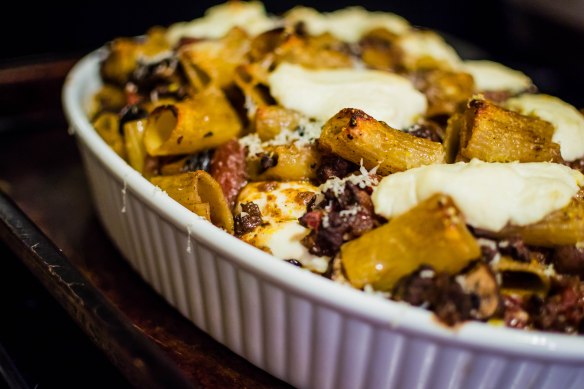
This does take a little extra time and effort: the mushrooms roast separately, the sauce is better the longer it cooks, and then of course you have to boil and then bake the pasta. But listen, you probably have an afternoon coming up that could stand to have a cooking project added to it, and besides, each of these component parts needs minimal babysitting once you’ve gotten it started. It is, I would posit, a very good dinner party dish in that you can do the whole thing relatively in advance, shoving it in to bake just as your guests arrive so you are free to greet them, and, if you’re like me, fitting in time to tidy up a little during the preliminary steps: sweep up the dining area while the mushrooms roast. Do a round of dishes and set the table while the sauce simmers. Then gloat as your home fills with the aroma of melting cheese and simmering wine and earthy herbs and you have nothing else to do besides sip a little wine and relax while you nibble whatever your guests brought, because of course you’ve assigned them appetizers, right?

Baked Lamb and Ricotta Rigatoni
Serves 6-8
Approximately 90 minutes (or more, if you want your sauce to simmer longer)
6 tablespoons olive oil, divided (3 for each)
2 cups chopped onion, from 1 large or 2 small onions
5-6 cloves garlic, finely minced
¾–1 pound ground lamb
1 teaspoon dried basil
1 teaspoon dried oregano
1 teaspoon ground allspice
1 teaspoon salt
¼ teaspoon black pepper
pinch red pepper flakes
1½ cups red wine
28 ounce can whole peeled tomatoes
2 bay leaves
parmesan rinds, if you have any
1 pound crimini mushrooms, stalks removed, caps quartered
12 ounces rigatoni
3 tablespoons finely chopped fresh dill
16 ounces whole milk ricotta cheese
½ cup grated parmesan cheese
Additional dill, or fresh parsley or oregano, if desired


  • Heat 3 tablespoons of the olive oil in a large skillet over medium heat while you chop the onions and garlic. Sweat the onions and garlic in the oil until softened and fragrant but not browned, 8-10 minutes.
  • Add the lamb, basil, oregano, red pepper flakes, allspice, salt, and black pepper to the skillet, and work with a wooden spatula to break up the lamb and distribute the spices and vegetables. Cook, stirring occasionally, until the crumbled pieces of lamb are no longer pink in the center.
  • Next, add the red wine and simmer for about 10 minutes, to reduce slightly, cook out some of the alcohol, and mellow the flavor, then add the whole peeled tomatoes, the 2 bay leaves, and the parmesan rinds, if you have any available. Simmer, using your wooden spatula to break up the tomatoes as they cook, for at least 30 minutes (though you can cook it longer if you want).
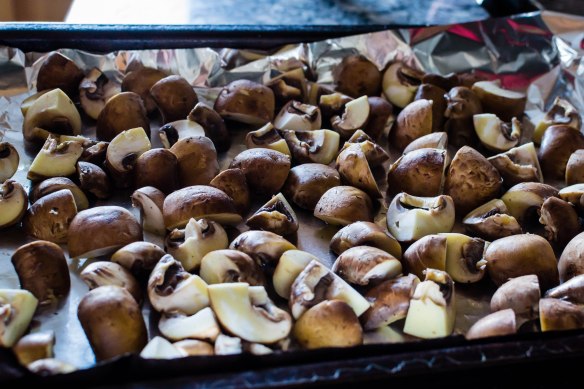
  • While the sauce is simmering, you can attend to the mushrooms: preheat the oven to 400F and toss the quartered mushroom caps with the remaining 3 tablespoons olive oil. Roast 20-25 minutes, stirring once at around the halfway mark. When finished, remove from the oven and turn the oven temperature down to 375F.
  • As the sauce simmers, boil salted water and cook the rigatoni about a minute less than the package directions indicate; it will soak up sauce and continue to cook as we bake it.
  • When the mushrooms and pasta are done and the sauce has simmered at least half an hour, remove the bay leaves and parmesan rinds, then stir the dill, the mushrooms, and the pasta into the sauce.
  • In a large baking dish (something in the 9×13” range fits everything in), add the pasta and sauce mixture in small batches, interspersed with large spoonfuls of the ricotta cheese. The idea is to have pockets of the cheese throughout. Once the pasta, sauce, and ricotta are loaded into the dish, top with an even layer of the grated parmesan cheese, then bake at 375F for about 30 minutes. The sauce will bubble and the parmesan cheese will melt and brown over the top. The whole thing will be molten hot; you might want to wait 5-10 minutes before serving to let it barely cool.
  • If desired, serve with a few tablespoons of chopped fresh herbs scattered over the top.


Chopped Challenge #1: Sausage stuffed mushrooms with goat cheese and roasted red pepper sauce

Course: appetizer

Ingredients: bulk sausage, bell pepper, sriracha, panko bread crumbs

Here it is! The first “basket”! N. decided that for the first challenge of the year, it would make sense to offer the first course of the meal, so to speak. He says he will change up and randomize courses later on, but I know for sure that January = appetizer, February = entrée, and March = dessert. That doesn’t tell me much, but it does offer a solid start.

As seems so often to be the case with real Chopped baskets, three of the four ingredients seemed to go together well however I shuffled them. Sausage, bell pepper, panko: reasonable! Sausage, bell pepper, sriracha: okay. Even bell pepper, sriracha, and panko seemed to fit. But all four? I couldn’t wrap my brain around how it was going to work and still keep this an appetizer.

Ultimately I landed on a blast from the past, if you will. I’ve been digging mushrooms lately, and realized at least three of the four: the sausage, the bell peppers, and the panko, could get crammed inside (or at least on top of) a mushroom and baked into a tasty, bite-sized little throwback classic. The sriracha would have to become part of a sauce – I didn’t fancy a spicy kick inside my mushrooms (besides, one of the biggest complaints from the judges on the actual show is the relative dryness of a dish – they are always after a sauce or dressing component).

To wrestle the heat into the dish, but also to ensure more exposure for the bell peppers, which were really just going to get minced and cooked down with the sausage and some onions, I decided roasted red pepper would be a nice flavor base for the sauce. It would need something to enrich it, though, and goat cheese would provide a tang and a welcome thickness. There. I had my dish.

Though this definitely took me more than the twenty minutes allotted on the show (could I have done it in time if pressed? Maybe… with a much bigger mess…), it came together well. It’s hard to fault pork sausage cooked with aromatic vegetables, especially when it gets mounded with panko soaked in what seems like an excessive amount of oil and baked until feverishly crispy. At first taste we weren’t sure the sauce matched the mushrooms – the roasted red pepper has such a strong vegetal clarity that, blended down and even spiked with hot sauce, it can stand up to and overpower its supporting players. Yet we kept going back to it, sliding the mushroom caps through and dotting on another spoonful, and when we each tried a mushroom bare, it was good, but we wanted that kick from the bright, orange-red smear left on the plate. Ultimately I think the sauce was on the right track, but needed a little something to combat the overly heavy vegetal quality, so the recipe below cuts the pepper-forward flavor with the addition of broth. I suspect this will help it meld with the mushrooms better.

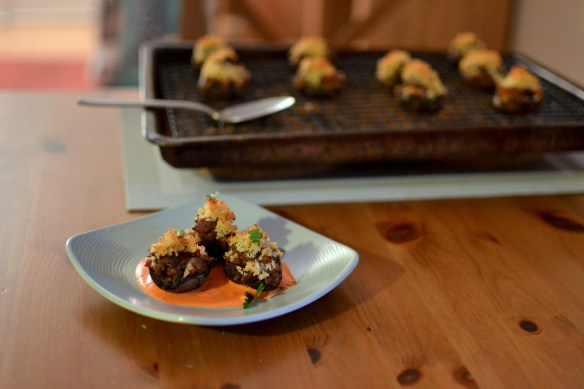
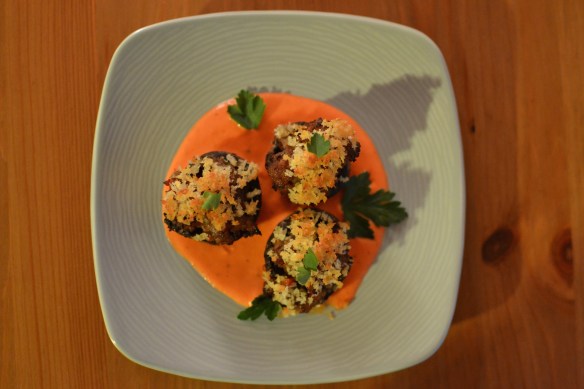
We tried out two serving options, just to see which we preferred: a puddle of sauce topped with a few stuffed caps, and a row of caps drizzled with sauce. Though we decided the puddle of sauce on the bottom would be better for hors d’oeuvres that were going to sit around for any length of time, as the sauce-on-top styling could damage the pristine and glorious crispness of the panko topping, we preferred the sauce-on-top delivery method as both prettier and easier to eat. In either case, a final dusting of parsley made for a prettier presentation and a welcome little herbal freshness to the bite.

* Photo note: this week, as I wait for my new machine, I’m using the editing features on Preview on my laptop. I’m… underwhelmed. Le sigh.

Sausage stuffed mushrooms with goat cheese and roasted red pepper sauce
Makes 12 mushroom caps + extra sauce
40-45 minutes
For mushrooms:
12 large crimini mushrooms, stems removed
½ cup finely minced onion
½ cup finely minced red bell pepper
4 tablespoons olive oil, divided
1 sprig thyme, optional
8 ounces bulk pork sausage
¼ – ⅓ cup panko bread crumbs
salt and pepper to taste
For sauce:
6 ounces roasted red pepper (you can do it yourself, of course, but the jars are so quick and easy)
3-4 ounces goat cheese
3-4 ounces vegetable or chicken broth
2 teaspoons sriracha, or to taste
To serve:
chopped parsley


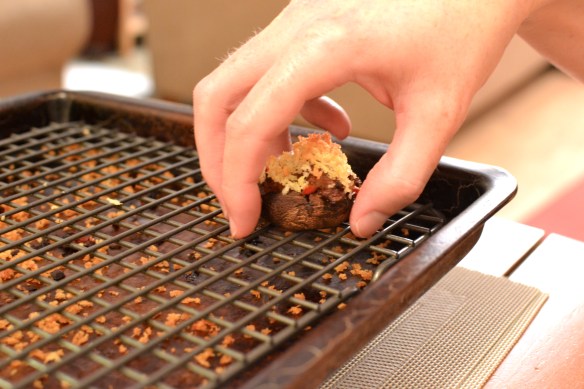
  • Preheat the oven to 400F and place a wire cooling rack in a baking tray or cookie sheet – we are making a slightly elevated platform for the mushrooms to prevent waterlogging.
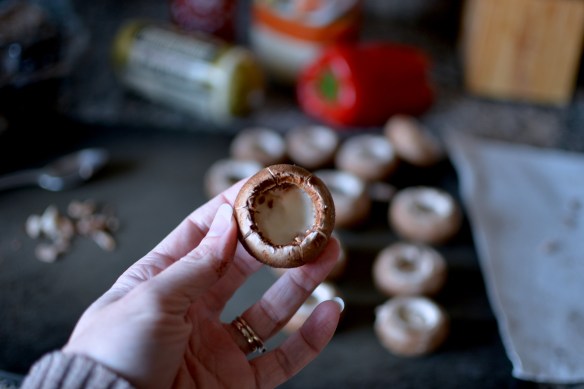
  • Using a small spoon, carefully scrape the gills and some of the innards from each of your mushroom caps. We need lots of room for filling. Finely chop the “guts” you’ve removed.
  • Heat 2 tablespoons of the olive oil in a medium skillet over medium heat. Add the mushroom pieces (not the caps), the onion, the red bell pepper, and the thyme sprig, if using. Season with black pepper if you like that sort of thing, and cook, stirring once or twice, until the onions are tender, around 5-7 minutes.
  • Meanwhile, place the hollowed out mushroom caps stem side down on the cooling rack and place into the oven. This gets them started cooking and allows some of the water they will expel to drain right into the cookie sheet. Cook them until the sausage is done.
  • When the vegetables in your skillet are looking tender, add the sausage and use a wooden, flat-sided spoon or spatula to break it up. Continue to cook over medium heat, breaking up the sausage and stirring often, until the meat is just cooked through. Taste for seasoning and add salt and pepper as desired. Remove from heat and let cool a few minutes for easier handling. (Reminder: at this point you should also remove your mushroom caps from the oven!)
  • While the sausage cools, toss the panko and the remaining 2 tablespoons olive oil in a small bowl until the crumbs are thoroughly moistened. Add salt and pepper to taste.
  • When you are ready to fill, flip the mushroom caps over so the hollow side faces up. If you want, you can move each and lightly spray the rack with non-stick cooking spray; they do start to cling a little bit while baking.
  • Fill the mushroom caps with heaping spoonfuls of the filling, lightly but firmly packing it in. It will be a little crumbly, so be determined but not rough, as that can break the delicate mushroom caps. Top each filled cap with a mound of panko, then carefully place back into the oven to bake at 400F for 15 minutes.
  • While the mushrooms cook, make the sauce. Using a standard or an immersion or stick blender, whiz together the roasted red pepper, the goat cheese, and the broth until very smooth. Pour into a pan (I used the same skillet I’d cooked my vegetables and sausage in, just wiped clean with a paper towel), add the sriracha (start with just 2 teaspoons; you can always add more) and bring to a simmer. Taste for seasoning and adjust as needed. Simmer about 5 minutes, then remove from heat.
  • To serve, either spread a puddle of sauce on the platter and place the mushrooms on top of it, or arrange the mushrooms on a platter and then drizzle sauce over each. Both are pretty. Either way, sprinkle some chopped parsley over the top to add freshness, and serve warm.

Roasted Apple and Onion Biscuits

I think it’s like this every year. I’m sure I’ve said that before. The first week of the semester goes by and I think “well, that was fun,” and then I think “oh, I have to do that fifteen times more in a row!” The second week goes by, and I’m exhausted, but grateful for the bonus day Labor Day provided.

Then week 3 hits. The add period is over, so my classes stabilize and become the “real” group that will soldier through the semester with me. The serious assignments begin. The bedtime and alarm start to feel like normal and not like torture.

But the work. At this point, yes, classes have stabilized, but in almost all cases they are still at their enrollment caps, which means the first paper I collect comes in a dose of sixty. And even when you parse that out in stacks of ten, boy does it feel like a lot. By the time the weekend following week 3 hits, I need comfort food.

Fortunately, our weather has cooled into something that feels surprisingly like fall. Mid September is usually stifling, but we are descending into temperatures in which it’s not suicidal to have the oven on for a half hour or so. When I saw that windfall on our weather forecast, I thought of biscuits.

I realize, of course, that there is no shortage of biscuit recipes here, and if I’m quite honest with you, almost every one has the same base. The magic, though, is in what extra flavoring agents you add. This time around, the fall combination of apples and onions hit me hard. I’ve done this before, in a meatball that was really just an excuse to eat more breakfast sausage, but in biscuits I wanted less tartness, less crisp-tender bite, and just melting sweetness with a touch of roasted flavor. Green apple and red onion get roasted in chunks for a half hour before they are tossed with the dry ingredients, then blended in with butter and buttermilk or soured cream. Roll, fold, and punch out rounds from the wet dough, and you are only fifteen minutes from hot, flaky biscuits.

As we chatted during our weekly viewing of Project Runway, my friend T. and I speculated additions to these biscuits. You could add plenty of black pepper, or amp up the savory with herbs: sage is quintessentially autumnal, and thyme also goes well with apple and onion. Where our minds went immediately, though, was blue cheese. Think about it: crumbles in the mix leaking out during baking to form little lacy puddles around the edges of the finished biscuit. Or, if you don’t want more busyness in the biscuit itself, T. suggested blue cheese butter to spread in the center.

These are not doctored, though, any further than the original pairing, and honestly, they don’t need to be. Even the tartest apple, as were the two tiny granny smiths I cubed up, mellows as it cooks, playing with and enhancing the sweetness of the onion. You could have them as we did: the “bread” of a breakfast-y sandwich (I mixed bulk sausage with maple syrup, red pepper flakes, and a squeeze of Dijon before frying in patties to put in the center), but I bet, especially if we are thinking seasonally, that they would be perfect cut a little smaller and swaddled in a basket to be served alongside a Thanksgiving turkey.

Roasted Apple and Onion Biscuits
About 60 minutes, including cooling time
Makes 14-15 2½ inch biscuits
2 small or 1 large tart green apple (I like granny smith), skin on, cut into small cubes
½ large red onion, skin, root, and stem ends removed, cut into large chunks
2 tablespoons olive oil
¼ teaspoon salt
¼ teaspoon pepper
2 cups all-purpose flour + more for sprinkling on your board
2 teaspoons sugar
1 teaspoon salt
2 tablespoons baking powder
6 tablespoons cold butter, cut into chunks
6 ounces buttermilk, or whole milk or cream soured with about a tablespoon of vinegar


  • Preheat the oven to 400F. On a baking tray lined with aluminum foil, toss the apple and onion chunks with the olive oil, the ¼ teaspoon salt, and the pepper. Roast for 15 minutes, toss gently with a spatula, then roast another 15 minutes, until just a few edges are taking on a toasty brown color. Remove from the oven and set aside to cool.
  • While the apples and onions cool, combine the flour, sugar, 1 teaspoon salt, and baking powder in a medium bowl. I like to use a whisk for this to keep it all light and well mixed.
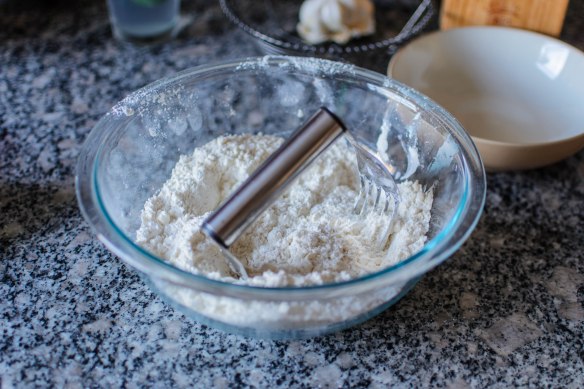
  • Add in the cooled apple and onion pieces and toss to ensure they are well coated with flour – this will help them stay evenly distributed in the biscuits rather than sinking to the bottom. Dump in the cubes of cold butter and use a pastry blender or your fingers to work the fat into the flour mixture. You are looking for butter bits the size of small peas.
  • Pour in the buttermilk or soured cream and use a fork or your fingers to mix it through the flour and butter mixture and bring the whole thing together into a shaggy, soft ball of dough (if it seems too dry and is not coming together, just set it aside for a minute or three – this will give the flour time to absorb the wet ingredients a bit more).
  • Turn the dough out onto a well floured board, sprinkle some more flour on top, and knead with your hands two or three times just to catch any loose bits. With a rolling pin or your hands, press or roll the dough into a rough rectangular shape about ½ an inch thick. Fold the dough into thirds, then roll out again. Repeat, again folding the dough into thirds and then rolling it out; this creates more flaky layers. If the dough sticks to your board, use the flat blade of a butter knife or a pastry scraper to help you lift it free. This is a fairly wet dough, so you’ll need to be stern with it, and you may need to sprinkle on more flour as you go.
  • After you’ve rolled and folded, rolled and folded (so you’ll have done a total of six folds), roll out once more, this time to a thickness of 1 inch, and use a 2½-inch round cutter (or the floured lip of a glass) to punch out biscuits. Push the cutter straight down through the dough; don’t twist until you are all the way through to the board, or you’ll crush the flaky layers! Repeat until you can’t punch out any more rounds. Re-roll the dough scraps (no need to fold again unless you want to) and repeat – with a 2½-inch cutter, you should be able to make14-15 biscuits around an inch in thickness.
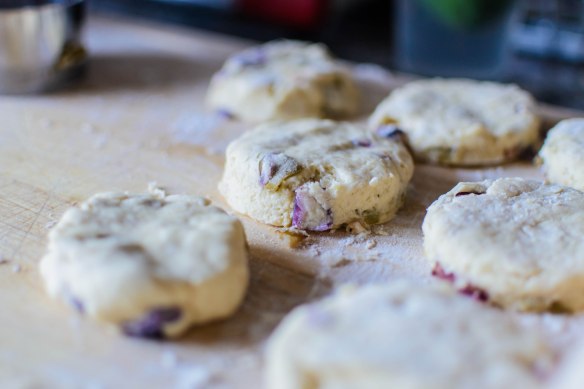
  • Replace the aluminum foil sheet on your baking tray with parchment paper, and arrange the biscuits on it, evenly spaced. I like to do about 8 at a time, but they don’t spread much, so you can crowd them a little. Bake 15 minutes (still at 400F), until they are puffed and the tops are golden and slightly dry. These won’t climb sky high because the apples and onions are wet and add extra weight, but they will still rise a bit.
  • Let cool for a minute or two, then serve warm (see suggestions above for accompaniments).

Midori Fridge Pickles

As both this site and my instagram feed will prove, I’m a big fan of refrigerator pickles. Really, I’m a fan of pickles in general, and have been since childhood, up to and including my Nana’s pickled beets, which marked not only my willingness to eat almost anything, but also one of the first instances in which I became aware that my parents were not above lying to me. One of the few foods I would NOT eat, at the time of my affection for the aforementioned pickled beets, was onion, in any form. Nana’s beets, though, included onions – thinly sliced, limp circles dyed brilliant purple. My parents, in their wisdom, played on my extreme gullibility and, when asked what those other things in the jar were, those clearly not beet things, told me they were “string beets.” I was then quite content to eat them.*

ANYWAY, canny parental treachery aside: fridge pickles! Vinegar, salt, sugar, dried or fresh herbs and spices, brought to a boil, poured over a thinly sliced vegetable of your choice that has been packed into a sealable container. Refrigerate for a few days, and presto! You have a perfect sandwich topper, a bright sourness to add to salads, or something homemade to serve alongside a cheese platter and impress whoever is happy hour-ing with you. I change up the kind of vinegar I use, and I like to play with what flavoring additives I use – I’ve tried everything from cardamom to fennel, but I find I like black mustard seeds the best (though I recently finished off some carrots pickled with dill, coriander, and celery seeds that were fantastic). They add a little bit of floral spiciness to the brew, but at the same time they also get pickled by the hot vinegar and become surprising little flavor bombs I eat right along with whatever vegetable they are accenting.

This particular batch arose, I’m slightly embarrassed to admit, thanks to an overcrowded liquor cabinet (I mean, it’s not a very big cabinet, but still). Between a few essentials, N’s growing collection of scotch, and some red wines of mysterious origin, the bright green elixir in the mottled glass bottle that featured in my go-to college drink just sort of got pushed out. I realized I hadn’t used it in years. Aside from a syrupy cocktail, which I wasn’t really excited about, what could I do with it?

I’m not quite sure how I made the connection, but it made me think of Bobby Flay’s pickled red onions. Lately I’ve gotten hooked on his Food Network show “Beat Bobby Flay,” which requires contestants to face off against him with their own best dish, which they’ve perfected and he only learns about in the moment. He usually wins anyway. A favorite tactic of his, no matter what the dish, is to pickle red onions with a combination of red wine vinegar and grenadine. This makes a lot of sense – the syrup contributes sweetness to the pickling solution and gives the onions a brilliant color. Plus, then he doesn’t have to wait for the sugar in his pickling solution to dissolve. Maybe, I reasoned, a combination of Midori and rice vinegar would do the same!

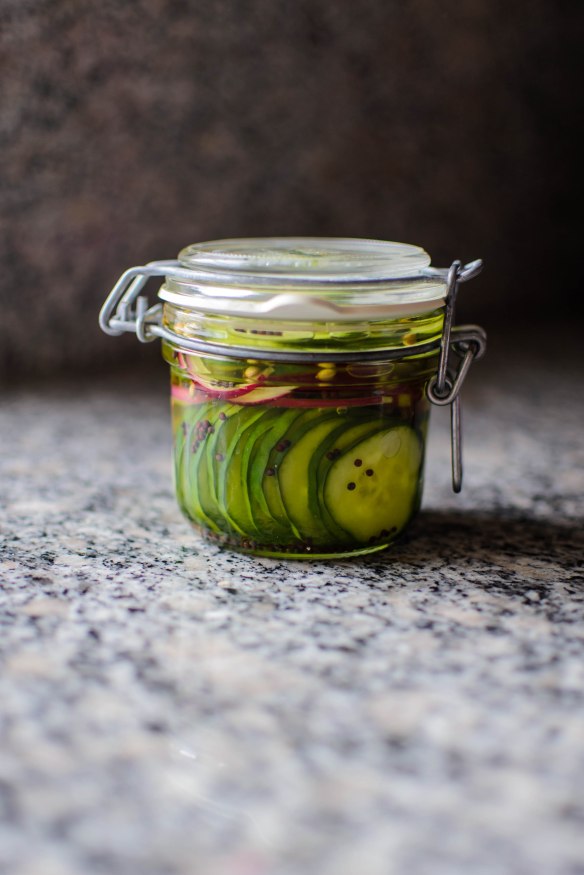
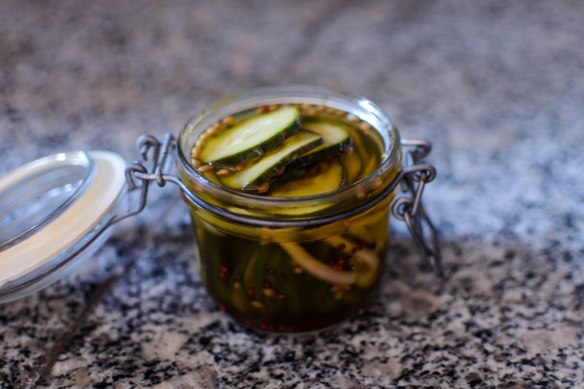
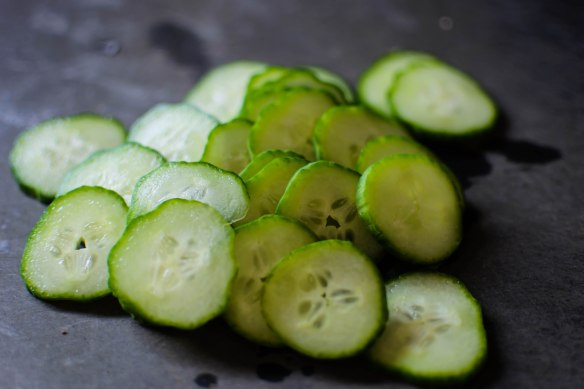
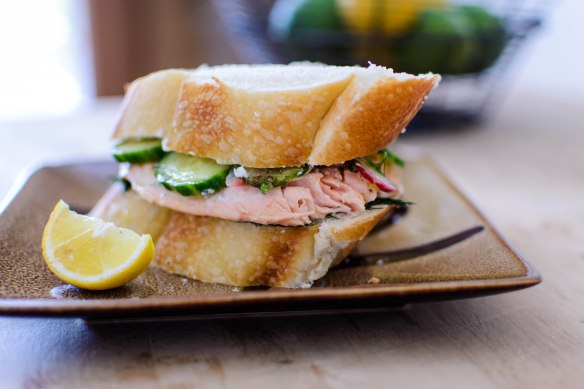
I settled on cucumbers thanks to the cucumber-melon combination so popular in hand soaps and lotions, but added a few slivers of red onion as well for interest. Rice vinegar, with its tang, seemed like a good pairing for the melon liqueur, and I settled on coriander as well as my favorite mustard seeds for additional flavorings. I’d hoped the green of the liqueur would transfer to my vegetables, resulting in neon green dyed cucumbers, but no such luck. The red color from the onions was leached away, but the cucumbers’ color remained about the same. Despite that minor disappointment, the pickles have a subtle but very pleasing melon sweetness a few days in – there’s a complexity here you wouldn’t have if you had just used sugar and vinegar in the mixture. The cucumbers stay crunchy, too, which is perfect. Though above I’ve listed some more sophisticated ways you can eat these, my preference is honestly just a straight-from-the-jar snack, usually while poised just inside the refrigerator door while I look around for what dinner will be. We also had them on salmon sandwiches, a crunch and sweetness to contrast the heat of wasabi mayo spread liberally over a toasted bun.

* not to be outdone, my dad’s oldest sister, whose kids also liked pickled beets but not onions, told their oldest that those purple strings were “munions” and were also believed.


Midori Fridge Pickles
Makes ½ cup pickling liquid for about ½ a large cucumber
About 15 minutes, plus at least 2 days resting time
¼ cup rice vinegar
¼ cup Midori or other melon liqueur
1½ teaspoons salt
enough thin slices of cucumber to tightly pack a 6 ounce jar – for me, this was about ½ of a large cucumber
a few thin slices of red onion, if desired
1 teaspoon whole coriander seeds
1 teaspoon whole black or yellow mustard seeds


  • In a small pot, bring the vinegar, Midori, and salt to a rolling boil. While you wait, pack the cucumbers, onions, and whole spices into a small jar with a lid that closes tightly.
  • When the liquid reaches a boil, stir briefly to dissolve the salt, then pour carefully over the vegetables to fill the jar. Put the lid on tightly, shake the jar to distribute (careful; if the lid isn’t on tightly, hot vinegar can seep out!), and store in the fridge for at least 2 days, shaking occasionally to distribute liquid and spices.
  • After at least 2 days, or when the cucumbers have soured to your liking, consume as desired!

Save

Save

Panzanella Toasts

The word “panzanella,” to an American, probably conjures thoughts of two ingredients: bread and tomatoes. Sometimes onion, cucumber, or various herbs join the party; I’ve even added a mix of lettuces and some white beans to make it a more substantial dinner. But the “pan” part of the panzanella is the most important: at its heart, this is a bread salad. As every blogger will tell you (which I learned this morning when I did this very thing,) if you look up panzanella and its history you will learn that this is a charming, rustic way of ensuring day-old bread doesn’t go to waste. You’ll also learn, interestingly, that tomatoes are not part of the original dish. Panzanella is an old salad, eaten and beloved before tomatoes made their way across the Atlantic. The original vegetable paired with the rehydrated bread in this salad was the humble onion. It is esteemed enough and beloved enough that it has found its way into Early Modern poetry; Emiko Davies provides a particularly nice overview of the salad and its literary as well as dietary record.

So, I’m all for food history – I think it’s important to know where dishes come from and who moved them along from what they were to what they are, and I agree that it’s especially crucial to not hide the cultural complications involved in a dish – barbecue removed from its African American roots, for example – but… onions and bread, with some vinegar and perhaps additional greens… just needs some help. Tomatoes are such a convenient addition because they contribute a punch of acid that the vinegar picks up and heightens. They also add juice to the mix, so that the bread gets flavored as it softens thanks to the reintroduction of liquid. Besides, it’s summer, and to me, few things are as summery as a tomato (maybe a crisp, effervescent rosé with a squeeze of lime, but then, no one’s saying you can’t have one or two of those alongside this salad).

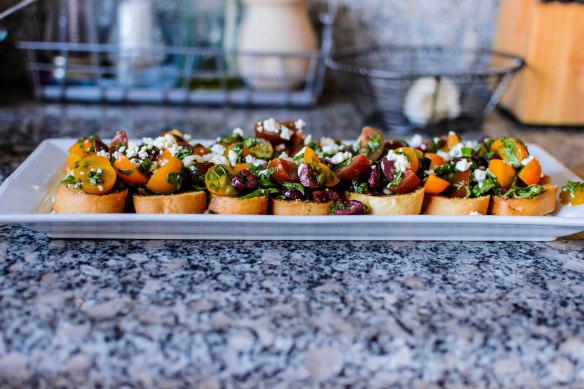
There are two general ways of dealing with the bread in a panzanella. One is toasting it, to emulate the dry staleness that is traditional but also to prevent it from disintegrating when dressed. The other is to give it a short bath. This works best with dry, day-or-two-old Italian bread – your standard baguette will break down immediately. I had such a baguette, so I was going to be broiling, not bathing. Panzanella is typically served as a salad, but given that I was already going down the toasting route, I thought about changing the format entirely: rather than a big bowl, why not a layer of crisp toast, topped with chopped vegetables and herbs, so the juice of the tomatoes and vinegar and cucumber soaked down into the bread? The interior of each slice would soften but the bronzed top would retain a bit of crunch to stand out against the rawness of the vegetables. And since we were already far from tradition, why not some meaty chunks of kalamata, a few capers, mixed herbs, and a sprinkle of feta to top the whole thing off?

The final combination of ingredients whizzes like pinballs around your mouth: tomatoes with their sweet tang. Briny salt from olives and capers and cheese. Watery crunch of cucumbers. The bitter, grassy edge of chopped parsley. Sour vinegar, and the unobtrusive richness of olive oil holding everything together. The toast gets rubbed with garlic while it is still hot – because why not? – and the dish becomes something you could offer up at a party as essentially the messiest crostini ever, or pile into a wide, shallow bowl as the main event of a light dinner when it’s too hot to think.

One planning ahead note to consider: this dish is best when it has had time to sit for at least two hours, as the juices of the vegetables, helped along by the salt you’ll add when you mix them together, start to pool and collect, giving you an intensely flavorful dressing to soak into your toast slices. Your best option, then, is to mix it up and toast the bread slices in the morning when it’s cool, then stow the vegetable mixture in the refrigerator for the day. Or, if you are a plan-ahead-er, make the salad the night before, and toast your bread on the day you’ll be serving. When you’re only about half an hour from dinnertime, pull the vegetables back out and let them sit on the counter, just to wake the flavors up a bit – cold tomatoes, unless they are blended into gazpacho or juiced and shaved into a savory granita, are nobody’s darlings.

Panzanella Toasts
Serves 2 as a light dinner; 6-10 as an appetizer
20-30 minutes active time, at least 2 hours resting time
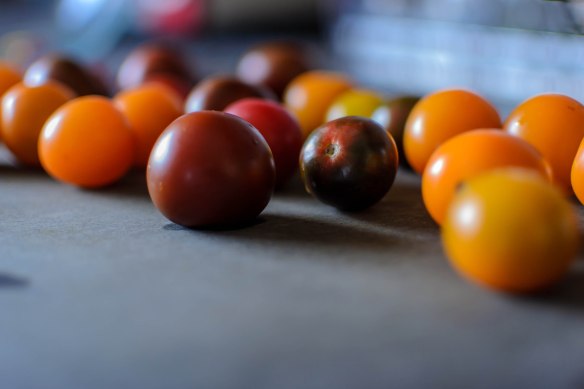
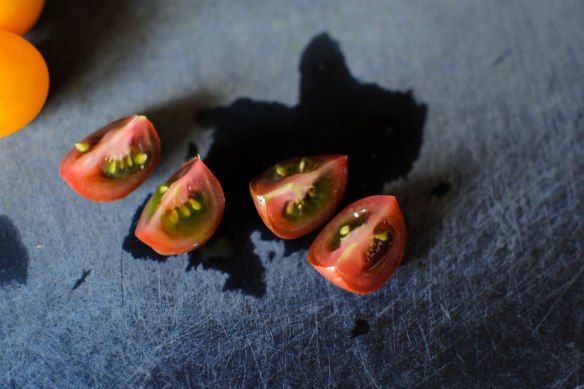
1 pound cherry tomatoes – I like a variety of colors for a prettier presentation – halved or quartered, if large
1 cup chopped cucumber
½ cup finely sliced green onions (2-3)
½ cup chopped kalamata olives
2 tablespoons capers
½ cup basil leaves, rolled and sliced into ribbons (chiffonade, if you’re fancy)
2 tablespoons other mixed soft herbs of your choice, such as parsley, dill, chives, etc.
2 tablespoons cider vinegar or balsamic vinegar
¼ cup olive oil + 1-2 tablespoons or olive oil spray
salt and pepper to taste
About ½ of a baguette, cut into half inch slices
1 garlic clove, halved
½ cup crumbled feta cheese


  • Combine all vegetables and herbs in a large bowl, toss lightly to combine. Add the vinegar, then the olive oil, and toss again. Taste for seasoning and add salt and pepper to taste. Cover with a lid or plastic wrap and refrigerate at least an hour and a half, though longer is better to collect more juices.
  • About half an hour before you are ready to serve, take the vegetable mixture out of the refrigerator and let it sit on the counter, just to take the chill off.
  • To make the toasts: heat the broiler on high (you can also use a toaster oven for this) and arrange the slices of baguette on a tray in a single layer. Spray or drizzle them with the remaining 1-2 tablespoons olive oil (you’ll likely use less than this if you are spraying), then sprinkle lightly with salt and pepper. Broil until evenly golden and crunchy, then remove from heat.
  • As soon as the toast is cool enough to handle, rub each piece with the cut garlic clove, then set aside until ready to serve.
  • To plate, arrange half of the toast slices on a platter or on your plate – a shallow bowl is also nice for this. Scoop big spoonfuls of the vegetable mixture onto the bread slices, including any juice that has collected. Scatter the crumbled feta over the top, and dig in.

Melinda’s Perfect Oven Poached Cold Salmon

A few weeks ago I attended a retirement luncheon for a now-former colleague (there are a lot of now-formers here lately, aren’t there?) at the home of one of her friends (and one of her now-former colleagues!). Our hostess made, among other perfect, not-too-heavy dishes for quite a warm day, a cold side of salmon so buttery and moist and perfectly cooked that a day or two later I had to email her to find out how she had done it.

Imagine my delight when, rather than a quick overview or an inexact “oh I just…” response, she sent me a page long, detailed explanation of both how she’d prepared the massive six pound piece of fish for that day, but how she does so when she’s only making a portion or two. Every step was well explained and justified, and she also told me where she gets her fish (a bit pricey for me at the moment, but maybe someday).

Because salmon is delicious cold, and because the actual cooking phase for this dish only takes about half an hour including the time spent preheating the oven, it’s a perfect dish for summer, when you don’t want to be cooking anyway (well, unless you’re me), and you can take care of the house-heating portion in the morning and stow the flaky, fatty main course in the fridge for the rest of the day.

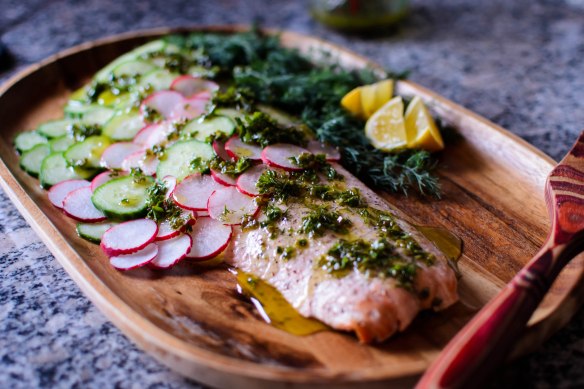
My hostess explained that she disguised a few cracks that formed during cooking with cucumber “scales,” and this struck me for two reasons: one, wouldn’t it be gorgeous to plate more of the filet with vegetable scales of different colors – green from cucumbers, florescent pink and white from radishes, maybe even yellow from baby golden beets – and serve a fish still enrobed in imitation of its original form? (Answer: yes, and a Google image search puts my meager shingling skills to shame.) Second, the idea of vegetables atop the fish made it seem only a step or two away from a salad. To complement the “scales” and disguise any possibility of dryness caused by potential overcooking, could you add a brisk, herby lemon vinaigrette right at the last minute, drizzling over fish and vegetables alike, and thus layer on one more fatty component to ensure moistness?

I decided to find out. Following my foolhardy practice of testing out new recipe ideas on guests, I determined to showcase M.’s fish – with a few of my adjustments – for some friends joining us for a weekend dinner.

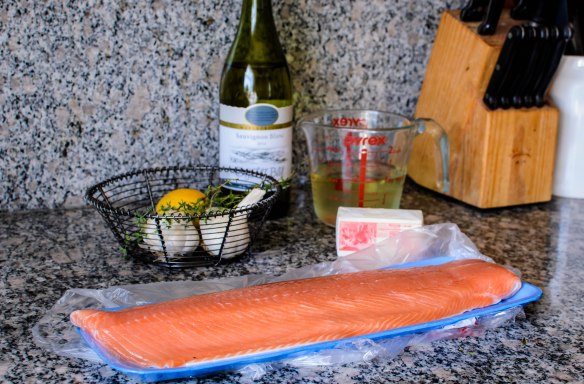
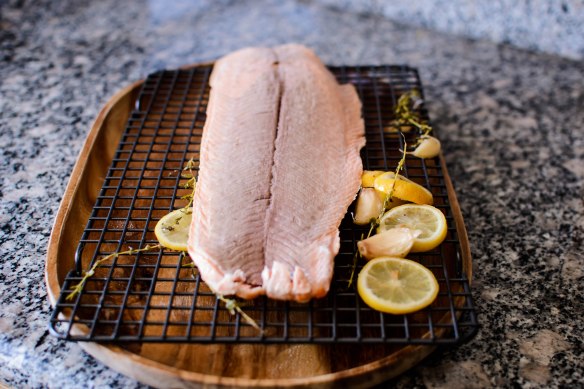
If you like salmon at all, you have to try this one. The pan, lined with aluminum foil for ease of fish manipulation and clean-up, preheats with the oven. Wine, garlic, lemon slices, thyme, and a few cubes of butter make the fragrant bath this cooks in, and though they lend subtle flavors, the star remains the salmon. The high heat of the oven does the job quickly, but the liquid bath means the method of cooking here is somewhere between steaming and poaching, which keeps the flesh of the fish tender and – not to overuse that word my former college roommate castigated as “too descriptive” – moist throughout. Slapping the fish straight onto the hot pan before adding the liquid and aromatics means the skin sticks to the hot surface, and when you remove the fish later you can peel the flabby skin right off along with its foil lining with little trouble.

What you are left with under all that, once it has cooled and you’ve meticulously shingled on some bright, thin vegetable slices (or not – up to you!) and then drizzled the whole thing with a bright, herby lemon vinaigrette, is a filet that is just cooked through, so the fish doesn’t so much flake as it does sigh into tender, buttery layers. Cold, you can taste the richness of the fish but the whole thing still feels light, and if you’ve been wise enough to plan out the rest of your dinner with make-ahead options, you only have to leave your guests for five minutes while you sweep into the kitchen and emerge with a gleaming, laden platter they will exclaim over (and, if you’re anything like me, immediately try to recreate!)

And if all that’s not enough for you, should there be any leftovers, stacked onto some soft, fresh slices of French bread that you’ve liberally spread with mayonnaise, or salted butter, or some whipped cream cheese, they produce a perfect lunch the next day that gives you enough strength to face the sink full of dishes that is the worthwhile consequence of every dinner party.

Melinda’s Perfect Oven Poached Cold Salmon
Serves 4-6
Prep and cooking time: about 30 minutes before, then another 15 after chilling, to decorate
Chilling time: 2-6 hours
For the salmon:
1½ pound filet of salmon, skin on
1 cup dry white wine
6 cloves garlic, lightly smashed
4 sprigs fresh thyme
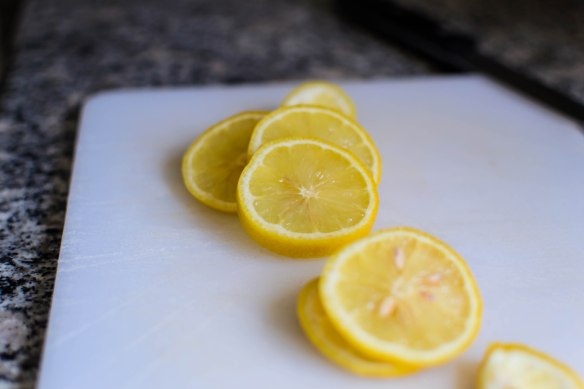
1 small lemon, thinly sliced
2 tablespoons butter, cut into small chunks
½ teaspoon salt
¼ teaspoon pepper
For the “scales” and vinaigrette:
About ½ a cucumber, skin on, cut into very thin slices
2-3 radishes, cut into very thin slices
zest of 1 lemon
1 tablespoon minced chives
1 tablespoon minced dill
1 tablespoon minced parsley
2 tablespoons lemon juice
¼ cup olive oil
salt and pepper, to taste
additional dill, to serve (optional)
lemon wedges, to serve (optional)


  • Preheat the oven to 425F with a foil-lined cookie sheet inside. As soon as you turn on the oven, take the salmon and wine out of the refrigerator to warm up a bit for more even cooking.
  • When the oven is preheated, remove the pan and carefully place the fish skin-side down on the hot foil. Pour the wine over the fish, then scatter the garlic, lemon slices, thyme sprigs, and butter on and around the fish. Sprinkle salt and pepper onto the fish, then carefully slide the whole pan back into the oven.
  • Cook in the 425F oven for 12 minutes, or until the fish reaches and internal temperature of 120-125F. It will be pale pink with some white splotches, and look slightly fatty on top. Remove the whole pan carefully from the oven and set on a wire cooling rack. Immediately, using a large spoon, baste the salmon with the cooking liquid, then let the whole thing sit for 10 minutes.
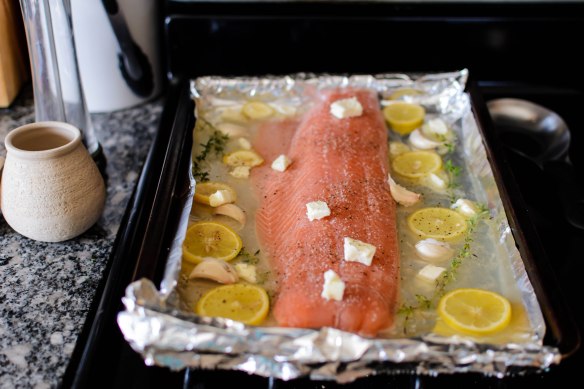
  • After 10 minutes, baste again, then drain off the liquid. Lay a cooling rack top-side-down over the top of the salmon, then, holding both cooling rack and cookie sheet, carefully flip the whole cookie sheet over (it’s a good idea to do this over the sink). The salmon will now be top-side-down on the cooling rack. Remove the cookie sheet and peel back the foil a little at a time – the salmon skin should stick to the foil and come off cleanly (mine stuck in one place and necessitated a little cajoling).
  • When the skin and foil are removed, place your serving platter serving side down over the top of the salmon (so the bottom of the salmon is on the part of the plate that will be facing up). Carefully, holding both serving vessel and cooling rack, invert so the salmon and the serving plate are now right-side up. Remove cooling rack.
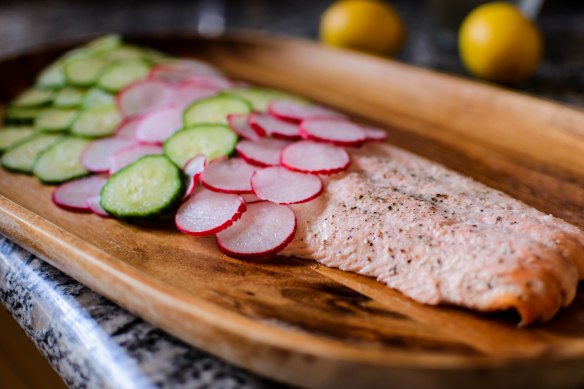
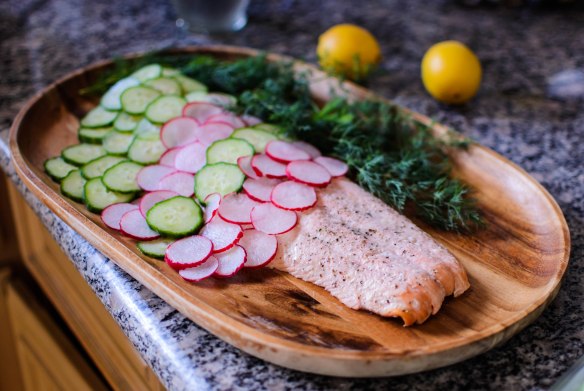
  • Cover the platter, salmon and all, with aluminum foil and refrigerate until cold.
  • 30-45 minutes before you intend to serve, remove the salmon from the refrigerator. We want it cold, but not chilly. While you wait for it to climb a few degrees in temperature, prep the cucumber and radish slices and make the vinaigrette: in a small measuring cup, combine the lemon zest, minced chives, dill, and parsley. Squeeze in the 2 tablespoons lemon juice, then whisk in the ¼ cup olive oil. Season to taste with salt and pepper and set aside until needed.
  • To decorate, shingle the sliced cucumbers and radishes over some or all of the fish in a pattern you like – you can see what I did above, and the internet has, as always, many gorgeous alternatives. If you wish, arrange some bushy dill sprigs in the corner of your platter and pile some lemon slices on them for diners to choose at their whim.
  • Just before serving, drizzle the fish and its vegetable “scales” with the lemon vinaigrette, using a whisk or a fork, if needed, to distribute the herbs evenly (they may come out in little clumps). Serve with a large fork or a wooden spatula.

Save