Dreams Deferred

Sometimes, there are weeks where you never stop working, but you manage to whip up a brilliant (well… passable?) new recipe, take and edit a series of deep, detailed pictures, all while lesson-planning and grading papers and researching new curriculum ideas and folding laundry the same day you did it!

Food Blog Photo Fridays 2013-2735But sometimes, there are weeks like this past week, which was the last week of my semester. This year, I started a new job. I’m a full-time instructor at a local community college, which means I’m teaching four classes, on campus five days a week, and overseeing at least 110 students, all of whom wrote about 30 pages during the course of the 16 week term. I’m not complaining. This is not one of those “teachers have it rough” sagas (though as a profession, it is challenging). What I’m saying is, imagine what this means for the last week of the term! Student conferences Monday, Tuesday, and Wednesday on final papers, said papers due on Thursday and Friday, and one tiny little week before all grades, paperwork, and records are due. And then the power goes out in your office on Friday, so you have to leave. And your laptop decides after a mere 3 years of mostly-faithful service that it’s not interested in retaining battery power much anymore, so you spent a morning running around town to replace it. And you remember that you and your husband are leaving town in less than a week to visit family, which cuts that whole grading period short.

Holidays 2013-2850This is all a long-winded excuse apology reality-check for why I don’t have a recipe for you this morning. I had dreams, of course (and still do… stay tuned…), but when the afternoon sun entered that golden, slanting phase and I still hadn’t even started the 2-day, gooey-sweet, holiday-flavored project I’d intended to share with you here today (any guesses?!), I decided that sometimes there are towels that need to be thrown. So I did. I bought ingredients, but then graded all day Saturday. And then, because it really was a rough week for many reasons, N. and I decided to reward ourselves with a visit on Sunday to the happiest place on Earth.

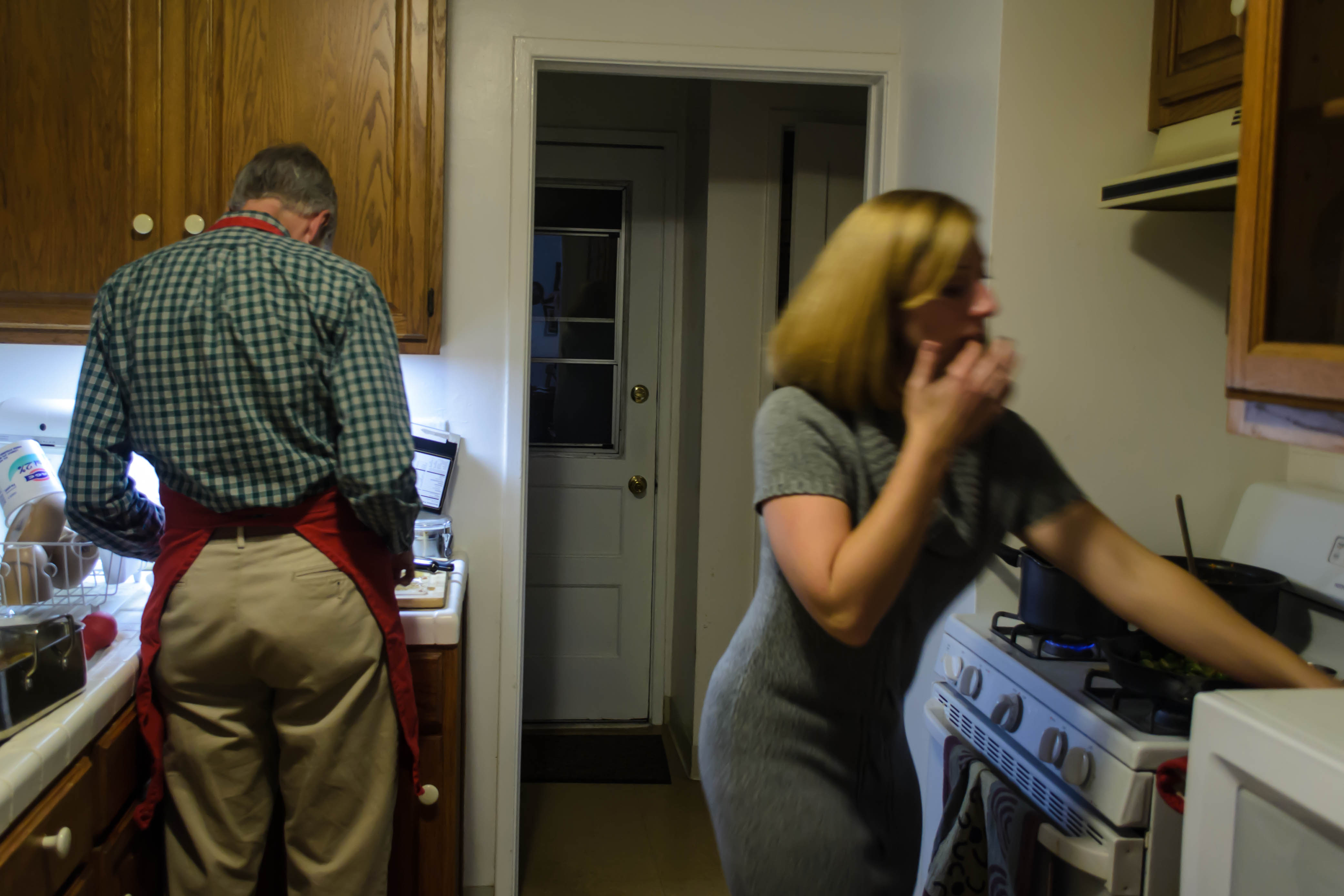
So, friends, no recipe today. Instead, here’s my favorite photo from the Thanksgiving holiday N. and I spent with my parents and sister in our itty-bitty house. It’s blurry. But that’s what I like about it – it captures my usual state in the kitchen: a flurry of motion from step to step, from idea to idea, from taste to taste.

Holidays 2013-2859I hope this finds you hale and hearty, not to mention happy, and that your holiday planning is going well.  I’ll be back in a week with a holiday sweets post and recipe, but in the meantime if you need some inspiration, I suggest truffles, or espresso molasses spice cookies, or cranberry walnut bread, or lemon ginger shortbread. Happy holiday baking!

Cranberry and White Chocolate Sweet Rolls

When I read this month’s Twelve Loaves premise of holiday breads, I was stumped for a few days. To me, and to my family, holiday bread means challah, and not only have I done that one here, but I’ve done it for another Twelve Loaves challenge! I certainly couldn’t reprise it. “Holiday” would have to mean “in the spirit of,” and not “in my own traditions.” I’d been kicking around the idea of pairing fresh cranberries and hunks of white chocolate in a cookie for some time, and somehow* this flavor combination morphed into the conception for a sweet roll. Softly sweet, chewy and rich, embracing a sweet tart filling, and drizzled all over with a white chocolate and cream cheese glaze, and the holidays are basically accounted for.

Food Blog December 2013-2912I used my Nana’s sweet dough again – it is proving to be such a reliable and user friendly recipe that I see no reason to change it. The dough comes together into an almost play-dough consistency when it’s been kneaded enough, and it rises, slow and steady, tender but elastic, easily rollable, and neutral enough in flavor to accept any filling you throw at it. I opted to dress it up for the season with a touch of vanilla. A grating of orange peel would probably be lovely as well.

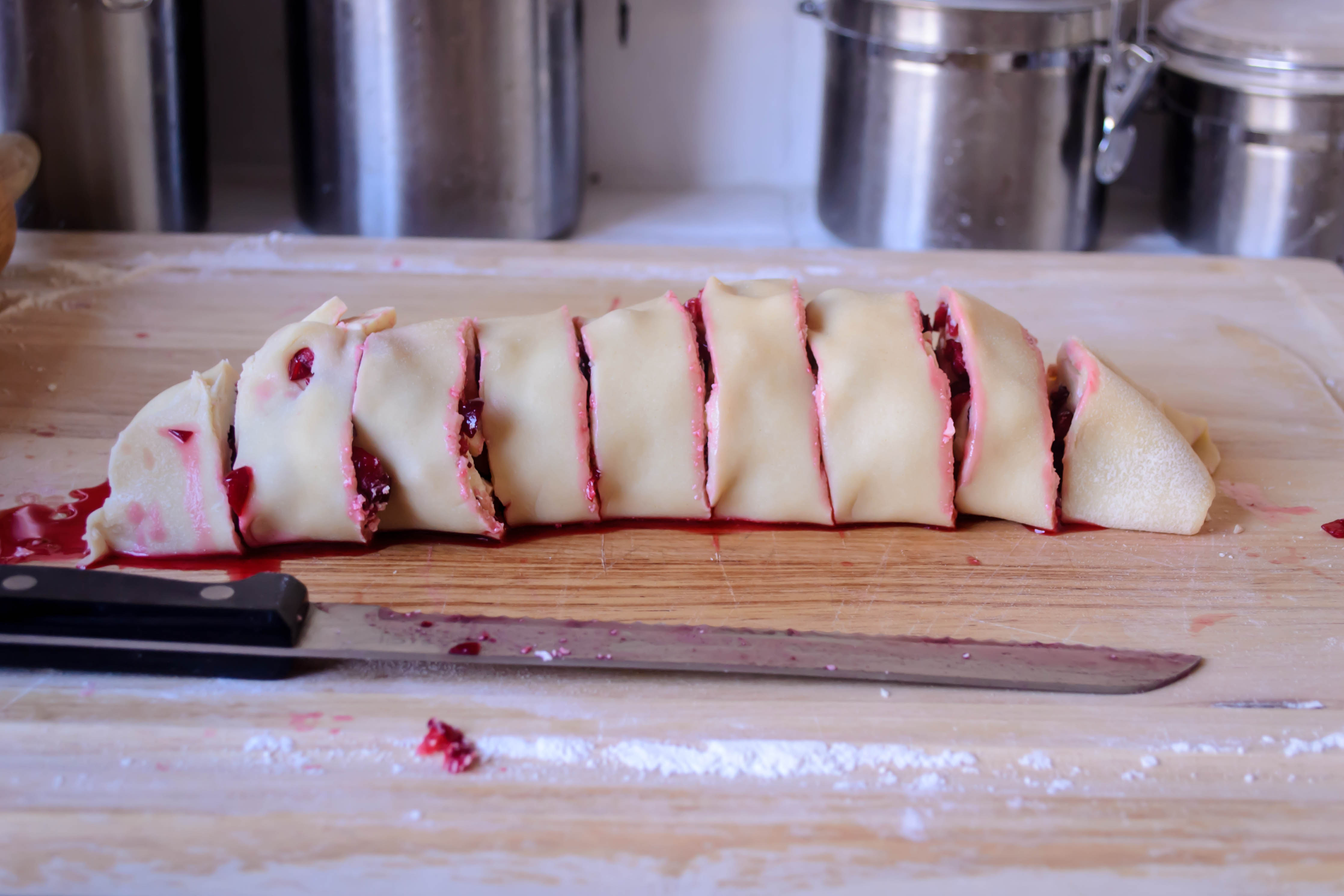
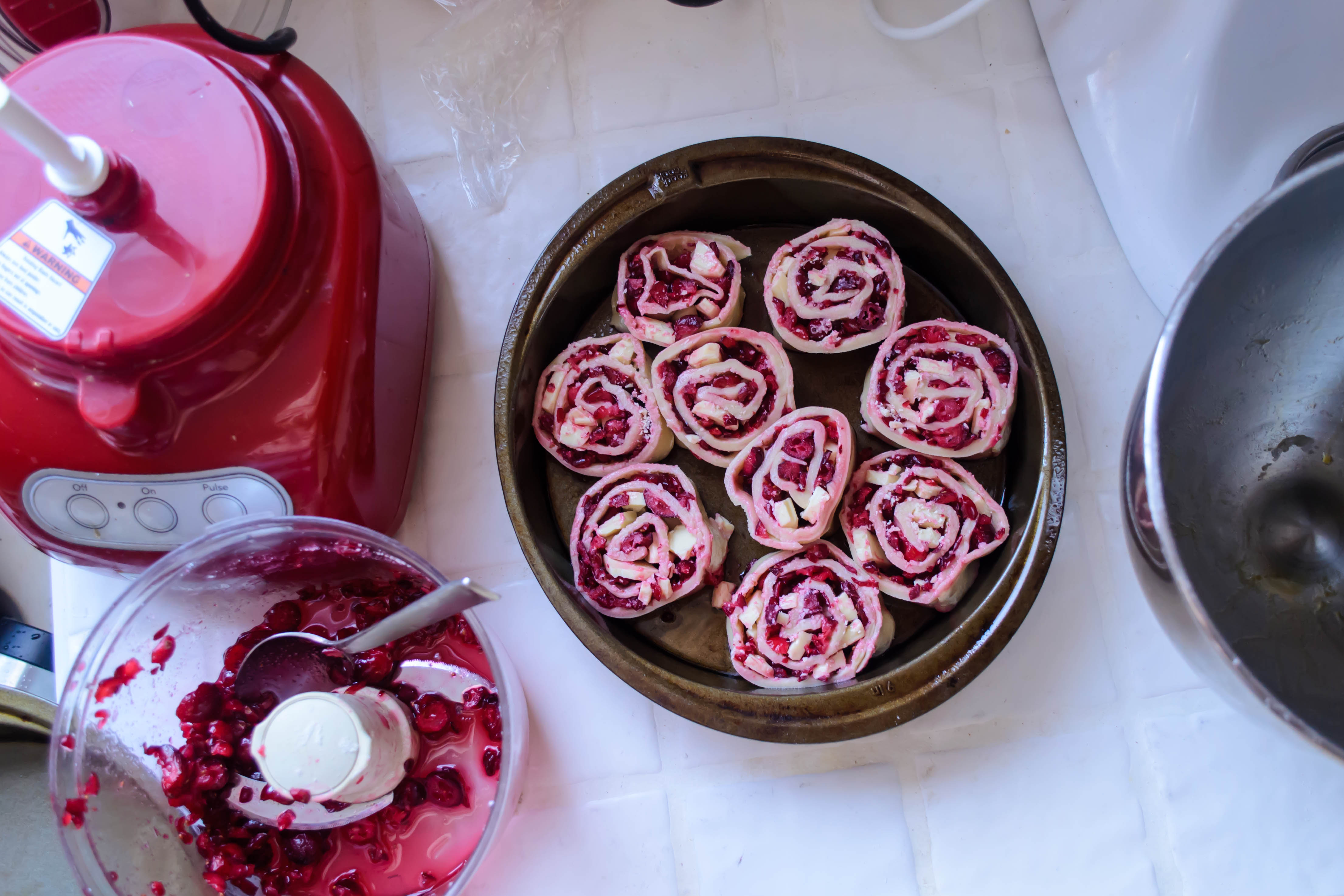
Food Blog December 2013-2886Food Blog December 2013-2891Food Blog December 2013-2894Food Blog December 2013-2900These take two rises – one to let the dough expand and form gluten chains, and one after rolling out, filling, and slicing, to redistribute the yeast and develop the flavor a bit more – before a quick 20 minutes in the oven. I went for mini sized rolls, so I could have more of them, which entailed dividing my dough in two.

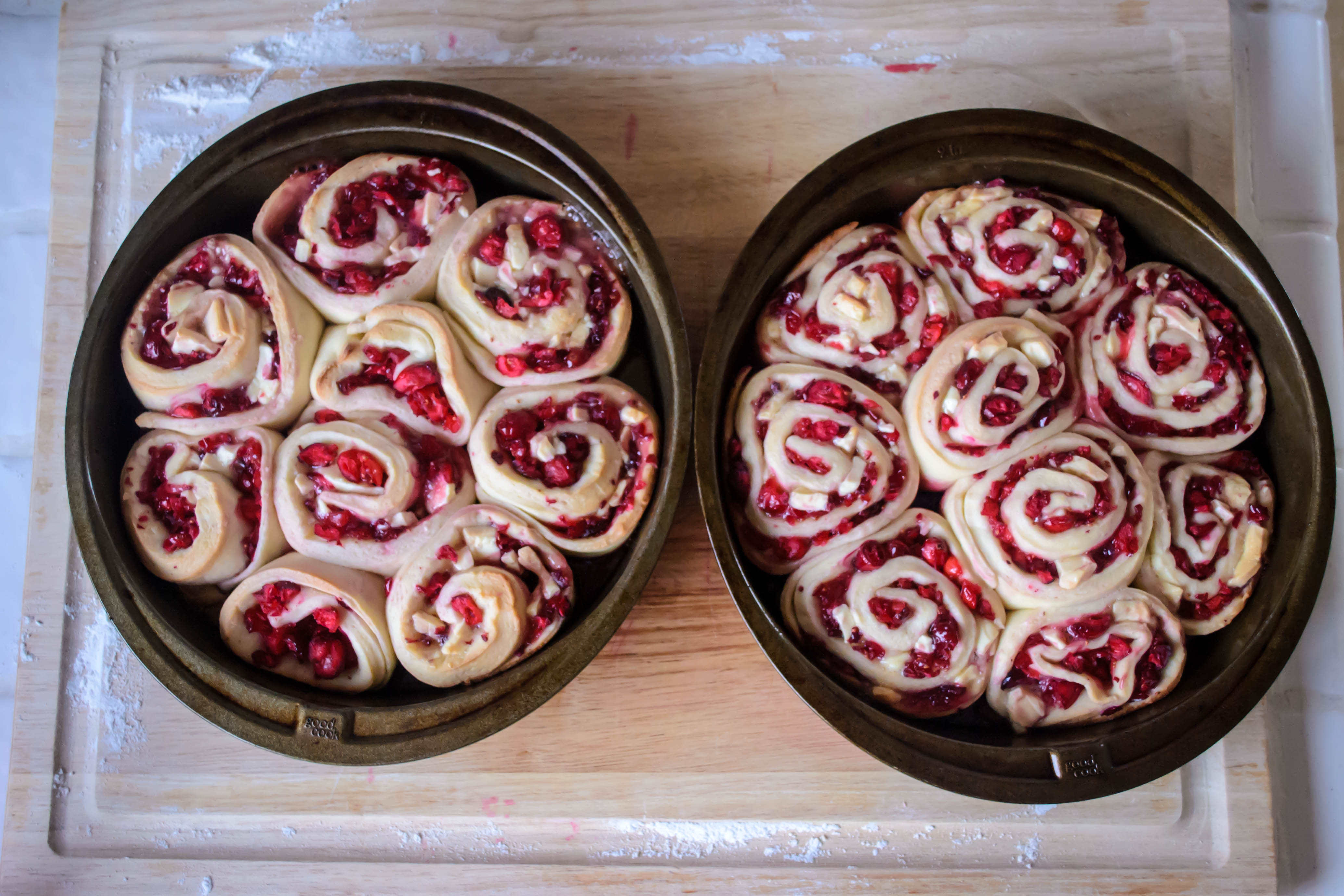
Food Blog December 2013-2898Food Blog December 2013-2899Food Blog December 2013-2902You could certainly also do full-sized rolls, which might require a slightly longer baking time. While they are still hot, golden and just crusty on top, but bubbling around the sides with the escaped gush of cranberries, you tip a smooth, ivory stream of melted cream cheese and white chocolate over them, and let them cool as long as you can stand it before serving. The brightness of the cranberries peeking out from under the frosting makes a nice contrast that does reference the Christmas holiday, especially if you really go for the obvious and serve it on a green plate. Not that I would ever do such a thing.

Food Blog December 2013-2901Food Blog December 2013-2904We thought these were quite tasty, and a refreshing twist; certainly worthy of ending up in my department mailroom as a last-week-of-school treat, but if I’m honest, they are not the “match made it heaven” combination I had thought they would be. Cranberries and white chocolate are a holiday fling – experimenting, having fun, but they know it won’t last. They will probably break up come January, and cranberry might skitter home to orange to make amends. White chocolate, on the other hand, stimulated by cranberry’s tartness, might shack up with raspberries for a while, and you guys, what about tender raspberries and shards of white chocolate all wrapped up in a soft, champagne cake roulade? I think I just made you a come-summer promise…

Food Blog December 2013-2907* “Somehow” probably means Deb, whose recent post on cranberry sweet rolls could just possibly have kicked my brain into this direction.

Food Blog December 2013-2916

Cranberry and white chocolate sweet rolls
Makes 18 mini sweet rolls
For the dough:
2 teaspoons yeast
½ cup warm milk
1 egg
1 teaspoon vanilla
¼ cup softened butter
1 teaspoon salt
¼ cup sugar
2 ¼ cups bread flour
For the filling:
12 ounces fresh cranberries
½ cup sugar
8 ounces white chocolate, broken into small pieces (or you can use white chocolate chips)
¼ cup melted butter
For the icing:
4 ounces cream cheese
4 ounces white chocolate, broken into small pieces (don’t use chips here – they contain a stabilizer that prevents them from melting silky smooth)
1 tablespoon milk or cream


  • In the bowl of a stand mixer, combine the warm milk and the yeast and let them stand for five minutes while the yeast wakes up. It will begin to smell bready and bubble slightly.
  • Add the ¼ cup softened butter, the egg, and the vanilla to the yeast and milk combination and mix with the paddle attachment just until combined.
  • Add the sugar, salt and two cups of the flour to the wet ingredients and mix with the paddle attachment just until a wet, softly shaggy dough forms. Switch to the dough hook attachment and knead for 6-8 minutes or until the dough comes together into a firm ball and is somewhere around the consistency of play-dough. If the dough is extremely sticky, add the additional ¼ cup of flour, 2 tablespoons at a time, just until the dough is workable again.
  • After 6-8 minutes of kneading, place your ball of dough in a buttered or oiled bowl (I just lift it out of the stand mixer bowl, spray it with non-stick spray, and put the dough back in), cover with plastic wrap, and let it rise until doubled – usually about 90 minutes. My house was on the chilly side on the day I made this, so it took me more like two hours.
  • While the dough rises, make the filling components: place the cranberries and the ½ cup of sugar in a food processor and pulse three times for three seconds each. This sounds fussily precise, but you don’t want to decimate the cranberries; just break them up a bit so they will cook faster. Chop the white chocolate and melt the butter, and you are ready to go.
  • Punch down the dough by depressing your fist gently into the center of it to release the trapped gasses. Let it sit for five minutes to get its breath back.
  • If you are making mini rolls, divide the dough in half. Place the half you are going to work with on a floured board, and reserve the other half in the bowl you let it rise in.
  • Using a floured rolling pin, roll out the dough into a rectangle of about 9×12 inches, or as close as you can get. It will be quite thin, but that’s okay. It’s going to expand when it rises again on the counter and in the oven.
  • Brush the rectangle of dough with the melted butter, leaving at least a ½ inch margin on all sides. Then, respecting the same margin, sprinkle on half of your cranberry mixture and half of your chopped white chocolate.
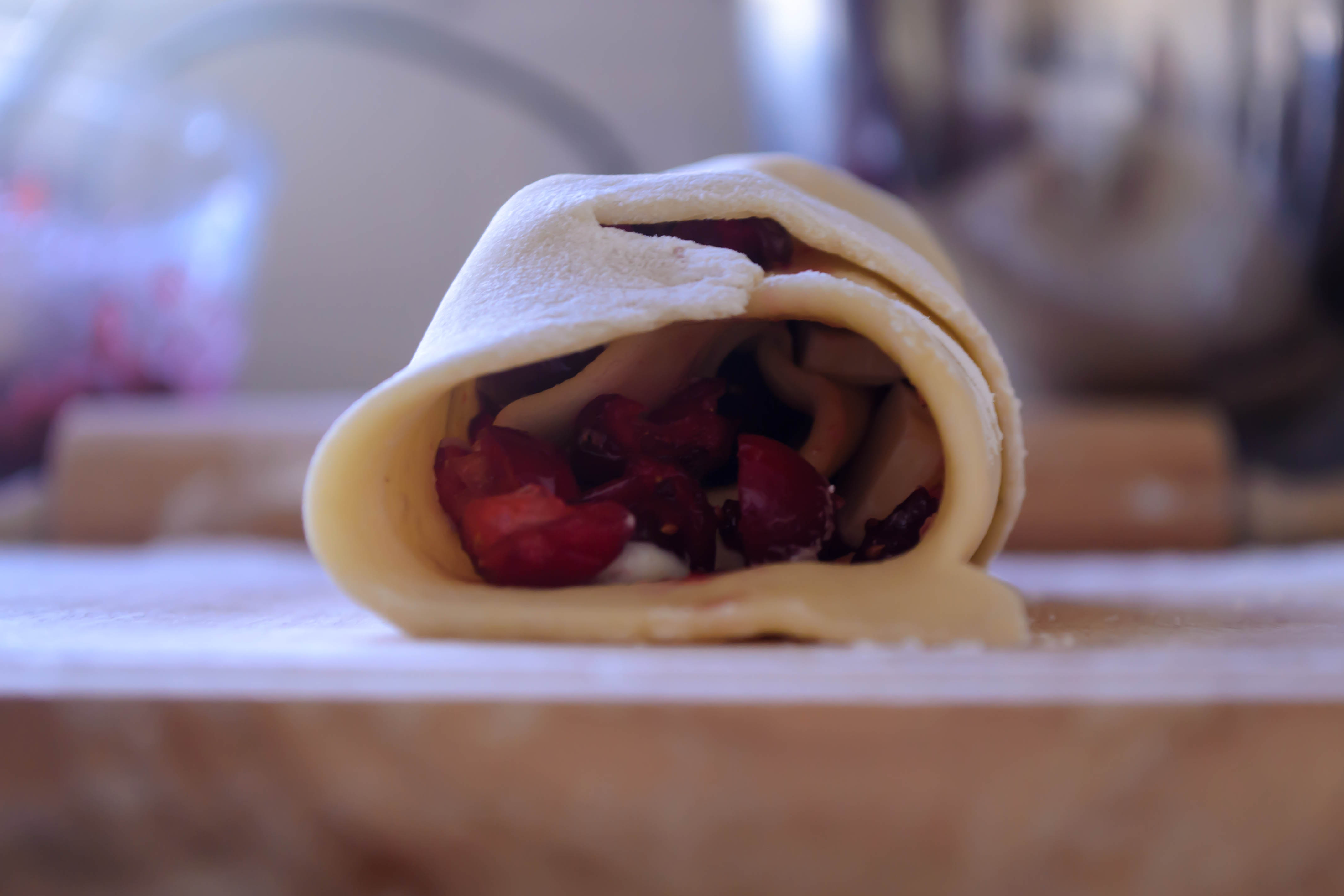
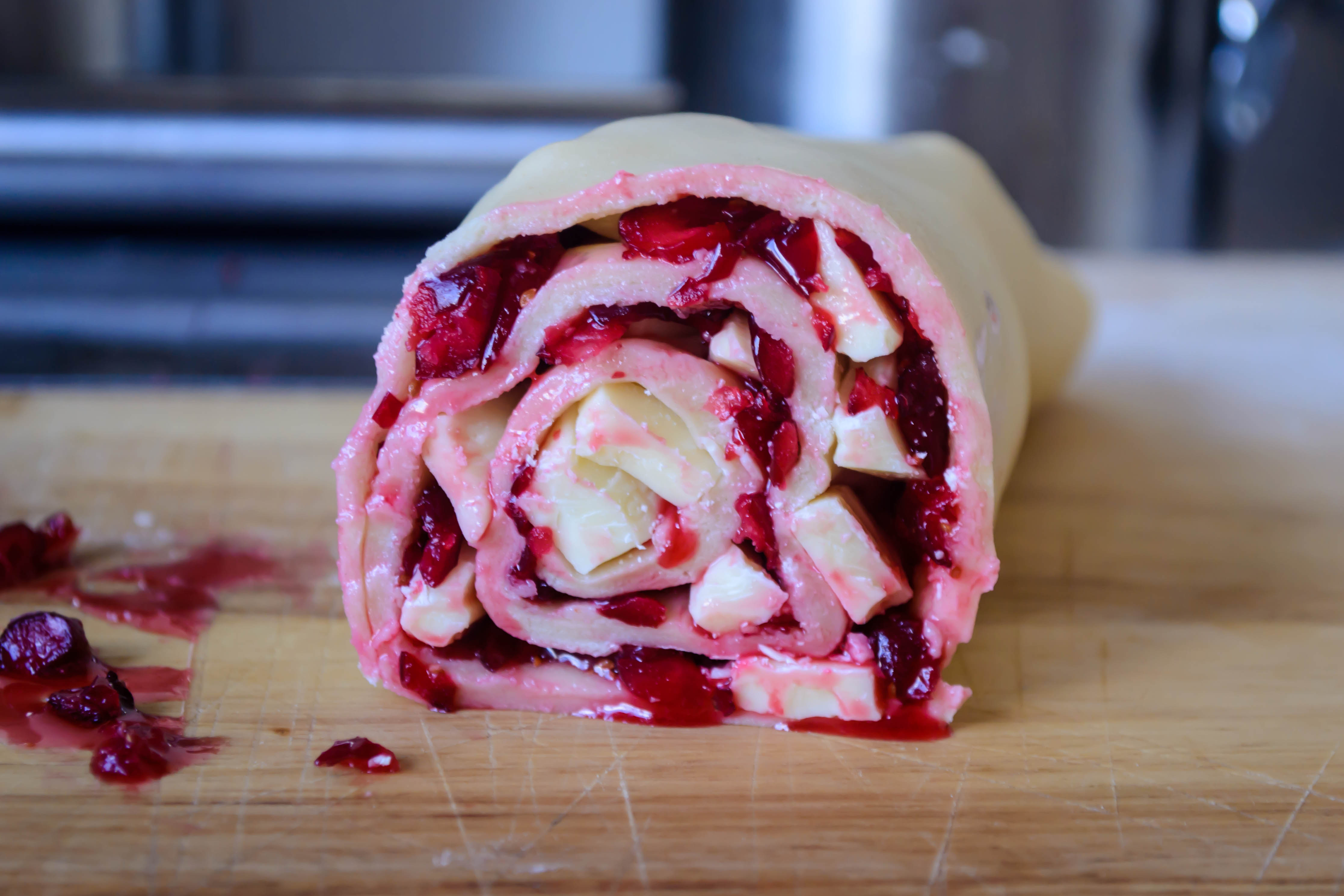
  • Now roll up the dough: starting with the long edge closest to you, begin rolling in the middle, then moving out evenly to each side, to create a long log. Crimp the long edge on the other side firmly to the roll itself to prevent deconstruction later. A few cranberry bits may fall out as you do this; that’s okay. Just stuff them back in.
  • Slice the log into 1-inch slices with a sharp serrated knife, moving the knife back and forth across the surface but applying very little pressure. This will produce truly round sweet rolls, rather than smashed, oddly-shaped ones.
  • Place the slices cut side up, so the red-spiked spiral shows, in each of two greased 9-inch cake pans. They should be spaced evenly, and don’t worry if there is room in between them, since they are going to rise again.
  • Cover each pan with plastic wrap and let rise again in a warm place for 30-45 minutes. Meanwhile, preheat the oven to 375F.
  • Once the rolls have puffed again, jostling and pressing against each other in the pan, stow them in the preheated oven for 18-20 minutes, or until lightly browned on top and cooked through. Remove from oven and set on wire racks to cool.
  • While the rolls bake, you can make the icing. In a small pot, combine the cream cheese, white chocolate chunks, and milk or cream. Over low heat, stir constantly until everything has melted together into a velvety, smooth sauce (I mean it – if you step away, this is almost guaranteed to seize, getting grainy and unsalvageable). Once you have liberated the sweet rolls from the oven, pour the sauce liberally over them, using a spatula to spread it around evenly, if needed. Let everything cool before serving, so the sauce can solidify into icing, and the rolls themselves can firm up and stay together better.
  • These taste just as good straight out of the refrigerator as they do warm in the pan. Store them in the fridge covered with foil or in an airtight container for two to three days.

Parsley Pie Crust

Food Blog January 2013-0412

I’ve never been one to start at the beginning.  Stories require backing up and wait- wait- let me explain who that was.  Dreams are recalled near the end, and only slowly do the initial details return.  Directions often skip a step or come in fuddled order.  I don’t know whether this is a consequence of a disorganized brain, or whether it’s a signal of confused genius (hah!).  The Odyssey, with its in media res trope, was an enormity to my teenage brain when I first encountered it during high school.  What a wonderful way to present information, and how validating and revelatory it was to find out that this was a classical method!

So it was no big surprise that, when facing the first week of my dough challenge, I couldn’t start at the beginning.  Ruhlman arranges Ratio with doughs first, true, but he seems to traverse the category in a solids-to-liquids order.  Bread comes first, pate-a-choux closes the chapter.  To me, this was even more intimidating than the idea of tackling dough at all.  Bread is something I want to build toward, not race into headfirst.

I flipped ahead in the book to take on my own personal Waterloo: pie crust.  Supposedly “easy as.”  But I’ve never found it that way.  My crust is somehow tough AND crumbly.  It collapses, it sticks, it refuses to roll in a smooth circle, it requires patching and crimping and pressing and it’s just easier to buy Pillsbury.  But now I’m in it, and I’ve got to conquer this thing.

Despite this personal beginning, it wasn’t enough for me to just make a pie crust.  You guys have probably all made pie crust.  How boring would it be for me to just report on the quiche I made?  At the end of the pie crust section, Ruhlman lists a number of alternatives and additions.  Ground nuts, cracked peppercorns, a dusting of spices, parmesan cheese?  I had never considered this.  I had to try it out.

Our quiche would have a parsley crust.  Coincidentally, this made my experimentation a perfect candidate for submission to Weekend Herb Blogging.

(I started with parsley, and then I started imagining adding lemon zest, and big particles of cracked black pepper, and then I realized that I just wanted some of the herbed buttermilk biscuits I so heralded when I made them for my Bittman project.  Biscuits are in our future, friends.)

The ratio for pie dough – at least this one – is 3, 2, 1.  Three parts flour, two parts fat, one part water.  This is by weight.  The problem here is, despite my desire to conquer this beast, and despite the impressive (read: verging on ridiculous) collection of kitchen tools I’ve amassed over the years (pot sticker press, anyone?), I don’t have a kitchen scale.  That makes it hard to work in weights.

Food Blog January 2013-0385

Fortunately, though he advocates it persistently, Ruhlman provides the general weight range for a cup of flour, so I worked with that.

Every pie crust recipe I’ve ever read, Ruhlman’s ratio included, calls for the water to be ice cold.  I get this: you want the fat to remain cold during this construction phase so it can melt and leave flaky pockets as it bakes.  Ice water keeps things frosty.  I decided to skip the ice cube middle man and stuck my water in the freezer for a few minutes.

Food Blog January 2013-0396

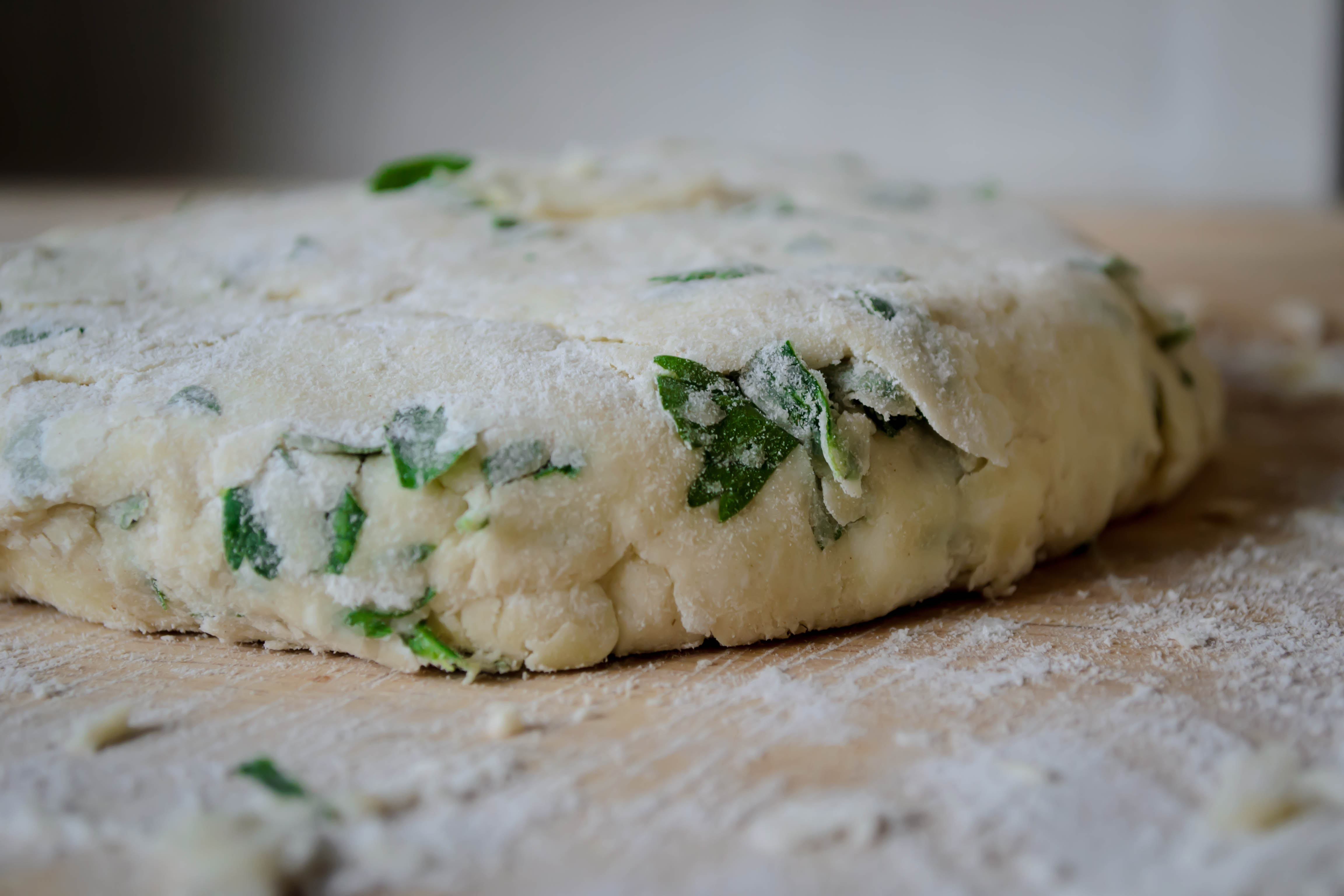
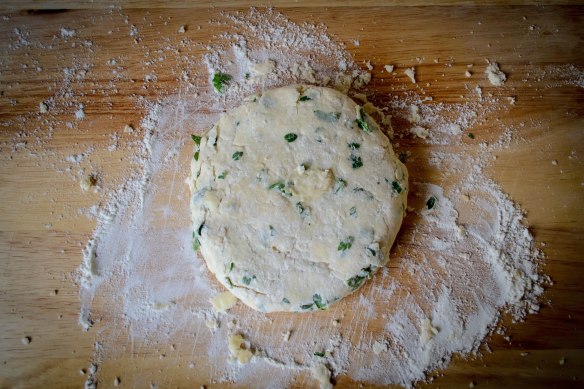
Usual procedure here: cut in the butter, add salt (and parsley, in this case), incorporate just enough water to bring things together, form into a disk and refrigerate to firm the fat back up.  Then you can roll out, fill, and bake.
Food Blog January 2013-0398

Food Blog January 2013-0401

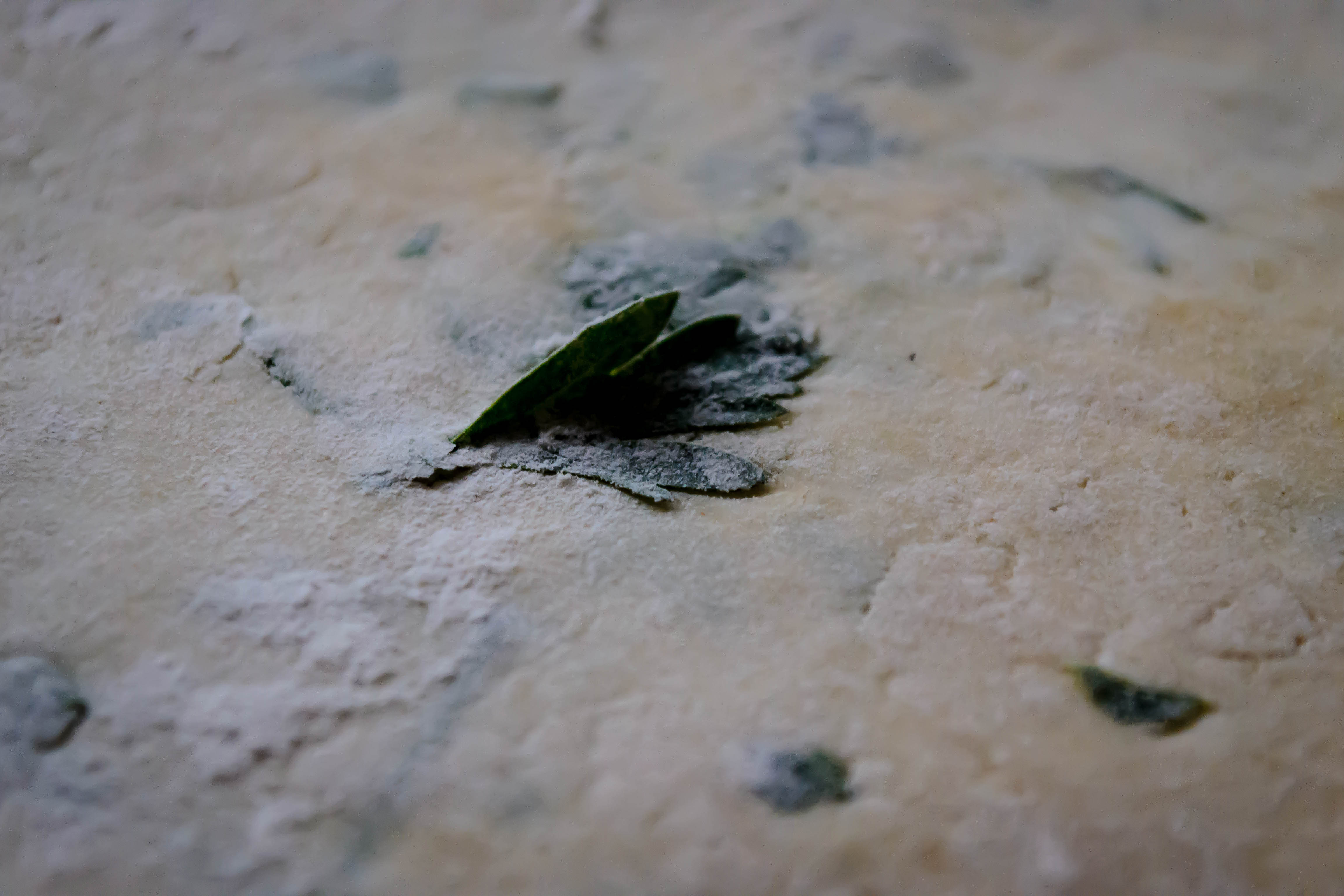
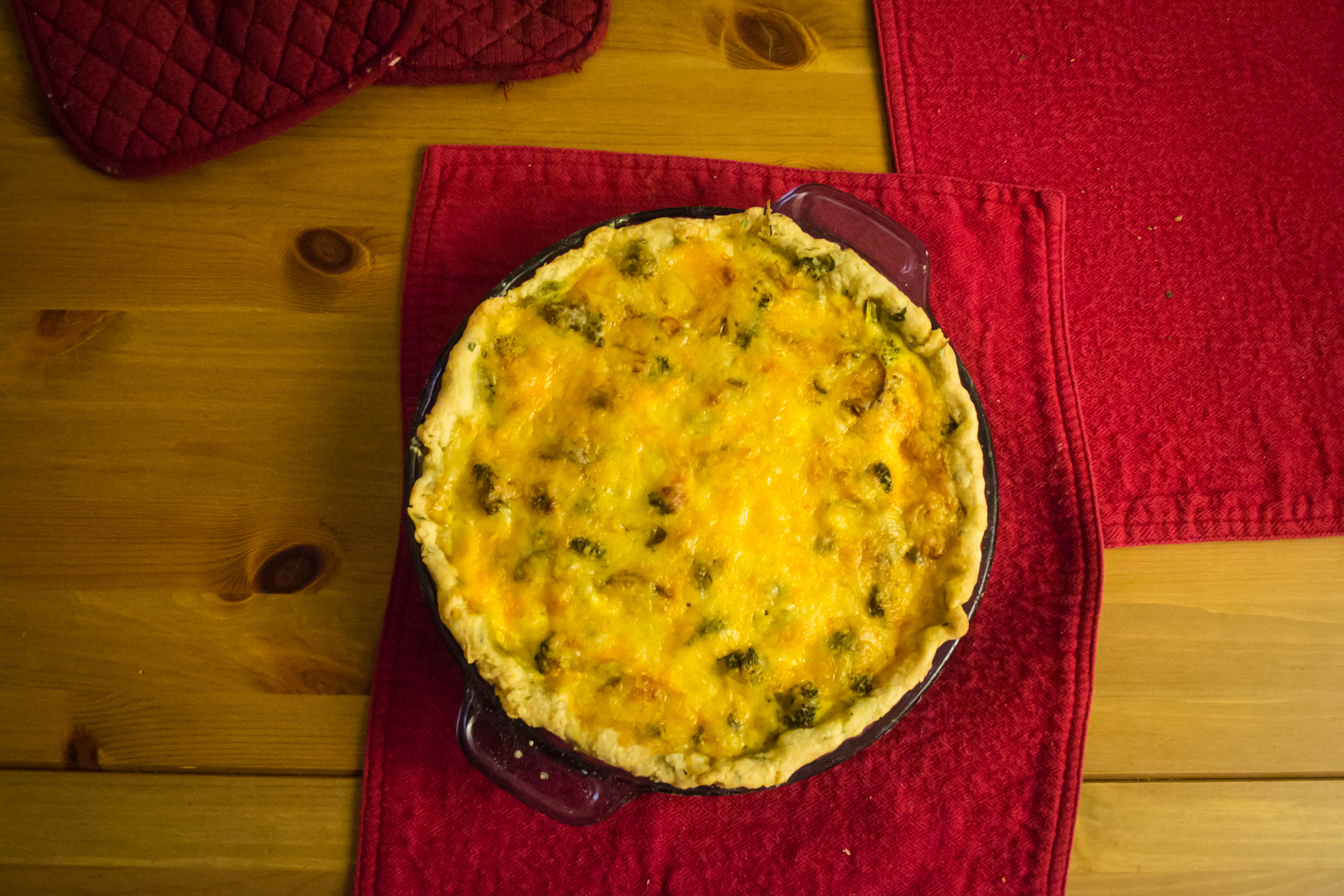
That all sounds pretty simple, but somewhere in there things tend to go wrong for me.  This crust was (relatively) easy to work with.  It didn’t disintegrate, it didn’t melt, it didn’t even crack in too many places.  I think playing with biscuit and cracker doughs this past year accustomed me to the feeling and delicacy required to not destroy a circle of dough.  It was barely moist and not exactly elastic, but it did have a bit of give.  It baked to a lovely golden color, the flecks of green were intriguing and special, and the quiche that rested just wobbling between its sturdy walls was delicious.

Food Blog January 2013-0407

But the crust was tough.

I can assume a few reasons for this.

1.) It’s possible my ratio was off.  Because I didn’t weigh my flour, I may have had too much or too little in the mix.

2.) More likely, I overworked the dough.  I pressed and kneaded and folded until the dry bits at the bottom of my mixing bowl were willing to play along, and perhaps I was too insistent about that demand for inclusion.

Food Blog January 2013-0408

Like everything else, it seems pie crust needs a revisit to get it right.  The feeling of the dough between my fingers is familiar, but I have to learn its textural intricacies.  How much water is just enough?  How crumbly can it be and still hold together?  How much of the dryness do the fat and water absorb while the wrapped disk rests?  Without another attempt or three, I won’t know.

But it tasted good.  It crunched against the quiche and while it didn’t shatter at the slightest fork pressure, it did have that dryness against the teeth you expect from crust.  The parsley contributed a grassy freshness and made the flavor more complex, especially the following day.  I could see this working similarly well with dill, or thyme, or maybe even marjoram, all of which pair nicely with broccoli and mushrooms.

Onward, then.

Food Blog January 2013-0417

Broccoli mushroom quiche with parsley pie crust

(The quiche recipe is my mom’s.  I’m sure she got it from somewhere, but I don’t know that she even knows where anymore.  I’ve changed very little here, though her version usually contains bacon instead of mushrooms)

Crust:

1 heaping, lightly fluffed cup of flour (or 6 oz., if you’re doing this properly)

1 stick (8 TB, 4 oz., etc) butter, cut into 16 or so pieces

2-4 oz. very cold water

Pinch salt

2 TB chopped parsley (or dill, or oregano, or marjoram, or thyme… whatever you like best, I expect)

Filling:

1 cup small broccoli florets

6-8 crimini mushrooms, sliced thinly

¼ cup green onions, diced

Olive oil

Salt and pepper to taste

4 eggs

1 cup milk

1 ½ cups grated extra sharp cheddar cheese

½ cup grated swiss cheese

First, make the pie crust.  Measure out your water and put it into the freezer while you assemble your other ingredients.

In a bowl, combine the flour and butter pieces.  With your hands or a pastry blender (I always use the pastry blender – I hate the too-dry feeling of slowly crusting flour on my hands), cut the butter into the flour until it is pea-sized chunks and smaller.  Add the salt and herbs and combine gently.

Dribble in some water – 2 oz. to start with – and combine.  If the dough really isn’t coming together, add more water.  When you can press a few teaspoons of the dough between your fingertips and it stays together, turn the whole mass out onto a floured board and work lightly to bring it together into a disk.

Wrap the disk in plastic wrap and stow it in the fridge for half an hour or so.

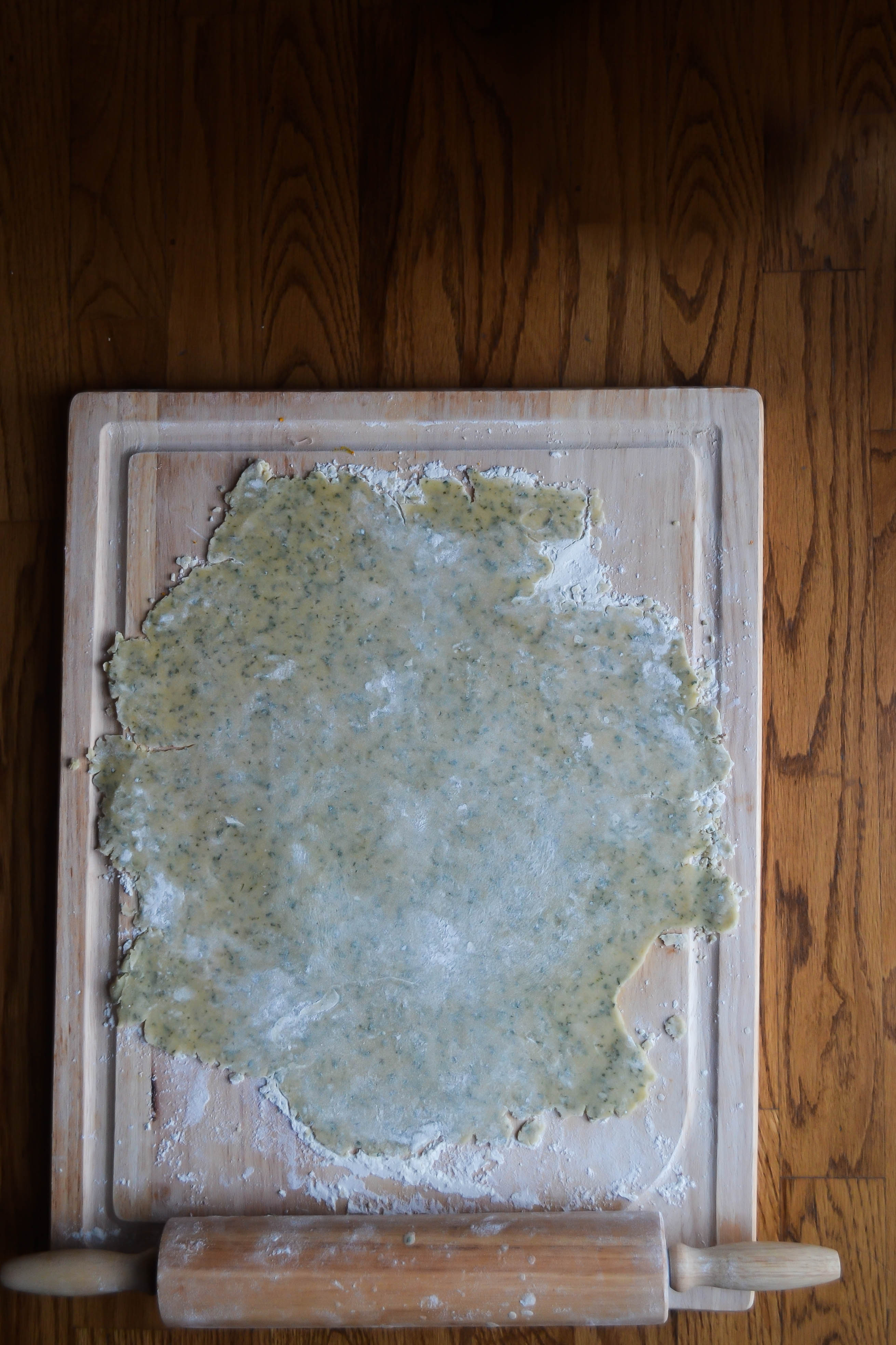
When the dough disk is cold and firm, bring it back to your floured board and remove the plastic wrap.  Roll it out, moving a rolling pin (or wine bottle) in a few strokes straight away from you and back toward you only.  Avoid diagonal movements.  The dough will become a long oval.  Then, flip the dough over and turn it 90 degrees so you are facing a fat, flour-drenched oval instead.  Roll again, still moving the rolling pin straight away from and back toward you.  Repeat this process until you have a rough circle an inch or two larger than the diameter of your pie plate.

Lightly roll half of the dough around your rolling pin and drape it loosely into the pie plate, unrolling as you go, letting the crust settle into the dish.  Trim, crimp, or fold over any dangling edges as aesthetically as you are able.

Set aside (or perhaps return to the refrigerator?) while you make the filling.

Preheat the oven to 350F.

Heat some olive oil in a skillet over medium-high heat.  When it is shimmering, add the mushrooms and give them a good stir, taking care that as many as possible have contact with the bottom of the pan (that is, don’t leave them piled atop one another if you can help it).  Then leave them alone for a good five minutes, or until they begin to develop a golden crust.

While the mushrooms are getting golden, steam or microwave the broccoli florets until they are just crisp-tender and still very bright green.  Set them aside.

Turn your mushrooms and let them sizzle for another five minutes or so.  When they are golden on both sides, turn the heat down to medium and add the onions.  Cook until soft and translucent.  Toss the broccoli in the pan, then add salt and pepper to taste.  Mom often adds tarragon or marjoram at this point as well – start with ½ tsp and see what you like.  Remove from heat and set aside to cool for a few minutes.

While the vegetables cool, beat the eggs and milk together.  Add a dash of grated nutmeg, if you like, or some cracked black pepper.  As the quiche bakes, this will become a lovely firm custard.

To assemble, fill the pie crust with the vegetables, spreading them in an even layer.  Gently pour the custard over the vegetables.  Toss the shreds of cheese together and spread them evenly across the top of the filling.

Bake for 50-60 minutes, or until the cheese is golden and the quiche has puffed in the middle.  If it’s not puffed yet, it’s not done.  The ingredients will be cooked through, but when you cut into it you will find a disappointing watery layer at the bottom.  Give it another few minutes.

With the center puffed and the cheese sizzling, remove the quiche from the oven and let it sit for 5-10 minutes so the cheese can solidify a bit and doesn’t string all over when you try to cut through it.

Slice and serve. Food Blog January 2013-0418

Rolling in Dough

Okay, 2013, here we go.

OLYMPUS DIGITAL CAMERA

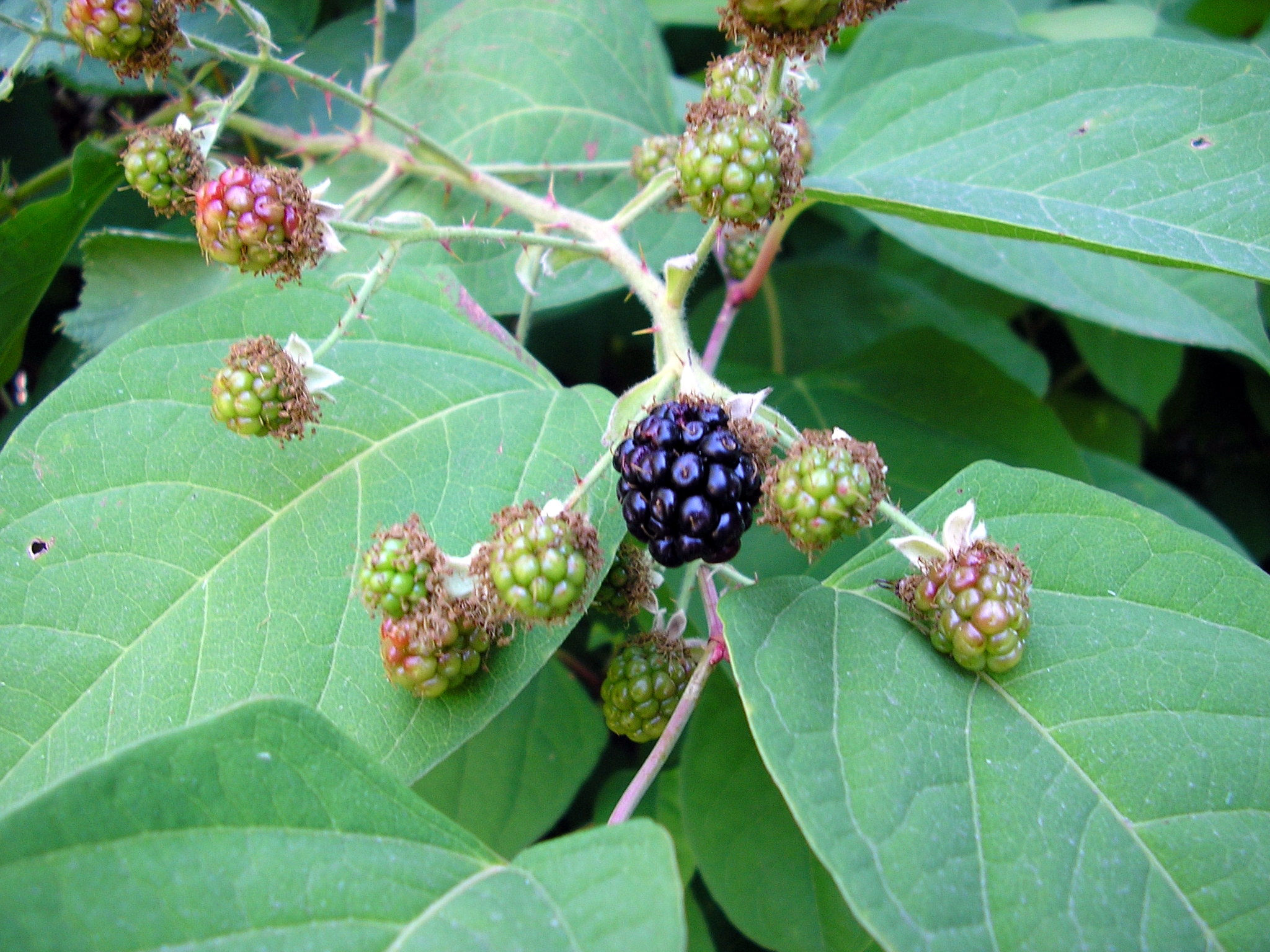
This year, I have a few changes to announce.  First, you may have noticed that we’re at a new address.  Update your bookmarks, if I’m lucky enough to be there, to http://blackberryeating.com.  As I understand it, the old address will still work, it will just redirect you here.  As I mentioned a few days ago, I’ve been wanted to upgrade to an address that makes more sense for what I’m doing here.  Blackberries, their mystery and decadence, remind me of all that is good about food: what is sweet, what is juicy, what is challenging, what is delicate, what is persnickety and strong.  The Galway Kinnell poem from which the title of this blog is taken celebrates juxtaposition and excess, likens these jeweled fruits to words and the consumption of those fruits to the search for meaning and significance.  This is a little piece of significance for me – this collection of words thrust with crossed fingers and squinted eyes out across the internet – and so I wanted to make it more connected, more applicable, but really, more mine.

Who ever thought so much consideration could go into a new address?

With the Bittman project over and a new address settled, it’s time to submerge myself in a new challenge.  As you know if you’ve been reading for a while, dough – particularly pie dough and yeasted dough – is one of my big fears.  What if it doesn’t rise?  What if it crumbles apart?  What if it tears or burns or collapses or comes out tough or doesn’t bake right?  What if it’s (gasp) imperfect?

DSC_0949

I decided I need to get over this.

This year, each week, I will make something out of dough.  It might be pie crust.  It might be cookies.  It might be pizza or foccaccia or flatbread.  It might, as terrifying as this is to me, be a real, honest-to-goodness loaf of bread, bloomed and kneaded, baked until crusty in a loaf pan.  I have a crazy notion that I want homemade bagels.  I have a yen to make doughnuts, and not just cake doughnuts, but the beautiful puff and chewy crumb of a good yeasted twist.

I don’t – and this is important to note – promise absolute success.  You’re going to see what crumbles along the way.  You’re going to see the scraps and scrapes and disasters I produce.  I think this is an important part of learning, and that’s part of what this blog is for me.

I have a few guides in this project, one hoped for and long awaited, one unexpected but delightful.  From my in-laws, I received Michael Ruhlman’s genius book Ratio.  This isn’t a cookbook.  It’s more than that.  It’s more exciting, it’s more foundational, and ultimately, I think, it’s more useful.  It doesn’t tell you how to make cherry pie, it tells you the essential equation of pie dough.  Three parts flour, two parts fat, one part water.  That will always equal pie dough.  Suddenly, you can use any kind of flour – more than one kind, if you want.  You can use lard instead of butter.  You can make one pie or you can make thirty-five pies, and you don’t have to think as hard about multiplying or adding or fractioning.  You have a ratio, and it is always going to work.

That’s the theory.  And I believe it, but I haven’t tried it out just yet.

From my parents, I received a bread machine.  I’ve never used a bread machine before, and while my immediate thought is that to really master dough, I will also have to make it by hand so I understand the kneading and the cycles of rising, and so I will come to know the feeling of the right kind of stretch and the windowpane test and the knowledge beneath my fingers that yes, this is bread, having a machine help me along the way is going to be nice.  The idea of dumping, in pajamas at 10pm, a series of ingredients into a pan, plugging in a machine, and telling it I want a fresh, hot loaf of bread at 7am, delights and astounds me.  I want to understand, but I also want the magic.

So that’s the plan.  If all goes well, it will mean more of this:

Food blog 2011-0097It will certainly mean more of this:

DSC_0959

It may even mean some of this:

IMG_0698

I don’t expect it will mean all dough, all the time, just as the past two years were not exclusively Bittman concoctions.  If something amazing comes along that doesn’t involve flour or eggs or butter, I will still report on it.  But the goal this year – the resolution, if you will – is to conquer this dough thing.  I want to have conversations with you about it.  I want your feedback and advice and experiences.  And I hope you enjoy.

Breaking Bread

Last week I tallied up what remained on my Bittman Sides project and discovered, through careful calculations that included pointing to my calendar and counting on my fingers, that if I make two selections from the list every week, I will be finished with the whole thing at the end of the year.  And I mean the end.  The very last week.  Ambitious, yes?  I decided I could do it.

Guess how many I made this week?

Yeah.

One.

So I’m not starting out well with this, but I’m going to try anyway.  I’m years overdue from my original goal anyway.  And in my own kind of backwards reverse engineering, I try to make up for this how?  By posting twice in one week.  So it goes, I suppose…

87. Combine 2 cups whole wheat flour with 2 cups white flour and 1 teaspoon each baking powder, baking soda and salt in a food processor. Pour in 1½ cups buttermilk or thin yogurt, and pulse until a ball is formed. Knead for a minute (fold in ½ cup raisins or currants if you like), shape into a round loaf, slash the top in a few places and bake on a greased sheet for about 45 minutes, or until the bottom sounds hollow when you thump it.

I’ve tried bread in the food processor before and it didn’t go very well (what does “when the dough is shaggy” mean anyway?), but I was willing to give this a shot.  It looked like a basic Irish soda bread recipe, and though I’ve never put that in the food processor, I have made it with success on multiple occasions.  So, I pulled down my food processor, opened my pantry, and collected

2 cups wheat flour

2 cups white flour

1 teaspoon baking powder

1 teaspoon baking soda

½ cup Greek yogurt whisked with 1 cup whole milk (I had neither buttermilk nor thin yogurt – this seemed like a happy medium)

½ cup craisins

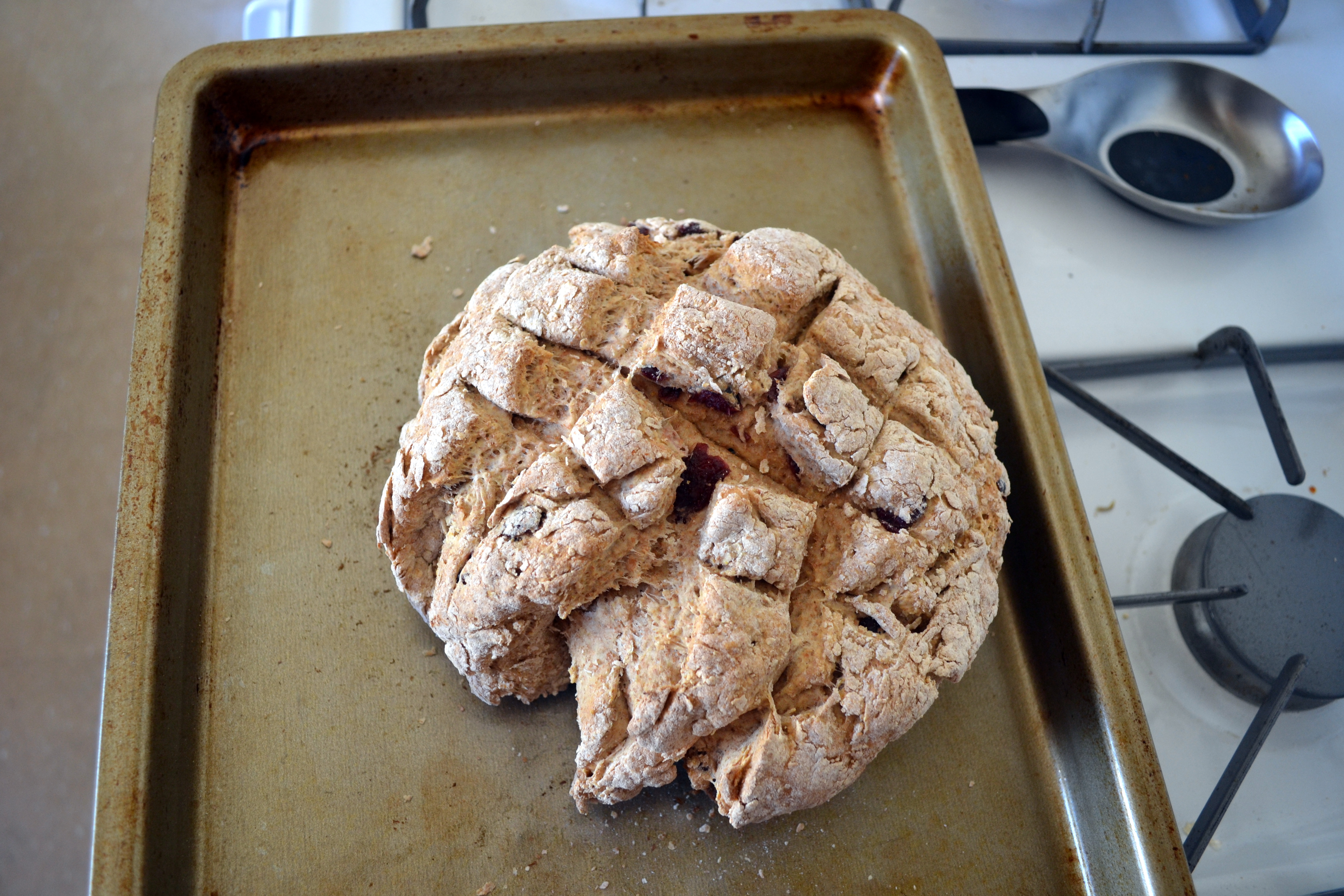
I followed Bittman’s directions to near disaster.  Either my food processor is too small, or this method isn’t all that reliable, because the dough never formed a ball.  Half of it just clumped into a solid mass in one side of the processor bowl and refused to budge.  I said some words in the quiet of my own brain and then held my breath while I tumbled the half-mixed contents out onto a floured board.

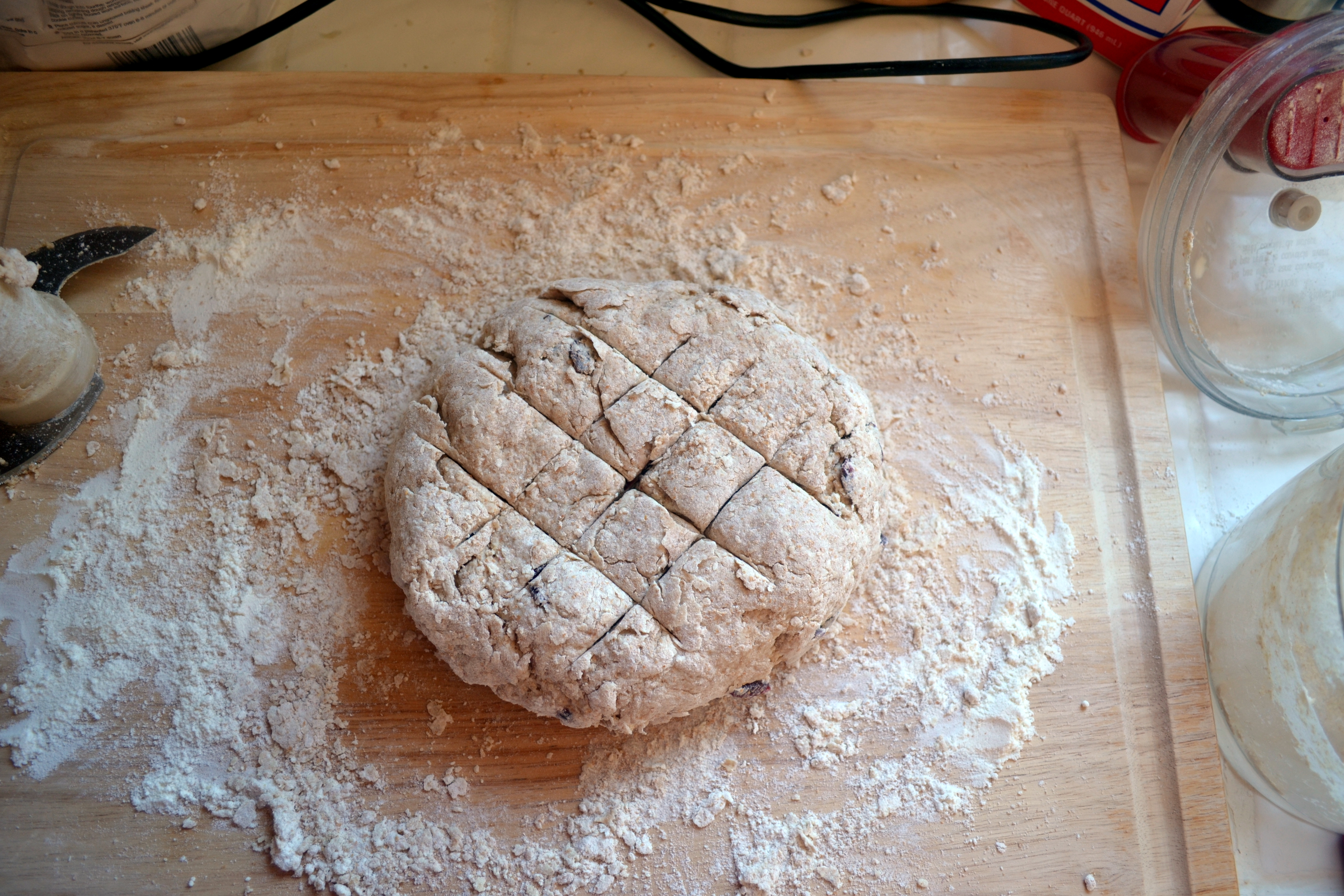
This is certainly not a ball.  But I sprinkled on half a cup of craisins and started kneading anyway, trying to ignore the hateful feel of dry dough on my hands.  After a minute or two I determined that things were just not coming together.

Flour-streaked hands reached into the refrigerator and pulled out the milk, dribbled a few tablespoons into a hollow in the dough, and tried again.  This time, things started to stick, to smooth, to pull into a ball.  I patched, I patted, I pushed and knuckled, and finally plopped one of the homeliest loaves ever made onto a greased baking sheet.  Slashed, scored, and enclosed in a warm oven, and I’d done all I could.

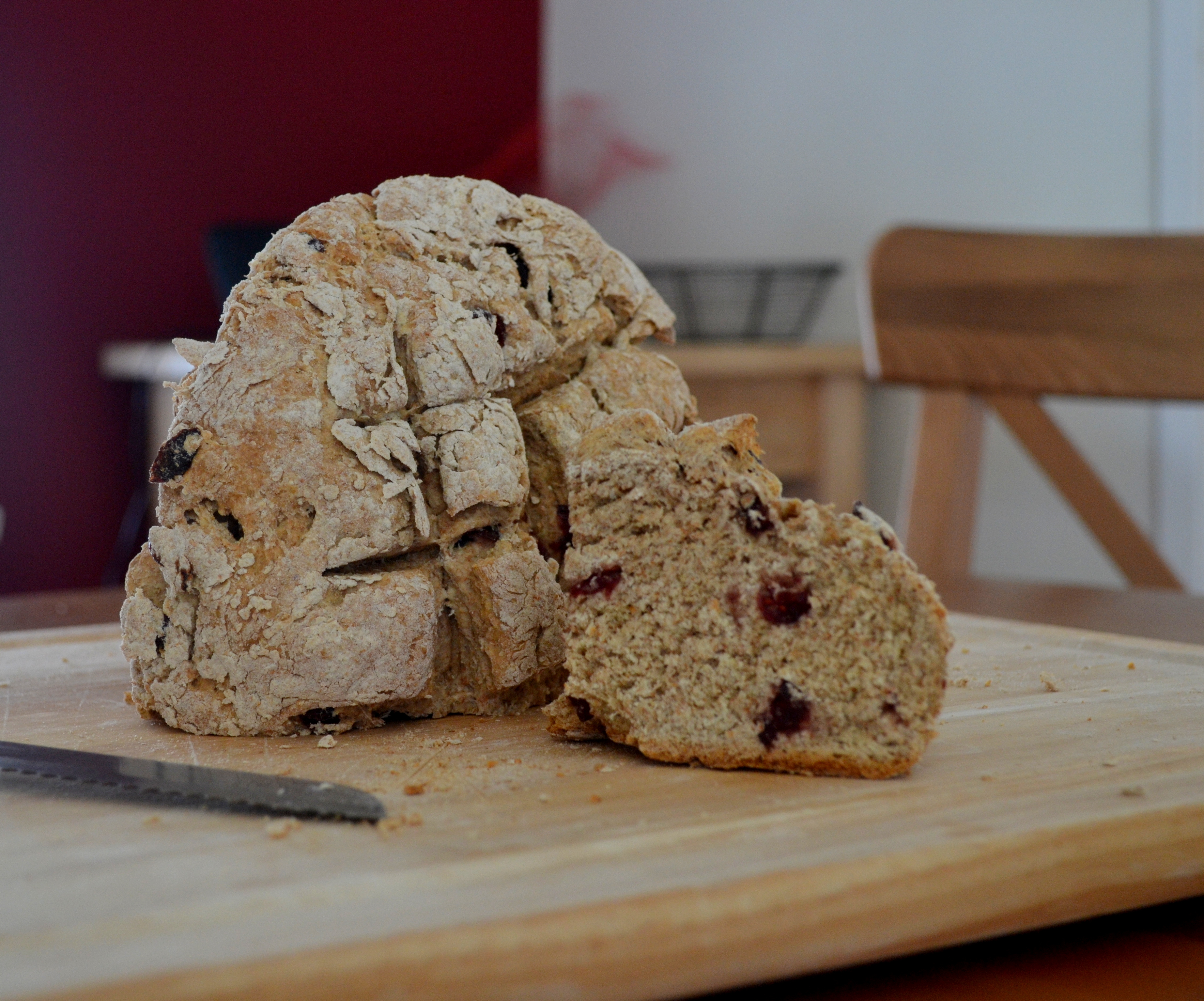
Bittman didn’t specify a temperature, but I estimated 375F and returned to grading papers for the better part of an hour.  The timer’s buzz 45 minutes later called me back to a crusty, mottled, flour-speckled loaf that sounded empty when I thumped the bottom, and smelled like humble sour sweetness.

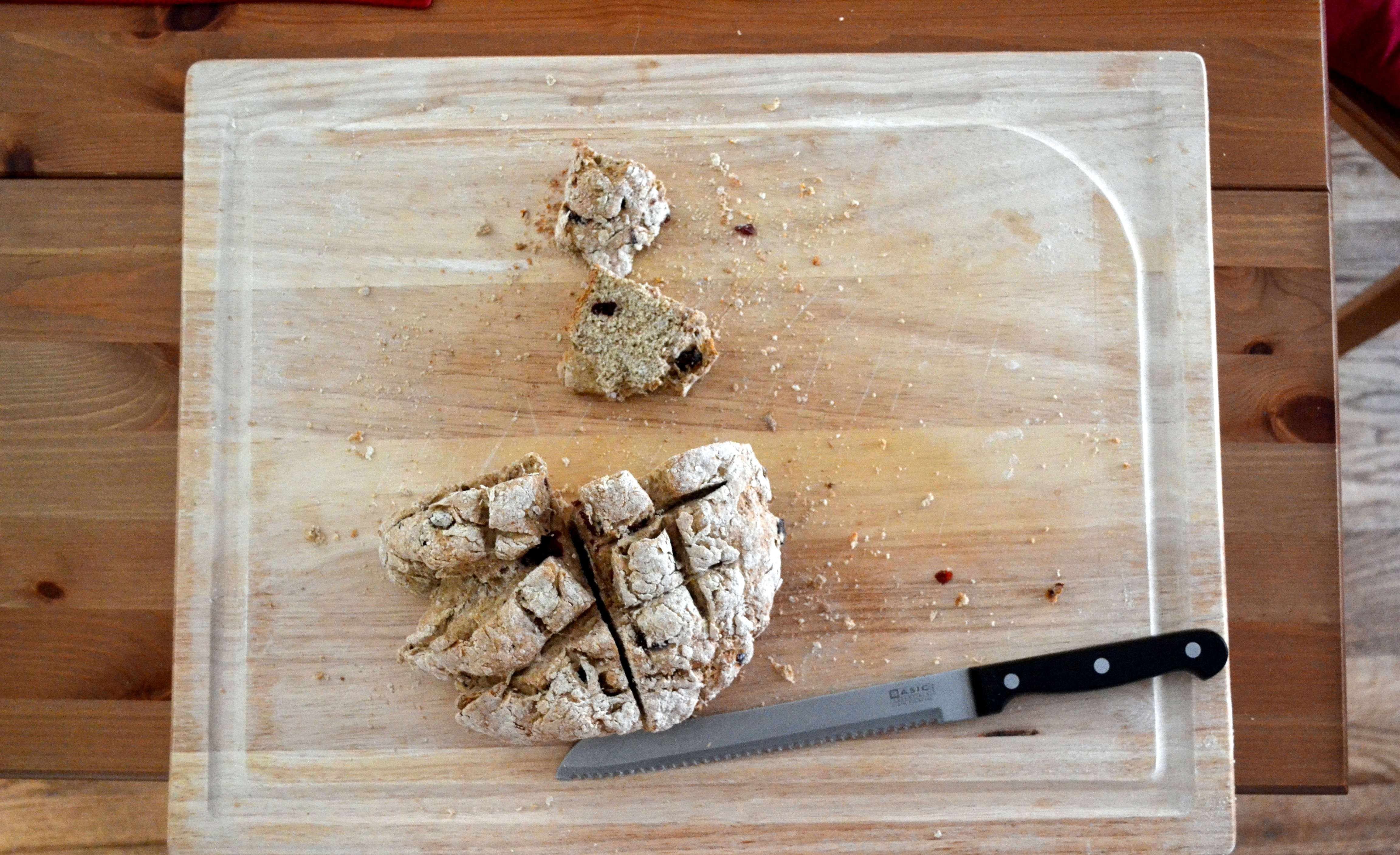
I waited a few hours to try some.  When I cut into it, my knife scraping through the crust and scattering crumbly bits across the board, the interior was dense and moist and still just warm.

It tasted good.  A bit heavy, from the whole wheat flour, and not suitable for eating in large chunks like the one I’d carved off for myself.  But the craisins added a welcome punch, and I think if I’d used all buttermilk instead of my odd mixture of milk and yogurt, the tang would have come through and broken some of the one-note density of the texture.  This would be good, I suspect, toasted and buttered, or maybe – if you’re the daring type – transformed into French toast.  It might also be good made with 3 cups of white and 1 cup of wheat flour, rather than equal parts.

Both N. and I have some Irish blood, and although it doesn’t show too often (unless you count his beard and my very occasional temper), by strange coincidence we ended up eating this bread as part of an accidentally, avant-garde-ly “Irish” dinner: pan fried gnocchi and sauteed cabbage.  Potatoes, cabbage, and Irish soda bread.  If only we’d had corned beef, I told N., and a horseradish sauce to moisten it.

But here’s the good news: smeared with cream cheese, the bread was tasty and chewy and wholesome, with bright pops of cranberry sweetness here and there.  Shallow fried in a mixture of butter and olive oil, the gnocchi were amazing.  Tongue searingly hot, their exteriors crisped and browned like the perfect roasted potato.  Their interiors remained soft and creamy and rich, but the contrast of crusty brown outside to creamy chewy perfection inside was unbelievable.  I could eat these every day.  I could eat them for every meal.  Fried and rolled, still blisteringly hot, in cinnamon sugar, I would scarf these for breakfast alongside a glass of milk like tiny churros.  Tossed with pesto or roasted red pepper sauce, I would gulp them for lunch.  Folded into a mornay sauce with too much extra cheese, I would sub these for pasta in a beautiful perversion of oven-baked macaroni and cheese.  And well salted and perhaps tossed in garlic powder or red pepper flakes, I would happily substitute these for popcorn during a movie.  I might be obsessed.

So with one Bittman down for the week and an intense regimen in store for the rest of the year, it turns out I’m more interested in fried potatoes.  And I’m tempted to ask: who wouldn’t be?  But then I wonder… is that just the Irish in me talking?

Emptying the Fridge

Big news, oh friends: come July, N. and I are moving.  We’re leaving Eugene, OR and heading south for Los Angeles, where N. landed a great job.

I’m sad about this, of course.  I love Eugene.  I love its beauty, and I’ve made some of the best friends and eaten some of the best food of my life here.  I don’t love the way the weather lately has been playing winter/spring/winter/spring/summer/winter on us, and I’m terrified it will pour on graduation day in a week or so.  But mostly I love it.

Yet this move presents the potential for plenty of new delights.  LA is a foodie paradise.  A quick search on Yelp for our new area revealed restaurants serving every kind of food I could possibly crave, and some I’ve never tried before.  Ethiopian will be new to me, as will Caribbean (outside of the ubiquitous and usually inauthentic jerk [insert your protein of choice here]).  The idea of being back in a place with excellent Chinese and Mexican food is overwhelming.  But it’s not just restaurant food that I’m looking forward to.  The Willamette Valley in Oregon boasts great growing conditions for lots of foods, including berries of all kinds, hazelnuts, and plenty of local produce.  But Southern California has so much, given its balmy temperatures year round, that buying and eating local food will suddenly become much easier – not even from farmers’ markets and farm stands, but even from the grocery store.  Avocados, citrus, grapes, all no longer destroy the locavore dream.  Even the backyard of the house we will be moving into has a lemon tree.  A lemon tree!  This excites me almost more than anything else about the whole situation!

Our upcoming relocation also presents a challenge.  N. and I have lived in our current home for four years.  We have lived in Eugene for six.  Over that much time, things accumulate.  Not just house things, like forgotten books and extra sweaters and skillets I shoved in the back of that cabinet N. hates when I replaced them with Circulon non-stick wonders.  Food things.  We have so many half-empty jars of condiments.  So many bags of frozen vegetables bought on a buy-one-get-one sale.  Blackberries from last summer and cranberries from Thanksgiving, carefully preserved on the shelves of my freezer.  Canisters of rice, and brown rice, and millet, and dried beans, and barley, and noodles in the pantry.  It’s a lot of stuff.

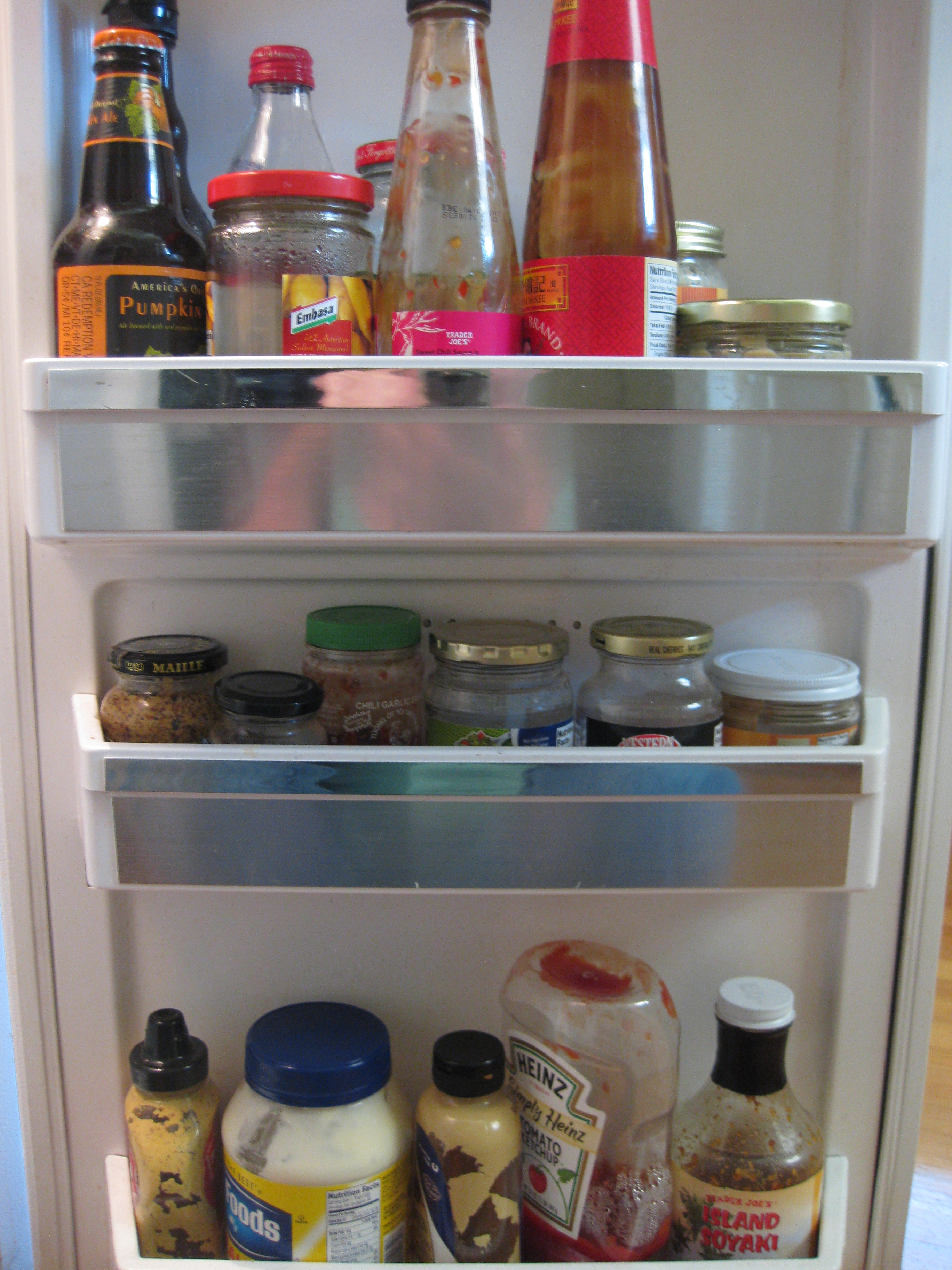
So here comes the challenge: interspersed with regular food posts and wedding cupcake practice and the occasional, still-kicking-because-I-can’t-bear-to-abandon-it Bittman dish, I will be instituting a new project.  I’m calling it “Emptying the Fridge.”  Each week when I make our menu plan, I’m going to try to incorporate at least one dish that requires the remnants – or a good quantity – of at least one refrigerator, freezer, or pantry item.  I’m not talking about things we use all the time, like yogurt or bread or eggs.  I’m talking about the minimal use items, like anchovy paste, or capers, or champagne honey mustard, or chili garlic paste.

This week, I have plans for several items, and though I may not eliminate them, I will at least make a dent in several jars.  After a barbeque a few weeks ago featuring a peanut noodle side dish, I decided I want to make Ina Garten’s Szechuan Noodles.  This requires a whole cadre of ingredients including peanut butter, soy sauce, rice vinegar, and various vegetables.  It also, of importance to this project, requires hot chili sauce and tahini.  Both of these items currently languish on my refrigerator door, awaiting stir-fries and hummus.  But this week, they will shine and diminish simultaneously. 

Other plans include a white bean puree I will invent (and post the recipe for, if it turns out well) to work on using up the four cans (four?  How can I possibly have four?) of white beans in my pantry, and peanut butter energy bars, which will help eliminate the giant canister of oats I’ve gotten too stubborn to turn into oatmeal.  At a certain point, you have to eat like it’s summer, even if the sky says it isn’t, don’t you?  But snack bars are a worthy and not-un-spring-like application.

This project is, I think, a combination of homestyle Iron Chef and Chopped.  Not only are there feature or star ingredients, but after a while the pairings of available options will become unusual and require a certain amount of ingenuity to use up.  I like this, because it prepares me for the Food Network show I will never have, which I would call “Empty Fridge.” EF would consist of me trying to use limited pantry and refrigerator items to create something delicious without having to make an extra trip to the store, so in essence it’s Chopped-at-Home.  The difference with my current project, though, is that I am not prohibited from shopping, and am in fact planning ahead based on the contents of my condiment collection to determine our dinners.

Come August, you can expect an abundance (after a short hiatus, most likely – moving and blogging don’t necessarily mesh well) of drooling and groveling over our new location and its diverse and numerous highlights.  But until then, you can look forward to quarter jars of mustard, forgotten marinated artichoke hearts, and hidden canned peaches in various applications.  Hopefully, in this case, not in the same meal…