Lamb Stuffed Zucchini

The last week of summer is a curious avalanche of light melancholy and nervous action. I’m caught between the post-vacation-slump of wanting to curl and laze and bake my mind in nothing, and the deep itch of my protestant work ethic demanding I Get. Things. Done. before school starts.

So I cautiously plan in small doses, and I soothe the anxious itch that rears up when I am “wasting” time by consuming novels in gulps, to make up for reading little during the rest of the summer. I’m struck by Jesmyn Ward and Tommy Orange, and just this morning I fell back down into the entrancing, haunted wonderland that is Toni Morrison’s Beloved, inspired in part by this suggested reading list for white Americans assembled by a group of black writers. When I saw Morrison’s perhaps most famous novel on the list, I was brought back to an interview she did with Stephen Colbert in which she describes looking through her book for the right page to autograph for a reader, telling him “I looked down and there were these sentences.” I needed to read those sentences again. I burrowed through the first fifty pages this morning and now that itch is to open the book again.

But I do have other obligations, and one of them is to the final, late summer push of my miraculous zucchini plant. It flourished in our absence, our friend who was on plant-watering duties taking home several swollen specimens, and offering another few to our neighbors, and then suddenly, with only two large, hidden bats remaining, took a gasping breath and shuddered to a… pause? A stop? I think it will produce a few more, maybe, but its time seems limited.

That being the case, there was little time to waste in sharing my biggest zucchini triumph of the summer with you, in case you, too, have a few dark green baseball bats you aren’t sure how to consume.
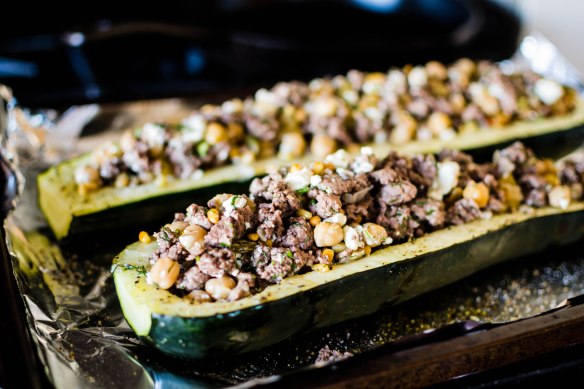
Rather than an accompaniment or a burying-ground, this recipe uses the zucchini as a vessel. Ground lamb, seared and spiced and liberally tossed with toasted pine nuts, golden raisins, chick peas, preserved lemon, feta crumbles, and as much grassy, bright dill as you can handle, gets piled into the scraped-out cavity of the monstrous squash. A mound of oiled breadcrumbs on top is not a necessity, but what a luxury.
This may seem like a lot of ingredients, but they really play together well. Lamb with dill is obviously a winner, but if you haven’t tried lamb with golden raisins, I insist that you make it a priority – they add a perfect sweetness and here, soak up some of the fat from the meat so they are juicy and plump in the final product. The feta and preserved lemon each contribute a nice brininess – I wouldn’t forgo either, though if you don’t have preserved lemon (and are unwilling to make it yourself), plenty of zest might fill in reasonably well. I initially added chick peas as a way of stretching the lamb, and you certainly don’t need them, but they provide a nice lightness of their own and, I think, eradicate any need for a side of starch. Though we ate ours overflowing segments with garlic-rubbed toast and were quite happy.

I like to think this filling has a life of its own beyond zucchini, which is what makes it so nice. A well-hollowed eggplant would work nicely as well, maybe a cored bell pepper, and as the days shorten and hopefully cool, a carefully carved butternut or kabocha squash. Or you could just ignore the vegetables entirely and use the lamb mixture (maybe minus the chick peas) as a loose filling for a take on stuffed shells, or ravioli, or just tossed gently with rigatoni and a few glugs of sauce.

Lamb Stuffed Zucchini
Serves 6-8 with filling left over
About an hour
1 very large zucchini squash
a maximum of ½ cup olive oil (you probably will not use all of it)
salt and pepper to taste
⅓ cup pine nuts
1 pound ground lamb
1 teaspoon allspice
¼ teaspoon cayenne pepper
15 ounce can chick peas, drained and rinsed
½ cup golden raisins
2-3 tablespoons finely diced preserved lemon
3-4 tablespoons finely chopped fresh dill (you could sub with an equal amount of mint or about half as much oregano, if you don’t like dill)
4 ounces crumbled feta
¾-1 cup panko bread crumbs


  • Preheat the oven to 400F and line a large baking tray with aluminum foil. Split the zucchini in half lengthwise so you have two long, rounded planks with seeds exposed. Scrape out the seeds and some of the interior flesh with a metal spoon. Discard the scrapings and place the remaining “boats” on the baking tray. Lightly coat them with olive oil before seasoning liberally with salt and pepper. When the oven is preheated, put in the zucchini-laden baking tray and let them roast about 20 minutes while you start the filling. After 20 minutes, remove from the oven and set aside.
  • To make the filling, first heat about 1 tablespoon of olive oil in a medium pan and add the pine nuts. Toast over medium heat, stirring and checking often, until they are nicely golden. Be careful; they burn quickly. When toasted to your liking, set them aside.
  • In the same pan, still on medium heat, add a little bit more oil and then your ground lamb. Use a flat-sided wooden spoon, if you have one, to break it up, then sprinkle over the allspice, cayenne pepper, and a bit of salt to season. Let it cook, stirring and turning and continuing to break up large chunks, until no longer pink in the center.
  • When the lamb is just cooked through, stir in the chick peas and the golden raisins, turn the heat down to medium-low, and let it go another five minutes. This lets the new additions pick up some flavor. After five minutes, remove from heat and drain off any excess fat.
  • To the now-cooked lamb, add the toasted pine nuts, the preserved lemon, the dill, and the feta, stirring well to combine everything. Taste for seasoning and add salt and more cayenne pepper, if needed. When you are satisfied with the flavor, scoop the filling into the empty, partially-cooked zucchini halves. I like to mound it up a bit. It will be crumbly because there is no binder.
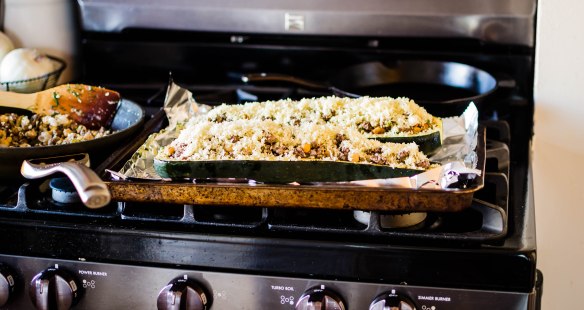
  • In a small bowl, toss the panko bread crumbs with enough olive oil to coat them well. Pack spoonfuls on top of the lamb filling and exposed zucchini flesh.
  • Carefully place the laden tray back into the oven, turn the temperature down to 375F, and roast for 25-35 minutes, until the panko is deeply bronzed and the flesh of the zucchini pierces easily with a fork.
  • Let cool about 5 minutes before slicing and serving large segments.


Simple Spiced Rice

What, you were expecting Italian or French food?

As I know I’ve noted before, when we come home from any kind of vacation, even though I’m often flooded with food inspiration, we tend to start out with simple dishes; it takes a week or so to reorient myself to the kitchen and be prepared to let those inspired ideas actualize. Besides, at least for this vacation, there have been so many photos to edit I haven’t had much time for the kitchen…

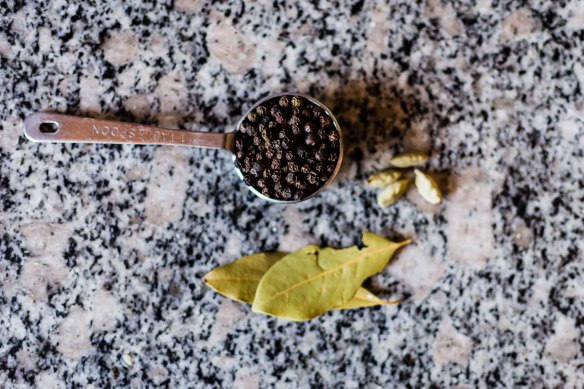
So this time around, I was making a simple pot of rice as a side. But you know me: I can’t just make a plain pot of white rice. So as I put the water on to boil, I added a couple of bay leaves. Then after a minute or two, I plopped in some peppercorns as well. And as we were eating the perfumed grains, lightly warmed by the peppercorns, I thought some cracked cardamom pods would make a nice addition.

There you are, then. Simple spiced rice. The bay and cardamom are quite subtle (enhanced by an overnight stay in the fridge, if you’re looking for do-ahead), and the peppercorns add warmth that is not quite spicy. It’s simple, but it’s a really nice upgrade for a pot of rice you might, say, serve with tandoori chicken or kebabs or saag paneer, as we did.

The only downside, as N. would hasten to tell you, given the chance, is that there are an awful lot of whole peppercorns in the scoop you level onto your plate, and crunching one of those between your teeth is exciting, but not necessarily in that pleasurable way. You miiiiiight want to spend a minute or two in extraction duty before you start your meal.

Simple Spiced Rice
About 20 minutes
Serves 4-6
3 cups cold water
1 tablespoon whole black peppercorns
1 bay leaves
4-6 green cardamom pods, lightly cracked
1½ cups long-grain white rice, such as basmati
optional: salt to taste, and a pat of butter to serve


  • Pour the water into a medium pot, then add the peppercorns, bay leaves, and cardamom pods. Put the lid onto the pot and bring the water to a boil.
  • When the water reaches a rolling boil, add the rice, stir to break up any clumps that form and to distribute the spices, then lower the heat until the water is just simmering.
  • Simmer over low or medium-low heat until the water is absorbed and the rice grains are just soft in the middle, around 15 minutes. At some point during the simmer, the water will likely threaten to boil over. Just take the lid off, stir gently, and replace the lid again.
  • Serve hot, with a sprinkle of salt and/or a pat of butter if desired.


Zucchini Spice Bread

Well, I did it. In my exuberance about having a vegetable garden at last (one year into our tenancy in our very own house, N. built us a few raised beds and I treated myself to a few varieties of heirloom seeds), I brought home a little zucchini plant from the garden store.

The first time I planted zucchini, it did what zucchini does: it grew so many squash for us that, halfway into summer, and after grilling, stuffing, roasting, and frying, I filled every baking dish in my kitchen with batter and looked for new friends so I had new possibilities for offloading all the loaves and cakes and muffins my happy plant had obligingly helped me produce.

The second time I planted zucchini, which was only a year or so later, about seventy percent of our potential squashes got about three inches long, then turned yellow at the blossom end, softened, and shriveled. Unwilling to dive into experimental hand pollination, I sighed and concentrated on tomatoes instead.

So I was delighted when, in a different garden and a different state, this spring’s zucchini plant proved the adage about third times and charms, as it perked its little leaves up and started to produce its familiar little orange blossoms. And then it got bigger, and I celebrated our first little courgettes. And then it made more. And its leaves reached the size of small umbrellas. Its flowers would have fit a full four-ounce mini-log of goat cheese and had room to spare. Suddenly, underneath those spiky umbrella-sized leaves and fragile, pollen-dusted blossoms, I was facing down an army of tiny squashes and remembering why so many avid home gardeners leave laundry baskets of zucchini on their neighbors’ porches in the summer.

It was time to bake zucchini bread. Fortunately, I have a pretty foolproof recipe, a zucchini spice loaf from the thick and dependable Bon Appetit Cookbook, and that is fine. But I wanted to play. My recipe calls for vegetable oil, cinnamon, and chopped toasted nuts. Oil is a good choice for quickbreads, especially if the loaf also contains nuts, because it’s 100% fat and thus keeps the bread moist. But the best banana bread I’ve ever had, bought from a roadside stand in Maui, was advertised as containing all butter. I wondered if, with a little tinkering, I could bring that buttery perfection to my zucchini loaf.

Converting from oil to butter requires a little calculation – butter is not 100% fat; it’s a mix of fat and water, so you need more butter than oil if you’re substituting. Since the oil is liquid when it’s incorporated into the batter, the butter would need to be as well, and if we were already melting it, well, we might as well go the extra step and brown it. This would also evaporate that pesky water in there, leaving us with 100% fat again.

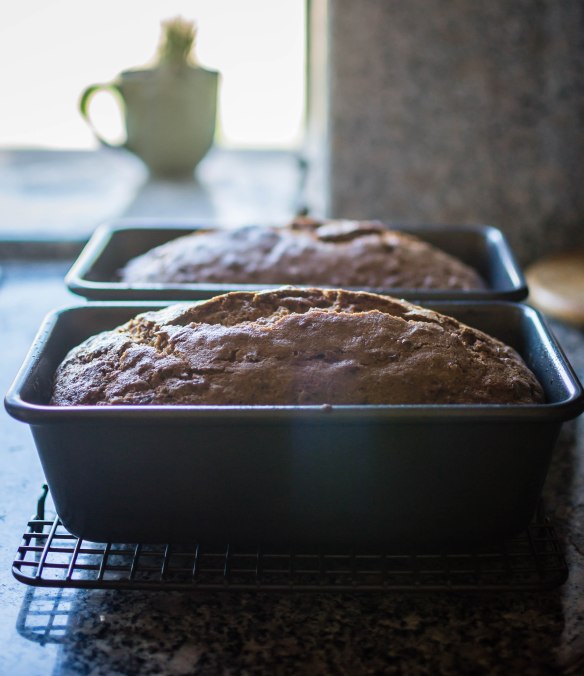
That sorted, and wanting to keep things toasty and rich, I replaced half the granulated sugar called for in the original recipe with brown sugar, added some tart dried cherries for extra interest, and replaced the cinnamon with cardamom for a bright kick that played well with the fruit. And how was it? Well, so far we’ve sliced our way through three loaves of the stuff and I wouldn’t say no to another piece.

Should you decide to make your own (or if you’ve been the victim – I mean recipient – of some of your neighbors’ zucchini harvest), know this: this is quite a thick batter, almost like soft cookie dough rather than cake. There’s not a lot of liquid in the mix – just eggs and the melted butter – and I think that’s why the recipe doesn’t require any draining of zucchini shreds before you fold them in. They add just enough juice of their own to keep the loaf dense but tender after an agonizing hour and a half in the oven. That means, all told, this is at least a two hour endeavor, which might entice you to skip the initial steps of toasting the nuts and browning the butter. Don’t be tempted. Both really to enhance the flavor in a way it would be a shame to miss.

As is frequently the case for quickbreads, this is delightful on its own, sliced right from the loaf. It stays reasonably fresh wrapped in aluminum foil on the counter for 3-4 days. If, however, it starts to feel a little stale, or if you’ve overbaked it a touch, I’ll just remind you that a smear of cream cheese rectifies many sins…


Zucchini Spice Bread
Adapted from The Bon Appetit Cookbook
Makes 1 large loaf
2–2½ hours
2½ cups flour
1 teaspoon salt
1 teaspoon cardamom
1 teaspoon baking soda
¼ teaspoon baking powder
3 eggs
1 cup granulated sugar
1 lightly packed cup brown sugar
16 tablespoons butter (2 sticks)
1 teaspoon vanilla
2 cups grated zucchini
1 cup finely chopped walnuts or pecans, toasted
1 cup dried tart cherries or chopped dried apricots


  • Spray or butter a 9x5x3 inch loaf pan, and preheat your oven to 350F. This is a good opportunity to toast the nuts – they are usually ready by the time the oven reaches its target temperature. Once they are lightly browned and smell fragrant, set them aside to cool.
  • For the batter, first brown the butter. To do this, place the sticks of butter in a small saucepan over medium-low heat and let them melt and bubble. First, there will be a lot of foam on top. Then it will clear to liquid gold, then you’ll start to see a lot of clear bubbles stacked atop one another. Keep waiting and stirring occasionally. Eventually you’ll start to see some darker yellow residue, then pale brown, then almost bronze bits mixed in with the clear melted butter when you stir. As soon as these bits look bronze, turn off the heat and remove the pan to allow it to cool. If you get antsy, you can put the pan in the freezer for a few minutes.
  • In a medium bowl, whisk together the flour, salt, cardamom, baking soda, and baking powder. In a larger bowl (I used the bowl of my stand mixer), use an electric mixer or the paddle attachment of a stand mixer to beat the eggs until very well combined and foamy on top. Gradually add the granulated sugar and the brown sugar, then mix until pale and thick, about 4 minutes. It will look almost like you are on your way to meringue. Add the vanilla and the cooled brown butter, beating well to combine.
  • Now incorporate the dry ingredients in three additions, beating just until combined. The batter will be very thick. Stir in the grated zucchini, then fold in the nuts and dried fruit, if using.
  • Pour and scrape the thick batter into the prepared loaf pan and bake in the preheated 350F oven until the top is dry and crusty, and the center is cooked through and a toothpick or cake tester inserted emerges with only a moist crumb attached. This will take about 1 hour and 30 minutes.
  • Let cool in the pan at least 10 minutes to avoid breakage, then turn out onto a wire rack and cool completely before slicing.

Chopped challenge #5: Tiramisu Trifles

Course: dessert

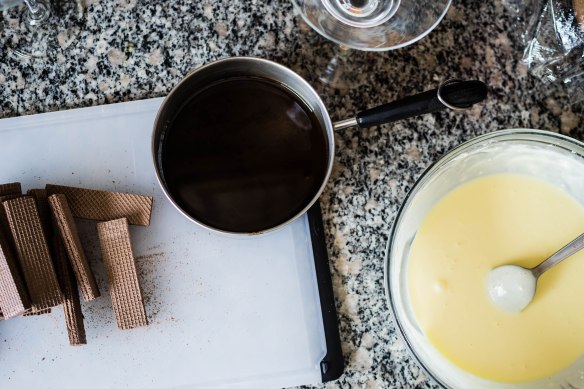
Ingredients: chocolate wafer cookies, cream cheese, espresso powder, balsamic vinegar

When I quizzed her about this set of ingredients, my mom (it’s her birthday today; happy birthday, Mommy!) immediately said cheesecake, and as I think about it, that makes a lot of sense. The wafers and espresso get pulverized into a caffeinated crust, the balsamic becomes some sort of glaze or syrup for drizzling, and the cream cheese is allow to stay pristine and tangy in the center.

But as soon as I heard the espresso powder component of this quartet, my mind went to tiramisu, that famous Italian dessert of soaked ladyfingers piled with rich custard. The best tiramisu I’ve ever had was in a lovely little restaurant in Ashland, Oregon, now sadly defunct. Our server, overwhelmed by the busyness of the evening, brought us a free slice in an effort, I’ve always thought, to get us to stay a little longer so she wouldn’t immediately be hit with another new table of guests. It was so good – the custard silky and thick, the cookies melting after their marsala and coffee bath, and just the right dusting of completely unsweetened cocoa powder across the top to contrast the sweetness of the dessert and enhance the coffee flavors.

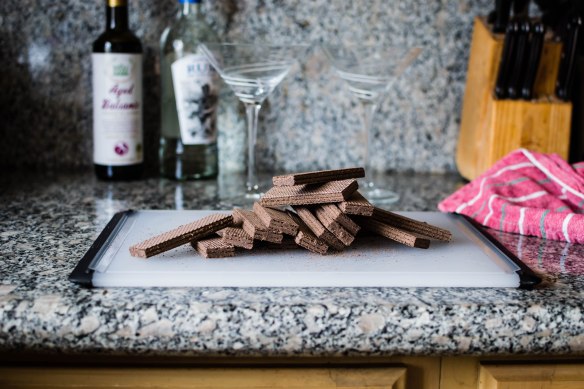
Mine would obviously be a little different. The chocolate wafers, in all their Styrofoam-textured glory, would clearly take the place of the ladyfingers (confession: I love these terrible cookies. I love their waffled surface design and their overly sweet filling and their fake, near tasteless exteriors. We had to hide the package while I planned this recipe out because I was going through them at least two at a time every time I walked past them). They would be soaked in espresso, and the cream cheese would be folded into the custard as a replacement for some of the traditional mascarpone.

The sticking point was the balsamic vinegar. After some consideration, I determined I would add some to the espresso to soak the cookies (and spent an entertaining few minutes tasting the wafers with some vinegar dribbled on and deeming them “weird but not terrible” – this is what I do for you). That didn’t seem like quite enough, though, until I thought about strawberries as a bridge: they are great with chocolate, they go well with cream cheese, and they pair beautifully with balsamic vinegar. Clearly what I needed to do was top the dessert with slices of strawberries, then boil down some of the balsamic into a syrup to drizzle over the fruit.

This was sounding further and further from the beautiful slice of tiramisu that we fought over in Ashland, which was served simply in a square portion with a little powdered sugar on the plate. The combination of cookie, custard, and fruit made me think of a trifle, and I determined I would serve these not as plated slices cut from a large cake, but in pretty cocktail glasses, with layers of each component to add visual appeal.

The result was terrifically rich, and while I’m not sure espresso, balsamic vinegar, and chocolate wafer cookies truly belong together, we did enjoy them. The real stand-out to the dessert, though, was the custard. At my first few spoonfuls, I was bowled over by a tartness I thought was the balsamic vinegar. The next day, though, when I allowed myself another serving, I realized the tanginess I was tasting came from the cream cheese. Mascarpone, the traditional thickener for the custard component, lacks this slight sourness (especially prominent in the Philadelphia brand); it is much more mild, almost like overwhipped cream just before it becomes butter. But the tangy flavor in the custard was reminiscent of cheesecake, which in my book is never a bad thing, and it kept the whole dessert from being overly sweet.

One note: you do have to watch the balsamic vinegar closely as it reduces, if you decide to go with the syrup option. In the space of about ten seconds, it goes from a lovely thick drizzle to an over-reduced sludge that hardens into a sticky caramel my fillings are still quivering about. Pull it off the heat a little before it seems reduced enough; it will continue to thicken as it cools.

These looked fantastic in my cocktail glasses, as you can see, but they were tremendously large and we ended up sharing just one to avoid overload. Smaller glasses, or even little jars, would be good for more, and less gluttonous, servings.

Tiramisu Trifles with Balsamic Drizzle
Makes 2 enormous or 4 small trifles, with custard left over
Minimum of about 3 hours, including chilling time (though chilling overnight is even better)
3 egg yolks
⅜ cups + 2 tablespoons sugar, divided
⅜ cups whole milk
4 ounces mascarpone cheese, at room temperature
6 ounces full fat cream cheese, at room temperature
½ cup boiling water
1 tablespoon espresso powder
½ cup + 2 tablespoons balsamic vinegar, divided
2 tablespoons rum, brandy, or marsala, optional
~ 12 chocolate wafer cookies, chopped or crumbled
4-6 fresh strawberries, sliced


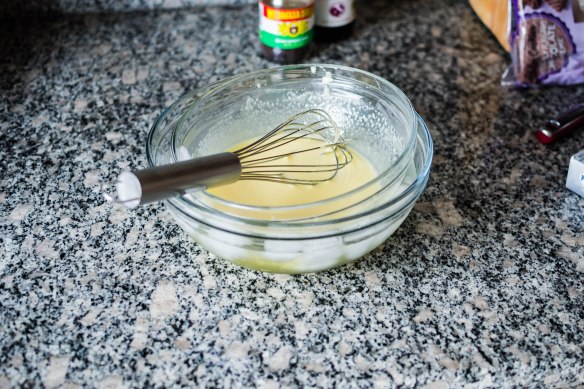
  • Fill a large bowl about halfway with ice cubes and water. Use another small bowl and small pot to create a double boiler: bring a cup or two of water to a simmer in the pot, then set the small bowl atop it, being sure the bottom of the bowl does not touch the simmering water. Add the egg yolks and ⅜ cups of sugar to the bowl, then whisk until the sugar dissolves – you will no longer feel rough sugar granules against the whisk and the bowl.
  • Whisk in the ⅜ cups milk and then cook, whisking slowly and constantly, until the mixture reaches a temperature of 170F. This should take 10-15 minutes; look for the custard to become light and foamy, and thicken slightly.
  • Once the mixture hits its target temperature, remove the small bowl from the heat and place it gently into the larger bowl of ice water. Whisk for at least a minute until the mixture cools, taking care not to allow any ice water to slop into the custard.
  • In a medium bowl, use a spatula to firmly mix together the room temperature mascarpone and cream cheese. Then fold in the cooled custard just until fully incorporated and smooth. Top the bowl with plastic wrap and stow in the fridge until the other components are ready.
  • Now, add the espresso powder, 2 tablespoons balsamic vinegar, and the 2 tablespoons alcohol, if using, to the boiling water in a small pot or bowl. Stir to combine, then set aside to cool (I got impatient and shoved mine into the freezer for a few minutes).
  • When the espresso mixture has cooled, you are ready to assemble. First, soak the chopped or crumbled chocolate wafers in the espresso liquid for a few seconds. You want the liquid to permeate but you don’t want the cookie to sog into nothing. In cocktail glasses or dessert goblets, carefully add a layer of soaked cookie pieces. Top that with a layer of the cooled custard – it will still be fairly thin – then repeat: another layer of cookies, another layer of custard. You want at least two layers of each.
  • If it’s possible without disturbing the dessert layers, top each glass with plastic wrap and stow in the fridge again for at least 2 hours, but ideally longer – overnight is best.
  • About 20 minutes before you are ready for dessert, slice the strawberries. In a small pot, combine the remaining ½ cup of balsamic vinegar with the final 2 tablespoons sugar. Cook over medium heat, stirring occasionally, until the vinegar and sugar bubble down into a syrup; aim for the thickness of maple syrup, which will cool into something more like molasses. This will probably take anywhere from 5-10 minutes, depending on your stove and your pot.
  • Rescue your trifles from the fridge and for each, place a layer of strawberry slices in some artful design over the top. Drizzle on a few teaspoons of the balsamic syrup just before serving.

Stone fruit and herb sangria

Summer is here. All that stands between me and falling deeply, fully, thankfully into it is one class of final essays and a little bit of paperwork. And then! It’s all soaking up sun and aimless wandering on the beach and all the vacation I can stomach. No, wait, that’s someone else’s life. For me it’s gardening and finalizing an article and planning a class and, well, okay, vacationing. But more on that later…

In celebration of the summer hanging just out of reach, I thought a nice little beverage might fit the bill. The inspiration for this one came a couple of Sundays ago, as we had lunch with M., a friend from graduate school who happened to be in town for an extended birthday voyage. We decided the occasion merited drinks with lunch, and I had a sangria that, oddly, is NOT the direct inspiration of this one. Rather, as we clinked forks and glasses, M. told me about her favorite way of making the drink in question, which involved stone fruit and herbs – her preference is sage; here I’ve used thyme as I tend to find sage a mite strong, but you could easily do both. This drink is easy to play with.

Typically sangria involves wine, fruit, and something a touch stronger to fortify it like brandy or liqueur. It gets lightly sweetened, and the fruit is allowed to steep a while to soak up some of the liquid. M. replaces the typical apples and oranges with stone fruit, and rather than the usual simple syrup she uses a spoon or two of apricot preserves, which very cleverly reinforces the stone fruit flavor while sweetening the drink.

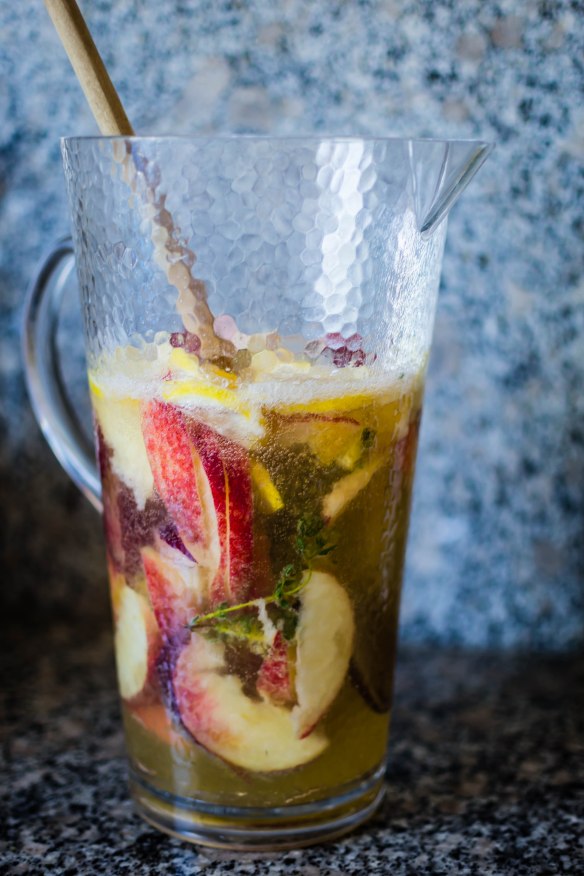
Between the preserves and the fruit pieces, which break down a little bit as they sit in the wine, this isn’t a crystal clear brew. But it is crystal clear that it deserves to be drunk. It is bright and light – a perfect aperitif – and would pair well with almost any snack you can think of: flatbread, crostini, savory cheeses, maybe some cold salmon, and definitely the wine-soaked fruit at the bottom of your glass. As my sister noted when I sent her a preview photo, “Looks delightful. A+ Would drink.” Some people like to top up their sangria with sparkling water or lemonade. I do not, but you can if you want to. This is, after all, your summer.

* a note for serving: I used a champagne glass here for presentation purposes and loved the look of it, but once loaded with fruit, it held an unsatisfying quantity of actual drink. I’d suggest a wine glass or even a tumbler. Additionally, while the slices of peach looked very pretty, smaller chunks are a little easier to navigate both while pouring and in the glass itself.


Stone Fruit and Herb Sangria
I wouldn’t dare estimate how many people you like to serve out of one bottle of white wine…
At least 2½ hours (mostly time chilling), but could be prepared as much as a day in advance
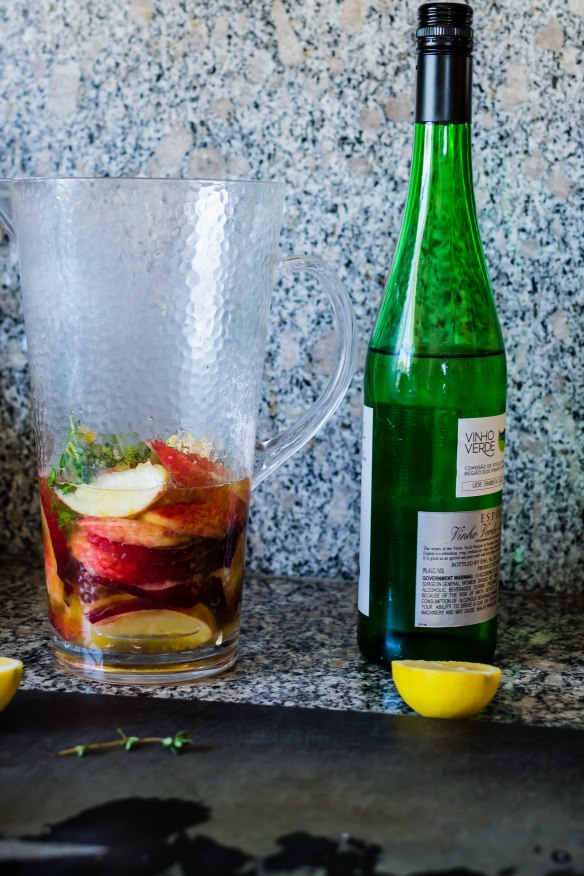
750ml bottle crisp white wine (I used a vinho verde from Portugal, which was slightly effervescent)
2 tablespoons peach or apricot preserves
3-4 large sprigs of thyme or sage
3 ripe peaches or other stone fruit, pitted but not skinned, cut into thin slices or chunks as you desire
½ a lemon, thinly sliced or cut into chunks
optional: ¼ cup orange liqueur or limoncello
ice plus extra herb sprigs to serve
sparkling water or lemonade to serve, if desired


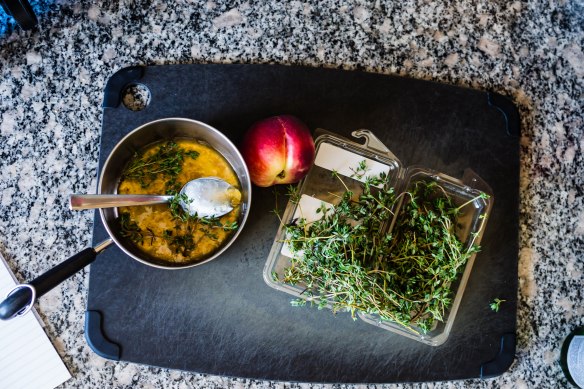
  • In a small pot, combine the preserves with about ¼ cup of the wine and the thyme or sage. Bring to a simmer, stirring occasionally, until the preserves melt down and emulsify, so to speak, into the wine.
  • While this mixture is simmering, put the peaches and lemons into a large pitcher or punch bowl, then add the hot wine and preserves mixture, including the herb sprigs. Add the remaining wine and the liqueur, if using.
  • Refrigerate until cold; at least two hours is enough, but overnight is even better to let flavors mingle.
  • Serve over ice, being sure to get some of the fruit into your glass. Add an extra sprig of thyme or sage if desired, and top up with sparkling water or lemonade if that’s your thing.

Chopped Challenge #4: Green Gazpacho “Shooters” with Mayonnaise Toasts

Course: appetizer

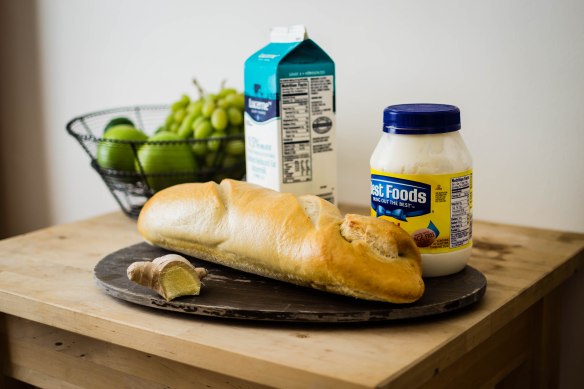
Ingredients: sourdough bread, buttermilk, mayonnaise, ginger

Unlike other Chopped Challenges N. has issued me, this one emerged Athena-like: fully formed and near immediately (though admittedly without the headache). Though the most commonly recognized form of gazpacho is tomato-based, as I offered to you last fall, a green version, usually blended with bread for viscosity and sometimes with some kind of acidic dairy product (more typically yogurt), is also reasonably well known. Thus two of my requisite ingredients were already attended to.

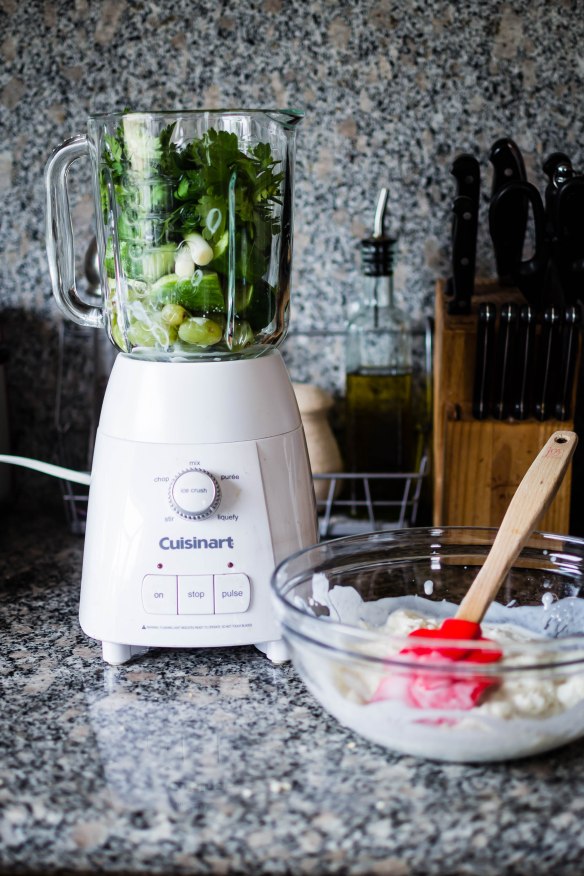
Though the green iteration of this cold soup can include anything from tomatillos to green bell peppers, I decided on cucumbers for the crisp, liquid coolness, and grapes for a sweet touch that I thought would go well with the ginger. To keep things feeling savory, a few scallions made their way into the mix, as well as a handful of parsley for an herbaceous flavor and a more brilliant green color.

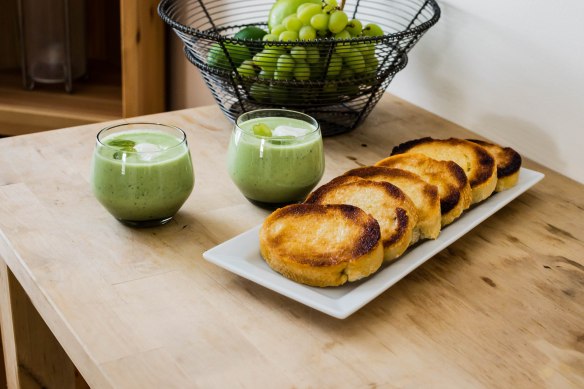
As for the mayonnaise, a traditional gazpacho incorporates generous glugs of olive oil, and what else is mayonnaise if not another fat source, already emulsified in itself? The few tablespoons I decided to allow in the soup didn’t feel like adequate representation of the ingredient, so I sliced up the other half of the sourdough batard, slicked it with a thin layer of mayo, and toasted it under the broiler for a warm, crunchy accompaniment to provide contrast. For aesthetic value and interest, as you can see, I dolloped in a touch of yogurt and a few halved grapes just before serving.

We found this tasty, and I think it would be an incredibly refreshing first offering at an outdoor gathering, particularly fun served in tall shot glasses (perhaps without the garnish) for cool, quick sipping. It wasn’t our absolute favorite, though I must admit its flavor improved given a night in the fridge to let the flavors intensify. Straight out of the blender it will taste quite sweet, but after the requisite minimum of two hours’ chill time, it edges back toward the savory side as the cucumber asserts itself. We found the buttermilk needed a touch of help from some vinegar for the right tang, and the ginger in my version was surprisingly mild, so I’m offering a range in my ingredient list below; aim high if you want a more assertively spiced soup.

Green Gazpacho “Shooters” with Mayonnaise Toasts
Serves 6 as an appetizer
2½ hours (includes chilling time)
For gazpacho:
1 cup crumbled or torn sourdough bread
1 cup buttermilk
3 small seedless cucumbers (I like the Persian variety)
1 cup seedless green grapes
3-4 scallions, white and pale green parts
⅓ cup parsley leaves and stems, or a combination of parsley and mint
1-2 tablespoons grated fresh ginger
3 tablespoons mayonnaise
2 teaspoons white wine vinegar
Salt and pepper to taste
For toasts:
Thin slices of sourdough
Mayonnaise to spread
To serve:
Dollops of yogurt, optional
A few additional green grapes, halved, optional
Snipped chives, or individual parsley and/or mint leaves, optional


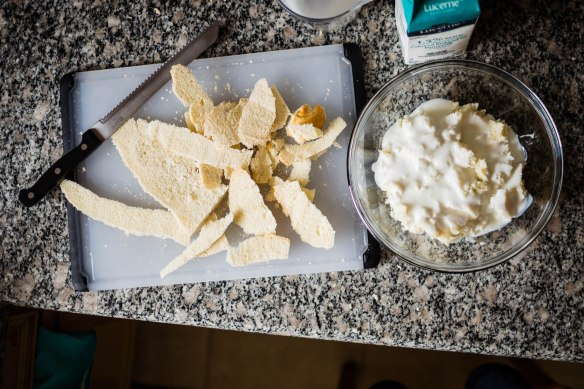
  • To make the gazpacho, combine the torn or crumbled sourdough and the buttermilk in a bowl and let sit 10-20 minutes. Meanwhile, cut the cucumbers and scallions into rough chunks and add to a blender with the grapes, parsley (or parsley and mint), ginger, mayonnaise, and vinegar. After the bread and buttermilk have soaked, add this as well and blend until smooth. Return to the bowl (or just keep it in the blender, if you prefer) and refrigerate for at least 2 hours, or overnight for more intense flavor.
  • When you are ready to serve, preheat your broiler and spread the slices of sourdough with a very thin layer of mayonnaise, being careful to get it all the way to the edges (otherwise burning results, as you can see from a few of mine). Set the toasts in a single layer on a broiler pan or other oven-safe tray and broil just until they are lightly browned and just starting to become crisp.
  • Pour or ladle the gazpacho into small bowls or glasses, garnish with a dollop of yogurt, a leaf or two of complementary herbs, or a few fresh grape halves, and serve with the toasts on the side.