Carrot Ginger Soup with Coconut and Turmeric

I threw away my bathroom scale today. Before you applaud me, this isn’t some kind of new-year-new-me-self-acceptance resolution. No, it’s because unless we have had a 46 pound ghost living in our bathroom for the last month, the scale has stopped working. No amount of fiddling with the dial on the bottom has had any effect, aside from bulking up our imaginary squatter to 77 pounds.
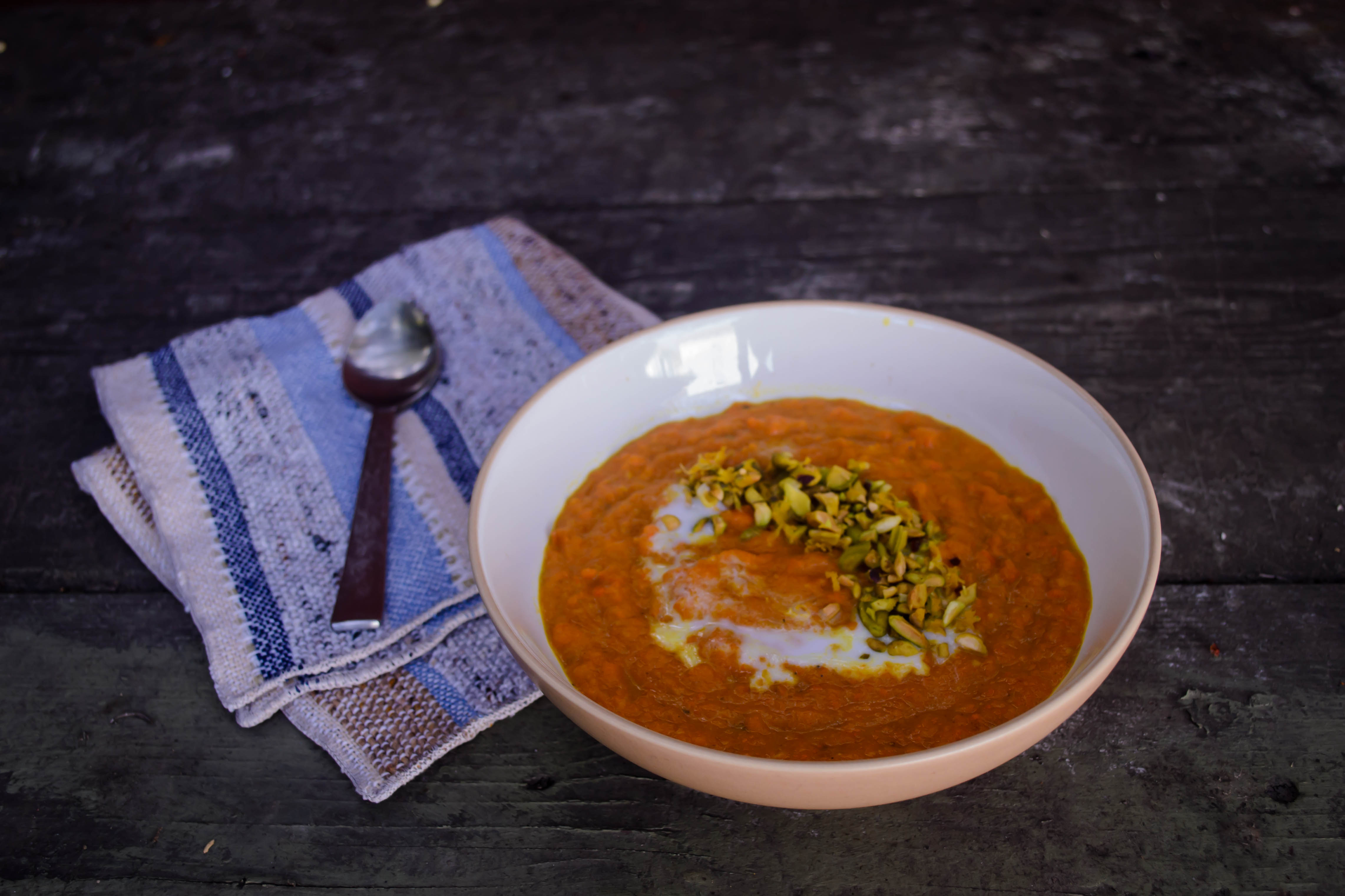
Food Blog January 2015-0205Though I realize there are probably many videos, tutorials, and step-by-step Pinterest boards devoted to fixing this problem (how to evict your imaginary scale-ghost!), I decided it was easier to just throw it away. Then I went out and had chicken and waffles for lunch.
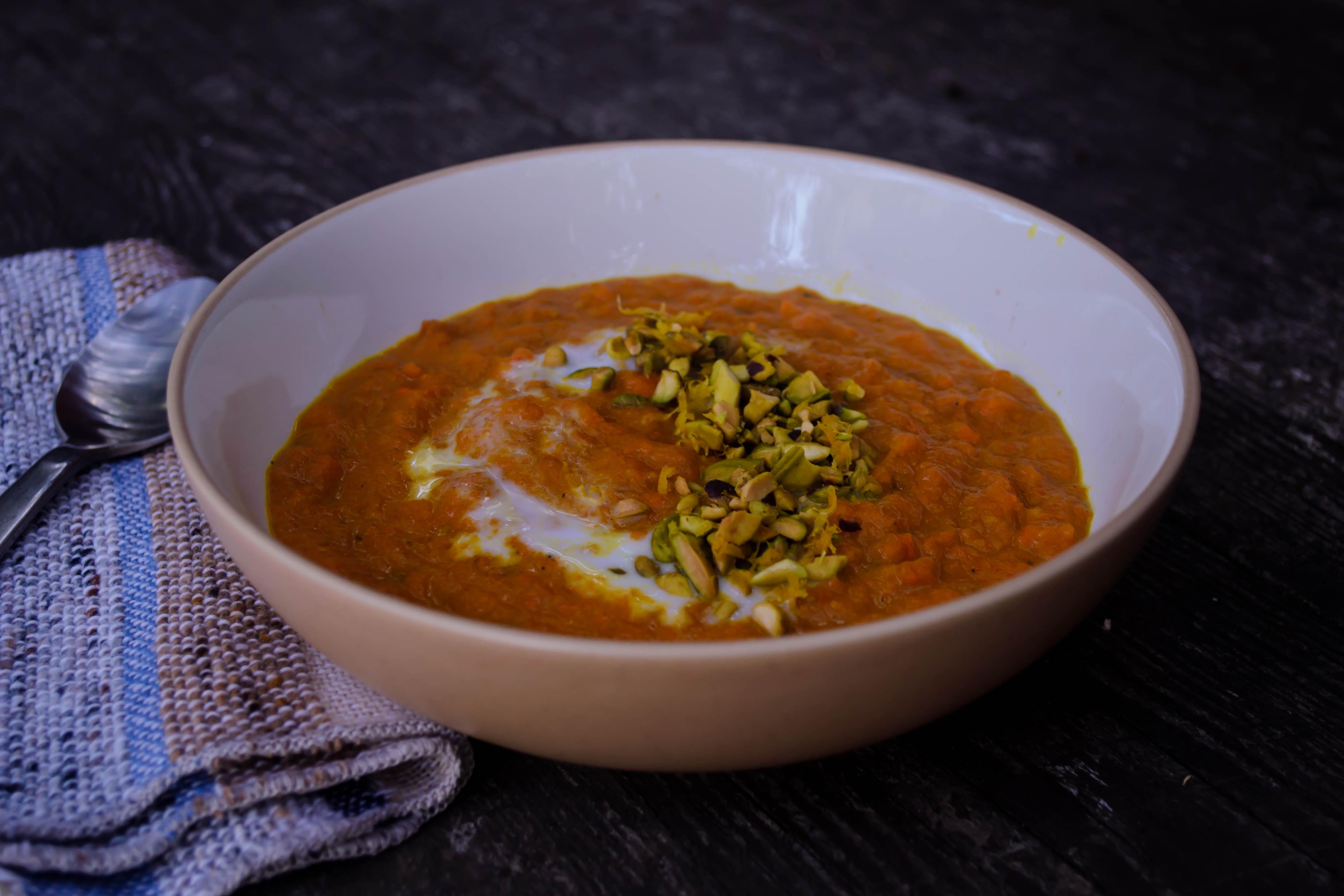
Food Blog January 2015-0210All that being said, it is the time of year when, if we’re invested in this sort of thing, we tend to pay a lot of attention to what our bodies look like and what we put into them. Usually that involves eating less and eating lighter, which is ironic and unfortunate, because so many places in the country this January are having such a harsh winter. We need comfort, we need warmth, we need rich food to sustain us through snow and low temperatures (well, perhaps not in Los Angeles).
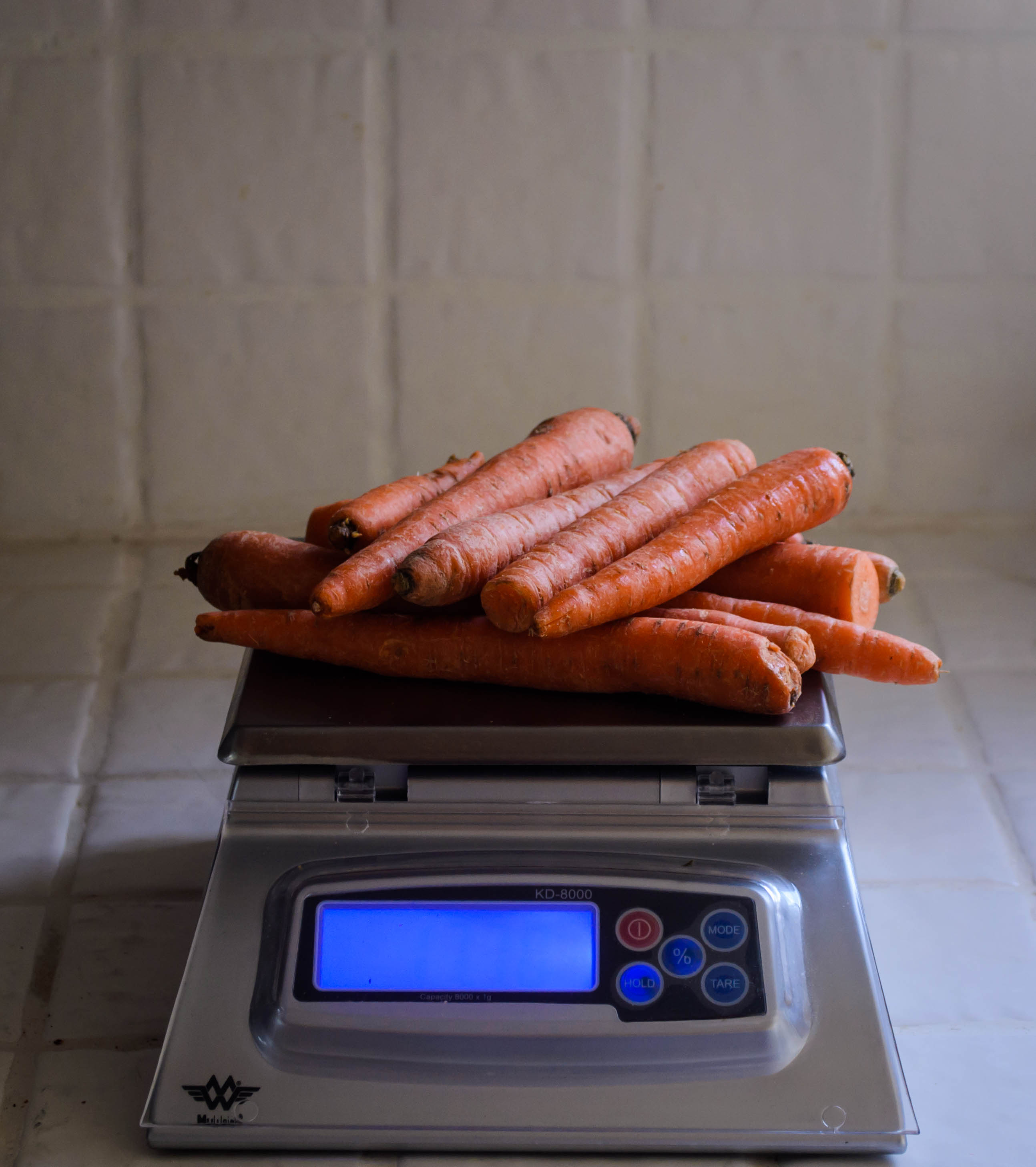
Food Blog January 2015-0199The answer to both of these problems seems, to me, to be vegetable soup. I don’t mean a minestrone type concoction, with chunks of various veggies floating in broth, but a pureed soup, featuring a single vegetable star, with minimal back-up supporters and just a bit of spice to keep things interesting. After a recent episode of Top Chef on which one of the contestants made a deep, sunset inspired roasted carrot soup, I knew what my star would be.
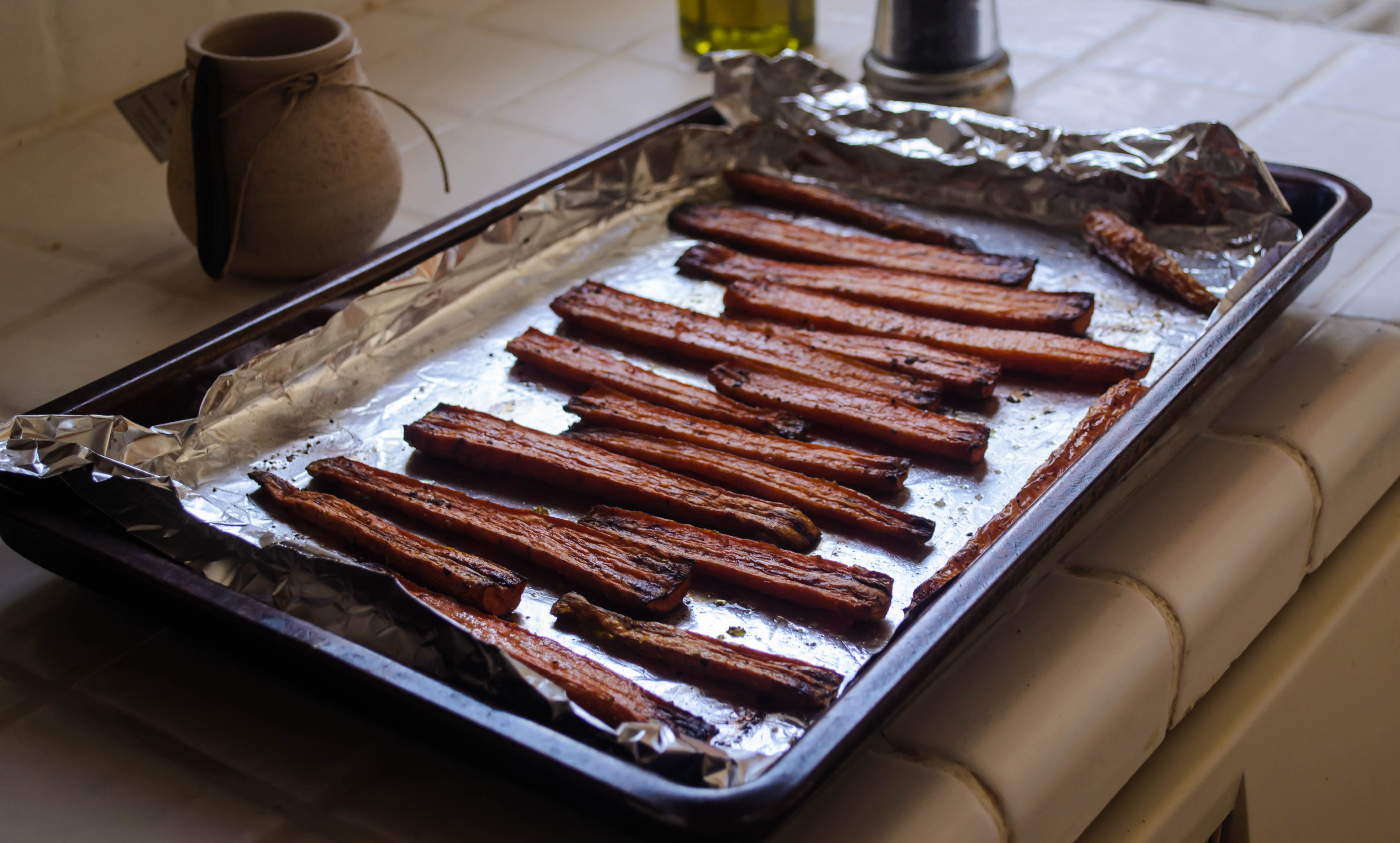
Food Blog January 2015-0201Carrots work well with many flavors, but ginger is a particularly nice pairing; carrots are sweet and hearty, and ginger is a warm, spicy kick that keeps it bright. Rather than chicken stock, which I find can muddy flavors a bit, I opted for water as my liquid, with a generous splash of coconut milk to add some richness. Then, on a whim I’m pleased I followed, I sprinkled in a good teaspoon or two of turmeric, which bolstered both the orange glow of the carrots and their earthy flavor.
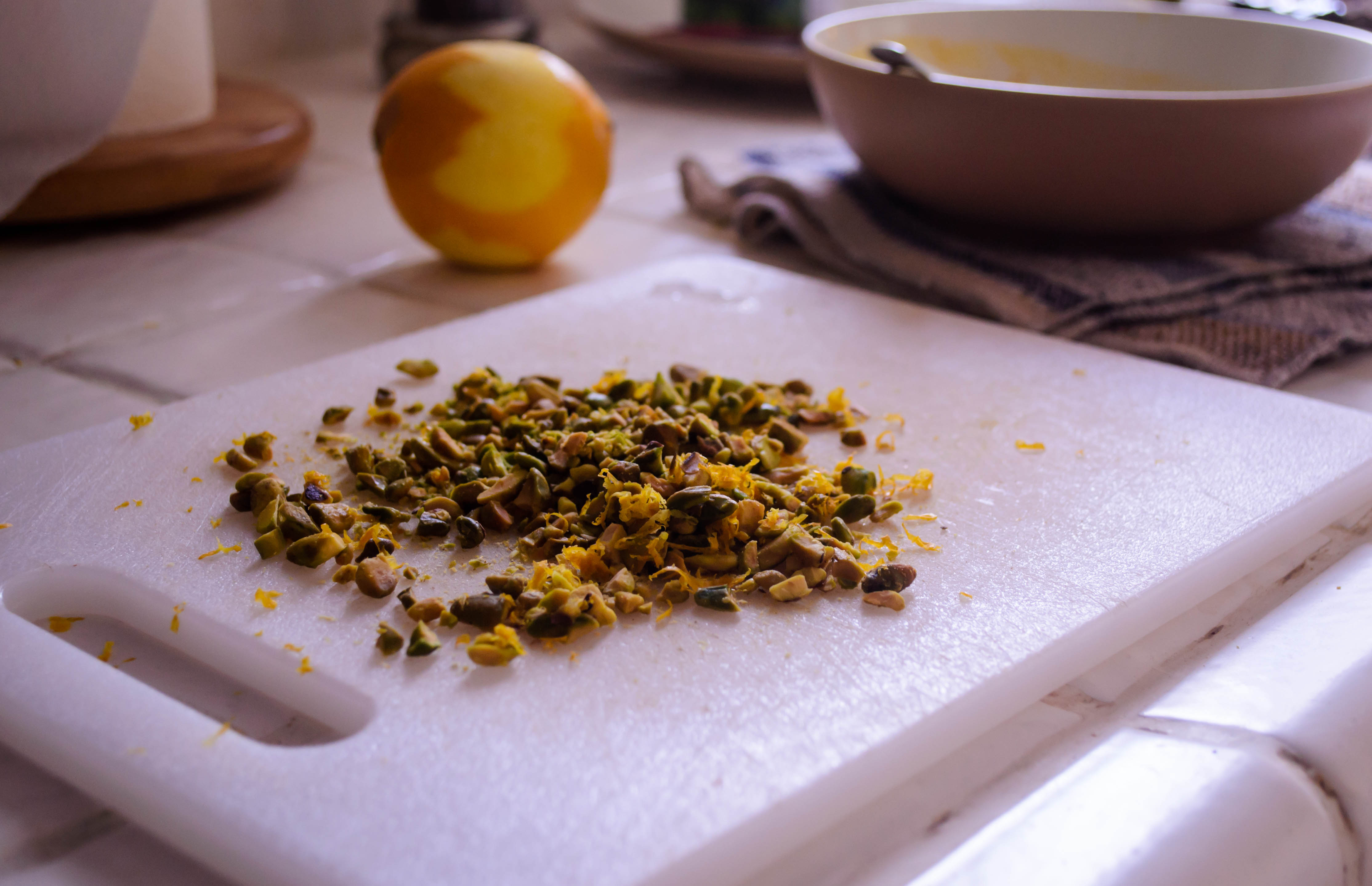
Food Blog January 2015-0213As I watched my pureed mixture burble in a pot, I started thinking about texture. I’d stopped short of pureeing the carrots to total velvet smoothness, but I still wanted something crunchy to break up the potential monotony of my soup. During the pumpkin madness of autumn, I experimented with some yet-to-be-perfected turmeric-spiced pumpkin bars that featured a pistachio and walnut crumble topping. Pistachios seemed like a good choice again here, and to play with the hint of citrus flavor they carry, as well as add a slight sourness the soup might benefit from, I tossed the nuts with lemon zest before sprinkling them over my vivid orange lunch.
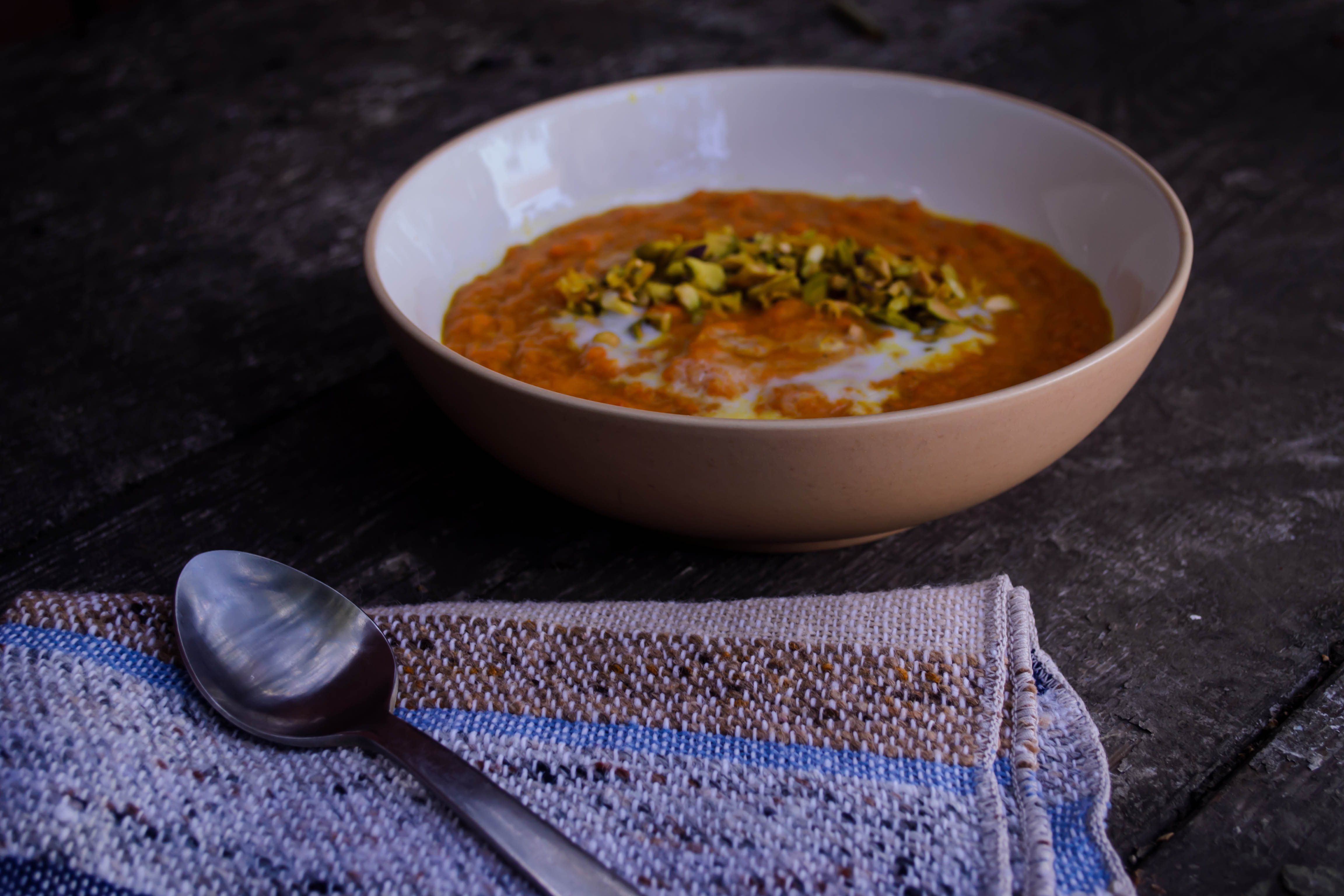
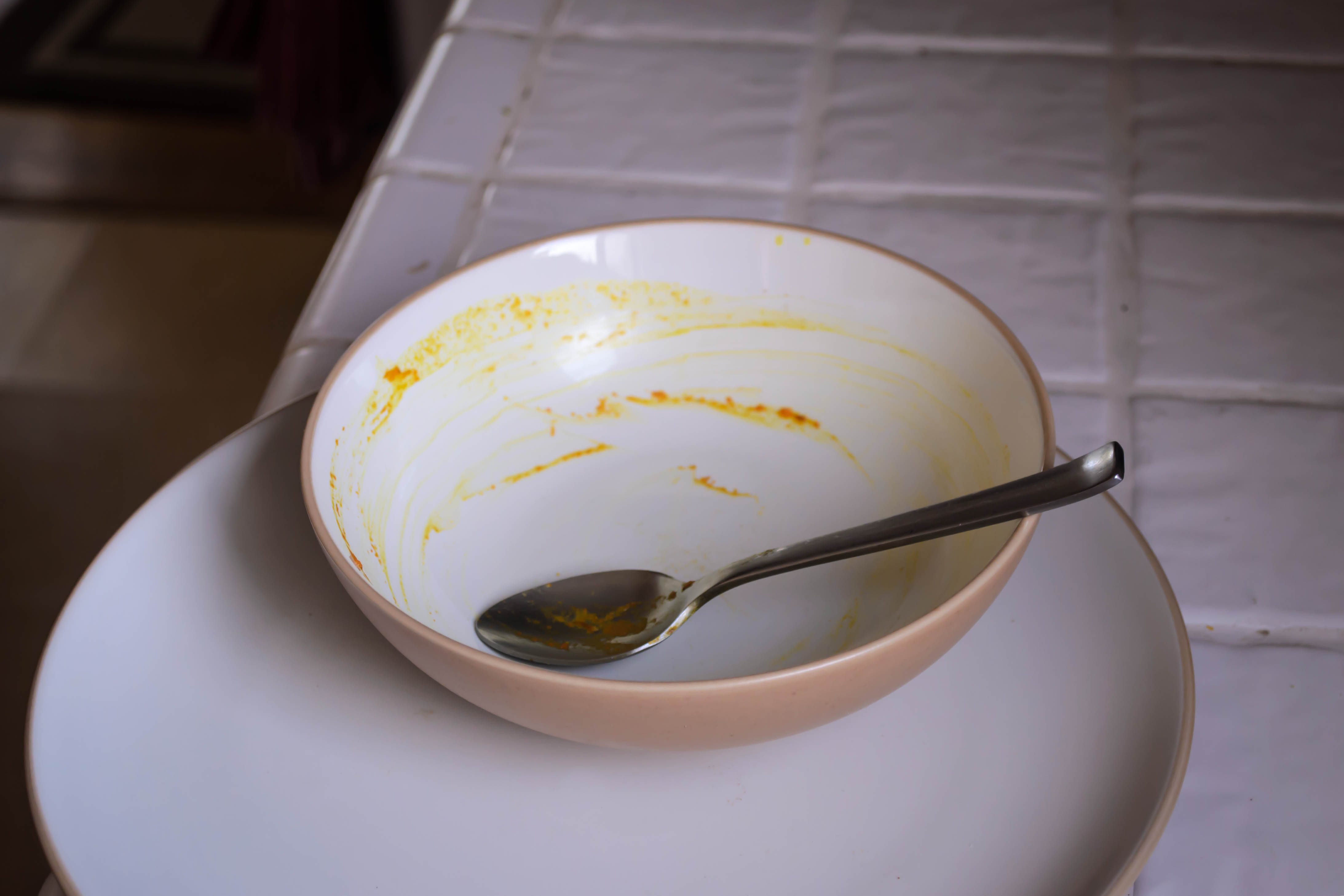
Food Blog January 2015-0209Despite our less-than-wintery weather, this was a comforting, warming bowl. Roasting the carrots brings out their sweetness and concentrates their flavor, but the spices keep it dancing between decadent richness and brightly refreshing. I used some leftover naan to mop up the edges of my bowl, but a crusty piece of baguette or hot pita would, as you might expect, be just as nice.
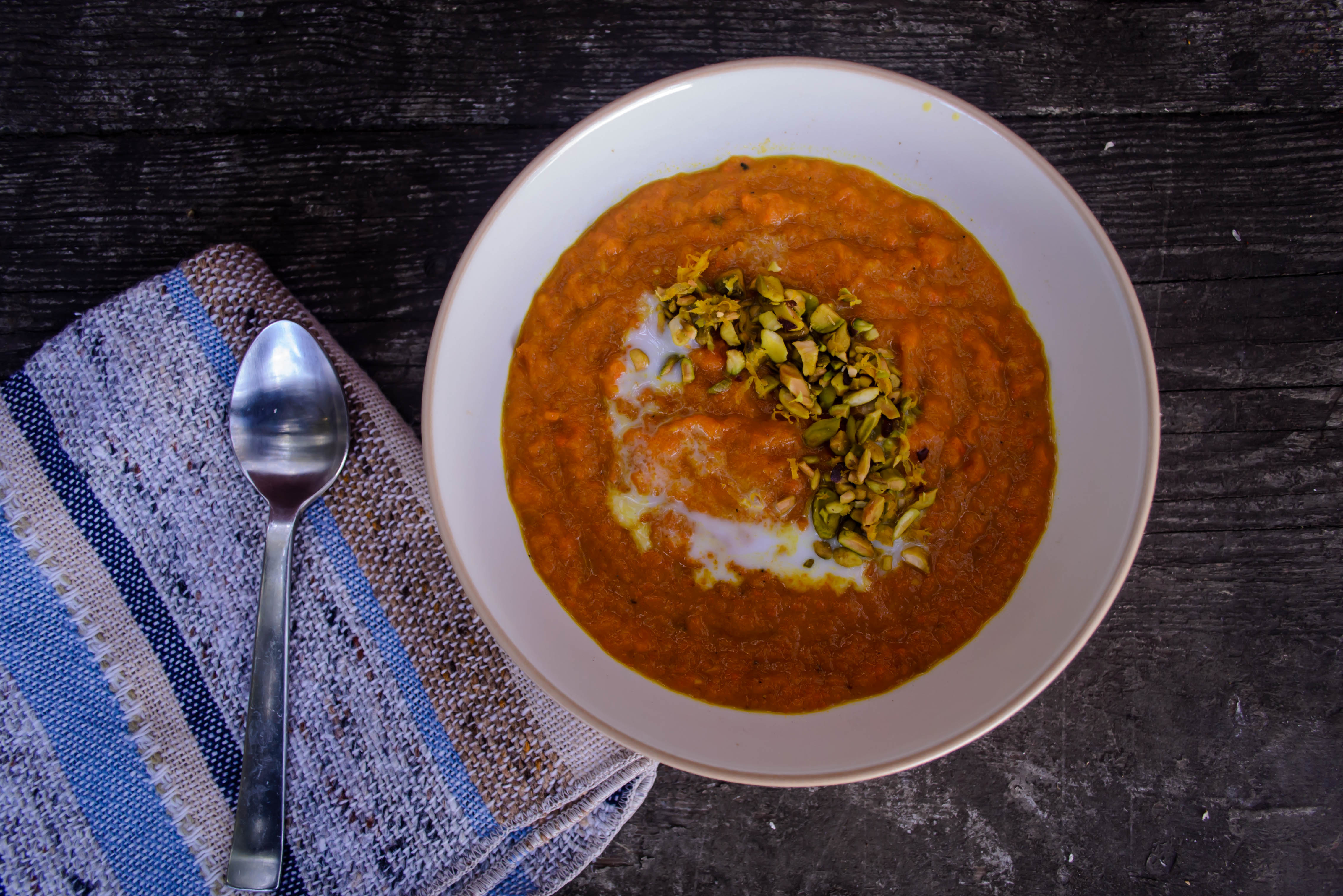
Food Blog January 2015-0214This is a thick soup – almost passable as a vegetable puree, and you can play with it as you please. Add more or less liquid, replace the pistachio and lemon topping with another toasted nut, or lime zest rather than lemon, or maybe even fried sage and crumbled gingersnaps, to play with the fresh ginger in the soup. My quantities here produce an assertively gingery mix – reduce to just a teaspoon or two for a milder spice.
Food Blog January 2015-0207

Carrot Ginger Soup with Coconut and Turmeric
Serves 2-3
1 pound carrots, tips and tops removed, peeled if desired (I usually don’t – just scrub them off)
1 tablespoon olive oil
½ teaspoon salt
½ teaspoon pepper
1 tablespoon grated ginger (or less, to your taste)
2 teaspoons turmeric
1 cup light coconut milk
1 cup water
2 teaspoons sugar
additional salt and pepper to taste
¼ cup roughly chopped, toasted pistachios
2 teaspoons lemon zest


  • Preheat the oven to 425F while you prep your carrots. Remove their tops and tips, then split down the center for two long half cylinders. On an aluminum foil lined baking sheet, toss the carrot halves with the olive oil and the ½ teaspoon salt and ½ teaspoon pepper for a gleaming, even coat. Roast in the 425F oven for 40 minutes, until nicely browned and quite tender. Set aside to cool slightly.
  • For a standard blender: add the roasted carrots, coconut milk, water, grated ginger, and turmeric to a blender and blend until the mixture reaches your desired consistency. As noted above, I chose to leave mine with a little texture, but you can blend until completely smooth if desired. Pour the mixture into a medium pot.
  • For an immersion blender: add the roasted carrots, coconut milk, water, grated ginger, and turmeric to a medium pot with high sides (otherwise the soup spatters a bit during blending) and blend with an immersion blender until the mixture reaches your desired consistency. As noted above, I chose to leave mine with a little texture, but you can blend until completely smooth if desired.
  • For both methods: once the soup is your desired consistency in the medium pot, place it over medium-low heat until it is heated through. Be careful – because this mixture is thick, if it comes to a boil it will spit.
  • Season to taste with salt and pepper and serve topped with a scattering of chopped pistachios and lemon zest.

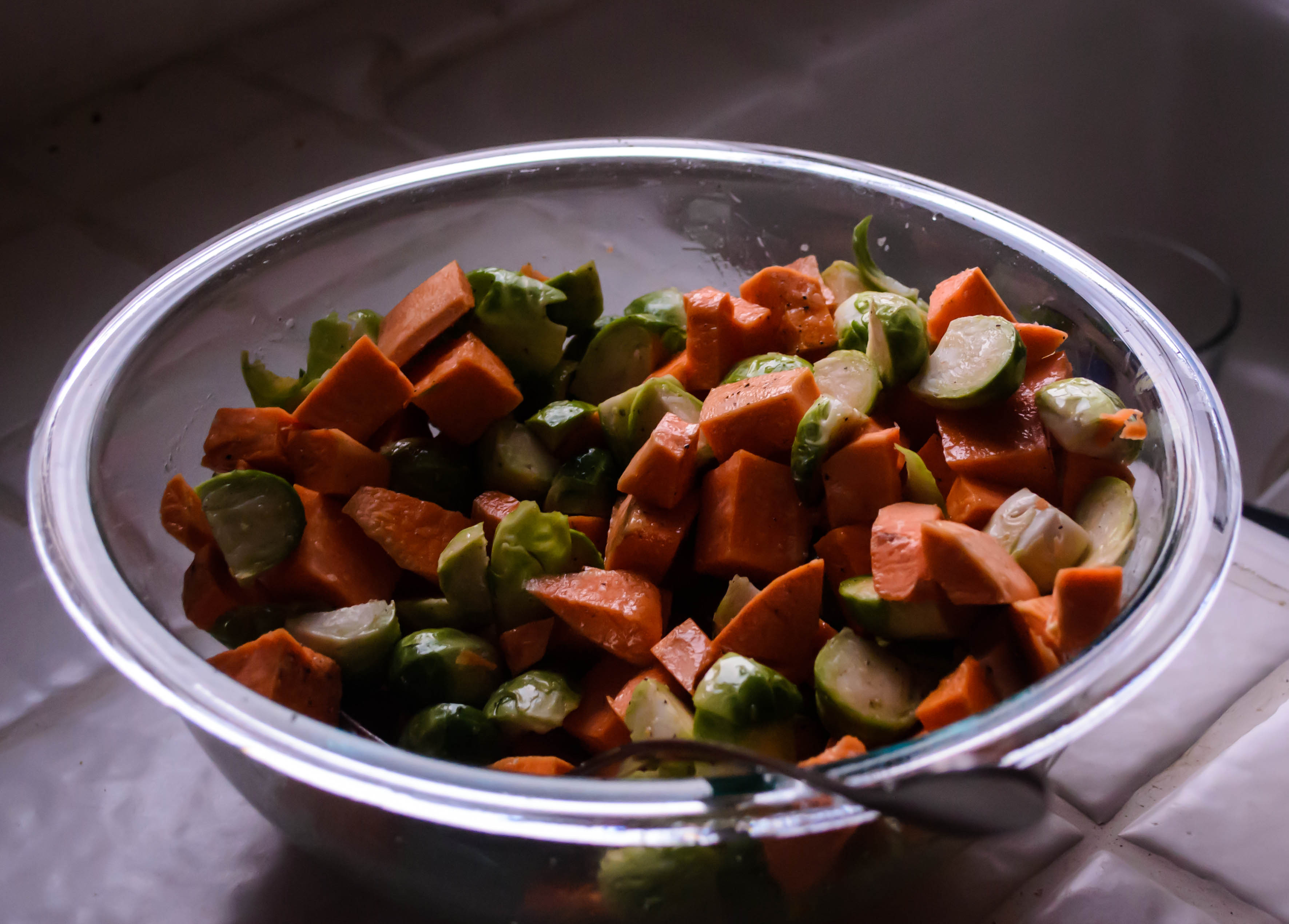
Sweet Potato and Brussels Warm Salad

Food Blog November 2014-0792The first time I made this dish, which could be called a roasted side dish or a warm salad, depending on how you’re feeling, I didn’t actually make it. Let me explain. Like everyone (she says, because it makes her feel better), I have a few unfortunate… let’s call them character flaws. I’m clumsy. I drop things. I spill. I trip. Last week right in the middle of a lecture about pronouns and antecedents I bumped into the chalkboard and, in my recovery, stumbled into a wheeled desk chair that promptly rolled several feet across the classroom. My students were gracious enough to laugh at me.

Food Blog November 2014-0782Where my clumsiness can be amusing or endearing or even charming in other areas of life (I disagree, but N. seems to find it so), it occasionally winds up being dangerous in the kitchen. I take precautions: my knives are sharp, I stabilize my cutting boards, and I try not to do too many things at once. But once in a while, a knife slips, my mind wanders, and I wind up bleeding.

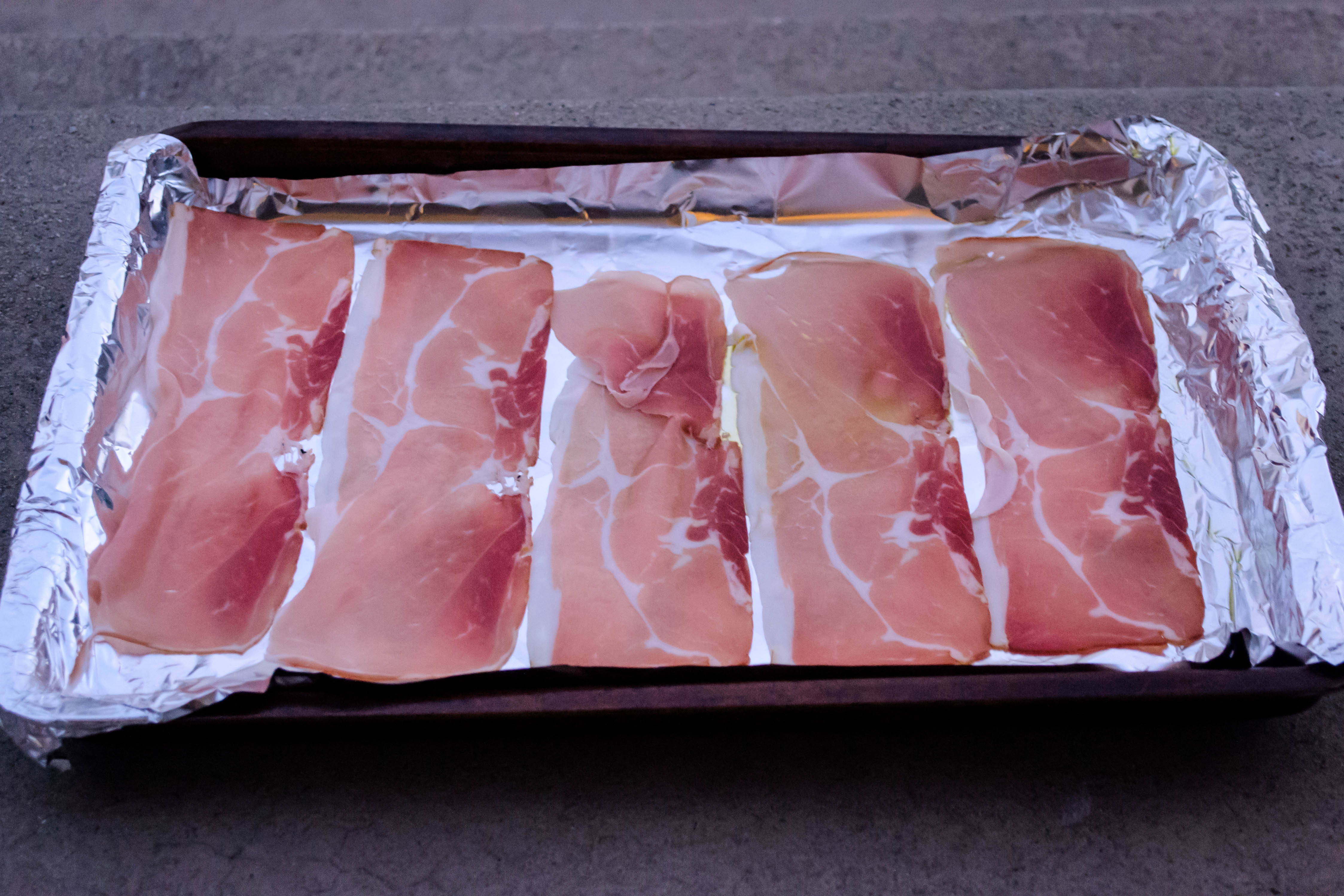
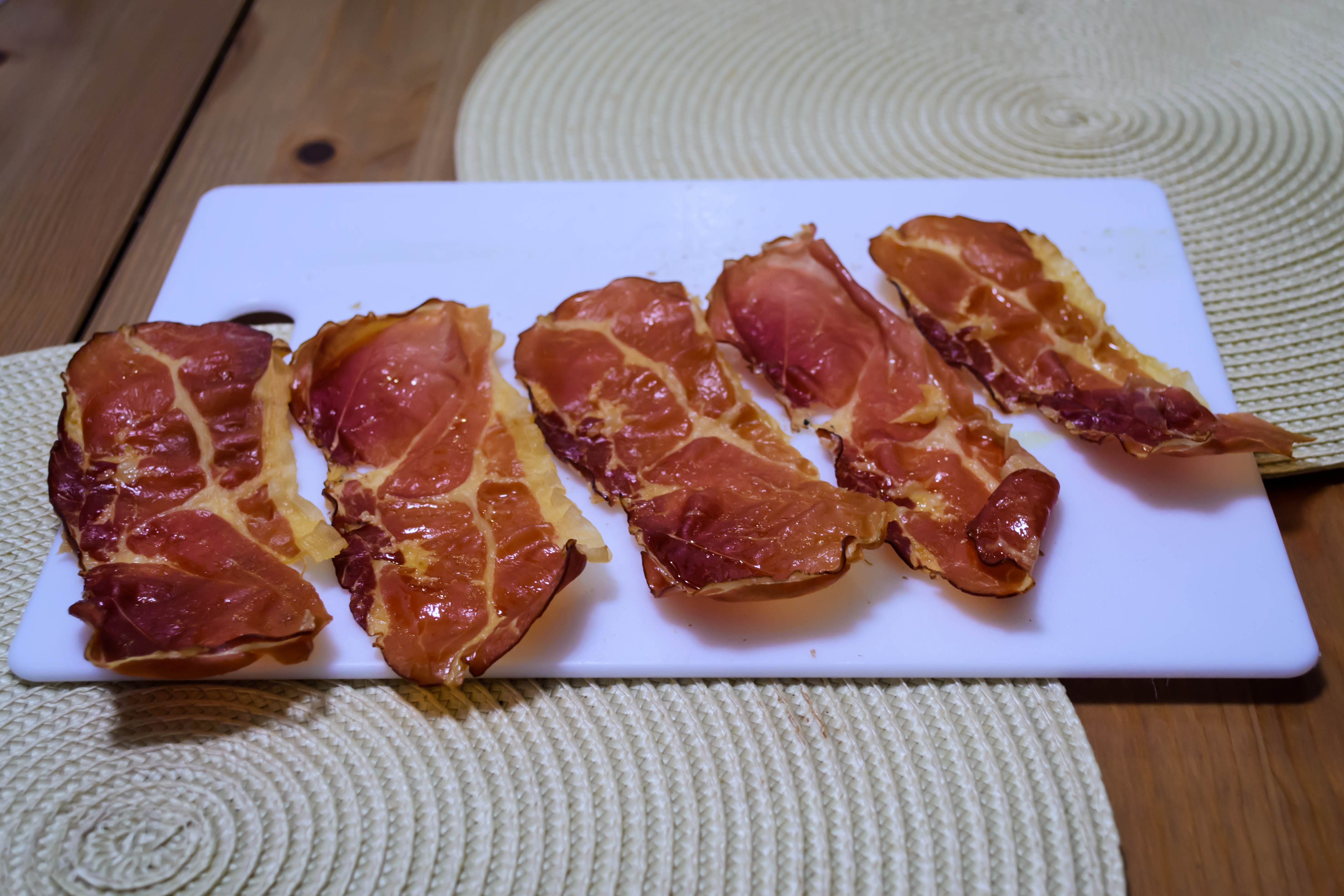
Food Blog November 2014-0783Food Blog November 2014-0788This unappetizing truth is what almost did this salad in. The first time I made it, this autumnal tumble of sweet potatoes, brussels sprouts, prosciutto, and walnuts, I had baked the prosciutto into saliva-inducing crisps, toasted the walnuts, and cooked off the sweet potatoes. All that remained, aside from a tart dressing I knew would involve whole grain mustard and cider vinegar, was to slice up a mess of brussels sprouts. To save on dishes, because N. hates washing the food processor, I was doing this delicate slicing by hand and, well, my hand slipped. In a matter of seconds, I was outside, sitting on the porch step with my hand in the air and my head between my knees thinking it was too early for the sky to be so dark, and N. was running for a bandage and asking questions about something called an emergency room.

Food Blog November 2014-0789When my head cleared a little, I decided the cut wasn’t bad enough to merit a hospital run, but it was bad enough that I wouldn’t be able to finish dinner. You’re up, N! We tagged out and N., usually a bit shy in the kitchen, did an admirable job slicing the rest of the sprouts, whisking up a sharp, perfectly acidic dressing, and tossing everything together. We ate, I recovered, and I suddenly had a fantastic war story to exchange with my sister when she suffered her own bit of kitchen clumsiness a few weeks later.

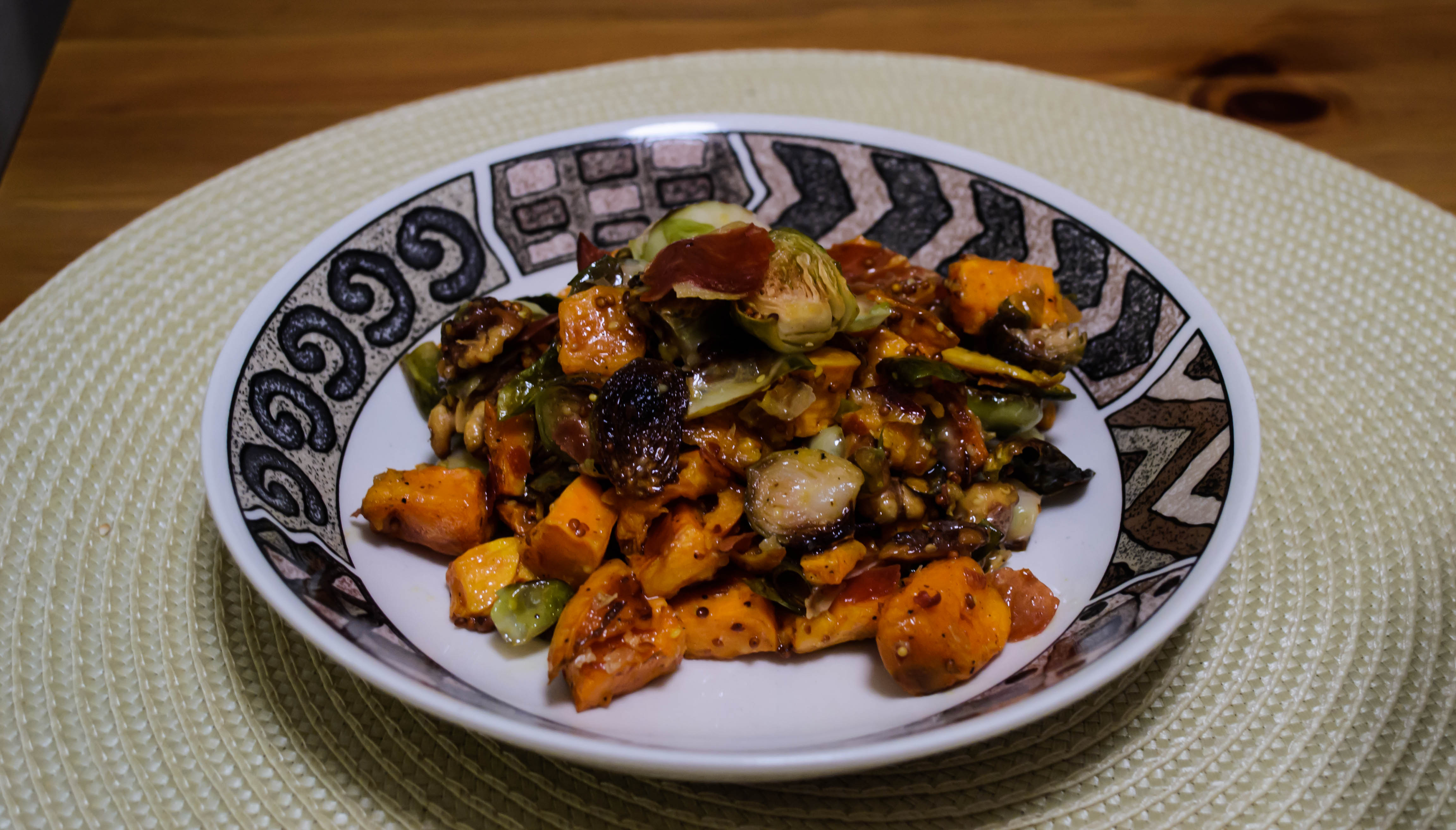
Food Blog November 2014-0794The dish stayed in the back of my mind. It was good when we ate it – nice for the day we’d had which, though warm, carried hints of cooler evenings to come – but I kept wanting more. The flavors should be deeper. The rawness of the brussels sprouts was okay, but with toasty edges they would be even better. My fix, as it usually is for things involving vegetables, was to roast everything. This created, I’ll admit, a bowl of cubes and shards that would never pass muster on a Pinterest board worth its salt. However,  it makes up for its homeliness by combining all the fall flavors and textures I was yearning for. It is sweet and earthy and vegetal, with the right amount of saltiness from the prosciutto. The walnuts have a slight, slight bitterness, which contrasts nicely against the sweet potato. And the dressing, tangy and light and packed with tiny mustard seeds that pop between your teeth, soaks down into the vegetables and lifts the whole thing back up into perfect, warm, satisfying fall salad territory.
Food Blog November 2014-0799

Roasted Sweet Potato and Brussels Sprouts “salad”
serves 2 as a main, 3-4 as a side
1 large sweet potato, peeled and cut into 1-inch chunks (about 3 cups)
16 ounces brussels sprouts, stem ends and any wilted or yellowing leaves removed, halved or quartered. You want the sweet potatoes and the Brussels sprouts roughly equal in size.
6 tablespoons olive oil, divided
1 teaspoon kosher salt
¼ teaspoon black pepper
5-6 slices prosciutto
1 cup walnuts, coarsely chopped
1 tablespoon whole grain mustard
2 teaspoons honey
2 tablespoons cider vinegar
Additional salt and pepper to taste, if desired


  • Preheat the oven to 450F and line a baking tray with aluminum foil. Pour 1 tablespoon of the olive oil directly onto the foil-lined tray and place the tray in the oven while it is preheating. While you wait for it to warm up, prep the vegetables.
  • Toss the sweet potato chunks and Brussels sprout pieces in a large bowl with 1 tablespoon of the olive oil, the salt, and the pepper. Once the oven is preheated, transfer the vegetables to a single layer on the foil-lined tray that has been heating up inside. The additional of the oil already on the tray means the exteriors of the vegetables will start cooking immediately.
  • As soon as you place the tray of vegetables into the oven, turn the heat down to 425F. Roast the sweet potatoes and Brussels sprouts for 20 minutes, then toss them to promote even browning and roast for an additional 20 minutes.
  • On another foil-lined baking sheet, spread out the prosciutto so the slices do not overlap. During the second 20 minute roasting of the vegetables, add the prosciutto tray to the oven and cook for about 10 minutes, until the slices are almost crisp and lightly bronzed.
  • Remove prosciutto slices to a paper towel to drain and cool, and add the chopped walnuts directly to the tray that previously held the prosciutto. Roast the walnuts for 5-6 minutes, until fragrant and slightly darker in color (keep an eye on them, though; they burn fast).
  • While the ingredients are roasting, make the dressing. In a large bowl (it can be the serving bowl, to save on dishes, if you like), whisk together the mustard, the honey, and the cider vinegar. While whisking, slowly pour in the remaining 4 tablespoons of olive oil. Taste and adjust seasonings if desired, but remember that the vegetables are already seasoned and the prosciutto is quite salty.
  • When the vegetables are roasted to your liking (I like them golden with slightly crusty edges, and yielding on the inside), remove from the oven and place them directly in the bowl with the dressing. Toss to combine. Crumble or chop up the prosciutto into bite-sized pieces, and add it and the walnuts to the bowl as well. Toss again to integrate, and serve warm or at room temperature.

Roots Latkes

Most kids, upon reviewing what they ate during college, will talk about late night burrito runs. There will be a fair share of ramen noodle stock-up stories, and an assessment of the school’s dining facilities. For a student who has moved off campus, such a topic is likely to provoke a discussion of microwaveable meals. I had my share of those as well, I’ll readily admit, particularly during the month after a stunningly disorienting and unexpected breakup during which I subsisted mainly on Coca-Cola, boxed stuffing mix, Godiva ice cream, and carne asada burritos to-go from a restaurant next door to the grocery store where I was buying the rest of my supplies.

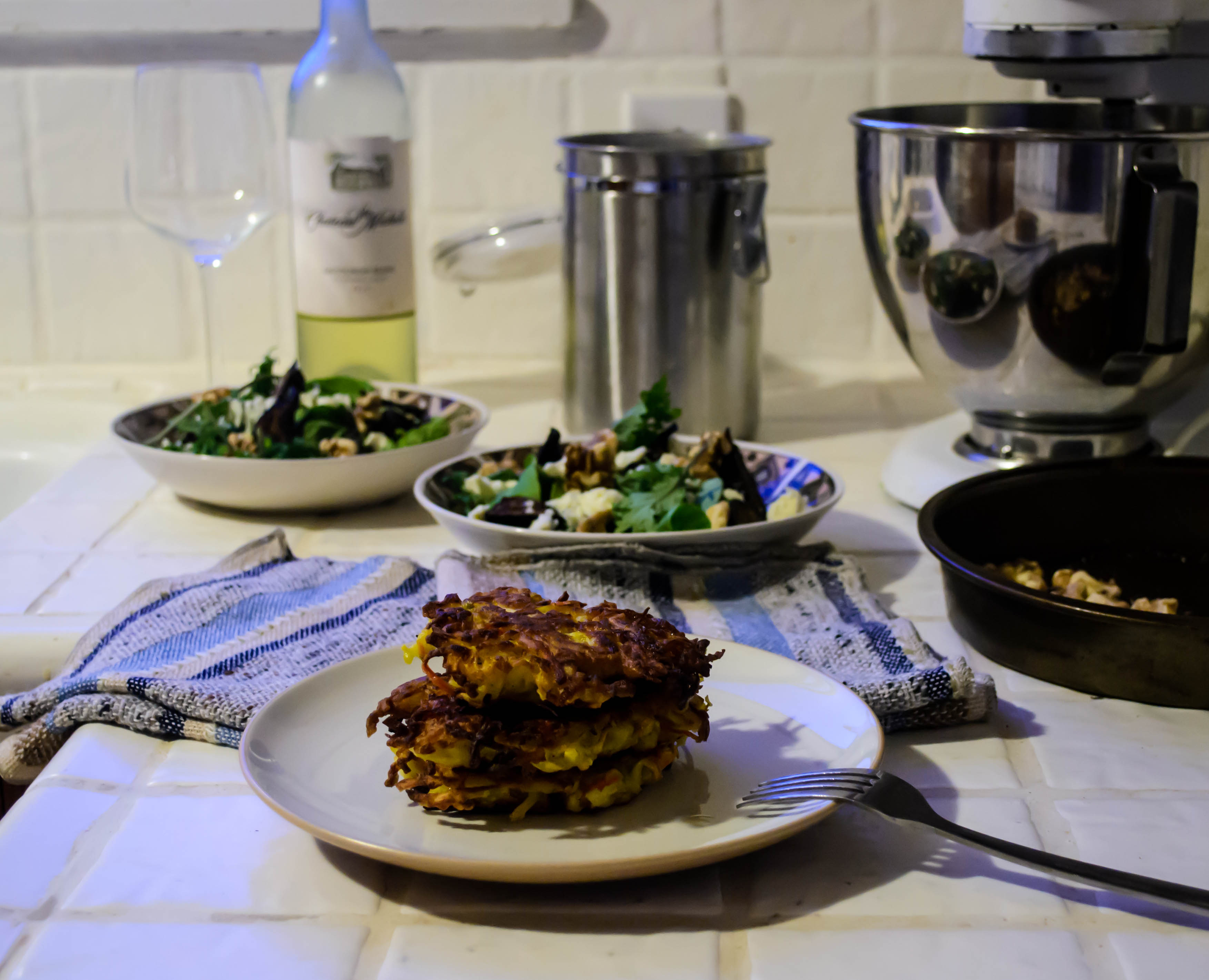
Food Blog November 2014-0694Thankfully, that month or so was an exception. For much of my off-campus college career, I lived with one other girl in a duplex her mom rented to us, and we fed each other. Sometimes it was easy stuff: pancakes, omelets, pasta with jarred red sauce, sometimes something a bit junkier like Oreo milkshakes. But we definitely introduced each other to our classics. One of mine was a modification of an old Ghirardelli oatmeal chocolate chip cookie recipe. One of hers was a simple, lovely little roasted vegetable dish her family just called “roots.” Roots consisted of, well, roots. Russet potatoes, sweet potatoes, carrots, parsnips, rutabagas, turnips, and sometimes beets got peeled, cubed, and tossed with salt, pepper, and olive oil. The first time she made it for us, K. said that she wasn’t sure how much olive oil to use, but that her mom said it should be just enough that the raw cubes of vegetables “glistened.” Then we loaded them into large glass casserole dishes and roasted them until they were done.

Food Blog November 2014-0681Roots comprised whole meals for us during those years. Sometimes there would be some kind of green side, but mostly we just sat down (never at the table, always on the couch) with big bowls of autumnal cubes, toasty and brown on the outside, starchy and pillowy soft on the inside, and inhaled them. It was reasonably good for us, it was filling, it was delicious, and best of all, it was cheap. The biggest disadvantage to the whole endeavor was getting a cashier at the grocery store who didn’t recognize “weird” vegetables like rutabagas and parsnips, and would take a long time looking up the codes to ring them up.

Food Blog November 2014-0682Over the years, I’ve made roots more times than I can count. They are a lovely comfort food dish: simple to make, hot and forgiving, and easily changed up depending on what vegetables and herb combinations you like the best. Over time, I’ve eliminated beets from the equation, and opted to add plenty of chopped rosemary to the requisite salt, pepper, and olive oil.

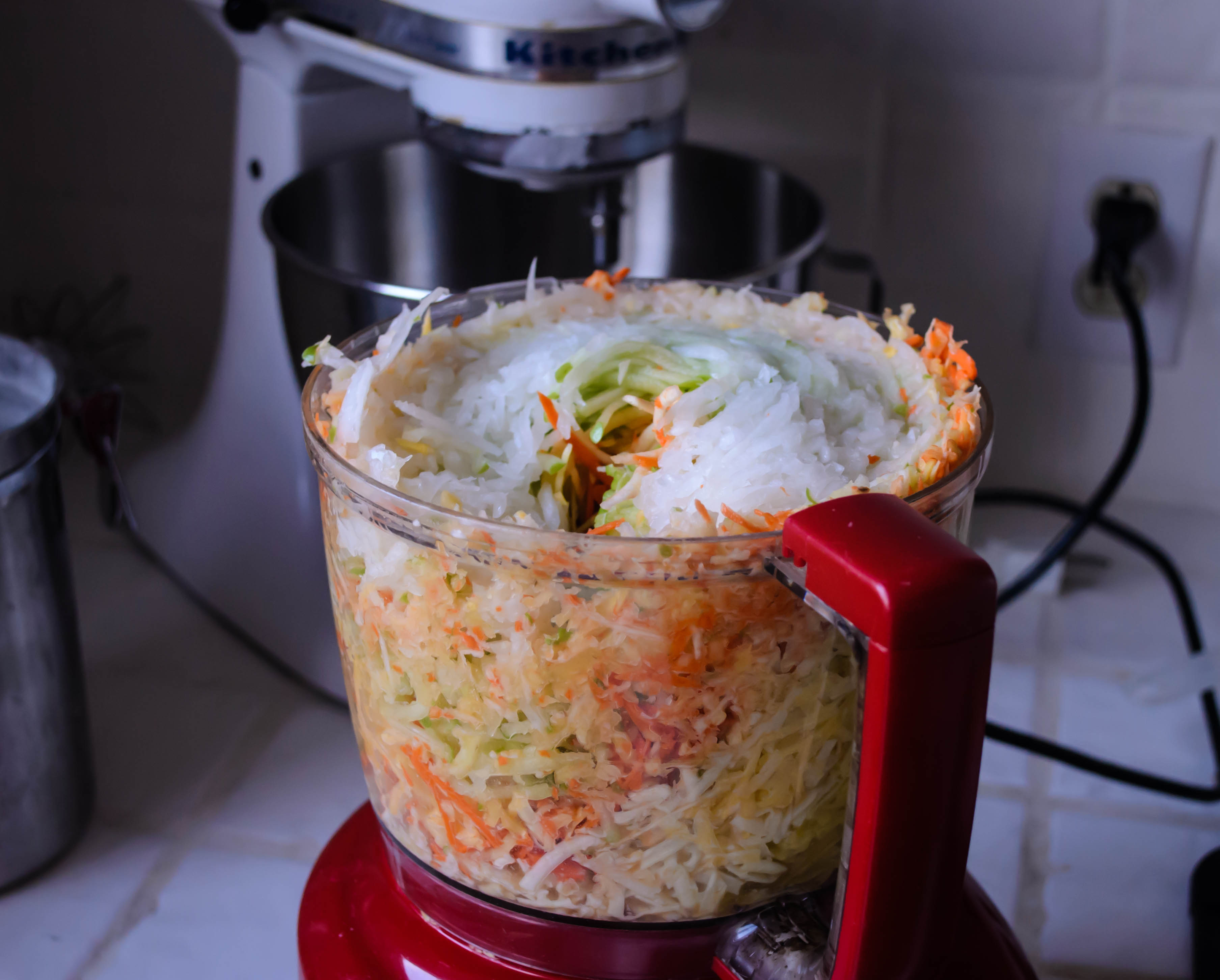
But recently, I got thinking about roots again and wondered what it would be like to turn these simple cubed, roasted vegetables into a latke. This would increase the ratio of crisp edges to soft interior, always a good thing, and cut down a bit on preparation as well as cooking time – you can just shred everything in a food processor before frying it up, rather than cubing by hand before waiting out the hour or more the original takes in the oven.

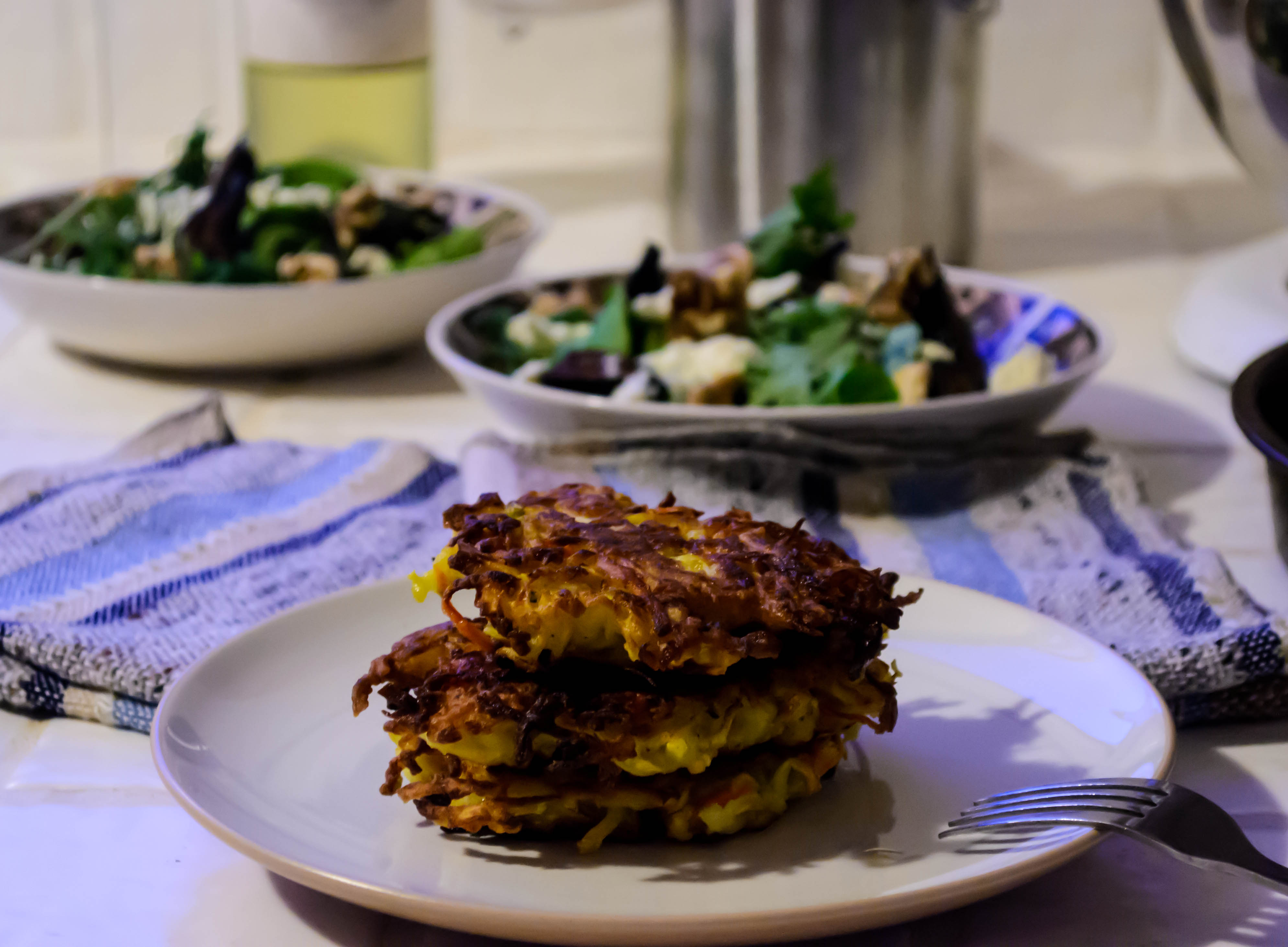
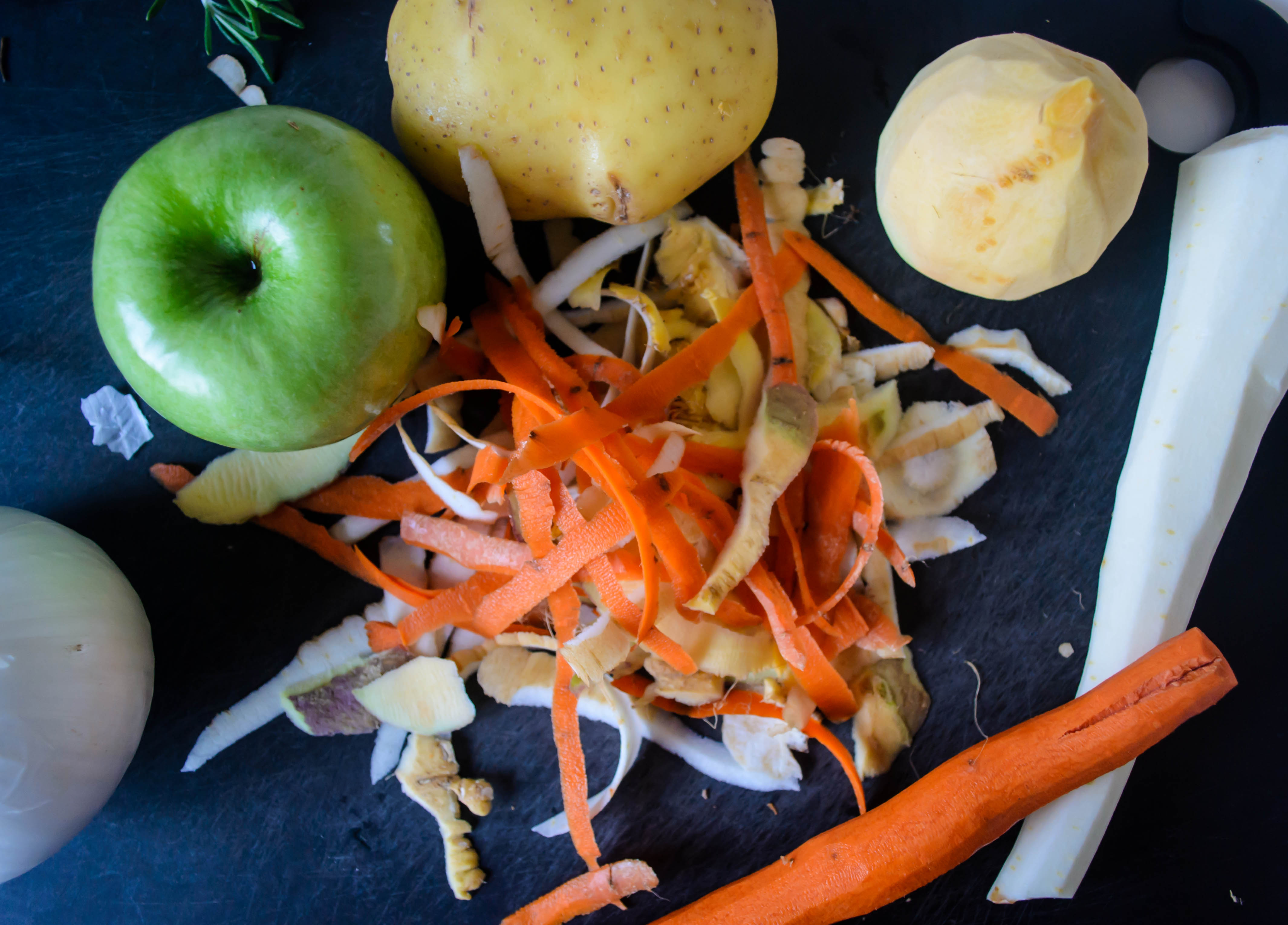
Food Blog November 2014-0687This was, as it turned out, exactly the right thing to do. I opted for potato, carrot, parsnip, and rutabaga as my key players. They whiz into a tangle of starchy threads. Half an onion joins the party – it’s part of a standard latke, and it’s a root vegetable too. As a nod to the common practice of serving latkes with applesauce, I added a tart green apple to the vegetable combination and was pleased with the sweet sharpness it contributed. And I preserved my own love of rosemary with a hefty tablespoon in the mix.

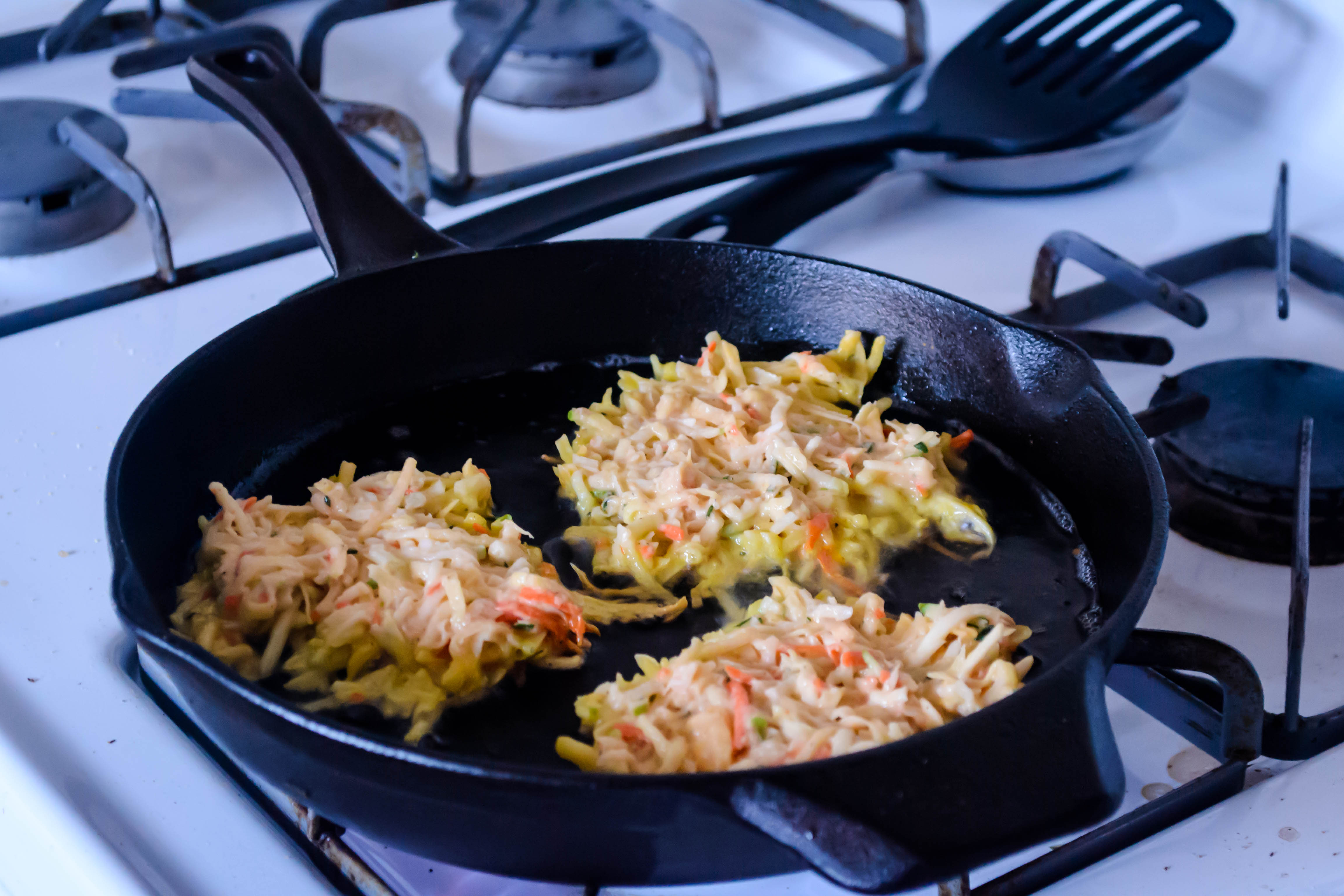
A few eggs, a toss with some flour, and salt and pepper to season, and you carefully drop-pour dollops of the sticky mixture into hot vegetable oil, preferably in a nicely seasoned cast iron pan. It sizzles, it browns, you flip it, and within ten minutes from your first addition of batter, you are passing out hot roots latkes to your delighted diners. Or, if you want to serve everything together, you can stow each batch in the oven on a rack in a baking tray to keep them warm and crisp.

Food Blog November 2014-0690What you are left with is a reasonably quick, reasonably easy (both provided you have a food processor with a shredding disk) meal that doesn’t cost much but tastes exactly right for the approach of chillier weather. The flavors are more complex than your standard latke – there’s a mix of sweetness from the addition of the carrot and the apple. The parsnip and rutabaga have a spicy, earthy flavor that reminds me somehow of incense, a feeling pleasantly intensified by the rosemary.

Since I’d already captured the applesauce element by adding apple to the batter, I served these with a dollop of sour cream as a nod to another classic pairing.

Food Blog November 2014-0695

Roots latkes
Makes about a dozen  3-inch latkes
1 yukon gold potato
1 large carrot, peeled
1 large parsnip, peeled
1 medium rutabaga, peeled
1 large tart apple, cored
½ large white or yellow onion, ends and papery skin removed (either color is fine, so long as it’s not a sweet onion)
1 tablespoon minced rosemary
1-½ cups all-purpose flour
2 eggs, lightly beaten
1 teaspoon salt, or to taste
½ teaspoon pepper, or to taste
½-1 cup vegetable oil
Sour cream, for serving (optional)


  • Begin heating ½ cup of vegetable oil in a large cast iron skillet over medium heat – it will take a few minutes, but you are looking for it to just shimmer when swirled around the pan. If you plan to make the whole batch at once and need to keep them warm, preheat the oven to 300F and position a baking sheet with a wire rack on it inside the oven.
  • Fit a food processor with the shredding disk, or address the largest holes on a box grater with care for your knuckles. Cut the vegetables into the size needed to fit comfortably down the feeding chute of the food processor, and carefully feed the potato, carrot, parsnip, rutabaga, apple, and onion through the machine to create long, thin shreds of vegetable.
  • Dump the whole mess into a large bowl and mix them up a bit with your fingers to distribute evenly. You’ll be left with strands of vegetable confetti.
  • Add the rosemary and flour to the vegetable shreds and toss well with your fingers to combine. Then add the eggs and the salt and pepper, and mix well to combine. You could use a spoon or spatula for this, but I just use my fingers. They do a better job ensuring everything is evenly distributed.
  • When the oil is shimmering, plop ¼ – ⅓ cup dollops of the mixture into the oil. In my 10-inch skillet, I can fit three dollops of batter comfortably without touching – don’t crowd them. When they hit the oil, they should sizzle lightly. If the oil spits aggressively, it’s too hot. Turn the heat down or remove the pan from the heat for a minute to cool it down.
  • Sizzle the latkes for 4-5 minutes on the first side, until it is evenly golden-brown and crisp. Flip carefully (oil splatters) and cook for 2-3 minutes on the second side, until it too is brown and crisp. Move to the rack in the oven to keep warm, or directly to a plate for immediate consumption.
  • Repeat until batter is used up. If the oil level gets low or the latkes begin to brown unevenly, add additional vegetable oil to the skillet, giving it time to heat up before adding more batter.
  • Serve with sour cream, if desired, or applesauce, or just an anxious fork.

Grilled Potato and Radish Salad

In the last three years, I have had the incredible good luck of attending a wedding each summer. Two years ago, I had the great honor of making the cake. One year ago, I sobbed as I watched two women legally and joyfully exchange vows, then start perhaps the greatest dance party I’ve ever attended. And this past weekend my eyes welled as the bride – dressed in a frock she designed herself, alternating white and lemon yellow flounces – betrayed just a tiny quiver in her perfect, crimson lips as her sister read a toast: a poem she’d written herself.

Food blog June 2014-3913The poem was about the bride and groom, but it was also about older and younger sisters: the beautiful friend/family/learning relationship they have as they grow up together. It was, there is almost no need to assert, beautiful. Of course it was. It was about the things the girls had weathered, and how the groom had woven his way into their laughter and music, through music of his own. But it was also about what the bride had taught her sister.

Food blog June 2014-3907Sisters learn funny things from each other, and it is disarming and lovely to be allowed to see what things they consider most important. How to read, how to write, how to sing. And, somehow magically, “how to cook radishes.” Until five or six years ago, I’d never given much thought to cooking radishes. To be honest, I hadn’t given much thought to radishes at all. They were just there, all weird and pinkly peppery, flying saucers scattered through the occasional salad, or sharp and pungent and paired with butter and salt.

Food blog June 2014-3910But here’s a funny thing, about radishes, about weddings, about friends and family and learning: as you get older, you get to choose things. Weddings help us construct the families we choose. But so can friendships, and so can an experience like graduate school, and so, oddly enough, can radishes.

Food blog June 2014-3911When N. and I lived in Eugene, Oregon, we decided to grow a garden. It was easy, there. It was a matter of shoving seeds into a spare bit of dirt, and watching them grow. Until the height of summer, it rained so often you barely had to worry about watering. Peas were one of our first crops, and of course we were invested in our tomatoes. But I’d still never considered radishes. Until, at S.’s house, a friend who has now become family, I was handed a french breakfast radish, pulled from her own little vegetable plot minutes before, a pink and while icicle the neighborhood deer had left quite alone. “You can just eat the whole thing,” S. told me, and I did. And the mild crunch, and the crisp, juicy spiciness, all but made me a convert then and there.

Food blog June 2014-3912After that first year of gardening, I always bought a pack of radish seeds. And they will never not make me think of S: razor wit, funny and honest and lovely and brilliant. She’s a willing and gracious hostess, she’s a fantastic cook, and she’s the mom to my own dog-daughter’s canine BFF. She, like the bride and groom this past weekend, like J & HP whose wedding cake I made, the people I can barely wait to spend fourth of July weekend with, is one of that special and cautiously assembled group: the family I chose.

Food blog June 2014-3915And as the fourth of July approaches, and those lovely people you choose to surround yourself with, to learn from, to sing with and read with and cook with, begin to turn their thoughts to potato salad, let me offer a fresh take to consider. This is not your traditional mayonnaise-laden, pickle-and-onion-and-dusted-with-paprika barbecue offering. (If you are after one of those, may I humbly suggest this one?) But I like this different approach, because it is lighter and fresher, because it does not require stove or oven heat, and because it makes me think of S. Tiny fingerling potatoes and plump lipstick red radishes get quartered, salted and peppered and oiled, and grilled until tender and silky. And then a few green onions, just to get a gentle char. Meanwhile, an assertive vinaigrette gets overburdened with herbs and whisked within an inch of its life to be drizzled over a bed of greens. I like arugula. S. would tell you to use the radish greens (but wash them a few times first – they can be really sandy). Potatoes and radishes get tumbled in, and after a quick toss the greens are barely wilted and the dressing soaks into the grilled vegetables like sponges in a bath.

I don’t know if this is how my bride friend’s sister learned to cook radishes. I suspect not. But the point is, those lovely things we learn, and choose, and become, should be shared.

Food blog June 2014-3913

Grilled Radish and Potato Salad, for Sarah.
Adapted from Cuisine at Home
Serves 2 as a main, 4-6 as a side
1 pound radishes, rinsed well, tops and tails removed
1 pound baby potatoes – the smaller the better
4 tablespoons olive oil, divided
1 bunch green onions or scallions, root ends trimmed off
¼ cup white wine vinegar or lemon juice
2 teaspoons dijon mustard
2 teaspoons finely minced dill
2 teaspoons finely chopped parsley
salt and pepper to taste
2-4 cups loosely packed arugula, or a combination of arugula and well-rinsed radish greens


  • If you are using a gas grill, place a grill tray on the burners and preheat the grill to medium over direct heat. If you are using a charcoal grill, light the coals. As they begin to turn gray, add the grill tray to let it heat up. If you are using an oven, preheat it to 425F with a sheet tray inside.
  • Quarter the radishes and halve or quarter the baby potatoes. You want equal, bite-size pieces – they need about the same amount of time to cook.
  • In a large bowl, toss the potatoes and radishes with 1 tablespoon of the olive oil, and salt and pepper to taste. Transfer them to the preheated grill or sheet tray in a single layer.
  • Grill until tender, 10-15 minutes, agitating as required to prevent burning. If you are using an oven this may take more like 20-25 minutes.
  • Meanwhile, make the vinaigrette: in a large bowl (I use the same bowl as before), whisk the remaining 3 tablespoons olive oil with vinegar, mustard, and herbs.
  • When radishes and potatoes are tender, transfer them to the bowl with the vinaigrette. Add the arugula (and radish greens, if using) and toss to combine.
  • Grill the green onions for 3-5 minutes, until the white bulbs are slightly softened and the greens are nicely charred. Chop and add to the salad, again tossing to combine.
  • Season the salad to taste with additional salt and pepper, if needed, and serve warm or at room temperature.

Cabbage and Celery Seed Slaw

Food Blog April 2014-3715All too often, it seems, I find myself either ahead or behind the curve. Last week I was offering you Easter bread the day after Easter. This week, I’ve got a slaw recipe that really merits a space on your Memorial Day table, but May is still barely on the horizon. I can’t really blame anyone for this – not even me (at least that’s what tell myself). The fact is, summer is now so close – I have a mere three weeks of classes left to teach – and, if we’re honest, it’s been such summery weather in Los Angeles for so many weeks now, that the divide between what might be summer and what could have been spring is so dubious it barely existed.
Food Blog April 2014-3703While I wait for real summer, I content myself with small pleasures. Sitting on my patio out back, with the afternoon breeze just strong enough to keep the sun from being too hot. Remembering why I assigned that novel to my morning classes as I gasp my way through Margaret Atwood’s bewildering narrative in its relentless, sharp prose. Devouring, lest you think me too romantic, an entire package of chocolate-dipped marshmallow peeps I found in a clearance Easter candy bin. I know. They were so good, though, tiny milk chocolate eyeballs and all.
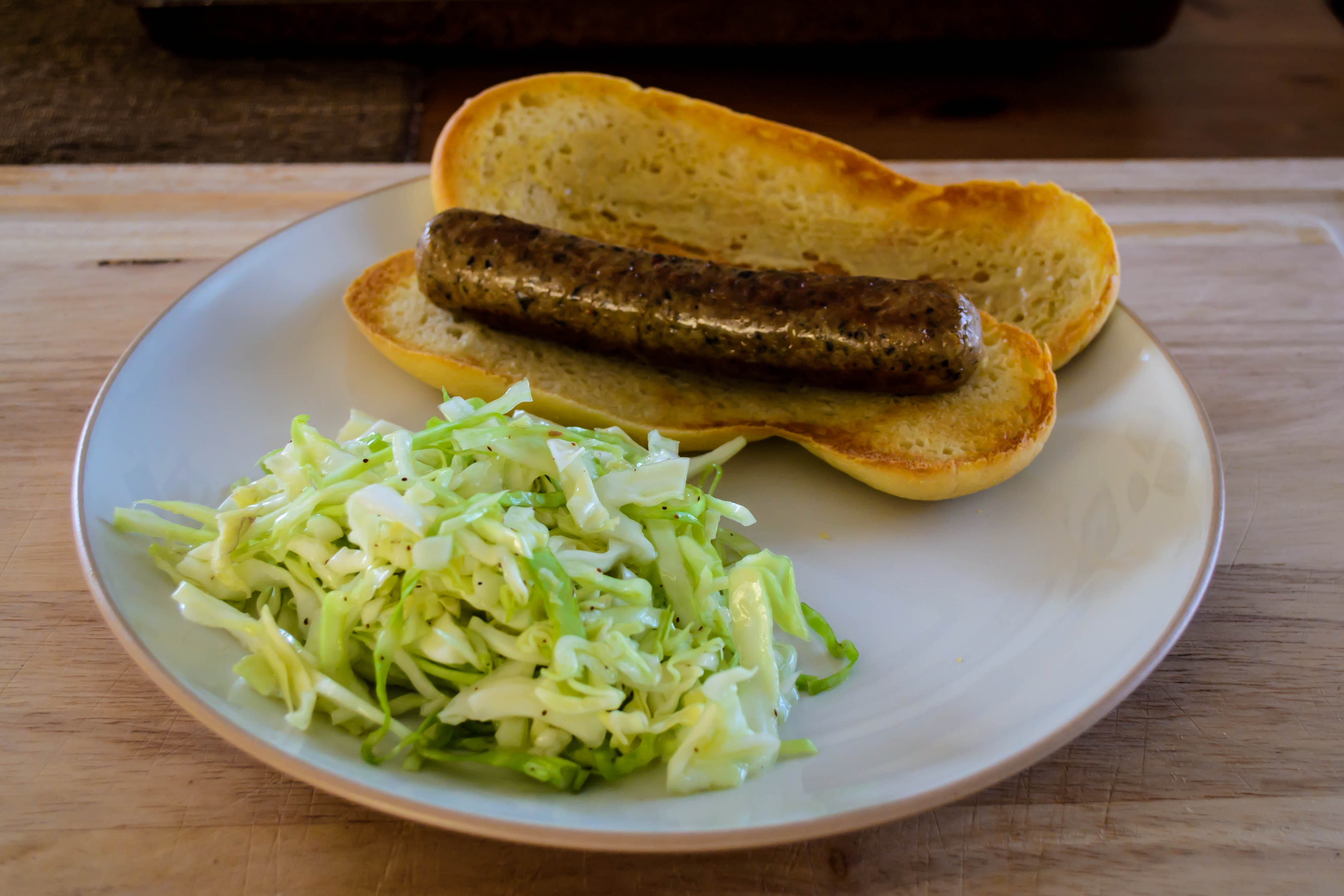
Food Blog April 2014-3705Despite my inability to work “in a timely fashion,” I think you should keep this simple little slaw recipe around. It’s a tangle of cabbage so bright, so fresh, with not a speck of mayonnaise in sight. It would be equally welcome piled high as a side dish for sausages or barbecued anything as it would squashed between soft brioche halves on a pulled pork sandwich. If we’re going to get really dreamy, it could likely sit quite comfortably atop a lobster roll for a man-I-wish-I-were-on-a-beach-somewhere lunch fantasy.
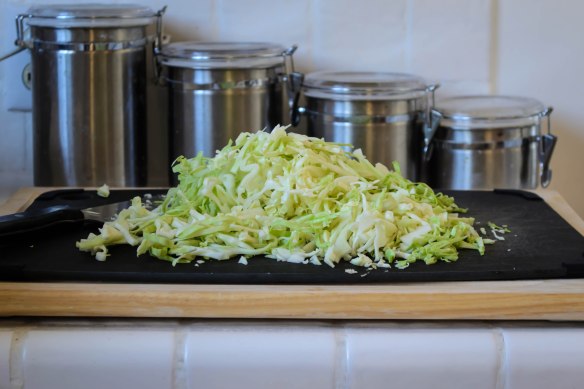
Food Blog April 2014-3706The inspiration for this slaw comes from a side dish N. had with a plate of fish and chips at Mud Hen Tavern in Hollywood, celebrity chef Susan Feniger’s newest venture. I tasted the humble pile of cabbage shreds and became instantly intrigued by the nutty, savory herbal notes that I couldn’t quite place. I don’t often do this, but I asked a server, and was soon speaking to one of Feniger’s cooks, who told me his secret ingredient was celery seed. He gave me a few instructions about how they make it, and from there it was just a matter of playing with quantities.
Food Blog April 2014-3704Celery seed is a funny little spice – tiny, musty smelling seeds, but with a distinct sharpness. Crushed raw and solo between your teeth they are too strong: a bitter kick with the aftertaste of raw celery stalks. Toasted, though, or crushed and lightly simmered in olive oil until their flavor blooms, they add a deeply savory note, a mix of umami and something almost floral, that I’m now totally obsessed with and want to add to everything.
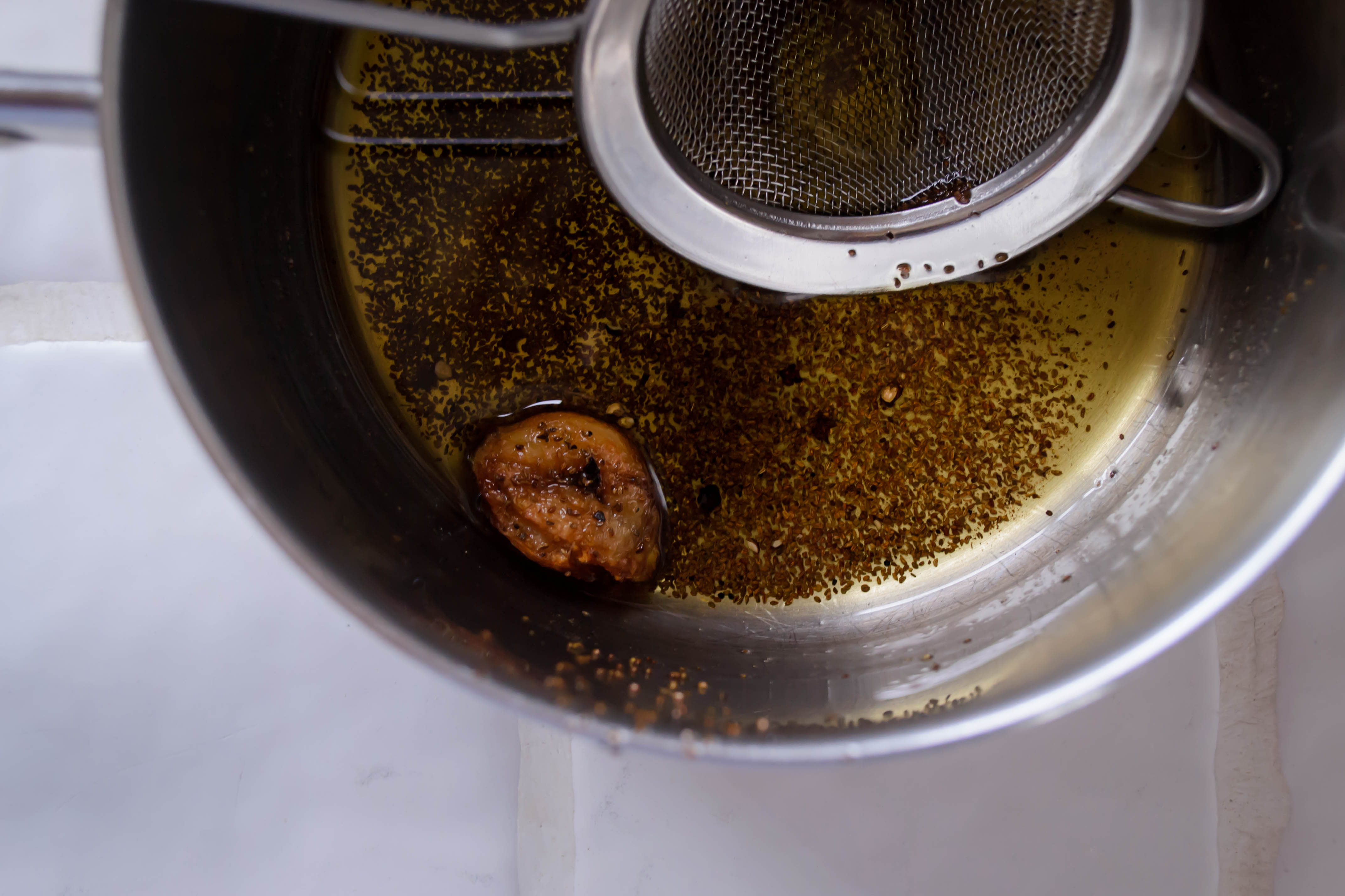
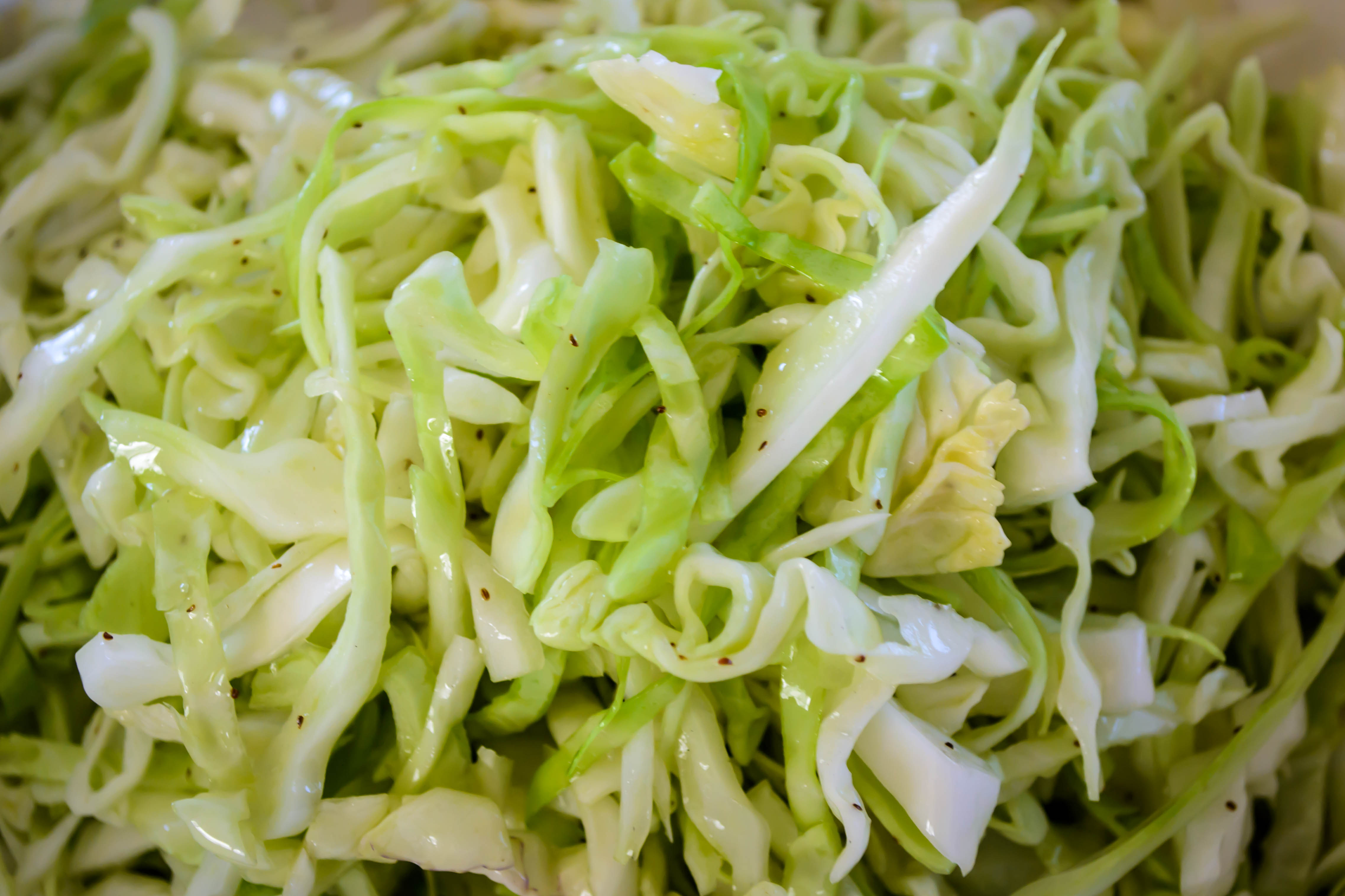
Food Blog April 2014-3712This slaw is so simple, provided you’re willing to start the process a few minutes in advance. Celery seed, pepper, and, in my variation, a smashed garlic clove, get simmered in olive oil to infuse their flavors. Once it’s cool, the oil, with some of the celery seed dust (it imparts a lovely speckled look and an extra hit of flavor), gets tossed through a jungle of green cabbage threads along with a sprinkle of sugar, a pinch or two of salt, and a hint of vinegar. That’s it. You can let it sit for a while to allow for integration and mellowing of flavors, or you can eat it immediately, savoring every crisp bite.
Food Blog April 2014-3708Food Blog April 2014-3709Substitutions or alternatives: for a different kind of tang, you could swap out the sort of vinegar you use. Red wine vinegar, champagne vinegar, or, for a salivary inducing sweet brightness, even rice vinegar, would also be lovely. Let your main dish steer you in the right direction. As for the celery seeds, I wouldn’t exchange them for anything. If you must, though, I suppose you could crunch a few mustard seeds or coriander and infuse those into the oil instead. Crushed coriander in the oil and a few judiciously torn cilantro leaves mixed in with the cabbage, for example, might make for a beguiling crunch atop a fish taco…

Food Blog April 2014-3713

Cabbage and Celery Seed Slaw
Makes 4-6 side dish servings
⅓ cup olive oil
1 garlic clove, peeled
3 whole peppercorns, or about 10 grinds of black pepper
1 teaspoon celery seeds
½ teaspoon salt
1 teaspoon sugar
1 teaspoon white wine vinegar
1 lb. cabbage, cut into fine strands with a sharp knife (or use your food processor, or a 16 ounce bag of pre-sliced)


  • In a small pot or saucepan, heat the oil over medium-low heat. While it heats, prepare the seasonings: use the flat blade of a knife to push down gently on the garlic clove and then the peppercorns, crushing them to allow more efficient release of flavor.
  • Using the same flat blade of the knife, crush the celery seeds. Because they are tiny, just pushing down on them as you did with the garlic and peppercorns won’t do much. Instead, spread them out a bit, and then draw the flat of the knife across them, pushing down as you go. Repeat a few times, until at least half of the seeds are smashed almost to a powder.
  • When the spices are adequately crushed, add them to the oil and turn the heat down to its lowest setting. After a sudden sizzle, you want a slow, gentle poach. The oil should just barely fizz around the edges of the garlic clove.
  • Simmer on this low, low, lowest of low heat for 15 minutes, until the garlic clove is evenly browned and soft, and the oil smells incredibly aromatic. Remove from heat and let cool.
  • While the oil cools, prepare the cabbage. I had a 2 pound head of cabbage. To prepare it, slice it in half straight through the core. Then, cut that half in half, again through the core, so you have two quarters. You can then remove the core easily with one diagonal slice for each quarter. To create thin strands, as in the photo above, slice across the quarters perpendicular to the previous cut, creating twin sets of cabbage strings.
  • Once the oil has cooled to room temperature, strain it through a fine mesh strainer straight into your serving dish. You may not need the full ⅓ cup. I would start with 3 or 4 tablespoons and see where that takes you. Some of the celery seed dust will seep through the strainer, but that’s okay. It gives a lovely speckled look and lets you know what flavors to anticipate.
  • Add the salt, sugar, and vinegar to the oil in the bowl and whisk it up a bit with a fork. Add the cabbage, toss well to coat evenly, and then taste for seasoning and moisture. I found I wanted a breath of extra salt. You may want a bit more oil, or additional vinegar, to suit your liking.
  • Serve immediately, or let sit for 10-15 minutes to let the cabbage soften slightly and the flavors meld.