Loaded Baked Potato Biscuits

Food Blog May 2013-1406

I’m not going to say that my mom was a hippie or a health nut.  She didn’t stock her pantry with wheat germ or homemade granola, and she didn’t feed us sprouted grains or tempeh (in fact, she probably didn’t know what tempeh was).  But she did make a definite effort to keep food choices healthy when my sister and I were kids.  Her rule for me when picking out breakfast cereal was that sugar had to be third or lower on the list of ingredients tapped out in tiny letters on the side of the box.  I think the first time I tasted Lucky Charms was when I was in high school, where I was quietly surprised that anyone could think of eating this candy for breakfast rather than dessert.  The first time I saw someone put sugar into a bowl of Corn Flakes, I was stunned.  The only kind of cereal I’d ever put sweetener onto, besides oatmeal, was Shredded Wheat.
Food Blog May 2013-1403

Despite the commercials I drooled over for Sunny Delight (back when it wasn’t just a D) and Capri Sun, nothing but 100% juice (and the occasional lemonade concentrate) entered our fridge for a very long time.  Brand name Fruit Roll-ups didn’t fly, but the occasional real pressed fruit leather was okay.  My sister, seven years my junior, somehow managed to get Mom to buy Squeeze-its, but not until they had a “real juice” component.  She also ended up with Lunchables to take to school (I didn’t find out about this until a visit home from college.  I was shocked and felt a weird kind of betrayed jealousy – I didn’t want to eat Lunchables now; they looked disgusting!  But I wanted to have been allowed to have them when I might have thought they tasted good.  Is there even a word for that feeling?).

Given all this, as you might imagine, white bread was not something that appeared in our (paper, please) grocery bags.  But my sister and I were not sold on the breads my parents wanted us to eat.  Whole wheat was pushing it a little, especially if it had cracked wheat spattered across the top crust.  Oatnut and any kind of seven or nine or even five grain compilations were out.  And then Mom found Country Potato bread.  Do you remember it?  It’s golden and mild, slightly sweet but still savory enough to taste good with ham and cheese.  The top was often lightly dusted with some residual flour, which was somehow not offensive in the way the cracked wheat pieces were on the bread we refused.  We ate potato bread for years.  It was soft enough that, once you ate the crust off, you could roll the rest of it up into a mushy little ball, or tear the slice in pieces and make a whole pile of little dough-balls, and then eat those.  They squished against our teeth.

In the years since sourdough replaced potato as my bread flavor of choice, I’ve thought again about that bread my sister and I ate.  How did they (whoever “they” were) get potato into bread?  In what form?  Was it mashed?  Was it baked?  Was it a flurry of potato flakes?  Was it potato flour?  At the farmers’ market in Eugene, OR my husband and I discovered potato donuts: dark brown, dense, sugar-crusted rings that were mercifully only available once a week, and I wondered about these too.  Two beloved starches, baked together, could only be greater than the sum of their parts.

This is all an extremely long way to introduce the idea of putting potatoes in a biscuit.  If they can produce bread and donuts, and of course pasta – gnocchi is not, when it comes right down to it, really so tremendously different from a row of fluffy little miniature biscuits that you boil instead of baking – why not a tall, leavened biscuit?

Food Blog May 2013-1393A little internet research showed me numerous methods of incorporating potato flavor into my biscuits.  I decided early on that I wanted to use a fresh potato, rather than the instant potato flakes some recipes recommend, which meant I had to be careful about moisture.  The potato needed to be cooked and mashed or pureed before adding it to the flour, so that it mixed in easily.  However, boiling potato chunks to mash them does add water, and I wanted to keep my potatoes dry so that the moisture could come from something with additional flavor – I was thinking buttermilk.  Here, gnocchi was the answer.  To avoid adding too much water, here or in those pillowy little nuggets, the potato is baked and then grated into crumbly, starchy strands, which are then easily smashed into smoothness.
Food Blog May 2013-1394I’m rarely contented with a plain old buttermilk biscuit, so I decided some add-ins were in order.  Since I was already playing with the potato idea, I started thinking about loaded baked potatoes: cheese, broccoli, bacon bits, sour cream, green onions… I had a roommate once who liked to top hers with salsa and cubes of fried tofu.  In the end, though, I decided to keep the excess to a (relative) minimum: crisp shards of prosciutto, sharp cheddar, and a pile of roughly chopped roasted broccoli florets.

Food Blog May 2013-1397

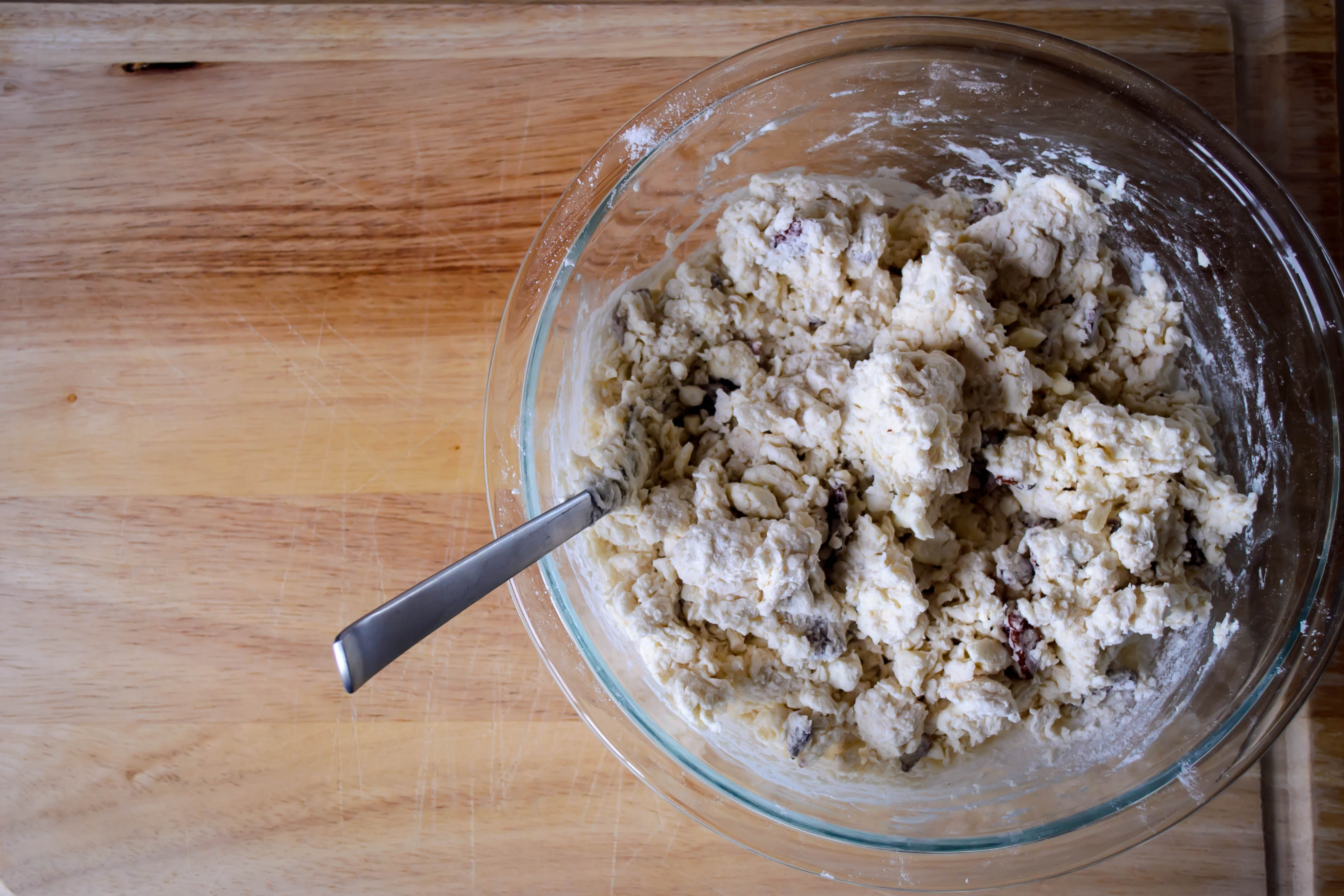
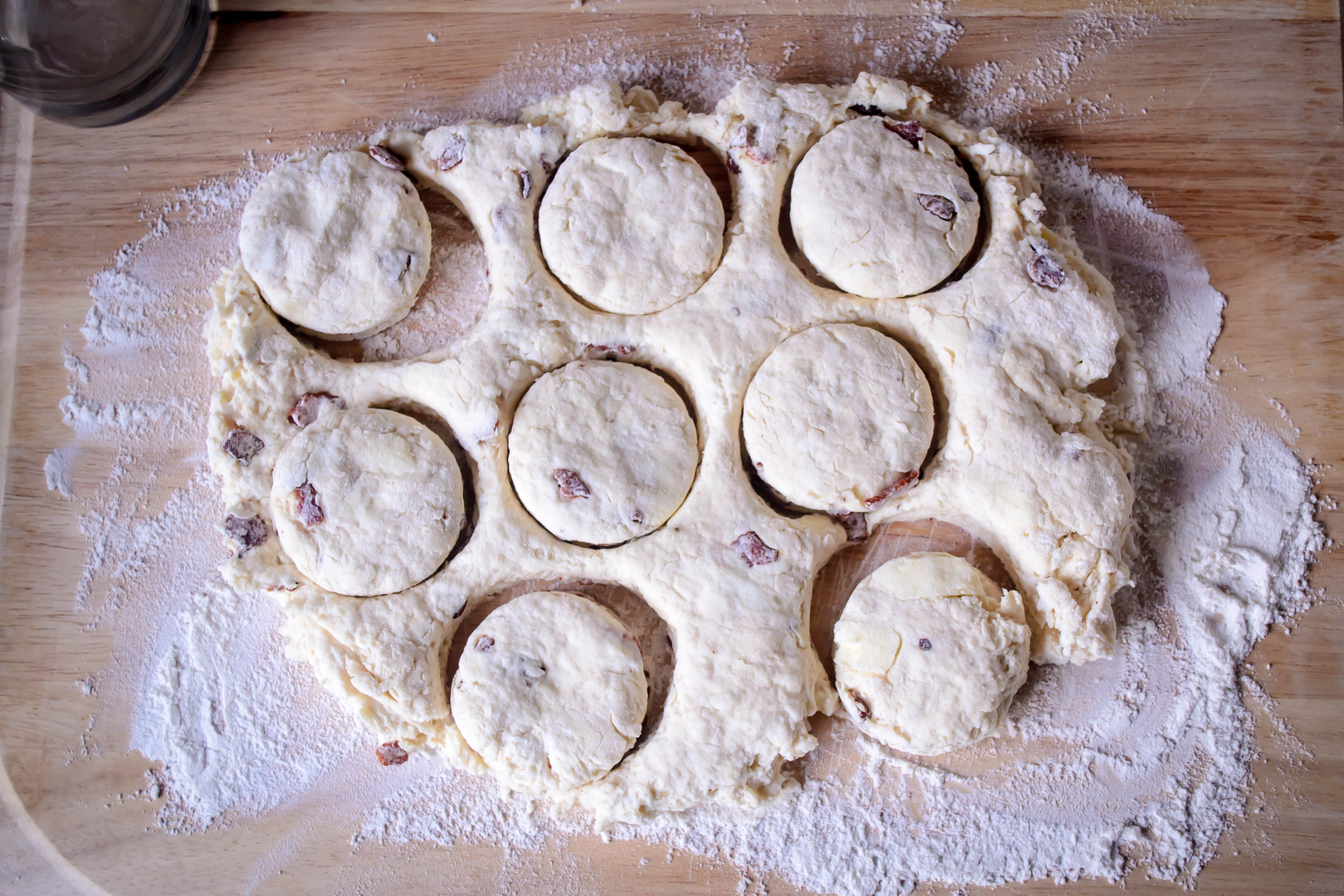
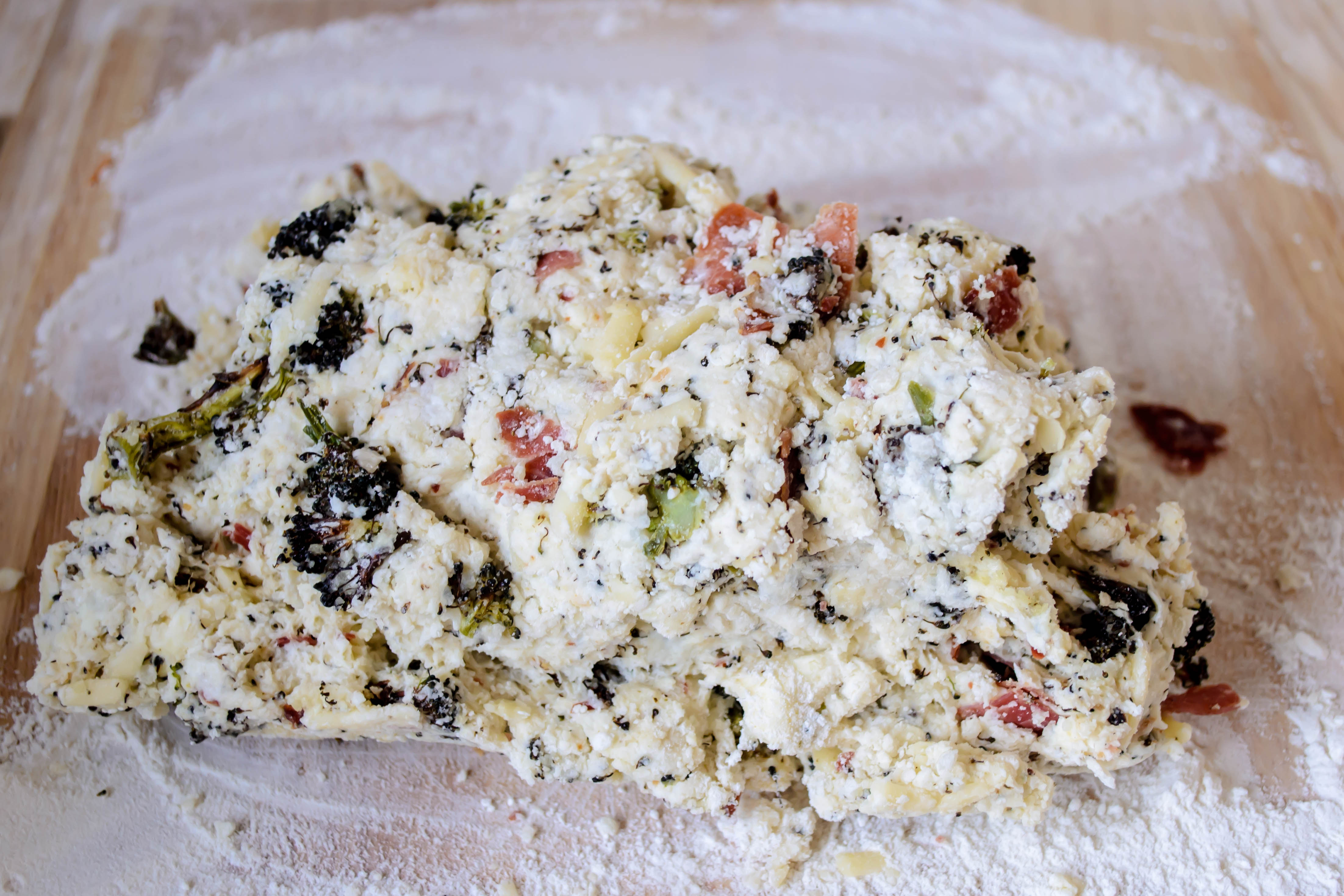
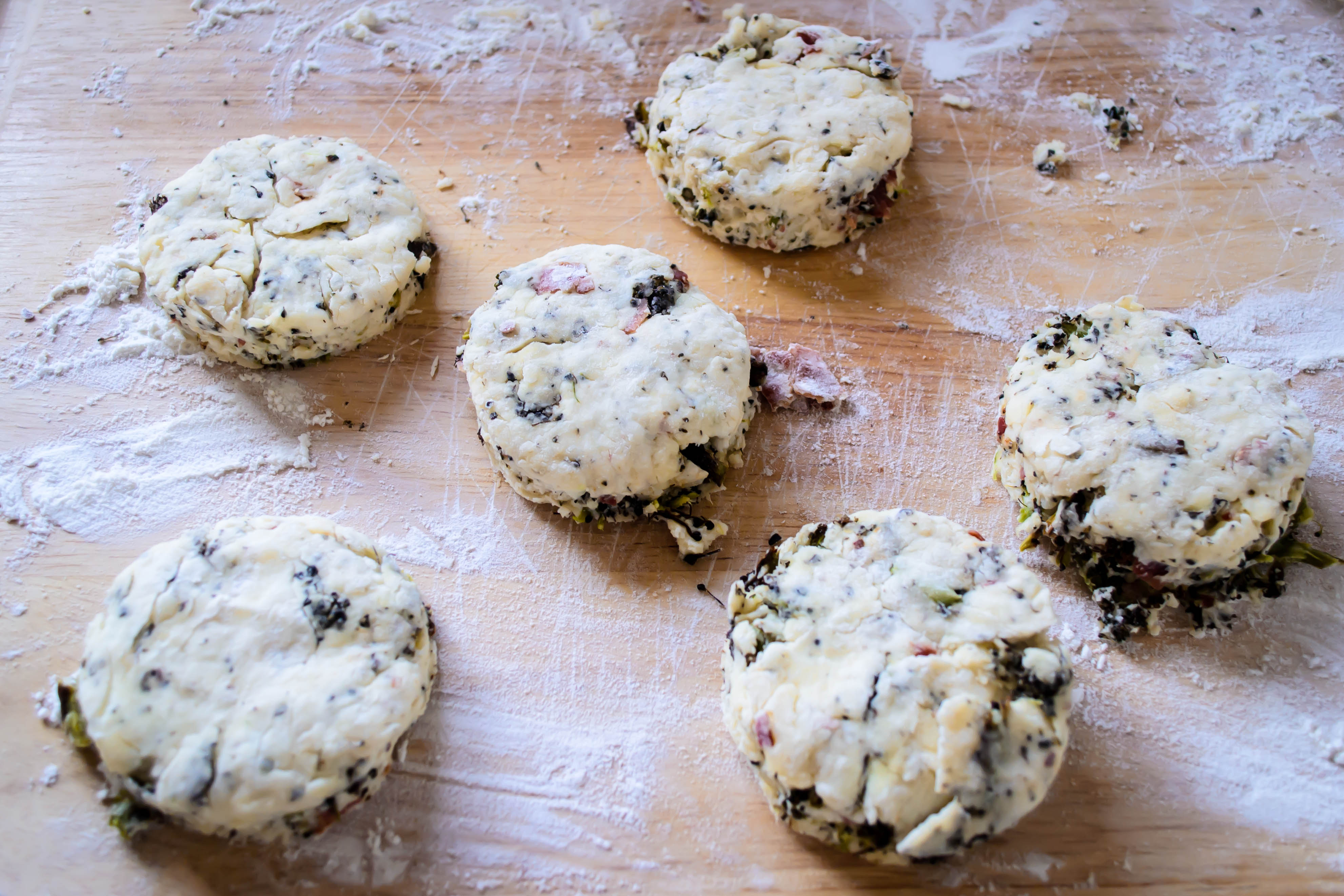
This produced a dough that clung together reluctantly, given how jammed with additions it was.  But I was patient, after I’d finished throwing flour everywhere, and gentle, and managed to punch out 12 biscuit rounds jammed with bits of green and pink poking out every which way.
Food Blog May 2013-1399

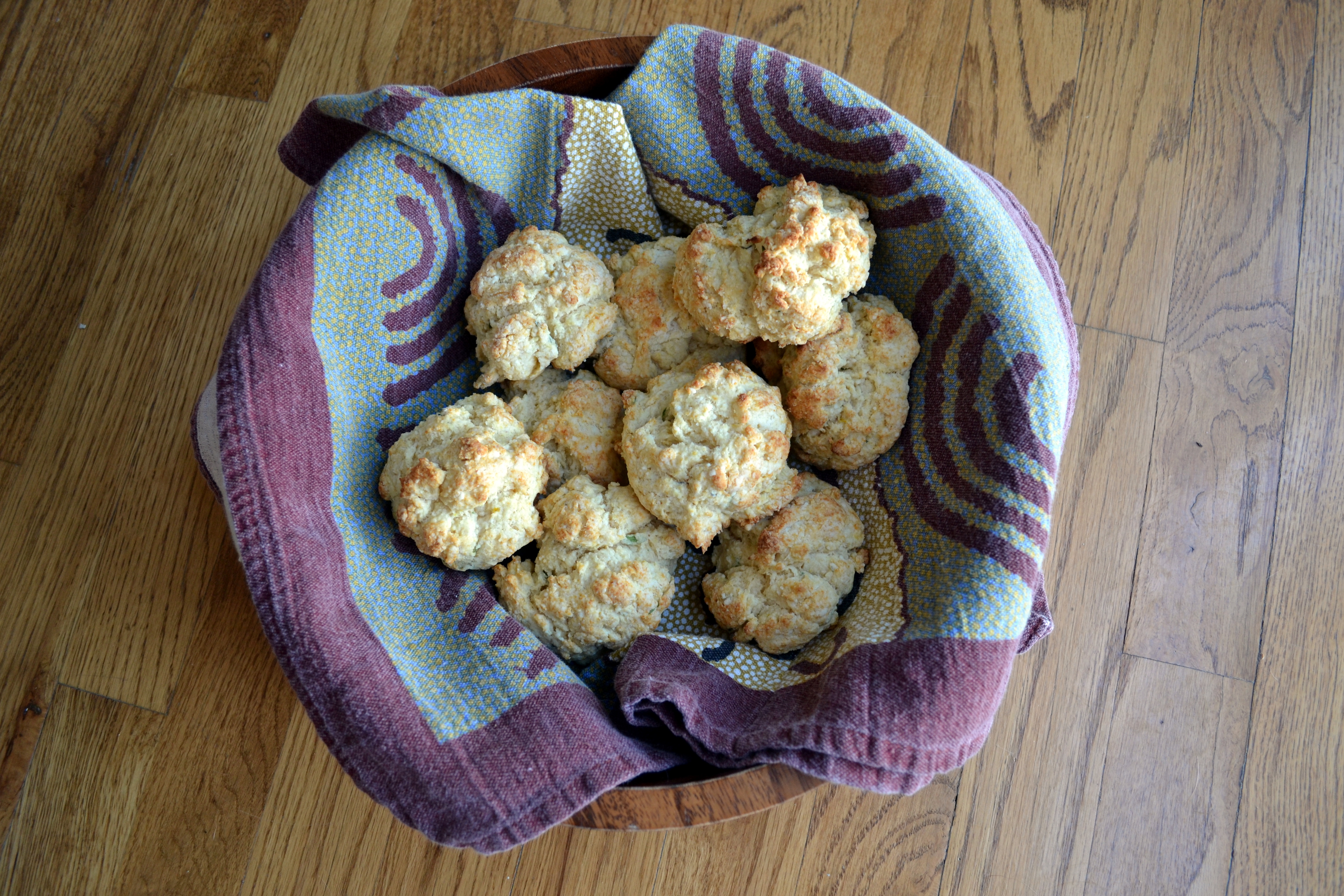
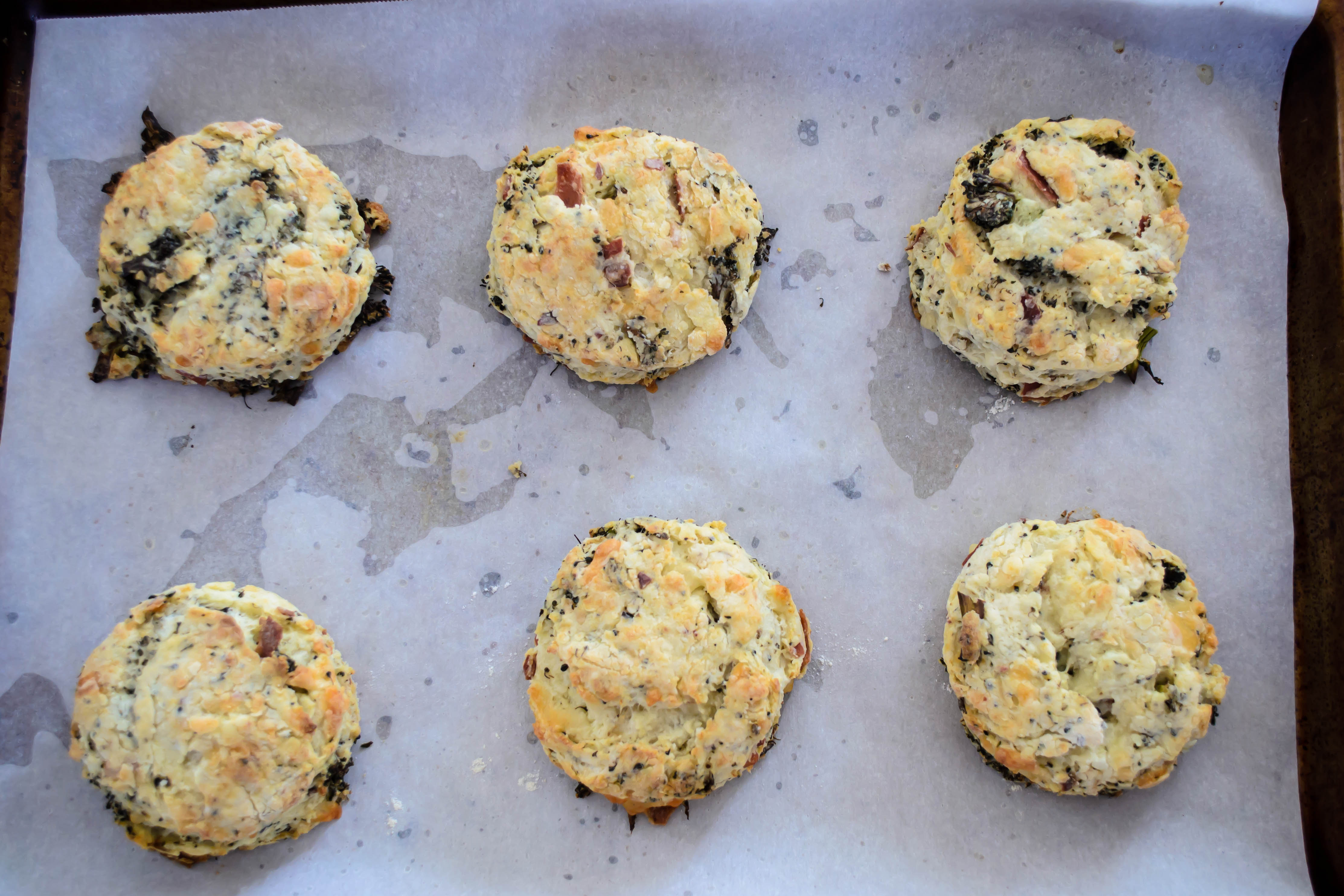
This is a dense biscuit, so it doesn’t rise a tremendous amount when it is baked, but it will still puff a bit as the chunks of butter struggle to support the spudsy weight.  It emerges speckled with bits of broccoli and browned cheese, and it’s totally worth it in every way.  Guys, you have to try these.  It’s rare that I run out of food words to describe something, but this is one of those times.  If I jammed all the superlatives I was thinking of using into this post, you probably wouldn’t believe me.  I’ll keep it at this: the cheese and the broccoli and the prosciutto all lend a crazy-good saltiness (the prosciutto could easily be taken out to make this vegetarian).  The flavors are perfect together, and though the potato doesn’t have a lot of flavor on its own, it does make this biscuit fairly substantial.  Paired with a salad (as we had), or a nice bowl of soup, it’s basically a complete meal.
Food Blog May 2013-1400

As with all biscuits I’ve ever tasted, these are best on the first day, as hot out of the oven as you can stand to touch them.  They are perfect on their own, though if you wanted to split one open and add a pat of butter, I’d completely understand.  They are, after all, related to baked potatoes.  And if you wanted to top them with a roasted garlic or a white pepper gravy, well, I don’t think I’d be in any position to stop you.

Loaded Baked Potato Biscuits
(for flour and potato quantities, I started with Deb’s sweet potato biscuits, and improvised from there.  This seems like a lot of steps, but trust me…)


For the potato:
  • Bake a medium to large russet or other fluffy, starchy potato at 400F for about an hour, or until a fork sinks easily through the middle.  When it is cooked through, let it cool completely.  Splitting it in half will hasten this process.
  • Using the largest holes on a box grater, grate the potato flesh away from the skin.  In a large bowl, smash or crush the crumbly bits of potato into a smooth mash.
For the broccoli and prosciutto:
1-2 medium heads broccoli, cut into small florets
6 slices prosciutto


  • Preheat the oven to 425F.  On a baking sheet, toss the broccoli with olive oil, salt, and pepper, and roast for 30-45 minutes, flipping the broccoli pieces over halfway through the cooking process.  When done, they should be well browned on the outside and tender in the middle.  The flowery bits will be crisp, like broccoli popcorn.
  • Remove the broccoli to a plate or cutting board to cool.  When cool enough to handle, chop into ½ inch pieces.
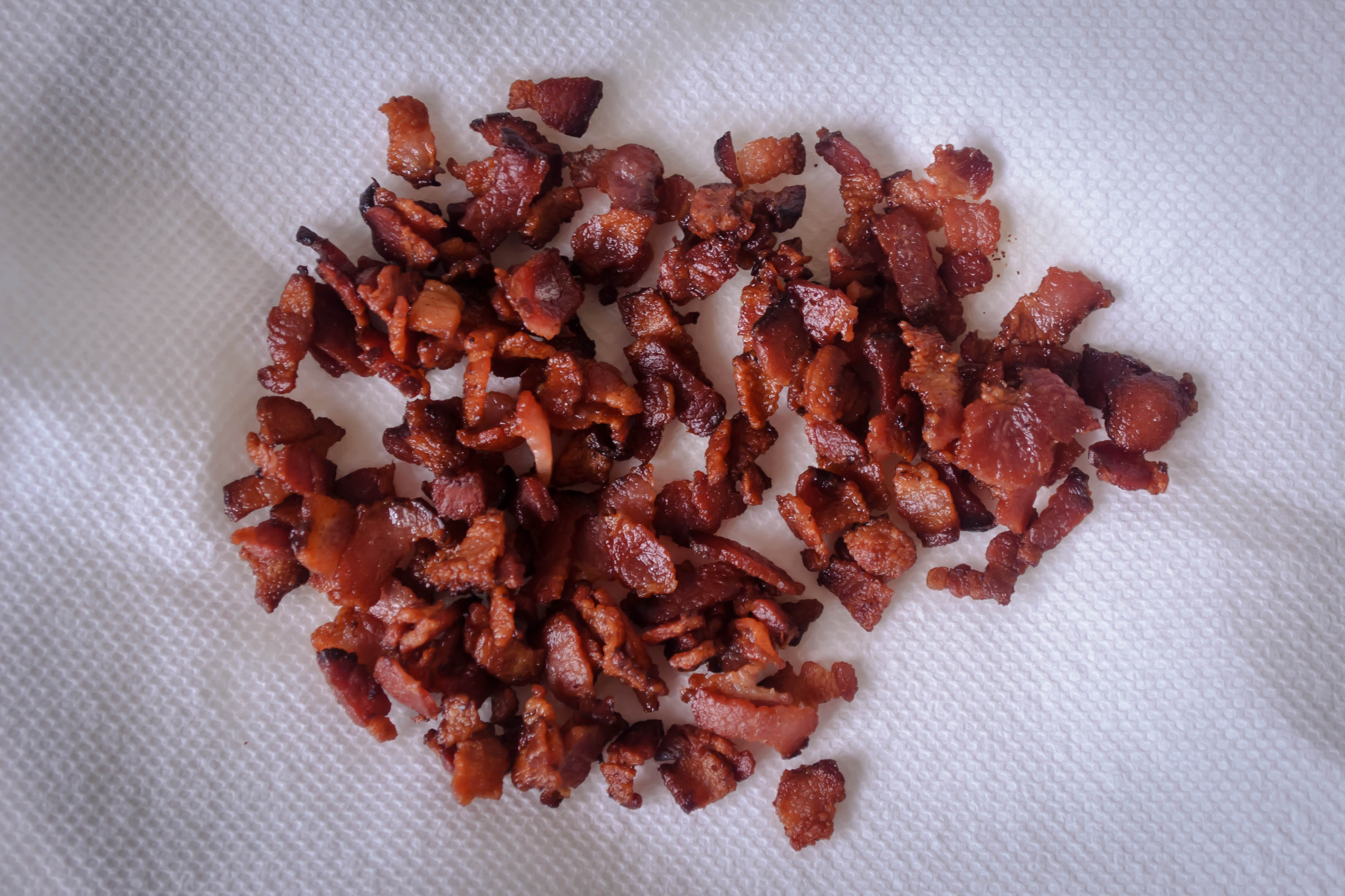
  • Place prosciutto strips onto the now-empty baking tray (yes, there will be some broccoli bits and residual oil there.  Don’t worry about it – they are all going into the biscuits together!).  Bake for 10-15 minutes, or until prosciutto is crisp.  Watch it carefully: it burns easily.
  • When crisp and dry, set aside on paper towels or a wire rack to cool and drain a bit.  Once cool, cut or crumble into bits.
For the biscuits:
2 cups flour
2 TB baking powder
½ tsp salt (this doesn’t seem like much, but remember, the broccoli, prosciutto, and cheese are all salty already.  If you’re a salt fiend, go ahead and use a full teaspoon, but otherwise, start small)
1 cup grated baked potato, mashed smooth
5 TB unsalted butter, cut into cubes
½ cup buttermilk
1 – 1½ cups chopped roasted broccoli florets
Crumbled prosciutto from 6 strips (you could easily substitute an equal quantity of bacon)
1 cup shredded cheddar cheese, as sharp as you can find


  • In a large bowl, whisk together the flour, mashed potato, baking powder, and salt.  You want a homogenous mixture: no big potato chunks.
  • Using a fork, two knives, or (my favorite) a pastry blender, cut in the butter until it is the size of large peas.  This will also help break up any remaining hunks of potato.
  • Add the cheese, prosciutto, and broccoli, and incorporate until they are distributed evenly.
  • Add buttermilk and stir with a fork.  You are looking for everything to combine into a rough, shaggy-looking dough.
  • Turn your dough out onto a well-floured board and knead it a few times with the heels of your hands until it is more willing to cling together.  Press it out into a rectangle or circle about 1 inch thick.
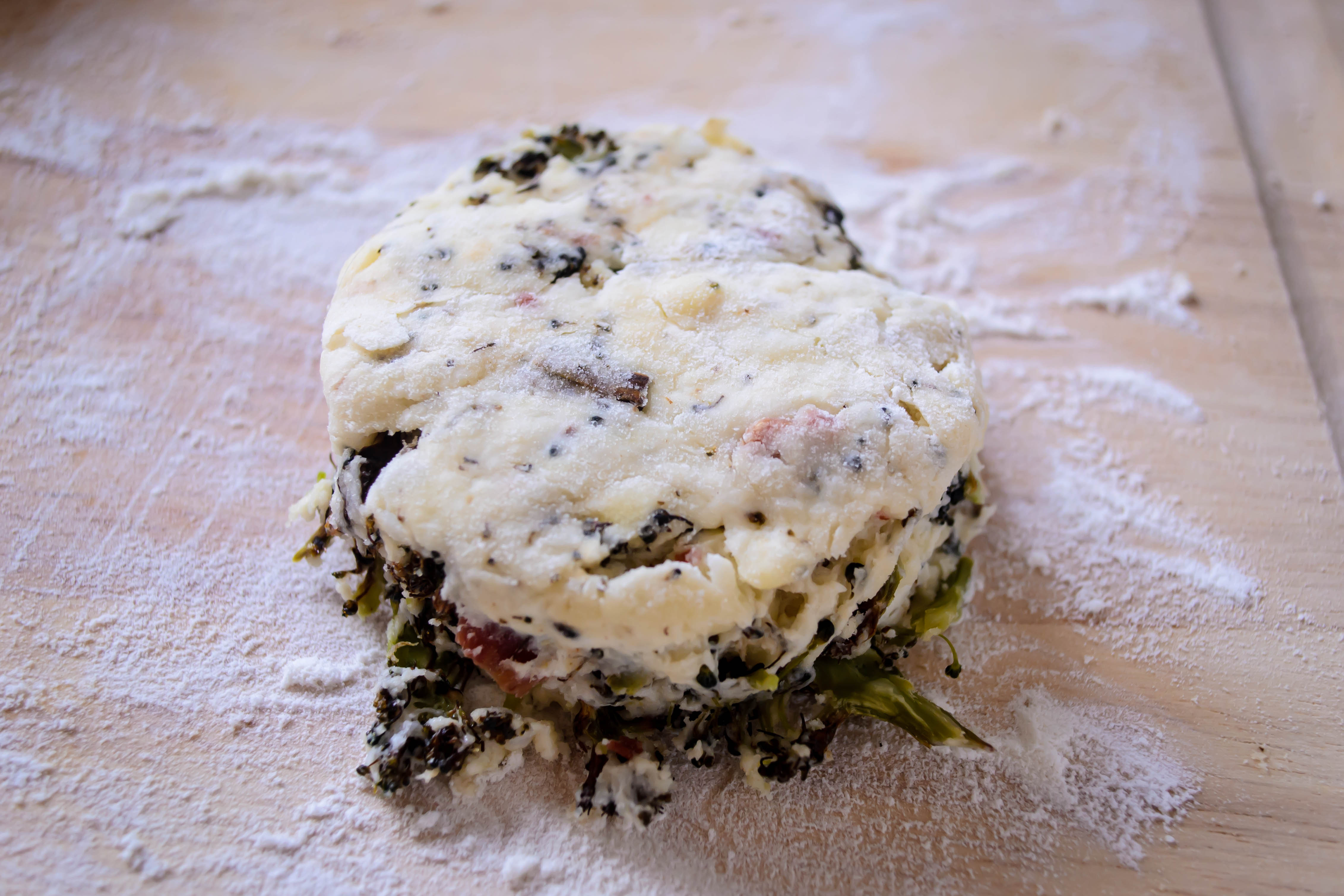
  • Using a biscuit cutter or the floured rim of a drinking glass, punch out biscuits by pressing straight down, NOT twisting.  This will help the biscuits rise better by not disrupting their layers.
  • Once you have punched as many as you can from the dough rectangle, gather the scraps, knead them together once or twice, and press the dough out again.  Continue until no more dough remains (making one or two funky-looking biscuit bits is totally acceptable: you can call those the cook’s tax and gobble them while no one is looking).
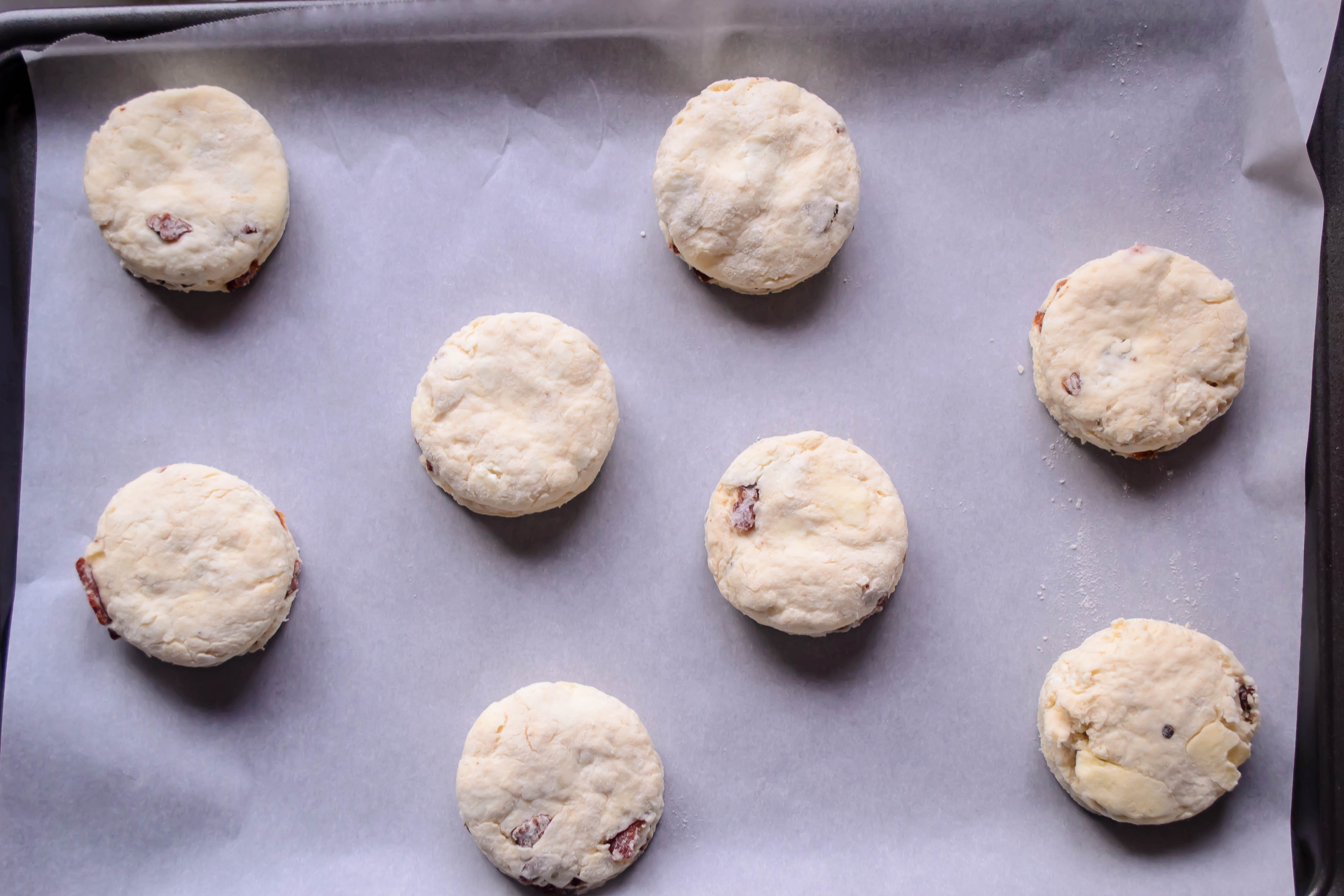
  • As you punch out biscuits, place them on a greased or parchment lined baking tray.
  • Bake in a preheated 425F oven for 15-18 minutes.
  • Eat while hot, warm, or room temperature, if you can wait that long.

Food Blog May 2013-1407


Goat Cheese and Bacon Biscuits

I’m not one of those people who is crazy for bacon in everything.  The idea of pairing it with chocolate still weirds me out a little, and I’ve never tried it in brownies or ice cream.  That being said, bacon is probably the top reason I would have trouble being a vegetarian.  Crisp, sandwiched with some dripping heirloom tomato slices and lettuce on toasted sourdough, and I’m dreamy happy.  Salty fatty fried chunks studding my bowl of baked beans, and my evening is made.
Food Blog April 2013-0990
What I am generally crazy for is breakfast.  But not at breakfast time.  I can’t handle a big savory meal early in the morning.  A fried egg sandwich, okay (and with a little sriracha in the mayonnaise?  Be still my heart!).  A pancake or three, maybe on occasion.  The big, multi-course breakfast is, for me, wasted on the morning.  I’m a breakfast-for-dinner kind of girl.
This week, in need of comfort as spring break drew to a close and allergy season burst wide open, we decided breakfast sandwiches were just what we needed.  Eggs, bacon, fluffy buttery biscuit, and why not, a little goat cheese?!  But layering these components together would not suffice.  Thick slices of bacon smashed against a cloud of scrambled egg and crumbles of goat cheese seemed like a mess waiting to happen.  I’ve incorporated cheese into biscuits before with great success, why not do the same with the bacon?
Food Blog April 2013-1002
The result: goat cheese bacon biscuits.  A simple revelation, but let me tell you, a spectacular base for a scrambled egg sandwich.  Crisp squares of bacon, cold cubes of butter, crumbles of chevre, and a healthy glug of buttermilk.
These are pretty cinchy to make, though thanks to the addition of the goat cheese your biscuit dough will be a little stickier than usual.  Try not to add too much flour – you don’t want them to get dense.  They bake up into lovely little puffs, and the bacon stays crisp against the soft dough.  The goat cheese wasn’t as strong a flavor as we were expecting, though after the biscuits cooled a bit we did pick up a pleasant tang from the larger crumbles.  Loaded up with a simple layer of scrambled egg, and you have a perfect, three-bite sandwich with all the right trimmings.  And because it’s only three little bites, you can have two or three without any guilt to speak of.  Or four… or…
 Food Blog April 2013-1013
The funny, blackened stakes lying in a pile in the background of this photo are roasted rainbow carrots.  They were incredible.  And don’t just take my word for it – I knew they were the real deal when N. carefully sampled one, turned to me, and said “wow.”  If you’ve been reading this blog for any length of time you will know that N. is not intentionally grudging when it comes to food praise; he’s just not particularly effusive about it.  A “wow” is like fireworks.
Breakfast-for-dinner slam dunk, then.  What’s your favorite?
 Food Blog April 2013-0993
Goat Cheese Bacon Biscuit Sandwiches
2 cups flour (All-Purpose is fine)
2 tsp sugar
1 tsp salt
2 TB baking powder
4 slices bacon, diced and fried until crisp, drained and cooled (do this a bit ahead of time so the bacon has time to cool off – if you toss it into the mixture hot, you’ll heat up the butter and your biscuits will be less fluffy)
6 TB cold butter, cut into chunks (chunking it isn’t absolutely necessary, but it does make it easier and quicker to incorporate)
½ cup crumbled goat cheese
6 oz. buttermilk
 Food Blog April 2013-0995
  • Preheat your oven to 400F and line a baking tray with parchment paper.
  • In a medium bowl, combine the flour, baking powder, sugar, and salt.  Whisk in the cooled, crisp bacon.
  • Add the butter and incorporate using a pastry blender or your hands.  When the chunks are about the size of lima beans, tumble in the goat cheese and blend it in until there are no more large pieces.  The pebbles of butter should be about the size of peas when you are done.
  • Pour in the buttermilk and fold it into the dry mixture.  I find using a fork works best for this – the tines pick up and jostle around the flour mixture better than a spatula or wooden spoon.  Don’t overmix, but be sure the buttermilk is well incorporated.
  • When your mixture is evenly damp, abandon the fork.  You can turn the whole mess out onto a floured board, or you can just reach in with flour dusted hands and knead the dough a few times in the bowl until it comes together.
Food Blog April 2013-1000
  • Pat the dough into a plump something-like-a-rectangle on a floured board.  The thickness and therefore the size of the rectangle is really to you, but mine was probably just under an inch thick.  Using a biscuit cutter or the floured top of a glass, punch out biscuit rounds by pushing straight down all the way through the dough.  Don’t twist your cutter as you go down; you’ll disrupt the craggy layers in the dough and the biscuit won’t rise as high or as evenly.
Food Blog April 2013-1001
  • When you’ve punched out as many rounds as the rectangle of dough will allow, place them on your parchment lined baking sheet at least an inch apart, gather the dough scraps, knead them together a bit, and pat them back into a new rectangle.  Continue punching out biscuits and reshaping the scraps until you run out of dough.  Given the small size of cutter I chose, I managed 16 sweet little biscuits.  You will have more or less depending on size and thickness.
Food Blog April 2013-1007
  • For a small biscuit (2 inch diameter), bake at 400F for 12-14 minutes, or until the layers have puffed and the top is golden.  Larger or extremely thick biscuits will take longer; try 15 minutes to start.
Food Blog April 2013-1011
If you just want to eat them as is – and I’d sympathize completely if you did – you’re all set to go.  Dig in.  If, however, you want them as sandwiches, split them down the middle of the puffy, buttery layers and insert a fold of softly scrambled egg.
Food Blog April 2013-1003
Food Blog April 2013-1004
These are best the day they are cooked, so I’d advise only baking as many as you and your dinner partner(s) are going to eat.  The remaining biscuits can be frozen, still unbaked, and enjoyed another day.  To freeze them, set them on a piece of wax paper or parchment in a single layer on a plate or baking tray.  Wait until they are frozen, then relocate them to a zip-top freezer bag.  They don’t even need to be defrosted, just pop them into a preheated oven for a few extra minutes (maybe 15-18 for a small biscuit) and dinner – or breakfast – is served!
Food Blog April 2013-1010

Uncommon Brown Sugar and Cheddar Biscuits

When it rains in Los Angeles, the whole atmosphere of the city changes.  The earth sighs acceptance and glee, and the ordinary dustiness of every other person’s front yard glimmers with emerald slickness: life!  Reprieve from the desert we pretend we haven’t built over!  The roads become jagged, glistering, tar and oil stained slip’n’slides on which people drive either too slowly – avoiding disaster through excess caution – or too quickly – rushing to get off the highways as soon as possible.  The sky is unused to gray billows here, or at least it seems that way.

Food Blog January 2013-0518

But for me, the end of this week felt like home.  It was a strange mix of homesickness and invigoration.  I am accustomed to working in this climate.  It feels natural.  Habitual.  My fingers and my brain and my skin – they fit into this overcast world.

Seeking the comfort of familiarity, I decided to leave yeast alone for this week and fall back on something I know: biscuits.  Butter.  Flour.  Buttermilk.  Salt.  Baking powder.  The blessed fundamentals.  But I know the fundamentals.  I wanted more.

Food Blog January 2013-0514

In Ratio, Ruhlman calls these Chicago biscuits because their ratio 3-1-2 is Chicago’s area code.  3 parts flour, 1 part fat, 2 parts liquid.  I’m calling them Uncommon because their pairing – brown sugar and extra sharp cheddar cheese – might not be anyone’s first inclination.  It made sense to me, though, if you reinsert the missing link of apple pie in the middle.  Cheese and apples are perfect.  Brown sugar and apples are perfect.  What would happen if you took the apples out of the equation and left the savory richness of cheese chewing against the molasses-deep hum of brown sugar?  They are also Uncommon because they take a little extra time (almost 3 hours from start to finish) and produce a slightly different product than your ordinary dinner biscuit.

Adapted, obviously, from Ruhlman’s Ratio 312 Biscuits.


Uncommon Brown Sugar Cheddar BiscuitsFood Blog January 2013-0491

scant 2 cups flour (9 oz)

1 tsp salt

2 tsp baking powder

2 TB brown sugar

6 TB butter (3 oz)

½ cup ¼-inch chunks of cheddar cheese, the sharper the better

¾ cups buttermilk (6 oz)

In a medium bowl, whisk together the flour, salt, baking powder, and brown sugar.

Using a pastry blender or your fingers, cut in the butter until it is incorporated throughout in chunks the size of small peas.

Add the cheddar cheese and buttermilk and mix to combine into a rough, sticky dough.  I find using a fork works well for this step.

Food Blog January 2013-0501

Here’s where things change up a bit.  Instead of rolling this out and cutting rounds, stretch a piece of plastic wrap across your counter and dump the dough onto it.  Using the plastic wrap, form the dough into a rectangle of approximately 4×6 inches.  Mine was bigger because I am impatient.  This didn’t seem to have dire consequences.  Once the dough is shaped, wrap it in the plastic wrap and refrigerate for at least 1 hour.

Food Blog January 2013-0502

After an hour, the butter has firmed up again and the dough has relaxed.  Pull it out and free it from the plastic, plopping it carefully onto a well floured board.  It’s a very sticky dough, so flour your rolling pin and the top of the dough itself well to avoid irritation.  Roll the dough out until it is three times its original size, maintaining the rectangular shape.  Fold it into thirds, press down well, and then roll it out again.  Fold it into thirds for a second time.  I did mine in the opposite direction of the first fold, which was probably wrong, but again, produced no discernible taste consequences.  Press down firmly, wrap up the dough in plastic wrap again, and put it back into the fridge for another hour.

Food Blog January 2013-0506

While it chills, here’s what’s happening with all this bother: you are creating something akin to one of those biscuits that comes out of the tube.  You know, the cardboard tube you anxiously peel the wrapper from to reveal a twisting seam, then judiciously smack on the edge of the counter until it pops and dough appears in great bulges?  Those biscuits are composed of dozens of flaky layers, and that’s what you are doing by folding and rolling and folding and rolling.  You are, Ruhlman notes, following a similar procedure to that used for making puff pastry, except in our case the butter is irregularly placed, which results in craggy puffs, whereas puff pastry requires a smooth, even layer of butter in between each floury fold to reach its incredible signature height.

With another hour gone, liberate the dough from fridge and plastic, return it to your well floured board, and repeat the procedure: roll out, fold in thirds, roll out, fold in thirds again.  At this point, you should also preheat the oven to 400F.

Food Blog January 2013-0509

You’ve now folded your dough a total of four times, which means you’ve made twelve layers.  Now, roll it out to ½ inch thick and cut it into 6 pieces.  You could do rounds with a biscuit cutter, but it seems easier and less wasteful to just trim up the edges (which you could roll into a homely little extra biscuit to taste on the sly) and then cut into squares.

Food Blog January 2013-0511

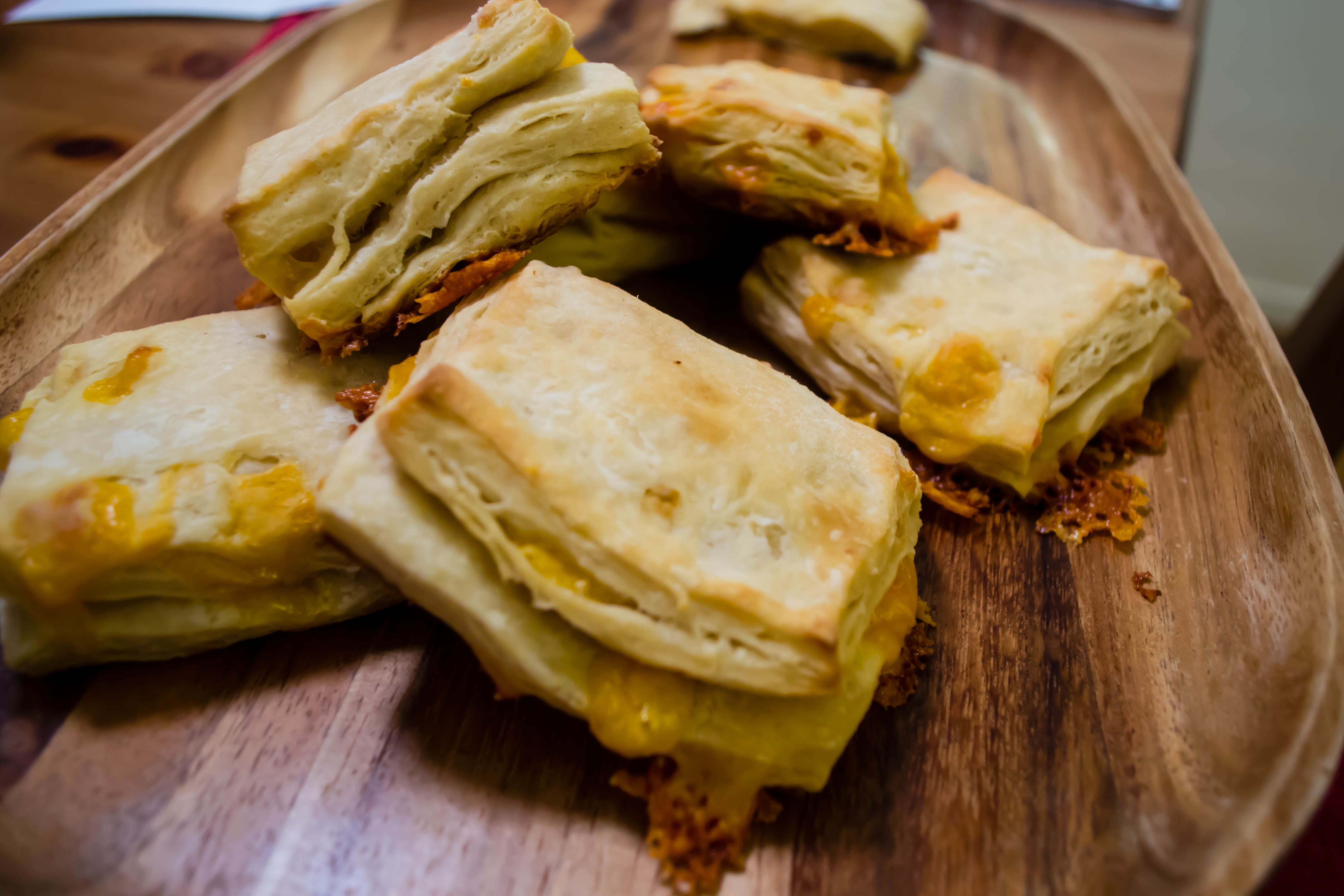
Pop these onto a greased baking sheet and into the oven for 20-25 minutes.  They will emerge lightly golden on top, with cheese oozing out from between the layers to form crispy lacy edges against the cookie sheet.

Food Blog January 2013-0517

We ate these as an accompaniment to a honey mustard roasted acorn squash and chicken apple sausages.  I know, I had to get the apple back in there somehow.  My assessment?  They were delightful.  The exterior was flaky and crisp, and I was impressed by how the layers really did make a difference in the texture of the biscuit: they were moist and chewy and distinct.  The cheese wasn’t as noticeable as I’d thought it would be, though the crispy edge bits were lovely – much like the lacy brulée that adorns the outside edges of a good cheese bagel.  At first I thought I couldn’t taste the brown sugar at all, but as I took my third and fourth bite, gasping around the steam, I realized that the complex lingering warmth at the end of each bite was probably the effect of the brown sugar.  It carried the depth and richness of a caramel without being sweet.

Food Blog January 2013-0516

So the verdict is: if you need biscuits to go with a weekday meal, these are probably not the ones for you.  It’s asking a bit much to devote three hours to six biscuits, when you could just roll, cut, and bake the same ingredients straight from the mixing bowl.  But if you are planning for something special, or if you were thinking of baking bread anyway and are willing to replace rise time with refrigeration time, try these instead.  The layers are really remarkable, they stay warm for some time, they are all kinds of tasty, and they would reheat – I suspect – very well in a toaster oven, though they are best on the day they are made.  But you probably won’t have any left over, so that’s an issue barely worth discussing.

Food Blog January 2013-0522

I hope you are warm and well, wherever you are.

Bars and Biscuits

Thyme for our herbed biscuits

Last week’s reflections were a bit morose: the thoughts of a person overwhelmed and trying to settle into some kind of groove.  Because while too deep grooves can become ruts, no groove at all just leaves us… squares in a hipster-filled world?  Not just squares, but squares tipping and zig-zagging confusedly over an unfamiliar landscape trying to dig a corner in here and there.  New home, new job, new routine, and no chances to explore yet.

All that has changed.  Shallow wheel marks dig in behind us.  Our adventures have begun, and they began (don’t be offended) with booze.

Last Friday, our dear friend J. appeared at the door, bearing duty-free Japanese whiskey from his time in Tokyo, and a phone full of bar recommendations from an associate.  After a quick tour of our new digs (you guys have a backyard?!), we set off into the night and ended up at Oldfield’s Liquor Room on Venice, where J. bought me a pre-birthday cocktail called the Blonde Comet.  Bourbon, crème de peach, fresh grapefruit juice, and angostura bitters.  I’m not much of a bourbon gal, but the name was too good to pass up.  I like to think of myself as something of a blonde comet every once in a while… The drink was tasty.  Strong, but tempered by the freshness of the grapefruit and the stem of fresh mint they plunged in as a garnish.

We caught up over this first round and then decided to explore further.  A quick amble down the street brought us to Bigfoot West, but it was so crowded and loud inside that not even the promise of creative whiskey cocktails could entice us.  We were back in J.’s car and rolling toward Santa Monica.

We ended up at The Daily Pint, where it smelled like peat and old shoes and yeast, and the impressive chalkboards full of beer options and the seemingly endless whiskey and scotch menu made J.’s and N.’s eyes shine suspiciously.  I got (don’t laugh) a pint of Spiced Caramel Apple Ale that was neither as sweet nor as fruity as it sounds.  J. and N. got something peaty and boggy and fiery, and I only needed a whiff to know I wasn’t interested.  We settled ourselves in at a tall table next to the pool and shuffleboard stations.  You must know this: I don’t like beer.  When I have to, I will settle for the fruitiest, sweetest, most un-beer-like option I can find, and when I do, I like it to be ice cold so it doesn’t have a chance to taste as much like beer as I know it’s going to.  As we sat and chatted and laughed, time passed and my beer warmed.  Where it tasted like yeast and carbonation to begin with, as it came to room temperature the flavors got rounder and deeper, and by the time I was sipping the last half inch or so in the glass it did have some spicy apple flavors to it.  I’m not sure I would order it again, but it wasn’t a bad beer, and the company and high energy atmosphere made it a good experiment.

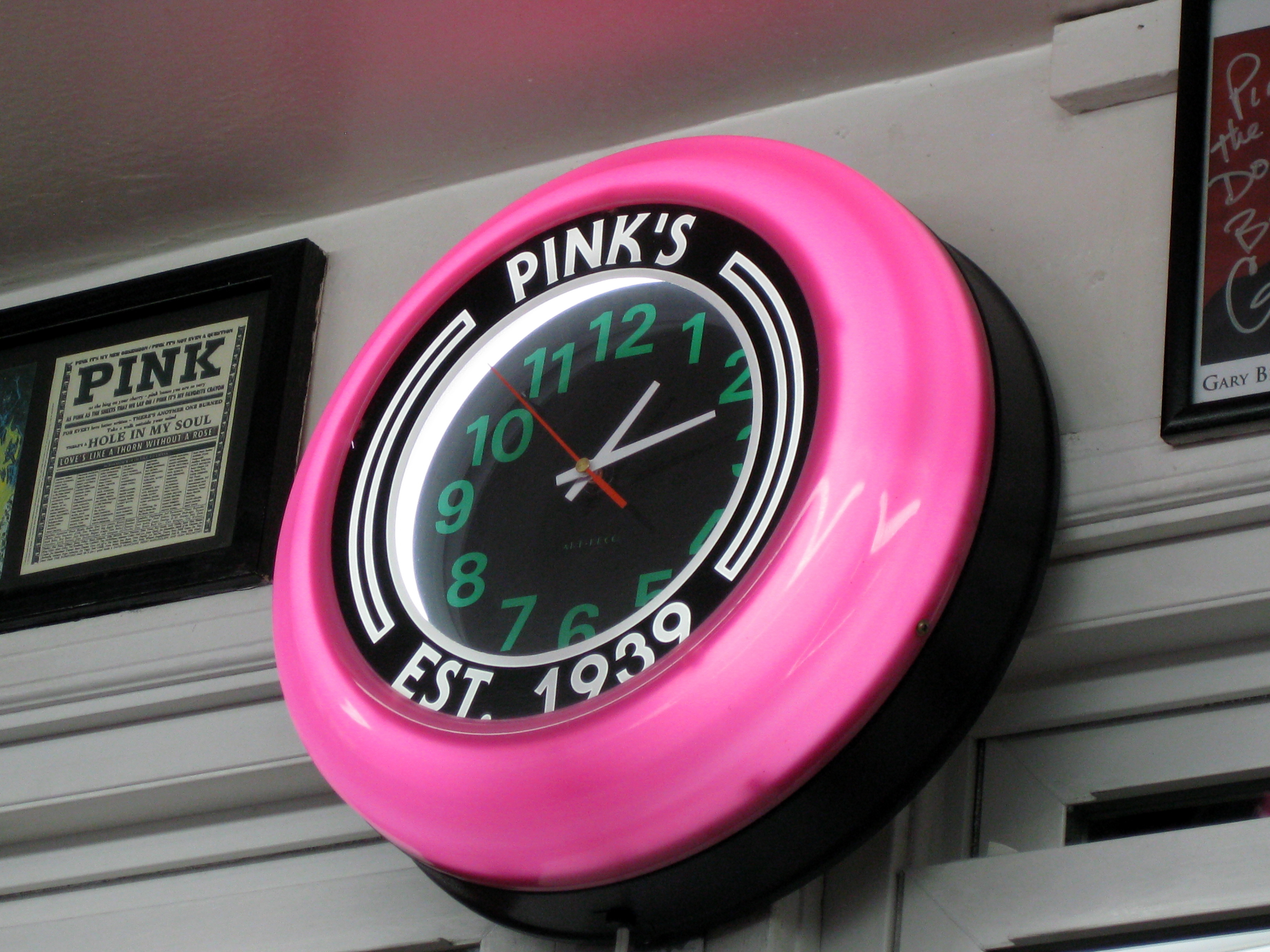
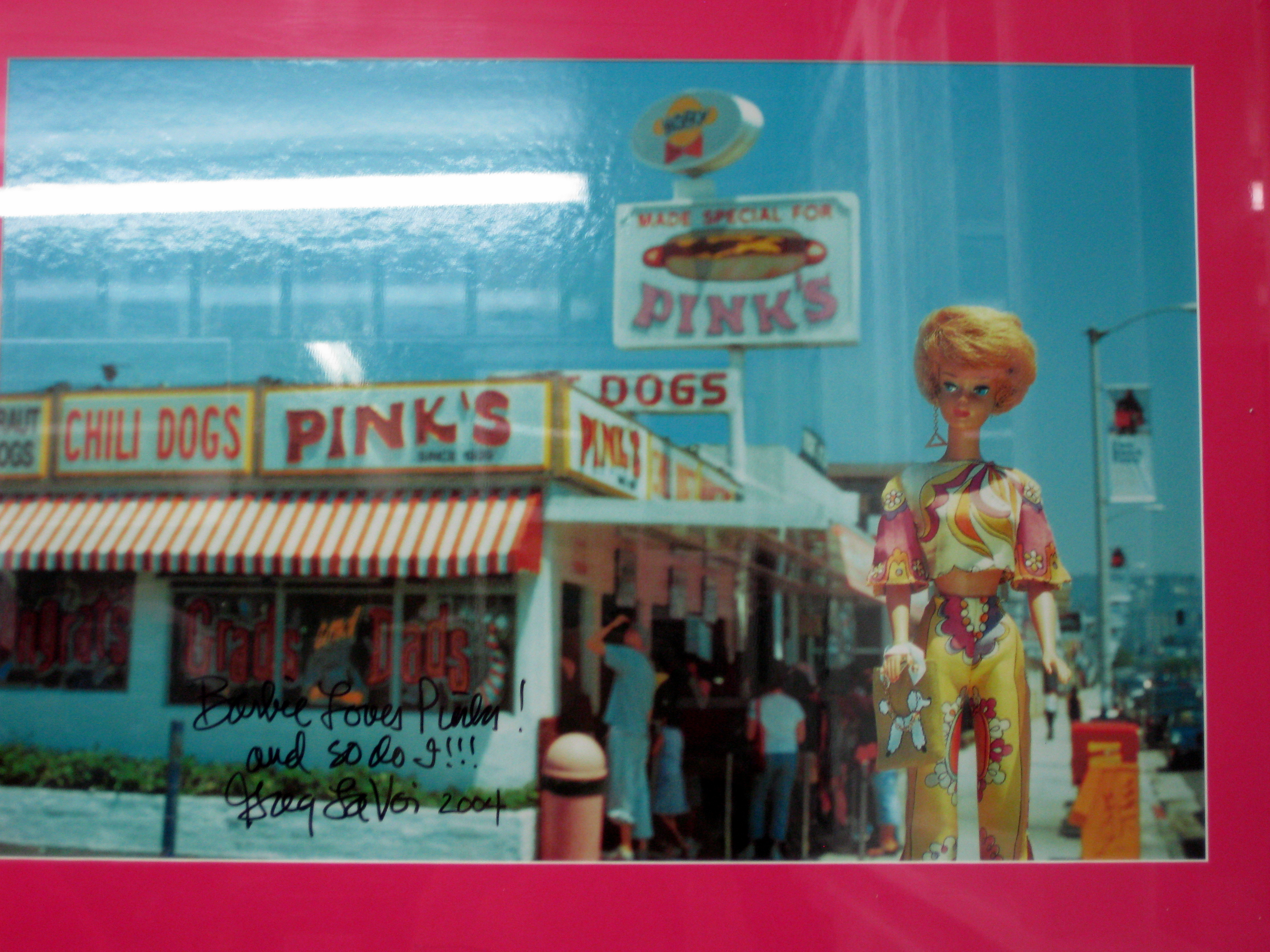
It was almost midnight when J. asked if we wanted a snack.  He was thinking, he said, hot dogs or pastrami.  I’ve been experiencing some cognitive dissonance when it comes to our new location – scoffing when I see patrol cars that say LAPD on the side: what are we, in a movie or something? – grinning with disbelief as I pass Warner Brothers studios on my drive home from work – but something about that night made me remember where we were.  I just knew he was thinking of Pink’s.  Did I want to go to the little stand with the most famous hot dogs in the state?  Yes.  Yes I did.

At almost 1am, as my contacts screamed and the almost-responsible-adult inside me withered and gave up, we were standing in line with at least 30 other people, waiting for a hot dog. 


I got a New York dog – traditional hot dog topped with a sweet onion sauce – and added shredded cheddar cheese.  N. and J. got Chicago dogs, loaded with lettuce, tomato, and pickle.  We sat at a crooked little table and took in the space: dozens upon dozens of signed celebrity photographs who had visited Pink’s, some of whom had given their names to a hot dog.


Well, N. and J. took in the space.  I took in my hot dog.  It was fantastic.  The skin was taut and crisp and snapped between my teeth.  The onion sauce was thick and sweet with hints of caramel, like the best sweet and sour sauce you’ve ever tasted, and the cheese, though it could have been melted more, added a nice mellow counterpoint to the meat and the sauce.  Delicious.  And it made me feel like a kid: I was back to the nights in high school when, after band competitions, we used to go to Denny’s and order chili cheese fries and chocolate milkshakes.  Those were the days before we knew heartburn was real…

There really is no logical transition I can make to this week’s Bittman, aside from the lame play on the White Stripes song I provided as the title of this post, so let’s stop pretending and just talk about biscuits.  And let’s not take our sweet little time about it.

85. Herbed Buttermilk Biscuits: Combine 3 cups flour, 2 tablespoons sugar, 4 teaspoons baking powder, 1 teaspoon salt, 1 teaspoon baking soda and 1 tablespoon thyme leaves.  Use your fingers to rub in 1 ½ sticks of butter until the mixture resembles small peas.  Add 1 cup buttermilk and stir until just combined.  Drop large spoonfuls onto a baking sheet and bake at 425 degrees until golden, about 15 minutes. 

With measurements and oven temp clearly provided, I had very little to guess about or change in this recipe.  Because I was using lemon in other parts of dinner, I decided on the spur of the moment to add a teaspoon or two of lemon zest to the dough to see what would happen.  You could probably change up the herb used, add cracked black pepper or flaky sea salt, or even add finely chopped raisins.  I wouldn’t change the buttermilk, though, as the tang it adds is entirely necessary.  I even got excited tasting the raw dough, with a slight crunch from the salt and a suggestion of sweetness from the tiny bit of sugar.

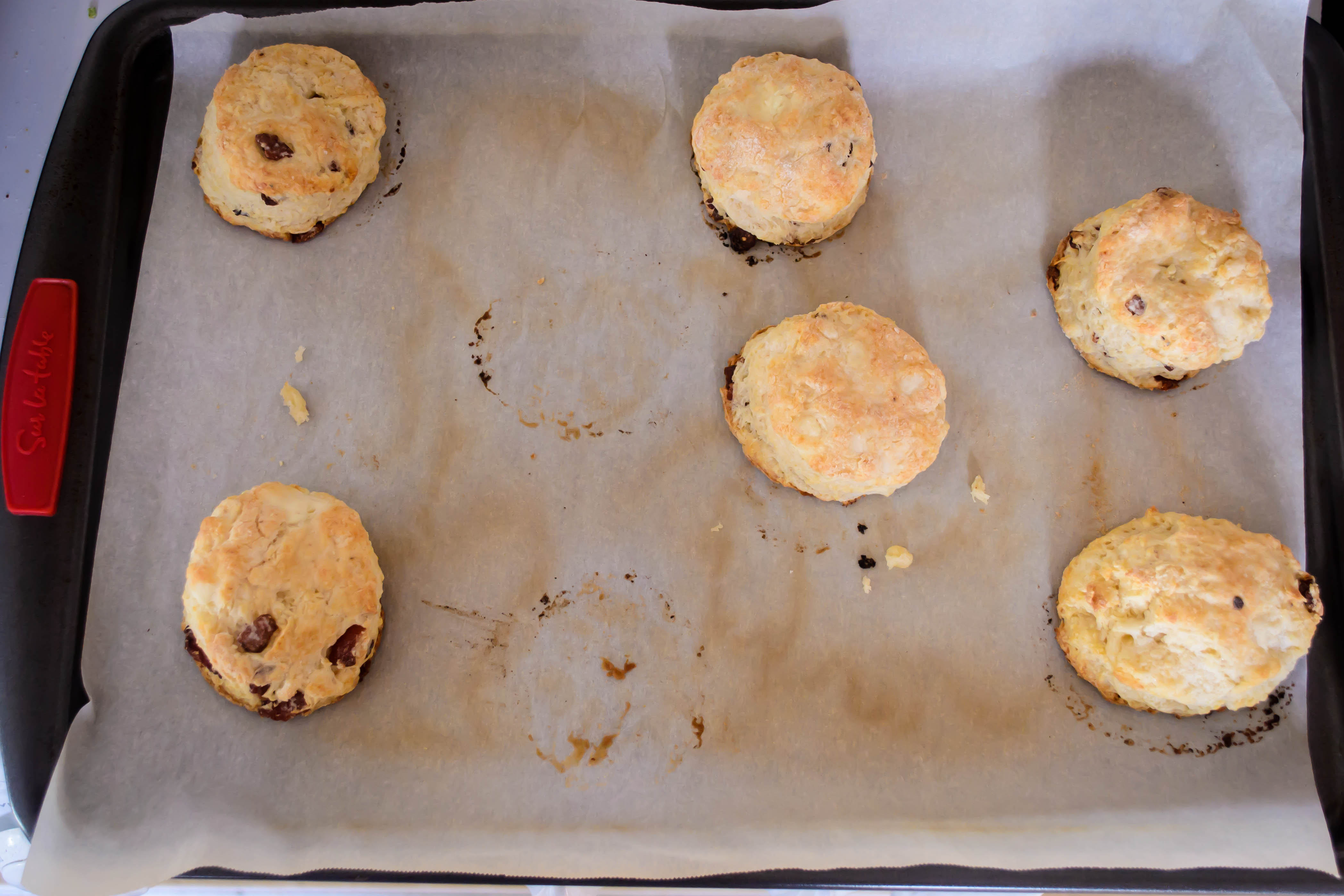
The bowl of dough produced 15 biscuits.  I put nine on my greased baking tray and the other 6 on a plastic-wrap-lined plate in the freezer for another occasion.  After 15 minutes in the oven, they were browned on top, slightly crunchy around the outsides, and knee-waveringly fluffy inside.  Quash your fears about the amount of butter here: it really makes a worthwhile textural difference.  It doesn’t hurt the flavor either – these were rich but light, and the buttermilk and lemon zest added intriguing sourness that brightened the mixture and made them more interesting than your standard dinner biscuit.

We ate these – no, that’s not right – we wolfed them down alongside grilled chicken sausages and grilled planks of zucchini wrapped around a mixture of goat cheese, lemon juice, thyme, parsley, and pepper.

It was delightful.  And here’s the delicious secret: if you end up with some leftover goat cheese mixture, and you whip in some honey, and then if you happen to split one of those fluffy delightful biscuits down the middle and perhaps toast the open sides in a toaster oven or under the broiler for a moment, and dollop a hefty tablespoon of the sweetened goat cheese on top, and eat it, you have the most delightful little end-of-summer breakfast biscuit you’ve had in years.  And if you’d been out late the night before and perhaps chased some whiskey with a hot dog, a sprinkle of extra salt in the goat cheese filling would make this a quite decent hangover breakfast too, as a cure for excessive adventuring.

Next week we settle more comfortably into this lovely little groove we’re making for ourselves: another restaurant, another Bittman, another decade(!), of our new little lives.