Just peeking in…

Hello friends.  Is the world still the same place?  I’ve been offline for a full week now, as part of my move from Oregon to California.  I’m now settled somewhere in Los Angeles, my eyes startled by constant sun, my ears tender against the sounds of traffic, my taste buds clamoring to explore.  I am working on a post – I’m tremendously behind, I know – and  I have things to share with you like cobb salad with glazed bacon, and homemade crackers, and a recipe for rosemary and orange zested white bean dip I can’t stop thinking about.  Oh, and the little wedding cake thing I made a few weekends ago…

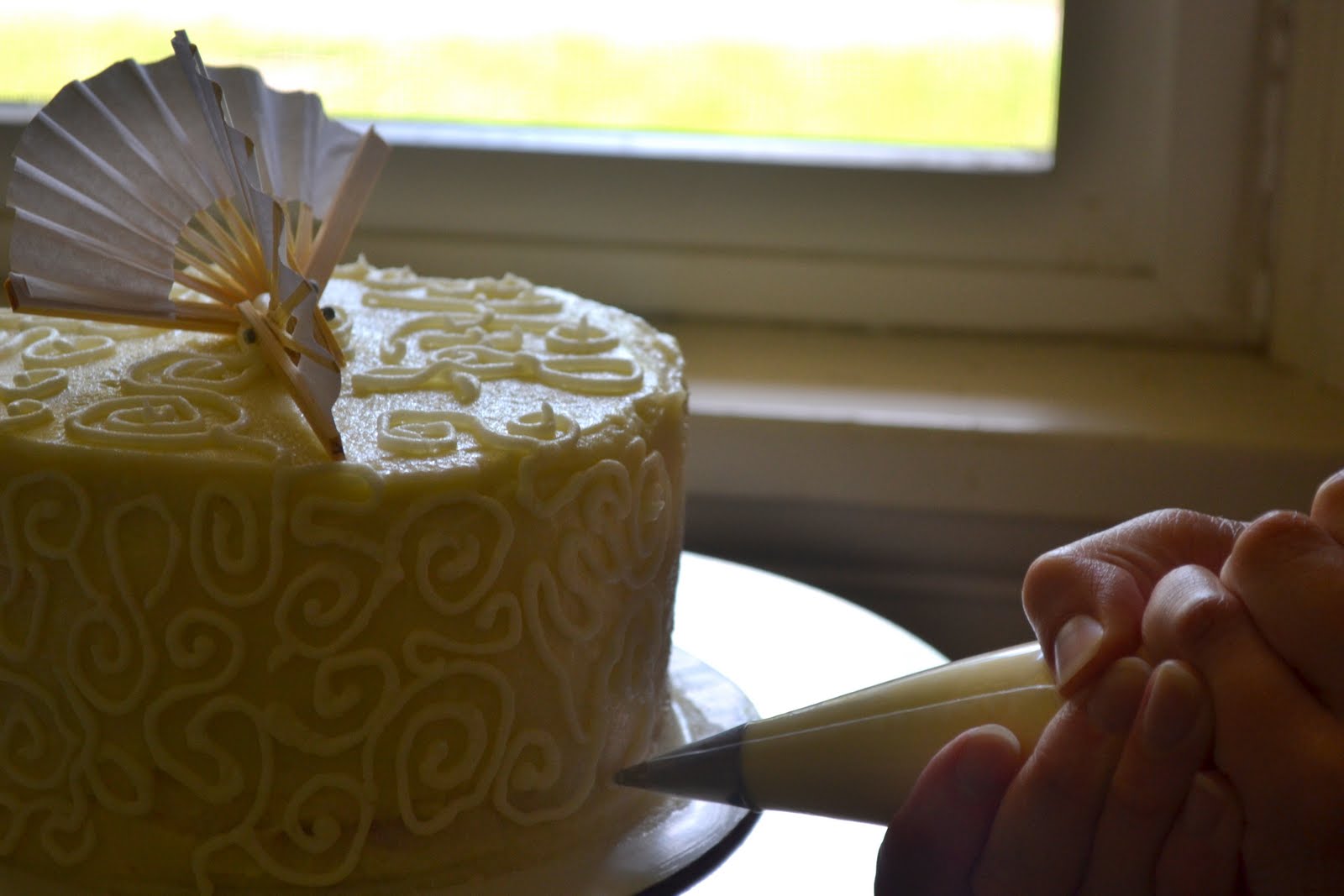
But all that takes time.  And there are still boxes everywhere I look.  So just as a taster, to keep your appetites primed, here’s a glimpse or two of how my big project turned out:


Back with more soon…

Food from Fiction Potluck

So what does one do, you might ask, as a newly minted Doctor of Literature, unfettered from the everyday proletariat academic concerns?  Well, one grades, and one line edits, and one revises frantically, and frankly, one feels completely different and not different at all.  The school year isn’t over, even though (as of Tuesday, when I upload my “completed” dissertation to our Graduate School’s website) my degree is.  So my daily duties no longer include anxious preparing for the big day, but they still include student emails and lesson planning and reading.

But because they don’t include anxious preparation and last minute rethinking and nail biting about what the committee will think, these days can also include celebrations.  Last night was one such celebration: a party I’ve wanted to have for several years now.  The style: potluck.  The theme: “Food in Fiction.”  Interpretation: bring a dish inspired by or mentioned in a book.  That’s it.  There are so many vivid options in novel, drama and film, and our guests had only to choose one and recreate it in the material, taste-bud-bearing world.

We had tremendous fun, in brainstorming, in cooking, and in sharing the variety of dishes from books we love.  As I mentioned to one friend who thanked N. and I for the great party on his way out the door, this is a party we had to have before parting ways as many of us graduate this June, because only in this company could we feel so self-congratulatory and so excited about immersing ourselves in something so nerdy.

Here are a few of the dishes we enjoyed.  I suggested to folks that they provide the description of the food in question from its source text so guests would know what they were eating and which world it was taking them to.  We had Victorian sandwiches and High Modernism Stew nestling next to a magical realist chutney and a warm wassail of fantasy.  What wandering, all in one house…

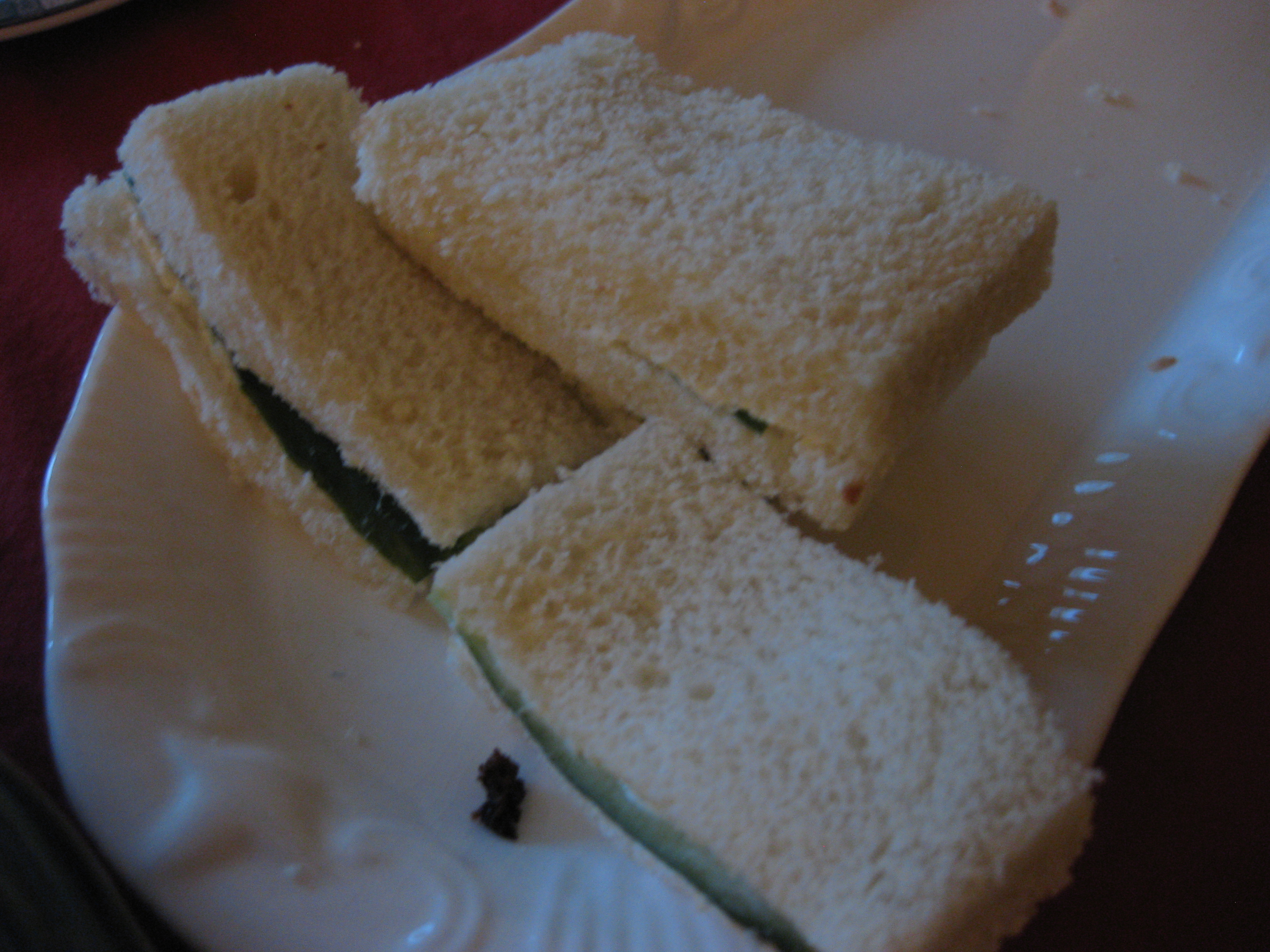
Cucumber sandwiches from Oscar Wilde’s “The Importance of Being Earnest.”

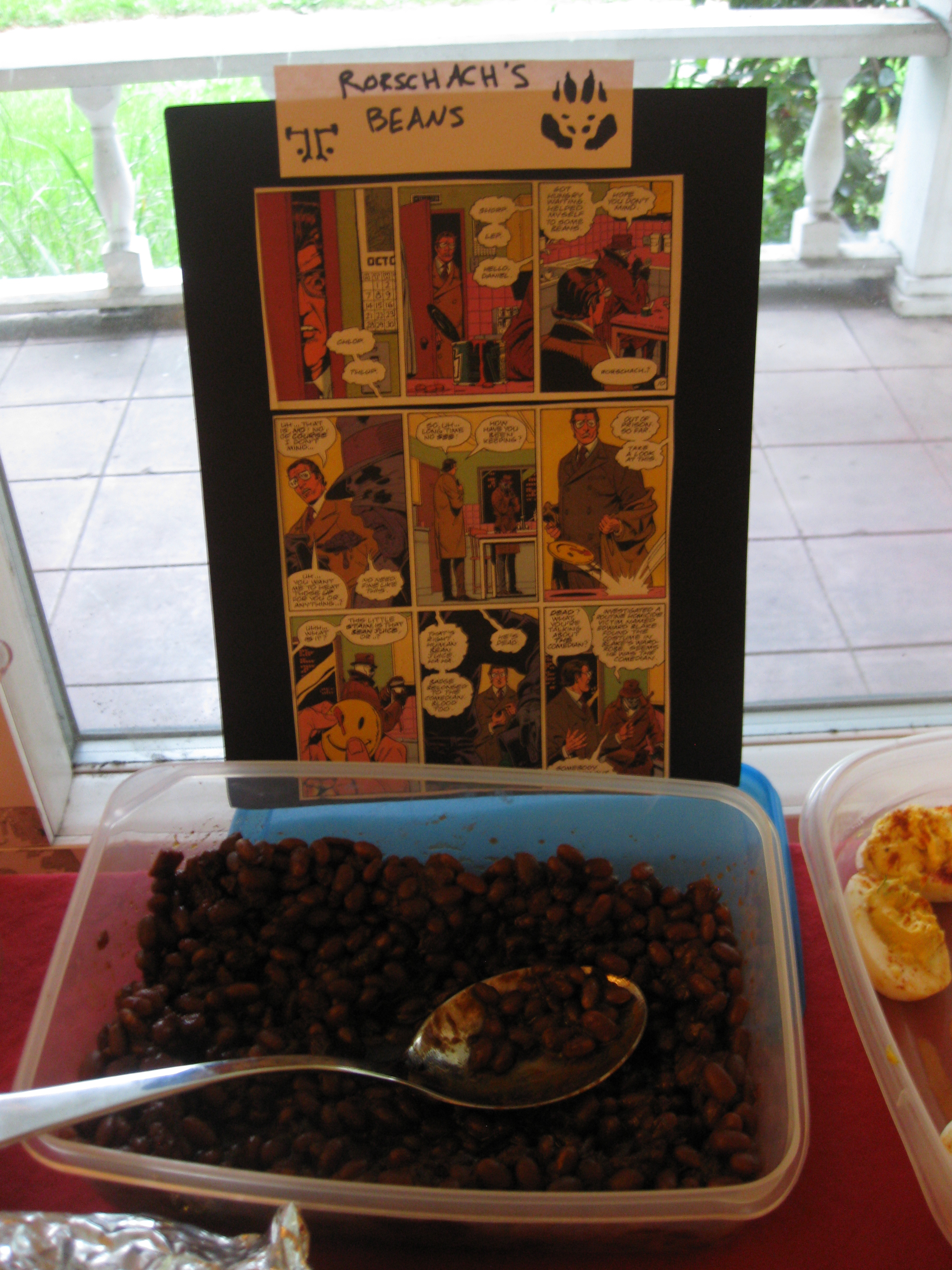
Rorschach’s beans from the graphic novel “Watchmen.”

Boeuf en daube from Virginia Woolf’s To the Lighthouse.
A trio of deviled eggs to breathe life into Hemingway’s thoughts on being hard boiled in The Sun Also Rises.

A wonderfully smoky molasses cake inspired by the molasses-drenched dinner scene in Harper Lee’s To Kill A Mockingbird.

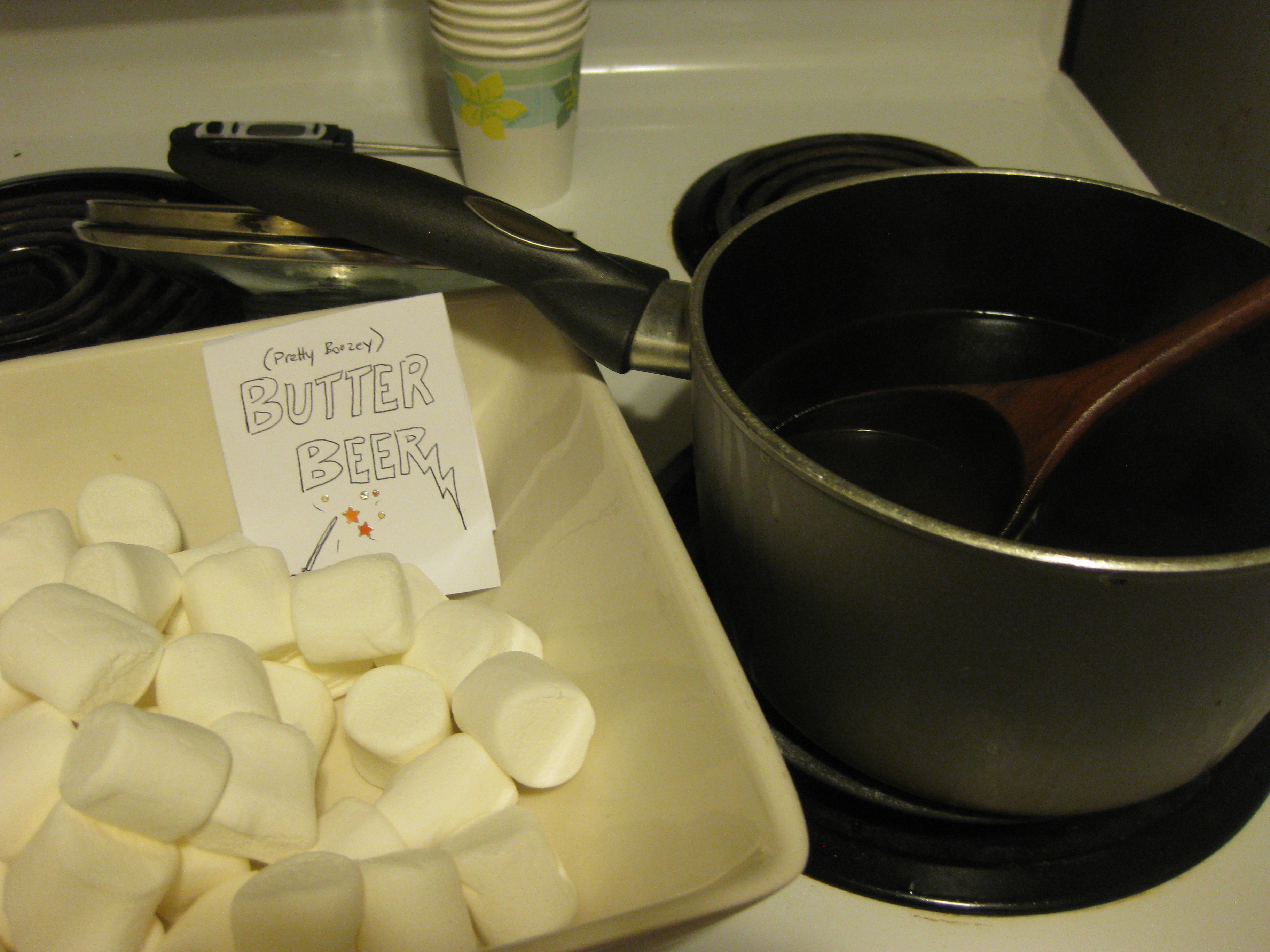
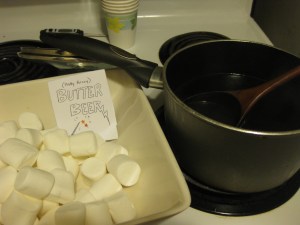
Well spiked butterbeer (you drop in a few marshmallows which, as they melt, mimic the foamy head on the beer) from J. K. Rowling’s Harry Potter series.
Not pictured: (more!) deviled eggs, from Toni Morrison’s Song of Solomon, sautéed marinated mushrooms inspired by Lewis Carroll’s Alice in Wonderland, raspberry cordial from L. M. Montgomery’s Anne of Green Gables, and a few sourceless delights: meatballs (Cloudy with a chance of, perhaps?), and a bread, cheese, and hard salami platter.  These were justified by their authors with the claims that “surely there must be moments of literary eating that include these items,” which I was quite willing, given their deliciousness, to accept.  And of course, wine.  If we were picky, we could call this an homage to Hemingway, whose characters “get tight” with abandon, or to Carroll’s Alice, who does imbibe from the mysterious bottle demanding she “drink me.”

I made two offerings: a take on the “green as grasshoppers” chutney so adored by Saleem in Salman Rushdie’s Midnight’s Children, and a pork pie stuffed with hard boiled eggs from Roald Dahl’s Danny the Champion of the World.  Both turned out extremely well, but I want to talk about the pie first.

Danny the Champion of the World is the story of a boy and his father.  Without giving too much away, I will only say that Danny’s father suffers an injury almost halfway into the book, and when Doc Spencer, the family physician, brings him home from the hospital to the gypsy caravan in which he and Danny live, Doc also brings Danny a package from his wife:

“Very carefully, I now began to unwrap the waxed paper from around the doctor’s present, and when I had finished, I saw before me the most enormous and beautiful pie in the world.  It was covered all over, top, sides, and bottom, with rich golden pastry.  I took a knife from beside the sink and cut out a wedge.  I started to eat it in my fingers, standing up.  It was a cold meat pie.  The meat was pink and tender with no fat or gristle in it, and there were hard-boiled eggs buried like treasures in several different places.  The taste was absolutely fabulous.  When I had finished the first slice, I cut another and ate that, too.  God bless Doctor Spencer, I thought.  And God bless Mrs. Spencer as well” (Dahl 85-86).

Since my first trip through Danny, I salivated over this savory pie Danny enjoys.  And this party was the perfect excuse to attempt my own.

I found a perfect (and much prettier) base recipe for my pie in the archives of the blog Married… With Dinner.  Though I followed their basic instructions, I made a few amendments for ease and expense.  The key points are as follows:

Use a springform pan.  That way the pie is tall and regal and can sit magically outside a pie plate all on its own.

Roll the bottom crust out large enough to come almost all the way up the sides of the springform (I used storebought crust and it work out just fine), so you can connect top and bottom more easily.

I squashed together a mixture of ground pork, pork sausage, finely chopped ham from a ham slice, salt, cayenne pepper, ground cloves, and black pepper.  I pressed a thin layer of the meat mixture onto the bottom of the pie crust, then laid six hard boiled eggs in a circle through the middle of the pie (regrettably, with ham-covered hands, I did not get a photo of this).  Then I lightly packed the rest of the meat mixture around and over the eggs and sank a bay leaf deep into the very center of the pie.

A traditional English pork pie has warm pork stock poured into a hole in the crust just after baking, which turns into a thick jelly as the pie cools.  This did not sound particularly delicious to me, though I did like the idea of a rich layer of something atop my pork.  I decided on cheese.  I grated about a cup of sharp cheddar and sprinkled it lightly on top of the meat before draping the top pie crust over it.  I cut a little hole in the center of the crust and sliced some steam vents for additional release before baking.

It’s a long baking process (almost two hours), but you are dealing with raw pork, so the cooking time needs to be sufficient.  When the pie is almost done, Married… With Dinner recommends you carefully release the spring on the pan and brush an egg wash all over the top and sides of the pie.  Fifteen minutes more in the oven and this results in a beautiful, shiny golden glaze all over the pie.  It also, in case you are lazy like me and didn’t brush an egg wash over the top edge of the bottom crust to help the lid adhere, creates an after-the-fact glue to hold base and lid together.

I let my pie cool on the counter for an hour or so, then tented it with aluminum foil and stowed it in the fridge until the party started.  It did, after all, have to be a cold meat pie.

It was fabulous.  The meat was nicely spiced and the ham bits shredded in added some smoky, salty variety.  The hard boiled eggs were, indeed, delightful treasures to find, though I admit to over-boiling them slightly so their yolks were not as bright as they could have been.  Still, this is hardly a complaint.  It was like a meatloaf wrapped in flaky, buttery crust, and the cheese was a nice additional flavor and richness.  I suspect this could have been just as good warm as it was cold, but the pie might not have held together quite as nicely.

My second offering was a cilantro coconut chutney.  Saleem, as Midnight’s Children comes to a close, receives a meal from a blind waitress.  He lists:

“On the thali of victory: samosas, pakoras, rice, dal, puris; and green chutney.  Yes, a little aluminum bowl of chutney, green, my God, green as grasshoppers… and before long a puri was in my hand; and chutney was on the puri; and then I had tasted it, and almost imitated the fainting act of Picture Singh, because it had carried me back to a day when I emerged nine-fingered from a hospital and went into exile at the home of Hanif Aziz, and was given the best chutney in the world… the taste of the chutney was more than just an echo of that long-ago taste – it was the old taste itself, the very same, with the power of bringing back the past as if it had never been away…” (Rushdie 525).

I found a recipe for a coriander chutney replete with tart lemon juice, lip puckering spice from serrano chiles, and bright, bright green cilantro, tempered by shredded coconut.  The recipe called for unsweetened coconut but I, in my haste, having only sweetened, forgot to rinse it to get some of the sugar off before dropping it into my food processor.  As a result, my chutney was lightly sweetened, but no one seemed to mind that, especially when it was spread onto the pakoras I made.
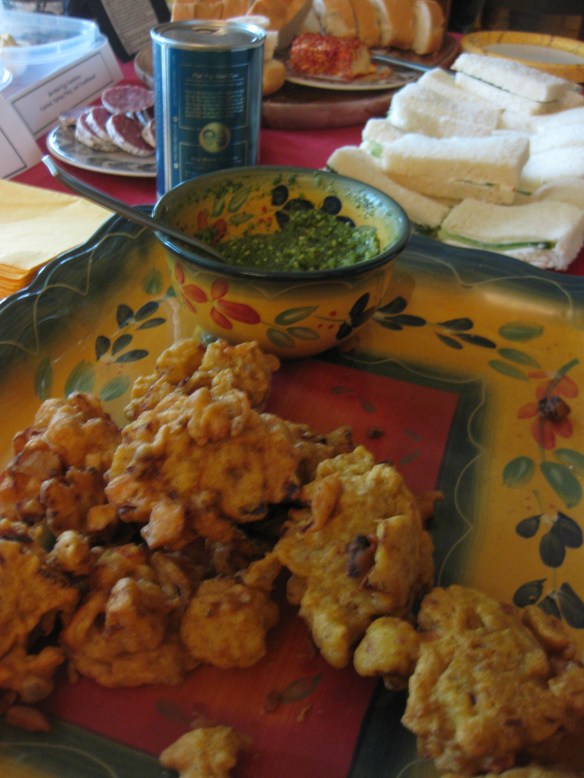
I searched around online and made a master recipe from a combination of ideas for these pakoras.  Mine included:

4 cloves garlic, smashed and finely minced

2 tsp. each:

Garam masala

Turmeric

Chili powder

Salt

2 cups Bob’s Red Mill gluten-free all-purpose flour (pakoras are made with garbanzo bean flour, and though the Bob’s Red Mill mix is a blend including potato starch, it is composed mostly of garbanzo and fava bean flours, so since I had it, I decided a little break from tradition would be okay.  This is literature, after all.  It’s all interpretation anyway!)

1 ½ cups water

½ head cauliflower, diced

¾ large onion, diced

1 small sweet potato, diced

1 quart vegetable oil

Heat the vegetable oil to 375F in a large, sturdy pot.  I used my dutch oven.

While the oil heats, whisk together the dry ingredients and garlic until well combined, then slowly whisk in the water to form a thick, smooth batter.

Add the diced vegetables and stir to combine.

Drop spoonfuls of the batter (ever so carefully!  Watch out for splashes!) into the hot oil and fry for 5-6 minutes, or until the batter is deeply golden and the vegetables inside have magically cooked.

I got to taste one of these.  It was crunchy and starchy and slightly spicy and wholesome and delicious.  It was vegan.  It was gluten-free.  Topped with the chutney it was fresh and springy and spicy and then gone.  By the time I went back to have another, the giant platter I’d made was empty, and only a spoonful or two of chutney remained.  Pride overwhelms disappointment, in moments like these.  My little experiment was so successful it prohibited me from tasting further.  So I had another deviled egg instead.

Full and happy, we fell into bed at midnight with a sinkful of dishes and a fridge-full of leftovers to look forward to.  It’s like reopening a book to your favorite chapter: whose world will I lunch from, dine from, be returned to today?
Loaded to bear

Considering my avid distaste for filling either roast bird or pork chops with stuffing (with the exception of chicken cordon bleu, which I love), I often forget the merit possible in stuffing other things – namely fruits and vegetables.  The built-in cavities in fruits like peppers and winter squash, and the concave shape of stemmed mushrooms seems to call out to be filled with something delicious, and too often I am deaf to those calls.  Fortunately this week’s Bittman choice reminded me to open my ears a bit.

“38. Trim crimini or portobello mushrooms and chop stems.  Sauté stems in butter or olive oil with chopped prosciutto, onions, chopped fresh herbs (rosemary, sage, parsley, etc.) and coarse fresh bread crumbs.  Stuff spoonfuls of the mixture into mushroom caps; roast until tender.”

This dish was a clear win.  For those of you who don’t like mushrooms, I can see this same parade of ingredients marching well together in a hollowed out zucchini half, but you will be missing the earthy indulgence of mushroom – that rich, meaty, brown flavor that is so intriguing and so deliciously musky.

The collected players:

1 package (4 oz. or so?) proscuitto, diced

3 cloves garlic, minced

4 green onions, white and green portions, thinly sliced

5-6 crimini mushrooms, chopped (I used these because I had some lying around.  If you didn’t have them, you could certainly omit them and just use the guts of the portobellos)

4 portobello mushrooms, stems removed, gills and insides excavated (you want only a thin shell so you can fit the maximum amount of stuffing)

scant tsp. each thyme and rosemary

black pepper

2 cups fresh white bread crumbs

olive oil

I turned the oven on to preheat to 350F and then set the prosciutto to cooking in a pan on medium high with just a touch of olive oil to help it along.  While it slowly rendered and crisped and crackled toward doneness, I prepped my vegetables.  When the meat was almost crispy, I added garlic, green onions, chopped mushrooms, herbs, and a bit more olive oil to the pan.  While that cooked down for a few minutes, I tore up half a loaf of leftover French bread and ground it into coarse crumbs in my food processor.

I dumped the crumbs into my skillet of veggie, turned the heat off, and added another tablespoon or two of olive oil to bind the ingredients together.  At this point I considered adding Parmesan cheese, thinking of both its binding power and its stellar flavor, but I tasted the crumbly filling and realized that the prosciutto was making it quite salty enough, and an extra pow of sharp cheese might be overkill.

I loaded the mushrooms to bear with heaping spoonfuls of filling, tamping it down in each cavity to fit as much as possible.  This was almost too much for four medium portobellos to handle.

With one last, loving drizzle of olive oil over the tops of my brimming vessels, I put the mushroom-laden casserole dish in the oven for half an hour.  Quick steamed green beans in the final minutes and we were ready!

Cutting into one of these roasted boats was an explosion.  The filling did not adhere to itself and instead came collapsing down onto the plate and covered the green beans.  This was not a bad thing.  In fact, the bread, now flavored with the porky richness of prosciutto and the fruity softness of olive oil, was a crisp and delectable crunch atop my barely tender beans.  As for the mushroom itself, it softened and took on a thick meatiness that was perfect with the prosciutto.  The crunchy bread crumbs soaked in the earthy juice of their vessel and we scarfed down all four mushrooms between the two of us.  And then I may have scraped the baking dish clean with my fingers.

Three-Bite Tableau

I like small sized food. I like its charming appearance, its potential for fanciness, and, not least, its ability to fool otherwise intelligent people ((i.e. yours truly) into thinking they can eat extra, because it’s so petite it must be calorically harmless as well.

To qualify, I think this sort of food must be consumable in three bites or less. Ideally this should be possible without a fork, but of course (especially with desserts) there are exceptions to this ideal. At any rate, three-bite foods should be attractive to the eye, enticing to the nose, and should carry far more flavor than seems possible for their small size.

Here are two I’ve constructed recently: one that turned out to be a snack superstar, and one that carries as yet underrealized potential for true greatness

Artichoke Spinach dip cups

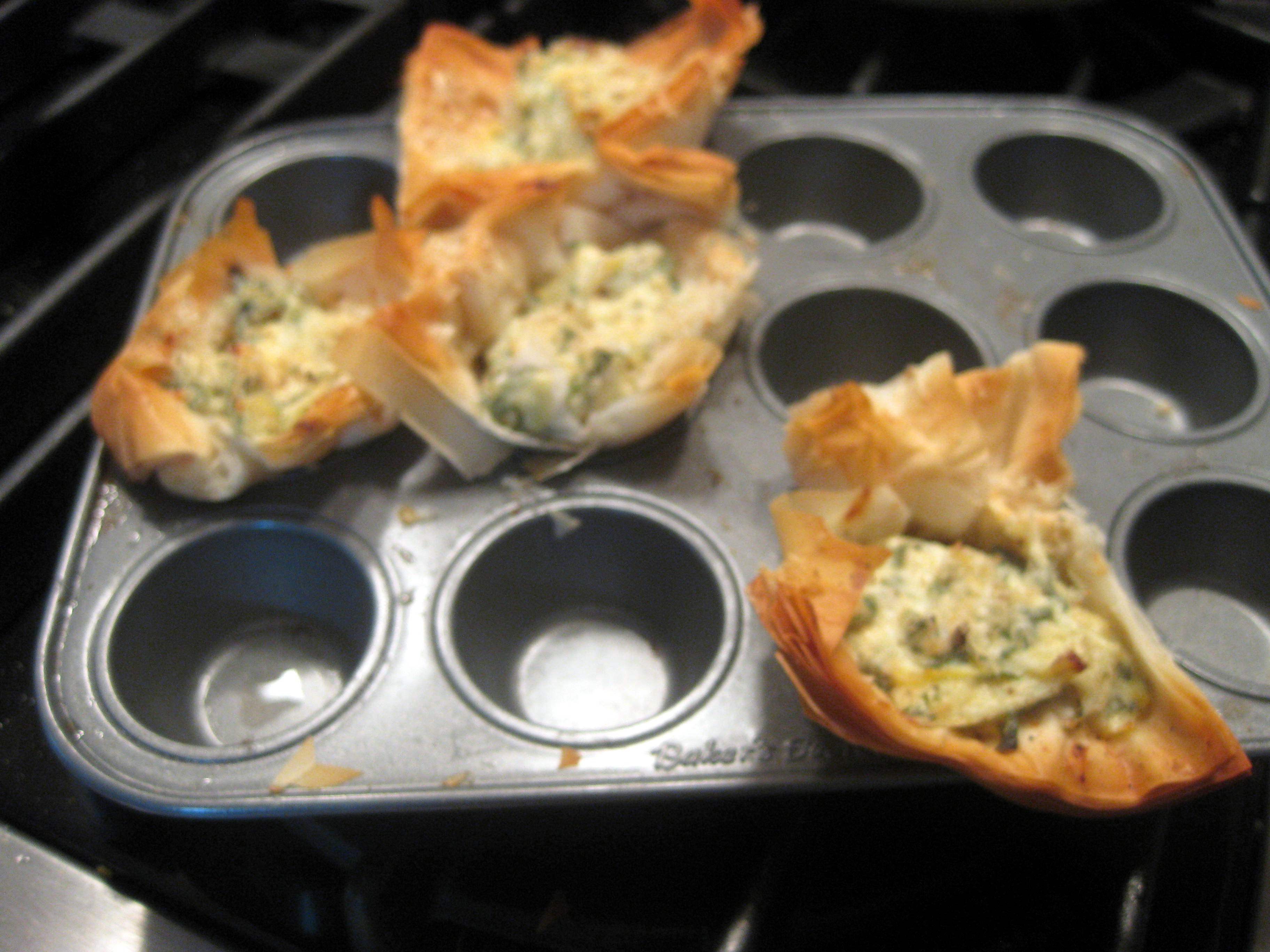
Two of our colleagues and dear friends got married in Long Island recently. As N. and I were both teaching a summer class (and subsisting on graduate student salaries), we were unable to jet-set across the country to attend. But to our delight, G. (the bride) informed us that her father would make a toast to friends and family not physically present. We gathered with some friends, some wine, and some snacks, and at 4:10 pm PST we raised our glasses to G. and T. I brought these little dip cups, bubbling and creamy in brown crisp phyllo shells. This is an adaptation of a recipe for hot artichoke dip that I usually make in a pie plate, but the elegance we were attempting to emulate and the stark truth of half a box of phyllo sheets in my refrigerator made me change my plan. Note that these ingredient amounts are almost all approximations.

In a medium bowl, I mixed:

4-6 oz. cream cheese

½ cup mayonnaise

5 oz. spinach, steamed or boiled, drained, and roughly chopped

1 14 oz. can artichoke hearts in water, drained and roughly chopped

2 TB parmesan cheese, divided

black pepper to taste

After a serious taste test and careful alterations, I set the dip aside and considered my phyllo. I had about 10 sheets, which I swept with butter and layered in the usual way, before cutting into twelve even stacks (3×4). I pressed each stack carefully into a mini muffin tin, letting the edges point out every which way in hopes of creating crisp, crunchy tips, and then loaded the buttery vessels with spoonfuls of dip. I probably used about 2 TB per cup, topped each with a generous extra grating of parmesan cheese, then stowed them in a 400F oven for 20 minutes. Depending on your oven, they are ready when the edges of the phyllo cups are dark golden and fragile, the parmesan cheese atop the dip is beginning to color, and the dip itself is slightly bubbling. Or just when the phyllo is brown, if you are impatient.

We were impatient. How could we not be, when the smell of cooking cheese was filling the kitchen, and the promise of that perfect balance of crispy and creamy whispered how wonderfully it would compliment our champagne?

Crab cakes

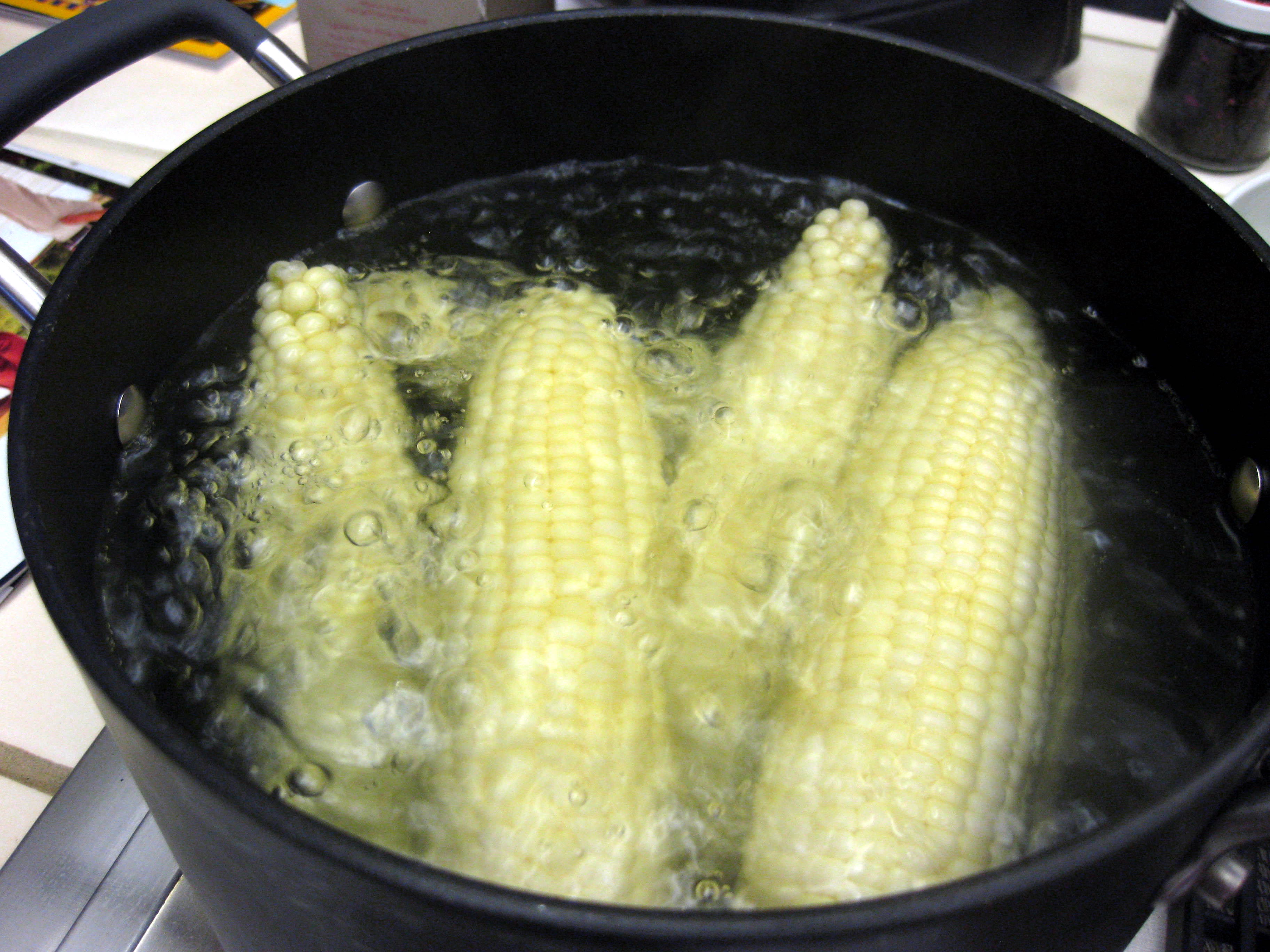
Now visiting family in California for a few weeks before the term begins again, my mom and I have been bonding the way I like best: in the kitchen. Three days ago, we decided to make crab cakes and salmon cakes to go with a half dozen luscious ears of sweet corn.

I like crab cakes, but like pesto, I am still searching for the right ratios in my collection of ingredients. This version, while tasty, is no exception, particularly because while we did look up a recipe, we ended up barely consulting it and, ultimately, not following it at all.

Working delicately in a medium bowl, so as not to break up the crab too much, we mixed:

3 6 oz. cans of crab meat (1 lump, 2 regular if you’re skimpy like us, all lump if you’re really looking to impress)

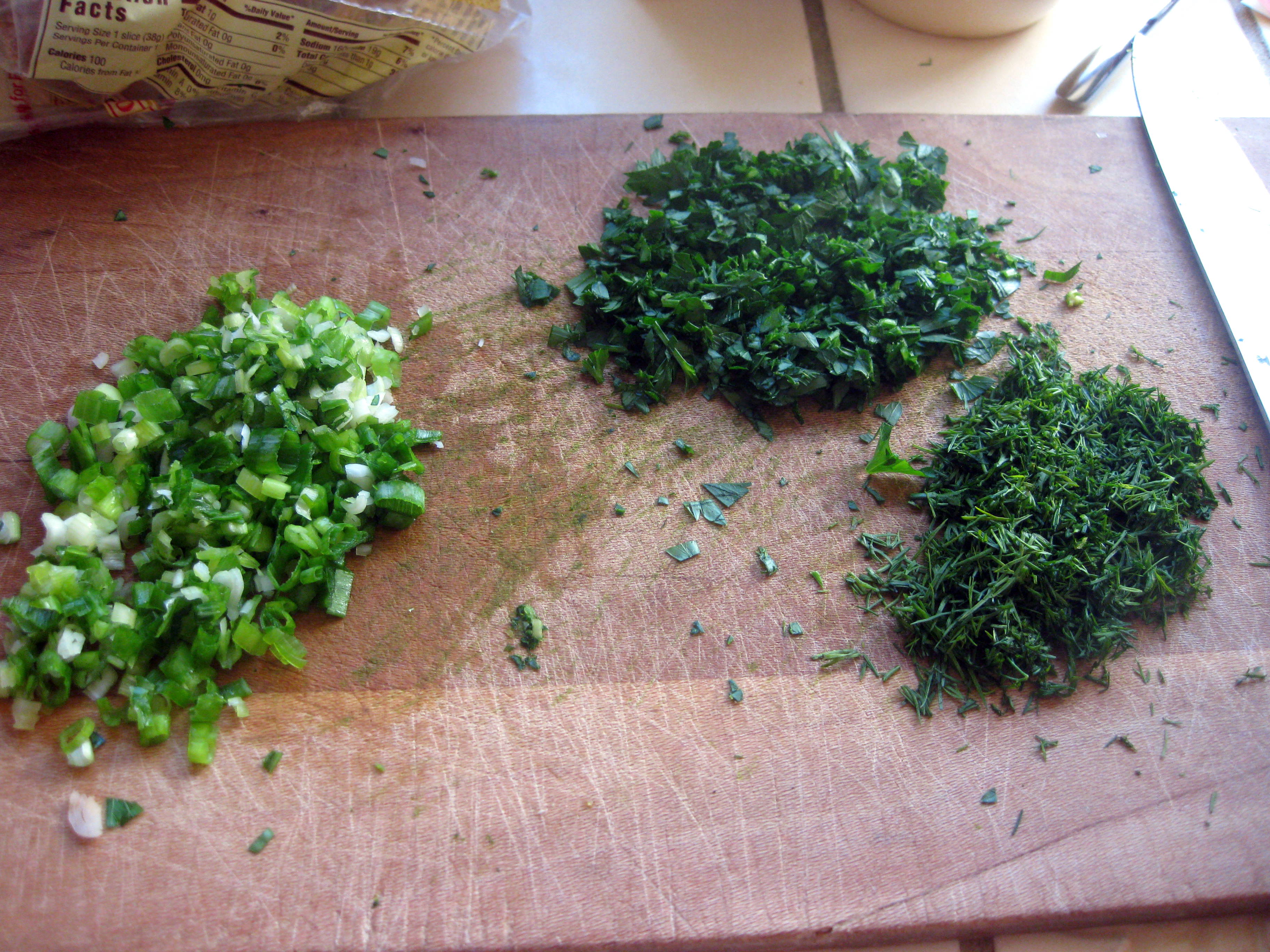
1-2 TB each, or to taste, finely chopped green onions, dill, and flat-leaf parsley

2 TB lemon juice

2 tsp lemon zest

scant 1 cup or less fresh bread crumbs

1 egg, lightly beaten

salt and black pepper, to taste

I recommend adding the egg last, so you can taste and test flavor balances and add extra herbs or lemon before dousing the mixture in raw egg. I also recommend adding the bread crumbs a little at a time, because depending on how you like your crab cakes, a full cup might be too much. Crab has such a sweet delicate flavor that too much bread or too many herbs will hide it completely.

Again, with extreme care, we patted the mixture into five palm-sized cakes, trying to help it hold together without overworking it. We plopped our fragile quintet onto a plate and refrigerated them for about 45 minutes to let the flavors meld and the cakes mesh together more firmly.

While they were chilling, I mixed up a little dipping sauce in the food processor, dropping in:

½ cup mayonnaise

2-3 generous TB strong horseradish

5-6 basil leaves

3 TB flat-leaf parsely

3 garlic cloves

generous squeeze of lemon juice, to taste

When the cakes had thoroughly chilled and our stomachs were rumbling with anticipation, we heated just enough vegetable oil to cover the bottom of a large skillet and carefully patted the cakes with dry bread crumbs, sliding each into the heated oil as soon as it had received its crisp coat. We fried them for 4-5 minutes a side, or until the bread crumb coating had become crunchy and golden. They threatened to collapse into pieces, and two cracked severely down the middle, but with careful coaxing and dextrous spatula work, we managed to keep them together fairly well.

They tasted good. They were light and herbaceous and not eggy at all, but they didn’t scream “crab.” Oh they suggested seafood, but I think we overdid the quantity of bread crumbs, and playing it cheap by adding leg and claw meat might have been a miscalculation. Topped with the horseradish mayonnaise, however, they were delightful. It was creamy and smooth, but the spice hit the back of your tongue just as you swallowed, and lingered for a moment or three.

Three moments of spice, three piles of herbs, three cans of crab. What does it really matter, then, that it took me five bites to finish my cake? At its core, this was a three-bite item. Matching delicate flavor with delicate table manners was my downfall. I should have, as my tongue urged, anxiously cut bigger pieces, urgently indulged, finished the whole little patty in only three tasty bites. Everyone else did.

Re-envision Whirled Peas!

Last week I wrote about an appetizer I made with pureed peas.  I wasn’t thrilled with it, but thought it was a good base for… something else.  This week I present you with the modified version, and one of my mottos for green produce of all kinds: when all else fails, make pesto.

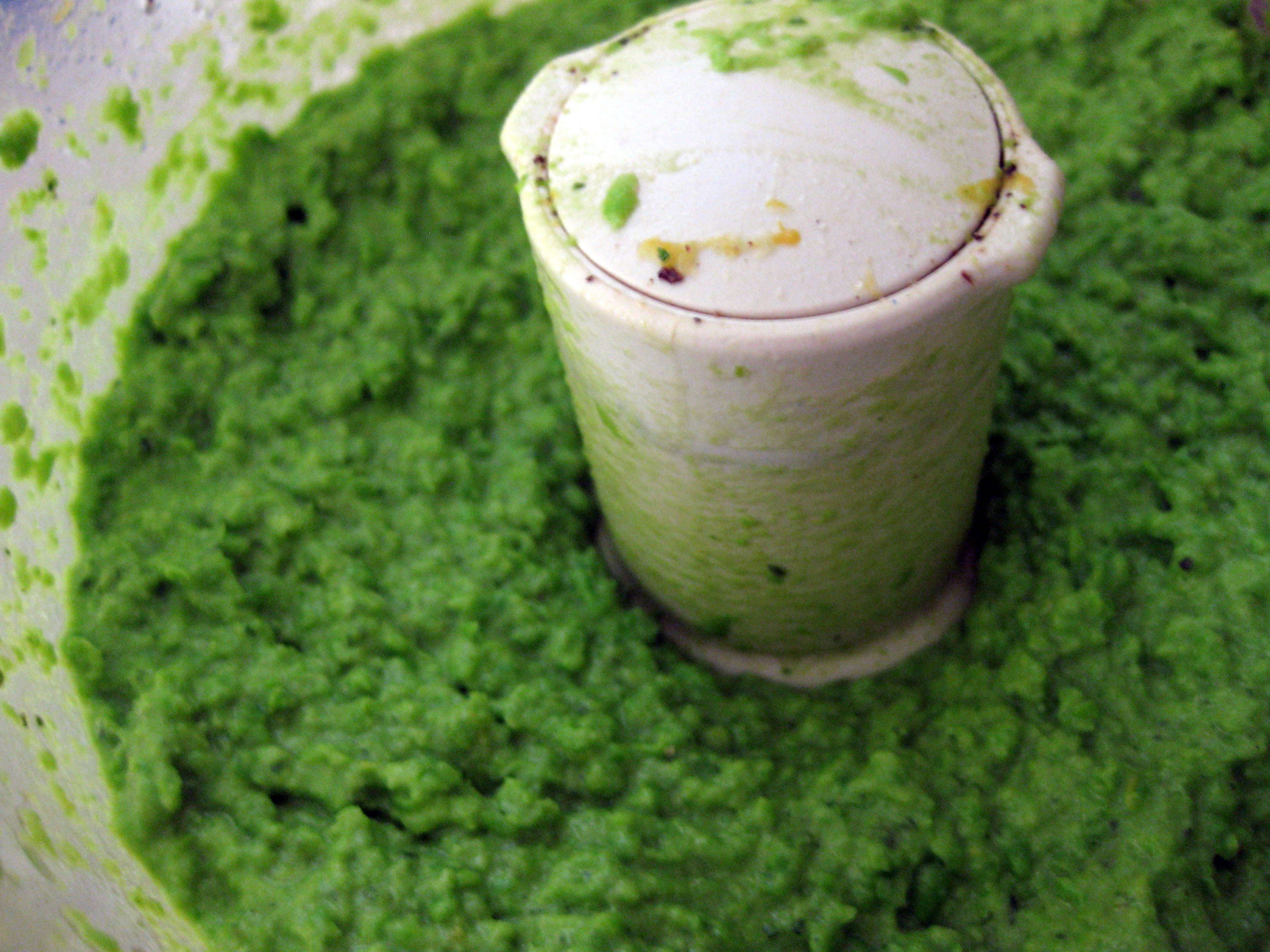
I smashed, peeled, and blitzed three cloves of garlic in my food processor along with a handful each of basil and parsley.  Straight from the fridge, I scraped the leftover pea puree, now a humble new beginning, back into the food processor.  In went a few tablespoons of lime juice, a few heaping tablespoons of Parmesan cheese, and a judicious helping of freshly ground black pepper.

Whirl.

Taste.

It was tangy and herby, but still had the sweetness of peas and the cutting, intriguing coolness of spearmint from the original concoction.  I liked it.  If I hadn’t been feeling lazy, I might have added some toasted walnuts or even almonds.  But I was, and so alas, laziness ruled the day.

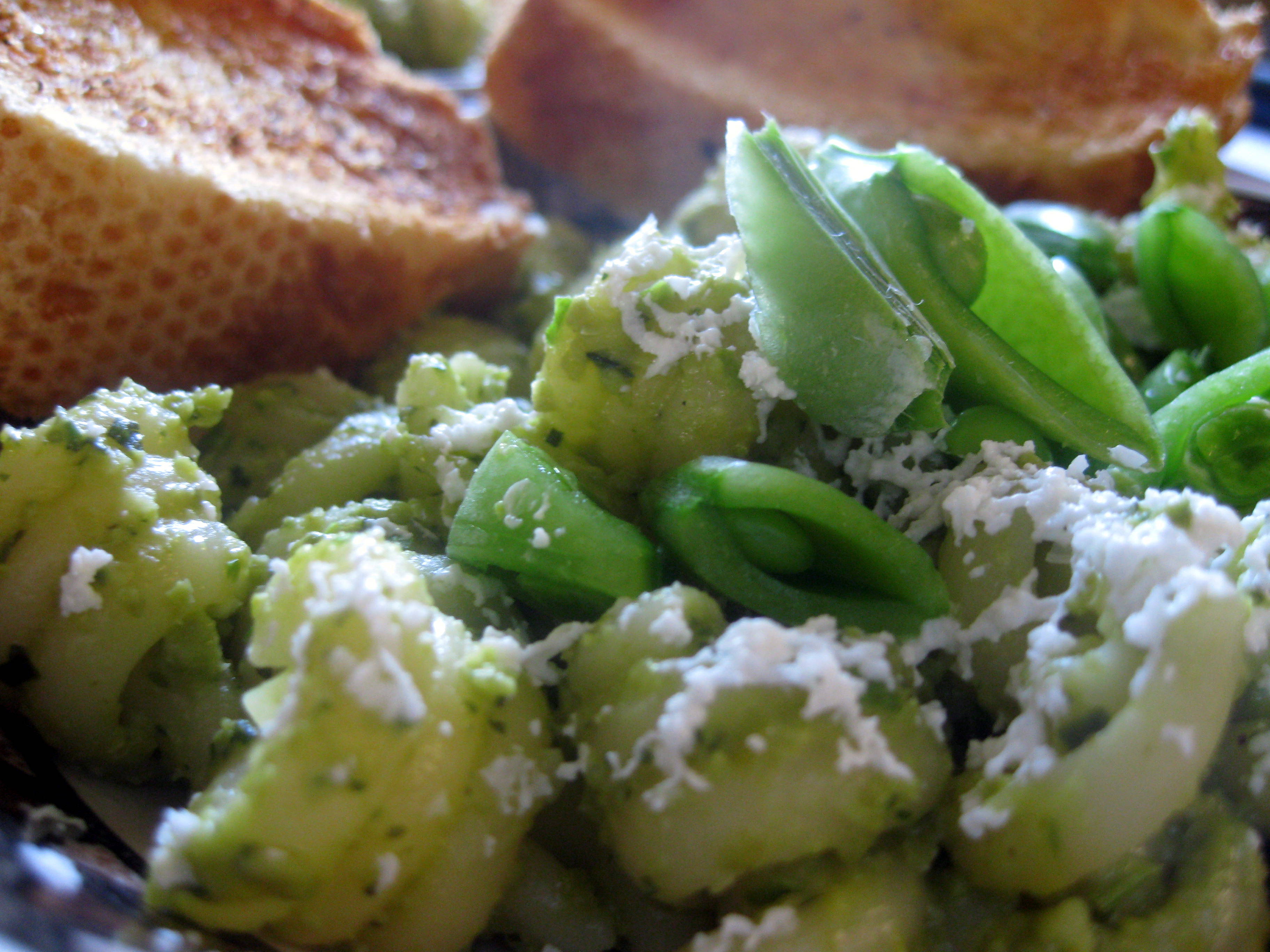
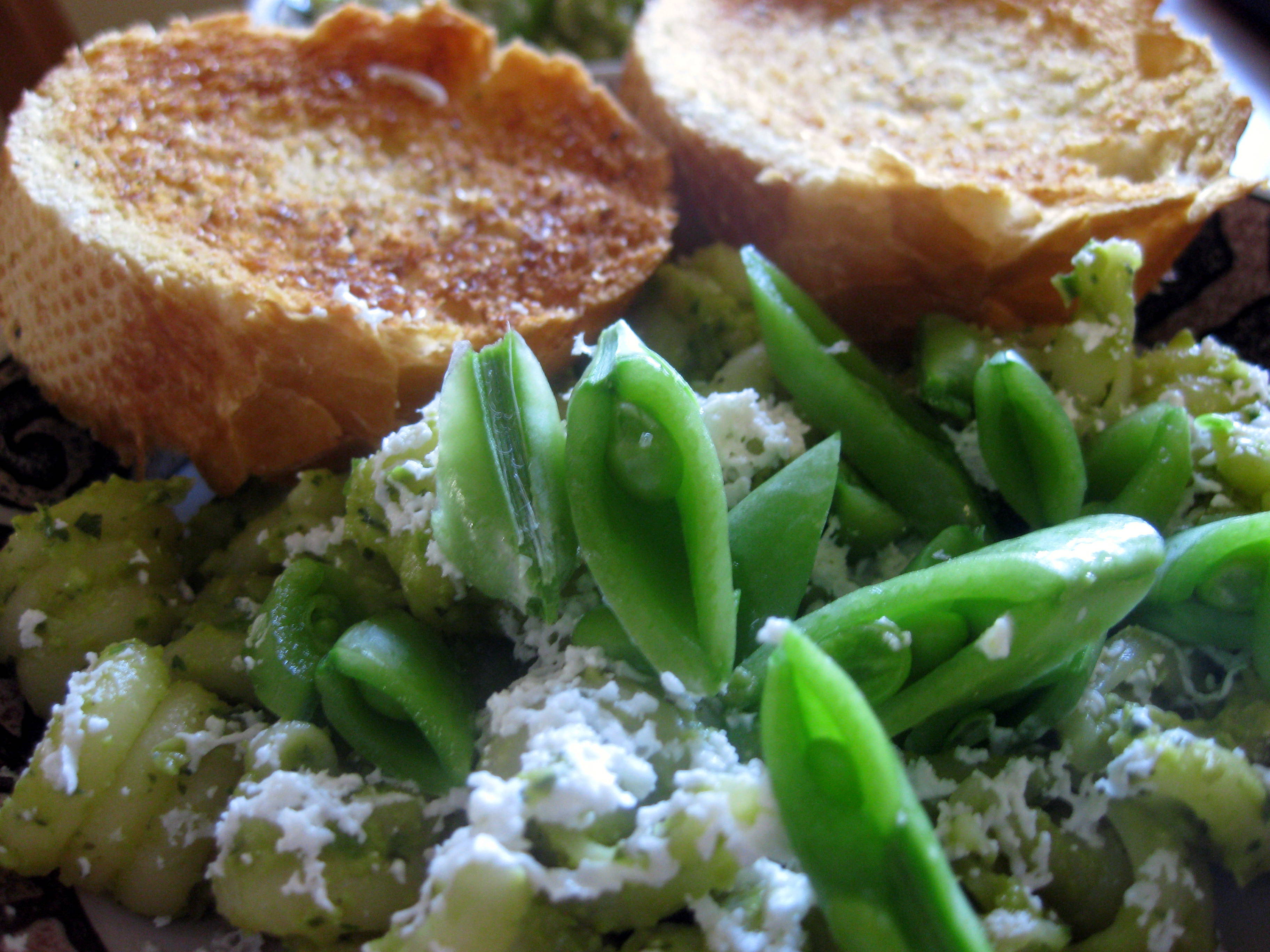
Fortunately, laziness did not keep me from slipping a log of goat cheese into the freezer, a box of curlicue pasta into a pot of violently boiling water, and a few slices of sourdough, nicely oiled, salted, and peppered, under the broiler.

It’s summer here, but the smells of this Franken-pesto as it hit the steaming hot curls of chewy-soft pasta were the kind of April and May I wish we’d had.  Warm, fresh, sharp but sweet.

We grated the chilly goat cheese over the top – when it’s almost frozen, it becomes like any other hard cheese – and as a coup de grace, added chopped snap peas to the top.  Pinched from the plant, rinsed, sliced on a bias.  Almost carelessly thrown onto the mound of snowy cheese and grassy sauce.  Another garden.

Yum.  Welcome, summer.  I embrace your call for simplicity, for freshness, for inventive dishes.  I will try to do you justice.

Envision whirled peas. And weddings.

There are two stories to be told here.  One is the story of a wedding.  Well, a wedding reception.  Well, a backyard barbeque eight months after the wedding that was my way of providing the couple with a reception.  The other is the story of a van.  Both occur in mid-July.  Let’s start with the latter.

I had completed my first year as a bona fide college student and was, like any bona fide college student, enjoying the summer in between shifts at my first job.  I was changing into a tank top in the back of my friend’s car at the Santa Clara beach boardwalk before heading out to the beach when I saw a van parked a few spots down.  Okay, so it wasn’t a van, it was a vintage old style VW bus, complete with tie-dye paint job, beads in the window, and Grateful Dead stickers everywhere.  But there was, as I discovered after straightening myself out and exiting my friend’s car, only one bumper sticker.  It read “Envision Whirled Peas.”  Read out loud, of course, it emerged as the hippie/peacenik/ flower child ultimate mantra.  Peace + food + word play = my day was made.  Maybe my week.

But back to the wedding story.  Ah, weddings.
The love, the beauty, the glowing smiles…

On the eve of my own wedding anniversary, a hot, beautiful day three years ago, I bring you a tableau of another.  A reception, at least, where my role was slightly different:
The heat of the kitchen, the stress of catering, the need for perfection…
I’m being overdramatic.  I’ve never catered a wedding before, and I still haven’t.  I simply cooked for our dear friends K. and T. this weekend.  I made a whole collection of things (full list is here), but I want to tell you about the crostini.
Thanks to A. and her delectable food sense, I made a pea, lemon, and mint puree to spread on crostini.  She called it “whirled peas.”

I defrosted one 16 oz. bag of petite peas and jangled them into the food processor.
Joining them: the zest of about ¾ of a lemon (one spot didn’t look so nice),
the juice of half that lemon,
probably ¼ cup of mint leaves,
coarse salt,
freshly ground black pepper.
This fragrant mixture received an ample dose of olive oil (½ cup or so?  I didn’t measure) as I whirled it in the food processor for a good minute or two.  I wanted it as smooth as possible, but I still wanted it to be impossibly bright green.

As the time for the party approached (our first guest’s feet were practically climbing the front steps!), I sliced a slim sourdough baguette on an angle and, shielding each slice with a glug of olive oil, broiled them until they turned golden and crisp.  While the little toasts cooled, the lovely and accommodating K. helped me pick some nasturtiums from our front garden to top our creation.  Even a simple backyard barbeque needs a fancy-pants appetizer option!
I spread a generous helping of minty, citrus-y bright “whirled peas” onto each crostini before gently pressing the calyx of each flower gently into the emerald spread.  They looked like flower arrangements – miniature edible gardens that looked and smelled of springtime and fresh birth.

K. and T. loved them (and seemed to love everything about the evening – a hostess-and-wanna-be-caterer’s dream!), but I was a bit nonplussed.  The flavor was minty and fresh, but seemed to be missing something.  Perhaps tang.  Peas are naturally sweet, and mint paired with some sweetness reads as more sweetness.  I wanted something to tell my tastebuds this was a savory bite.  The pepperiness of the nasturtium was too mild to do the job.
Because I have plenty of leftovers, I am considering adding some lime juice, perhaps some basil and a zinging shaving of Parmesan, and turning this into something more like a pesto.  Whirled peas pesto.  Say it out loud with me… “world peace” pesto?

Envision it: One little crostini, two happy people, global cooperation and betterment.

Aren’t weddings fun?!

Stay tuned for results and additions!