Fig and Brie Flatbread #TwelveLoaves September

When I was a kid, my parents made me cassette tapes from several Disney albums to listen to in the car.  I mean real albums: records.  45s and 78s, that spun, some wobbly and warping, on a turntable at a speed that, when I was much smaller, seemed unreal.  But the cassette tapes were for long car trips, and we all learned every word in every song (this wasn’t so bad, according to my parents, with the Disney songs.  One of the other tapes – a John Denver greatest hits album – wasn’t so lucky.  I requested it so many times that the tenuous black strip of tape got tangled in the player, and even after attempts to repair it by winding it manually back into the plastic casing, one day it mysteriously disappeared.  I’m still convinced that my dad, sick to death of hearing the plaintive desire for country roads to take us home, chucked it out the window).

Interestingly, one of my favorite songs from that collection was from a movie I’ve never seen: Disney’s The Happiest MillionaireThe song, “Fortuosity,” was a happy ditty about luck and opportunity, and “fortuitious little happy happenstances,” and I loved it.  It’s an idea that I like, and the song itself comes back to me every once in a while at random moments, most often when I think about the word “fortuitous,” with which the song obviously plays, and when I remember road trips with my family.
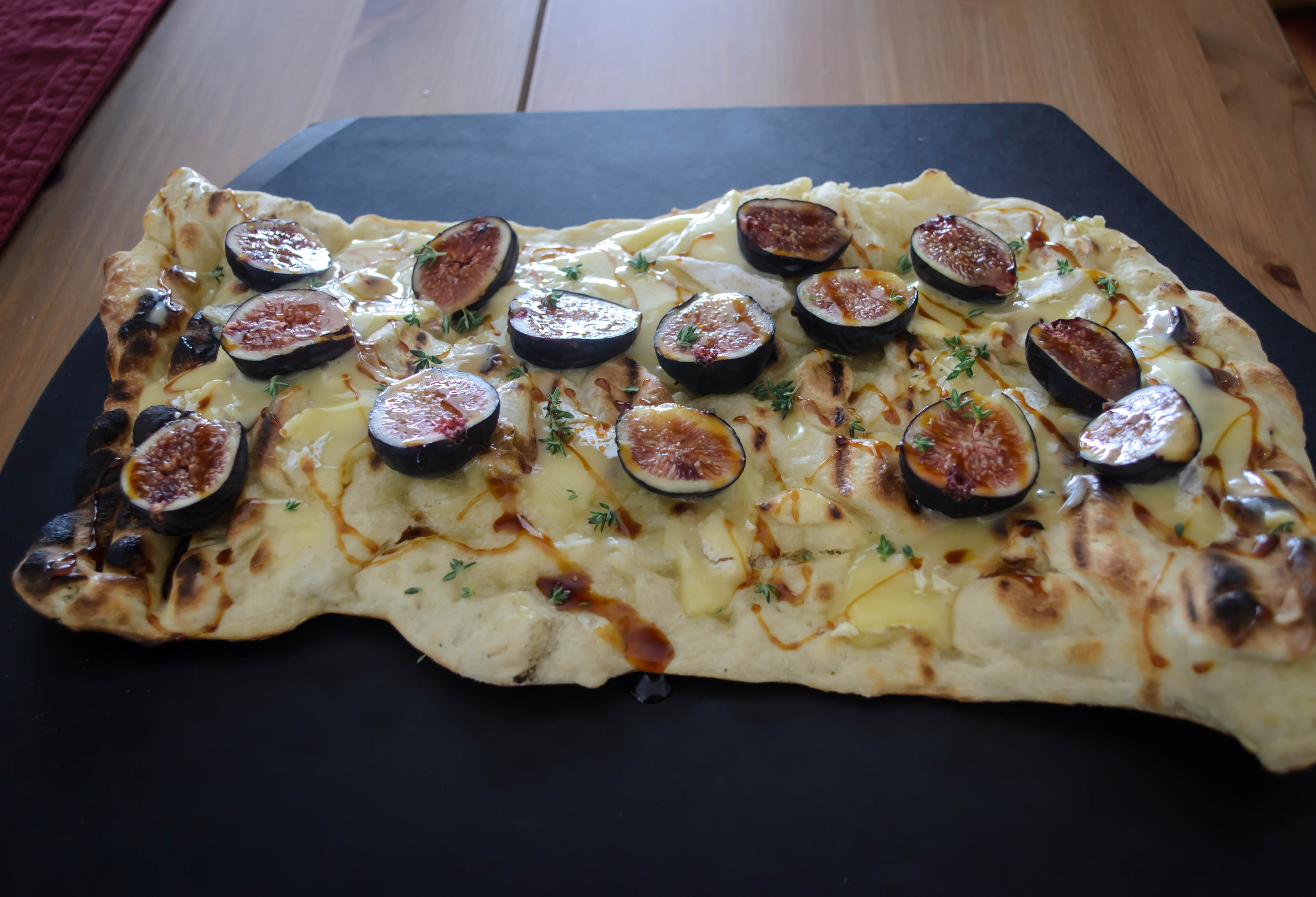
Food Blog September 2013-2570This is a long-winded way of introducing the idea that this week’s post, and this month’s Twelve Loaves challenge, aligned entirely by fortuitous coincidence.  Last week I asked N. to grill up some leftover pizza dough, which I smeared with double cream brie, nestled in some halved figs straight from the farmers’ market, and drizzled with barley malt syrup and sprigs of fresh thyme.  Then I checked the Twelve Loaves challenge only to see that September’s theme is Farmers’ Market food.  Fortuosity indeed.
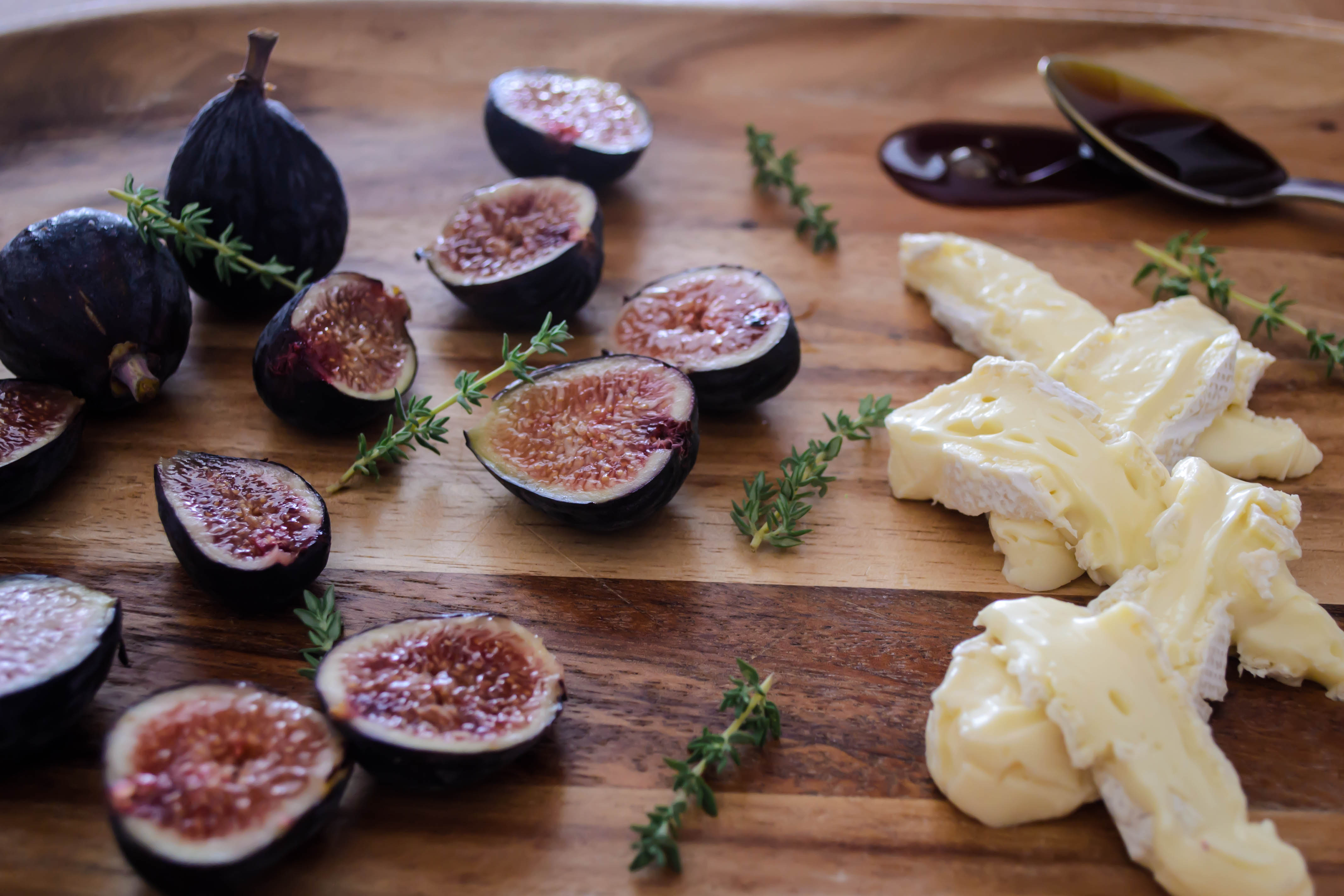
Food Blog September 2013-2566The idea for this combination – creamy cheese, soft, sweet figs, and a hit of herby freshness, came from a party N. and I attended recently.  Our hostess, who works with N. (we should have them over soon, N., if you’re reading this…), had quartered some black mission figs, settled them in around a wedge of brie, and dosed both liberally with honey and thyme.  My spin was based on the desire to use more of the barley malt syrup I bought for last month’s bagel experiment, and the obsessive love we have for homemade pizza, which means there is frequently a ball of dough either in the fridge or in the freezer, hoping to be put to tasty use.

Summer 2013-2503

Visitor to our thyme bush. I named him Algernon, because he looked like he might be impersonating someone.

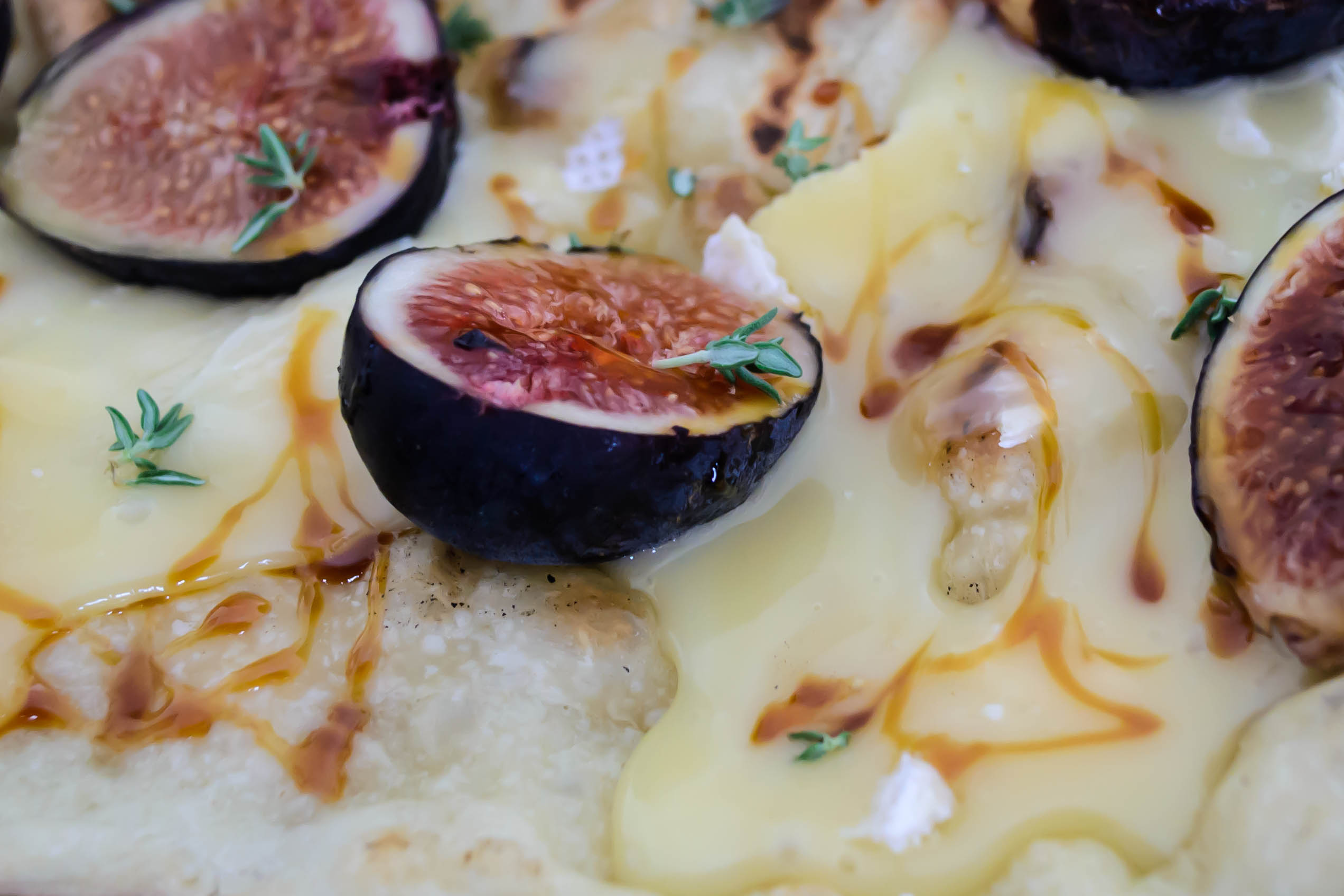
We loved this combination.  The barley malt syrup is a roastier contestant than, say, maple syrup, and was therefore a welcome balance.  It is sweet, but there is an almost bitter edge to its flavor – no doubt the malt part.  It is, in fact, just a lower grade extract than what brewers use for beer, so the darker component makes good sense.  Drizzled judiciously across the blistered surface of our cheese and fruit studded flatbread, it enhanced both main players.  Though Los Angeles played some mind games with me last week, cooling off just as I published a post asserting that autumn hadn’t arrived yet, it has warmed up again.  Since this flatbread cooks on the grill, it’s perfect for a warm evening when you can’t bear the idea of firing up the oven.  But if you don’t have a grill, and you’re willing to risk the house-heating power of indoor cooking, I’ve also included directions for the oven.  Food Blog September 2013-2574
Food Blog September 2013-2569
Fig and Brie Flatbread
Serves 3-4 as an appetizer; 2 as a main course
Directions for grilling adapted from Elizabeth Karmel and Bob Blumer’s Pizza on the Grill
12 oz. ball of pizza dough, purchased or homemade (I’m still working on perfecting my recipe; once it’s foolproof, I’ll post it for you)
Olive oil for stretching dough
6-8 fresh black mission figs, halved from stem to blossom end
8 ounces brie cheese, cut into thick slices
2 tablespoons barley malt syrup or your favorite honey
2 teaspoons fresh thyme leaves (in small sprigs is fine – the stems are tender enough to eat near the end of the sprig)
  • If your dough is in the refrigerator, remove it about half an hour before you intend to cook it and let it rest, unwrapped, on a lightly floured or oiled surface.
  • While the dough rests, preheat your oven or grill.  For a gas grill, this will take about 10-15 minutes with the burners set on high.  Once the grill has preheated, turn down the burners to medium.  For a charcoal grill, this will take a little longer – perhaps up to 30 minutes for the coals to begin turning gray.  For an oven, preheat to 500F (or as close to this as your oven will go!).
  • Once you’ve got your heat source preheating, prep your toppings.  Halve the figs, slice the cheese, pinch the thyme into individual leaves or small clumps.  This is all going to go pretty quickly once we start cooking, so you’ll want to be ready.
  • When the dough has rested, set a 9×13 inch glass baking dish bottom side up on your counter.  Rub the bottom (now facing upwards) with olive oil, then push and stretch your pizza dough out on the bottom of the dish so it hangs over all edges, creating a rustic but relatively even rectangle.  If it springs back or threatens to tear as you stretch it toward the edges of the dish, let it rest a bit longer and then try again.
  • Bring your dough, still on the bottom of the baking dish, out to the grill.  If the dough is sturdy enough to lift without tearing, pick it up by two ends and lay it across the grill grates, flopping the sides drooping below your hands toward the back edge of the grill, in the same motion you would use to swing a tablecloth over a table.  If the dough is not so sturdy, put some gloves on, and carefully invert the baking dish only an inch or so above the surface of the grill. The dough will slowly disengage and drop gracelessly onto the grill grates.  Once dough and grates are in contact, close the lid of the grill and leave it closed for about 3 minutes, or until the bottom side of the dough is well browned with nice grill marks.
  • Use a pair of long-handled tongs to transfer the flatbread to a pizza peel or a rimless baking sheet.  Use the peel or baking sheet to help you flip the rectangle of dough over and slide it back onto the grill, unmarked side down.  Close the lid of the grill and leave it closed for another 3-5 minutes, or until the whole thing is browned, marked, and nicely puffed.  I like the look of a few big airy blisters on the surface.
  • If you are using an oven, flop your dough onto a preheated pizza stone or the bottom of an oiled cookie sheet and bake for 10-12 minutes.
  • Once your flatbread crust is browned and blistered to your liking, transfer it from the grill or oven to your cutting surface.  Smear the whole top of the dough with the slices of brie cheese (I used the back of a spoon.  You could also use a spatula).  Nestle the figs in, spacing them evenly over the surface.
  • Drizzle the barley malt syrup over the top of the flatbread in a thin stream.  Don’t overdo it – the stuff is sweet.  You might not need the full 2 tablespoons.  You just want a light zigzag of caramel over figs and cheese alike.
  • Sprinkle on the thyme leaves, slice, and consume.

* You could, I suppose, top the dough either before cooking, if you are using the oven method, or immediately after flipping, if you are using the grill, and cook the toppings.  I didn’t do this, because I wanted the freshness of the figs, and knew the heat of the bread itself would be enough to melt the cheese.  If you choose to cook the toppings and you are using a grill, add the toppings after flipping, but turn off the burners on one side of the grill to create indirect heat, and cook your topped flatbread over the unlit burners for 7-10 minutes. This will allow the toppings to cook and the cheese to melt without burning the dough.
Plum Upside Down Irish Soda Bread Cake #TwelveLoaves

Food Blog July 2013-1940As you can perhaps intuit from the title of this post, this month’s Twelve Loaves challenge was just that for me: a challenge.  Called upon to incorporate stone fruit into a bread item, my mind went in a thousand directions at once and came up blank.  For me, stone fruits belong in pies and cakes.  The idea of combining cherries, or peaches, or apricots, or nectarines with the slow, yeasted rising of a bread was an odd one (although now that I’ve considered it, chocolate and cherry bread sounds fantastic.  Inspiration, if anyone still needs an idea for this month?).  So I struggled.  I wrote down ideas that sounded like madness:

Caramelized apricot yeasted mini loaves, baked in muffin tins  too weird.

Plum cobbler  not really a bread.

Peach upside down cake  not a bread at all!

Irish soda bread with… stone fruit… somehow…

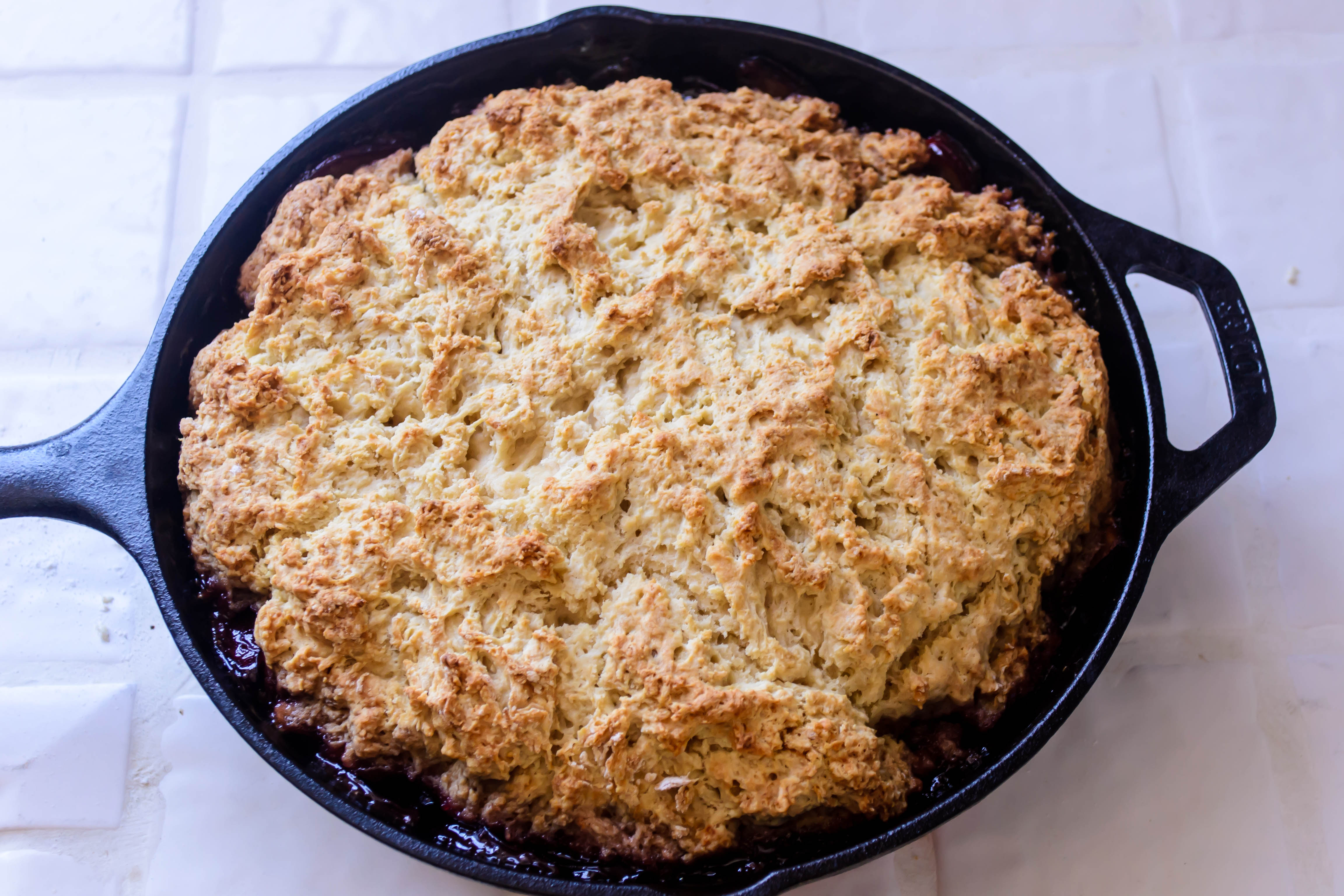
And that was where I landed, nibbling at the edges of this idea.  It would be, I decided, a skillet bread: fruit caramelized in the bottom of a cast iron skillet, soda bread dough mounded atop it and then baked and flipped, like the weirdest version of a pineapple upside down cake bread you’ve ever heard of.

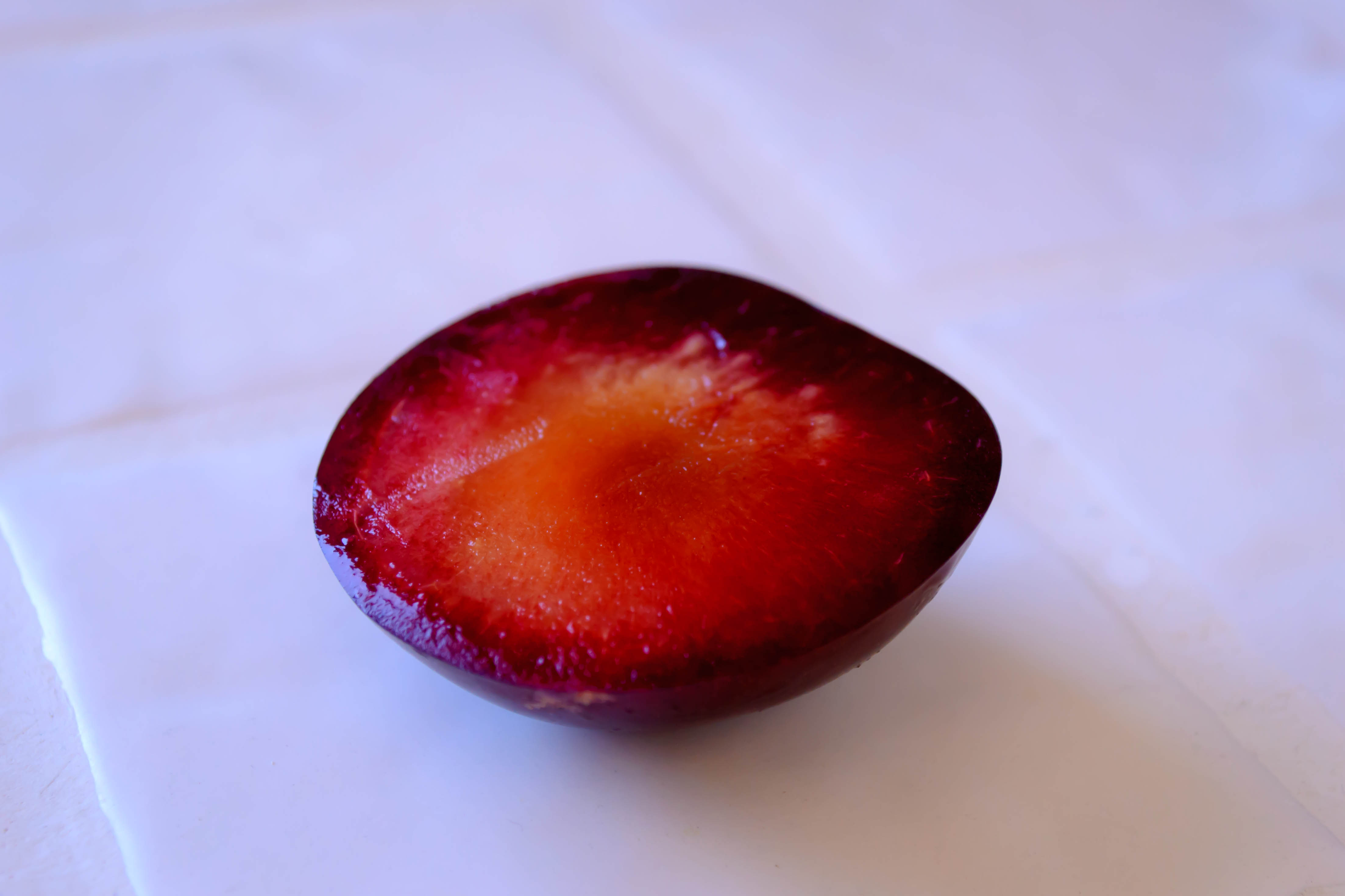
Food Blog July 2013-1919Once this weirdness was determined, I settled immediately on plums as my fruit choice.  I always forget how much I love plums as a cooked component.  None of the insistent fuzziness of peaches to deal with, but bursting with juice, brightly veined, and hiding just the right hit of tartness in that secret microscopically thin layer between skin and flesh.  I love that part.

Food Blog July 2013-1923Food Blog July 2013-1926Food Blog July 2013-1929I envisioned bubbling slices of that sweet tartness in a slick of butter and brown sugar, mounding on heaps of gussied up Irish soda bread dough and baking the whole thing into a puffed, flippable cake/bread to have for breakfast, afternoon “tea” (N. and I rarely drink hot tea in the 3pm hour, but love the idea of stopping for a bit of a snack), or maybe even wedges wrapped up in wax paper to take on the road as we head into vacation.

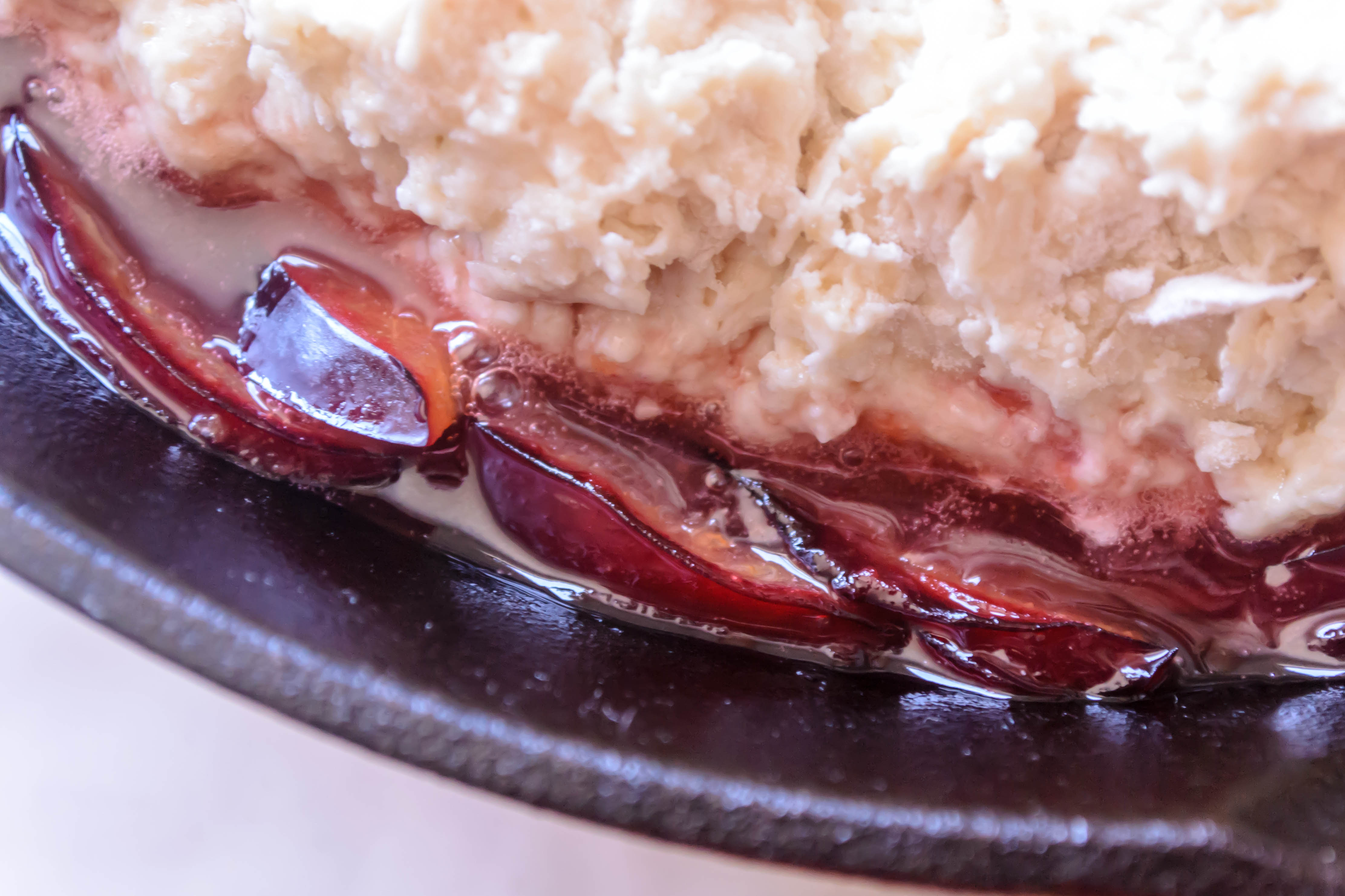
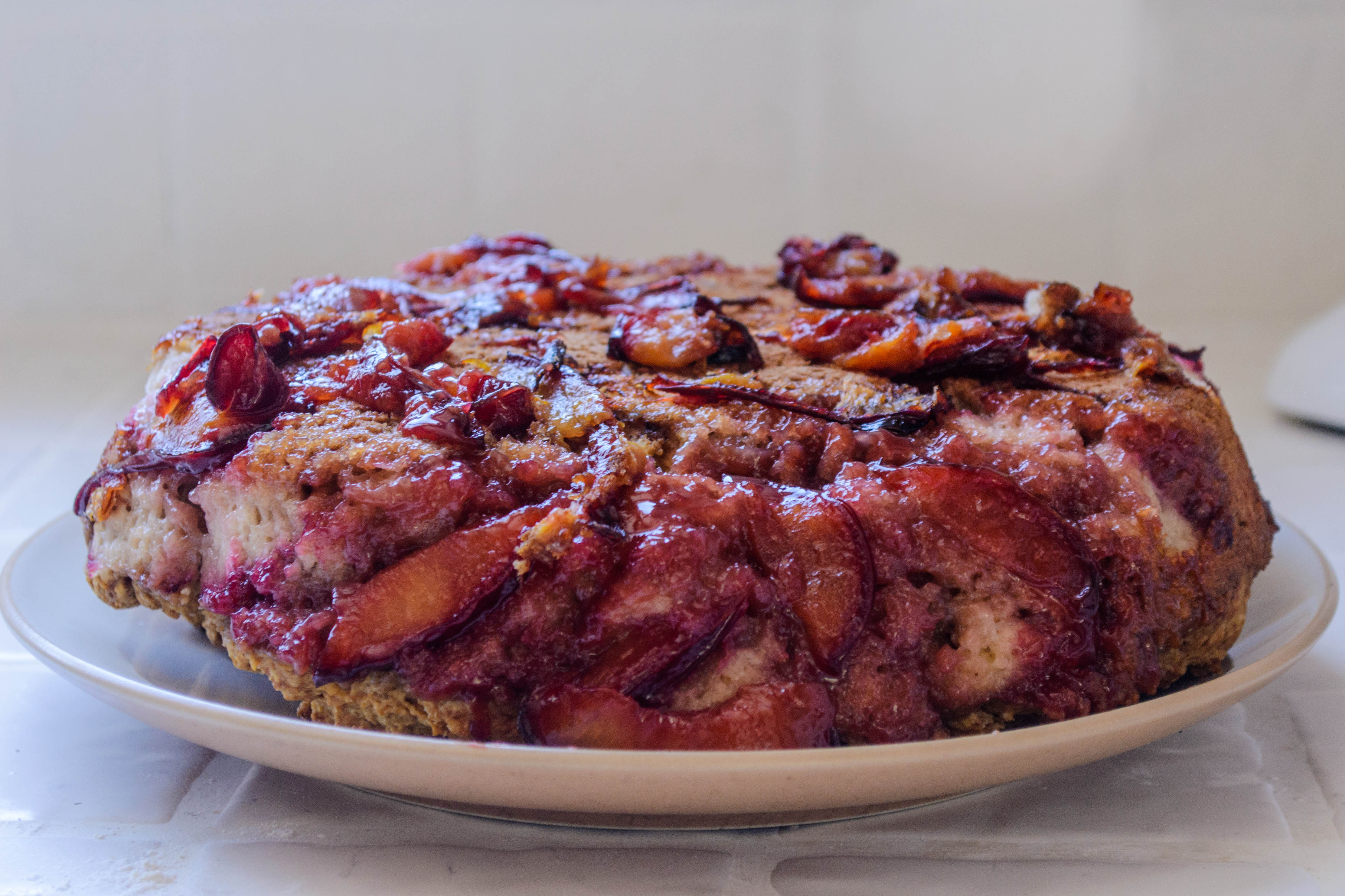
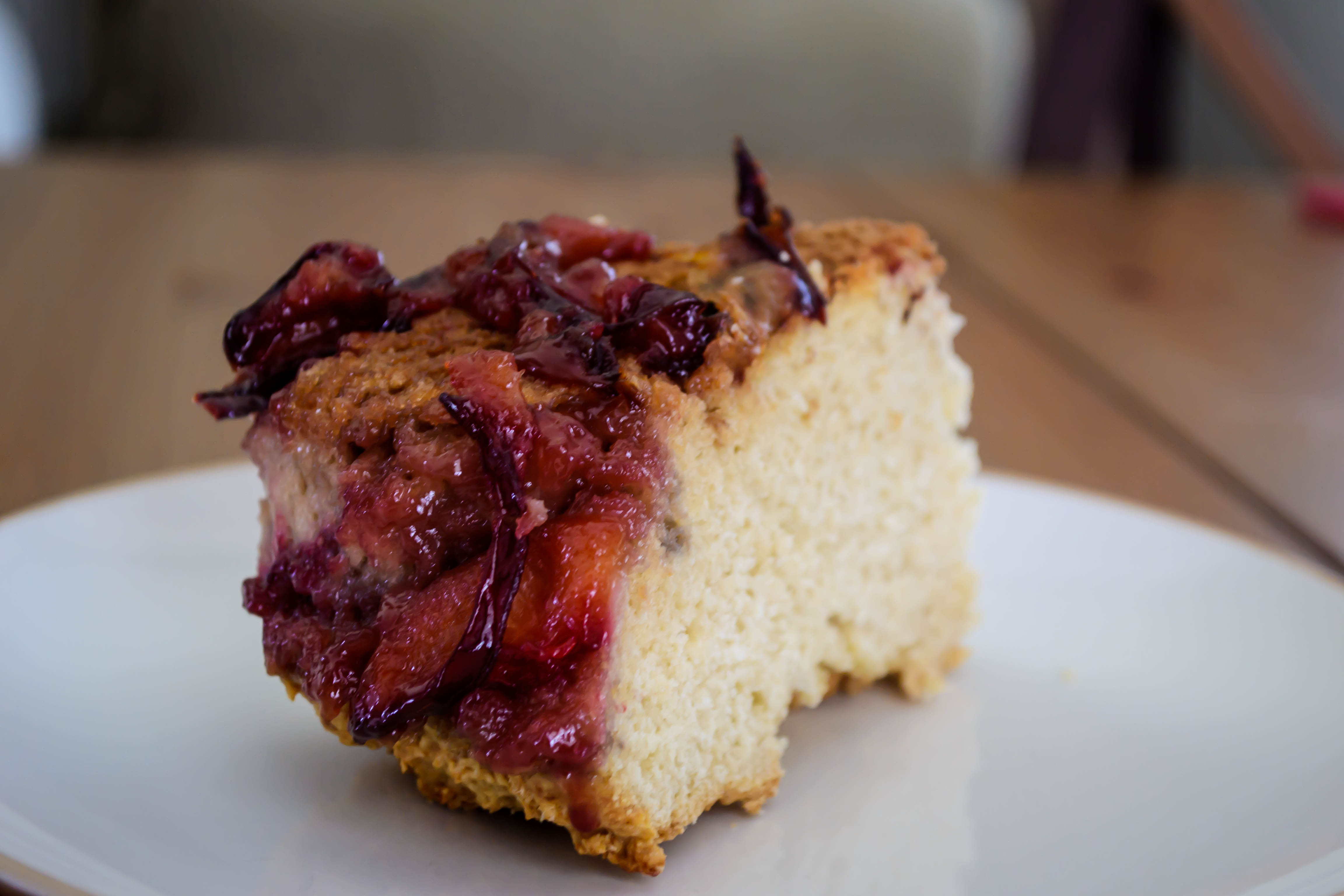
Food Blog July 2013-1931Food Blog July 2013-1932What I got was a stunner-in-progress.  I’m going to give you the recipe for exactly what I made, but I know this is not the final iteration of this dish for me.  The plums were perfect: juicy, melting into the caramel and the bottom of the bread, sticky and jammy and reminiscent of a triumphant batch of plum butter my mom made one summer with pounds and pound of plums delivered to our door in a brown paper bag straight from a neighbor’s tree.  The bread itself was good: solid Irish soda bread, a little richer and a little sweeter from the addition of brown sugar, extra butter, and an egg, perfect for the breakfasts and snacks I envisioned, and better the second day than the first.  But as I dug in, I found myself wanting the bread part to be more like cake: more egg, less flour, a hint of vanilla or nutmeg or maybe cardamom.  The plums were so good, so gloriously gooey and tooth-sticking-ly caramelized, that they deserve a proper dessert – something you can watch a scoop of ice cream melt over.
Food Blog July 2013-1938Make this.  It’s solid and scrumptious: the perfectly not-too-sweet energy boosting slice.  But consider yourself warned: this won’t be the last time you see upside down plum something here…

Food Blog July 2013-1945

Plum Upside Down Irish Soda Bread Cake
Serves 8-10
2-3 plums, thinly sliced
2 TB butter
¼ cup brown sugar
2 cups all-purpose flour
2 cups cake flour (this adds some lightness – if you don’t have cake flour, you can use all AP flour instead with slightly denser results)
¼ cup brown sugar (again)
1 ½ tsp baking soda
1 tsp salt
¼ cup melted butter
1 ½ cups buttermilk
1 egg


  • Preheat the oven to 400F.
  • In a cast iron skillet (or other oven-safe skillet), melt the 2 TB butter and toss in the first ¼ cup brown sugar.  Stir around until butter and sugar melt together into a sticky, bubbly mass.
  • Pull the skillet off the heat and add the plums in an even, single layer right on top of the caramel you’ve created.  You can place them in concentric rings if you want, for aesthetics, but so long as you have a complete single layer, you’re in good shape.  Set the skillet aside.
  • In a medium bowl, whisk the flours, the remaining ¼ cup brown sugar, the baking soda, and the salt until well blended.
  • In a small bowl or a 2-cup glass measuring cup (I like it easy), combine the melted butter, buttermilk, and egg.  Beat thoroughly with a fork.  Some of the melted butter will solidify again when the colder buttermilk hits it, but that’s okay.  It will all work out.
  • Pour the liquid mixture into your whisked dry ingredients.  You can make a well in the center first if you want, but the important thing is just to get them in there.  Combine with a fork, as you would with the liquid in biscuits, just until everything is incorporated into a rough, lumpy heap of dough.
  • Plop the dough onto the layer of plums and use a spatula or your hands to press it down a bit into an even layer that covers the fruit below.
  • Bake in a 400F oven for 30-40 minutes, until the bread is puffed, golden, and reaches an internal temperature of about 180F.
  • When the bread is done, let it cool for 5-10 minutes.  You can use this time to gather your courage, because the step that comes next is a little bit scary.
  • Place a large plate over the top of your cast iron skillet.  Being very careful, and using pot holders because that sucker is still smokin’ hot, invert the plate-skillet contraption so that the skillet is resting on the plate, bottom side up.  What we’re after is for the bread to give up its hold on the skillet and drop gently onto the plate with the plum layer on top.  This may take another 5-10 minutes.
  • Once the loaf has unstuck itself from the skillet and landed on the plate, remove the skillet and scrape out any remaining plum slices to add to the top of the cake itself.
  • Serve warm, room temperature, or cold, but I think this bread tastes better on day two, when the flavors have had time to meld and deepen a bit.

Fig and Walnut Swirl Bread

As I continue to write this blog, I think a lot about the kind of person I am, and the kind of person I seem to be becoming.  I don’t mean this necessarily in a deep, philosophical or metaphysical way (although sometimes those things collide in the expanding corner of brain-space I use to think about food), but in a “what sort of food person am I?” kind of way.

Food Blog June 2013-1596Example: probably about five years ago, I wanted to make fried rice but didn’t have one of those seasoning packets, not even when I dug all the way to the back of my pantry (I can hear you gasping in horror that I ever had one in the first place.  What can I say?  We all have guilty secrets about one thing or another), so I tossed a few things together and ended up with a sauce we really liked.  I haven’t bought one of those seasoning packets since.  From there, I added different spices, different quantities, different ratios of garlic and ginger… and suddenly the bags of frozen stir-fry vegetables we were tossing in weren’t good enough anymore.  Fresh vegetables were now a mandate.  Fried rice used to be a quick and easy dinner!  Now it’s a totally from scratch undertaking.  And that’s the kind of (food) person I am becoming.

Food Blog June 2013-1545Example two: I used to subscribe to a number of cooking magazines.  Though I let my subscriptions run out (their cost made them an unjustifiable luxury during graduate school), I continued to use the collection I’d amassed, restricting myself to cooking recipes only from the current month’s issue: no August recipes in April.  This was an attempt to keep myself seasonal and inspired.  Well, this year it stopped working.  As each new month began, I’d eagerly flip through the appropriate month’s issue looking for something to excite me and drive me into the kitchen.  I’d close each issue with a sigh and toss it to the side.  There were many, many recipes I hadn’t tried before, but there just wasn’t anything in there that felt inspiring anymore.  Well, almost.  Once in a while, I’d find a recipe that I’d consider for a moment and then turn to N. and say something like, “this might be good, if you made it into a pasta dish instead of a sandwich and added some sundried tomatoes and herbed goat cheese.”  And I’d do it, and we’d be pleased with the result.

After a few months of this sort of thing, interspersed with a probably indecent amount of complaining about how I was bored by these recipes, N. finally turned back and said, “I think you’ve leveled up.”  Translation: your imagination has moved beyond what these magazines offer and you are now on to bigger and (we hope, for the sake of our taste buds) even better dishes.  And that’s the kind of (food) person I am becoming.

Food Blog June 2013-1552Example three: since I’ve started baking bread, I’ve been trying to plan meals around a yeasty undertaking once a week or so, to keep myself in practice and find “the best” versions of each type of baked good I undertake.  This has resulted in a development I’m not sure I’m entirely comfortable with: though I have continued to buy a weekly loaf of bread (I really like, oddly enough, the plain old sourdough loaf the bakery department at my grocery store produces) when I go shopping, I haven’t bought hamburger buns, or pie dough, or pizza dough, since beginning this little dough experiment.  Am I really the kind of person who no longer considers store-bought burger buns acceptable?  I’m not sure I’m ready for that kind of commitment, but that seems to be the kind of (food) person I am becoming.

Food Blog June 2013-1543Does that make me a snob?  Maybe.  It certainly makes me one of those “oh, I just made it by hand” kind of people you sometimes feel inclined to secretly snarl at.  But no one in the direct friendly fire of these developments is complaining, so maybe it’s not entirely a bad thing.

Food Blog June 2013-1549But it does make things more complicated, and more difficult to achieve, sometimes.  Like when I decided I really wanted cinnamon-raisin bread for breakfast, but instead of picking up a pre-packaged loaf as we shopped, I was determined to make it myself.

And then I forgot to buy raisins.

What’s a girl to do, with the plan in her head and the taste already in her brain and the soft chew of homemade bread aching in her teeth?

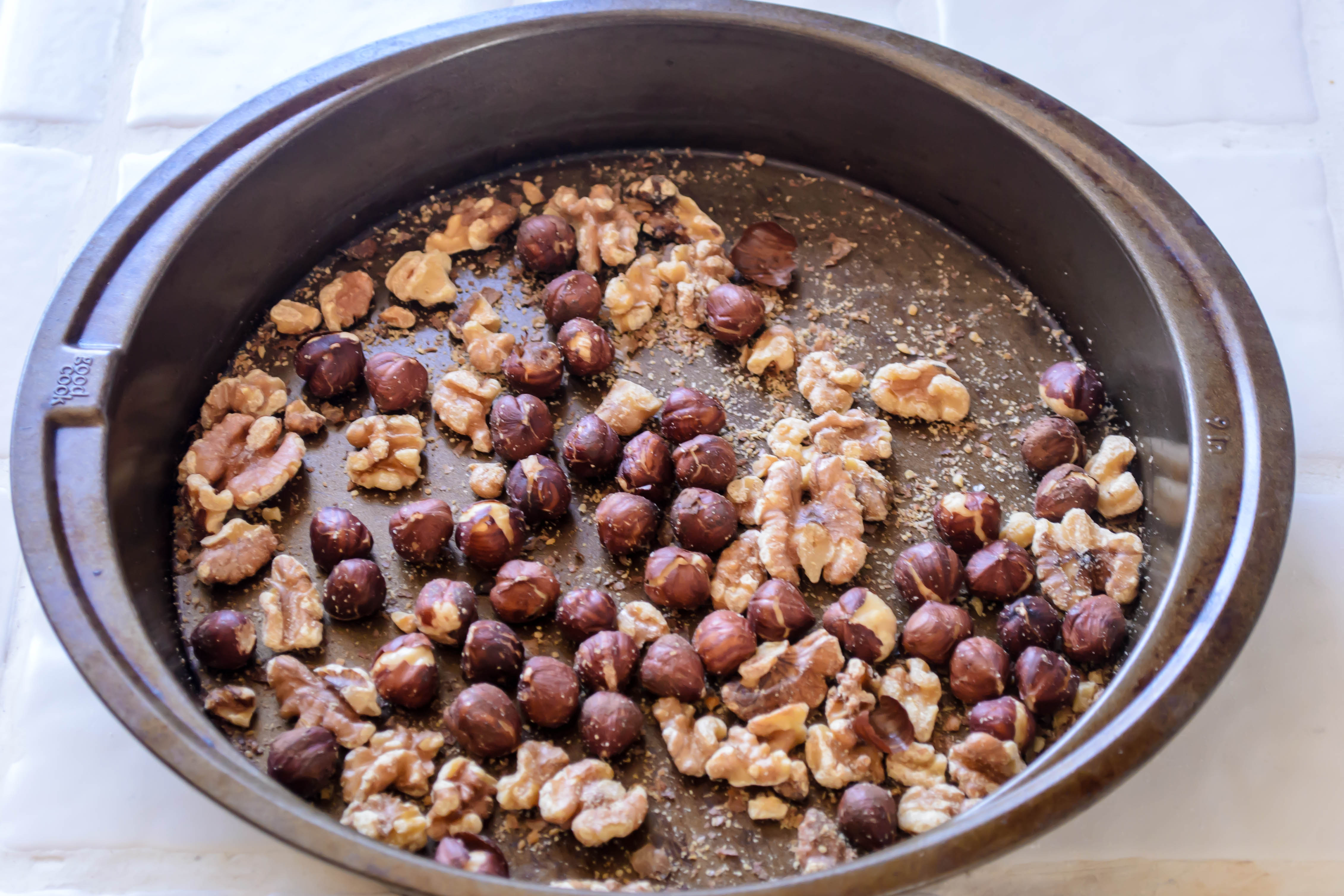
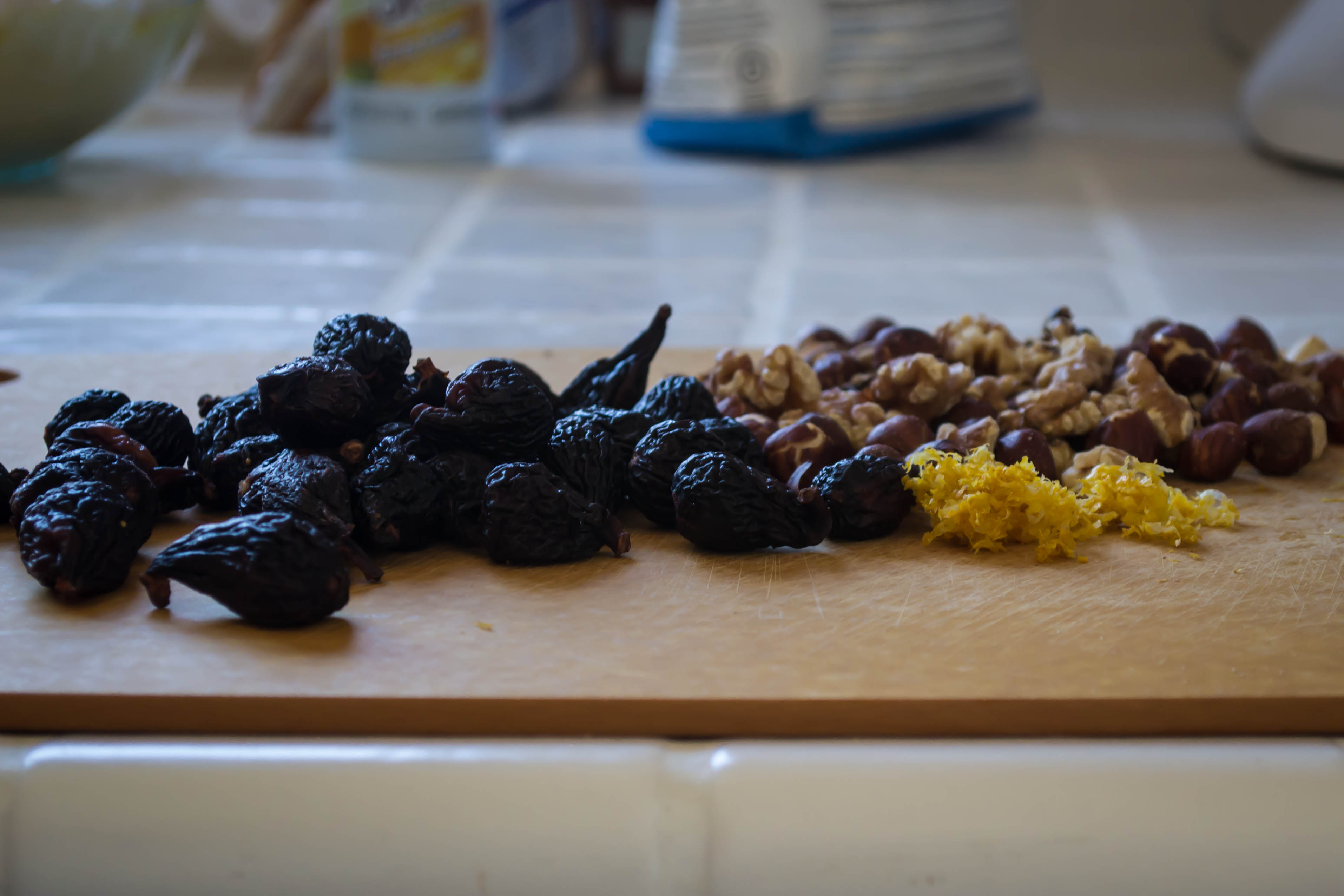
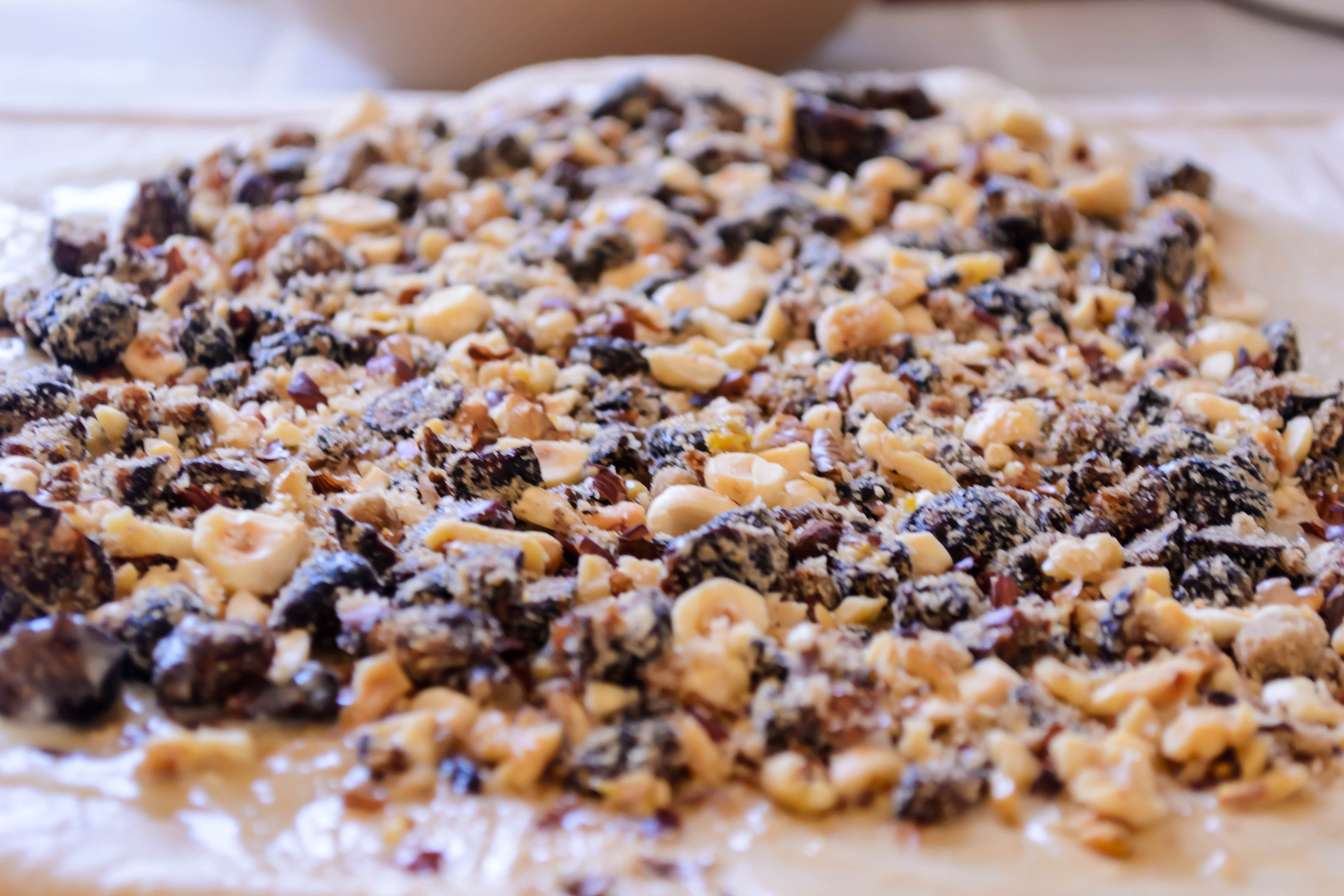
Food Blog June 2013-1555Well, she chops up some figs, and some well-toasted walnuts, and some hazelnuts for good measure, because she was almost out of walnuts.  She whirls together a soft, supple dough laced with brown sugar, cinnamon, and sour cream.  Nutmeg and lemon zest find their way in.  And she rolls up a crunchy crumbly sweet layer of fruit and nuts inside the dough, twists it to dispense the swirl, and lets it rise into a triumphant bulging loaf.

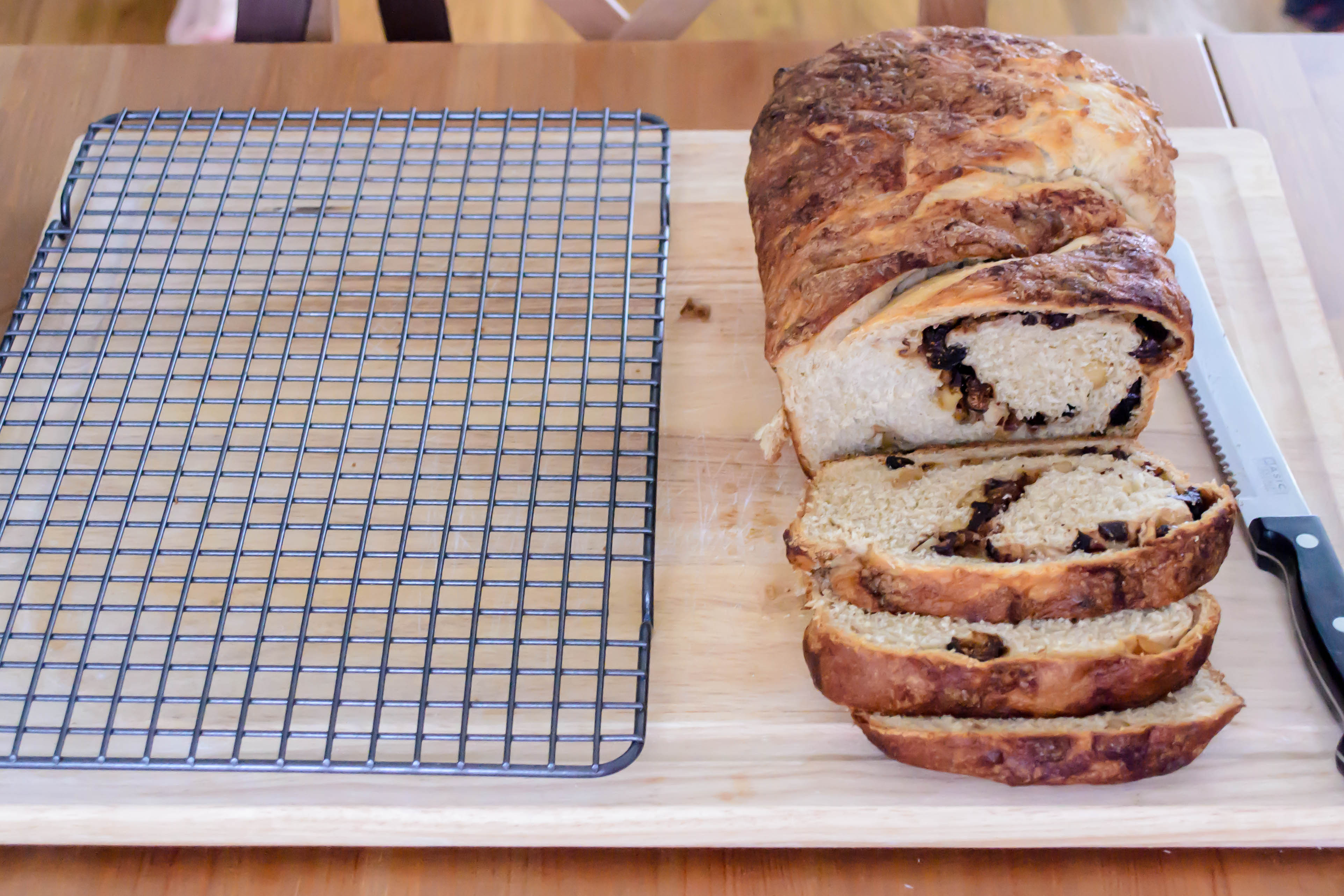
Food Blog June 2013-1564Food Blog June 2013-1569Food Blog June 2013-1570Food Blog June 2013-1573And what results, after it’s been rubbed with butter and cinnamon sugar for good measure and baked until golden and puffy, is something that drives standard cinnamon-raisin bread straight out of her mind.

Food Blog June 2013-1583The sour cream adds a beguiling richness to this loaf, making it almost unnecessary to add a slick of butter or cream cheese to a breakfast slice.  The figs and walnuts are a pleasingly earthy combination, and though I wasn’t crazy about the lemon zest I added at the spur of the moment, you might like the brightness it brings to the filling.

Food Blog June 2013-1594So.  Food snob?  Maybe.  But really, when you’re sitting down to breakfast with a loaf of homemade, fig-filled bread, your mouth is probably too full to complain.

Food Blog June 2013-1592Fig and Walnut Swirl Bread
makes 1 large loaf
For dough:
2 tsp yeast
½ cup warm milk
1 egg
1 tsp vanilla
¼ cup butter, very soft, or melted and cooled
¼ cup sour cream (go on and use the full-fat stuff; don’t deny yourself on such a little bit)
1 tsp salt
1 tsp cinnamon
¼ tsp nutmeg
2 – 2 ½ cups bread flour (see instructions below)
For filling:
½ cup toasted walnuts, chopped, or a mixture of walnuts and hazelnuts
(zest of 1 lemon – optional because I didn’t love it, but you might!)
¼ cup melted butter
¼ cup brown sugar
1 cup chopped dried figs (I like black mission figs, myself)
For topping:
1-2 TB butter, melted or very soft
2 TB brown sugar
1 tsp cinnamon


  • Stir the yeast into the warm milk and let it sit for 5 minutes or so to allow the yeast to wake up.  It will begin to get bubbly and smell warm and bready.
  • While you wait for the yeast, plonk the ¼ cup softened butter, the sour cream, the egg, and the vanilla into the bowl of a standing mixer (or into a large mixing bowl).
  • Add the yeast and milk mixture to the combined wet ingredients and mix them together briefly using the paddle attachment, just enough to combine things and break up the egg (if you are not using a stand mixer, an electric handheld or some elbow grease and a whisk will do nicely here).
  • Add the brown sugar, spices, salt, and 2 cups of flour.  Using the paddle attachment (or a sturdy wooden spoon if you aren’t a stand mixer sort of person), mix just until the flour is moistened and you have created a lumpy dough.
  • Switch to the dough hook (or turn your dough out onto a well floured board) and knead for 5-7 minutes.  The dough will be very sticky – we’ve added a lot of fat and a lot of moisture.  Don’t despair.  Add more flour a tablespoon or two at a time just until the dough cooperates (up to 2 ½ cups of flour, though depending on the relative humidity of the day, you might not need that much).  It will still be a bit sticky, but it will become more elastic and supple and much easier to work with.
  • Once your dough is smooth and stretchy and a bit springy, plop it into a greased or oiled bowl, cover it with plastic wrap, and set it aside in a warm place to rise for 90 minutes, or until doubled.
  • Meanwhile, prepare the filling: in a small bowl, combine toasted nuts, figs, brown sugar, and lemon zest, if using.  Melt the ¼ cup butter to prepare for glossing the dough.
  • Once doubled, punch down the dough to release trapped gas by gently deflating it with your fist.  Turn it out onto a floured board and roll it into a rectangle the width of the long edge of your loaf pan and about twice as long.
  • Now it’s time gloss the dough and add the filling.  Dribble the melted butter over your rectangle of dough and rub it all over the surface, right out to the edges.  I’m calling this “glossing” the dough because it leaves everything shiny and glossy and gleaming.  You might have a little extra butter; save it for the topping.
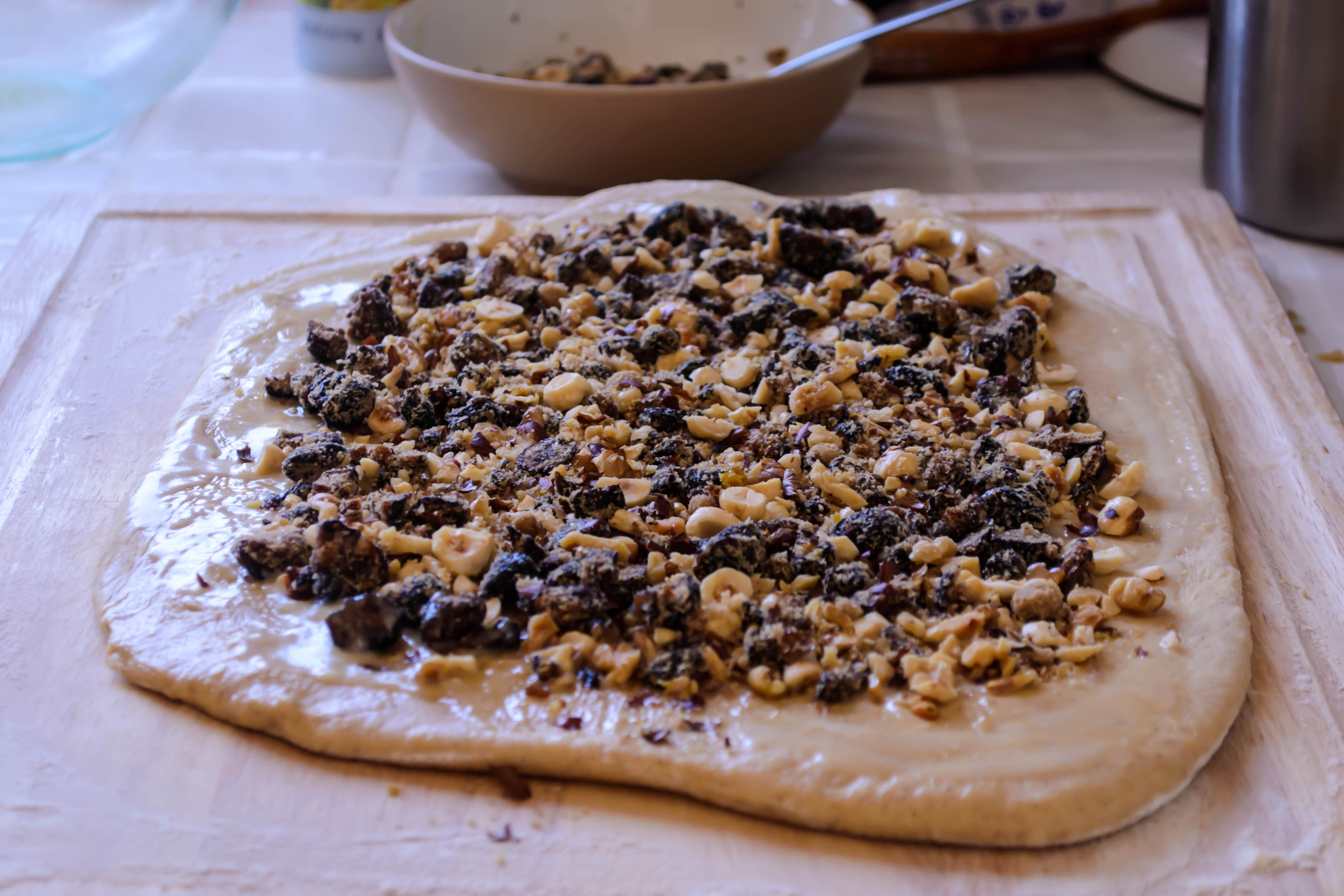
  • Sprinkle the dough with the fig and walnut mixture, leaving an inch or so border on all sides to prevent overflow.  You will likely have extra.  That is a most excellent thing because it goes so well with oatmeal or with Greek yogurt.  Instant snack.
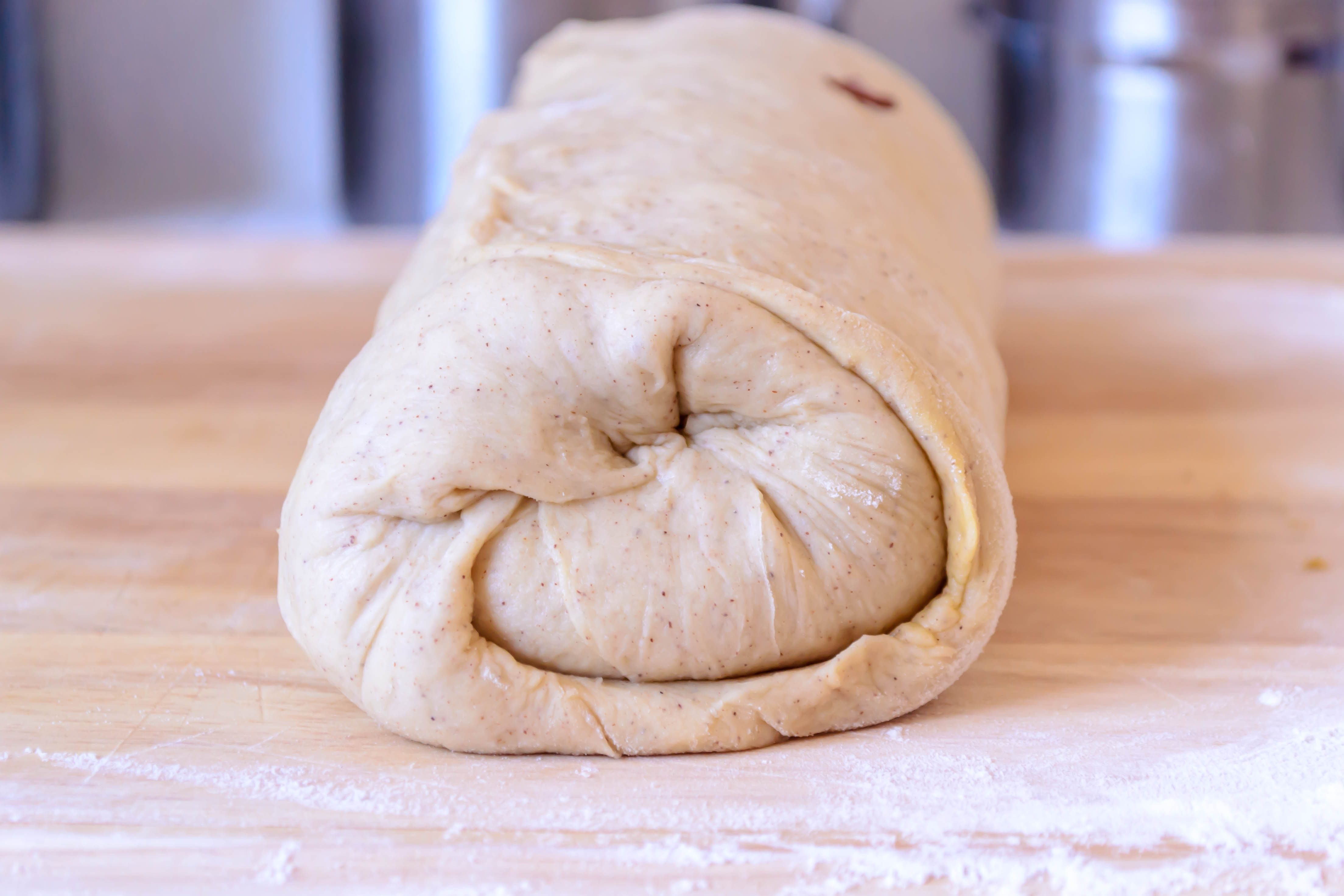
  • Starting on the shorter side of your rectangle (the side that is the same length as your loaf pan), begin to roll up the dough as you would for a jelly-roll, starting with the middle and moving out to the sides.  Continue rolling until all the filling is enclosed, and then fold up the remaining, bare edge and pinch it firmly against the roll to create a seam.
  • Twist your log of dough a few times to ensure that a pretty swirl of filling is formed as it bakes, then settle it into a buttered or greased loaf pan.
  • Rub the top of the dough with soft or melted butter, then sprinkle it all over with the brown sugar and cinnamon.  Cover it lightly with greased plastic wrap and set it aside to rise again for 30 minutes.
  • During this second rise, preheat your oven to 375F.  When the dough has had half an hour to collect itself, remove the plastic wrap and bake it for 35 minutes, or until the bottom sounds hollow when thumped or the internal temperature is between 180-200F (the thump test is the standard way of checking for doneness on bread, but it seems sort of impossible when you are baking a big loaf in a loaf pan.  I prefer to take its temperature).
  • When it tests done, using whatever is your favorite method, remove it from the oven and let it cool for at least twenty minutes in the pan.  This will allow the structure to firm up so it slices nicely, rather than collapsing and squashing into itself when you so much as approach it with a serrated knife.
  • Slice and consume.  The filling can be a bit crumbly, so we ate it with forks like a slice of yeasted coffeecake.  Enjoy!

Frozen Sangria

Food Blog July 2013-1673Chances are, where you are, or were, or will be soon, it’s hot.  Or it was.  Or it’s going to be.  But past, present, future, when it’s hot out, and you still want dessert, you are probably going to have certain demands: it must be easy.  Mimimal measuring.  Simple directions. No fine chopping or dicing or mincing.  It must require short cooking time, if any.  No long baking times (sorry, bread pudding), no stewing or roasting or brûléeing.  It must be refreshing and delicious and maybe even a bit surprising, to pull you out of your mid-summer funk.  Not that I’m having one of those…

Food Blog July 2013-1628

Frozen sangria.  Does that make your sweat-beaded forehead wrinkle with interest?  It makes mine feel a little curious, a little intrigued, a little go-on-I’m-listening…

Sometimes feet get in the way of your photoshoots...

(Sometimes feet get in the way of photoshoots…)

Frozen sangria requires relatively little of you.  It wants flavor – some sugar, some spice, some whatever’s-your-favorite red wine.  It wants just a little simmering to infuse the liquid with cinnamon sticks, with cloves, with orange peel.  We’re playing a little game with ourselves here: imparting winter flavors into an icy treat.  Maybe the reminders of that holiday season half a year away will help us cool down just as much as the temperature of our dessert.

Food Blog July 2013-1626Finally, frozen sangria wants time.  Because we’re dealing with alcohol, freezing is going to take longer than if we were working with juice or water or even ice cream.  It will freeze – most wines are between 9 and 13% alcohol, and this relatively low percentage will still solidify, but it will take a little longer.  For satisfactory results, you’ll want to start this little project the day before.  I know; planning ahead is not always on your mind when you are struck with the yen for a frozen treat.  But this icy, deeply flavored bomb of spice, tipsy with wine, sparkling with citrus from freshly squeezed orange juice and freckled with mashed strawberries, is worth the extra wait.

Food Blog July 2013-1632Here, because I care about you, and I want you to know your options before you have to brave the melting temperatures to find your way back to the kitchen, I’m giving you two preparations (well, three, if you count the plain ol’ sangria itself).

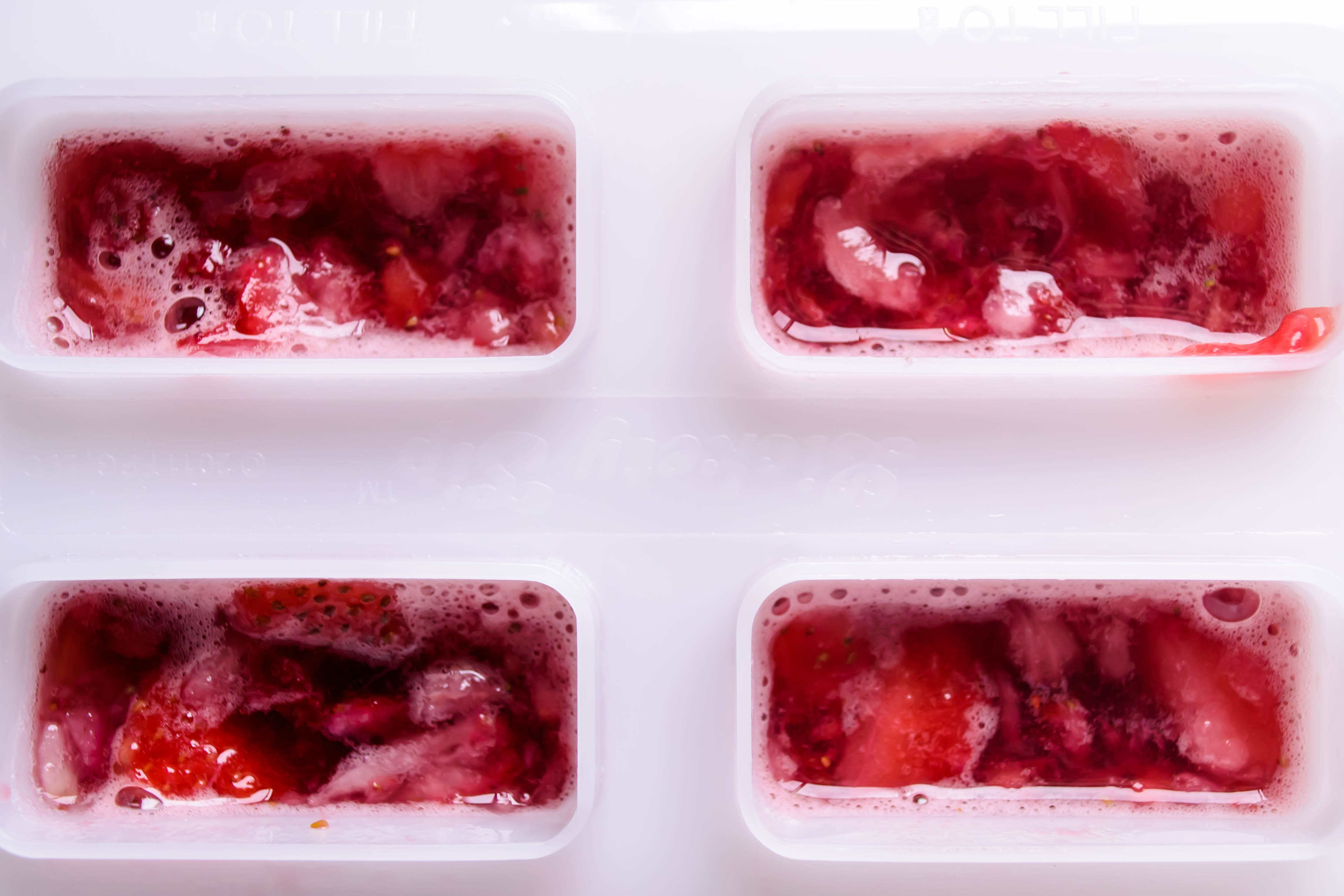
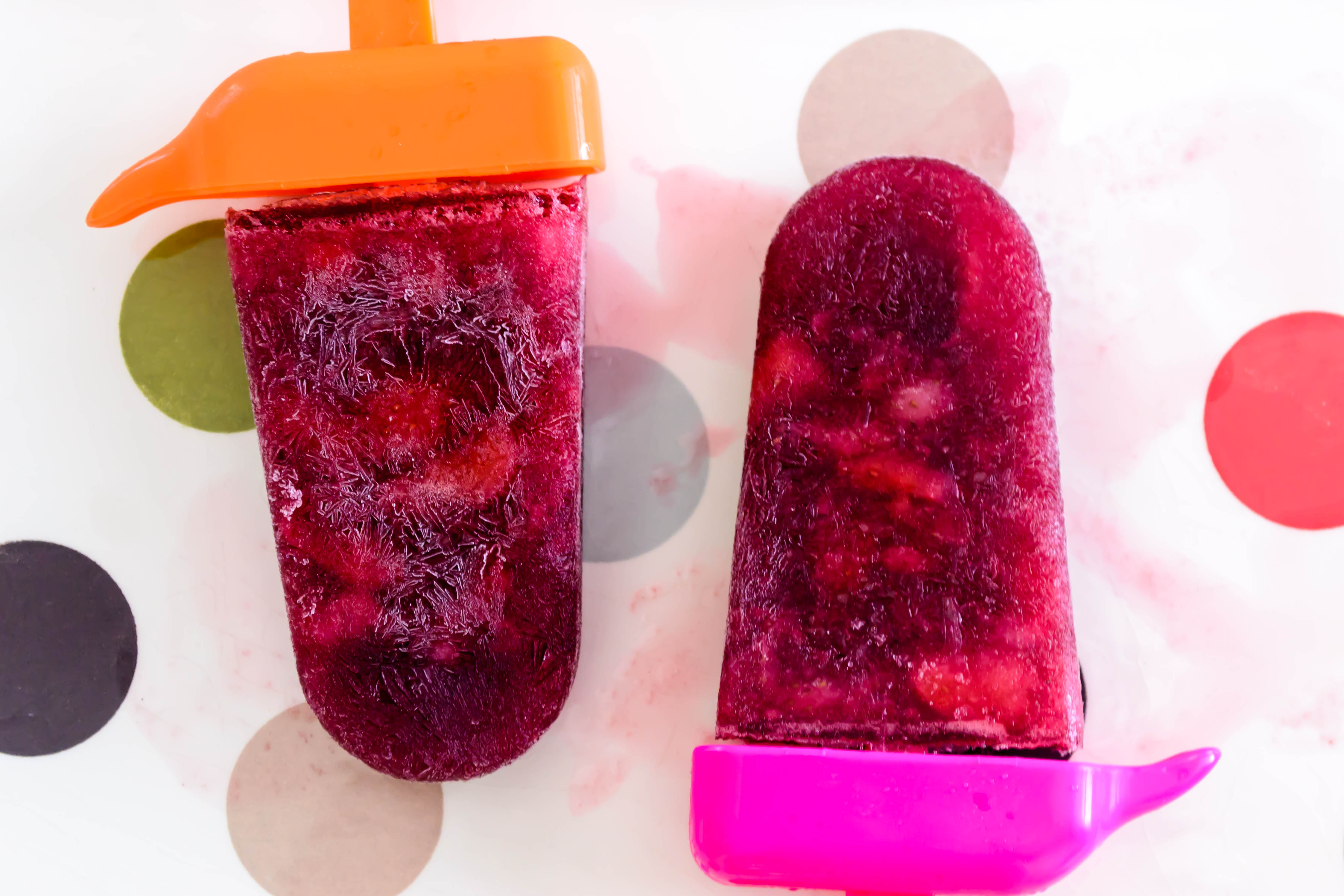
Food Blog July 2013-1640First, let’s talk casual, fun, surprising: the popsicle.  Red wine, orange juice, tiny, tooth-freezing pockets of strawberry, frozen together in a shape that will pull you back to childhood even while the ingredients remain oh so adult.  Once they are poured and put up, you have a secret cache of popsicles ready for your next girls’ night, or barbeque, or just a late afternoon so oppressing that standing barefoot on the kitchen’s tile floor just doesn’t cut it anymore.

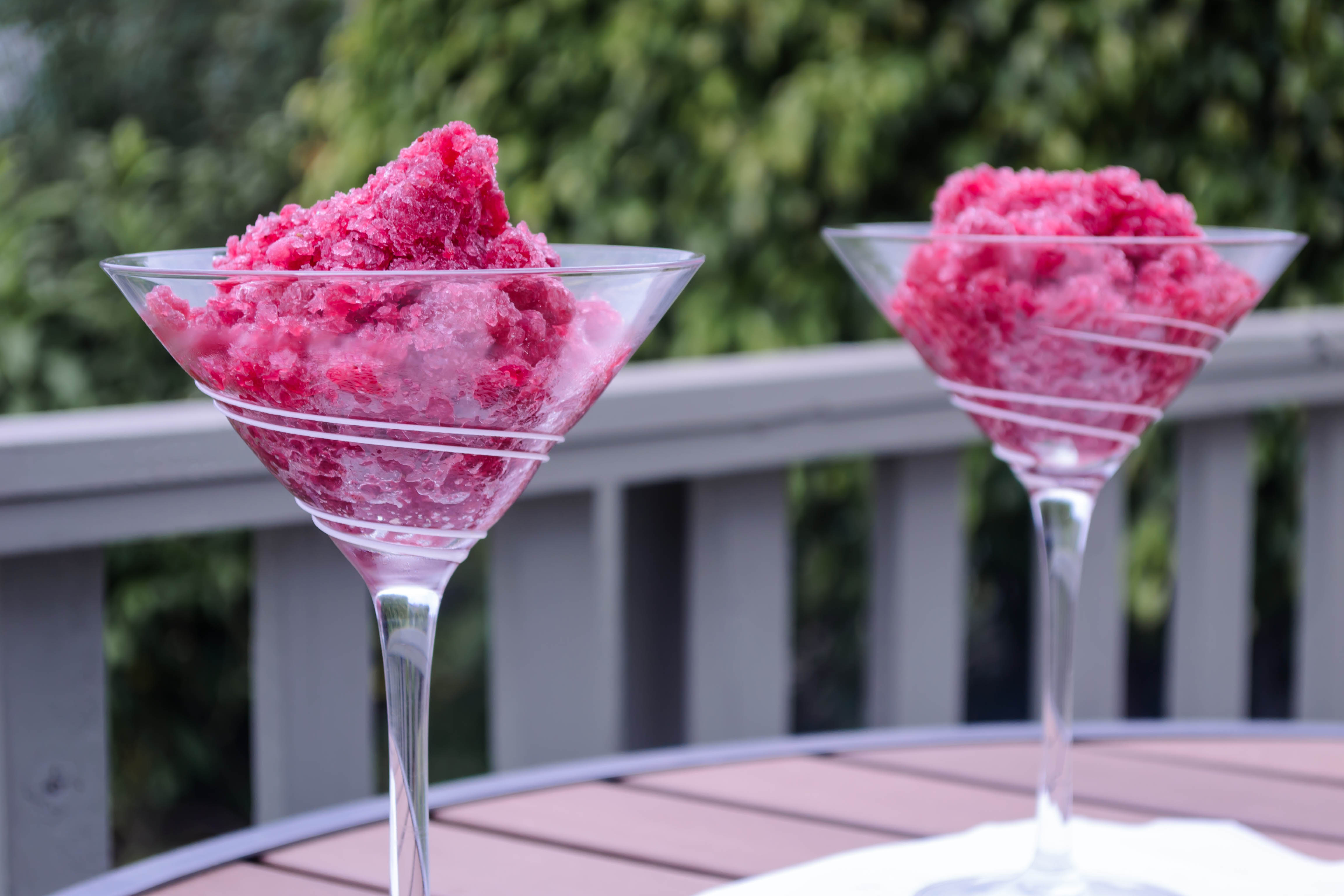
Food Blog July 2013-1655Food Blog July 2013-1648Our second preparation is a bit more elegant, a bit more dinner party, but still almost as easy: the granita.  Granitas are Italian desserts related to sorbets, except that they have a crystalline texture more like snow or shave ice.  Here, instead of spooning the sangria mixture into popsicle molds, it gets poured into a wide, shallow vessel, like a 9×13 baking dish, and again, moved to the freezer.  After a few hours, though, you pull it out and scrape through it with a fork.  This prevents the liquid from freezing into a solid mass.  After this initial freezing period, return once every few hours and scrape again, agitating the mixture into separated crystals (and strawberry chunks).  Several of these scraping sessions in, your liquid will be frozen and clustered in deep red flurries: a mound of feathery ice ready to be scooped and crunched after dinner or, if you prefer, perhaps even before.  That’s what your favorite patio table is for, right?

Note: these are great options for a stay-home dessert, but if you are traveling or feeding them to guests who will be traveling, be cautious about the serving size: unlike warm desserts, where you simmer off most of the alcohol, this is basically a frozen bottle of wine with some flavorings added in – the majority of the alcohol content is still there.

Food Blog July 2013-1673Frozen Sangria
Makes at least 12-16 servings, depending on the size of your popsicle molds or serving vessels
1 bottle (750ml) red wine of your choice
4 big strips of orange peel
3 cloves
2 sticks cinnamon
½ cup sugar
½ cup (4 oz.) freshly squeezed orange juice (for me this took 2 large oranges)
12 oz. strawberries, fresh or frozen and defrosted, chopped into small pieces or mashed with a potato masher


  • The day before you want to serve your frozen sangria, place cloves, cinnamon sticks, orange peel, sugar, and 1 cup of wine in a small saucepan and bring to a simmer over medium-low heat.  Keep at the barest of simmers until the liquid is reduced by half – you will end up with ½ cup of deeply flavored, spicy-sweet wine.  This will probably take 15-20 minutes, depending on how hot your burner is and the size of your pan.
  • Remove from heat, strain out spices, and allow the liquid to cool.
  • In a bowl, pitcher, or 9×13 inch glass baking dish (if you are making the granita), combine the rest of the bottle of wine, the reduced, spiced wine, and the orange juice.
  • Add the mashed or chopped strawberries and stir to combine.
  • At this point, you have three options.  If you want to serve this as a simple, pourable sangria, simply refrigerate until it is well chilled, then top up with sparkling water and serve in fun glasses.
  • If you want to make popsicles, spoon the liquid into popsicle molds until almost full (we want to account for expansion), being sure to get plenty of strawberry bits in each one.  Add sticks or holders and freeze overnight or until solid.  To unmold, dip each compartment into warm water for a few seconds, then carefully and gently pull the popsicle out.  Don’t rush them or they may break.  Just give them a few seconds to separate from the plastic.
  • If you are making granita, pour your liquid into a 9×13 inch glass baking dish and put it into the freezer for 3-4 hours.  If you are me, this step is complicated by trying to create room in my freezer for a 9×13 inch glass baking dish.  Just pack it in.  It will work out.  Or, as with last month’s spice rub post, use this as a mandate opportunity for reorganization.
  • After 3-4 hours things should be resolutely slushy.  Remove the whole dish from the freezer and drag the tines of a fork through the mixture, breaking up the solid chunks and redistributing them.  Return it to the freezer.  Repeat this procedure once every few hours until you have a feathery, crystalline heap of frozen wine.  It should look similar in texture to shave ice or a snow cone.  At this point, it is ready to serve or keep frozen for up to a week, with occasional re-fluffing.
  • I like to serve mine in big mounds in a fancy martini glass, but wine glasses, cups, bowls, or little jam jars will work too.  And if you want to recreate the snow cone experience, rolled cones of thick paper would likely do just fine.