Apple Onion Breakfast Meatballs

I have to admit, this meatball is a bit of a cheat. I mean, when it comes right down to it, this is a breakfast sausage patty, spiked with small chunks of apple and onion sautéed in butter, slivers of sage, and a generous glug or two of maple syrup. And plenty of black pepper, of course. I know, what’s to complain about there? But essentially, it’s just that, rolled into a meatball form instead of flattened into a patty. I’ve made this a number of times already as a sausage patty, and the simple change feels a bit dishonest – a bit like a masquerade. But the thing is, it allows me to tell you about an event for which I feel a great deal of fondness. So consider this a cheat with good intentions. An excuse, let’s say, to tell you about a time of warmth which, as the winter rolls on, might be something you need.

(Additionally, as I’ve recently noticed, sorry about the lousy photo quality on the in-post photos. I’m thinking this is largely due to artificial lighting, which makes maybe one good thing about that whole Daylight Saving Time curse that has fallen upon us, but also might be a WordPress thing, because if you click on the image for a larger version, it looks clearer and higher quality – more like the original shot.)
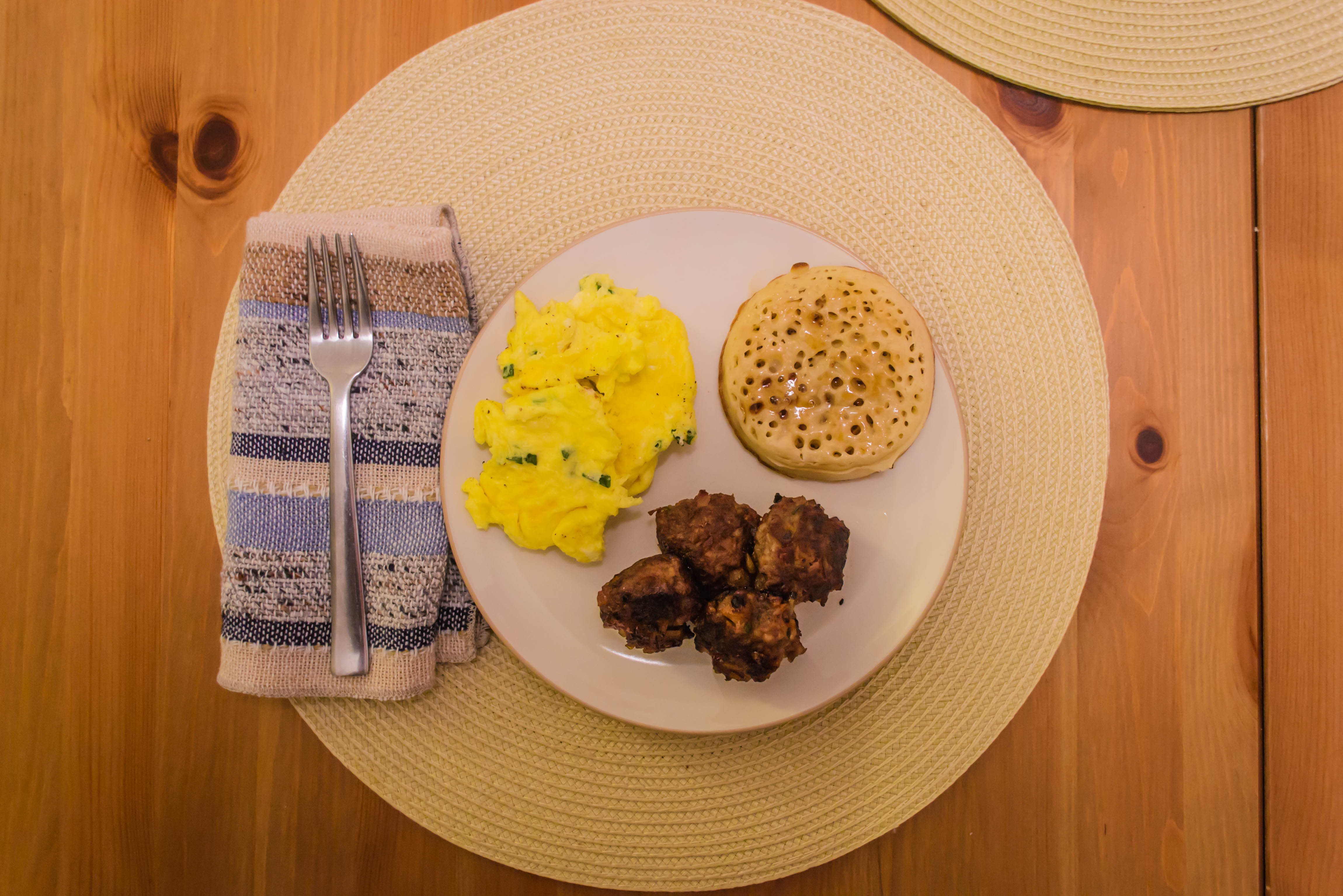
Food Blog March 2015-0431The apple and onion in these meatballs (or patties) play very well with the sage and the fatty pork, and the maple syrup results in stellar caramelization, while giving a nod to the “breakfast” idea. This combination was so successful at home in some trial runs and at a summer gathering last July that I broke it out again this January. One of my dearest family friends, a young woman I’ve known so long it feels strange to acknowledge that she is, in fact, a young woman rather than a kid, got married in November, in Chile. She and her now-husband’s Southern Hemisphere nuptials meant that only a small handful of her American friends and family were able to attend. In January, then, while many of us were still off work for the holiday, they had a “stateside celebration” in northern California, which N. and I thankfully were able to attend.
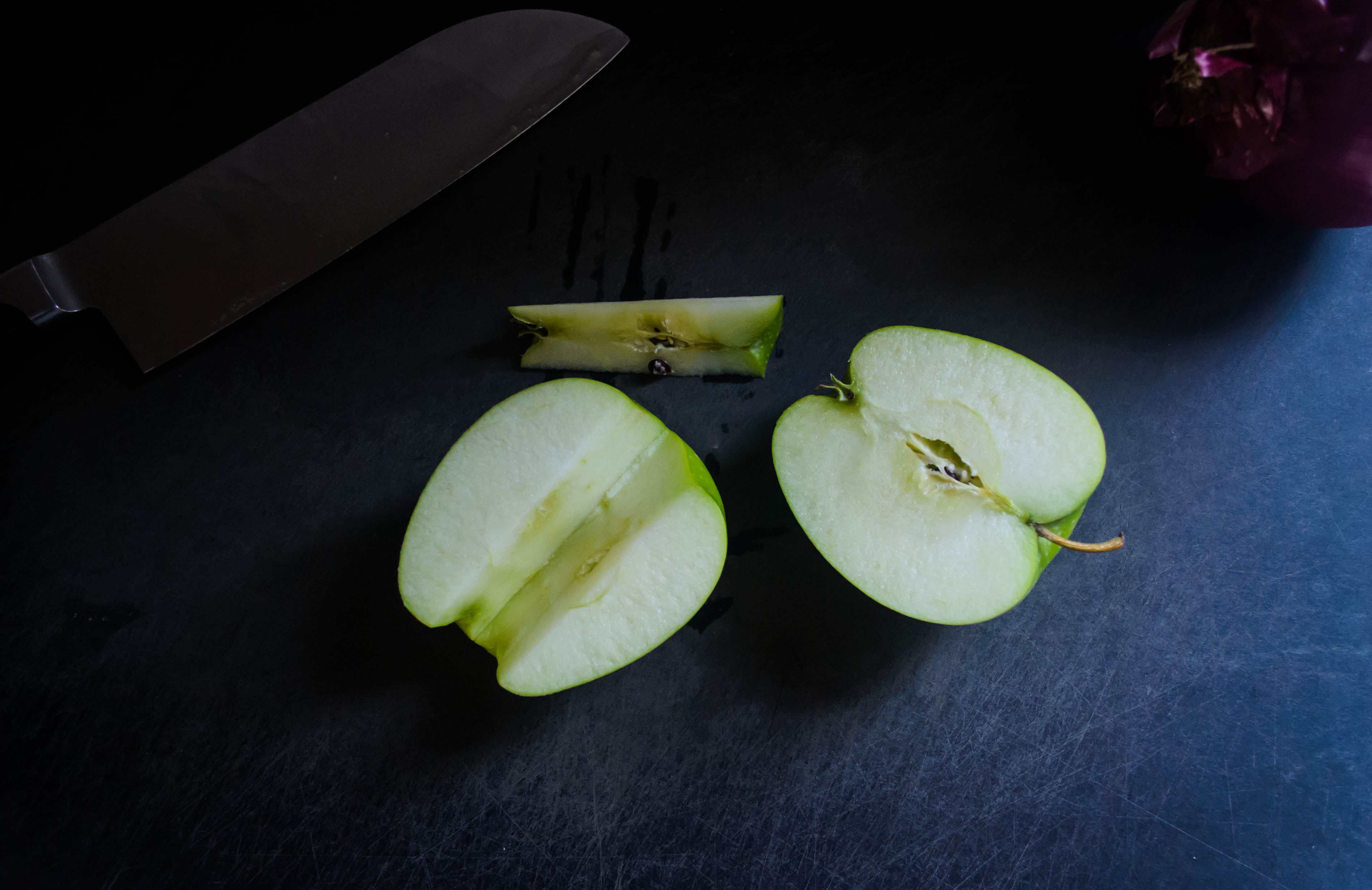
Food Blog March 2015-0420The bride’s mother, whose capacity for party planning is unparalleled, rented a house for the weekend for the “kids” to stay in, and as the oldest members of that no-longer-accurate category, N. and I somehow got in under the age wire and hung out with the “young people” at the party house. This allowed for opportunities like feeding (fat, greedy, possibly possessed) miniature ponies who happen to live on the grounds, wandering an impressive, decked-out-for-Christmas back garden, exclaiming over the proliferation of strange decor choices in the house (lots of religious imagery, a fully decorated Christmas tree in every room of the house, a large rocking horse at the foot of our bed, Victorian and Rococo linens and bathroom paintings, modern art pieces contributed by grateful former guests, a fur stole my sister briefly considered wearing to the party), and riding to and from the event itself in an aesthetically impressive but poorly stocked limousine, my first limo ride ever. (Really, this house was amazing. A Secret Garden/Windsor Mystery House of a place, and we were so lucky to get to experience it).

Food Blog March 2015-0423To offer my thanks, of course I turned to food, offering to cook breakfast for all of the “kids” on the morning of the marriage blessing ceremony. This offer was met with enthusiastic approval, and so my sister and I got up early(ish) and set about finding the least battered tools in the kitchen (it contained an astounding variety of dishes and utensils, but as you might expect of a rental property, many were not well maintained) to make breakfast-for-eight. Among the offerings were these same sausage patties, which were met with considerable acclaim. There were no leftovers.

Food Blog March 2015-0425I realize this is not much about meatballs, but for me, food is so tied to the people I’m feeding and the events surrounding its production that they become part of the taste. These people we were celebrating are so dear to me, and became so with such haste, that I can’t remember a time I didn’t think of them as an extension of my family. She was my bridesmaid when I married, and now at the celebration of her own marriage, it felt so tied to my own declarations of love and familial belonging. As I said when I offered my toast at their reception – while remarking on the tendency my eyes suddenly had at trying, on their own, to alleviate California’s massive drought – there has never been a time when I was not so, so happy to see them. This has been true from the very first time we met (it was raining then, too, relieving this poor parched state once again, as the now-bride’s father welcomed us in with the shout “We’re having a rain party!”), till that evening, surrounded by others they love, who love them.

Food Blog March 2015-0430This is all a bit tumbling and confessional and warm, but I know you’re really here for the meatballs, so let’s get to it. All I’ve done is taken the same ingredients from my sausage patties and rolled them into a meatball, rather than flattening them for the pan. But really, they are perfect either way. They are one of those offerings that, even if they get a little dark on the bottoms from the sugars in the maple syrup (and they may, so don’t despair), they are gobbled up willingly. And even if they stay in the pan a bit too long because you are taking the time to catch up with family who re friends who are family, they stay moist thanks to the apple and onion threaded through them. They are a standby indulgence. I hope they become that for you as well.

Serving suggestions: as you can see, we had ours alongside a fluffy pile of scrambled eggs and some well toasted crumpets. They would also be perfect stuffed inside a pillowy buttermilk biscuit as a fancy little breakfast sandwich bite, and I certainly wouldn’t say no to a pyramid of them gracing a belgian waffle or two. In short, pick your breakfast favorite, and add these.


Apple Onion Breakfast Meatballs
Serves 2-3 (but is easily doubled or even tripled)
2 tablespoons butter
⅔ cup diced green apple (about half a medium apple)
⅔ cup diced red onion (about half a small onion)
⅛ teaspoon each salt and pepper
1-2 teaspoons sage (sage is strong!)
8 ounces pork sausage
2 tablespoons maple syrup


  • Heat 2 tablespoons butter over medium heat. When melted, add apples and onions, season with ⅛ teaspoon each salt and pepper, and cook over medium or medium-low heat until tender: 5-8 minutes.
  • In the last 30 seconds or so of cooking, add the sage and stir to integrate. Then remove from heat and let cool until room temperature or barely warm.
  • In a medium bowl, combine the sausage, maple syrup, and cooled apple and onion mixture. This is already seasoned, thanks to the salty sausage, the sweet syrup, and the salt and pepper added to the cooked apples and onions. If you like a heavy hand with the seasonings, though, feel free to add an additional ⅛ teaspoon each of salt and pepper.
  • Using moistened fingertips, mix well until apple and onion pieces are evenly distributed. Moisten the palms of your hands as well, then gently roll mixture into 10-12 equal sized balls – it will be soft.
  • Heat the same skillet you used for the apple and onion over medium heat and gently add the meatballs evenly spaced, not touching each other. Cook over medium heat until browned on all sides – about 3 minutes per side – then cover the skillet with a lid and turn the heat down to medium-low. Let sizzle until meatballs are cooked all the way through – another 8-10 minutes. If the bottoms of the meatballs begin to look a bit on the dark side, add a few tablespoons of water to the pan.
  • Serve hot or warm with breakfast foods of your fancy.
Roasted Cauliflower and Chick Pea Tacos

Food Blog February 2015-0342I’m sure it won’t surprise you to learn this, but I am one of those people who makes a meal plan. Every week, before we head to the grocery store, I write out a shopping list. I like to know what we’ll be eating most nights ahead of time, to be sure the pantry is adequately stocked, but also to prevent a lot of impulse buys or take-out emergencies (also I just love making lists. You probably aren’t surprised by that either). When I put the meal plan together, I usually ask N. for some input. Sometimes it’s because I need a little inspiration, sometimes it’s because I want to make sure he’s getting a meal or two he’s excited about, and sometimes, I’ll admit, it’s just because I want him to feel like he has some say about what happens in our kitchen.

Food Blog February 2015-0322This considerate move doesn’t always play out as helpfully as expected, however. Most weeks, without even looking at the list or at the meals I’ve proposed, he immediately says “tacos.” Nothing else gets this kind of instantaneous, definitive response. Tacos. Sometimes, when he says this, we’ve just had tacos. Sometimes, when I query him further, he doesn’t seem very enthusiastic about the suggestion he’s just made. Sometimes I’m just not in the mood for tacos (I mean, we JUST had them) and so I nod and smile and write down something else instead.

Food Blog February 2015-0324Finally, though, I got curious, and yesterday I asked him why he suggests tacos so frequently. Does he really like them that much? What is it about a taco that he finds so compelling? Turns out it’s not the food, exactly, but the name. Be warned, people. This is what happens when you fall for a words person. He really likes the sound of the word “taco.”  It is, he claims, an interesting sounding word. You can put emphasis on each of the syllables in turn, you can change the pronunciation of the vowel, you can draw out the length of each part of the word, all with different sounds and results. He then proceeded to say “taco” four or five times. It is, I must admit, a fun word to say. I’ll wait while you try it a few times…

Food Blog February 2015-0328As much fun as the word is, N. noted that he likes the dish as well, and it got me thinking about the constituent parts – what makes a taco a taco? As I see it, tacos break down into three major components: the shell, the “meat,” and the sauce. Of course you can – and often should – add cheese and lettuce and other garnishes, but I think you have to have at least these three parts. Once you have these critical components, you can take your tacos in a variety of directions.

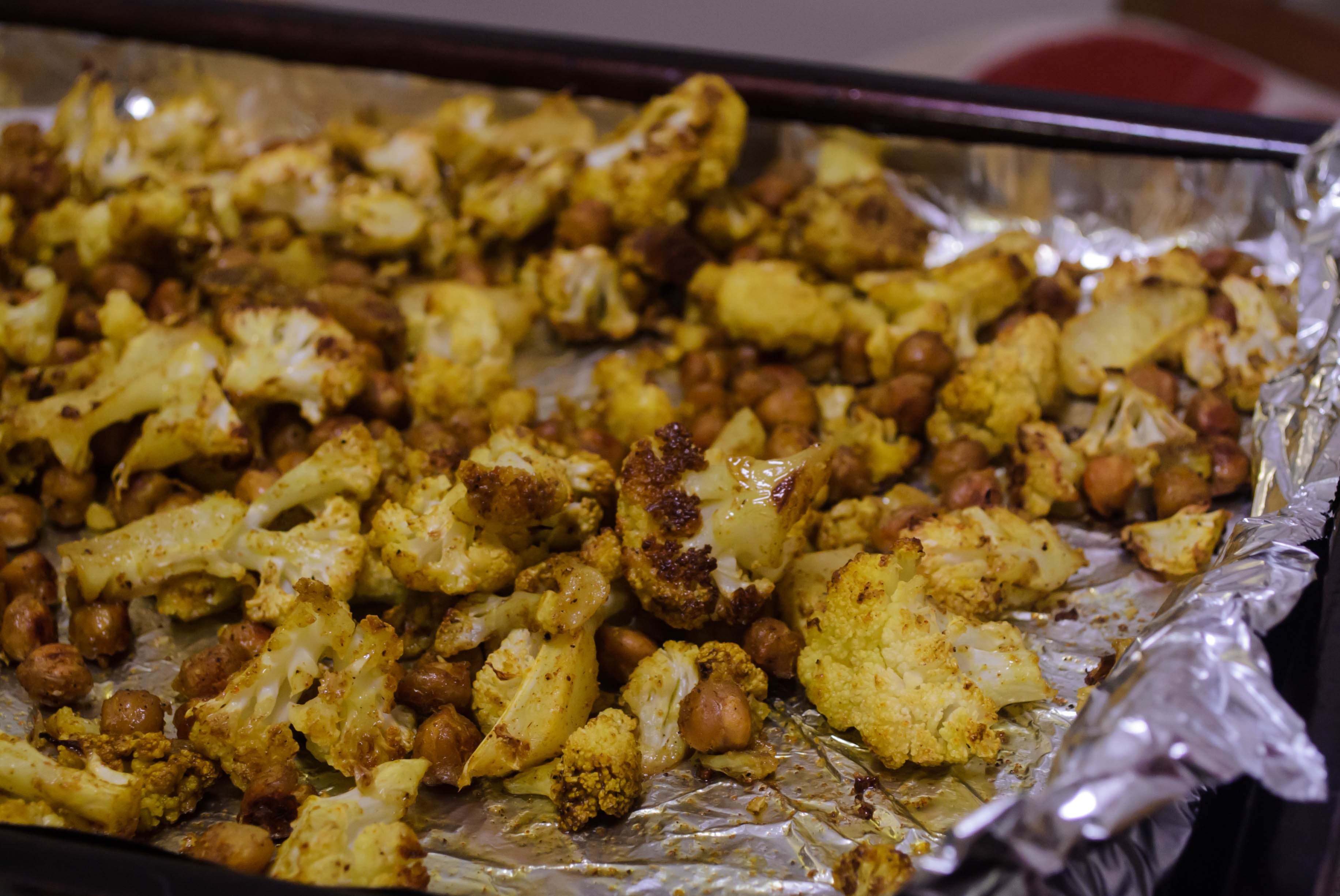
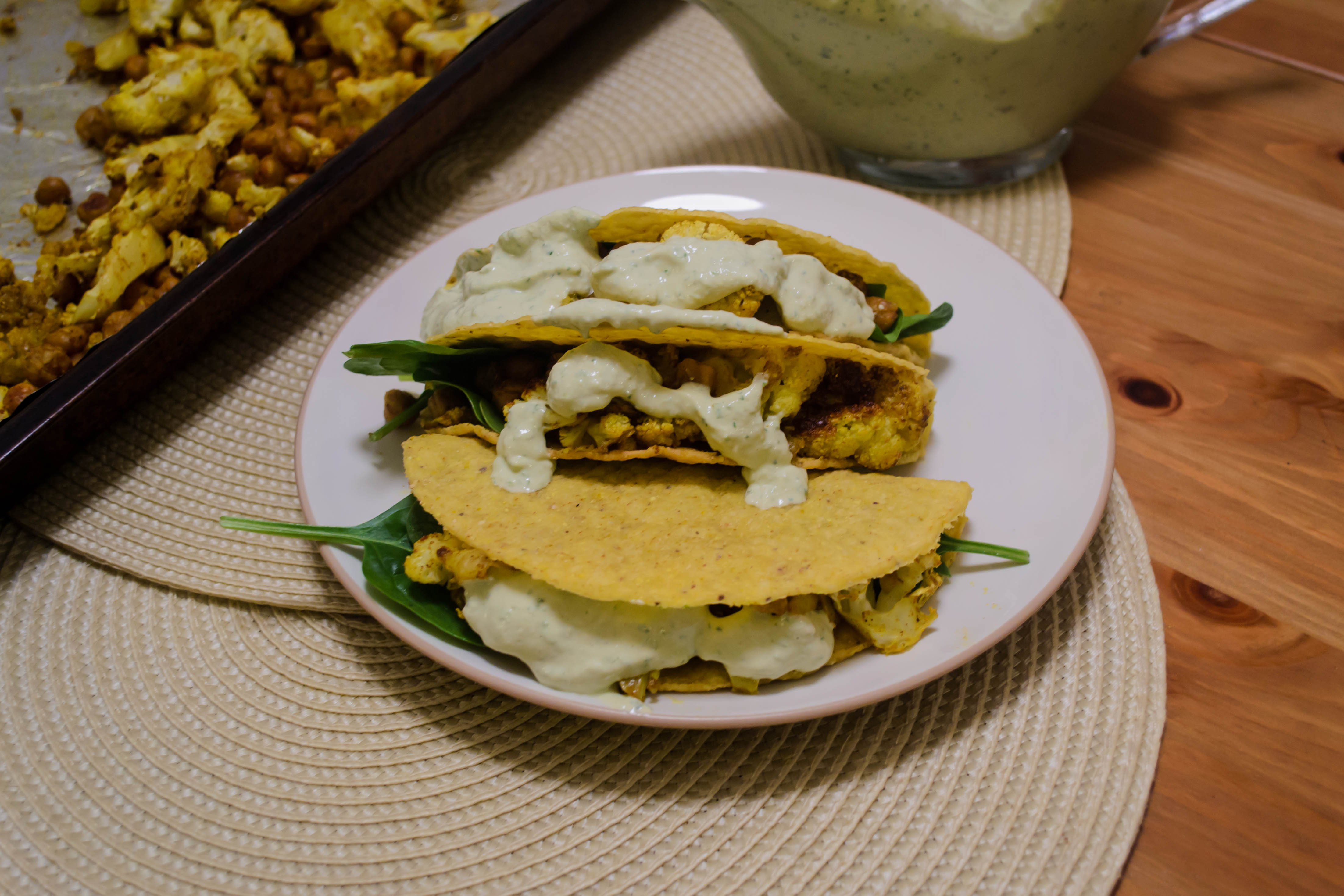
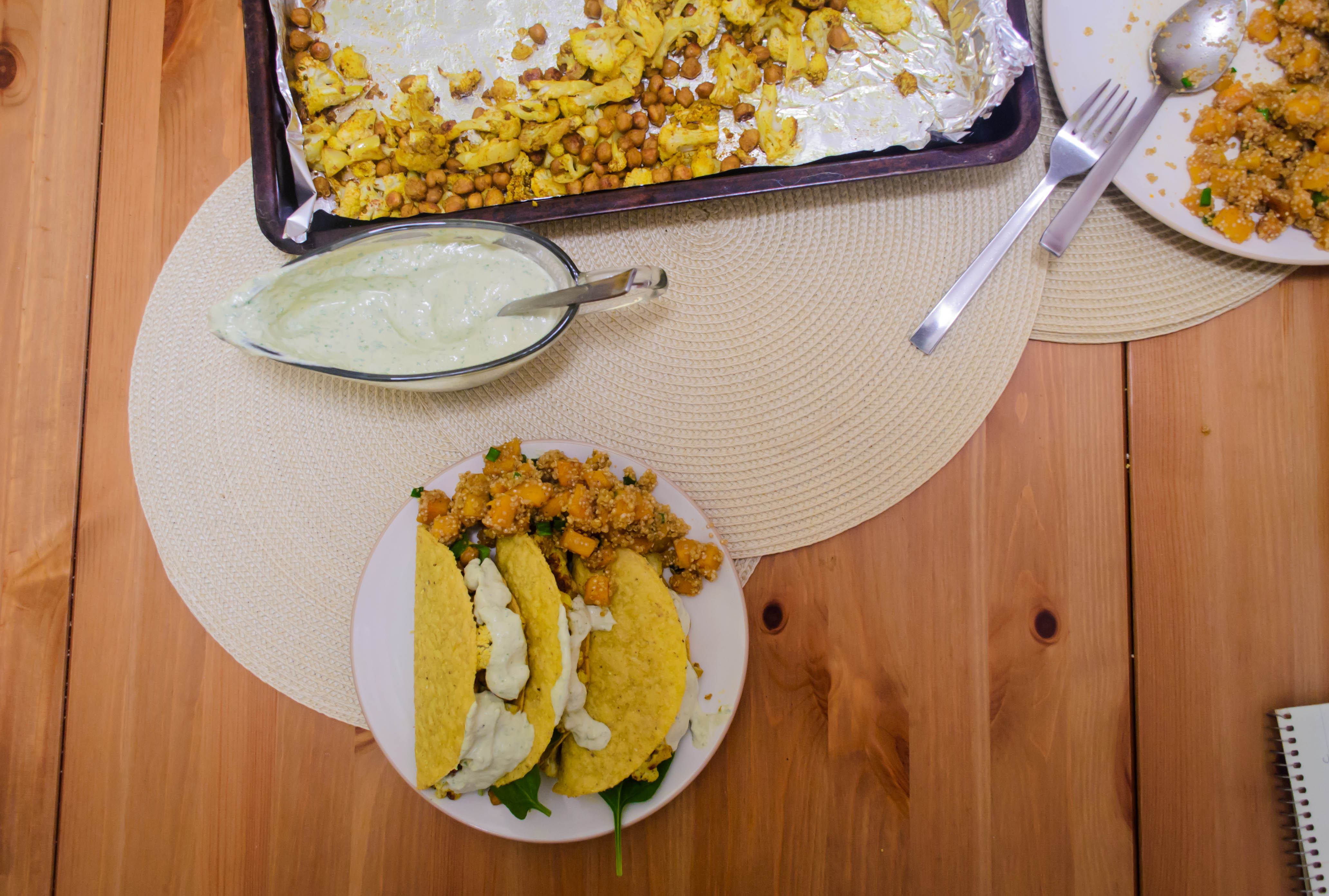
Food Blog February 2015-0335Perhaps because N. is so fond of them – whether it’s the word or the dish itself – I quickly tire of the standard ground-meat-with-cheese-and-things compilation, and look for other options. We’ve had grilled zucchini tacos with crumbled queso fresco and lime, dozens of incarnations of fish tacos (my favorite always involves a corn relish and plenty of smashed avocado), tofu tacos overloaded with pepperjack cheese, and I’m working on a potato taco inspired by an amazing version at – of all places – the Getty Museum cafeteria. This time around, though, I wanted something a little more outside the box (or should I say outside the shell? No, you’re right, I probably shouldn’t. Let’s pretend it didn’t happen). I’m not sure where the combination came from (if I’m honest, probably Pinterest), but I decided on a tumble of roasted cauliflower and chick peas, liberally spiced with a ras al hanout-esque blend and drizzled with a sauce of tahini and yogurt, tangy with lemon and flecked with parsley.

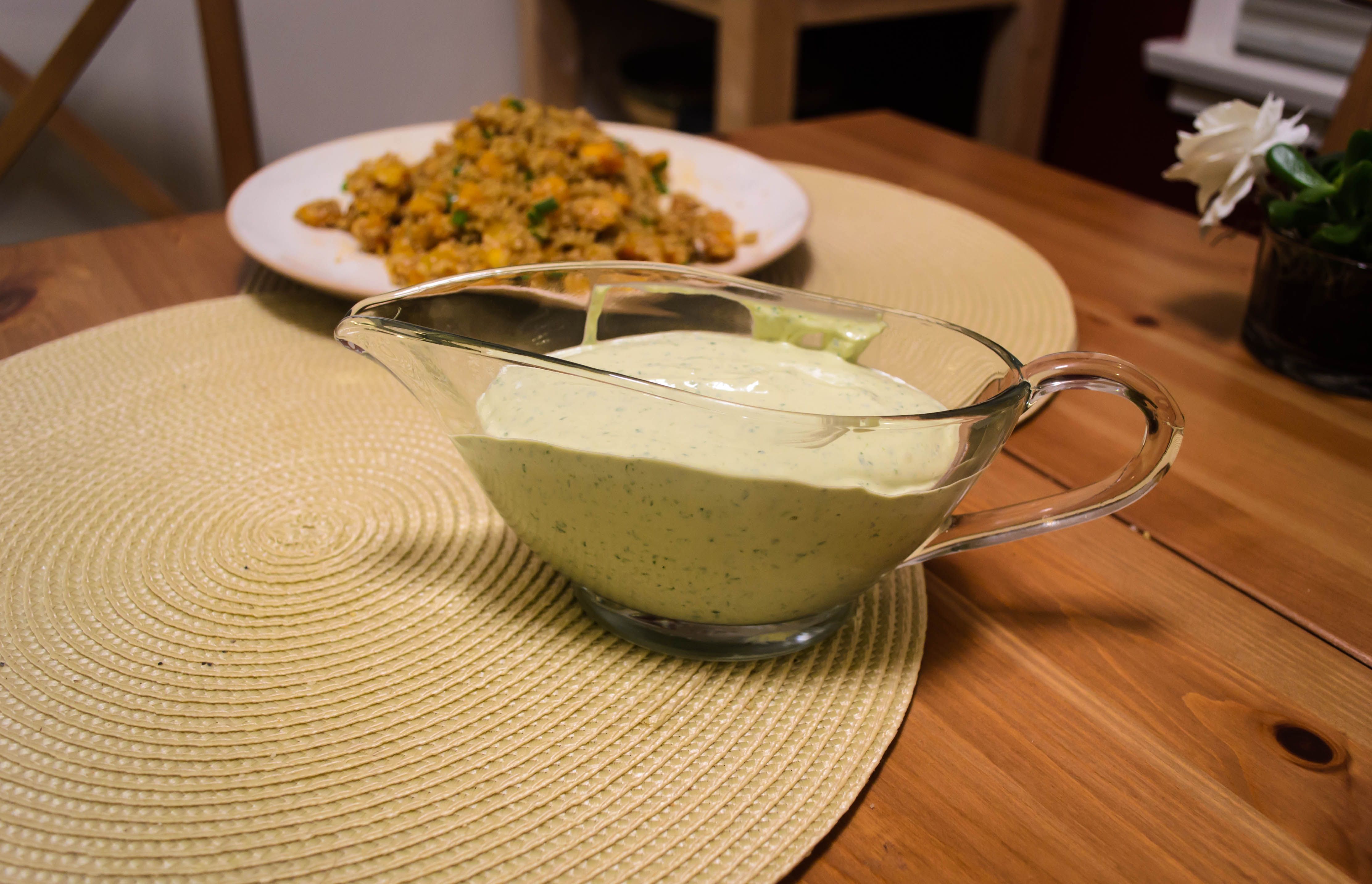
Food Blog February 2015-0332What resulted was not N.’s favorite taco ever (though I doubt it will stop him from requesting them), but I am finding, a day or two later, that I’m mildly obsessed with them, especially the sauce. It wasn’t fancy, but there was something quietly brilliant about how the yogurt and parsley lightened up the earthiness of the tahini. Roasted vegetables, though I will almost never say no to a bowl of them, can feel a little heavy. Blanketed with this sauce, they are bright and buoyant, and the creamy spread is just as fitting against the soft unctuousness of the cauliflower as it is against the toasted crunch of the chick peas.

Food Blog February 2015-0336This is one of those recipes where the list of spices looks daunting, and by all means, if your spice cabinet is not as ridiculous overflowing full as mine is, go easy on yourself and use a pre-mixed blend. I won’t judge. Ras al hanout is a North African combination of spices, one of those lovely warm mixtures incorporating options American dishes usually reserve for desserts. Really, though, any mixture of Mediterranean or Middle Eastern spices would be lovely here – choose your favorite and apply accordingly.

Food Blog February 2015-0338Once you’ve got the spices sorted, this dish is a multi-tasker’s dream. The cauliflower and chick peas need a good chunk of time in the oven at high heat, and while they are roasting you have plenty of time to whip up the sauce, warm the taco shells according to your favorite method, and even concoct a side dish (we ended up with sautéed cubes of butternut squash folded into a bit of cooked quinoa and a shower of green onions). By the time the filling finishes roasting, all you have left to do is scoop and serve, and if you’ve been reasonably efficient it has probably taken you just under an hour.Food Blog February 2015-0342*Note: you’ve probably noticed by now, and may be horrified by the omission, that these tacos don’t include a cheese component. With the yogurt and the deep earthy roasted flavors of the vegetables, I found I didn’t miss it. If you can’t do without, however, I suggest a few crumbles of feta to fill the void.


Roasted Cauliflower and Chick Pea Tacos
Makes 10-12 tacos

For the tacos:

½ teaspoon ground cardamom
½ teaspoon ground cumin
½ teaspoon ground coriander
½ teaspoon ground ginger
½ teaspoon ground turmeric
½ teaspoon freshly cracked black pepper
¼ teaspoon ground allspice
¼ teaspoon ground cloves
¼ teaspoon cayenne pepper
1 teaspoon coarse salt
6 tablespoons olive oil
1 head cauliflower, cut into bite-size florets
15 ounce can chick peas, drained and dried
1 cup loosely packed baby spinach leaves
taco shells
For the sauce:
½ cup tahini
½ cup plain greek yogurt
½ cup flat-leaf parsley
2-3 tablespoons lemon or lime juice, or a combination
1 teaspoon honey
½ cup water, to thin
salt and pepper, to taste


  • Line two baking trays with aluminum foil and place them in the oven. Preheat oven, trays and all, to 450F.
  • In a small bowl, combine all of the spices and the salt, stirring to be sure they are well-blended. Add the olive oil and stir or whisk to combine.
  • In a large bowl, toss the cauliflower with about ⅔ of the spiced olive oil mixture, then spread on one of the preheated baking trays in a single layer (if possible).
  • In the same bowl, toss the chick peas with the remaining olive oil and spice mixture, then spread onto the other baking tray.
  • Stow both baking trays in the oven and roast at 450F for 20 minutes. After 20 minutes, remove the tray of chick peas, shake them around a bit to deter sticking, and set aside. They should be toasty and crunchy. Shake and stir the tray of cauliflower pieces to promote even browning, then return just the cauliflower tray to the oven and roast for another 10-15 minutes, until both sides of most pieces are nicely browned.
  • While vegetables are roasting, combine the tahini, yogurt, parsley, honey, and lemon juice in a food processor and whir to create a thick paste. With the food processor running, dribble in the ½ cup of water slowly to transform the paste into a sauce. You may not need the entire ½ cup – thin to your desired consistency. Season to taste with salt and pepper, then set aside and prepare your chosen form of taco shells according to your preferences.
  • When the cauliflower is nicely browned and tender, toss it with the chick peas and stuff the mixture into taco shells with a few spinach leaves for freshness. Top with tahini yogurt sauce and serve immediately.

Carrot Ginger Soup with Coconut and Turmeric

I threw away my bathroom scale today. Before you applaud me, this isn’t some kind of new-year-new-me-self-acceptance resolution. No, it’s because unless we have had a 46 pound ghost living in our bathroom for the last month, the scale has stopped working. No amount of fiddling with the dial on the bottom has had any effect, aside from bulking up our imaginary squatter to 77 pounds.

Food Blog January 2015-0205Though I realize there are probably many videos, tutorials, and step-by-step Pinterest boards devoted to fixing this problem (how to evict your imaginary scale-ghost!), I decided it was easier to just throw it away. Then I went out and had chicken and waffles for lunch.

Food Blog January 2015-0210All that being said, it is the time of year when, if we’re invested in this sort of thing, we tend to pay a lot of attention to what our bodies look like and what we put into them. Usually that involves eating less and eating lighter, which is ironic and unfortunate, because so many places in the country this January are having such a harsh winter. We need comfort, we need warmth, we need rich food to sustain us through snow and low temperatures (well, perhaps not in Los Angeles).

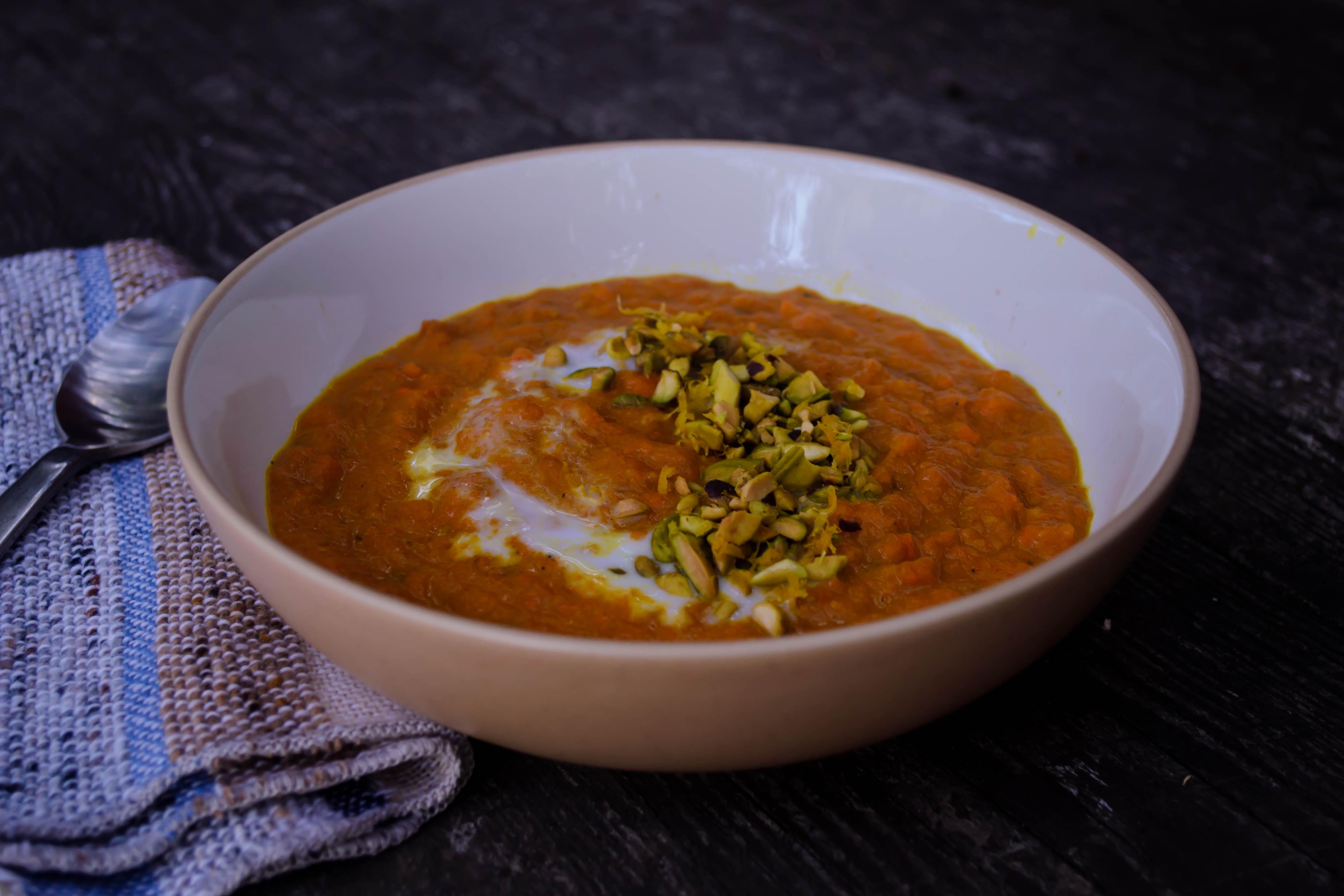
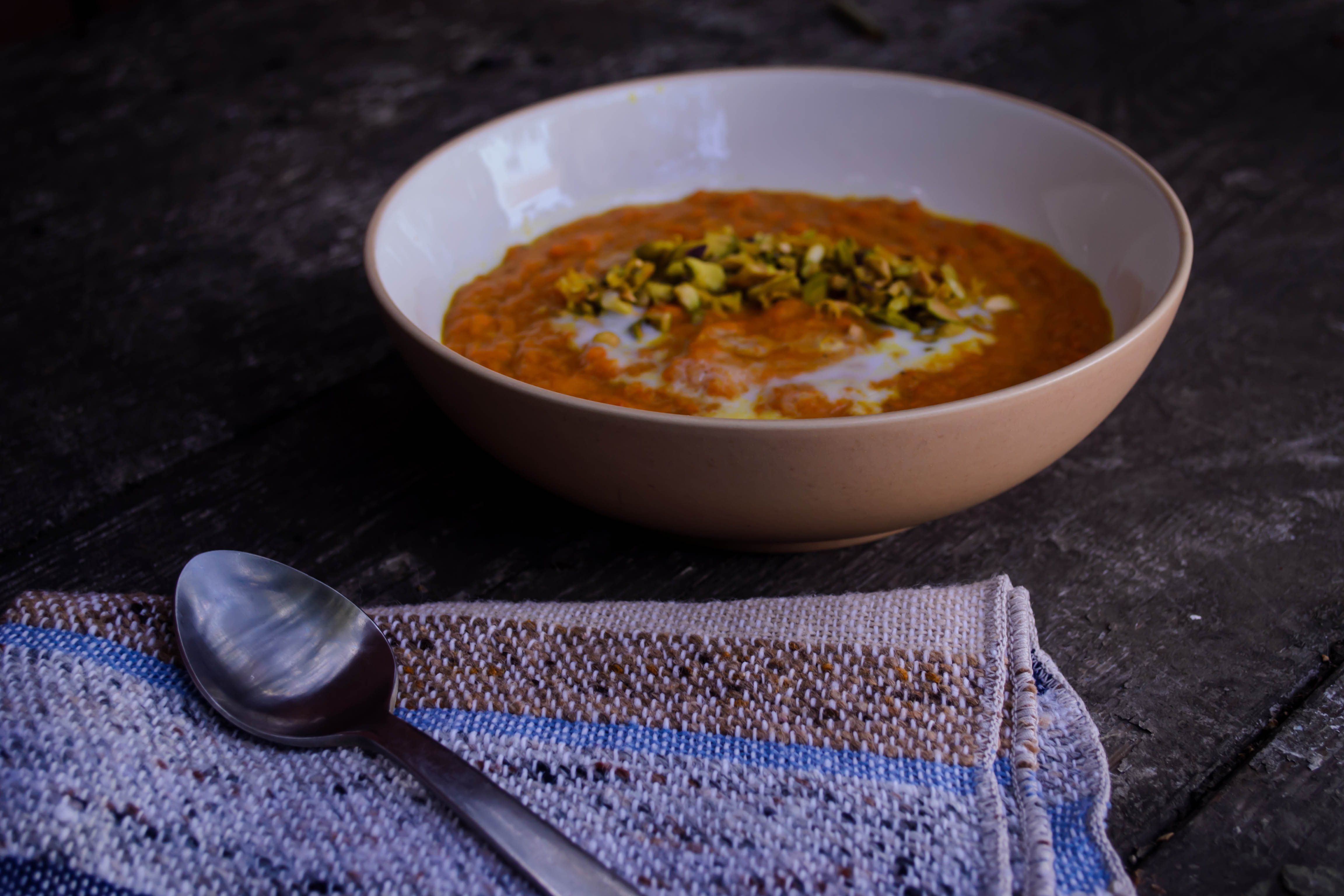
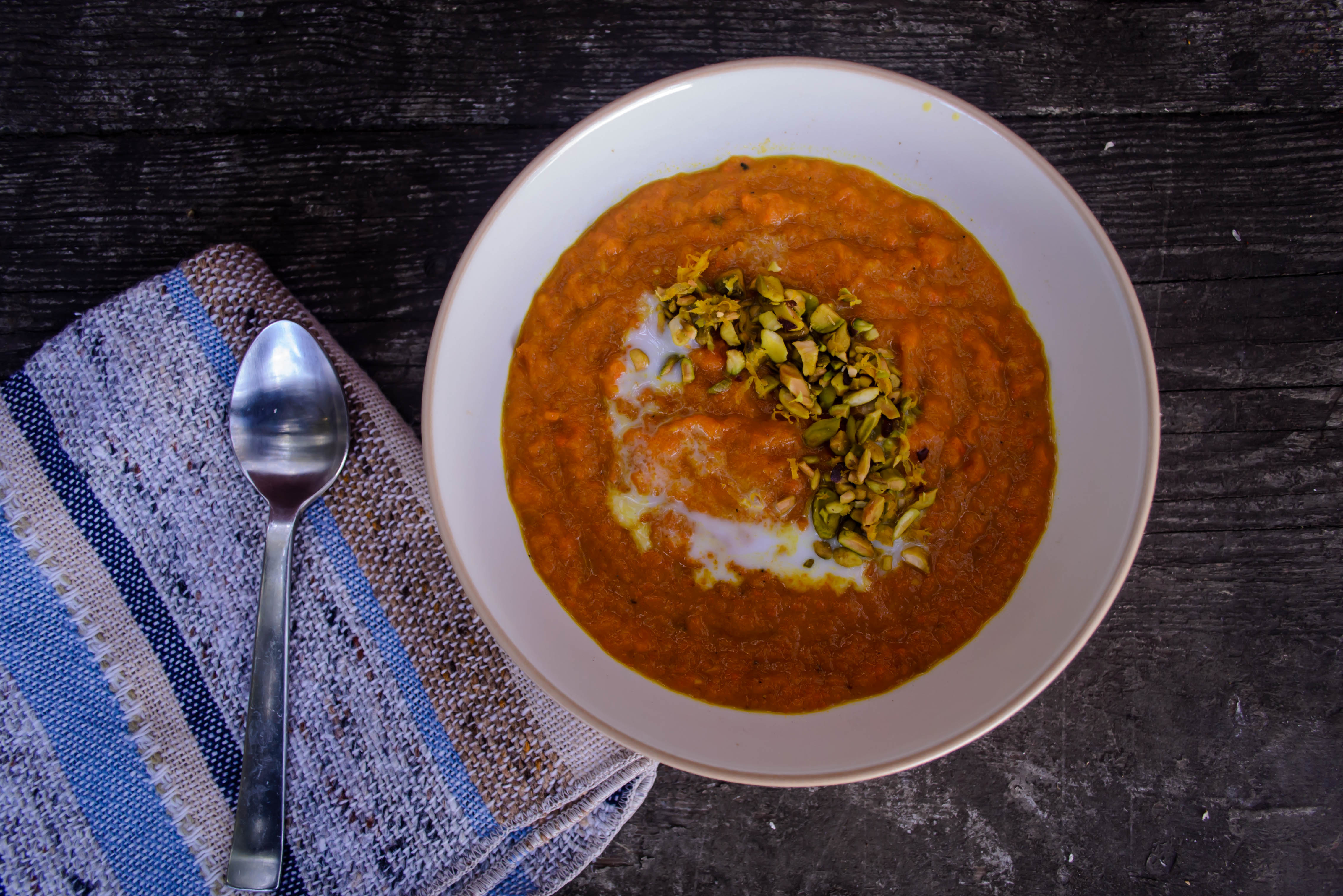
Food Blog January 2015-0199The answer to both of these problems seems, to me, to be vegetable soup. I don’t mean a minestrone type concoction, with chunks of various veggies floating in broth, but a pureed soup, featuring a single vegetable star, with minimal back-up supporters and just a bit of spice to keep things interesting. After a recent episode of Top Chef on which one of the contestants made a deep, sunset inspired roasted carrot soup, I knew what my star would be.

Food Blog January 2015-0201Carrots work well with many flavors, but ginger is a particularly nice pairing; carrots are sweet and hearty, and ginger is a warm, spicy kick that keeps it bright. Rather than chicken stock, which I find can muddy flavors a bit, I opted for water as my liquid, with a generous splash of coconut milk to add some richness. Then, on a whim I’m pleased I followed, I sprinkled in a good teaspoon or two of turmeric, which bolstered both the orange glow of the carrots and their earthy flavor.

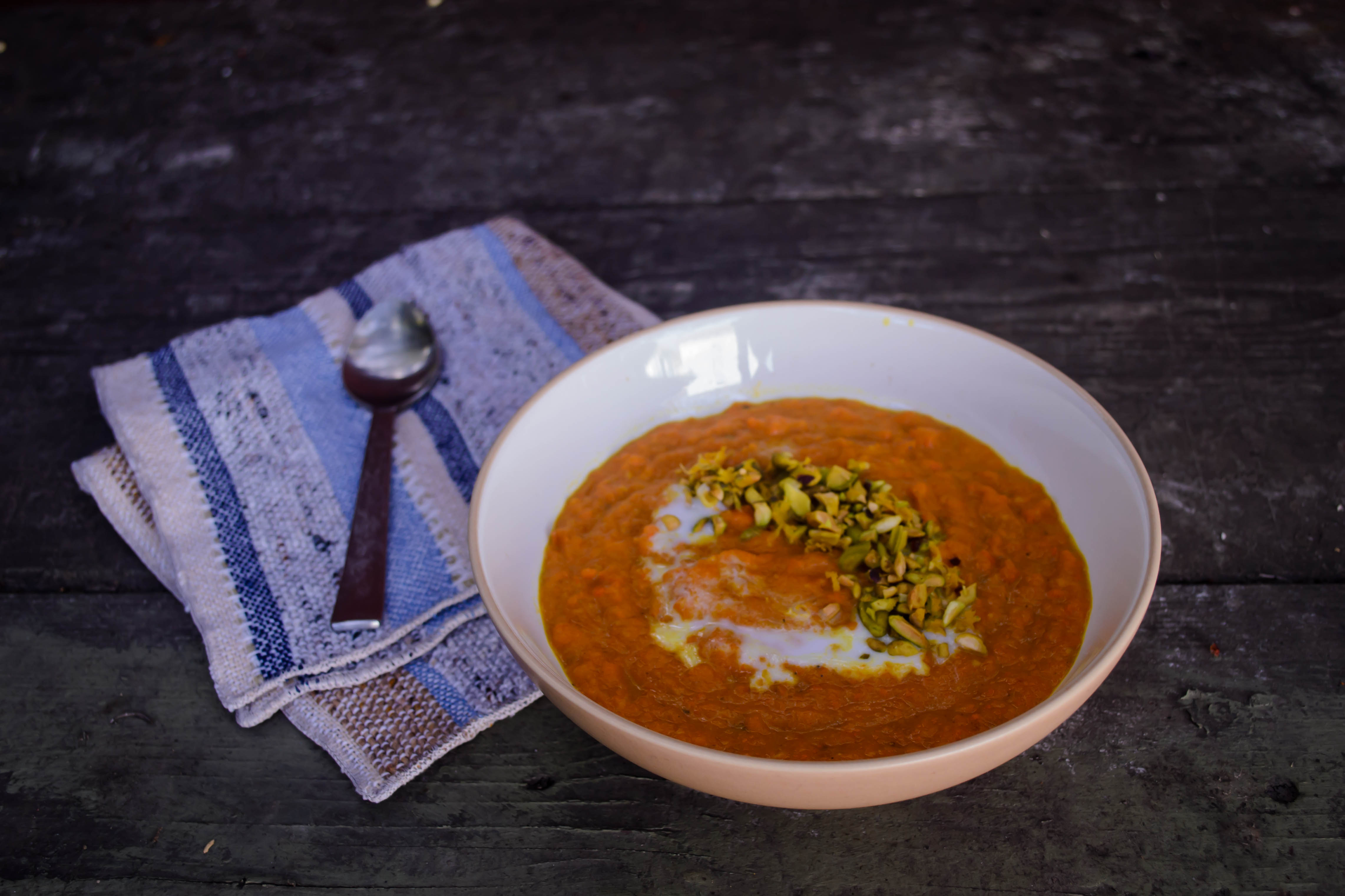
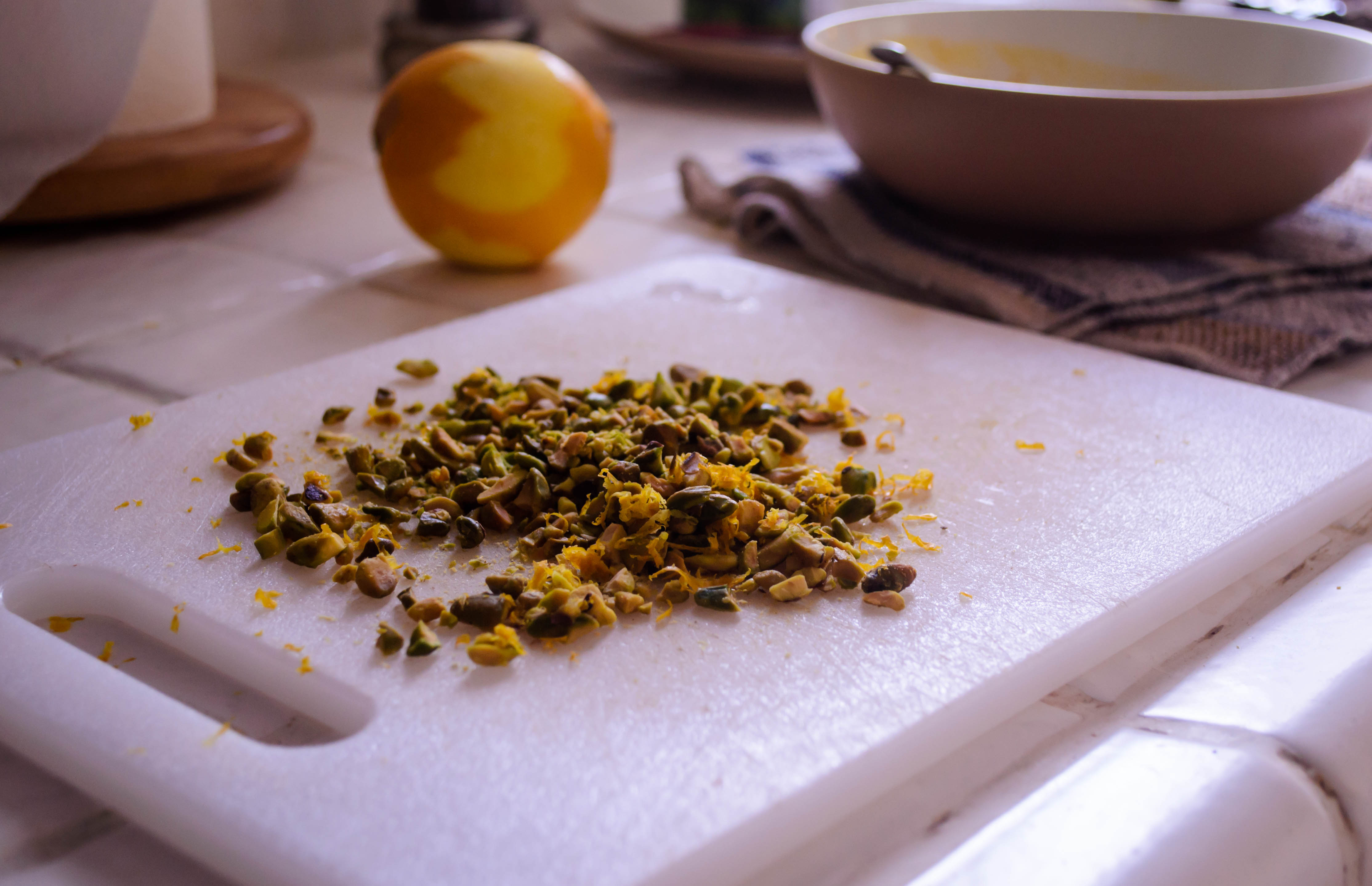
Food Blog January 2015-0213As I watched my pureed mixture burble in a pot, I started thinking about texture. I’d stopped short of pureeing the carrots to total velvet smoothness, but I still wanted something crunchy to break up the potential monotony of my soup. During the pumpkin madness of autumn, I experimented with some yet-to-be-perfected turmeric-spiced pumpkin bars that featured a pistachio and walnut crumble topping. Pistachios seemed like a good choice again here, and to play with the hint of citrus flavor they carry, as well as add a slight sourness the soup might benefit from, I tossed the nuts with lemon zest before sprinkling them over my vivid orange lunch.

Food Blog January 2015-0209Despite our less-than-wintery weather, this was a comforting, warming bowl. Roasting the carrots brings out their sweetness and concentrates their flavor, but the spices keep it dancing between decadent richness and brightly refreshing. I used some leftover naan to mop up the edges of my bowl, but a crusty piece of baguette or hot pita would, as you might expect, be just as nice.

Food Blog January 2015-0214This is a thick soup – almost passable as a vegetable puree, and you can play with it as you please. Add more or less liquid, replace the pistachio and lemon topping with another toasted nut, or lime zest rather than lemon, or maybe even fried sage and crumbled gingersnaps, to play with the fresh ginger in the soup. My quantities here produce an assertively gingery mix – reduce to just a teaspoon or two for a milder spice.

Food Blog January 2015-0207

Carrot Ginger Soup with Coconut and Turmeric
Serves 2-3
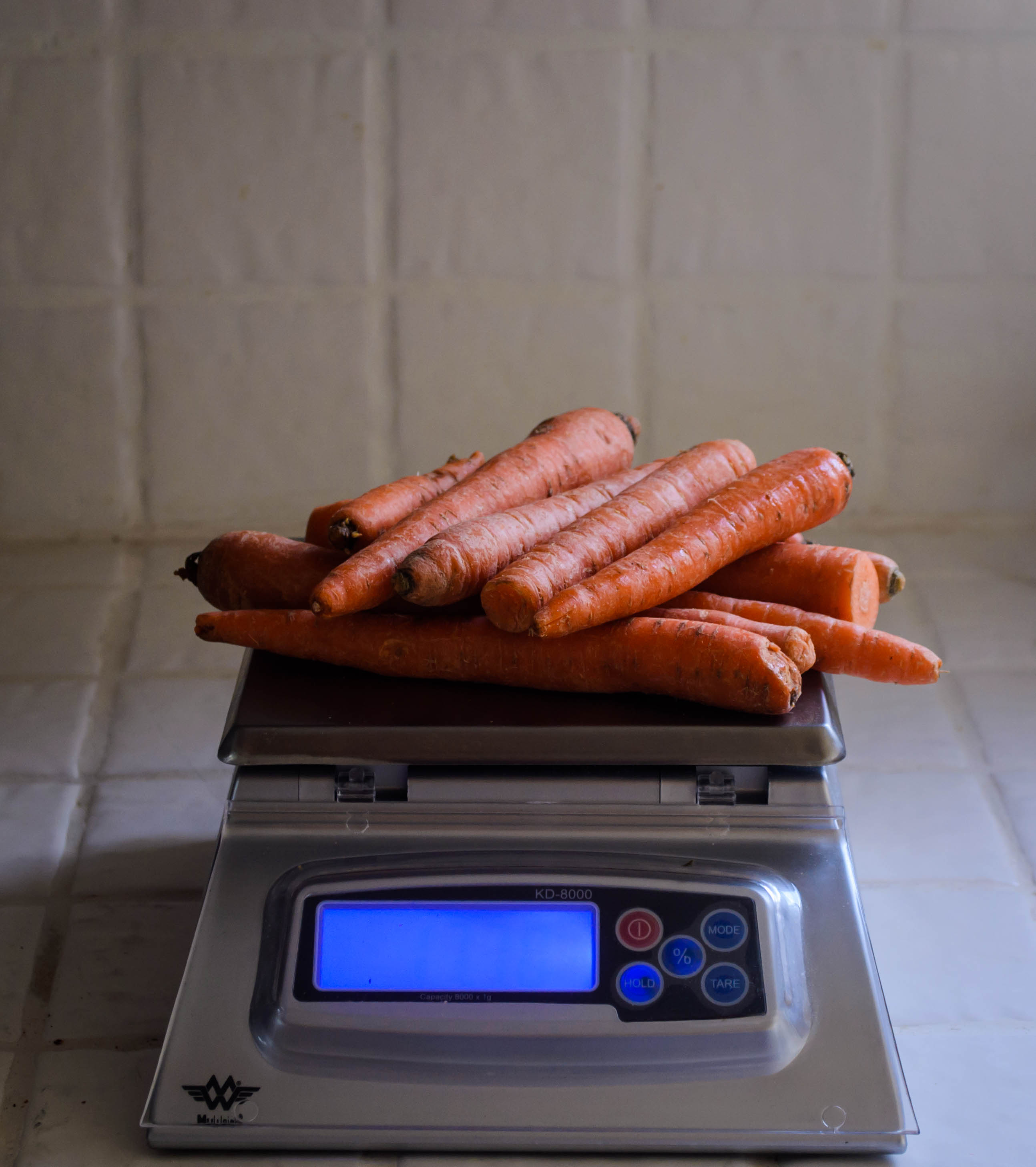
1 pound carrots, tips and tops removed, peeled if desired (I usually don’t – just scrub them off)
1 tablespoon olive oil
½ teaspoon salt
½ teaspoon pepper
1 tablespoon grated ginger (or less, to your taste)
2 teaspoons turmeric
1 cup light coconut milk
1 cup water
2 teaspoons sugar
additional salt and pepper to taste
¼ cup roughly chopped, toasted pistachios
2 teaspoons lemon zest


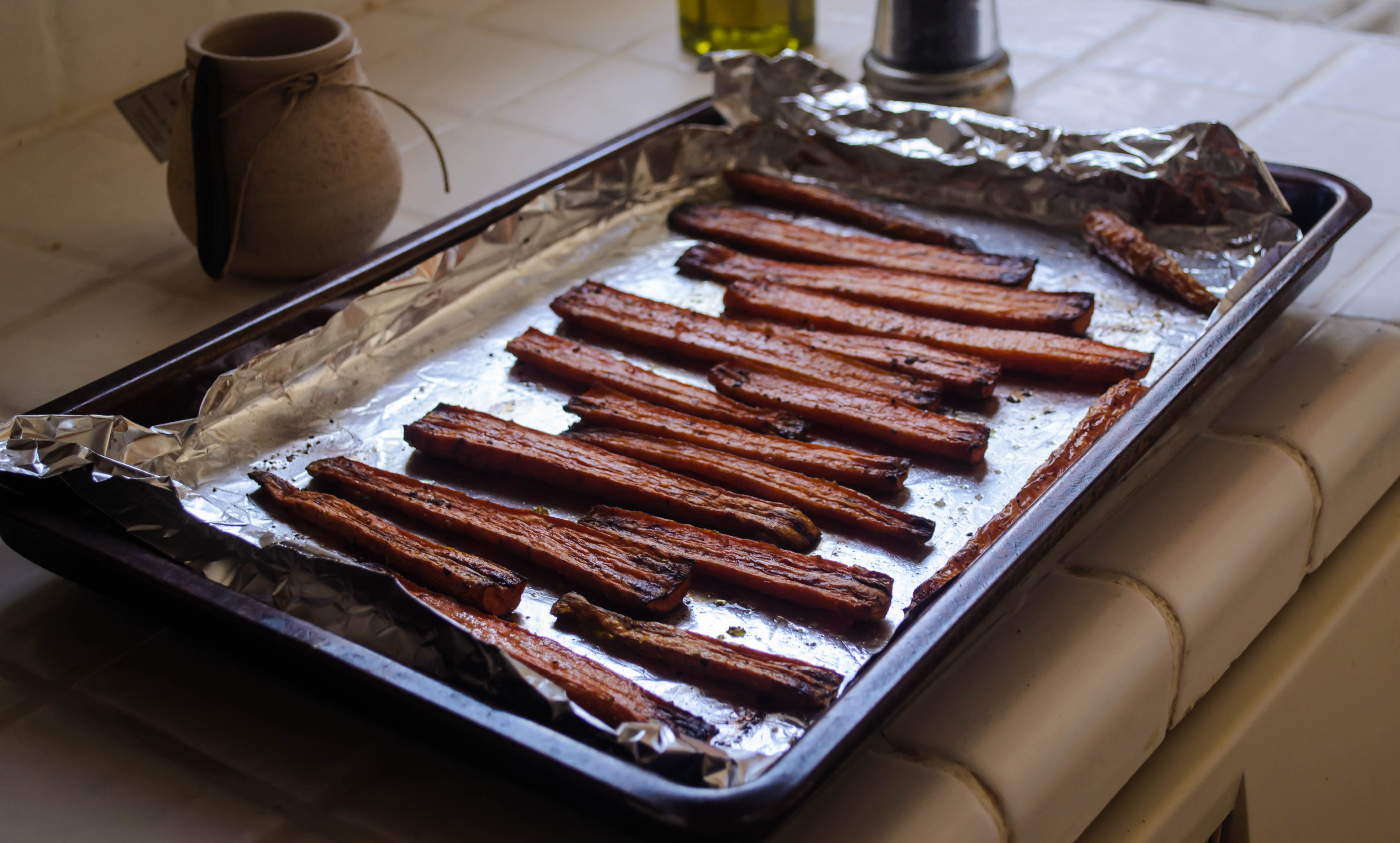
  • Preheat the oven to 425F while you prep your carrots. Remove their tops and tips, then split down the center for two long half cylinders. On an aluminum foil lined baking sheet, toss the carrot halves with the olive oil and the ½ teaspoon salt and ½ teaspoon pepper for a gleaming, even coat. Roast in the 425F oven for 40 minutes, until nicely browned and quite tender. Set aside to cool slightly.
  • For a standard blender: add the roasted carrots, coconut milk, water, grated ginger, and turmeric to a blender and blend until the mixture reaches your desired consistency. As noted above, I chose to leave mine with a little texture, but you can blend until completely smooth if desired. Pour the mixture into a medium pot.
  • For an immersion blender: add the roasted carrots, coconut milk, water, grated ginger, and turmeric to a medium pot with high sides (otherwise the soup spatters a bit during blending) and blend with an immersion blender until the mixture reaches your desired consistency. As noted above, I chose to leave mine with a little texture, but you can blend until completely smooth if desired.
  • For both methods: once the soup is your desired consistency in the medium pot, place it over medium-low heat until it is heated through. Be careful – because this mixture is thick, if it comes to a boil it will spit.
  • Season to taste with salt and pepper and serve topped with a scattering of chopped pistachios and lemon zest.

Photo Friday

Back on the horse, and with some shots from our Christmas “dinner.”

Fall and Winter 2014-0053We do a meal solely of appetizers in the evening on Christmas day, an arrangement that allows us to try out a number of new dishes, and keep on eating all night, since it’s only small bites…

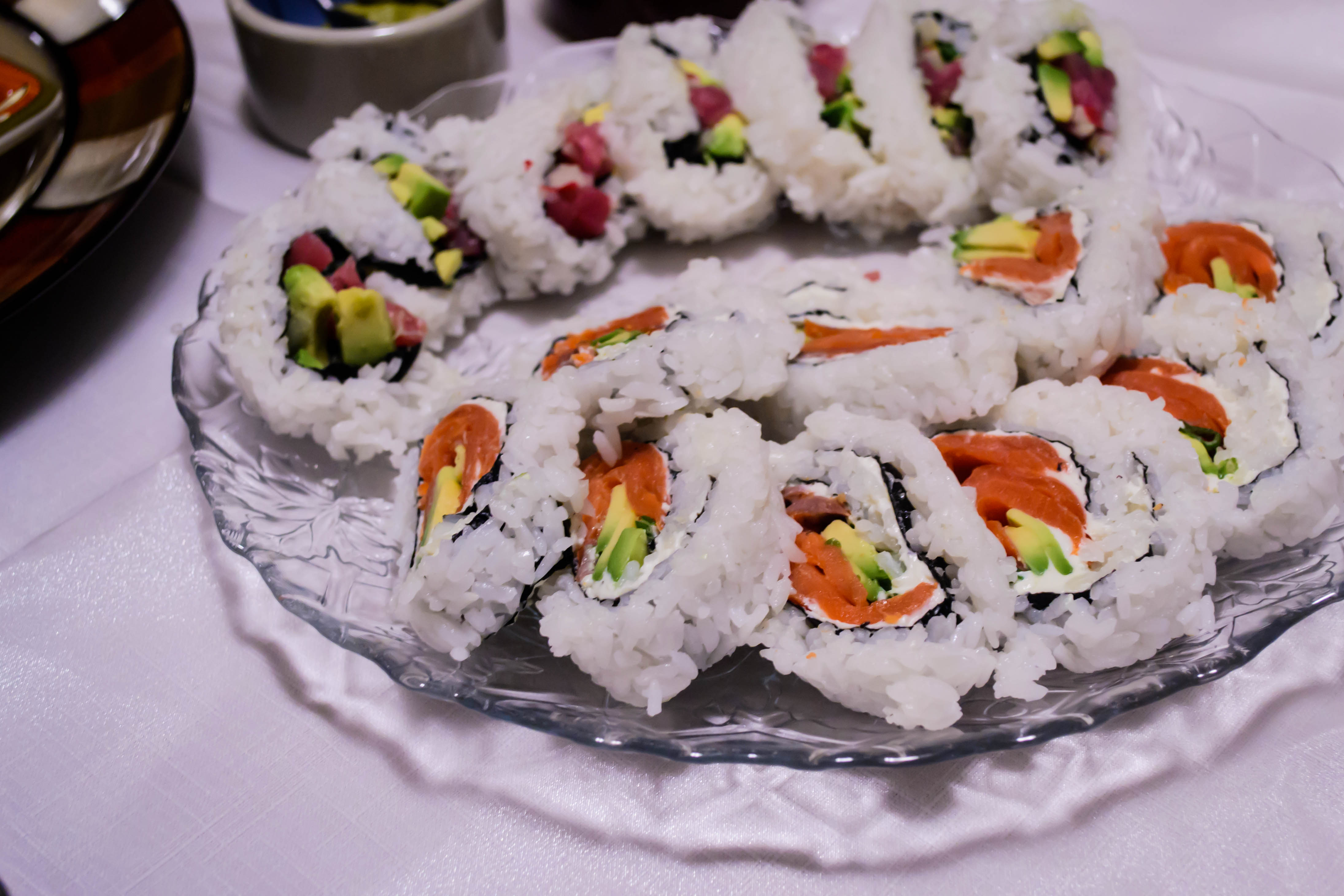
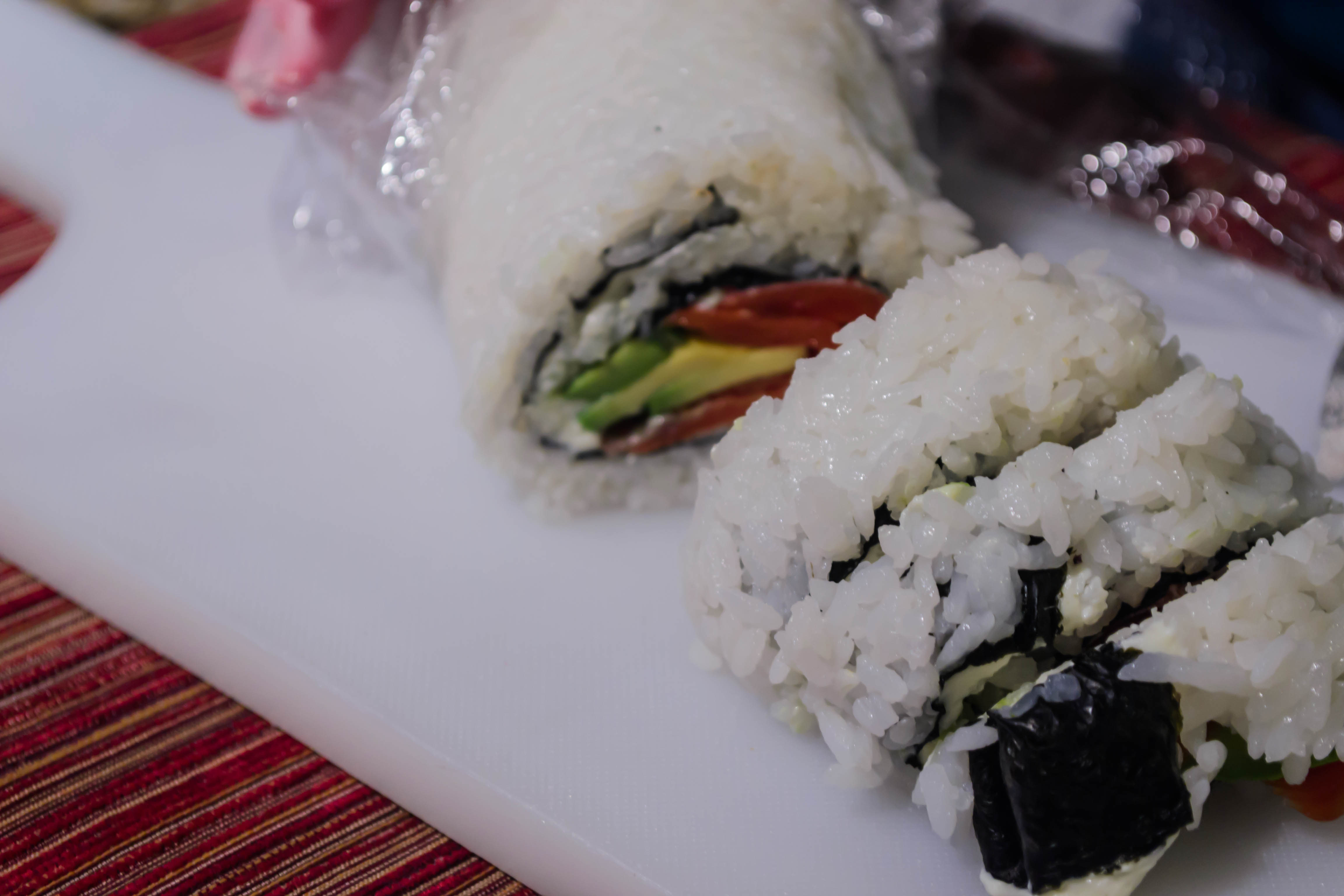
Fall and Winter 2014-0031Fall and Winter 2014-0027We’ve done this for so many years that we covered all the standard appetizer ideas: deviled eggs, stuffed mushrooms, spinach dip, all manner of bread and cheese… so we’ve had to start working with themes. Last year it was stacked snacks. Two years ago it was all stuffed, well, stuff. This year we rolled everything, and our table was jammed with spring rolls, eggplant rollatini, cannoli and roulade for dessert, and an experiment: two kinds of sushi rolls.

Fall and Winter 2014-0026One contained ahi, avocado, and radish. The other enclosed smoked salmon, avocado, and a wasabi-spiked cream cheese.

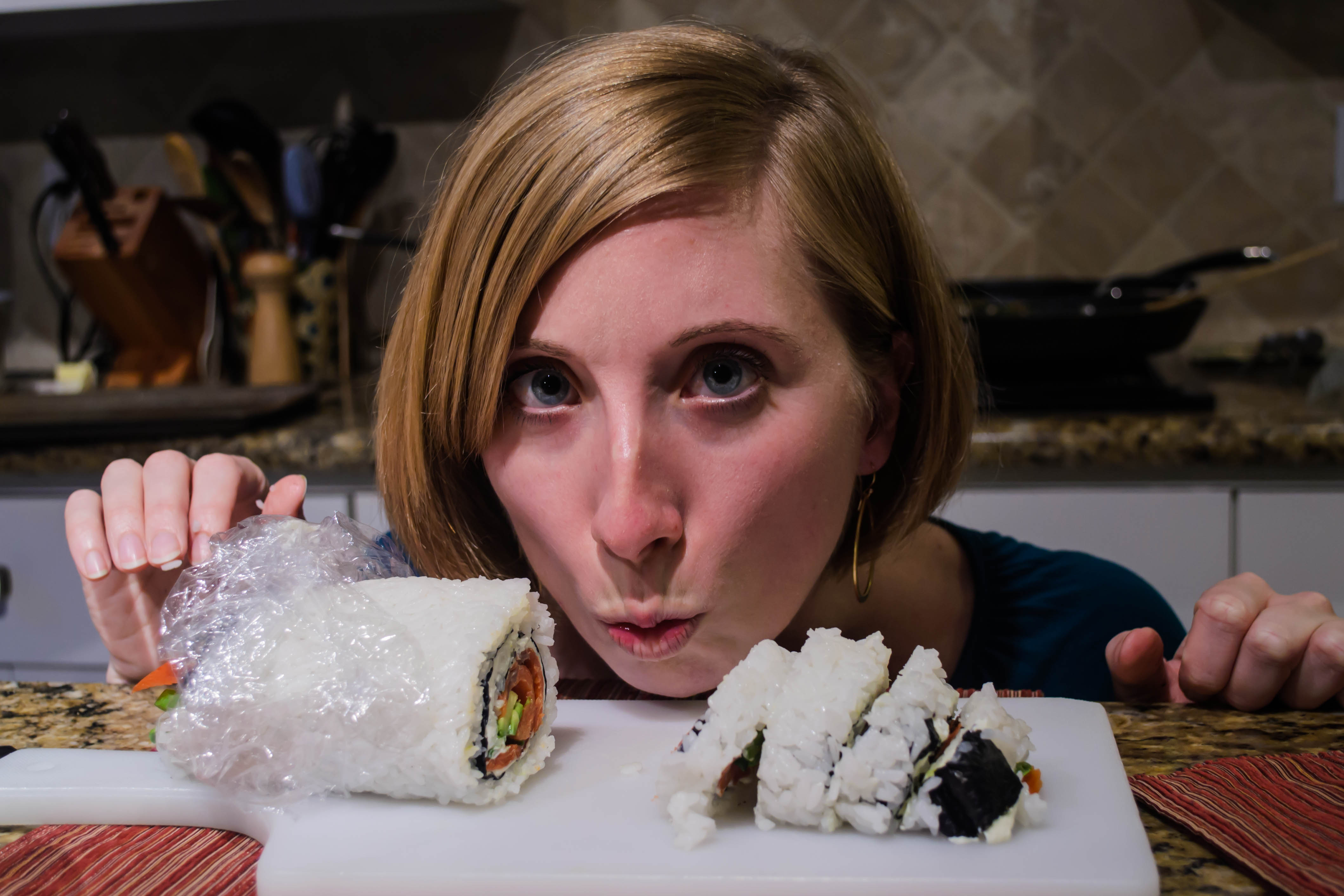
Fall and Winter 2014-0035My sister and I are completely virgin sushi rollers, so we didn’t really know how much filling to include. This, combined with our enthusiasm for the ingredients and the anticipated end product, led to two burrito sized rolls of sushi.

Fall and Winter 2014-0036Fall and Winter 2014-0040Still, they were quickly gone…

Fall and Winter 2014-0045My fish-face.


* all photos this post courtesy of N. My hands were covered with sticky rice through most of the process. Thanks, sweetie.

Seared Scallops with Beurre Blanc and Parsnip Puree

Food Blog November 2014-0893It will come as no surprise to you that I am late with this post. I mean, here it is Monday and it’s up and all that, but a quick check of the calendar belies my appearance of timeliness. See, it’s December. It’s December and this is a sauce recipe I owe you from last month. By my twisted, grasping-for-an-apology way of thinking, though, I ate it in November… so that totally counts, right?

Food Blog November 2014-0872This time around, we’re back to butter. There are a lot of butter based sauces, friends. A lot. This one, a beurre blanc, is a sauce made by reducing white wine with aromatics and sometimes a bit of lemon juice or vinegar, then whisking in an unbelievable amount of butter until the sauce turns into this rich, fluffy, thick, pale yellow ambrosia that belongs draped over every kind of substance imaginable.

Food Blog November 2014-0875Food Blog November 2014-0879Most of these sauces have dubious origin stories. Who wouldn’t want to be responsible for a well-loved buttery emulsion as appropriate to green beans as to seared fish? Cooking lore holds, however, that beurre blanc was created by accident – an unintentional simplification of béarnaise sauce that caught on and became beloved. Julia Child writes about it with the affection you might expect for a sauce that is, in her words, essentially “warm flavored butter.”

Food Blog November 2014-0880Food Blog November 2014-0881This is not Julia Child’s recipe. For ease, and for clarity, I went with Alton Brown’s. Mine is a slight adaptation – I halved the recipe, and I didn’t have the traditional shallot so I simply omitted it. Alton’s sauce uses lemon juice instead of white wine vinegar, which suggests it was meant to go with fish or seafood, and this decided my pairings for me. Lemon and butter sauce? Pass the scallops.

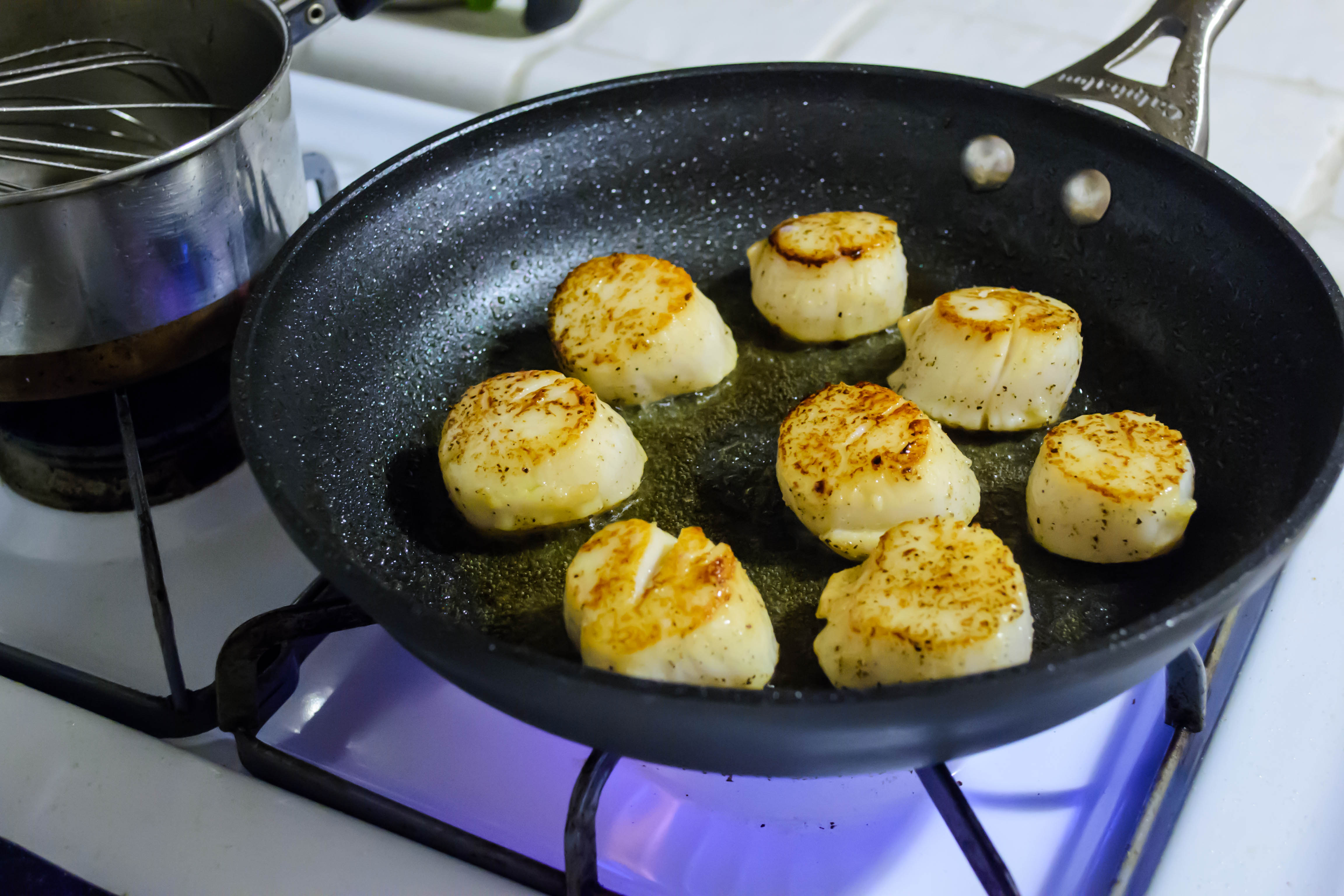
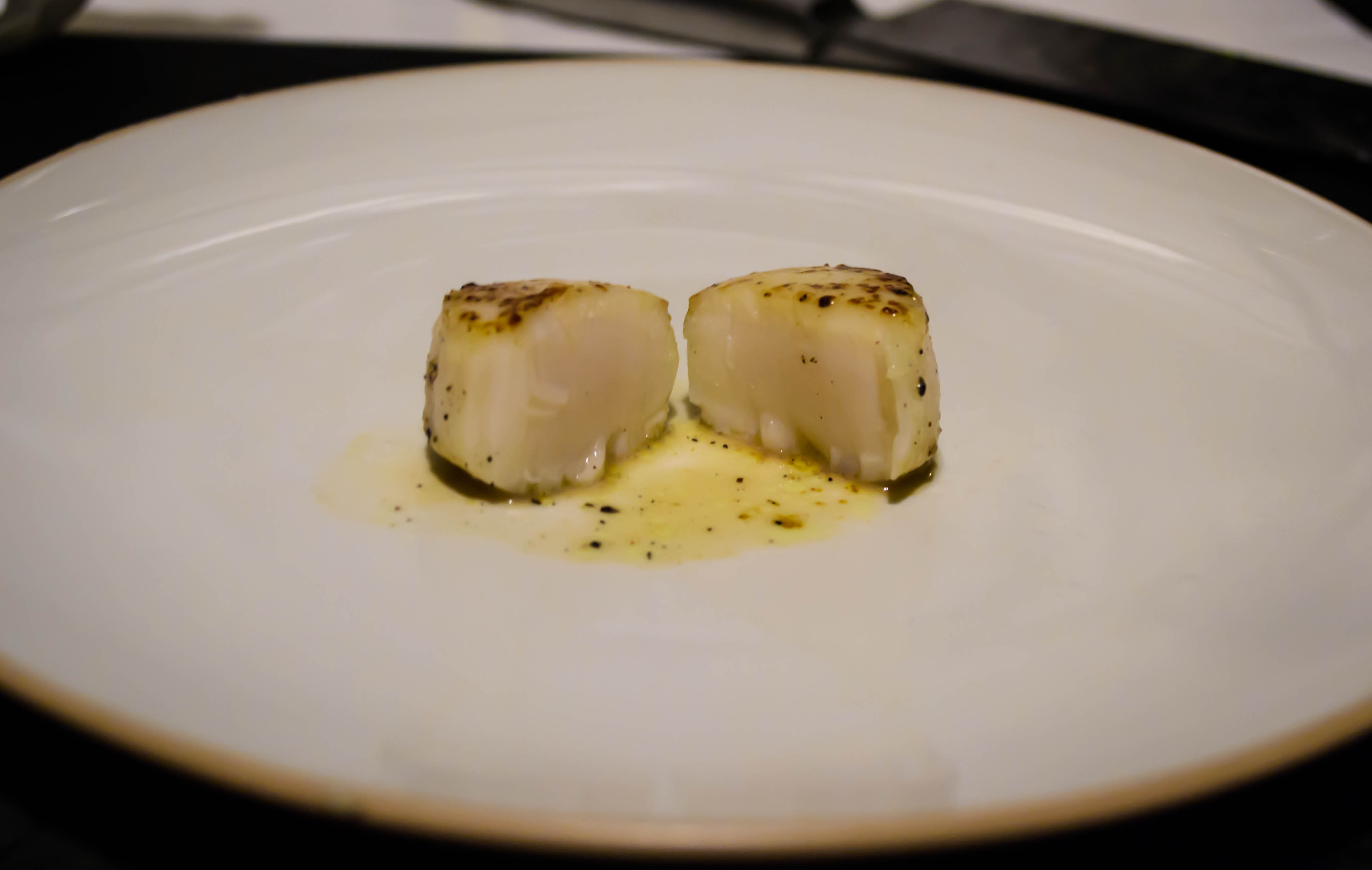
Food Blog November 2014-0870The silkiness of this sauce is perfect with shellfish. I can imagine dipping lush hunks of lobster into it. I can imagine a drizzle over soft-shell crab. I would be more than satisfied with a pool underneath a piece of halibut or cod. But scallops won the day for me. These perfect little cylinders, meaty and mild and almost sweet, develop a perfect crust when you pat them dry, season them aggressively, and sear them golden-brown on top and bottom. When you douse them with sauce, or float them in a puddle of it, the buttery smoothness somehow elevates them even more.

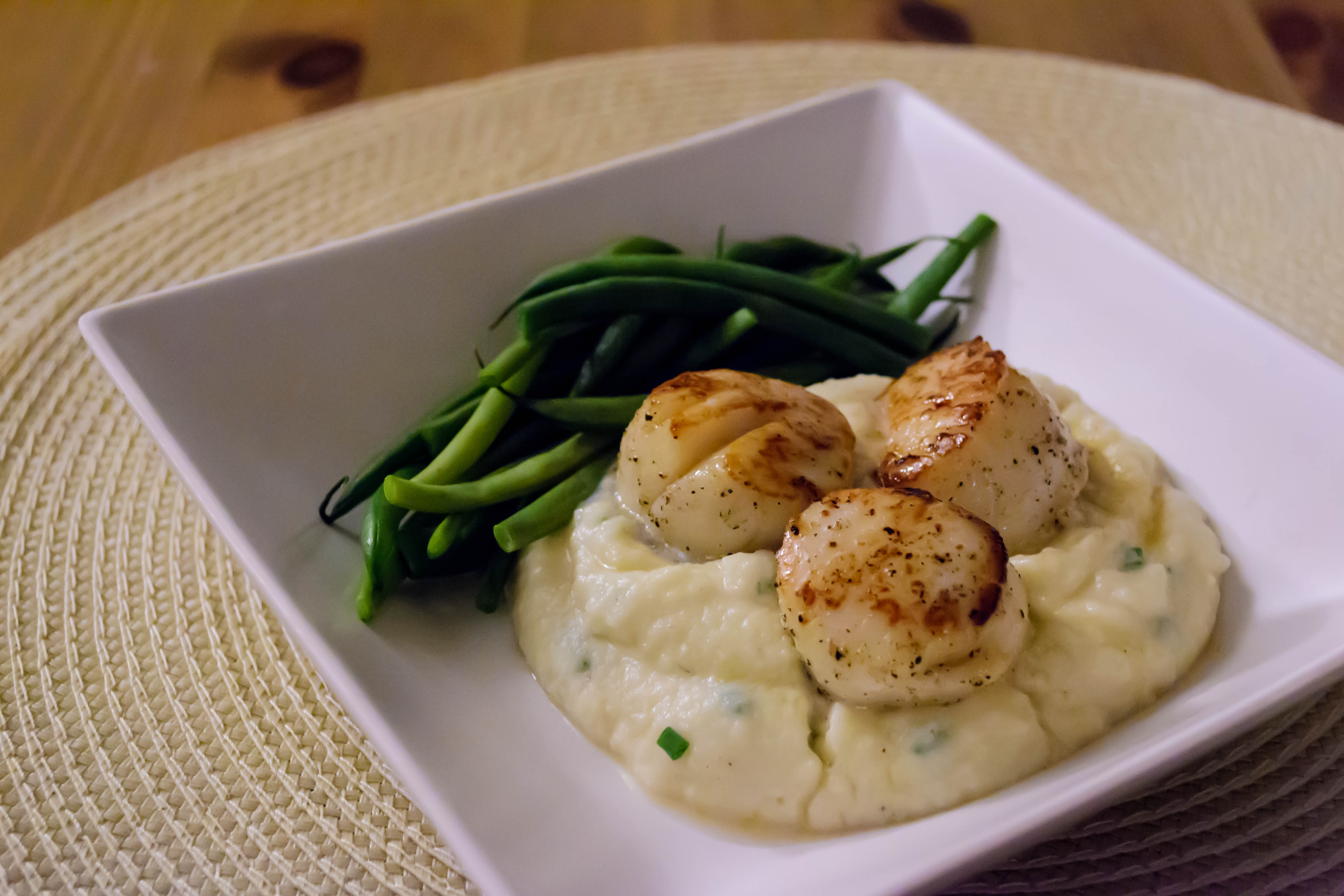
Food Blog November 2014-0882Because I was eating alone, I decided to play with plating a bit more than usual. As I see it, there are many ways to serve this dinner. I tried two options. First, and a bit more everyday, is a lovely heap of parsnip puree, a few scallops nestled atop it, and a small pile of steamed slender green beans alongside. A healthy drizzle of sauce, and you are ready to serve.

Food Blog November 2014-0883Food Blog November 2014-0884To amp up the presentation though, I grabbed a long rectangular dish. A few small bundles of green beans at intervals along the plate, small mounds of puree between them, and a tender scallop balanced on each spoonful of puree. Sauce can be applied to the top of each scallop, or poured around the edges of the plate just before serving.

Food Blog November 2014-0893

Seared Scallops with Beurre Blanc and Parsnip Puree
Serves 2

For the parsnip puree:

3-4 large parsnips, peeled and cut into 1-inch chunks
2-3 cloves garlic, smashed and peeled
1 cup milk
salt and pepper to taste
2 tablespoons butter
1 tablespoon chives, finely minced
For the beurre blanc:
4 ounces dry white wine
½ tablespoon lemon juice
½ tablespoon heavy cream
6 tablespoons cold, cubed butter
salt to taste
For the scallops:
2 tablespoons olive oil
salt and pepper to sprinkle
12 large sea scallops, at room temperature


  • Place the milk, garlic cloves, and parsnip chunks into a medium pot over medium heat. The moment the milk begins to bubble, reduce the heat to low and simmer until the parsnips are tender, 10-12 minutes.
  • Remove from heat and season to taste with salt and pepper. Stir in the butter until melted.
  • Blend until very smooth using an immersion blender, a regular blender, or a food processor. Just before serving, fold in the chives.
  • While the milk for the parsnips is heating up, make the beurre blanc.
  • In a small pot, heat the wine and lemon juice to a boil over medium high heat. Reduce the liquid to a bare tablespoon.
  • Turn the heat down to medium and add the half tablespoon of cream, which will help stabilize the mixture.
  • As soon as the liquid begins to bubble again, turn the heat down as low as it will go and begin adding the butter, one cube at a time, whisking until completely integrated into the liquid before adding the next cube.
  • Continue adding the butter, whisking constantly, until it is all integrated. Turn off the heat and continue whisking until the sauce is fully emulsified and has become a fluffy, pale yellow puddle slightly thicker than melted ice cream.
  • Stow the finished sauce in a thermos to stay warm while you cook the scallops.
  • Unwrap your scallops and pat them dry with a paper towel. If they are wet, they will not sear well. Sprinkle both sides of each scallop with salt and pepper.
  • In a large skillet, heat the olive oil over medium high heat. When it is shimmering in the pan, carefully add the scallops in a single layer, taking care not to let them touch one another. This seems fussy, but it is essential for getting a good sear.
  • Once you have placed each scallop, don’t touch them for 2 full minutes. Then, carefully lift one and check the bottom – it should have a deep bronzed crust. If this is the case, flip over each scallop and cook another 2 minutes. If it isn’t deeply bronzed yet, let it cook another 30 seconds before checking again.
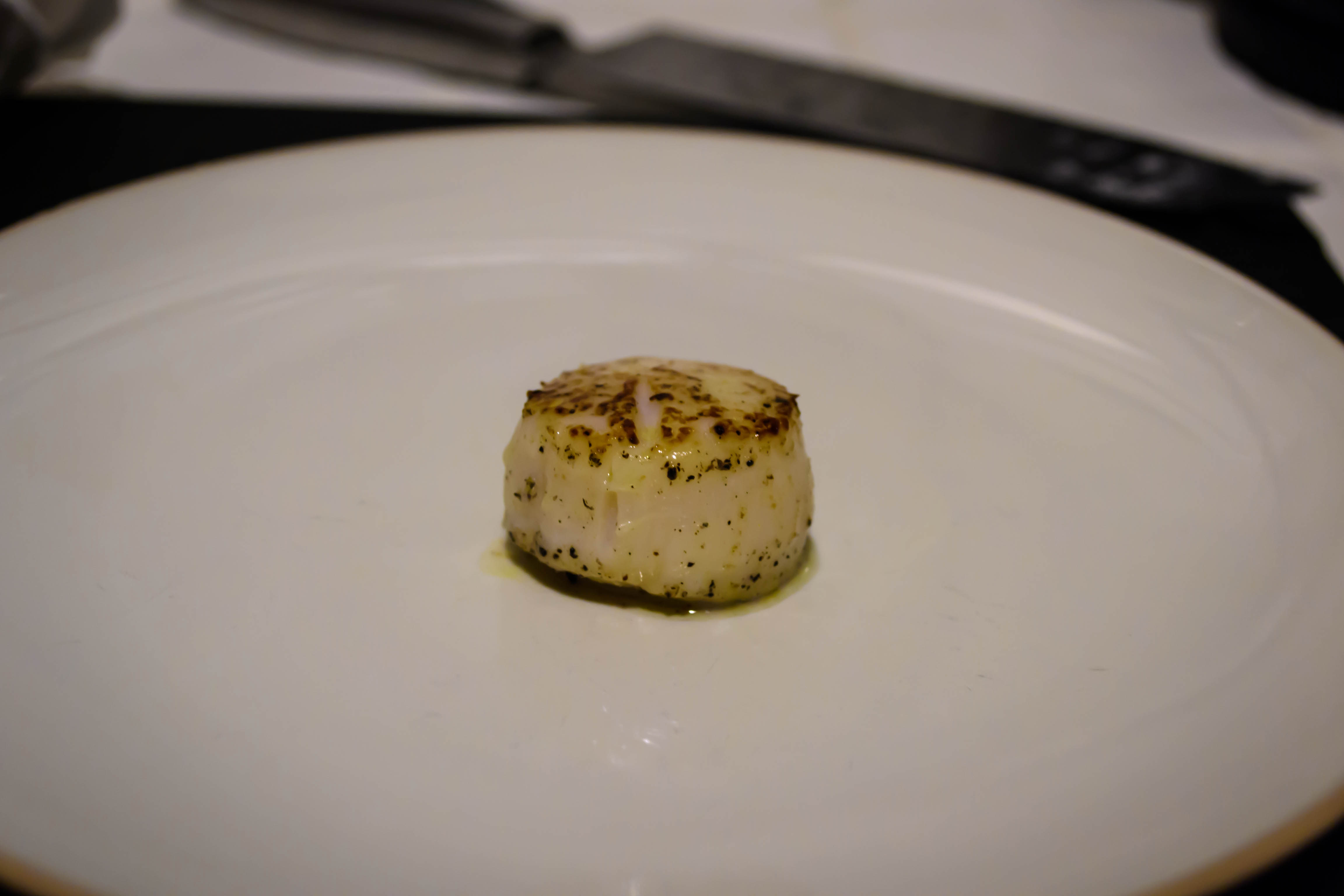
  • When the scallops are cooked, they should feel slightly springy but resistant, like a firm mattress. Ideally, they should be the palest, palest pink in the center as in my photo above – they will continue to cook while you plate the rest of the meal.
  • To serve, arrange as desired with scallops atop or beside the parsnip puree, and the beurre blanc sauce drizzle over the top or puddled on the side. Accompany the dish with steamed green beans or pencil asparagus, if desired.

Sweet Potato and Brussels Warm Salad

Food Blog November 2014-0792The first time I made this dish, which could be called a roasted side dish or a warm salad, depending on how you’re feeling, I didn’t actually make it. Let me explain. Like everyone (she says, because it makes her feel better), I have a few unfortunate… let’s call them character flaws. I’m clumsy. I drop things. I spill. I trip. Last week right in the middle of a lecture about pronouns and antecedents I bumped into the chalkboard and, in my recovery, stumbled into a wheeled desk chair that promptly rolled several feet across the classroom. My students were gracious enough to laugh at me.

Food Blog November 2014-0782Where my clumsiness can be amusing or endearing or even charming in other areas of life (I disagree, but N. seems to find it so), it occasionally winds up being dangerous in the kitchen. I take precautions: my knives are sharp, I stabilize my cutting boards, and I try not to do too many things at once. But once in a while, a knife slips, my mind wanders, and I wind up bleeding.

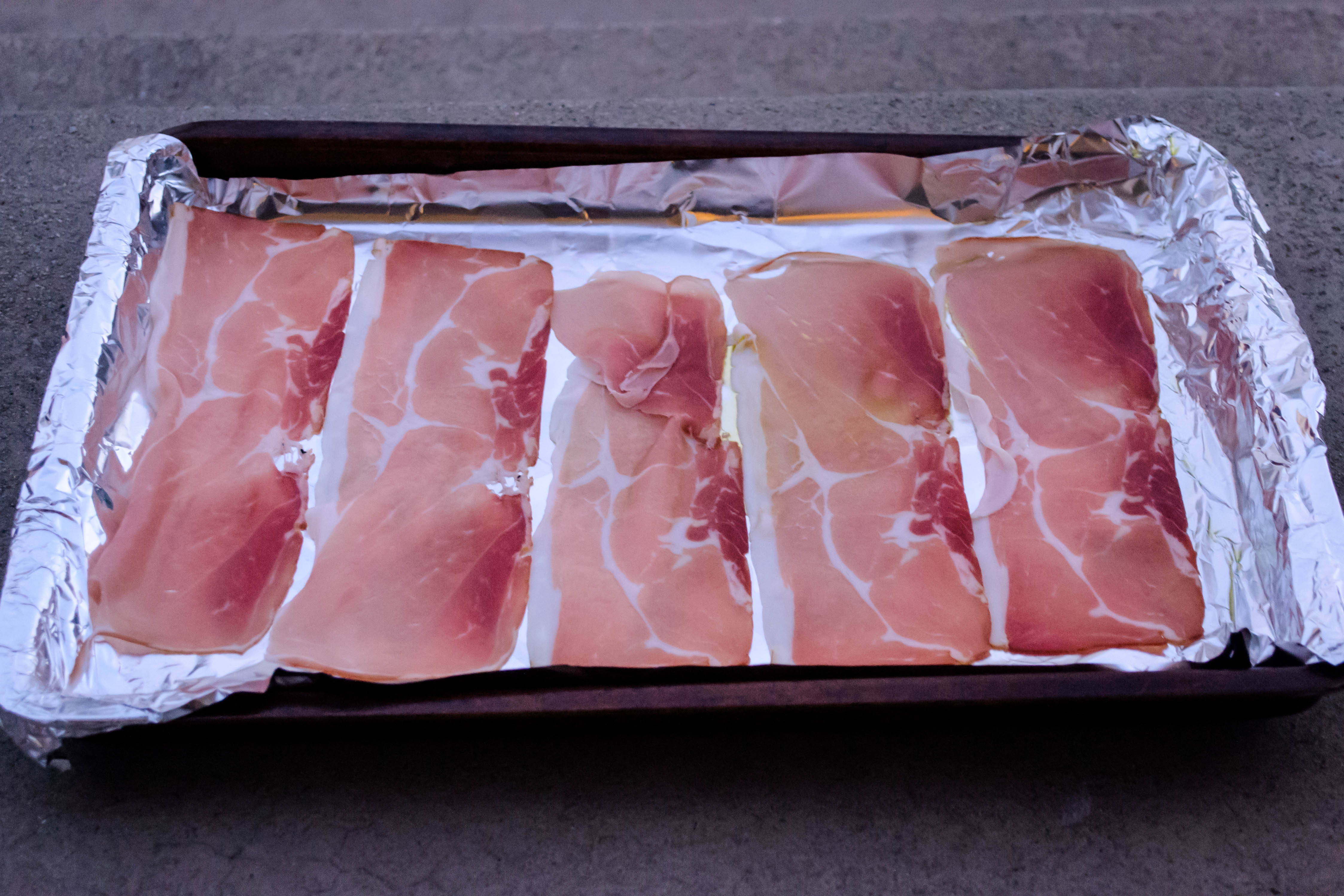
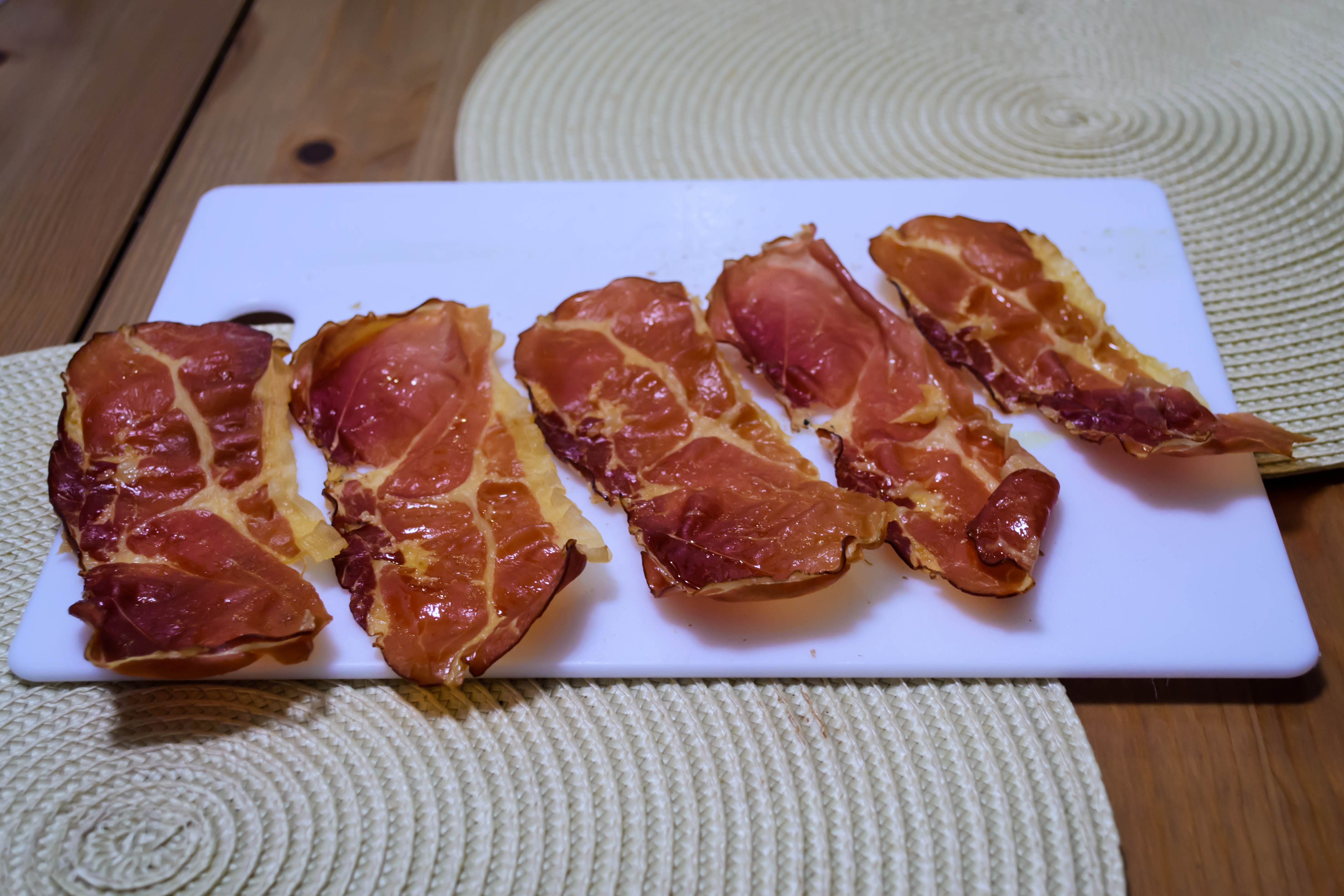
Food Blog November 2014-0783Food Blog November 2014-0788This unappetizing truth is what almost did this salad in. The first time I made it, this autumnal tumble of sweet potatoes, brussels sprouts, prosciutto, and walnuts, I had baked the prosciutto into saliva-inducing crisps, toasted the walnuts, and cooked off the sweet potatoes. All that remained, aside from a tart dressing I knew would involve whole grain mustard and cider vinegar, was to slice up a mess of brussels sprouts. To save on dishes, because N. hates washing the food processor, I was doing this delicate slicing by hand and, well, my hand slipped. In a matter of seconds, I was outside, sitting on the porch step with my hand in the air and my head between my knees thinking it was too early for the sky to be so dark, and N. was running for a bandage and asking questions about something called an emergency room.

Food Blog November 2014-0789When my head cleared a little, I decided the cut wasn’t bad enough to merit a hospital run, but it was bad enough that I wouldn’t be able to finish dinner. You’re up, N! We tagged out and N., usually a bit shy in the kitchen, did an admirable job slicing the rest of the sprouts, whisking up a sharp, perfectly acidic dressing, and tossing everything together. We ate, I recovered, and I suddenly had a fantastic war story to exchange with my sister when she suffered her own bit of kitchen clumsiness a few weeks later.

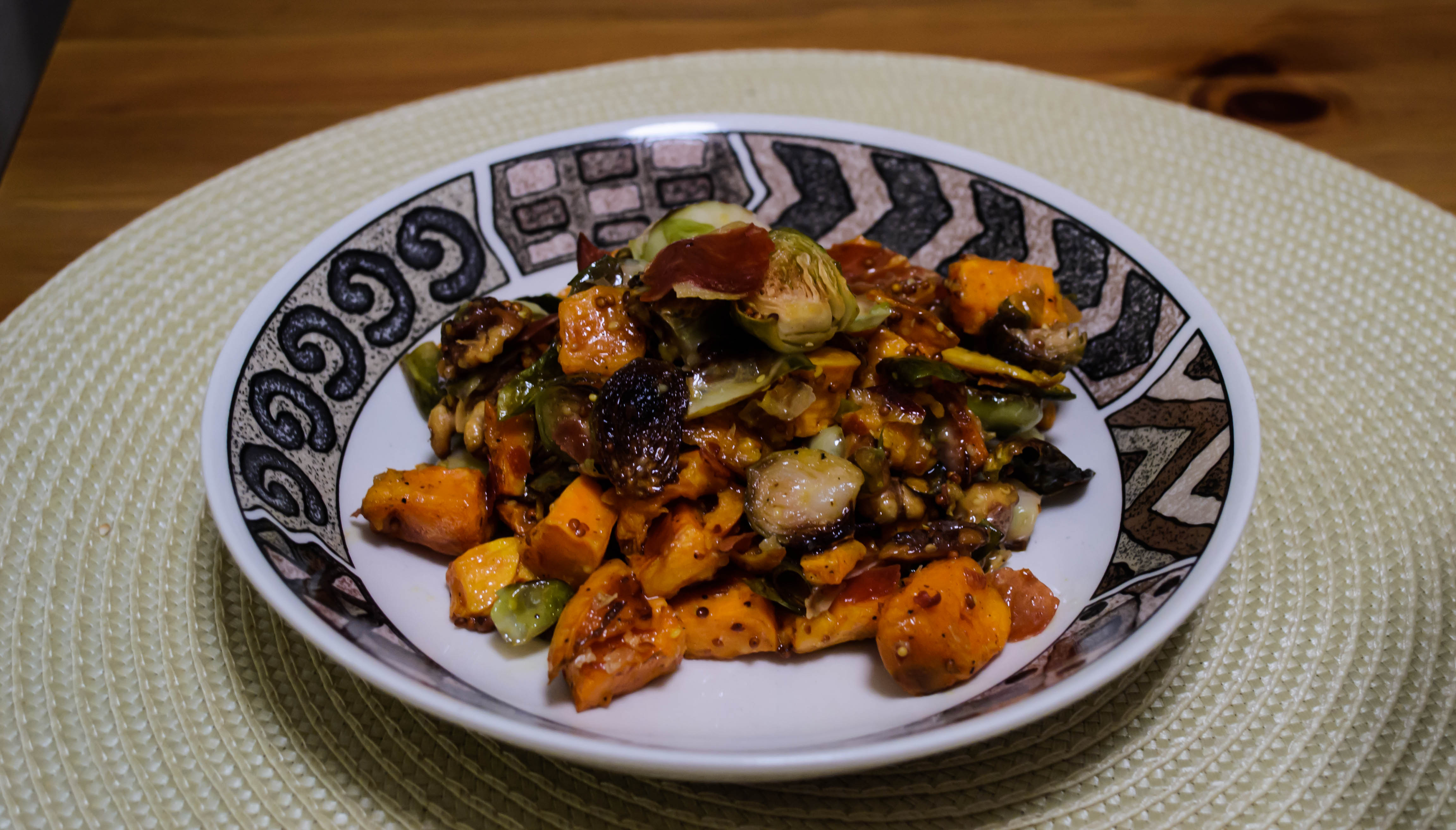
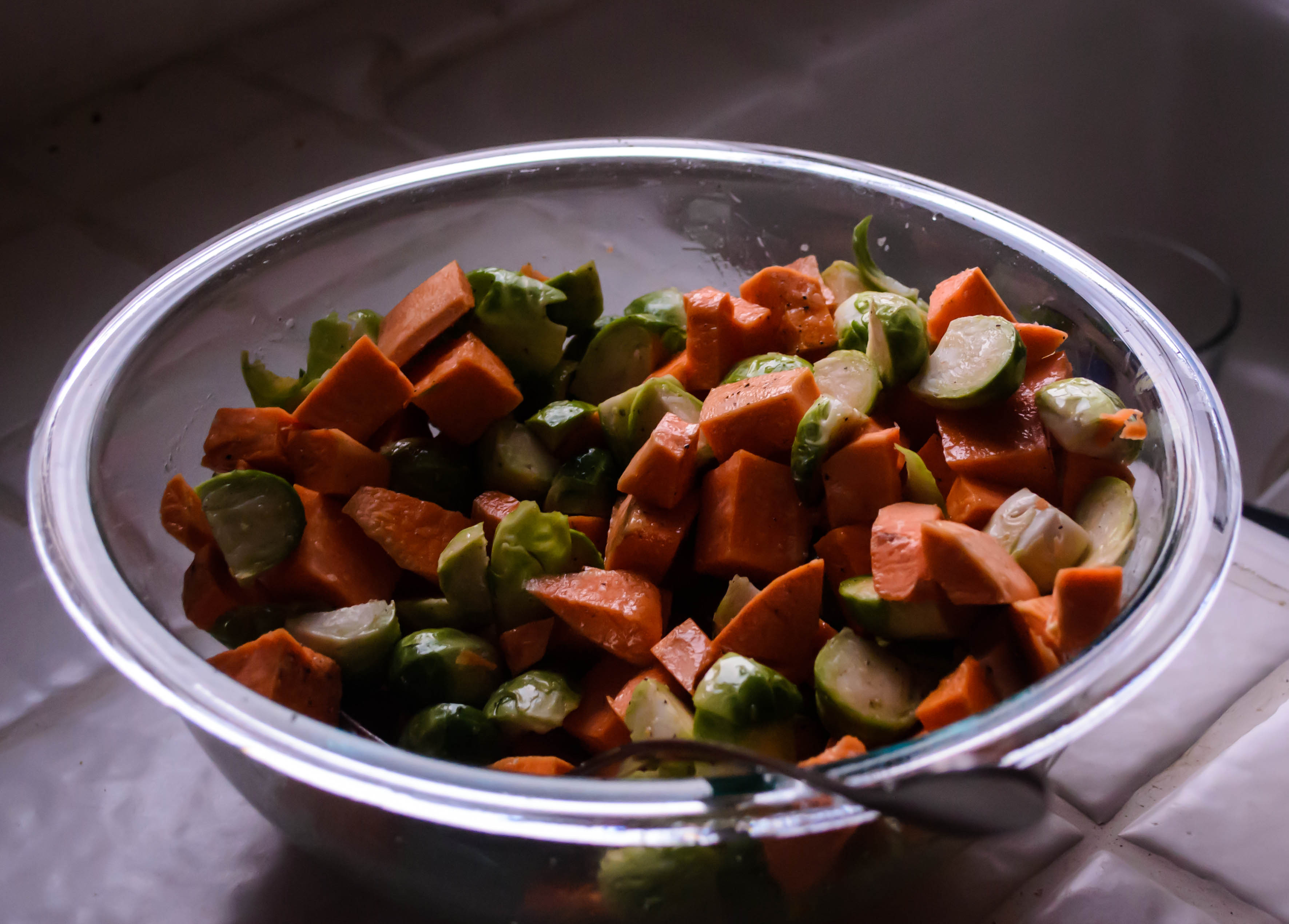
Food Blog November 2014-0794The dish stayed in the back of my mind. It was good when we ate it – nice for the day we’d had which, though warm, carried hints of cooler evenings to come – but I kept wanting more. The flavors should be deeper. The rawness of the brussels sprouts was okay, but with toasty edges they would be even better. My fix, as it usually is for things involving vegetables, was to roast everything. This created, I’ll admit, a bowl of cubes and shards that would never pass muster on a Pinterest board worth its salt. However,  it makes up for its homeliness by combining all the fall flavors and textures I was yearning for. It is sweet and earthy and vegetal, with the right amount of saltiness from the prosciutto. The walnuts have a slight, slight bitterness, which contrasts nicely against the sweet potato. And the dressing, tangy and light and packed with tiny mustard seeds that pop between your teeth, soaks down into the vegetables and lifts the whole thing back up into perfect, warm, satisfying fall salad territory.
Food Blog November 2014-0799

Roasted Sweet Potato and Brussels Sprouts “salad”
serves 2 as a main, 3-4 as a side
1 large sweet potato, peeled and cut into 1-inch chunks (about 3 cups)
16 ounces brussels sprouts, stem ends and any wilted or yellowing leaves removed, halved or quartered. You want the sweet potatoes and the Brussels sprouts roughly equal in size.
6 tablespoons olive oil, divided
1 teaspoon kosher salt
¼ teaspoon black pepper
5-6 slices prosciutto
1 cup walnuts, coarsely chopped
1 tablespoon whole grain mustard
2 teaspoons honey
2 tablespoons cider vinegar
Additional salt and pepper to taste, if desired


  • Preheat the oven to 450F and line a baking tray with aluminum foil. Pour 1 tablespoon of the olive oil directly onto the foil-lined tray and place the tray in the oven while it is preheating. While you wait for it to warm up, prep the vegetables.
  • Toss the sweet potato chunks and Brussels sprout pieces in a large bowl with 1 tablespoon of the olive oil, the salt, and the pepper. Once the oven is preheated, transfer the vegetables to a single layer on the foil-lined tray that has been heating up inside. The additional of the oil already on the tray means the exteriors of the vegetables will start cooking immediately.
  • As soon as you place the tray of vegetables into the oven, turn the heat down to 425F. Roast the sweet potatoes and Brussels sprouts for 20 minutes, then toss them to promote even browning and roast for an additional 20 minutes.
  • On another foil-lined baking sheet, spread out the prosciutto so the slices do not overlap. During the second 20 minute roasting of the vegetables, add the prosciutto tray to the oven and cook for about 10 minutes, until the slices are almost crisp and lightly bronzed.
  • Remove prosciutto slices to a paper towel to drain and cool, and add the chopped walnuts directly to the tray that previously held the prosciutto. Roast the walnuts for 5-6 minutes, until fragrant and slightly darker in color (keep an eye on them, though; they burn fast).
  • While the ingredients are roasting, make the dressing. In a large bowl (it can be the serving bowl, to save on dishes, if you like), whisk together the mustard, the honey, and the cider vinegar. While whisking, slowly pour in the remaining 4 tablespoons of olive oil. Taste and adjust seasonings if desired, but remember that the vegetables are already seasoned and the prosciutto is quite salty.
  • When the vegetables are roasted to your liking (I like them golden with slightly crusty edges, and yielding on the inside), remove from the oven and place them directly in the bowl with the dressing. Toss to combine. Crumble or chop up the prosciutto into bite-sized pieces, and add it and the walnuts to the bowl as well. Toss again to integrate, and serve warm or at room temperature.