With or Without You

The organizer of the group I went to Senior Prom with booked us seats at Splashes, a restaurant in a Laguna Beach hotel. When we arrived, all dressed up and feeling ever so fancy, four of our party of six were surprised and distressed to discover that a restaurant called Splashes primarily served seafood.  I was delighted.  Lobster ravioli?  Yes, please!

While the majority of our party waited for their chicken and steak dishes to be prepared, my date received the first course he’d ordered: a caprese salad with balsamic dressing.  It arrived – beautifully arranged slices of bright tomato, quivering mozzarella, crisp basil leaves – and he squinted at it with confusion.  “This is not a salad,” he said.  “There’s no lettuce!”  He ate it – we all did – and thought it was good, but maintained his stance.  To be a salad, a collection of ingredients must include lettuce.  No room for experimentation there.

We were in high school, and it was only the very beginning of the new millennium.  What did we know about creative vegetable assemblages like caprese or tabbouleh or panzanella?  We were babies.  But I will say: though I recognize these popular, now fairly well known varieties of salad as such, in this project Bittman has taught me so much about what a salad can be and how widely the boundaries of its definition can be stretched.  Not a single entry, in fact, on the Salads portion of the project list, includes lettuce.  How pedestrian – how expected – that would be.

“76. Grate apples (red are nice; leave skin on), radish and celery.  Roast pistachios and chop.  Dress all with olive oil, shallots, grainy mustard, red wine vinegar and a pinch of sugar.”

This sounded like an interesting and delicious combination, but like the tomatillo and jicama combination a few weeks ago, it didn’t sound like something you could dig into a big bowl of.  I decided, therefore, to make it more like a condiment, which gave me an excellent excuse to roast a chicken.  Imagine: a steaming, crisp skinned chicken thigh topped with cool, crisp shreds of apple and peppery radish.  Like the lobster ravioli of yore, yes please!

Here’s what I used:

1 large apple (I had a honeycrisp – one of my favorite kinds)

2 stalks celery

4 small radishes

½ cup pistachios, roasted and chopped

Dressing:

2 TB olive oil

1 TB red wine vinegar

1-2 tsp sugar (depends on your taste, the sweetness of your apple, and the sharpness of your radishes)

½ TB whole grain mustard

I eliminated the shallots because, despite their lauded mildness, neither N. nor I find the flavor of raw onions particularly appealing.

During the last twenty minutes or so of the chicken’s stay in the oven, I clattered the pistachios into a small cake pan and put them on the bottom rack so they could toast.  They needed about ten minutes at 350F, and emerged browned and nutty smelling (isn’t that a silly way of describing the aroma of a nut?  Of course it was nutty smelling!  What else could it be?).  I set them aside so they could cool before being chopped and deposited into the salad mixture.

While things were roasting and toasting, I grated up the stars of the salad.  The apple became little ribbons, the radishes paper-thin shreds, and the celery turned into a pile of almost-mush.  But I decided that was okay – celery is such an assertive texture that less of its fibrous aggressiveness would actually be a benefit.

Were I making this again, at this point I would deposit the grated vegetation into a sieve for a few minutes to let the juice drip away, giving the dressing a better opportunity to cling and permeate.  My decision to plop everything right into the serving bowl resulted in slight soupiness – the apple and celery in particular gave off copious amounts of juice.

At this point, you should also chop and add your pistachios to the salad.  After all, you paid money for them and babysat them carefully to prevent burning them in the oven.  But I didn’t.  I forgot about them completely as I whisked up the dressing, tossed it with the salad, then stowed the serving dish on the table so I could have room on my kitchen counter to carve the chicken.

Piled atop carefully carved and portioned pieces of chicken, the little condiment salad warmed and released a delicious sweet-tart aroma that completely belied the bland appearance of our plates.  Though up close you could see flecks of red and green and pink in the salad from the skins of the various ingredients, from any distance it looked like pale meat with pale apple shreds on top, next to a pale pile of barley, which I’d cooked pilaf style as a starchy accompaniment.

The flavor was more like the smell than the appearance.  It was sharp and bracing – just sweet enough, but assertively vinegary.  This worked very well with our chicken because the sweet-sour crunch cut through the fatty moistness of the meat.  Halfway through dinner I sprinkled mine with a palm-full of the forgotten pistachios, and I must admit I liked it better nut free.  N., not a pistachio fan, agreed.


Despite how good a sport he has been during the years (years!) I’ve been working to accomplish this project, N. doesn’t like all foods.  I recognize that there is a time for experimentation and excited guesswork, but there is also a time to exclude him from the proceedings.  This understanding led to my original decision to make only the items from Bittman’s list that seemed reasonable.  I haven’t set out to cook all 101 sides; there were a few that just didn’t fit our palates.  However, out of my curiosity and tastes, a few items remained on the list that are just not N.’s cup of tea.  The second salad I made this week was one such dish.

“79. Cook chopped pears in a covered saucepan with a tiny bit of water until soft. Puree, but not too fine. In your smallest pan, boil a few tablespoons of balsamic vinegar with a little brown sugar; lower heat and reduce by half. Spoon the pear sauce over endive leaves and finish with toasted sliced almonds and the balsamic reduction.”

To me, this sounded delightful.  To N., it sounded weird.  So on Thursday, when he had to go back to school for an evening engagement, it became my dinner.  It consisted of:

2 TB sliced almonds

2 ripe pears, peeled and chopped into small chunks

1 TB water

3 spears endive

¼ cup balsamic vinegar

1 TB brown sugar

I must admit: I cheated on the balsamic reduction.  The quantities I listed above are falsified.  But they are estimates you might use.  I happened to have a small container of already reduced, already sweetened balsamic vinegar in my refrigerator from a previous night, and this was the perfect excuse to use it up.  I just microwaved it for a few seconds and it loosened right up from a tar to a pourable, molasses-like syrup.

I toasted the almonds in a dry pan over medium heat, tossing them frequently.  You can’t take your eyes off of these slices for very long.  In the space of twenty seconds, they go from perfectly golden to burnt.  How do I know?  How do you think?

I set aside my overly tanned almonds and added the pear chunks and water to my pan.  Bittman didn’t specify whether the pears should be peeled or not, but pears already have that dubious, potentially grainy texture, and I decided the rough and sometimes gritty skin shouldn’t have a part in this salad.  As the pears – naked, cored, and chopped – simmered and softened, I considered the pureeing instruction and rejected it.  If indeed they were still supposed to be chunky, there were other methods than dirtying my food processor or immersion blender.  I had at them with the potato masher.  This broke them into a chunky puree – some texture remained but they were definitely on the road to sauce-hood.  I turned off the heat and set them aside to cool.

All that remained was to cut and arrange the endive and drape these various accoutrements across it.  I spooned, I drizzled, I scattered, and I served.
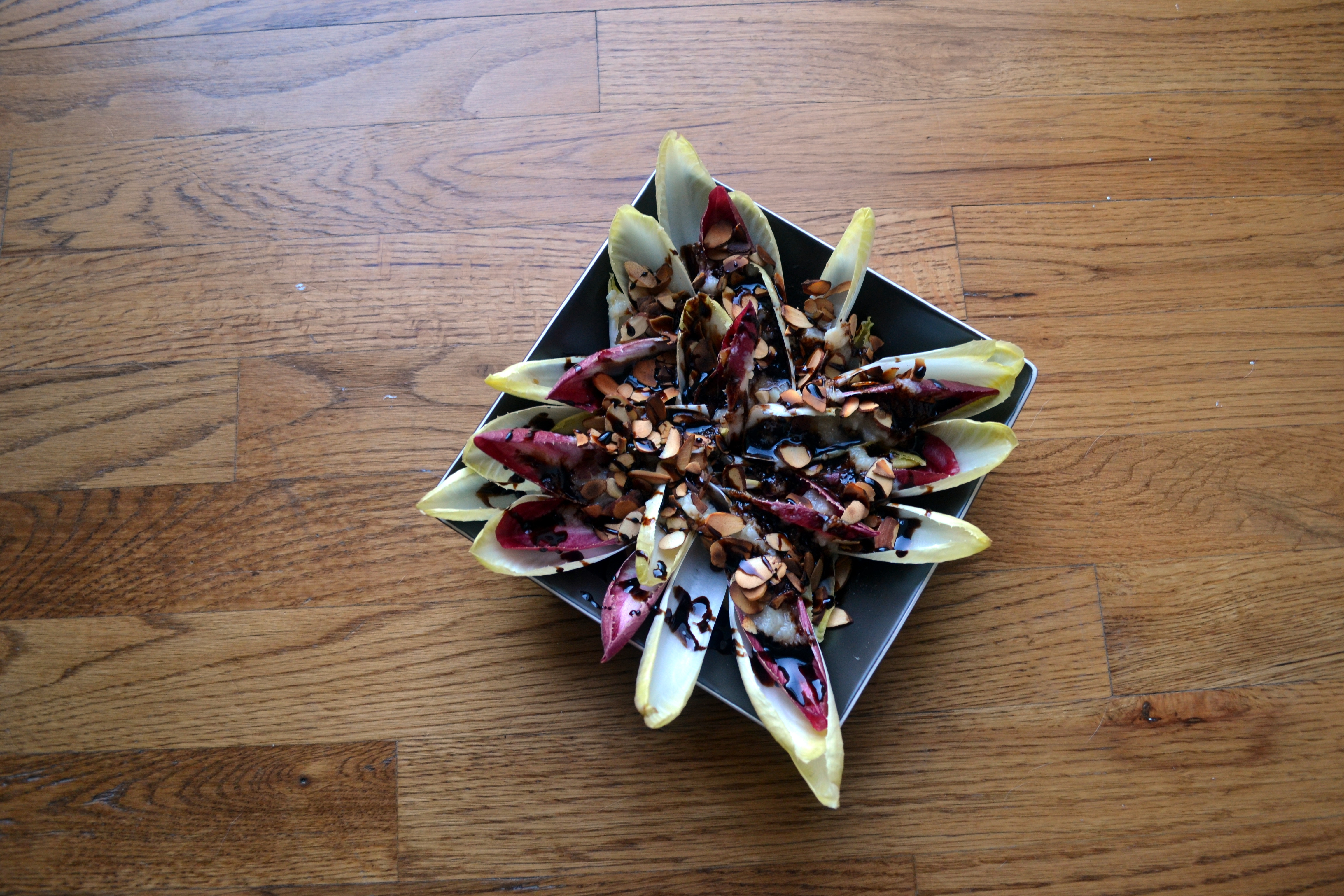
This was good, and a nice homage to fall, but it almost read like a dessert salad.  Endive has – to my palate at least – little to no discernible taste.  It is crisp and fun to eat because it has such a capable, interesting shape, but it crunches into water in your mouth and tastes like whatever you pair it with.  In this case, it tasted of earthy mild pears and glossy sweet balsamic reduction.  The crunch of the almonds and the crunch of the endive were pleasantly different: one dry, one juicy.  I ended up scooping dressing, pear puree, and almonds into each leaf and eating them out of hand rather than messing around with all that utensil business.  After all, I was seated at a table for one, and Ted Allen on the TV wasn’t going to judge me.  Besides, I was pairing this salad with shrimp (so delicious: toast mustard seeds and red pepper flakes, sear shrimp, deglaze with dry white wine, sprinkle with parsley, serve), and it’s so much easier to just pick them up by the tails.  No fuss.  Only a little mess.  Easily remedied.  Followed up, just to make it extra indulgent, with a little cup of coconut whipped cream, dried blueberries, and the rest of the toasted almonds.

N. wouldn’t have liked this dinner.  But that’s okay.  Our coupledom doesn’t require identical food preferences as I once thought it might, and I’m happy to take on all the shrimp and coconut in the world on his behalf, paired with pears and endive or not.  Call it a gift.  And in return, he lets me play with my food: not just eating with my fingers, but trusting me in my experimentation because I know what he likes.  That means when I present him with one of my Frankensteinian creations, he might raise his eyebrows, but he’s willing – and usually happy – to give it a try.  A salad doesn’t need lettuce.  What it needs, I think, are the flavors you like and the contrasting textures that make it an adventure to eat.

Milestones. And Cake. And Salad.

This September has been a big one for me.  New home (okay, so we technically moved in July), new job (okay, so school started in August), and new decade!  I’ve finally hit my 30s, and I like what I see so far (though admittedly I’ve only been stationed in this new world for two weeks).

Given my fanciful proclivities for putting food in my mouth, then, N. knows that my birthday must involve a restaurant in some form.  Since we are only just beginning to explore our new culinary surroundings, this was a perfect opportunity to embark on our adventures.  I started with Culver City which, delightfully, has a whole webpage devoted to its downtown restaurants, including (in most cases) links to each restaurant’s website.  This was almost too much.  I spent the better part of an evening cruising through online menus, imagining what kind of mood I might be in on the big day and what I might want to order and what, if the restaurant I ultimately chose should happen to be out of my top choice, I would order instead.

Based on menus and Yelp reviews, I decided on Fords Filling Station (FFS), whose upscale comfort food and wide range of offerings sounded promising.  I tend to like mid-range restaurants: not too fancy, where a prix fixe menu or outstandingly high prices make me feel like a grubby graduate student out of place (I know, I’m not anymore.  But it’s a hard habit to break in this new world of adulthood and employment), but not too casual either, where the food is sub-par or inconsistent and the wait staff makes no pretense of caring about our presence.  A gastropub – a self-proclaimed innovative collection of food, decor, and atmosphere – seemed like the right fit.

FFS is a fun spot.  It’s centrally located downtown, and the dining room is a big open space with a bar to one side, traditional tables, and long narrow two-tops where the couple sits on a bench next to one another looking out at the other diners, rather than across from each other.  N. and I were seated at one of these bench seats, and it was fun to sit side by side for a change in a restaurant setting.  Brick walls, big barrels, and warm colors make it inviting and, I thought, pretty unpretentious.

Our server, who was the perfect balance of informative and attentive, sold me on one of the night’s cocktail specials: citrus vodka, house made lemonade, and a little float of chambord.  It was nice – punchy and bright and sweet-tart, but oddly similar to a Rennie’s Lemonade from our erstwhile happy hour hangout in Eugene, and therefore it felt drastically overpriced at $12. 

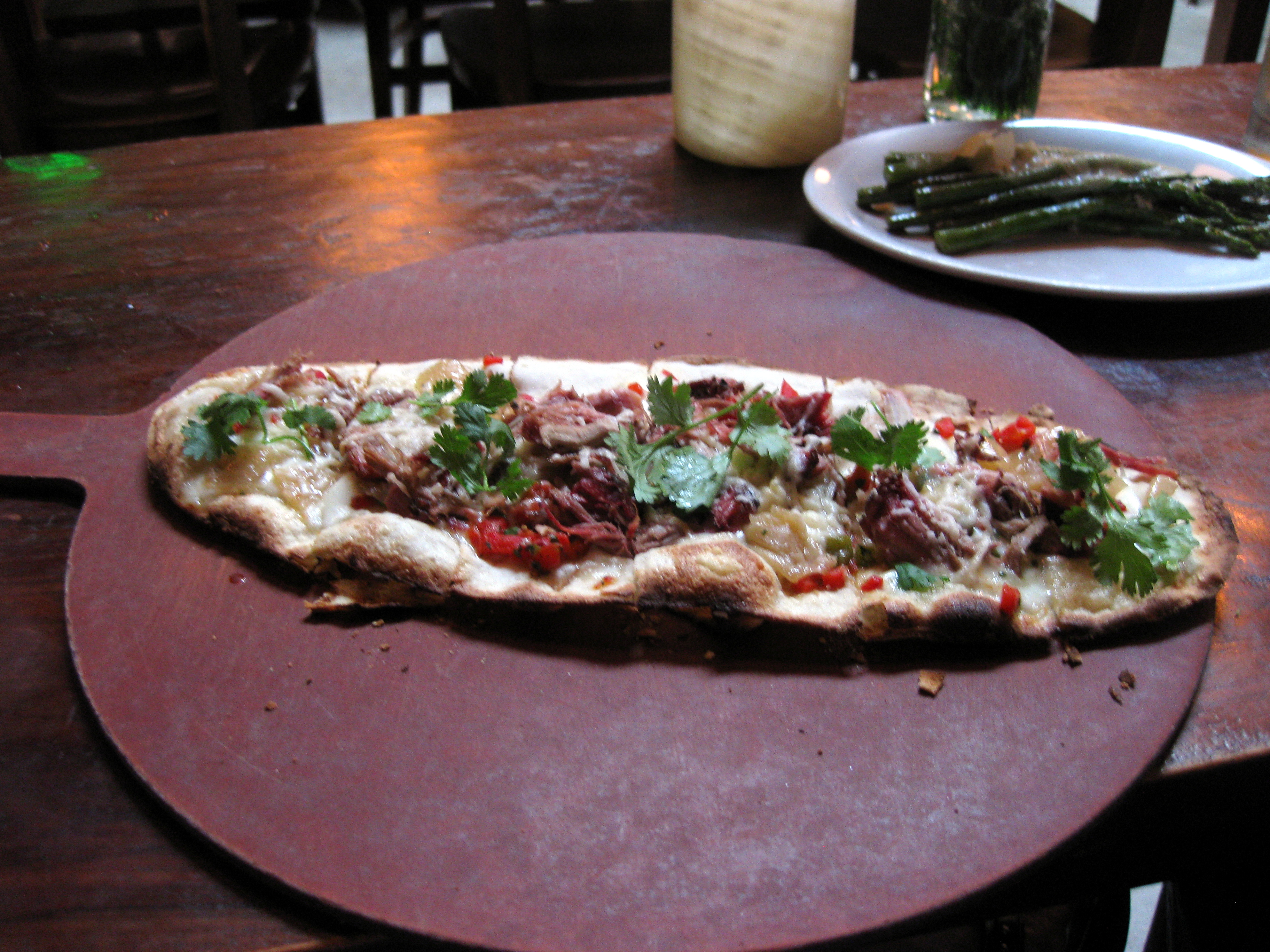
We opted to share entrees so we could order a few things, and got a Cuban flatbread with smoked pork pieces, cilantro, mozzarella, and some kicky little red chilis; grilled asparagus blanketed in shaved parmesan,; and a flattened half chicken with amazing garlic mashed potatoes and succotash.

N. was most attracted to the chicken (as is often the case when we dine out), and here he was clearly right to be.  Flattened, the bones were gone, the meat was compressed, flavorful, and intensely juicy, and the skin was crunchy and buttery and tender and perfectly unctuous.  Because he is fonder of white meat, it was also a perfect dish for us to share, because N. left me the thigh, with its dark, meatiness pleasantly encased in a crisp layer of fatty crunch.  Beside the chicken, the mashed potatoes swam in a sauce of garlic confit, which was rich and intense: the best gravy I’ve had in a long time.

The flatbread, which would have been just delightful on its own, paled a bit in comparison to this chicken.  The crust was cracker-like in texture, and the pork pieces paired nicely with the pepper and cilantro, but together the dish was a little bit dry.  It needed – perhaps – some herb oil drizzled over the top, or maybe 45 seconds less in the oven.  Tasty, but not the star of the show by any means.

The asparagus was excellent: nicely flavorful and light, well cooked and, aside from the piece I dropped on myself (grace embodied, truly), a nice vegetal accompaniment to our meal.

Since I didn’t get any dessert that night (I was full but not overstuffed, and didn’t want to tempt myself by even glancing at a dessert menu), I was still longing for birthday cake a few days later.  Fortunately for me A., who blogs from the other side of the world at Over and Under, had told me about Porto’s – a Cuban bakery in Burbank that turns out to be right on my route to and from work.  I had to drive up to the school for a Friday meeting, and as I headed toward the freeway to come home, I decided to stop in and treat myself.

Inspired by the flatbread we’d shared at FFS, and because I thought it would be a good benchmark for a Cuban bakery, I got the Cubano.  Then, because it was still my birthweek (I’m big on extending the celebration as long as seems rationally possible), I picked out two tiny cakes to share with N.: flourless chocolate, and tres leches.

The sandwich was good.  Ham and pork packed tightly onto a fresh bakery roll with cheese, sharp mustard, and a pickle.  A simple sandwich, but a delicious one.

My dessert selections, though, were fantastic.  The tres leches was rich and light at once, not overly sweet but dripping with cream, like a well soaked angelfood cake topped with toasted marshmallow cream.  The flourless chocolate selection was less cake than a giant chocolate truffle: impossibly rich solidified ganache inside a thin shell of cake-like crumb.  N. was only able to eat two or three bites before declaring it too rich for his tummy.  I had no such trouble, but did talk myself into enjoying only half at that sitting, and saving the other half for another night when chocolate felt mandatory.

Indulgent?  Certainly.  But (at least in the case of the desserts) at $2-3 each, a reasonable indulgence.  Still, when one is a responsible adult (as I suppose some might now imagine me), one must temper such indulgences.  In this case, that means salad.

80. Trim and coarsely chop chard (rainbow makes for a gorgeous salad) and combine with white beans and chopped scallions. Dressing is minced ginger, a suspicion of garlic, olive oil and cider vinegar. 

I collected:

½ huge bunch red chard, thick stems removed

1 15 oz. can white kidney beans

5 green onions, finely sliced

1/2 inch knob of ginger

2 garlic cloves

1/4 tsp coarse salt

1/4 cup each cider vinegar and olive oil

1 TB honey

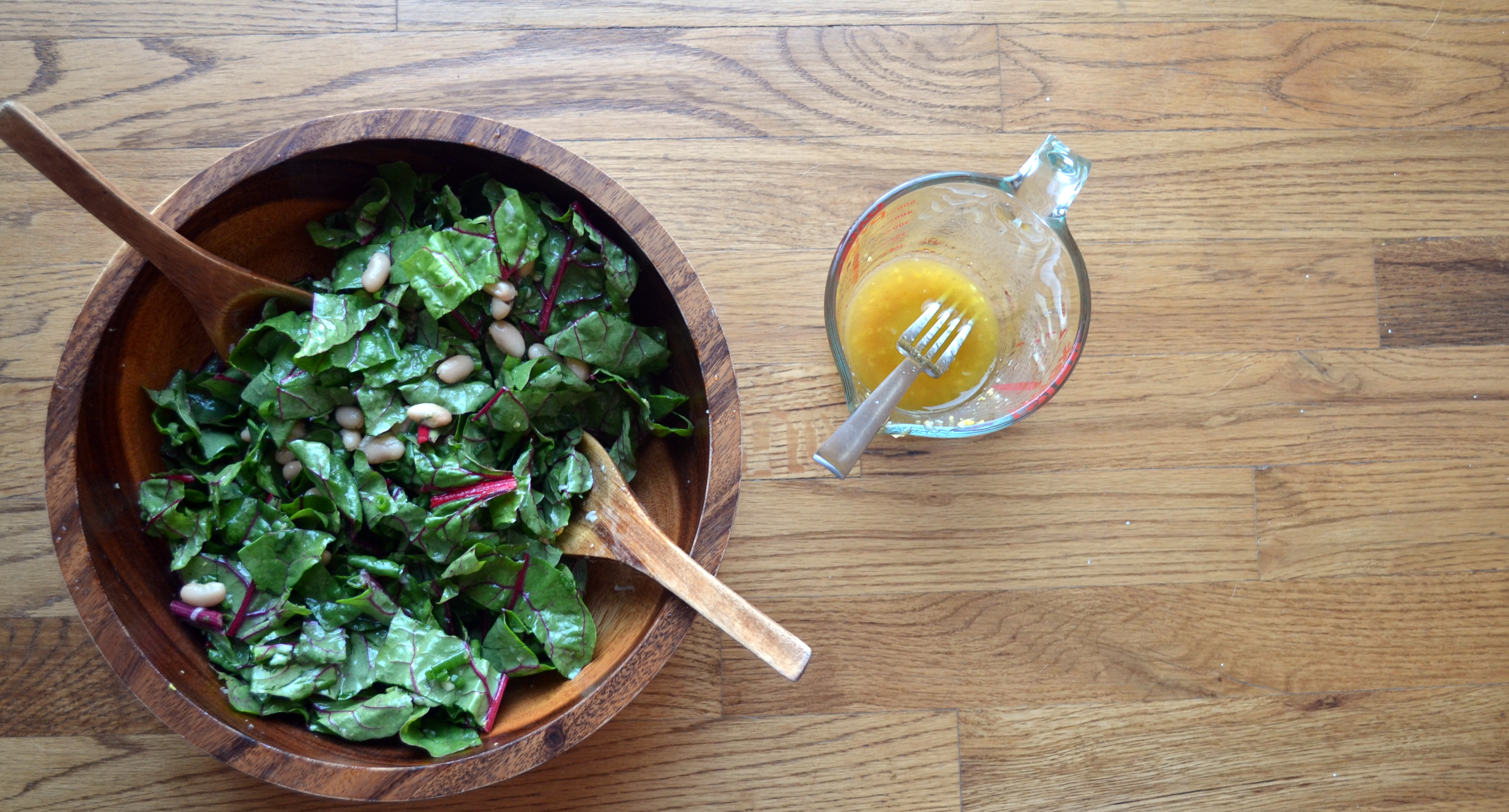
I tossed together the chard, beans, and green onions and set them aside in a big salad bowl.  To make sure the ginger and garlic were fine enough, I minced them by hand, then sprinkled them with coarse salt and dragged the flat of my knife across them until they turned into a thick, aromatic paste.  I scraped the paste into a glass measuring cup and whisked it up with cider vinegar and olive oil.  A taste of this was a cheek puckering revelation, so I added a healthy squeeze of honey to make it less astringent.

Aside from spinach, raw bitter greens are not always N.’s cup of tea.  Because I feared this might be the case with this combination, I decided to treat this more like a slaw than a salad.  I combined the main ingredients early and doused them in dressing a good fifteen minutes before dinnertime.  This would, I hoped, give the acidic dressing time to wilt the chard a bit, much like the vinegar in coleslaw dressing does for the cabbage.

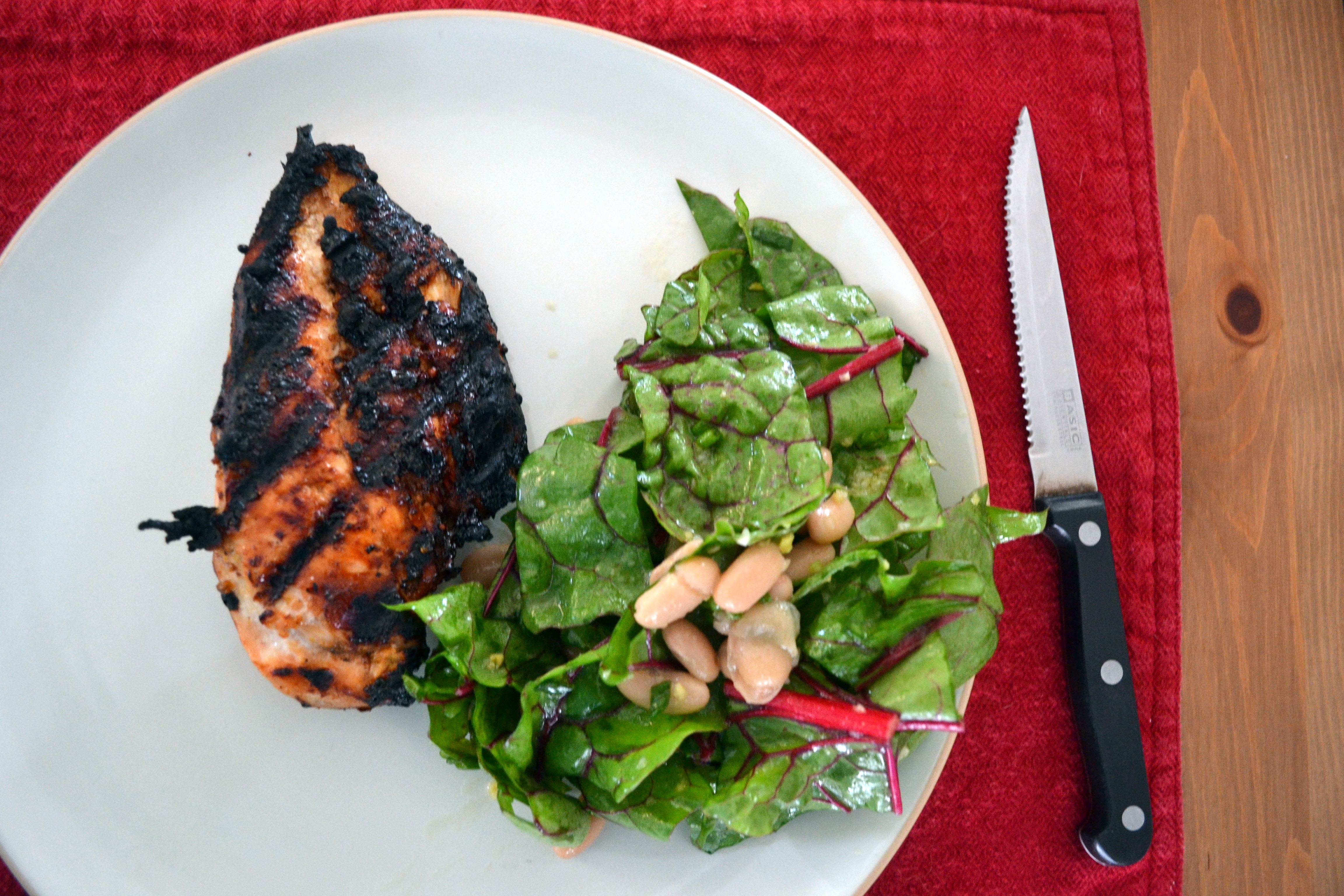
It worked well.  By the time we ate (grilled chicken breasts sauced with equal parts whole grain mustard and apricot jam), the chard had lost just a bit of its aggressive bite but its freshness was not compromised.  The beans, sometimes bland customers, had soaked up a bit of flavor from the tangy bright dressing, and so while they were a steady, creamy counterpoint to the earthy-fresh chard, they weren’t at all boring.  We were both surprised by how well we liked this simple little salad.

Success, then, and balance: excitement and indulgence followed and tempered by stability.  If this is what the 30s are like, I’m ready.  Bring it on.  I’ll just be 30 forever.

Vacation fried

Nothing says vacation like fried food.  Of course, for me, nothing says vacation like fried-food-I-didn’t-have-to-fry-myself-that-comes-in-achingly-bad-for-the-environment-but-when-I’m-on-vacation-I-might-not-care-styrofoam-containers. So at the Farmers’ Market near my parents’ home in California’s East Bay Area, I fought with my compunction about collecting a lunch made at an event celebrating freshness and organics and the products of the earth in a container that will last longer than my own body will. Compunction lost.

Because inside that container were two items: a chicken tamale and a spinach and cheese empanada.  I bought them from a stand advertising Panamanian food – the boy and the man in charge webbed within unexplained netting. The tamale was largely unremarkable; steamed in a banana leaf instead of a corn husk, filled generously with a mixture of moist, shredded chicken and kick-less tomato based sauce, I ate it with enjoyment but not gusto. The empanada was a different story.

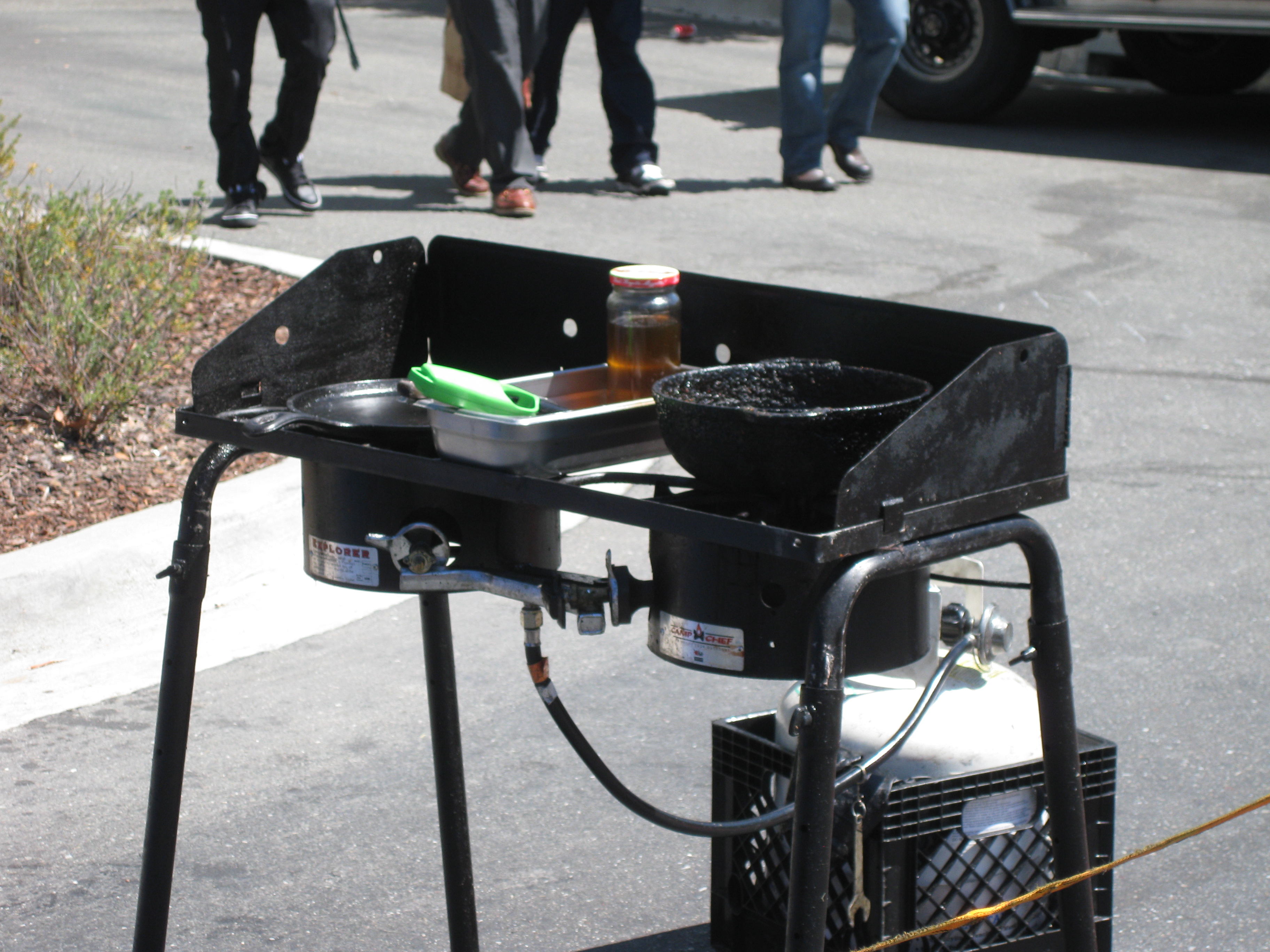
When my mom and I approached this stand, it was barely 11am. While the tamales had been pre-steamed and just needed to be heated up to be ready to eat, the empanadas did not yet exist in finished form. As I ordered, the older man doing the cooking ambled toward a small outdoor fryer consisting of a coal-black bowl full of questionable oil and turned on the gas.

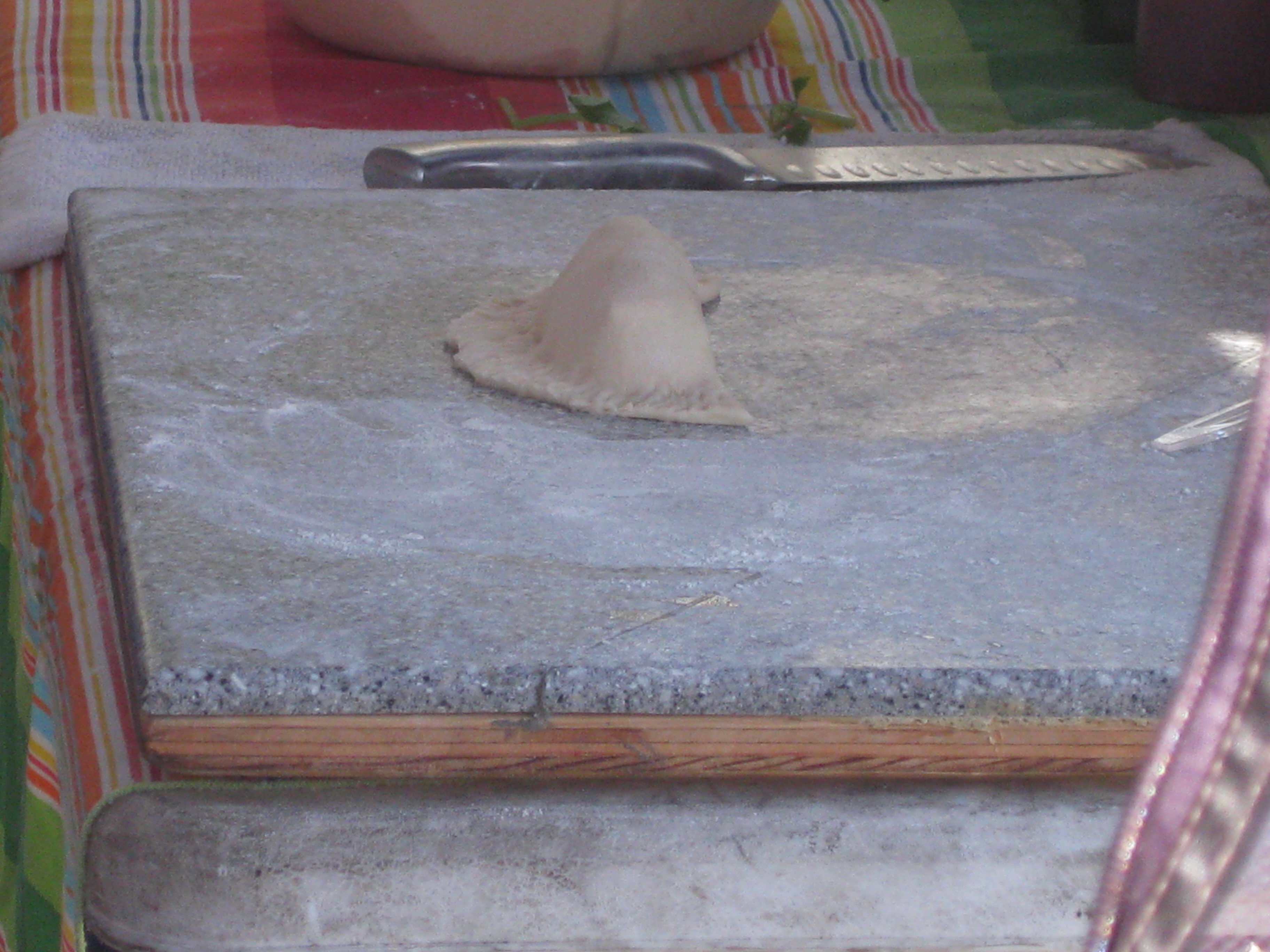
He ambled back to the netted tent and pulled a ball of smooth, elastic dough from under plasticwrap and, easily and lovingly, rolled it into a six or seven inch circle with almost no extra flour (if you’ve read about my troubles with dough, you understand why this amazed and alarmed me). He layered on some spinach and a big chunk of cheese, dribbled egg wash, then casually folded the dough, pressing the edges first with floured fingers and then with the tines of a fork, leaving even indentations all around the outside to seal in the goodness.

As he carried my lunch over to the warming oil, he told us there were two ways to make an empanada: baked or fried. Then he added, “but really, there’s only one way,” and we agreed that fried is always better. Tipping the little pastry into its bath and carefully manipulating its floating orientation with his fingers, he said he likes to fry his empanadas in oil rather than lard, because lard makes the exterior too dark too fast.

My mom was surprised by the time and low temperature this fry required. The oil did not sizzle and leap furiously, but simmered warmly around the edges of the pastry. This was necessary, we were told, because time was needed to thoroughly heat the filling and cook the dough all the way through. The empanada, with help from our new friend’s careful, gloved prods, swam its way around the oil bath into a state of deep golden crispness before extraction and enclosure within baneful Styrofoam.

Too many minutes later, we were home and I was investigating my purchase more personally. The dough, fried so carefully and attentively, parted with a raspy flaky tear between my teeth, quickly revealing moist, almost dense chewiness. The cheese had cooled only slightly and now maintained all the delightful elasticity of a taffy-pull. But it was the pastry I couldn’t get enough of. Because it was stuffed, the central, puffed area containing the spinach and cheese was a slightly different texture than the crisp pressed edges – softer, chewier. The edges, almost completely crisp, still had a slight interior tenderness to squash pleasingly between eager teeth. The closest comparison I can imagine, though I’ve never eaten it, would be fried pie dough.


I dispatched the whole thing in a time embarrassingly less than five minutes. I tried to savor, I really did. But isn’t that just like vacation? No matter what you do, it’s gone too quickly…

Spiking your stuffing

The one part of Thanksgiving dinner I refuse to make from scratch is the stuffing.  I don’t know why, but no stuffing has ever lived up to the Stove-top brand blend my mom puts together: one box of turkey stuffing, one box of cornbread stuffing, mixed up and tossed together and then, rather than just stirred into boiling water, baked in a casserole dish for twenty minutes or so right before serving, so the top is crusty and crunchy.  This is easy to do, since it takes my dad at least twenty minutes to get the turkey carved.  This is smart to do because it makes a texture contrast and provides a gravy sponge.  Other stuffing mixes I’ve tasted, and the homemade one I attempted this past year for A., who doesn’t like celery (have you ever tried to find a stuffing mix without celery?  Impossible!), just haven’t measured up.

And then, Bittman.

“26. Chop corn bread into cubes. Sauté cherry tomatoes, scallions and corn kernels in butter or oil. Deglaze the pan with beer, then empty the pan over the corn bread. Bake in an oiled dish or use as stuffing.”

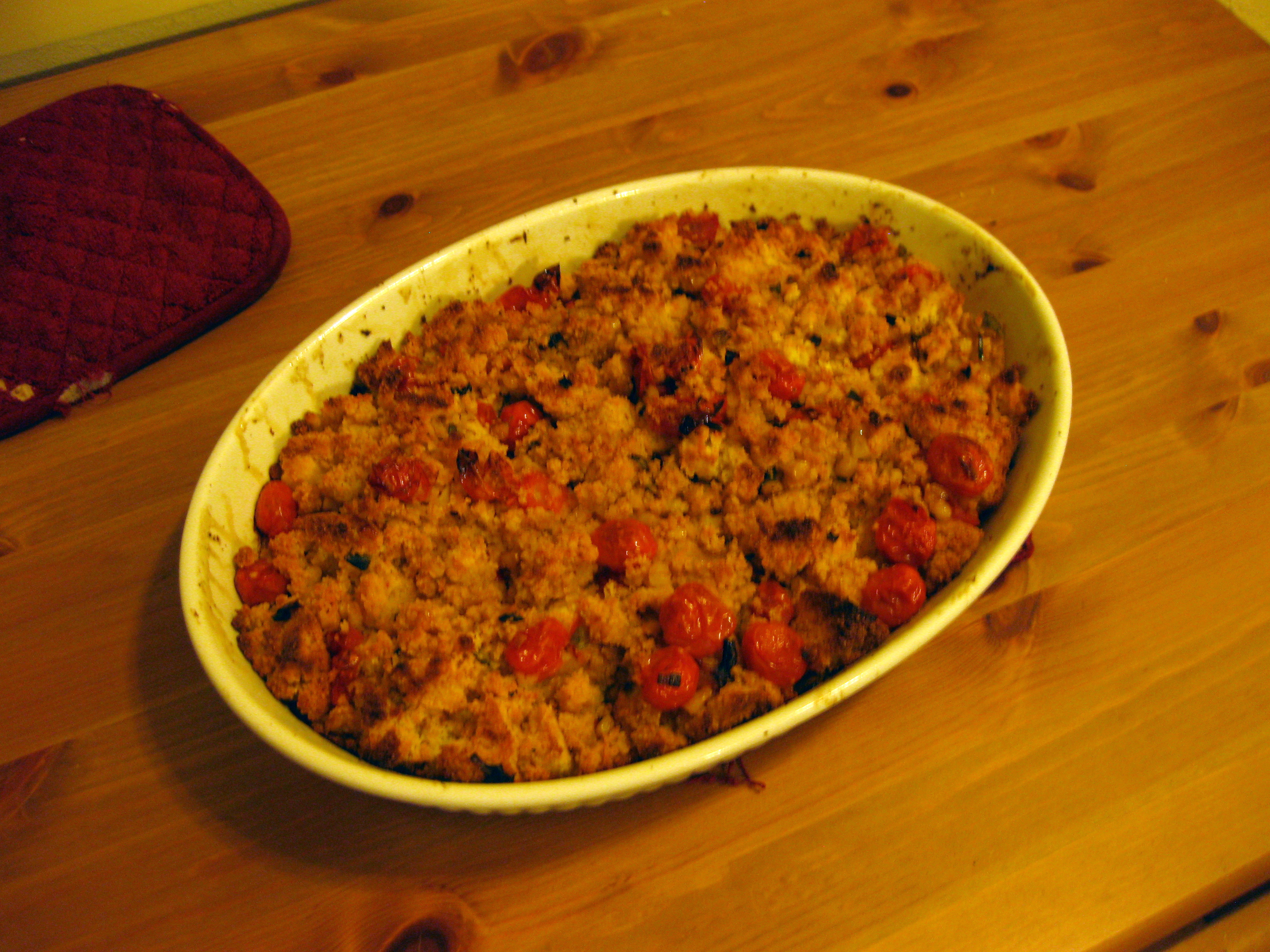
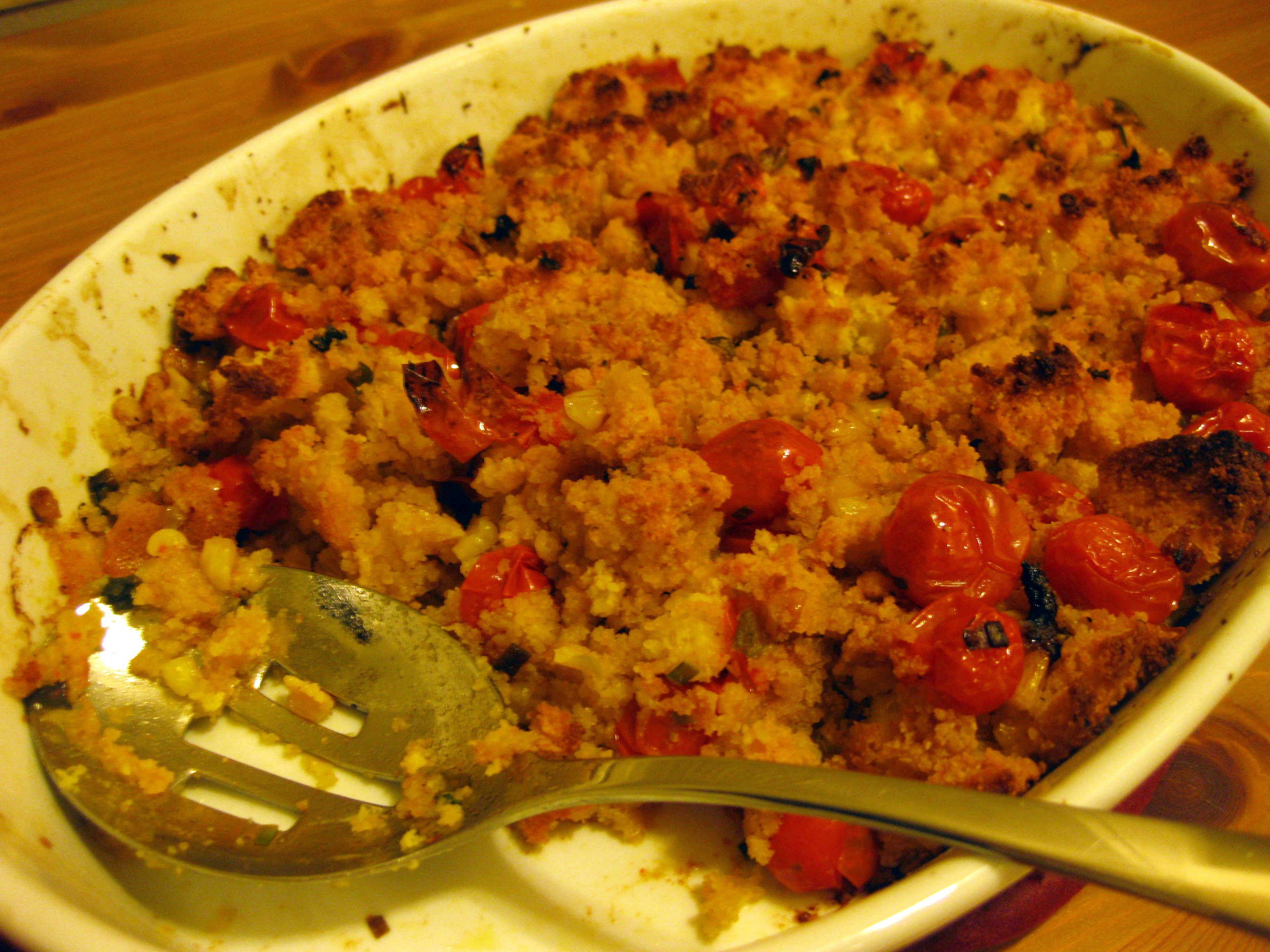
You guys, this was amazing.  And given how you now know I feel about stuffing, that’s saying something.  Amazing.  Here’s what I used:

6 cups (roughly) corn bread cubes, toasted (use your favorite recipe)

4 TB butter

6-8 beefy green onions

1 pint red cherry tomatoes, rinsed and dried

1 cup corn, fresh or frozen (if frozen, defrost it first)

Salt and pepper

12 oz. beer (I used Drifter)

I made a pan of cornbread from my favorite recipe in a larger pan than usual; I thought this would result in a slightly drier bread, so it wouldn’t become mushy when the liquid was poured over it.  The cornbread was still pretty moist and springy, though, so after it had cooled for a while I cubed it, scuffed it around in the pan a bit to separate the clinging pieces, and tossed it back in the oven at 400F for fifteen minutes or so to get some toasty edges and dark golden spots on it, then set it aside to cool completely.  This worked beautifully and I’d recommend it, especially if your cornbread is moist and cakey.

While the oven was occupied by an herb-stuffed chicken (again, I know.  I can’t help it), I melted the butter in a skillet over medium heat and sliced the green onions, using the white and green portions.  I tossed these little rings into the sizzling butter along with the corn, and agitated them gently.  When the onions were soft and the corn just beginning to caramelize, I added the cherry tomatoes and seasoned the whole skillet with salt and pepper and, on a whim, a few shakes of garlic powder.

I turned the heat up to medium high for just a few minutes until the cherry tomatoes started to burst through their skins, spilling pulp into the mix, and the corn had browned delightfully, leaving the kitchen smelling like summer.

I then switched off the heat and poured in a full bottle of beer, nutty, yeasty, and brown (Drifter is a pale ale, so it has some body and depth – I wouldn’t go any lighter than pale ale, and might in fact prefer something darker: a brown ale like Newcastle, or even a porter if it’s not too strong).  The aroma changed from summer to fall harvest in an instant as the beer fizzed over the vegetables.

After scraping the bottom of the skillet gently with a spatula to remove any persistent browned bits, I poured the whole steaming bubbling mass over my pan of cornbread cubes and tossed gently to distribute the liquid evenly.  Then I stowed the pan in the oven: 350F for 25-30 minutes until the top is deeply golden and just crunchy.

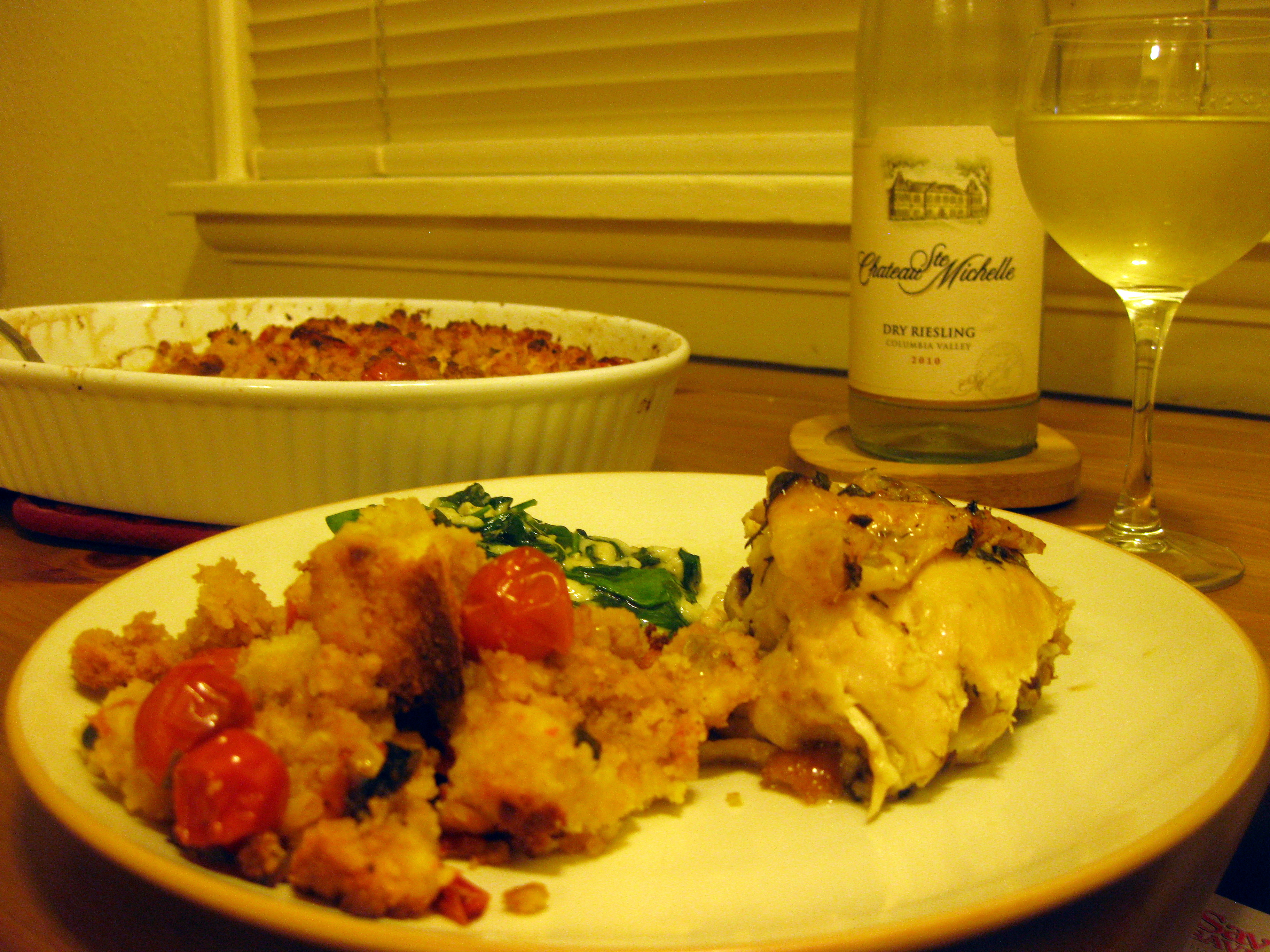
We ate this with roasted chicken and creamed spinach.  Vegetarians shield your eyes, but the chicken just collapsed so beautifully across my carving board that I felt I had to show you:

But the stuffing!  The stuffing was incredible.  The cornbread soaked up the beer, and the sweetness of the bread plus the sourness of the ale created this yeasty glory I couldn’t stop eating.  And I don’t like beer.  It was just such a perfect liquid for this dish, contributing just the right amount of malty bitterness.  The tomatoes got richer and sweeter in the oven, as did the corn kernels, and they partnered with the green onions to make such a good accompaniment to the cornbread that I’m almost tempted to add them into the batter in my next pan.  Or maybe into a compound butter to spread on top.  That would be better, texture-wise.  Green onions, cherry tomatoes, and corn: three musketeers. 

This stuffing was gone in two days.  With only two of us eating.  It was that good.  If you’re in the Northwest, where Spring is shunning us, make this now while you still need your oven to keep warm.  Accompanying some baked sweet potatoes and leafy greens, this becomes a vegetarian meal.  If you use oil instead of butter and have a good egg replacement, it could be vegan.  If your cornbread is free of wheat flour and you use gluten-free beer, it could be gluten-free as well.  However you make it, make it.  This one is too good not to try.

Chicken’n’chutney

We’ve become huge fans of roast chicken this year. I rub a mix of herbs, salt, pepper, garlic, lemon zest and olive oil under its skin, and stuff it full of the same herbs, a few cloves of garlic, and half a lemon. The lemon is, I think, the secret weapon. It gives the finished meat a really nice light suggestion of citrus. I’ve also started creating my own rack in the cheap metal rectangular baking pan that subs in for a roasting pan in my kitchen: on Kelsey Nixon’s suggestion, I make a triangle in the bottom of the pan out of a few carrots, a few sticks of celery, and a halved onion. This gives the chicken a nice platform to sit on so it doesn’t steam in the juices it exudes. Plus, I like to think the extra vegetables impart a nice, delicate flavor into the meat as well. (Plus plus, the vegetables roast down and caramelize in the chicken fat and juices, and you can extract them from the pan and gobble them as an extra veggie with your dinner, as you can see I’ve done with the carrots below. Their skins maintain the tiniest resistance to the teeth, and they taste like all the goodness of chicken skin, but really you’re just eating a roasted carrot!) I roast breast side down, always, to keep the white meat as juicy as possible. I’ve done this vegetable trick with our Thanksgiving turkey the last two years as well and I’m ridiculously pleased with the results.

But this isn’t about Bittman, is it? To go with this chicken, I decided to go with one of his chutney ingredient combinations:

“5. Apple Chutney: Cook big chunks of peeled, cored apple with a little apple cider, Dijon or whole-grain mustard and chopped sage until the chutney thickens. Don’t cook it until it becomes apple sauce unless you want to.”

Between that day and this moment, I lost the small square of paper onto which I scribble quantities. Alas. So what follows are approximations from memory, but I think this is really a “how you like it” sort of dish, so you’d be using my values only as approximations anyway.

3 crisp, tart apples, peeled, cored, and cut into large chunks (I had Fujis, but Granny Smith or similar would also be delicious)

¼- ½ cup Gravenstein apple juice

1 generous TB whole grain mustard

1 TB finely minced sage

I tumbled these together in a small saucepan and cooked it over medium heat for fifteen minutes or so, stirring infrequently and gently, until the apples became soft but still resistant, and the juice had somehow thickened into what was not quite chunky applesauce, but was securely on its way.

We ate this draped over juicy, moist hunks of chicken, and while not the same perfect pairing as I think it would be with a well breaded and deeply fried pork chop, it was pretty delicious. I liked the combination of apples and mustard: they added a tart sweetness that balanced well with the sharp spice and the deep earthy flavor of the sage.

With this, in what must be one of the more monochromatic plates ever made, we had parsnip “puree.” I place this descriptor in quotations because my results were less than smooth. I didn’t core the parsnips or roast them long enough to make them sufficiently tender for my immersion blender. Alas. They were delicious, however, and they are a commodity I plan to revisit. Once I get the specs correct, I will certainly share the recipe here. It involved butter, and heavy cream, and roasted garlic, all in embarrassingly large quantities. But once you swirl them together you can’t see how much there ever was, which means it doesn’t count, right?


Brecht’s Restaurant

I have a Bittman success story to share with you, and I will.  Soon.  But first, in a continuation of last week’s celebratory post, I have a birthday restaurant review.

Yesterday, N. took me to Portland to celebrate my birthday.  Because I’m so sophisticated and urban, of course what I wanted to do most was go to the zoo.  Only after we’d seen every animal (and returned to a few exhibits on the way out to see if anyone had decided to come outside yet) did we embark on the more culinary aspects of our voyage.  We spent close to an hour in Sur le Table, a store that makes me swell simultaneously with desire, longing, and anxiety.  It is bright and beautiful and artistically merchandised, and I can’t help but want everything in it (do I need a handheld KitchenAid electric mixer in every color of the rainbow?  Of course not.  But do I want them, after seeing them lined up and shining prismatically on the shelf?  Yes I do).  I imagine the fantastic food projects I could embark on, the dinner parties I could have, the appetizers I could construct (the tiny tart tins only big enough to hold a tomato tart made from a single slice of tomato, the edible silver pearls for cupcakes, the souffle dishes… oh the souffle dishes…), and there’s where the anxiety sets in.  Yesterday, I had a gift card to spend.  I needed to be careful and thrifty and try to not to exceed the card’s value by too much, because beauty doesn’t come cheap.  That meant excruciatingly rigorous examination of everything. in. the. store.  I ended up with equipment that fills several notable gaps in my kitchen repertoire, and that was good.  I was practical.  But it still didn’t quell my girlish longing for cookie cutters in the shape of a crab, a cupcake, or a golden retriever, or a spring-loaded icing syringe, or a huge octagonal serving platter.

And yet we pressed on.  On several trusted friends’ recommendations, we went to Montage for dinner.  Located under a bridge on the east side of the river, it was hard to find (thanks, road construction), but clearly well loved, as at least a dozen people were waiting outside for the restaurant to open when we arrived at 5:55pm.

When we went inside and the hostess showed us to a table set with pristine white linens and folded, creased paper menus, my impression was of a Brechtian dreamscape.  If Bertolt Brecht had designed a restaurant, it might be something like this.  In French, “montage” means “assembly” (roughly, forgive my linguistic impreciseness, amis).  Here, “assembly” took the form of a collage of high and low.  From my seat at our table, when I looked to the left I could see long, long shelves against the far wall stocked with bottle after bottle of wine.  As their extensive wine list proved, some were good vintages and all were pretty reasonably priced.  When my eyes slid upward, however, I got a view of the wall-sized, quasi-cartoon Last Supper painted above a row of two-tops.

Looking to my right, on the deep windowsill near the entrance I could see a classical-style statue, complete with broken limbs and barely disguised indecency, standing next to the cast of an alligator’s skeletal jaws and a fully blown pufferfish, both suspended from the ceiling by fishing line.

This, then, was a conscious pastiche of high and low.  The paper menus revealed not only the lengthy wine list, but a full range of Cajun and Southern American classics.  N. ordered the jambalaya, but I couldn’t resist the call of the fryer.  I ordered “Buttermilk fried chicken hindquarters,” which were advertized to arrive with garlic mashed potatoes, seasonal vegetables, AND a salad.

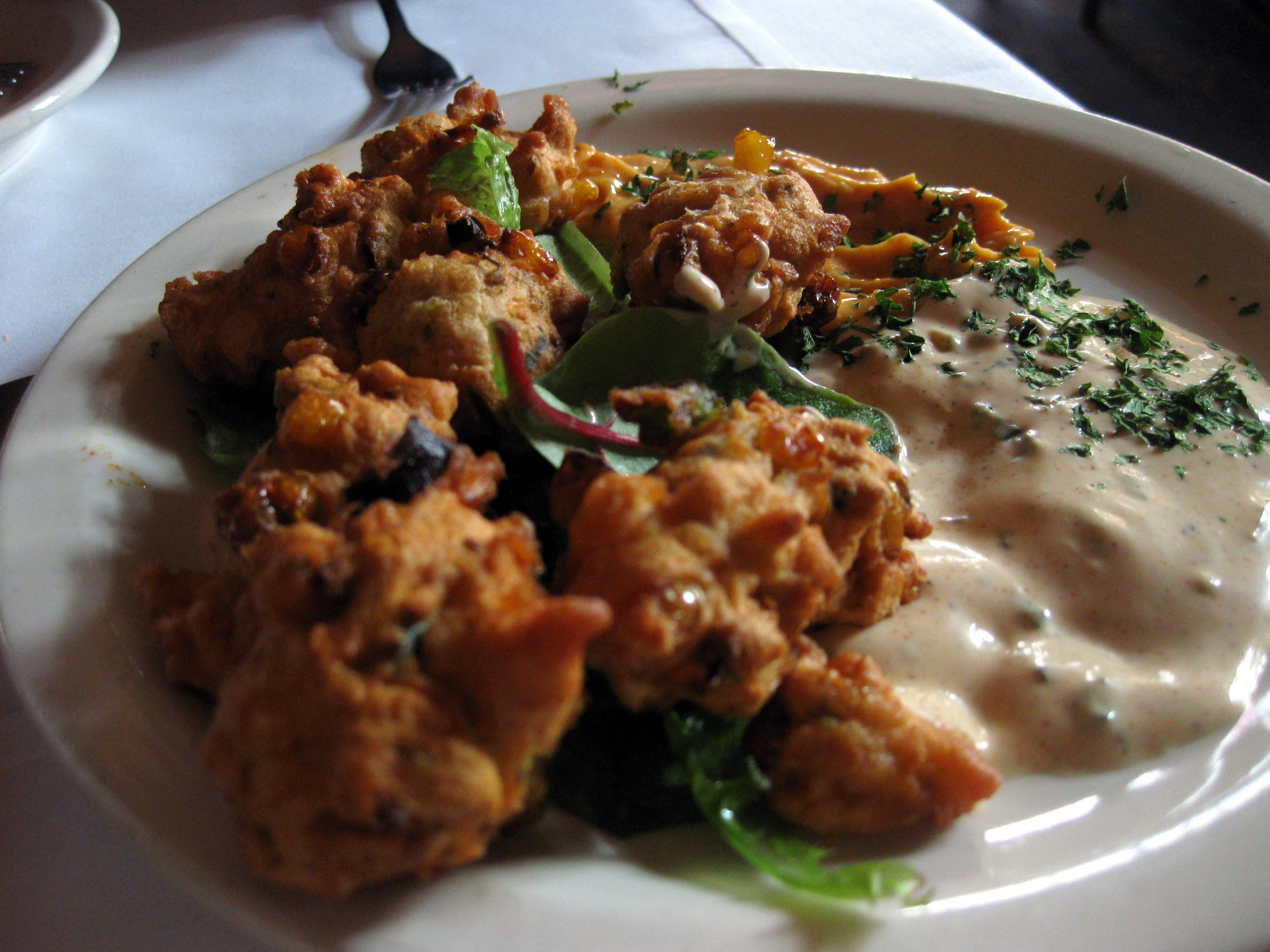
Before any of that, however, we got our beverages and shared a plate of hush puppies.  My dry Riesling was crisp and tart and just barely fruity, and our server really topped off my glass because there wasn’t enough left in the bottle for two.  I told him it was my birthday, so he could use that as an excuse and he chuckled.  Wine managed, we plowed into the hush puppies.  These were moist and chewy and had kernels of corn in the batter for that pop of sweetness and texture.  They were accompanied by two aiolis: one garlic and one red pepper (I think.  It was extremely mild and our server wasn’t sure).  The garlic aioli was delicious: slightly vinegary and herby, much more complex than a regular mayonnaise.  The fritters were not very crunchy on the outside, but their flavor more than made up for any textural shortcoming. 

While we waited for our dinner to arrive, another aspect of the Brechtian theater of the place became clear.  Behind the white, linen-clothed bar, the kitchen was partially visible, and every time a plate came out the expediter bellowed the name of the server responsible for it.  After an initial surprise, no one in the restaurant seemed put off by this practice, and it started to blend into the clatter of dishes, happy conversation, and David Bowie’s vocals soaring effortlessly up into the background.

Dinner arrived on white dishes, but it didn’t smell highbrow.  It smelled homey and warm and wonderful.  N.’s jambalaya was well spiced and nicely flavored.  It was just spicy enough to merit a gulp of beer and a crumble of cornbread in between bites, and he has added this to the list of dishes he’d like me to try at home.  My plate came with its promised hindquarters still connected, dredged and crispy and beautifully caramel-brown.  A little heap of mixed sauteed vegetables nestled in the space between leg and thigh, and a mound of mashed potatoes rounded out the plate.

I started with the mash.  I think they were red potatoes because some shreds of dark mauve-y skin added an appealing squish between my teeth.  The meat of the potatoes was velvety smooth and creamy and just brushed with garlic flavor.  N. was permitted one taste and then somehow the whole mound disappeared into my stomach.

I moved on to the chicken.  I have to admit, I am pretty picky about my fried chicken.  It must be crispy, it must be just greasy enough to slick my fingers and moisten my lips, and I prefer dark meat (though that’s the case with any poultry, fried or not).  This chicken scored a two out of three.  The breading was crisp and the meat was moist and flavorful.  This breading, however, was fairy thin.  It did not have the nodules of thick crunchy fattiness I didn’t know I wanted, and as a consequence the grease factor was minimal.  It was delicious (oh was it delicious!), but it wasn’t my fantasy fried chicken. 

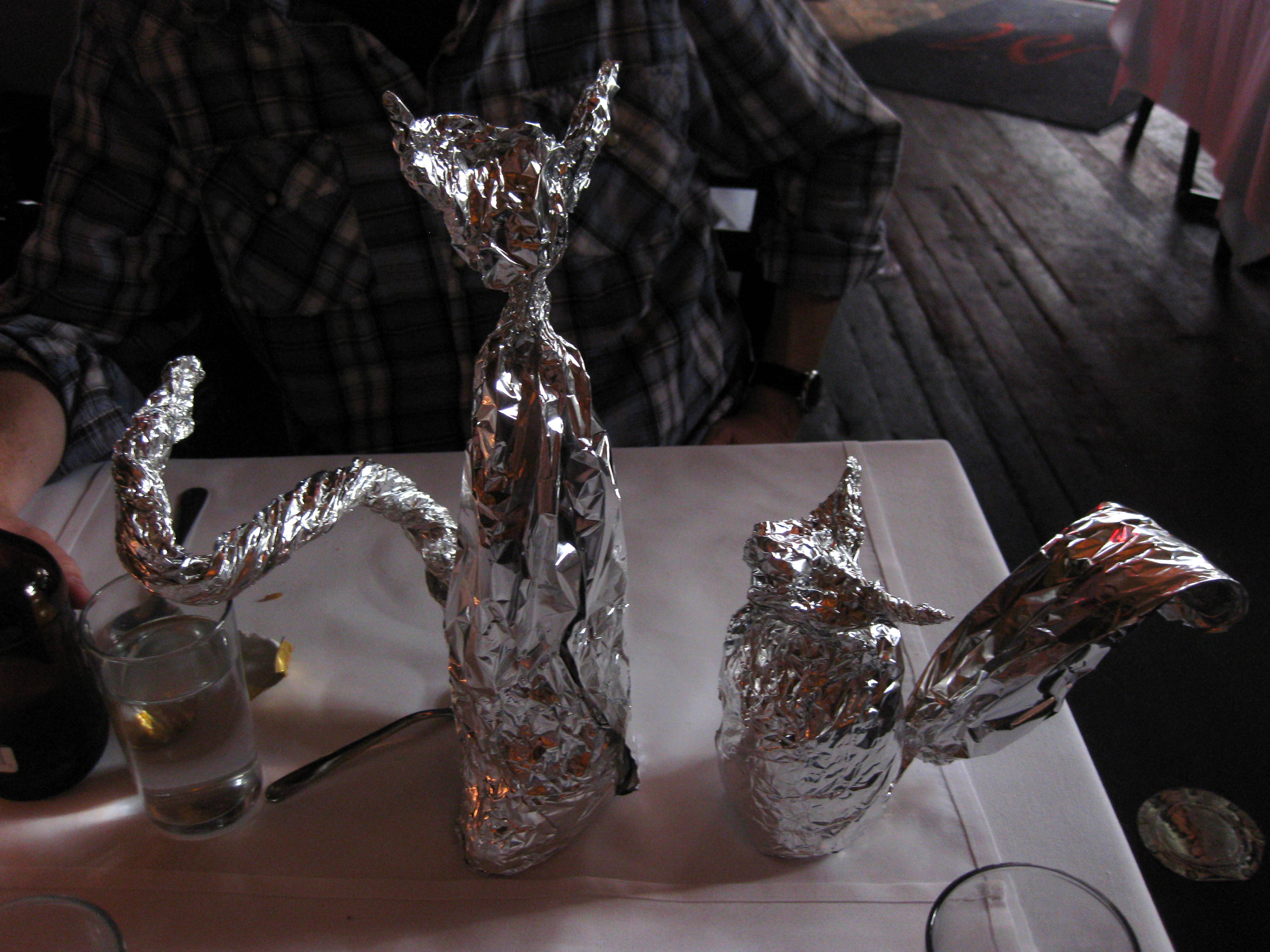
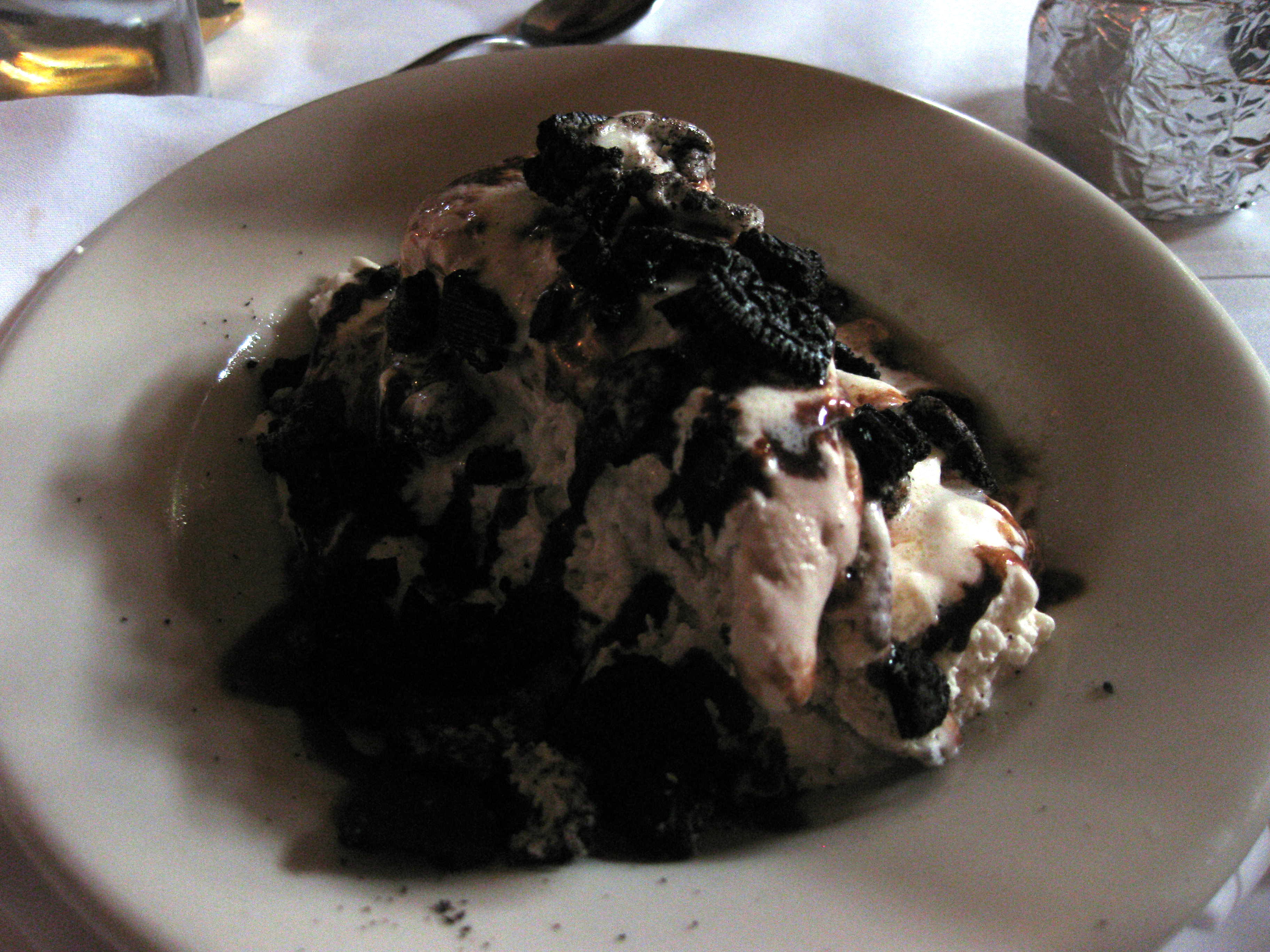
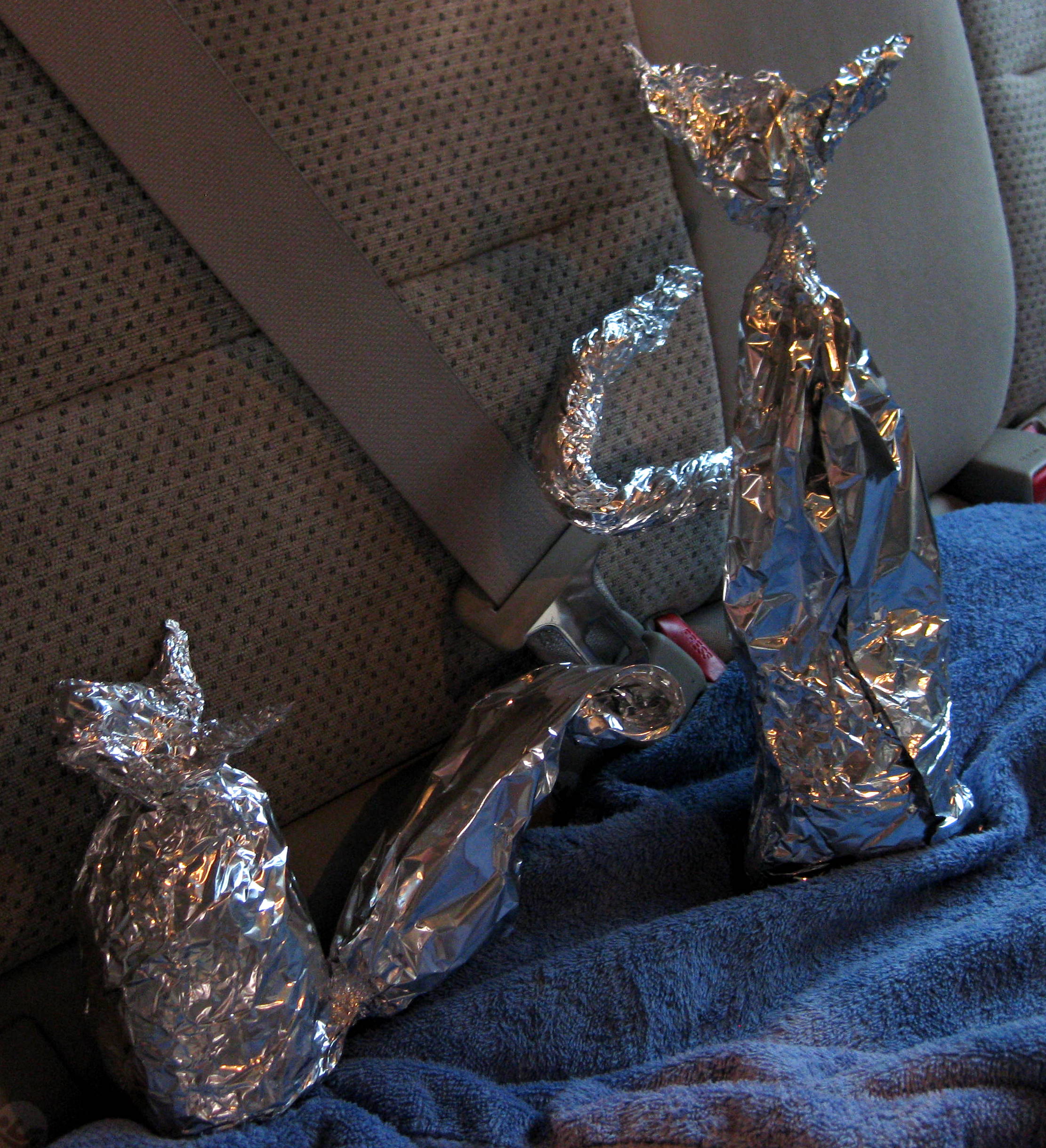
The play of culture and carnivale continued as we finished our meal.  Our server asked if we wanted our leftovers wrapped up, and when we acquiesced he disappeared with our plates and returned with a stylized cat and squirrel made of aluminum foil, holding our remaining dinners in their tin bellies.  As they faced off against one another at the table, our server walked over holding a plate leaping with orange and blue flames: dessert on fire for my birthday.  Unless N. ordered this while I was in the ladies’ room (I suspect not), this was our server’s doing alone.  I’d mentioned it was my day at the outset of the meal, but I hadn’t been expecting anything from it.  Instead, what I got was essentially ice cream pie set alight.

How do I begin to dissect this gorgeousness in words?  Writing about food is funny because so often language fails to capture taste.  I’ll go in the order my spoon went.  First, there was the ice cream.  This was either vanilla or very mild coffee, because we were getting hints of coffee flavor the whole way through.  I suspect, however, that it was vanilla ice cream, and that the spirit used to flame the dessert was Sambuca, and that’s where the coffee flavor came from.  Or else the ice cream was also drizzled with Kahlua.  Beside the slice of ice cream, there was an airy pile of whipped cream, also drizzled with chocolate/coffee sensations, and the whole dessert was topped with crushed chocolate Oreo wafers, and built upon a slab of compressed bittersweet chocolate crust.  Frozen but on fire, soft and creamy with crunchy accents, sweet but with an espresso bitterness, this captured the juxtaposition of the whole place on a single white plate.  N. is not often one for rich desserts, but this one he ate as continuously and determinedly as I did.  He laid his spoon down only two bites before I did, leaving the last swirls of melting ice cream and heavy liqueur traces to me alone.  It was, after all, my birthday.

We left satiated and impressed.  This was neither the fanciest nor the most amazing food I’ve ever had, but it was damn tasty, and the ambiance, as strange a collage as it may have first seemed, only added to the experience.  If this had been in a rundown, casually decorated diner, it would have seemed cheap and cheesy.  If it had been the same food in a “fine dining” restaurant with elegantly uniformed servers and long aprons, it would have seemed uncomfortably out of place.  But this Brechtian dance between high and low, with its conscious acceptance – nay, its intentional embrace – of both, made it a near-perfect show.  There are a lot of restaurants in Portland we want to try out, but we will almost certainly return to Montage.*

* or perhaps to its adjoining lounge which, in keeping with the play between cultured and vulgar, is delightfully titled la Merde.