Last salad

I think Fall has finally found Los Angeles, and only a week and a half to go before Thanksgiving.  Within a week, we went from temperatures in the mid-80s to a high of barely 70F.  My living room went from a comfortable lounging 75F to barely hitting 70 despite blinds wide open to catch the sun all day.  Thankfully, the items I have left on my Bittman list accommodate this weather change.  Today I have to report the last salad of the list, and a foray back into desserts.  Both have decidedly autumnal collections of flavors (I wrote “flavor profile” first, and then I thought, “who do you think you are?”).  Many of the food blogs I read have been reporting for the past week or two on Thanksgiving recipes, and I thought about doing that too.  But then I remember that Bittman’s entire list is conceived as Thanksgiving sides, so if you’ve been following this little blog for any length of time, you’ve been seeing Thanksgiving options – with only a few disruptions – for the past two years!
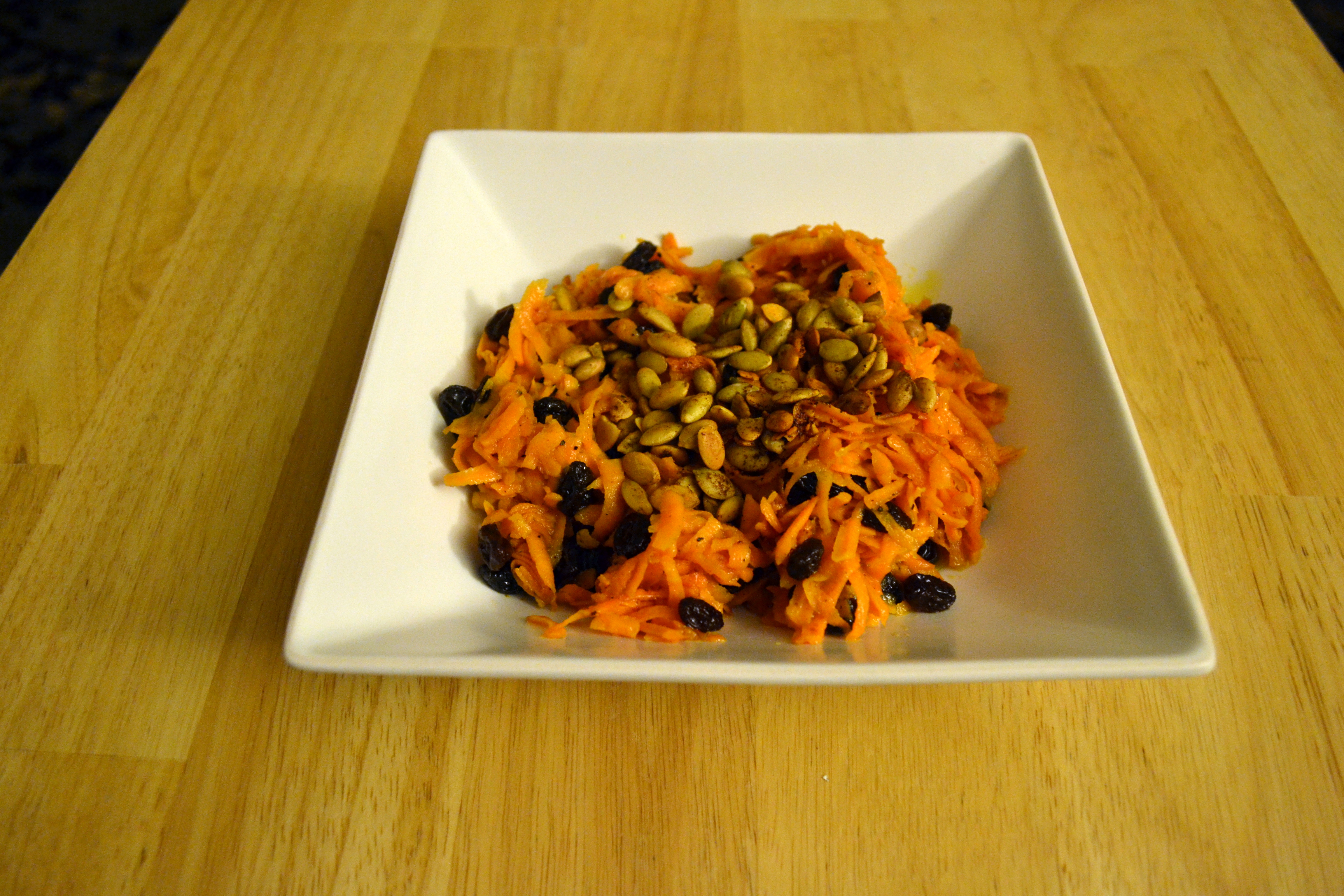
“67. Sprinkle shelled pumpkin or squash seeds with a little chili powder; roast, shaking occasionally, until lightly browned. Combine with grated sweet potatoes (raw or lightly sautéed in butter or oil), raisins and a vinaigrette made with red wine vinegar, olive oil, Dijon mustard, a touch of honey and maybe a little more chili powder.

I gathered:

1 small sweet potato

1 TB pumpkin seeds

chili powder to taste (mine is really mild – I probably used about a teaspoon)

2 TB butter

2-3 TB raisins

These measurements look small, but I was planning this for just the two of us and didn’t want any leftovers.

We were having this “salad” with spanakopita, so I decided to capitalize on the heat of its baking.  I popped the pumpkin seeds onto a baking tray, drenched them with chili powder, and tucked them into the oven for a few minutes.  When you hear the first couple of pops, they are done.  Don’t leave them too long – not only will they burn, they will propel themselves all over your oven.

I set aside the lightly toasted seeds and turned to the sweet potato.  N. and I proved in earlier experiments that we don’t like it raw – the starchy feel when you chew is just too much – so I was glad Bittman allowed for a cooked option.  I melted the butter while I grated the sweet potato, and tossed the shreds of bright orange onto the fizzing fat.  If you have more patience than I do, you might wait for the butter to brown a bit to add nuttier, deeper flavor to the sweet potatoes.

I let the little ribbons of sweet potato cook for a few minutes over medium heat.  The goal was not to brown them, just to lightly cook them through.  When I estimated them to be two minutes from done, I tossed in the raisins and folded the mix together.  This gave the raisins time to match the sweet potatoes in temperature, and it allowed them to plump up and take in some buttery flavor.
Heat off, I turned to the dressing.  Whisk together:

1 TB red wine vinegar

1 tsp honey

1 tsp dijon mustard

sprinkle of chili powder

2 TB olive oil

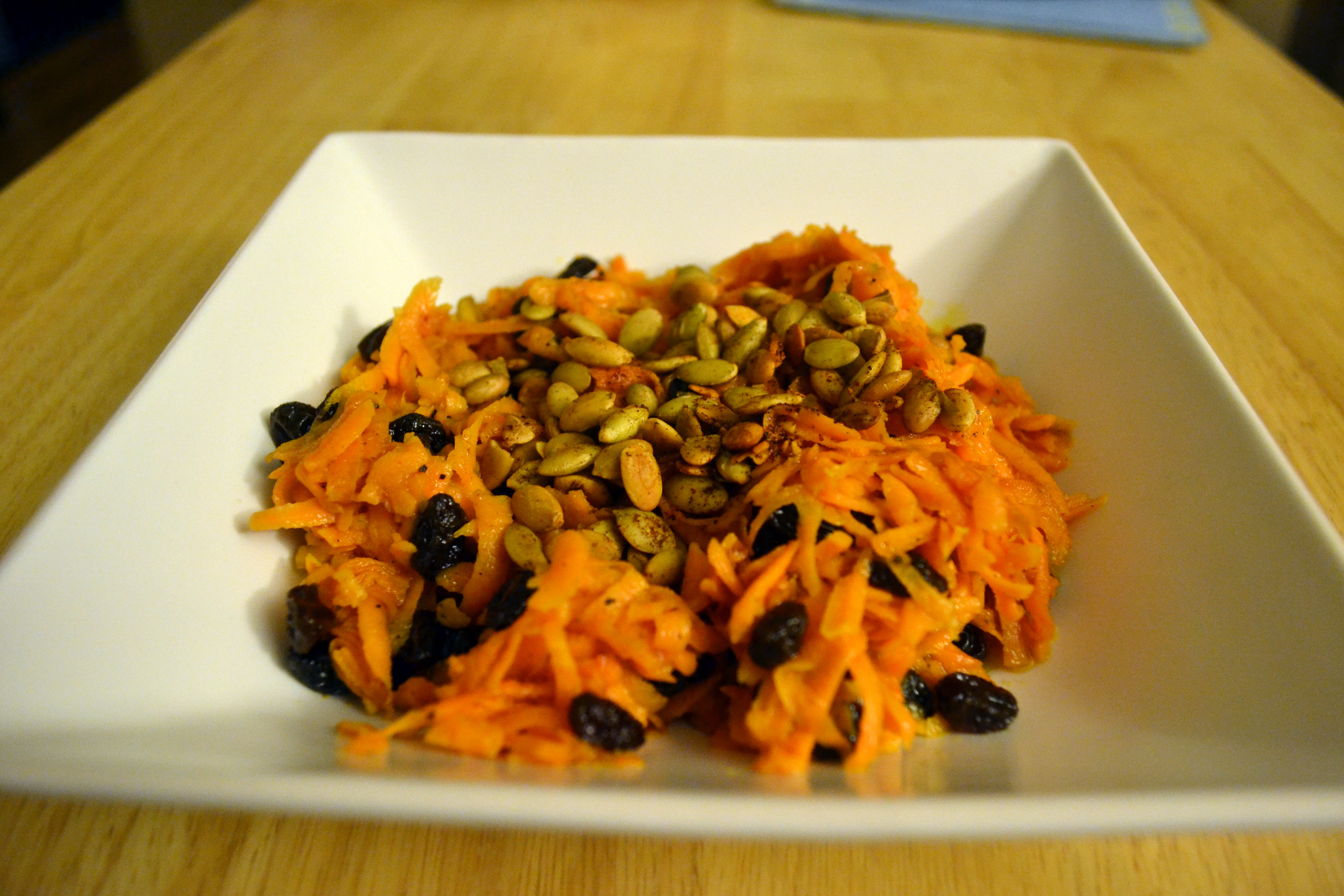
I tossed this lightly with the sweet potatoes and raisins, then topped them with the pumpkin seeds (which I almost forgot AGAIN!  What is it with me and missing the crunch?) and it was ready for tasting.

We liked this.  I’m not sure it read as a salad – in fact I’m not sure what it read as at all.  At once, it was not quite a salad, but also not quite a vegetable side, and not quite a chutney.  But it was tasty.  The red wine vinegar was acidic enough to counter the sweetness of the potato and raisins nicely.  It was a refreshing bite against the richness of our spanakopita.  The crumbling cubes of feta hidden in the spinach blend imparted the final necessary taste: a briny saltiness so welcome to the rest of this sweet and butter-drenched meal.
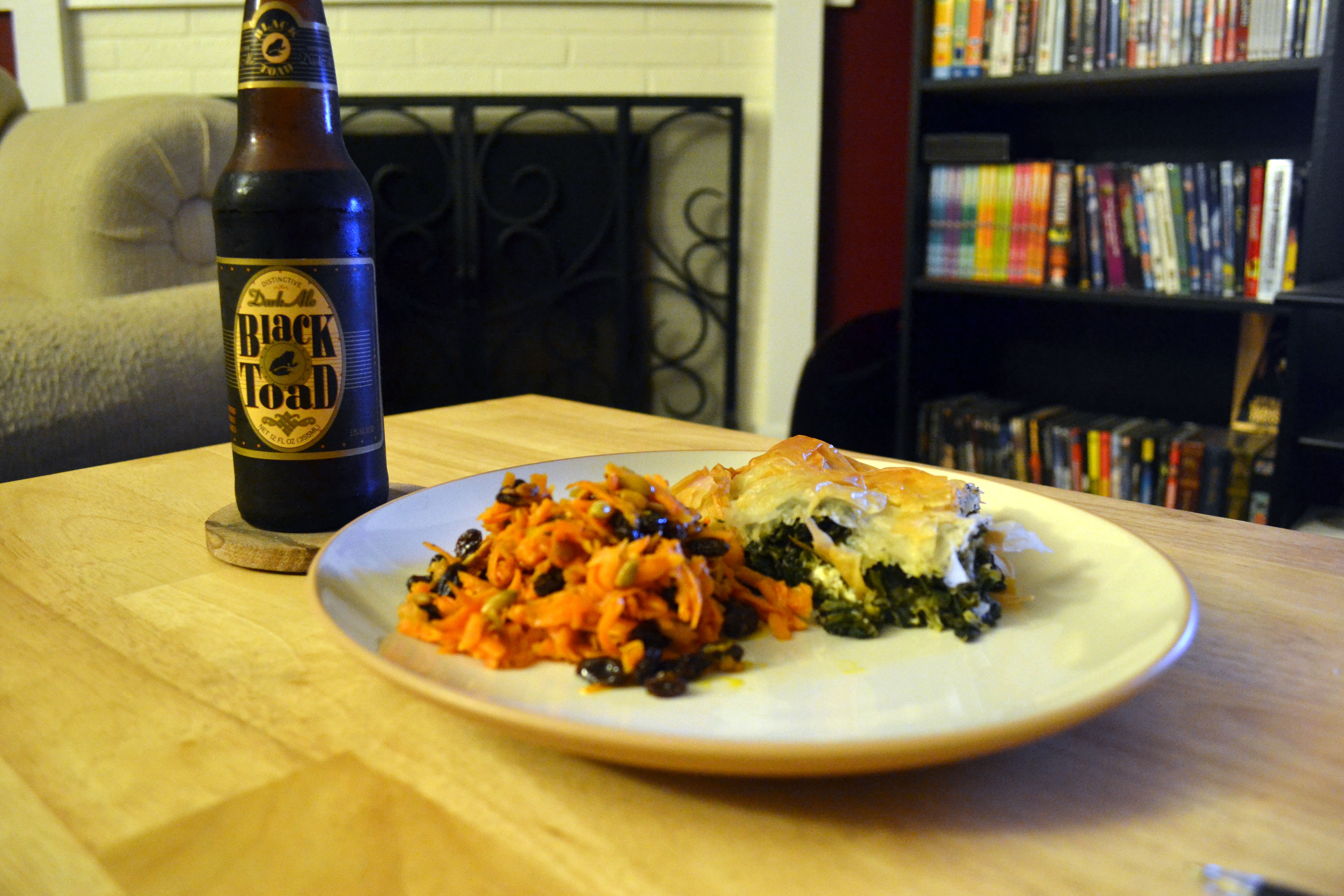
I took my next choice (partly made because it sounded delicious, but partly to use up the phyllo) to an election party.

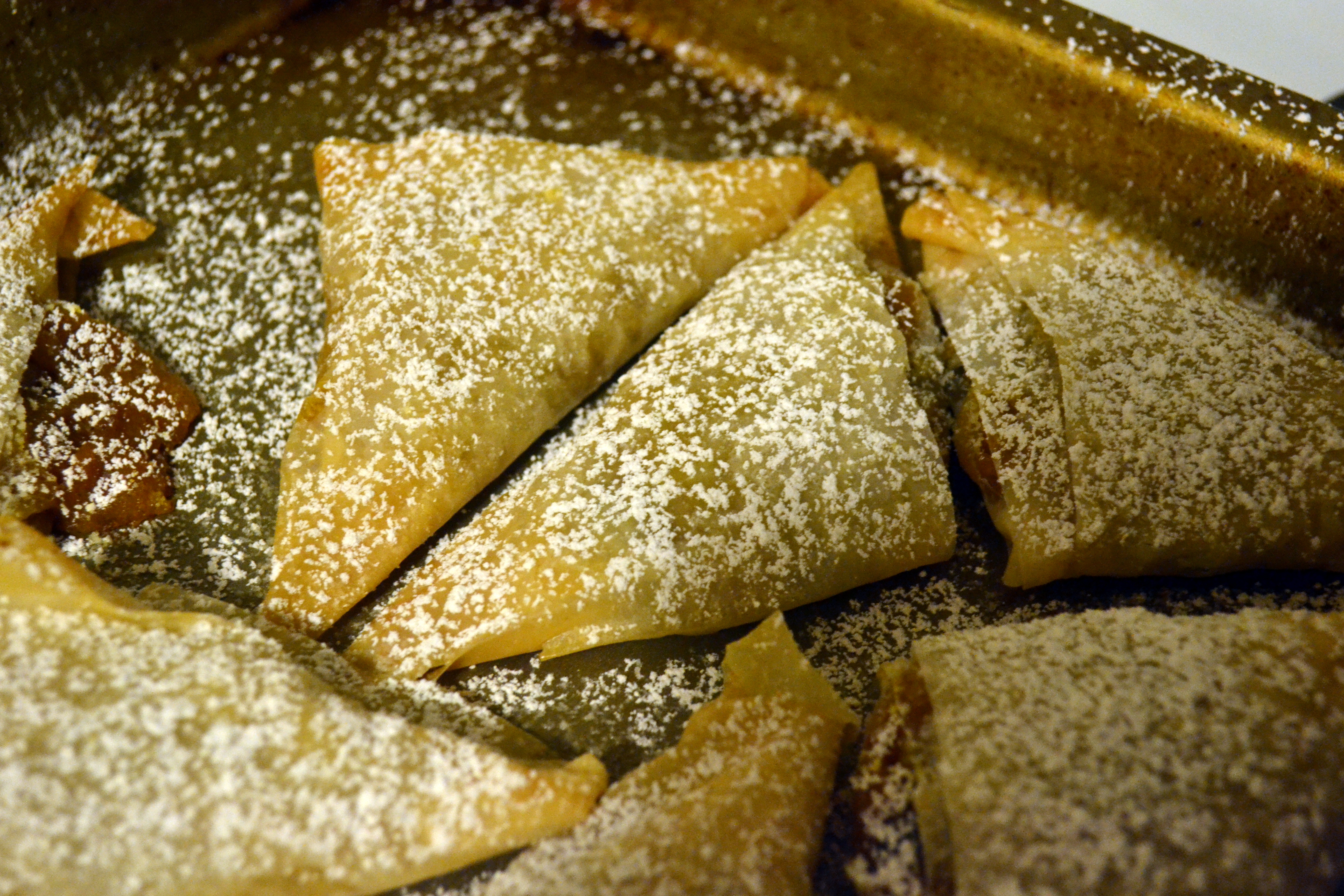
“93. Pumpkin-Raisin-Ginger Turnovers: Mix pureed cooked pumpkin, raisins, chopped crystallized ginger and sugar.  Brush a sheet of phyllo with melted butter and cut lengthwise into thirds. Put a spoonful of the filling at the top of each strip. Fold down to make a triangle and repeat, like folding a flag. Repeat with remaining filling. Brush the tops with butter and bake 20 to 30 minutes. Dust with powdered sugar.

Whether you are elated, distraught, or ambivalent about the results of the vote, these little turnovers were worth celebrating over.

1 15 oz. can pumpkin puree

½ cup sugar

½ cup raisins

¼ cup finely minced crystallized ginger (or you could try grating this on your microplane.  I’m not sure how that would work, but since candied ginger is gummy and hard to chop, it might be helpful)

butter

phyllo dough

I couldn’t resist adding about a teaspoon of cinnamon.

First, I preheated my oven to 375F and put the butter into a small pan, which I set over low heat so it would melt but not brown.

I shlooped the pumpkin from the can to a bowl and whisked in the sugar and fruit.  I suggest you use a fork for this, not a traditional whisk.  The mixture clumps and sticks in the slender spokes and results, if you are at all like me, in cranky frustration.

When everything is well mixed, turn to the phyllo.  If you’ve never worked with it before, don’t be afraid.  The amazing way it changes from dry papery sheets to flaky, buttery pastry is worth the challenge.  Here’s what I do:

Set up an assembly line on your counter.  At one end, unroll the phyllo and set a just-damp kitchen towel (or couple of paper towels) over the top.  This will help, if you are a slow worker, to prevent it from drying out and breaking.  Next to that, you need a board big enough to accommodate one sheet of phyllo.  Next to that, place your butter, followed by your filling, followed by the final resting place for your wrapped confections.
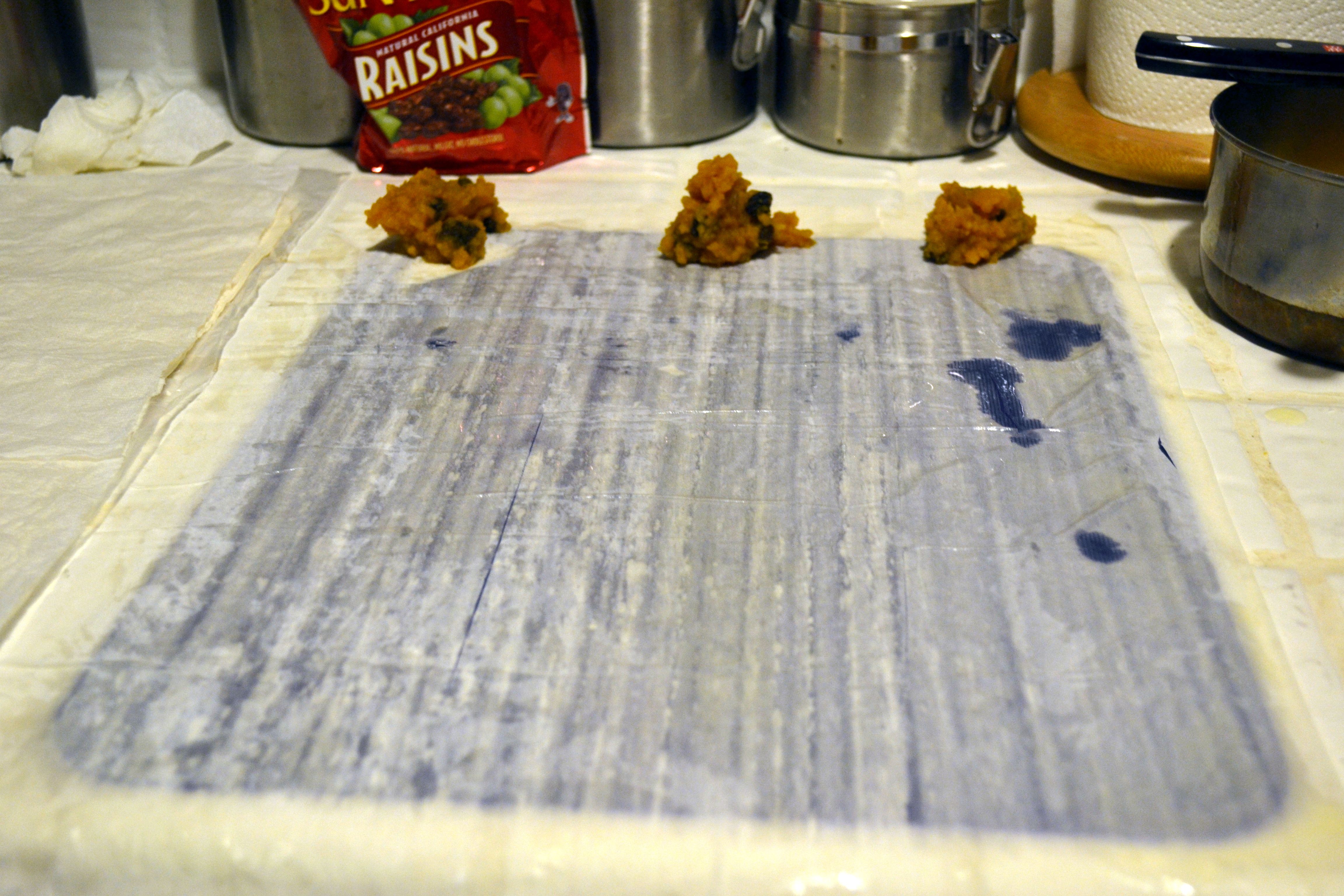
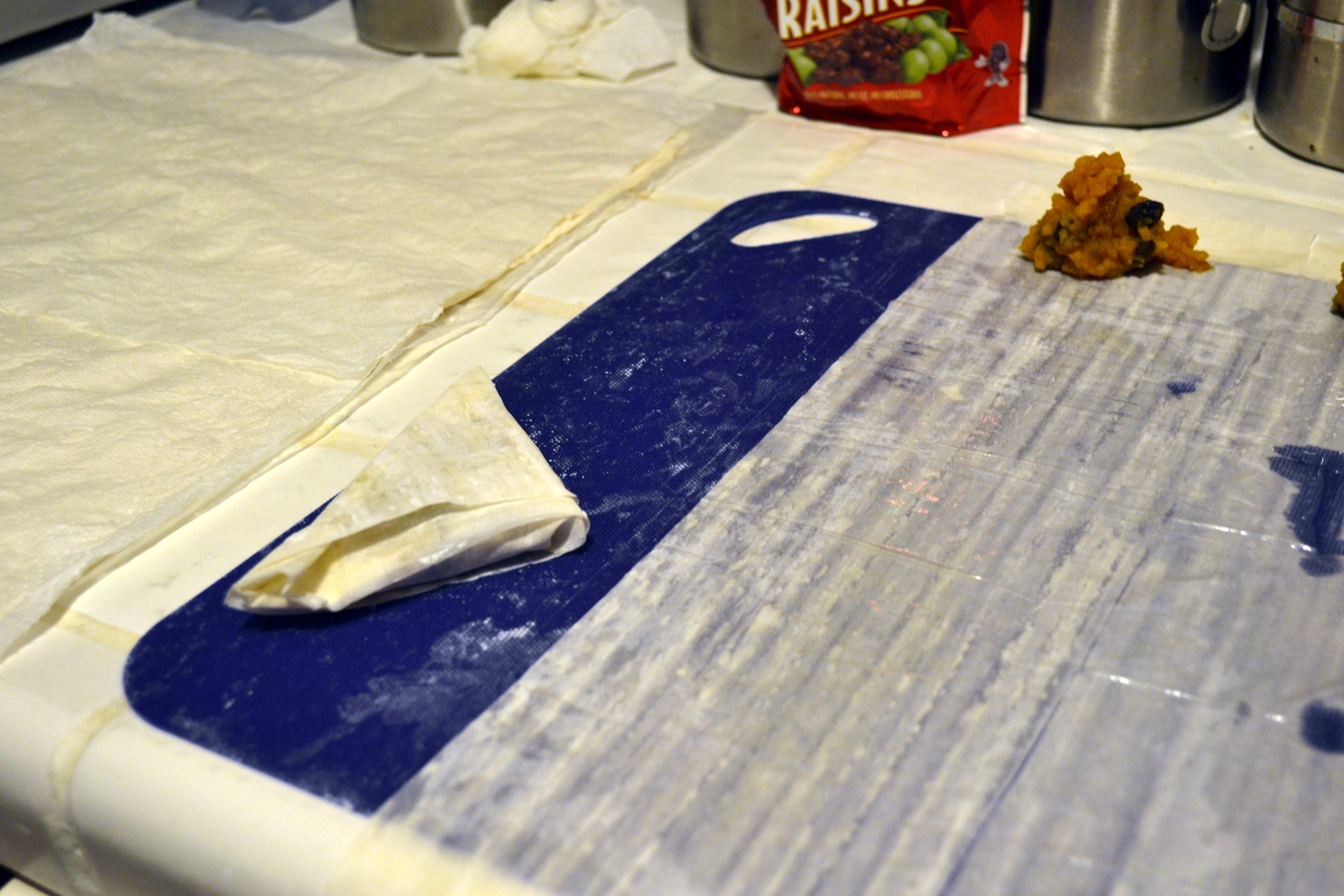
Carefully peel off one sheet of phyllo and place it on your board with the shorter end facing you.  Recover the remaining stack with the damp towel.  Using a pastry brush, brush the whole sheet with butter.  Cut it in long thirds (you’ll begin your cuts on the short edge of the rectangle, so that you create three long, thin strips, as opposed to three short, squat strips).  Then, place about two tablespoons of filling at the top of each strip, and begin to fold in triangles.

To make the first fold, bring one corner down to the opposite edge of the strip.  Don’t press too hard, or the filling will ooze out everywhere.  The second fold will be straight down: the remaining corner (now doubled because you’ve folded over your first triangle) folded down onto the same edge.  Continue to fold, keeping your filling in the center of a triangle, until you reach the end of the strip of phyllo.
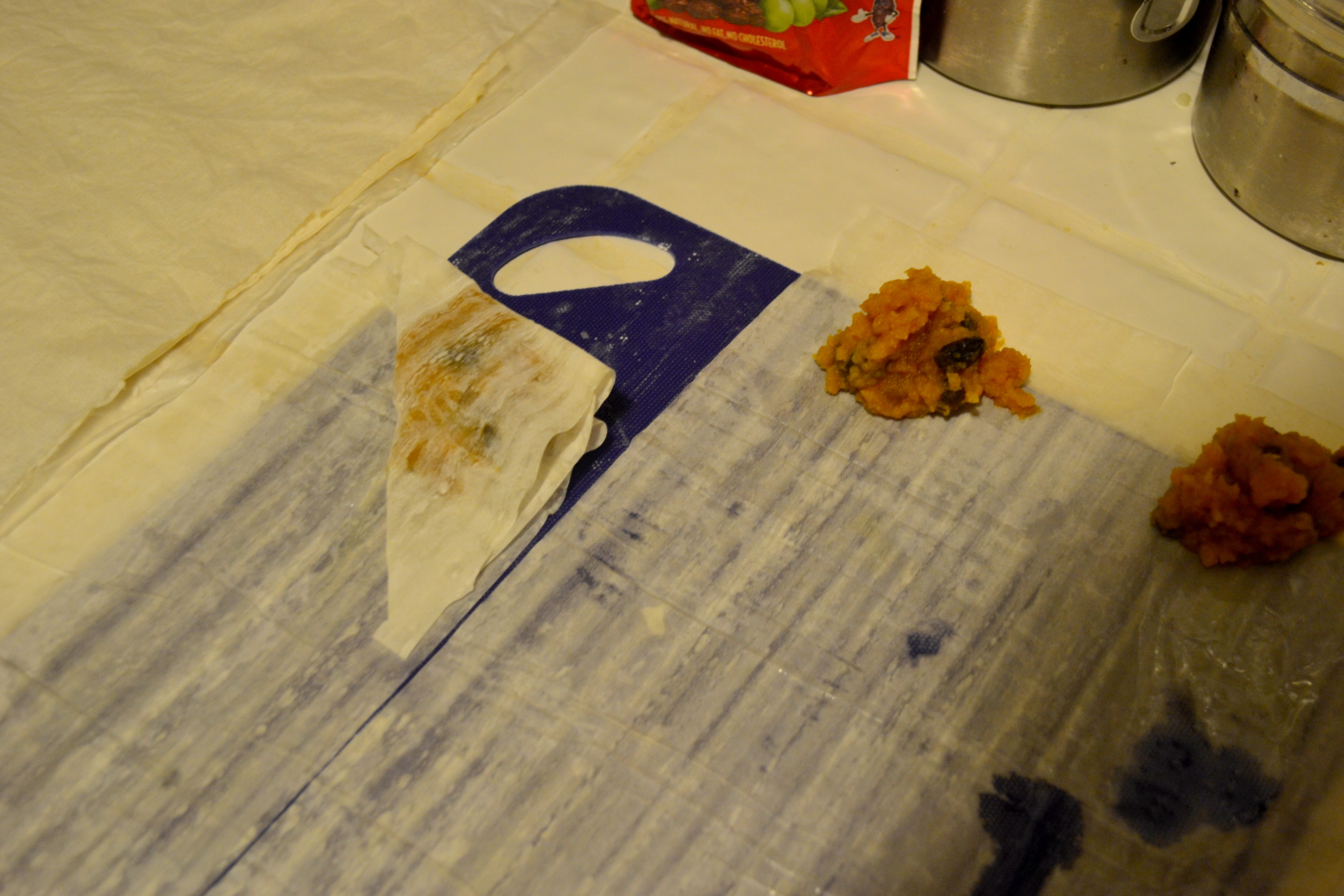
Place that on a parchment-lined or greased baking sheet and brush the top with a little more melted butter.  Repeat until you run out of filling.  Since these won’t rise or spread, you can place them quite close to one another on the baking sheet.  Don’t overlap them, though, because only the dough exposed to the air will brown.
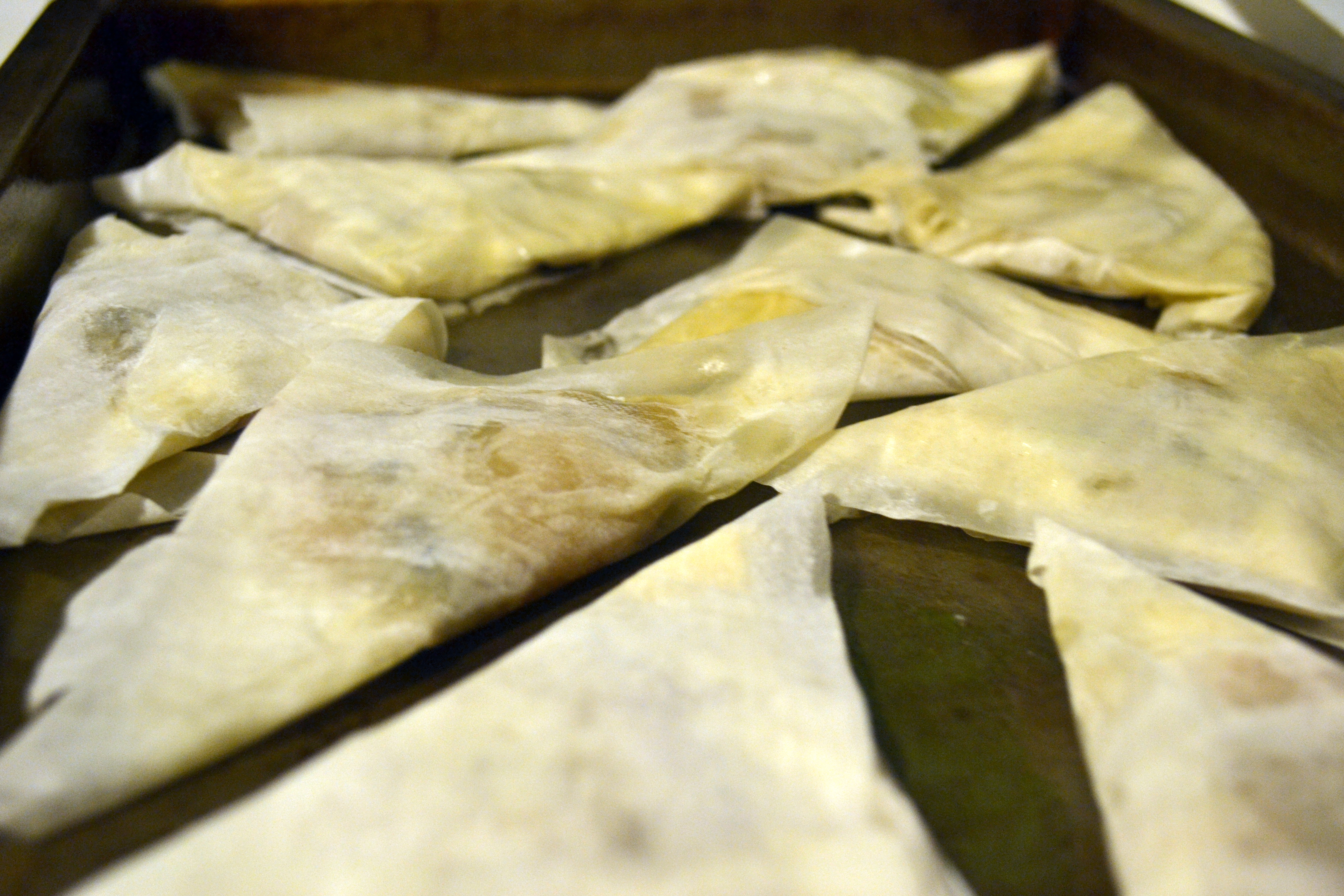
This sounds complicated, but once you get into a rhythm it’s relatively easy and quite satisfying.  You end up with two trays of sweet little parcels that you can stow in the oven for 20-30 minutes until they become magically golden and flaky.

When they were done, I dusted them liberally with powdered sugar and tented them with aluminum foil to take to the party.  I brought home an empty, sugar dusted tray with a lone raisin abandoned in one corner.

They were so tasty.  The pumpkin-raisin-ginger combo was insane: earthy and sweet and, with the addition of the cinnamon, warmly spiced.  Inside the phyllo, it was a contest of texture too: unremittingly soft pumpkin with the occasional chewy juicy punch of raisin, against sharp flaky crunch of sugar-dusted pastry.  We couldn’t resist tasting a few before dinner, and then we had to revisit them again for dessert.  These will, I suspect, make repeat appearances in my kitchen.  They could probably be made a few hours ahead as well, or transported and baked on location: wrap them up, dredge them with butter, and store them under a damp towel or some plastic wrap until ready to bake.  If you don’t like pumpkin pie, or you’re tired of it (I know, heresy!), these might be a fun alternative Thanksgiving dessert option.
Smitten

There were always only two marginally clever possible titles for this post.  I chose this one for several reasons.

One.


Two.


Three.

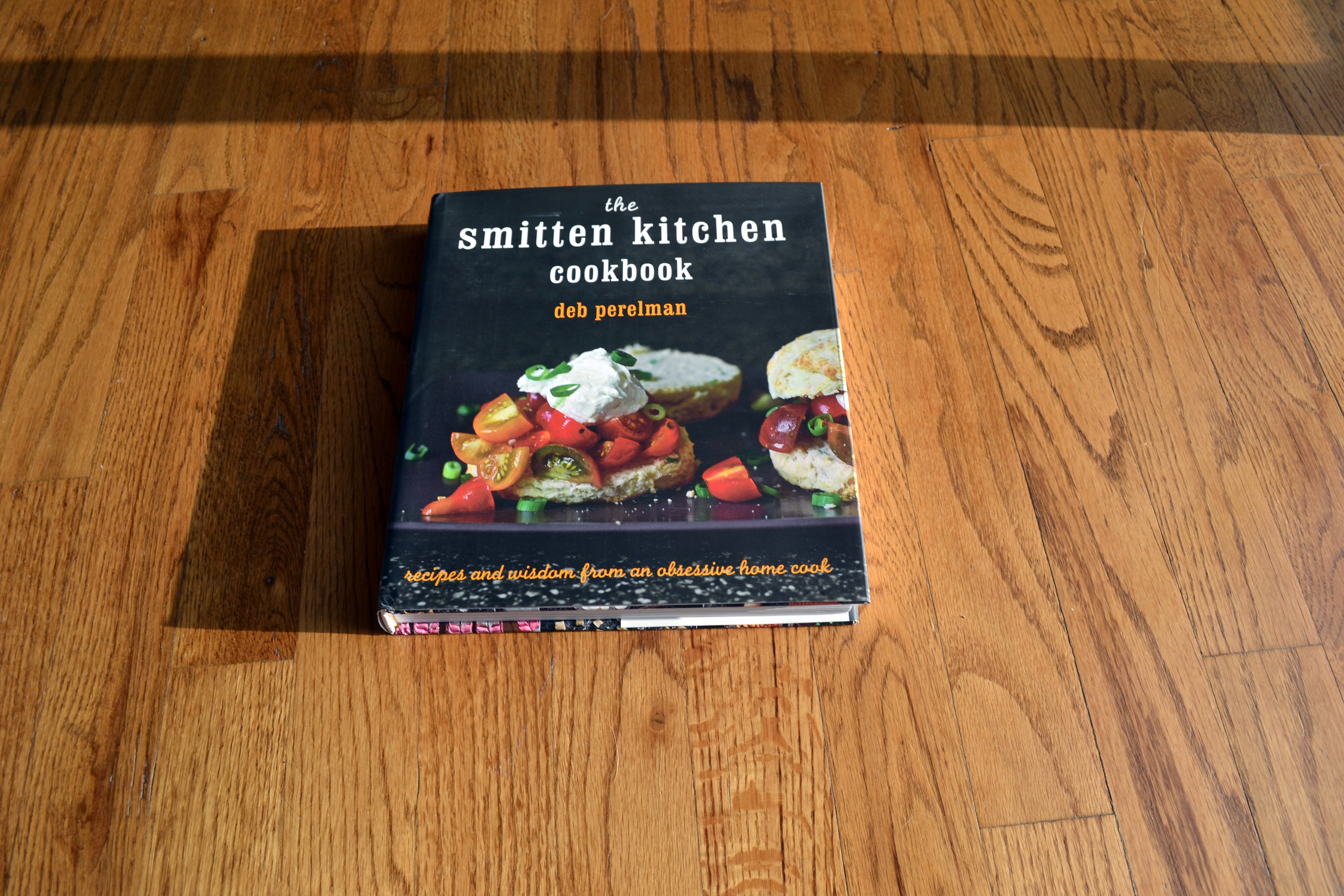
This week Deb Perelman’s “The Smitten Kitchen Cookbook” arrived to me, unceremoniously dumped in its delivery box over my porch railing (our mail carrier is not the most careful, as the wads of advertisements half-shoved into our mail slot prove).  That was the last blasphemous treatment it received, however.  I went through it page by page, almost shouting at nearly every recipe, because all sound delicious, and many are simply brilliant.  Her combinations are unexpected but make complete sense, and her writing is so human and real and honest – on the site as well as in the book – that I can’t stop picking it up and flipping through it again.  It doesn’t matter which page I open to.  I’m drawn in by the food but also by the language, and together they make me want to run to the kitchen every time.

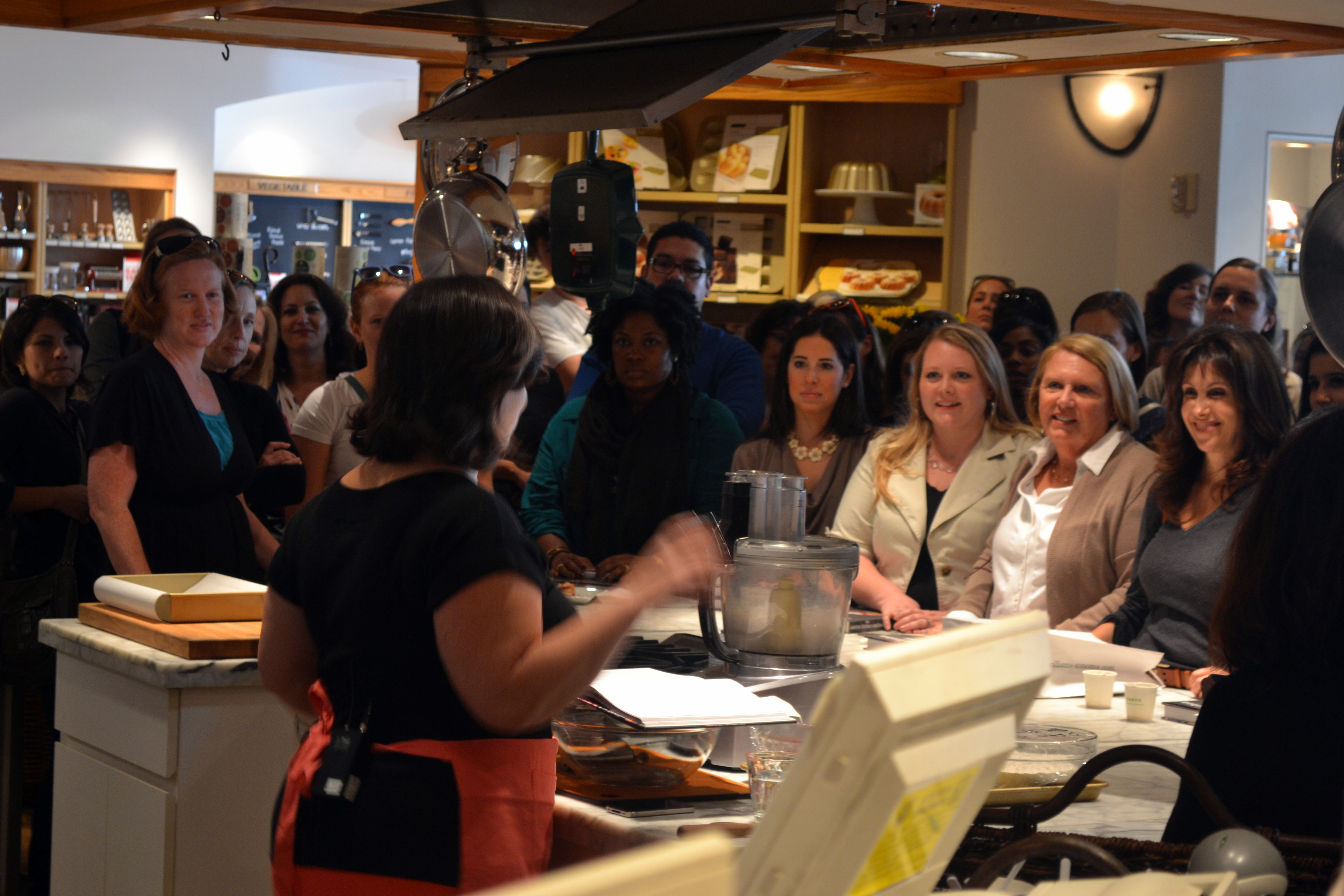
That was Tuesday.  By Friday, I already had a plan to make every last thing in that cookbook (my first choice involves eggplant, and chickpeas, and tahini, and cumin…), and after a quick round of grading and laundry, I was in the car on my way to Beverly Hills, where Deb was doing a cooking demo and cookbook signing at Williams-Sonoma.

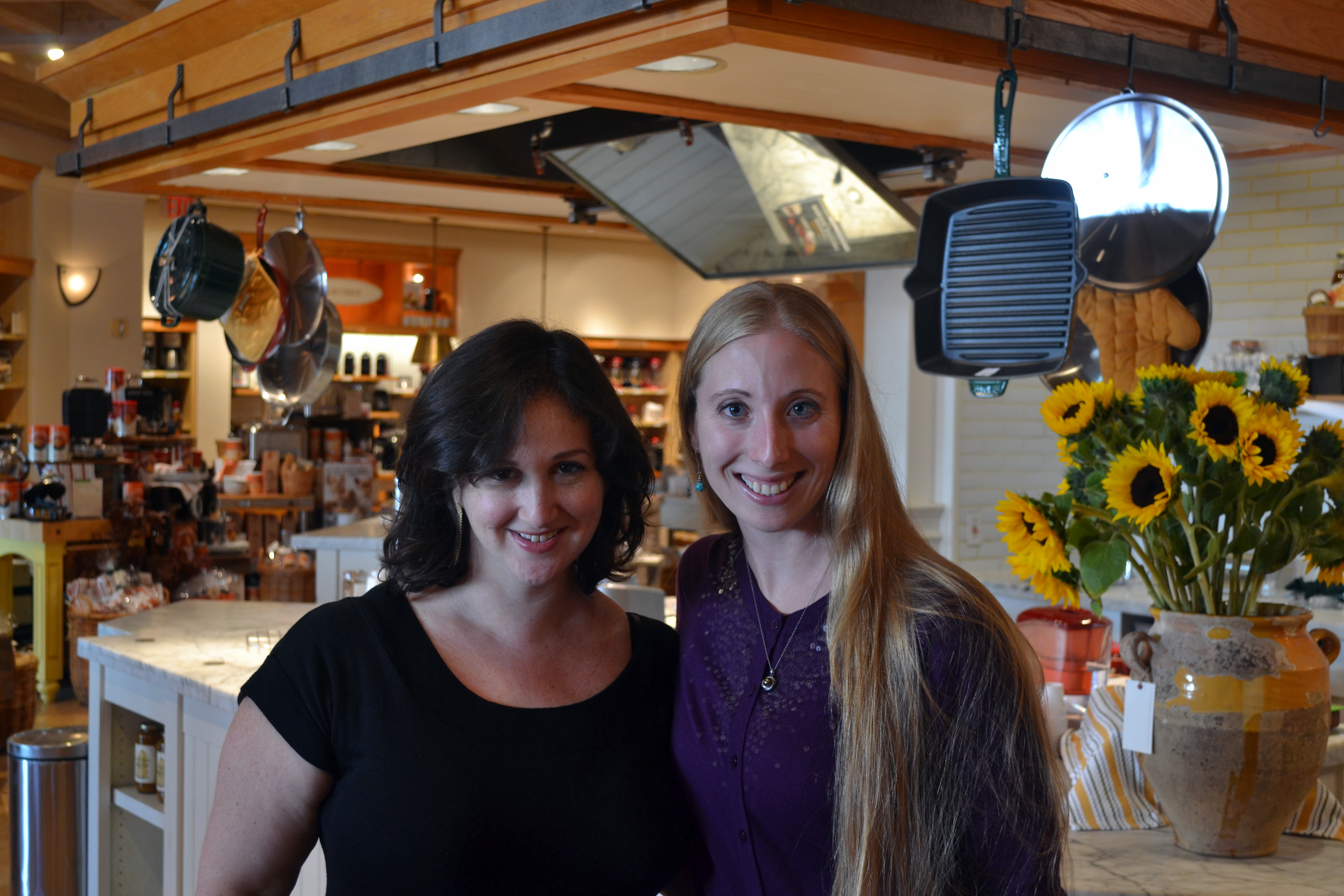
Without having this sound weird and stalker-ish (I’ve apparently become a fan-girl, what can I say?), Deb is lovely and I’m so glad I had a chance to meet her.  (I also spotted Joy the Baker in the larger-than-Williams-Sonoma-anticipated crowd, and eventually awkwardly introduced myself.  She was lovely as well).  I got to ask a question that came out somewhat awkwardly and – I think, though N. keeps telling me this is silly – sounded like I was asking how much I would have to adapt a recipe in order to avoid plagiarizing someone else, which by extension (only in my over-analytical brain, I suspect) sounded like a passive-aggressive suggestion that no one is capable of original recipes, no matter how they might try.  Sigh.  Not what I meant, of course.  What I was trying to ask was motivated by the teacher and scholar in me: we are taught simultaneously that there is nothing new under the sun, AND that we must be original in our thoughts and products.  But chocolate cake isn’t new.  There’s a formula for it that, yes, can be tweaked and fiddled and caressed into something a bit new, but at what point does that start being yours, instead of the recipe you learned from?  I suppose it comes down to a question of copyright, and I don’t know how that works in the world of food.

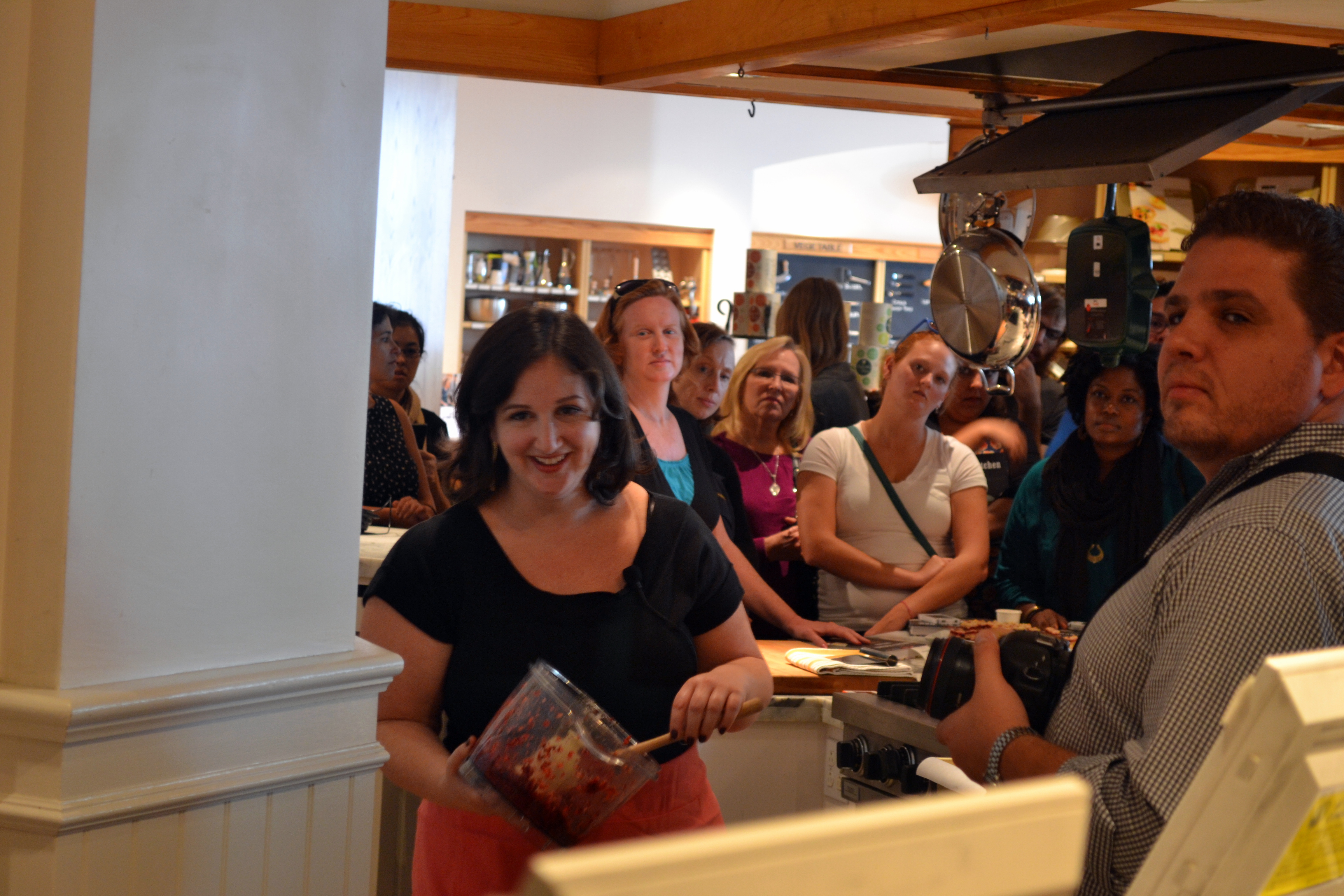
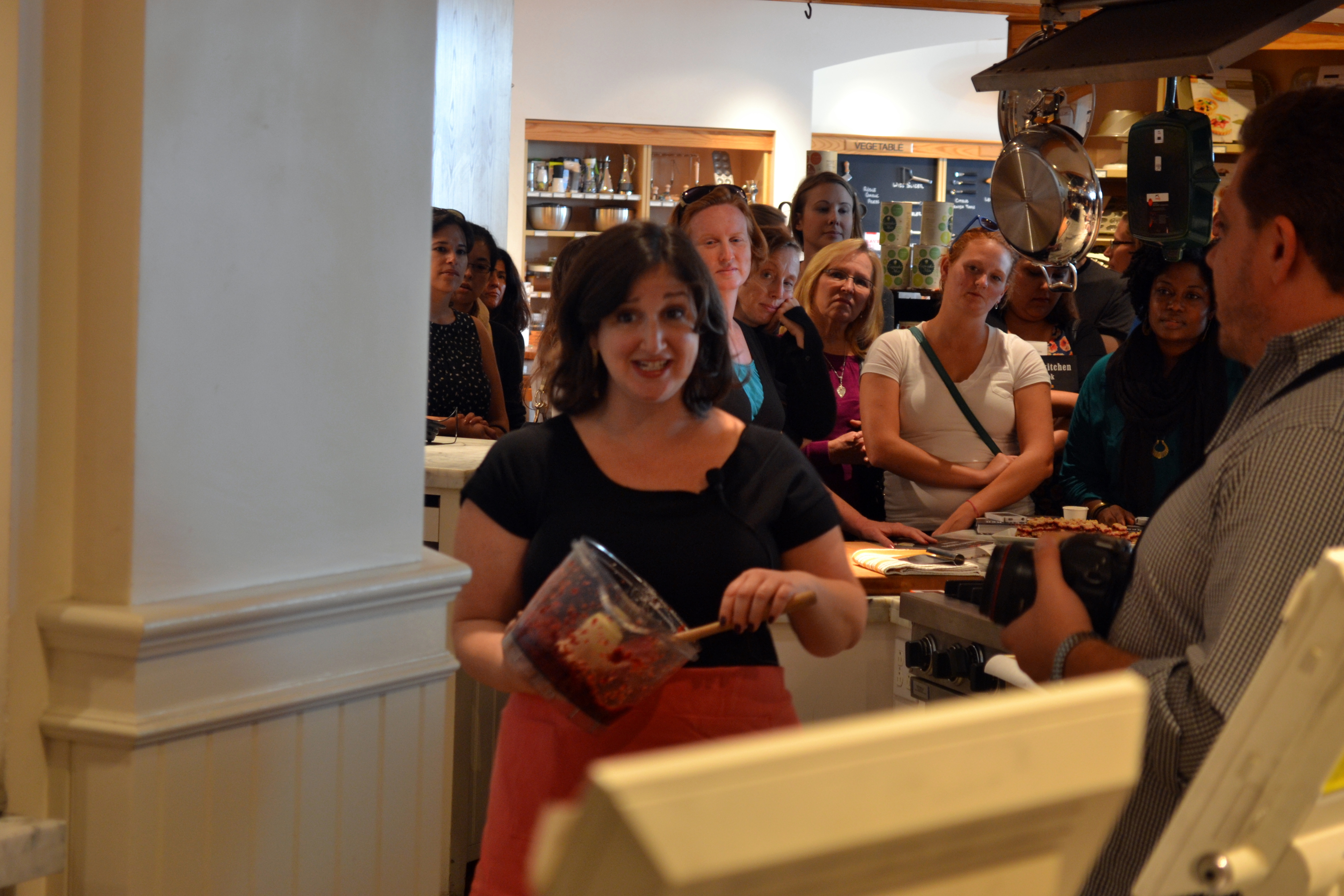
Talking AND stirring

Concerned or confused by our questions?

Despite my clumsy question, which came out sounding – at least to me – somewhat combative, Deb said she thought it was more about technique and writing style than about complete recreation.  If you introduce a helpful method within the confines of the recipe, or if you write the directions or description in your own fresh way, the dish becomes yours through your additions to the conversation.  You become, I suppose, an author rather than a reader.  It’s very medieval, in a way: authors were “auctors,” or authorities, but to gain that authority they pulled from other sources.  Only God was the true, original creator.  Men could only imitate and produce imperfect copies.  That’s why I think the combination of cooking and literary studies meshes well for me: it’s all about reading, or chewing, mulling things over in your mind (and mouth) to see what you think of them.  Once you have had some thoughts of your own, once you have digested your meal, you have an opportunity to create: writing becomes cooking becomes writing.  You string carefully chosen words together and cultivate them into the form you want before sending them off to be read – consumed by your audience.
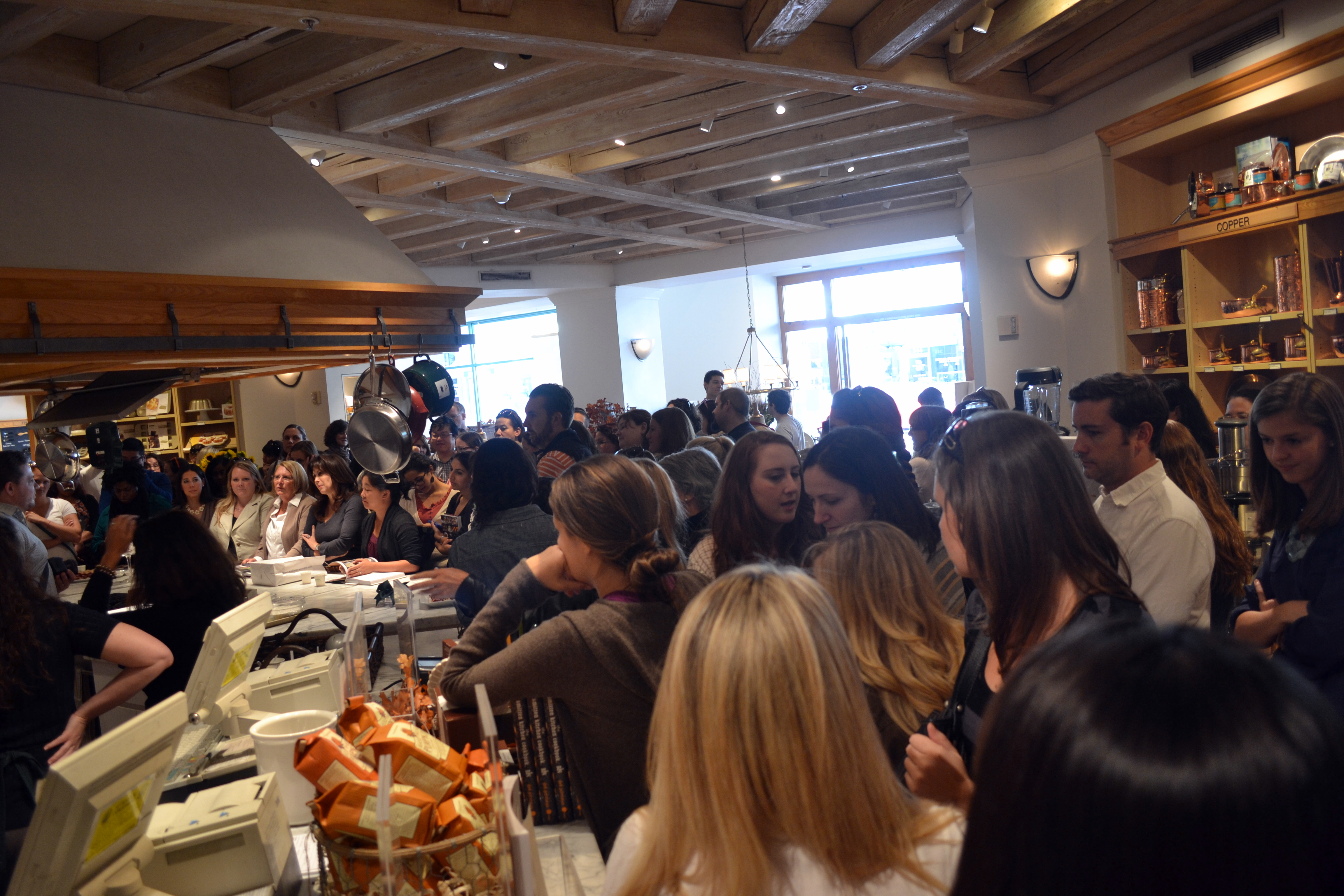
Deb made cranberry crumble bars, one of the recipes in her new book, before stationing herself at a little table to sign book after book after book.  One of the WS employees made rounds sharing samples of three different recipes from Deb’s book.  These sustained us during the 90 minute line snaking (or snailing?) through the store, passing walls of such debatably ingenious gadgets as a banana slicer, a juice squeezer for single slices of lemon, and a coil potato masher (this one was pretty cool, though.  I must admit to wanting one).

And then we were around the corner and Deb was signing my little placard from WS (they ran out of books long before the event started, and this was their work-around: order a copy, get a placard, stick it into the book yourself when copies arrive.  I already had a copy, but I wanted a signature, so it looks like someone’s getting a tasty Christmas gift…) and chatting, and asking me the name of my blog(!), and then N. and I were tasting apple cider caramels and glowing back into the sunlight of Beverly Drive.

I have Bittman reports to share with you – figs and orange juice and sweet potatoes and bourbon – but I think this deserves to exist on its own.  More tomorrow.

Lucy is unimpressed by my new acquisition, unwilling to look at the camera, but still insistent to get my attention in any way possible.  Sometimes I wonder whether she’s actually part feline.  Don’t tell her I said that. 

Emptying the Fridge III: Crack(er)ing the Code

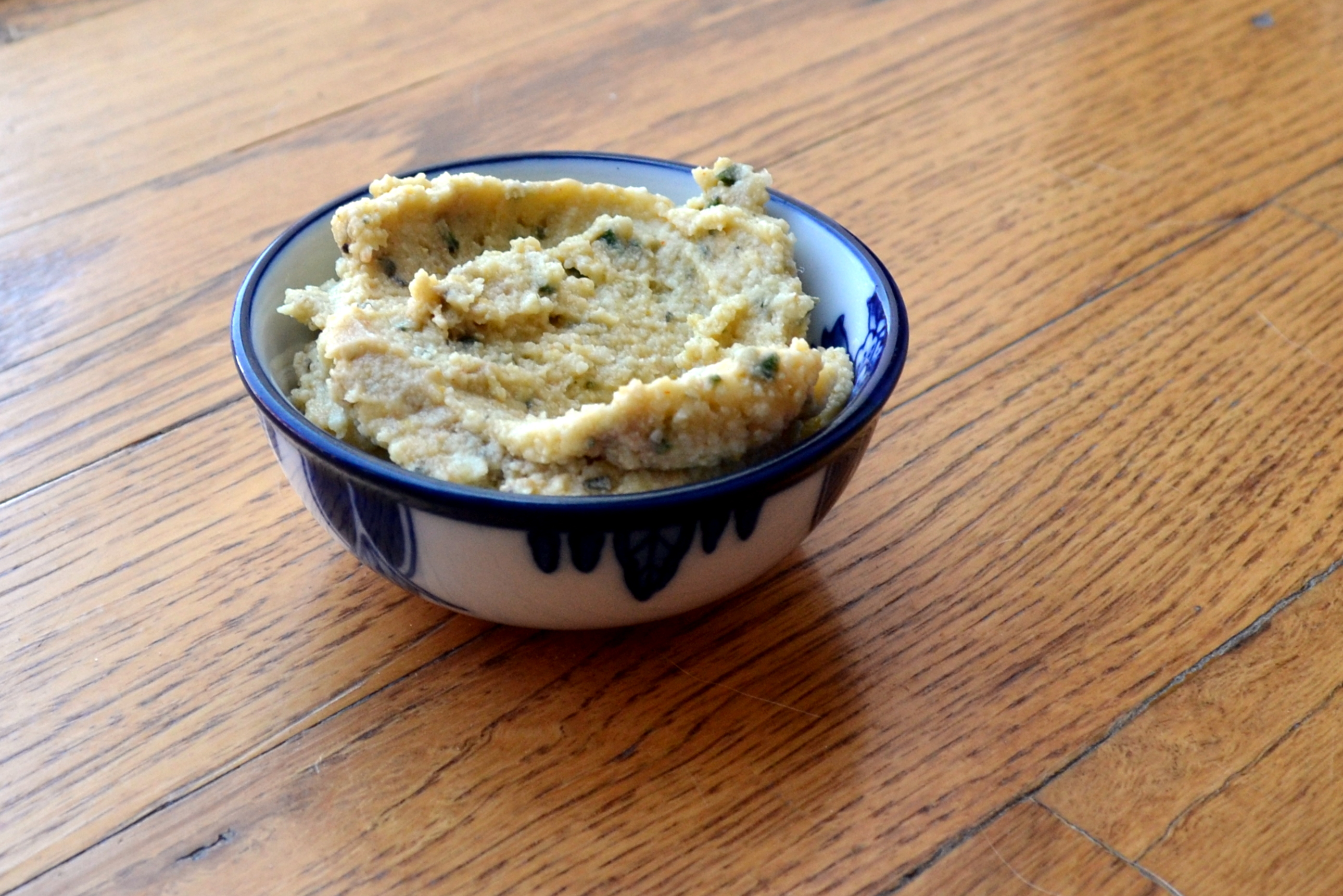
Last week I told you about my favorite new dip.  White beans, toasted almonds, the piney sharpness of rosemary, the heady perfume of orange zest… and promised to provide a vessel on which to deliver this deliciousness to your eager taste buds.  N. and I discovered shortly after my first foray into this creamy blend of balanced spice that the ideal vehicle for consumption was not in fact a spoon, but the best crackers ever: Trader Joe’s Raisin Rosemary Crisps.  In fact, these are good not just as a vehicle, but a snack in their own right.  Every time I went to the pantry to retrieve a few for dip spreading, I’d find them gone, thanks to N.’s voracious nibbling.

I wondered at one point, as I broke down yet another cracker box for recycling, how difficult they would be to make myself.  I’ve never made crackers before, but looking at the list of ingredients – sunflower seeds, millet, raisins, baking soda – it seemed doable, and further, thanks to the kind of collection that happens in established kitchens, when you don’t remember why you have something like toasted millet or roasted ground flaxseed but you just do, I had every single dry ingredient in my pantry, waiting to be used up so they didn’t have to make the move to California.  On that door dividing me from opportunity, he was pounding with a brass knocker.

So I set about experimenting, and today I can offer you not one, but two ways of making these crackers yourself.  They aren’t perfect replicas.  They will always be discernable as imitations.  But they are delicious, and they are pretty darn close.  Only a thinner knife, a bit of whole wheat flour, and patience, I suspect, separates them…

Here’s what you need:

1 ½ cups all-purpose flour

½ cup whole wheat flour (the first time I made these, I used equal parts AP and WW flour, and the result was a bit heavy.  Using 2 cups AP instead of adding the WW would probably make the crackers even lighter, and the TJ’s ingredient list doesn’t contain WW flour at all)

1 tsp baking soda

¾ tsp coarse sea salt (I used Maldon, with which I have a deep love affair)

2 TB roasted, ground flax (if you have whole flaxseeds, use them!  Just toast them in a dry pan until fragrant and beginning to darken, and whiz them in a spice grinder, or your husband’s coffee grinder, if that’s the machinery you happen to have)

1/3 cup millet

½ cup sunflower seeds, toasted or not, salted or not, just use what you can find

¼ cup brown sugar

1 TB finely chopped dried rosemary (again the spice grinder works really well for this – chopping dried rosemary with a knife is an exercise in absurdity: it flies everywhere)

½ cup craisins

¾ cup buttermilk

Whisk together all ingredients except buttermilk until seeds, nuts, and fruit are evenly distributed.

Add buttermilk and cut in with a fork or pastry blender until dough starts to lump together.  It will be roughly the consistency of biscuit or Irish soda bread dough.  At this point, switch to your hands (the best tools, really, aren’t they?) and knead the dough for three minutes or so, until it all comes together and becomes a bit less shaggy.  You can either dump the mixture onto a lightly floured board to knead it, or you can be lazy like me and knead it in the bowl.

At this point, you have a choice.  If you want flat, rectangular crackers like Ry-Krisp or Stone Ground Wheat, roll out your dough into a big thin rectangle (1/8 inch thick or even less, if you can) and cut gridlines along your dough with a pizza cutter.  Create whatever size squares, rectangles, trapezoids, or polyhedrons you desire, then place them close (but not quite touching) together on a baking sheet lined with parchment paper or sprayed with non-stick spray.  Slide them into a preheated 300F oven for 45 minutes.  You’ll end up with crunchy crackers with the slightest bit of give in the center, evenly colored with a dense crumb.  They are a little like miniature flatbreads. 

If you want slightly lighter crisps with a darker “crust” perimeter and a sprightly, Panko-like crunch, there is only one inspiration to which you can look: biscotti.  I liked the flat crackers.  I did.  They were tasty, they were good with the dip, and they were relatively quick: roll, cut, bake, done.  But they weren’t the ephemeral cracker experience I was after.

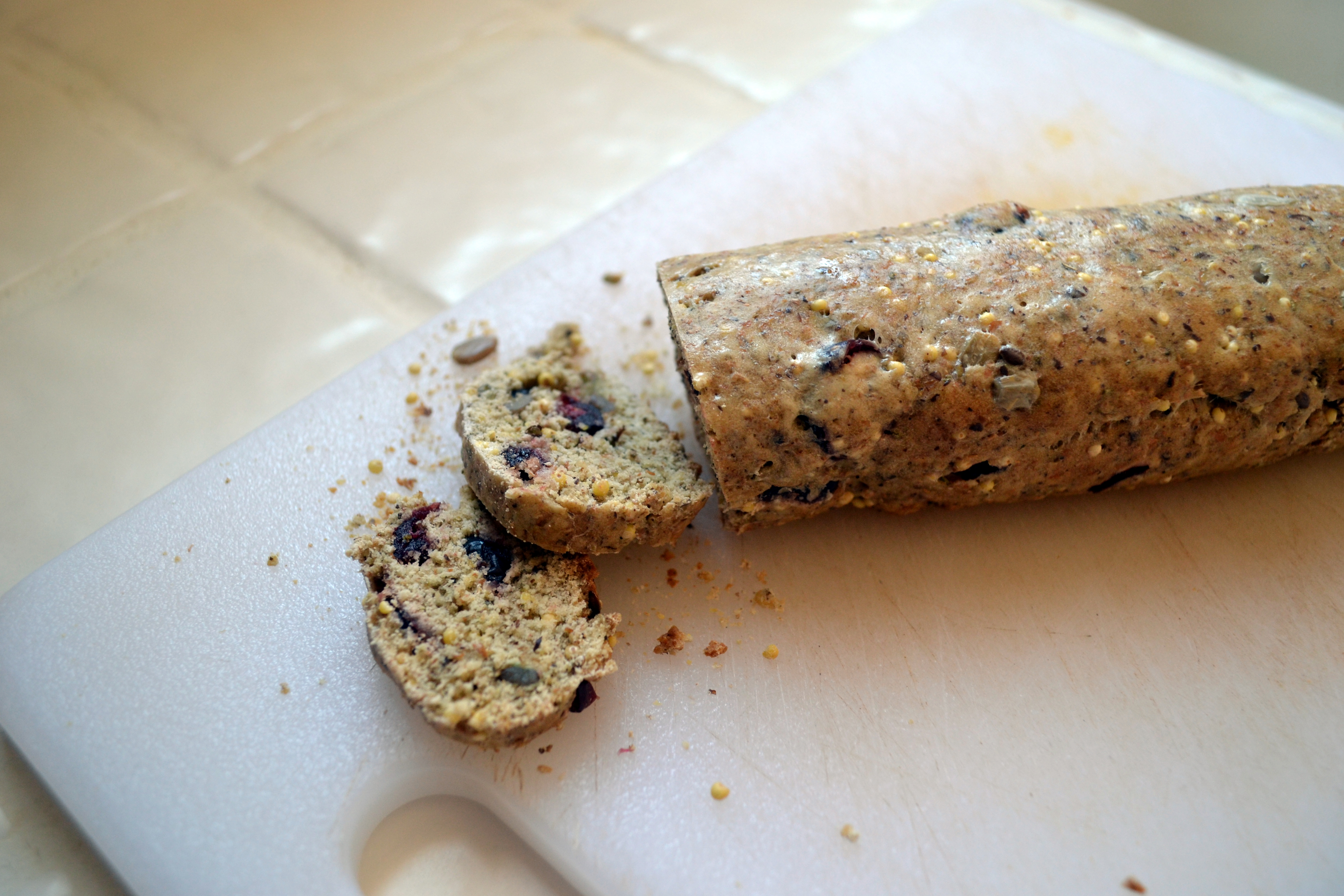
If you’re going the biscotti route, once the dough is kneaded together well, divide it in thirds.  Instead of rolling it out on a board, roll it into a long, thin “worm” of dough on some plastic wrap.  Press, squeeze, and moosh it into a log of even thickness, using the plastic wrap to help you.  Wrap up securely in the plastic, then pop it into the fridge.  Repeat with the other sections of dough, each in their own piece of plastic wrap.  Refrigerate for at least three hours (my trusty biscotti recipe from which I estimated times and temperatures says you can leave them in the fridge for up to three days). 

When you are ready to bake, take the worm/logs out of the fridge and unwrap.  Leaving them sitting on the open plastic wrap, paint them lightly with buttermilk to encourage browning.  You could probably paint them with egg wash too, but the TJ’s box doesn’t list egg as one of its ingredients… Carefully move the buttermilked logs to a baking sheet, then place in a preheated 325F oven for 30-40 minutes, or until the tops have swelled and are lightly golden.  Let them cool completely. 

You will find when you move your logs that the bottoms are browner than the tops.  I am toying with the idea of slowly rolling these logs as they bake so that each side comes in contact with the metal of the baking sheet for ten minutes or so during the baking.  This might make the finished logs a bit more rectangular (and hence capable of producing square crackers), and it might make each edge evenly brown.  Let me know if you try it out, and I’ll do likewise.

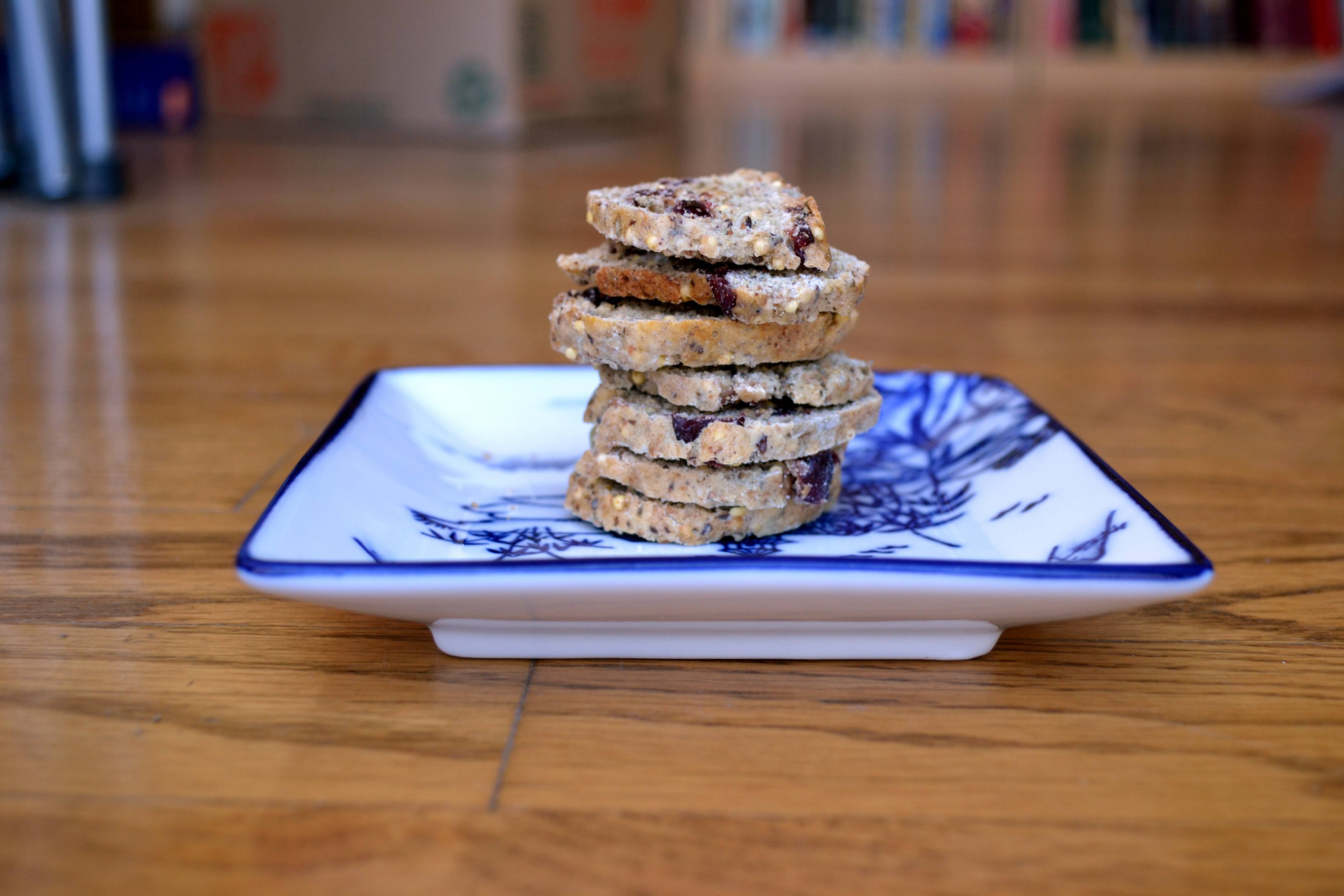
When the logs are cool, carefully cut them into thin slices with a serrated knife.  Some of mine crumbled a bit, especially when there were craisins at the edges of the log, but that just meant more sample scraps.  My ideal would be 1/8 inch thick or even thinner, if you can manage it.  But really, what you want here are crackers of the thickness you want to bite into.

Position your slices on a baking tray in a single layer (it’s fine if they touch each other, as long as they aren’t in layers) and bake in a preheated 300F oven for about 20 minutes.  The edges will bronze a bit deeper, and the centers will flush golden brown.  They won’t feel quite crunchy yet, but take them out anyway: much of the crisping happens as the crackers cool.

In an hour or so, when they are cool and crisp, I recommend you slather them with my almond white bean dip, or maybe a thick slice of rich brie, or some sharp, tangy goat cheese, and consume.  They are deep and toasty in flavor, the nuts and seeds lend appealing texture and different kinds of crunch, and they are just barely sweet from the brown sugar and the craisins.  I like the switch to cranberries as the fruit source, because they pair so nicely with the orange zest in my dip, but also because their uncompromising tartness makes these crackers interesting enough to eat all on their own.  Enjoy!

Emptying the fridge: Annotated Almond White Bean Dip

Yes, I know I’ve already moved.  Yes, I know I’m now in a pattern of filling the fridge, not emptying it.  But moving, like writing, is a process, and I have to catch you up.  And that means talking about what I’ve done before I get into what I’m doing…

This recipe fruited during a hummus drought.  I had evicted all garbanzos from my pantry – not from lack of desire, but from too much desire: hummus-hummus-all-the-time.  And at first, facing the multiple cans of cannellini beans in the cupboard, I thought I might just whip up some hummus-with-white-beans.  But beans, like chilis, seem to call for applications appropriate to their specific qualities.  No one makes poblano salsa, for example.  Jalapenos are needed.  Tabasco sauce, to no surprise, can only truly be made with tabascos.  So white beans, as adequately as they might suit, are just not destined for hummus.  And really, when you’ve been scarfing down a batch a week, it might be time to try something different anyway.

So I faced off against the white beans and thought about accompaniments.  Like most dips – hummus, pesto, artichoke (maybe?) – it would need a few players with whom to harmonize and energize.  Acid.  Herbs.  Salt, of course.  Maybe some spice.  Maybe, given the circumstances, whatever I had lying around…

Out of rosemary, which seemed like a natural pairing (check the web: white beans and rosemary are easy, well established lovers), I did have some toasted, salted, rosemary-infused marcona almonds begging to be consumed.  Almonds in bean dip?  Why not?  Pesto couldn’t operate without pine nuts, and walnuts whir excellently together with roasted red pepper.  Lemon seemed too stringent, but an aging orange called me from the fruit basket.  Like adding colors to an outfit, each ingredient meant slowly ruling out and pulling in other things.  Orange and garlic don’t fit together well, at least not across my palate.  So some other sharpness was needed, and I opted for cayenne pepper.  Almonds and beans could be a bland marriage.  Couples therapy recommends adding some spice.

What came out of the food processor on a tentative spatula dip was a smooth creamy whisper of something amazing.  I’m not exaggerating.  It was warm, it was earthy, it was perfumed and heated and comforting.  As soon as we finished slathering this odd little puree all over crackers, and tortillas, and those amazing raisin rosemary crisps from Trader Joe’s (more on that in a bit…), we wanted more.  So I made it again.  And this time I wrote some things down and made some adjustments.  And some more adjustments.

You may have noticed, if you read this page with any frequency, that with the necessary and understandable exception of buttercream, I am not big on repeating recipes.  Most of what I post I have never made before and never made again.  It’s a shot in the dark.  It’s all experimentation.  Love it or leave it.  Or play with it yourself until it’s right for you.  But guys, I’ve worked on this one.  I’ve a real recipe to share that you can actually follow.  I’ve forced myself to note and follow my own suggested quantities to make sure yours will emerge the same way (well, sometimes my hand slipped a bit, but I’ll have you know I scolded myself resolutely for that and I won’t do it again.  This time).

So here it is, my perhaps overly-annotated almond and white bean dip.  Some of the ingredient quantities are listed in ranges.  I suggest you begin with the smaller quantity and increase as your taste buds request.

½ cup almonds, skinned and toasted.  Marcona almonds are best but most expensive, so choose as your budget permits (this doesn’t mean you have to pay top price for pre-skinned almonds, though.  To easily slip their coverings away, put your almonds in a bowl, pour boiling or near boiling water over them, and let them stew for 3-5 minutes.  Drain, and when they are cool enough to handle, you should be able to pinch them into nudity in moments.  Skinless, they are mild and meaty/fruity and ivory-pale, and you can then quickly toast them in a pan until they begin to brown and exude fragrant oil)

1 15oz. can of white beans (cannellini are creamiest, but great northern and unspecific “white beans”) will do just fine

3 TB fresh rosemary leaves (you can, if you wish, just strip them from their stems and toss them into the food processor.  This may result in larger green snippets and a dip chunkier in texture than you want, so depending upon how obsessed with smoothness you are, you can mince the rosemary finely before adding it in)

2 tsp orange zest from one large orange

¼ – ½ cup juice from the same large orange (you could use orange juice from a container, but I think it just doesn’t taste as fresh or bright)

½ – 1 tsp salt, according to your taste *

Pinch cayenne pepper, or to taste *

A generous ½ cup fruity olive oil (I use extra virgin)

In a food processor, pulse almonds until only small chunks remain (texture should be like very coarse sand, but not yet broken down into butter).

Add all remaining ingredients except olive oil and pulse three or four times, until all ingredients are mixed but large clumps resist blending.

Drizzle in olive oil slowly through your food processor’s top spout.  The mixture should whir together into a creamy and relatively homogenous spread.  Continue to process until it reaches the texture you desire.  Chunky and smooth are both fine by me.  Taste, season if desired, and taste again.  Chill for an hour or two to allow flavors to entwine, and bring to room temperature before serving.

* A note on seasoning: during the hour or two of chilling time, flavors will intensify.  Salt, spice, and sharpness will become more pronounced after allowing the dip to sit.  Therefore, it might be wise to minutely underseason the first time you make this.  If it tastes a touch bland, it might not in a few hours.  If it’s already pretty spicy, be aware it will get spicier as it sits.  This is not a bad thing, but something of which to be aware.

Now you have your dip.  Or spread.  Or puree.  Depends on how long you processed.  But dips – and spreads – all on their own are incomplete.  They need a vehicle.  And in this case, with this dip, it needs just the right vehicle.  It’s not garlic driven, it’s not overwhelmingly pungent.  It hovers on the edge of savory.  It could even, if you were feeling a deep need for warmth and comfort, take a drizzle of honey and still be delicious.  It errs toward the sweeter side.  A tortilla chip just won’t do.  A pita chip leaves something to be desired.

A rosemary raisin crisp from Trader Joe’s makes it sing.  And I was content with that.  But then I looked at the ingredient list for these crisps and saw flax, millet, sunflower seeds… all, oddly, items in my pantry that needed using up.

So another project before perfection, which I will tell you about next week: the cracker soap-box derby.  Recreating the perfect vehicle for my perfect spread.

The Buttercream Project: Wedding day, part two

Saturday morning – Wedding day! – was beautiful and bright and promising.  Our now-from-Seattle friends had arrived the night before, we’d all slept, the cakes had chilled, and now after a brief wedding day breakfast with the bride and groom’s families and out of town guests, I’d be on to decorating.  When I settled in to the buttercream production this time, I had an epiphany.  At Mom’s house, I had used an electric hand mixer instead of a stand mixer, and the buttercream had been fluffy and smooth and glorious.  What if, instead of using the paddle attachment on my stand mixer, I used the whisk?

This was, finally, the right thing to do.  I wish fervently I had thought of it the first day.  The frosting came together faster, and whipped up a bit smoother.  It was, I perhaps imagined, brighter ivory than the previous batches, and there were no chunks of butter to cause me piping distress.  If only, if only, the day before… but that is immaterial (and perhaps inaccurate too, since there were other factors, other differences, like the temperature of the butter, the temperature of the cheese, the amount of time spent whipping, the quantity of lime juice, etc) .

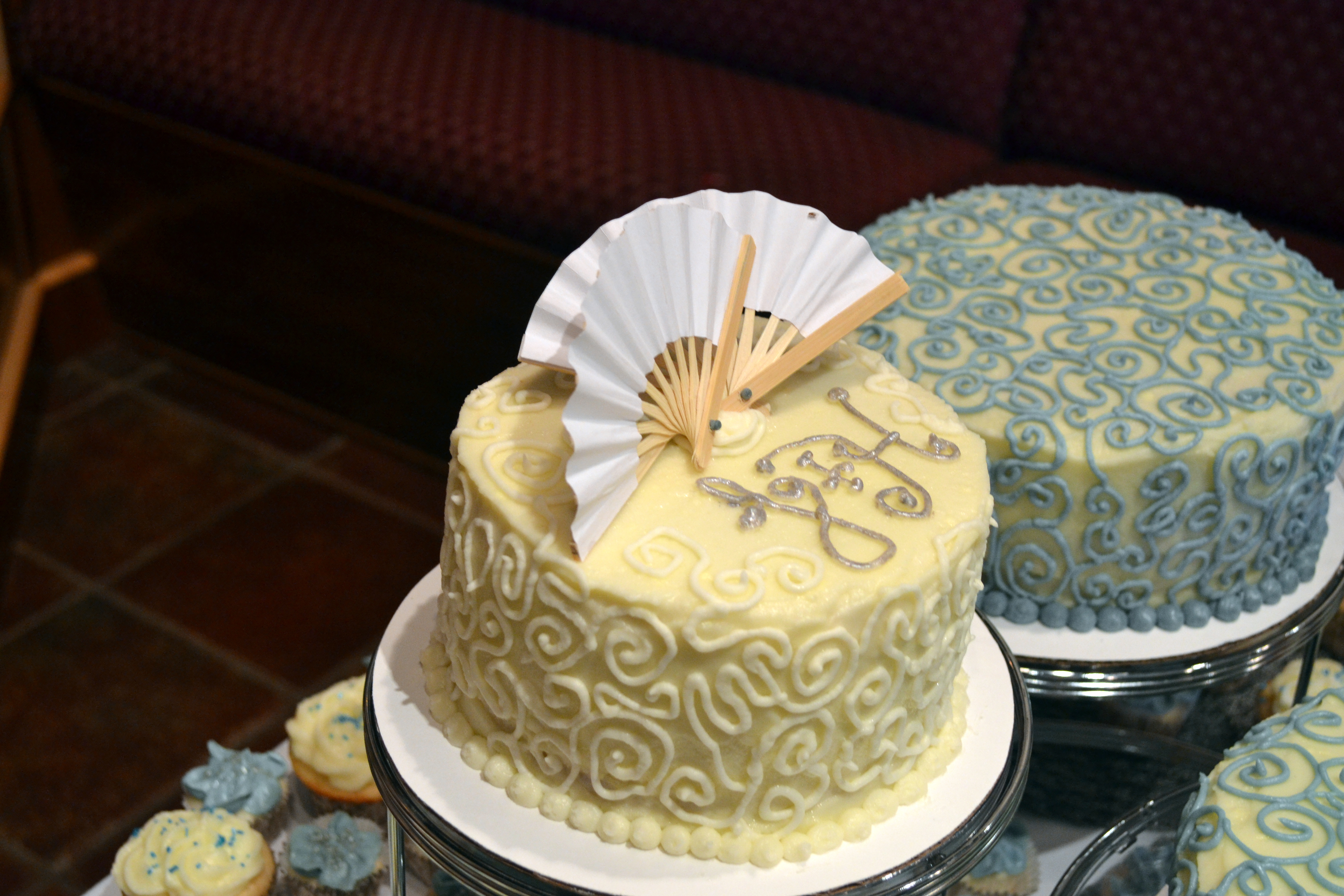
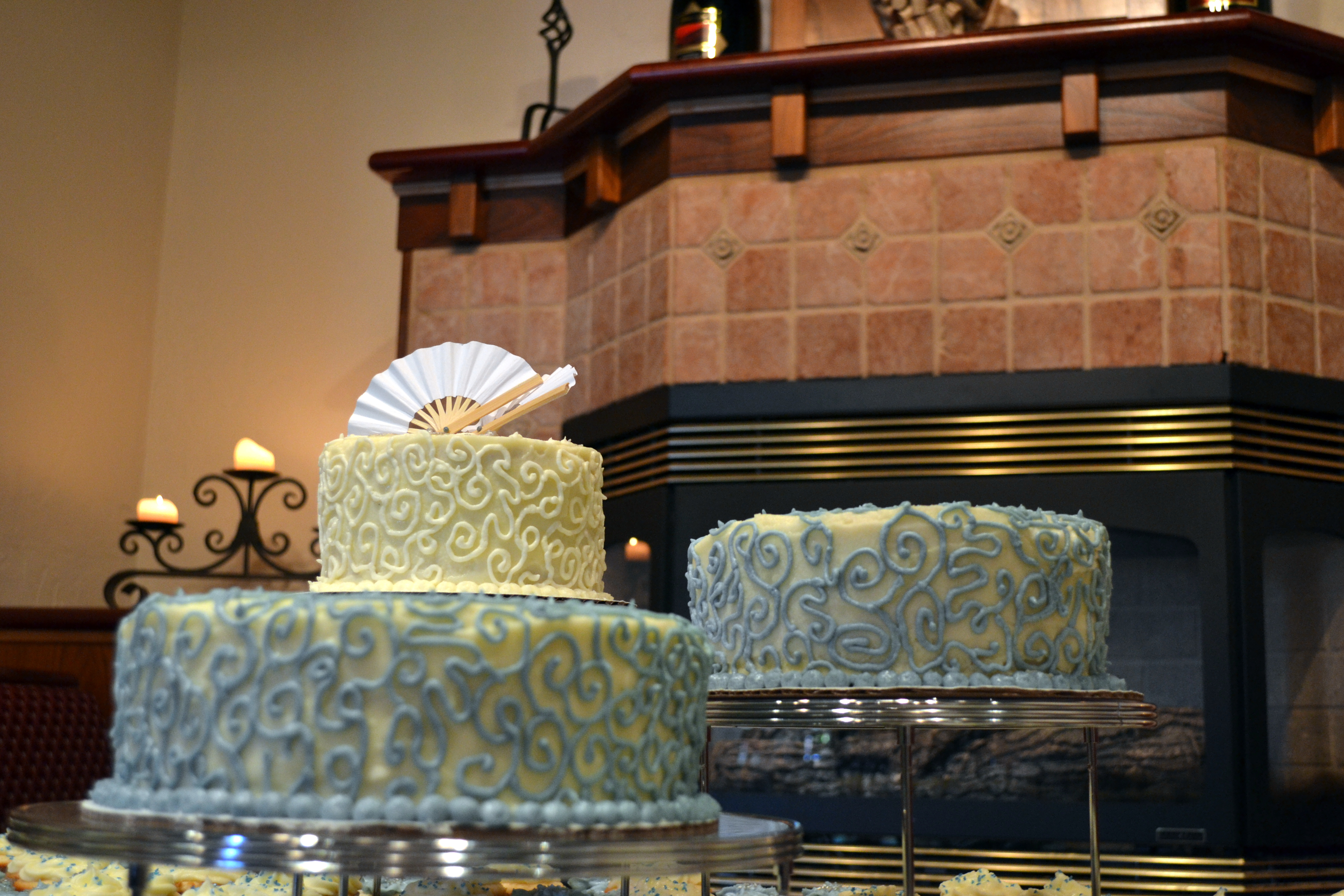
I piped.  I piped and I piped.  And things started to look better.  A lot better.  Most of the worst imperfections were hidden under the ivory and then delicate blue swirls and scrolls I snaked onto the cakes.  They actually started to look nice.  This might not be a disaster after all.  When I added a ring of round, pearl-like blobs to the bottom border of each, I started to feel happy with my project.

With the cakes done, all that remained were 92 miniature cupcakes.  All.  Right.  I had half a bowl of perfectly blue frosting.  Against my own better judgment (hey, it had worked out okay the day before with the gelatin in the filling), instead of starting over with a brand new batch, I decided to add more butter and more powdered sugar to the bowl, and try to tint it to match what I had already done as I went.  It worked.  I wanted a slightly thicker consistency of frosting for the flowers I planned to pipe so this mixture had to be more butter than mascarpone.  That worked out well, really, because I was out of mascarpone again anyway.

With time ticking, I filled up another piping bag with one of the new rose petal tips H. had bought me and went to work, remembering what I’d learned months ago about which way to swivel the cupcake as I frosted.  It took me a handful to get into a groove, remembering when to apply pressure and when to release, but once I got going I was making beautiful little horseshoe movements that resulted in sugary flower petals!  To perfect the color (not baby blue, but not dark blue either), I’d mixed a tiny bit of black gel dye in with the blue.  This resulted in a lovely periwinkle with just a hint of gray, matching almost exactly the blue on the couple’s save-the-date cards.  The exact blue of the wedding.  Boom.

N. would probably like me to add here that as I finished each handful of minis, he deliberately drizzled on a small quantity of silver-gray sprinkles.  My dear friend M., who arrived in mid-afternoon to coo over the product and do my hair for the event, would probably also like me to add that she took over sprinkling duties for the last dozen or so.  In fact, it was M. and S. who saw me through the last sheet tray of minis as, hand aching from the constant pressure and odd angle, I suddenly realized I was going to finish.

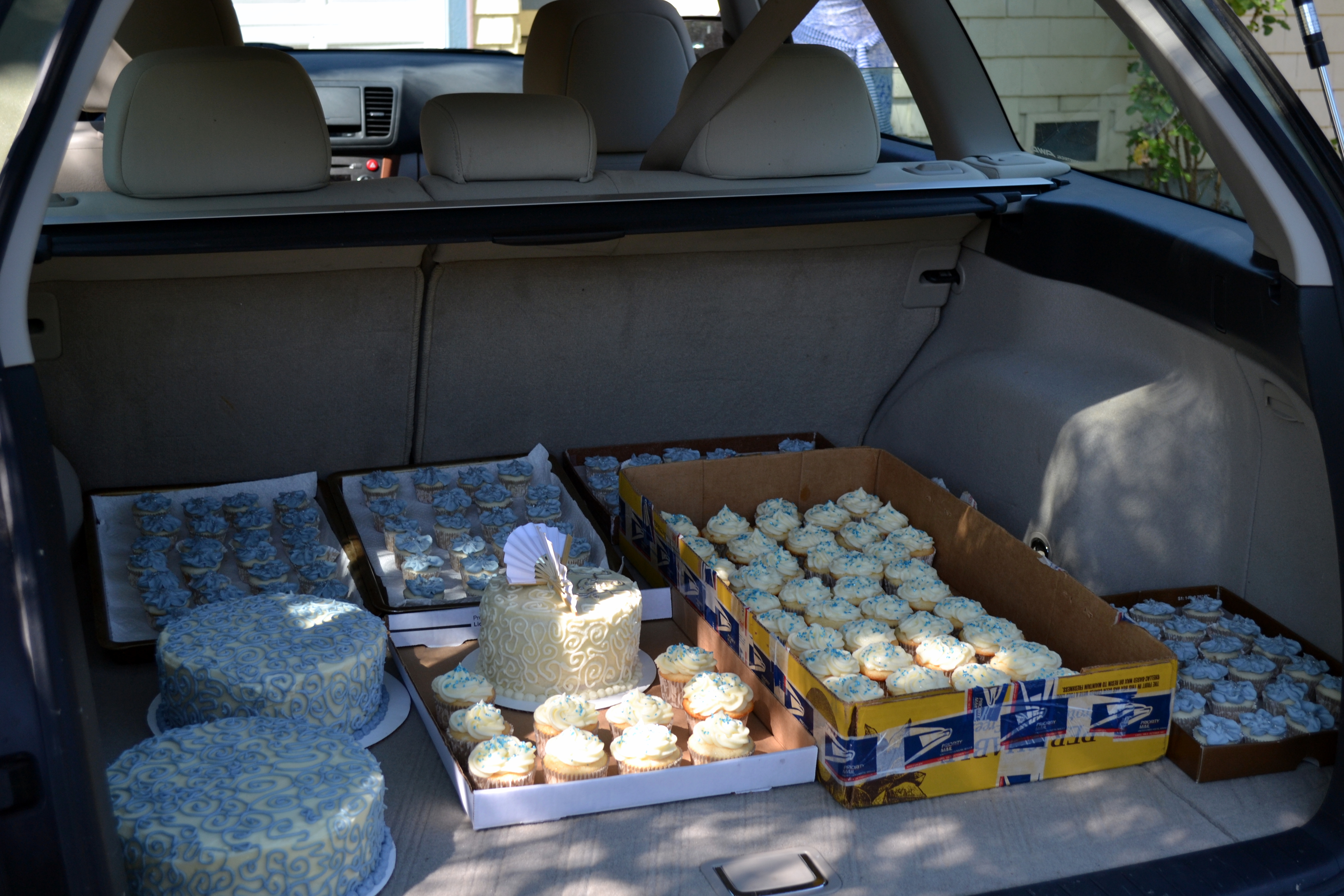
The winery where the wedding took place was a half hour drive from town on winding and sometimes roughly surfaced roads.  Though we positioned the cakes and cupcakes carefully in the back of our Subaru, I still got a little white-knuckled every time N. drove around the bend.  What if, after all that work, we got going a little too fast and one of the cakes slid into the side of the car?  What if, despite the air conditioning running at full blast, it was too hot in the car and the frosting started to slump off?  What if we did get there safely, but I dropped a cake on the way from the parking lot into the building?  I had packed flats as well as a bag of white frosting and a bag of blue in case of an emergency, but I’m not sure I was emotionally prepared to fix any problems that might happen on the way.  Not in a busy winery with the bride and groom’s families darting around setting things up.

Fortunately I didn’t have to.  Three or four of the minis fell over during our ride, but because I’d stuck them in the freezer for a few minutes while I got dressed, their frosting remained hard enough that it didn’t crumple much.

Setup was easy and disaster free.  Some of the wedding party helped carry the precious cargo in from the car, and when every last cupcake was situated on the table, I have to say it looked pretty fantastic.  I made a wedding cake.  And people liked it.

Final thoughts on this massive saga: I will not be going into the wedding cake business.  I would happily make another cake or three for friends who requested it, but I think I’d want to go to at least one cake decorating class first.  I will also not use American buttercream again, except for petal work like I did on the minis.  It’s just too sweet.  I loved the taste of the cakes I made, and the filling was a wonderful, bright tartness (the color contrast was great too), but the buttercream was just achingly sweet, even with the addition of lime juice to the mix.  For my sophomore performance, if I ever have such an opportunity, I would try an Italian or Swiss buttercream instead, relying on cooked egg whites for structure rather than powdered sugar.  As a thank you, J. and H. let me keep all the baking and decorating equipment they bought for the project (thanks again, you two!), so I’m set for all kinds of future practice.

I have to say, though, despite all my moaning and complaining and anxiety, I was really happy with how the cakes looked, and delighted with the reactions I received.  The bride and groom took home the leftovers and ate them the next day, and the one after that.  They were still good.  N. and I ate the trimmings and cupcake guts smothered in leftover filling, and they were delicious.  It was, regardless of the exhaustion and concern during the journey, a monumental success.  I can only thank J. and H. for letting me be such a big part of their day, and wish them all the joy in the world – joy like clouds of powdered sugar, perhaps – for the rest of their lives together.  N. and I love you both.

The Buttercream Project: Wedding Day, part one!

So…

I made a wedding cake.  For a wedding.  And it was served.  At a wedding.  And no one threw anything at me, or snickered behind my back, or insinuated the bride and groom would have made a better choice by hiring a professional baker.

In fact, several guests, and a few of the employees at the winery where the event was held asked me where I worked, or whether I had a business, or how many wedding cakes I had made before.  I was forced to respond to these questions thusly: my kitchen, no, none.  And they were surprised!  And I, still struggling with the sickeningly sweet baggage of failed buttercreams weighing down my memory, was surprised they were surprised.

But there we were!

Deep breath; here’s how we got there, in two parts:

The wedding took place on a Saturday.  After consulting a professional baker through a friend who is also her sister, I decided to do all the baking on Thursday, the majority of the frosting on Friday, and the detailed decorations and mini cupcake flowers on Saturday morning.  The cakes would still taste fine, she said, and the rewards of working with day-old rather than freshly baked cake are staggering.

My biggest comment about the whole process is that everything takes longer than you expect it to.  And it “takes a village,” as they say.  I knew approximately how much cake I was going to make, but I didn’t really stop and think about how much time it would take to bake, or how much space it would require, or what 36 egg yolks looks like (6 egg whites in each batch of batter = 36 unused yolks).

Anyway, I baked on Thursday, and despite my naïve assumption that I would bake in the morning, tidy up the kitchen and rest in the afternoon, I baked almost all day.  See, butter takes time to come to room temperature, and egg whites take a while to whip to soft peaks, and when you only have one muffin tin you can only make 12 full size cupcakes at a time!  My friend J. joined me for lunch, which was a welcome break (relatedly, crisp, juice-laden pink spears of watermelon are incredible when you don’t have to slice them up yourself, and Stash’s pomegranate raspberry green tea makes a wonderful iced tea that requires zero sweetener), and a bit later M. came by to keep me company while I scooped and poured and measured and mixed and sweated and burned myself only twice!  The entire day!

Completion of the day’s project took some finagling, because as much as we tried to use up perishables to create fridge space, it hadn’t occurred to me how much room it would take to fit one 9”, one 8”, and one 6” cake in there along with 52 cupcakes and 90-something mini cupcakes.  There weren’t enough shelves!  We improvised by double stacking the cupcakes and minis on sheet trays, separating each with upside down drinking glasses to keep them from squashing each other.

Thursday night, I was exhausted.

But that was nothing.

Friday, I got up with excited anticipation and set a pot of water to boil so I could peel the apricots for the filling.  Once the raspberry apricot compote was cooked down to a thick, sticky jam and nearly ready to chill, I would set out the butter.  I knew now it didn’t take an eternity to soften.  This was going to be a breeze.  It would be my best buttercream ever.  Well, as these things often go, it wasn’t, and it wasn’t.  

Apricots don’t like losing their skins.  They hang onto them like some living thing.  By scoring an x in the bottom of each and plunging them into a boiling bath for a minute or so, I thought I would be able to slip them free and naked, like peaches.  Instead, the skin came off in little peels as though they’d been sunburned, and sometimes it wouldn’t come off at all, unless attached to chunks of flesh.  This, then, took longer than I’d anticipated.

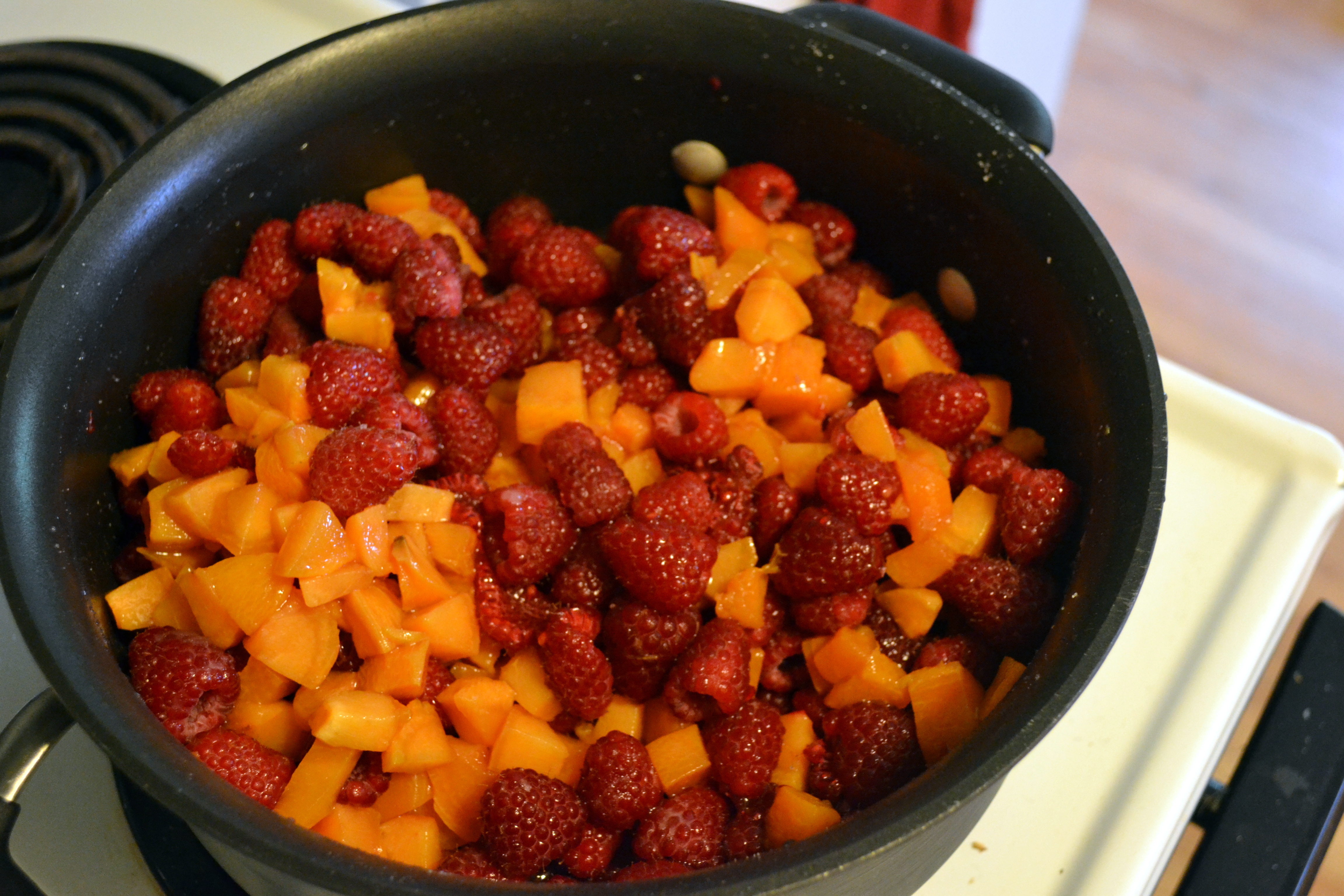
When the apricots were finally mostly nude, slippery chunks of ruddy gold, I flopped them into a big stock pot with 3 pints of dewy, just-rinsed raspberries, a light sprinkling of sugar (maybe ½ cup?), and the leftover champagne from the previous day’s baking.  There was maybe a cup of liquid when I began, and I worried this would not be enough.  Half an hour later, as the raspberries broke into fragrant, molten juice, I worried there was too much liquid.

I’ve never made jam, so I don’t know how long it really takes for fruit to boil off its liquid, but at an hour into the process, when I still wasn’t mixing up a batch of buttercream, I panicked and poured off about half the compote into a colander, making the sink look like a murder had been committed.  Too afraid to pour off any more lest I lose the flavor, I plopped the sodden fruit bits back into the pot and boiled a bit longer.  Then, when things still weren’t thickening and I was despairing for time (morning was already almost gone), I made a daring, despairing, hand-wringing choice of desperation and poured two packets of gelatin powder into some water, sloshed it about to combine, and tipped it into my steaming, bubbling, red gold concoction.  Alchemy, do your magic!  I bubbled the whole thing on the stove for a minute or two longer, then turned off the heat, held my breath, squeezed my eyes almost shut, and poured the whole thing into a glass bowl which I topped with plastic wrap and shoved into the freezer.  Now it just needed to chill, and we’d be back in business.  I’d be done by mid-afternoon with plenty of time to tidy up before the rehearsal dinner (I should add that during all the hand-wringing and the despair and the certainty that accepting J&H’s desire to have me bake for their wedding was a mistake, N. was very supportive.  He helped me monitor the pot while I showered and cleaned the bathroom in preparation for out of town guests staying with us while they attended the wedding.  He’s a dream).

My sense of timing, ever prescient, was of course wrong again.

It was 6-8 cups of boiling hot near-liquid.  Cooling takes time!  Cooling takes, as it turns out, a lot of time.

No matter.  In the meantime, I hollowed out the cupcakes to receive the (hopefully eventually) cool filling, and trimmed and halved each pale gold circle of cake so there would be four approximately even layers to each one.  Unable to stand it any longer, I took the butter and mascarpone cheese out of the refrigerator to soften.

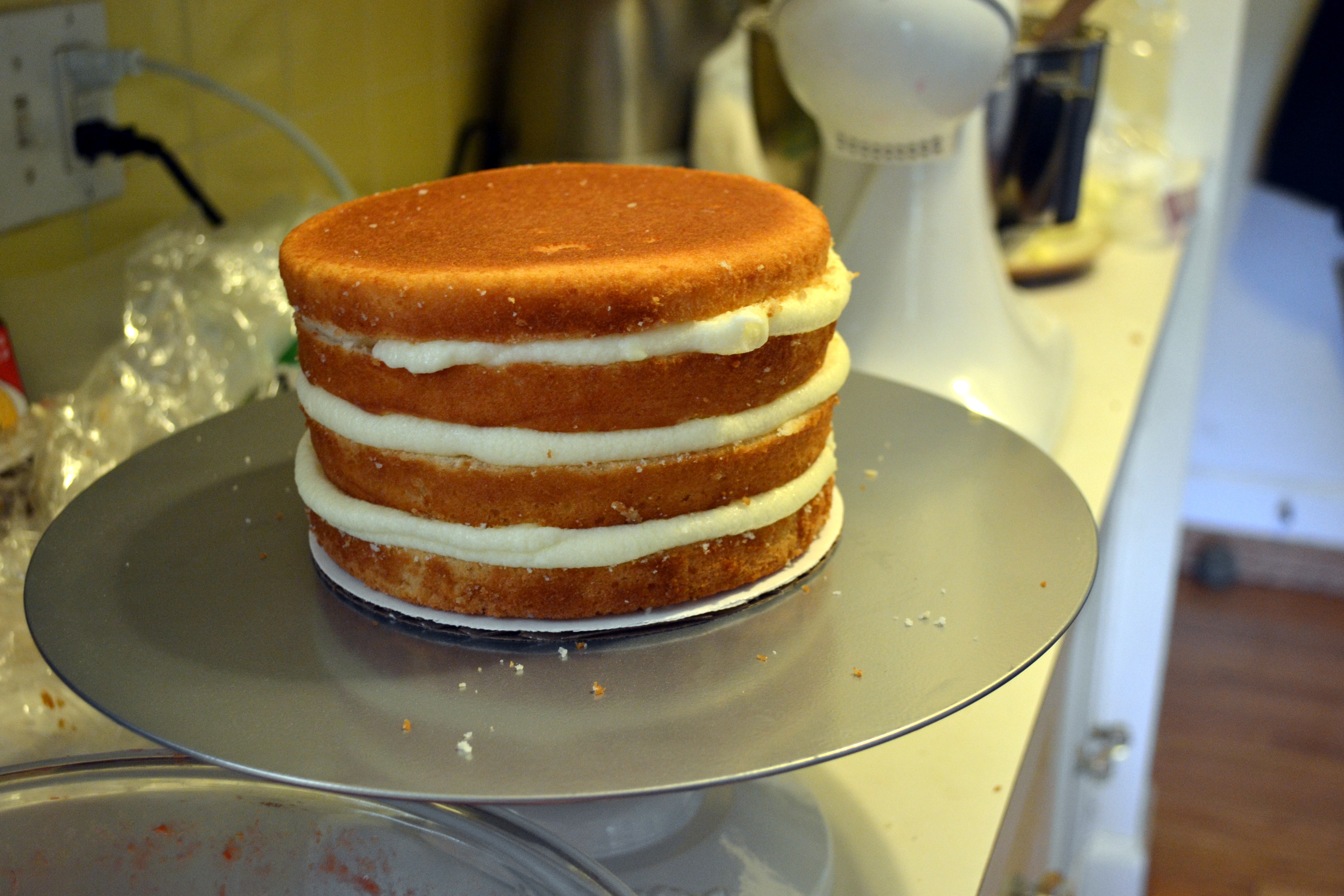
What I made, when I made it, was not my best batch of buttercream.  Remember the one from June that I made at my mom’s house?  Remember the sharp edges and beautiful, smooth consistency?  This one was a step backward.  It was clumpy.  It was grainy.  It was so, so sweet.  If I were a professional baker, I would have thrown out the whole thing and started again.  But I’m not.  I’m a home-trained amateur, and though I took into account everything I’d taught myself over the past six months and continued to beat and beat and add more lime juice and beat, at a certain point I had to frost something.  No worries, I thought, it’s just the crumb coat.  Just do the crumb coat, and it’ll be fine.  It was.  It worked exactly like a crumb coat should.  After piping a generous circle of frosting around the top edge of each layer and spooning in a nice puddle of filling, I stacked the cakes as evenly as I could.  I scraped on the crumb coat, catching moist, delicate, champagne-flavored bits, and as I finished each cake I returned them carefully to the fridge so this first all-important layer of icing could harden. 

In the meantime, I filled and frosted the cupcakes with careful swirls.  Contrary to my most recent performance, these did not come out in sharp rosettes.  In fact, a few of them threatened to plump into blobs.  But I administered a careful sprinkling of blue sugar anyway, and shoved them, too, into the fridge to think about what they’d done.

A new batch of buttercream was now required.  And I was out of mascarpone cheese.  As always, this was more of a challenge than I’d anticipated.  It was nearing 4pm, the rehearsal dinner was in less than 3 hours, and I wasn’t done yet.  Okay, just go and buy some more mascarpone.  The grocery store two blocks from us didn’t have any.  The grocery store on the south side of town did, but it was a different brand, a higher price, and a looser consistency.  And cold.  Deep breath.  Beat its brains out.  This batch was, admittedly, a bit better than the first, but still not the smooth creamy perfection I’d achieved in June.  But it was what I had.  I would deal.  It was just frosting.  I could conquer it.

When I finished the first cake – the 8” one, I think – I called N. in to have a look.  “Be honest,” I said to him, “does this look decent?”  We agreed that while it wasn’t great, it was probably passable.  I pressed on to the 9”.  When this one was done, I felt my stomach sinking.  Yes, I had carefully covered the crumb coat, and yes, I had dipped my spatula in hot water and let it glide carefully and quickly over the surface when I was finished to smooth things out, but I could see tiny chunks of butter in the mixture.  I could see where the icing wasn’t absolutely smooth.  There were dents and cracks and, inevitably, the indentation of my knuckle from a moment of carelessness.  I filled that one in.  By the time the 6” cake was done, I was almost ready to cry.  It looked the best of the three (practice is important, people), but I was tired and disappointed with myself and worried that the bride and groom would second-guess their choice.  Still, all that could be done was to carefully deposit them back into the fridge, try in vain to scrub the blue dye from the blue sprinkles off my hands, and go to the rehearsal dinner.  The detail work, which I’d never had time to practice, would have to wait until morning…