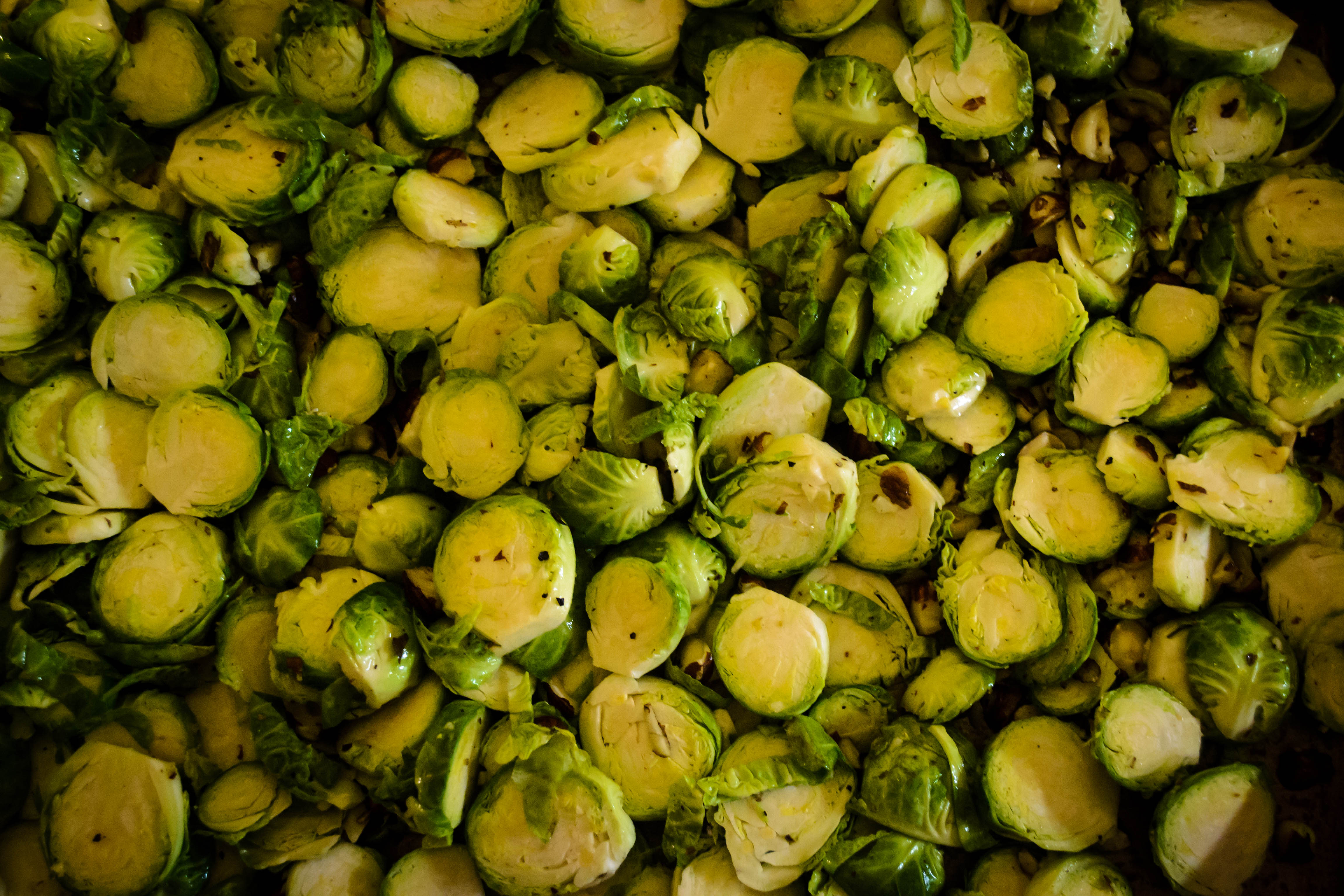
First few truly cool nights of the season under my belt, and I’m already dreaming of Thanksgiving vegetable dishes…
First few truly cool nights of the season under my belt, and I’m already dreaming of Thanksgiving vegetable dishes…
This is the time of year when people who frequent food blogs are probably looking for one of two things: simple, delicious dishes to use up lots of late summer produce, or inspiration for encroaching harvest, autumn-centered meal plans.
 Sorry to disappoint.
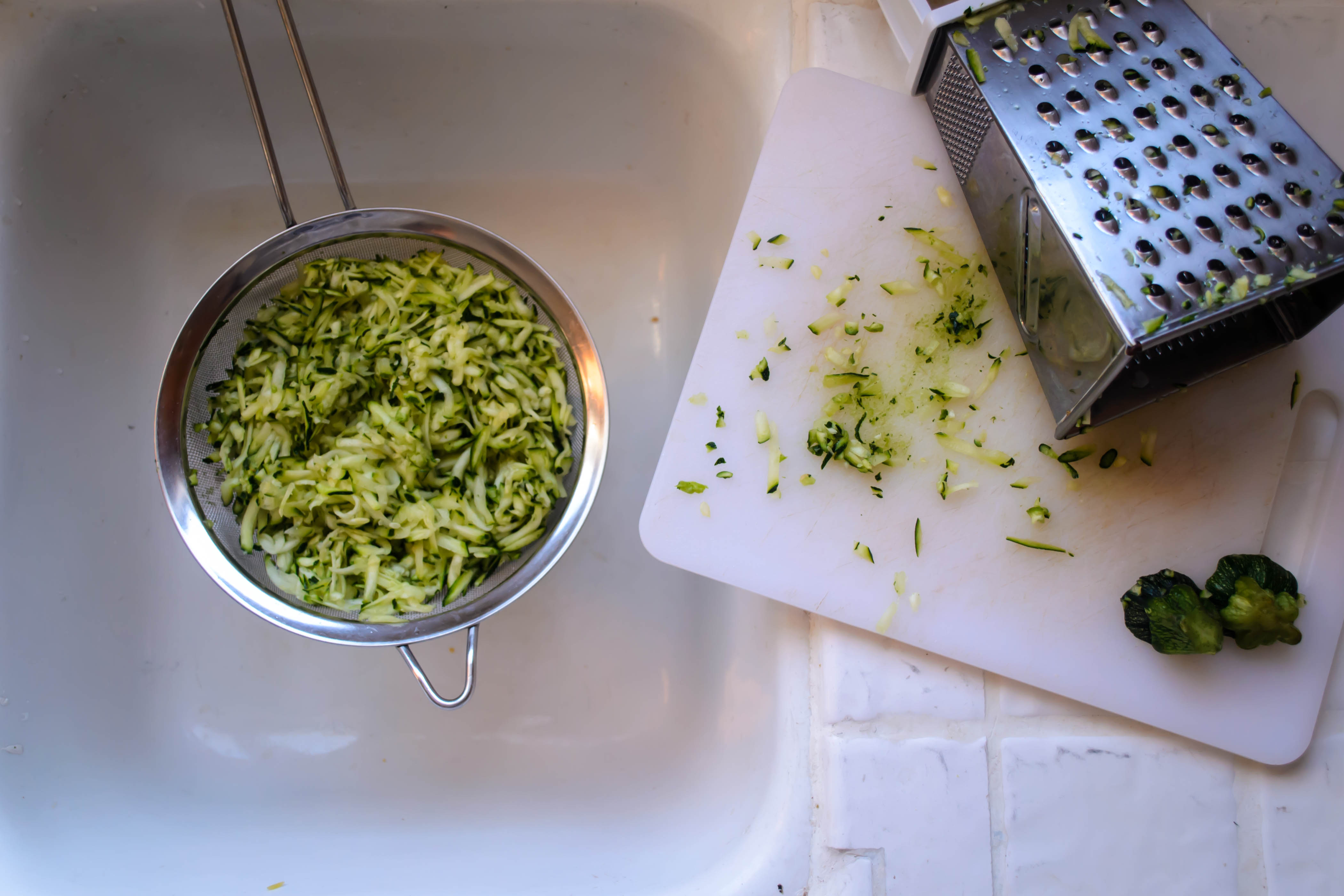 Yes, this week’s recipe uses a good pile of zucchini, shredded into a mass of green and white ribbons, and yes, it combines the warm, welcome flavors of cinnamon, nutmeg, and brown sugar that you might expect from a really good zucchini bread. But it takes those flavors and, peevishly, wraps them up in one of the more involved sorts of bread out there.
 Babka is a sweet bread, raised with yeast and stuffed with butter and eggs. Most frequently, it is filled with chunks of chocolate until it is gasping under the weight, then rolled up, twisted, folded, twisted again, piled with streusel, and then baked until it is golden and crusty and melty and decadent. It tends to be a holiday treat which, considering the quantities of butter and time that go into producing a loaf, makes good sense. Though the bread itself is most likely of Eastern European origin, it probably didn’t intersect with chocolate until the mid 20th century at the hands of some, I must say, entirely sensible and clever American Jews. I mean, bread and chocolate all in one? Yes, please!
 I wanted to make a lighter version (hah). I’ve been making zucchini bread for years, and I have a recipe I like, but with this year’s focus on dough, I needed something a bit more complex. I don’t remember exactly where the idea came from, but the idea of sweet, slightly vegetal zucchini flavored with the warm spices of zucchini bread and rolled up in a sweet, doughy loaf was something I had to taste. When the recipes for zucchini babka that I found used the zucchini threads in the dough itself, rather than rolling them up in the middle, I got determined.
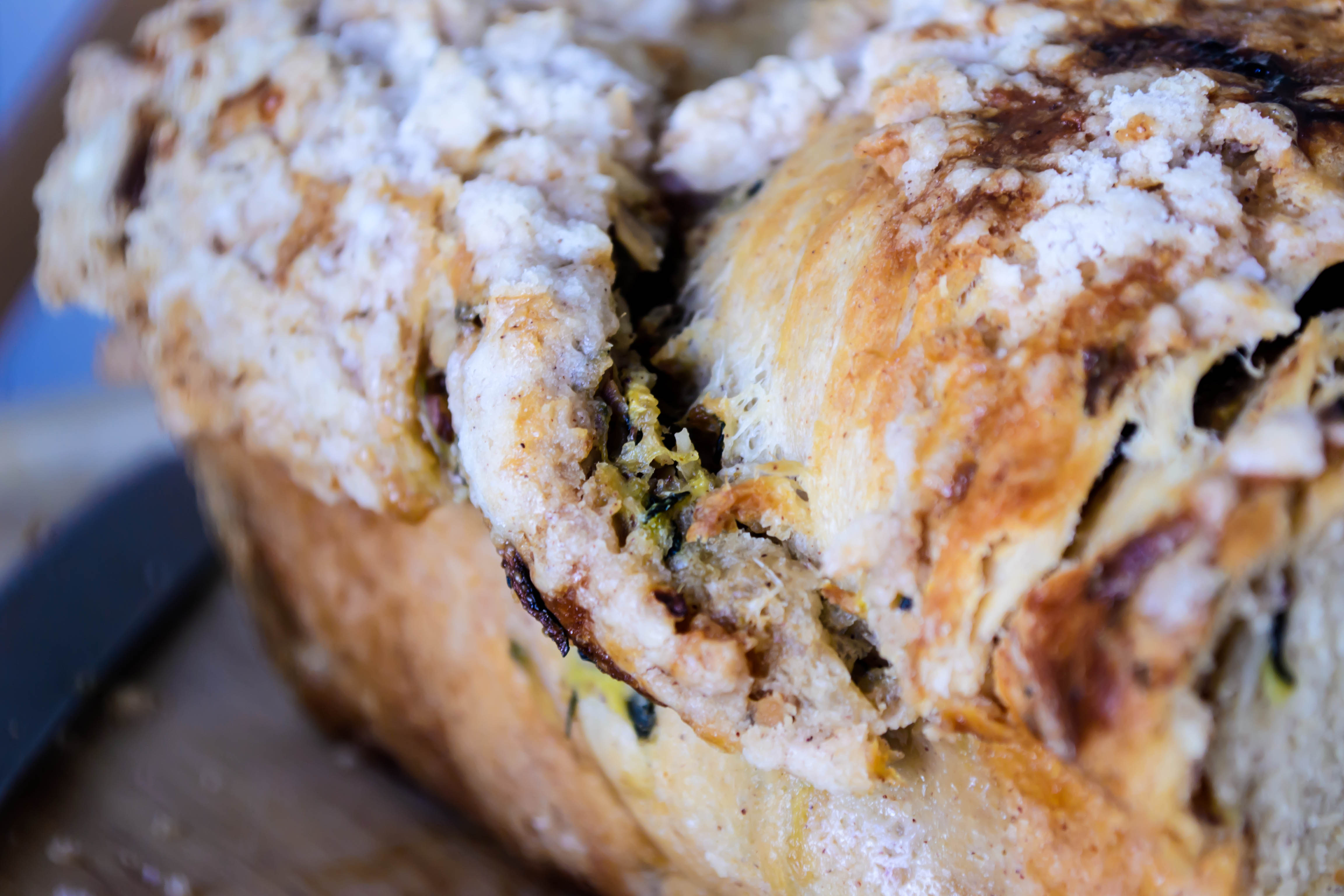
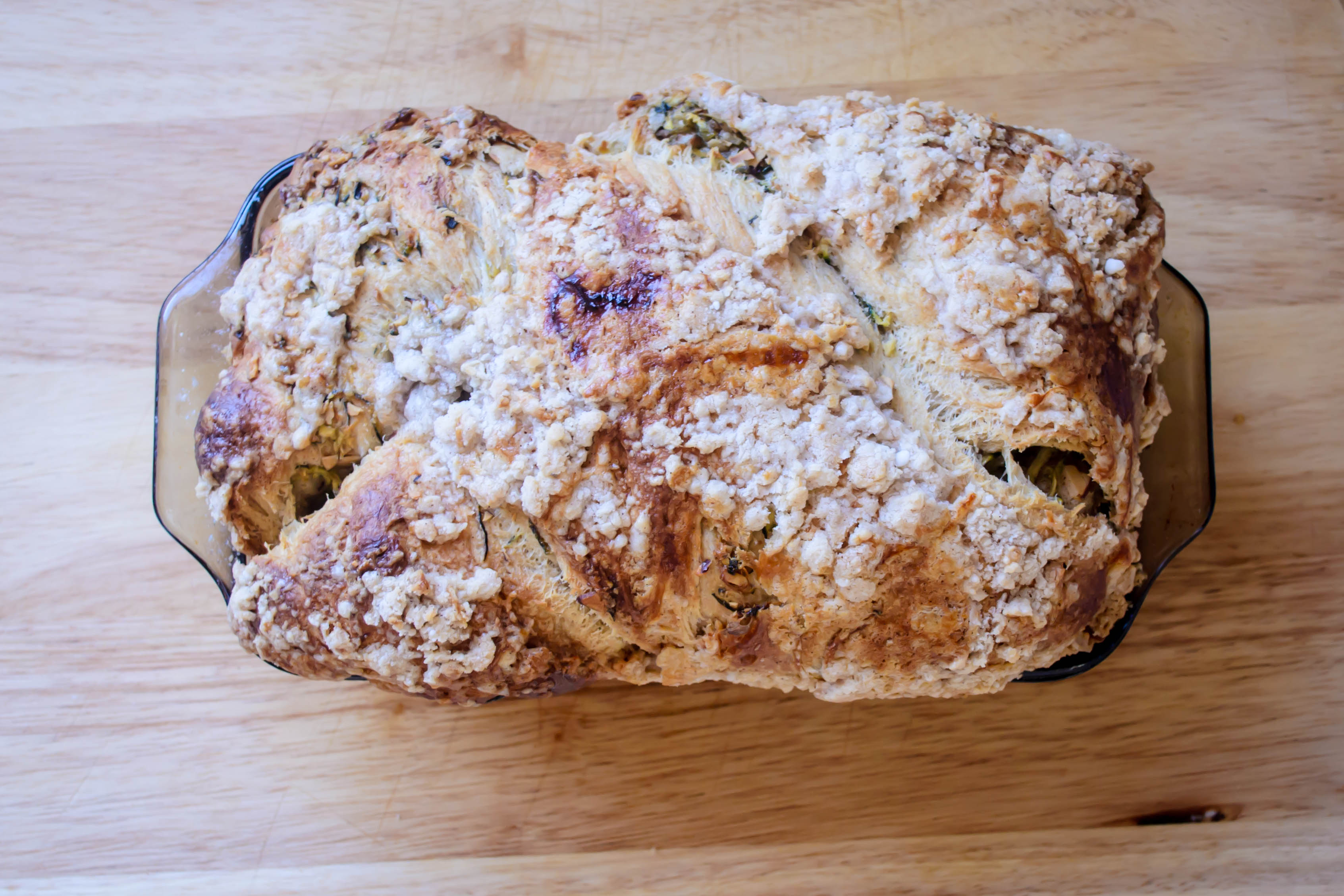 The biggest problem here, of course, is how watery zucchini is. My great fear was that this would produce a loaf that was overcooked on the outside but still underdone in the center, as the great leaking mass of zucchini kept things too wet to bake properly. This fear was, thankfully, unfounded. A lengthy draining session followed by a firm squeezing made the zucchini, while still quite moist, apparently dry enough to use as a filling. Paired with well toasted almonds, brown sugar, and butter, it baked into a curious, almost custard-like texture. The stubby ribbons of zucchini were still in evidence, but the edges of dough around them mellowed into beautiful creaminess, like a little central vein of bread pudding.
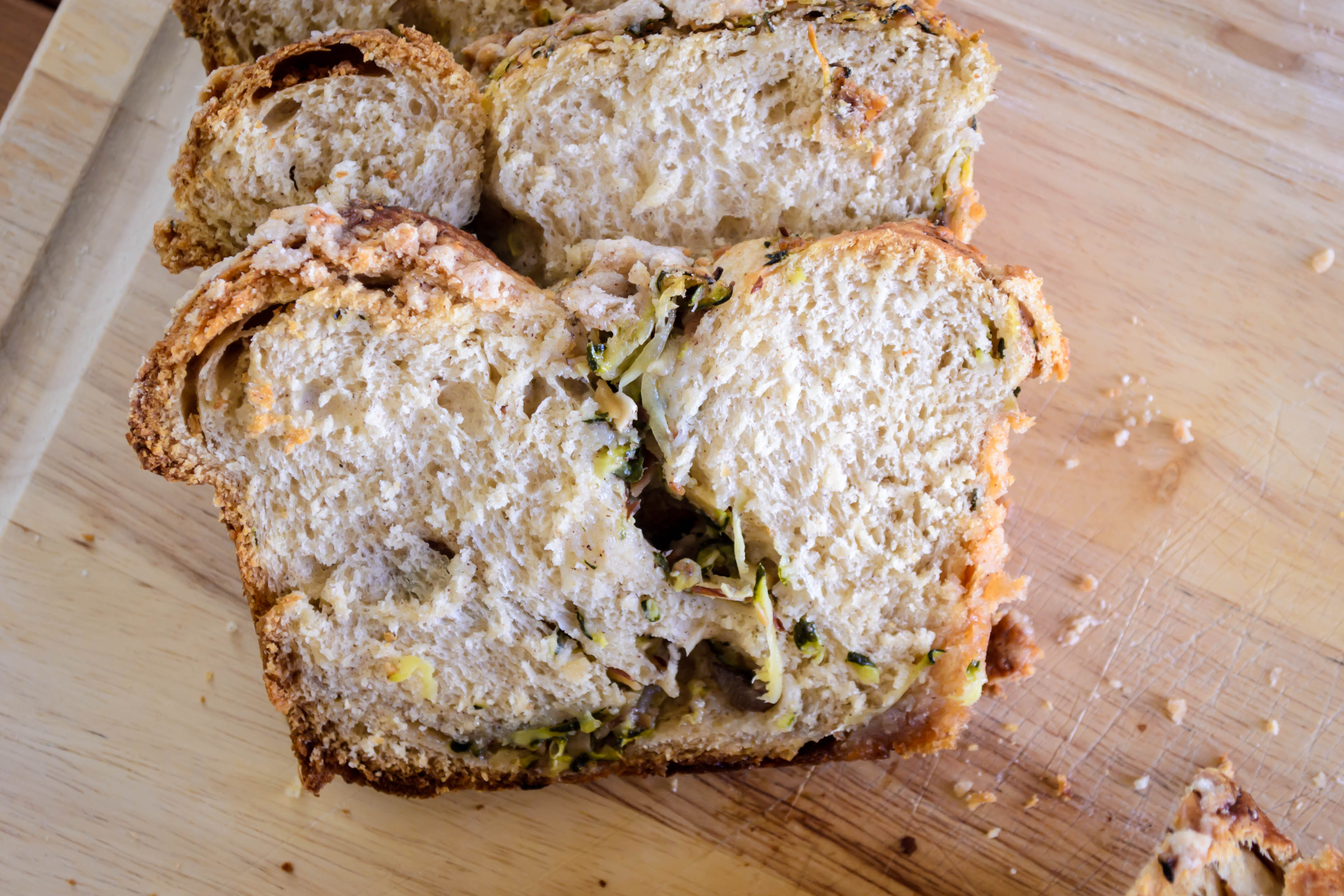 Is this easy? Not especially. But it will use up some of your fall harvest, and it will impress whoever it is you most want to impress at this moment. Even, perhaps most importantly, you!

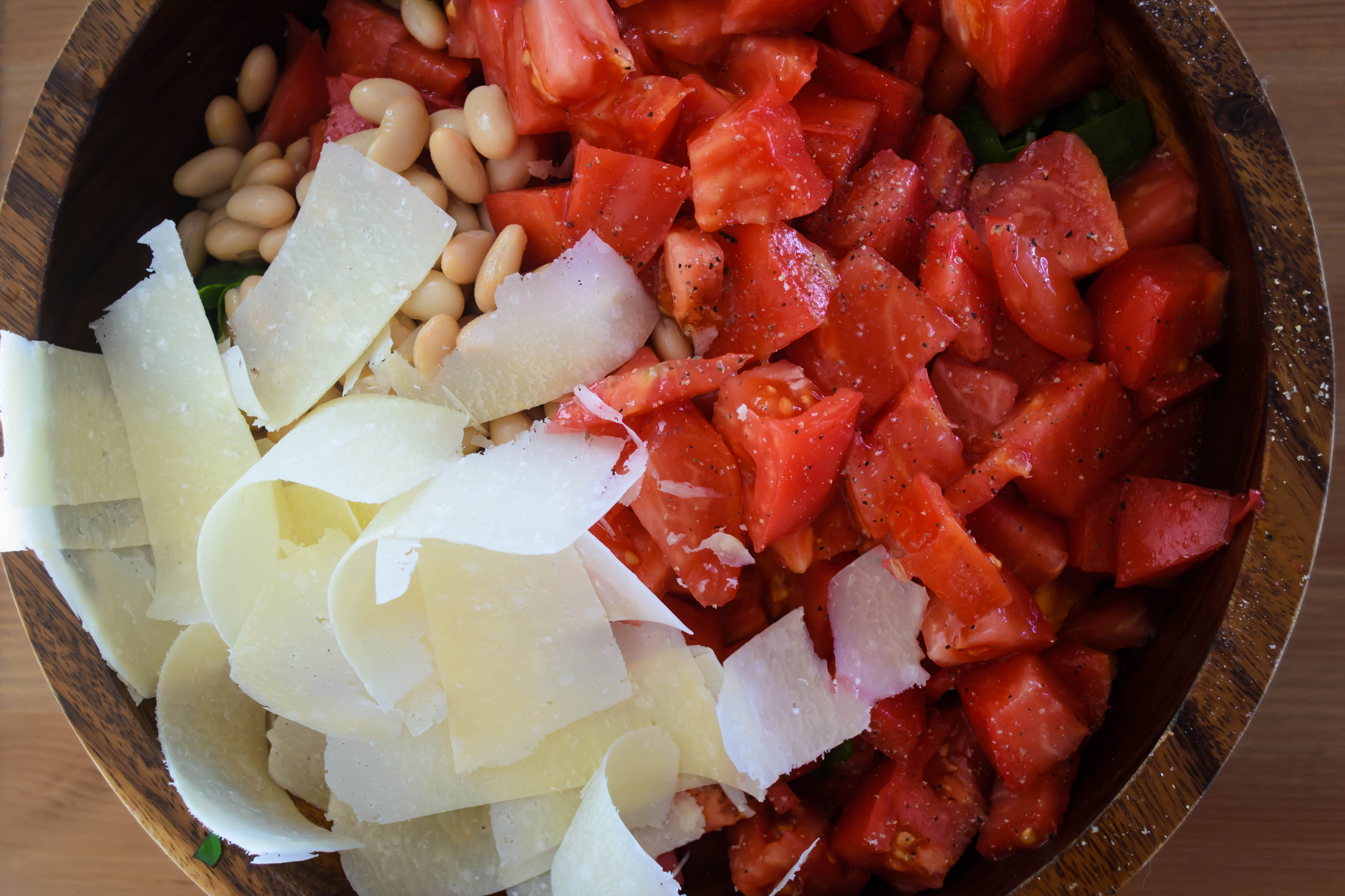
Homecoming: chard, heirloom tomatoes, and basil from the garden. A can of white beans from the pantry. Shavings of parmesan from a wax-paper-wrapped-wedge at the back of the fridge.



In 2009, as N. and I were working through the Oral Examination phase of our graduate program – one of the most difficult aspects, as far as I’m concerned – a little restaurant opened on the south side of town. Sharing space with a small bakery called the Humble Bagel, and run by the bagel shop owners’ daughter Anni and her husband Ari, the Humble Beagle quickly became our favorite restaurant in Eugene. The feel is an intriguing blend: casual neighborhood gastropub, seasonal local food, layered with Israeli influence. Macaroni and cheese, Caesar salad with amazingly lemony dressing, or penne with fresh pesto share menu space with shakshuka, house made pita, and lamb pizza dolloped with labneh. In the summer, weekly specials are determined by what is producing best in Ari and Anni’s backyard garden. In the winter, Ari makes his own pastrami and quick pickled cabbage for their take on a reuben. The beers on tap are mostly from Oregon, and even the soft drink selection is carefully chosen for its local, natural ingredients. The check comes with homemade, sugar dusted shortbread cookies. It’s a pretty good example of the slow food movement in delicious action. If you want a quick meal, don’t bother. You’ll be there at least two hours. If you want a place to bring your sixteen unannounced relatives, don’t show up without reservations. This is a small, local pub, not a diner or high volume chain. If you want tasty, thoughtful, belly-warming food at a relaxed pace, get in your car right now. For a while, as N. and I neared the dates of our respective exams, we were going to the Beagle every Friday evening for dinner. Almost without exception, I got the Fisherman’s Stew, a lovely collection of shellfish and moist, flaky halibut in a tomato and fennel broth with garlic aioli melting achingly over the top. We could barely afford the luxury of these weekly visits, but we also couldn’t stay away.
The Beagle entertained us for the next three years. We went there for birthdays – N.’s 30th, when Ari let me bring a cake I’d made at home, gave me the biggest chef’s knife I’ve ever seen to slice and serve it, and then took a leftover piece back to the kitchen where he shared it with the cooks. We went there for the yearly day-after-Thanksgiving meal with my family. One year, fifteen minutes into the meal we were the only patrons, and it was like our own private restaurant. Ari came out and told us stories about his family’s holiday, and we were suddenly not in a restaurant anymore, but in the home of our friend. We went there for dinner after my dissertation defense too, and even though we ended up being an annoying group – people arriving late and leaving early, special menu substitutions and requests, perhaps slightly-too-boisterous behavior – our server said it was okay, and that Ari had told him we were royalty.
On their Summer 2010 menu, the Beagle introduced an item I was instantly drawn to and still haven’t gotten enough of: the Smoked Chinook Patty. This was a salmon burger on fresh ciabatta (made in the bakery next door), but what pulled me in was its blend of fresh and smoked salmon. It’s immediately richer, deeper, brinier than any other salmon patty I’ve tasted.
This week, needing both a new dough challenge and a taste of that chilly, rain-soaked, allergen-laden city I still think of as home, I decided a recreation was in order.
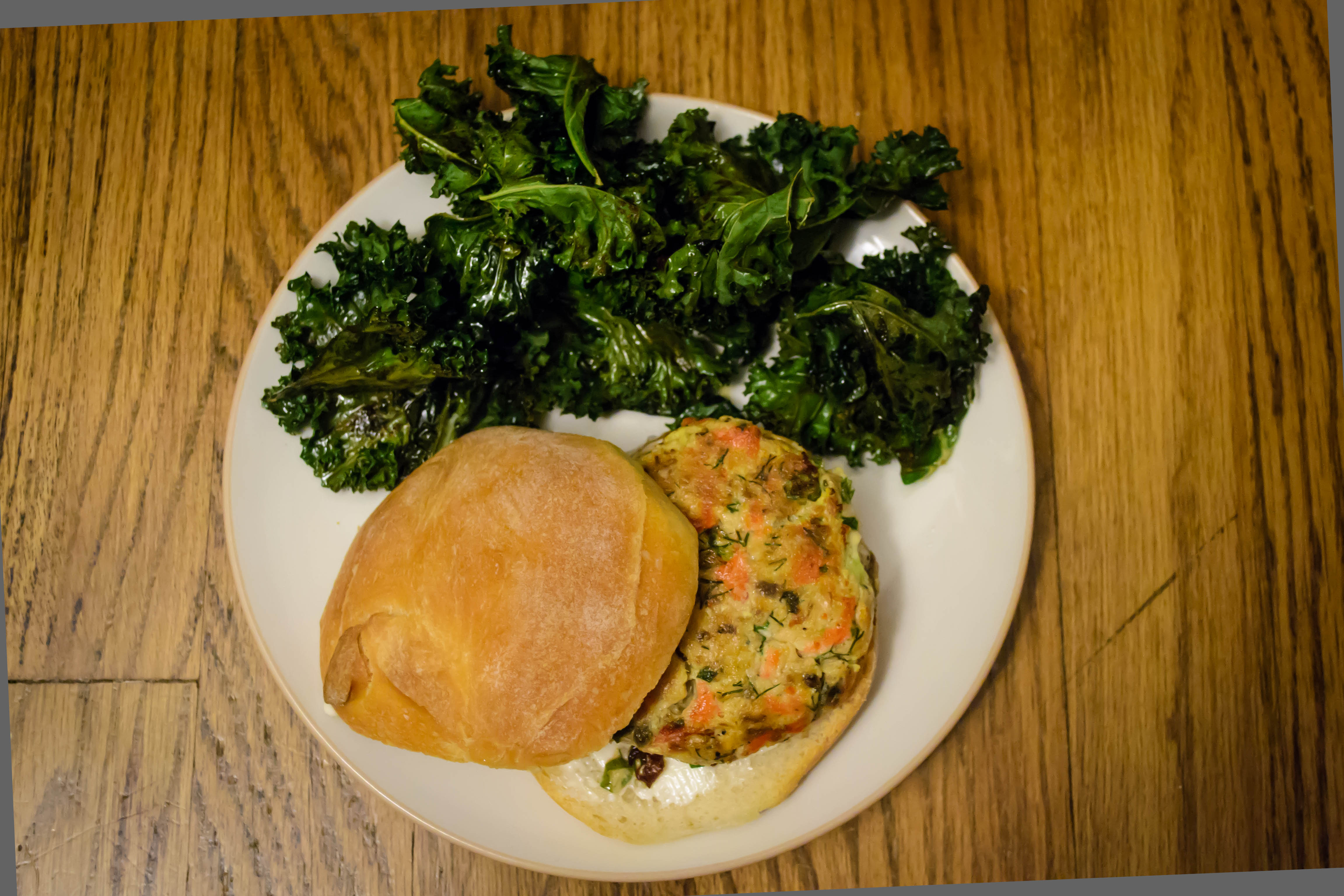
The Beagle’s patty comes on freshly made, perfectly crusted, well-toasted ciabatta rolls. Looking in Ruhlman’s Ratio this week, I noted that the only difference he gives between ciabatta and a standard baguette or boule is the shape and cooking time. This seemed promising and so, despite my claims last week about fear and being unready, I decided to dive in. What else is a Thursday morning for?

I dutifully mixed, then kneaded, bread flour, water, yeast, and salt. I tore off a chunk to perform the windowpane test, and I cuddled my ball of smooth, elastic dough in an oiled bowl to rest and rise.
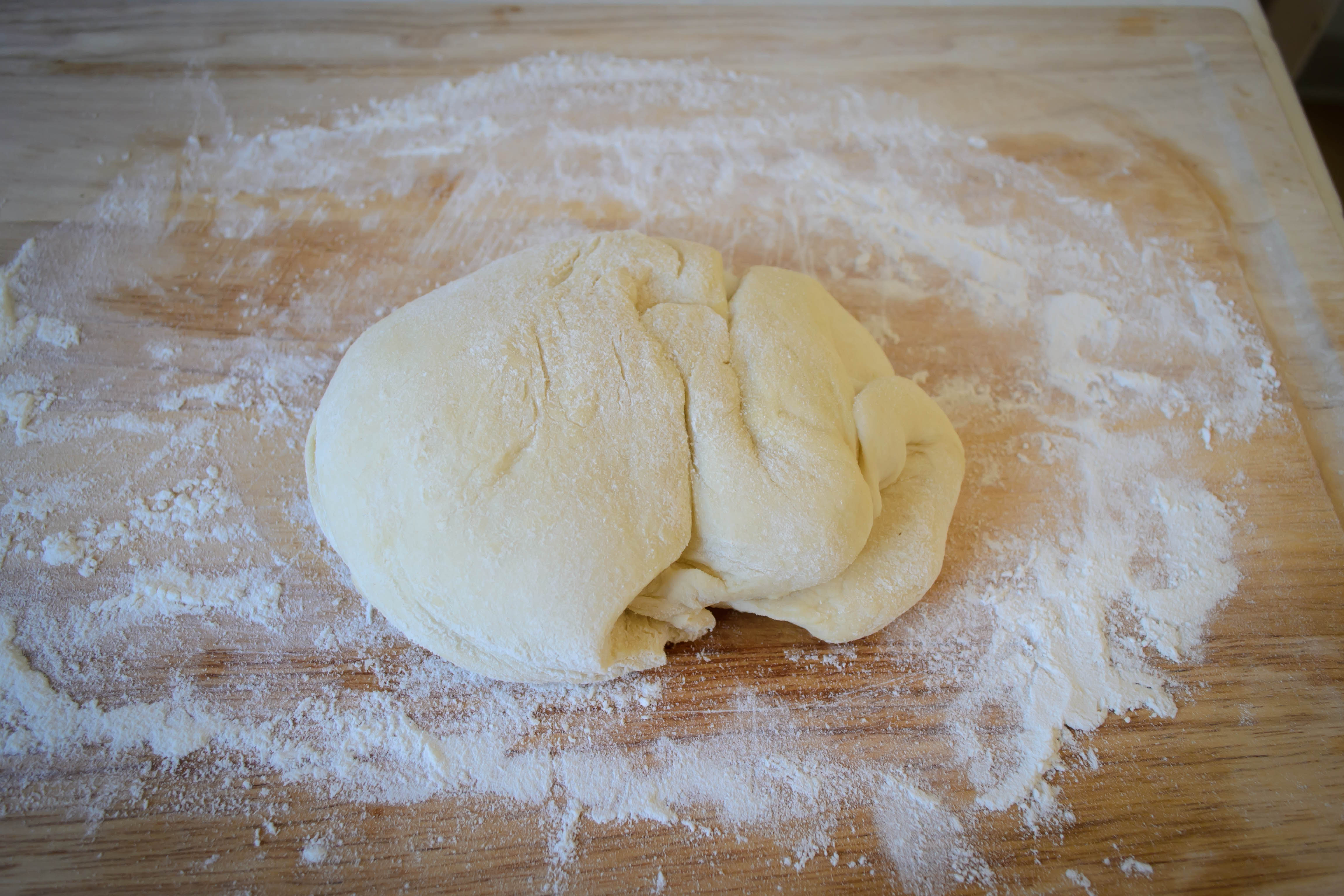
Ruhlman doesn’t give any suggestion of how long to bake individual ciabatta rolls, only a full loaf, so I went to the internet for help. I quickly discovered that what I was making wasn’t going to be the bread I’d had in mind: the tremendous bubbles that bake into cavernous holes, the flour-dusted, almost gravely crunch of the crust, and the soft, perfectly chewy texture of the interior are achieved through a slightly different ratio of ingredients, and a more involved process, as this article on The Kitchn depicts. Since I was starting on the day of baking and didn’t have a biga waiting in the wings, I was just going to have to work with my mix.

Ultimately, though what resulted was more like a super crunchy, slightly flat mini boule, it was crisp and buttery golden delicious and an excellent vehicle for the smoky/briny/rich/tastes-like-home burger it enclosed.

Not-Ciabatta
10 ounces bread flour (or 2 cups)
6 ounces warm water
1 teaspoon salt
½ teaspoon active dry yeast
Sprinkle the yeast over the surface of the water and set it aside for five minutes or so to come back to life.
While you wait, whisk flour and salt in a mixing bowl. Make a little well in the center and pour in the yeasted water. If using a stand mixer, beat with the paddle attachment just until things come together, then switch to the dough hook and knead at medium speed for 10 minutes. I had never executed this switch between tools before, but it worked really well.
After 10 minutes, the dough should be stretchy and lovely and firm, and all traces of unincorporated flour on the sides of the bowl will be gone. Do the windowpane test to see if the bread is ready. If it’s not, continue kneading. If it is, transfer the ball of dough to a lightly oiled bowl and place in a warm, draft-free place to rise. I like to put it in an oven that’s been warmed for five minutes, then turned off for five minutes.
Let the dough rise until doubled in size – mine took 1 hour and 45 minutes.
Punch down the dough gently and then knead it on a floured board for a minute or two to deflate it a bit.
Let it rest for 15 minutes.
At this point, divide the dough, shape it into the bun shapes you want, and let it rise on an oiled baking sheet for another 1½ – 2 hours. I ended up with seven mismatched, homely little balls, but I lovingly covered them with a clean kitchen towel and went about my business. (I think I went about my business a bit too long – 2 hours became almost 3½, and the resulting buns didn’t puff much during baking because they’d expended so much of their rising power as they sat on my counter.)
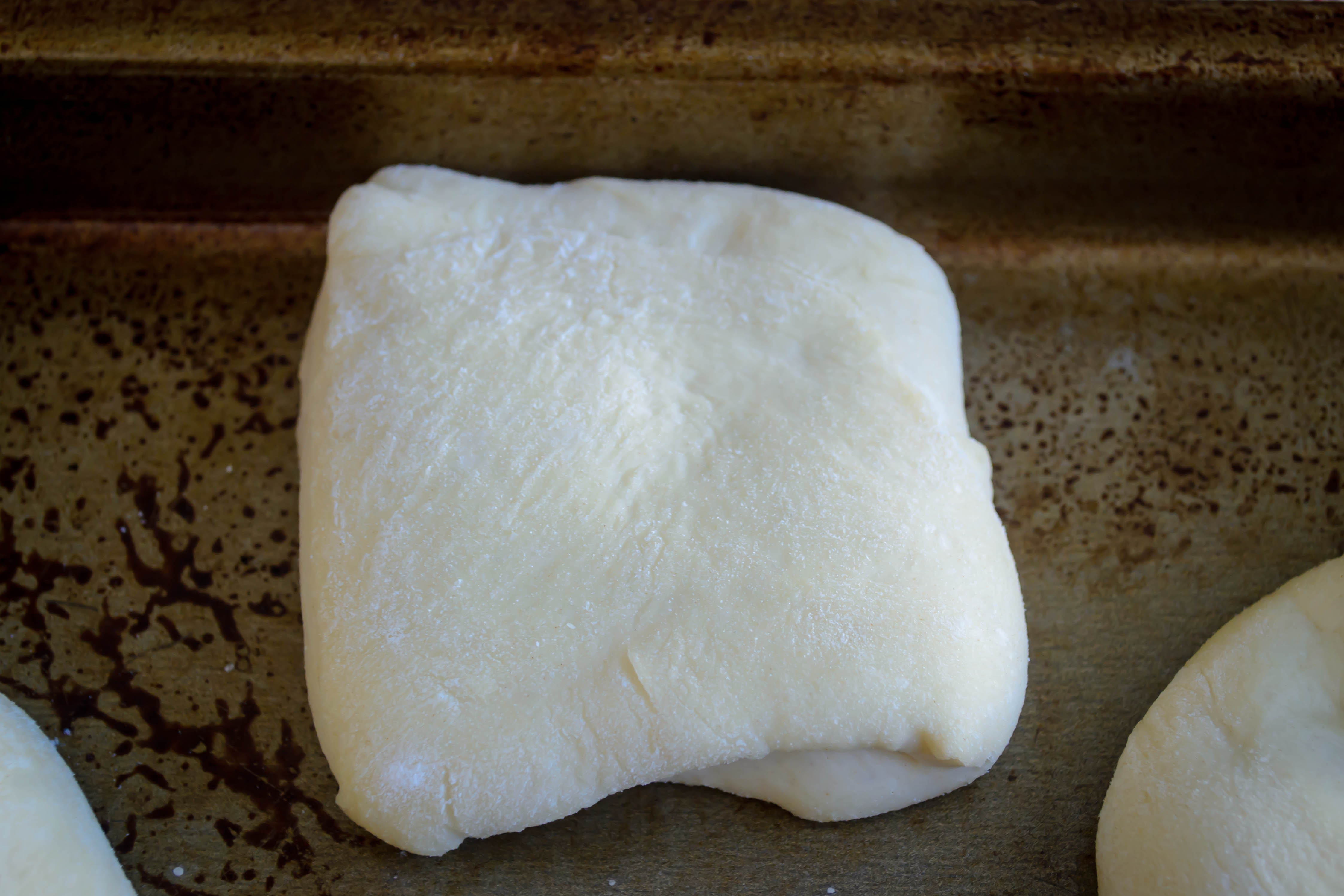
When the buns have risen again, drizzle them with olive oil and bake in a preheated 450F oven for 10 minutes, then turn the heat down to 375F and continue baking for another 20 minutes, or until golden brown and done in the center (with a full-size loaf you can thump the bottom and if it sounds hollow it’s done, but I suspect these are too small to yield satisfying results with this method. Since I had 7, I just tore into one to see if it was done, and when it was, I ate it. No one else has to know).

Set aside to cool while you make the salmon patties.
Smoked Salmon Burgers
These are robust in flavor but, especially if you are using canned salmon, must be handled with some delicacy to prevent breakage. They are, I think, a perfect blend: rich, fatty salmon, salty smoky deepness, and the sour zesty bite of capers and lemon. If you don’t want to bother with the buns, you could certainly encase these in crisp leaves of butter lettuce.
15 oz. canned salmon, picked through and bones removed, or about 1 lb. fresh, finely chopped
4-6 oz. smoked salmon, flaked with a fork
2 cloves garlic, *pasted with salt or grated
3 green onions, finely diced
1 TB capers, minced
1 TB fresh dill, minced
1 tsp each lemon zest and lemon juice
Pepper to taste
1 egg, lightly beaten
If you are using canned salmon, combine all ingredients except the egg and taste for seasoning. That way your mixture is perfectly seasoned before adding raw egg to the party. You will likely not need any additional salt, because the smoked salmon and capers are briny already, and if you paste your garlic you will already be adding salt to the mixture.

If you are using fresh salmon, combine all ingredients, mix well, and then fry about a tablespoon of the mixture until cooked through to taste for seasoning.
*To paste the garlic, mince cloves, then sprinkle with salt. Using firm pressure, draw the blade of your knife across the garlic on the board several times. It will begin to lose its integrity as the salt breaks it down, until you are left with a paste that is much easier to incorporate into your salmon mixture.
When it is seasoned to your liking, quarter the mixture and form four equal sized patties of 3-4 inches in diameter. Pop these in the refrigerator for at least half an hour to let them firm up and meld – they will hold together in the pan much better this way.
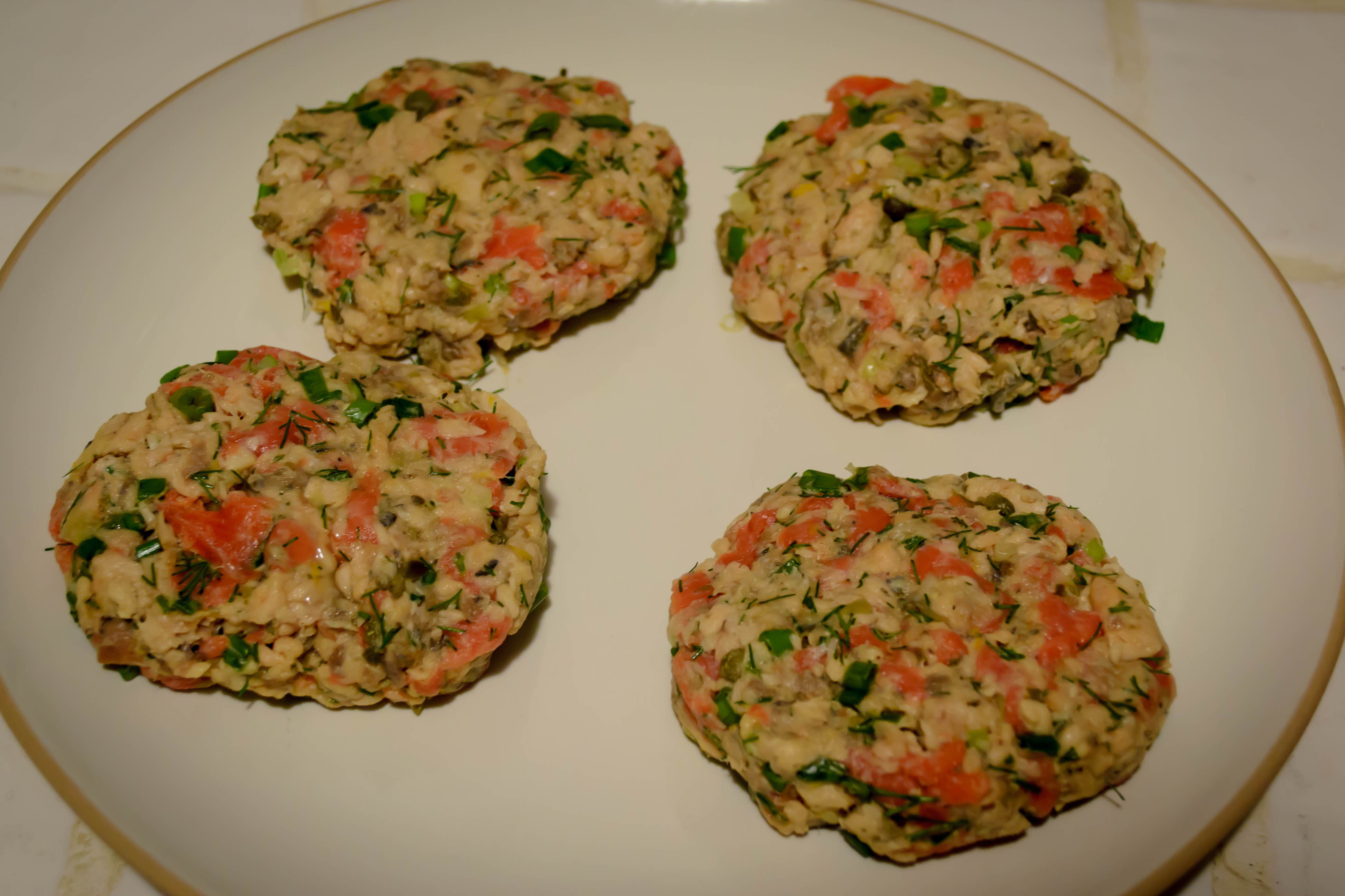
Before cooking, let your refrigerated patties stand at room temperature for about 10 minutes, just to take the chill off.

Warm olive oil in a skillet over medium heat and gently fry the patties. They should take 5-8 minutes per side. Cooking time will depend upon whether you have used canned or fresh salmon and how plump your patties are.
To serve, enclose in buns lovingly with some spring mix and your choice of condiments. I suggest horseradish or wasabi mayonnaise. If you had homemade mayonnaise that would be a lovely splurge here.

We had ours with paprika spiced kale chips, but to really get the Beagle experience you would need to serve with garlic French fries.


I’ve never been one to start at the beginning. Stories require backing up and wait- wait- let me explain who that was. Dreams are recalled near the end, and only slowly do the initial details return. Directions often skip a step or come in fuddled order. I don’t know whether this is a consequence of a disorganized brain, or whether it’s a signal of confused genius (hah!). The Odyssey, with its in media res trope, was an enormity to my teenage brain when I first encountered it during high school. What a wonderful way to present information, and how validating and revelatory it was to find out that this was a classical method!
So it was no big surprise that, when facing the first week of my dough challenge, I couldn’t start at the beginning. Ruhlman arranges Ratio with doughs first, true, but he seems to traverse the category in a solids-to-liquids order. Bread comes first, pate-a-choux closes the chapter. To me, this was even more intimidating than the idea of tackling dough at all. Bread is something I want to build toward, not race into headfirst.
I flipped ahead in the book to take on my own personal Waterloo: pie crust. Supposedly “easy as.” But I’ve never found it that way. My crust is somehow tough AND crumbly. It collapses, it sticks, it refuses to roll in a smooth circle, it requires patching and crimping and pressing and it’s just easier to buy Pillsbury. But now I’m in it, and I’ve got to conquer this thing.
Despite this personal beginning, it wasn’t enough for me to just make a pie crust. You guys have probably all made pie crust. How boring would it be for me to just report on the quiche I made? At the end of the pie crust section, Ruhlman lists a number of alternatives and additions. Ground nuts, cracked peppercorns, a dusting of spices, parmesan cheese? I had never considered this. I had to try it out.
Our quiche would have a parsley crust. Coincidentally, this made my experimentation a perfect candidate for submission to Weekend Herb Blogging.
(I started with parsley, and then I started imagining adding lemon zest, and big particles of cracked black pepper, and then I realized that I just wanted some of the herbed buttermilk biscuits I so heralded when I made them for my Bittman project. Biscuits are in our future, friends.)
The ratio for pie dough – at least this one – is 3, 2, 1. Three parts flour, two parts fat, one part water. This is by weight. The problem here is, despite my desire to conquer this beast, and despite the impressive (read: verging on ridiculous) collection of kitchen tools I’ve amassed over the years (pot sticker press, anyone?), I don’t have a kitchen scale. That makes it hard to work in weights.

Fortunately, though he advocates it persistently, Ruhlman provides the general weight range for a cup of flour, so I worked with that.
Every pie crust recipe I’ve ever read, Ruhlman’s ratio included, calls for the water to be ice cold. I get this: you want the fat to remain cold during this construction phase so it can melt and leave flaky pockets as it bakes. Ice water keeps things frosty. I decided to skip the ice cube middle man and stuck my water in the freezer for a few minutes.

Usual procedure here: cut in the butter, add salt (and parsley, in this case), incorporate just enough water to bring things together, form into a disk and refrigerate to firm the fat back up. Then you can roll out, fill, and bake.

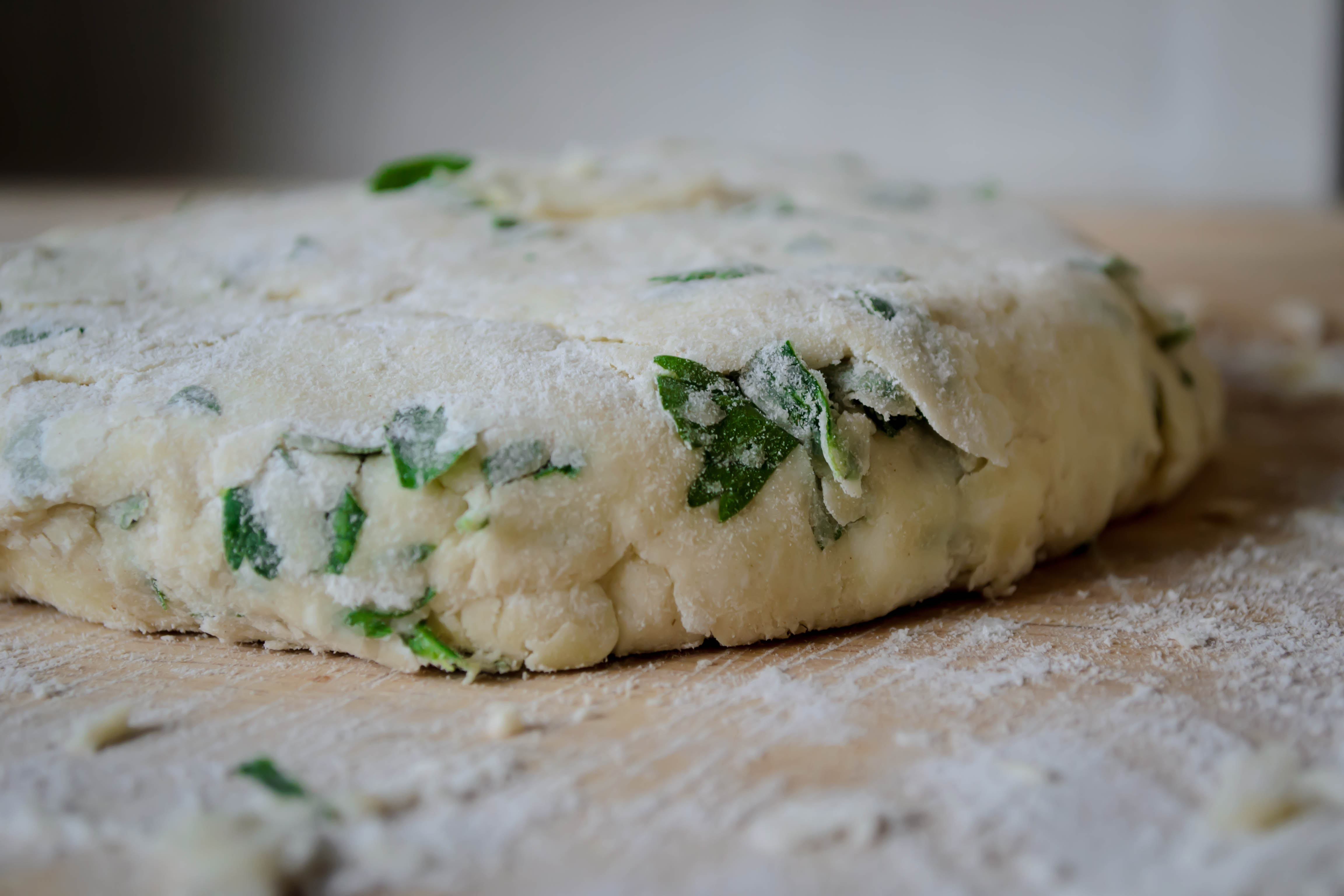
That all sounds pretty simple, but somewhere in there things tend to go wrong for me. This crust was (relatively) easy to work with. It didn’t disintegrate, it didn’t melt, it didn’t even crack in too many places. I think playing with biscuit and cracker doughs this past year accustomed me to the feeling and delicacy required to not destroy a circle of dough. It was barely moist and not exactly elastic, but it did have a bit of give. It baked to a lovely golden color, the flecks of green were intriguing and special, and the quiche that rested just wobbling between its sturdy walls was delicious.
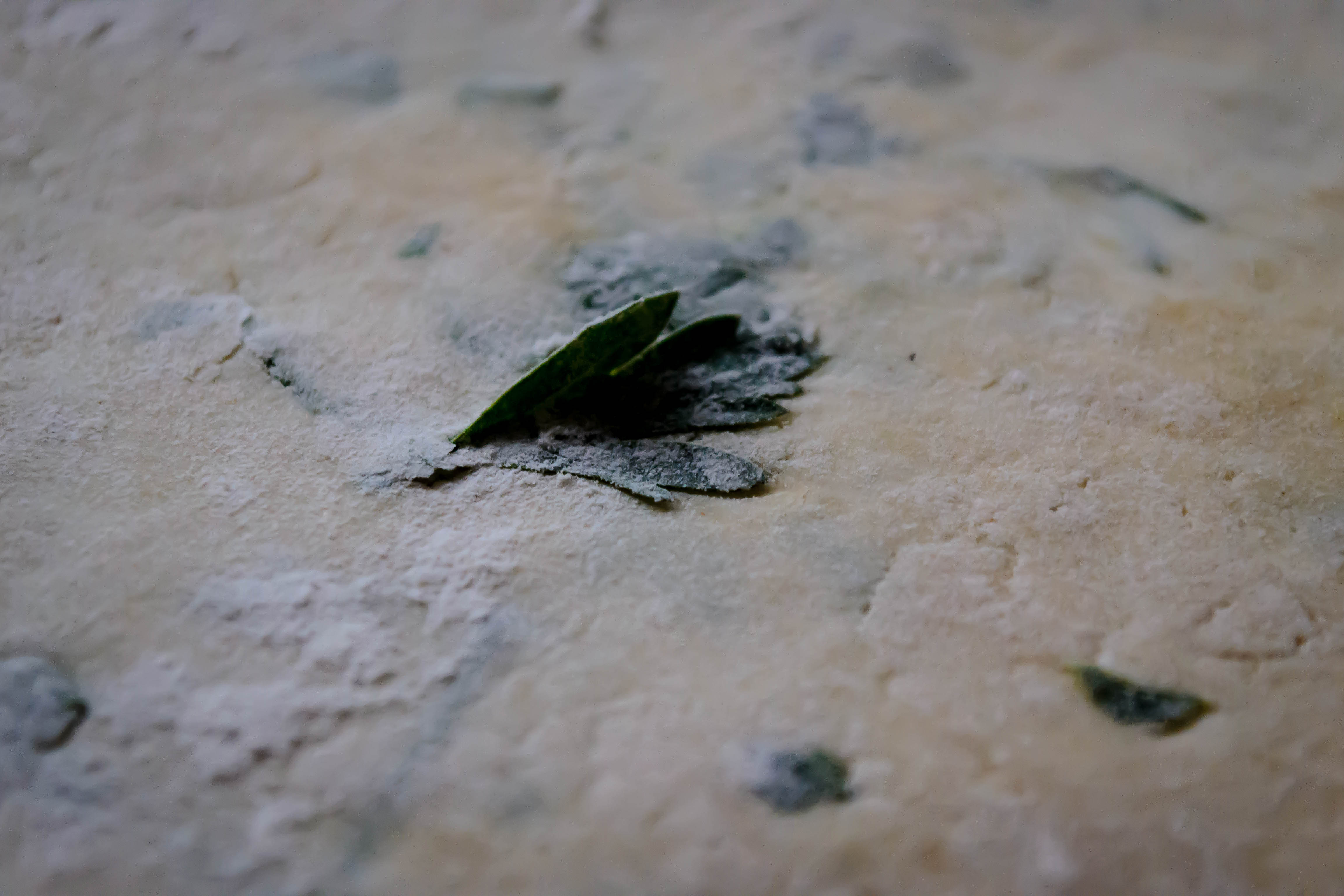
But the crust was tough.
I can assume a few reasons for this.
1.) It’s possible my ratio was off. Because I didn’t weigh my flour, I may have had too much or too little in the mix.
2.) More likely, I overworked the dough. I pressed and kneaded and folded until the dry bits at the bottom of my mixing bowl were willing to play along, and perhaps I was too insistent about that demand for inclusion.

Like everything else, it seems pie crust needs a revisit to get it right. The feeling of the dough between my fingers is familiar, but I have to learn its textural intricacies. How much water is just enough? How crumbly can it be and still hold together? How much of the dryness do the fat and water absorb while the wrapped disk rests? Without another attempt or three, I won’t know.
But it tasted good. It crunched against the quiche and while it didn’t shatter at the slightest fork pressure, it did have that dryness against the teeth you expect from crust. The parsley contributed a grassy freshness and made the flavor more complex, especially the following day. I could see this working similarly well with dill, or thyme, or maybe even marjoram, all of which pair nicely with broccoli and mushrooms.
Onward, then.
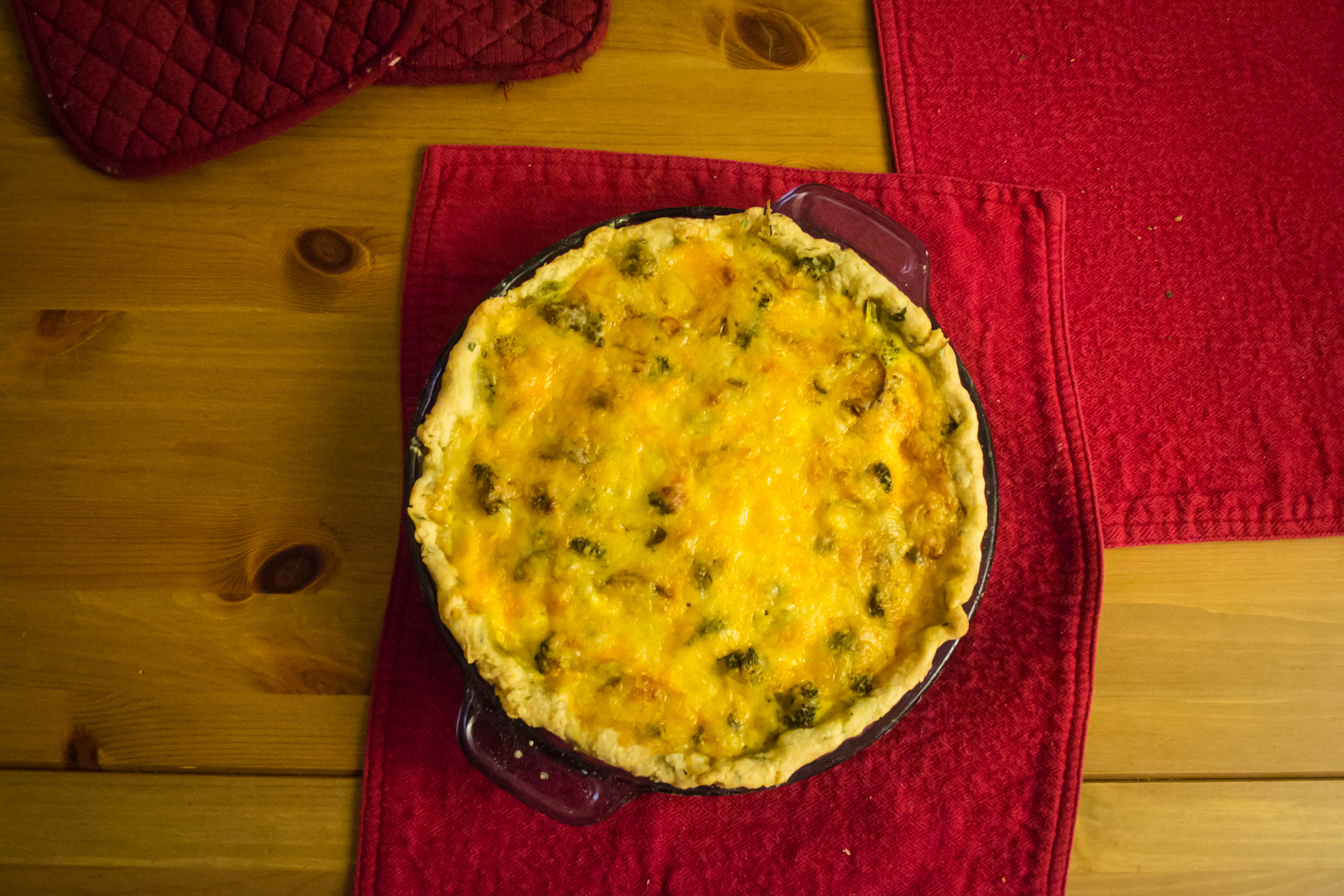
Broccoli mushroom quiche with parsley pie crust
(The quiche recipe is my mom’s. I’m sure she got it from somewhere, but I don’t know that she even knows where anymore. I’ve changed very little here, though her version usually contains bacon instead of mushrooms)
Crust:
1 heaping, lightly fluffed cup of flour (or 6 oz., if you’re doing this properly)
1 stick (8 TB, 4 oz., etc) butter, cut into 16 or so pieces
2-4 oz. very cold water
Pinch salt
2 TB chopped parsley (or dill, or oregano, or marjoram, or thyme… whatever you like best, I expect)
Filling:
1 cup small broccoli florets
6-8 crimini mushrooms, sliced thinly
¼ cup green onions, diced
Olive oil
Salt and pepper to taste
4 eggs
1 cup milk
1 ½ cups grated extra sharp cheddar cheese
½ cup grated swiss cheese
First, make the pie crust. Measure out your water and put it into the freezer while you assemble your other ingredients.
In a bowl, combine the flour and butter pieces. With your hands or a pastry blender (I always use the pastry blender – I hate the too-dry feeling of slowly crusting flour on my hands), cut the butter into the flour until it is pea-sized chunks and smaller. Add the salt and herbs and combine gently.
Dribble in some water – 2 oz. to start with – and combine. If the dough really isn’t coming together, add more water. When you can press a few teaspoons of the dough between your fingertips and it stays together, turn the whole mass out onto a floured board and work lightly to bring it together into a disk.
Wrap the disk in plastic wrap and stow it in the fridge for half an hour or so.
When the dough disk is cold and firm, bring it back to your floured board and remove the plastic wrap. Roll it out, moving a rolling pin (or wine bottle) in a few strokes straight away from you and back toward you only. Avoid diagonal movements. The dough will become a long oval. Then, flip the dough over and turn it 90 degrees so you are facing a fat, flour-drenched oval instead. Roll again, still moving the rolling pin straight away from and back toward you. Repeat this process until you have a rough circle an inch or two larger than the diameter of your pie plate.
Lightly roll half of the dough around your rolling pin and drape it loosely into the pie plate, unrolling as you go, letting the crust settle into the dish. Trim, crimp, or fold over any dangling edges as aesthetically as you are able.
Set aside (or perhaps return to the refrigerator?) while you make the filling.
Preheat the oven to 350F.
Heat some olive oil in a skillet over medium-high heat. When it is shimmering, add the mushrooms and give them a good stir, taking care that as many as possible have contact with the bottom of the pan (that is, don’t leave them piled atop one another if you can help it). Then leave them alone for a good five minutes, or until they begin to develop a golden crust.
While the mushrooms are getting golden, steam or microwave the broccoli florets until they are just crisp-tender and still very bright green. Set them aside.
Turn your mushrooms and let them sizzle for another five minutes or so. When they are golden on both sides, turn the heat down to medium and add the onions. Cook until soft and translucent. Toss the broccoli in the pan, then add salt and pepper to taste. Mom often adds tarragon or marjoram at this point as well – start with ½ tsp and see what you like. Remove from heat and set aside to cool for a few minutes.
While the vegetables cool, beat the eggs and milk together. Add a dash of grated nutmeg, if you like, or some cracked black pepper. As the quiche bakes, this will become a lovely firm custard.
To assemble, fill the pie crust with the vegetables, spreading them in an even layer. Gently pour the custard over the vegetables. Toss the shreds of cheese together and spread them evenly across the top of the filling.
Bake for 50-60 minutes, or until the cheese is golden and the quiche has puffed in the middle. If it’s not puffed yet, it’s not done. The ingredients will be cooked through, but when you cut into it you will find a disappointing watery layer at the bottom. Give it another few minutes.
With the center puffed and the cheese sizzling, remove the quiche from the oven and let it sit for 5-10 minutes so the cheese can solidify a bit and doesn’t string all over when you try to cut through it.
Slice and serve. 
A fabled land of farmers, farm shares, fancy (and not so fancy) restaurants, family meals, food projects and more.
cooking my way through my dissertation, one egg at a time
Fearless cooking from a tiny NYC kitchen.
food, in so many words.
Recreating the famous dishes of famous writers. Part recipe blog, part historical discussion, entirely unabashed love of books.
Epicurean Adventures from Eugene, Oregon
Celebrating the Harvest
Modern Iranian aka Persian Food & Culture Blog - Cuisine, Recipes, Stories , Photos, Pictures, DIY tutorials
Exploring Culinary Traditions of Africa, African America and the African Diaspora
food, in so many words.
food, in so many words.
food, in so many words.
Food-Stories-Recipes-Love
WordPress.com is the best place for your personal blog or business site.
 "blackberry-eating in late September"