Goat Cheese Tomato Pie

All over the food blog world, folks are declaring that fall is here.  It’s the season for pumpkins and root vegetables and casseroles and braised meats.  Except that I live in Los Angeles, where it has been close to or over 90 degrees Fahrenheit for the past week and a half.  Where was this in June, Los Angeles?  Where was it in July (when we were further north and would have missed it!)?  Why now, now that school has started and I have to wear professional clothes all week and can’t be here to keep the windows open all morning, do we finally get the month or so of scorching temperatures when everyone else has packed up their popsicle molds weeks ago?

Food Blog August 2013-2488Well I’m not convinced that it’s fall.  I’m calling it late summer.  And this is convenient, because the heirloom tomato bushes that have grown into a vast jungle in my backyard are still heavy with fruit.  The Farmers’ Market we frequent is still bursting with bright bell peppers and corn and stone fruits, and hasn’t yet been taken over by cruciferous vegetables or potatoes.

Food Blog August 2013-2468A few weeks ago, stunned by the number of gleaming tomatoes we’d managed to produce, in shades of deep crimson and flame yellow, I did what anyone trying to find inspiration would do.  I asked Facebook.  And my friend M. responded with an idea I’d never considered: tomato pie.
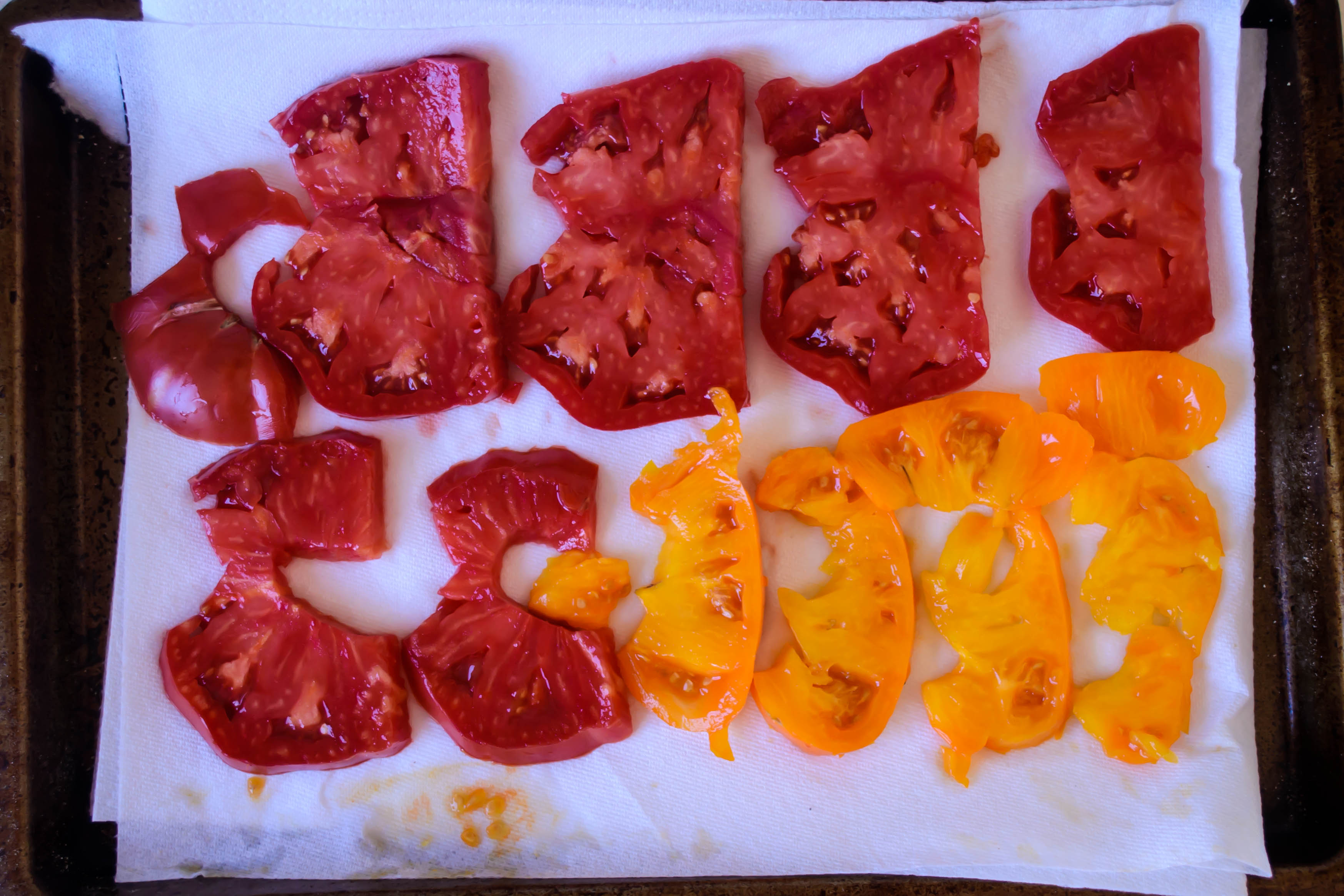
Food Blog August 2013-2474Food Blog August 2013-2479Since tomatoes are a fruit, I suppose it shouldn’t seem so strange to put them in a pie.  (Isn’t pizza, in fact, the ultimate incarnation of a tomato pie?)  But I quickly determined that mine would be savory rather than sweet, and from there things fell together with little effort.  Creamy, tangy goat cheese pairs so well with the acidic sweetness of tomatoes, and a handful of fresh herbs from the garden add a grassy complexity to the dish.
Food Blog August 2013-2480Making a pie, of course, entails making a pie crust, and this remains one of my greatest nemeses in the cooking world (it’s all about the butter, I’m sure of it.  The size and the temperature are almost impossible for me to get right, and given this and all the trouble I had with buttercream frosting I’m almost convinced I should just have gotten it out in the open from the beginning and renamed this blog Butter Problems).  But I considered a few techniques I’d read about recently in Shirley O. Corriher’s genius book Bakewise, which takes a scientific approach to baking, not only providing stellar sounding recipes, but explaining carefully what each ingredient does for the final product, and offering options that will result in a subtly or staggeringly different end product.  In her section on pie crust, Corriher explains that crust texture is a near catch-22 between flakiness and tenderness.  Flakiness comes from leaving the butter in sizable chunks, so that during the baking process the crust puffs into layers before the butter has had a chance to melt fully.  Tenderness, though, comes from being sure the flour has been fully hydrated, which can only happen with full incorporation of the liquid element.  Yet overworking the dough makes it tough, and the flakiness quotient disintegrates as you break the butter into smaller and smaller bits.  See why I don’t like making pie crust?
Food Blog August 2013-2462Food Blog August 2013-2466But this crust was magic.  I decided that if what we really wanted was flakes and tenderness, and if fat helps along hydration and acidity contributes to a tender final product, then the little container of buttermilk that had been sitting quietly at the back of my refrigerator for weeks was the consummate answer.  And it was.  The crust came together quickly, rolled out like a dream, and was stable enough that I was actually able to give it some decorative edging before I packed it full of goat cheese and thick slices of tomato and shoved it into the oven.

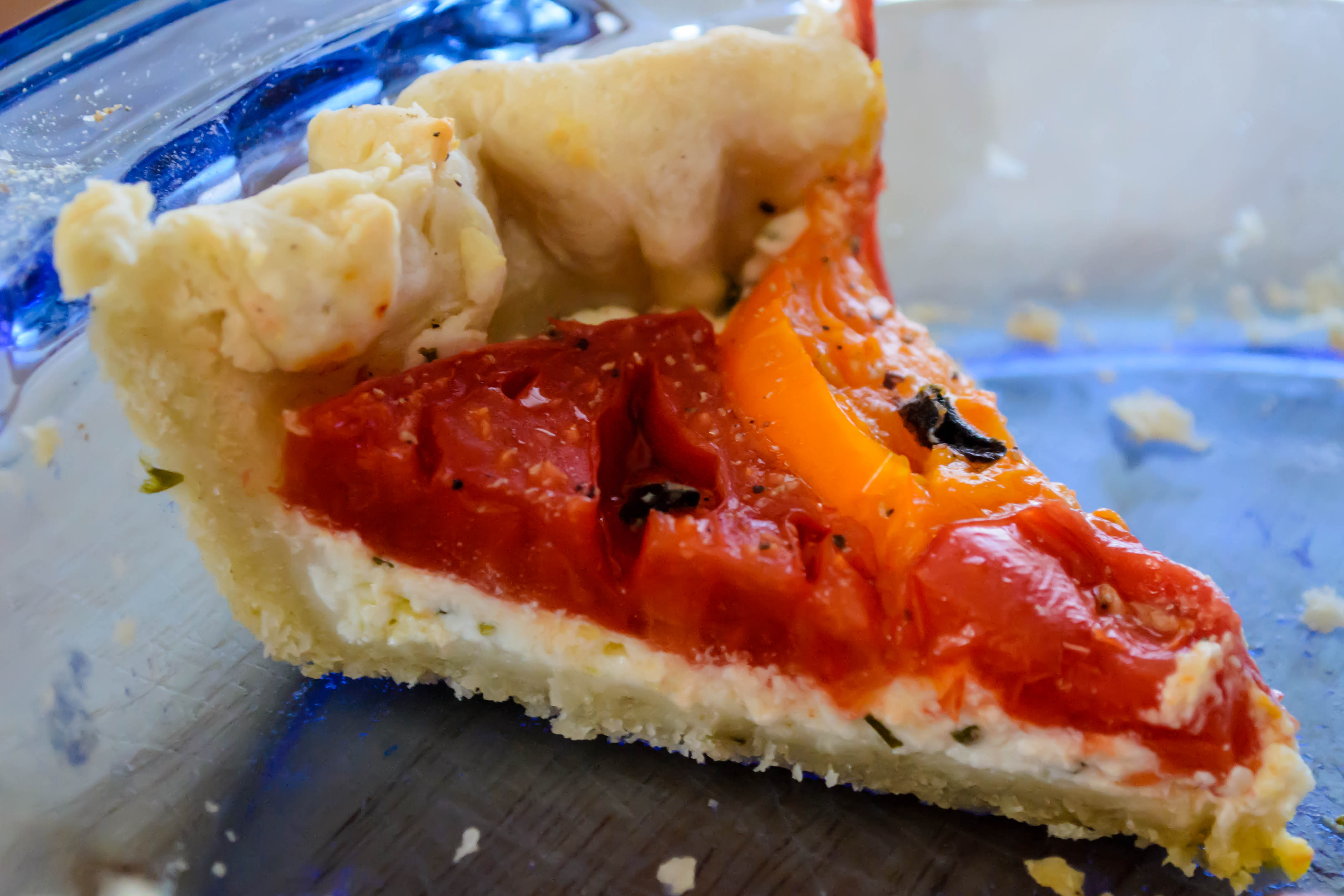
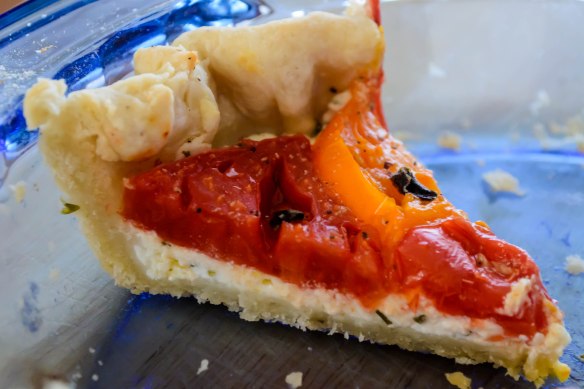
Food Blog August 2013-2482Food Blog August 2013-2483Food Blog August 2013-2485Food Blog August 2013-2491Food Blog August 2013-2495We weren’t exactly sure what to expect of this dish (in fact, when I said “tomato pie” to N., he made a very interesting face), but after we’d both gone back for a second slice, and then a sliver of a third, we decided that we must like it.  It’s a really nice balance of flavors, with the sweet sharpness of tomatoes mellowed into something almost meaty, but still light in spite of the layer of tangy cheese.  The perfect late summer supper.  But it would also, I think, be a great brunch option, or a light lunch with a fresh salad, or, cut into very thin slices, a beautiful canapé for a bridal or baby shower.
Food Blog August 2013-2499Goat cheese tomato pie
makes one 9-10 inch pie
For the crust:
6 oz. flour (or a fluffy 1 ½ cups)
1 tsp sea salt
¼ tsp ground black pepper
1 stick butter, very cold, cut into 8 pieces (if you are going to use your food processor to make the crust, the butter can be frozen)
3-5 TB buttermilk, very cold (I put mine in a little glass in the freezer for 5-10 minutes before I start making the crust)
For the filling:
8 oz. goat cheese, at room temperature
1 TB milk
1 clove garlic, finely minced, or ¼ tsp garlic powder
2 TB chopped chives
1-2 tsp chopped mixed herbs (I used thyme and oregano)
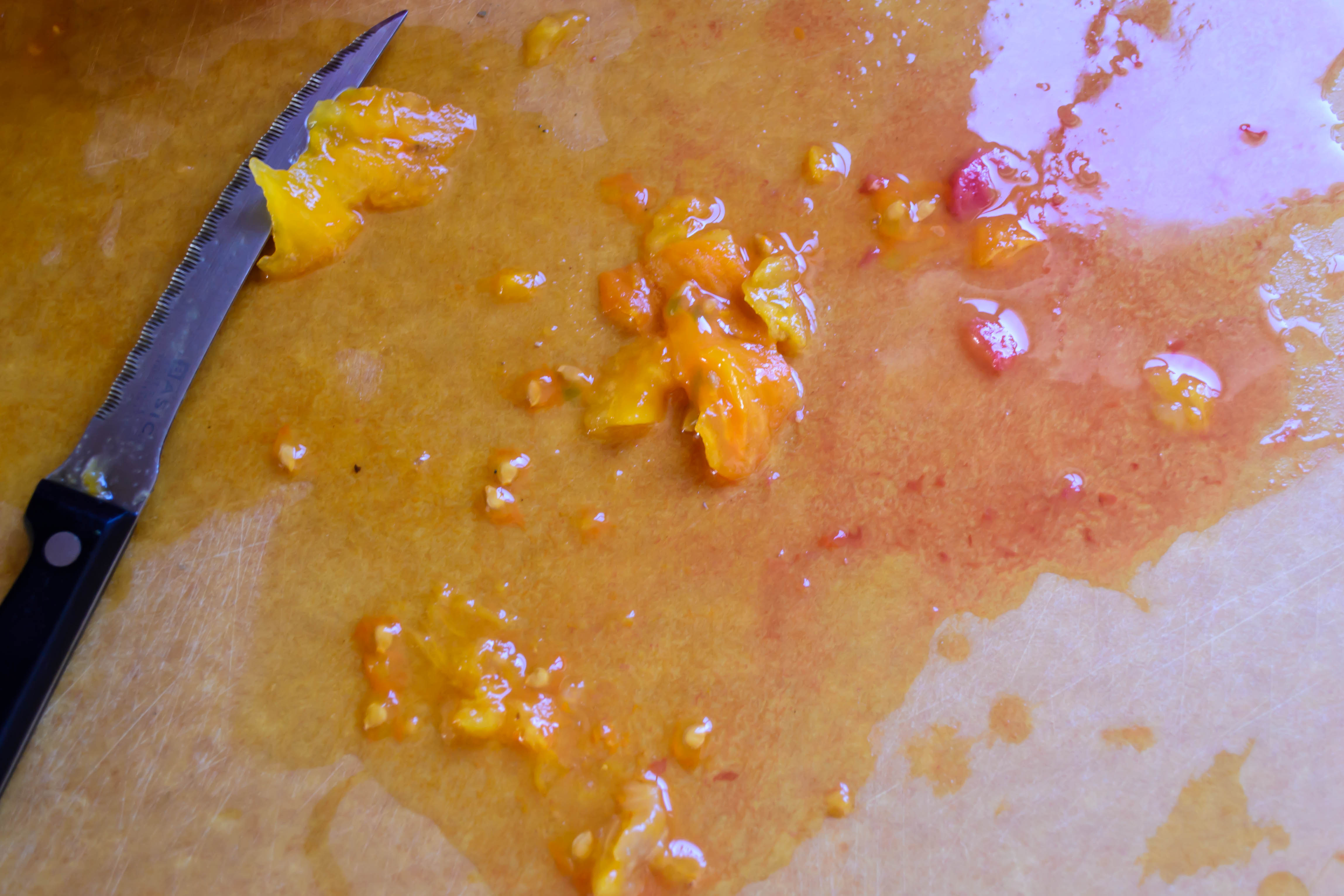
2-3 large heirloom tomatoes, cut into ½ inch thick slices (this quantity is inexact, since heirloom tomatoes differ in size.  You are looking for enough slices to create a slightly overlapped single layer over the goat cheese filling)
Salt and pepper to taste
Drizzle of olive oil


  • To make the crust, combine the flour, salt, and pepper in a bowl.
  • If you are using a food processor, dump in the chunks of butter and pulse on three-second intervals until the butter has been broken up a bit and some pieces are the size of walnut halves, while some are more like peas.  If you are using a mixing bowl, cut in the butter with a pastry blender, two knives, or your fingers.
  • Dribble in 3 TB of the buttermilk and pulse again on three-second intervals (or use a fork or your fingers to combine).  If the dough begins to clump together like wet sand or crumbly cake, you are done!  If it is too dry to come together, add another TB of buttermilk and pulse again.
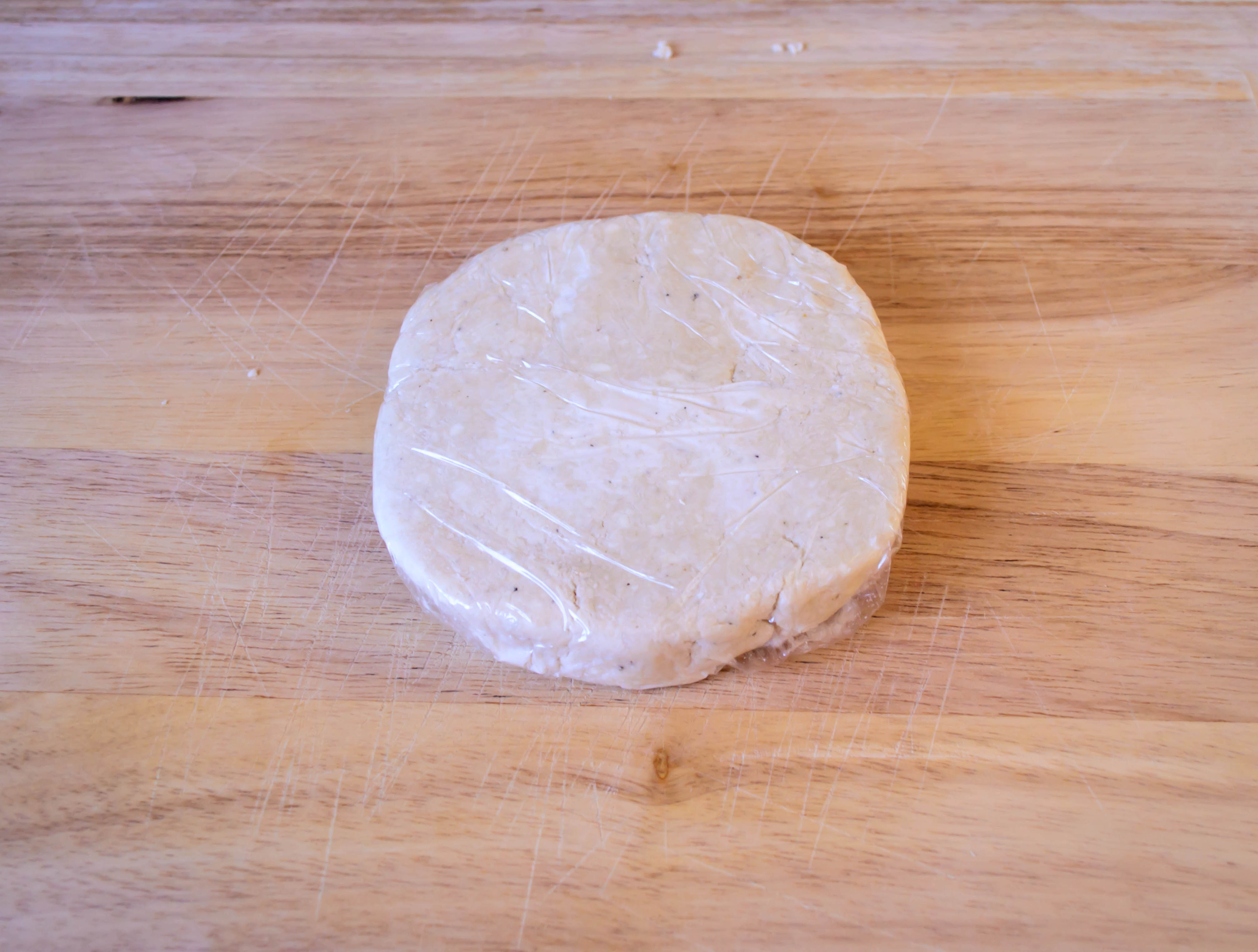
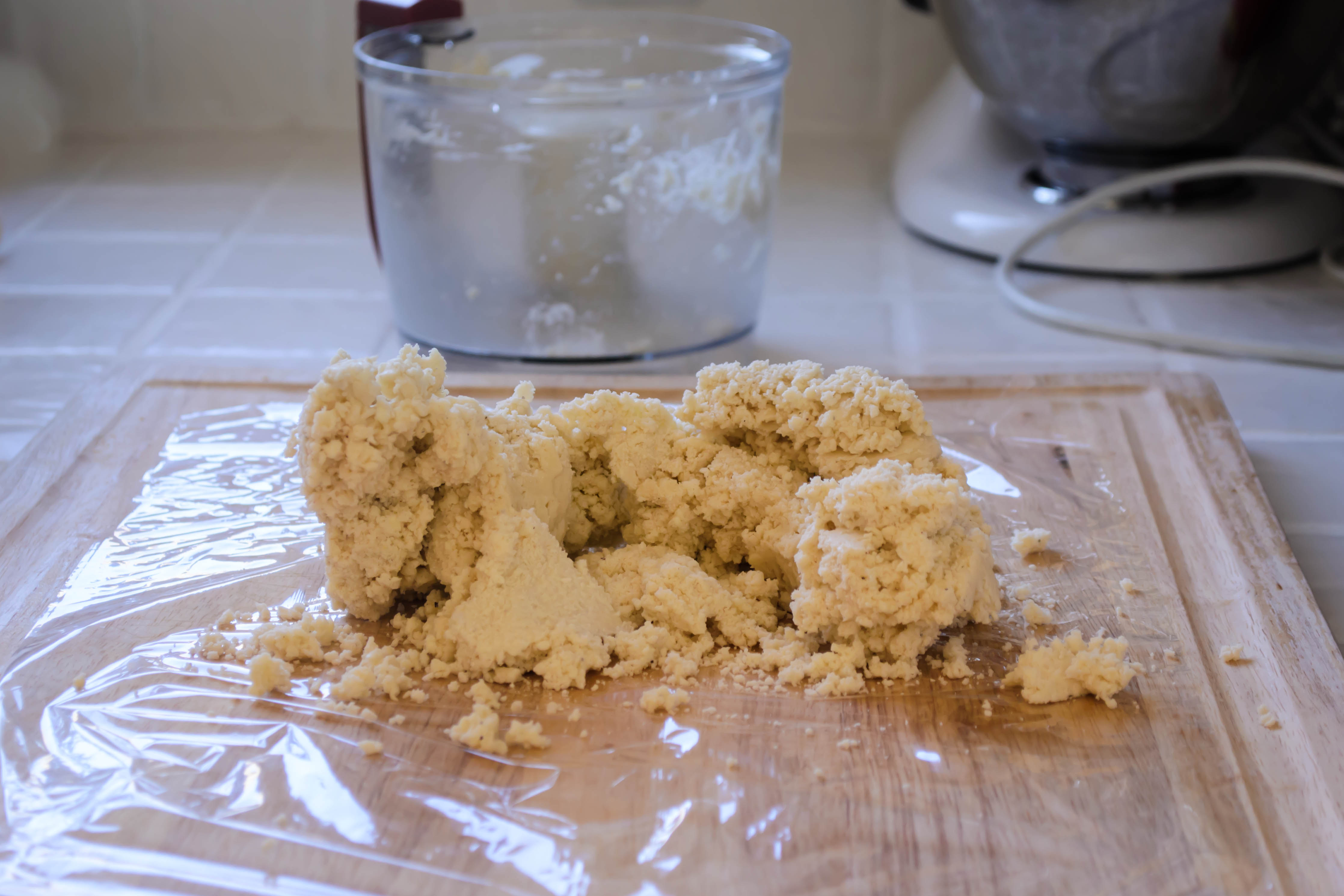
  • Dump out your crumbles of just-tacky dough onto a big piece of plastic wrap.  Using the plastic wrap to help you, press and squash and manipulate the dough into a disc of about 1 inch thick.  Wrap it up and stow it in the fridge for 30-45 minutes.
  • While the dough chills, prep the filling ingredients.
  • Place the sliced tomatoes on a double layer of paper towels lining a cookie sheet.  This will allow them to drain a bit, so they won’t expel quite as much juice in the oven.  Let them sit for at least 15 minutes.
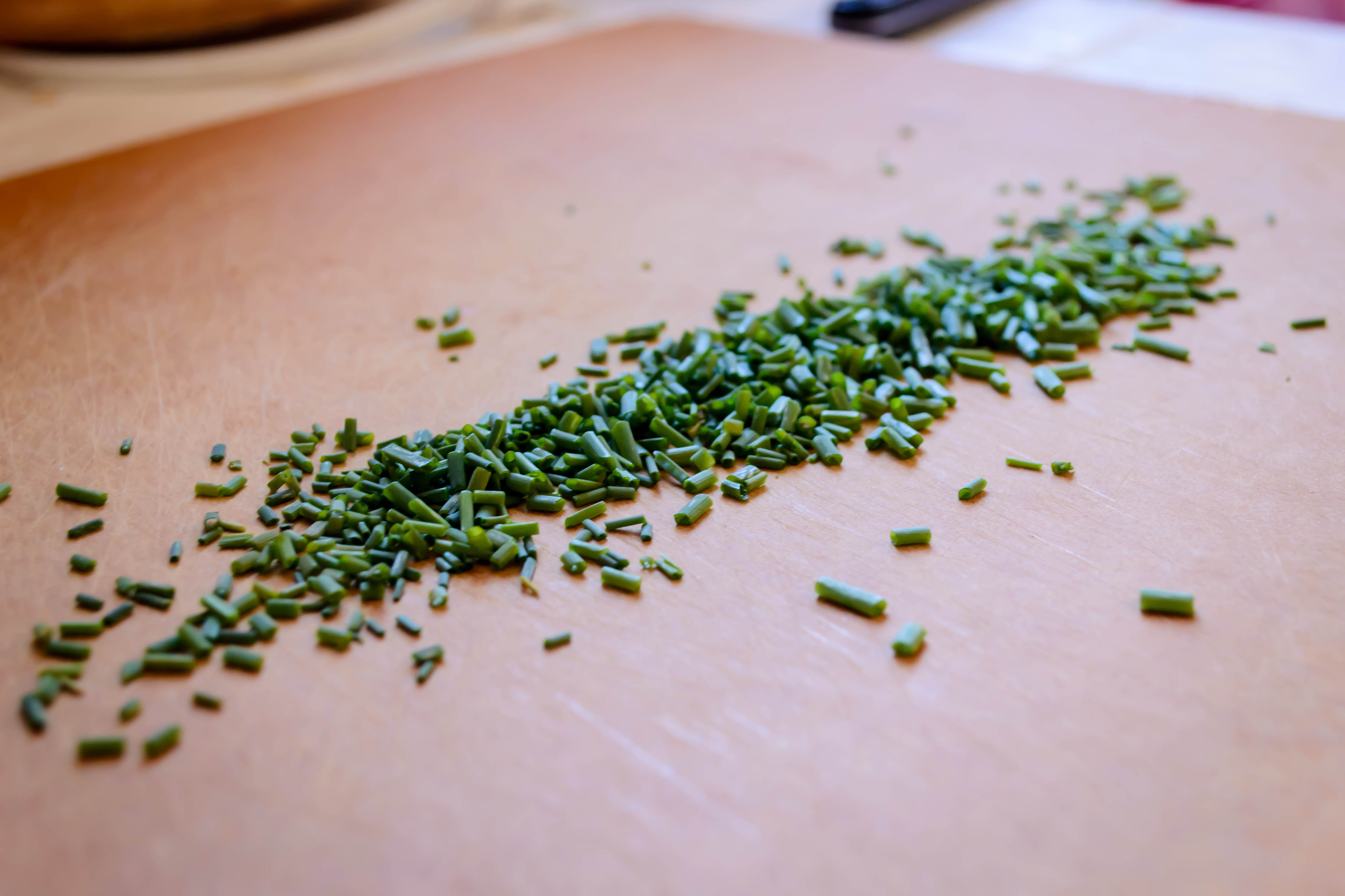
  • Once the goat cheese is at room temperature, combine it with the milk and the chives in a small bowl.  This miniscule quantity of milk thins the goat cheese out just enough to make it spreadable.  The chives are, of course, all about flavor.
  • Preheat the oven to 400F and transport your disc of dough from the fridge to a well-floured board.  Unwrap it and let it warm up just a touch – no more than five minutes or so.
  • With a rolling pin, push from the middle of the dough circle out away from you – toward what we might term the top edge.  Then, return to the middle and push back toward you.  You will now have a strange, elongated oval.  Rotate the disc about a quarter of a turn and repeat, so you’re slowly returning the dough to a circular shape.  If you get some cracks, don’t worry about it – you can either press the dough back together manually, or it will miraculously repair itself as you roll.  If things get sticky, sprinkle on some additional flour.
  • When your dough is rolled out into a basic circle with a diameter 1-2 inches bigger than your pie dish, it’s time to transport it once again.  Roll it up loosely around your rolling pin, then unroll it into the pie dish, draping it gently into the crease where the bottom of the pan becomes sides.  You should have some excess dough around the top.  That’s good.  In small sections, fold it in on itself so it is even with the top edge of the pie dish, creating a thicker edge.  If you wish, make this edge decorative by pressing it in at intervals with your thumb or the tines of a fork.
  • With a spatula, spread the goat cheese mixture in an even layer across the bottom of the crust.  Be careful not to press too hard, as you’ll squash the crust down.
  • Next, layer the tomatoes as attractively as you can manage (for me, this was not very much) over the cheese.  You can overlap them slightly, but the point here is to completely cover the cheese in something as close to a single layer as possible.  This will allow them to receive heat evenly – we don’t want some of them roasty and others stewed.
  • Sprinkle the tomato slices with your 1-2 tsp of mixed herbs, salt and pepper to taste, and a good glug of olive oil for gloss.
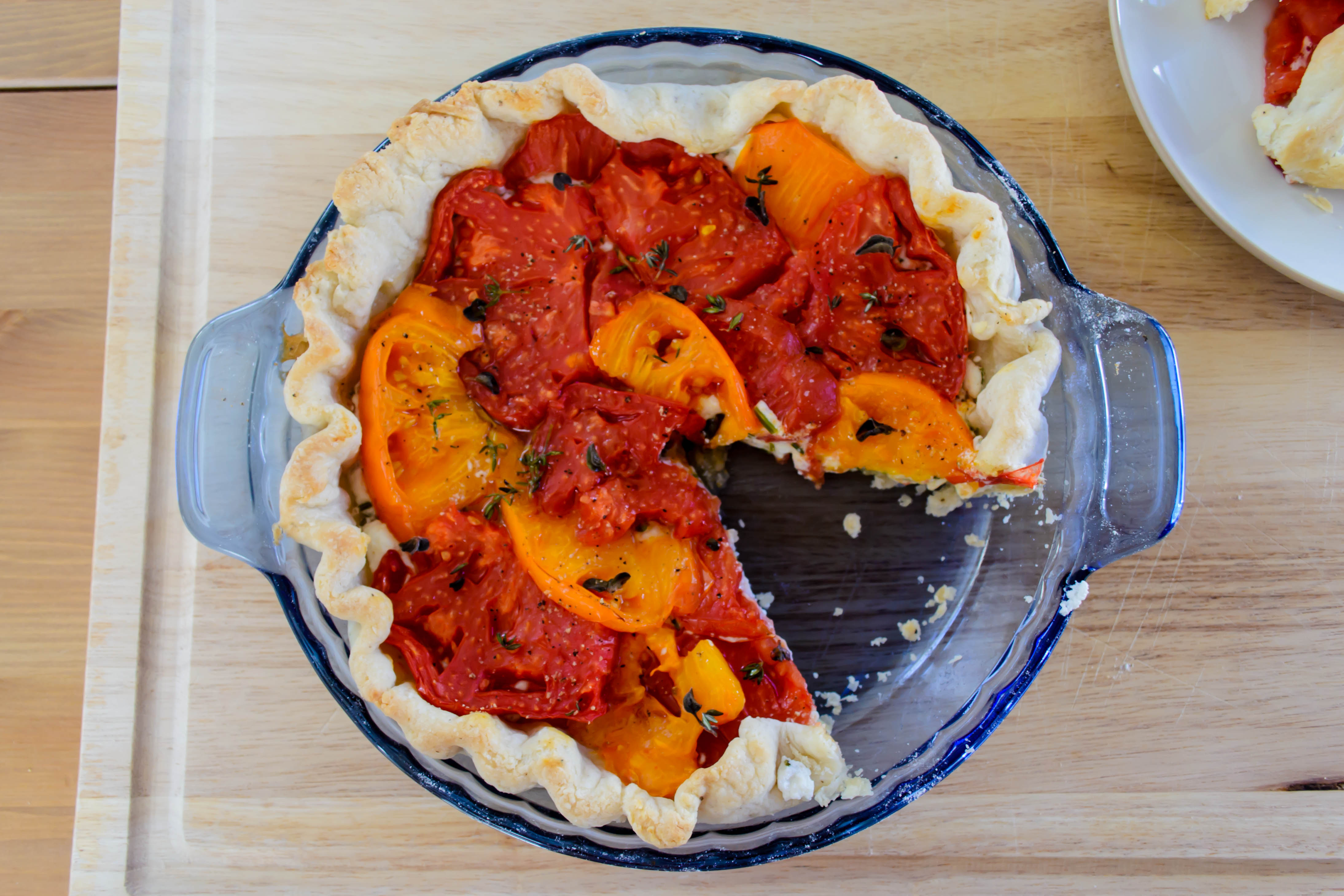
  • Bake at 400F for about 30 minutes, until the crust is cooked through and becomes golden, and the tomatoes begin to crumple.
  • Remove from oven and let cool for 10-15 minutes before slicing, to regain some structural integrity.  Tomato juice will gush about when you cut into it; there’s just no avoiding it.  But it will be that utterly delicious kind of gushing that you end up feeling pretty pleased about.  Serve warm or at room temperature.

Salt

Sometimes, when you are on a two-and-a-half-week-vacation-road-trip, you don’t cook anything.  Go figure.  And then when you get home, and you want to get something up onto your own little space on the internet for your own little community of new friends and virtual friends and “hey, I even know some of you in real life!” friends, you don’t have a new recipe to share with them.  So because I bummed around the Pacific Northwest last week, digging my toes in the beach and trying not to sob with joy at the most beautiful wedding I’ve ever attended and gorging myself on everything I’ve missed from the restaurants and bars I used to frequent during graduate school, I considered what food might sum up my vacation activities, and hit upon salt.  The Pacific and the Puget Sound, my brimming tears, savory car snacks, and a visit with one of my most devoted salt fiend friends (more on that in a few…), and plain old sodium seems like the right choice to talk about today.

Food Blog June 2013-1521That’s right; I’m going to talk about salt.  This might seem like the plainest of the plain, the ever so banal, and maybe it is.  But aside from being a perfect food item to represent my vacation, salt is really important.  Before refrigeration, salt was one of the surest bets for preserving food.  Salt, vinegar, and sugar could keep your food from spoiling for some time, and though sugar is a recent and expensive addition to this preservation party, salt and vinegar are ancient methods, often used together, as we see in the case of pickles and sauerkraut, among others.  Salt has been used as a burial offering, it has been taxed, it has been smuggled and ground and flaked and sprinkled and immortalized in verse.  Its history is interwoven with crime and slavery and back-breaking work and colonization and maybe even heart disease.  It has killed, it can kill, but it also keeps us alive.  Michael Ruhlman has written a much more impassioned defense of this funny little crystal than I could, but just trust me when I say that we really shouldn’t, and even couldn’t, do without it.

(And, on a much less serious note: if you get home from a party… like, say, a moving and beautiful wedding during which you danced so hard you might have destroyed your shoes, and smiled so much your face hurt for two days afterwards, and you realize that you might have drunk enough that you’re going to be sorry about it in the morning, take a teaspoon or so of salt with a glass or two of water and a couple of Ibuprofen, and you’re all but guaranteed to feel pretty dandy the next morning.  My friend A. calls it the Salt Lick, and it totally works.)

But as essential as salt is, and as ubiquitous, it’s far from singular.  As it turns out, I have four different kinds of salt in my kitchen right now.  And unlike the depths of the poultry seasoning collection, I use them all.

Food Blog June 2013-1523First, let’s talk Maldon sea salt, my favorite finishing salt of all time.  That’s the top right corner, if you’re following along with the visual.  It’s flaky and crunchy and crusty, and tastes like the ocean dried on your lips.  It is beautiful with caramel, or on top of biscuits, or sprinkled over a still warm chocolate chip cookie (this might sound weird, if you’re not a sweet-and-salty devotee, but just try it.  You’ll be glad you did).

Top left is coarse sea salt, which I mainly funnel sloppily into my salt grinder, to use when a dish needs some last minute seasoning, or when we have guests and I want to look all fancy by putting salt and pepper on the table.

Of course I’ve got good old table salt, in that pile in the bottom left.  You know, with the little metal spout that squeals when you open and close it?  I use this mainly when I’m following recipes.  Since salt comes it a lot of different sized crystals, measurements actually will be different depending on what kind you are using.  Most call for the simple, relatively fine grind of table salt.

Finally, there’s my newest love, here in the bottom right: gray sea salt.  This is in larger, chunkier crystals than the Maldon, and is a harder crunch because it’s less flaky.  It clings together almost like damp sand, which I like because it reminds me of the ocean it came from.  The gray color is from mineral content, which I like because it makes me feel like it’s somehow really good for me.  I use this in bread dough and pizza dough – it seems less salty than regular table salt (it’s not, though – they are just unrefined crystals that, when processed a bit, become plain old Morton), and though most of it breaks down during the rising and cooking, some tenacious crystals do hold up, which means the occasional treat of a crunchy, salty bite.

Food Blog June 2013-1525There are many more that I don’t stock or have never even tried – pink Himalayan salt, black lava salt, rock salt, good old Kosher salt, the strange and possibly blasphemous popcorn and butter flavored salts, the odd herbed salts, garlic salt and celery salt and smoked salt.  And in lieu of a real recipe, I’d like to offer you a little bit of awesome that you will be hardpressed to believe is really a coincidence.

Food Blog August 2013-2428Let me explain.  When we arrived in Seaside, OR, the final leg of our massive road trip, I already had this post drafted.  Promise.  I had known for almost a week that I was going to talk about salt.  I even had a bit of something in lieu of a recipe to present.  But upon our arrival, our friend Taylor (the aforementioned salt fiend, who is also a guest contributor on the smart, feminist media and pop culture blog Girls Like Giants and co-writer of a Project Runway review column on Simply Showbiz, masquerading under the pseudonym Andy Others) blew all that out of the water when she presented us with a little hostess gift: a jar of garlic herb salt.  What could be more perfect?  So I asked her to do a little guest post here to share how she made this sweet little jar that smells at once like the ocean and the best garlic bread you’ve ever tasted.

Food Blog August 2013-2429“I was driving home from grocery shopping and listening to the ever-genteel ‘Splendid Table‘ on the car radio. Lynn was talking to a woman named Sally Schneider, and together they told me that I have been wasting my money for years. You see, I am a sucker for flavored salts. Truffle salt and tomato salt are my all-time favorites, but anyone can make me happy by giving me salt combined with something, especially if part of that something is garlic. But Lynn and Sally showed me the truth! You don’t have to spend your own money on this. Salt is actually so amazing that it does the work for you. Let me say that again: the salt does the work for you. Salt! Is there nothing it cannot improve?

A mini-vacation with old friends was fast approaching, so I thought, what better way to welcome and thank them than with a homemade salt of my own? Plus I could show off how competently I grow herbs, which is always a bonus. I love appearing competent.

Food Blog August 2013-2432Sally Schneider told Lynn about the simple pleasure of making this salt by hand, but I chose to let competence merge with laziness instead. It could not have been easier. I peeled about 8 cloves of garlic (more than the recipe called for, but garlic is one of my great loves). I put them in the belly of my food processor with about 2 tablespoons of kosher salt. I pulsed until the garlic was mostly chopped. Then I added a tablespoon of culinary lavender flowers, about a cup of sage leaves, and about a cup of rosemary, stripped from its stem. (I thought about adding lemon zest, but I decided not to overdose on too many flavors… this time.) I pulsed and pulsed until the mixture became a coarse, slightly damp sand. Next I dumped that “sand” onto a baking sheet and mixed it up with about another ¾ cup of salt. I measured by color more than by quantity; I know how much herb I like in an herb salt, so I aimed for an even green distribution. Finally, I set the baking sheet on the filing cabinet by my kitchen window and just let it sit for two days. The salt dehydrates the garlic and herbs for you, while filling your kitchen with the smell of totally effortless deliciousness. Some people think it will be good on roast chicken; I say popcorn. Now what will people get me for my birthday?”

To good friends!  To vacation!  To salt.

Frozen Sangria

Food Blog July 2013-1673Chances are, where you are, or were, or will be soon, it’s hot.  Or it was.  Or it’s going to be.  But past, present, future, when it’s hot out, and you still want dessert, you are probably going to have certain demands: it must be easy.  Mimimal measuring.  Simple directions. No fine chopping or dicing or mincing.  It must require short cooking time, if any.  No long baking times (sorry, bread pudding), no stewing or roasting or brûléeing.  It must be refreshing and delicious and maybe even a bit surprising, to pull you out of your mid-summer funk.  Not that I’m having one of those…

Food Blog July 2013-1628

Frozen sangria.  Does that make your sweat-beaded forehead wrinkle with interest?  It makes mine feel a little curious, a little intrigued, a little go-on-I’m-listening…

Sometimes feet get in the way of your photoshoots...

(Sometimes feet get in the way of photoshoots…)

Frozen sangria requires relatively little of you.  It wants flavor – some sugar, some spice, some whatever’s-your-favorite red wine.  It wants just a little simmering to infuse the liquid with cinnamon sticks, with cloves, with orange peel.  We’re playing a little game with ourselves here: imparting winter flavors into an icy treat.  Maybe the reminders of that holiday season half a year away will help us cool down just as much as the temperature of our dessert.

Food Blog July 2013-1626Finally, frozen sangria wants time.  Because we’re dealing with alcohol, freezing is going to take longer than if we were working with juice or water or even ice cream.  It will freeze – most wines are between 9 and 13% alcohol, and this relatively low percentage will still solidify, but it will take a little longer.  For satisfactory results, you’ll want to start this little project the day before.  I know; planning ahead is not always on your mind when you are struck with the yen for a frozen treat.  But this icy, deeply flavored bomb of spice, tipsy with wine, sparkling with citrus from freshly squeezed orange juice and freckled with mashed strawberries, is worth the extra wait.

Food Blog July 2013-1632Here, because I care about you, and I want you to know your options before you have to brave the melting temperatures to find your way back to the kitchen, I’m giving you two preparations (well, three, if you count the plain ol’ sangria itself).

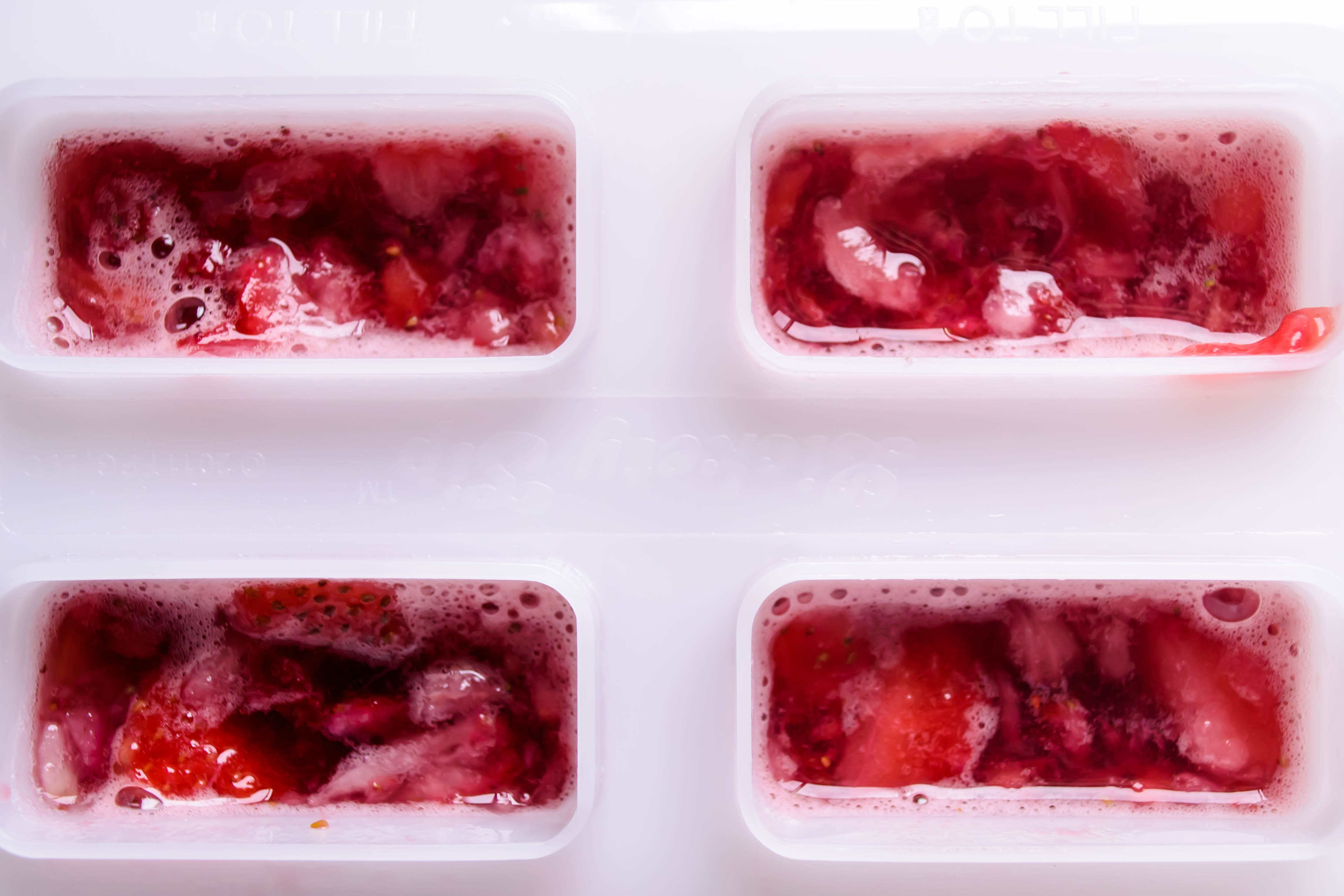
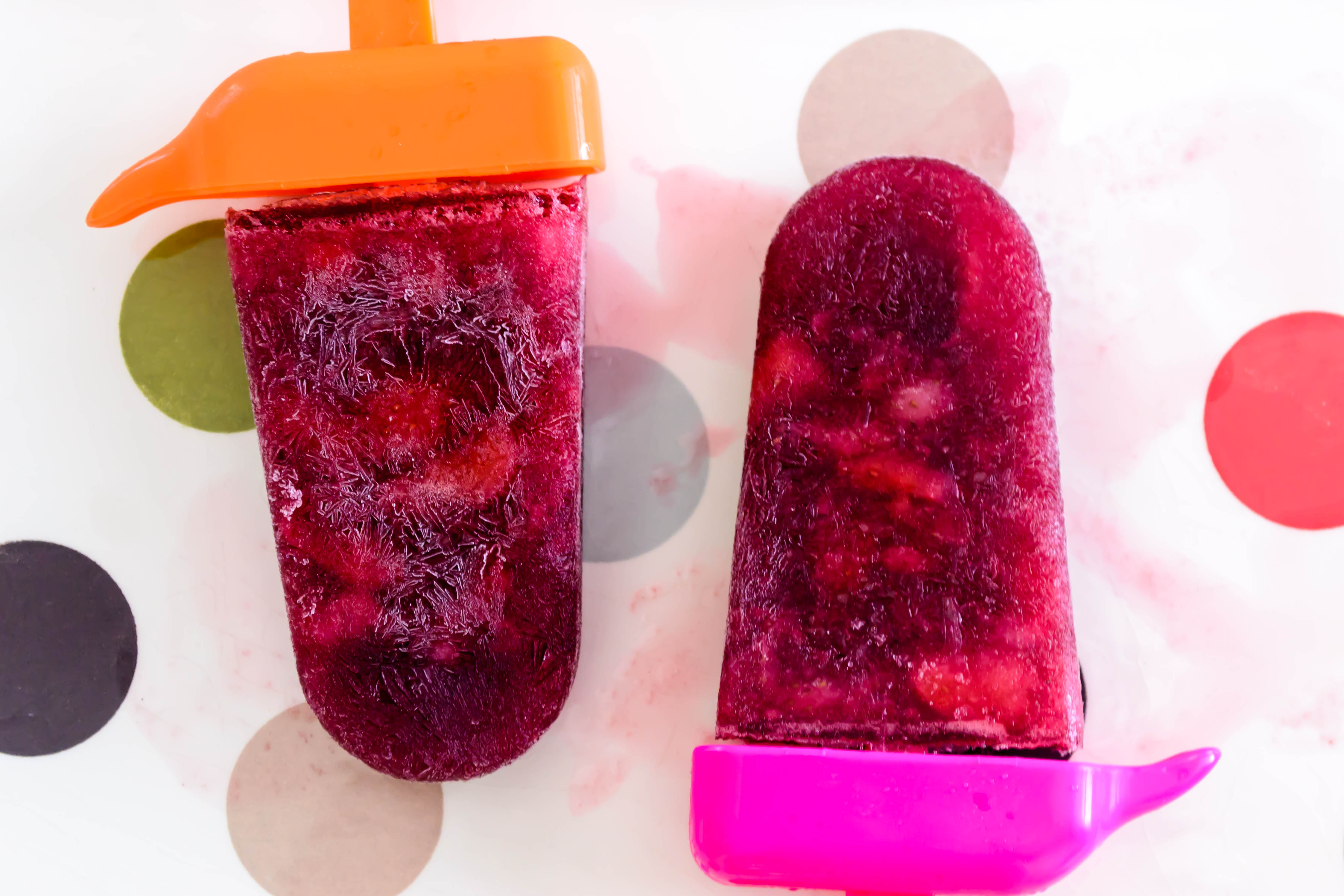
Food Blog July 2013-1640First, let’s talk casual, fun, surprising: the popsicle.  Red wine, orange juice, tiny, tooth-freezing pockets of strawberry, frozen together in a shape that will pull you back to childhood even while the ingredients remain oh so adult.  Once they are poured and put up, you have a secret cache of popsicles ready for your next girls’ night, or barbeque, or just a late afternoon so oppressing that standing barefoot on the kitchen’s tile floor just doesn’t cut it anymore.

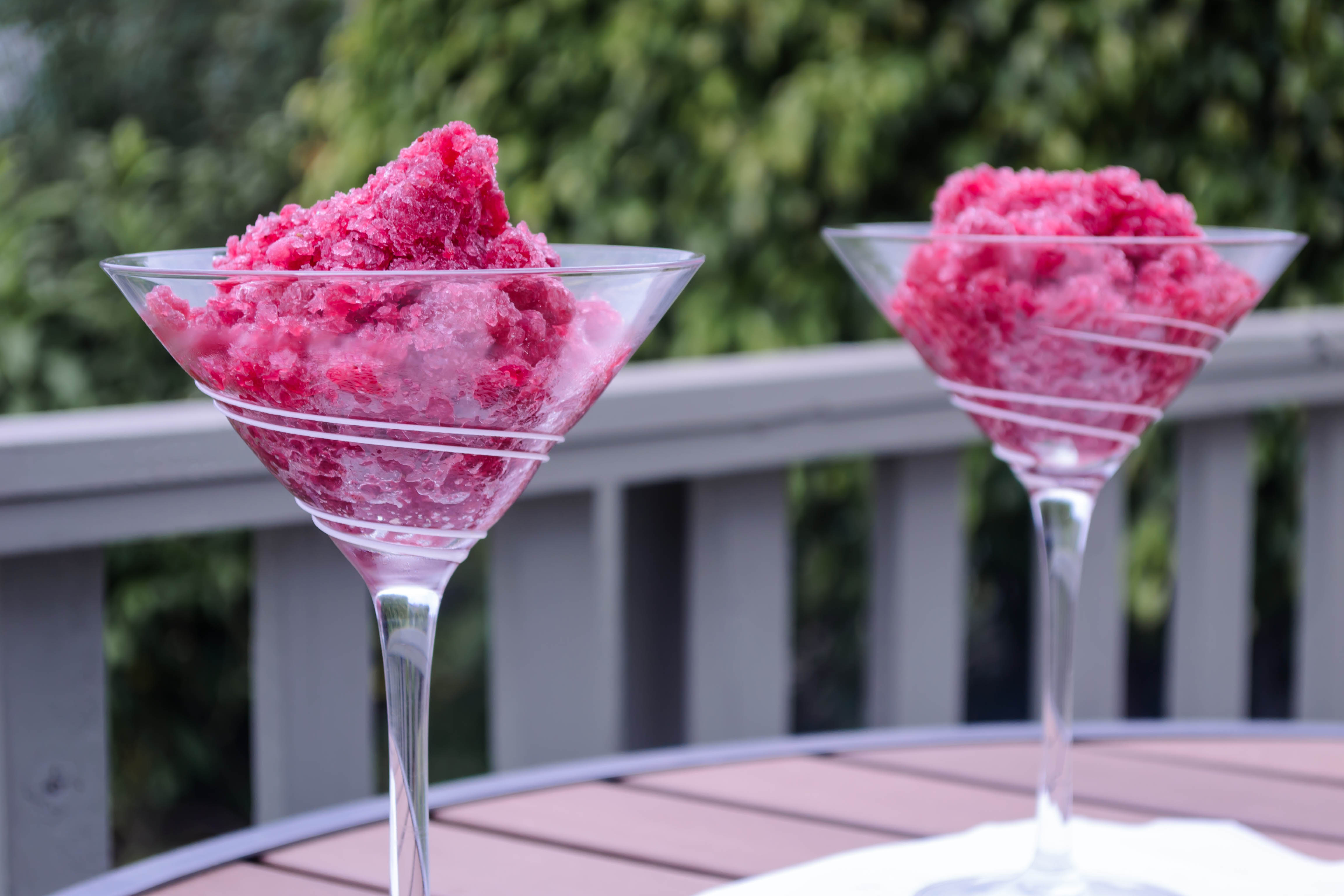
Food Blog July 2013-1655Food Blog July 2013-1648Our second preparation is a bit more elegant, a bit more dinner party, but still almost as easy: the granita.  Granitas are Italian desserts related to sorbets, except that they have a crystalline texture more like snow or shave ice.  Here, instead of spooning the sangria mixture into popsicle molds, it gets poured into a wide, shallow vessel, like a 9×13 baking dish, and again, moved to the freezer.  After a few hours, though, you pull it out and scrape through it with a fork.  This prevents the liquid from freezing into a solid mass.  After this initial freezing period, return once every few hours and scrape again, agitating the mixture into separated crystals (and strawberry chunks).  Several of these scraping sessions in, your liquid will be frozen and clustered in deep red flurries: a mound of feathery ice ready to be scooped and crunched after dinner or, if you prefer, perhaps even before.  That’s what your favorite patio table is for, right?

Note: these are great options for a stay-home dessert, but if you are traveling or feeding them to guests who will be traveling, be cautious about the serving size: unlike warm desserts, where you simmer off most of the alcohol, this is basically a frozen bottle of wine with some flavorings added in – the majority of the alcohol content is still there.

Food Blog July 2013-1673Frozen Sangria
Makes at least 12-16 servings, depending on the size of your popsicle molds or serving vessels
1 bottle (750ml) red wine of your choice
4 big strips of orange peel
3 cloves
2 sticks cinnamon
½ cup sugar
½ cup (4 oz.) freshly squeezed orange juice (for me this took 2 large oranges)
12 oz. strawberries, fresh or frozen and defrosted, chopped into small pieces or mashed with a potato masher


  • The day before you want to serve your frozen sangria, place cloves, cinnamon sticks, orange peel, sugar, and 1 cup of wine in a small saucepan and bring to a simmer over medium-low heat.  Keep at the barest of simmers until the liquid is reduced by half – you will end up with ½ cup of deeply flavored, spicy-sweet wine.  This will probably take 15-20 minutes, depending on how hot your burner is and the size of your pan.
  • Remove from heat, strain out spices, and allow the liquid to cool.
  • In a bowl, pitcher, or 9×13 inch glass baking dish (if you are making the granita), combine the rest of the bottle of wine, the reduced, spiced wine, and the orange juice.
  • Add the mashed or chopped strawberries and stir to combine.
  • At this point, you have three options.  If you want to serve this as a simple, pourable sangria, simply refrigerate until it is well chilled, then top up with sparkling water and serve in fun glasses.
  • If you want to make popsicles, spoon the liquid into popsicle molds until almost full (we want to account for expansion), being sure to get plenty of strawberry bits in each one.  Add sticks or holders and freeze overnight or until solid.  To unmold, dip each compartment into warm water for a few seconds, then carefully and gently pull the popsicle out.  Don’t rush them or they may break.  Just give them a few seconds to separate from the plastic.
  • If you are making granita, pour your liquid into a 9×13 inch glass baking dish and put it into the freezer for 3-4 hours.  If you are me, this step is complicated by trying to create room in my freezer for a 9×13 inch glass baking dish.  Just pack it in.  It will work out.  Or, as with last month’s spice rub post, use this as a mandate opportunity for reorganization.
  • After 3-4 hours things should be resolutely slushy.  Remove the whole dish from the freezer and drag the tines of a fork through the mixture, breaking up the solid chunks and redistributing them.  Return it to the freezer.  Repeat this procedure once every few hours until you have a feathery, crystalline heap of frozen wine.  It should look similar in texture to shave ice or a snow cone.  At this point, it is ready to serve or keep frozen for up to a week, with occasional re-fluffing.
  • I like to serve mine in big mounds in a fancy martini glass, but wine glasses, cups, bowls, or little jam jars will work too.  And if you want to recreate the snow cone experience, rolled cones of thick paper would likely do just fine.

Vegetable Pakoras with Cilantro Mint Chutney

Why, I thought, as a rivulet of sweat coursed from neck to waist, do I insist on frying in the summer?  The instant read thermometer I was using to check the temperature of the oil sat next to the stove, registering 91F.  Normal people wait for summer and then anxiously stuff themselves on grilled meats, fresh salads, wedges of cool melon.  Foods that don’t make your back bead up.  But here I am, on my first real day of summer vacation, celebrating by standing over a pot of shimmering heat, making pakoras for lunch.

Food Blog June 2013-1613Maybe it’s a cultural thing.  I don’t mean the pakoras.  I mean frying.  Fried foods are a treat frequently enjoyed during the summer months; Americans + carnivals or county fairs = frying anything we can think of.  Depending on where you are in the country, corn dogs, funnel cake, hush puppies, twinkies, tortillas, even oreos, all get dunked into vats of hot oil and floated cautiously around until they transform into variously shaped clumps of deep, crispy gold.

So to bring summer traditions like sweating and eating fatty foods and looking at award-winning livestock and riding in twirling cars where the metal shrieks and you smell the grease with every turn into my own kitchen, I’m making pakoras for a weekday lunch?

Partly.  But not all.

I’ve talked before about my friend Ph., who even has a whole category on this little site dedicated to her (Phoebe-Phriendly, if you’re interested).  Ph. is gluten-intolerant, can’t eat dairy or tree nuts, and is no longer able to process corn or rice.  This makes cooking for her a challenge.  However, she is one of the reasons I started stretching my food boundaries and knowledge; we became close friends in graduate school, and I wanted to be able to make food that she could eat!  We got into a conversation in the comments of her blog the other day, and I brought up pakoras because she was playing with garbanzo bean flour.  She had never made them, so we decided I should come up with a recipe she could use.  That’s where you, my friends, luck out.

Food Blog June 2013-1603Pakoras are an Indian street food: assorted vegetables (or paneer, or bread, or apparently sometimes even chicken) dredged in a well-spiced batter of besan or gram flour (which is made with garbanzo beans) and water.  I added some baking powder to my mix as well, for fluff and lightness.  Most often the vegetables are cut into manageable pieces and dipped into the batter individually before they are fried, resulting in something I’ve been thinking about as essentially an Indian spiced tempura.*   Sometimes, though, they are cut into smaller pieces, tossed together in the batter, then levered carefully into the oil in chunky mixed fritters.  I chose the first of these methods for our lunch, so we could have the fun of mixing and matching which vegetables we crunched our way through.  We chose cauliflower, potatoes, and onions.  My favorite ended up being the cauliflower, while N. couldn’t get enough of the puffy potato slices.

Food Blog June 2013-1607Though they are eaten year round (depending on where you are), I discovered during my research about this delightful little snack that they are particularly popular during monsoon season, dipped into or sauced with a variety of chutneys, and served alongside a cup of chai.  This makes sense – a warm treat to enjoy when it is wet and booming with storms outside – and though the weather in my California kitchen is far (far, far, far) from identical, it is currently monsoon season in India, so it turns out this was, after all, a timely choice.

We had ours with a cilantro mint chutney – lightly spicy, fresh, grassy from the herbs, and bright from the addition of lime juice.  I’ve included that recipe here as well.

Food Blog June 2013-1610Pakoras are best served as hot as your mouth can handle them.  They are crispiest that way.  As they sit, the batter loses its magnificent crunch.  They are acceptable reheated in a 400F oven the next day, but, as with all fried foods (with perhaps the magical exception of a really good fried chicken), they are best eaten immediately.

Food Blog June 2013-1614Food Blog June 2013-1615Food Blog June 2013-1616

* I realize tempura is quite different: rice flour is typical, for one, and the liquid used is often carbonated water to make the batter even lighter.  But the essentials – vegetables coated in batter and fried – are the same.


Vegetable Pakoras and Cilantro Mint Chutney
serves 6-8 as an appetizer or snack, or 4 as an embarrassingly indulgent lunch
Pakora batter:
2 cups garbanzo bean flour (I used Bob’s Red Mill Gluten-Free mix, which is mostly bean flours)
2 cloves garlic, grated
1 small knuckle of ginger, grated (about a ½ inch piece)
1 tsp ground turmeric
1 tsp ground cumin
1 tsp ground coriander
¼ tsp cayenne pepper, or more to taste
1 tsp salt
2 tsp baking powder
1 cup cold water
  • Whisk together the flour, grated garlic and ginger, and all the spices until evenly combined.
  • Whisk in the water until a thick but smooth batter forms.
  • Set it aside for 30 minutes.  This is conveniently enough time to prep the vegetables, heat the oil, and make the chutney.
Pakora vegetables:
1 small head cauliflower, cut into bite-sized pieces
2 medium Yukon gold potatoes, sliced thin (1/8 inch slices seemed ideal)
½ large red onion, cut into chunks or thick rings
  • To prepare for frying, heat 1-2 quarts of oil (I used vegetable oil) in a large, heavy, steep-sided pot over medium heat, until it reaches about 350F.  Put on some closed-toed shoes to keep yourself safe, just in case you have drips or your oil bubbles over.
  • Working in small batches (5-6 pieces at a time), dip the vegetables into the batter, retrieve one at a time with long handled tongs and let the excess batter drip back into the bowl for a few moments before carefully lowering each into the hot oil.  They should sizzle as they are immersed, but not spit or foam up wildly.
  • Cook each batch of vegetables for 4-5 minutes, carefully turning each one halfway through the cooking time, until they are golden and crispy.
  • As each batch finishes, fish the pieces out one at a time and set them on a wire rack over a cookie sheet.  This will allow excess oil to drip off.  Salt them lightly as soon as they come out of the oil.
  • Take the temperature of the oil before adding a new batch of vegetables, to ensure that it returns to right around 350F, the optimal temperature for frying.
  • Continue until all vegetables are golden, crispy, and cooked!

Pakoras are best consumed as soon as they are cool enough for your mouth to handle.  As they sit, the batter gets soggy.  It’s still tasty, but not as triumphantly crunchy.

Cilantro mint chutney:
2 bunches cilantro, bottom 3 inches or so of stems removed
1 bunch mint, stemmed (you will be using leaves only)
Zest and juice of 1 lime
1 jalapeño, stem removed and sliced in half longitudinally (if you are concerned about the chutney being too spicy, remove some or all of the seeds and inner white membrane, where most of the heat is concentrated)
¼ cup water
2 TB olive oil
1 tsp garam masala
Salt to taste
  • Add all ingredients to a food processor and pulse in 3-5 second intervals until everything comes together as a loose, chunky sauce.  The resulting mixture should be thinner in consistency than a pesto, and will not remain emulsified for very long.
  • Scrape into a serving dish and eat with the pakoras.

Smoky Summer Spice Rub

Let’s talk about your spice cabinet.  No?  Okay, then let’s talk about mine.  I really started cooking when I moved to Oregon, and that first Christmas, coming back home to Northern California after three months of what seemed like non-stop rain, the gift I wanted more than anything else was a spice rack.  This, I was sure, would be the essential catalyst in my longed-for transition from college-graduate-experimental-cook to full-scale domestic goddess.  Mom and I went to kitchen store after kitchen store, looking for the right one.  It needed to hang, so it couldn’t be too big.  It had to have a fair number of bottles, but I wanted them empty, not filled, because I wanted to choose my own spices.  We finally found it in Cost Plus World Market, which was convenient, because it was immediately adjacent to their spice selection.  We picked out ten or twelve of the usual suspects, and then Mom said “okay, now turn around while I put it in the cart, and forget what you saw here,” which has, since the days of Santa Claus, always been our funny way of buying presents for each other in full view of the giftee.

Food Blog June 2013-1526This little spice rack worked fine, and hung proudly from a nail above my stove, until my spice requirements exceeded the twelve little bottles the shelves would hold.  Suddenly whole AND ground cumin were necessary.  Tumeric and cayenne and cream of tartar and even the dreaded pre-mixed pumpkin pie spice found their way into my kitchen and demanded homes.

So I’ve ended up with something I am going to guess looks familiar to many of you:

Food Blog June 2013-1529This is not a good system.  There, I said it.  It’s just not!  It holds the whole collection nicely, but it’s dark back there, and things fall over, and sometimes I don’t feel like digging around to see if I have any poultry seasoning, and then it’s Thanksgiving and I’m in a dark, cranky place and I think “screw this noise!” and buy a new bottle.  So then I have four.   What I really need, what I covet and dream about, is something like Aarti’s magnetic spice wall.

In the absence of space or motivation to build something that fancy, though, I stick with my system.  Every once in a while, I summon the courage and the patience to investigate the dark reaches of the cabinet, to get a sense of what’s in there, what needs replacing, and what deserves a space in my weekly menu.  The early days of summer are a good time to do this, because they offer a prime opportunity to make a smoky, spicy, aromatic rub for grilling.

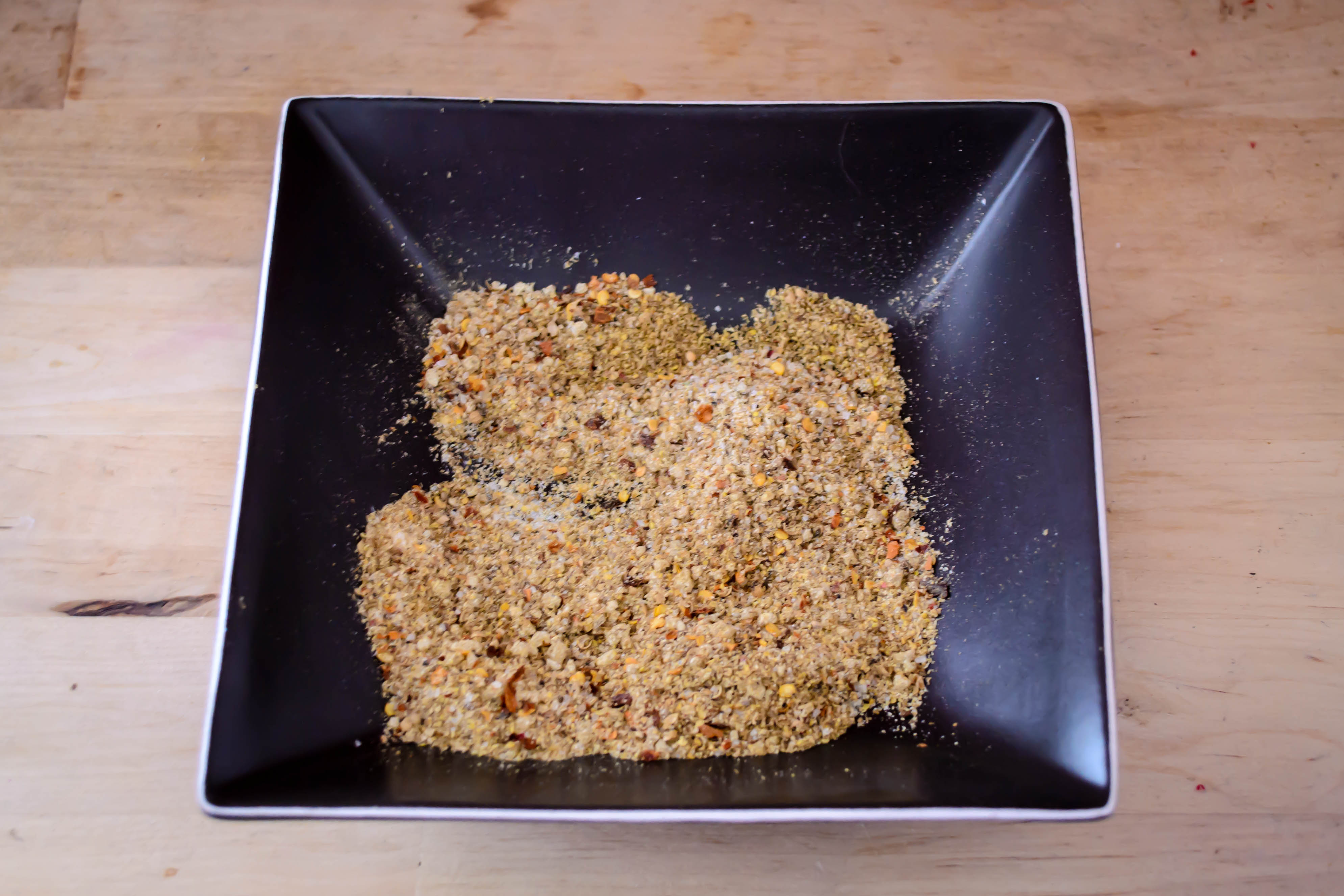
Food Blog June 2013-1532Food Blog June 2013-1534I started with a recipe from Fine Cooking originally designed for beer can chicken, and then I tweaked and adjusted and adapted for what was, as you might have guessed, in my spice collection.  It’s got cumin, it’s got crushed red pepper, it’s loaded with garlic powder and mustard seeds and sea salt and just a hint of ginger for an intriguing and different kind of heat.

Food Blog June 2013-1535This is a tasty rub for grilled meat, obviously (we like it for chicken, patted on before a liberal slather of equal parts Dijon mustard and apricot jam), but I think it would also be great on slabs of pressed tofu, or buttered corn, or potato wedges (you make your steak fries on the grill in the summer, right?).  And if you were really feeling adventurous, you might even add some to a light, lemony vinaigrette to carry the flavors through your side salad.

Food Blog June 2013-1540This recipe makes enough for several applications, which means you’ll have enough to last part of the summer.  It keeps well in a sealed zip top bag.  And in between grilling, you can just store it… in… your spice cabinet.  Oh.  Well, just jam it in at the front, for easy access.  Maybe it will help you forget the mess nightmare treasure trove behind it.  Plus, it’s got so many tasty flavors in it, you surely won’t need anything else for the rest of the summer, right?  Right.

Food Blog June 2013-1542Happy grilling!


Smoky Spice Rub
Adapted from Fine Cooking Magazine
Makes about ¼ cup
2 tsp cumin seeds
1 tsp mustard seeds
1 tsp coriander seeds
1 TB coarse sea salt
2 tsp garlic powder
1 tsp crushed red pepper flakes
1 tsp freshly ground black pepper
½ tsp ground ginger


  • If you are feeling especially ambitious, toast your cumin, coriander, and mustard seeds in a small, dry pan over medium-low heat for 5 minutes, or until the cumin starts to pop a bit and look just a touch oily.  Once that has happened, turn the heat off and let cool before moving on.
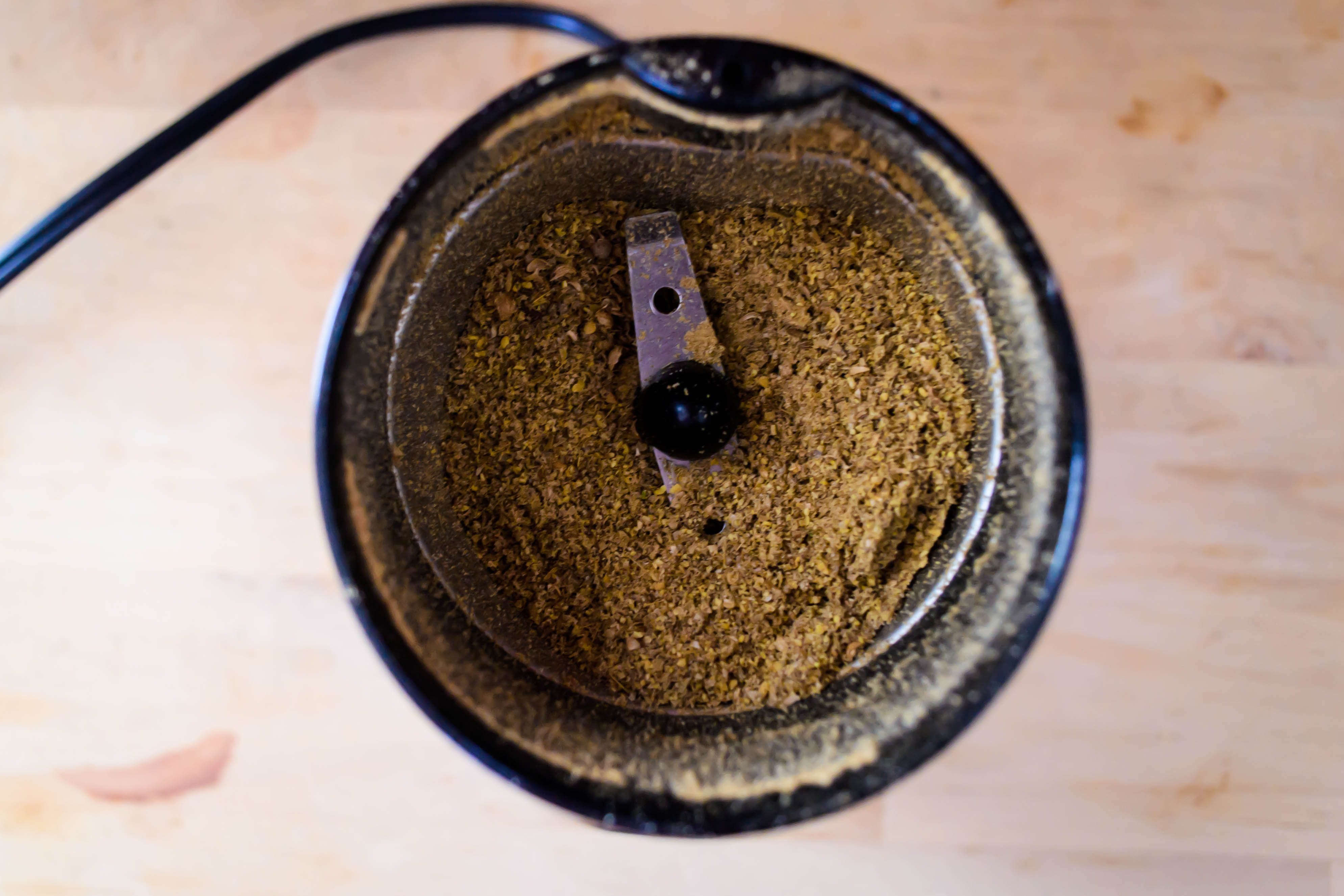
  • If you are feeling lazy less ambitious, skip the toasting step and put the cumin, coriander, and mustard into a spice grinder (or your husband’s coffee grinder.  If there’s a little residual ground coffee in there, all the better!  Extra shot of flavor you didn’t have to work for!) and pulse until the seeds become a fine powder.
  • Mix together ground seeds and all remaining ingredients in a small bowl or, if you are lazy especially efficient, the zip-top bag you’ll be using to store your mix in.
  • Ta-da!  Apply liberally, patting and massaging for good coverage and adhesion, to whatever you’ll be grilling for a smoky, slightly spicy kick.

Swing

Summer into fall into summer.  Salads and grilled vegetables into casseroles dabbled with cream into fresh raw dips.  Luxurious stretches into curled legs under blankets into stressed grading sessions into sampling new half-fizzed white wine.

Sometimes this is called Indian Summer.  I like to think of it as Swing Season.

Two Bittmans for you this week.

77. Trim and dice fresh tomatillos; peel and julienne jicama (or daikon or kohlrabi). For dressing, combine lemon and lime juices, olive oil and chopped cilantro. Pour over salad, top with toasted sesame seeds.

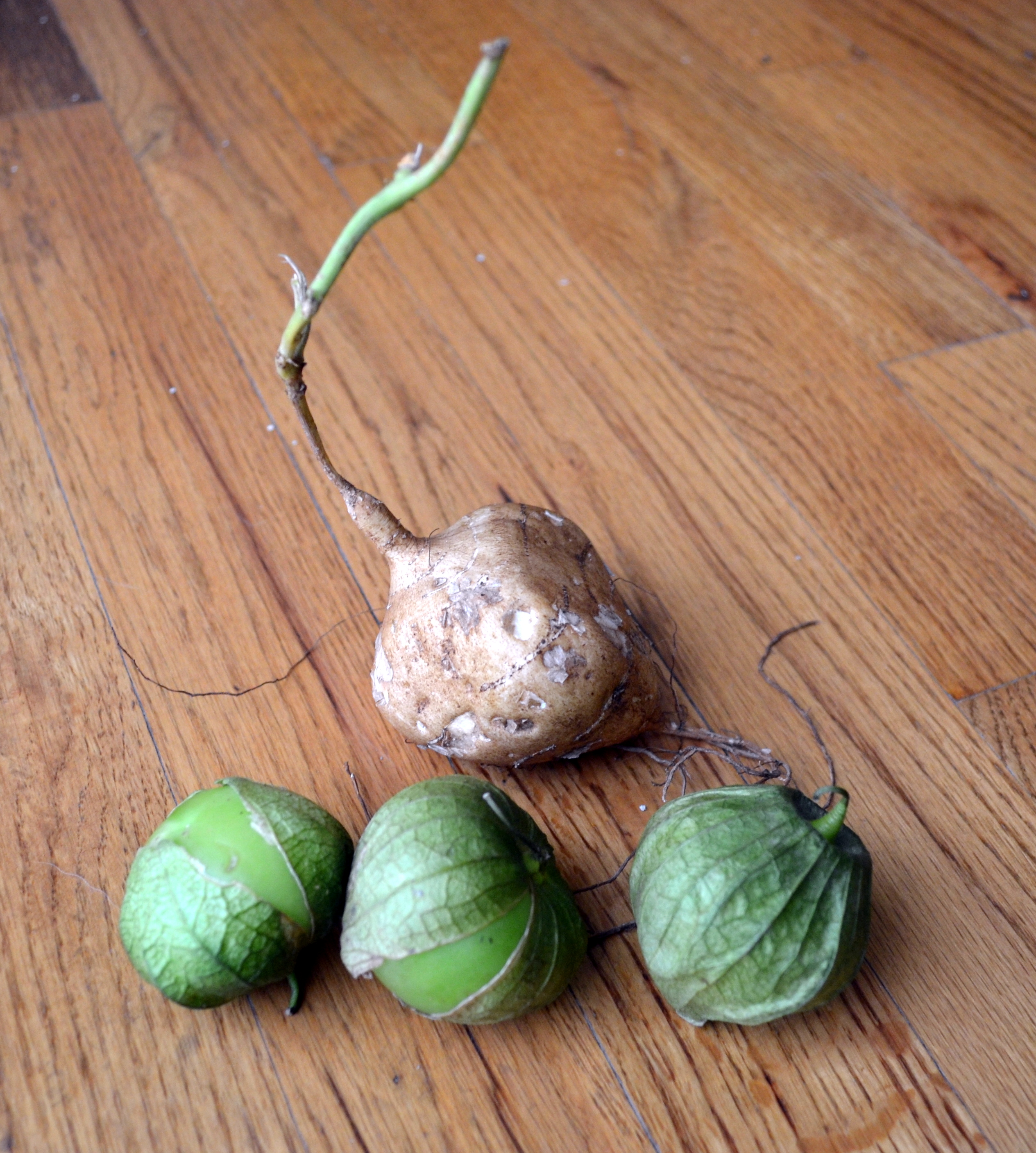
This sounded like a good late summer/early fall salad.  I found tomatillos at the grocery store, but no jicama, no daikon, and no kohlrabi.  And then we went to our Farmers’ Market, and I found all three!  Huge daikons, alien baseball sized kohlrabis and, hidden between stacks of beets and the tiniest fingerling potatoes I’ve ever seen, a pile of grubby little tubers with vine-y stems still attached.  Eureka, jicama!  Back at home, I assembled the troops:

1 TB toasted sesame seeds

2 small jicama

6 medium tomatillos

(really, the number of jicama and tomatillos isn’t super important as long as the quantities are roughly equal once you’ve cut them up.  Start with maybe 1 cup of each, see what you think, and then add more if that’s what makes you happy)

2 TB chopped cilantro

1 lemon

1 lime

Olive oil

Salt

I’ve tasted jicama, but it has been a long time.  And I’ve certainly had tomatillos, but mostly only after they were roasted and processed into salsa.  I wasn’t sure how they would be raw.  This – a lovely fresh slaw/salsa/salad hybrid – sounded so bright and tart and lovely that I wasn’t too nervous.

Before anything else, I toasted the sesame seeds and set them aside.  They give off such a lovely roasty scent when they are just browned and starting to release some oils.

I peeled, then sliced the jicama into rounds.  Then I stacked up the rounds and made thin slices across until my two little aliens were a pile of matchsticks across my board.  Into the bowl with you.

Next I quartered and diced the tomatillo.  Because they are still underripe when green (apparently they can turn purple and get very sweet when they ripen, but I’ve never seen them in that state), their skins were quite resilient – it took some pressure to get my knife through them.  Carefully chunked into miniscule cubes, they joined the white confetti in my bowl.

A quick squeeze of lemon and lime, a whisking pour of olive oil, and a handful of chopped cilantro feathers later, and the dressing was done.  And then a sprinkle of salt, and it was perfect.  It was a little more than needed to moisten the salad, but it’s hard to know how much juice citrus will have secreted away inside it, so it’s always going to be a guessing game.

I mounded the white and green on my plate, then added a generous scoop of Mexican rice and a quartered cheddar cheese quesadilla.  Simple simple.  At this point, you should ideally sprinkle the sesame seeds you so carefully toasted atop the salad, but I forgot until after I’d already subjected it to a photo shoot.

I was surprised and pleased by the flavor of this dish.  I can’t imagine eating it as a Thanksgiving side dish, but it was a bright burst of summer on a day that began in drizzly autumnal terms.  Jicama is crisp and juicy with the barest hint of starchiness, and its flavor reminds me most closely of an Asian pear.  The tomatillos were very tart, but the pairing tamed them.  Imagine a granny smith apple crossed with an underripe tomato and you’re approaching the brightness we experienced.

This was good as a salad, though its tartness necessitates a small portion.  It was also good heaped atop our quesadillas, like a raw salsa.  It contrasted nicely against the melted cheddar and the just crisped corn tortillas.  But where it would really shine, N. and I agreed, would be as a kind of mirepoix for guacamole.  Dicing the jicama instead of leaving it in strips and folding the whole salad gently into chunks of ripe, buttery avocado would make for the perfect chip dip.  Tart, creamy, crunchy, with the right kind of salty sourness from the dressing, and all you’d need was a frosted Corona and a pool to dip your toes into.  Summer.

But things never end there.  At least we hope not!  Days of sweating and hiding inside and waiting till after sunset to go out always, inevitably (even if it’s taking FOREVER, Los Angeles…) relax and cool and crystallize into Autumn.

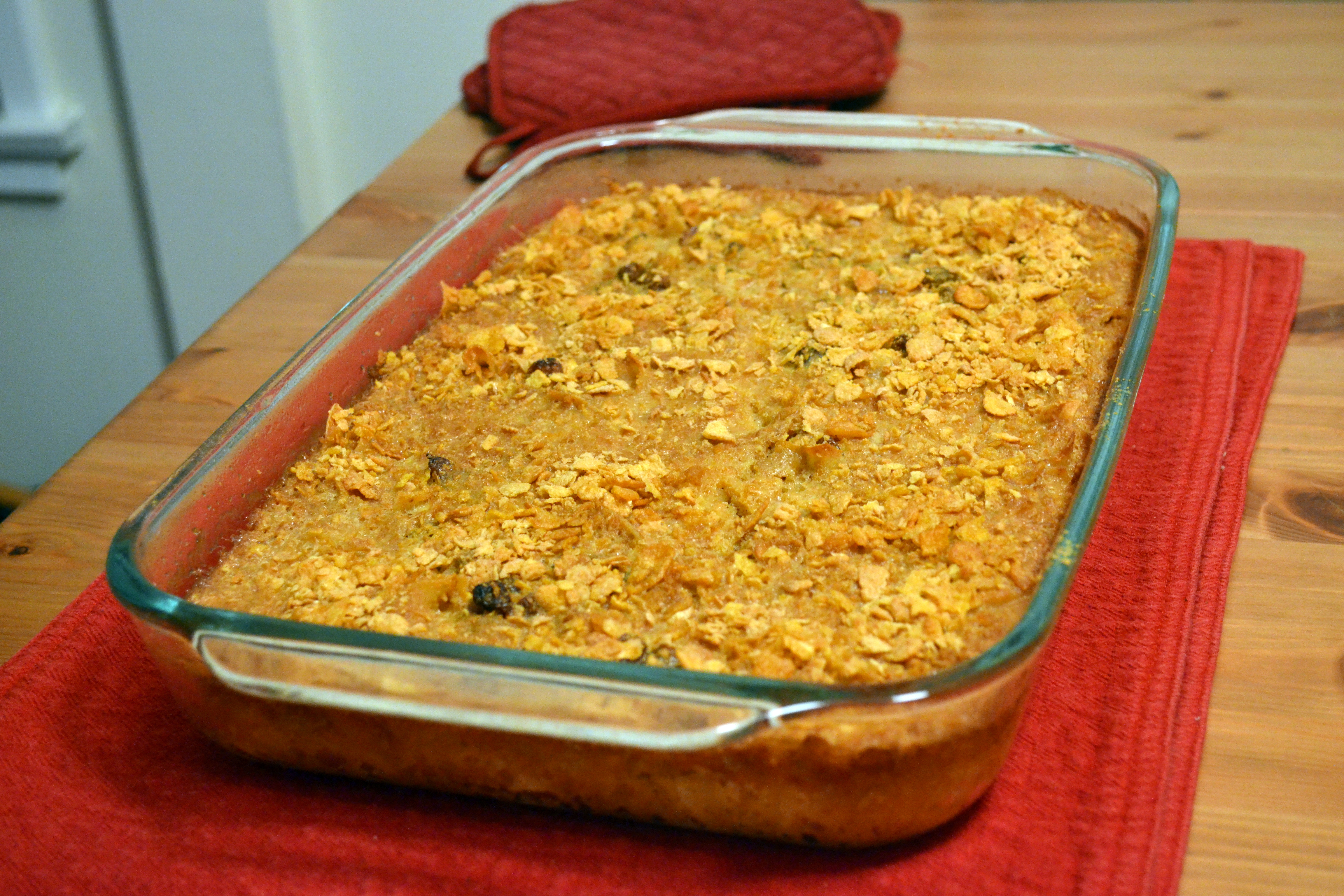
35. Pumpkin-Noodle Kugel: Cook a half-pound of egg noodles in salted water until not quite done; drain and put them into a buttered baking dish. Whisk together 4 cups milk, 4 eggs, 1 cup pureed cooked pumpkin (canned is fine), ¼ cup melted butter and a pinch each of cinnamon and salt. Pour over the noodles and sprinkle with bread crumbs (or, for added kitsch, corn flake crumbs). Bake 45 minutes to an hour, or until a knife inserted into the middle comes out clean.

I had no idea how to serve this dish.  I’ve heard of kugels, but I’ve never even eaten one, let alone made one.  I wasn’t sure, as usual, what to serve it with, so I asked a few friends and did some research on the good ol’ internet.  At the point that I read Smitten Kitchen’s version (okay, so this one is written by her mom, but seriously, that woman has cooked everything, and all of it sounds and looks outrageously delicious), this sounded more like a dessert than a dinner side dish.  It would be, I decided, dessert and weekend breakfast.  Sweet, autumnal, nicely spiced, and custardy.  “It’s going to be like a rice pudding but with noodles.  And pumpkin,” I told N.  He still wasn’t sure.

8 oz. egg noodles 

4 cups milk

4 eggs

1 cup pumpkin puree (I used Libby’s)

¼ cup melted butter (I put this in, but I’m not sure it was really necessary)

¾ cups sugar

¾ cups golden raisins

½ tsp cinnamon

½ tsp salt

2 cups corn flakes, well crunched (who am I to pass up added kitsch?!)

It wasn’t until I had collected ingredients that I realized Bittman’s recipe doesn’t call for sugar.  But I was already on the dessert/breakfast kick, and I couldn’t quite envision this as a savory dish, so I dumped in my sugar estimation anyway, along with the golden raisins that aren’t part of the original.

I cooked my noodles for 5 minutes and then let them cool for 10.  They probably needed to be cooked for only 4 minutes, because they keep on cooking not only while they are in the oven, but on the counter as they cool as well.

Yes, I take these photos from the floor. But it’s a nice wood floor, and the light is so good, and I promise Lucy stayed on the other side of the room the whole time…

With the custard whisked together and the noodles evenly spread in a buttered 9×13” glass baking dish, I preheated my oven to 375F and assessed the corn flakes situation.  Whenever an ingredient needs to be crushed, crunched, or pulverized on Chopped, I yell at the chefs for using their hands, knives, or a rolling pin instead of just bringing over the food processor.  But they don’t have to wash all the dishes they make, and I do, so my pretty little scarlet processor stayed on its shelf.  I crushed up the cereal with my hands, feeling a kind of satisfaction as the flakes became bits and then powder.  I topped the noodly custard with a generous layer of crumbs and carefully slid it into the oven.

An hour later, the custard had set and the smell flashed me forward to Thanksgiving.  I’m convinced we as a society don’t really know what pumpkin tastes like, because what we experience is texture and spices.  If this kugel didn’t have a sprinkle of cinnamon in it, I’m not sure I would know it had pumpkin either.

Dinner came and went, the kugel cooled a bit, and I dug out a too-big portion for myself, and neglected to feel any kind of remorse about it.  It was too good for that.  The noodles had melded together as the pumpkin infused liquid cooked, making a solid, scoopable, sliceable custard.  The corn flakes on top were perfect: aggressively crunchy against the soft interior.  I wouldn’t omit the golden raisins either; they were a really nice textural contrast to both the softness of the noodles and the crunchy crumbs, and their complex sweetness added some depth to my dessert casserole.  It was warm, and sweet, and perfectly comforting as I tucked my feet under me on the couch and waiting for the approach of Project Runway (don’t judge, every girl needs a little reality TV now and then).

The leftovers are delicious too, though the dish does lose something in relinquishing its crunch to the microwave.  In another universe where I’m a Southern cook, I could see doing crazy things like frying squares of this in butter and then drizzling hot maple syrup over the top.  But I’ll refrain.  Because from my window, I can see my basil wilting beneath the curiously, cruelly hot-for-mid-October sun: back to summer, so it seems!  And here I was considering making soup…

Swing season indeed.