Quinoa and Kale “Winter” Salad

Boo!2016-food-blog-october-0317Not really. Alas, the only Halloween-ish-ness I can attach here, for all my attempts to catch up with the impending holidays (and everything else), are the “scare” quotes in the title. (Haha? Maybe? I know; groan.)

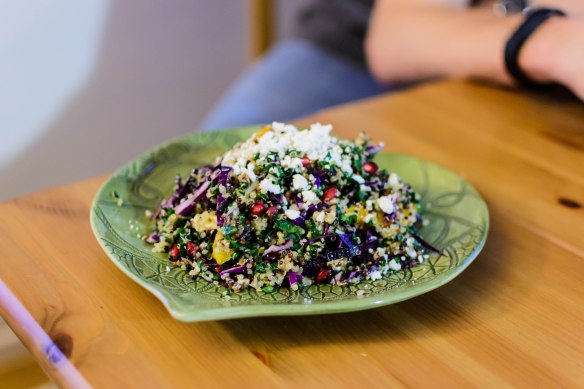
2016-food-blog-october-02942016-food-blog-october-0302Instead, let’s pretend I’m so caught up that I’m actually looking forward. Forget autumn; I’m already a season ahead. This is a winter kind of salad: no wimpy lettuce and out-of-season tomatoes here, but sturdy greens and the substantial base of quinoa. A good grain salad is a lovely thing – an entrée rather than a starter or a side, if you fill your plate enough – and this one is no exception. It is based on a bright incarnation from the Firestone Walker brewpub located near us, and it screams California, doesn’t it? As if just quinoa or kale on its own weren’t enough, this one offers the hipster bifecta in one brightly colored mound. If we completed the trio and added avocado, we’d probably all spontaneously sprout handlebar mustaches and skinny jeans (although seriously, avocado chunks would be a nice addition here). The aforementioned scare quotes in the title are because, although this is a winter salad, the place it really screams winter… is in California. The kale and cabbage are cold-weather vegetables everywhere, with kale really becoming sweet and crisp after exposure to frost, but the orange segments and the bright gemstones that are pomegranate seeds are also winter crops – spots of brightness in the chill that we can at least dream of in what constitutes a Southern California winter.

2016-food-blog-october-03032016-food-blog-october-0307As a good salad should, this one has plenty of textures for your teeth to play with: the quinoa offers a toasty, chewy bite, the cabbage is raw so it provides a rough crunch, and the feta has that strange squeaky-soft chew. I like that pop of a pomegranate aril and the sudden crushing of the seed within; it’s a nice little metaphor for today, isn’t it? A sweet, plump, juicy treat, but the trick of an unexpected crunch hiding within.

2016-food-blog-october-0315

Quinoa and Kale “Winter” Salad
Serves 4
About 30 minutes
1 tablespoon olive oil
1 cup quinoa, rinsed and drained
2 tablespoons white wine (optional)
2 cups chicken broth, vegetable broth, or water
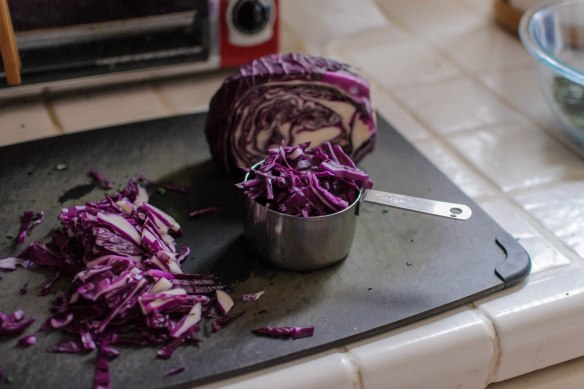
2 cups red cabbage, sliced into thin ribbons, then halved or quartered into bite-size sticks (see photo)
4-5 ounces kale, thick stems removed, finely chopped (will be about 2 cups when chopped)
½ cup pomegranate seeds
2 large oranges: one cut into segments or supremes (see here for a clear photo tutorial by the kitchn), one reserved for juicing
½ cup crumbled feta cheese + 2 tablespoons
2 tablespoons finely sliced chives or green onions
¼ cup fresh orange juice
1 tablespoon champagne or white wine vinegar
2 teaspoons honey (optional)
¼ cup olive oil
salt and pepper to taste


  • In a medium pot, heat the olive oil over medium heat until it is shimmering. Add the rinsed, drained quinoa and toast, stirring frequently, until the grains are dried and smell nutty. Add in the white wine, stirring while it steams and absorbs, then add the broth or water, stir, and clamp on a lid.
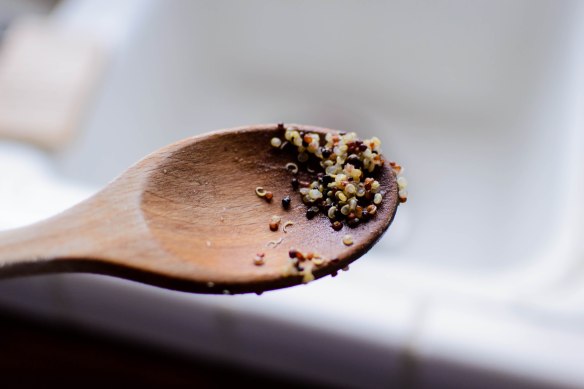
  • Let the liquid in the quinoa pot come to a boil, then reduce the heat to a simmer and cook until the liquid is absorbed and the little thread-y looking germ around the quinoa has loosened and separated (see photo above). Package directions usually say this takes 12-15 minutes; I find I like my quinoa a bit more cooked: 18-20 minutes. You do you. When the quinoa is finished cooking, remove the lid, fluff it up a bit, and set aside to cool.
  • While the quinoa cooks, prep the rest of your ingredients: thinly slice the cabbage and cut down the big slices into short, stumpy ribbons, chop the kale finely, and cut the chives or green onions into wispy circles. Make supremes from the orange, and add them along with the vegetables, the cheese, and the pomegranate seeds into a large bowl.
  • You can also use this time to make the dressing: in a 2-cup glass measuring cup, whisk the orange juice with the vinegar and the honey. You can squeeze out the core of the orange that you supremed earlier for some of this, but unless it’s very juicy you will likely need a bit more from the second orange. Stream in the olive oil, whisking constantly, to form a nicely emulsified dressing. Add salt and pepper to taste, whisk up once more, and set aside.
  • When the quinoa is finished and has cooled a bit, pour the dressing over it, stir and fluff to distribute evenly, then dump into the bowl containing the rest of your ingredients. Toss gently to combine.
  • To serve, either scoop out mounds onto individual plates, or just present in a large salad bowl or platter. Just before serving, top with the remaining 2 tablespoons of feta cheese.

Save

Save

Root Vegetable Barley Risotto

As I move on through my weird little life, I have come to realize that there are some rather shocking details in my relationship with food. Example: I just don’t like yellow curry. I’ve tried it. I’ve played with multiple applications. It just doesn’t work for me. Example two: Kraft Macaroni and Cheese is without a doubt my favorite hangover food. Well, that or biscuits and gravy with a side of hash browns. But only if those biscuits, gravy, and hash browns are from Brails Restaurant in Eugene, Oregon. Otherwise I’d take the boxed macaroni, complete with its powdered fluorescent orange box-mate, any day of the week.

Food Blog October 2013-2732But a more pertinent example for us today is risotto. I like risotto. I like the creaminess, the cheesy finish, the number of vegetables you can load it with; I even like the endless stirring. It’s therapeutic in a lot of ways. The only thing, in fact, that I don’t like about risotto is the rice. I know; who AM I? But the rice too often gets sticky and gloppy, and if it’s not gloppy, it’s soupy but somehow still underdone, and frankly I’m over it. No, if I’m going to have something toasty and nutty but also somehow creamy and chewy, I’m going with barley.

The idea of risotto without the rice is something like ice cream without the cream: contradiction central. Here, though, the truth is in the technique: the slow, steady stirring that lets the grain release its starches and become a warm, comforting dish of welcome-to-fall-I’m-so-glad-you’re-here.

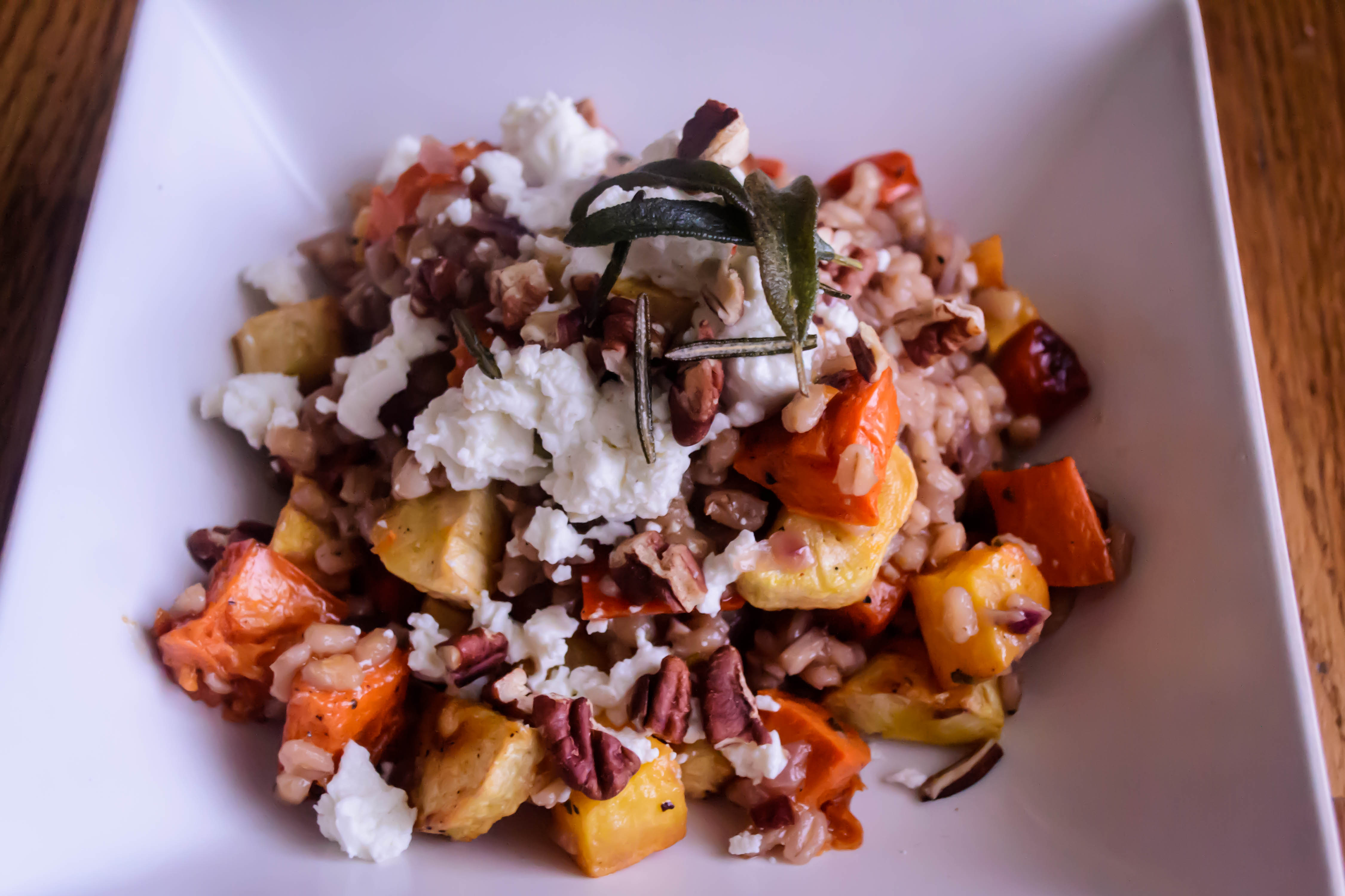
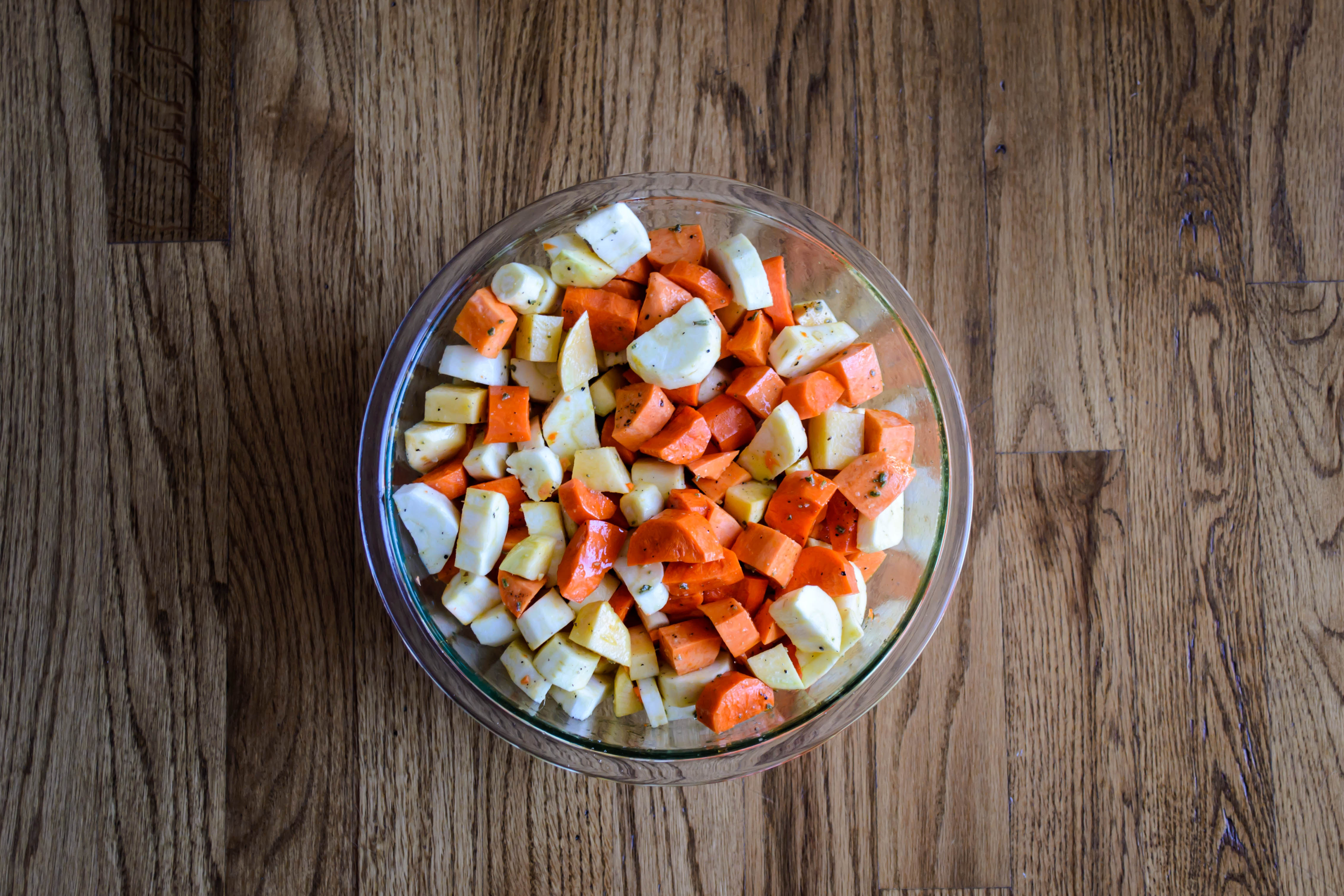
Food Blog October 2013-2721If we were going to have fall, I decided, we were going to need root vegetables. Discs and sticks and chunks of rutabagas, carrots, sweet potato, and parsnips, all gleaming with olive oil and garlic herb salt, roasted until caramelized and tender. I folded these into the barley just as it finished, then dolloped in sizable lumps of soft, creamy goat cheese, a scattering of toasted pecans, and, because if it’s worth doing it’s worth overdoing, some whole fried leaves of sage and rosemary.

Food Blog October 2013-2724Alterations apropos of the season might entail swapping out the sweet potato or carrot for hunks of pumpkin or butternut squash, and you can certainly use walnuts or even pine nuts if you don’t like pecans. But I wouldn’t skip the goat cheese. Its insistent tang is a needed foil for the mellow autumnal combination of root veggies and barley.

We ate this so fast our forks had whiplash. It is warm and hearty, certainly, and the clamor of different flavors settles together so nicely that you can’t help but keep going back for another taste. The sage and rosemary mellow as they fry, producing a toasty earthiness rather than the overwhelming pine-forest flavor you might expect.

Food Blog October 2013-2728

Root Vegetable Barley Risotto
Serves 4-6
3 medium carrots
3 medium parsnips
2 medium rutabagas
1 medium orange fleshed sweet potato
¼ cup olive oil
1-2 teaspoons salt (a nice garlic and herb salt works well here, if you have it)
½ teaspoon pepper
¼ cup chopped pecans
¼ cup butter
10 sage leaves
1-2 teaspoons whole rosemary leaves
Scant 1 cup chopped onion (from ½ a medium onion)
4-6 cloves garlic, minced
1 cup pearled barley
½ cup dry white wine
Additional salt and pepper, to taste
6 cups chicken or vegetable broth, warm but not boiling
8 oz. soft goat cheese


  • First, preheat the oven to 400F and line two cookie sheets with aluminum foil. Place the cookie sheets in the oven while it preheats.
  • Peel the root vegetables (except the onion) and cut them into discs, slices, or chunks of approximately the same size, no thicker than about ½ inch. Place them in a bowl and toss with the olive oil, salt, and pepper.
  • Spread the vegetable chunks evenly in a single layer on the preheated trays, then return trays to the oven and roast for 45-60 minutes, tossing halfway through, until vegetables are fork tender and nicely caramelized. Set aside until risotto is ready.
  • While the roots are roasting, warm the broth in a medium pot. You want it at a bare simmer at most. No more, or too much will evaporate while you wait to add it to your risotto. (It shouldn’t be cold either – this will increase the risotto’s cooking time.)
  • In a large saucepan, toast the pecans over medium-low heat until they begin to take on a caramel aroma and look lightly browned. Be careful with them; they will burn easily. Don’t take your eyes away too long. When they are toasty, remove them from the pan and set aside.
  • In the same pan, melt the butter over medium heat, then add the sage and rosemary leaves. Be careful; sometimes they will spit a bit when they touch the hot fat. Fry them for about 45 seconds, agitating the pan a little to turn them around in the butter, until they have darkened just a bit. Remove them, reserving the butter in the pan, and drain them on a paper towel. They will crisp up as they cool.
  • Again in the same pan (see how economical we are being for whoever washes the dishes in your house?!), add the chopped onion and garlic. Sweat the onions and garlic for 5-8 minutes, until the onion is translucent and the garlic smells just the way it is supposed to. You know what I mean.
  • With soft, tender onions, turn the heat up to medium high and add the barley. Stir briskly for 1-2 minutes until the barley is fully coated in butter and has toasted a touch.
  • Deglaze the pan with the white wine, stirring vigorously to detach any browned bits from the bottom of your pan (but be careful not to be too vigorous, lest you ignite your wine). Continue stirring slowly until the wine is almost completely absorbed into the barley.
  • When the pan is nearly dry, add about a cup of the broth and stir to incorporate. Let it simmer, stirring frequently, until the broth is almost absorbed. The first time you add broth, this will take 10-15 minutes. The amount of time it takes for the barley to absorb the broth will increase as you add more liquid.
  • Repeat this process, adding broth and stirring, until the barley is tender but chewy and you have added all of the broth. This will take about 45 minutes.
  • When the barley has almost absorbed the last of the broth (it will be slightly soupy, but don’t worry), add the roasted root vegetables and season to taste with salt and pepper.
  • To serve, scoop some risotto into a shallow bowl, dollop on a good portion of goat cheese, sprinkle with pecans, and top with a few fried herb leaves.

Cilantro Lime Rice

Once you live in an area long enough, you start to notice food trends, especially if you like to eat out (which I do).  In Los Angeles, when you’re not focusing on the grass-fed beef and the house-made buffalo mozzarella and the artisan cocktails, you start to notice side dishes.  It wouldn’t be Los Angeles, I suspect, without the ubiquitous kale salad.  These folks love their kale.  And when it’s not kale, it’s quinoa, toasted or steamed or boiled, getting cozy with vegetables or dried fruit or the lightest of vinaigrettes.  Sometimes, in a really ambitious nod to “California Cuisine,” kale and quinoa get combined in the healthiest, hipster-est, most trendy-bohemian side dish the world has ever seen.*

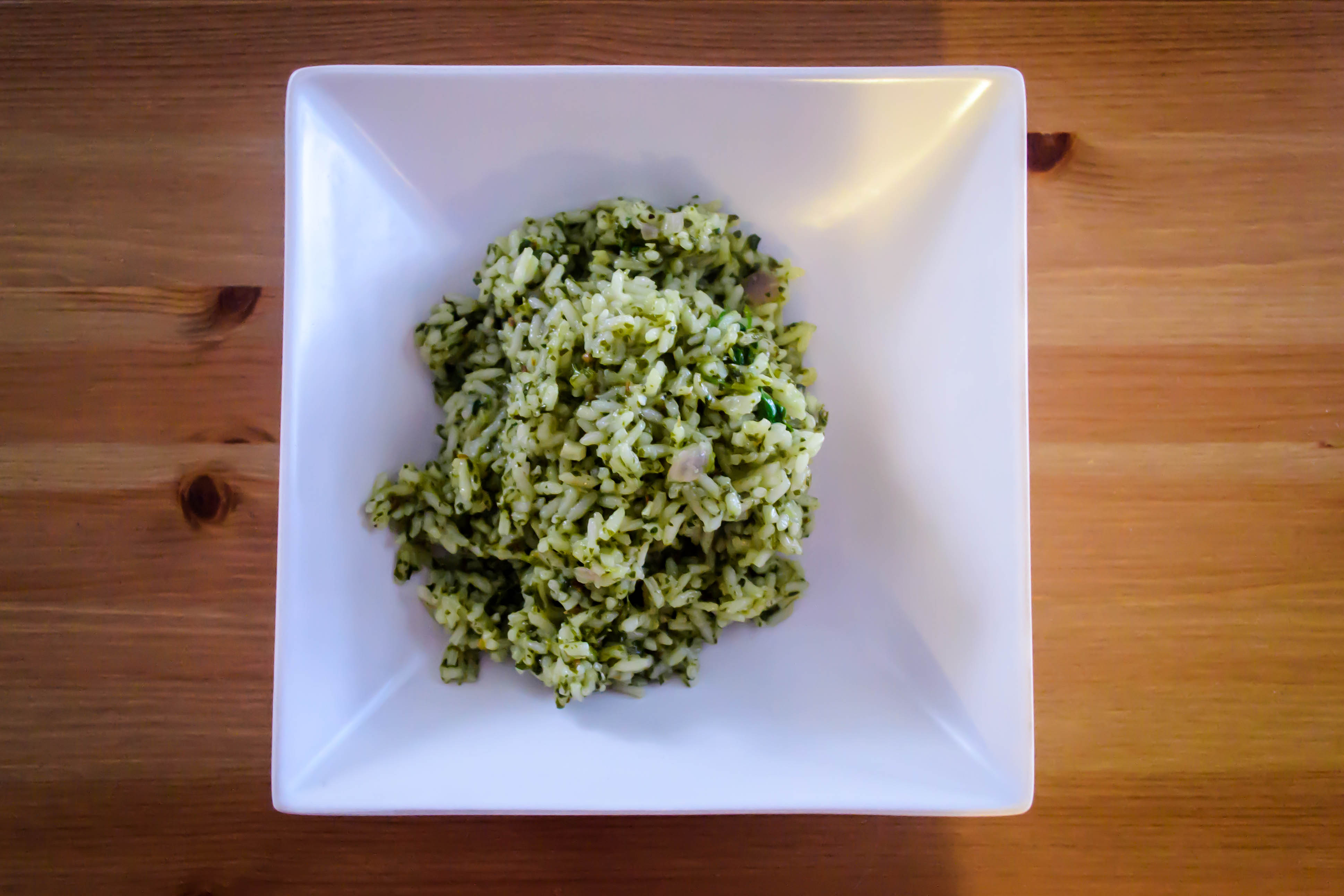
Food Blog September 2013-2636But the other side dish I’ve been noticing a lot lately, spurred along, no doubt, by the dozens of Chipotles lining every other street corner, is cilantro lime rice.  Whether it’s speckled with zest or dotted with the occasional herb fleck, or the bright green of a rice dish Sam I Am would be proud to serve alongside some huevos rancheros verdes, it shows up on so many menus that at some point I was bound to become either totally sick of it, or completely obsessed.

Food Blog September 2013-2631Clearly, my palate chose the latter.  I adore it.  At one of our current favorite Culver City haunts, my dinner choice is based on which dish comes with a side of cilantro lime rice.  I fall on the love side of the Great Cilantro Divide – I admit that there is a soapy quality to it, both in taste and in aroma, but it appeals to rather than repulses me – and lime is quite possibly my favorite citrus option.  These flavors paired with a fluffy, starchy, perfectly cooked scoop of rice are a side dish I would eat next to almost anything.

Food Blog September 2013-2633But the problem, as with most things I end up obsessed with, is that not all cilantro rice is particularly good.  The herbs are dull and flavorless, or the lime isn’t assertive enough, or the rice is mush, or I don’t want to pay for the accompanying $20-30 entree as often as I want the zesty side.  And so, as usual, I have to saunter into the kitchen to make my own.

Food Blog September 2013-2626I toyed around with some flavor combinations, playing with spices and vegetables and heat, and ended up with something so bright and tart and satisfying that we almost didn’t want the blistered corn quesadillas I’d made to go along with our rice.  This was fresh, and vibrant, and almost overloaded with lime and cilantro flavor – maybe my favorite rice side dish since my mom’s pilaf (which I’m convinced will never be topped).

Food Blog September 2013-2630Make this for your family.  Pair it with grilled fish or carne asada or stewed black beans or chile relleno.  And if you like it, let me know!  Maybe it can serve as my penance for the overly complicated, labor intensive loaf I pushed upon you last week.

* I’m not saying this is a bad thing.  I don’t have anything against kale or quinoa, and I agree that they are quite tasty together.  But then, I am a bit of a healthy bohemian type, though certainly not very trendy.  Which is why it’s taken me till now to fall for this dish…

Food Blog September 2013-2638

Cilantro Lime Rice
Serves 6-8 as a side dish
¼ cup olive oil
½ teaspoon whole cumin seeds
½ teaspoon coriander seeds, crushed in a spice grinder or with the side of a knife blade
4 cloves garlic, minced
¼ – ½ cup diced onion (I used a red onion, but yellow or white would be fine too)
1 ½ cups long grain white rice
½ teaspoon salt
¼ teaspoon black pepper
3 cups low sodium chicken broth, vegetable broth, or water
2 bunches cilantro
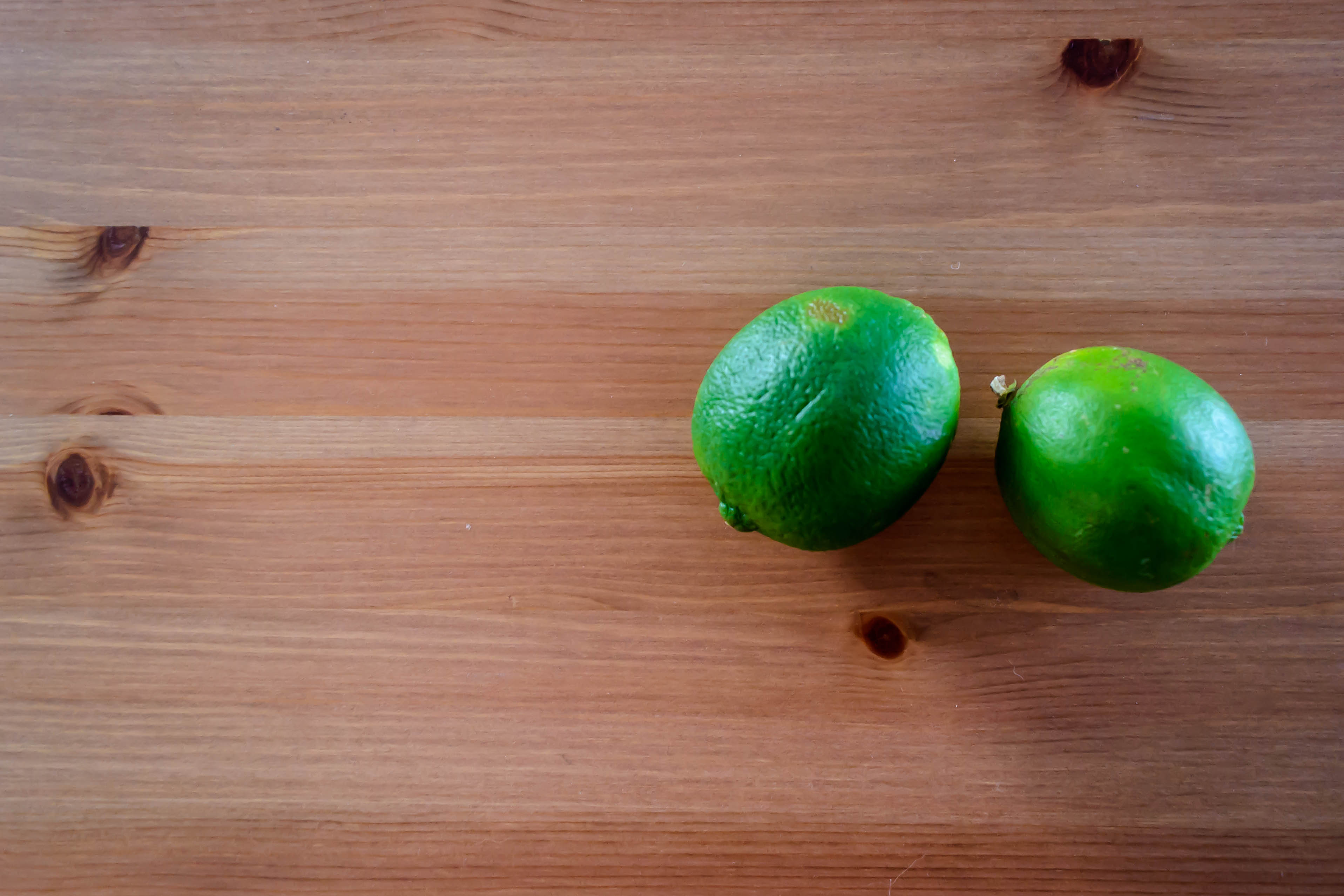
1 – 2 limes (using 2 whole limes results in a very strong lime flavor.  This was what I wanted.  If you want less or you aren’t sure, start with the juice from 1 lime and work up from there)
  • Heat the olive oil in a medium pot over medium heat.  When it is shimmering, add the cumin and coriander and turn the heat down to medium low.  Let the spices warm and release their aroma – this should take about 3-5 minutes (it will look like a lot of oil for just this little palm-full of spices.  Don’t worry.  We are using this for the vegetables and toasting the rice as well).
  • While the spices are heating up, prep your onions and garlic.  When the cumin and coriander smell toasty and begin to pop occasionally in the pot, add the onions and garlic and sweat them over medium low heat for 5-8 minutes. You want the onions to get translucent and the garlic to become aromatic, but not browned or crisp.
  • Add the rice and turn the heat up to medium high.  Let it sizzle, stirring frequently, until some grains of rice are opaque and bright white but some are still translucent and pale.  It will smell a bit reminiscent of popcorn or puffed rice, and that is a good thing.
  • When the rice is toasted, add the salt, pepper, and broth or water.  Stir well and cover to bring to a boil.  Once boiling, turn the heat down to medium or medium low and simmer for 15-18 minutes, or until liquid is absorbed and rice is tender but not mushy.
  • While the rice simmers, prepare the cilantro.  Tear or chop the leaves and tender upper stems from the tough ends and place in a blender or food processor (alternatively, if you don’t want the extra dishes or don’t mind big pieces of cilantro, you can just chop it up with a knife).  Add the lime juice and pulse in 3 second bursts until the herbs are very finely chopped and almost become a paste.
  • When the rice is done, uncover it, fluff it with a fork, and add the cilantro and lime juice mixture.  Combine thoroughly to ensure even greenness, then serve immediately.  Too much time between adding the cilantro and serving the rice will result in a less vibrant green color.

Rolling in Dough

Okay, 2013, here we go.

OLYMPUS DIGITAL CAMERA

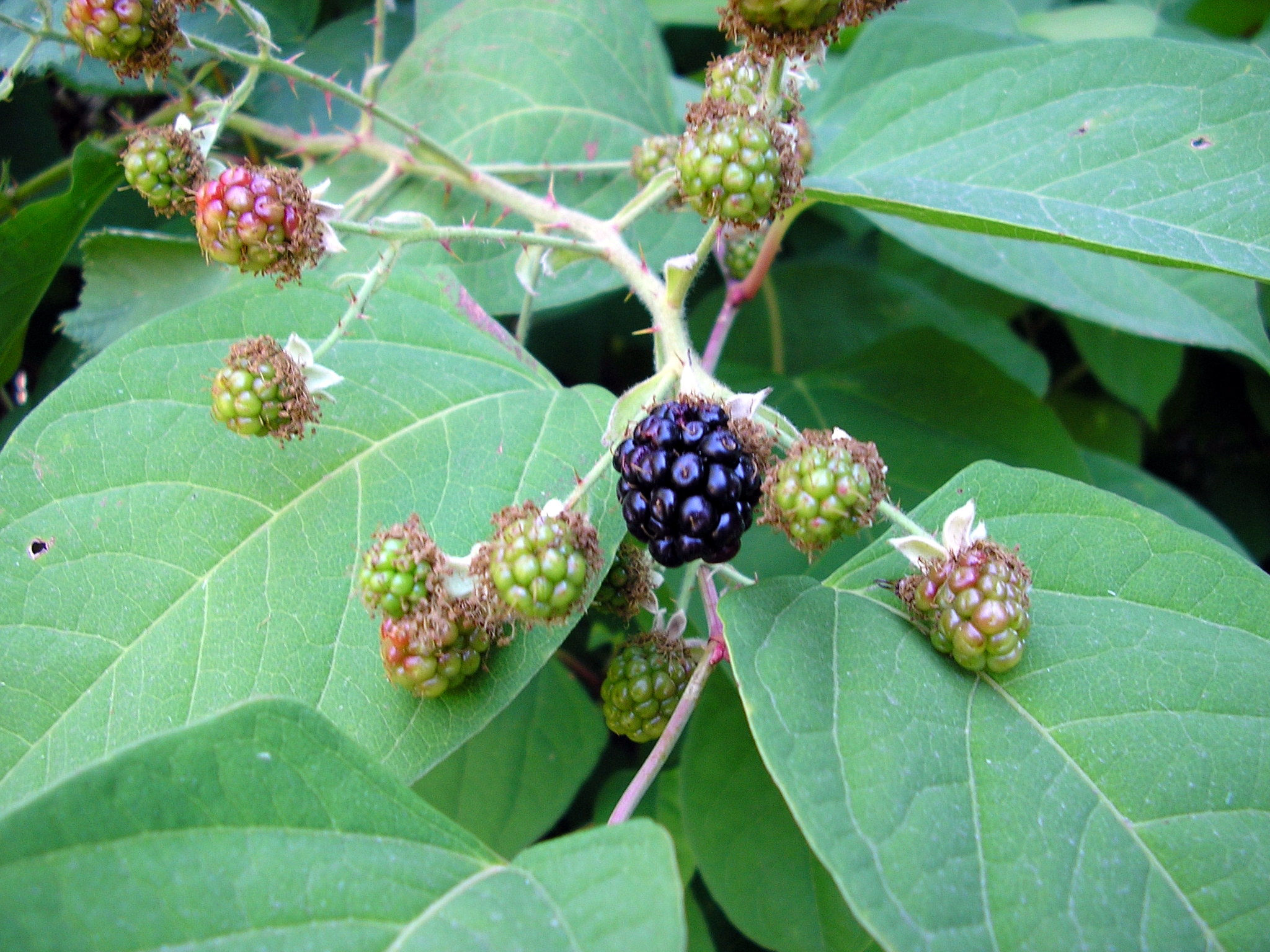
This year, I have a few changes to announce.  First, you may have noticed that we’re at a new address.  Update your bookmarks, if I’m lucky enough to be there, to http://blackberryeating.com.  As I understand it, the old address will still work, it will just redirect you here.  As I mentioned a few days ago, I’ve been wanted to upgrade to an address that makes more sense for what I’m doing here.  Blackberries, their mystery and decadence, remind me of all that is good about food: what is sweet, what is juicy, what is challenging, what is delicate, what is persnickety and strong.  The Galway Kinnell poem from which the title of this blog is taken celebrates juxtaposition and excess, likens these jeweled fruits to words and the consumption of those fruits to the search for meaning and significance.  This is a little piece of significance for me – this collection of words thrust with crossed fingers and squinted eyes out across the internet – and so I wanted to make it more connected, more applicable, but really, more mine.

Who ever thought so much consideration could go into a new address?

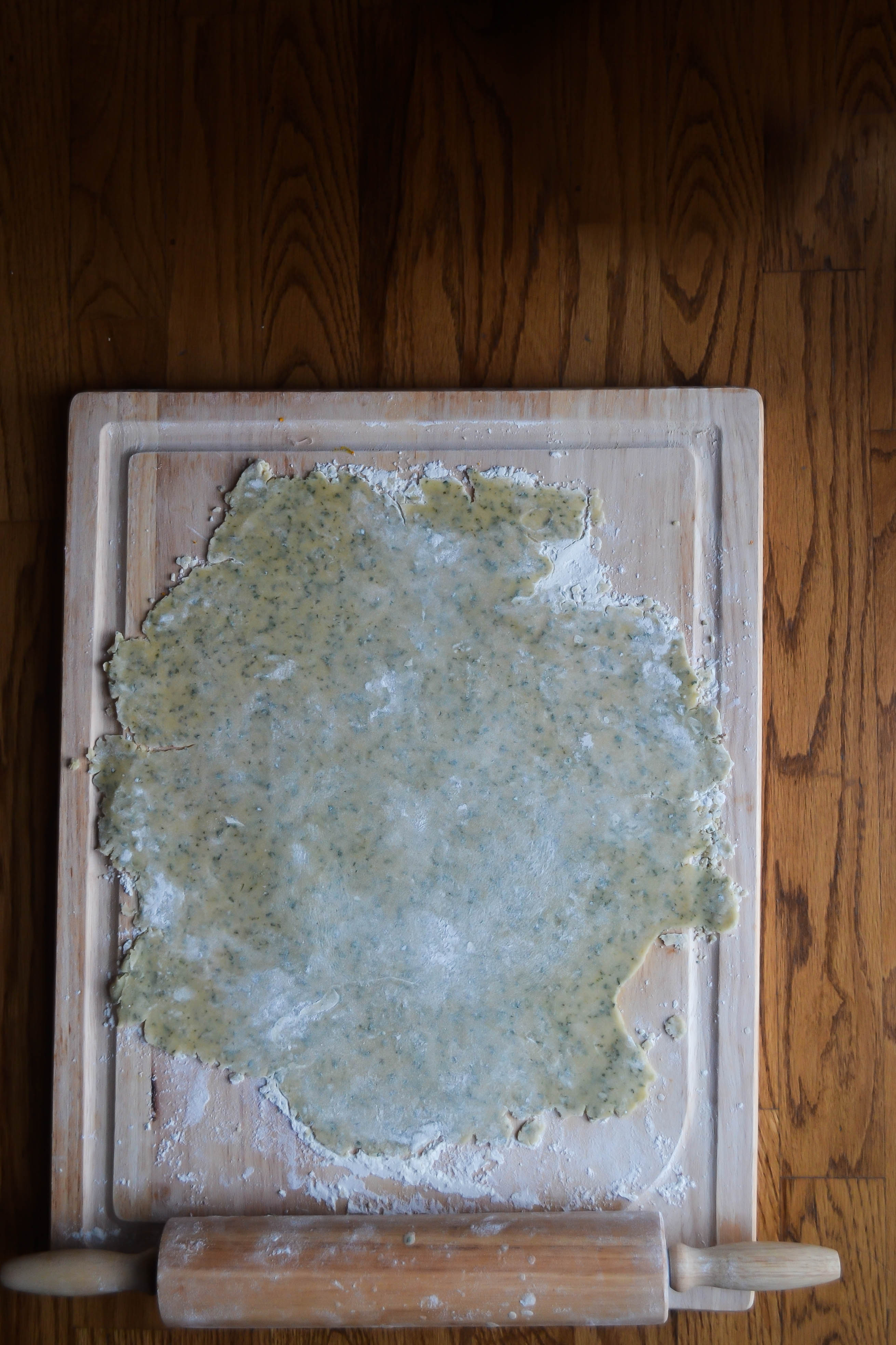
With the Bittman project over and a new address settled, it’s time to submerge myself in a new challenge.  As you know if you’ve been reading for a while, dough – particularly pie dough and yeasted dough – is one of my big fears.  What if it doesn’t rise?  What if it crumbles apart?  What if it tears or burns or collapses or comes out tough or doesn’t bake right?  What if it’s (gasp) imperfect?

DSC_0949

I decided I need to get over this.

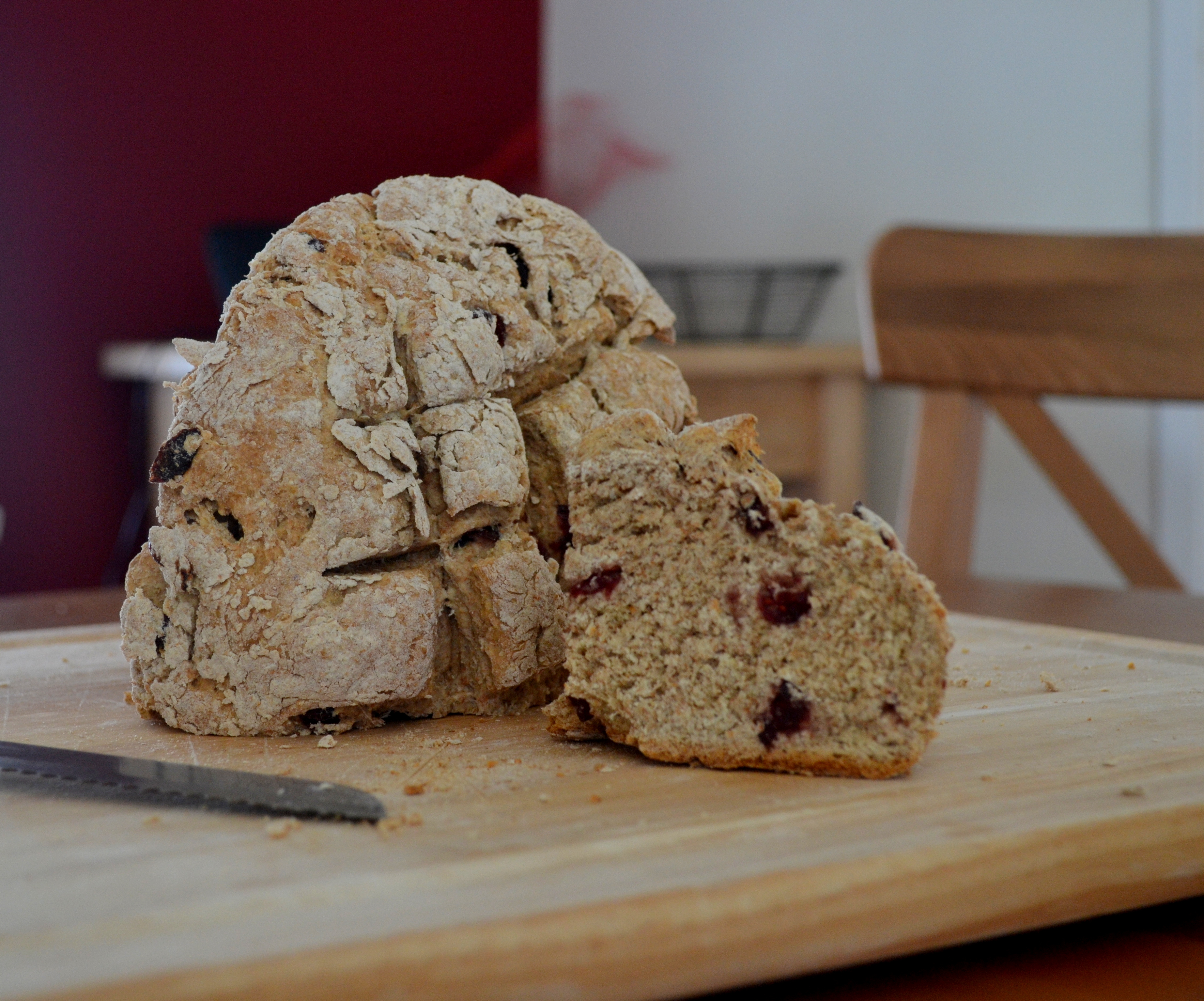
This year, each week, I will make something out of dough.  It might be pie crust.  It might be cookies.  It might be pizza or foccaccia or flatbread.  It might, as terrifying as this is to me, be a real, honest-to-goodness loaf of bread, bloomed and kneaded, baked until crusty in a loaf pan.  I have a crazy notion that I want homemade bagels.  I have a yen to make doughnuts, and not just cake doughnuts, but the beautiful puff and chewy crumb of a good yeasted twist.

I don’t – and this is important to note – promise absolute success.  You’re going to see what crumbles along the way.  You’re going to see the scraps and scrapes and disasters I produce.  I think this is an important part of learning, and that’s part of what this blog is for me.

I have a few guides in this project, one hoped for and long awaited, one unexpected but delightful.  From my in-laws, I received Michael Ruhlman’s genius book Ratio.  This isn’t a cookbook.  It’s more than that.  It’s more exciting, it’s more foundational, and ultimately, I think, it’s more useful.  It doesn’t tell you how to make cherry pie, it tells you the essential equation of pie dough.  Three parts flour, two parts fat, one part water.  That will always equal pie dough.  Suddenly, you can use any kind of flour – more than one kind, if you want.  You can use lard instead of butter.  You can make one pie or you can make thirty-five pies, and you don’t have to think as hard about multiplying or adding or fractioning.  You have a ratio, and it is always going to work.

That’s the theory.  And I believe it, but I haven’t tried it out just yet.

From my parents, I received a bread machine.  I’ve never used a bread machine before, and while my immediate thought is that to really master dough, I will also have to make it by hand so I understand the kneading and the cycles of rising, and so I will come to know the feeling of the right kind of stretch and the windowpane test and the knowledge beneath my fingers that yes, this is bread, having a machine help me along the way is going to be nice.  The idea of dumping, in pajamas at 10pm, a series of ingredients into a pan, plugging in a machine, and telling it I want a fresh, hot loaf of bread at 7am, delights and astounds me.  I want to understand, but I also want the magic.

So that’s the plan.  If all goes well, it will mean more of this:

Food blog 2011-0097It will certainly mean more of this:

DSC_0959

It may even mean some of this:

IMG_0698

I don’t expect it will mean all dough, all the time, just as the past two years were not exclusively Bittman concoctions.  If something amazing comes along that doesn’t involve flour or eggs or butter, I will still report on it.  But the goal this year – the resolution, if you will – is to conquer this dough thing.  I want to have conversations with you about it.  I want your feedback and advice and experiences.  And I hope you enjoy.

Trick or Treat

Halloween is easily in my top three holidays.  I have to give the prize to Christmas, because it means family and love and sweaters, but Thanksgiving and Halloween chase each other in circles to gain second place.  Despite that love (overwhelming in some cases, especially if you, like N., are not invested in costuming yourself at every possible occasion), this is the first year in almost a decade that I’ve done nothing to celebrate.  No costume.  No party.  No decorations.  We bought candy for the six kids that showed up (only six!  The whole evening!  Was it just because it was a Wednesday, or do kids not trick or treat like they once did?) and I definitely listened to the Halloween party mix my friend D. made for me a few years ago, but it felt a bit like a lost holiday.

I did embrace the season, though, the following day.  Having Thursdays off gave me the opportunity to do something I’ve been wanting to do for years: pillage Target’s day after Halloween sale for leftover clearance items (read: treats!).

The tricks began when I began work on the evening’s dinner.  It was, I realize in retrospect, a bit of a Chopped style enterprise: appetizer, entree, and dessert, each made with ingredients I’d not expected to meld.  In each case, however, the “trick” aspect of the dish was my doing, not the recipe’s.

“12. Garlic-Rosemary Figs: Soak dried figs, stems removed, in warm water until plump; drain and halve. Heat rosemary and lightly smashed (and peeled) garlic with olive oil on medium-low heat, until softened. Add figs, along with some fresh orange juice. Cook until saucy.

Pairing figs, garlic, and orange juice seemed odd.  Nevertheless, I collected enough for one portion (this was not N.’s kind of dish):

6 dried black mission figs

1-2 tsp fresh rosemary

2 smashed, peeled garlic cloves

1 TB olive oil

juice from 1 small orange (⅓ – ½ cup juice)

I heated some water in my teakettle and poured it over the figs (which I’d halved prematurely.  Apparently paying attention to the directions is kind of important), which I let stew on the counter for half an hour.

Figs vaguely plumped, I drained them and set them aside, then put the garlic cloves, rosemary, and oil into a cold pan.  I heated it over medium for five minutes or so – just until the rosemary started to sizzle and the garlic turned a little blonde.  Then I added the figs and orange juice, and simmered for fifteen minutes or so, until the orange juice had reduced considerably.

I plated, I ate, and I considered.  This didn’t taste bad, but it didn’t marry absurdly well either.  The rosemary and the figs were lovely.  The orange juice and figs were fine (though the orange was a bit overpowering).  The garlic and figs were… unobjectionable.  They just weren’t my favorite.

I must say, though, I recalled while I was cleaning up after dinner that this entry was in the “Sauces and Relishes” category.  I had eaten it straight.  This was, perhaps, why I wasn’t enamored of it.  Therefore, I’d recommend spooning this over lamb chops, or pork tenderloin, either of which would add some savory notes to make the garlic feel less anomalous.

Though this “appetizer” wasn’t fantastic, I ate it with a fantastic grain-salad-turned-hash inspired by Smitten Kitchen.  I want to revisit this hash, because I think it could use some additions, but here are the basics:

Line a baking sheet with aluminum foil.  Set it in the oven and preheat to 400F.  Yes, you are preheating the pan along with the oven.

Peel and halve a butternut squash.  Seed half of it and cut that half into small cubes.  In a bowl, toss the cubes with salt, pepper, and olive oil, then tumble onto the baking sheet (where they will sizzle immediately – this is a good thing) and stow back in the oven for 35-45 minutes, or until they have golden edges and creamy soft middles. 

During the last ten minutes of squash roasting, push the squash to the sides of the pan (or just grab another pan, if you aren’t invested in avoiding dishes, like me) and stack 4 cups or so of trimmed, cut kale that has also been tossed in olive oil, salt, and pepper.  The kale and squash will cook down a little more together, and you will be left with something not quite like kale chips, but a bit more textured than if you’d boiled or steamed it.

While the squash and kale roast, cook 1 cup of bulgur wheat in chicken (or vegetable) broth.  When done, fluff gently with a fork and toss with squash and kale.

During the last few minutes of roasting time, toast 2 TB pumpkin seeds in a dry pan until they begin to snap and crack.*  Be careful not to burn them.  Toss with bulgur and vegetable mixture.

In the pumpkin seed pan (again, avoiding dishes), heat an egregious quantity of butter until foamy and crack in an egg to fry until the edges frizzle and brown and crackle.  Despite a few careful taps, on this egg of all eggs – the egg I wanted to photograph quivering atop my hash, the egg I wanted to show just cut and lusciously runny – I somehow shoved my thumb through the yolk and it broke all over the pan.  Nasty trick, egg.

Nevertheless, I piled my hash up on my plate, carefully laid the fried egg over it, and dug in.  It was a hearty, pretty, perfectly autumnal dish.  It needs some tweaking before I’m thrilled with it – perhaps some sautéed leeks folded into the bulgur, or some light spices on the butternut squash – but this was a delightful start.

I turned to dessert:

“96. Sweet Autumn Gratin: Combine cubed pumpkin or sweet potato with cranberries and hazelnuts in a buttered baking dish. Sprinkle with brown sugar and toss. Drizzle cream all over, dot with butter and bake until soft, bubbly and browned, 50 to 60 minutes. Re-warm before serving if you like.

I’m going to give you a list not of my ingredients and procedure, but of what I should have used and done.

1 big sweet potato, peeled and diced

½ cup dried cranberries (I didn’t have fresh, so I don’t know what they would be like.  Presumably more successful because they would emit, not swallow, liquid)

½ cup walnuts, coarsely chopped (I couldn’t find hazelnuts anywhere – who would have thought this would be the food item I would miss most from Oregon?!)

¼ – ½ cup brown sugar, depending on how sweet you like it

¼ cup heavy cream

¼ cup butter

Preheat the oven to 400F.  Butter a 9×13 inch pan (my round, much smaller dish was a poor choice).

Toss the sweet potato chunks, cranberries, and walnuts with brown sugar.  Spread them out in the pan in an even layer.  Pour on the cream, then pinch off pieces of butter and dot them over the top.

Bake for an hour, or until the sweet potato pieces are fully cooked.

I did few of these things.  My sweet potatoes were in bigger-than-they-should-have-been chunks, piled up in a small casserole dish, starving for cream (I only had a tablespoon or two) and shorted on sugar.  As a result, at the end of an hour they were hot but still resistant in texture.  I think what you want is melting, creamy softness.

Tricked again.

To remedy this problem, I tried several things.  First, I made a bourbon hard sauce (equal parts sugar and water, stir to melt.  Add ¼ cup butter, stir carefully until it melts.  Add a shot or two of bourbon, cook just a minute or two to take the edge off) to pour over the top.  This helped, and I willingly ate a serving, but it was lacking whipped cream or ice cream or, bizarrely, pie crust.


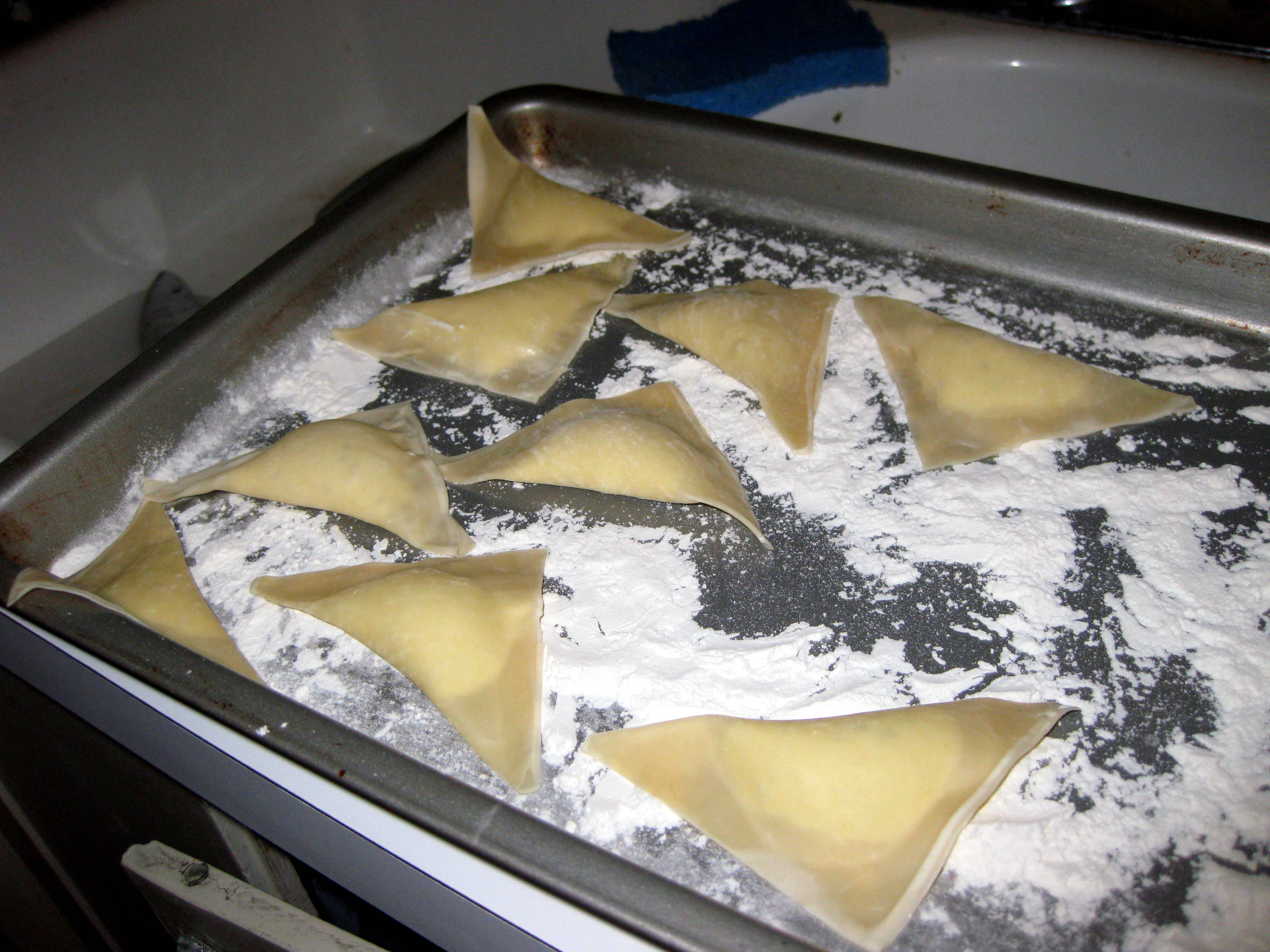
I didn’t figure out the pie crust thing until the next day when I was making empanadas for dinner.  As I pressed my fork into the edge of the dough to crimp it, I was flooded with the right answer: tiny hand pies stuffed with my sweet potato mixture!

This was clearly the right thing to do.  Saturday afternoon, I unrolled a pie crust on my counter, cut out 3 inch circles, and proceeded to fill them with a teaspoon or two each of the gratin, which I’d mashed with a fork to make smoother and therefore more manageable.

Once filled, fold in half, press and then crimp with a fork, and brush with egg wash (1 egg yolk + 1 TB water).  Sprinkle with turbinado or other raw, chunky sugar, and bake in a preheated 400F oven for 15 minutes, or until the tops are golden brown and the dough is flaky.

These make lovely, tiny snacks.  The craisins give a punch of tartness to the sweet, earthy, almost heavy sweet potato and walnut pairing.  There are subtle floral hints in there, because before putting it away that first night I admit to dumping the bourbon sauce over the whole thing, but this adds a flavor I wouldn’t change.  The dough is buttery and flaky and collapses easily around the filling, and it’s difficult to prevent yourself from standing over the pan as it comes steaming out of the oven and eating four or five in a row, scalding your tongue and not caring at all.

Perfect November treat.


* You could, I suppose, use butternut squash seeds, if you are the sort of person with the forethought to save, rinse, and dry the seeds while you clean your squash.  I, clearly, am not.

Counting Down

It’s interesting that as I left my 20s behind chronologically, I entered my 20s in this Bittman project.  As of this moment, on this particular Sunday afternoon, I have 25 Bittman concoctions left to make, most of them soups and desserts.  At a rate of two per week, I will finish by the end of this year.  This means we’re getting toward some major milestones, some very big deals, some lasts on the list.

The first of this pair is one such last.

“34. Combine cooked bulgur with chopped or grated apple, minced orange rind, grated ginger and chopped parsley. Back in an oiled dish, use as stuffing or serve as a salad.”

This was the final remaining entry on the “Stuffings and Grains” list. We left it till last for no particular reason, but during a week in which a collection of Valencia oranges sat languishing in our fruit bowl, it seemed like the right thing to do.

I’ve been fairly good lately about writing down ingredient quantities as I add them, but for this entry I never even lifted a pen.  It happens.  I can own up to it.  A week of non-stop grading, perhaps, made me leery of that inky instrument.  Or maybe it was our relative rush: leave it to me to design a complex, glaze-bearing dinner on a night we needed to eat early.  Some things must get sacrificed, and it turns out it’s not the glaze, it’s the notations.

Here are my approximations:

1 cup bulgur wheat

2 cups water, stock, or a combination of the two

1 large fuji apple, diced into small squares

2-3 TB finely minced orange rind

1 TB grated ginger (this is really easy to do when the ginger is frozen)

¼ cup chopped parsley

salt and pepper to taste

Cooking bulgur is very similar to cooking rice.  I poured the wheat and the water into a pot and let it come to a boil before simmering for 15 minutes or so while I prepped my other ingredients.

After dicing the apple, grating the ginger, and chopping the parsley, I turned to the oranges.  Since Bittman specified “rind” and not “zest,” I used a y-shaped potato peeler to remove long, brilliant segments of rind.  I slid a sharp knife carefully between the rind and any white pith that got caught in the peeling, and then sliced into very thin strips, rotated them 90 degrees, and sliced again so I was left with tiny squares.

Before these happy bright piles all nestling on my cutting board got too comfortable, I tipped them into the pot of bulgur and carefully folded them in for even distribution with some salt and pepper to taste.  The experience of the still-chilly ginger hitting the hot bulgur was sinus-clearingly intense, but lovely.  An aroma-only aperitif.

With everyone incorporated, I dumped the pot’s contents into a greased baking dish and stowed it in a 350F oven for half an hour.

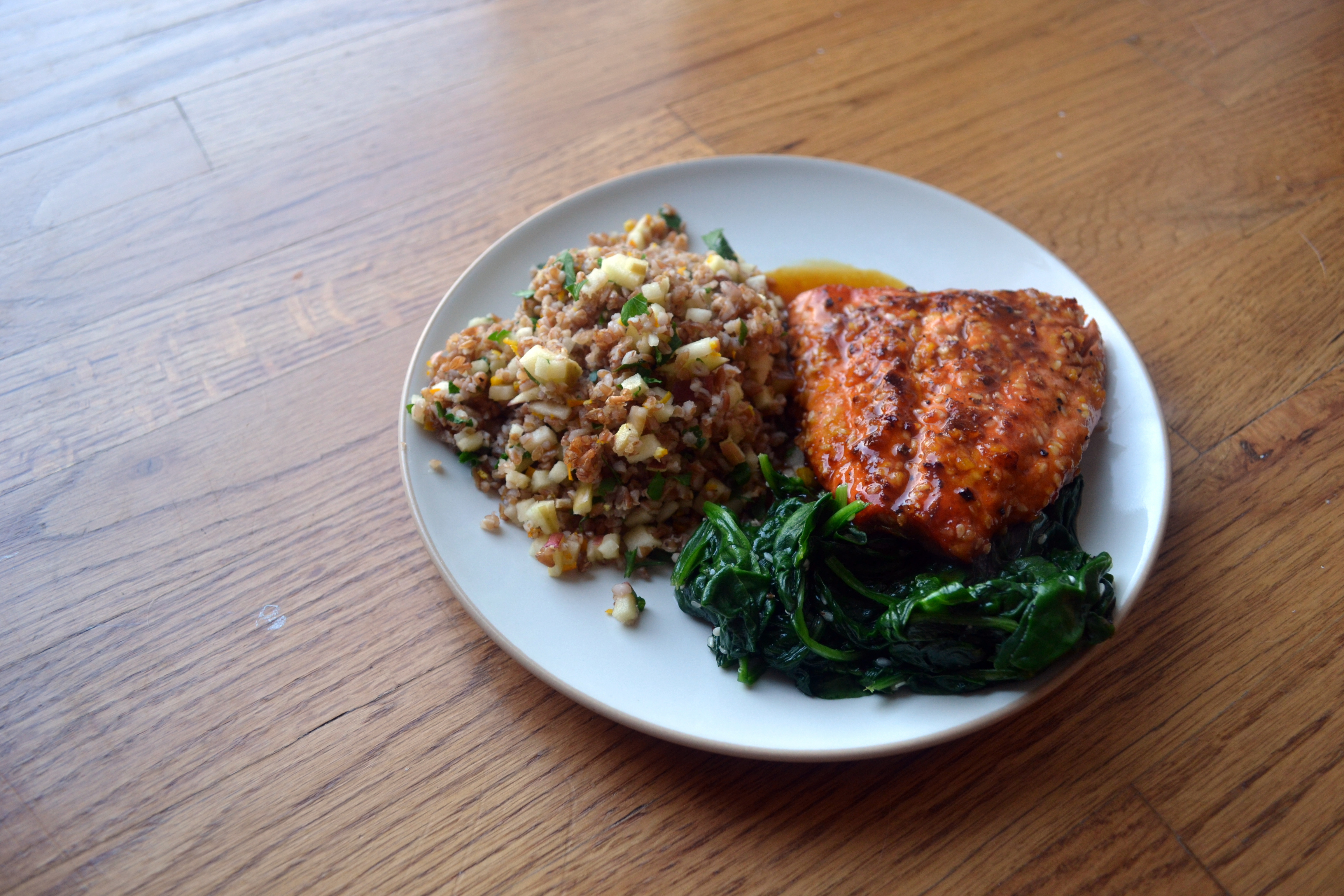
Orange and ginger suggested an Asian flavor profile, even though apples and parsley didn’t.  I decided to work with the dominant elements, though, and so I paired the bulgur with salmon and spinach.  The salmon would be rubbed with sesame seeds, powdered ginger, and orange rind bits before receiving a heavy sear and then an orange-juice glaze.  The spinach would be sauteed with garlic chips and sesame oil.

As with all things, this didn’t happen exactly as imagined.  It takes a long time, as it turns out, to simmer the juice of six oranges down into a thick glaze without burning their sugars.  Similarly, it takes time and babysitting to ensure garlic chips that are crisp, not charred.  And when you are trying to do all this on the same night as a homecoming football game you’ve promised to attend, certain shortcuts must be taken.

The salmon, while it seared beautifully, received not so much a glaze as a flood of boiled, ginger infused orange juice.  Still, when this liquid hit the hot salmon pan, it did bubble down into something thick and rich (if a little darker than intended).

The spinach, rather than the crunchy, spicy accoutrements I intended, had to settle for a last-minute sprinkle of sesame seeds to keep it company.

Still, the meal was overwhelmingly successful.  The salmon was outrageously delicious, and I’m going to have to make it again, writing down the procedure this time so I can share it with you.  The orange sauce perfumed the fish and kept it moist and buttery and tender.  Even though it was a bit darker than I’d planned for, the sauce took on caramel notes that seemed utterly intentional.
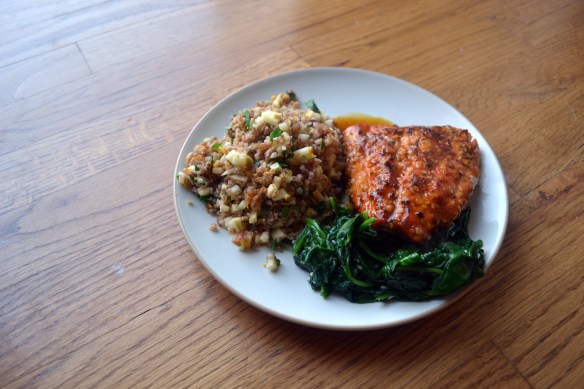
The bulgur was lovely.  It was toasty and fluffy and well seasoned.  The apple had cooked lightly as the dish baked, leaving it just softened but not without resistance.  The orange rind was delightfully not overpowering, but gave a warm spiciness to the grain.  It was good with the salmon, but would also be delicious with pork chops (playing on the traditional applesauce pairing) or, if you replaced the parsley with mint, a lovely side for leg of lamb.

In summary, a triumphant triumph: not only is the Stuffings category successfully completed, but it was completed with a success.


With the weather cooling (finally!) and the Soups category still looming largely untasted before me, I decided to try one to close out the week.

“21. Brown a little crumbled or sliced sausage in olive oil; a sprinkle of fennel seeds is good, too. Add chopped escarole, cooked white beans with their juice, and stock or water to cover. Simmer until the greens are tender and the beans are warmed through. Garnish with olive oil or Parmesan.”

I must admit I made some changes to these directions based on availability and personal taste.  I don’t like fennel.  It’s one of a very few spice flavors I just can’t take.  Over-fennel-ed sausage – like the kind that appears on many chain pizza restaurant pies – just doesn’t appeal to me, and the idea of fennel seeds crunching between my teeth and filling a mouthful of soup with their anise awfulness made their addition out of the question.

As for the escarole, I could find none.  I searched through mountains of salad greens at several local markets and this particular strain was resolutely absent.  But I did find a really beautiful bunch of kale and decided it would be a satisfactory substitute.

So here’s what I ended up with:

8 oz. bulk sausage

1 big bunch kale (chopped, this was probably 6-8 cups)

3 cloves garlic (some spice to replace the abhorred fennel seemed appropriate)

1 15 oz. can white beans with their liquid

2 cups chicken broth

salt and pepper to taste

Eschewing olive oil, I squeezed the sausage into a pan and let it brown over medium heat, separating and crumbling it as it cooked with a flat-sided wooden spoon.

I rinsed, stemmed, and chopped the kale into manageable pieces, and when the sausage was cooked through, I tossed in the mountain of greens.  No, that’s not true.  I inserted handfuls carefully so they wouldn’t spill all over the stove, and ran out of room with only half my kale added.  N. came into the kitchen when he heard me laughing hysterically, and stared in amazement at the mound of kale pieces sitting inches above the top of my pot.  I had to press it down with my hand, compacting the frilled, tough leaves down toward the bottom of the pot.  It always looks like too much.  It’s always not.  In the time it took me to mince the garlic, the kale had already begun to wilt and settle more comfortably into the confines of the pot.

When I could barely smell the garlic and the kale was level with the sides of the pot (as opposed to threatening to spill over them) I added the white beans, their juice, and barely two cups of low sodium chicken broth.  One of the things I’ve discovered about myself is that when it comes to soups and salads, I like them to be full of, well, stuff.  Lettuce with the odd crouton is no good.  I want dried cranberries, and walnuts, and avocado, and gorgonzola.  Thin, brothy soups don’t please me either.  Give me big chunks of vegetables, or slurpable noodles, or rich shreds of meat.  In the days when I’d indulge in the occasional Cup’o’noodle, I always drank the broth out first so I could concentrate on the important part: the just dripping mounds of noodles left behind.

So this soup, for true enjoyment, needed only enough broth to make its categorization accurate.  A scant two cups and we were assured plenty of “stuff” in every spoonful.

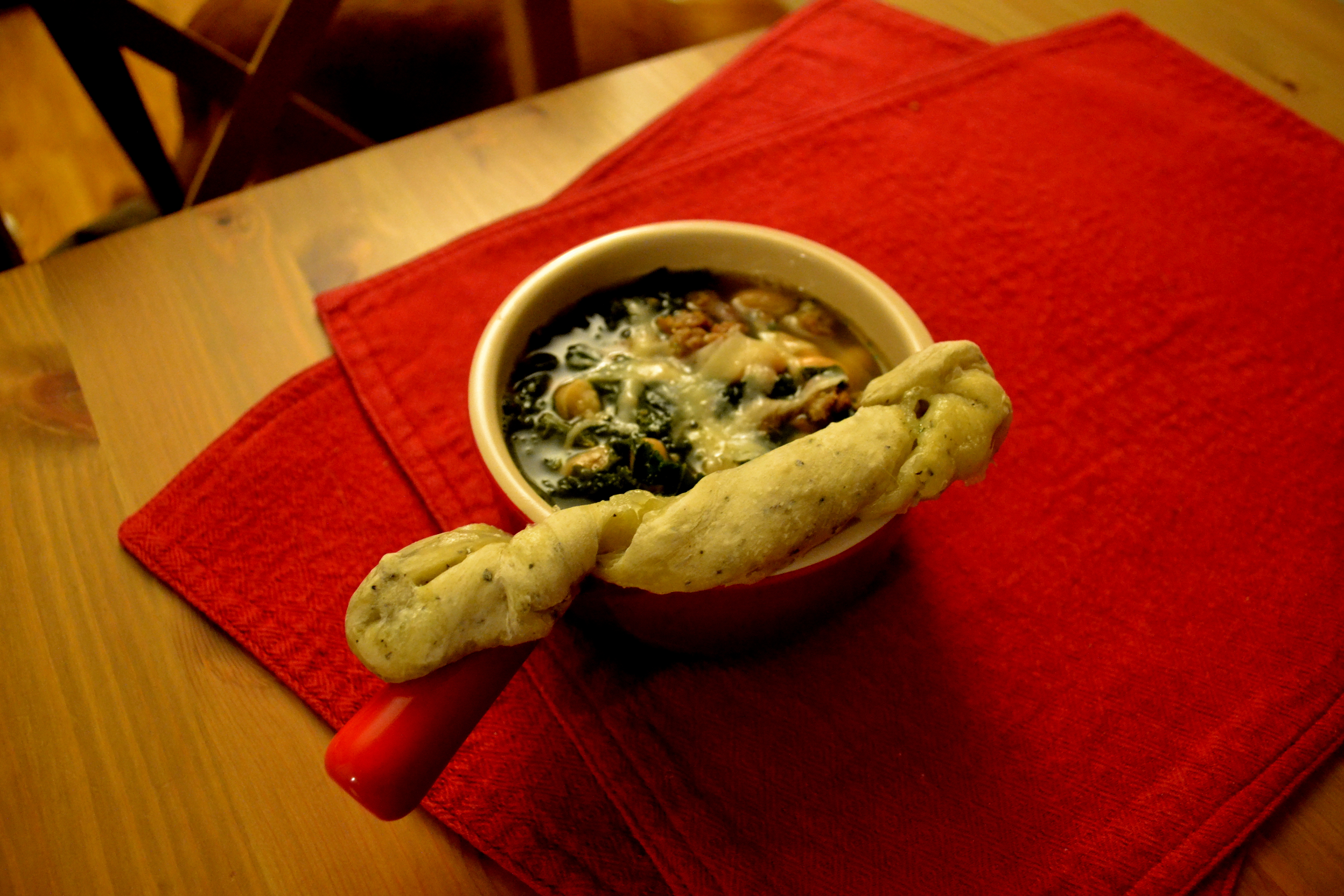
While the soup simmered, I stretched, sliced, and sprinkle mozzarella onto some pre-made pizza dough.  Twisted and snuggled on a baking sheet, these when into the oven to become bread sticks.  Fifteen minutes later when they were sizzling and firm, the soup was done.
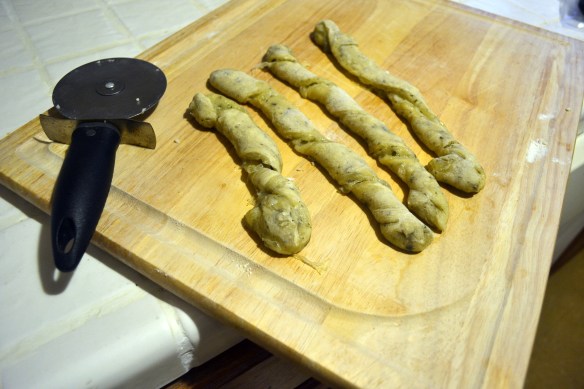
This is not a soup you want to let simmer for hours.  The beans, especially if you are using canned like I did, will eventually become mealy and then disintegrate.  The kale begins to lose its emerald brilliance after a while, and though it will still taste good, it won’t be as pleasing to consume.  Simmer for fifteen to twenty minutes max.

Then you get to shave on some parmesan and eat it.
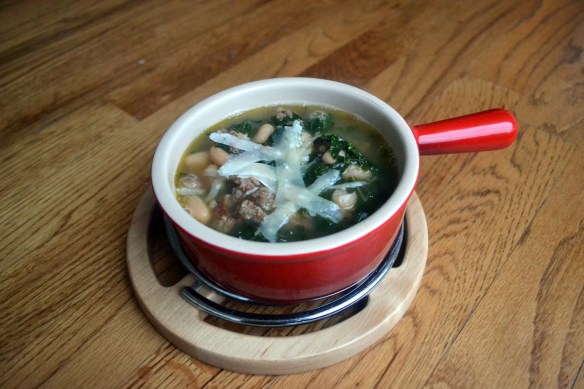
Neither of us was sure we would like this soup.  But we shouldn’t have been so foolish.  N. has placed the products of this project on a pass/fail system.  This is what happens, I suspect, when you have two teachers in the family.  He announces his verdicts after dinner, and he treats them as though Mr. Bittman has just submitted an exam or a paper assignment.  “Bittman passes on this one,” he told me last night as we cleaned up.  It wasn’t just his happiness at pairing his dinner with the first Jubelale of the season.  He really did like the soup.  And I think he was right.  This was a fast, easy, delicious little warmer.  Cooking the kale in the sausage grease gave it some additional flavor and took away that raw bitterness dark leafy greens can sometimes have.  The beans got creamy and delicate, and the starch from their liquid thickened up the minimal broth I used.  Even without the broth, these ingredients seem like a stellar combination that should be taken advantage of at many opportunities.  Sautéed together, perhaps with the addition of chopped onion and maybe butternut squash or sweet potato, they could be a nice little hash.  Wrapped in pastry with some thickened gravy, they could be a pot pie.  Folded with some grated mozzarella and enclosed in pizza dough, they become a perfect calzone.  And as the weather continues to cool (I hope, I hope, I hope), gravies and pot pies and warm cheesy casseroles are exactly what I want to pair my remaining Bittman dishes with.

It seems a bit stress-inducing to start with a countdown.  It’s a looming certainty of what must be achieved.  “That’s a lot,” N. said when I told him how many were left.  But after tonight’s dinner, it will be 24.  And by the end of next week, it will be 23.  And by having you out there reading, it means I must achieve, yes, but it also means I’m promising something to you.  Food.  Words.  Proof of my experiments.  And stress-inducing or not, that’s a kind of accountability I like having.

25 to go…