Pizza Pretzels

I have these moments when I realize I’ve just said something.  I don’t mean this to sound like I’m unaware of or not in control over my own speech, but I am a classic case of speaking before I think, at least when it comes to food.
Food Blog March 2013-0882A few weeks ago, N. and I were on the verge of no longer enjoying our morning errands.  On Sundays, we frequently run errands before going to our local Farmers’ Market, and because one of us is occasionally a bit of a lazy slouch on weekend mornings (I’ll leave the guessing up to you), we often don’t hit the shops until after 10am.  This is not a huge problem, except that my body is programmed to begin its hinting that “lunch would be nice, please” at about 11:30.  By noon it’s more of a demand, and by 12:15 you’d better feed me, because I’m about to devolve into full-on hangry (which I remain convinced is one of the best portmanteaus ever invented.  It’s right up there with spork).  N. is keenly aware of this schedule, and yet for several weeks in a row we’ve found ourselves food-less during the half hour that takes me from peckish to crotchety to downright unpleasant.
Despite this, I retain a sense of snobbishness when it comes to choosing what I will eat to relieve this condition.  We play a game when it comes to choosing food, especially when the choices are undesirable; I affectionately call it the “bleh” game.  It consists of one or the other of us facetiously offering “we could eat there…” which inevitably engenders the titular response.  This game was in full effect as, plagued by my hangriness, we walked past one of those soft pretzel stands at the mall we were ambling through and N. suggested it.  I looked in at the pizza pretzels – studded with cheese that looked painted on, pepperoni grease slowly cooling and solidifying, and declared, loudly, “psssh, I could MAKE those.”
Food Blog March 2013-0904Suddenly, I was beholden to it.  N. isn’t always taken in by my crazy food schemes, but apparently the idea of a homemade pretzel masquerading as pizza was something he’d never known he always wanted.  It fell to me to create a version that wasn’t sodden with grease, wasn’t packed with questionable preservatives, and wasn’t luke-warm and pressed behind plastic with its sad, sorry brethren.  My typical response to this would be to turn to the internet.  This time, however, I had Nana’s sweet roll dough to guide me, and I wondered whether I could achieve my objective by creating a savory version of her lovely elastic dough.
Food Blog March 2013-0894
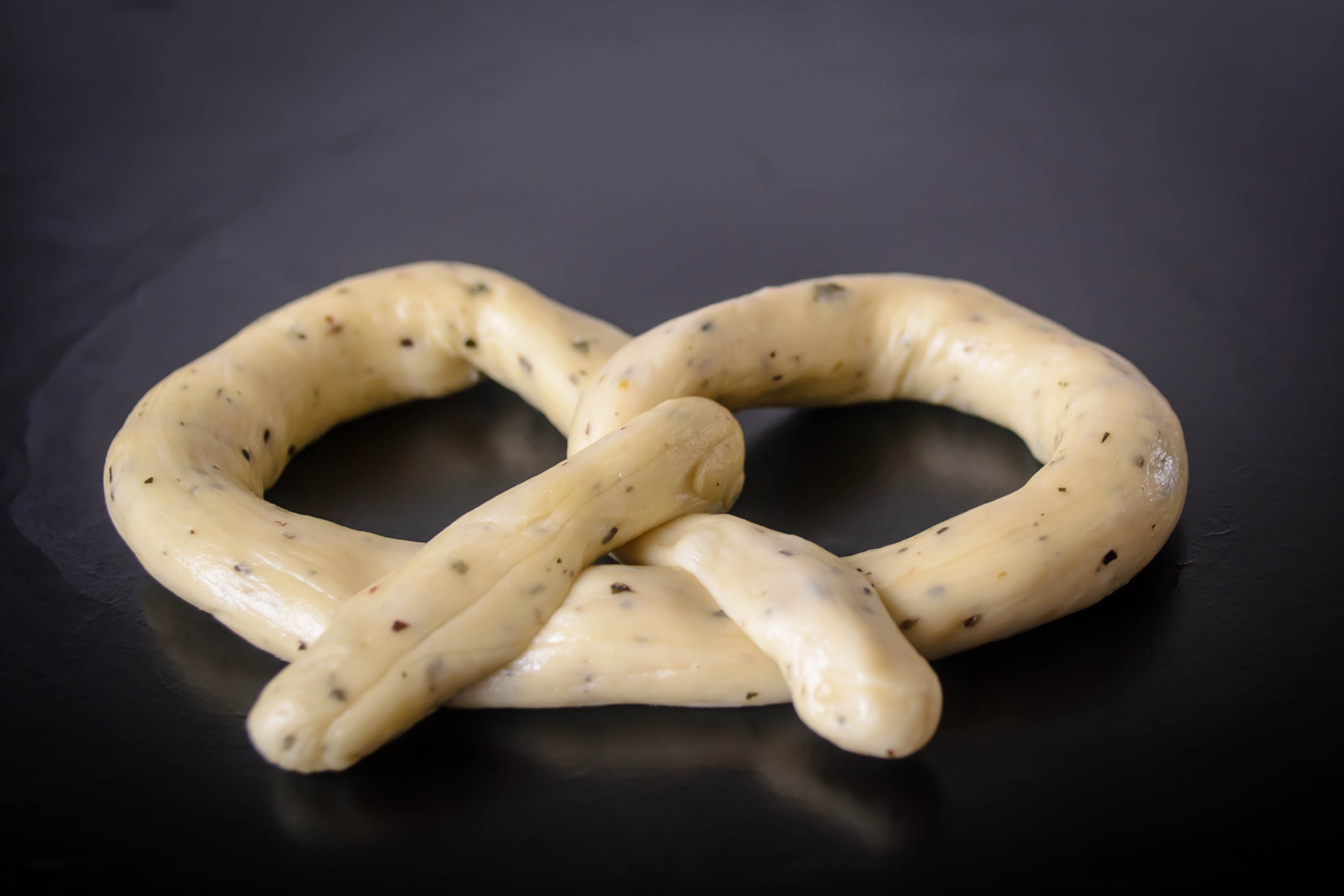
Removing the sugar and adding savory Italian herbs to the mix was a successful experiment.  The kitchen smelled like foccaccia while my dough rose, and I was thrilled with the flavor in the piece I pinched off to sample.  I divided my dough into eight little balls, rolled them into long stringy ropes, and surprised myself when careful looping and twisting resulted in a pan full of something that actually looked like pretzels.
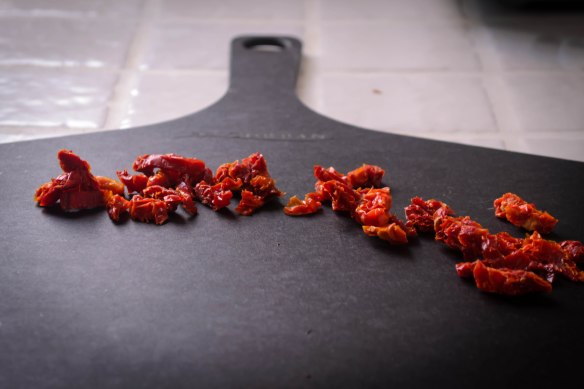
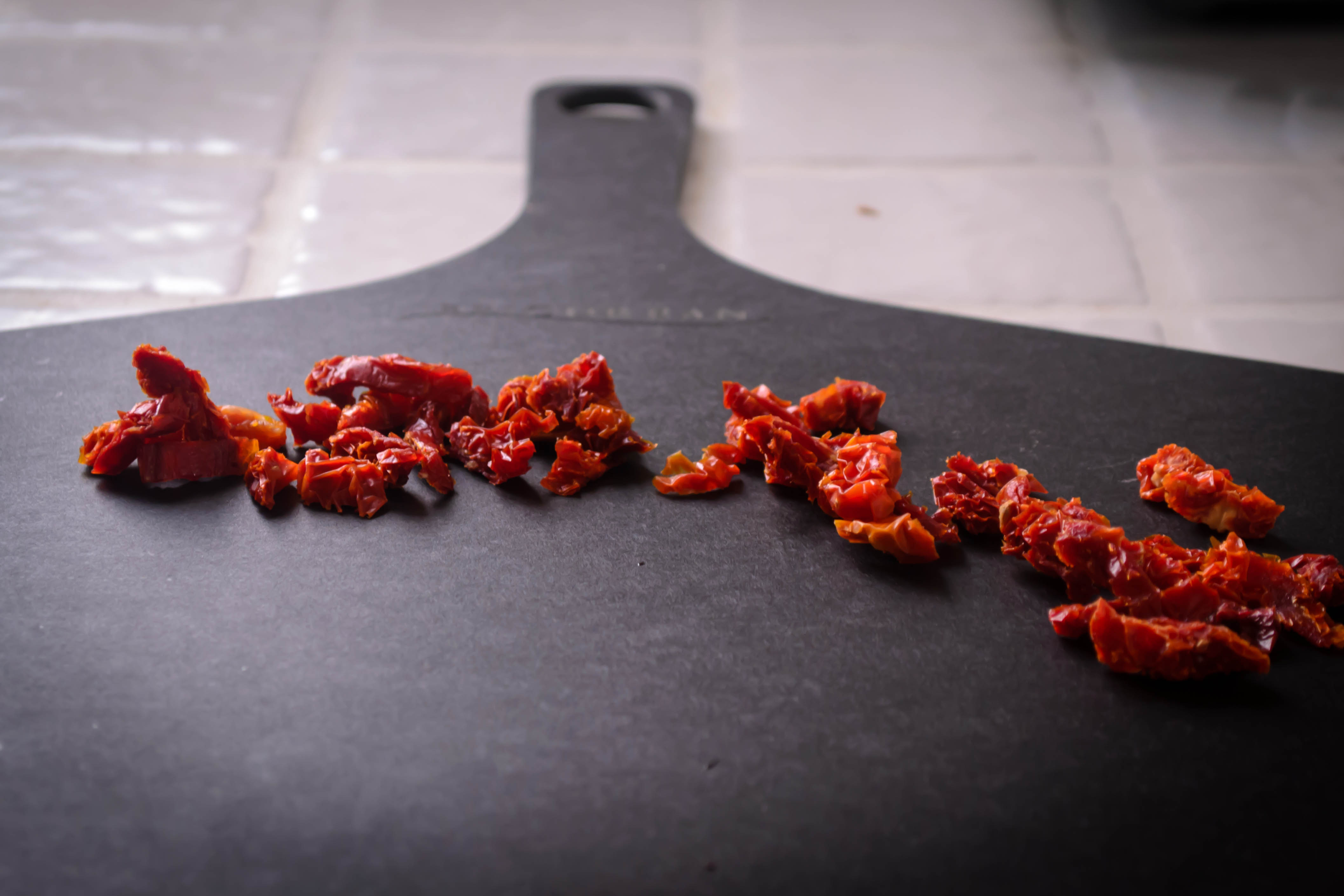
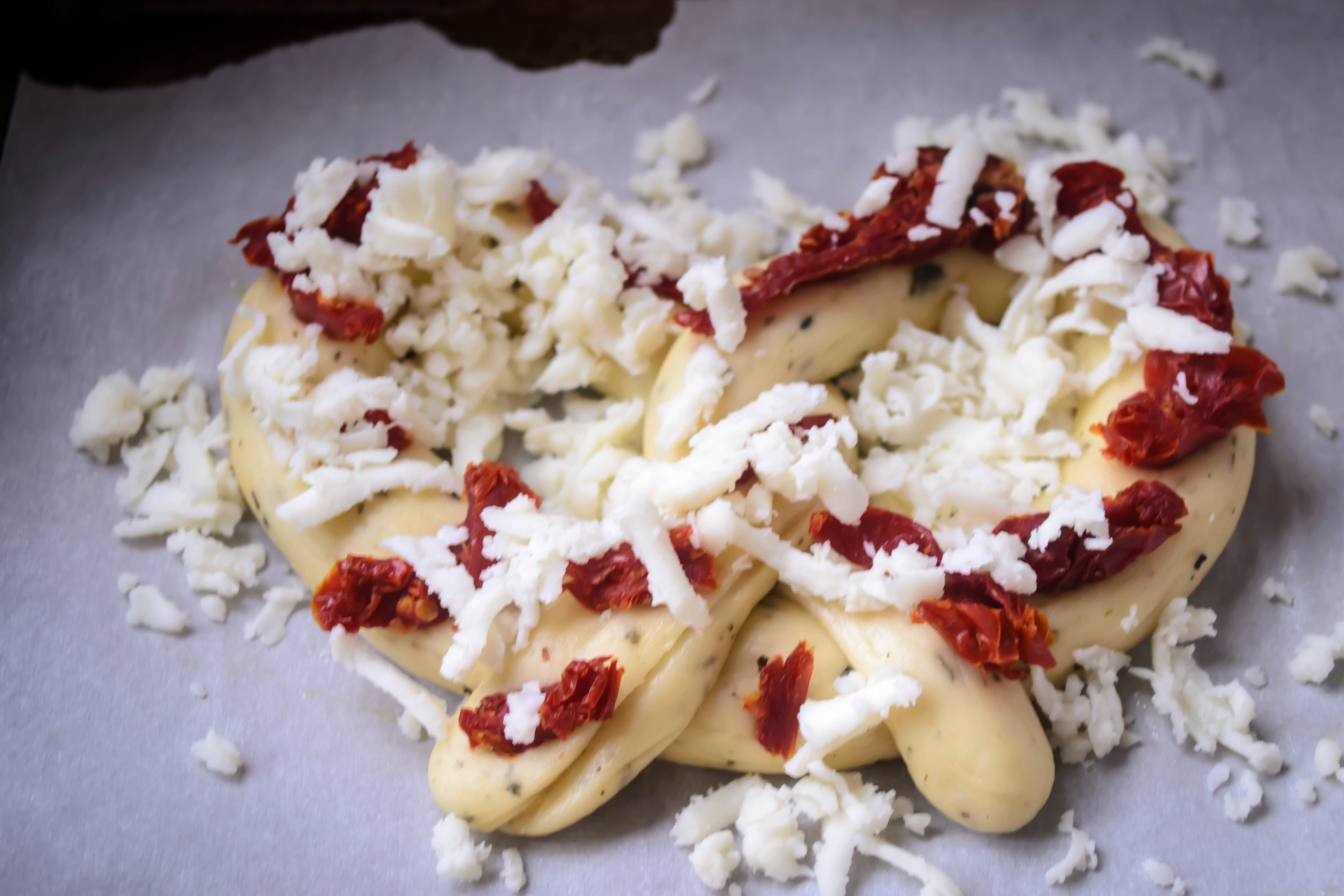
But here’s where things started to go a bit imperfectly.  I topped my plump little pretzels with chunks of sundried tomatoes, mounded them with shredded mozzarella, and draped slices of pepperoni over the top.  They lost their definition and looked more like piles of cheese than like pretzels, but that didn’t bother me much.

Food Blog March 2013-0900

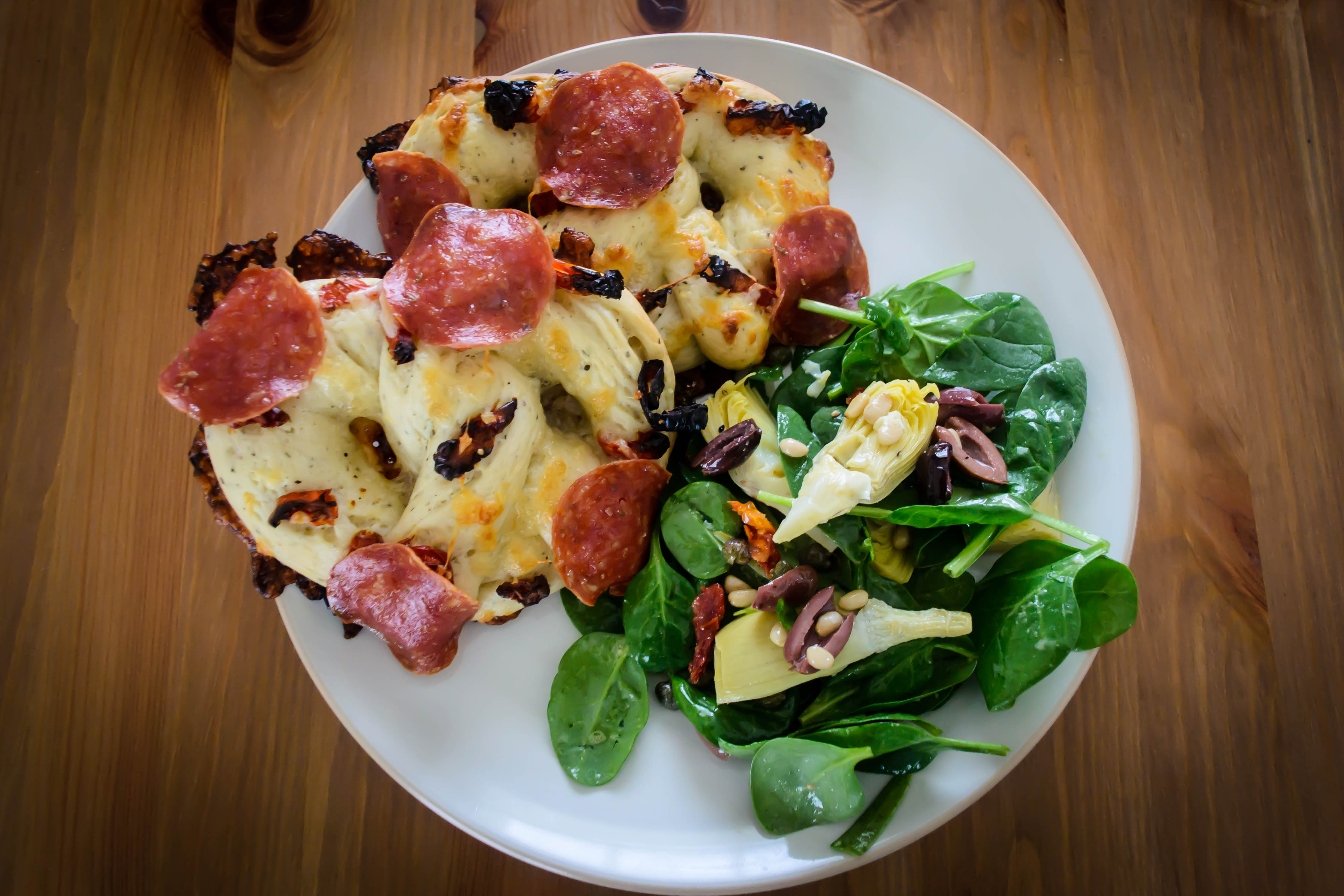
Upon baking, however, a bit of their charm dissolved.  In the time it took to bake the dough, the cheese didn’t brown or bubble they way I’d hoped.  Further baking time led to overly charred edges on the tomatoes, and the cheese that had fallen onto the parchment paper I’d laid down as extra insurance went from bubbling to black.  N. ate them with gusto anyway, devouring several for dinner that night and taking foil-wrapped leftovers to work for the next few days.  But I wasn’t satisfied.  Not only were there overcooked elements, but the result didn’t taste quite like a pretzel.  It was good, but lacking in that toasty, crunchy exterior that makes a soft pretzel great.  I’m going to give you the recipe I used, but first consider these alternatives and, if you try any, let me know how they work out.
Next time, I’m going to mix the sundried tomatoes right into the dough along with the herbs.  Their flavor will still be there, but I think they will stay chewy and moist instead of burning.  I’m also toying with the idea of stuffing the pretzels with the cheese rather than sprinkling it on top – this would result in an oozing, melty, stringy core to each pretzel, and it would allow you to boil the pretzels before baking them, which contributes to the classic texture of the exterior my version was missing.  I would flatten each individual dough ball into a rectangle, sprinkle it lightly with cheese (leaving a generous border on all sides to prevent leakage), then roll and pinch tightly before making a rope and twisting as before.
I’d then boil the pretzels (Alton Brown has a recipe that looks really promising, no surprise there), drape them with pepperoni or olives or onion, and bake as before.  This would, I suspect, eliminate charring, create a better texture, and perhaps introduce a more successful alternative to the travesty that is stuffed crust pizza.*
These would be delightful dunked in some garlic butter, or basil spiked marinara, or even seasoned and pureed roasted red peppers, if you’re into any of those sorts of things.  But either way, you’ll have a remedy for the sneaky Sunday afternoon hangries that far excels anything you’ll find at a food court.
 Food Blog March 2013-0896
Pizza Pretzels
Makes 8 sweet, slightly stubby 4-inch pretzels
2 tsp active dry yeast
¼ cup warm water (stick your fingertip in; the water should be about body temperature)
1-2 tsp honey
¼ cup scalded milk, cooled
¼ cup melted or very soft butter
1 egg
1 tsp salt
1 tsp garlic powder
1 tsp dried basil
1 tsp dried oregano
2 ¼ cups bread flour
1 3oz. package sun dried tomatoes (not packed in oil – these would be, I suspect, too wet for this recipe)
½ – 1 cup shredded mozzarella cheese
24 slices pepperoni
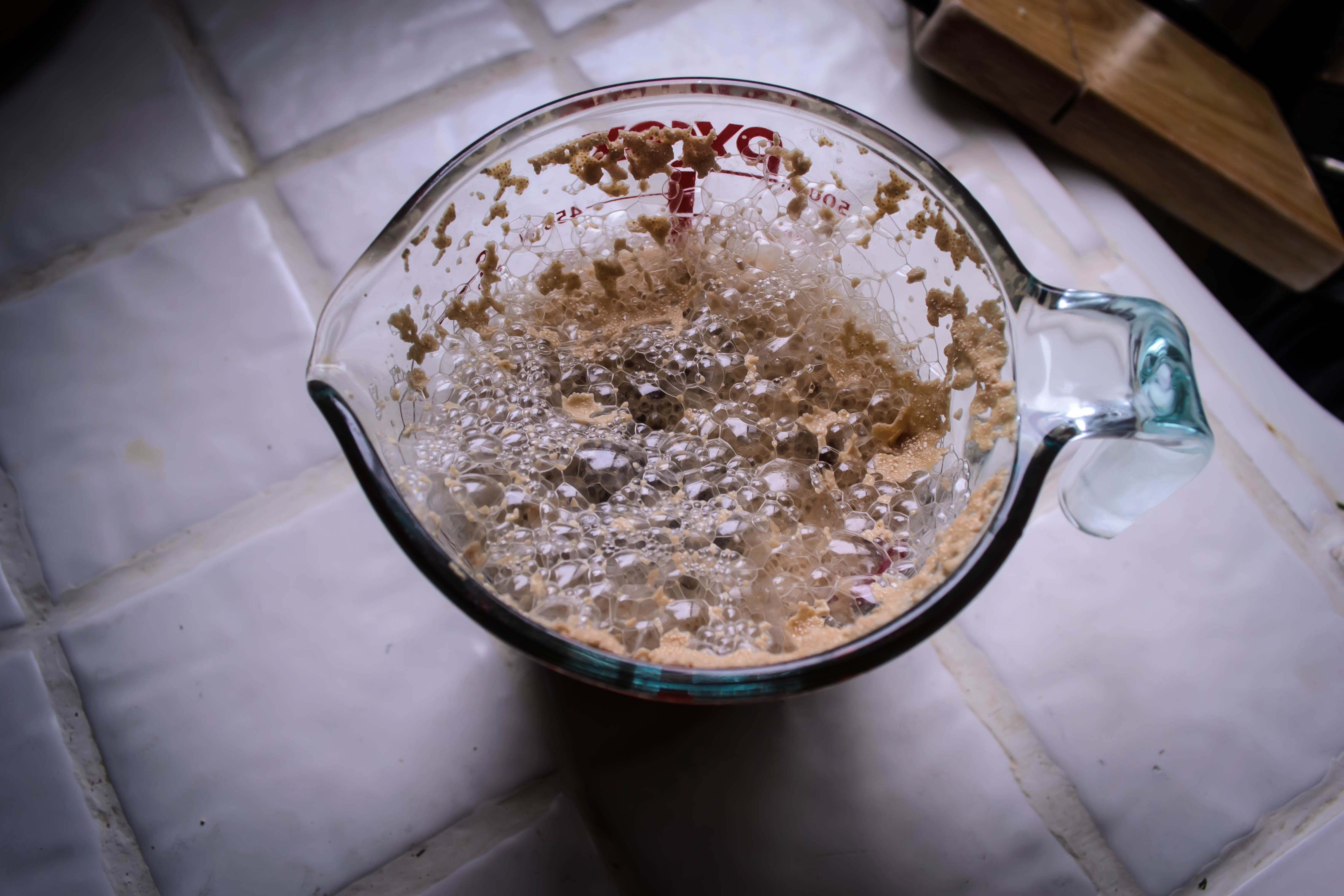
  • Combine yeast, honey, and warm water in the bowl of your stand mixer (or in a medium bowl) and set aside for 5 minutes, or until the yeast is bubbly and smells like bread.
  • Meanwhile, heat the milk and combine with the butter, swirl until the milk is cooled and the butter is melted.
  • Add cooled milk, melted butter, and egg to the bubbling yeast and mix on low speed with the paddle attachment until the egg is broken up a bit and things are slightly combined.
  • Add flour, spices, and salt (you could probably add any combination of spices you like, including crushed red pepper for some heat, or rosemary for a woodsy flavor.  I’d stick with dry spices, though, for easier distribution and that classic pizza flavor) and mix with the paddle attachment until a wet, sticky, uneven dough forms.  You could also add the tomatoes at this point, if you want to incorporate them directly into the dough.
  • Scrape clean the paddle attachment and switch to the dough hook.  Knead at medium-low speed for 5-8 minutes or until dough is smooth, elastic, and willing, if you pinch a bit between your thumb and finger, to stretch out about an inch without tearing.
  • Dump your ball of dough into a glass or ceramic bowl greased with olive oil and turn it over once or twice until it is coated in oil, then cover with a clean kitchen towel and stow in a warm, draft-free place for 1½ hours, or until it has puffed and doubled in size.
  • When you return to your dough, after you admire its impressive swell and the way it already smells of pizza, gently deflate by pressing your knuckles into the center of the puff.  Let it sit for a few minutes to get its breath back.

Food Blog March 2013-0885

  • Turn the dough out onto a barely oiled surface (I don’t have a marble stone or anything fancy like that, but I do have a pizza peel, which was a little small but otherwise worked just fine) and divide into eight even pieces.
  • If you want to stuff the centers of your pretzels with cheese, roll each dough ball out into a thin rectangle and sprinkle a few tablespoons of mozzarella over the surface, leaving a wide margin on all edges to prevent the shreds from escaping.  Then wind it up tightly and pinch the edges to secure.

Food Blog March 2013-0888

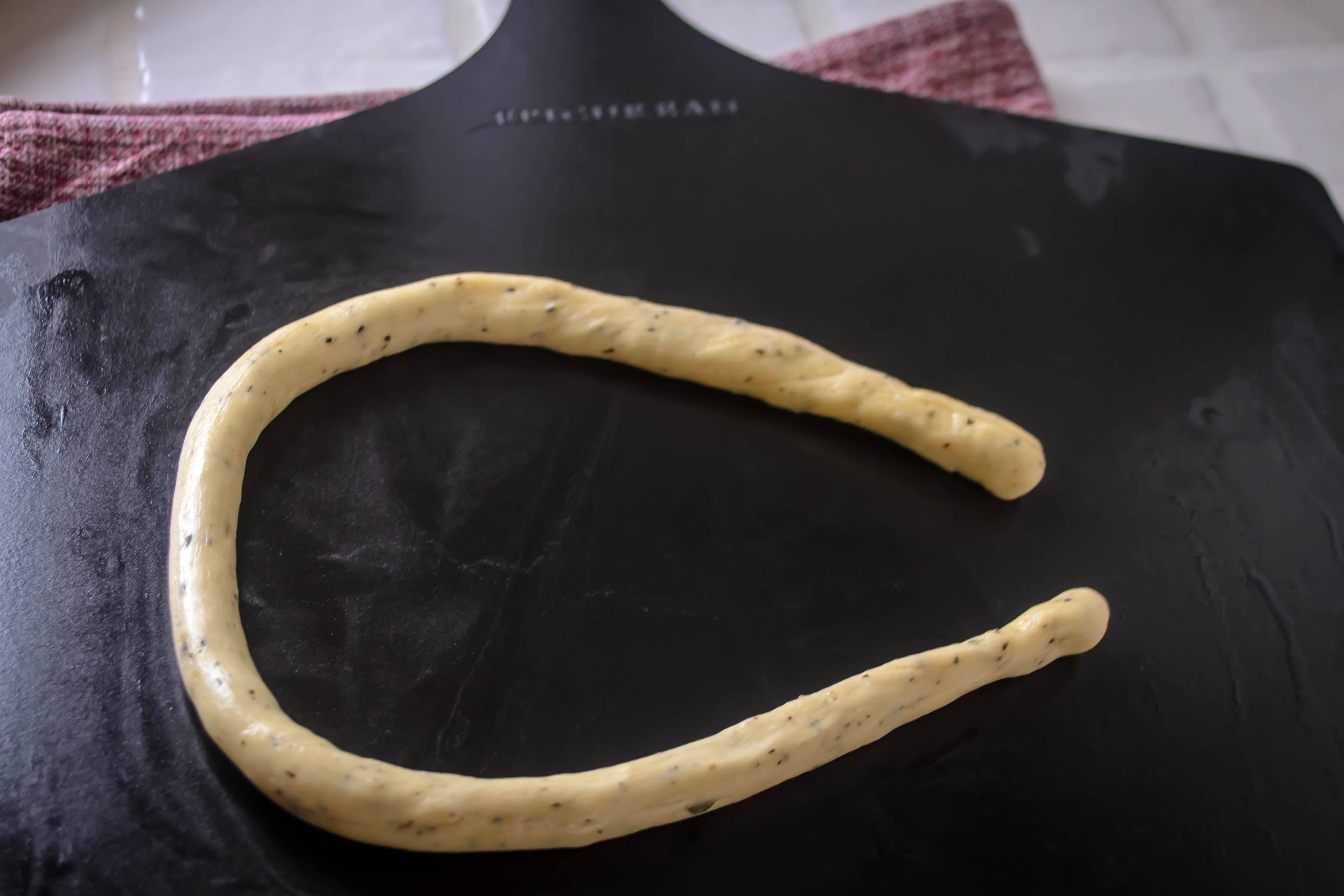
  • Whether you are stuffing with cheese or not, now is the time to roll the ball (or coil) of dough into a long skinny rope 18-24 inches in length.  The best way to do this, I found, is to use the palms of your hands and start in the middle.  Push the rope of dough firmly away from you, then back toward you, starting in the very middle and then, as the dough bulges toward the outer edges, follow it along moving outward until the rope is even in thickness and at least 18 inches long.
  • To form your pretzels, bring the ends of each rope toward each other into a horseshoe shape.

Food Blog March 2013-0889

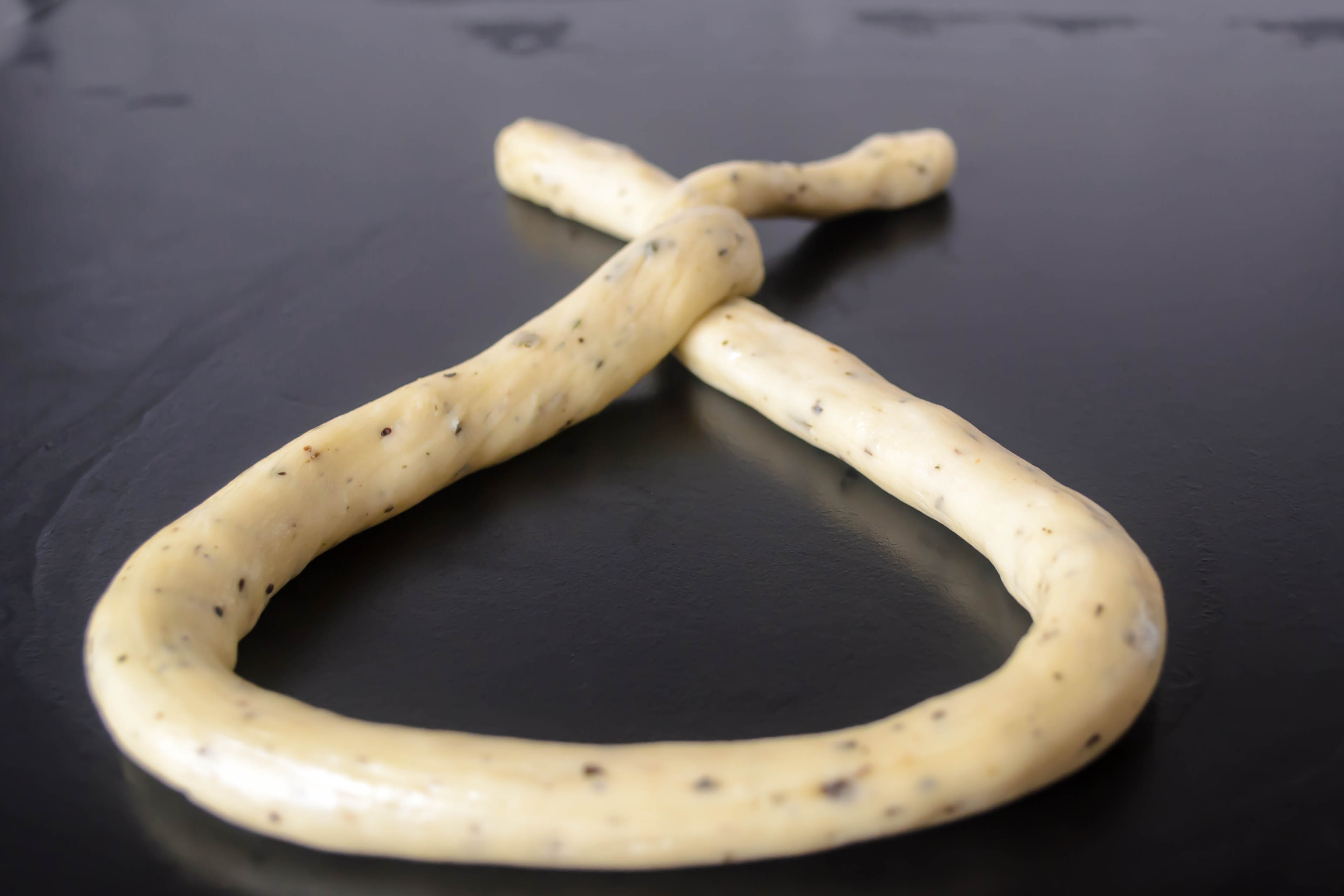
  • Then, about a third of the way down each end of the horseshoe, make a twist.  Take one end of the rope and twist it fully around the other (that is, the left side of the rope should end up back on the left side once you’ve twisted it completely around the right end).
Food Blog March 2013-0891
  • Gently grab the ends above the twist and flip them over, pressing them into the bottom of the horseshoe loop to adhere.  You’ve made a pretzel!
Food Blog March 2013-0893
  • Place all eight of your formed pretzels on parchment lined baking sheets (I found I needed two), cover them with a kitchen towel, and let rise for 30 minutes.  During this time, you should preheat your oven to 375F.
Food Blog March 2013-0895
  • When the pretzels have risen again – it won’t be a dramatic change, but they will get a bit plumper – add your toppings.  If you’ve integrated the tomatoes and cheese already, just drape a few slices of pepperoni over them and you’re done.
Food Blog March 2013-0901
  • If you haven’t integrated the tomatoes or cheese, stud the tops of each pretzel with the tomato pieces, sprinkle with cheese, and then add the pepperoni on top.  Be careful not to get too much cheese on the parchment paper, as it will burn and lend an acrid taste to your pretzels.
Food Blog March 2013-0903
  • Bake your topped pretzels at 375F for 20-25 minutes, or until the cheese has melted and the dough is fully cooked.  The cheese won’t get quite as brown as it does on a pizza, but it will still be melty and delicious.
Food Blog March 2013-0910
  • Let cool for 5 minutes before eating, so the dough has a chance to firm slightly.
We had ours with a salad inspired by pizza toppings: spinach, artichoke hearts, olives, tomatoes, and some pine nuts for crunch, tossed with mustard lemon vinaigrette.
 Food Blog March 2013-0911
* I love, love the idea of stuffed crust pizza.  Forcing more cheese into an already cheese-laden dish?  Yes, please!  But the reality of it is so disappointing: a thick block of semi-melted sludge inside a soggy crust, like someone wrapped a stick of string cheese that had been lying in the sun for an hour in some sandwich bread and called it a day.  It’s a worthy notion, but the execution just hasn’t been perfected.

Pizza and Beer

Food Blog March 2013-0802Sometimes, a week calls for pizza.  But you don’t want the delivery variety dripping with grease and lazy with a smattering of mix-n-match toppings.  You want something fresher.  Better.  You want the feel of dough you can stretch under your hands and control over the size and shape of the pie and choice in the quality and variety of ingredients.

Homemade pizza.

N. and I have often talked about pizza memories, and how, when we were kids, pizza just wasn’t the same without a side of root beer.  It had to be in one of those hard plastic molded glasses, and it had to be with a clear straw.  And sometimes, you forgot you’d ordered root beer instead of Coke or Pepsi, and that first gulp with its spicy depth would be a tremendous surprise.

As we got older, the “root” part of the equation melted, and suddenly it was pizza and beer, plain and simple, one of the mother food and beverage combinations (is that a thing?  Like mother sauces?  It should be.  After all, beer is the third most popular beverage worldwide, and variations on pizza have been around since ancient Greece).

As I thought my way through this pizza plan this week, I wondered whether they had to be separate.  I mean, yeast makes bread dough and beer possible.  Beer is liquid, and there seemed no logical reason why it couldn’t be substituted for the water I’d ordinarily use to make a pizza crust.

Once this idea was lodged in my head, it wouldn’t go away.  This just seemed too perfect.  Beer and pizza, kneaded together – a truly complete meal.

Even though beer is essentially water with yeast and flavorings, I wasn’t sure what would happen when I mixed the two.  I heated a bottle of amber ale in the microwave with a couple teaspoons of honey, just until it was body temperature.  When I added the yeast and engaged the lightest of stirs, the whole measuring cup erupted with bubbles and I had a head at least three inches high.  This slowly collapsed, but I took it to mean the yeast was satisfied with its new spa treatment.

Food Blog March 2013-0772I used a combination of bread flour and whole wheat flour, and produced a spectacularly nutty tasting dough that was also the stickiest I’ve ever worked with.  It slithered and dripped off of my stand mixer’s dough hook and plopped thickly into the oiled bowl I coaxed it into, and I crossed my fingers and hoped that after its six hour chill in the fridge it turned into pizza crust.

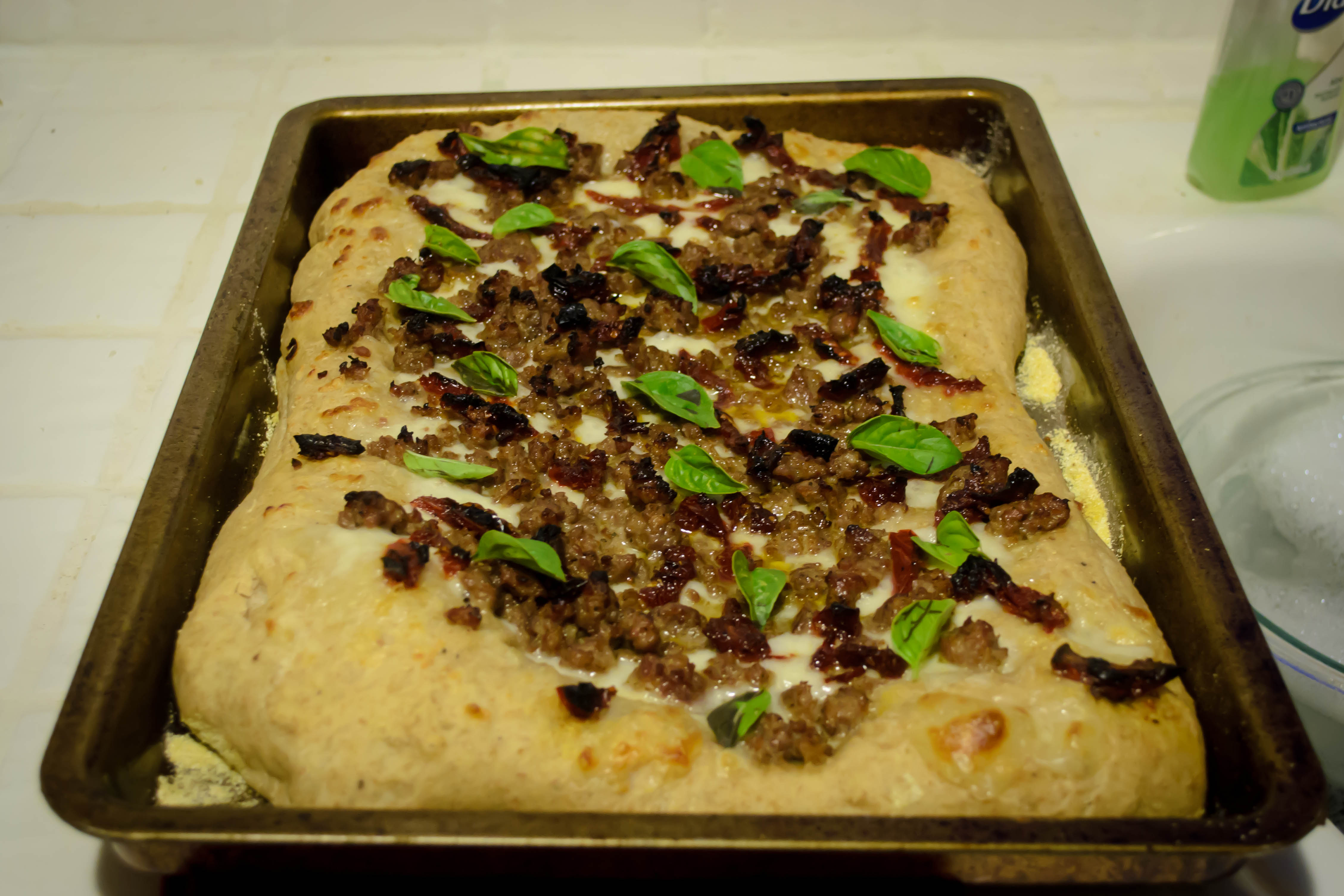
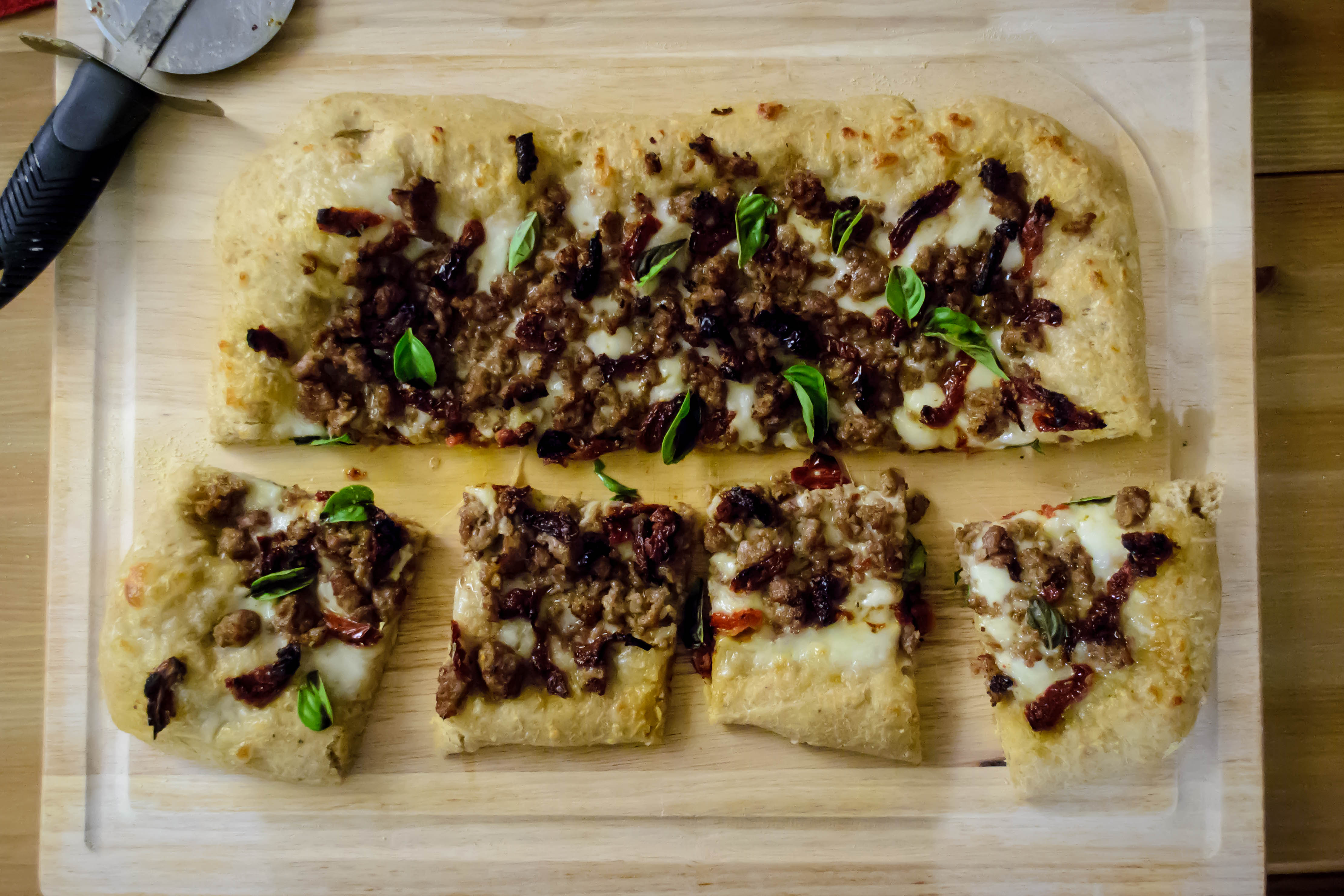
Food Blog March 2013-0777When I liberated it and faced it again, it wasn’t the easiest dough to work with, but it did work.  It wouldn’t deign to be tossed like a pizzeria pie, but I stretched and spread and pushed it across a cookie sheet liberally spread with cornmeal, and it turned into a rustic, bubbly, delicious crust.  Topped with mozzarella, sausage, and sun-dried tomatoes, it baked into a glorious symphony of assertive flavors.  We sprinkled on a few leaves of fresh basil while it was still steaming hot, and declared it one of my best homemade pizzas. Food Blog March 2013-0780This is a sticky, wet dough, but it works.  I’m going to make it again and tweak the quantities of flour and olive oil, but trust me: this is worth fooling with for the flavor alone.  The beer comes through right at the end of each bite as a deep yeasty earthiness.  It lends the tiniest bit of bitter flavor that contrasts really well with the fatty sausage and tart sun-dried tomato.  And really, why shouldn’t it?  It’s beer, and this is pizza.  They were made to be together.

Food Blog March 2013-0797

Beer-crust pizza

12 oz. beer (I used an amber ale.  I think a darker brew would be even better)

2 tsp honey

2 tsp yeast

¼ cup olive oil

2 ½ cups bread flour

1 cup whole wheat flour

2 tsp salt

¼-½ tsp black pepper Food Blog March 2013-0774

Heat the beer and honey in the microwave (or a small saucepan) until the liquid is body temperature – you should feel only the slightest heat when you dip in a curious finger.  This took about 45 seconds in the microwave for me.  It will take longer if your beer has been refrigerated.

Swirl the mixture to distribute the honey, then sprinkle the yeast over the surface and set it aside for 5 minutes.  If you stir the yeast in, you will get a tremendous amount of foam on the surface, so in case of overflow I think it’s better to just let it sit.

While you wait for the yeast to perk up, combine the flours, salt, and pepper in a mixing bowl or the bowl of your stand mixer.

When the yeast and beer have married to create a thick foam, stir in the olive oil, then add the liquid mixture to the dry ingredients.  Using the paddle attachment (if you are using a stand mixer), combine at low speed just until ingredients come together into a rough, uneven dough.  Replace the paddle attachment with the dough hook and knead on medium-low speed for 5-7 minutes.

This dough will not pass the windowpane test.  It will not even stay together particularly well.  It will seem like an exercise in futility and disaster, and you will be sorely tempted to add more flour.  But if you resist, and plop it into an oiled bowl, and cover that bowl with plastic-wrap and leave it in the refrigerator for 6-8 hours, it will turn into something more like normal pizza dough.  I promise.

Food Blog March 2013-078390 minutes before you intend to bake, take the bowl of dough out of the fridge and set it on the counter to finish rising and come to room temperature.  After this time has passed, and the dough is considerably increased in size (it may not quite double, unless your counter is quite warm), stretch it to your desired shape – it easily makes a thick 9×13” rectangular crust, and might be coaxed into 2 medium sized, somewhat thin round crusts – on a cornmeal or flour speckled board or tray.  I just doused my cookie tray with cornmeal and pressed and pushed the dough directly on it until I was happy with the shape.

Food Blog March 2013-0789Food Blog March 2013-0786Food Blog March 2013-0792When adequately stretched, add toppings and bake in a preheated 450F oven for 12-15 minutes, or until puffed, crisp, and golden.  Wait 5 minutes before you cut it, to give the cheese time to congeal just a little.

Food Blog March 2013-0804We ate this in embarrassingly large squares and left enough in leftovers to serve as lunch the next day.  Cut slightly smaller and for slightly less voracious eaters (or if you add a side salad), this would be an adequate dinner for 4.

Lemon Ginger Shortbread with Hazelnut “Crust”

Inspired by numerous sources, but mostly the deep golden orbs on my backyard lemon tree and a winter-blues-banishing post from Hannah at Inherit the Spoon, this post had to be about shortbread.  This is a cookie of the most basic sort, crisp and sandy, with only the three essentials: flour, butter, and sugar.  No leavening to worry about, no eggs to tussle with (incidentally, do you know how hard it is to crack eggs without making a mess when you’ve sliced the tip of your thumb and  it’s therefore awkwardly bandaged?), just the base, the sweetener, and the fat.
Food Blog February 2013-0584
These are, as Ruhlman points out in Ratio, an “adult” sort of cookie.  Dry, unadorned, plain, but equally ideal for a dunk in tea or chocolate ganache, and amenable to all sorts of attempts to “play dress-up,” which makes them  not just easy and tasty, but suitable for kids-at-heart.
Recently I’ve become obsessed with the combination of lemon and ginger.  Hannah’s citrus shortbread and my tree with its laboring, weighty boughs all but begged me to try this combination.  When a quick web search turned up only recipes featuring one or the other, I knew I had to insist on their marriage in my version.

Food Blog February 2013-0480

Then insanity struck.  I got the ridiculous notion that I wanted to create a hazelnut “crust” for these cookies.  Yes, that’s right, I decided to add a crust to a cookie that is commonly used itself as a crust.  I’m not sure where this idea came from, although if I must place blame it’s going to be on my sister, who commented at Thanksgiving that I should pursue the lemon-ginger-hazelnut flavor combo because it sounded so outstanding.  So really, R., these are for you.
Food Blog February 2013-0484I scoured multiple recipes to put this dough together, checking the likes of Martha Stewart, Ina Garten, Paula Deen (who I was surprised doesn’t have more sweet versions), and of course Deb Perelman.  But with the exception of a few technique ideas, I came back to Ruhlman’s basic 1-2-3 cookie dough as my backbone (1 part sugar, 2 parts fat, 3 parts flour).
The butter, I decided, needed to be browned (another recent obsession).  This would add depth and nuttiness in case the crazy hazelnut idea didn’t work out.  The ginger would be candied and minced into a sticky pile, and the lemon would be zested into mild spritzy confetti.  This made for a dough that, while delicious, was perhaps not the easiest to work with – I refrigerated it too long and was then impatient to roll it out, so there were cracks.  I rolled it quite thin, which made the cracking worse, and created a painfully delicate cookie.  The chunks of ginger, too sticky to mince very finely, stood up like carbuncles through the buttery dough and made slicing difficult.

Food Blog February 2013-0574

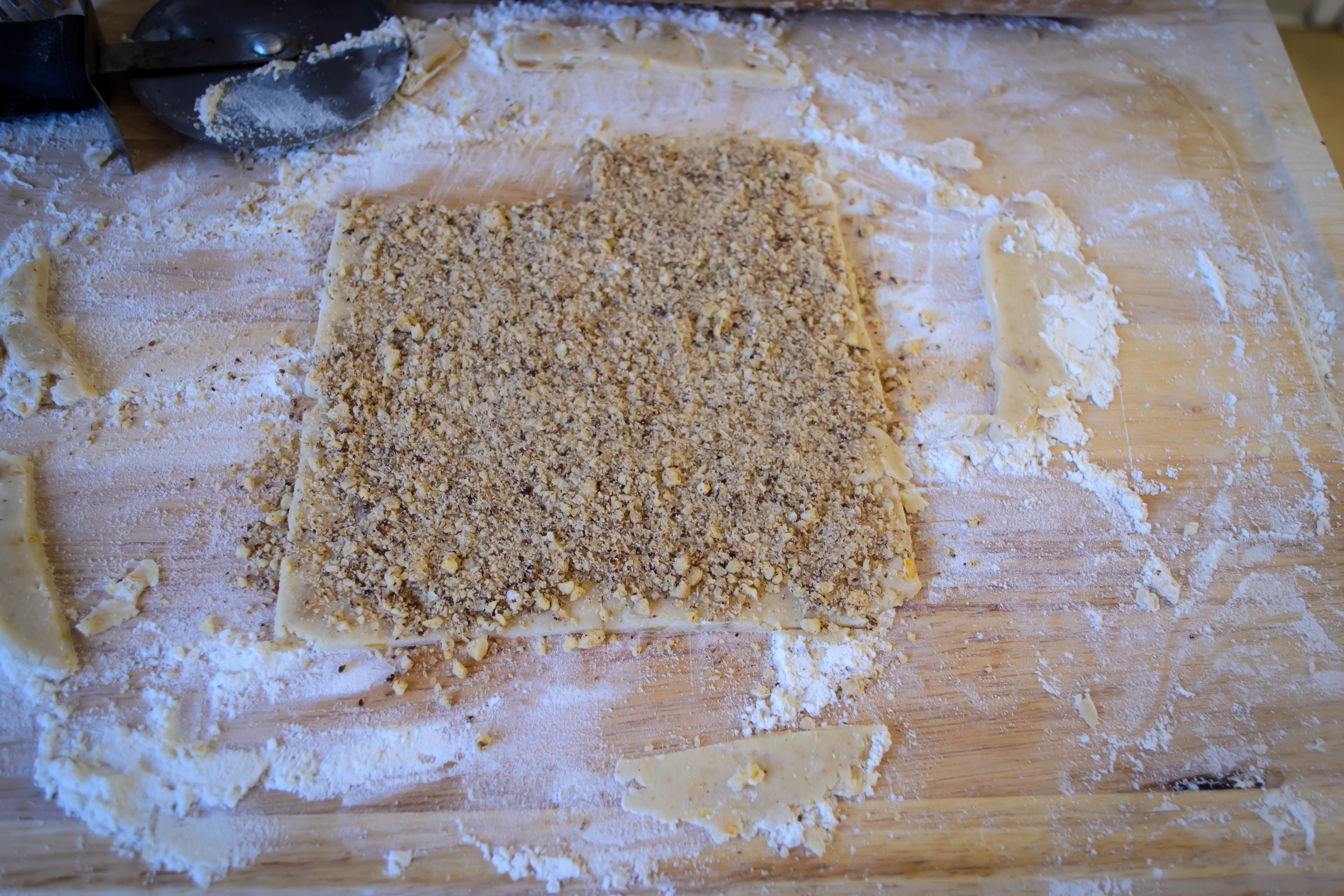
The hazelnuts I pulverized in the food processor with some ground ginger (in case the candied chunks didn’t come through) and a healthy sprinkling of turbinado sugar.  Faced with a bread board of delicate cookies on one side and a pie plate full of hazelnut crumbs on the other, I almost opted to forget the whole “crust” idea altogether, but I’m glad I didn’t.  You can transfer crumbs to cookie in a number of ways, including pressing the cookie into the crumbs, which I don’t recommend  (they adhere only reluctantly and the raw dough tends to break), or mounding crumbs on top of the cookies and pressing them in with a rolling pin, which I do recommend.  Then you can gently lift the cookie and flip it quickly and firmly onto a parchment lined baking sheet so the hazelnut layer is on the bottom.  The crumbs will try to scatter.  Don’t let them!  Press the cookie down lightly but firmly back into the crumbs, and they will adhere as they bake.
When they came out of the oven, they were too soft to move.  They needed a good five minutes alone on their baking sheet, undisturbed, to cool and crisp.  But once crisp, they were perfectly sandy and satisfying, tasting of – I can’t think of a better description – powdered butter.  At first I couldn’t detect the ginger or lemon, aside from the now chewy bits of candy distributed through the dough, but a day later, and then two days later, the more delicate flavors started to shine past the overwhelming richness of the brown butter.  The hazelnuts, with their earthy crunch, were perfect the whole time.  You could probably mix the nut crumbs in with the rest of the ingredients and save yourself a bit of time and frustration, but I loved the way they looked as a crisp layer on the bottom.  Cookies with their own crust.  Glorious.  My sister got to taste them during an unexpected visit, and pronounced them delicious.  The lemon-ginger-hazelnut trifecta is a triumph.  And the leftover ginger-spiked hazelnut crumbs make an excellent topping for oatmeal.
 Food Blog February 2013-0578
Lemon Ginger Shortbread with Hazelnut “Crust”
8 oz. butter (1 cup, or 2 sticks)
4 oz. sugar (1/2 cup + 1 TB)
12 oz. flour (2 – 2½ cups)
½ cup chopped candied ginger
Rind from 1 lemon, finely chopped (some pith is okay)  (about ¼ cup)
1 cup hazelnuts
1 TB ground ginger
2 TB raw sugar, like turbinado or demerrara
Melt the butter in a small saucepan, swirling gently on occasion, over medium to medium-low heat.  Once melted, the butter will foam up, then clear slightly, and then the magic: the solids will sink to the bottom of the pan and begin to brown slightly.  At this point, turn off the heat.  You want this beautiful browning, but you don’t want those solids to burn.  There is only a small window between browning and burning, so watch carefully as the butter reaches this stage.
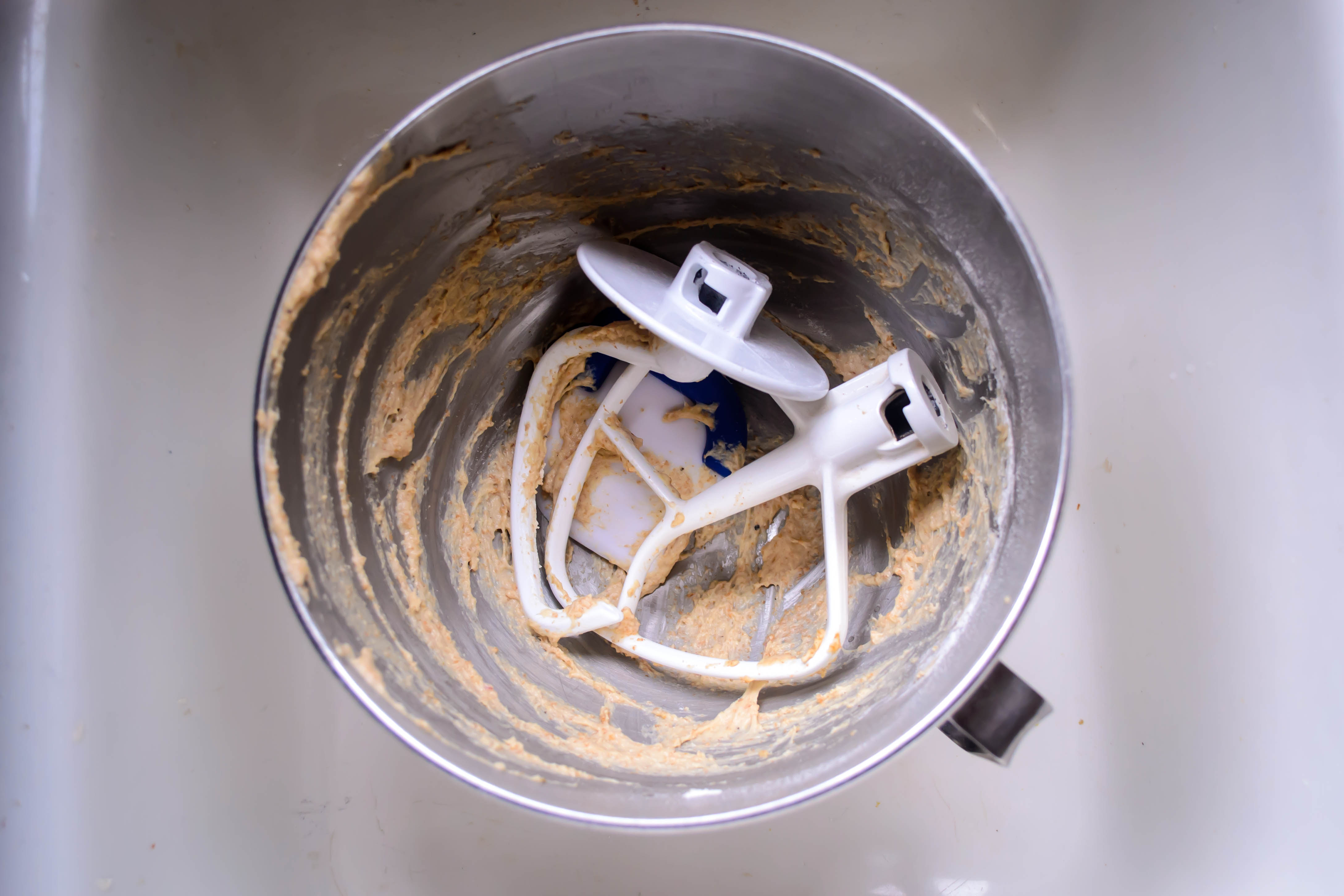
Pour the melted butter and browned bits (which you may have to scrape off the bottom of the pan) into the bowl you will use to make the cookies.  I used my stand mixer bowl.  Stow it in the fridge for 10-15 minutes, or until the butter gets sludgy.

Food Blog February 2013-0562

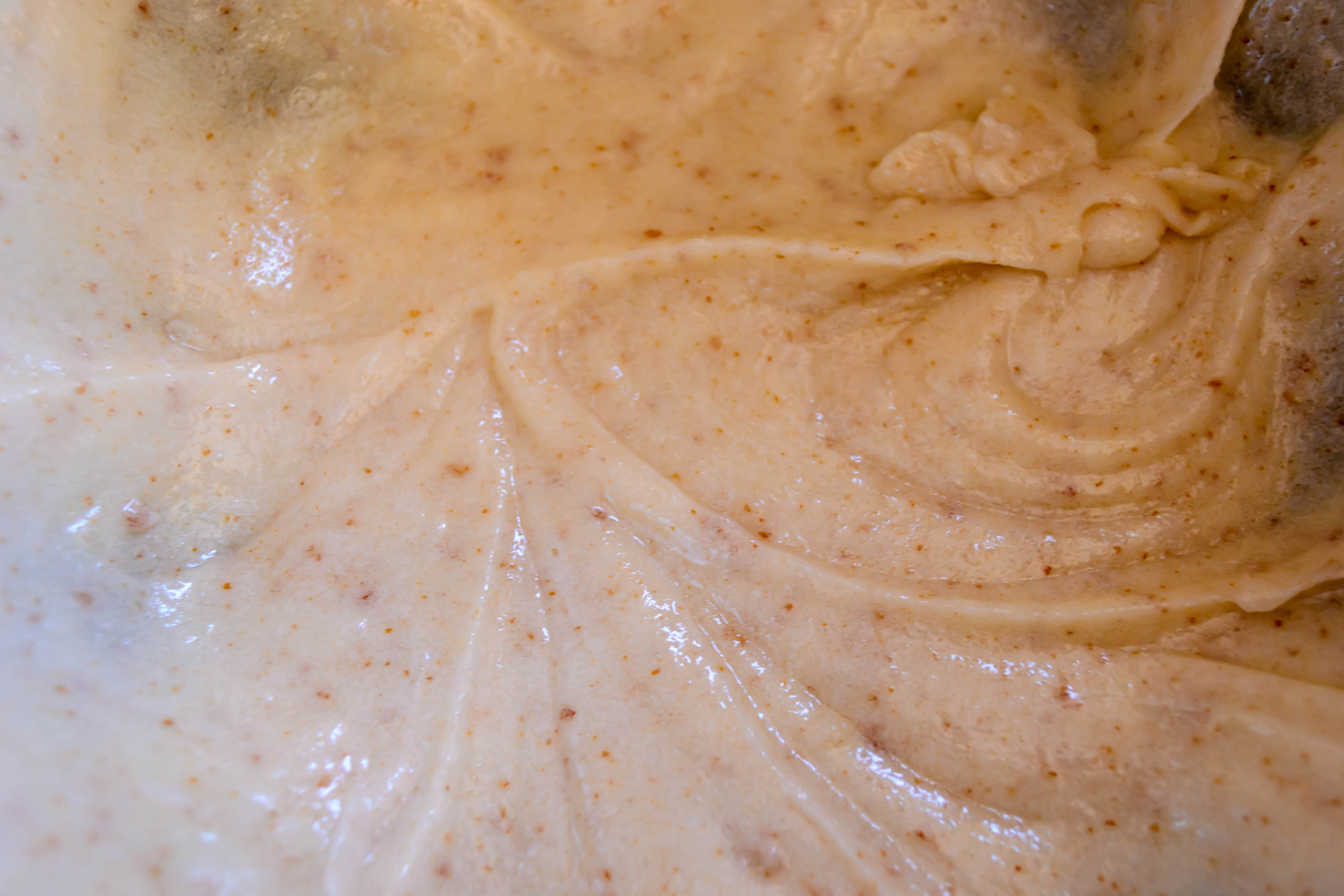
When the butter has solidified a bit, pull it back out and add the sugar, then cream (or goo) well until everything is incorporated and has become a beautiful flecked mixture the rough consistency of frosting.
Add the flour and mix until crumbly.

Food Blog February 2013-0563

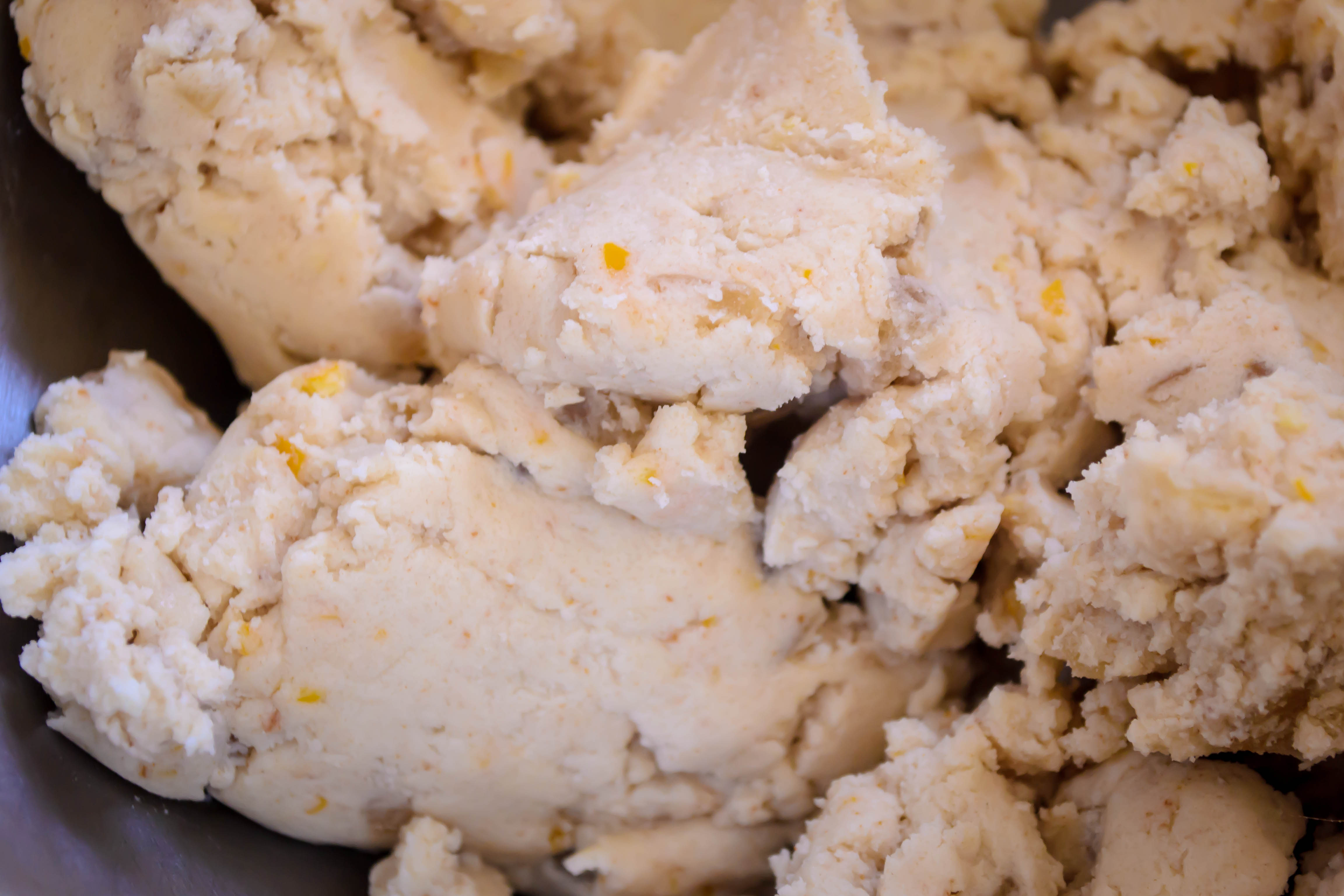
Add the lemon zest and the ginger and mix again.  First the dough will become large crumbs, then come together into something more like wet sand.  This takes a minute or two.  If it isn’t coming together right away, don’t worry.  The wet sugar and butter mixture needs some time to moisten the flour.

Food Blog February 2013-0564

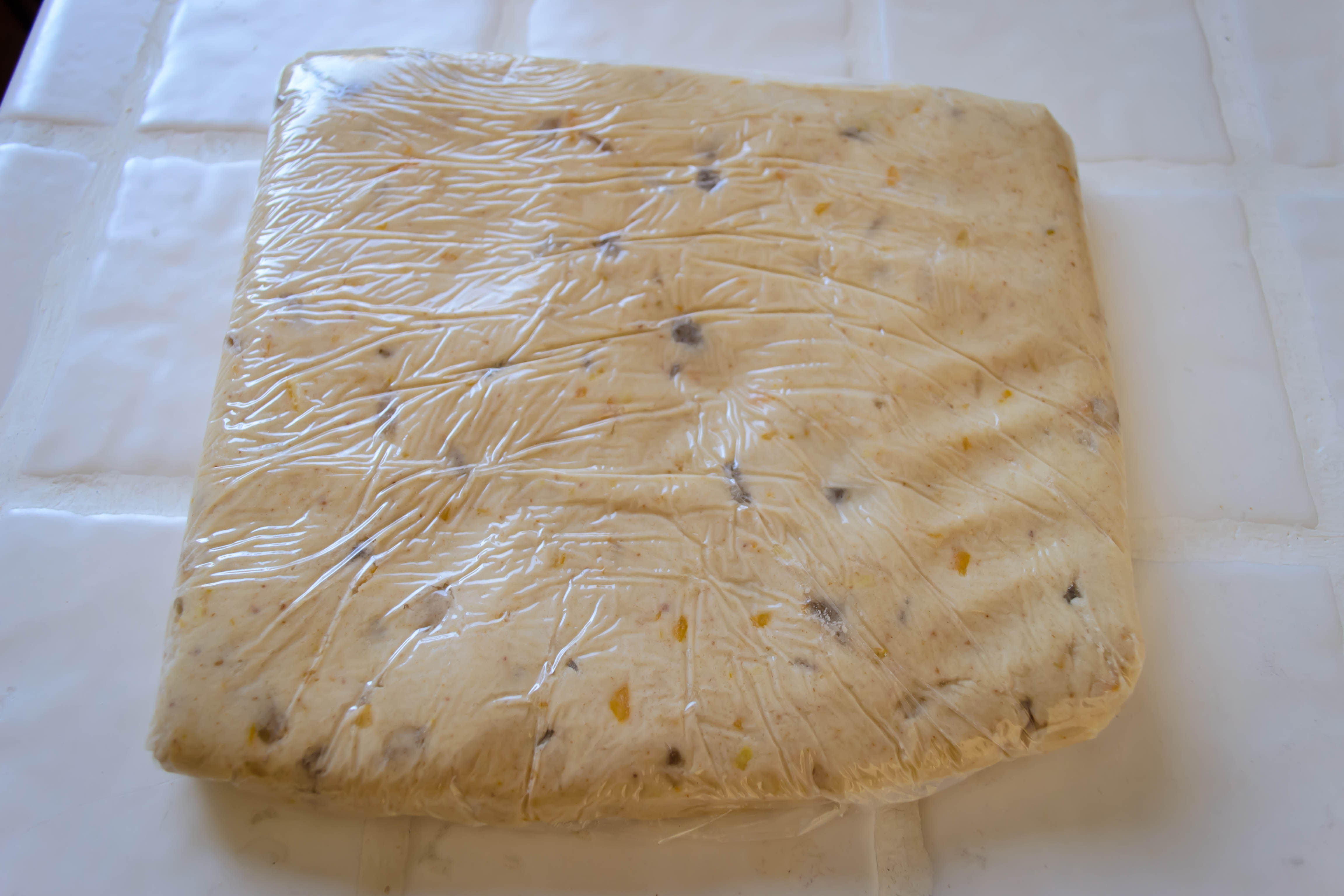
Once the dough is the consistency of wet, packable sand, dump it out of the bowl onto a sheet of plastic wrap.  Using the plastic wrap to help you, shape the dough into a rectangle of 5×8 inches or so, wrap up securely, and refrigerate for about 30 minutes.

Food Blog February 2013-0568

While the dough chills, pulverize the hazelnuts, ground ginger, and raw sugar crystals in a food processor (or chop finely with a sharp knife) until some of the hazelnuts are reduced to powder and some remain in very small bits.  Don’t overprocess – you don’t want this to turn into nut butter.  Stop before it becomes moist.
When your dough has had a chance to chill, unwrap it onto a floured board and roll or press out to about ¼ inch thick.  This takes a bit of patience, especially if you, like me, let it chill for too long and try to roll it out before it’s ready.  Cold rolling results in cracking.  Just relax, let the dough warm up a tiny bit, and roll gently with a floured rolling pin, patching cracks as you go.  This would also be a good time to preheat your oven to 350F.

Food Blog February 2013-0570

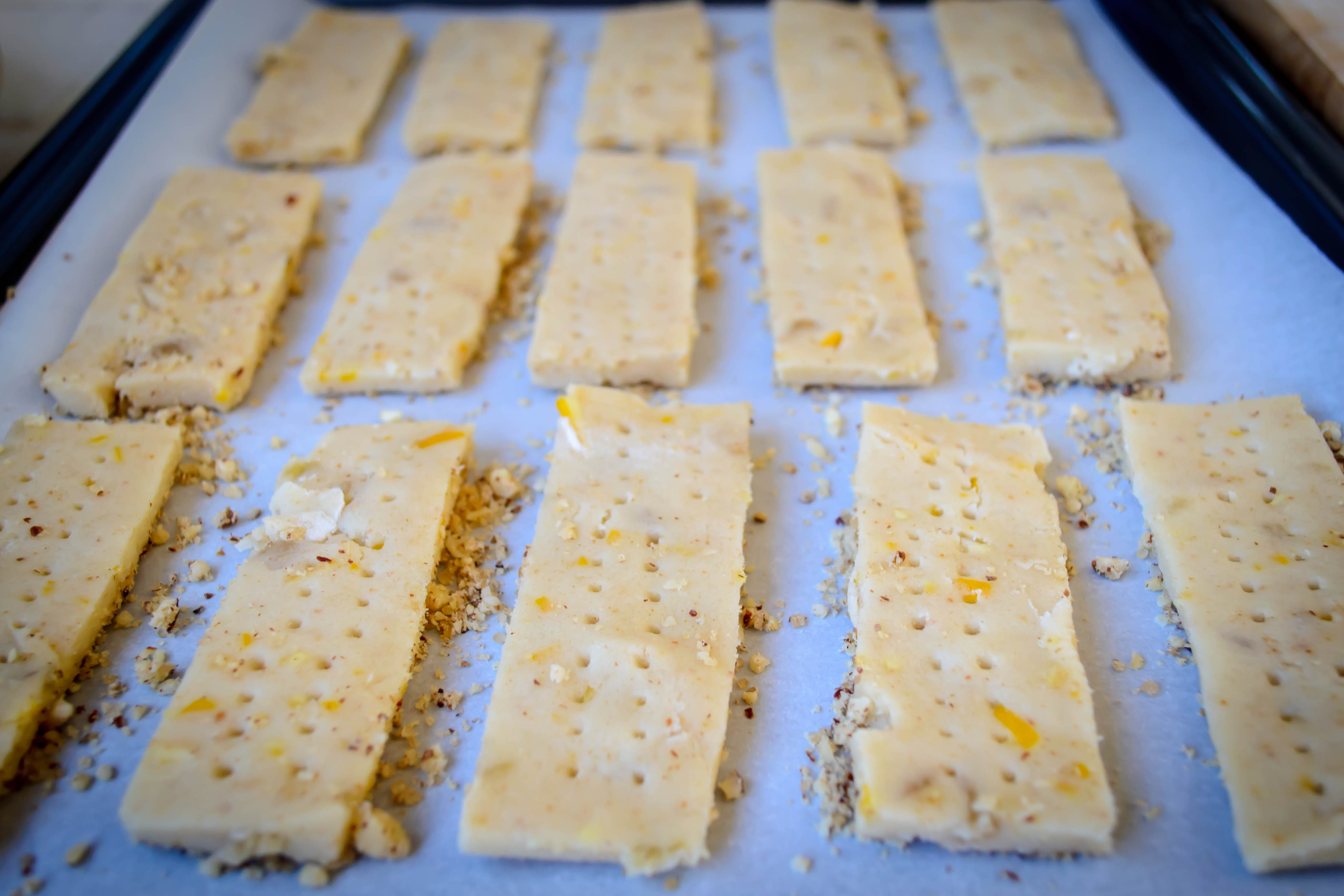
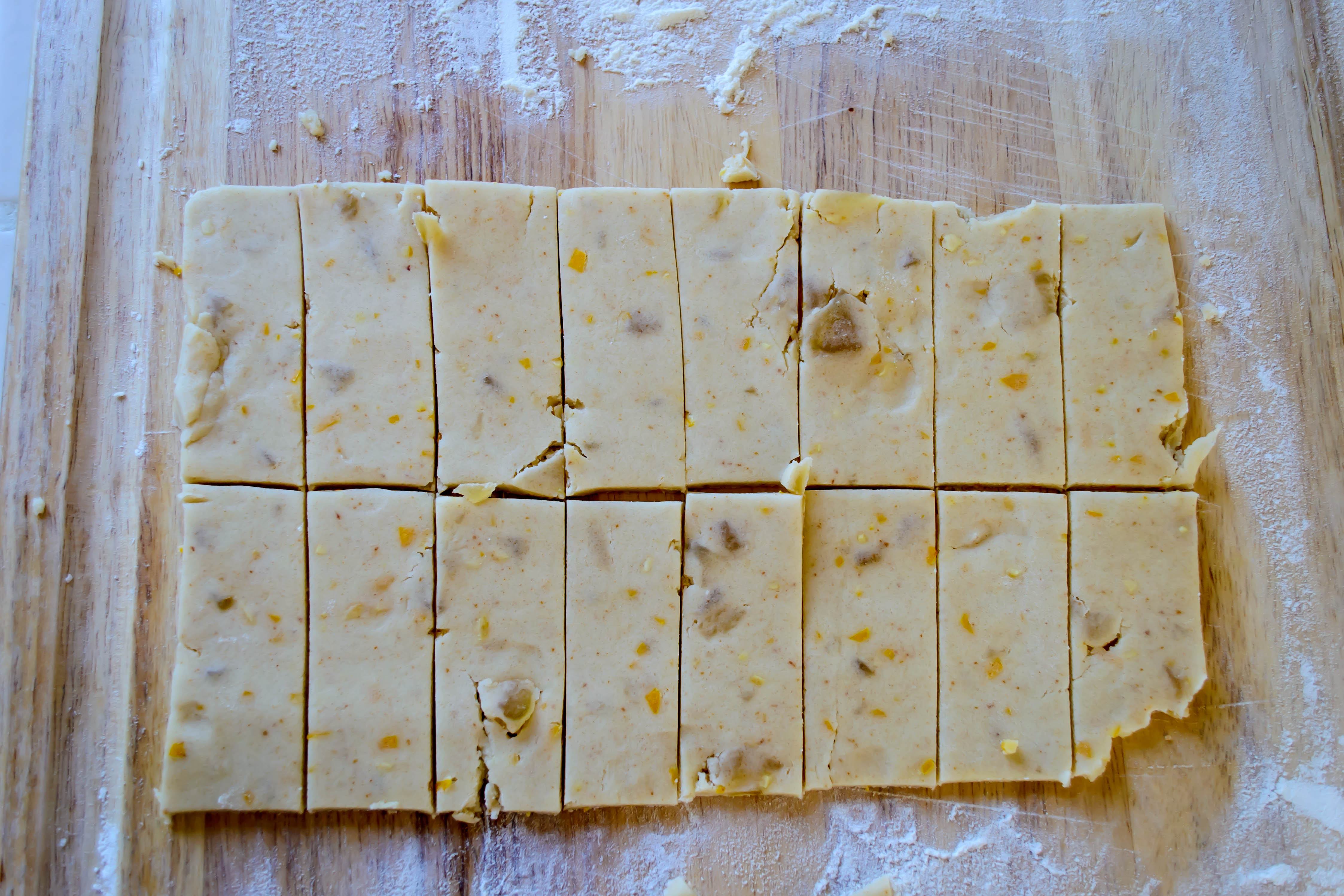
Once you’ve achieved even thickness (minus the odd tall chunk of ginger), use a pizza cutter to trim off uneven edges, and slice the remaining rectangle into smaller rectangles the size of your choosing.  Mine were probably about 1×3 inches, which seemed like a nice sized cookie.
Now it’s time to add the hazelnut crust.  As noted above, you can do this in a number of ways.  You can, if you wish, lift the cookies, place them into a dish of crumbs, and press down, hoping for adherence without breaking the cookie itself.  This method requires almost excruciating gentleness.  You can also press handfuls of the hazelnut crumbs down on top of the cookies on the board, applying firm but gentle pressure, and then lift the cookies one at a time and invert them onto a parchment lined baking sheet.  As you flip, some of the hazelnut crumbs will loosen.  That’s okay.  Just get your cookie settled on the baking sheet and then press down again gently but firmly to re-stick the crumbs.  They will adhere better as they bake.

Food Blog February 2013-0571

Once you have a full baking sheet (mine each fit 15-18 cookies in various arrangements), pierce the cookies gently with a fork to achieve that pricked look so popular in shortbread, and bake for 18 minutes.  The cookies will become lightly golden all over, and the hazelnut crumbs will darken and get a bit toasty.

Food Blog February 2013-0576

At 18 minutes, take them out of the oven, set the baking sheet on a cooking rack, and walk away.  The cookies need 4-5 minutes to set before you try to move them.  They are much too soft at their moment of emergence to transport intact.  As they cool, they will deflate and crisp up a bit, and you can move them to a cooling rack or a marble countertop or surface of your choice.

Food Blog February 2013-0583

You can certainly eat these warm, but I liked them better completely cooled.  In fact, I liked them better the next day, once the flavors had melded and developed.

Food Blog February 2013-0580

Stored in an airtight container, these keep deliciously for over a week.  They even, wrapped carefully, stay crisp and fresh through the mail.
This recipe probably made about 3 dozen cookies, and could have made more if I had eaten less of the dough scraps.  I, alas, didn’t make a count before I started sampling, which is always a tasty, tasty mistake.

Reflecting

The Bittman project is done.  I did it!  I took a list of 101 side dishes conceived to accompany a Thanksgiving turkey, whittled it down a bit into dishes N. and I would actually eat (this left us with a total of 82) and, over the course of two years, made and ate each one.  Before moving on to my next project, I wanted to stop and consider a bit.  This project was valuable in many ways and I don’t think it should be pushed aside like a last gasping bite before launching into the next thing.  I learned a lot about cooking, I think, both from the mistakes I made and from the little triumphs and successes I achieved.


The Mistakes:

Measuring is important.  If you don’t measure, if you don’t have the correct ratios, things don’t bake up the way they are supposed to.

Follow directions.  Roasting can’t happen with waterlogged ingredients, and adding items in the wrong order produces unintended results.  Of course, this is challenging with Bittman’s suggestions because they don’t always have exact directives.  But it has taught me a lot about how a recipe fits together, and how to organize and present information in a way that works – at least for me.

Pairings matter.  Learning how to cook a dish is one thing.  But you’re probably always going to be serving it to someone (or multiple someones) as part of a meal.  Crossing flavors in strange ways – Italian sausage with soy-glazed vegetables, Southwestern spices with Middle Eastern preparations, too much sweet with too little savory – doesn’t produce a very satisfying eating experience.

I just don’t like yellow curry.  I can tolerate it, but I’d much rather have garam masala, or tumeric, or cumin, or just straight black pepper.

Give yourself time.  Charging headfirst into an unfamiliar recipe with only twenty minutes until dinnertime is almost always going to lead to frustration, mistakes, and unsatisfying results.  This sounds very preachy, but read the recipe beforehand, make sure you understand what it is asking, and budget your time accordingly.

WRITE THINGS DOWN!  This isn’t the first – or the only – time I will make this mistake.  But I’m trying.  If you don’t write it down, chances are good you won’t remember it.  And then that perfect amount of nutmeg, or salt, or the temperature you used, is lost.  And that makes it unrepeatable.


The Triumphs:

Repurposing works.  If something doesn’t come out right – or to your liking – there is no sense in throwing it away if you can imagine transforming it into something better.  If that means adding booze and wrapping it in pie dough, then so be it!

Acid saves.  If your dish is missing something but you don’t want to add more salt and you’re not sure about upping the spice quotient, try a squeeze of lemon juice or a dash of red wine vinegar.  There’s something about the brightness and verve this brings to a dish that really changes it.  (Hell, it even tones down the overbearing sweetness of buttercream. )

I can, if I take my time and don’t freak out, make a successful dough.  It’s not pretty yet, and it’s not error-free, but it comes together and rolls out and tastes pretty good too.  That’s something.  That’s more than I expected.

Soup is easy.  I grew up on two kinds of soup: the overprocessed, condensed kind that came in cans, and the long-simmering stew and chili kind.  This led me to believe that homemade soup was a time consuming process.  Watching cooking shows that talk about extracting flavors from bones and babysitting a stock for hours furthered this assumption.  But since I’ve started making my own chicken stock from the carcasses of roast chickens, and since I realized that Bittman’s soup recipes mostly go the same way (sweat vegetables, add flavoring, add broth and heat through), soup became a quick and simple venture.  Onions, garlic, carrots, celery, and chicken broth, and you’re 75% there already.  During the year I even invented my own, which N. and I will be having again next week with the addition of ramen noodles.


The Favorites:

As seems inevitable with a project like this, there are some ingredient combinations N. and I will never have the desire to return to.  But there are some that we will crave again and again.  Some, in fact, have already graced our table on multiple occasions.  I just want to point out a few of these.

Sweet.  This combo of sweet potatoes and green onions, roasted until caramelized and perfectly salted, is an achingly beautiful side dish still in search of the perfect accompaniment.  But it dances solo just fine.  I’d have these for lunch any day.  I’d have them for dessert too.

Sausage, kale, and white beans (and cheddar cheese or Parmesan rind, too, if you really want to comfort it up) are a beautiful combination that deserve revisiting.  This soup is warm and satisfying and should be eaten at least once per winter.  Nicely spiced tempeh crumbles might make an adequate substitution for the sausage, if you aren’t into pig.

Herbed buttermilk biscuits, especially with the addition of lemon zest, are all I want in the biscuit world right now.  They are crisp and tender and have just the right crunch.  They are breakfast ready.  They would accept cream gravy.  They would mop up a savory sauce.  They would provide the perfect vehicle for jam or honey or sweetened goat cheese.  They freeze perfectly and, frozen solid and plopped onto parchment paper, require only a few extra minutes in the oven to cook.

Ginger-Apricot Chutney.  This spicy-sweet condiment would be a suitable topper for the Herbed Buttermilk Biscuits I just got weak-kneed over.  But it also pairs well with grilled or roasted chicken, and would probably be delectable as a fresh take on a Christmas ham glaze.  Or, you know, on sandwiches with lunchmeat or cream cheese, or as an interesting filling for chocolate truffles.  Now I want to make this again immediately.  I wonder if I have any ginger in the freezer…

Perhaps the crowning glory of the whole project, the beer-y cornbread stuffing laced with tomatoes, green onions, and corn kernels is a genius combination I have already revisited on multiple occasions.  My sister has used this as a Thanksgiving stuffing alternative for her celery-hating boyfriend (seriously, almost every stuffing I’ve ever made has a base of onions and celery.  Hit the shelves.  Look for one without that notorious stringy green stalk).  It’s yeasty and deep and golden and glorious, and it gives you an excuse to toast and taste a few cubes of cornbread along the way.  It is, even if you don’t like beer, not to be missed.


The News:

I have a few things planned for the year on which we’ve just embarked.  First, we need a new project.  I’ve decided.  It’s going to be bad for my waistline but good for my confidence in the kitchen.  I hope you’ll like it.  I’ll get to that next week.

Second, I think we need a new place to meet each week.  I started this blog intending to write about fancy things I’d made.  I didn’t know how much I would enjoy sharing even my mistakes.  I didn’t know how much I was going to learn about cooking and photography and writing about food.  “shornrapunzel,” a moniker picked up from my last days in college when I went from three feet of hair to less than one (I’m back in the three feet range now), was the username on my first blog – a livejournal I used as a writing exercise and an attempt to stay in touch with friends pre-Facebook.  Eventually, all I was posting there were long, drippy descriptions of food I had eaten or wanted to eat, and I decided to start this little venture as a more appropriate way of addressing this obsession.  So “shornrapunzel” was an easy name to saddle a url with because it was familiar and connected with me, but it never really had any relevance to this blog or its topics.  Blackberries, given their literary suggestions of adventure and unexpectedness, still seem to fit well the kind of cooking and sharing I’m doing here.  So they get to stay.  In this next week, I’m moving this little kitchen corner to a new domain for continued blackberrying.  I hope everything transfers over okay.  I’ve never done this before.  But then, that’s nothing new.

See you on the other side!

Trick or Treat

Halloween is easily in my top three holidays.  I have to give the prize to Christmas, because it means family and love and sweaters, but Thanksgiving and Halloween chase each other in circles to gain second place.  Despite that love (overwhelming in some cases, especially if you, like N., are not invested in costuming yourself at every possible occasion), this is the first year in almost a decade that I’ve done nothing to celebrate.  No costume.  No party.  No decorations.  We bought candy for the six kids that showed up (only six!  The whole evening!  Was it just because it was a Wednesday, or do kids not trick or treat like they once did?) and I definitely listened to the Halloween party mix my friend D. made for me a few years ago, but it felt a bit like a lost holiday.

I did embrace the season, though, the following day.  Having Thursdays off gave me the opportunity to do something I’ve been wanting to do for years: pillage Target’s day after Halloween sale for leftover clearance items (read: treats!).

The tricks began when I began work on the evening’s dinner.  It was, I realize in retrospect, a bit of a Chopped style enterprise: appetizer, entree, and dessert, each made with ingredients I’d not expected to meld.  In each case, however, the “trick” aspect of the dish was my doing, not the recipe’s.

“12. Garlic-Rosemary Figs: Soak dried figs, stems removed, in warm water until plump; drain and halve. Heat rosemary and lightly smashed (and peeled) garlic with olive oil on medium-low heat, until softened. Add figs, along with some fresh orange juice. Cook until saucy.

Pairing figs, garlic, and orange juice seemed odd.  Nevertheless, I collected enough for one portion (this was not N.’s kind of dish):

6 dried black mission figs

1-2 tsp fresh rosemary

2 smashed, peeled garlic cloves

1 TB olive oil

juice from 1 small orange (⅓ – ½ cup juice)

I heated some water in my teakettle and poured it over the figs (which I’d halved prematurely.  Apparently paying attention to the directions is kind of important), which I let stew on the counter for half an hour.

Figs vaguely plumped, I drained them and set them aside, then put the garlic cloves, rosemary, and oil into a cold pan.  I heated it over medium for five minutes or so – just until the rosemary started to sizzle and the garlic turned a little blonde.  Then I added the figs and orange juice, and simmered for fifteen minutes or so, until the orange juice had reduced considerably.

I plated, I ate, and I considered.  This didn’t taste bad, but it didn’t marry absurdly well either.  The rosemary and the figs were lovely.  The orange juice and figs were fine (though the orange was a bit overpowering).  The garlic and figs were… unobjectionable.  They just weren’t my favorite.

I must say, though, I recalled while I was cleaning up after dinner that this entry was in the “Sauces and Relishes” category.  I had eaten it straight.  This was, perhaps, why I wasn’t enamored of it.  Therefore, I’d recommend spooning this over lamb chops, or pork tenderloin, either of which would add some savory notes to make the garlic feel less anomalous.

Though this “appetizer” wasn’t fantastic, I ate it with a fantastic grain-salad-turned-hash inspired by Smitten Kitchen.  I want to revisit this hash, because I think it could use some additions, but here are the basics:

Line a baking sheet with aluminum foil.  Set it in the oven and preheat to 400F.  Yes, you are preheating the pan along with the oven.

Peel and halve a butternut squash.  Seed half of it and cut that half into small cubes.  In a bowl, toss the cubes with salt, pepper, and olive oil, then tumble onto the baking sheet (where they will sizzle immediately – this is a good thing) and stow back in the oven for 35-45 minutes, or until they have golden edges and creamy soft middles. 

During the last ten minutes of squash roasting, push the squash to the sides of the pan (or just grab another pan, if you aren’t invested in avoiding dishes, like me) and stack 4 cups or so of trimmed, cut kale that has also been tossed in olive oil, salt, and pepper.  The kale and squash will cook down a little more together, and you will be left with something not quite like kale chips, but a bit more textured than if you’d boiled or steamed it.

While the squash and kale roast, cook 1 cup of bulgur wheat in chicken (or vegetable) broth.  When done, fluff gently with a fork and toss with squash and kale.

During the last few minutes of roasting time, toast 2 TB pumpkin seeds in a dry pan until they begin to snap and crack.*  Be careful not to burn them.  Toss with bulgur and vegetable mixture.

In the pumpkin seed pan (again, avoiding dishes), heat an egregious quantity of butter until foamy and crack in an egg to fry until the edges frizzle and brown and crackle.  Despite a few careful taps, on this egg of all eggs – the egg I wanted to photograph quivering atop my hash, the egg I wanted to show just cut and lusciously runny – I somehow shoved my thumb through the yolk and it broke all over the pan.  Nasty trick, egg.

Nevertheless, I piled my hash up on my plate, carefully laid the fried egg over it, and dug in.  It was a hearty, pretty, perfectly autumnal dish.  It needs some tweaking before I’m thrilled with it – perhaps some sautéed leeks folded into the bulgur, or some light spices on the butternut squash – but this was a delightful start.

I turned to dessert:

“96. Sweet Autumn Gratin: Combine cubed pumpkin or sweet potato with cranberries and hazelnuts in a buttered baking dish. Sprinkle with brown sugar and toss. Drizzle cream all over, dot with butter and bake until soft, bubbly and browned, 50 to 60 minutes. Re-warm before serving if you like.

I’m going to give you a list not of my ingredients and procedure, but of what I should have used and done.

1 big sweet potato, peeled and diced

½ cup dried cranberries (I didn’t have fresh, so I don’t know what they would be like.  Presumably more successful because they would emit, not swallow, liquid)

½ cup walnuts, coarsely chopped (I couldn’t find hazelnuts anywhere – who would have thought this would be the food item I would miss most from Oregon?!)

¼ – ½ cup brown sugar, depending on how sweet you like it

¼ cup heavy cream

¼ cup butter

Preheat the oven to 400F.  Butter a 9×13 inch pan (my round, much smaller dish was a poor choice).

Toss the sweet potato chunks, cranberries, and walnuts with brown sugar.  Spread them out in the pan in an even layer.  Pour on the cream, then pinch off pieces of butter and dot them over the top.

Bake for an hour, or until the sweet potato pieces are fully cooked.

I did few of these things.  My sweet potatoes were in bigger-than-they-should-have-been chunks, piled up in a small casserole dish, starving for cream (I only had a tablespoon or two) and shorted on sugar.  As a result, at the end of an hour they were hot but still resistant in texture.  I think what you want is melting, creamy softness.

Tricked again.

To remedy this problem, I tried several things.  First, I made a bourbon hard sauce (equal parts sugar and water, stir to melt.  Add ¼ cup butter, stir carefully until it melts.  Add a shot or two of bourbon, cook just a minute or two to take the edge off) to pour over the top.  This helped, and I willingly ate a serving, but it was lacking whipped cream or ice cream or, bizarrely, pie crust.


I didn’t figure out the pie crust thing until the next day when I was making empanadas for dinner.  As I pressed my fork into the edge of the dough to crimp it, I was flooded with the right answer: tiny hand pies stuffed with my sweet potato mixture!

This was clearly the right thing to do.  Saturday afternoon, I unrolled a pie crust on my counter, cut out 3 inch circles, and proceeded to fill them with a teaspoon or two each of the gratin, which I’d mashed with a fork to make smoother and therefore more manageable.

Once filled, fold in half, press and then crimp with a fork, and brush with egg wash (1 egg yolk + 1 TB water).  Sprinkle with turbinado or other raw, chunky sugar, and bake in a preheated 400F oven for 15 minutes, or until the tops are golden brown and the dough is flaky.

These make lovely, tiny snacks.  The craisins give a punch of tartness to the sweet, earthy, almost heavy sweet potato and walnut pairing.  There are subtle floral hints in there, because before putting it away that first night I admit to dumping the bourbon sauce over the whole thing, but this adds a flavor I wouldn’t change.  The dough is buttery and flaky and collapses easily around the filling, and it’s difficult to prevent yourself from standing over the pan as it comes steaming out of the oven and eating four or five in a row, scalding your tongue and not caring at all.

Perfect November treat.


* You could, I suppose, use butternut squash seeds, if you are the sort of person with the forethought to save, rinse, and dry the seeds while you clean your squash.  I, clearly, am not.
Swing

Summer into fall into summer.  Salads and grilled vegetables into casseroles dabbled with cream into fresh raw dips.  Luxurious stretches into curled legs under blankets into stressed grading sessions into sampling new half-fizzed white wine.

Sometimes this is called Indian Summer.  I like to think of it as Swing Season.

Two Bittmans for you this week.

77. Trim and dice fresh tomatillos; peel and julienne jicama (or daikon or kohlrabi). For dressing, combine lemon and lime juices, olive oil and chopped cilantro. Pour over salad, top with toasted sesame seeds.

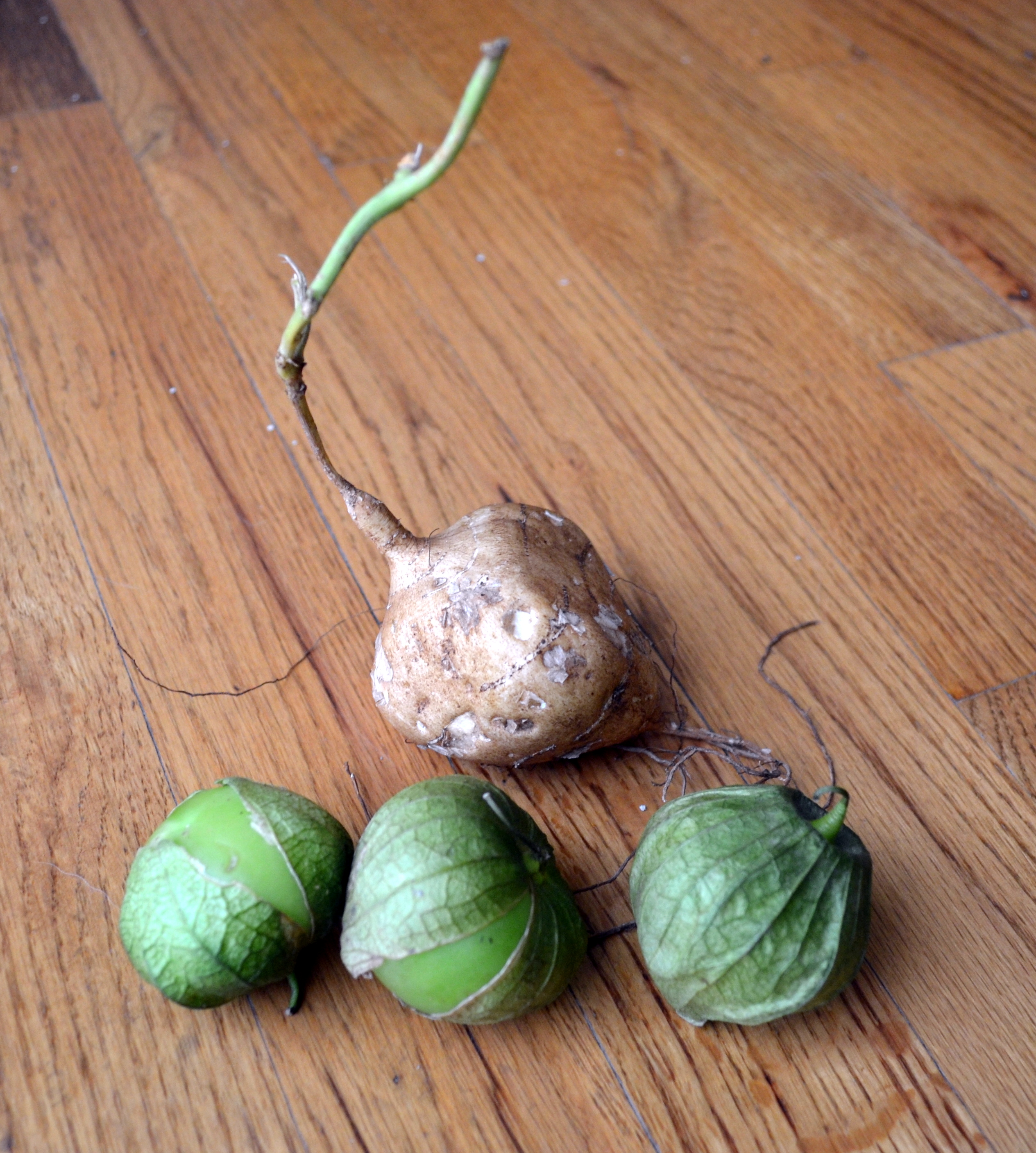
This sounded like a good late summer/early fall salad.  I found tomatillos at the grocery store, but no jicama, no daikon, and no kohlrabi.  And then we went to our Farmers’ Market, and I found all three!  Huge daikons, alien baseball sized kohlrabis and, hidden between stacks of beets and the tiniest fingerling potatoes I’ve ever seen, a pile of grubby little tubers with vine-y stems still attached.  Eureka, jicama!  Back at home, I assembled the troops:

1 TB toasted sesame seeds

2 small jicama

6 medium tomatillos

(really, the number of jicama and tomatillos isn’t super important as long as the quantities are roughly equal once you’ve cut them up.  Start with maybe 1 cup of each, see what you think, and then add more if that’s what makes you happy)

2 TB chopped cilantro

1 lemon

1 lime

Olive oil

Salt

I’ve tasted jicama, but it has been a long time.  And I’ve certainly had tomatillos, but mostly only after they were roasted and processed into salsa.  I wasn’t sure how they would be raw.  This – a lovely fresh slaw/salsa/salad hybrid – sounded so bright and tart and lovely that I wasn’t too nervous.

Before anything else, I toasted the sesame seeds and set them aside.  They give off such a lovely roasty scent when they are just browned and starting to release some oils.

I peeled, then sliced the jicama into rounds.  Then I stacked up the rounds and made thin slices across until my two little aliens were a pile of matchsticks across my board.  Into the bowl with you.

Next I quartered and diced the tomatillo.  Because they are still underripe when green (apparently they can turn purple and get very sweet when they ripen, but I’ve never seen them in that state), their skins were quite resilient – it took some pressure to get my knife through them.  Carefully chunked into miniscule cubes, they joined the white confetti in my bowl.

A quick squeeze of lemon and lime, a whisking pour of olive oil, and a handful of chopped cilantro feathers later, and the dressing was done.  And then a sprinkle of salt, and it was perfect.  It was a little more than needed to moisten the salad, but it’s hard to know how much juice citrus will have secreted away inside it, so it’s always going to be a guessing game.

I mounded the white and green on my plate, then added a generous scoop of Mexican rice and a quartered cheddar cheese quesadilla.  Simple simple.  At this point, you should ideally sprinkle the sesame seeds you so carefully toasted atop the salad, but I forgot until after I’d already subjected it to a photo shoot.

I was surprised and pleased by the flavor of this dish.  I can’t imagine eating it as a Thanksgiving side dish, but it was a bright burst of summer on a day that began in drizzly autumnal terms.  Jicama is crisp and juicy with the barest hint of starchiness, and its flavor reminds me most closely of an Asian pear.  The tomatillos were very tart, but the pairing tamed them.  Imagine a granny smith apple crossed with an underripe tomato and you’re approaching the brightness we experienced.

This was good as a salad, though its tartness necessitates a small portion.  It was also good heaped atop our quesadillas, like a raw salsa.  It contrasted nicely against the melted cheddar and the just crisped corn tortillas.  But where it would really shine, N. and I agreed, would be as a kind of mirepoix for guacamole.  Dicing the jicama instead of leaving it in strips and folding the whole salad gently into chunks of ripe, buttery avocado would make for the perfect chip dip.  Tart, creamy, crunchy, with the right kind of salty sourness from the dressing, and all you’d need was a frosted Corona and a pool to dip your toes into.  Summer.

But things never end there.  At least we hope not!  Days of sweating and hiding inside and waiting till after sunset to go out always, inevitably (even if it’s taking FOREVER, Los Angeles…) relax and cool and crystallize into Autumn.

35. Pumpkin-Noodle Kugel: Cook a half-pound of egg noodles in salted water until not quite done; drain and put them into a buttered baking dish. Whisk together 4 cups milk, 4 eggs, 1 cup pureed cooked pumpkin (canned is fine), ¼ cup melted butter and a pinch each of cinnamon and salt. Pour over the noodles and sprinkle with bread crumbs (or, for added kitsch, corn flake crumbs). Bake 45 minutes to an hour, or until a knife inserted into the middle comes out clean.

I had no idea how to serve this dish.  I’ve heard of kugels, but I’ve never even eaten one, let alone made one.  I wasn’t sure, as usual, what to serve it with, so I asked a few friends and did some research on the good ol’ internet.  At the point that I read Smitten Kitchen’s version (okay, so this one is written by her mom, but seriously, that woman has cooked everything, and all of it sounds and looks outrageously delicious), this sounded more like a dessert than a dinner side dish.  It would be, I decided, dessert and weekend breakfast.  Sweet, autumnal, nicely spiced, and custardy.  “It’s going to be like a rice pudding but with noodles.  And pumpkin,” I told N.  He still wasn’t sure.

8 oz. egg noodles 

4 cups milk

4 eggs

1 cup pumpkin puree (I used Libby’s)

¼ cup melted butter (I put this in, but I’m not sure it was really necessary)

¾ cups sugar

¾ cups golden raisins

½ tsp cinnamon

½ tsp salt

2 cups corn flakes, well crunched (who am I to pass up added kitsch?!)

It wasn’t until I had collected ingredients that I realized Bittman’s recipe doesn’t call for sugar.  But I was already on the dessert/breakfast kick, and I couldn’t quite envision this as a savory dish, so I dumped in my sugar estimation anyway, along with the golden raisins that aren’t part of the original.

I cooked my noodles for 5 minutes and then let them cool for 10.  They probably needed to be cooked for only 4 minutes, because they keep on cooking not only while they are in the oven, but on the counter as they cool as well.

Yes, I take these photos from the floor. But it’s a nice wood floor, and the light is so good, and I promise Lucy stayed on the other side of the room the whole time…

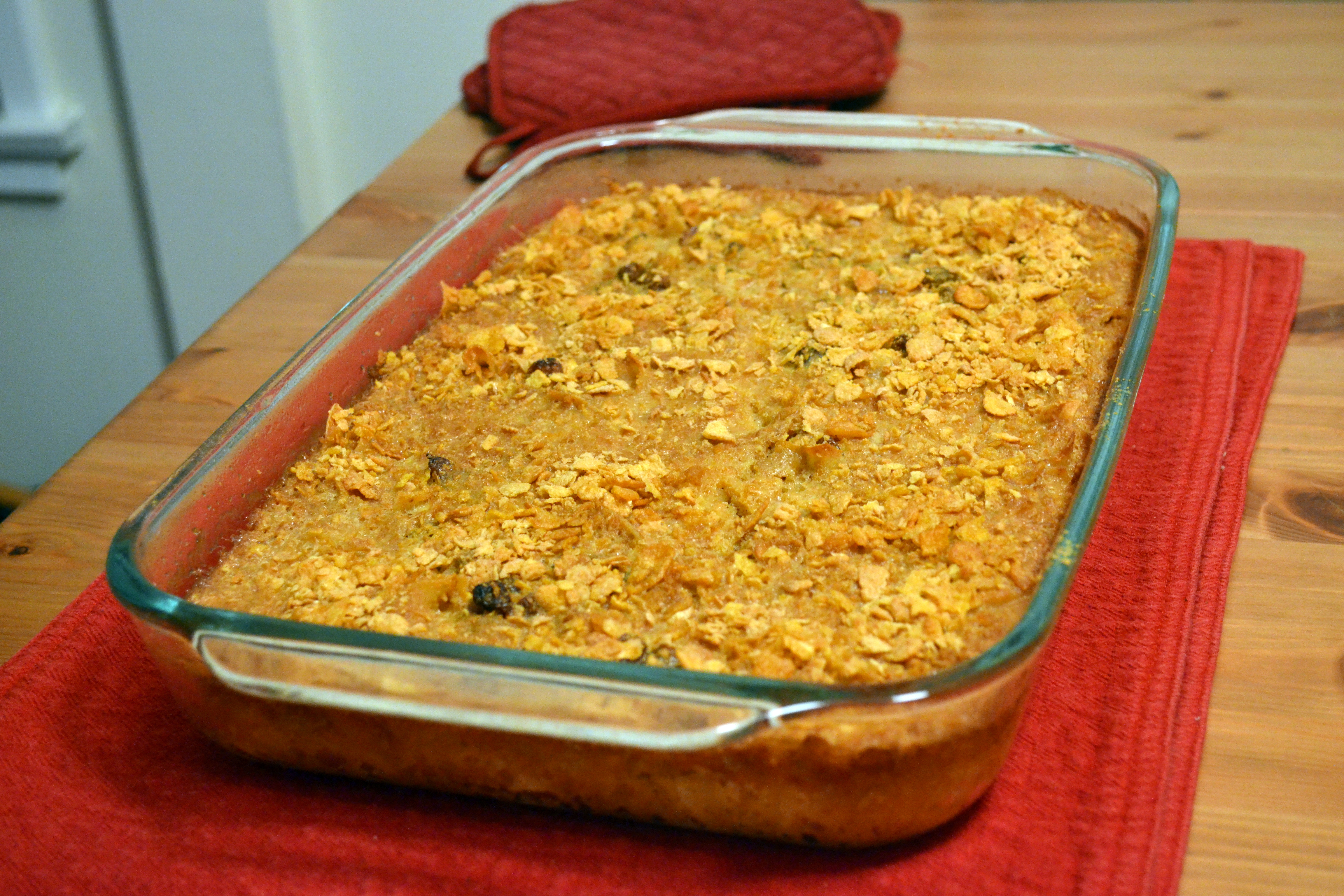
With the custard whisked together and the noodles evenly spread in a buttered 9×13” glass baking dish, I preheated my oven to 375F and assessed the corn flakes situation.  Whenever an ingredient needs to be crushed, crunched, or pulverized on Chopped, I yell at the chefs for using their hands, knives, or a rolling pin instead of just bringing over the food processor.  But they don’t have to wash all the dishes they make, and I do, so my pretty little scarlet processor stayed on its shelf.  I crushed up the cereal with my hands, feeling a kind of satisfaction as the flakes became bits and then powder.  I topped the noodly custard with a generous layer of crumbs and carefully slid it into the oven.

An hour later, the custard had set and the smell flashed me forward to Thanksgiving.  I’m convinced we as a society don’t really know what pumpkin tastes like, because what we experience is texture and spices.  If this kugel didn’t have a sprinkle of cinnamon in it, I’m not sure I would know it had pumpkin either.

Dinner came and went, the kugel cooled a bit, and I dug out a too-big portion for myself, and neglected to feel any kind of remorse about it.  It was too good for that.  The noodles had melded together as the pumpkin infused liquid cooked, making a solid, scoopable, sliceable custard.  The corn flakes on top were perfect: aggressively crunchy against the soft interior.  I wouldn’t omit the golden raisins either; they were a really nice textural contrast to both the softness of the noodles and the crunchy crumbs, and their complex sweetness added some depth to my dessert casserole.  It was warm, and sweet, and perfectly comforting as I tucked my feet under me on the couch and waiting for the approach of Project Runway (don’t judge, every girl needs a little reality TV now and then).

The leftovers are delicious too, though the dish does lose something in relinquishing its crunch to the microwave.  In another universe where I’m a Southern cook, I could see doing crazy things like frying squares of this in butter and then drizzling hot maple syrup over the top.  But I’ll refrain.  Because from my window, I can see my basil wilting beneath the curiously, cruelly hot-for-mid-October sun: back to summer, so it seems!  And here I was considering making soup…

Swing season indeed.