Honey Mustard Roasted Carrots

If you’re frequenting your Farmers’ Market this spring, you have probably seen the amazing bundles of carrots cropping up everywhere.  Some are knobbly and stubby and round, like little turnips, some are almost wispy-thin and well-whiskered.  The ones that drew me, and made last week’s side dish for our biscuits, were the rainbow bunches: orange and yellow, but also the vibrant, veiny purple that was probably the original color of these funny, beloved roots (orange carrots were reputedly a Dutch development: in the 17th century the color was cultivated to celebrate William of… wait for it… Orange. Harold McGee agrees on the date and location, but he doesn’t mention political motivations).
Food Blog April 2013-0986
The treatment I subjected these little bolts of spring to was so good that rather than dawdling through a lengthy bread recipe, I wanted to share these instead.  I can’t stop thinking about them (we’re probably having them with dinner again tonight), and since it is the perfect season for it, I can’t really fault us for that.
Carrots sometimes seem too straightforward: sweet and crisp, made only marginally complex by a mild grassiness.
Food Blog April 2013-0987
Liberally slicked with a mixture of honey, mustard, and olive oil, then roasted until their skins almost blackened under the heat, ours became intensely savory and yet also caramelized, homely to the eye but stunners on our tongues.  Their taut skins, lacquered with crackly coating, retained a barest crunch while the interiors just slid down our teeth like cold butter.
Food Blog April 2013-0997
(Admission: I did make bread this week: my first attempt at baguettes.  They were okay, but nothing amazing – the interior had a nice spongy crumb but the crust was a bit thicker than I like, with none of the shattering crispness that makes a really good French loaf.  They were bumpy in shape and the deep scores I made across their surface didn’t puff the way they do in bakery cases.  They were far from shameful, and tasty sliced, toasted and spread with salted butter, but still. So pedestrian. You deserved something more exciting.)
 Food Blog April 2013-1015
Honey Mustard Roasted Carrots
Serves 1-2 as a side dish


This is almost too simple to be a real recipe, but a few of those are nice to have in your repertoire.  Note: cooking time and ingredient quantities may differ depending on the number and thickness of the carrots you are using.  Start with these amounts, then adjust as suits your palate and pantry.


2 bunches (12-15 individual) rainbow carrots (though I suspect any carrots would be great). If you are using a Farmers’ Market variety, you won’t even need to peel them.  The skin will caramelize beautifully, and any wispy roots clinging on will gain an addictive roasty crunch.
2 TB dijon mustard
2 TB honey
2 TB olive oil
pinch freshly ground black pepper
scant sprinkle of sea salt
  • Preheat the oven to 400F and line a baking sheet with aluminum foil.
  • To prepare your carrots, remove the greens, scrub them well (if they are dirty), and roll them around on a clean kitchen towel to dry.
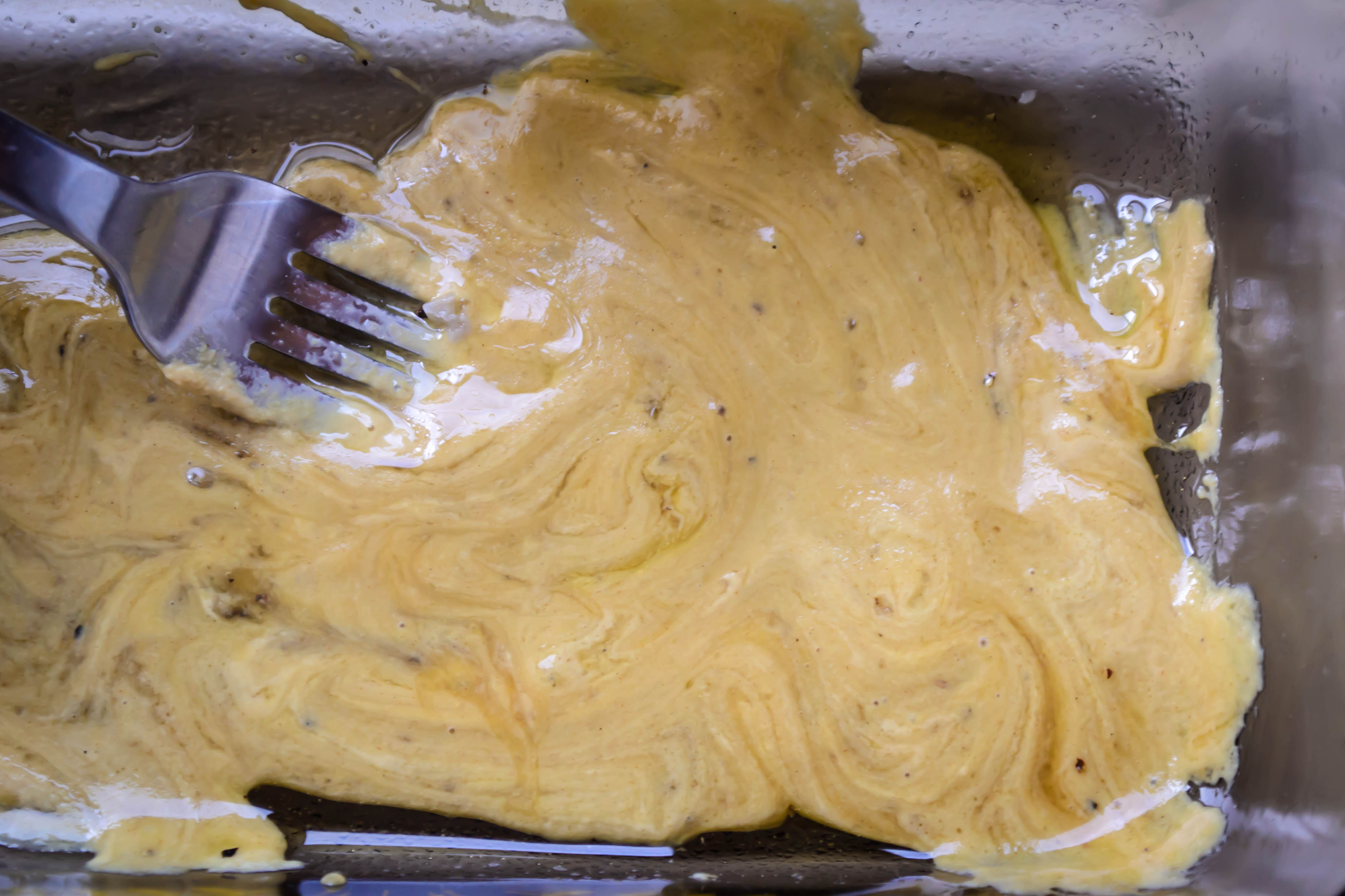
  • In a shallow dish, use the tines of a fork to combine the honey, mustard, and olive oil.  If the honey refuses to play nicely, send the mixture through 10-15 seconds in the microwave.  Add salt and pepper to taste, though I recommend under-salting just a tad.  The flavors intensify so much after roasting that you’ll only need a tiny hit of salt.
  • Toss the cleaned, dry carrots in the honey mustard mixture, then tumble them onto your baking sheet and spread them out so none are touching.  If you have too many carrots for that, at least be sure they are in a single layer.  We want as much surface area to be heat blasted as possible.
  • Place the loaded baking sheet in the oven and roast for 30-45 minutes, or until carrots are well-caramelized and tender.  This is a wide range of time, I know, but everything depends upon the size and thickness of your carrots.  Plunge the tines of a fork into your thickest specimen.  If you meet with considerable resistance, leave it in the oven for another 10-15 minutes before checking again.  If the tines slide in easily, or you get only a bit of push back from the flesh of the carrot, it’s probably ready.  Your own preferences also play a role here: roast them until they have the texture you like best.
They will be amazingly hot when they first emerge from the oven, so if they sit for a minute or two before serving, all the better.  But once you start tasting, don’t expect them to last long.

Happy New Year!

Food Blog 2011-2013-0362

Oh friends, it happened.  I made it.  Yesterday I made the last two Bittmans on my list and completed, albeit a year later than I’d originally intended, my project.  I have reflections to share, certainly, and I have changes and excitement and promises for the new year, but first, I think, let’s work with the program.  Two Bittmans.  Two reports:

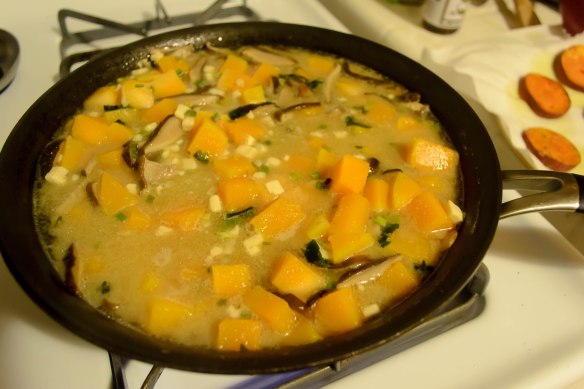
“14. Steam or poach 2 cups of pumpkin cubes until tender. Meanwhile, sauté 1 cup sliced shiitake mushroom caps in vegetable oil with a few drops of sesame oil. Boil 4 cups water and whisk some of it with ⅓ to ½ cup of miso. Stir miso mixture, pumpkin and mushrooms into water and heat everything through, then serve, drizzled with more sesame oil.”

Because we were planning to reach midnight by eating as many snacks as possible eating our way to midnight snacking, I wanted a light dinner to precede the countdown.  This seemed to fit the bill.  And it had to, after all, since it was the only soup left and the calendar was screaming December 31st.

2 cups peeled, cubed butternut squash (I had some in the fridge, and suspected pumpkin would be hard to find)

1 1 oz. package dried shiitake mushrooms

1 TB vegetable oil

¼ tsp (or to taste) toasted sesame oil, plus some for drizzling

3 packets instant tofu miso soup mix (all I could find at my grocery store)

water

white wine

To reconstitute my shiitake mushrooms, I soaked them in a mixture of white wine and almost boiling water for 15-20 minutes, until they were plump and soft.

While the mushrooms soaked, I cubed up my butternut squash and submerged the pieces in a pan of salted water.  I brought this to a bare simmer and cooked it just until the squash pieces were tender – 10-15 minutes – then drained the pieces in a colander.  Don’t overcook them, because they will start to fall apart.  Set the squash pieces aside.

When the mushrooms were tender, I scooped them out of their bath and decided the remnants shouldn’t go to waste.  I poured the soaking broth into a little pot to bring to a boil, so I could use this already flavored liquid as the base for my soup.  While it heated, I stemmed and sliced the mushrooms.

Since the shiitakes were now basically cooked, I probably could have skipped Bittman’s sautéing step.  But honestly, I’m not one to pass up the opportunity to ingest sesame oil, so I dutifully dribbled vegetable oil with a few (or a few more than a few) drops of sesame oil in the (drained and dried) pan I’d used to simmer my squash and sautéed the mushroom slices over medium heat until they dried out a bit and started to take on some color.

While this colorization happened, slowly and so aromatically, I made the broth.  I poured all three miso soup seasoning packets – tofu and seaweed and all – into a small dish, then mixed in about ½ cup of my heated mushroom soaking liquid and whisked gently to dissolve the powdery soup mix.  This created a slightly thickened slurry, which I poured with the rest of the liquid and the butternut squash cubes into the mushroom pan.

Food Blog 2011-2013-0341

After a few moments of reheating, we dipped up bowlfuls and ate.

Food Blog 2011-2013-0343

N. wasn’t sure (he sometimes takes issue with the texture of reconstituted mushrooms), but I inhaled it with devotion.  I love the flavor of miso soup, and the mild sweetness of butternut squash against the salty umami and fleshy squish of the mushrooms was lovely.

Food Blog 2011-2013-0347

It was light but still satisfying, and the tofu and vegetables from the soup mix were so welcome that I’d advise you, if you are using straight miso rather than a pre-mixed, additive laden packet, to consider adding some tofu or seaweed or green onion just to contribute a little substance and contrast to the soup.

Food Blog 2011-2013-0348

Dinner done, we moved on to the second stage of the evening.

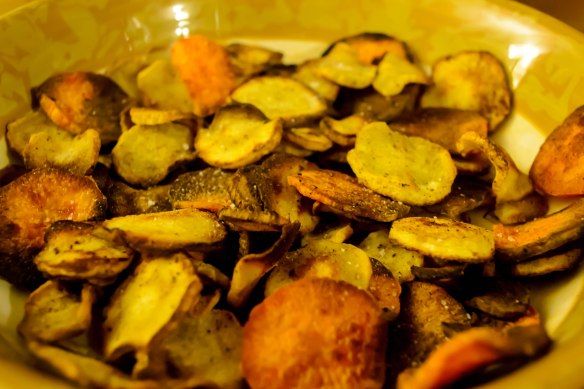
“89. Vegetable crackers: Slice beets, sweet potatoes, plantains or parsnips or all of the above into 1/8-inch disks (a mandoline is helpful) and toss lightly in olive oil. Spread the slices on baking sheets, sprinkle with salt, pepper and, if you like, other seasonings and bake at 400 degrees for 10 to 12 minutes. When browned, flip the chips over and bake for another 10 minutes or so.”

This sounded tasty, and I’d always intended to make it for a party.  With a dear friend coming over to ring in the new year with us, and since hunks of cheese alone might be deemed a slightly imbalanced offering (though so, so delicious…), this seemed like a perfect opportunity.  Beets were out of the question (N.’s nemeses since childhood), and I couldn’t find plantains in my grocery store’s produce section, so we were left with the nutty herbiness of parsnips and the always dependable earthy sweetness of sweet potato.

3 medium parsnips, peeled

½ large sweet potato, peeled

generous dose of olive oil (maybe ¼ cup?), plus more to grease the cookie sheets

1 tsp each (or to taste) salt, pepper, and garam masala

To prepare for roasting, preheat the oven to 400F and line two cookie sheets with aluminum foil.  Drizzle with olive oil and spread to cover the surface of the foil evenly.

While the oven preheats, tackle the vegetables.  I don’t have a mandoline, but I do have a ruler, and I must confess I did bring it to the kitchen to give myself a better idea of what 1/8 inch looks like.  My slices were not quite even, but they did verge on passable.  I tossed them – big coins of harvest orange and speckled white – in a glass bowl with the olive oil and the spices until they were evenly coated.

Food Blog 2011-2013-0339

Spread the vegetable coins across the cookie sheets in a single layer, not overlapping, not in piles.  If they cook in a stack, they will soften but not brown or crisp.  Stow them in the oven for 12-15 minutes, or until they are just beginning to brown.

This next step is a true exercise in patience.  Unless you are far more talented with a spatula than I, you will have to flip each piece over individually.  You have to, because otherwise one side will burn and the other side will flutter limply into cooked-but-not-crisp status.  Trust me on this one.  When you have laboriously flipped each coin, shove the tray back into the oven for another 10-12 minutes.

Food Blog 2011-2013-0342

At this point, you’ll have to use your judgment.  My offerings were, after this additional time, cooked through but not remotely cracker-like in texture.  Another five minutes in the oven might have done the trick.  Putting them back in, failing to set a timer, and heading to the couch to eat dinner (I was trying to multitask) is not advisable.  I didn’t remember them until I smelled the slightly spicy aroma of parsnips, and by then it was too late – many of the little coins had gone from crackers to briquets.

I decided to pick out the worst offenders – Lucy reports that she didn’t mind a bit of charred flavor – and eat the salvageable ones anyway.

Food Blog 2011-2013-0356

To make them a bit more exciting (and disguise any lingering burned taste) I made a little dipping sauce.  You’ll need:

juice from 1 lime

2 TB honey

1 tsp garam masala

½ – 1 cup Greek yogurt

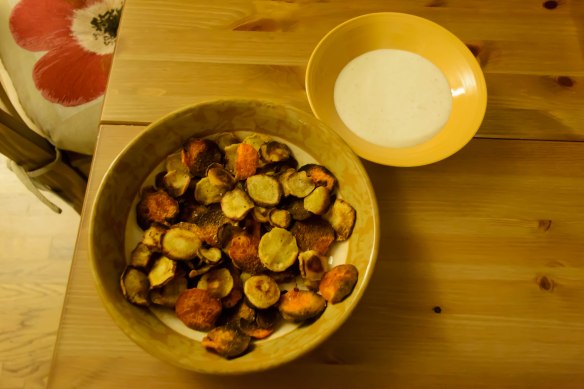
Whisk the first three ingredients together with a fork until they are smooth.  In increments, add Greek yogurt until your sauce reaches the desired thickness.  Mine was about the consistency of ranch dressing, but much more interesting in flavor.

Food Blog 2011-2013-0349

These crackers (with and without the sauce) were – if you were able to overlook the overcooking – a nice alternative to crudites or store-bought crackers.  They weren’t quite as crispy (except the ones that were too crispy), but they had a lovely deep flavor and none of the powdery, processed taste some crackers can have.  They are also a gluten-free offering and, minus the yogurt and honey sauce, vegan as well.

Food Blog 2011-2013-0350

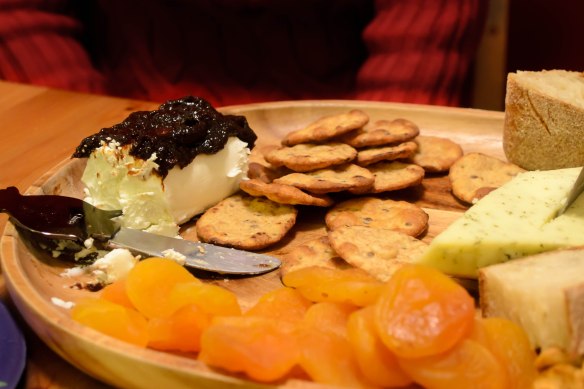
I served them alongside a cheese platter,

Food Blog 2011-2013-0353

Food Blog 2011-2013-0354

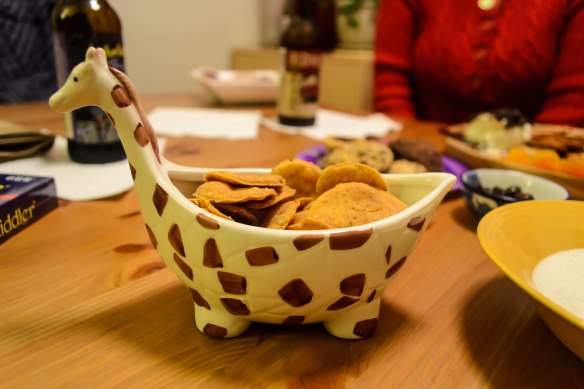
Joy the Baker’s chili spiced sharp cheddar cheese crackers,

Food Blog 2011-2013-0352

assorted sweets,

Food Blog 2011-2013-0355

and my appetizer version of Bittman’s “Marshmallow Topping for Adults” dish: thick discs of sweet potato roasted until tender, topped with a dollop of cream cheese and sprinkled with a pecan brown sugar blend before being broiled until the sugar bubbles and the cheese slackens toward melting.

Food Blog 2011-2013-0357

Food Blog 2011-2013-0359

And champagne, of course.

Food Blog 2011-2013-0361

Happy New Year.  I hope you celebrate your achievements, meet your goals, and find happiness in your own self.  I’ll be checking in again later this week with some reflections and announcements.  Welcome to 2013.

Finish line

The problem with cramming for final exams – as many of my students were doing only a few weeks ago – is that you end up trying to process too much information, and just as quickly as you learn new things, the old things you thought you knew start sliding away. That’s the glory and the power of writing. Once it’s on the page, it’s solid. No matter how many holiday dinners you eat (I’m onto my third or fourth at this point), those words will still tell you exactly what you did and (sometimes) how you felt about it.

I feel like I’m cramming for my final. Last week, before the holiday, before the family time, before the outpouring of memories and laughter and swallowed tears of all kinds and barking and yelling and joy, I made three Bittmans in a desperate bid to stay on top of the project.

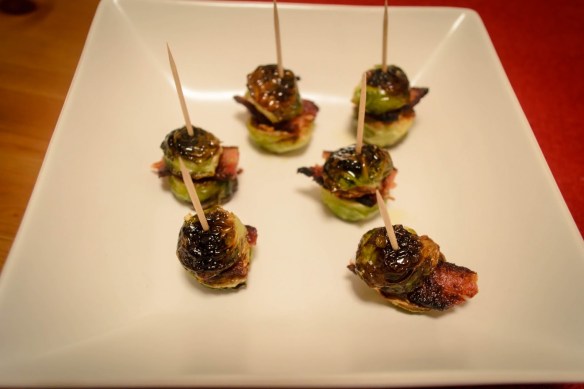
42. Brussels Sprout Sliders: Trim and halve large brussels sprouts, toss with olive oil and roast at 400 degrees until tender but not mushy. Using the brussels sprout halves as you would hamburger buns, sandwich them around a piece of crispy bacon or ham, maybe a little caramelized onion, and a dab of whole grain mustard. Keep everything in place with toothpicks.”

I always intended to make this one for a Halloween party. It seemed fitting: for some, brussels sprouts are a frightening, disdained vegetable. But this new perspective on them makes them fun and perhaps even appetizing to those disbelievers who see them only as a bitter waterlogged grenade of disappointment. But I never did. So they became an appetizer for two:

6 brussels sprouts, trimmed and halved

2 strips bacon, cut into eight even pieces (you’ll use six for the brussels. Eat the other two, or share with a tall, handsome somebody who shows up in the kitchen when the smell becomes too enticing to ignore)

dab (maybe 1 tsp total?) whole grain mustard

Preheat the oven to 400F.

Line a small baking dish (I used a 9” cake pan) with aluminum foil and drizzle the foil with olive oil. Brush or rub the olive oil into an even layer so every millimeter of foil is covered.

Set the sprouts, cut side down, on the oiled foil, spacing them evenly so none are touching. This will ensure even roasting rather than steaming.

Food%2520Blog%25202011-2013-0204

Roast for 15 minutes, until the cut edges are browned and just crisp. Using tongs, flip over each sprout so they teeter on their curved sides. Roast for another 15 minutes.

While sprouts are roasting, cook the bacon. Mine was already cooked – saved from another porky occasion – so during the last five minutes of sprout roasting I added the bacon pieces to the pan to heat them up a little.

When the sprouts are browned and lightly tender, set them aside until they are cool enough to handle. As soon as you can bear to touch them, add a tiny spread of mustard across one cut edge, seat the bacon atop it, and place another sprout half on top to complete the sandwich. Drive a toothpick through the whole thing and serve as an hors d’oeuvre.

Food%2520Blog%25202011-2013-0205

We gobbled these down like we hadn’t eaten in weeks. They were delightful and I highly recommend them as a party item: crisp bacon, zesty mustard, and the nutty crunchy slight bitterness of roasted brussels sprouts, all collected together in one perfect bite. Perhaps a New Year’s Eve treat to help the hours pass.

Food%2520Blog%25202011-2013-0210


Soup and bread seemed like a good meal to follow our sprouts.

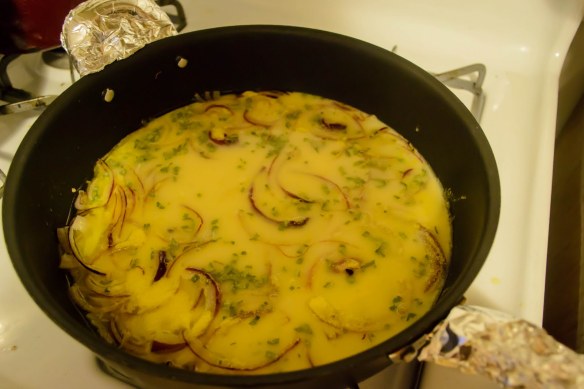
82. Cornmeal Flatbread with Onion and Sage: Mix 1 cup cornmeal with 1 teaspoon salt; slowly whisk in 1½ cups water. Cover and let sit for an hour (or up to 12 hours in the refrigerator). Put ¼ cup olive oil in a 12-inch ovenproof skillet along with a thinly sliced red onion; stir. Heat the skillet in a 400-degree oven for a few minutes, then stir and pour in the batter. Bake at 375 degrees until the flatbread is crisp at the edges and releases easily from the pan, about 45 minutes.”

I followed these directions fairly exactly, with the exception that I used only half an onion. The olive oil and onion went into the oven for five minutes at 400F, at which point the onion slices were sizzling and the oil was shimmering beautifully.

Bittman neglects to note where and when to add the sage, so I stirred a tablespoon of finely chopped fresh sage into the batter just before adding it to the skillet.

Food%2520Blog%25202011-2013-0203

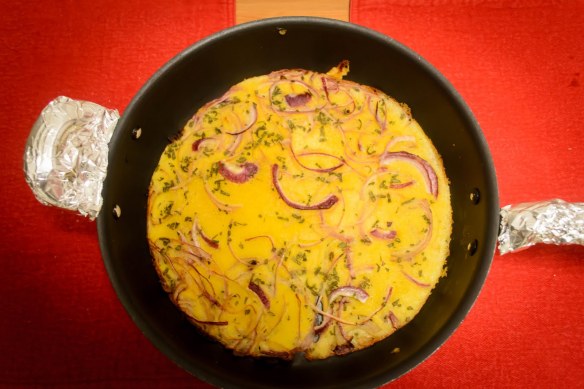
This concoction baked for 45 minutes, until it was set, the onions were crisp-tender, and the whole thing loosened easily from the skillet and slid almost gracefully onto a serving tray.

Food%2520Blog%25202011-2013-0212

We cut large wedges and tasted. It was unlike any other bread I’ve come across – more like baked squares of polenta than anything else, which made sense when I stopped and thought about it. Were I renaming this dish, I think I would call it Polenta Pizza. It was well oiled and spongy in texture, squishing pleasingly between our teeth and driving us back for additional tastes. N. wasn’t sure he liked it at first, but then he went back for a second slice and then a third. When I ribbed him about this, he said he was still deciding what he really thought, and needed more samples to truly make up his mind.

Food%2520Blog%25202011-2013-0214

This odd little bread course could easily be dunked in saucers of warmed marinara sauce, or sprinkled with mozzarella or parmesan for a pleasing salty bite. Though the onions and sage were good, you could probably saute almost anything in that skillet before adding the batter: sausage, peppers, mushrooms… anything you’d put on a pizza.

A decadent appetizer and a well-oiled pizza/bread need a sober, sensible kind of soup to balance them out.

19. Saute chopped onions, garlic, celery and carrots in olive oil, then add chopped tomatoes (boxed are fine) with their juice, lentils and stock or water to cover. When everything is soft, add a squeeze of lemon juice or a splash of red wine vinegar. Garnish with parsley.”

Since we were leaving town the next day, I didn’t want huge quantities. (This still made enough for four, but I froze the leftovers so nothing was lost)

½ red onion (left from the flatbread, so convenient), diced

4-6 small cloves garlic, minced

1/3 cup each celery and carrots, sliced

¾ cup lentils

13.5 oz can petite diced tomatoes

2½ cups chicken broth (or vegetable broth, or water)

1 TB lemon juice

2 TB fresh, finely chopped parsley

salt and pepper to taste

I heated 2 TB olive oil over medium heat, then tossed in the onions to sweat for a minute or two before adding the garlic and the other vegetables. When the onions were translucent and tender, I added the tomatoes, lentils, and broth and turned the heat up to medium high until the whole pot came to a boil.

Once boiling, I gave it a healthy stir and then turned the heat down so the soup would just simmer, letting the lentils soften gently and the vegetables tenderize.

Simmer for at least 35 minutes, then taste the lentils to see if they are tender enough for your taste. We like them soft but not mushy, with minimal resistance but still able to hold their shape.

Just before serving, squeeze in the lemon juice, stir gently, and dip into serving bowls. Scatter the surface with a grassy sprinkle of parsley.

Food%2520Blog%25202011-2013-0215

We liked this, though it wasn’t the best lentil soup I’ve ever had. The flavors were enticing and the lemon juice made it a bright, rather than heavy, soup. The problem with it was that I like my lentil soup more like a stew or a chili. The brightness of the lemon made the shower of shredded pepperjack cheese I was considering adding seem extraneous and out of place, and I tend to get crotchety when denied cheese. But alongside the flatbread and the richness of the brussels sprouts, it was hearty but didn’t weigh us down.

2012 is fading like the last sheen of daylight across the hills in winter. 2013 charges toward us, all mystery and sharp promise. I thought about cheating and saying I was done; these three dishes are the final three, I made it, all boxes are checked, all questions answered, funtoosh, kaput (extra points if you can name my source!), but I just can’t. I’m too close. This final exam is too important. This resolution needs to be one I keep. I have two dishes left. I have two days, one of which will be spent driving from the Sierra Nevada foothills where N.’s parents live back to Los Angeles and my little house. I hope I’m going to make it. The finish line is in sight. Now I just have to stagger across it.

Chatterbox

I’ve just begun rereading Neil Gaiman and Terry Pratchett’s genius collaboration Good Omens for perhaps the sixth or seventh time.  One of the characters introduced early in the novel is a Satanic nun named Sister Mary Loquacious from the Chattering Order of St. Beryl.  In looking back through some recent posts, I’ve noticed myself falling a bit on the loquacious side, with posts extending perhaps a bit longer than you’d like for a casual evening read.  So today, with three Bittmans to report on, I’m going to try to keep this brief.

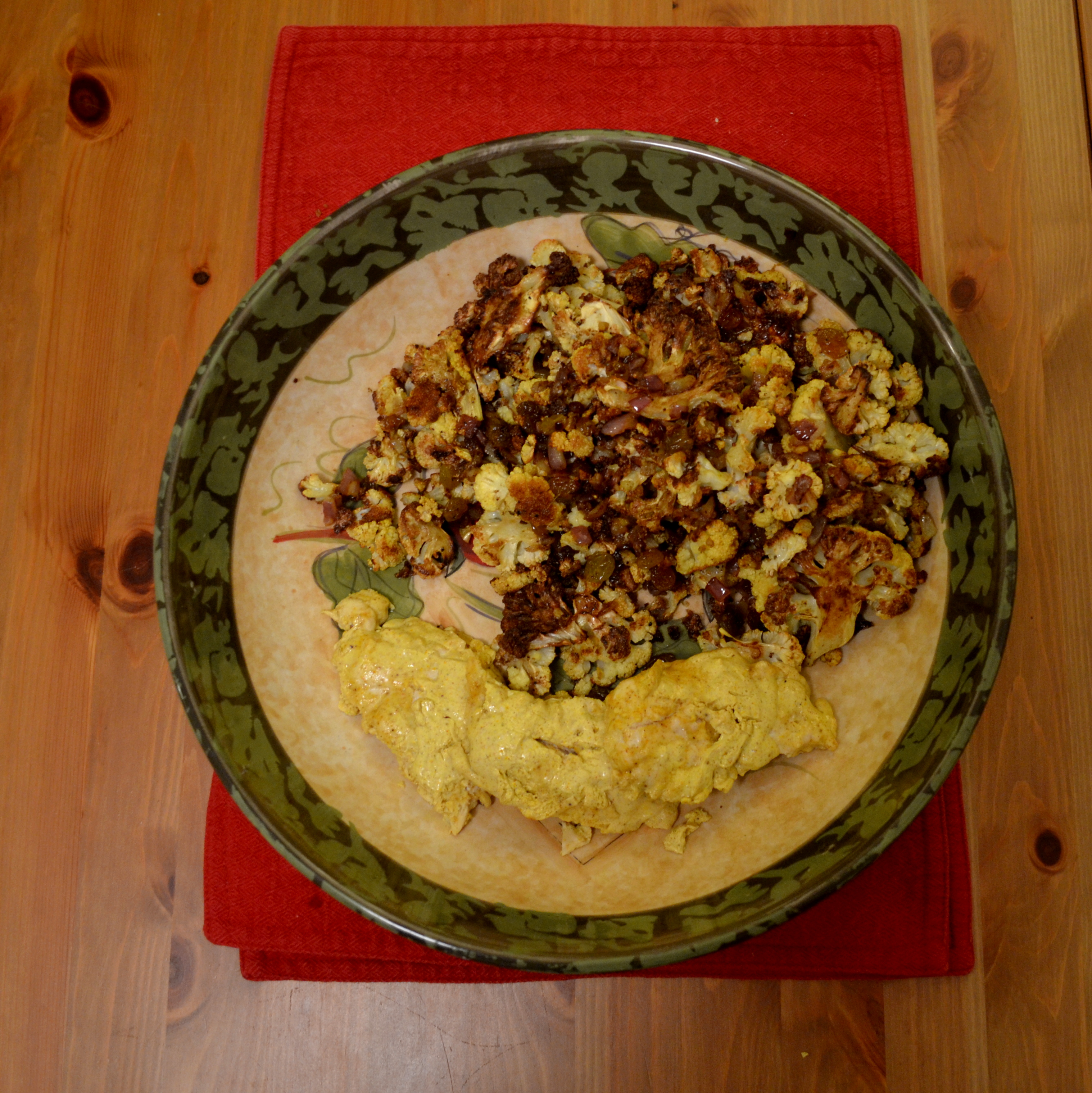
54. Cook onion, curry powder and chopped ginger in oil until onion is soft; meanwhile, steam cauliflower florets until nearly tender. Add cauliflower to onion mixture, along with raisins; cover and cook until the cauliflower softens.

Two of my most hated food items as a child were cauliflower and curry.  Cauliflower was drab and slightly bitter – worthless unless smothered in sharp cheese sauce, and even then a bit suspect.  Curry powder was musty and unpleasant, and the two of them together sound like one of my youthful nightmares.  I kept this selection on the list because N. loves the flavor of curry.  But I knew that I would have to doctor up Bittman’s procedure to give this dish even a fighting chance.

1 head cauliflower

1 tsp curry powder, divided

½ tsp salt

½ tsp black pepper

generous glugs of olive oil (quantity will depend upon the size of your cauliflower)

¼ of a red onion

¼ cup golden raisins

2 TB fresh ginger, grated (this is easiest to do while it is mostly frozen; you keep your ginger in the freezer, don’t you?)

Brush a layer of olive oil on each of two cookie sheets and preheat the oven to 400F.

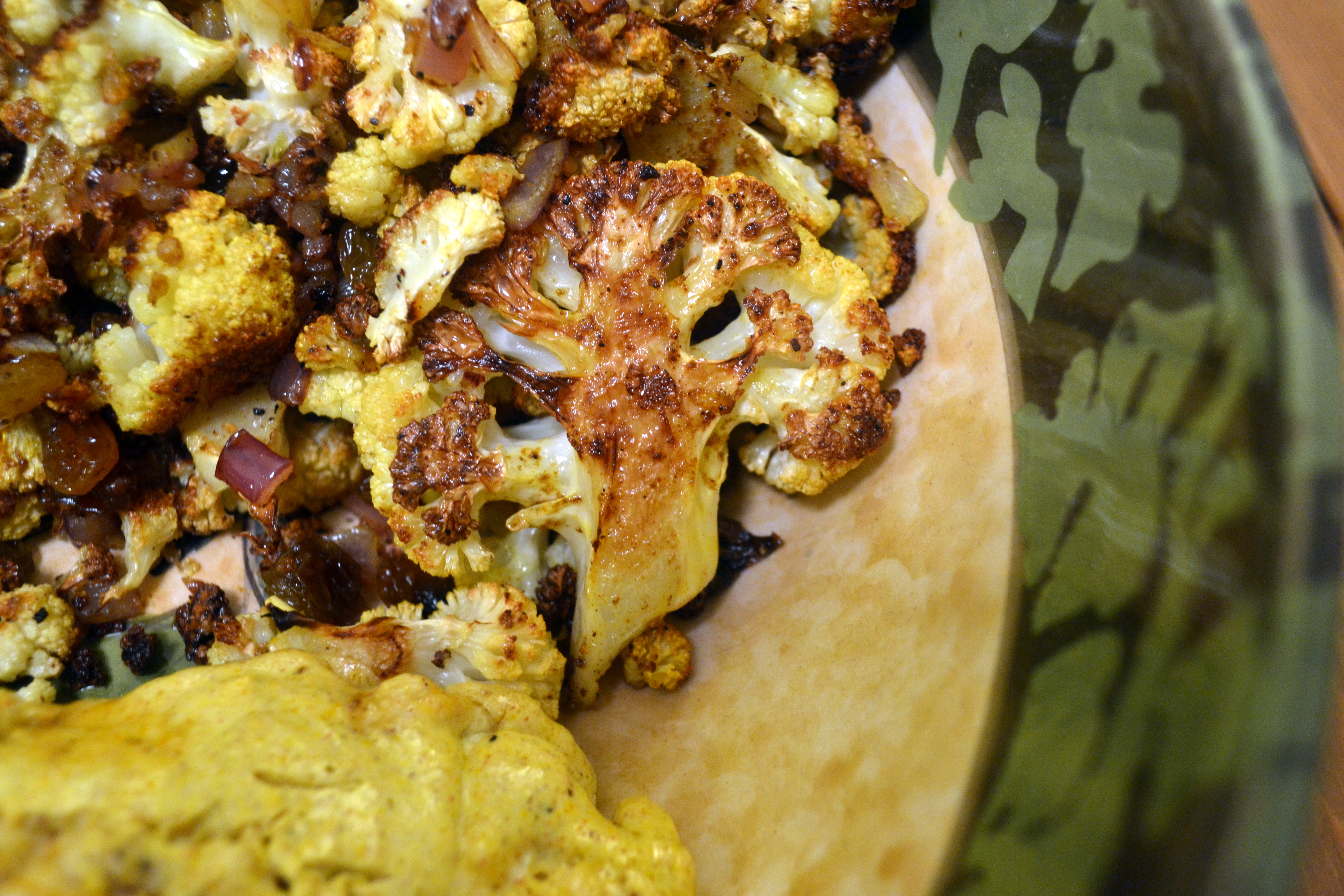
Core the cauliflower and slice it across into flat steaks of about ½ inch thick.  Some will collapse into florets.  That’s okay, but ideally you want nice long, horizontal pieces of cauliflower.  They look like flattened sprigs of Queen Anne’s Lace.  Toss the cauliflower with ½ tsp of the curry, salt, pepper, and more olive oil, then place on the tray in a single layer.  Don’t crowd them too much – the more space they have, the better they will brown.  Roast for 40 minutes, pausing at the 20 minute mark to flip each piece.

While the cauliflower roasts and caramelizes and browns, sauté the red onion in a little more olive oil.  When it begins to brown, toss in the raisins, the ginger, and the other ½ tsp of curry powder.  Cook together for another 2-3 minutes until the raisins plump and the curry aroma mellows a bit.

When the cauliflower is just tender and darkly golden, take it out of the oven and toss it with the onion and raisin mixture.

We had ours alongside some roasted chicken breasts I’d marinated in yogurt and garam masala.  It was delightful – if you favor a strong curry flavor, add more to both the cauliflower and the onions.  I was happy to have just a mild hint of earthy spiciness, and the unexpected sweetness of the raisins cut even this dankness in a very pleasant way.

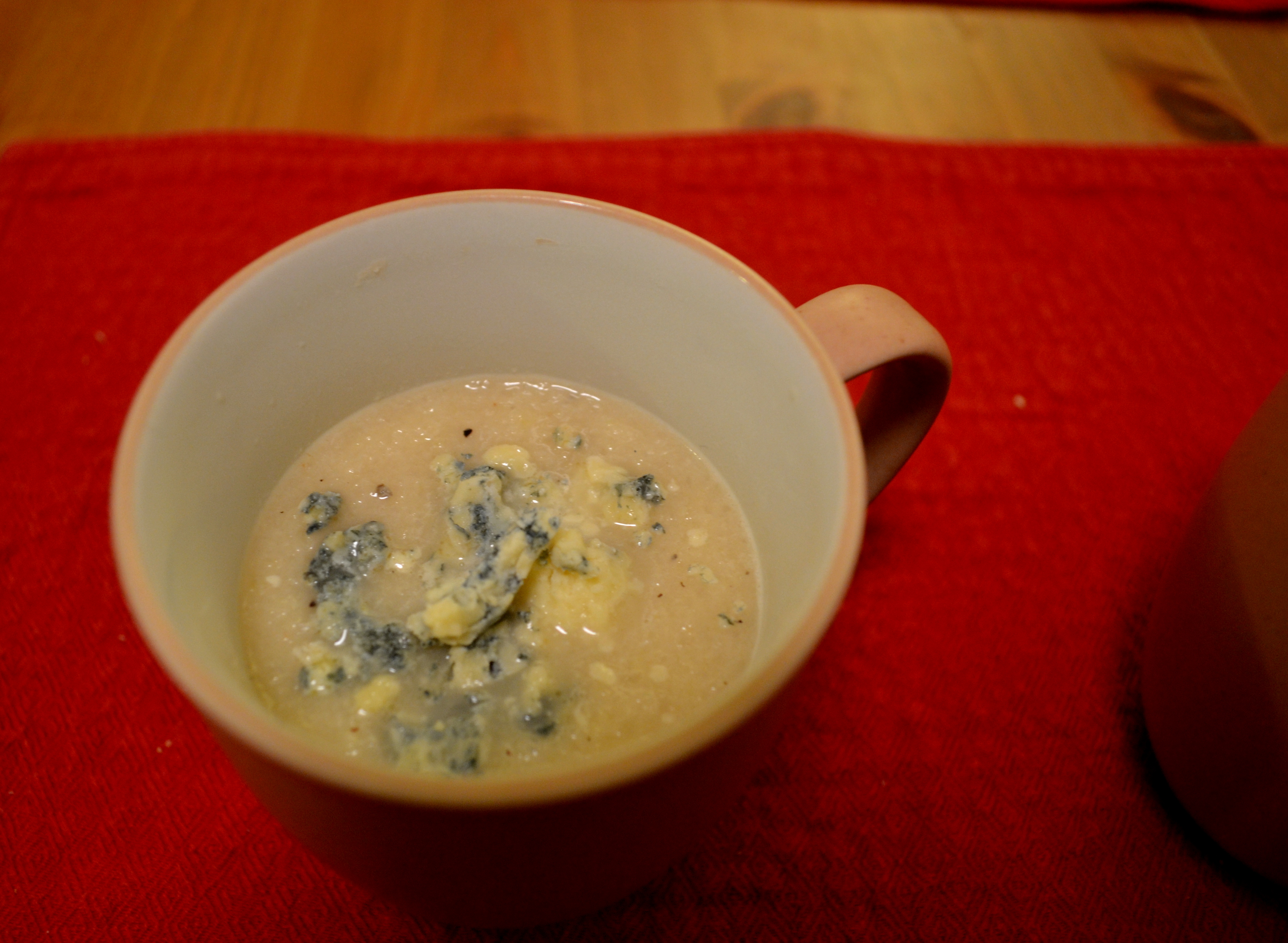
16. Sauté equal amounts chopped, peeled apples and onions in butter until soft. Add stock or water to cover, then simmer for 10 minutes. Cool and puree. Serve sprinkled with Stilton or other blue cheese.

We weren’t sure about this one.  Nevertheless, we bravely decided to make just a small portion and see what happened.  These quantities will serve two.

1 medium apple, peeled and cored

1 medium onion

salt and pepper to taste

2 TB butter

1 ½ cups chicken stock

blue cheese

Melt the butter in a small pot over medium heat.  When it foams, it’s ready.

Meanwhile, dice the apple and onion into small chunks.  You want equal sized piles – we probably ended up with just over a cup of each.  Add them to the pot and cook over medium, stirring occasionally, for 10-15 minutes.  You want softening and tenderizing, not aggressive browning.

When the apples are tender and the onions soft and translucent, add the broth and seasoning (though we didn’t make any additions, some thyme or sage might be very nice here – try 1 tsp of finely minced fresh herbs) and simmer for 10 minutes.

Remove from heat and cool slightly, then puree and serve with 1-2 TB blue or gorgonzola cheese sprinkled on top.  We had a nice blue stilton.

It wasn’t that we didn’t like this, it was that it seemed odd as a soup.  It was slightly reminiscent of a butternut squash soup, but the apples were slightly sweeter than a squash, and the combination of their sweetness with the sharpness of the onion made this seem like an applesauce with too many ingredients.  Left chunkier, this might be nice draped over a roasted pork tenderloin – a meat that goes nicely with both sweet and sharper, savory flavors.  It might also be a good base for a butternut squash soup – the one additional player in this game could be the additional complexity it might have needed.


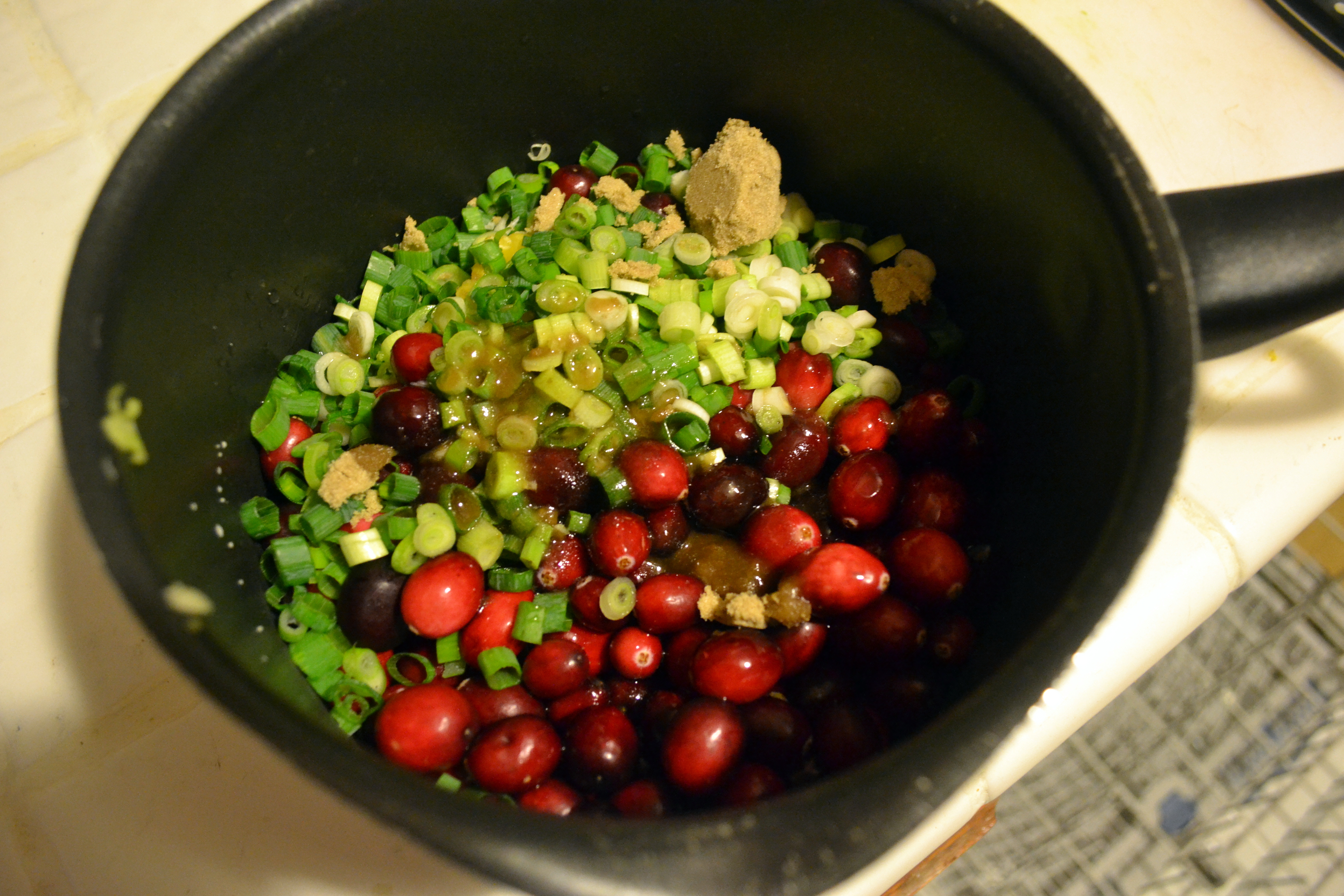
6. Cranberry-Corn Sauce: Cook a bag of fresh cranberries with about a cup of corn kernels, some chopped scallions, ¼ cup brown sugar (or to taste) and a splash of water, just until thick.

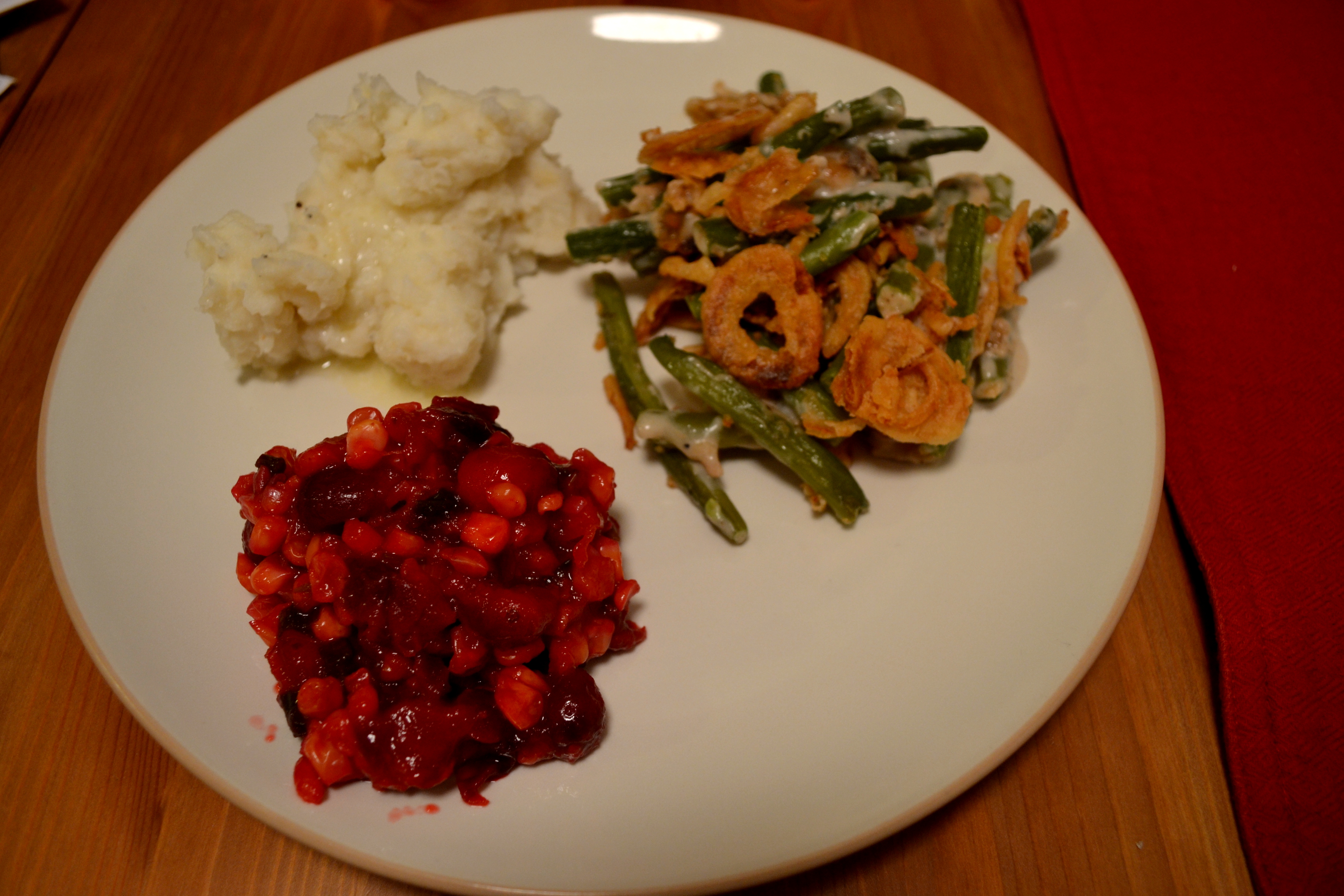
Our third Bittman this week was part of a pre-Thanksgiving Thanksgiving dinner.  When you grow up with a set collection of dishes that come to equate to this holiday, it can be hard to make a change.  When N. started having Thanksgiving dinner with my family, he missed his mashed potatoes and green bean casserole.  So I try, in the weeks that surround the holiday, to make up for these omissions. I make several smaller dinners featuring the dishes that don’t quite fit onto our holiday menu.  This seemed like the perfect side – not traditional enough for our Thanksgiving table, but satisfying in the mean time.

1 bag cranberries

1 cup fresh or frozen corn

3 green onions, thinly sliced

¼ cup brown sugar

¼ cup water

I tossed the cranberries, corn, water, and brown sugar together in a saucepan and set them over medium heat.  I added the green onions at this point too, but were I making this again I would add them later – the 15-20 minute simmering time resulted in a slightly adulterated color, and the fresh greenness would be so much nicer.  I advise adding them during the last five minutes of cooking time.

I let this simmer for about 20 minutes, until most of the cranberries had popped and the whole pot was a sticky, almost syrupy texture.  I let them cool off the heat with the pot uncovered for a few minutes, both because I like the flavor of cranberry sauce better the cooler it is, and because I wanted to let it gel up a bit further.

These weren’t as sweet as your typical cranberry sauce.  At least, they were not as sugary sweet.  The corn added a beautiful vegetal sweetness that seemed at once the perfect fit and a strange accompaniment.  We talked through this dish as we ate it, appreciating the maple overtones of the brown sugar and the tender crunch of the sweet corn, but thrown off slightly by the same qualities.  What we finally decided, as we sampled second helpings, was that they were a delicious side dish, but they didn’t feel like Thanksgiving.  Since the rest of the meal (garlic mashed potatoes and the old standard green bean casserole, slathered with cream of mushroom soup and the salty, salty crunch of french fried onions) was so traditional, having this difference, even in its subtlety, felt wrong.  If you’re a stickler for tradition, this cranberry dish would have a better chance as a chutney for grilled pork or maybe even lamb.

Next week is the big feast.  Oddly (odd because the entire Bittman list was conceived for this single day), I had some trouble figuring out where to fit his ideas in.  I’ve come up with a pair of selections to try out, and I will report back.  In the mean time, what dishes will grace your menu on Thursday?

Trick or Treat

Halloween is easily in my top three holidays.  I have to give the prize to Christmas, because it means family and love and sweaters, but Thanksgiving and Halloween chase each other in circles to gain second place.  Despite that love (overwhelming in some cases, especially if you, like N., are not invested in costuming yourself at every possible occasion), this is the first year in almost a decade that I’ve done nothing to celebrate.  No costume.  No party.  No decorations.  We bought candy for the six kids that showed up (only six!  The whole evening!  Was it just because it was a Wednesday, or do kids not trick or treat like they once did?) and I definitely listened to the Halloween party mix my friend D. made for me a few years ago, but it felt a bit like a lost holiday.

I did embrace the season, though, the following day.  Having Thursdays off gave me the opportunity to do something I’ve been wanting to do for years: pillage Target’s day after Halloween sale for leftover clearance items (read: treats!).

The tricks began when I began work on the evening’s dinner.  It was, I realize in retrospect, a bit of a Chopped style enterprise: appetizer, entree, and dessert, each made with ingredients I’d not expected to meld.  In each case, however, the “trick” aspect of the dish was my doing, not the recipe’s.

“12. Garlic-Rosemary Figs: Soak dried figs, stems removed, in warm water until plump; drain and halve. Heat rosemary and lightly smashed (and peeled) garlic with olive oil on medium-low heat, until softened. Add figs, along with some fresh orange juice. Cook until saucy.

Pairing figs, garlic, and orange juice seemed odd.  Nevertheless, I collected enough for one portion (this was not N.’s kind of dish):

6 dried black mission figs

1-2 tsp fresh rosemary

2 smashed, peeled garlic cloves

1 TB olive oil

juice from 1 small orange (⅓ – ½ cup juice)

I heated some water in my teakettle and poured it over the figs (which I’d halved prematurely.  Apparently paying attention to the directions is kind of important), which I let stew on the counter for half an hour.

Figs vaguely plumped, I drained them and set them aside, then put the garlic cloves, rosemary, and oil into a cold pan.  I heated it over medium for five minutes or so – just until the rosemary started to sizzle and the garlic turned a little blonde.  Then I added the figs and orange juice, and simmered for fifteen minutes or so, until the orange juice had reduced considerably.

I plated, I ate, and I considered.  This didn’t taste bad, but it didn’t marry absurdly well either.  The rosemary and the figs were lovely.  The orange juice and figs were fine (though the orange was a bit overpowering).  The garlic and figs were… unobjectionable.  They just weren’t my favorite.

I must say, though, I recalled while I was cleaning up after dinner that this entry was in the “Sauces and Relishes” category.  I had eaten it straight.  This was, perhaps, why I wasn’t enamored of it.  Therefore, I’d recommend spooning this over lamb chops, or pork tenderloin, either of which would add some savory notes to make the garlic feel less anomalous.

Though this “appetizer” wasn’t fantastic, I ate it with a fantastic grain-salad-turned-hash inspired by Smitten Kitchen.  I want to revisit this hash, because I think it could use some additions, but here are the basics:

Line a baking sheet with aluminum foil.  Set it in the oven and preheat to 400F.  Yes, you are preheating the pan along with the oven.

Peel and halve a butternut squash.  Seed half of it and cut that half into small cubes.  In a bowl, toss the cubes with salt, pepper, and olive oil, then tumble onto the baking sheet (where they will sizzle immediately – this is a good thing) and stow back in the oven for 35-45 minutes, or until they have golden edges and creamy soft middles. 

During the last ten minutes of squash roasting, push the squash to the sides of the pan (or just grab another pan, if you aren’t invested in avoiding dishes, like me) and stack 4 cups or so of trimmed, cut kale that has also been tossed in olive oil, salt, and pepper.  The kale and squash will cook down a little more together, and you will be left with something not quite like kale chips, but a bit more textured than if you’d boiled or steamed it.

While the squash and kale roast, cook 1 cup of bulgur wheat in chicken (or vegetable) broth.  When done, fluff gently with a fork and toss with squash and kale.

During the last few minutes of roasting time, toast 2 TB pumpkin seeds in a dry pan until they begin to snap and crack.*  Be careful not to burn them.  Toss with bulgur and vegetable mixture.

In the pumpkin seed pan (again, avoiding dishes), heat an egregious quantity of butter until foamy and crack in an egg to fry until the edges frizzle and brown and crackle.  Despite a few careful taps, on this egg of all eggs – the egg I wanted to photograph quivering atop my hash, the egg I wanted to show just cut and lusciously runny – I somehow shoved my thumb through the yolk and it broke all over the pan.  Nasty trick, egg.

Nevertheless, I piled my hash up on my plate, carefully laid the fried egg over it, and dug in.  It was a hearty, pretty, perfectly autumnal dish.  It needs some tweaking before I’m thrilled with it – perhaps some sautéed leeks folded into the bulgur, or some light spices on the butternut squash – but this was a delightful start.

I turned to dessert:

“96. Sweet Autumn Gratin: Combine cubed pumpkin or sweet potato with cranberries and hazelnuts in a buttered baking dish. Sprinkle with brown sugar and toss. Drizzle cream all over, dot with butter and bake until soft, bubbly and browned, 50 to 60 minutes. Re-warm before serving if you like.

I’m going to give you a list not of my ingredients and procedure, but of what I should have used and done.

1 big sweet potato, peeled and diced

½ cup dried cranberries (I didn’t have fresh, so I don’t know what they would be like.  Presumably more successful because they would emit, not swallow, liquid)

½ cup walnuts, coarsely chopped (I couldn’t find hazelnuts anywhere – who would have thought this would be the food item I would miss most from Oregon?!)

¼ – ½ cup brown sugar, depending on how sweet you like it

¼ cup heavy cream

¼ cup butter

Preheat the oven to 400F.  Butter a 9×13 inch pan (my round, much smaller dish was a poor choice).

Toss the sweet potato chunks, cranberries, and walnuts with brown sugar.  Spread them out in the pan in an even layer.  Pour on the cream, then pinch off pieces of butter and dot them over the top.

Bake for an hour, or until the sweet potato pieces are fully cooked.

I did few of these things.  My sweet potatoes were in bigger-than-they-should-have-been chunks, piled up in a small casserole dish, starving for cream (I only had a tablespoon or two) and shorted on sugar.  As a result, at the end of an hour they were hot but still resistant in texture.  I think what you want is melting, creamy softness.

Tricked again.

To remedy this problem, I tried several things.  First, I made a bourbon hard sauce (equal parts sugar and water, stir to melt.  Add ¼ cup butter, stir carefully until it melts.  Add a shot or two of bourbon, cook just a minute or two to take the edge off) to pour over the top.  This helped, and I willingly ate a serving, but it was lacking whipped cream or ice cream or, bizarrely, pie crust.


I didn’t figure out the pie crust thing until the next day when I was making empanadas for dinner.  As I pressed my fork into the edge of the dough to crimp it, I was flooded with the right answer: tiny hand pies stuffed with my sweet potato mixture!

This was clearly the right thing to do.  Saturday afternoon, I unrolled a pie crust on my counter, cut out 3 inch circles, and proceeded to fill them with a teaspoon or two each of the gratin, which I’d mashed with a fork to make smoother and therefore more manageable.

Once filled, fold in half, press and then crimp with a fork, and brush with egg wash (1 egg yolk + 1 TB water).  Sprinkle with turbinado or other raw, chunky sugar, and bake in a preheated 400F oven for 15 minutes, or until the tops are golden brown and the dough is flaky.

These make lovely, tiny snacks.  The craisins give a punch of tartness to the sweet, earthy, almost heavy sweet potato and walnut pairing.  There are subtle floral hints in there, because before putting it away that first night I admit to dumping the bourbon sauce over the whole thing, but this adds a flavor I wouldn’t change.  The dough is buttery and flaky and collapses easily around the filling, and it’s difficult to prevent yourself from standing over the pan as it comes steaming out of the oven and eating four or five in a row, scalding your tongue and not caring at all.

Perfect November treat.


* You could, I suppose, use butternut squash seeds, if you are the sort of person with the forethought to save, rinse, and dry the seeds while you clean your squash.  I, clearly, am not.
With or Without You

The organizer of the group I went to Senior Prom with booked us seats at Splashes, a restaurant in a Laguna Beach hotel. When we arrived, all dressed up and feeling ever so fancy, four of our party of six were surprised and distressed to discover that a restaurant called Splashes primarily served seafood.  I was delighted.  Lobster ravioli?  Yes, please!

While the majority of our party waited for their chicken and steak dishes to be prepared, my date received the first course he’d ordered: a caprese salad with balsamic dressing.  It arrived – beautifully arranged slices of bright tomato, quivering mozzarella, crisp basil leaves – and he squinted at it with confusion.  “This is not a salad,” he said.  “There’s no lettuce!”  He ate it – we all did – and thought it was good, but maintained his stance.  To be a salad, a collection of ingredients must include lettuce.  No room for experimentation there.

We were in high school, and it was only the very beginning of the new millennium.  What did we know about creative vegetable assemblages like caprese or tabbouleh or panzanella?  We were babies.  But I will say: though I recognize these popular, now fairly well known varieties of salad as such, in this project Bittman has taught me so much about what a salad can be and how widely the boundaries of its definition can be stretched.  Not a single entry, in fact, on the Salads portion of the project list, includes lettuce.  How pedestrian – how expected – that would be.

“76. Grate apples (red are nice; leave skin on), radish and celery.  Roast pistachios and chop.  Dress all with olive oil, shallots, grainy mustard, red wine vinegar and a pinch of sugar.”

This sounded like an interesting and delicious combination, but like the tomatillo and jicama combination a few weeks ago, it didn’t sound like something you could dig into a big bowl of.  I decided, therefore, to make it more like a condiment, which gave me an excellent excuse to roast a chicken.  Imagine: a steaming, crisp skinned chicken thigh topped with cool, crisp shreds of apple and peppery radish.  Like the lobster ravioli of yore, yes please!

Here’s what I used:

1 large apple (I had a honeycrisp – one of my favorite kinds)

2 stalks celery

4 small radishes

½ cup pistachios, roasted and chopped

Dressing:

2 TB olive oil

1 TB red wine vinegar

1-2 tsp sugar (depends on your taste, the sweetness of your apple, and the sharpness of your radishes)

½ TB whole grain mustard

I eliminated the shallots because, despite their lauded mildness, neither N. nor I find the flavor of raw onions particularly appealing.

During the last twenty minutes or so of the chicken’s stay in the oven, I clattered the pistachios into a small cake pan and put them on the bottom rack so they could toast.  They needed about ten minutes at 350F, and emerged browned and nutty smelling (isn’t that a silly way of describing the aroma of a nut?  Of course it was nutty smelling!  What else could it be?).  I set them aside so they could cool before being chopped and deposited into the salad mixture.

While things were roasting and toasting, I grated up the stars of the salad.  The apple became little ribbons, the radishes paper-thin shreds, and the celery turned into a pile of almost-mush.  But I decided that was okay – celery is such an assertive texture that less of its fibrous aggressiveness would actually be a benefit.

Were I making this again, at this point I would deposit the grated vegetation into a sieve for a few minutes to let the juice drip away, giving the dressing a better opportunity to cling and permeate.  My decision to plop everything right into the serving bowl resulted in slight soupiness – the apple and celery in particular gave off copious amounts of juice.

At this point, you should also chop and add your pistachios to the salad.  After all, you paid money for them and babysat them carefully to prevent burning them in the oven.  But I didn’t.  I forgot about them completely as I whisked up the dressing, tossed it with the salad, then stowed the serving dish on the table so I could have room on my kitchen counter to carve the chicken.

Piled atop carefully carved and portioned pieces of chicken, the little condiment salad warmed and released a delicious sweet-tart aroma that completely belied the bland appearance of our plates.  Though up close you could see flecks of red and green and pink in the salad from the skins of the various ingredients, from any distance it looked like pale meat with pale apple shreds on top, next to a pale pile of barley, which I’d cooked pilaf style as a starchy accompaniment.

The flavor was more like the smell than the appearance.  It was sharp and bracing – just sweet enough, but assertively vinegary.  This worked very well with our chicken because the sweet-sour crunch cut through the fatty moistness of the meat.  Halfway through dinner I sprinkled mine with a palm-full of the forgotten pistachios, and I must admit I liked it better nut free.  N., not a pistachio fan, agreed.


Despite how good a sport he has been during the years (years!) I’ve been working to accomplish this project, N. doesn’t like all foods.  I recognize that there is a time for experimentation and excited guesswork, but there is also a time to exclude him from the proceedings.  This understanding led to my original decision to make only the items from Bittman’s list that seemed reasonable.  I haven’t set out to cook all 101 sides; there were a few that just didn’t fit our palates.  However, out of my curiosity and tastes, a few items remained on the list that are just not N.’s cup of tea.  The second salad I made this week was one such dish.

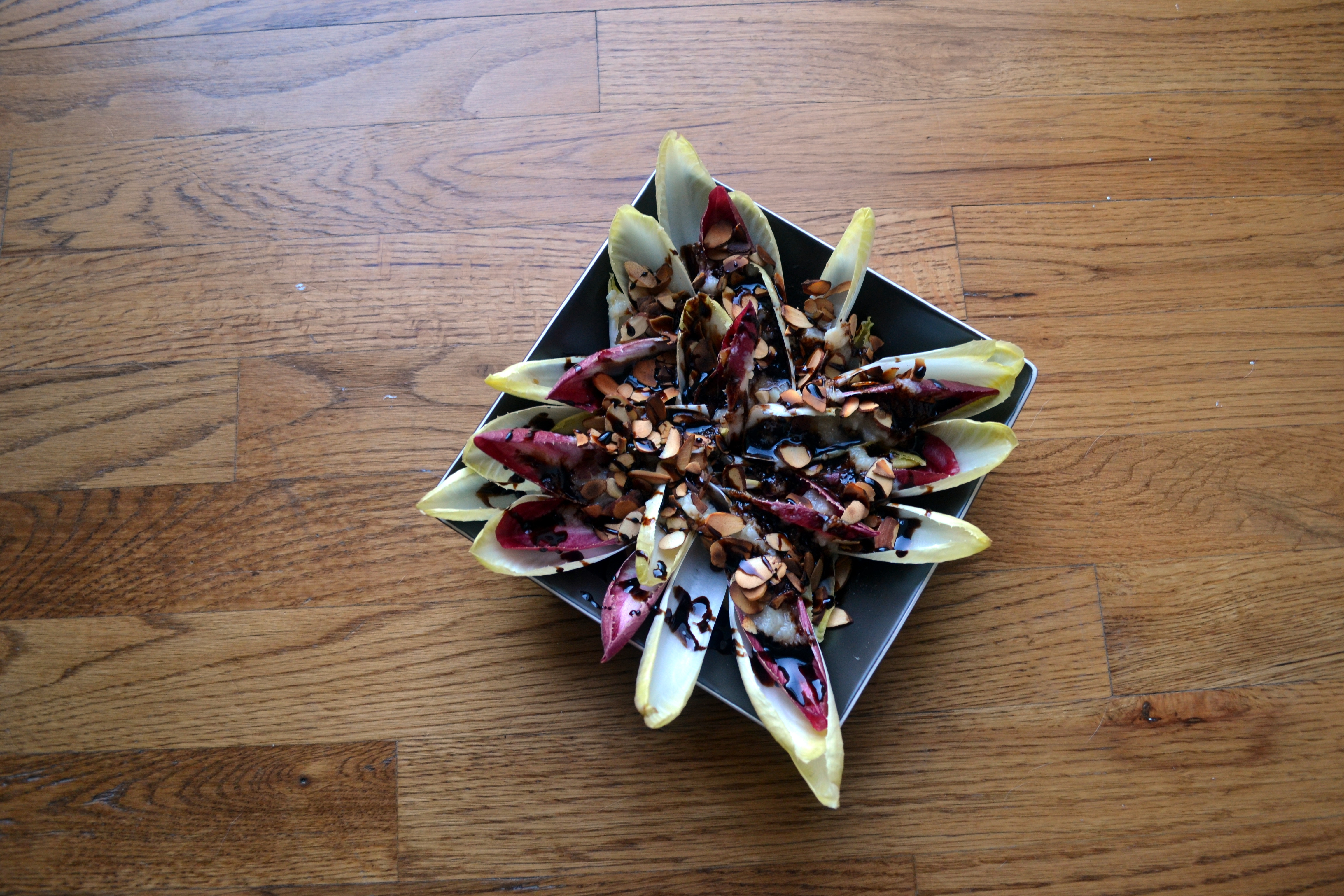
“79. Cook chopped pears in a covered saucepan with a tiny bit of water until soft. Puree, but not too fine. In your smallest pan, boil a few tablespoons of balsamic vinegar with a little brown sugar; lower heat and reduce by half. Spoon the pear sauce over endive leaves and finish with toasted sliced almonds and the balsamic reduction.”

To me, this sounded delightful.  To N., it sounded weird.  So on Thursday, when he had to go back to school for an evening engagement, it became my dinner.  It consisted of:

2 TB sliced almonds

2 ripe pears, peeled and chopped into small chunks

1 TB water

3 spears endive

¼ cup balsamic vinegar

1 TB brown sugar

I must admit: I cheated on the balsamic reduction.  The quantities I listed above are falsified.  But they are estimates you might use.  I happened to have a small container of already reduced, already sweetened balsamic vinegar in my refrigerator from a previous night, and this was the perfect excuse to use it up.  I just microwaved it for a few seconds and it loosened right up from a tar to a pourable, molasses-like syrup.

I toasted the almonds in a dry pan over medium heat, tossing them frequently.  You can’t take your eyes off of these slices for very long.  In the space of twenty seconds, they go from perfectly golden to burnt.  How do I know?  How do you think?

I set aside my overly tanned almonds and added the pear chunks and water to my pan.  Bittman didn’t specify whether the pears should be peeled or not, but pears already have that dubious, potentially grainy texture, and I decided the rough and sometimes gritty skin shouldn’t have a part in this salad.  As the pears – naked, cored, and chopped – simmered and softened, I considered the pureeing instruction and rejected it.  If indeed they were still supposed to be chunky, there were other methods than dirtying my food processor or immersion blender.  I had at them with the potato masher.  This broke them into a chunky puree – some texture remained but they were definitely on the road to sauce-hood.  I turned off the heat and set them aside to cool.

All that remained was to cut and arrange the endive and drape these various accoutrements across it.  I spooned, I drizzled, I scattered, and I served.

This was good, and a nice homage to fall, but it almost read like a dessert salad.  Endive has – to my palate at least – little to no discernible taste.  It is crisp and fun to eat because it has such a capable, interesting shape, but it crunches into water in your mouth and tastes like whatever you pair it with.  In this case, it tasted of earthy mild pears and glossy sweet balsamic reduction.  The crunch of the almonds and the crunch of the endive were pleasantly different: one dry, one juicy.  I ended up scooping dressing, pear puree, and almonds into each leaf and eating them out of hand rather than messing around with all that utensil business.  After all, I was seated at a table for one, and Ted Allen on the TV wasn’t going to judge me.  Besides, I was pairing this salad with shrimp (so delicious: toast mustard seeds and red pepper flakes, sear shrimp, deglaze with dry white wine, sprinkle with parsley, serve), and it’s so much easier to just pick them up by the tails.  No fuss.  Only a little mess.  Easily remedied.  Followed up, just to make it extra indulgent, with a little cup of coconut whipped cream, dried blueberries, and the rest of the toasted almonds.

N. wouldn’t have liked this dinner.  But that’s okay.  Our coupledom doesn’t require identical food preferences as I once thought it might, and I’m happy to take on all the shrimp and coconut in the world on his behalf, paired with pears and endive or not.  Call it a gift.  And in return, he lets me play with my food: not just eating with my fingers, but trusting me in my experimentation because I know what he likes.  That means when I present him with one of my Frankensteinian creations, he might raise his eyebrows, but he’s willing – and usually happy – to give it a try.  A salad doesn’t need lettuce.  What it needs, I think, are the flavors you like and the contrasting textures that make it an adventure to eat.